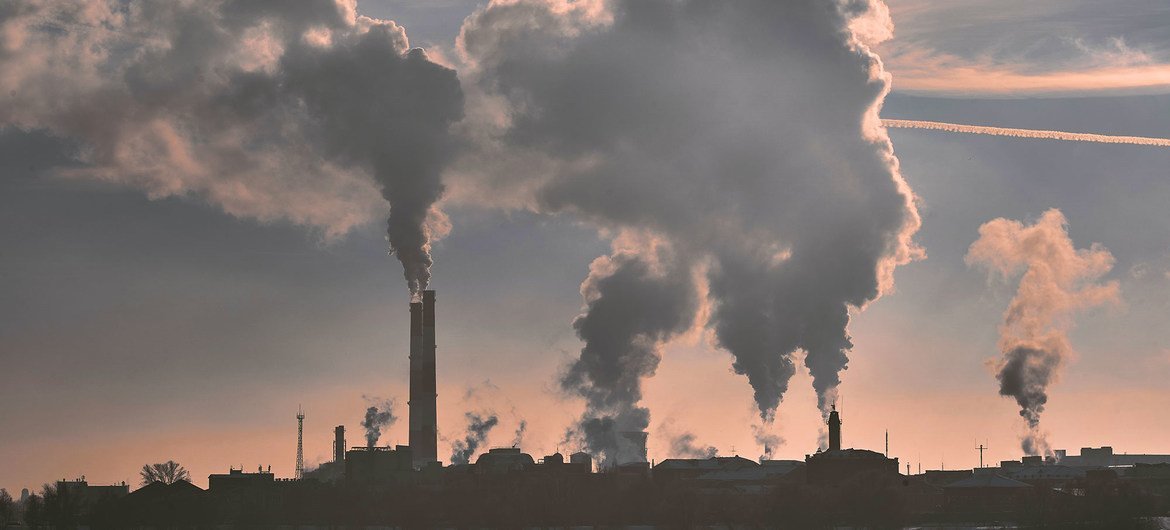
WE ARE STILL BURNING GIGATONS OF FOSSIL CARBON PER YEAR. ( A gigaton is a billion tons)
At 40 gigatons’ a year another 500 gigatons will not take long to burn = 12.5 years.
This means an inexorable rise in temperature.
A wet- bulb temperature of 35 will kill humans, making swaths of the globe inhospitable to humans in the next century turning the essential resources of the earth, Fresh Air, Fresh Water into products. (Wet-bulb temperature is literally what a thermometer measures if a wet cloth is wrapped around it.) (35 °C, or around 95 °F, is pretty much the absolute limit of human tolerance)
Understanding our limits and what determines them will be more important as global temperatures creep upward and extreme weather events become harder to predict.
There are already hundreds of extreme heat events around the world. In a study published in 2020, researchers showed that some places in the subtropics have already reported such conditions—and they’re getting more common.
Around 30% of the world’s population is exposed to a deadly combination of heat and humidity for at least 20 days each year, that percentage will increase to nearly half by 2100, even with the most drastic reductions in greenhouse-gas emissions.
When your core temperature gets too hot, everything from organs to enzymes can shut down. Extreme heat can lead to major kidney and heart problems, and even brain damage.
We’re changing our planet.
It’s not just Australia one of the hottest countries on Earth, England is looking at a drought this year with other places already
pushing the limits of human tolerance.
Australia is a country on the brink of a water crisis.
With river flows expected to drop by 10- 25% within ten years, pressure on Australia’ water systems will grow as demand from
population rises.
Despite the continent’s vast size, nearly the entire population lives in cities. These are predicted to grow by an additional 20
million people in the next 30 years, with water consumption in larger cities expected to rise by 73% to more than 2,650 gigalitres.
Australia’s Murray-Darling Basin has one of the world’s most advanced water markets. Water can be bought by the highest bidder.
Water users can buy or sell their water rights, on a permanent or temporary basis. This encourages the best use of our scarce water
resources. Trading encourages efficient water use by allowing it to be used where it’s needed most.
Water rights can be traded in various ways. It can be as simple as a change of ownership. Trades may change either the ownership
or the location of the water right, or both.
all of this is contributing to appalling environmental damage on the planet’s driest inhabited continent.
It has allowed a ruthless market to form, exploited by traders who buy and sell water as if it were a currency like Bitcoin.
The widespread acceptance that environmental sustainability is a crucial goal of water management.
The deadly heat events already experienced in recent decades are indicative of the continuing trend toward increasingly extreme
humid heat, are underlining that their diverse, consequential, and growing impacts represent a major societal challenge
for the coming decades.
What do you do when there’s not enough of something to go around? “Put a price on it!”
MARK MY WORDS TURNING NATURAL RESOURCES INTO PRODUCTS FOR SHORT TERM PROFIT IS ONLY IN ITS
INFANCY.
CLEAN AIR WILL BE NEXT.
It’s important to remember that the causal links between climate and conflict are rarely direct.
All human comments appreciated. All like clicks and abuse chucked in the bin
≈ Comments Off on THE BEADY EYE ASKS. WHAT WOULD IT TAKE FOR ENGLAND TO REJOIN THE EU?
( Five minute read)
THE PROOF IN THE PUDDING. ENGLAND IS IN A MESS.
THE FIRST THING TO UNDERSTAND CONCERNING THE ABOVE QUESTION IT THAT THE EU IS A LEGIALITIC ORGANSATION BOUND BY ITS TREATIES.
(A former member state seeking to return must apply under Article 49 – that is, the normal accession procedure.)
It therefore would be unwise for the UK to push for a different accession procedure.
( Instead, it could accelerate the process by ensuring that its laws and policies meet EU standards and by fulfilling all the requirements placed upon it expeditiously.)
The UK would have to demonstrate that it satisfied the Copenhagen criteria for EU membership, and secure agreement from the member states that they had the political will and the EU had institutional capacity to readmit it.
Enlargement requires unanimity – so would any member potentially veto the UK’s application?
This prospect raises important political questions which would have to be addressed before the UK took even the first step towards renewed membership.
—-
These political dynamics would depend in large part upon how the UK conducts itself in the Brexit era, and theUK’s approach to the forthcoming future relationship negotiations, how it treats EU citizens and their families, and its trade, tax, social, environmental and labour regimes in the years ahead would all be factors. The shape of the EU-UK strategic partnership would also be an important consideration.
A successful future application for EU membership would have to be predicated upon a new political consensus in the UK.
So the EU would look for significant, stable and long-lasting majority public opinion in favour of re-joining.
It would require support for EU membership on the order of 60-65 per cent or more for several years would likely be a minimum standard.
If the UK were to bid for membership in the absence of such consensus, its application would undoubtedly be rejected.
Why?
Because the EU will not voluntarily import an unstable member state or risk another Brexit down the road.
The UK would have to start from scratch and accept being a more normal member state – and thus make its second EU membership much more positive and inclusive.
The first problem is the euro.
Ordinarily new member states of the European Union are expected to adopt the euro and to join the currency union.
During the accession process, the UK would have to undo whatever divergence it had effected from EU values and standards in the Brexit era and converge back with the EU acquis.
Depending on its depth, the EU-UK partnership could be the basis for the pre-accession phase, potentially complemented by a new Association Agreement.
If the UK did in future depart from the European Convention on Human Rights – either by leaving the Convention or suspending implementing Court judgements – the EU would insist it fully reintegrate into that as well.
Provided it was successful in re-joining the EU, the UK would have the opportunity to conduct its second EU membership completely differently. It could develop a comprehensive EU strategy, outlining its major policy themes and priorities for the EU and setting out the UK’s positive and forward-looking vision for Europe.
The UK could put in place structures to include the devolved political institutions of Scotland, Wales and Northern Ireland (assuming they all remain in the UK) in its EU decision-making, providing them with genuine access and influence.
Seeking to re-join the EU would have to result from genuine reflection, not expedient self-interest.
After the Brexit saga, the UK will owe that much to the EU – and to itself.
The European Convention on Human Rights (ECHR) is an international treaty between the States of the Council of Europe. The United Kingdom was one of the States that drafted the ECHR and was one of the first States to ratify it in 1951. The Convention came into force in 1953.
The substantive rights and freedoms contained in the Convention are:
Article 2: the right to life
Article 3: the prohibition of torture and inhuman or degrading treatment
Article 4: the prohibition of slavery and forced labour
Article 5: the right to liberty and security
Article 6: the right to a fair trial
Article 7: the prohibition of retrospective criminal penalties
Article 8: the right to private and family life
Article 9: the freedom of thought, conscience and religion
Article 10: the freedom of expression
Article 11: the freedom of assembly and association
Article 12: the right to marry
Article 13: the right to an effective national remedy for breach of these rights
Article 14: the prohibition of discrimination in the protection of these rights
The European Court of Human Rights (ECtHR) is an international court which rules on individual or State applications regarding possible violations of the rights set out in the European Convention on Human Rights. Under Article 3 of the Human Rights Act, asylum seekers and refugees are protected from being returned to countries where they are at risk of torture, harm or death.
Even though an asylum seeker has no valid passport or identity document, or prior permission to enter the United Kingdom, this does not make his arrival at the port a breach of an immigration law.
The likely hood of the UK re-join the EU is zero.
The UK could instead join an outer tier.
However, the EU will be unlikely to move in that direction in the foreseeable future, not least due to opposition from those member states which fear being relegated to the outer tiers.
All human comments appreciated. All like clicks and abuse chucked in the bin
≈ Comments Off on THE BEADY EYE ASKS: WHEN YOU SEE APPEALS EVERY MINUTE OF THE DAY FOR 2 TO 10 POUNDS A MONTH: TO SAVE EVERYTHING FROM CHILDEREN TO WHALES TO SCHOOL’S: JUST WHAT ARE OUR GOVERNMENTS DOING WITH OUR TAXES.
Where does all our tax go?
There is plenty of talk about ways to increase income, reduce illiteracy and ill-health, and empower women.
The increased attention given to these issues and pledges of additional financial assistance by world leaders are not matched by new and effective national initiatives that can significantly reduce poverty..
There are more poor people in the world today than a quarter century ago. Nearly half the world’s population, over three billion people, lives in poverty.
We know that not all of us cam be rich, but all of us could be giving dignity to living.
On their own, policies and laws are seldom sufficient to achieve tangible social change. The underlying challenge is often the
existence of enduring social and cultural norms that create relations of power and disadvantage between different social groups based on gender, class, disability, age, caste or ethnicity.
Empowerment to dignity needs to be driven by local context, culture and history.
Almost as important as what governments can do, is what they should avoid doing. In the complex, fragile construction of excluded people’s power ‘within’, ‘with’ and ‘to’, the first priority should be for governments to avoid becoming part of the problem.
Governments should avoid the temptation to try and identify some form of ‘best practice’ that can be imported and ‘rolled out’ wholesale, they need to remain receptive to new ideas – models promoted by organised social actors for innovative policies and approaches that might better meet their needs.
An empowerment approach is both an end in itself, and a means to eradicate poverty and exclusion in their broader (multidimensional) sense.
So we need local initiatives, that have teeth.
How is our hard earned taxes distributed and spent.
Of course under various states of tax laws, there is a limited amount of tax revenue to go around at any one time.
Basic math, right?
Up to now governments have taken taxpayers’ money with no explanation of what that means to each individual taxpayer. As a result, we have forced people to question not how their tax is actually spent but how they believe it has been spent.
Armed with a tax statement, taxpayers SHOULD have a precise and accurate understanding of how their tax pounds are really spent.
Without taxes, governments would need to be accountable to its constituency.
Of course there are far more important things that we should change about how expenditure is revealed to taxpayers.
( Like tax rate that produces maximum growth in the economy is not the same as the rate that produces maximum revenue.)
.A country is wealthy if it has better resources and over time, more growth will result in more revenue.
So what is real wealth?
Land – All natural resources; including water, mines, minerals, oil etc.
—–
Without these resources, the economy cannot produce anything. They can be exchanged with each other. However, that can happen only if you can sell something that another person wants to buy, and in return wants to sell exactly what you wanted to buy. This is called barter system.
The real difficulty is in valuing the resources. Hence, we created “money”
Money however only represents the wealth; money is not wealth in itself. Merely printing more money will not give you real wealth. You see, when we realise that money is a symbol of whatever wealth is there in the system, we should understand that the only way we could create more money is if we create more wealth.
How can we create more wealth?
More wealth can be created by production. But wealth can be destroyed or eroded. Wealth is not permanent. You cannot print more money without creating wealth.
The question then is: Can we print money without creating wealth?
Theoretically, yes. Well even practically this happens. So yes we can print.
The real issue here is not whether we can do it, the real issue is: should we?
Thinking that giving more money will make poor people eligible to buy the products?
What a shame that now the products have become costly, and we are back to square one.
We didn’t really help them, did we?
You see, when you print more money without any actual economic value addition, there are essentially more people buying the same number of products. Therefore the prices of those products will rise. Inflation.
As I have said, not all can be wealthy and there are too many impediments to poverty reduction.
If poverty alleviation were a matter of lending, the world could eradicate poverty easily. Handouts will not solve poverty, so we must embrace this reality.
The only solution is to provide resources. What are these resources?
Education.
Employment.
Skill development.
Investments.
Governance. (law & order)
This is what will alleviate general poverty. Nothing else will.
—————
Governments are inefficient, but no big society has functioned well without one.
Even as technology and communication mean more ways for citizens to make their voices heard, democratic participation remains largely limited to casting a vote between parties once every few years. If governments do not change with the times, they become less and less capable of addressing people’s needs, and citizens grow more dissatisfied and disenfranchised.
Elections-based political systems already operate with short-term mentalities, with officials often thinking only a few years ahead.
Now, as societies around the world have become more complex, diverse, demanding and connected, governments have become even more incentivised to implement superficial patchwork fixes. Most years, it doesn’t take in enough money to pay for all of this so it borrows more, thus increasing the national debt with each tax cut stubbornly refused to pay for itself.
A single simple GDP graph can capture tax policy, is completely ludicrous.
If you think about it, this cannot continue forever. Sooner or later we need to pay higher taxes, cut benefits to citizens, or go bankrupt.
And then there’s the big complication: Our tax laws have a variety of rates and deductions.
1. Payment of Interest:
The Central government spends the lion’s share of its total expenditure towards payment of interest every year. When the government takes a loan, it has to pay interest on such credit.
2. Defence Allocation:
Your money also helps pay for the country’s defence and security-related expenditure.
3. Government and Welfare Schemes:
Government spending kind of is split between for all intents and purposes several schemes, generally such as healthcare, education, fairly social security, and others.
4. Subsidies:
Fertilizers, train tickets, LPG, metro rail fares.
5. Pension:
Pensions are another major expense.
6. Central government gives few percentage in the form of grants to county counsels for emergency management and development
None of the above address poverty DIRECTLY TO a local level.
———
Championing dignity as an essential part of reform.
Some human rights are instantly familiar to people: the right to freedom of expression; the right to life; the right to a fair trial; and freedom from slavery .It is important to understand that human rights, far from being an abstract concept, have a real and tangible impact on the lives of everyone. Human rights are about living in a country where the state looks after people that are struggling.
Living with dignity shouldn’t be too much to ask of a countries government.
The first attitude that we should have when we contemplate our dignity is respect, and rejection of anything that turns human beings into a means to an end, not an end in and of themselves. We cannot treat any human being as an object, a “thing,” a means to achieve our personal goals.
Every human being has equal intrinsic dignity and value, due to their basic condition of being human.
Human beings, have unlimited value, because as individuals with a unique identity, capable of knowing and choosing, they are unique and irreplaceable. “Treat others as you would have them treat you.”
This idea isn’t unique to Christians; it is common in many religions and cultures.
Any westerner country that has people sleeping on the street, relying on food banks to eat, is a glaring display to all that makes a country a woeful failure to server the dignity of its people. Thus the overreliance on charities highlights a huge structural flaw in the system. There are currently more food banks than McDonald’s in the UK, almost at a 2:1 ratio.”
One of the most attractive characteristics of big projects is the contribution they can make to high-level economic objectives. This includes boosting productivity, restructuring the economy and regeneration but they do not impart self dignity.
The solution is to restore dignity, by restoring purchasing power, not by handouts, but by paying for involvement in local projects.
Here are a few sustainable suggestions that will not cost the earth but reduces the cost to benefit all involved.
Community; Pay-as-you-go solar power units will cut tonnes of carbon emissions.
Grow your own: Filling in unkempt lots or small patches of untendered land with plants, fruit trees and flowers.
Improve: Access to rehabilitation services for children with difficulties by connecting their parents with individuals, groups and communities that can offer them support.
Set up a local: Telemedicine platform that connects patients and frontline health workers with doctors.
Convert: Front house gardens in cities to allows water to naturally percolate into the ground – Storm water gardens.
Bring back: The mobile free library.
Turn: Unused parking and abandoned lots into community gardens and parks.
Medical: Skills training.
Forest and River: Conservation.
Waste: Management service’s.
Desolator’s: Solar-powered water purification systems>
Encourage: Riding a bike.
Government Small Grants Program: Clearly, climate change and environmental degradation can´t be tackled by a single community. 50,000 directly to local communities, community-based organizations and other non-governmental groups investing in projects related to healing our planet.
Just think about it – if we all did one small thing, even if it was only now and then, imagine the impact we could have on the world!
The years to 2030 will be a time of rapid and unpredictable change, and we do not know how these complex realities will play out
All human comments appreciated. All like clicks and abuse chucked in the bin.
Unfortunately, the future isn’t talking. It’s just coming, like it or not being able to see the future might not play to our advantage.
Let’s not kid ourselves: Everything we think we know now is just an approximation to something we haven’t yet found out.
To imagine and think about the future, is a risky task that frequently ends up in an incomplete, subjective, sometimes vacuous exercise that, normally, faces a number of heated discussions.
Thinking about the future requires imagination and also rigour so we must guard against the temptation to choose a favourite future and prepare for it alone.
In a world where shocks like pandemics and extreme weather events owing to climate change, social unrest and political polarization are expected to be more frequent, we cannot afford to be caught off guard again.
Let’s look at some of the areas that are and will cause everything from wars to radical changes.
—–
Every day, we use a wide variety of automated systems that collect and process data. Such “algorithmic processing” is ubiquitous and often beneficial, underpinning many of the products and services we use in everyday life.
This is why we now need to thoroughly understand what’s at stake and what we can (and cannot) do …today.
Otherwise it is an ill wind for the next 60/100 years.
But what does the future hold for ordinary mortals, and how will we adapt to it?
We have been searching the universe for signs that we are not alone. So far, we have found nothing.
Given our genome and the physiological, anatomical and mental landscapes it conjures, what could Homo sapiens really become – and what is forever beyond our reach?
It’s hard to know what to fear the most.
Even our own existence is no longer certain.
Threats loom from many possible directions: a giant asteroid strike, global warming, a new plague, or nanomachines going rogue and turning everything into grey goo or the dreaded self inflicted nuclear wipe out. However we look at it, the future appears bleak.
Where is all of this leading us?
What we do now set the foundations for a future.
The chaos theory taught us that the future behaviour of any physical system is extraordinarily sensitive to small changes – the flap of a butterfly’s wings can set off a hurricane, as the saying goes.
Computers simulations of future reality of a world are already producing ever more accurate predictions of what is to come, showing us that we are under immense stress, environmentally, economically and politically instabilities.
There is no God that’s is going to change the direction we on or save humanity from self destruction, its in our hands
—–
ENGERY: FUSION POWER.
We already live in a world powered by nuclear fusion. Unfortunately the reactor is 150 million kilometres away and we haven’t worked out an efficient way to tap it directly. So we burn its fossilised energy – coal, oil and gas – which is slowly boiling the planet alive, like a frog in a pan of water.
Fusion would largely free us from fossil fuels, delivering clean and extremely cheap energy in almost unlimited quantities.
Or would it? Fusion power would certainly be cleaner than burning fossil fuels, but it …Fusion works on the principle that energy can be released by forcing together atomic nuclei rather than by splitting them, as in the case of the fission reactions that drive existing nuclear power stations.
Sadly it won’t help in our battle to lessen the effects of climate change.
Why?
Because there’s huge uncertainty about when fusion power will be ready for commercialisation. One estimate suggests maybe 20 years. Then fusion would need to scale up, which would mean a delay of perhaps another few decades. Fusion is not a solution to get us to 2050 net zero. This is a solution to power society in the second half of this century.
—–
THE INTERNET/ ARTIFICAL INTELLIGENCE/ SELF LEARNING ALGORITHMS/ROBOTS.
Billions of dollars continue to be funnelled into AI research. And stunning advances are being made but at what future cost.
Are we at the point in time at which machine intelligence starts to take off, and a new more intelligent species starts to inhabit Earth?
Synthetic life would make the point in a way the wider world could not ignore. Moreover, creating it in the lab would prove that the origin of life is a relatively low hurdle, increasing the odds that we might find life.
POWER.
Neither physical strength nor access to capital are sufficient for economic success. Power now resides with those best able to organize knowledge. The internet has eliminated “middlemen” in most industries, removing a great deal of corruption but replacing it with profit seeking Algorithms that are widely used increasing the inequality gaps.
——
WARS.
What does future warfare look like?
It’s here already.
Up goesdigital technology, artificial intelligence and cyber. Down goes the money for more traditional hardware and troop numbers.
The present war in the Ukraine is the laboratory for machine learning decision killing, with autonomy in weapons systems – precision guided munitions. (Autonomous weapon system: A weapon system that, once activated, can select and engage targets without further intervention by a human operator.) This includes human-supervised autonomous weapon systems that are designed to allow human operators to override operation of the weapon system, but can select and engage targets without further human input after activation.
(AI)-enabled lethal autonomous weapons in Ukraine, might make new types of autonomous weapons desirable.
There is still no internationally agreed upon definition of autonomous weapons or lethal autonomous weapons.
‘Fire and forget’
Many of the aspects of a major conflict between the West and say, Russia or China, have already been developed, rehearsed and deployed.
—-
CLIMATE CHANGE.
Global climate change is not a future problem with some of the changes now irreversible over the next hundreds to thousands of years.
The severity of effects caused by climate change will depend on the path of future human activities.
Climate models predict that Earth’s global average temperature will rise an additional 4° C (7.2° F) during the 21st Century if greenhouse gas levels continue to rise at present levels. A warmer average global temperature will cause the water cycle to “speed up” due to a higher rate of evaporation. Which means we are looking at a future with much more rain and snow, and a higher risk of flooding to some regions. Changes in precipitation will not be evenly distributed.
Over the past 100 years, mountain glaciers in all areas of the world have decreased in size and so has the amount of permafrost in the Arctic. Greenland’s ice sheet is melting faster, too. The amount of sea ice (frozen seawater) floating in the Arctic Ocean and around Antarctica is expected to decrease. Already the summer thickness of sea ice in the Arctic is about half of what it was in 1950. Arctic sea ice is melting more rapidly than the Antarctic sea ice. Melting ice may lead to changes in ocean circulation, too. Although there is some uncertainty about the amount of melt, summer in the Arctic Ocean will likely be ice-free by the end of the century.
Abrupt changes are also possible as the climate warms.
Earth Will Continue to Warm and the Effects Will Be Profound.
The consequences of any of them are so severe, and the fact that we cannot retreat from them once they’ve been set in motion is so problematic, that we must keep them in mind when evaluating the overall risks associated with climate change.
—–
IMMIGRANT’S /REFUGEE’S
History—particularly migration history—has shown time and again, that large population movements are often a result of single, hard-to-predict events such as large economic or political shocks.
Imagining migration’s future is urgent, especially now, when we are witnessing the highest movement of people in modern history, which is presented in a political context with strong populist and nationalist overtones, peppered with growing inequality in and between countries; in addition to an environmental crisis and a growing interconnection and proliferation of information that is usually deliberately distorted.
In today’s acts rests the seed of what we will harvest tomorrow. What we do today with and for the migrants will define not only their future but also ours.
We will always struggle to anticipate key changes in migration flows but that it’s more important to set up systems that can deal with different alternative outcomes and adjust flexibly. Most Western countries no longer openly support or defend the universality of human rights. Most countries apply “multilateralism à la carte”, that is, they participate only in multilateral agreements that strictly benefit their national interest.
Migration control systems collapsed because the international community failed to develop multilateral migration governance regimes. The international protection system has ended up being irrelevant. Many people are moving, the number of displaced people has increased dramatically as well as the number of refugees – The Trojan horses.
Immigration isn’t a new phenomenon, but with the effects of the future climate the scale and variety of countries from which people are moving will be greater than ever.
The idea that you have to learn a foreign language to make yourself understood in your own country is no longer a probability.
We now have immigration from everywhere in the world.
Very few people have issues with genuinely high skilled migrants coming over to work as doctors or scientists. The anxieties are always around mass immigration of low skilled labour (and in particularly about those from diametrically opposed cultures with completely different norms and values). As for the ageing populations thing, replacing your population with younger migrants from different cultures does technically solve the ageing population problem but then you end up with a completely different culture and country…
What ever you think, it’s becoming more difficult to do the old-style identity politics where you found a particular group and did what they wanted. Effectively assimilating people from the Muslim world looks to be a particular difficult.
Nearly all nations are mongrels
—-
EDUCATION.
By imagining alternative futures for education we can better think through the outcomes, develop agile and responsive systems
and plan for future shocks .We have already integrated much of our life into our smartphones, watches and digital personal
assistants in a way that would have been unthinkable even a decade ago.
The underlying question is: to what extent are our current spaces, people, time and technology in schooling helping or hindering
our vision?
It would involve re-envisioning the spaces where learning takes place. Schools could disappear altogether.
ALGORITHMIC SYSTEMS.
Brute force algorithm: This is the most common type in which we devise a solution by exploring all the possible scenarios.
Greedy algorithm: In this, we make a decision by considering the local (immediate) best option and assume it as a global optimal.
Divide and conquer algorithm: This type of algorithm will divide the main problem into sub-problems and then would solve them individually.
Backtracking algorithm: This is a modified form of Brute Force in which we backtrack to the previous decision to obtain the desired goal.
Randomized algorithm: As the name suggests, in this algorithm, we make random choices or select randomly generated numbers.
Dynamic programming algorithm: This is an advanced algorithm in which we remember the choices we made in the past and apply them in future scenarios.
Recursive algorithm: This follows a loop, in which we follow a pattern of the possible cases to obtain a solution.
90.72% of people in the world cell phone owners. Algorithms are everywhere.
Algorithmic systems, particularly modern Machine Learning (ML) approaches, pose significant risks if deployed and managed
without due care. They can amplify harmful biases that lead to discriminatory decisions or unfair outcomes that reinforce
inequalities.
They can be used to mislead consumers and distort competition. Further, the opaque and complex nature by which
they collect and process large volumes of personal data can put people’s privacy rights in jeopardy.
Now more than ever it is vital that we understand and articulate the nature and severity of these risks.
Those procuring and/or using algorithms often know little about their origins and limitations
There is a lack of visibility and transparency in algorithmic processing, which can undermine accountability.
They are already being woven into many digital products and services.
Algorithmic processing is already leading to society-wide harms making automated decisions that can potentially vary the cost of,
or even deny an individual’s access to, a product, service, opportunity or benefit.
For example, using live facial recognition at a stadium on matchday could impact rights relating to
freedom of assembly, or track an individual’s behaviour online, which may infringe their right to privacy.
At the moment there is very little transparently in providing information about how and where algorithmic processing takes place
or how they are deployed, such as the protocols and procedures that govern there use, whether they are overseen by a human
operator, and whether there are any mechanisms through which people can seek redress. The number of players involved in
algorithmic supply chains is leading to confusion over who is accountable for their proper development and use.
As the number of use cases for algorithmic processing grows, so too will the number of questions concerning the impact of
algorithmic processing on society.
Already there are many gaps in our knowledge of this technology, with myths and misconceptions commonplace.
They are the TikTok erosion of human values for profit, that will become the full individual personalization of content and
pedagogy (enabled by cutting-edge technology, using body information, facial expressions or neural signals) for commercial
platforms to rival Government’s.
——
BIOENGINEERING.
In a world of mounting inequalities, the question of who benefits and misses out from bioengineering advances looms large.
Unfortunately, we don’t have space here to talk about all the effects in the future concerning Bioengineering.
Artificial organs or limbs, the genetic synthesis of new organisms, gene editing, the computerized simulation of surgery, medical imaging technology and tissue/organ regeneration.
Like any other technology, bioengineering has damaging potential, whether it be through misuse, weaponization or accidents.
This risk can create significant threats with large potential consequences to public health, privacy or to environmental safety.
Foreseeing the impacts of bioengineering technologies is urgently needed.
All these issues have implications for academics, policymakers and the general public and range from neuronal probes for human enhancement to carbon sequestration.
These issues will not unfold in isolation:
Biotechnological discoveries are increasingly facilitated by automated and roboticides, private ‘cloud labs’.
The effects on biodiversity and ecosystems have not been fully studied.
Protein engineering and machine learning, leading to the creation of novel compounds within the industry (e.g. new catalysts for un-natural reactions) and medical applications (e.g. selectively destroying damaged tissue which is key for some diseases).
These newly created proteins have the potential to be used as weapons due to their high lethality.
Healthcare is facing a tug of war between democratization and elite therapies.
Plant strains which sequester carbon more effectively, rapidly and can even aid solar photovoltaics (the production of electricity from light) and light-sustained biomanufacturing.
Due to political unrest and the spread of fake news, citizens are scared about this approach and protest against it.
These issues will shape the future of bioengineering and must shape modern discussions about its political, societal and economic impact. This is now a very complicated question with no foreseeable answer.
To answer we have to think about how we got here in the first place. Of course “The herd” might not want to think about something like this.
DEMOCRACY. ———–
Our democracy is in crisis. Many institutions of our government are dysfunctional and getting worse.
Our politics have become alarmingly acrimonious;
Technology is enriching some and leaving the vast majority behind.
Democracy, has never been without profound flaws, cannot be taken for granted. Trust in political institutions – including the electoral process itself – are at an all-time low. Societies the world over are experiencing a strong backlash to a system of government that has largely been the hallmark of developed nations for generations
We don’t know where it’s heading as politicians are now basically middlemen to Social media which is changing the way people viewed their political leaders as under constant pressure promoted by populist as a result all decomacies are now “flawed” and exposed to the vulnerability of pure democracy to the tyranny of the majority
We don’t know how serious it is. So, what’s going on?
What’s behind the erosion of a political system that’s guided the world’s most developed economies for decades?
GREED.
As a result government’s are becoming more and more soulless, in failing to talk about the things that mattered to people.
With political parties running away from talking about the issues that matter to people.
When people feel threatened, either physically – by terrorism, say – or economically, they tend to be more receptive to authoritarian populist appeals and more willing to give up certain freedoms. When people are saying they can’t stomach any more immigration, when they don’t know if they’re going to be able to retire or what kind of jobs their kids are going to get, the political elite needs to listen and adapt or things are going to unravel.
Some may argue that this is because governments no longer feel like they are “of the people, by the people, for the people.
Maybe we are going to have some shocking lessons about the durability of democracy.
Non-democratic states have many forms, like China’s meritocratic system – in which government officials are not elected by the public, but appointed and promoted according to their competence and performance – should not be dismissed outright.
A democratic system can live with corruption because corrupt leaders can be voted out of power, at least in theory. But in a meritocratic system, corruption is an existential threat. Elections are a safety valve that isn’t available in China so the government is not subject to the electoral cycle and can focus on its policies while the West has tried to export democracy not only at the point of a gun, but also by imposing legislation. The whole idea is wrong in principle because democracy is not ours to dispense.
The US and Western Europe have we hope abandoned most of their ambitions for regime change around the world.
So looking inwards may be no bad thing. If the West wants to promote democracy then they should do it by example.
How do we reconcile that with democracy millions of citizens?
Hence, the knowledge revolution should bring a shift to direct democracy, but those who benefit from the current structure are fighting this transition. This is the source of much angst around the world, including the current wave of popular protests.
Smaller political entities should find the evolution toward direct democracy easier to achieve than big, sprawling governments.
Today’s great powers have little choice but to spend their way to political stability, which is unsustainable, and/or try to control knowledge, which is difficult.
Each individual’s share of sovereignty, and therefore their freedom, diminishes as the social contract includes more people.
So, other things being equal, smaller countries would be freer and more democratic than larger ones.
I’m not sure we can. It worked pretty well for a long time but maybe, as population grows.
FINALLY THE LANDS WE NOW INHABIT COULD DISSAPEAR IN MORE WAYS THAN ONE.
Rising seas could affect three times more people by 2050 than previously thought, some 150 million people are now living on land
that will be below the high-tide line by mid-century. Defensive measures can go only so far. We know that it’s coming.
The math is catching up to us – the amount of Co2 – the number of refugees / immigrants, the inequality gap, the numbers dying in wars~ natural disasters, the erosion of democracy, trust.
We need to know in plain English and without hype or hysteria of technologies ,social media, or selective algorithms news, only then will we begin to understand what’s coming and how to begin preparing yourself.
impossible to know everything about a quantum system such as an atom.
President Vladimir Putin cast the confrontation with the West over the Ukraine war as an existential battle for the survival of Russia and the Russian people – and said he was forced to take into account NATO’s nuclear capabilities.
Putin is increasingly presenting the war as a make-or-break moment in Russian history – and saying that he believes the very future of Russia and its people is in peril. “In today’s conditions, when all the leading NATO countries have declared their main goal as inflicting a strategic defeat on us, so that our people suffer as they say, how can we ignore their nuclear capabilities in these conditions?” Putin said.
completely unaware of the relentless pressure that’s building right now.
wasn’t always the United States. Nothing requires it to remain so. At some point, it will develop into something else.
THE COST OF THINGS.
Globalization vs. Regionalization, US-centric vs China-centric.
Modern Western economies have become knowledge based.
Technology and political trends are aligning against mega-powers like the US and China.
The West is beset with widening wealth gaps, shrinking middle classes and fractured societies.
There is only one country that has got it right Norway.
This small Scandinavian country of 5 million people does things differently.
It has the lowest income inequality in the world, helped by a mix of policies that support education and innovation. It also channels the world’s largest sovereign wealth fund, which manages its oil and gas revenues, into long-term economic planning.
Norway does not have a statutory minimum wage, but 70% of its workers are covered by collective agreements which specify wage floors. Furthermore, 54% of paid workers are members of unions. The government has prioritised education as a means to diversify its economy and foster higher and more inclusive growth.
The Norwegian state heavily subsidies childcare, capping fees and using means-testing so that places are affordable, although some parents report difficulty in finding an available place. Norway has provided for 49 weeks of parental leave at full pay (or 59 weeks at 80% of earnings). Additionally, mothers and fathers must take at least 14 weeks off each after the birth of a child.
Currently some 98% of its energy comes from renewable sources, mainly hydropower.
While Norway is more fortunate than most, it does offer some valuable lessons to policy-makers from other parts of the world.
TOMORROW’S GODS.
Religions never do really die.
We take it for granted that religions are born, grow and die – but we are also oddly blind to that reality.
When we recognise a faith, we treat its teachings and traditions as timeless and sacrosanct. And when a religion dies, it becomes a myth, and its claim to sacred truth expires. If you believe your faith has arrived at ultimate truth, you might reject the idea that it will change at all. But if history is any guide, no matter how deeply held our beliefs may be today, they are likely in time to be transformed or transferred as they pass to our descendants – or simply to fade away.
As our civilisation and its technologies become increasingly complex, could entirely new forms of worship emerge?
We might expect the form that religion takes to follow the function it plays in a particular society – that different societies will invent the particular gods they need.
The future of religion is that it has no future.
Perhaps with the march of science it is leading to the “disenchantment” of society so supernatural answers to the big questions will be no longer felt to be needed. We also need to be careful when interpreting what people mean by “no religion”. “Nones” may be disinterested in organised religion, but that doesn’t mean they are militantly atheist. Accordingly, there are very many ways of being an unbeliever. The acid test, as true for neopagans as for transhumanists, is whether people make significant changes to their lives consistent with their stated faith.
People have started constructing faiths of their own. Consider the “Witnesses of Climatology”, a fledgling “religion” invented to foster greater commitment to action on climate change.
In fact, recognition is a complex issue worldwide, particularly since there is no widely accepted definition of religion even in academic circles.
A supercomputer is turned on and asked: is there a God? Now there is, comes the reply.
All human comments appreciated. All like clicks and abuse chucked in the bin. Please keep comments respectful. Use plain English for our global readership and avoid using phrasing that could be misinterpreted as offensive.
I have watched the Irish International team represent Ireland from the days of Jacky Kyle to Toni O’Reilly to the present day with pride to be Irish.
Yesterday as the top team in the world they played Italy with the same pride and commitment to achieve a win.
It is not the performance on the pitch that is the problem.
It is their shame of being unable to sing the Countries National Anthem, like any of the other team when playing away from home.
Shoulder to shoulder Ireland’s Call was written by the Derry musician Phil Coulter in 1995 penned as a song to represent both the Republic and the North in place of Irish national anthem Amhrán na bhFiann.
In light of the new Ireland/Northern Ireland Protocol and Political Declaration that sets out the framework for the future relationship between the European Union and the United Kingdom and to reflect Northern Irelands non sitting Government’s ambition to conclude an ambitious, broad, deep and flexible free trade agreement with the EU.
Why not sing the countries national anthem Amhrán na bhFiann or at least change the expressing Shoulder to Shoulder to SHÚLRA – SHÚLRA. To reflect understanding the strength of the sacrifices that country people’s made to wearing of the green — and the privilege to wear it as the Irish Team.
Shoulder to Shoulder might well be the only song that recognises the fact that the Irish rugby team makes up the whole island, north and south but this expression Shoulder to shoulder originated in the late 1500s in the military, at first signifying troops in close formation.
While recognising that the team is one of the only things to have persisted for over 150 years “in unity and in solidarity on this island” time has now move on, but the history of a nation and its culture are written indelibly in its language.
Let’s face it, stereotypes are common in this day in age, resulting in preconceived notions about people and their culture.
Whilst stereotypes can provide some sort of understanding of another’s culture, they are generally unhelpful and misleading, creating bad first impression that can lead to so many misunderstandings.
Oh, you’re Asian? Are you Chinese? if you are Asian, you are automatically Chinese.
You cannot distinguish one Chinese person from another they are all brainwashed.
Chinese are by far the most complicated individuals to understand, founded as an agriculture – based society formed on the Yellow river 5000 years ago.
Almost a century before Vasco da Gama and Christopher Columbus made voyages that kicked off the era of European colonialism, the Chinese admiral Zheng the greatest explorer that the world had never heard of, brought back maps that helped to develop European cartography. With his description of Japan setti a definite goal for Christopher Columbus in his journey in 1492.
The author Gavin Menzies even found success publishing “1421: The Year China Discovered the World,” a best-selling—claims that Zheng actually circumnavigated the globe in his sixth voyage discovered. Chinese ships had reached America 70 years before Columbus & had circumnavigated the globe a century before Magellan.
(Historians have rejected Menzies’ theories and assertions and have categorised his work as pseudohistory.) Whether it is or not, it is a fascinating read, suggesting that Marko Polo meet Zheng, who give him a map of the Americas, which he subsequently gave to the Vancian, who doctored it so Columbus would make the discover.
Anyway, recorded by Polo was widely used in the late 15th and the 16th centuries, during the age of the great European voyages of discovery and conquest. He was among the first Europeans to describe many of the advanced technologies found in China.
Like Menzies he is say to have been a bit of a fibber, as he never mention seeing the wall of China.
———–
If you’re doing any sort of analysis of China, it pays to remember that until relatively recently, China was an isolated country closed off, with little substantive contact with the rest of the world.
China was and still is a bit of an outcast of the world.
One of the oldest cultures in the world, known throughout the world by the middle of the 19th century. There were many other central Asian states that coexisted with the Chinese dynasties, different kingdoms, states, and empires all existing at the same time!
Including the Xiongnu, Tibetan Empire, Zunghars, Mongols, Manchus, and others.
Ranking as the eight oldest country in the world, with thousands of years, behind the Great Wall of history, its unbroken culture has spread itself over centuries, through out East Asia.
The Chinese population is now four times that of the United States. It is the fourth largest country in the world, with about 56 different ethnic groups, with over 300 languages, spoken, in 22 provinces, with the world’s longest continuously used written language.
People have lived in the area we know today as “China” for at least 1.7 million years.
One in every five people in the world is Chinese.
———–
The venue of the worlds oldest lifestyle, it is no wonder that they view foreigners as inferior, corrupt, decadent, disloyal, and volatile – the devils. You would too if you had to pass 1.4 billion other people and get to where you’re going.
It is not a country of ping-pong players, full of bamboo eating Pandas, rather a country that will have 36 per cent of its mobile customer base on 5G by 2025.
You got to realise there are others live on this planet too! China personify this.
However its fair to say, they (more than likely) view their imperial glory of the world in decline, disintegrating, having succumbed to materialism, and consumerism, has changed the stereotype.
Most of us have never been in China, but we all have met a Chinese in our lives, so stereotypes linger in the minds of those who have never been to China.
To understand them the most important influence on their way of life is Confucianism based on unequal relationships between people, diametrically opposed to British or American ideas.
Even with one child per family up to recent times collectivism is very strong in China where the extended family is seen as more important than the individual. Chinese traditionally believe that every person turns one year older on the New Year and, thus, that day is considered to be everyone’s birthday.
The bicycle is now the primary transportation for millions of Chinese.
—————-
In the last two posts we’ve already mentioned the role of Hollywood has had in reinforcing the stereotype – Russian and American, China it is no different, with movies casting Chinese actors, as glasses-wearing nerds and mathematic geniuses smoking opium, with kung Fu, small with slanted eyes with shaved forehead and long braid down the back, shovelling rice into their mouths with chopsticks, or eating cats and dogs and rats, openly urinating, grinding rhino horns for medicine, carving elephant trunks, running around under mile long dragon effigies, letting of thousands of lighting lanterns, while the woman shuffle around serving tea in traditional Hanfu and garments with binding feet (euphemistically called “golden lilies”) squashed toes, to a Emperor seated in the Forbidden City, surrounded by Eunuchs. ( The Forbidden City was so named because commoners were forbidden to enter the city. Any commoner who saw the emperor was killed.)
(The dragon is typically seen as an evil creature in Western culture, it holds first place among the four greatest creatures in Chinese mythology, including the phoenix, tiger, and tortoise. It is typically associated with the emperor.)
Of course any self- respecting Chinese would be abhorred with the above image and rightfully justified to totally reject such an image.
In fact, stereotypes about Chinese food choices are so entrenched that many non-Chinese readily brought into the notion that the Coronavirus had been caused by the Chinese predilection for bat meat!
——————-
China is a country that is not founded and ruled by Anglo-Saxon people. This is a communist-led country, that dares to succeed economically and materially. However you would be a brave man to say this was achieved through democratic and liberal ideas of individual freedom and rights.
The Boxer Rebellion between 1898 and 1901 in northern China was against Christian missionaries, foreign diplomats, and technology by a secret group called the “Society of Righteous and Harmonious Fists” (Yihequan or I-ho-ch’uan) so named because its members practiced weapon less martial arts as well as secret rituals. Westerns called it “shadow boxing” and the members “Boxers.”
All Chinese are masters of Martial arts have deep roots in Chinese cultural history; forming an important part of Chinese cultural identity.
The Taiping Rebellion is known as the bloodiest civil war in human history, and the largest conflict of the 19th century.
China and the West were in contact more than 1,500 years before European explorer Marco Polo arrived in China, before the formal opening of the Silk Road. ( Many people think the Silk Road is a real road from China to the West. Actually, the term “Silk Road” was invented by a German mapmaker who was making a map of Asia in 1877.)
Qin Shi Huang lived between 259-210BC and became the first emperor of a unified China. His tomb (200 times bigger than Egypt’s Valley of the Kings) .discovered in 1974 with his Terracotta Army, the Acrobats and the bronze sculptures, were inspired by ancient Greek sculptures and art.
The modern word “China” most likely derives from the name of the Qin (pronounced “chin”) dynasty.
———————
China was the first country in the world to use an iron plough.
Toilet paper was invented in China in the late 1300s they invented paper, the compass, gunpowder, and printing.
First to use stirrups.
By the fourth century B.C., the Chinese were drilling for natural gas and using it as a heat source, preceding Western natural gas drilling by about 2,300 years.
The Chinese were using the decimal system as early as the fourteenth century B.C., nearly 2,300 years before the first known use of the system in European mathematics. The Chinese were also the first to use a place for zero.
Chinese coins had holes in them to be carried easily.
The crossbow was invented and first used by the Chinese. They were also the first in the world to use chemical and gas weapons, 2,000 years before gas was used in Europe during WWI.
Tea was discovered by the Chinese along with Gun power.
China’s Grand Canal is the world’s oldest and longest canal at 1,114 miles.
Suspension bridges were invented in China in 25 B.C, 1,800 years before such bridges were known in the West.
The Chinese were the first to invent the waterwheel to harness water in A.D. 31—1,200 years before the Europeans.
In A.D. 130, Zhang Heng, an astronomer and literary scholar, invented the first instrument for monitoring earthquakes. The machine could detect and indicate the direction of an earthquake.
In 1974, a group of farmers digging for a well in the Shaanxi province uncovered some bits of very old pottery. They discovered the tomb of Qin (259-210 B.C.) the first emperor who united China. The tomb contained thousands of amazing life-sized soldiers, horses, and chariots.
During the first half the twentieth century, Shanghai was the only port in the world to accept Jews fleeing the Holocaust without an entry visa.
The Beijing 2008 Olympic Games were estimated to cost a whopping $40 billion.
———–
To day:
China’s national flag was adopted in September 1949 and first flown in Tiananmen Square (the world’s largest public gathering place) on October 1, 1949, the day the People’s Republic of China was formed. The red in the flag symbolizes revolution. The large star symbolizes communism, and the little stars represent the Chinese people and their respective social classes.
The United States is increasingly using China as a “frame of reference.”
There’s probably an element of fear. China’s success threatens to undermine America’s globally dominant position.
China’s military strength has also improved greatly, and the US no longer can afford a war with China.
It’s saying US you can continue to be the No.1
With the drama of balloons there’s a real schizophrenia going on about China in the US which leads to no coherent foreign policy objectives, when it comes to the second largest economy in the world..
Because their is now a profound shift in the global balance of military power is under way. It has the largest navy in the world, spending more on its armed forces than any country except the US with 1,000 warheads.
China is now fully committed to developing “intelligentised” warfare.
Is China moving away from non-confrontation towards a more threatening stance?
The risk of war far exceeds any fool’s imagination.
Russia as its invasion of Ukraine nears its first anniversary and fresh concerns have arisen about the possibility that China may be getting ready to support Russia in the war effort.
China is probably the only external actor that could put effective diplomatic pressure on the Russian president.
Democracy is not about letting people die in pursuit of profit. The understanding of democracy by Westerners has already been distorted.
I don’t know when the concept of democracy became the private property of Westerners.
There is a saying. Keep them in the dark and feed them Shit!
In 1996, China produced 600,000 tons of mushrooms, making it the world’s leading producer, and it has 60% of the world’s mushroom varieties.
“Let China sleep, for when she awakes, she will shake the world.” – Napoleon
Unlike the United States.it is certain that China has no intention of policing the world.
All human comments appreciated. All like clicks and abuse chucked in the bin.
It seems to be easier for us today to imagine the thoroughgoing deterioration of the earth and of nature than the breakdown of late capitalism; perhaps that is due to some weakness in our imaginations.” — Frederic Jameson, The Seeds of Time
The stakes facing our generation are much more than they first seem, because our actions might have the potential to bring about a far better world, or cut it short.
The shifting meaning of “capitalism,” and how societies hide their downside with culture.
We’re unclear on what “capitalism” is supposed to be.
From the proletarians, nothing is to be feared.
Left to themselves, they will continue from generation to generation and from century to century, working, breeding, and dying, not only without any impulse to rebel but without the power of grasping that the world could be other than it is.” — George Orwell, Nineteen Eighty-Four
———————————–
Rather than us asking questions of this world, this world asks questions of us.
We need to listen to the world in new ways and hear the fundamental questions that it askes us.
WITH CLIMATE CHANGE – WARS – AI – INEQULITY. – UNITED NATIONS
ALL AT THIS VERY M0MENT ARE ASKING: DO WE WISH TO CONTINUE TO EXIST?
Might it be, then, that we have trouble imagining the end of capitalism because we think capitalism is great, and we’d fear that any alternative would be worse?
It is not we who are permitted to ask about the meaning of life — it is life that asks the questions, directs questions at us… our whole act of being is nothing more than responding to — of being responsible toward — life.
Have we been indoctrinated so that we subscribe to an ideology or a myth of capitalism?
All are questing, just what are our values.
We have an easier time imagining an apocalyptic death of the planet than capitalism being surpassed by a superior economic system, promoting equality.
Do we trust in capitalism on what are effectively theological grounds, so that the specious neoliberal arguments in capitalism’s favour are so many superfluous rationalizations?
Will AI Have a Soul? And does it even matter? Everybody uses the internet, but nobody trusts it.
The recent state of the world certainly hasn’t helped.
Even if capitalism is justifiable, it doesn’t follow that those who benefit from that system should be unable even to imagine a better kind of economy.
Neoliberals will say that we can imagine an alternative to capitalism, after all, namely the communist one that failed in the Soviet Union. But that, too, is a red herring since the question is whether we can imagine improvements to capitalism, not worse economies.
Likely, you find your smartphone handy, but that doesn’t mean you can’t imagine improvements to it. You’d prefer to keep your phone, of course, and you may even be addicted to social media. But science fiction is replete with re-imagined technologies. For instance, we could miniaturize smartphones and hardwire them into the brain.
Science doesn’t demonstrate that the quantityof life matters more than its quality, nor can science show which qualities of life should matter more than others.
——————————-
How do I get people to do what I want them to do?
Unfortunately there are collective forms of self-deception.
Individuals, of course, can prevent themselves from reckoning with unwanted truths, in that they can underestimate obstacles, confabulate, procrastinate, and so on, unable to realize the meaning of the present moment.
“You can get everything in life that you want if you’ll just help enough other people get what they want.”
Give and you will receive.
Maybe there are social mechanisms that operate in an analogous fashion, protecting whole populations by steering them towards the party line. The analogue of the individual ego, or of the conscious self, might be the upper class that dictates mass media narratives, such as by instilling neoliberal values via Ivy League education, as Thomas Frank explains.
Societies have worldviews called “cultures,” along with institutions that enforce their biases.
Once large, sedentary societies emerged in history, so too did mechanisms for managing mass opinion. Religion was one such device, but we can speak more neutrally about “ideologies,” as Karl Marx did, to account for how we may protect capitalism, too, with myths and collective fallacies.
If you’re looking for signs of such capitalist myths, have a look at advertising, at how thousands of misleading slogans and manipulative, hyperbolic messages stream through everyone’s consciousness on a daily basis.
In the boom-and-bust cycle in which government spending alone can stabilize.
Capitalism is in runaway mode and must be curtailed.
————————————–
The recent pandemic, natural disasters, wars, all shine a light on the inequality that exist and have existed since time immortal.
If we want a world worth living in and on, we must make profit contribute to PROTECTING all the essential values of life, not the pockets of the few.
Whether it’s turning promises on climate change into action, rebuilding trust in the financial system, or connecting the world to the internet.
OUR COLLECTIVE RESPONSIBILITY MUST BE TO REPAIRING THE DAMAGE OF CENTURIES OF GREED.
To achieve these objectives we will need to address a host of issues, with more than common sense but with trillions and trillions pumped into removing and protecting before the planet becomes uninhabitable.
_________________________
The Earth’s average land temperature has warmed nearly 1°C in the past 50 years as a result of human activity, global greenhouse gas emissions have grown by nearly 80% since 1970, and atmospheric concentrations of the major greenhouse gases are at their highest level in 800,000 years. We’re already seeing and feeling the impacts of climate change with weather events such as droughts and storms becoming more frequent and intense, and changing rainfall patterns.
By 2050, the world must feed 9 billion people. Yet the demand for food will be 60% greater than it is today. Despite huge gains in global economic output, there is evidence that our current social, political and economic systems are exacerbating inequalities, rather than reducing them. Rising income inequality is the cause of economic and social ills, ranging from low consumption to social and political unrest, and is damaging to our future well-being. More than 61 million jobs have been lost since the start of the global economic crisis in 2008, leaving more than 200 million people unemployed globally.
To function efficiently, the system needs to re-establish trust.
The internet is changing the way we live, work, produce and consume. With such extensive reach, digital technologies cannot help but disrupt many of our existing models of business and government. We are entering the age of the Fourth Industrial Revolution, a technological transformation driven by a ubiquitous and mobile internet. The challenge is to manage this seismic change in a way that promotes the long-term health and stability of the internet. Within the next decade, it is expected that more than a trillion sensors will be connected to the internet.
By 2025, 10% of people are expected to be wearing clothes connected to the internet and the first implantable mobile phone is expected to be sold.
Equality between men and women in all aspects of life, from access to health and education to political power and earning potential, is fundamental to whether and how societies thrive.
The growth of the digital economy, the rise of the service sector and the spread of international production networks have all been game-changers for international trade. Despite fundamental changes in the way business is done across borders, international regulations and agreements have not evolved at the same speed. In addition, negotiations to reach a new global trade agreement have stalled. There is a pressing need to reform the global trade framework.
Investing for the long term is vital for economic growth and social well-being, serious challenges to global health remain.
The number of people on the planet is set to rise to 9.7 billion in 2050 with 2 billion aged over 60. To cope with this huge demographic shift and build a global healthcare system that is fit for the future, the world needs to address these challenges now.
In short, the most pressing problems are those where people can have the greatest impact by working on them.
As we explained in the previous article, this means problems that are not only big, but also neglected and solvable. The more neglected and solvable, the further extra effort will go. And this means they’re not the problems that first come to mind.
First, future generations matter, but they can’t vote, they can’t buy things, and they can’t stand up for their interests. This means our system neglects them. You can see this in the global failure to come to an international agreement to tackle climate change that actually works..
We can’t so easily visualise suffering that will happen in the future. Future generations rely on our goodwill, and even that is hard to muster.
We all know where the Solutions are to be found – in how wealth is distributed.
We should go beyond the focus on reducing the global poverty rate to below 3% and strive to ensure that all countries and all people can share in the benefits of economic development. Nearly half of the world’s population currently lives in poverty. 2/3 of the population in low-income countries is under 25 years old.
The world is facing multiple converging crises — growing food insecurity, rising fuel prices, economic instability, and the climate crisis — and they are all hitting poor countries the hardest. With 349 million people across 79 countries facing acute food insecurity, this is the worst food crisis in decades. While COVID-19, climate change, and conflict have been major drivers, political action has also fallen short.
Poverty entails more than the lack of income and productive resources to ensure sustainable livelihoods. Its manifestations include hunger and malnutrition, limited access to education and other basic services, social discrimination and exclusion, as well as the lack of participation in decision-making.
And we still wonder why the world we live in is going down the tube.
It is quite obvious that there is no point in been rich without giving – the power to solve some of the most pressing global challenges is not to be found in the words of the United Nations Declaration to end poverty in all its forms everywhere is Goal 1 of the UN’s Sustainable Development Goals.
Why?
Because it has to beg for funds to implement any of its aspirations.
What is needed is a preputial Fund to create a World Aid system with clout.
HERE IS HOW THIS CAN BE ACHIVED.
We now live in a world driven by technology – Apps for this and Apps that – Smartphone – Algorithms running world stock market, plundering everything for the sake of profit.
Why not introduce a World Aid commission algorithm to collect 0.05% on all activities that produce profit for profit sake.
This funding could be delivered by non repayable grants prioritising adaptation re climate change, vetted projects to reduce poverty, food sustainability, environment protection, etc ( Unlike The International Monetary Fund (IMF) the lender of last resort.
All human comments appreciated. All like clicks and abuse chucked in the bin.
I don’t have to tell you that wars expose the barbarity in all of us.
They say that its impossible to deal with Mr Putin. Call him what you like there have been many like him that have come and gone that did almost anything to survive in power.
Most probably during the next week we will observe the intensification of the Russian military aggression in the Donetsk and Luhansk regions as well as the rest of Ukraine.
War by its nature is unpredictable.
Whether a larger war happens will depend partly on President Vladimir Putin’s ambitions, partly on the West’s military response, and partly on plain luck.
Aside from the risk of an unintended or unexpected incident, like a missile that goes astray along Ukraine’s western border, fired by either Russia or the Ukraine or a nuclear accident at the Zaporizhzhya nuclear power plant (which demands more action) the war could be catapult into a disaster beyond belief.
The question everyone has to ask—if this is going to be a large-scale war, if there is Ukrainian resistance and the conflict is prolonged over years—is whether the fighting can be contained to Ukraine or whether it will spill over into the rest of Europe.
You don’t have to be a military general, or strategists to know that the more fuel you put on a fire the hotter it gets and the more likely it will spread.
Weapons might have changed, but wars have not, they run their course till there is no one left to kill, or to be killed, or the combating get sick of the killing and opt for peace.
What past wars tell us about how to Save Ukraine?
Most conflict since the end of the Second World War tends to involve counterinsurgency campaigns and proxy wars, making large-scale invasions—like what is currently happening in Ukraine—rare events.
Wars that end within a month last on average eight days, and 44 percent end in a ceasefire or peace agreement.
When interstate wars last longer than a year, they extend to over a decade on average, resulting in sporadic clashes.
Why?
Because the longer a war lasts with absent concessions by both parties, the more likely it is to escalate into a protracted conflict, despite the bravery of the Ukrainian people in the face of Russian aggression, that is a dangerous prospect.
The refugee crisis will grow. More civilians will die. Russia will become even more paranoid and irrational.
Mr Putin could declare Western arms supplies to Ukrainian forces are an act of aggression that warrant retaliation. He could threaten to send troops into the Baltic states – which are members of NATO – such as Lithuania, to establish a land corridor with the Russian coastal exclave of Kaliningrad.
This would be hugely dangerous and risk war with NATO. (Under Article 5 of the military alliance’s charter, an attack on one member is an attack on all.) But Mr Putin might take the risk if he felt it was the only way of saving his leadership. If he was, perhaps, facing defeat in Ukraine, he might be tempted to escalate further.
What is needed is a viable diplomatic offramp that addresses the concerns of all parties.
The time for crisis diplomacy is now.
How this might be achieved?
This is about Russia wanting to restore a sphere of influence in the post-Soviet space, and particularly about Putin wanting Russia to reabsorb Ukraine. Russia doesn’t just want a neutral Ukraine. It’s also demanding that Ukraine formally give up Crimea and parts of the Donbas.
Amid the fog of war, it can be hard to see the way forward or potential outcomes. Most are bleak.
The sense of outrage and injustice on the part of Ukraine will be difficult to overcome.
Moscow demands recognition of the independence of Donetsk and Luhansk, the “states” in eastern Ukraine’s Donbas region recognised by Russia at the outset of the conflict. Their supposed independence was cynically used by Russia to argue a right of self-defence of these purportedly sovereign states.
Perhaps if the Ukraine we to offer a form of “asymmetrical federation,” would see overall claims of statehood abandoned, but areas – or Oblasts – within the Donbas that have ethnic or linguistic majorities be given greatly enhanced local self-governance.
A settlement that keeps them as Ukrainian provinces but in an environment of self-government – almost virtual statehood, offering plenty of autonomy to both districts yet keeping them within Ukraine’s sovereign territory.
This could be balanced by internationally guaranteed rights to genuine local elections and safeguards for the right of minority populations – whether Russian speaking or Ukrainian.” with cross-border links to the Russian Federation to placate separatist groups.
However, Ukraine must not suffer de-facto division forever more as a consequence of turning the invasion into a frozen conflict. The Ukrainian government and the Ukrainian people who must have their sovereignty, their independence and their territorial integrity. It is vital the Ukrainian government is not pressured into accepting outcomes that reward a war of aggression.
So after an agreed period of lets say twenty years the asymmetrical federation decides by Referendum to stay as such, or join Russia or Ukraine.
During these twenty years providing Russians return to negotiations on limitations of intermediate-range nuclear weapons (and providing there is no further conflict ) NATO agrees to stop its enlargement, as part of “confidence-building”
Till than nuclear arms controlled by the United States remain in Europe.
NATO is a defensive alliance.
NATO’s world view is simple. The world is divided between two kinds of states. Those that defend something called a “rules-based international order,” called democracies, and those who don’t know what on earth they’re talking about, called authoritarians. The remedy for this unfortunate condition is of course, always more NATO.
(NATO holds its expansion to be a sacred right. It has spread across 14 countries of the former Eastern bloc to the borders of Russia. It has brought war to Europe by encircling a country that suffered about 27 million deaths the last time panzers rolled from the West.)
Ukraine is not a member of the North Atlantic Treaty Organization (NATO), but it borders four nations that are—Poland, Slovakia, Hungary and Romania. Biden and other NATO allies have pledged to protect their eastern and central European members under the NATO treaty’s mutual defence commitments.
For Ukraine to give up its ambitions to join NATO, since that has long been a Russian red line.
I think what we’ll ultimately arrive at is something that satisfies no one, but at least is better than a hot war.
When Putin first came to power, his forces levelled the Chechen capital, Grozny, in order to recapture it. And more recently, Russian forces helped the Syrian government besiege cities and towns, a strategy now playing out in Ukraine. The war has sparked some protests inside of Russia, but don’t expect a popular uprising in a country that is imposing an Iron Curtain. You would have had a hard time convincing Russians them that there country has actually invading Ukraine.
We that is the west are not going to invade Russia to effect an regime change, its not a realistic policy goal.
Why?
Because changing the regime in Russia and doing our utmost to weaken the Russian state, you cannot do that and claim that you are actually acting in the interest of the Ukrainian people because you’re not.
You are condemning them to an endless war for U.S. geopolitical purposes. There is nothing moral about that – nothing.
Where are we with the war.?
No matter how this conflict plays out, the world has changed.
It will not return to the status quo ante. Russia’s relationship with the outside world will be different. European attitudes to security will be transformed. And the liberal, international rules-based order might just have rediscovered what it was for in the first place.
This is now a proxy war “to weaken Russia” is destroying Ukraine, impoverishing Europe, and escalating, without an off-ramp, it has all the hall marks of spreading into an all-out war that threatens all of humanity with nuclear annihilation.
The bloc politics of NATO is, from the perspective of those who recall the tender mercies of its European and Japanese practitioners, nothing but the politics of imperialism in a world it no longer comprehends.
Putin will not deliberately extend an offensive beyond Ukraine unless he believed Biden would be unwilling to go to war to defend NATO allies, however he will retaliate in the cyber world, broadening the conflict quickly and dangerously.
A Russian takeover of Ukraine would deliver a blow to European order like none since World War II.
After the most recent wars with American involvement the United States will not get drawn into it unless it is dragged by NATO.
——————
In all ages war has been an important topic of analysis.
In the latter part of the 20th century, in the aftermath of two World Wars and in the shadow of nuclear, biological, and chemical holocaust, more was written on the subject than ever before. Endeavours to understand the nature of war, to formulate some theory of its causes, conduct, and prevention, are of great importance, for theory shapes human expectations and determines human behaviour.
Utilizing psychological approaches emphasize the significance of psychological maladjustments or complexes and of false, stereotyped images held by decision makers of other countries and their leaders.
This is insufficient because man behaves differently in different social contexts and nearly all wars are wage against the wishes of peacefully inclined people.
The ideal of the nation-state is never fully achieved. In no historical case does one find all members of a particular nation gathered within one state’s boundaries.
There is no rational basis for deciding on the extent to which the self-determination principle should be applied in allowing national minorities to break away.
As a rule, the majority group violently opposes the breakaway movement with violent conflicts ensue and, through foreign involvement, turn into international wars.
Nationalism not only induces wars but, through the severity of its influence, makes compromise and acceptance of defeat more difficult.
Although industrialists in all the technologically advanced systems are undoubtedly influential in determining such factors as the level of armaments to be maintained, it is difficult to assume that their influence is or could be decisive when actual questions concerning war or peace are being decided by politicians.
Improving the rationality of the decision making of individual states through a better understanding of the international environment, through eliminating misperceptions and irrational fears, and through making clear the full possible costs of engaging in war and the full destructiveness of an all-out war, possible in our age.
War can only be abolished by a full-scale world government.
Of course the likelihood of this happing is zero.
The complex phenomenon of war represents a potential calamity of such a magnitude that all theorists must endeavour to understand it and to apply their understanding to the prevention and mitigation of war with all the means at their disposal.
Yes, as many as 200 million people may have died in wars throughout the 1900s, but roughly 10 billion lives were lived during that period. One may argue that this has merely been a matter of food production outpacing the production of assault rifles, so that violence has not so much been suppressed as overwhelmed by science.
Keep in mind, though, that these optimistic scenarios and others may, among other things, be products of their times. For we still live in the relatively benign aftermath of World War II, in which the greatest interstate war in history has led to 70 years without interstate war between the great powers.
We have a world full of beauty, with inherent call to protect that which is true, good, and beautiful.
Humanity after millennia of war may reach a culmination point, in which the number of humans killed by other humans continues to drop dramatically.
All human comments appreciated. All like clicks and abuse chucked in the bin.
Freedom of speech is the right to say whatever you like, about whatever you like, whenever you like.
This has never existed nor will it.
Every word written or spoken, has a consequence whether you like it or not.
It is through speaking and listening, and reading that human beings become who they are.
Whatever you think about free speech, social media networks are promisingly now to be the custodians of free-spoken, censorship-resistant and crowd-curated content, free of corporate and political interference.
But do they live up to this promise?
As there is no central point of failure, all of these plugged-in entities must agree on the contents of the ledger. There’s no central point of censorship. in fact, many decentralised networks in recent years have been developed in response to moderation practices.
But what content is being monetised and who benefits?
With no single arbiter in charge of moderating content or banning problematic users it’s almost impossible for any single node in the network to meddle with the ledger without the updates being rejected.
It isn’t a new phenomenon for speech to be controlled by corporations — the average person has a far greater likelihood of getting a message out to people today than they did before the Internet — but now the same handful of companies control speech everywhere. This includes platforms like Facebook, Twitter, Reddit, and YouTube, but we’ve also seen drastic actions taken by web hosting companies like Amazon (as with Parler), or payment service companies like Mastercard and Visa.
There are always malicious people, such as violent extremists, terrorists and child pornographers, who should not be allowed to post at will. So in practice, every decentralised network requires some sort of moderation. But in the 21st century, when fewer and fewer companies have oligopolies over avenues of user-submitted speech, these restrictions have shifted from a free-speech issue to one of corporate control. As such, each server sets its own rules.
They have the power to disable, silence or suspend user access and even to apply server-wide moderation.
Braking these rules result in an immediate user ban and removal of the content. If a user wants to appeal a decision, the verdict comes from a randomly-selected jury of users. But since all content is recorded on the blockchain, it continues to be accessible to those with the technical know-how to retrieve it raising a host of moral and legal obligations which are unavoidable.
It’s not difficult to see how ratcheting up platform liability could cause even more vital speech to be removed by corporations whose sole interest is not in “connecting the world” but in profiting from it.
One of the reasons that this issue is so difficult to solve is that our interests in freedom of speech usually do not extend to speech by the other side.
Is it indeed the case that we as a society cannot tolerate intolerance, lest that very intolerance destroy us?
Or should we only restrict speech when it violates others’ liberties.?
As for platforms, they know what they need to do, because civil society has told them for years. They must be more transparent and ensure that users have the right to remedy when wrong decisions are made. Most important, they should ensure that the decisions they make about speech are in line with global human rights standards, rather than making the rules up as they go.
Down the centuries people have died for the sake of free speech. Problematic language, including hate speech, disinformation, and propaganda have been around throughout human history.
But, in recent decades, they have been amplified, and, most would agree, fundamentally transformed by the advent of the internet and the rise of social media.
Triggered by the evolution of our newest technology of communication, call into question the whole edifice of freedom of speech and press. Most powerful communications technology magnifies these harms exponentially, beyond anything we have encountered before. Some argue that, if it is left unchecked, the very existence of democracy is at risk.
The right to express opinions without government restraint—is a democratic ideal that dates back to ancient Greece.
Freedom of expression is a fundamental human right, enshrined in Article 19 of the Universal Declaration of Human Rights.
Traditionally, freedom of speech has been justified as necessary for democratic government and as an essential individual right.
Your voice matters.
You have the right to say what you think, share information and demand a better world. You also have the right to agree or disagree with those in power, and to express these opinions in peaceful protests. It is central to living in an open and fair society; one in which people can access justice and enjoy their human rights.
The problem.
Governments have a duty to prohibit, hateful, inciteful speech, but many abuse their authority to silence peaceful dissent by passing laws criminalizing freedom of expression. This is often done in the name of counterterrorism, national security or religion.
On the other hand government can’t censor or restrict expression, just because some segment of the population finds the content offensive.
Shared beliefs, diminish, economic, social and political decisions cannot be made by a society without increased freedom of expression.
Defining what types of speech should and shouldn’t be protected by law has fallen largely to the courts.
While freedom of speech pertains mostly to the spoken or written word, it also protects some forms of symbolic speech. Symbolic speech is an action that expresses an idea. For example artistic freedom.
You don’t feel free to speak if you are going to be shouted down or subject to torrents of abuse.
There used to be a simple restriction of free speech, it was not permitted to incite hatred or violence.
What is free speech?
I think that no society has or could have complete freedom of speech.
I define free speech specifically as being able to say whatever you like without punishment from the state.
Freedom of speech means that the government may not punish you for speaking your mind.
Free speech is a two way thing and declining to engage in an action, rather than being compelled not to, means choice = freedom.
Free speech does differ between societies is a fundamental point, especially in light of recent events.
There is no conception that captures all of our intuitions about things we are and aren’t free to say; leaving us all free to say absolutely everything we want. In the end all societies can only choose to protect some speech, while necessarily banning others—whether through the law or social pressure—to achieve that goal.
For example we allow people to be rude or mean on Twitter, we allow friends to tell their friends they respect them less when they’ve said things they don’t like.
It’s fine to say that the words ‘free speech’ just mean some or other conception, e.g. the libertarian conception.
If so, I don’t think the concept ‘free speech’ is useful as a way of thinking about experienced freedom in speech.
Patterns of speech we (i.e. our laws and courts) decide what counts, as threats, incitement, harassment, abuse, hate speech, and so on, are not permitted. In practice this means stuff like racist speech is forbidden, homophobic and sexist speech is becoming forbidden, as well as all the obviously unpleasant harassment and abuse mentioned above.
On our modern values, these older prohibitions seem silly whereas current prohibitions stop genuinely dangerous speech.
Democracy and free speech are both overrated, both needlessly promote a cycle of collective competition of popularity and productivity and demote personal independence and responsibility, paralyzing academic and political exchange in multiculturalism societies.
There is no coherent, cohesive thing we can point to and call ‘free speech’.
Freedom of expression in the age of the internet––communication without borders––is a frequent subject of debate both on a political and legal level. However, the theoretical underpinnings have generally been confined to legal and philosophical analysis which are not entirely satisfying, because they cannot explain freedom of speech beyond the individual.
People have a right to information that affects their lives. Freedom is also the freedom to take the consequences.
It ultimately comes down to simply living our lives to our choosing.
“If you can pollute the physical environment, you can pollute the cultural and mental environment”.
All human comments appreciated. All like clicks and abuse chucked in the bin.
There is not a day that goes bye when we are presented with the rhetoric of replacing fossil fuel energy with green energy in order to reduce carbon emissions.
YOU WOULD THINK THAT OUR WORLD HAS ENOUGHT PROBLEMS ON ITS PLATE TO BE CREATING AN OTHER.
But here is now a developing problem – Called Green Energy.
There is a difference between green, clean and renewable energy. Renewable energy is often seen as being the same, but there is still some debate around this. For example, can a hydroelectric dam which may divert waterways and impact the local environment really be called ‘green?’ This is slightly confused by people often using these terms interchangeably, but while a resource can be all of these things at once, it may also be, for example, renewable but not green or clean (such as with some forms of biomass energy).
At the forefront of this rhetoric we have the three big contenders – Wind – Sun – Water and now Electric Cars.
What is green Energy?
Green energy is any energy type that is generated from natural resources, such as sunlight, wind or water. It often comes from renewable energy sources although there are some differences between renewable and green energy, which we will explore, below.
Renewable energy technologies such as solar energy, wind power, geothermal energy, biomass and hydroelectric power all
work differently, whether that is by taking power from the sun, as with solar panels, or using wind turbines or the flow of water to
generate energy.
All of the above require rare metals to transform them into energy products.
—————————————————————
In order to be deemed green energy, a resource cannot produce pollution, such as is found with fossil fuels.
This means that not all sources used by the renewable energy industry are green. For example, power generation that burns organic
material from sustainable forests may be renewable, but it is not necessarily green, due to the CO2 produced by the burning
process itself.
Green energy sources are usually naturally replenished, as opposed to fossil fuel sources like natural gas or coal, which can take
millions of years to develop.
Green sources also often avoid mining or drilling operations that can be damaging to eco-systems.
This is not true.
Green energy has many a dark holes.
Above: Lithium carbonate mine in Argentina.
DEMAND FOR LITHIUM, A KEY INGREDIENT IN RECHARGEABLE BATTERIES, IS EXPECTED TO SOAR IN THE
COMING YEARS AS THE POPULARITY OF ELECTRIC VEHICLES (EVS) PICKS UP.
Below: The Escondida surface mine situated in Antofagasta, Chile. Owned by BHP, the greenfield mine produced an estimated 1,011 thousand tonnes of copper in 2021. The mine will operate until 2078.
Below: Copper and coal mines in China.
Below: The Chequicamata Copper mine – Chile
Below: Bingham Cannon Mine -copper USA
The world’s demand for copper could be catastrophic for communities and environments.
Why?
Because, Copper is critical for solar panels, wind turbines, electric vehicles and battery storage.
The world will need 10 Million tons more Copper to meet demand.
New copper mines will likely be located in politically and ecologically sensitive areas
This will add to the devastating impacts existing mines have already caused.
Why?
Because sacrificing the interests of local people in the interests of a greater good would not be considered responsible, as it does
not align with the concepts of equity and fairness that underpin the Paris Agreement.
———————————-
We must start to ask:
What kind of justice are we seeking in the “just transition”, and for whom?
This includes assessing the energy used to create the green energy resource, working out how much energy can be translated into
electricity and any environmental clearing that was required to create the energy solution. Of course, environmental damage
would prevent a source truly being ‘green,’ but when all of these factors are combined it creates what is known as a ‘Levelised
Energy Cost’ (LEC).
————————————————————-
The good news.
Creating energy with a zero carbon footprint is a great stride to a more environmentally friendly future. If we can use it to meet our
power, industrial and transportation needs, we will be able to greatly reduce our impact on the environment.
Even when the full life cycle of a green energy source is taken into consideration, they release far less greenhouse gases than fossil fuels.
Renewable energy saw the creation of 11 million jobs worldwide
There are plenty of examples of green energy in use today, from energy production through to thermal heating for
buildings, renewable heat for industrial processes.
Green energy has the capacity to replace fossil fuels in the future. However we are still some years away from this happening.
Efficiency in green energy is slightly dependent on location.
The fact is that fossil fuels need to become a thing of the past as they do not provide a sustainable solution to our energy needs.
The copper gold rush by now – well-known for causing many socio-environmental conflicts in different countries,
This post is to raise awareness for the harmful and ruthless practices of such big multinational corporations.
While we know a great deal about how they might impact our daily lives, we don’t yet understand the entirety of their impact upon
the already damaged environment. Climate change remains one of the most serious threats to the integrity of life on earth.
Still, the question of how to source metals and minerals ethically remains a legitimate and urgent one.
Why?
Because renewable technologies create ethical issues at both ends of their life cycle.
Corporate sustainability is not enough to address all the ethical issues in the mining supply chain. There is a limit to what corporate
social responsibility can achieve.
For Example.
The sheer size of solar panels, which often contain lead, cadmium, and other toxic metals, makes them one the largest global
contributors of electronic waste. By 2050, which is the rough expiration date of solar panels manufactured today, the technology
is estimated to produce 78 million metric tons of waste—some 80 percent more than the total annual waste from all combined
technologies today.
THE FALLACY OF ELECTIC CARS.
Building a car – or any moderately complex mechanical or electrical machine – will naturally require a lot of different materials, which are then put together using a variety of manufacturing methods. This places two different burdens on the environment:
Carbon emissions from the manufacturing process and the harvesting (and depleting) rare metals.
Every type of car (whether it’s ‘green’ or not) has an environmental impact.
When looking at the overall environmental footprint of cars, there are two main components which need to be considered:
Emissions from building the car (and its components)
Emissions from powering the car.
The massive 300-550 kg lithium-ion battery packs that go into electric cars is the most important component by far.
Electric cars emit 8.8 tonnes (8,800 kg!) of CO2, compared to 5.6 tonnes (5,600 kg) of CO2 for gasoline cars.
Neither of which make for great reading!
However, the journey that these lithium-ion batteries make when being produced is a very interesting one:
The short answer is that a number of rare metals need to be dug out of the earth from various mines.
These are then packaged into small individual battery cells (alongside other materials such as plastic, aluminum, and steel),
before themselves being packed into battery modules. The end result is a battery pack which is made up of multiple battery
modules, a cooling system/mechanism and a small electrical power management system.
Many of these rare earth mining processes also unleashes plumes of sulphur dioxide into the atmosphere, and can harm aquatic
life in nearby rivers and streams too. Finally, 50-60% of cobalt comes from the Congo, which unfortunately has a poor human
rights record with 40,000 children working in cobalt mines for $1-2 per day.
.How Rare Metals Are Mined.
The process of mining the rare metals varies depending on the mine, however our ‘Electric Cars Aren’t Green?’ sums up how some of the mines operate:
At a mine in Jiangxi, China, workers use ammonium sulfate poured into big holes to dissolve the clay.
What’s left is hauled out of the ever-expanding hole, before being run through multiple acid baths to dissolve other unwanted
compounds. The resulting compounds are baked in a kiln, finally revealing the rare metals required in electric car batteries.
Just 0.2% of the result is the rare metals; the other 99.8% is waste. This 99.8% waste earth (and other compounds) – which is now
contaminated with toxic material – is dumped back into the originally-created holes.
Catch 22 they have to be plugged in to charge.
So all-in-all, the summary here is that building an electric car is not good for the environment.
It’s certainly worse than building a gas-guzzling car, unfortunately.
Hence the main thing to consider is how the electricity is generated. Naturally, electricity from wind or solar power will be a
lot more eco-friendly than generating electricity from oil or burning coal. Indeed, generating electric from oil leads to 91g of
CO2 per 1 kilometre travelled (which is close to the overall 125g of CO2 emissions that a gas car has). Whereas electrical power
generated entirely from wind energy will naturally have 0g of CO2 emissions.
Electric vehicles are not emissions-free they obviously run on electricity, and that electricity typically
comes from a mix of emissions-intensive fossil fuels, nuclear energy, and power from renewables.
It is very unlikely that we are going to go back the horse and cart.
A different set of solutions is needed to tackle the growing pile of e-waste at the end of the green energy supply chain.
The problem can only be solved through cooperation across the green energy supply chain that incorporates technological and
social strategies. In this way, green energy could be truly sustainable.
To summarise whether the oft-stated “electric cars aren’t green”is fact or fiction… it’s a little bit of both!
All human comments appreciated. All like clicks and abuse chucked in the bin
You must be logged in to post a comment.