We live in a world where turning on the news every day means getting updated on the latest tragedy and not just finding out what the weather will be like tomorrow.
2017 is a year of unrelenting misery and fear. We live in a world where people feel more afraid of someone with a gun than protected.
We live in a world where text messages surpass face to face conversations.
We live in a world run by Algorithms. In a world where if you didn’t snap chat it or post it to Facebook, “it didn’t happen”.
We live in a world that has so many people without the words, “thank you” in their vocabulary.
We live in a world where people would rather sit in the comfort of their anguish and anxiety than take a small step to a better life.
What happened to the world where everyone minded their own damn business?
What happened to the world where people actually knew their neighbors, and didn’t fear them? What happened to the world where people got together and lost track of time because they didn’t have their phone attached to their hip?
What happened to the world where people could voice their opinion without getting hate mail? What happened to the world as one nation?
We live in a world where our self-esteem is managed by the amount of “likes” on our selfies and statuses.
I don’t need to tell you world news is pretty grim right now – if you use social media, it’s nigh on impossible to avoid articles about bubbling permafrost, drug-resistant gonorrhoea, and deadly obesity treatments.
And that’s just the science headlines.
We live in a world with rampant inequality due to capitalist greed, void of any common values.
We live in a world with global environmental changes locked into our future, with hidden threats to sustainability,not just because of migration that is just beginning due to lack of fresh water.
Stop, take a step back and think.
Isn’t it absurd that we, 7 billion of us living in the same planet, have grown further apart from each other? What sense does it make to turn your back on the thousands, maybe millions, of people living around you.
If we want wars we have all the ingredients.
We live in a world where our i pads and cell phones get thinner and our bodies get thicker.
We live in a world where people pass each other on the street and can’t even smile back.
We live in a world where people dish hatred out on a serving platter.
We live in a world where our world organisation called the United nations s just a gossip shop that has to beg for funds. Unable to cuts through the rhetoric because of
We live in a world where people take more than they give. We live in a world where people have completely forgotten what they were given knees for.
What happened to our world?
Most of us haven’t quite realized there is something extraordinary happening. I want to see it through a child’s eyes again.
Why is the world-changing?
We live in a world where because we are too afraid of hurting kid’s feelings instead of teaching them the value of hard work. You get a participation trophy for merely showing up.
We live in a world of lip service.
We are reaching our limits. It’s time for people to switch on the blender, stirring events in the non-human part of the world into their everyday lives, and see what happens.
Google might knows our names but it knows Sweet Fanny Adam about the natural world. The rest of the living world can get along without us, but we can’t get along without them.
Perhaps all living things comprise one biological entity, one large functioning ecosystem (life-force) with planet Earth as skeleton if so we had better learn quick that a skeleton earth whether it is due to Climate change, Nuclear war, or Algorithms will be worthless.
We are not isolated from the world around us by the boundaries of our bodies. Modern science has blurred the lines of the individual by shedding light on how interdependent life is. We are dependent on microbes. In essence, all life is connected to other life because we all exist in the same space. If you don’t like bacteria, you’re on the wrong planet.”
When it comes to making sense of the incomprehensible we can only place our trust in tales of the imagination.
The problem is that no one is will to bear the cost not even earth so why not make Greed pay. ( See previous Posts)
All comments appreciated all like clicks chucked in the bin.
No one really has the slightest idea how the brain changes after we have learned to sing a song or recite a poem. But neither the song nor the poem has been ‘stored’ in it.
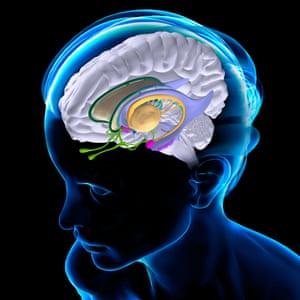
The human brain isn’t really empty, of course. But it does not contain most of the things people think it does – not even simple things such as ‘memories’.
For more than half a century now, psychologists, linguists, neuron scientists and other experts on human behavior have been asserting that the human brain works like a computer.
However the state of our understanding today of an integrated plan of brain function remains incomplete. The brain consists of at least several hundred distinct cell types whose complete classification is still at present elusive.
Ever since man walked out of Africa, developed different cultures and different languages we have being using his brains to kill.
To date we have burnt more neurons on self-destruction than survival.
Step back and view our species objectively from the outside, the way a zoologist would carefully observe any other animal, or see us the way every other creature perceives human beings. The brutal reality could not be more evident or more horrifying.
We are the most relentless yet oblivious killers on Earth.
Our violence operates far outside the bounds of any other species. Human beings kill anything. Slaughter is a defining behavior of our species. We kill all other creatures, and we kill our own. We kill strangers. We kill people who are different from us, in appearance, beliefs, race, and social status. We kill ourselves in suicide. We kill for advantage and for revenge, we kill for entertainment:
I would venture to say that there has not been one day — not one single day — since the beginning of recorded history when one human being has not killed another. And I don’t mean by accident. I mean deliberately. With purposeful intent.
Not one.
Single.
Day.
…in thousand and thousands of years.
So is violence in our genes. As Mr Darwin put it; Survival of the Fittest. Evolution requires a struggle to survive, so killing is a must.
Just look at the twentieth century, numerous people were killed in the Armenian Genocide in Turkey, the Jews suffered in the II World War, Ethnic massacres happened in Rwanda and former Yugoslavia.
Today, several Islamic terrorist groups like ISIS and Boko Haram are butchering people in the name of Islam, while thousands of Rohingya Muslims flee Myanmar due to ethnic cleansing the shadow of a nuclear war ( that will bring equality to all, save us all from climate change and mass migration, ) can be summed up in one word: BRAINLESS.
Yet there’s no reason to assume that our empty brains will be adequate vessels for the voyage towards that answer.
Humanity has been trying to figure out how to bring an end to war since living beings evolved into self-consciousness on this planet. This effort now involves thousands of researchers, consumes billions of dollars in funding, and has generated a vast literature consisting of both technical and mainstream articles and books.
This latest up tick in the hostilities between these parties is almost irrelevant at this stage. Each side, of course, insists that it is only defending itself. And it is. Seen from each side’s point of view, all each side is doing is defending itself. Aggression is always called defense. Unfortunately every religion thinks it is the right one.
All that matters today is what it would take to end the killing, to end the aggression and counter-aggression that is threatening to embroil a whole region — and even, conceivably, the entire world at some level, if not directly — in a war that could prove unspeakably tragic for the entire human race, turning anyone that survives into an atheist, as there will be no invisible means of support as everything will glow.
But if there is a biological explanation for something, it is impossible to hold someone responsible for it. This is simply untrue.
This is a question that has been asked for many centuries. The Greeks philosopher Plato explained violent behavior by the fact that humans had a dual character because of their greedy nature. The Church always blamed the devil for possessing violent people.
Branding behaviors as incurable is hogwash fortuitously most humans are endowed with a sense of disgust but our kinship is often exploited by nations and religions, not surprisingly they are two institutions that are responsible for most, if not all, wars.
There is no satisfying answer to the question of why we go to war other than it feels good to protect our kinship.
All behavior is the product of the brain, and the brain is a product of genetics and the environment. Genes change at a glacial pace. But territory and society shift constantly and they are molded by man.
So here is what we are not born with: information, data, rules, software, knowledge, lexicons, representations, algorithms, programs, models, memories, images, processors, subroutines, encoders, decoders, symbols, or buffers – design elements that allow digital computers to behave somewhat intelligently. Not only are we not born with such things, we also don’t develop them – ever. We never did, never will.
We don’t store words or the rules that tell us how to manipulate them. We don’t create representations of visual stimuli, store them in a short-term memory buffer, and then transfer the representation into a long-term memory device. We don’t retrieve information or images or words from memory registers.
The idea that memories are stored in individual neurons is preposterous:
Given this reality, why do so many scientists talk about our mental life as if we were computers?
Now here is the good or bad news.
Computers do all of these things, but organisms do not. Computers really do operate on symbolic representations of the world. They really store and retrieve. They really process. They really have physical memories. They really are guided in everything they do, without exception, by algorithms.
Uncontrolled Algorithms will kill us. Now more people have mobile phones than have toilets.
Everything we know about the universe tells us that reality consists only of physical things: atoms and their component particles, busily colliding and combining.
If a smartphone could be conscious, and were it to ultimately prove that the one thing the human mind is incapable of comprehending is itself.
Since anything at all that matters, in life, only does so as a consequence of its impact on conscious brains, could you ever know that it was true?
Our smartphones have become Swiss army knife–like appliances that include a dictionary, calculator, web browser, email, Game Boy, appointment calendar, voice recorder, guitar tuner, weather forecaster, GPS, texter, tweeter, Facebook updater, and flashlight.
The future of the brain and the implications on ethics and human behavior is now in the hands of Algorithms.
Speculating about the ‘algorithms’ of the brain, how the brain ‘processes data’, and even how it superficially resembles integrated circuits in its structure is now all the rage.
In 2013 the European Commission awarded neuron scientist Henry Markram $1.3 billion to pursue an audacious goal: building a simulation of the human brain. It is now in disarray. There’s a fly in the ointment. Although we think we’re doing several things at once, multitasking, this is a powerful and diabolical illusion.
It is the ultimate empty-caloried brain candy.
Instead of reaping the big rewards that come from sustained, focused effort, we instead reap empty rewards from completing a thousand little sugar-coated tasks.
We are sacrificing efficiency and deep concentration. Each time we check a Twitter feed or Facebook update, we encounter something novel and feel more connected socially (in a kind of weird, impersonal cyber way) and get another dollop of reward hormones.
It is the dumb, novelty-seeking portion of the brain driving the limbic system that induces this feeling of pleasure, not the planning, scheduling, higher-level thought centres in the prefrontal cortex. Make no mistake: texting, email-, Facebook- and Twitter-checking constitute a neural addiction to brainless thought.
Because it is limited in characters, it discourages thoughtful discussion or any level of detail. Texting discourages thoughtful discussion or any level of detail, and its addictive problems are compounded by its hyper-immediacy.
Faulty conclusion: All entities that are capable of behaving intelligently are information processors.
It is safe to say that we aren’t completely doomed to continue killing each other, as the advancement of culture appears not to be having a civilizing effect on us.
The enormous industry of print and broadcast journalism serves predominantly to document our killing.
You know who to write to. Write to them. You know whom to contact. Contact them. Right now.Our world’s leaders need someone to lead them. We thought they were going to lead us, but they can’t. Or won’t. So we need to lead them.
With the amount and duration of wars happening right now in 2017, it’s hard not to get desensitized to death and violence. It really is. That means we have to work harder to stay informed.
Every adult is responsible for his or hers choices. Yes you can change channel or turn you mobile phone off but gambling is now a large revenue source for many governments, due to its ease of implementation, popular appeal and high real tax rate it can bear (up to around 40%).
It is often promoted by spending on “good causes” designated as “additional” to existing government activity.
However gambling taxes are effectively hypothecated (specifically designated rather than fed into the general tax pool) they are often, diverted into education, health, and social and economic development, potentially substituting for taxation raised elsewhere in the economy.
But this is not the problem, it is the potential to carry a 24-hour bookmakers shop around in our pocket, all day, every day – simply by downloading one of the many gambling apps.
The advent of online gambling, in combination with the development smartphones is making “responsible gambling” a joke.
To market it as harmless fun and entertainment, when it’s been totally designed to addict an individual and take all of their money, is obscene.
Gambling companies send ‘free bet’ incentives straight to your phone –particularly if they see that you haven’t been using the app for a while.
Technology advances are making a joke of gambling laws. Remote gambling circumvents all laws and needs to be regulated like an other dangerous commodity or activity – alcohol, cigarettes, gun licences, etc.
(888, one of Britain’s biggest online gambling firms, is to pay a record penalty package of over £7.8 million as a result of serious failings in its handling of vulnerable customers.)
For every person with a gambling problem, there are estimated to be a further 5-10 people affected,.
Pathological gambling, this form of a gambling addiction persists even in the face of appalling damages to the individual’s personal, professional or family life, and is classified in the field of mental health as a disorder.
The undesirable social and financial consequence of excessive and unbridled gambling is, of course, well-known however gambling has become widely viewed as a socially acceptable form of recreation.
Ireland has the second highest spend, per person, on gambling – in the world.
Unlucky Brits lost a record £12.6 billion on gambling last year – that’s up £1.4bn on the year before. Online gambling accounted for almost a third of latest gambling losses, with punters losing £3.6 billion to internet betting and online casino and bingo sites, almost £300 per person.
The UK gambling industry is worth £7.1 billion, in the form of point of consumption tax, not including the National Lottery.
As a general rule, the minimum legal age for gambling in the UK is 18 years old. This applies to adult gaming centers, betting shops, bingo halls, casinos, racetracks and online gambling. The exceptions to this are the National Lottery, lotteries and football pools – you’re allowed to take part in these from the age of 16 as well as some non-commercial gambling, or low stakes and prizes gambling.
Answer me this existing laws were not drafted with internet online gambling in mind. How many online of remote gambling activities verify the punters age. Online gaming is the industry’s fastest-growing sector, and accounted for 11% of the $385bn of gambling profits posted in 2016.
There is a limit to what regulations can do.
Most of what we know [about gambling harm] is through research and evidence heavily influenced by industry.
Industry funds all the research in the country through Gamble Aware. (Gamble Aware is the charity formerly known as the Responsible Gambling Trust, charged by the department for culture, media and sport with commissioning research into, and treatment of, gambling harm.) Five of Gamble Aware’s 13 trustees have direct links to the gambling industry.
In the financial year 2015-16, the UK government raised £7.6m in contributions from the gambling industry. Of that it spent £919,654 on research. Meanwhile £3,788,698 was given to the gambling harm treatment charity Gamcare. Of Gamcare’s 11 trustees, six have direct connections to the gambling industry.
The amount of gambling adverts on TV, and social media platforms are spiraling out of control.
I am sick to the back teeth of seeing advert after advert after advert for online casinos “spend £10 to get £30 to bet with” at nearly every ad break or bet in play (betting on football matches) that now pollutes nearly ever sport event shown on TV. We need to radical change the current gambling advertisements on the grounds that they contravene principles of consumer protection or the requirement to protect children and young people, and more generally to call into question the role of advertising in promoting gambling, particularly at hours and on media seen by children.
This frenzy of advertising is caped of by the Lotto results that are now deems worthy of the BBC main line – Ten O clock News.
The prevalence of gambling disorders worldwide is highly variable, ranging from 1 in 500 people (Norway) to as high as 1 in 20 people (Hong Kong). In the USA, around 1% of the population are pathological gamblers (those with the worst problem), while a further 1% to 2% are problem gamblers (those with the next most serious level of addiction).
In the UK, around one in 200 people is a pathological gambler, while in Australia the prevalence is 0.5% to 1% depending on the region studied.
The explosion of gambling opportunities-especially online-will increase the visibility of gambling disorders, and people not currently exposed to gambling opportunities will increasingly have access.
Although technological advance his long been associated with improved gambling opportunities, there is little written in the literature explicitly pointing out this link and its implications for problem gamblers.
Technology is and will continue to provide new market opportunities not only in the shape of internet gambling but also in the shape of more technologically advanced slot machines, video lottery terminals (VLTs), interactive television gambling and telephone wagering. In addition, other
established gambling forms will become more technologically driven
(e.g., bingo, keno). Linked jackpots for every type of gambling activity
appear to becoming the norm.
The most frequent gambling activities across most countries are lotteries, scratch cards, sports betting, and gambling machines.
The gambling sector differs from other economic activities, because it is regulated almost exclusively at the national level rather than by the European Union law. This allowed companies to move offshore to tax havens such as Gibraltar, Malta, The Caymans, etc., from where they could allow punters to bet tax-free.
Australia’s gambling addiction has made it the world’s biggest loser. The country spent $US761 ($992) per capita last year, with Hong Kong and Finland coming in second and third place, according to UK-based Global Betting and Gaming Consultants.
The biggest prize by far is the United States, where bettors’ total losses reached $117bn last year. The untapped potential is enormous: Americans wagered $150bn illegally on sports alone last year, by one estimate.
The US, with its casinos mecca Las Vegas, ranked seventh.
LAS VEGAS may be synonymous with gambling, but the industry’s biggest expo is actually held in London.
In the end all life is a gamble over which we have little if any control but would it not be a step in the right direction if our laws ensured that all gambling generated revenues, was more directly related to local need, in order that issues of community harm and benefit from gambling can be more effectively addressed.
There is no social or national advantage to these gambling companies, they serve only to line the pockets of the already rich and can cause misery to those caught in their grasp.
When one looks at the world of gambling, the chances of this happening is zero.
Not only is technology a tool of the market but technology can also be a regulatory tool.
All comments appreciated, all like clicks chucked in the bin.
Watching the pathetic British approach to negotiating its departure from the EU, ( In as much as England seems to think that it is the EU that is leaving England rather than the other way around.)
If the European Union was negotiating to join the UK it would be understandable that UK Justice system would apply.
It beggars belief that UK negotiators think their EU counterparts lack imagination and flexibility.
The UK side appear to have left all planning and preparation for this incredibly complex operation until after the referendum, and then to have stitched together a bunch of deliberately ambiguous “positions.”
It behooves England to remember that they initiated this stupidity and to be grateful the EU is still prepared to talk.
Michel Barnier, chief negotiator for the European Union is right to insist that the UK is subject to the European court of justice (ECJ) which can hold Britain to whatever treaty is agreed after Brexit whether there is a transition period or not.
He would be right to remind Mr Fox who is claiming the EU is bribing the Uk that his Conservative party is a dab hand at bribery using in effect £1bn of public money, buying DUP MPs’ in Northern Ireland votes. A sellout to all those who voted Conservative.
The UK that needs to engage with reality – and a little flexibility wouldn’t come amiss! Facts do not cease to exist because they are ignored. Between two stools one falls to the ground.
This is where the negotiations stand so for.
What the EU wants: The EU’s basic position is that EU citizens living in the UK and UK citizens living in the EU should keep the same rights as they do now, including those ‘super-rights’ which they hold over and above British citizens in the UK. The EU has also shown a willingness to compromise in these areas, although new disagreements have opened up over its hardened stance in other areas, such as over local election voting rights and the right to move between different member states for UK citizens in the EU.
What’s the catch?
The EU has demanded that the European Court of Justice maintains a direct ability to enforce EU citizens’ rights in the UK after Brexit, while the UK has been adamant that the direct jurisdiction of the ECJ will end.
What the UK wants: To pay as little as possible, and to agree on payment as late as possible. The UK has committed to paying what it believes it legally owes, but so far its approach has been to critique the EU’s proposed financial settlement, rather than submit a proposal of its own. British officials are concerned about being “salami-sliced” by the EU over the ‘bill’ and are hoping to hold out for as long as possible before agreeing to any figure, in order to maximise the UK’s leverage when it comes to issue of the future trading relationship later on in the negotiations.
What the EU wants: The EU is anything but frugal, and the UK’s impending departure leaves a net €12bn hole looming in its annual budget. Failure to secure a significant sum from the UK would force the EU into the uncomfortable position of either having to go round the remaining wealthy member states with a begging bowl and asking them to cough up more, or having to cancel future projects funded via the EU budget. Money, and lots of it, is a key priority for the EU in the negotiations.
What’s the catch? Any significant payment presents the UK with its own problems in terms of selling the deal politically at home. While there is some logic to the claims that Britain should not be paying at all – can anyone imagine the EU handing over a large lump sum in the case of a net recipient such as Poland or Greece deciding to leave – this is ultimately an area where long-term benefits outweigh the short-term costs for the UK. Phasing the payments over a transitional period could make it more palatable to the UK, as the ‘bill’ could then effectively take the form of Britain continuing with a similar level of annual budgetary contributions for a couple of extra years.
What the UK wants: The UK has made preserving peace and stability in Northern Ireland its top priority. To this end, it has unilaterally committed to a fully open and invisible border with no new physical infrastructure on the UK side of the border, preserving the Common Travel Area between the UK and the Republic of Ireland and the special status that Irish citizens enjoy in the UK, and writing the Good Friday Agreement into the Brexit withdrawal agreement directly to reaffirm all sides’ commitment to it. The UK has also called for a customs exemption for small and medium-sized businesses, which are primarily engaged in local cross-border economic activity, and the use of technological solutions and mutual recognition schemes to ensure that any other customs checks can take place remotely.
What’s the catch? The catch here is pretty hard to miss – coming up with any solution to how goods can move across a border is obviously not going to be possible until both sides have discussed what the customs arrangements for moving those goods will be. However, the EU has ruled out any discussion of trade and customs at this stage due to its rigid phasing of the negotiations. This internal contradiction may explain why they have yet to publish a position paper on the issue. Ultimately, the EU’s position may be that joint agreement on high-level principles satisfies its criteria for “sufficient progress” in this area of the negotiations, but the fact remains that no long-term solution will be possible until the EU engages on technical customs issues.
What the UK wants: The UK’s ‘future partnership paper’ outlines two possible models of a future relationship, although the UK’s intention at this stage appears to be primarily to spark further discussion about the relative merits of each scenario, rather than set out a definite position. One would involve maximising the use of technology and remote procedures to yield highly streamlined customs arrangements requiring a minimum of physical infrastructure and checks at borders themselves. The second essentially proposes the adoption of two parallel customs systems in the UK, one aligned with the EU and one with the rest of the world, although this has been dismissed by many critics as being too complicated to implement.
What’s the catch? As covered above, the obvious catch is that the Irish border issues cannot be resolved until the EU talks customs, although this has now led to accusations from the EU side that the UK is trying to use the Irish border issue to force them to talk about trade earlier than they want to. In this case, however, it’s hard to argue that it’s not just common sense.
What the EU wants: The EU has so far stuck to its guns on its demands that the ECJ keeps the direct ability to enforce the withdrawal agreement in the UK, particularly over citizens’ rights, although there have been hints that its position may be softening. Another issue is that the ECJ itself has a track record of vetoing the creation of new EU legal bodies which impinge on its position as the sole body allowed to adjudicate on the interpretation of EU law, which could pose a legal headache out of the Commission’s direct control.
What’s the catch?There are catches on both sides here. One problem for the Commission itself is that the negotiating directives handed down to it by the European Council of member state leaders may not allow it to compromise on an issue as significant as this without approval from the Council first. In practice, this means waiting until after Angela Merkel has secured her likely re-election in the German federal elections on 24 September. The catch for the UK lies in the precise detail of the agreement. If the UK accepts a model too similar to the EFTA Court, in practice this could lead to the UK still effectively being overruled by the ECJ when it tries to sign future trade deals or reform EU law, depending on how any post-Brexit agreements are worded.
What the UK wants: The UK is happy for legal cases already in progress at the Court of Justice of the European Union (of which the ECJ is one part) to continue after the day of withdrawal, but does not want new cases to be able to be brought to the CJEU after Brexit has happened, even if the facts of the case took place before withdrawal.
What the EU wants: The EU wants the CJEU to retain the right indefinitely to adjudicate over any legal case where the facts of the case took place before withdrawal, even if the case itself is not brought until years after Brexit.
What’s the catch? The EU has seemingly gotten itself into a mindset where it is convinced that the UK is liable to become some sort of rogue state overnight with no regard for the rule of law, unless the CJEU maintains a degree of direct authority in the UK. Any compromise on legal issues will be hard to achieve until the EU is able to temper it’s overly paranoid attitude in this area.
What the UK wants: The UK’s preferred option is to essentially keep the status quo by opting into existing EU regulations which govern the choice of jurisdiction in civil and commercial matters, for instance whether a dispute between a British and a German business should be heard in a British or German court. Otherwise, the UK would attempt to fall back on the Lugano Convention, which governs the EFTA states, or the Hague Conventions which apply more generally in international law.
What the EU wants: The EU’s civil and commercial paper is focused on resolving ongoing cases which are already in progress, rather than looking ahead to the future relationship, while the criminal cooperation paper also calls for the “orderly completion” of ongoing cases involving EU instruments such as the European Arrest Warrant. It also calls for both sides to be able to keep all confidential information exchanged by law enforcement agencies prior to Brexit.
What’s the catch? The difference is over the scope – the UK is looking ahead to the future relationship while the EU is committed to resolving ‘separation issues’ first. However, given the UK’s desire to continue existing EU processes, it will probably deem the EU’s specific separation demands in this area to be largely acceptable.
What the UK wants: The UK is seeking continued close cooperation with the EU on nuclear issues along with a “smooth transition” to a new UK safeguards regime with “no interruption in safeguards arrangements”. The UK wants to prioritise minimising barriers to civil nuclear trade and ensuring continued mobility of skilled nuclear workers and researchers, along with continued collaboration on nuclear research and development, as well as resolving issues around ownership of existing nuclear materials and waste.
What the EU wants: The EU paper is more limited in scope, focusing mainly on issues of safeguarding arrangements and ownership of nuclear materials and waste. The EU also wants the UK to pay for the transfer of any safeguarding property in the UK as part of the financial settlement.
What’s the catch? The UK’s heavy involvement in European civil nuclear activities mean that there is strong mutual benefit to both sides agreeing a deal. However, with a number of EU states shunning nuclear power altogether, including Germany, it may be lower down the EU’s list of priorities than the UK’s, although France’s heavy reliance on nuclear power should offset Germany’s indifference.
What the UK wants: The UK wants all goods already legally placed on the market at the time of withdrawal to continue to be able to be legally sold, as well as goods which have already undergone compliance procedures, even if they have not yet reached the market. The UK also wants services supplied along with those goods, such as maintenance and repair services, to continue to be supplied without added restrictions.
What the EU wants: The EU also wants goods already on the market to continue to be legally sold without added restrictions, although their paper does not address compliance-checked goods yet to go on sale or services accompanying goods, as proposed by the UK.
What’s the catch? There may be disagreement over the scope, as outlined above, although it is possible that the EU had simply not got round to considering the additional cases outlined by the UK at the time of publishing its own position paper.
What the UK wants: The UK wants to preserve as close to the status quo as possible on data protection and data transfers between the UK and the EU. The EU’s new General Data Protection Regulation (GDPR) comes into force in May next year and will be implemented by the UK before its departure. The UK is seeking an enhanced version of the EU’s existing ‘adequacy model’ which it currently uses to grant approval to third countries for EU data sharing, including Switzerland and New Zealand.
What the EU wants: The EU has not yet indicated its position on data protection.
What’s the catch? The decision to grant data protection ‘adequacy’ to third countries is a decision of the Commission which can be unilaterally withdrawn, while securing approval has often proved to be a lengthy and difficult process, with even Japan failing to receive approval in the past. The UK will want a more permanent bilateral agreement than this to ensure ongoing certainty.
In my opinion it is only the lawyers that are going to benefit from any agreement.
Stupidity consist in waiting to come to a conclusion. Nothing is so exhausting as indecision, and nothing is so futile. Long term planning does not deal with future decisions, but with the future of present decisions.
What ever about Europe it sticks out like a sore tum that if it was not for trade and free movement of people England would be a country heading for bankruptcy.
It is beyond comprehension that a government refuses to offer the British public a chance to choose again.
All comments appreciated. All like clicks chucked in the bin.
( A follow on read: Twelve minutes from the post – WHAT IS THE CONCEPT OF NOW.)
While writing:( what is the concept of now) my daughter suggested I write a happy post. This post is therefore dedicated to her continuing search for happiness.
What is happiness? How do we find the key to happiness?
Is happiness the sole purpose of life or is it just good health with a bad memory.
To day this is the default view. Skepticism about the afterlife drives humankind to seek not only immortality but also earthly happiness.
Who would like to live for ever in eternal misery?
What stands between us and an answer to this deceptively complex questions is the problem of subjectivity –happiness means different things to different people.
To behaviorist, happiness is a cocktail of emotions we experience when we do something good or positive. To neurologists, happiness is the experience of a flood of hormones released in the brain as a reward for behavior that prolongs survival. According to the tenets of several major religions, happiness indicates the presence of God.
This question has no straightforward answer, because the meaning of the question itself is unclear. What exactly is being asked? Perhaps you want to know what the word ‘happiness’ means. In that case your inquiry is linguistic.
Chances are you had something more interesting in mind: perhaps you want to know about the thing, happiness, itself. Is it pleasure, a life of prosperity, something else? Yet we can’t answer that question until we have some notion of what we mean by the word.
Is there anything more to being happy than just thinking you’re happy?
Do we have the power to choose to be happy or unhappy?
Are all kinds of happiness created equal?
Happiness is not a single all-encompassing concept it is a complex the notion.
A state of mind. What is this state of mind we call happiness? Typical answers to this question include life satisfaction, pleasure, or a positive emotional condition.
A life that goes well for the person leading it. Perhaps you are a high-achieving intellectual who thinks that only ignoramuses can be happy. On this sort of view, happy people are to be pitied, not envied.
We are inclined to think that pleasure is the key to happiness.
Is it purpose, or goal?
Has a goal that is an end-in-itself, nothing that he does is actually worth doing.
For most people, happiness is a central aspect of well-being, since most people very much desire to be happy. Even a slave might come to internalize the values of his oppressors and be happy, and this strikes most as an unenviable life indeed.
Is happiness overrated?
How if at all should one pursue happiness as part of a good life?
Is it possible to objectify and even quantify so subjective and elusive a quality as happiness? The individual pursuit of happiness may be subject to non-moral norms as well, prudence being the most obvious among them.
The pursuit of happiness is self-defeating especially when it is associated with pleasure. The virtue of compassion or kindness, giving not receiving, produce happiness.
Philosophical “theories of happiness” can be about either of at least two different things: well-being, or a state of mind. To be happy, it seems, is just to be in a certain sort of psychological state or condition.
Is it a psychological state (for example, feeling overall more pleasure than pain) and happiness as a positive evaluation of your life, even if it has involved more pain than pleasure.
Above all, there is the fundamental question: In which sense, if any, is happiness a proper goal of a human life?
Wealth, beauty, and pleasure, for example, have little effect on happiness.
What is needed to achieve genuine happiness?
Answer me this: Would you choose to attach ourselves to a device that would produce a constant state of intense pleasure, even if we never achieved anything in our lives other than experiencing this pleasure. We all need to answer this question for ourselves.
Morality itself is a worthy goal of human existence. Our good or bad fortune can play a part in determining our happiness; for example, happiness can be affected by factors as our material circumstances, our place in society, and even our looks, whether we are married or not. In the long run marriage is not a major source of either happiness or unhappiness.
When asked Aristotle said” that the supreme good is happiness.”
And of this nature happiness is mostly thought to be, for this we choose always for its own sake, and never with a view to anything further: whereas honour, pleasure, intellect, in fact every excellence we choose for their own sakes, it is true, but we choose them also with a view to happiness, conceiving that through their instrumentality we shall be happy: but no man chooses happiness with a view to them, nor in fact with a view to any other thing whatsoever.
But what is happiness?
For Aristotle, it is by understanding the distinctive function of a thing that one can understand its essence.
Whereas human beings need nourishment like plants and have sentience like animals, their distinctive function, says Aristotle, is their unique capacity to reason. Thus, our supreme good, or happiness, is to lead a life that enables us to use and develop our reason, and that is in accordance with reason. Unlike amusement or pleasure, which can also be enjoyed by animals, happiness is not a state but an activity. And like virtue or goodness, it is profound and enduring.
By living our life to the full according to our essential nature as rational beings, we are bound to become happy regardless.
For this reason, happiness is more a question of behavior and of habit—of virtue—than of luck; a person who cultivates such behaviors and habits is able to bear his misfortunes with balance and perspective, and thus can never be said to be truly unhappy.
Some goals are subordinate to other goals, which are themselves subordinate to yet other goals, but happiness needs sadness. Without sadness there can be no happy moments unlike pleasure which can be manufactured by algorithms.
Being happy doesn’t come easy with the stress of modern life. Take for instance the average American who uses sixty times more energy than the average stone age hunter-gatherer. Is he sixty times happier?
It took just a piece of bread to make a starving medieval peasant joyful.
It appears that even with all our unprecedented accomplishments even if we provided free food, ensured world peace, provided free medical care, gave everyone a thousand bitcoins the Capitalism system ensures that the ceiling of happiness remains out of reach.
Our exceptions are driven by our biochemistry level rather than our economic, social or political situation. Pleasure v pain. Unpleasant bodily sensations.
PEOPLE WILL ALWAYS DISAPPOINT TO REMAIN HAPPY YOU MUST LEARN HOW TO FORGIVE, FORGET, “ Comparison is the thief of joy.”
Self-actualization is Happiness. Joy goes in and out of vogue. We can deceive ourselves into thinking we’re happy when we’re not and we can be happy without realizing it.
Happy.
It’s pretty hard to tell what does bring happiness; poverty and wealth have both failed.
I would be as happy as a pig in shit if I could live in THE CONCEPT OF NOW.
All comments happily appreciated all like clicks chucked in the bin.
( A mind-blowing, thought provoking ten minute read)
Humans seem to be the only animals who know they have to die sometimes. Therefore, the concept of time is fundamental to us and we have to argue from the basis of our transitory existence.
We can measure it, but we can’t feel it so we can’t experience it.
Is the concept of “now” an illusion or is now the past.
We know how to calculate the effects of velocity and gravitational potential on physical processes, we explain this in terms of time dilation, but we do not actually know that it is time that changes, and we most certainly do not know what time is. We completely avoid the fact that time flows, or that there is a special moment in time we refer to as “now.”
Time feels like one of the only constants in life — it passes day after day at the same pace.
You never be able to see now as the brain take time to process it.
So, will now as it is decoupled by external Algorithms that organise our lives lose it meaning or is there a time gene ticking in the twilight of our DNA.
Google it and see. Know thyself is never easier or cheaper.
One true time is the tick of imagination, without imagination there can be no time. It’s not, because time doesn’t exist, it’s just an illusion of the human mind, everything happens in the present, there was no past, there is no future, only a now that is invisible.
Change needs time, different moments in time need time but how does time work.
Time exists in shapeless color. It flows around us but there is no answer to how it works. Fortuitously or unfortunately our brains need time to process (but at different speeds) to predict the future, to recall the past, or to realize the present.
So when is now?
Is it the delay period for our brain to replace what we cannot see?
Time can only go forward. If it were possible for time to go backwards, then there would be no past, present, or future.
I am sure I am not the first nor will I be the last person to ask, just what time is.
We don’t know what it is or how it works but all moments of time are equally real.
The concept of “now” is completely alien from all physics, although Einstein despaired of his inability to understand it. He worried that its reality might lie outside of physics.
We’ve all heard the phrase that “time is relative,” but it can be difficult to wrap the mind around what that actually means. Relative to what as it flow differently in separate area.
Time is always relative to the traveler. So is it possible to travel through time while stopping time. Does each universes have its own timeline?
We really need to understand nature to properly understand the world of time. Time goes on no matter what. It is or it is not fundamental to the world?
The existence of now is not yet explained by physics, but that means that we don’t yet have the best theoretical understanding of time.
Space-travel with speeds close to that of light may be unfathomable far beyond the reach of current technology. But sending elementary particles on round trips in a particle accelerator at 99.99999 percent of light speed is routine.
We’ll ever be travelling back in time.. but you could never meet your future you!!!!!
In Einstein’s special theory of relativity, there is no such thing as “time” in the singular.
Time passes differently for different observers, depending on the observers’ motion. The prime example is that of the two hypothetical twins: One of them stays at home, on Earth. The other journeys into space in an ultra-fast rocket, nearly as fast as the speed of light, before returning home, he has slightly gone back in time-younger.
Stephen Hawking is generally considered one of the smartest people on Earth. “We are each free to believe what we want, and it’s my view that the simplest explanation is; there is no god. No one created our universe, and no one directs our fate.” He believes in spontaneous creation from nothing.
Physics on its own will not settle the question of why there is something rather than nothing.
No one can prove or disprove the existence of an immaterial invisible being. What Hawking did do is show how the universe could come into existence without a Prime Mover to set things into motion.
He re-acquaints us with the standard debate between two eternal ‘somethings’-–the uni/multiverse and God.” We do not need a God who is outside space-time and who Himself was created from nothing, to create the universe. God is superfluous.
Space time however is a now slice of time that without motion goes nowhere, with motion it might encompass a worm hole to past present and future.
We all measure our experience in space-time differently. That’s because space-time isn’t flat — it’s curved, and it can be warped by matter and energy.
So technically, gravity doesn’t affect time, rather, affected time is what called gravity. Gravity is only the force which can decelerate the time…so it is not time. Every object attracts every other object with a force that is proportional to the product of their masses and inversely proportional to the square of the distance between them. So it stand to reason that time travels at different speeds.
In my opinion that mover is not gravity, its the space that occupies the space between dark matter and anti matter.
This bizarre ingredient dark matter dominates the universe but does not emit light or energy, but studies of distant supernovae revealed that the universe today is expanding faster than it was in the past, not slower, indicating that the expansion is accelerating.
This would only be possible if the universe contained enough energy to overcome gravity — dark energy.
So what we are saying is that dark matter particle interactions with ordinary matter to produce dark energy.
The familiar material of the universe, known as baryonic matter, is composed of protons, neutrons and electrons and sterile neutrinos only interact with regular matter through gravity, making it a strong candidate for dark matter.
However most of the matter in the universe is something yet unseen.
Now we come to antimatter, it is routinely made in high-energy collisions inside particle smashers the world over.
Every particle has an antiparticle with the same mass but the opposite electric charge. The proton has the negatively charged antiproton; the electron has the positively charged anti-electron, or positron.
Notoriously, matter and antimatter destroy each other, or annihilate, whenever they come into contact. These are also produced in some radioactive decays.
Time passing is actually a function of velocity, although velocity is distance over time.
Time is the 4th dimension, but we all know it is qualitatively different. We can stand still in space (choose any coordinate system) but we can’t stand still in time. Physics ignores this difference, and uses relativity theory to relate aspects of space and time intervals.
Ultimately, time is a parameter that measures how something changes with respect to a reference clock changing. By the time I have written this post and you have read it neither of us can get back the time we spent doing so.
“In my opinion, there is no aspect of reality beyond the reach of the human mind.” This is a good reason why time must only go forward. I will never travel in time but someone will, one day.
Perhaps there was no time before the big bang, it emerged as a consequence of the formation of a black hole in a higher-dimensional universe.
This seems unlikely as there must have being time before the big bang. Why? Because the past is different from the future. Why did the Big Bang have the properties it did because over time it developed them.
The observable universe is not all there is. It’s part of a bigger multiverse and the Big Bang was not the beginning of these universes.
Causes precede effects.
We remember the past but we don’t remember the future because at the center of Universes there is no time.
Why because time as a visible product does not exist.
However rest assured our personal data is probable the most valuable resource most humans still have. In time Google, Face Book and Twitter will become the all-knowing time oracles that will evolve into agents and finally into sovereigns.
Like Big Ben a black hole can never get back the time it lost, it remains silent.
I know what time is until you ask me for a definition about it, and then I can’t give it to you.
All comments appreciated, all like clicks chucked in the bin.
Science is converging on an all-encompassing dogma, which says that organism are algorithms a, and life is data processing. Intelligence is decoupling from consciousness. Non-conscious but highly intelligent algorithms may soon know us better than we know ourselves.
Every day we absorb countless data bits.
This relentless flow of data gives rise to new inventions, disruptions that nobody plans, controls or fully comprehends.
For instance no one knows where global politics is heading, or how the global economy functions or what the climate is doing.
For all intensive purpose we don’t give a fuck providing we don’t pick up a virus, and even then our wireless brains want to remain in the flow of data.
Algorithms are constantly watching us, monitoring our thoughts,and feelings to such an extent that the meaning of life is disappearing into the invisible hand of Dataisim called Google, Face Book. Twitter and their disciples.
Experiences are valueless if not shared with an Algorithm on a smart phone.
No wonder we are all busy converting our experiences into data.
Your Dog or Cat or Fridge, might soon have a Facebook or Twitter account.
By equating the human experience with data patterns it is undermining the main source of authority, meaning of life, and this shift will not be just a philosophical revolution, it will be a practical revolution.
After a few hundred years of data flow your feelings which were once your best algorithms will have being replaced by a filtered personal platform or platforms all attached to the Cloud for an annual fee.
Its good-by democracy, elections. Have you had your DNA sequenced, are you wearing a biometric device that is connected to your smart phone.
The personal cloud god algorithm will tell you who to marry, what career to follow, what to put in your fridge.
All of this begs the question are we humans developing a seed algorithm that when it combines with machine learning will develop its own path, going where no human has gone before or can follow.
We have no idea whether it will develop consciousness and subjective experience.
Before we are reduced to non- conscious algorithms would it not be prudent to establish a New World organisation that vets all technology against our core values as humans. ( See previous posts)
What prevents us from collaborating in a global effort to solve climate change, or any other problem is probable the same reason why we are being exploited by Social media. Humans are deeply divided by nationalism and sectarian beliefs.. However with knowledge comes responsibility. So this failure is a global moral failure, as well as a failure of political will.
The world is changing faster than ever before with us relinquishing authority to crowd wisdom/data in the form of social media that is being mining by capitalist organisations which is governed by algorithms.
While inequality on all fronts grows and our world organisations become irrelevant we are flowed with irrelevant information.
The answer is bleakly simple: We cannot get these issues on our political radar screens without a huge prolong popular uprising. It looks likehumanity will soon be a ripple within the cosmic data flow.
All comments appreciated, all like clicks chucked in the bin.
What are the serious civic consequences for a world where information flows largely through social networks?
Science is converging on an all-encompassing dogma, which says that organism are algorithms a, and life is data processing. Intelligence is decoupling from consciousness. Non-conscious but highly intelligent algorithms may soon know us better than we know ourselves. Social media inhibiting our ability to explore our thoughts and feelings so we can develop as individuals?
When one looks at the current state of the world is Social media tearing apart of the fabric of our societies … We’re getting countries where one half just doesn’t know anything at all about the other. Social media hasn’t just swallowed journalism, it has swallowed everything.
When we click ‘share’ what exactly are we saying.
More often than not, the stories we all decide to share seem utterly random.
But it might also be true to say that it is indirectly responsible for terrorists acts. It certainly contributed and was a product of the so-called Arabian spring.
It can spread extremists’ messages virally in minutes. Imagine getting news about middle East issues presented only by Jihadists, because somehow they’ve managed to manipulate social media. There is no “magic algorithm” for identifying terrorist rhetoric and recruitment efforts on the internet.
They say that Social media have revolutionized the ways in which people get involved with causes. In short, it hasn’t. But it has certainly changed the ways in which people can influence others. The more people disclosed about themselves on social media, the more privacy they said they desired.
It has swallowed political campaigns, banking systems, personal histories, the leisure industry, retail, even government and security.
The rise of Donald Trump is ‘a symptom of the mass media’s growing weakness’,especially in controlling the limits of what it is acceptable to say”. (A similar case could be made for the Brexit campaign.)
These issues underpinning digital culture, and realise that the shift from print to digital media was never just about technology. Technology and media do not exist in isolation – they help shape society, just as they are shaped by it in turn.
Social media has swallowed the news – threatening the funding of public-interest reporting and ushering in an era when everyone has their own facts. But the consequences go far beyond journalism.
One thing is for certain with “Filter bubble” the pathway into the digital future is not going to be a linear journey up a ladder or pyramid.
If we are all not to become chips feeding algorithms Facebook, Google and Twitter must deal more effectively with the darker elements of the platforms they have created.
Algorithms such as the one that powers Facebook’s news feed are designed to give us more of what they think we want – which means that the version of the world we encounter every day in our own personal stream has been invisibly curated to reinforce our pre-existing beliefs.
ISIS has a well-established playbook for using social media and other online channels to attract new recruits and encourage them to act on the terrorist group’s behalf.
Why are we allowing this to happen?
One reason for the companies’ fragmented approach to purging videos that support or incite terrorism is the lack of a universal definition of “terrorist” or “extremist” content—social media companies are unlikely to want to rely solely on the judgment of the CEP or their peers.
Those running social media platforms should ensure that “their algorithms priorities countervailing views and news that’s important, not just the stuff that’s most popular or most self-validating.”
It’s also because we’re mainly interested in ourselves but the problem is that if you reveal everything about yourself or it’s discoverable with a Google search, you may be diminished in your capacity for intimacy.
It feels like theft when someone tells your secrets or data miners piece together your personal history — using your browsing habits, online purchases and social networks — and sell it.
Facebook, are the single fastest-growing source of news referrals online—with more than a billion items shared each day
.No longer do we balancing this type of news exposure with exposure to news that is pertinent to world events?
The problem is the sophisticated algorithms that filter what you read or see.
Are we being entirely closed in on ourselves and our personal world or are we making an effort to step outside of ourselves and become informed about the world at large?
Increasing narcissism of mankind. Self-enhancement and social promotion. Or is sharing really grounded in very basic human motives.
Somebody wants to relate positively to somebody else. This argument might not hold much longer. Social media has created a dilemma around how we reach people.
Each individual may share for a different specific reason: which is really related to how we evolved as a race.
Social media may constitute a force that drives citizens to read news, or at least headlines and abstracts but it is desensitizing us to the problems we all face such as Climate change, Inequality, Wars, Refugees, to the extent that most of us don’t really know where we fit into the greater scheme of things.
Digital crowding, or data grabs perpetrated by Internet companies, or Surveillance, or our vulnerability to cybersnooping which is incompatible with a free society.
They all demonstrate less individuality and creativity.
Social endorsements fundamentally alter the way news is consumed
and shared on the internet. The ever-growing digital native news world social media doesn’t always facilitate conversation around the important issues of the day.
While we are exposed to more information each day because of social media venues such as Facebook and Twitter, we may not necessarily be more informed about critical issues occurring in the world.
We must start taking responsibility for creating the kind of world we want to live in by lobbing the formation of a new World Organisation that vet all technology and AI Algorithms to ensure they abide to our core human values. ( See previous Posts)
We were going to live online. It is going to be extraordinary. Yet what kind of living is this?
The opportunities for scholars exploring social media effects are vast in scope ( The psychic toll of the current data free-for-all.) and critical to our understanding of how communication is evolving.
Not “liking” anything on Facebook or following anyone on Twitter, making their social networks and preferences harder to track.
All comments appreciated all like clicks chucked in the bin )
≈ Comments Off on THE BEADY EYE SAYS: IS ENGLAND STILL SUFFERING FROM EMPIRE FEVER DISEASE.
( A ten minute read)
For better or worse the British Empire had a massive impact on the history of the world. It was in effect the plunder of a quarter of the world by one country.
There is probably no single reason to explain how Britain created such a vast institution and I have no intention here to attempt to give one, however it might help to examine the emotional residue of lost empire, and a peculiarly English neurosis about national pride.
Why? because, Britain has never faced up to the shame of empire.
Perhaps Brixit is going to uncover the monumental ignorance surrounding the subject and the EU referendum is the last throes of Empire working its way out of its systems.
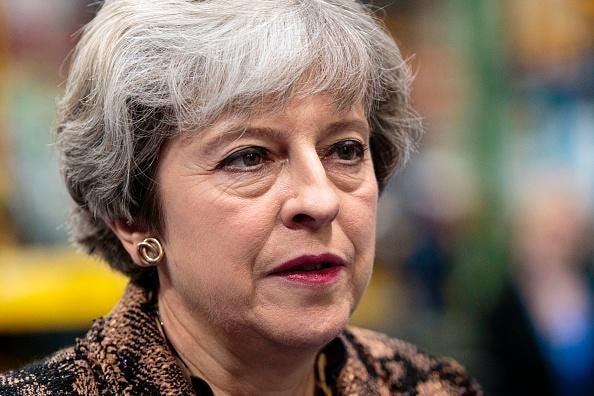
The consequences of departure appear to matter less that May’s vapid promise that Brexit will be “red, white and blue.”
It’s impossible to know the extent to which May believes her own myth-making but May’s global Britain will not be an open-armed nation going out into the world. It is a superannuated vision incubated by an amnesiac view of history in which the empire was an act of beneficence, and the outrages perpetrated in its name never happened.
Brexit may well turn out to be a reflection of the rectitude effects left by the collapse of the Empire.
In order to examine anything one needs to know it existed or happened in the first place so as to bear witness or to do anything about it.
The question is what were the motivations behind the creation of the Empire itself?
In world history was it a positive force or a negative force is in many ways irrelevant, the fact is that it was a transformative force.
It constantly mutated, evolved and changed in reaction to events, opportunities and threats. Motivated by greed and selfishness it consisted of an incredibly diverse set of actors through its many years of existence.
So at the risk of disturbing the past here are a few undeniable Empire facts.
Never mind that the majority of people under 50 on both sides of the English channel only have a hazy idea of what the Empire and Commonwealth were all about.
Never mind that approximately 35 million Indians died because of famines caused by British misrule, or that Winston Churchill blamed one of these famines on the “beastly” Indians for “breeding like rabbits”.
Never mind that concentration camp was invented by the British Empire.
Never mind that 5.5 million million Africans were forcibly taken to the Caribbean colonies by British slave traders, that the wealth they extracted came at a horrific cost and that while that wealth continues to flow through British society today, its extraction is still keenly felt in the islands of the West Indies.
( £16 to £17 billion in today’s money, or 40 percent of all government expenditure in 1834 – paid, after the abolition of slavery, to slave owners slaves were given nothing).
Never mind that the Empire was a system of wealth extraction in which the lives of millions of people were disregarded in favor of the greed of the British nation and those who served it.
Never mind that millions of Irish died in the Famine and the another million fled to the USA.
Never mind when it was all done that the British were erratically carving up their empire into new nations, imperial officials attempted to obliterate the truth of what had happened during empire through the systematic destruction and burning of official documents. In Delhi, this destruction went on for so long that the smoke from the fires hung above the Indian capital.
Never mind the bribe to the DUP.
Never mind Boris Johnson when he said that the continent of Africa “may be a blot, but it is not a blot upon our conscience. The problem is not that we were once in charge, but that we are not in charge any more”.
Never mind that in September of 2015, David Cameron told the Jamaican parliament that it needed to “move on from the painful legacy of slavery”, before announcing his government’s plan to build a £25 million prison on the island.
If we ignore or condone the never mind attitude the story of modern Britain is, in many ways, a tale of dwindling self-regard.
These imperial crimes – and many more – are either not known or glossed over, lost in the tide of colonial nostalgia and the fog of ignorance that is trying to put the Great back in Great Britain by evoking the indomitable spirit of a time when Britain bestrode the globe is a recipe for disillusionment.
If its true history is ever addressed in time, a less bellicose country could emerge — wryer, more self-aware, and chastened, perhaps, by the guilty knowledge that its national success-story was built on exploitation and conquest.
Such a response in Britain seems unlikely to happen, partly because many Brits do not know about – or refuse to accept – the darkness of empire.
Last year, Conservative MP Liam Fox tweeted that Britain “is one of the few countries in the European Union that does not need to bury its 20th century history”. Post-Brexit, Fox is now a cabinet minister, in charge of international trade – hardly the place you want an empire booster.
In January of 2016, a YouGov poll found that 44 percent of Britons (and 57 percent of Conservatives) thought their country’s “history of colonialism” was something to be proud of, and 43 percent thought the British Empire was a “good thing”.
The manufacturing of ignorance that keeps English people from learning about Britain’s imperial past continues to this day.
English history is not just Hitler and the Henry’s.
In place of realistic forecasts, May has offered a vision entitled “global Britain”. It seems like an obvious sham constructed around a massive contradiction: that by turning our backs on our closest neighbors we will open our arms to the world.
Of the over 100 former colonies, protectorates or dominions once ruled by Britain (depending on how you count them) 52 eventually transformed into the Commonwealth, although 31 are not that significant for trade.They still have populations of less than 1.2 million.
Persuading former colonial countries to sign trade deals might be difficult.
The Trans-Pacific Partnership recently sealed between the USA, Japan and ten other Pacific Rim countries included five Commonwealth countries. Canada has already done a deal with the EU. The UK would have to negotiate separate trade deals with its larger former colonies, if they were agreeable.
Sir John Seeley once stated that the British Empire was acquired in a ‘fit of absent-mindedness’. What he meant by this was that the Empire was acquired for a variety of reasons that did not add up to a coherent whole.
It assumed that British civilisation was innately superior to those it was subjugating.
Gain an income on the back of his nation’s prestige and maritime exploits.The famous ‘East India Company’ had to go cap in hand to the British Government to save it from bankruptcy but not before many individual investors and directors had made fortunes.
Christianity, Commerce and Civilisation.
How Brexit may influence the teaching of imperial history has yet to be written.
Defining the start and finish for the dates of the British Empire is not an easy task but I have a feeling that Brixit might achieve this goal.
My feeling is if you can’t escape fantasies of empire, if you can’t learn about what really happened in the name of the British crown, you will never be able to imagine a new identity for the country, an identity that can speak more fully to the multicultural nation you have become.
If you ever wanted evidence that England still suffer from Empire fantasy just look at the arrival yesterday of 65,000-tonne of new aircraft carriers at a cost £6.2bn for the pair, plus £200m rebuilding a jetty at HM Naval Base Portsmouth (while the country faces disintegration on many fronts, see previous post.)
It could not highlight its Empire aspirations in a world of increasing inequality. (This is the equivalent of 214 thousand free university places or 11,500 extra doctors) Not to mention the renewal of Trident another £205 billion or the HS2 which is set to cost £27.4bn.
The Royal Navy undoubtedly became a formidable military institution, but it was not always inevitable that Britannia would rule the waves. But did it turn England into a limited company, an institution, not a country or is the East India Company riding the waves again.
Its plain to see that your current trajectory, careering away from Europe with some puffed-up idea about your own importance, is undoubtedly a result of this failure of education, to face up to your Imperial crimes and demonstrate humility.
I’m often amazed at the lack of awareness of many British people about what actually went down under the Union Jack. Just as Ireland needs to emerge from its adolescent phase of a dwindling isolationist theocracy by facing certain issues head-on, Britain needs to emerge from its blood soaked past in the same manner because the issues won’t go away, they will always deeply underpin the prevailing narrative and culture.
“British Empire State of Mind”, will take a nuanced approach and “help provide some context for what’s going on in the world today, in terms of global inequality, poverty and how Britain helped create the conditions that caused and continue to perpetuate it now”.
As the UK leaves the European Union, so long as it’s a fantasy wrapped in the Union flag, with the bonkers notions that humans are divided in races, some superior to others etc the keeping of the lifeblood of commerce flowing freely will become more important than ever before.
In this nostalgic la-la-land, this gung-ho attitude to empire has spread much further than the corridors of power. Its legacy is still all around us.
The political imbroglio with a whole country’s future — and collective sanity — in its hands you would think that the British Crown which is a corporate sole and represents the legal embodiment of executive, legislative, and judicial governance would call a second referendum.
Unfortunately a second referendum on the terms of exit are viewed as acts of treason.
It seems, jingoism has become our asylum — a mad refuge from Brexit’s cold truths.
Its time England stopped negotiating with its self and the media and start to look after its people not an Empire that does not exist.
All comments appreciated all like clicks chucked in the bin.
≈ Comments Off on THE BEADY EYE ASKS: JUST WHAT IS ENGLAND DOING TO ITS SELF.
( A seven minute read)
The British establishment is slowly coming to terms with the enormity of the legal and political cluster bomb that Brexit has unleashed on it.
From the outside England paints a picture of a country falling asunder, in desperate need of restoration in more ways than one.
Big Ben might have gone silent for four years, and India and Pakistan might be celebrating 70 years of separation complements of the Empire, Mrs T May is going to soon have to lay her cards upon the table in more ways than one.
She is picking unilateral limits on the rights of other EU citizens to work in the UK over membership of the single market – the hardest of Brexits.
Where she has failed is to explain to the country the true extent of the economic damage this will entail and the entire of the requirements of dealing with their European colleagues.
In my view in order to find a positive outcome for both sides, a wholesale change of ministers would be preferable, but this is unlikely – at least for the moment – for the sake of Conservative party unity.
It might help to have a few ministers educated in the way Brussels works.
You simply cannot talk to European leaders like you talked in the Brexit campaign, and you will look like a fool if you do.
For the Brits, they must realize if they are to get anywhere, they must first acknowledge common concerns. There are plenty to be found: on economic growth, on trade, on Russia, on tackling terrorism, and yes, on freedom of movement.
If concerns can be framed as common ones, then the EU is willing to negotiate.
What absolutely will not fly is any notion that Britain is getting a special deal: à la carte, cherry-picking, having and consuming cake – whatever you want to call it. EU leaders know this would be the beginning of a death spiral for European unity and will defend it at all costs.
The common understanding of the Brexit dynamics is that due to the time pressures imposed by Article 50, it will be England under pressure to sign a quick deal. But not taken into account is the degree to which Europe itself could change during this period.
The fact that they’ve banned foreign academics from advising them on their EU strategy is mind-bendingly stupid.
Of the many issues behind Britain’s exit, the right to live and work on equal terms anywhere in the EU has been the most painful for the UK government post-referendum. The UK has always been a country of immigrants and diversity, and has grown great on the back of it but the question of EU migration was not anywhere to be found on the ballot paper.
The EU migration issue is not going anywhere fast, no matter how many well-meaning facts you throw at it.
Because England pandered mostly to false rhetoric about immigration it now finds itself on the threshold of becoming a satellite tax haven that in the long-term is going to break up under political pressure for Scotland and bribes to the DUP.
This again raises the question of whether London and Scotland could form a union and remain in the EU, leaving the rest of the UK out in the cold. Can you imagine if the whole of London went on strike for a day? That would be a statement, and each time London did it, GDP and the pound would crash. At the end of the day the UK, or even just England, is tiny. London might be the powerhouse of the UK – it pays a third of the UK’s tax but London is not a state within a state.
Combined with the strain of its ageing population it needs to be addressing both the perception and the reality, both are essential, but pandering to either is wrong when you see the following:
( A health service that is in need of thousands new nurses, a mental health service that is collapsing, a prison system that is overcrowded, understaffed, a screwed up educational system that produce debts on average of £30,000 @ 6%pa, a housing shortage, personal and national debt levels out of control, enormous growth in inequality, pensioners struggling, the cost of public transport going through the roof, food banks on the increase, binge-drinking, gambling, a homeless crises, a people trafficking problems, an ageing population, an energy crises, that will push the cost of production in Great Britain up, a woeful imbalance of the English economy towards London: to mentions just a few of the problems that need to be properly addressed.)
It has not even build a single runway in a single airport in less than 30 years.
Taking the above into account its easy to building policies around popular fears, rather than established facts which is undermining everything that country is and always has been.
England is in bad need of some wisdom, by addressing the social and economic problems experienced by the people who feel they are under threat.
In or out of the EU England is and will be in a personified holy mess.
Some one with an ounce of wisdom needs to say ” We want a rerun of the In or Out referendum.” Sovereignty is not absolute, inside the union or outside it. If freedom means more than being left alone, there will be less of that as well.
It is unrealistic to hope that a deal between the Tories and the DUP will have no impact on the politics of Northern Ireland. It is very tough to see how a U.K. government dependent on Democratic Unionist Party – which is propping up the Prime Minister’s minority government for its survival as part of a £1.5bn deal can be perceived as unbiased in its efforts to forge compromises between the DUP and Ireland.
The truth is that the English government has no answers to the “really tough questions” on Ireland’s post-Brexit border. A vision of a seamless, friction less border where nobody is aware that it exists...for now that seems to me pie in the sky.
In my opinion it’s a tragedy of the Brexit debate that it appears any common European identity is not valued by everyone In England.
England is full of wealth, of multifarious produces, supply for human want in every kind ; yet England is dying of inanition, to be shut-in by narrow walls of isolation is the last thing the doctor wants.
In my view British insularity is not just a feature rather a state of mind.
The major flaw with the United Kingdom’s government lies not in the fact that it’s outdated and unfit for the times we live in, but in the mistaken belief shared by the majority of British citizens that their country enjoys the best and most democratic government system known to man, regardless of the fact that it has no written constitution, that many of the freedoms taken for granted in other countries and enshrined in their fundamental charters are linked to the British Sovereign’s “Royal assent” that could be withdrawn any time at his/her whim, and that upper chamber of parliament is made of unelected members to whom pompous titles are bestowed upon, together with an alphabet soup of “honors” such as MBE, CBE, CMG, KCMG, etc.
The fact is, very many British people are unsettlingly down to earth, and perpetually riveted to the TV and football matches and bygone glory.
Each medal won in Rio – 27 golds, 23 silvers and 38 bronzes – came at a price of £4,096,500 in National Lottery and exchequer funding over the four-year Olympic cycle. The Scrap Value per gold medal : $501.
The recent 6 medals won by immigrants at the London World Championships 2017 – £27 million.
‘Foreigner’ can range from someone with different skin colour, accent, beliefs or customs, to those who do not support a particular football team or even those who live on the wrong side of a main road. British people are very sensitive to ‘accents.’
England is not a land of optimists, it’s a mixture of the class system governed by Postcode lottery of life,( Quoting – Cecil Rhodes: “to be born British is to have won the lottery of life”) that stigmatizes people by race, religion, or nationality.
The whole country is drowning in ‘heritage.’ Out of the 196 countries on the world today, there are only 22 of them that Britain has not invaded.
In this technological driven world insularity can only be viewed as a race to disaster. The future is so much more important.
Career politicians only interested in their own agenda while Academia as it exists today is the product of two past great intellectual revolutions with the current technological revolution demanding unity.
Nobody gets the name of the country right. Great Britain hasn’t existed since 1801.
Populist governments don’t usually work out.
I don’t know what it can do. It might be the world’s fifth biggest economy, but it is in the process of becoming a drab nation to justly regarded as one of the most ominous, “divine right,” of the Referendum.
How does Britain really stack up against the rest of the world?
No matter how much Monty Python may poke fun at the British, eccentricity will remain a national characteristic.
To ignore reality to impose its own vision of the world is a pillar of English philosophy. The right to be different, be it individually or as a nation, is part of the cultural heritage of this country. Britons do this entirely in order to refract the rules of reality itself through their own twisted lens, thus allowing them to declare their nation the winners at the game of life without having to do anything particularly special.
The people have a lot to be proud of, along with some shameful scars in their colonization. However they are afflicted by a national disease which makes them think they invented everything. The mere fact that someone ejaculated in someone’s birth canal and the baby landed on English soil makes each Englishman or woman the direct inheritor of the genius of these towering figures, and you should treat all the locals as though you were personally addressing Dickens or Darwin, even if they have trouble with revolving doors.
Nearly 52 per cent of Brits who voted to leave are out celebrating that the process of leaving the EU is at last underway, while the 48 per cent who voted remain are still looking on in horror. But after all’s said and done, things might not change that much after all the warnings of disaster. A compromise will emerge between the UK and EU, in the mean time England will have shot itself in the foot.
Only 1.5 billion people in the world might speak English, 1.051 billion speak Mandarin Chinese, with another 490 million speaking Hindi and 420 million Spanish.
However, Britain remains in limbo. It exports 44 percent of its goods to the common market, accounting for 3.3 million jobs. That privileged position is now lost.
Some one kindly tell me who is saying good by to the EU.
Is it Great Britain, England, or the United Kindom, or is it the United Kingdom of Great Britain and Northern Ireland.
How Europe responds is far more important.
All comments appreciated all like clicks chucked in the bin.