THE BEADY EYE SAY’S: WE ARE BEING TRICKED BY AI INTO SEEING SOMETHING THAT’S NOT ACTUALLY THERE.

Tags

, , , ,


( A thirty minute read)

The applications for robot technology patents has tripled within a decade. Last year nearly a quarter million robots were sold worldwide, a record according to the International Federation of Robotics.

There is apparently no end in sight for the growth, and worldwide, it could mean as many as 2.3 million in operation by 2018 – twice as many as there were in 2009.

As with many changes driven by technology, there is no question if but when we will see the first applications in our daily lives.

It can be easy to only focus on our material success versus the
deeper aspects of what makes us human. The unknown question is just what is the Technological Revolution doing to all of us.

If we don’t know ourselves, how will machines know what we value.

If we don’t find good defenses against exploiting Algorithms there will come a time when machine learning Algorithms will make not just us but the whole world weep.

Yes the world could and should strive to develop technology that take hundred of millions out of poverty, to reduce our reliance of cheap carbon-based fossil fuels, to reverse climate change, to conquer cancer etc.

However the ultimate barriers to achieving a decent life for all, is neither technological nor environmental, it is our unwillingness to share.

As I have posted in many previous posts there is only one way to achieve sharing.  We must place a world aid commission of 0.05% on all items that seek profit for profit sake. ( See previous posts)

Unfortunately although this is possible to achieve with technology, it will never happen due to our, ” I am all right jack world.”

One way or the other, it is time we started to ask the questions.

What respective places for public research and private research are there?

What kinds of cooperation exist between the two sectors?

What are the priorities for investment in artificial intelligence
research?

What ethical, legal, and policy principles should guide these new technologies?

And finally, should regulation take place at the national, EU, or international level?

Why should we be asking these questions?

Because: We don’t realize, ( WITH THE WOEFUL STATE OF GEOPOLITICS – LAWMAKERS, POLITICIANS) what damage social media and its profit algorithms are currently inflicting on Society.

Because: AI is the CATALYSIS FOR A MASSIVE PANDORA’S BOX:  and we will need to come to terms with it.

Because: Social media platforms allow individuals to reach thousands of people via a single post, making their views readily accessible to a potentially vast audience.

Because: The computer revolution is over.

Because:  Now is a good time to start paying attention.

For now, there are many more questions than answers.

For Instance :

WE ARE ONLY BEGINNING TO SKIM THE SURFACE OF WHAT SORT OF PROBLEMS OR OPPORTUNITIES AI IS POSING TO ALL OF US.

The suggestion comes amid fears some robots may become psychopaths.

So what is the legal definition of “smart autonomous robots”

Is it an industrial robots installed on factory floors, carrying out repetitive tasks.

Is it professional service robots used outside traditional manufacturing like surgical robots in hospitals or milking robots on farms.

Is it consumer robots like vacuum cleaners, lawn mowers etc.

Is it software-based AI to help doctors improve their diagnosis or in recommendation systems on shopping websites.

Is it sophisticated sensors AI-based software, increasingly used to make all kinds of devices and objects around us intelligent.

Non of these vision given the impact on our society and economy, address any of the very profound ethical questions.


Supreme Court judges could soon be out of a job, as it appears that robots are just as good in court. Scientists have designed a machine-learning algorithm that can accurately predict over 70 per cent of Supreme Court decisionsThere are also fears robots may take jobs from humans leading to an employment crisis.

FOR INSTANCE:

THE LEGAL CHALLENGES.

The next major way in which social media will change the court system will relate to its impact on court procedure and the law. The impact of the Internet on traditional legal principles, law research and case management.

WHO IS GOING TO MAKE A CONTRACT WITH A MACHINE THAT IS DRIVEN BY A SELF LEARNING ALGORITHM.

WHO IS GOING TO BE RESPONSIBLE WHEN A SELF DRIVE CAR KILLS SOMEONE OR A MERIDIAN OF OTHER LEGAL POSSIBILITIES.

It is clear, however, that the European Parliament is making inroads towards taking an AI-centric future seriously. The European Parliament Legal Affairs Committee recently presented a report on civil law rules on robotics. A mandatory insurance has been suggested by EU MPs, which would say that the manufacturer of the autonomous robot needs to arrange insurance, against any ill effects of their creations.

Last month, in a 17-2 vote, the parliament’s legal affairs committee voted to begin drafting a set of regulations to govern the development and use of artificial intelligence and robotics. To establish an European agency for AI and robotics, a registration system for the most advanced ones, and a mandatory insurance scheme for companies to cover damage and harm caused by robots.

(This report is very timely and points at some crucial issues that need to be addressed. e.g. to enforce ethical standards or establish liability for accidents involving driver less cars.)

They have set up SPARC, the Public-Private Partnership for robotics in Europe, to develop a robotics strategy for Europe. With €700 million EU funding and, adding private investment, an overall investment of €2.8 billion, SPARC is by far the biggest civilian research program in this area in the world.

To my mind the Regulation and Registration of Profit Algorithms is essential, before we find ethical theories turning into decision procedures, even algorithms.

The prospect of reducing ethics to a logically consistent principle or set of laws is suspect, given the complex intuitions people have about right and wrong.

Trust and cooperation cannot be built by the dogmatic imposition of
one framework over another or through the rigid application of one view
of what is ethically “correct.” Rather, they require the capacity to see the
other’s point of view.

Perhaps one might have come to a similar conclusion through just thinking
about the moral decision-making of humans, irrespective of autonomous
machines.

However, reflection on a comprehensive approach toward teaching robots right from wrong has demanded attention to aspects of moral decision – making that people normally take for granted in their daily, frequently less-than-perfect attempts to behave ethically toward each other

Humans have always looked around for company in the universe.

Their long fascination with nonhuman animals derives from the fact that animals are the things most similar to them. The similarities and the differences tell humans much about who and what they are.

As AMAs become more sophisticated, they will come to play a corresponding role as they reflect humans’ values. For humanity’s understanding of ethics, there can be no more important development.

It seems to me that over the past forty years or so that as technology has increased exponentially people in general terms do not seem to feel better about their lives and may even feel worse because they aren’t reaching the levels they had hoped to achieve.

Even if you discount the utopian and dystopian hyperbole, the 21st century will be defined not just by advances in artificial intelligence, robotics, computing and cognitive neuroscience, but how we manage them.

With each new advancement in AI and robotics, we are brought closer to a reckoning not just with ourselves, but over whether our laws, legal concepts, and the historical, cultural, social and economic foundations on which they are premised are truly suited to addressing the world as it will be, not as it once was.

The conclusion is that up to now humans have enjoyed the exclusive claim to biological intelligence and all future intelligence must be judged against that benchmark.

Indeed our religious and philosophical beliefs revolve around that we are special.

It is incumbent upon all of us to engage with what is going on, to understand its implications and to begin to reflect on whether efforts such as the European Parliament’s are nothing more than pouring new wine into old wine skins.

There is no science of futurology, but we can better see the future and understand where we might end up in it by focusing more intently on the present and the decisions we have made as society when it comes to technology.

As a society we have made no real democratic decisions about technology, but have more or less been forced to accept that certain things enter our world and that we must learn to harness their benefits or get left behind, and, of course, that we must deal with their fallout.

Indeed, AI has over promised in the past, and therefore any decision should be based on factual information rather than unrealistic expectations from the technology.

These are only some of the issues that AI Algorithms present.

Prioritizing Human well-being in the Age of Artificial Intelligence is for me what it is all about.

In a world that is heading rapidly to where we can’t  think for ourselves that is already plagued by tweets that are both malicious and false, should robotic copies of humans have human rights.

SOME WILL SAY YES, BECAUSE IF THEY ARE INTELLIGENT AS US THEY HAVE A LEGAL RIGHT.

But who, is responsible for robotic devices capable of killing – should the Laws of War change?

WHO should be allowed to vote.  If a robot is the property of its “owner” should they have any greater moral claim to a vote than say, your cat?

HOW OR WHO IS GOING TO BE RESPONSIBLE FOR ALGORITHMS THAT ARE SOLELY PROFIT SEEKING OR RACIALLY BIAS.

OUR LEGAL SYSTEMS ARE ALREADY STRUGGLING WITH SOCIAL MEDIA.

The use of social media is having an adverse impact on the administration of justice in relation to the fairness of criminal trials, the right to anonymity and the integrity of judicial orders in criminal proceedings.

The principal problem for courts is not the technology of social media, but (i) how the powerful tools it offers are redefining interactive communications between courts and the public, and (ii) how most courts, apart from those few on the cutting edge, are being compelled to respond to this constantly evolving electronic interactive communications platform,
sometimes against their will.

Electronically-based communication will not only affect how proceedings are case managed and run; it also will have an impact on judgment style and publishing, as judgments become available to a global social media audience.

Social media also may foster changes in certain legal principles and causes of action. There will be new crimes and torts, discovery and court
management issues, and new courtroom set-ups – perhaps even “virtual” ones.

Social media’s impact on the court is not simply as a new means for publishing judgments and information, but also on how judges and courts perform their activities in an electronically-connected community where the users of the system can, and will, respond directly to how justice is being administered.

The fundamental right to a fair trial does not change in the face of any new means of communication.

Rules can and must reflect the new reality of same.

Although social media use is commonplace in business and homes, it raised questions about its impact on judicial independence and the desirability of judicial or court use of this informal, public, form of communication.

Contempt of Court laws are designed to prevent trial by media, however, are they able to protect against trials by social media?

We are definitely in a different world when social networks are affecting justice.

We also have to contemplate the possibility that responsible jurors not trying to look for anything about a case might just stumble upon commentary if it’s widespread enough in their normal social media usage, and that’s the world in which we now live and the world we have to deal with.

It is a great tool for the mass dissemination of information but it is also a tool for spreading false information, false claims.

We need to strike a balance between the rights of the individual to express their views via social media and the protection of fairness in criminal proceedings.

  • ‘Who, when, what’ guidelines to be developed for using social media in courtrooms

The justice system must “catch up with the modern world”

In Australia and in New Zealand they have set up social media accounts, allowed social media reports of court proceedings and dealt with the tender of social media evidence in a wide range of civil and criminal proceedings.

Setting up Court Twitter/Facebook account seems straightforward; what sort of organization would refuse to be part of a means of communication used by everyone else? But it leads to the next issue the courts must determine, namely whether managerial techniques appropriate to other parts of the public sector are appropriate for courts.

Are the judgments of courts part of the community’s business and social activities in which the service user has a say, or is the court’s role “part of a broader discourse by which a society and polity affirm its core values, apply them and adapt them to changing circumstances” in a manner which is without parallel to other parts of the public sector?

Mobile computing and wireless technology.
• Interconnectivity, notably ‘the Internet of Things’ and cloud computing.
• “Big data” analysis (e.g. the use of “predictive coding” in discovery).
• Electronic records management systems (“ERMS”) for retention of electronically stored information (“ESI”).

It is unlikely that the search and social media giants are going to change their indexing and ranking procedures anytime soon.

It is easy to see how people may become confused thinking that robots express emotions whereas they are actually machines and do not have any feeling.

If we can’t stop its progress we’d better be involved in it to ensure it is not done on the conditions of others based on their values.

Somebody is paying for the development of robotics, so the system must be something that gives them a legal certainty.

“Is everything that is feasible also desirable and how can we avoid
unintended consequences of robotics and Artificial Intelligence?”

The sooner we require all AI programs to be vetted, and registered the better. By doing this the notion of liability must evolve to best define accountability for a robot, its operator, and software algorithms.

The shady (indeed illegal) nature of the businesses which created social media, (as well as most other 20th century communications developments) the security risks and the interactive nature of social media render its use by courts, and in particular by judges, a two-edged sword. 

A search for “global warming,” for example, may reveal different results for different users depending on which websites are bookmarked, which political blogs are visited, or even what groups the users belong to on Facebook.

Robotics and Artificial intelligence are the cornerstone technologies with Google, Amazon, Facebook – everyone is jumping onto artificial intelligence at the moment. The line was between what you could say and what you couldn’t not any more in the full glare of the new social media world.

Google’s enormous legal resources and documenting their scepticism in response to court-imposed judgments and services is a case in kind.

Justice by algorithm.

Robots who can interact with humans in different roles. With their programmed empathy,they say “information is power”. This is why transparency is something that so many seek. The biggest roadblocks will come from those who have created and benefited from their systems

I am not a technologist. Neither a law keeper.Résultat de recherche d'images pour "pictures of empathy"
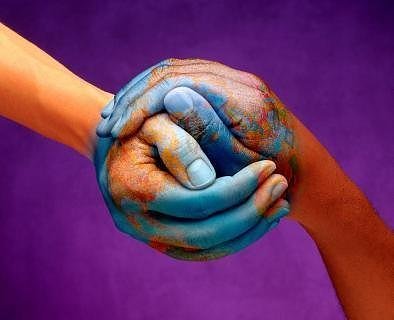
Algorithms for profit are creating an imbalance in the society, where each person begins to seek justice individually, according to their personal understanding, instead of shared values and beliefs. That will be a dangerous society to live in.

All human comments appreciated. All like clicks chucked in the bin.

← Back

Thank you for your response. ✨


THE BEADY EYE ASKS: ARE WE ALL FOOLING OURSELVES. UNREGULATED PROFIT SEEKING ALGORITHMS WILL BE THE LAST THE LAST STRAW NEEDED IN A WORLD OF INEQUALITY.

Tags

, , , , ,

( A twenty-minute read with an hour listening)

Its time to sit up and take notice.

The consequences of Profit seeking AI’s that are trying to emulate human intelligence without a conscious mind to give them any moral value, are going to be tragic for a world that is unable to unite to fight inequality, not to mention Climate Change.

As we don’t know our inherent objectives WITH AI we are playing with dynamite.

Even if every one of us was gets a perfect AI Assistance we will not be able to share its benefits, because AI will lie to us to please us.

We are already witnessing this with Facebook and Twitter on social media promoting false images and gossip that is distorting what is true.

If you were expecting some kind of warning when computers finally get smarter than us, then think again. There will be no soothing HAL 9000-type voice informing us that our human services are now surplus to requirements.

In reality, our electronic overlords are already taking control, and they are doing it in a far more subtle way than science fiction would have us believe.PHOTO: Sophia an artificially intelligent human-like robot is pictured during the AI for Good Global Summit, June 7, 2017, in Geneva.

Their weapon of choice – the algorithm and one has just been granted citizenship of Saudi Arabia.

It attracted international headlines — and sparked an outcry against a country with a shoddy human rights record that has been accused of making women second-class citizens.

A robot simulation of a woman not wearing a headscarf enjoys freedoms that flesh-and-blood women in Saudi Arabia do not.

Where was her male guardian, as required by Saudi law for women.

Perhaps Saudi woman should become robots.

Saudi Arabia doesn’t grant citizenship to the foreign workers who make up a third of its population, not even families that have been in the country for generations. Children of Saudi women who are married to foreign men cannot receive citizenship. Sophia the Algorithm was manufactured in Hong Kong.

One thing’s for sure: As AI grows more advanced its invisible Algorithms arms are already taking control of decision-making.

They might well be running gigantic warehouses, matching kidney donors with recipients, running Heathrow traffic control, but this is only the start.

The smart machine era will be liberating in ways we can not imagine to-day,  but at what cost.

There is fine line, between “good” and “bad” algorithms.

The point is that we need to start thinking seriously about algorithms.

Right now there are people coming up with new algorithms by applying evolutionary techniques to the vast amounts of big data via genetic programming to find optimizations and improvement in different fields.

They are not just for mathematicians or academics they are all around us and you don’t need to know how to code to use them or understand them, in fact without them most of the modern world would not work.

However we are looking at an area that is total unregulated where all algorithm activities to make profit are outside any of our current laws.

The rise of Big Data and algorithms known as machine learning algorithms are trawling vast collections of data which will allow for vast numbers of decisions to be automated with no recourse.  AI for the sake of AI’s. 

The market will be more than trillions by 2026.

Big data by itself it is not trans-formative. Data is inherently dumb. It doesn’t do anything unless you know how to use it and act with it.

There are very few of us know how to do so.

One way or the other it is going to be a multi-trillion feast for those how do. 

Algorithms or artificial intelligence will be more efficient, less expensive, and – if well-designed – more accurate than humans.

Algorithm is where the real value lies. Algorithms define action. It is these invisible computations that increasingly control how we interact with our electronic world.

Algorithms may be cleverer than humans but they don’t necessarily have our sense of perspective – As algorithms spread their influence beyond machines to shape the raw landscape around them, it might be time to work out exactly how much they know and whether we still have time to tame them.

Wall Street today, is mostly governed by high frequency trading algorithms and Business is following.

Now, researchers are working on the next generation of these learning algorithms, which are heavily used in machine learning and artificial intelligence and may become the foundation that critical technological advances are built on.

Basically, even though most people haven’t even heard of deep-learning algorithms, better ones could mean a future that includes smarter homes, and robots that care for parents and walk our dogs.

Deep-learning algorithms also will be used with our smart appliances, smart cars and wearable technology — stringing it all together in the much championed Internet of Things. Résultat de recherche d'images pour "métropolis film analyse"

So what?  In the digital world anything goes.

Streaming App Algorithms are increasingly wielding an outsize influence on our lives, influencing politics and the economy.

We have all become so complacent that we don’t care what technology (In the form of Algorithms that are driven by machine learning ) is doing to our lives, irrelevant of the consequence we all becoming dumber and dumber with platforms deciding what we see and what we don’t see.

We have become indifferent to the commercial use of our personal data in return for free services.

Every day supplying through our smart phones more and more data it wont be long before the online world will be more important than the real world.

Before the Algorithm the way we live our lives is often not solely determined by us, but by others. Others decided if we will be hired, will receive loans, are admitted to university or have committed a crime. Traditionally, “the others” have been humans: employers, bank managers, university board members or judges – who we expect to make fair decisions.

This no longer applies.

Algorithms are increasingly part of our everyday lives, from recommending our films to filtering our news and finding our partners, deciding our futures.

We need to better understand them and control, our own futures.

Algorithms and AI are the future, but we must not allow them to become a shield for injustice.

The amount of data we have available to us now means that we can no longer think in discrete terms.

This is what big data forces us to do. It forces us to take a step back, an abstract step back to find a way to cope with the tidal wave of data flooding our systems.

But is this any longer possible?

“Learner algorithms” can be used to create new algorithms which in turn can write the code we need, “with machine learning, computers write their own programs, so we don’t have to.”

Here lies the Catch 22 question.

Virtual data centers through cloud providers are analyzing our every move for profit. Selling the data to Hedge funds investment firms driven by vision algorithms that analyzing satellite images, and geolocation, websites.

If we don’t open or eyes they will govern the cost of everything from food to energy.

There have been other periods in human civilization where we have been overwhelmed by data. Like the Phone represented a discrete means to communicate information. A book, on the other hand, is an abstract means of communication in that there is no direct interaction between writer and reader.

So why are Algorithms different?

Because we will have Algorithms for the sake of algorithms.

So what are Algorithms?

They are sequence of steps that describes an idea for solving a problem meeting the criteria of correctness and terminability. An abstract recipe for the calculation independent of implementation. Another words: Algorithms are a finite number of calculations or instructions that, when implemented, will yield a result.

While Code/ Programming is a set of instructions for a computer. A concrete implementation of the calculation on a specific platform in a specific programming language.

Algorithms have been around for much longer than the invention of coding.

Algorithms are already started to show their potential to create a new era of abstraction by going a step further.  Not only will they search for a patterns but they will also create the code we need to do this.

Algorithms enable us to find patterns via clustering, classification, machine learning and any other number of new techniques underpinned, not by code, but by algorithms.

Like: With algorithms tracking Tweets or Facebook the Cloud will be Metropolis of 21st century.

Résultat de recherche d'images pour "métropolis film analyse"

If we can feed them a lifetime’s worth of videos. We might see some significant improvements that would get us closer to using predictive-vision in real-world situations.”

To achieve this we need to better understand how these algorithms work and how to tailor them to suit our needs. Otherwise we will be unable to fully unlock the potential of this abstract transition.

And if all of the above is not scary enough there will be war AI neural networks to decide whether a person is deemed expendable or not.

Artificial intelligence does not have to be a horror story of course if we take steps to Registrar all Algorithms.  (See previous posts)

It is imperative that all Algorithms are Provable beneficial to all of us, not to one objective profit.

If we lose our autonomy to AI/ Algorithms machines we end up as the three monkeys  – see no evil, hear no evil, speak no evil.

We are addicted to Technology. These Algorithms that have profit as their targets will ensure that we remain so.

Retail algorithms don’t scare me, I find it annoying when Amazon tells me what I might like.

Now is the time to make your voice count.

All human comments appreciated. All like clicks chucked in the bin.

← Back

Thank you for your response. ✨

https://soundcloud.com/samharrisorg/the-dawn-of-artificial-intelligence


THE BEADY EYE ASKS: WHY DOES CATALONIA WANT TO BREAK AWAY FROM SPAIN.

Tags

( A one minute read)

These days it seems that everything hear or read is an opinion, not a fact, everything we see is a perspective not a truth.

What is fueling the drive for independence?

Is it symbolic recognition or does it stem from divisions within Catalonia.

From outside it looks like the Urban population are pro Independence, while the country population is not.

Secession would cost Spain almost 20 per cent of its economic output, and trigger a row about how Catalonia would return 52.5 billion euros of debt it owes to the country’s central administration.

The truth, however, is far more nuanced.

In 2010, the constitutional court of Spain watered down the Catalan statue and other autonomous regions in Spain, such as the Basque Country, doesn’t have to pay the taxes it collects into central government.

Historical Catalonia was an independent region of the Iberian Peninsula – modern day Spain and Portugal – with its own language, laws and customs. Its and culture and autonomy were suppressed under the dictator Francisco Franco from 1939 to 1975.

In 1979 the Catalan statute of autonomy restored the Catalan parliament.

There may well be dark memories of repression under dictator Francisco Franco who brutally suppressed Catalonia’s culture and autonomy but as in many countries these memories though genuine are in the Past.

Spanish MPs and Catalonia’s parliament and people all gave the green light to a 2005 statute that would have granted the region more autonomy, improved its financial clout and protected its language.

Hopefully it will do so again by the General Election now called by Spain in December the only a true democratic way to resolve the present standoff.

Independence for the Catalan region is not a new idea and the region made a similar trip to the polls on November 9, 2014, and voted 80% in favor of becoming an independent state.

That vote was blocked by the Spanish government and was a sort of referendum to decide which direction Catalonia was headed instead of an all-out independence vote.

This time the Constitutional Court of Spain will have to accept the result.

‘There’s No Going Back’as it will destabilizing the whole of Spain.

All human comments appreciated all like clicks chucked in the bin.

← Back

Thank you for your response. ✨


THE BEADY EYE ASKS: JUST WHAT IS THE DAMAGE FAKE NEWS IS DOING TO SOCIETY.

Tags

, , , , , ,


( A seven minute non fake read)

The idea of “fake news” came to prominence during the 2016 US Election.

However fake news can be traced far back as the 1930s. Actually, the world has suffered from it since gossip has ever existed.Résultat de recherche d'images pour "pictures of fake news"

The problem is gossip has being turned by technology ( Social Media/Smart Phones)  into written pieces and recorded segments promoting false information or perpetuating conspiracy theories.

Little is known, however, about the dynamics of the life cycle of a social media rumor. Users appear to be less capable of distinguishing true from false rumors when their veracity remains in question. Citizens are frequently misinformed about political issues and candidates but the circumstances under which inaccurate beliefs emerge are not fully understood.

Social media makes it very difficult to correct misinformation. Facts mingle with half-truths as we have all seen resulted in England seeking to leave the European Union to the dethronement  of its economy, its political power, its self image.

One could argue that the majority has been tipped towards the Leave camp by exaggerated promises made by the Leave campaign, for example on redirecting money to the National Health Service that so far flows into EU budgets.

Is this a purposeful use of fake news?

Whether it did or did not is not the point.

In today’s world, online social media plays a vital role during real world events, especially crisis events.

Why? Because we share knowingly or unknowingly, with friends and others unverifiable information.

However at this point, claims that fake news is a serious threat to democracy are highly speculative and exaggerated, and claims that extremely invasive political measures are necessary to protect democracy are not supported by empirical evidence.

It is also doubtful whether restrictions of free speech enacted as government-sanctioned deletion of fake news will actually be an effective remedy for biases in individual political decision-making.

On the other hand should we be demanding Digital trust in a platform’s ability to protect and promote the interests of its users.

I would say, Yes we should be.

Algorithms are becoming more and more powerful at persuasion, creating hyperbolic articles around a major political events:

The Oxford English Dictionary defines “post-truth” as “relating to or denoting circumstances in which objective facts are less influential in shaping public opinion than appeals to emotion and personal belief.”

Algorithms are shaping the world of Technology, changing the ways news information is being accessed, and in doing so creating new attitudes about what it means to be informed.

Resulting in Social Media  pandering to youth preference for opinionated rather than objective news.

70% of Facebook users read only the headline of science stories before commenting.

So the question remains: are medias best equipped to debunk false news?

I don’t think so. “Fake news” is a term that can mean different things, depending on the context.

It can be used by authorities for effective disaster management or by malicious entities to spread rumors and fake news.

There are both positive and negative effects of social media coverage of events. For me it is the fake imagery that has the potential to do the most damage.

Because the imagery becomes the substance while fake news causes confusion about current issues and events.

For instance Catalonia fake images are fostering turning a political situation into something much more serious creating feelings of inefficacy, alienation, and cynicism.

We play around with our new internet toy with no thought of the consequences.

Our brains should be the decisive tool to fight fake news and hoaxes. That tool need to be trained, optimized through promotion of critical thinking as early as primary school.

The main problem resulting from fake news will not be persuasion, but confirmation.

Individuals may demand fake news in order to confirm settled beliefs that they already hold.

Predicting that social media will pose a threat to the functioning of democracy by allowing the creation of tight filter bubbles, and thus the self selected segregation of citizens into distinct groups that find it difficult to identify common ground.

Open debate, and persuasion in a positive sense – in the sense that individuals concede to better arguments – would then be threatened.

Think before you share. Analyse before you speak.

Fabricated stories are not likely to go away as they have become a means for some writers to make money and potentially influence public opinion.

The term has now been co-opted by politicians and commentators to mean anything they disagree with – making the term essentially meaningless and more of a stick to beat the mainstream press with than a phenomenon in itself.

Donald Trump’s has been calling out major media outlets several times a week for being ‘FAKE NEWS’ via his Twitter feed.

Perhaps all communication platforms should labeling suspicious stories as such.Résultat de recherche d'images pour "pictures of fake news"

All human comments appreciated, all like clicks chucked in the bin.

← Back

Thank you for your response. ✨


social media giant is under increasing pressure to tackle the problem


THE BEADY EYE LOOKS AT THE FUTURE OF FRESH WATER.

Tags

, , , , ,

( Seven minute read)

Fresh water is emerging as the most critical resource issue facing humanity.

No technology can double the flow of any River, or enhance other surface and ground water resources. It would indeed be a wonderful achievement to see these technologists produce crops without water!

At first glance, human health seems unrelated to natural resources.

Historically, decisions to protect the environment have been based on isolated crises and are usually made only when catastrophes strike. By 2050 almost 40 per cent of the world population will live in areas of high water stress.

The human carrying capacity of the world will not be addressed until the situation becomes intolerable or, possibly, irreversible.

There is no need for me to remind you that water is a finite resource, that is essential to human existence. “There’s not an infinite supply of water nor will there be.

Résultat de recherche d'images pour "pictures of freshwater"

Our climate — whether you want to call it global warming or climate change — is different from it was 50 years ago.

New NASA data show how the world is running out of water. 

The world’s largest underground aquifers – a source of fresh water for hundreds of millions of people — are being depleted at alarming rates, according to NASA satellite data.

Twenty-one of the world’s 37 largest aquifers have passed their sustainability tipping points, meaning more water was removed than replaced during the decade-long study period. Water demand will outstrip supply by 2030.

Water scarcity will become such an issue that it will hinder economic growth, spurs migration and sparks conflict, creating large and uneven consequences across the globe.

What’s at stake

Water shortages will be the catalyst of future conflicts.

There are 276 transboundary lake and river basins in the world, fewer than half of which are covered by treaties. Some 148 countries include territory within such basins, which account for an estimated 60 per cent of global freshwater flow.

Combine water scarcity with political instability, increasing resource demands and climate change, and the ‘perfect storm’ for conflict can be created.

What if anything can be done? 

There is no global government in relation to the environmental agenda.

All of our basic resources, such as land, water, energy, and biota, are inherently limited. The biological resources determine the current and future status of the support services for human life.

The chances of reorienting globalization to the aims of a sustainable society is all but impossible

Because consumerism collides with ecological issues over environmental ones.

Because of the transnational character of environmental degradation.

Because the current world order is not suited do dealing with global environmental problems.

Because there is an absence of responsibility of political leaders ( Mr Trump) towards adverse effects on the environment.

Because the importance of water to life means that providing for water needs and demands will never be free of politics.

There is no easy answer. 

Along with increased urbanization, world population  — and economic growth, all of which demand and consume larger and larger amounts of water.

Other than we must avoid letting humans numbers continue to increase to the limit of the Earth’s natural resources and forcing natural forces to control our numbers by disease, malnutrition, and violent conflicts over resources.

The water problem is daunting.

With more than 99% of human food coming from the terrestrial environment -One of the biggest competitors for water is agriculture. Some 70 percent of global water use is tied to the industry.

As the supply becomes more erratic with climate change that continues unabated. Food price will spike caused by droughts inflaming latent conflicts and driving migration.

We can no longer avoided the effects of a world water shortage it will have life-threatening and global economic consequences.

It’s almost taken for granted that we will have water, but we can’t do that anymore. Global warming has already begun to show how it can impact the world’s water.

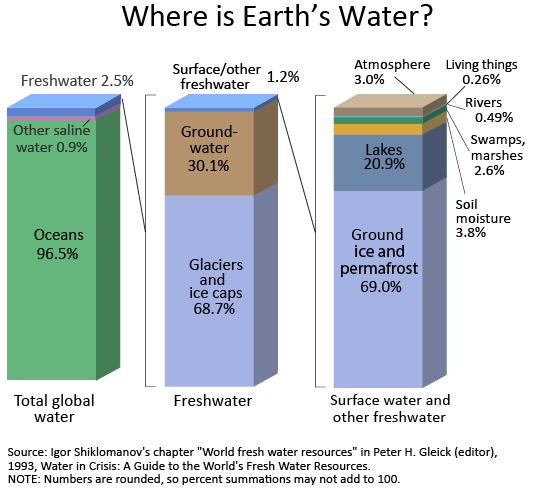
( The picture below depicts the amount of freshwater on the globe.)

Earth's water

Here are a few ideas that might help.

We need major education about the use of water.

We need to get our heads together on how we manage groundwater.

We need to putting a sensible price on water to invite investment and encourage conservation, increasing the availability of information and doubling down on innovation can go a long way toward solving the problem.

We need to install smart meters nation WIDE TO ALLOW a restructure of the price of consuming fresh water.

So that the first few gallons per person per day are cheap or free, with escalating costs beyond that. Water for necessities such as drinking, cooking and hygiene should be affordable.

Beyond that, water for lawns, filling swimming pools, washing cars and other uses should be more expensive.

We need to decide as a society whether green lawns and landscaping, golf courses, swimming pools and unnecessary agriculture (like tobacco and coffee) are worth the use of water.”

While our planet as a whole may never run out of water, it’s important to remember that clean freshwater is not always available where and when humans need it.

By the year 2025, 48 countries will be affected by water stress or scarcity – affecting around 35% of the projected global population in that year. Population growth alone will push an estimated  a further 17 countries, with a projected population of 2.1 billion, into water-short categories within the next 30 years.

Only 64 of the world’s 177 large rivers (1,000km and longer) remain free-flowing, unimpeded by dams or other barriers.

There are more than 45,000 large dams in over 150 countries with about 1,500 more currently under construction.

At the moment 780 million people lack access to clean water and 2.5 billion lack adequate sanitation services; most of these people live in the poorest countries.

The world needs nothing less than a Blue Revolution if not Fresh Water will ultimately affect everyone and everything on this blue planet.

Once we realize that we live in an interdependent world, we will hopefully refrain from making decisions that are short-sighted. Instead, we will look at the long-term gains of peaceful cooperation.

Unfortunately with the Technological Revolution decoupling us from the environment there is little chance of any peaceful cooperation.

There is only on solution – make profit for profit sake pay a World Aid Commission of 0.001%. ( see previous posts)

Saogal fada cugat.

Image associée

All human comments appreciated all like clicks chucked in the bin.

← Back

Thank you for your response. ✨

THE BEADY EYE LOOKS AT THE HIDDEN COST OF TECHNOLOGY.

Tags

, , , , ,

( Twenty minute read)

There is no denying that the benefits of technology are needed but what are the downsides costs.

As the demand for up-to-date technology increases, we need to reevaluate how we measure the hidden cost of the TECHNOLOGICAL REVOLUTION.

It will not be us picking up the tap, but the yet to be born that will have to pay, living in a world that is detached from what makes it all possible The Earth.

Technology is now deeply embedded within society, so not planning for the future of technology is by far one of the most costly mistakes we will ever make, in more ways than one.

At this point it is impossible to say with any authority what exactly the cost will be.

Some technologies are unfolding now; others will take a decade or more to develop, but you should know about all of them right now. In the not-too-distant future, we will be able to print human organs, but not the brain.

According to Stephen Hawking, “Humans are entering a stage of self-designed evolution.”Image associée

That may be so, but technology is more than just fusing the physical and digital worlds.

Marked by emerging technology breakthroughs in a number of fields, including robotics, artificial intelligence, nanotechnology, quantum computing, biotechnology, the Internet of Things, 3D printing, autonomous vehicles, face and voice recognition and algorithms learning from other algorithms.

With wireless connecting brain-reading technology directly to electrical stimulators on your body it has the potential with more items moving from physical to virtual to decouple us from reality. Wireless communications is already dominating our everyday lives

It is already impacting all disciplines, economies, and industries, our politics, improving medicine, influencing our culture.

Apart from the obvious technology is also in the process of changing democracy, moving capitalism underground, assisting conflicts, packaging natural resources, destabilizing society, disrupt the way governments deliver services to citizens, just to mention the tip of the ice berg.Résultat de recherche d'images pour "pictures of future earth"

.It will not be long before we will all have DNA maps from birth.

However with the arrival of Quantum computers the way we use technology will be reshape, along with the societies we live in.

As soon as two to five years from now, such systems or time on such systems are likely to be for sale.

There are probably plenty more uses for quantum computers that nobody has thought up yet.

However you may rest assured that the ordinary citizens (or even governments) won’t be able to own their own quantum computers for a long time, if ever, but I can imagine large companies renting time (measured in fractions of seconds) to whoever needs their services.

With this in mind the race has well started to create monopolies of knowledge Google, of Social Media Society – Facebook, consumerism E Bay, Amazon, Alibaba, of Finance – Pay Pal, of Communication – Apple, of Biotech Thermo Fisher Scientific, of cloud business – Microsoft -IBM, Oracle,  of computer microchips to data center-makers-Intel, to name just a few.

Here are a few of their Mission statements:

Facebook: “To give people the power to share and make the world more open and connected.”

Amazon: “To be Earth’s most customer-centric company, where customers can find and discover anything they might want to buy online, and endeavors to offer its customers the lowest possible prices.”

Pay Pal: “To build the Web’s most convenient, secure, cost-effective payment solution.”

Alibaba: “To make it easy to do business anywhere.”

Google: “To organize the world’s information and make it universally accessible and useful.”

Microsoft:  “To enable people and businesses throughout the world to realize their full potential.”

United Nations: “The maintenance of international peace and security.”

Medecins Sans Frontieres:   “To help people worldwide where the need is greatest, delivering emergency medical aid to people affected by conflict, epidemics, disasters or exclusion from health care.”

Non mention the health of the EARTH?

Disruptive technology is, by its very nature, unpredictable but we’ll see more intelligence built into communication. With always-on connectivity, social networking has the power to change cultures, as we saw with the Egyptian Revolution, which led to the Arab Spring.

The results of changing the world are often complicated and unpredictable.

With the technology of smart phones social influences will continue to move rapidly between cultures.

In the broadest sense, technology extends our abilities to change the world: to cut, shape, or put together materials; to move things from one place to another; to reach farther with our hands, voices, and senses. We use technology to try to change the world to suit us better. The changes may relate to survival needs such as food, shelter, or defense, or they may relate to human aspirations such as knowledge, art, or control.

As computational power rises exponentially, not linearly, so does the rate of change — and that means the next 10 years should pack in far more technological change than the last 10.

It is my prediction that all of it will end up in the cloud.

Why?

Because it is the dumb, novelty-seeking portion of our brains  (driving the limbic system that induces this feeling of pleasure, not the planning, scheduling, higher-level thought centers in the prefrontal cortex) that is driving technology to tap into our personal sensors.

Make no mistake: emails, Facebook and Twitter-checking constitute a neural addiction.

Already, the cloud is powerful enough to help us communicate through real-time language translation.

When is a profit not a profit? When it turns into a monopoly exploiting all around it.

Just like Capitalism technology it is unable to regulate itself and with the arrival of Quantum computers it will make everything and everybody beholden to technology, endangering  much of the openness that we now enjoy online.

So I one again ask the question:

Is it time to regulate Algorithms that have profit as their end targets and is it time that we demanded an open data website that would allow anyone to find information on a host of county government programs, from budget information to welfare data to crime statistics.

This would be linked to two powerful benefits.

First, it makes government more transparent and understandable at a time when trust in the public sector has plummeted.

Second, it has the potential to generate significant economic benefits impacting budget issues, public safety and education, transparency and economic value for tax payers money.

The bottom line is that government data can be extremely valuable for public consumption, but only if the policies behind the data are well thought out and the related costs are affordable. For instance, would a map of society reveal awkward disparities in how rich and poor neighborhoods receive public funding?

Many governments are running on old, outdated systems, making them vulnerable to cyber attacks.

I believe that such an open based  data website would benefit from the collective wisdom of the community, simplify how citizens and businesses interact with the state.

However IT WOULD HAVE THE unexpected startup costs if data is kept in a legacy computer system that requires reformatting; quality-related costs to keep open data fresh and up-to-date; legal costs to comply with open data legislation; liability costs in case something goes wrong, such as publication of nonpublic information; and public relations costs that can occur when a jurisdiction generates bad press from open data about poor performance metrics or workforce diversity problems.

That apart present technological advances and information overlays will change how we live in significant ways.

We will have a so-called “smart grid” where all of our appliances are linked directly to energy distribution systems, allowing for real-time pricing based on supply and demand. Such a universal method for identifying someone energy requirements becomes much harder when you no longer have a central authority to figure out how to link together the different systems.

It will not be like self-driving trucks with lidar system guidance run by algorithms or self-driving cars.

Who is responsible when the self drive truck or car kills someone. Try bringing a self thought Algorithm to court.

Try suing an Face-detecting systems for wrong identification or payment.

Then we have:  Gene-therapy.

Biology’s next mega-project will find out what we’re really made of.

Three technologies are coming together to make this new type of mapping possible.

The first is known as “cellular microfluidics.” Individual cells are separated, tagged with tiny beads, and manipulated in droplets of oil that are shunted like cars down the narrow, one-way streets of artificial capillaries etched into a tiny chip, so they can be corralled, cracked open, and studied one by one.

The second is the ability to identify the genes active in single cells by decoding them in superfast and efficient sequencing machines at a cost of just a few cents per cell. One scientist can now process 10,000 cells in a single day.

The third technology uses novel labeling and staining techniques that can locate each type of cell—on the basis of its gene activity—at a specific zip code in a human organ or tissue.

Then we have, the relentless push to add connectivity to home gadgets is creating dangerous side effects that figure to get even worse.

Then we have, Botnets are used to commit click fraud.

Google ads pay a site owner according to the number of people who click on them. The attacker instructs all the computers on his botnet to repeatedly visit the Web page and click on the ad. Dot, dot, dot, PROFIT! If the botnet makers figure out more effective ways to siphon revenue from big companies online, we could see the whole advertising model of the Internet crumble.

Then we have, hackers breaking into computers over the Internet and controlling them en masse from centralized systems. The problem is getting worse, thanks to a flood of cheap webcams, digital video recorders, and other gadgets in the “Internet of things.”

Then we have, reinforcement learning.  Reinforcement learning may soon inject greater intelligence into much more than games.Résultat de recherche d'images pour "pictures of future earth"

SO WHAT NOW?

What are the implications to human development and the diversity of life on earth? What opportunities are there to reduce risks and vulnerabilities, enhance resilience, and create transformations to prosperous and equitable futures?

Science can provide only some answers; it is not a panacea for all problems. We need to also make personal, economic, social, and political changes, whatever the cost will be.

Reinforcement-learning algorithm can learn from collated data and experiment in simulation to suggest, say, how and when to operate the cooling systems.

Algorithms don’t know the Meaning of Environment.

They have however so concept of the  “The term ‘environment’  it refers to all external conditions and factors that affect living organisms. Here external factors mean all the things around us such as air, water, light, animals, humans etc.

Algorithms are shadow boxers of yesterday all because technology trends can affect the bottom line of business. 

Although big data algorithms hold great promise, they should still be approached with caution and skepticism.

For instance Algorithms should not be relied upon to ration medical care until the technology has substantially matured.

If we ignore what is happening there will be more riots, and increasing divisions along economic, religious and ethnic lines with Robots completely replacing humans in the workforce.

IT IS TIME FOR THE OWNERS ALL PROFIT SEEKING ALGORITHMS TO BE REGISTERED WITH A COPY OF THE WORKING CODE.  NO PROFIT EARNING ALGORITHMS SHOULD BE GRANTED A PATIENT.

All human comments appreciated all like clicks chucked in the bin.

← Back

Thank you for your response. ✨


THE BEADY EYE LOOKS AT: ARTIFICIAL INTELLIGENCE HUNGRY MONEY INVESTMENT.

Tags

, , , , , , ,


( Five minute read)

A FOLLOW UP POST TO THE BEADY EYE SAYS:

ARTIFICIAL INTELLIGENCE AND ITS ALGORITHMS SHOULD BE REGULATED.

Up to now man has exploited almost every opportunity that has come his way to make profit.

In theory you could lay the blame for all our present day troubles on a plant that exploited man – Wheat – in which man invested, time, labor, energy,   power and money.

The next exploitation will not be a plant that we are all biological connected to. It will be an innate object called a micro chip turned into Algorithms.

In recent years we are just beginning to release that there is going to be a fundamental change to the ways we will be living our lives in the future.

Our modern global economy struggles with the challenge of using limited natural resources without exhausting them and we are just beginning to value lower life forms, perhaps because we are going to become one.

If and when computer programs attain super human intelligence with unprecedented power should we begin to value these microchip programs more than we value humans?

Would it be acceptable for artificial intelligence in the form of unsupervised Algorithms to exploit us and the earth?

If it is ethical for humans to exploit so must it be for AI.

This is what is taking place with Capitalist Algorithms that are designed to exploit greed.

Giant Tech like Google and Baidu are spending billions on the race for patents and intellectual property rights, combined with external funds (also in the billions) they are on a mission to privatizing the future.

In 2016, the AI market was worth just $644 million. This year (2017) that amount nearly double. Growing exponentially from there, AI is expanding its reach outside of the technology sector, nature and what it provides us all with is a risk of exploitation. 

It is now or never if we are to avoid dismal subjugation to continuing exploitation. There’s no turning back now.

Apple has become an icon of American capitalism, technological innovation, and shareholder wealth creation.

It’s hard to pinpoint the exact path that AI will take, but there is one thing for sure – It’s Time to Take AI Seriously.

A small, lucky handful of early movers will ride it to untold riches in the Cloud with Quantum Computing, which will result in the ultimate decoupling of humanity from individualism and nature, turning existence itself into mathematical patterns.

In the next five years artificial intelligence will exist as a layer of capability atop every business process, from customer service and marketing to product development and sales, across every industry.

This can be seen already with hungry money putting a monetary values on nature, as it commences to aid and abet, (failing to convey “real” ecological value or reasons for conservation) the packaging of fresh water, scarce resources, energy, etc.

Rest assured Google with biochemical algorithms will know you from the day you are born. Google was not born yesterday, nor was Twitter/Facebook, there  comments or like algorithms can already predict your opinions and desires and will perhaps make important life decision on your behalf such as electing the next D Trump.

By the time the rest of us find out about the phenomenon, it’s too late.

It’s already hard to design regulations that ensure we don’t over farm the land, don’t over fish the seas, don’t over cut the forests and don’t take too much water from our rivers and aquifers.

It is not hard to subject all emerging AI to examination.  To hold a copy of their software, before they degrade our humanity further. (See previous posts) 

Technology is arranging the world so that we don’t have to experience it.

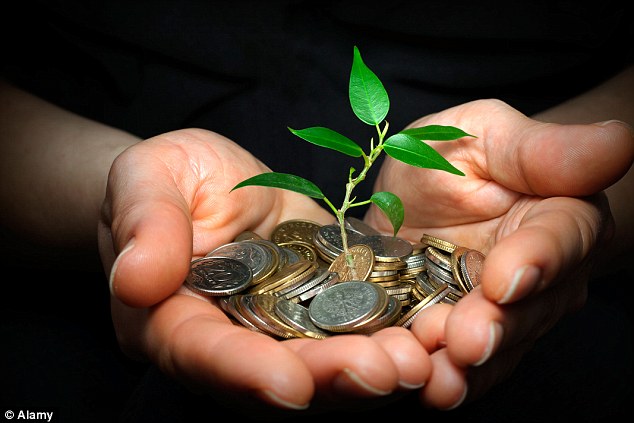
Résultat de recherche d'images pour "pictures of investment money"

While there are numerous natural resources that are being capitalized upon all across the world we are all so preoccupied committing communal suicide on our smart phones, that we are now unintentionally buying into technology that is not going to save the planet but rape it.

Hungry investment money sole purpose is profit.

If you were expecting some kind of warning when computers finally get smarter than us, then think again.

Our electronic overlords are already taking control, and they are doing it in a far more subtle way than science fiction would have us believe.

Invisible computations that increasingly control how we interact with our electronic world are now acquiring the very essence of what makes the world tick. To the extent we’ve lost the sense of what’s actually happening in this world we’ve made.

Online trading algorithms that are increasingly controlling markets, stock exchanges, feeding on data to exploit any weakness, while Google’s data-crunching algorithm harvesting our personal data and shape the web we see accordingly. Changing the way humans think. As its code gets ever more sophisticated it is reaching its tentacles into all aspects of our lives, including our cultural preferences.

We have to challenge investments which are driven by AI algorithms if they are based on Profit.

Why?

Because they are packing nature into investment portfolios, which are going to cause more and more conflict in the world.

Take the Paris Climate Change agreement to limit Co2.  Worthless!

Because Hungry Money is undermining true conservation investment, and climate change incentives, turning them into emissions trading, commonly referred to as cap-and-trade, embodies commodification of nature in that it allows for the trade of pollution and emissions within a given limit for a specific environment.

Rather than simply outright prohibiting or allowing pollution and other various negative externalities, cap-and-trade essentially permits members of an industry to buy and sell units of emission with a maximum set for the industry as a whole.Image associée

Isn’t there something wrong with a world in which everything is for sale?

In recent decades, market values have crowded out non market norms in almost every aspect of life-medicine, education, government, law, art, sports, even family life and personal relations.

Without quite realizing it, we are drifted from having a market economy to being a market society. Technology and AI are undermining current economic systems with profits that do not contributing to any conservation or sustainability.

Tourist paradises have sprung up in places of high biodiversity, offering exclusivity to their owners and clients while violating agrarian rights, creating social conflict, and destroying ecosystems.

Gigantic cruse Ships bring hordes of App driven city slickers to UNESCO Sites destroying them like Venice, to the Antarctic, to African natural protected areas (in zones of predominantly private property), giving them exclusive rights and increasing real estate values and investments in tourism.Résultat de recherche d'images pour "pictures of hard core tourism"

While good governance can be an end in itself, the link between good
governance and poverty reduction is much more complex, and can be obscured by the intrusion of political agendas.

Absentee owners rarely have the same sense of stewardship and restraint as local owners.

What we don’t seem to be able to grasp is that we, every one of us is the Universe.  It flows through all of us, not through AI, or platforms driven by profit seeking Algorithms.

They will never be connected like us to it, with or without a conscious.   

As algorithms spread their influence beyond machines to shape the raw landscape around them, it might be time to work out exactly how much they know and whether we still have time to tame them.

The parameters used to define “money.”

Who believe money refers only to currencies such as bank notes, coins, and money deposited in savings or checking accounts, digital currency bitcoin, above-ground gold supply, and funds invested in various financial products.

The world isn’t that simple anymore, what Money Can’t Buy is now out of control thanks to AI.  

If we are to make this new World of technology work we must apply a World Aid commission on all Algorithms that are designed for profit. ( See previous posts)

There will be little use in walking around a world with Smart phones, Ipads, if we cannot unite before we all vanish into the cloud of exploitation.

You be the :

Résultat de recherche d'images pour "pictures of what money cant buy"


All human comments appreciated. All like clicks chucked in the bin.


← Back

Thank you for your response. ✨


THE BEADY EYE SAYS; ARTIFICIAL INTELLIGENC AND ITS ALGORITHMS SHOULD BE REGULATED

Tags

, , , ,


( THREE MINUTE READ) Image associée

Can it be regulated?

I have addressed this subject in several previous posts.

You would think that we should learn from previous regulations, like those on the food, pharmaceutical, automobile etc all typically applied after something bad had happened, not in anticipation.

WHEN IT COMES TO TECHNOLOGIES THAT HAVE THE CAPABILITY TO LEARN FROM THEIR OWN ACTIVITIES, with the –  possible of impacting on the full spectrum of benefits and risks to humanity ― from the possible development of a more utopic society to the potential extinction of human civilization.

IT IS IMPERATIVE THAT WE HAVE SOME FORM OF CONTROL.

Without unnecessary constraints on AI researchers and developers, fundamental research fields or technologies should not be regulated.

Aspirational principles alone are not enough, if they are not put into practice, and a question remains: is government regulation and oversight necessary to guarantee that AI scientists and companies follow these principles and others like them?

Even today, we’re seeing signs of narrow AI exacerbating problems of discrimination and job loss, and if we don’t take proper precautions, we can expect problems to worsen, affecting more people as AI grows smarter and more complex.

The recently founded Partnership on AI  founding document states that:

“Where AI tools are used to supplement or replace human decision-making, we must be sure that they are safe, trustworthy and aligned with the ethics and preferences of people who are influenced by their actions.”

Because these problems threaten society as a whole, they can’t be left to a small group of researchers to address. At the very least, government officials need to learn about and understand how AI could impact us all.

YOU WOULD WONDER WHY, the topic rarely comes up in political discussion.

Let’s ask ourselves: how can we ensure that AI remains beneficial for all, and who needs to be involved in that effort?

THE PROBLEM IS TO DAY THAT WE DON’T KNOW WHAT TO REGULATE, OR AT WHAT LEVEL WOULD WE DO THIS?

This question to me is pointless.

We will never get enough international support lay the foundations for constructive regulation.

CONTROL SHOULD BE IMPLEMENTED LIKE AN LEGALLY REQUIRED  MOT.

EVERY ALGORITHM THAT IS INVASIVE OR PROFIT PRODUCING SHOULD BE REQUIRED BY INTERNATIONAL LAW TO LOGE A COPY ITS SOFTWARE PROGRAM OR PROGRAM’S IN A AI BANK.

WHERE IT IS HELD JUST IN CASE OF MALFUNCTION.

THIS NEEDS TO START- soon to have any chance of keeping up with innovation in the field.Résultat de recherche d'images pour "pictures of computer algorithms"

WHY?

Because:  Algorithms will dominate the coming centuries.

Because:  Ascribing human qualities to non-human entities is a minefield.

Because: Algorithms are becoming the single most important concept in our world.

Because: Algorithms are connected to our emotions.

Because: Algorithms are not just particular calculation, but a method followed when making the calculation.

Because: What we call sensations and emotions are all algorithms.

Because: Electronic Algorithms will out perform biochemical Algorithms.

Because: Humans can no longer cope with the immense flows of data.

Because: Algorithms will completely transform the very nature of life transforming the world beyond recognition.

Because: Free –market capitalism and controlled communism are competing data-processing systems.

Because:  The Stock Exchange, the economy of the world  is already run by high frequency algorithms for profit only.

Because: Algorithms structures will run hospitals. then your faith will be in the hands of the system. What is true of hospitals will be true of armies, wars, prisons, schools, and corporations.

Because: We will need to decide which is a computer and which is the human.

Because: It follows that external algorithms will know you better than yourself. 

I am sure you can add to the list.

Algorithms are decoupling us for shared values, with life becoming just data processing.

If this is the sort of world you want to live in stay silent and your wish will come true.

If you can think it, there’s most likely an algorithm for it.

While computer scientists may not be specifically finding better ways to manage your love life, you’d be surprised at how math can play a role as matchmaker. Let’s keep in mind that, during a search, you reach a point when you’ve gathered enough data and a continued search can be seen as both redundant as well as confirming what you know.

Well, how about when finding a parking space?

All human comments appreciated, all like clicks chucked in the bin of data.

← Back

Thank you for your response. ✨


THE BEADY EYE SAYS: ALGORITHMS AND SOCIAL MEDIA ARE PUTTING PAY TO SHARED VALUES.

Tags

, , ,


( A twenty-minute read, before we are all raped by Algorithms)

Strength from cultural diversity is being eroded by Algorithms.

At the moment while we’ll be striving to understand the impact of “information flows” — shared value is going out the window.

You could say that 99.4 percent of physical objects are still unconnected but algorithms but they are already transforming the world around us — in education, healthcare, manufacturing, commerce, transportation and other sectors.

In the coming years, the Internet of Everything Economy will be run by Algorithms that control smart grid, smart buildings, connected healthcare and patient monitoring, smart factories, connected private education, connected commercial (ground) vehicles, connected marketing and advertising, and connected gaming and entertainment, among others, will rule the world.

If we are honest, we have been living with the ambiguity created by SHARED VALUE for a long time.

The United nations being the prime example.

Its shared ideology values are ignored daily because they do not possess any legal or constitutional power. (They have however attained limited success in generating greater ideological consensus, whether it is the impact on the environment, on society, or in terms of how it governs itself) Now unfortunately it is trying to operate in a world that is in the middle of a technological revolution which is exposing its limits to the point of being relevance.

Technology trends (including cloud and mobile computing, Big Data, increased processing power, and many others) and business economics (such as Metcalfe’s law) are driving the IoE (The Internet of Everything economy.)

The Internet of Everything (IoE) brings together people, process, data, and things to make networked connections more relevant and valuable than ever before — turning information into actions that create new capabilities, richer experiences, and unprecedented economic opportunity for businesses, individuals, and countries.

On the other hand in my opinion it is and will be a mistake to greet every invention with applause and just let it go its way.

There are many aspect to the Technological Revolution that are desirable and needed, but at what sacrifice, and where to draw red lines is not being addressed. You could say its evolution and can not be changed or stopped.

However Artificial intelligence which is run by Algorithms is void of emotional intelligence.

The future will no doubt push for higher level automated capabilities by integrating human spoken and linguistic capabilities with other human skills such as vision, motor skills, and emotions.

This future will bring about a society of human and machine experts, that collaborate together for improved outcomes in complex processes such as decision-making.

These decisions which will be based on vast quantities of data rather than share values. They will be driven by our old friend capitalist profit, managed by platforms that are totally unregulated, unaccountable.

In a world where we are all supposed to be accountable, Artificial Intelligence must also be accountable not just to its algorithms. It must be totally transparent and regulated by an independent Organisation that ensure it enhances our shared values. As we explore all the possibilities these technologies present,  it will be critical to place us at the forefront.

The conversations around these technologies, I suppose in the future will reach an equilibrium and we will understand as a society how to use them responsibly or will it be too late. 

I think the more interesting thing that’s happening is we’re evolving into a kind of meta organism, which is the whole species on the planet connected through the Web, sharing information, sharing thoughts, sharing ideas.

We are not sharing empathy and sharing emotions, exploring and expanding the boundaries of what it means to be human, today and far into the future.

People will end up having no sense of control over their changing environments other than what their Virtual Personal Assistant lets them know.

The world we live in has and always will have problems because it is impossible of humans to act as one for the general good of all.

Rest assured that Algorithms will also suffer from the same flaw.

If left to their own devices they will destroy any sense of collaboration, reducing us to smart phone workers with no shared values or jobs for life.

We are more and more desensitized by social media platforms that are run by algorithms to ensure we remain so, we are all too busy checking our smart phones to take any notice. Most of us can not recognize our self.

HUMANIZING TECHNOLOGIES: Are smile that fits the lock of everybody’s heart.Image may contain: 2 people, people smiling

Robots are learning how to detect your personality and even your gender with just a handshake, so giving robots a personality is the only way our relationship with artificial intelligence will survive.

We have all experienced “dehumanizing” technology – software or hardware that seems to diminish our ability to communicate with others or to function effectively in the world.

Technology such as Algorithms for profit are creating new boundaries between people rather than erasing old ones, with Touchy-feely robots becoming the false face of the Algorithms, that run them. Capitalize on our unique strengths and weakness, new technologies are and will further integrate themselves seamlessly into our lives.

We are already accustomed to Amazon’s anticipatory shipping practices, where the company identifies items we may want to buy before we even begin our search. Artificial Intelligence is making technology more personal and purposeful than ever before.

I don’t know about you. Just because I bought something, viewed something, commented on something, or sent an email to someone, I don’t want Watson, Google, Facebook or any other platform invading my Privacy with annoying suggestions, as I have no shared values with any of their Algorithms.

If we don’t get a grip of what I call Algorithms for Profit connecting the unconnected: people, process, data, and things we are going to be looking at a very sad world.

Since the industrial revolution, concerns have been raised about the negative effect of development on human exploitation, inequality, the environment, and by extension, greater society.

Of all the concerns that development brings, environmental damage has a high-profile due to its long, and sometimes cruel, history from business self-interest, to a sense of responsibility, or a combination of both.

Now it is the time to make capitalism more responsive to social challenges, as corporations are directly facing the trade-offs between private costs and social benefits.

The pursuit of profit and increasing shareholder value are the only responsibilities of business.

The inclusion of non-financial issues into investment decision-making must be a priority.

Why?

Because in terms of corporate social responsibility, the long-term risk of damage to the economic system and long-term value creation, and therefore investment returns, is a palpable threat to asset owners.

National identity and nationhood are not principles that can be “mandated and managed from the top”. Instead, the nation is an “imagined reality” that transcends institutions such as government and civil society. Consequently, the citizen creates the nation.

It is the responsibility of the investor to protect an economy’s ability to create long-term value.

Given long-term horizons, diversification, and long duration liabilities, it is beneficial to work together to reduce Artificial Intelligence future risk. To verify if shared value strategies can be found in practice.

This is so that today’s efforts to create value do not impair the ability of future generations to do the same.

Driven by advances in mobile technology the United nations is total out of date.

The importance of the family as a “basic unit of society”, no longer fully address family related issues.

In today’s investment world, there is no Algorithm that is going pre-empt social change and direct it in “suitable” directions.

Artificial Intelligence is making technology more personal and purposeful than ever before. We are trying to leverage data science with natural interfaces to provide solutions tailored to human behavior, attitudes and comprehension, also known as cognitive systems.

So the Question is:

Are these profit Algorithms degrading our humanity.

Today, the most successful technology goes beyond the technical specs and is all about the user experience. The best use of technology is the one people barely notice.

Our emotions influence every aspect of our lives, from our health and well-being, to the way we learn, the decisions we make and how we communicate with one another.

Try telling that to a Digital banking Algorithm.  The only point of contact between banks and their customers.

Now we can have a whole new social class system.

Since people can be judged by their emotions, and since a persons emotional state has legal consequences in a court of law, and since corporations would love nothing more than to know how we feel so that they can control our behavior by controlling what information we receive when we are connected, and since we are always connected. ….
Well that couldn’t possibly be a problem, or could it?

We are handing over our privacy and our lively mental freedom, step by step, to the lifeless and emotionless domain of machines. We are becoming more and more dependent upon mechanistic mimicking of human qualities, and call it Machine Intelligence.

“The biggest privacy-invasive is no the way with face recognition applications”.

Why? Because the majority of how people experience each other is through screens.

this will bring a new leveraged on degrees of freedom for smart life.

Just because you want to believe it is true doesn’t mean it is true.

The goal should be making people to become aware of the trends and processes they are being involved by their own deeds and making them to ask important questions

In short:

Predictions are hard, but TRYING to fore see and not being blind to what is already happening is immensely important.

I wouldn’t want “devices” to sense anything. Anything.

Constantly arguing with your device about how you really feel.

What a sick world that is going to be.

Ask google why do people die before their time.

You get many answers: How can we know these things?….We can’t, unless we ask and who do we ask in order to get the correct answer.. not a Algorithm.  The basic recipes for Capitalist slavery.

How much messiness should we accept? What balance of the new and familiar is the most fulfilling? These may seem like uniquely human quandaries, but they are not. Computers, like us, confront limited space and time with no shared values.Résultat de recherche d'images pour "pictures of computer algorithms"

All human comments ( Not that I will know if they are generated by Algo) appreciated. All like clicks chucked in the bin.

← Back

Thank you for your response. ✨


THE BEADY EYE SAYS; NO DEAL IS A GOOD DEAL FOR EUROPEAN UNION.

Tags

,


( Two minute wake up call)Résultat de recherche d'images pour "pictures of brexit"

It’s clear that Great Britain is now set on a seemingly intractable path towards leaving the European Union (EU). Even as the divorce is being finalized, questions remain in the minds of citizens and government leaders alike. Why Brexit? And why now?

Economics is not the answer. Britain has a strong and undisputed interest in an open economy with global connections through trade and finance. The EU has a strong and undisputed interest in preserving its trade and financial connections to Great Britain. Britain has a sweetheart deal that enables it to opt out of monetary union, keep the pound sterling and use its independent monetary policy to offset any disadvantages arising from Germany’s dominance of the European economy.

The dream of Brexit isn’t getting a brighter new energetic tomorrow.

Its more to do with old codgers infected with Bisto nostalgia wanting to look inwards.

I know that there is nobody in the UK that can remember the last thousand years.

England is saturated in European gravy from the Renaissance to Surrealism, from a souffle  to fish and chips. There is no such thing a Sovereignty in a world run by social media. What matter is that we have laws on the side of personal freedom.

“The onus” is on the UK to propose a solution, not the other way around.  After all it’s not the EU that want to leave Britain. There will be no Trade deals with an England offering sweet fanny Adam.

Europe is not gagging for England to stay and England will not wake up in the morning having to hand back their European library ticket.

Northern Ireland and Ireland have pledge to maintain protections from discrimination currently enshrined in EU law after Brexit. They also say Northern Irish citizens should be able to continue to choose whether they identify as British or Irish, and by default an EU citizen.

Whatever quarrels might arise within the European family, Britain’s privileged position is now under threat.

As the saying goes rats leave a sinking ship.  This is a basic fact when it comes to economics, as the Japanese proverb goes ” Money has no ears, but it hears and the louder it talks. ”

You can’t deal openly with the rest of the world — but only on your own terms.

The Brussels-based EU bureaucracy is an object of scorn everywhere, but nowhere else as much as in Britain. If economics alone were the deciding influence, these issues could be readily resolved.

The full and free movement of EU citizens, including to Britain, is a defining characteristic of the EU and of paramount importance to it.

If Brussels were to offer new privileges to Britain that are not available to its own members, the unity of the union would be threatened far more than it has been up to now.

If the Brexit negotiations fail to reach a conclusion that preserves the close association between the island and the continent, the costs will be felt more widely.

It will ushered in worrisome challenges to economic progress — and even to democracy — throughout England, Europe and the United States.

Résultat de recherche d'images pour "pictures of the ttip"

The TTPI is a lose -lose scenario for the US never mind the UK.

ISDS or Investor-State Dispute Settlements are likely to be introduced through TTIP. They allow companies to sue governments for lost profits supposedly caused by policies of the government.

Corporate America would love to sue what is left of the broken UK special relationship.

America first America First.

There is no doubt that the US would rather deal with an England in the EU not out.

Its time to stop playing tennis. Love all is a long way off.

Then there is the question could a British exit open up a Pandora’s Box of other EU countries exiting or spark other regional independence movements, like  Catalonia?

Of course this could happen but only if England is seen to benefit with a deal that is better than what it has at the moment without all the EU member agreeing to such a deal. The likelihood of that is 27 to 1.

All comments appreciated. All like clicks chucked in the bin.

← Back

Thank you for your response. ✨