• About
  • THE BEADY EYE SAY’S : THE EUROPEAN UNION SHOULD THANK ENGLAND FOR ITS IN OR OUT REFERENDUM.

bobdillon33blog

~ Free Thinker.

bobdillon33blog

Category Archives: Uncategorized

The Beady eye looks at the Quantum Leap.

16 Thursday Jul 2015

Posted by bobdillon33@gmail.com in Uncategorized

≈ Comments Off on The Beady eye looks at the Quantum Leap.

We are only at the beginning of this journey and if you are like me the very word Quantum Mechanics /Physics not to mention Quantum Computing, sends me in a dizzy.

I have little or no concept of quantum other than entanglement occurs when two particles become related such that they can coordinate their properties instantly even across a galaxy.

Think of wormholes in space or Star Trek transporters that beam atoms to distant locations.

Quantum mechanics posits other spooky things too: Particles with a mysterious property called superposition, which allows them to have a value of one and zero at the same time; and particles’ ability to tunnel through barriers as if they were walking through a wall.

All of this seems crazy, but it is how things operate at the atomic level: the laws of physics are different.

So or what it’s worth.  Here is what I have learnt.

Quantum computing will lead to breakthroughs in science, engineering, modeling and simulation, financial analysis, optimization, logistics and national defense applications.

It is likely that building a quantum computer will lead to unforeseen technologies and transform our understanding of the possibilities and limits of computation.

Despite the incredible power of today’s supercomputers, there are many complex computing problems that can’t be addressed by conventional systems. The huge growth of data (“Big Data”) and our need to better understand everything from the universe to our own DNA leads us to seek new tools that can help provide answers.

If we really could build a magic computer capable of solving an NP-complete problem, a decision problem in a snap, the world would be a very different place: An NP problem contains problems for which a computer can quickly check a proposed solution.

Imagine a computer that can teach your mobile phone to recognize any object it sees, or that can trawl through millions of social media posts to identify a potential terrorist.

The spy world, in particular, is looked to quantum computing for its use in encryption and code breaking – a mainstay of the intelligence business.

The technology sounds like a science-fiction caricature. It is based on a novel type of superconducting processor that uses quantum mechanics to massively accelerate computation. A quantum computer taps directly into the fundamental fabric of reality so how about conducting virtual experiments.

The question is has it being done.

To my mind a computer without any limitations would get boring pretty quickly.

We could ask our magic computer to look for whatever patterns might exist in stock-market data or in recordings of the weather or brain activity. Unlike with today’s computers, finding these patterns would be completely routine and require no detailed understanding of the subject of the problem.

The magic computer could also automate mathematical creativity which would be a transformation in the ways computers are thought about.

So what might be the benefits.

Quantum computers could solve multiple problems at the same time.

We would have really accurate weather forecasting: Quantum computing could analyse all that data at once and give us a better idea of when and where bad weather will strike. We’d have advanced notice of major storms like hurricanes and the extra prep time could help save lives.

More efficient drug discovery:

A quantum computer would be able to map out trillions of molecular combinations and quickly identify the ones that would most likely work, significantly cutting down the cost and the time of drug development.

No more traffic nightmares:

Beefing up military and defence:

Satellites are constantly collecting tons of images and video. A quantum computer would sort through that mountain of data and direct your car.

Secure, encrypted communication:

If a third-party intercepts the key then, thanks to the weird magic of quantum mechanics, it becomes useless and no one can read the message.

Accelerating space exploration:

Astronomers have discovered nearly 2,000 confirmed planets outside our solar system using the Kepler space telescope. A quantum computer could tackle more data in any given telescope view, spot more exoplanets, and help quickly identify which ones have the most potential to harbour life.

It could even uncover exoplanets that Kepler missed during its first run through older images.

Quantum computing could streamline both air traffic and ground-based traffic control because they’re so good at quickly calculating the optimal route.

Machine learning and automation:

It sounds super creepy, but like humans, quantum computers can learn from experience. They can self correct. For example, a quantum computer could actually modify the code of a program that keeps messing up.

The security of every Internet transaction would be broken if a quantum computer were to be built.

Not much more is known about what could be done with a practical quantum computer.

Except:  A classical computer would have to run for thousands of years to compute the quantum equations of motion for just 100 atoms. A quantum simulator could do it in less than a second. Problems that would take a state-of-the-art classical computer the age of our universe to solve, can, in theory, be solved by a universal quantum computer in hours.

The quest to harness the computational might of quantum weirdness continues to occupy hundreds of researchers around the world.

Physicist Richard Feynman once famously said: “If you think you understand quantum physics, you don’t understand quantum physics.”

As technology shrinks to nanoscale levels, quantum effects need to be dealt with whether we want them or not. It would be a revolution not unlike the early days of computing. A game changer for humanity.

If quantum computers promised such godlike mathematical powers, maybe we should expect them on store shelves at about the same time as warp-drive generators and anti gravity shields.

There is a long ways to go before any of the above are available.

Not so; In 2013 Google, NASA and USRA created the Quantum Artificial Intelligence Lab and installed a D-Wave Two™ quantum computer at the NASA Ames Research Center.

It is the most advanced quantum computer in the world but is not an universal quantum computer.

There you have it.

If you are any the wiser let me know as we need to be preparing for the spooky technology future we are rapidly heading into.

← Back

Thank you for your response. ✨


Share this:

  • Share on WhatsApp (Opens in new window) WhatsApp
  • More
  • Share on Mastodon (Opens in new window) Mastodon

The Beady Eye: Looks at Imagination.

19 Friday Jun 2015

Posted by bobdillon33@gmail.com in Uncategorized

≈ Comments Off on The Beady Eye: Looks at Imagination.

Tags

Imagination., Rapid changes.

If you could go back in time say 150,000 years, your closest living relatives would be apes, with no imagination.

Returning to now.

It is our imagination that created the world we live in. The ability to create an imagined reality out of words enabled large numbers of strangers to cooperate effectively.

Without it we would all still be on all fours with no prospects, no desires, no communication, no history, no religion, no reality.

Why?

Because all myths, all stories, all technology, all capitalism or any other system, religion or organisation, would not have materialized without imagination.

All of it required imagination.

Our collective Imagination has being both our nemesis and friend since millennium. The immense diversity of imagined realities that we have invented are now our cultures, which are for ever-changing, turning into History.

It has put us on top of the food chain. It has created countries, google, human rights, limited companies, in fact our continuing existence and earth health depends on it.

The problem is imagination is driven by education and equal opportunity not just by DNA or Genes.

Coming climate could change all that. Ever event in history occurred against the background of some climate change.

Not a single thing in this world is eternal.  

It exist in your imagination. 

No one could have imagined the rapid changes we now see.

The big question is. Can we adapt our social behavior to the rapidly changing challenges.

Trade may seem a very pragmatic activity. There is no other animal other than ourselves that engage in trade. Trade cannot exist without trust and our trade is bases money, banks, all of which are figment of our imagination with little or no permanent value.

We are not exempt from biological laws and we are only held together by mythical glue.

It is this that has made us masters of creation.

To days affluent societies are in a plague of greed, which is rapidly spreading to the rest of the world. Our imaginations are being stunted by the internet of everything to the point of self-interest which is destroying the very reasons for having an imagination in the first place.

There is hardly an activity or emotion that is not mediated by a mind-blowing collection of objects or possibilities.

Our imaginations are being manipulated, commercialized, at the expense of generation to come.

Indeed if AI obtains imagination never mind intelligence we can kiss our species goodbye.  Why ? Because it does not take much imagination what the world would be like without humans.

No Pollution, No Wars, No Greed, No Jealousy, No God, No Mohammad  , No Corruption, No Murder, no Poverty, no Inequality.  Imagine that.        We should spend more time on the question.

What do we want to become?

Is it Humans that are sued by digital beings, subject to a superior consciousness yet to be invented. 

You and I will never leave this earth other than in our imaginations and this earth would be sterile if imagination did not exist.  Each of us explore only a tiny fraction of our horizon possibilities. 

There will never be a single natural way of life, because of imagination. 

The world does not revolve around humans.   

← Back

Thank you for your response. ✨


Share this:

  • Share on WhatsApp (Opens in new window) WhatsApp
  • More
  • Share on Mastodon (Opens in new window) Mastodon

The UK In/Out Question:

17 Wednesday Jun 2015

Posted by bobdillon33@gmail.com in Uncategorized

≈ Comments Off on The UK In/Out Question:

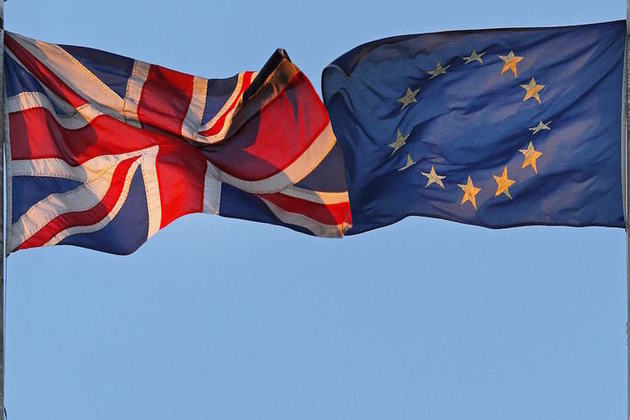
Should Britain quit the European Union? Or should it stay?


Résultat de recherche d'images pour "pictures of British"

What should the EU demand from the UK?

Voters will be asked “Should the United Kingdom remain a member of the European Union?”

From now until the referendum there is going to be a lot of derisive media coverage, media hype, political clatter with mountains of disinformation to say the least.

Before it all gets into top gear here are what I consider to be the main arguments for and against.

At the moment Britain lives the status quo of EU membership.

Now that the empire really is gone and the UK is no longer a financial or military superpower, the question of decline has taken on a melancholic air.

Nostalgia grips the British imagination.

Like Tony Blair, Cameron is still in love with the idea of a globe bestriding, quasi-imperial Britain and it was this that fired British military involvement in Libya as well as his desire (wrecked by Labour) to take action in Syria.

Is it not time for Britain to acknowledge its history by becoming a nation with a responsibility to the Future of all.

On the European side.

It’s a tumultuous times for Europe. In the midst of its biggest ever financial crisis in the form of Greece’s potential default, battling an ongoing migrant catastrophe which has seen thousands of people drown trying to reach European shores.

The truth is that the world at large doesn’t just matter when it comes to international politics its all about TTIP and the TTP the workings of the global economy — in harness with the policies of successive governments — they are going to leave communities shorn of employment and identity.

So lets first put the case for England to say –  Yes.

The business community will come out overwhelmingly in favor of continued membership. However unpopular some in business – notably the banks will induce fear of exit. So in reality it will be the economy that will decide the outcome of the Referendum.

The UK now accounts for less than 1 per cent of the world’s population and less than 3 per cent of global income (GDP). Each year that goes by, these numbers shrink a little.

The single market, gives British business access to the entire EU with its 500 million consumers. The EU accounts for nearly 20 per cent of world GDP. The EU, economy is six times the size of British economy.

There are one million Brits living in Spain, 330,000 living in France, and 65,000 in Cyprus. There are also 330,000 in Ireland. If Britain kicked EU citizens out of the UK, the EU would probably retaliate. That could be over a million returning immigrants.

Contrary to what the British think EU membership doesn’t cost much.

England’s annual budget contribution, after taking account of money transferred back to the UK, is £8.3bn. That’s around half a per cent of its GDP, or £130 per person.

The EU is England biggest trading partner, accounting for 52% of its trade a mire £400 bn per year, which far outstrips the estimated £12bn spent (net)on the EU each year.

The Center for Economics and Business Research found that in 2011, 4.2 million jobs in the UK were associated with exports to the EU. This is a massive 13.3% of the UK workforce, and it amounted to an estimated £3,500 per head of the population in 2011.

London, ( although it exists in another dimension to the rest of the country) needs the EU to remain one of the world’s financial centers.

The average age of the European immigrant population in Britain was 34 in 2011, compared with 41 for the native population which leave me at a lost to understand all the moaning about EU immigrants. They are cost-effective since they normally arrive after being educated. And, since most of them are of working age, England does not pay much for their pensions or healthcare, either.

British relationships with the US and the EU have always been separate from one another, especially in connection with the war against terrorism.

A yes vote will have an effect on the future direction of British foreign policy orientating it towards its European neighbors rather than America. It would also have a serious impact on British influence internationally.

Leaving could spell disaster, potentially costing millions in job losses and adverse trade impacts.

A yes vote could see the slow demise of Sterling. It certainly will see the demise UKIP.

Leaving would have a negative impact on foreign investment per person per consumers.

If the British left the EU they will have to pay more for visas, unless they created their own agreements with different countries.

Now the other Option. Out.

A desire to keep foreigners out of Britain is the main reason why the electorate may want to quit the EU entirely.

The free movement of EU member state citizens has resulted in out-of-control immigration into the UK, they claim, with people from poorer EU nations seeking to take advantage of the British health service and welfare payments.

Of course there is the option of out and staying in the single market.

That may be feasible.

After all, Norway has access to the single market without being in the EU.

But there is a big disadvantage:

Norway has to apply all the rules of the single market without any vote on what those rules are. If Britain was in the same position, it really would be subservient to Brussels. Quite apart from the blow to its sovereignty, the rules would be written without taking account of its interests and so could easily harm its citizens.

The two other main examples are Switzerland and Turkey. Unfortunately, they don’t have full access to the market and they still have to follow some of the rules, without a vote on them.

Out means it isn’t part of the CAP.

It will have to renegotiate all of its trade agreements.

Why would any other country feel the need to deal with England directly?

Faced with the rapid, ongoing expansion of the BRICS nations (Brazil, Russia, India, China, and South Africa), among others, even with the USA special relationship it could kiss it ass goodbye. It would be like a feather weight getting into the ring with a heavy weight. Knocked out before the bell rang for round one.

In China the UK is not a big power.  In the eyes of the Chinese it is just an old European country apt for travel and study.

It could rely on its membership of the World Trade Organisation (WTO) to ensure access to markets. The snag is that, although the WTO has made progress in opening up trade, it has not secured anything like free trade in manufacturing – let alone services, which account for more than three-quarters of its GDP.

What will The EU Demand?  

This is the question no one asking.

The growth of euroscepticism across Europe means the elites won’t be able to bamboozle the people into agreeing more transfers of power to Brussels, as they have done in the past.

Will Britain have to forsake its opt-outs from the Maastricht Treaty 1992

Currently, four states have such opt-outs: Denmark (four opt-outs), Ireland (two opt-outs), Poland (one opt-out) and the United Kingdom(four opt-outs).

If so could Sterling be phased out. Highly unlikely.

Conclusion:

The eurosceptic view can be summarised in three phrases:

Our plight is dire.

Attempting to reform the EU is futile.

The prospects outside are golden.

The single market is based on what are known as the “four freedoms”. These were contained in the Treaty of Rome that set up the forerunner to the EU in 1958: the free movement of goods, services, capital and people.

This is one of the most important charters for freedom the world has ever seen.

The eurozone probably won’t rush towards so-called political and fiscal union. Political union is also unnecessary because the main problem with the periphery is one of competitiveness.

Centralising power and giving hand-outs won’t solve that.

The solution, rather, is to restore competitiveness and boost productivity by freeing up markets. This is not a pleasant process, but it is beginning to happen in places such as Greece and Spain.

Will the EU allow a half-way houses that give some access to the single market but without following all the EU’s rules.

Peripheral countries have to solve their own problem.

This list leads to three further questions.

Can Britain win the unanimous agreement of other governments?

Do any of the changes require treaty amendment, which is hard for some other countries to do? And will they persuade British voters to stay in the EU?

The answer to the first is that most of the changes are quite modest, so they should not be too difficult to agree.

The second is harder, since at least three of the proposals—the benefits change, an opt-out from ever closer union and a mechanism to safeguard non-euro members—could require a new treaty to guarantee their effectiveness. There may be scope for a legal fudge that stops short of full treaty change, similar to protocols adopted in the past to satisfy Danish and Irish demands after their voters rejected previous treaties. Or there could be a “post-dated cheque”: a promise to incorporate changes into the EU treaties whenever they are next revised, for instance if a new country joins the club.

The third question is the biggest unknown. But Mr Cameron is gambling that, fresh from his unexpected election victory, he can persuade voters that it is better to have the devil they know than the devil they don’t. After all, a similar tactic favouring the status quo worked in the Scottish independence referendum last September—but it was a close-run thing.

England must look beyond vulgar economics and celebrate the EU as a zone of peace not just a lucrative market. It must lift the referendum debate beyond cost-benefit analysis to matters of principle. Exit need not be a disaster, true, but even the faint prospect of net economic loss will chill the blood of the undecided.

The EU represents not just an economic bloc but also offers multiple opportunities for study, research, culture and retirement. Moreover, it operates to secure peace within Europe and is a force for projecting a European view into the world polity.

If it end up option out a Free Trade Agreement (FTA) with the EU would be a joke. Plenty of bigger economies don’t have an FTA with the EU.

Anyway, it’s also the terms that matter: not all FTAs are the same.  As regards time frames, the EU deals with Singapore and South Korea took several years to negotiate: these kinds of arrangements are incredibly complicated. What happens in the meantime?  The out lobbyist don’t say because they don’t know.

I would place my stake on the public voting to remain in the club.

If the British people are to be asked to vote for EU exit they deserve to be given a proper explanation of what happens next.

It is high time for the Brits to realise that they aren’t alone and to accept the other 27 Member States into their reality, mentality, and allow them into their hearts. 
Mr. Farage is not hitting the mark head-on, but is going around the issue, as most political remarks go. Such arguments as ‘wanting the country back’ and ‘immigrants are taking over’ are not interpreted correctly.
Migration, or better yet immigration, of people to other countries is no cause to throw a fit. Migrants, are the labor force behind some countries, and the UK is surely one of them.
In the end no matter what ice cream you lick we all belong to the one family. This banal fact used to be one of history’s most closely guarded secrets.
So for those of you who will have a vote.
Before you vote have a look at the world.  Not the world of materialism created by Economics, Trade Packs and the like, rather the world you currently live in.  Ask yourself what can you do to improve it. Live on a Isolated Island or Contribute.
As to whether marriage or divorce is on the agenda for the UK and EU, only time will tell.  There is no concrete reason for the EU and the UK to part.

← Back

Thank you for your response. ✨


Share this:

  • Share on WhatsApp (Opens in new window) WhatsApp
  • More
  • Share on Mastodon (Opens in new window) Mastodon

THE BEADY EYE: TAKES ANOTHER LOOK AT CAPITALISM.

31 Sunday May 2015

Posted by bobdillon33@gmail.com in Politics., The Future, Uncategorized

≈ Comments Off on THE BEADY EYE: TAKES ANOTHER LOOK AT CAPITALISM.

Tags

Capitalism and Greed, Capitalism isn't working, Capitalistic Societies, Global capitalism, Neoliberal capitalism:

An organization is only as strong as the humans within it.

The Current Capitalist global political economy which you can see all around you is on the point of no return.

Our world Organisations creak with overburden demands, lack of funds, and self -control, and taciturnity of action.

Capitalism  cannot expand as it did in the past as it has consolidated wealth into the hands of a tiny global elite. It is losing its hold on the imagination of large numbers of people who are not benefiting from this global system. The system is seizing up.

Yet the global capitalist system that I condemn has also produced incredible advances in life expectancy, raised hundreds of millions of people out of poverty, and showered the world in technology innovation.

In all directions, the stage is set for a great planetary debate that will define the dawning Age of Technology – one that will inevitably be focused on how to implement the principle of sharing into world affairs.

If we truly believe in equality, we need to organise ourselves with a clear sense of equality.

The secrets of sustainability and well-being in society lies not in the Technology but in the imbalance in living standards and life opportunities between the global North and South – and between rich and poor within every country to varying degrees – is a crisis that lies at the heart of all world tensions.

Nothing will change unless our collective cognition’s change.1652331

Sustainability cannot be achieved by simply switching technologies. The future will happen anyway but just look at the tragic cost of human life, injury and exploitation we are witness to every day. Also, the cost to the planet from pollution and water use.

How can we keep ourselves and our organizations in tune with the exponentially expanding needs, problems, and opportunities posed by the world around us?

Business practices have worsened. Consumerism has reached a cruel momentum speed.

However if we collectively decide that we don’t accept what we and they are doing we can have a future for all.

It seems to me that Capitalism with its ideology of the trickle down effect has lost the plot and is being exposed as a lie.

With the Elite corrupted, the ordinary Joe soap doesn’t  seem to come into the equation until after it’s produced, if you get what I mean.

The Imbalances in our Capitalist Societies are forcing people to live with chronic debt a form of social and political control.

No one or any Organisation on its own can handle, Aging, diversity, intellectual capital, technology, generations, education, personalization, human ingenuity, continuous improvement, ethics, planetary security, polarization, interdependence, personal meaning, poverty, and careers, just to mention a few.

Our smartphones have become Swiss army knife–like appliances that include a dictionary, calculator, web browser, email, Game Boy, appointment calendar, voice recorder, guitar tuner, weather forecaster, GPS, texter, tweeter, Facebook updater, and flashlight. They’re more powerful and do more things than the most advanced computer at IBM corporate headquarters 30 years ago.

Clearly, our prevailing socio-economic structures in no way reflect the inner connectedness and equality of human beings across the world.

If we take Climate change; it might turnout to be our Savior.

It can only be tackled by an equitable “global” climate deal that can tackle the climate crisis effectively; a deal that clearly spells out the commitments of each and every player.

The possibilities of this happening  in a world where it is seldom mentioned that around 40,000 people are still dying in poverty each day from largely preventable causes – mainly due to lack of access to sufficient food, clean water, adequate shelter and health care, are Zero.

Although we live in a bounteous world that has more than enough wealth and resources available for everyone to meet their essential needs (a fact that can no longer be taken for granted), this wealth divided reality makes a mockery of ageless teachings on right human relations and our innate spiritual unity.

We’re assaulted with facts, pseudo facts, jibber-jabber, and rumour, all posing as information. Trying to figure out what you need to know and what you can ignore is exhausting. This is the very reason that our World Organisations are far from embodying the spiritual impulse toward planetary synthesis, wholeness and union.

So let me state one hard fact; There will be no solution without Money.

Economic relationships between rich and poor countries remain predicated on the opposing objects of national self-interest, aggressive competition and materialistic acquisition.

International travel, trade and telecommunications may have led to a growing understanding that we are part of a global community, yet economic globalisation in its present form is failing to promote and safeguard the needs of humanity as a whole.

It does not seem realistic to think that certain specifics issues, such as environment and labour standards, should be considered as negotiating positions which are defended exclusively by developed countries. This reality is so out of touch with basic moral values, let alone spiritual law or divine principles.

Drastic changes are now needed to prevent increased turmoil and catastrophe in the years ahead.

The implications for our competitive, profit-driven institutions and outmoded ideologies are all-encompassing, yet nothing less will suffice to guarantee an end to poverty and the inauguration of a viably spiritual mode of global economic organisation.

The environmental crisis is waking us up to a new ethic based on the sacredness of nature and all living beings, and the need for simpler lifestyles that respect planetary boundaries and the rights of future generations.

These issues should be of common concern, protecting global interests, however difficult it has been to realise this obvious truth in our structures of international relationship: That a more equitable sharing of wealth, technology, skills and knowledge is the fundamental basis of a just and peaceful world order.

What have we got instead is a world full of many organizations that exist to make
 a profit.

Each organization exists for a purpose: to bring something to the world, make it available to people, and enable those people to capitalize upon it. Whether for profit or not, all organizations seek to sustain themselves, so they can continue bringing their things to the world.

Change is inevitable. Progress is optional.

The lavish lifestyles of the affluent nations are effectively financed by the poverty of the majority world, while a wholly inadequate overseas aid system and philanthropic activity masks the systemic injustices of the global economy. After centuries of colonialism and the exploitation of weaker populations by the more powerful, wealth and resources continue to be extracted from developing countries through illicit financial flows, profit repatriation, corporate tax abuses, unjust debt servicing and other means.

Governments have to acknowledge that the natural resources and produce of the world belongs to no one nation but must be shared by all, as embodied in the wise pooling and distribution of essential resources for the benefit of everybody.

Rich nations in particular have to understand that they cannot remain islands of prosperity in a sea of deprivation, and that a more equitable sharing of wealth, technology, skills and knowledge is the fundamental basis of a just and peaceful world order.

The major spiritual lesson for humanity in the twenty-first century could not be simpler or more urgent in this regard, however the difficult has been to realise this obvious truth in our structures of international relationship.

In an era of email, text messages, Facebook and Twitter, we’re all required to do several things at once. But this constant multitasking is taking its toll we are all become increasingly out of touch with our fast-changing world.

Many injustices have been spawned, from large-scale atrocities, to out-of-touch campaigns and services, no longer serving those they began operating in the names of.

Ensuring that all of those involved have an equal voice in shaping what we do is not just working as it ignored  the needs and demands of society to navigate through the one accelerating constant–change.

Organizations change directions repeatedly in order to sustain themselves.

One way to clarify what the intentions of man is to go back in history to the beginning of your existence.  What was written then about the purpose being pursued?  With long-lived organizations, this original purpose surely shifts.

Here is the wish of most of us.

I wish that we lived in a functioning democracy where real electoral and social reform is possible.Résultat de recherche d'images pour "free pictures of capitalism"

As long as corporate power has a stranglehold on our institutions and our government, including our mass media, it will do what it’s designed to do and that is to exploit until exhaustion or collapse.

In all my reading, one of the most simple, yet profound ideas I discovered was that principles (or certain natural laws or rules) govern how and why things happen in all of life.  This truth is well accepted in the fields of physical science, but unfortunately less so in other areas of study.

In disquisitions of every kind there are certain primary truths or first principles upon which all subsequent reasonings must depend.

It boils down, in its essence, to the basic idea that all men are free to choose liberty and life, or captivity and death. Sadly, too many of us have been trained and conditioned to wait – perpetually – for someone else to rescue us.  We are being acted upon by the pressure of expectations outside ourselves. Too often, we fail to question our day-to-day assumptions.

We live at a time when the dominant social paradigm actually undermines the philosophical revolution that enabled us to become the most free, prosperous, and generous people in modern times.

dollarmembership

Right I can hear you saying. We have heard it all before. What is the solution. It’s not Communism, it’s not Socialism, it’s a mix of all three with God is a Capitalist.

So why does this matter to you or anyone else? Answer.  In a nutshell, it means everything if we as a planet of humans are to remain so.

There is only one solution we must make Capitalism contribute by placing a 0.05% World Aid Commission on all High Frequency Trading, on all Sovereign Wealth Fund Acquisitions and on all Foreign Exchange Transactions ( Over $20,000).

← Back

Thank you for your response. ✨


Share this:

  • Share on WhatsApp (Opens in new window) WhatsApp
  • More
  • Share on Mastodon (Opens in new window) Mastodon

” Selling out ” is a part of life.

05 Tuesday May 2015

Posted by bobdillon33@gmail.com in Uncategorized

≈ Comments Off on ” Selling out ” is a part of life.

Tags

Minimum Wage., Money and power., No Hours Contracts., Wages.

Imagine if the world map was redrawn not based on territories and treaties, but money and power.

This might be the best way to control the populations of the world.

It’s Not A ‘Law Of Capitalism’ That You Pay Your Employees As Little As Possible.

It is a choice.

Its a Fight Against Wage Slavery and Corporate Greed.

Greed clarifies, cuts through, and captures the essence of the evolutionary spirit. Greed, in all of its forms; greed for life, for money, for love, knowledge has marked the upward surge of mankind.

One company’s “wages” are other companies’ revenues.

Once you understand that “wages” become “revenues,” you can begin to understand what has happened to our economy over the past 30 years.

“Wages” aren’t just an expense line on a single company’s income statement.

Why?

Because the employees who are paid those wages use the wages to buy things–houses, food, clothing, cars, vacations, you name it. And in buying those things, they create revenue for other companies.

So, when wages go down as a percent of the economy, companies may get more profitable, but the employees paid those wages (or not paid any wages worth while if they are on No Hours Contracts at the Minimum Wage) have less money to spend. And that lack of spending power eventually hurts the revenue growth of most companies in the economy.

You don’t have to be a Professor of Economics to understand that producing stuff that the majority of the population can not afford leads to discontent all around.

The more income becomes concentrated at the very top of the economy, the less money is spent on the goods and services produced by the economy.

Because the people who spend most of the money–the average English or American–have less to spend the economy becomes greedier.

We are all being royally screwed over by bureaucrats, with their luncheons, their hunting and fishing trips, their corporate jets and golden parachutes.

Our companies have become extraordinarily profitable. But they have become extraordinarily profitable at the expense of their rank-and-file-employees, who have not shared in this prosperity and do not have much money to spend.

Only the companies’ owners have benefited with their shareholders developing a warped consensus that the only value that companies create is financial (cash) and that the only thing managers and owners should ever worry about is making more of it.

As a result, although our companies are extraordinarily profitable they are growing slowly.

Why?

Because the middle class–which contributes most of the work and most of the spending in our economy–has not shared in our companies’ prosperity.

The trend reflects growing concerns about the disproportionate spread of low-wage jobs in the U.S. and English/European economy, creating millions of financially strained workers and putting too little money in consumers’ pockets to spur faster economic growth.

Now you might think that all of this is hog wash but lets return to opening remarks of this post .

If we were to take the World according to Monsanto.

Seed can be owned as their property, royalties can be collected. We will depend on them for every seed we grow of every crop we grow. If they control seed, they control food, they know it – it’s strategic. It’s more powerful than bombs. It’s more powerful than guns.

If we take Google.

Every day that goes by Google becomes both more powerful.

Through G Mail Google stores and never deletes your email.

They catalog it and can do a LOT with that data. With time google can write robots to parse the data to find out every bit of data about you, who you know, what you talk about, etc.

G mail bundled with Orkut Google really has a solid grip on your social network with more detail and structure than email alone. Google knows who joebob62@aol.com really is, where he lives, what his pass times are, etc and can link it up with your email conversations. Now to get even further into your life they have the Google Desktop Search which has already been called on being invasive bypassing security on people’s PC’s and cataloging files that it shouldn’t.

http://onforb.es/1irxkWo

These are just two examples.

Certain industries dominate the global business landscape.

It is no surprise that banks and diversified financials still dominate thanks to their outsize revenues and massive total assets. The next three biggest industries are oil & gas (125 companies), insurance (114), and utilities (110). In terms of growth, the semiconductor industry leads all sectors in sales (up 11%); diversified financial companies in aggregate have an astounding 90% growth rate in profit; construction leads asset growth (up 18%).

Are we worried, not on you nanny.

Is the “commodity super cycle” nearing the end? All evidence seems to point to “yes.”

We have Governments elected to represent the people who are selling of your country assets for short-term profit to prop-up their shrinking economies. ( see previous posts)

We have world organisations that are total out of date, overburdened with bureaucrats, void of funds.

We have Media run by computers.

We have Sovereign Wealth Funds plundering the Earth for resources such as water, energy, land.

We have an English General Election in the next two days with the present Government that bailed out the Banks with Billions of tax payers money, now offering the share back to the tax payer at a discount. Somebody explain.

It’s no better across the pond.

In the USA they have turned war into profit. There are over 100,000 private contractors to run everything from security detail to weapons training to air surveillance of your enemies.

Normally, the military is accountable to the government.

Not so with private security companies. Private firms like Black Water and Dyn Corp have graciously offered to fill in the gaps.

Privatization is all the rage.

What we need is for the people of the earth to be represented, with sustainability, not greed.

This will never be achievable so why not make Greed contribute. ( See 0.05% WORLD AID COMMISSION)

Of course this in not the whole story.

There is the power of the Mobil Phone yet to be exploited by us not the other way around.  There is spending power probable more powerful than the vote.

“For the first time in many years, the people who put fuel in jets might just be able to buy a ticket on one.”

← Back

Thank you for your response. ✨


Share this:

  • Share on WhatsApp (Opens in new window) WhatsApp
  • More
  • Share on Mastodon (Opens in new window) Mastodon

It seems to happen at a disturbingly frequent rate.

28 Tuesday Apr 2015

Posted by bobdillon33@gmail.com in Uncategorized, WORLD POVERTY WHERE'S THE GLOBAL OUTRAGE

≈ Comments Off on It seems to happen at a disturbingly frequent rate.

Tags

0.05% Aid Commission, disaster relief, disaster relief are logistical, Mobile phones, Natural disaster, Nepal, not financial., relief efforts, Universities, WORLD VISION INTERNATIONAL

A 7.8-magnitude earthquake rocked the south-central Asian country of Nepal last Saturday, causing an estimated 5,000 deaths and widespread devastation.

More than 90 percent of natural disaster-related deaths occur in developing countries, where poverty and lack of resources exacerbate the suffering.

The biggest obstacles for charities working in Disaster areas is : Roads and other infrastructure are often destroyed, so charities can’t get supplies to those in need, even with your donations.

This is why you should not trash your old Mobile phone. Send them to ( See Below)

The power of mobile devices to coordinate is paramount.

fulfillment.http://go.ted.com/bFYJ

The media show heart-wrenching images of disaster beyond anything most people have seen or could even begin to imagine. People want to help; it is human nature to want to help. And many aid agencies offer just that opportunity as they fundraising for relief efforts. But if we give to them, does it actually make a difference?

The answer is yes, but disaster relief is notably less effective than many other forms of aid. ( See previous posts)

Are you not ashamed to see the head of the U.N. Disaster Relief Organization appealed for food, medical supplies every time there is a natural disaster.

Why not establish Swat life boat centers around the world. Fully equipped fully funded. Recent Disasters have shown the need for an international system to coordinate major rescue and relief efforts.

Whenever a disaster strikes, it seems that the job of relief and reconstruction goes to some agency run by someone well-connected politically and staffed by well-meaning people with little formal knowledge in the field of disaster relief.

Universities should have a discipline known as disaster relief and reconstruction.

Experts would teach courses in evacuation, emergency healthcare, debris removable, providing temporary shelter and other phases of disaster relief.

The emotional and sensationalized climate of disaster response has prevented the adoption of a cost-effectiveness approach in decision-making. It requires putting the needs of others ahead of your own emotional needs.

When catastrophe strikes, people rush to donate to help the victims. But disaster relief is rarely cost-effective.

What would be cost-effective is a 0.05% Aid Commission on all High Frequency Trading, on all Foreign Exchange Transactions (over $20,000) and on all Sovereign Wealth Funds Acquisitions.

This would create a perpetual fund of billions.

It would be Capitalism biggest glorious moment in its history:  To assist man kind and the planet we all live on. ( See Previous Posts)

Displaced people raise their hands as they wait for food distribution in central Africa.

International Offices

WORLD VISION INTERNATIONAL EXECUTIVE OFFICE

1 Roundwood Avenue Stockley Park Uxbridge, Middlesex UB11 1FG, UK

WORLD VISION BRUSSELS AND EUROPEAN UNION REPRESENTATION IVZW

18, Square de Meeûs 1st floor, Box 2 B-1050, Brussels Belgium EULO-info@wvi.org

WORLD VISION INTERNATIONAL GENEVA AND UNITED NATIONS LIAISON OFFICE

Chemin de Balexert 7-9 Case Postale 545 CH-1219 Châtelaine Switzerland geneva@wvi.org

WORLD VISION INTERNATIONAL NEW YORK AND UNITED NATIONS LIAISON OFFICE

919 2nd Avenue, 2nd Floor New York, NY 10017  USA wvun_offices@wvi.org

If you DON’T have a phone a laptop or i pad will do.

Thanks.

← Back

Thank you for your response. ✨

Share this:

  • Share on WhatsApp (Opens in new window) WhatsApp
  • More
  • Share on Mastodon (Opens in new window) Mastodon

It is an age of growing information inequality.

24 Friday Apr 2015

Posted by bobdillon33@gmail.com in Uncategorized

≈ Comments Off on It is an age of growing information inequality.

Tags

Google News, Information gap., personalised news services, The future of news., The Internet., Truth

Millions of people are online, millions are not.future of news

The internet is not keeping everyone informed, nor will it.

It is, in fact, magnifying problems of information inequality, misinformation, polarisation and disengagement.

The world is dividing into those who seek the news and a growing number who skim it.

A generational change in the way we consume the news is already well under way.

Who cares?

If you extrapolate from the number of smartphones globally, the total addressable market for news by 2020 is around 5 billion people worldwide.

The future of news will be determined by social media platforms. Citizen reporting and blogging have opened up the world to millions of people.

Thanks to the rise of social media, news is no longer gathered exclusively by reporters and turned into a story but emerges from an ecosystem in which journalists, sources, readers and viewers exchange information.

This is facilitating an easy slide into probabilistic “truth.”

On the Internet, there is no limitation to the number of outlets or voices in the news chorus. Therefore, quality can easily coexist with crap. There is no baseline of reliability or verification of the material that is circulated in Social Networks?

(Verification is vital in order to report accurately and not risk loosing trust and credibility – something that is at stake when faked, manipulated or untrue events or stories are reported by established and generally trusted media brands.)

People say access to the news has never been better. It’s easier than it’s ever been to know what’s going on in the world. It is true that there is ever more data, more opinion, more freedom of expression, but it’s harder to know what’s really going on.

The problem of how to distinguish good information from bad. That problem has been with us since we started communicating.

So even though we have a new technology where information comes to us instantly over the wires… the art and science of journalism is becoming really important to separate the news from the increasing amount of noise generated in the online world, where it can be difficult to know who or what to believe.

It is an environment where unconfirmed information can go viral, where opinions are an increasing part of the news business . . . an environment where anybody can be his or her own journalist, and publish content on the web.

People are increasingly unsure of the facts and unclear what they mean.

Unfortunately what many people don’t understand is the ethical obligation to do everything they can to get the facts right.

For example, the British think 24% of the population are immigrants (almost twice the actual figure of 13%) and believe that nearly 24% of the working age population are unemployed (the real figure is 7%).

As technology continues to evolve faster and faster, the information gap between younger people, poorer people and some ethnic minority groups, on the one hand – and older people, richer people and some groups of white people, on the other – is widening.

In a world where everyone can report on news, the internet is bypassing the professional reporter.  The breaking of news is no longer solely going to be the domain of news organisations. Smartphones, tablets and social media have changed how we consume and share the news.

So the question is should the news medium, as ever, be shaping the message?

Big news organizations turning to algorithms to create content.

The AP — which is an investor in Automated Insights — already uses Wordsmith to generate stories on corporate quarterly earnings reports. Meanwhile, automated content competitor Narrative Science provides similar services to publications such as Fortune and Big Ten Network. A Los Angeles Times journalist used custom software to auto-generate a story minutes after an earthquake hit Los Angeles last year.

But is anyone actually reading any of this machine generated content?

Automated Insights generated over one billion pieces of content in 2014 alone, most of this verbiage isn’t meant for a mass audience but it begs the question— How will news organisations report and tell stories and, what, indeed, will count as a story? What’s really going on. What it really means. What really matters.

There was a time when the news industry could help determine the kind of connected society we are. Not any more. Audience are picking up information in different ways.  IE by Tweeting and Facebook to mention just two.

In a democracy, news is an essential public service but we are well on the way to personalised news services.

Social media and weblogs are becoming more important as additional sources for media coverage.

We are all practicing investigative journalism.

While Television news puts a premium on dramatic pictures, telegenic politicians and snappy soundbites. Computers can do what journalists used to, namely compile the football results, produce travel news bulletins and write-up company results stories.

The coverage of politics, economics, and sports will remain important, however coverage of art and culture is become less important. Google News which offer free access to newspaper headlines, snippets of text, thumbnail pictures and direct links to newspaper articles is engaging in transformative use of the news content.

Nine out of ten of us have no idea of the quality of the news report.

Embedded image permalink

One day you might even have your own personal robot journalist, filing daily stories just for you on your fitness tracking data and your personal finances.

CNN The 24-hour news network has signed a research agreement with the Federal Aviation Administration that will “advance efforts” to bring more unmanned aerial vehicles (UAVs) into its news gathering and reporting process.

The key skill and market of the future will not be in collecting information, it will be in limiting it to what is true.

← Back

Thank you for your response. ✨

Share this:

  • Share on WhatsApp (Opens in new window) WhatsApp
  • More
  • Share on Mastodon (Opens in new window) Mastodon

I want the UN Scraped. Replaced

21 Tuesday Apr 2015

Posted by bobdillon33@gmail.com in Politics., Uncategorized

≈ Comments Off on I want the UN Scraped. Replaced

Tags

Capitalism V Democracy., Free-market values, Globalisation, Technology, THE UNITED NATIONS, Visions of the future.

I have written on this subject before but of course you are all to preoccupied to comment.

With the major powers refusing to give up their prerogatives and hogging most of the world’s resources, a new organisation of the global community must be invented soon.

The main challenge would be to define and defend mankind’s common resources.

The spread of conventional and nuclear weapons, and terrorism and genocide through such rudimentary means as the machete, are violence that goes beyond state borders.

We need to examine the reasons for this violence. Hunger, indecent development gaps, inequality in the face of natural disasters (particularly climatic ones), the major powers’ encouragement of arms sales and other trafficking, ideologies that breed racism and discrimination (neo-Nazi factions in European and Russian countries, “Ivoirité” in the Ivory Coast, discriminatory Zionism against Arabs in Israel, with implications for the failure of the peace process, radical Islam).

Human beings will always be confronted by their own violence.

Globalisation is leaving many more poor by the wayside, provoking new forms of violence and widespread terrorism. The UN has done nothing about the protection and equitable sharing of such vital resources as water, energy, knowledge and medication.

It’s a worthless gossip shop given that international law, which remains the framework for any reform, leaves sovereign states totally free in their commitments.

The complexity of a global society is totally ignored.

If we want to imagine another worldwide institutional system, we must examine the world we live in and ask ourselves what our goals should be.

Peacekeeping has become a belated, often useless, stopgap.

The UN manages inter-state relations, albeit feebly. The intense relations established directly between populations outside state control are developing into a power struggle to the detriment of the human rights they pretend to observe – ISIS. The peace dividend promised at the end of the cold war was an illusion.

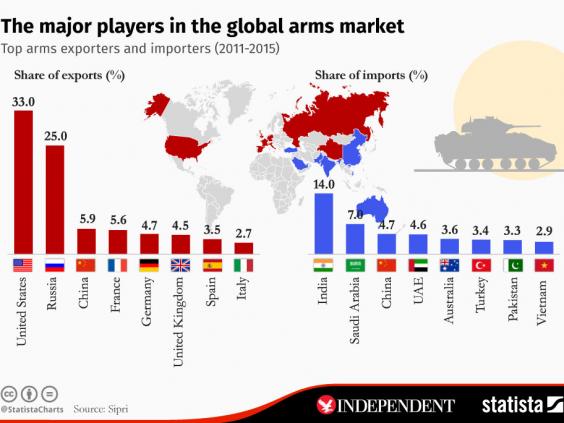
Arms sales are soaring  because the major powers chose to militarise their economies. While the UN is still dominated by the victors of the second world war. It has not lived up to its mandate and will not be now or in the future be able to do so.

Its composition bears no relation to the declared intention of equality between members. The status of the permanent members and their veto remains intact as unjustified positions of power. This permanence of power remains unchallenged even though it is ephemeral by nature and the legitimacy of the five second world war victors has been eroded years ago.

President George Bush’s unilateral decision to invade Iraq removed a dictatorship only to plunge that country into chaos and violence, further confirming the helplessness of the UN.

Not mention current wars between states, civil violence, poverty, infectious diseases, environmental degradation, terrorism, organised crime, nuclear, radiological, chemical and biological weapons.

There is no hope of the UN reforming itself any amendment must receive two-thirds of the vote in the General Assembly. To be enforced, it must then be ratified by two-thirds of the member states, including the five permanent members, and we all know what they will do.

Any proposal to democratise the council is a sham.

The history of democracy has been a constant struggle against the usurpation of power by the richest and strongest.

Where does this leave us?

The universal spread of extreme free-market values is calling for a universal political community, not to replace national communities but to complement them and cater for the complexity of a society that combines inter-state and inter-individual relations.

Technology is driving the world apart not together. Them and US.

The geopolitical shifts in Asia and in Asia’s relations with the rest of the world could lead to a redistribution of power and patterns of participation, with or without formal, structural reform.

The UN is already unable to adapt to global dynamics. Peacekeeping missions have developed exponentially, often leading to fiascos.

Is there is no one in power that can see that we need to look impartially at international trends that are challenge the world?

The need for democracy (by the elimination of all prerogatives that benefit only a few states), for law ( A world Court of Human Rights.The establishment of an international court of human rights, which would enforce the rights laid down in international treaties and hear individual appeals in special circumstances.) and justice (by the mandatory nature of international law).

These cannot be ignored for much longer. The world needs a new Organisation, not called Google.

Of course any New Organisation will need financing.

This can only be achieved by Independent funding. Any other form of funding is useless. Globalization and technology stop at no borders and capitalism continues to privatize the planet our collective destiny.

( See previous posts: A 0.05% aid commission on all High Frequency trading, on all Foreign Exchange transaction over $20,000, on all Sovereign Wealth Funds Acquisition. This will create a perpetual fund of billions)

I for one am fed up of seeing people dying while our world leaders have another conference.


Share this:

  • Share on WhatsApp (Opens in new window) WhatsApp
  • More
  • Share on Mastodon (Opens in new window) Mastodon

The exploitation of human beings for profit is everyone’s business.

17 Friday Apr 2015

Posted by bobdillon33@gmail.com in Uncategorized

≈ 1 Comment

Tags

Exploitation, Human trafficking, Modern day Slavery, Sex trafficking, Slavery footprint

This is one of the many problems in the world that we as humans should be ashamed of.  We turn a blind eye to it because it reminds us what kind of inhumane treatment we are capable of as human beings.

The 6th Dec this year marked the 150 years since the ratification of the 13th Amendment formally abolishing slavery in the US.

But almost 150 years after the 13th Amendment abolishing slavery and involuntary servitude, there are still men, women and children enslaved into labor and commercial sexual exploitation in the U.S.

There are more people in slavery today than at any time in history.

It is now the third – largest and fastest – growing crime worldwide. The average cost of a modern-day slave is a mere $90. This is a fraction of the average cost of a slave in 1850, which was $40,000( in current dollar value)

person behind bars

Each and every one are a living, breathing reminders that the war against slavery remains unfinished.

Unfortunately, for many of the world’s workers, exploitation is a reality that must be factored into the path towards a better life.

Its roots are in the three greatest problems facing a shared world : Inequality of opportunity, Exploitation for excessive profits, and Sustainability.

The International Labor Organization (ILO) estimates profits (PDF) from this forced labor are $150 billion a year.

The presence of forced labour in the supply chains of major manufacturers has been repeatedly documented. Human exploitation has built our world and continues to drive global economic growth.

Cheap labour, cheap sex and cheap goods are woven into the fabric of our individual lives.

It is easy to be horrified about slavery while absolving ourselves of direct responsibility.

“[Human trafficking] ought to concern every person because it is a debasement of our common humanity. It ought to concern every community because it tears at our social fabric. It ought to concern every business because it distorts markets. It ought to concern every nation because it endangers public health and fuels violence and organized crime.” —President Barack Obama.

Here are some hard facts:

Hopefully they might make you think twice.

Some 35.8 million people are currently trapped in modern-day slavery, forced to pick cotton, grow cannabis and prostitute themselves among other things. 167 countries, said modern slavery contributed to the production of at least 122 goods from 58 countries.

India comes top, with more than 14.29 m people reckoned to be equivalent to slaves, followed by China, Pakistan, Uzbekistan and Russia.

Uzbekistan is the second offender on the list because every autumn, the government forces over one million people, including children, to harvest cotton.

Mauritania has anti-slavery legislation but it is rarely enforced and a special tribunal set up in March has yet to prosecute any cases. Mauritania abolished slavery in 1981, though without passing legislation to punish slave-owners. To day there are around 150,000 people out of Mauritania’s total population of 3.8m who are still enslaved.

Countries like Qatar in the Middle East were a major destination for men and women from Africa and Asia who are lured with promises of well-paid jobs only to find themselves exploited as domestic workers or in the construction industry.

Africa faces some of the biggest challenges, with armed forces and rebel groups from Somalia to the Central African Republic using child soldiers to mineral-rich Zambia, Angola, and the Democratic Republic of the Congo forcing children and adults to “labor in dangerous mines.” Estimated to be one million.

Ivory Coast, 60% of chocolate is produced by an estimated 500,000 child labour.

South Africa, where private hospitals harvest the organs of deceived Brazilians for commercial transplant operations. 70,000 kidneys come annually from the black market.

West Africa the practice of forced servitude called Trokosi.

Australian sex industry.

Afghanistan Young boys sold through a practice call Bacha Bazi.

Senegal. 50,000 homeless children forced to beg.

Brothels of Bali.

Indoor Cannabis Farm in the UK.

Camel Jockeys Persian Gulf.

Singapore and Kuala Lumpur, domestic workers in private homes.

Cocoa farms of Ivory Coast, made profitable through the almost-zero cost labour of child workers from Mali.

Fishing boats throughout Asia and the Pacific. Demand for cheap seafood drives modern-day slavery.

Houston is a major labor and sex trafficking hub in the United States.

In the houses and apartments of wealthy Americans, where Guatemalan maids sleep on the floor and are not paid or allowed outside.

Florida is one of the top three states for human trafficking in the U.S.

It is estimated that there are around 60,000 people in modern-day slavery in the USA

There were at least 5,000 trafficking victims in the UK last year 2014.

Although every government in the world has declared slavery an illegal enterprise, it flourishes. Every year Globally some 60,000 to 80,000 people are trafficked across international borders each year.

The bitter truth is that despite growing awareness of the issue there are still more than 36 million slaves in the world today, trapped in forced labor, sexual exploitation, domestic servitude, military service, and child labor.

Trafficking in persons is modern-day slavery and it exists in virtually every country in the world.

Now we all know no matter what we do there will always be people exploited by others.

People are forced into working and poverty at the same time by government legislation, or the lack thereof.

But is it not time to give Immigrants proper legal citizenship’s if earned.

Even if victims identify themselves as such and are aware of their rights, they still might hesitate to report their victimization out of fear of reprisal from the trafficker, lack of trust in law enforcement or fear of deportation.

Is it not time for western rich countries to open proper border crossings for Refugees, and for each to give temporary humanitarian shelter to people fleeing war stricken parts of the world. Let,s say five years temporary residential visa with realistic quotes for each and every country.

Is it not time that we should be abolishing Domestic workers visa.

Is it not time that Slavery and human trafficking should carry a world-wide life sentence for those who are apprehended dealing in human suffering.

(The very nature of human trafficking helps keep modern-day slavery a crime hidden.)

Are governments helping corporations break collective bargaining agreements to lower wages and increase profits?

If the result of working leads to the continued poverty you are trying to get out of, why work at all.

What we see is negative stereotypes about the people commonly found to be victims of human trafficking, especially those involved with prostitution and those with drug addictions.

  • The under reporting of sex trafficking victims who are minors
  • The role that gangs play in sex trafficking
  • Effective counter-trafficking legislation, law enforcement processes and demand-reduction strategies
  • Strategies to stabilize and integrate adult survivors of human trafficking.

Human trafficking is believed to be a growing crime, fueled by low risk and the potential for high monetary gain.


Trade in human misery ... women sit in fishbowl-type rooms, guarded by 'bouncers' in the narrow street known as 'Dolly' in the red-light district of Surabaya, Indonesia.


Today’s slaves are held through debt bondage, indentured servitude or other forms of control. The exploitation of human beings for profit is everyone’s business. We might not be able to end it, but now we know what’s going on, feeling bad is just not good enough.

Technology has changed the way it’s done.

So why not use technology to attack every link in the exploitation network.

Of course there is no realistic solution while we are all slaves of Consumerism. But we do have a weapon to hurt those that use exploitation.  It is in your pocket called spending power.  

The world chocolate market is expected to reach $98.3 billion in 2016. A World day of only buying fair trade chocolate would hurt those that use exploited cheap labor. 

It is sobering to wonder just how big our individual “slavery footprint” might be.  Also it is both foolish and patronising to treat the people caught up in this trade as naive and helpless victims.

← Back

Thank you for your response. ✨

Share this:

  • Share on WhatsApp (Opens in new window) WhatsApp
  • More
  • Share on Mastodon (Opens in new window) Mastodon

It is time to give fundamental rights to the planet itself.

11 Saturday Apr 2015

Posted by bobdillon33@gmail.com in Uncategorized

≈ Comments Off on It is time to give fundamental rights to the planet itself.

Tags

Consumerism, Earth, environmental degradation, Sustainability

Most of today’s decision makers will be dead before the planet feels; the heavier effects of acid precipitation, global warming, ozone depletion, or widespread desertification and species loss.

Most of the young voters of today will still be alive.

The consumer cultures will have to be re-engineered into cultures of sustainability, so that living sustainable feels as natural as living as a consumer does today.

Two-thirds of the world’s energy is used to-day is for the production of commodities.

This new reality, from which there is no escape, must be recognized – and managed.

Sustainability cannot be achieved by simply switching technologies.

We need to see instead the possibility for a new era of economic growth, one that must be based on policies that sustain and expand the environmental resource base.

We all know that  industries most heavily reliant on environmental resources and most heavily polluting are growing most rapidly in the developing world, where there is both more urgency for growth and less capacity to minimize damaging side effects.

Humanity’s inability to fit its activities into a less must have now orientation for the sake of short-term pleasure and profit – from I am alright Jack attitude to recognizing our true values can not come soon enough.

Our Common Future, cannot be a prediction of ever-increasing environmental decay, poverty, and hardship in an ever more polluted world among ever decreasing resources. Which is changing planetary systems, fundamentally. Many such changes are accompanied by life-threatening hazards.

We need a new description of the possibilities ahead of us.

We have been for centuries and still are borrowing environmental capital from future generations with no intention or prospect of repaying. It may show profit on the balance sheets of our generation, but our children will inherit the losses.

The onus for change lies with no one group of nations.

Every day, we are presented with a range of “sustainable” products and activities—from “green” cleaning supplies to carbon offsets.

Is it time to abandon the concept altogether, or can we find an accurate way to measure sustainability? If so, how can we achieve it? And if not, how can we best prepare for the coming ecological decline?

Given that consumerism and the consumption patterns are not compatible with the flourishing of a living planetary system, either we find ways to wrestle our cultural patterns out of the grip of those with a vested interest in maintaining consumerism or Earth’s ecosystems decline will bring down the consumer culture for the vast majority of humanity in a much crueller way.

A change has to be started to put us on the path to prosperity without diminishing the well-being of future generations.

It will and is being resisted by myriad interests that have a huge stake in sustaining the global consumer culture— from the fossil fuel industry and big agribusiness to food processors, car manufacturers, advertisers, and so on.

Consumerism is not a viable cultural paradigm on a planet whose systems are deeply stressed and that is currently home to 7 billion people, let alone on a planet of 8–10.6 billion people, the population the United Nations projects for 2050.

So what can be done?

We all know what has to be done but every few of us are willing to do anything.

In a majority of societies today, consumerism feels so natural that it is hard to even imagine a different cultural model.

Consumerism—now propped up by more than trillions in annual advertising expenditures, by hundreds of billions in government subsidies and tax breaks, billions more in lobbying and public relations spending, and the momentum of generations of living the consumer dream—will undoubtedly be the most difficult part of the transition to a sustainable society.

The only question is whether we greet it with a series of alternative ways of orienting our lives and our cultures to maintain a good life, even as we consume much less.

You must ask yourself if there is any chance for us to come through the trials of climate destabilization in a nuclear-armed world with 10 billion people by 2100.

How can we soon reckon with the thorny issues of politics, political theory, and start governing with wisdom, boldness, and creativity.

We can all see our present danger, and we can also see our future potential: a stable human population of some 7–9 billion, living cleanly and well on a healthy biosphere, sharing Earth with the rest of the creatures who rely on it.

Or

Has humanity already overshot the carrying capacity of Earth so badly that we are doomed to a horrible crash after oil, or freshwater, or topsoil, or fish, or the ozone layer, or many other things—after one or all of them run out? So that no matter what we do in the meantime, it’s a foregone conclusion that we’re in for a fall?

I don’t believe so.

Provided we locked the global economy and global ecology together in new ways there is a way out for our beautiful home planet. There is no point reaching for the stars if we are bring with us Greed and Profit.

This is not just a dream but a responsibility, a project. The things we can do now, to start on this project are all around us, waiting to be taken up and lived.

Our problem stems from decades of engineering of a set of cultural norms, values, traditions, symbols, and stories that make it feel natural to consume ever larger amounts—of food, of energy, of stuff.

Policymakers changed laws, marketers and the media cultivated desire, businesses created and aggressively pushed new products, and over time “consumers” deeply internalized this new way of living.

For example, the United States, now suffers from an obesity epidemic in which two-thirds of Americans are overweight or obese. This obesity epidemic—which has spread around the world.

McDonald’s did not just create a cheap and tasty food, it effectively targeted children to get them to eat at McDonald’s early on—shaping their palate for both the company’s food and the high-sugar, high-salt, high-fat consumer diet.

Or

People spend more than $58 billion on pet food each year around the world. ( There are 133 million dogs and 162 million cats in just the top five dog and cat owning countries in the world),

Or

Globally, military expenditures total about $1 trillion a year and continue to grow.

Nothing will change unless our cognition’s change.

Even Professional sport promotes consumerism.


Dr. Martin Luther King Jr. believed that “we must rapidly begin to shift from a thing-oriented society to a person-oriented society.” By living “deliberately”—as Henry David Thoreau understood—we spend less, work less and enjoy life more.

Through collective action inspired by creativity we can build a vibrant environmental justice movement and reform the institutions that are driving “climate collapse”: the military and unchecked consumer capitalism.

Imagine if we had lists of “Ten Things to Save the Planet”

The problem would be that we have nowhere to hang the list.  Even if we did we there is no way of making anything on the list to stick.

So there is only one solution. We will have to use the most basic weakness of mankind – his own self-interest to effect change.

Rewards/Payment that are felt in his pocket.

Where do we get the funds to make these payments.

By Placing a world Aid Commission of 0.05% on all Foreign Exchange Transactions ( Over 20,000$) on all High Frequency stock exchange transactions and on all Sovereign Wealth Funds Acquisitions.

With this Perpetual Fund by greed we could then redesign Consumerism into Savvy consumers and Sucker consumers. Create a new consumer culture which would be truly a step in the right direction.

We could start to address Climate Change by granting home solar panels.

We could pay to protect to safeguard our, fresh water, our forests, our seas, our environment and give fundamental rights to the planet itself.

The faster we use our talents and energies to promote a culture of sustainability, the better off all of humanity will be.

This is what we have achieved so far. Have a look.

( https://youtu.be/MrqqD_Tsy4Q)  It takes two minutes.

We need to create a new centralization of power that specifically looks after our planet >  not a United Nations gossips shop that can do nothing because of its veto corset.

But an Earth Court that must be heeded or suffer the consequences, or no rewards or grants.

← Back

Thank you for your response. ✨

Share this:

  • Share on WhatsApp (Opens in new window) WhatsApp
  • More
  • Share on Mastodon (Opens in new window) Mastodon
← Older posts
Newer posts →

All comments and contributions much appreciated

  • THE BEADY EYE ASKS HOW CAN THE WORLD DEAL WITH IRIAN NOW A TERRORIST COUNTRY. May 18, 2026
  • THE BEADY EYE SAYS WE AT RISK WITH AI OF DECOUPLING COGNITIVE THINKING FROM EDUCATION. May 15, 2026
  • THE BEADY EYE SAYS LIFE IS NOT A REHSAL. SO YOUR HAD BETTER GET ON WITH IT. May 14, 2026
  • THE BEADY EYE SAYS WE NEED TO SEE CLEARLY WHAT ARTIFICIAL INTELLIGENCE IS D0ING TO THE WORLD. May 13, 2026
  • THE BEADY EYE SAYS We’re rapidly approaching the point where no one would be able to shut down a rogue AI. May 11, 2026

Archives

  • May 2026
  • April 2026
  • March 2026
  • February 2026
  • January 2026
  • December 2025
  • November 2025
  • October 2025
  • September 2025
  • August 2025
  • July 2025
  • June 2025
  • May 2025
  • February 2025
  • January 2025
  • December 2024
  • November 2024
  • October 2024
  • September 2024
  • August 2024
  • July 2024
  • June 2024
  • May 2024
  • April 2024
  • March 2024
  • February 2024
  • January 2024
  • December 2023
  • October 2023
  • September 2023
  • August 2023
  • July 2023
  • June 2023
  • May 2023
  • April 2023
  • March 2023
  • February 2023
  • January 2023
  • December 2022
  • November 2022
  • October 2022
  • September 2022
  • August 2022
  • July 2022
  • June 2022
  • May 2022
  • April 2022
  • March 2022
  • February 2022
  • January 2022
  • December 2021
  • November 2021
  • October 2021
  • September 2021
  • August 2021
  • July 2021
  • June 2021
  • May 2021
  • April 2021
  • March 2021
  • February 2021
  • January 2021
  • December 2020
  • November 2020
  • October 2020
  • September 2020
  • August 2020
  • July 2020
  • June 2020
  • May 2020
  • April 2020
  • March 2020
  • February 2020
  • January 2020
  • December 2019
  • November 2019
  • October 2019
  • September 2019
  • August 2019
  • July 2019
  • June 2019
  • May 2019
  • April 2019
  • March 2019
  • February 2019
  • January 2019
  • December 2018
  • November 2018
  • October 2018
  • September 2018
  • August 2018
  • July 2018
  • June 2018
  • May 2018
  • April 2018
  • March 2018
  • February 2018
  • January 2018
  • December 2017
  • November 2017
  • October 2017
  • September 2017
  • August 2017
  • July 2017
  • June 2017
  • May 2017
  • April 2017
  • March 2017
  • February 2017
  • January 2017
  • December 2016
  • November 2016
  • October 2016
  • September 2016
  • August 2016
  • July 2016
  • June 2016
  • May 2016
  • April 2016
  • March 2016
  • February 2016
  • January 2016
  • December 2015
  • November 2015
  • October 2015
  • September 2015
  • August 2015
  • July 2015
  • June 2015
  • May 2015
  • April 2015
  • March 2015
  • February 2015
  • January 2015
  • December 2014
  • November 2014
  • October 2014
  • September 2014
  • August 2014
  • July 2014
  • June 2014
  • May 2014
  • April 2014
  • March 2014
  • February 2014
  • January 2014
  • December 2013
  • November 2013
  • October 2013

Talk to me.

Jason Lawrence's avatarJason Lawrence on THE BEADY EYE ASK’S: WIT…
benmadigan's avatarbenmadigan on THE BEADY EYE ASK’S: WHA…
bobdillon33@gmail.com's avatarbobdillon33@gmail.co… on THE BEADY EYE SAYS: WELCOME TO…
Ernest Harben's avatarOG on THE BEADY EYE SAYS: WELCOME TO…
benmadigan's avatarbenmadigan on THE BEADY EYE SAY’S. ONC…

7/7

Moulin de Labarde 46300
Gourdon Lot France
0565416842
Before 6pm.

My Blog; THE BEADY EYE.

My Blog; THE BEADY EYE.
bobdillon33@gmail.com

bobdillon33@gmail.com

Free Thinker.

View Full Profile →

Follow bobdillon33blog on WordPress.com

Blog Stats

  • 99,673 hits

Blogs I Follow

  • unnecessary news from earth
  • The Invictus Soul
  • WordPress.com News
  • WestDeltaGirl's Blog
  • The PPJ Gazette
Follow bobdillon33blog on WordPress.com

The Beady Eye.

The Beady Eye.
Follow bobdillon33blog on WordPress.com

Create a free website or blog at WordPress.com.

unnecessary news from earth

WITH MIGO

The Invictus Soul

The only thing worse than being 'blind' is having a Sight but no Vision

WordPress.com News

The latest news on WordPress.com and the WordPress community.

WestDeltaGirl's Blog

Sharing vegetarian and vegan recipes and food ideas

The PPJ Gazette

PPJ Gazette copyright ©

Privacy & Cookies: This site uses cookies. By continuing to use this website, you agree to their use.
To find out more, including how to control cookies, see here: Cookie Policy
  • Subscribe Subscribed
    • bobdillon33blog
    • Join 222 other subscribers
    • Already have a WordPress.com account? Log in now.
    • bobdillon33blog
    • Subscribe Subscribed
    • Sign up
    • Log in
    • Report this content
    • View site in Reader
    • Manage subscriptions
    • Collapse this bar