• About
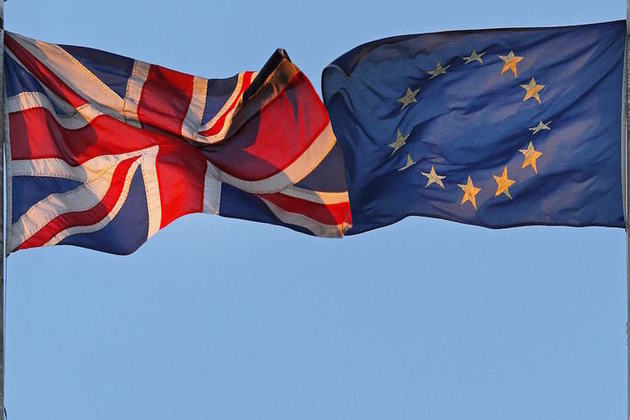
  • THE BEADY EYE SAY’S : THE EUROPEAN UNION SHOULD THANK ENGLAND FOR ITS IN OR OUT REFERENDUM.

bobdillon33blog

~ Free Thinker.

bobdillon33blog

Category Archives: Uncategorized

THE BEADY EYE ASK’S WHAT DOES CHRISTMAS MEAN. Have we lost the true Christmas spirit?

19 Saturday Dec 2015

Posted by bobdillon33@gmail.com in Happy Christmas., Uncategorized

≈ Comments Off on THE BEADY EYE ASK’S WHAT DOES CHRISTMAS MEAN. Have we lost the true Christmas spirit?

Tags

Capitalism and Greed, Capitalism vs. the Climate., Globalization, The Future of Mankind

Has commercialism hijacked the spiritual meaning of Christmas?

No Christian would justify much that goes on in the name of Christmas.

No one disputes that the holiday is grossly prostituted to unchristian purposes.Afficher l'image d'origine

Are we more interested in receiving than giving? 

I wonder how long it will be before Christmas as a holiday is cancelled.

Before it is Happy Xmas to my readers.

For the greater part of humanity, Christmas has no legitimate meaning at all.

Over the Christmas period there is more family conflict and more people attempt suicide than at any other time of the year.Afficher l'image d'origine

Perhaps to avoid offending other religions the midwinter break should take place over the New Year, 31 December and 1 and 2 January. This way no religious group is favoured, not even those who still follow the pagan traditions.

The meaning is still there for those who seek it.

For me it’s about CONSCIOUSNESS.

The word Christmas comes from the Old English term Cristes maesse, meaning “Christ’s mass.”  This is the name for the festival service of worship held on December 25th to commemorate the birth of Jesus. Christians have been celebrating Jesus’ birth on December 25 since at least the early fourth century.

Christmas is obnoxious to some because it represents the combination of two words, “Christ” and “mass.” The word means “the mass of Christ.”

But what does “mass” really mean in the compound word Christmas? Any authoritative dictionary will reveal that the English term mass evolved from the Anglo-Saxon word maesse, which derived in turn from the Latin missa, which is a form of the verb mittere, which means “to send.”

The use of the abbreviation Xmas takes Christ out of Christmas!” opponents allege. “Xmas is an irreverent modern substitute for Christmas. The abbreviation represents the substitution of X (which means the unknown quantity) for Christ.”

There is neither certain information on the date of his birth, nor even on the year.

One reason for this uncertainty is that the stories of his birth, recorded in the New Testament books of Matthew and Luke, were written several decades after the event. Those who wrote it gave no specific dates for the events they mentioned.

For several centuries the Christian Church itself paid little attention to the celebration of Jesus’ birth.

It ranked after Easter, Pentecost, and Epiphany in liturgical importance.

The major Christian festival was Easter; the day of Jesus’ purported resurrection. Only gradually, as the church developed a calendar to commemorate the major events of the life of Jesus did the celebration of his birth become significant.

Christmas is not a Muslim holiday, therefore, Muslim countries do not celebrate it.

Although the history of relations between Muslims and Christians has not always been good, it is important to remember that Muslims always stood for a society where the rights of all individuals are not only tolerated, but respected and protected.

In the Christian religion, Christmas is the celebration of the birth of Jesus Christ by the virgin Mary, which is observed on December 25 by Roman Catholics and Protestants.

Many in the Eastern Orthodox branch of Christianity observe the Christmas holiday, Epiphany.

So when was Jesus actually born?

Modern scholarship estimates the year of his birth from 7 to 4 BC.

Although the Gospel narratives offer no indication as to the date, they do seem to indicate it was not in the winter. Luke describes the shepherds “keeping watch over their flocks by night” and this was not done in the coldest winter months.

But as early as 273 AD, Western Christians had decided on December 25 to celebrate the birth of Jesus.

The December date for the holiday probably arose from a desire to provide an alternative to the Roman “birthday of the unconquered sun” and the Persian birthday of Mithras, both of which were celebrated on or around the winter solstice. A Christian writer explained in 320 AD:

The Eastern church celebrated Christ’s birth and baptism on January 6 until the middle of the 5th century, when the December date for Christmas was adopted there as well and Jesus’ baptism was celebrated on January 6.

An exception to the December date is the Armenian Church, which continues to commemorate both the birth and baptism of Christ on January 6.

In addition to the date, other aspects of Christmas owe their origins to pagan celebrations, such as the Yule log, the Christmas tree, gift-giving, and lights.

The modern Christmas tree tradition probably began in Germany in the 18th century, though some argue that Martin Luther began the tradition in the 16th century.

The popular image of Santa Claus was created by the German-American cartoonist Thomas Nast (1840-1902), who drew a new image of the character annually, beginning in 1863.  By the 1880s, Nast’s Santa had evolved into the form we now recognize. The image was standardized by advertisers in the 1920s.

Father Christmas, who predates Santa Claus, was first recorded in the 15th century and then associated with holiday merrymaking and drunkenness.

In Victorian Britain, his image was remade to match that of Santa. The French Père Noël evolved along similar lines, eventually adopting the Santa image.

In Italy, Babbo Natale acts as Santa Claus, while La Befana is the bringer of gifts and arrives on the eve of the Epiphany. It is said that La Befana set out to bring the baby Jesus gifts, but got lost along the way. Now, she brings gifts to all children. In some cultures, such as Germany, Santa Claus is accompanied by Knecht Ruprecht, or Black Peter.

Its difficult in such a troubled world to justify purposely over indulge without a tinge of shame.

So Christmas for me is sharing no matter how small some of my good fortune with those of us less fortunate. Christmas is becoming Consciousness of the world around you.

Our minds cannot begin to understand what was involved in God’s becoming man. For nearly 2,000 years, debate has been raging about who Jesus really is. Cults and skeptics have offered various explanations.

They’ll say He is one of many gods, a created being, a high angel, a good teacher, a prophet, and so on.

The common thread of all such theories is that they make Jesus less than God.

No matter what, CHRISTMAS IS ABOUT THE NEED TO BE CONSCIOUSNESS OF OUR EXISTENCE AND WHAT IS ABOUT. SHOULD BE PARAMOUNT.  Afficher l'image d'origine

WHERE DID WE COME FROM. HOW DID THE UNIVERSE COME INTO EXISTENCE.  WHO MADE ALL OF IT?

Some scientists say there was this big explosion that eventually formed a primordial swamp, and … Science cannot explain it.

WHEN YOU REALIZE THE SIZE OF EARTH IN THE VASTNESS OF THE UNIVERSE IT IS INCOMPREHENSIBLE.

Paul was writing to the Christians at Colossae.

The city was under the influence of what came to be known as gnosticism. Its adherents fancied themselves the only ones who had access to the truth, which they believed was so complex that common people couldn’t know it. Among other things, they taught philosophical dualism–the idea that matter is evil and spirit is good. They believed that because God is spirit, He is good, but He could never touch matter, which is evil.

Therefore they also concluded that God couldn’t be the creator of the physical universe, because if God made matter, He would be responsible for evil. And they taught that God could never become a man, because as a man He would have to dwell in a body made of evil matter.

Those pre-gnostics explained away the incarnation by saying that Jesus was a good angel whose body was only an illusion.

That teaching and others like it pervaded the early church; many of the New Testament epistles specifically refute pre-gnostic ideas.

No matter how flagrantly men may abuse this holiday, they cannot rob devout believers of its wonder and glory as expressed by the angel of old, “Fear not: for, behold, I bring you good tidings of great joy, which shall be to all people. For unto you is born this day in the city of David a Savior, which is Christ the Lord” (Luke 2:10, 11).

How little people seemed to value their lives as they were living them—how busy, terribly busy, everyone seemed to be, mortal in their fears, immortal in their desires and wasteful of their time.

So this Christmas be Consciousness:

Remember every time you hit the like button everything you do not like is being filtered.

← Back

Thank you for your response. ✨

Share this:

  • Share on WhatsApp (Opens in new window) WhatsApp
  • More
  • Share on Mastodon (Opens in new window) Mastodon

THE BEADY EYE ASKS ARE YOU A MODERN DAY HERO?

15 Tuesday Dec 2015

Posted by bobdillon33@gmail.com in Modern day Hero., Uncategorized

≈ Comments Off on THE BEADY EYE ASKS ARE YOU A MODERN DAY HERO?

Tags

Modern Day Hero's

TODAY’S MODERN HERO IS THE STEWARD OF HUMANITIES DESTINY

 –A WORLD THAT WORKS FOR EVERYONE!

Afficher l'image d'origine

 The Modern Hero knows that life has given each of us a core wound to be healed and a core purpose to be fulfilled.
For the new modern hero, it’s about  connecting versus conquering; integrating rather than dividing.
The days of  “divide and conquer.” no longer serves the evolutionary quest for something more.  Can you imagine the new marching orders, “We shall connect and integrate!“ 
The few, who I’m calling the modern heroes are paving the way for our next level of consciousness to emerge; born from love not fear, promoting inclusion versus exclusion, emphasizing cooperation over competition, celebrating individual uniqueness versus discrimination, voluntary transparency versus secrecy, all in the spirit of unity verses separation.   (See below)
If enough modern heroes of the world can collectively harness the power available to us with awake minds and feeling hearts we can make this important shift towards interdependence to happen.
 The once divided nations of the world will seek to connect rather than enter in to combat. Individuals will begin to shift from the old fear based either-or thinking and protecting and proving behaviors to new freedom based thinking of “both-and” and the connecting and
expressing behaviors that naturally follow.Afficher l'image d'origine
 What do I mean by a modern hero? What’s this heroic journey all about and how does it apply to you? What makes the modern hero both the same and different from heroes of the past?

I offer you my passionate thoughts and insights and invite you to share your own, including examples of modern hero’s from your life and their heroic acts.

I’d like to make one thing clear from the start;

There are no natural-born heroes, neither by genetic lottery or privileged upbringing. Heroes are born out of courageous choices made naturally by women and men with awake minds, courageous hearts and caring souls.

The start of the modern heroes journey is never planned, always inconvenient, seldom easy, usually met with resistance, especially from the people they care about most and their sanity is questioned, even by themselves at times.

This is the first rite of passage that initiates the modern heroes journey.

This means leaving behind the comfort and safety of the conditioned self; all the assumptions, ideas and beliefs about self, others and the world that s/he has either inherited or concluded based on limited information.

Embarking on this journey of fierce Self-discovery offers no guarantees of happiness or material success, nor the esteem of others or loved ones.

The competing ideas of individualism verses collectivism has dominated world culture from the beginning. This clash in ideology and has gotten us to where we are today.

Yet it can not take us to where we can and must go, if we are to survive as a species and thrive as planet, a transformation towards interdependence must occur.

The modern hero realizes this and makes this transformation in consciousness their joyful burden.

I believe that it’s normal for someone should step up and help those in need.

It’s not that we want to change the world, we just wanted to help in our own way.” “A person is a hero when he’s doing something good for the betterment of his fellow citizens.”

There has being a significantly decrease in the levels of empathy over the last 30 years. Perhaps this is why acts of heroism, like defending someone who can’t protect themselves or sacrificing oneself for the survival of the group, are relatively rare in the media when compared to the frequency of reports on violent crime, murder, and other atrocities.

So if you had a superpower that you could use for good, what power would it be, and why?

A modern time hero must have courage, strength, persistence, selflessness, mercy to victims, mercilessness to enemies, and cleverness.

The markings of a true hero — are strictly human capacities.

They put others before themselves. They sprint into danger. They pay dearly for their courage, and they often go years–if ever–without the recognition they deserve.

The Oxford English dictionary defines a hero as “a person, typically a man, who is admired for his courage, outstanding achievements, or noble qualities.”

Different people have different heroes whom they look up to or try to emulate. However, whoever they may be, sport stars, film stars, politicians, social activists or businessman they all do possess certain qualities which set them apart from the commoners.

The first and the foremost quality of a hero is his courage.

A hero is laden with all the essential faculties, which are instrumental to accomplish what he seeks.

Sacrifice is a quality that stands unique from all the other virtues which makes a hero noble in his deeds.

A hero is unflinching in his or her determination and believes in his ability without the whiff of dubiety.

Being focused is also one of the most prominent qualities of a hero.

A true hero is always empathetic, benevolent and shows a great deal of compassion and tenderness to those ailing or in distress. They do not give up simply rather they are focused to withstand all the consequences that they may encounter in their path. It is a set of unshakable thoughts or beliefs, which cannot be altered by any chance. Whatever be the type of responsibility entailed on them, they take it up with utmost sincerity and take it to its logical conclusion.

They whole-heartedly dedicate themselves to the task, which is set, and work towards its completion. He or she has fierce loyalties in the sense that he or she is faithful to whatever tasks they take up.

Honesty forms the base of all his efforts.

They are determined to fight challenges with resolute courageousness.

Whatever a hero maybe—a warrior, a preacher—wisdom is always an attribute that all of them possess.

It’s considerably difficult to find a modern-day hero.  There are benign world leaders, peacemakers, soldiers, activists, or philanthropists.

Beowulf was a hero in the times of the Angles-Saxons.But heroism can happen in the most unexpected places, and it’s not limited to a life-long career of do-goodery; it’s what many neurologists have determined to be a human predisposition.

Anyone can become a hero given the opportunity, and yet not everyone does.  Albert Einstein referring to Gandhi once quoted “Generations to come will scarce believe that such a one as this ever in flesh and blood walked upon this earth.”NBC

My  incomplete List:

My first hero is my Daughter: Against all the odds she achieved a University Degree.

Next is Angelia Merkel Chancellor of Germany:  Against all the odds she opened Germany to welcoming war-torn countries refugees. Against the back ground history of Germany if anyone deserves the Nobel Prize she does. Résultat de recherche d'images pour "picture of german president"

Next all Astronauts:  Any human that sits on top of  3,821,722 lb off fuel, deserves to be a hero.

The Tank man: Temporarily stopped the progression of a column of tanks on the morning of June 5th 1989, armed only with two shopping bags that he carried in each hand.Afficher l'image d'origine

Rosa Parks: Is famous for one thing, and that is refusing to give up her seat to a white man on a bus.Afficher l'image d'origine

Jane Addams: A pioneer for women’s suffrage.Afficher l'image d'origine

Witold Pilecki: Was a member of the Polish resistance and when these unknown camps started appearing all over Poland during the 1940s, he made it his mission to discover what secrets the Nazi party were hiding. He deliberately got himself arrested by the Nazis so that he could infiltrate one of the camps, Auschwitz.pilecki

William Wilberforce: Was an English philanthropist and politician who actively fought against the abolishment of the slave trade.Afficher l'image d'origine

Oskar Schindler: Was a German industrialist who was part of the Nazi party and is credited for saving the lives of over one thousand Jewish people.Afficher l'image d'origine

Martin Luther King Jr: Is considered to be one of America’s greatest orators and he was eventually assassinated because of his work in advancing the civil rights campaign.Afficher l'image d'origine

John Fitzgerald Kennedy: President of the USA.Afficher l'image d'origine

Anne Frank:  force to go into hiding during the Holocaust, she and her family spent 25 months hiding in a maze of room above her father’s office in Amsterdam.Afficher l'image d'origine

Nelson Mandela, Stephen Hawking, Neil Armstrong, Micheal Castell’s.Afficher l'image d'origineAfficher l'image d'origineAfficher l'image d'origine

Afficher l'image d'origine


UnfortunaAfficher l'image d'originetely, the Afficher l'image d'origineinternet isn’t big enough to write down the names of every single person who has made a difference, because despite how you sometimes feel, there is still some good left in this world.

Afficher l'image d'origine

← Back

Thank you for your response. ✨

Share this:

  • Share on WhatsApp (Opens in new window) WhatsApp
  • More
  • Share on Mastodon (Opens in new window) Mastodon

THE BEADY EYE SAY’S WE ALL BEING BRAINWASHED. THE WAY YOU THINK IS BEING CHANGED.

11 Friday Dec 2015

Posted by bobdillon33@gmail.com in Google it., Google Knowledge., Humanity., Life., Social Media., Technology, The Internet., The world to day., Unanswered Questions., Uncategorized

≈ Comments Off on THE BEADY EYE SAY’S WE ALL BEING BRAINWASHED. THE WAY YOU THINK IS BEING CHANGED.

Tags

Big Data, Brainwashing., Internet, SMART PHONE WORLD, The Future of Mankind


A little knowledge can be a dangerous thing.Afficher l'image d'origine

THE INTERNET IS CHANGING THE WAY WE THINK.

There’s been little consideration of how, exactly, it’s reprogramming us.

My mind isn’t going—so far as I can tell—but it’s changing. I’m not thinking the way I used to think. I can feel it most strongly when I’m reading.

For me, as for others, the Net media are not just passive channels of information. They supply the stuff of thought, but they also shape the process of thought. And what the Net seems to be doing is chipping away my capacity for concentration and contemplation. My mind now expects to take in information the way the Net distributes it: in a swiftly moving stream of particles.

Once I was a scuba diver in the sea of words. Now I zip along the surface like a guy on a Jet Ski.

When we read online, we tend to become “mere decoders of information.” Our ability to interpret text, to make the rich mental connections that form when we read deeply and without distraction, remains largely disengaged.

We’re assaulted with facts, pseudo facts, jibber-jabber, and rumour, all posing as information. Trying to figure out what you need to know and what you can ignore is exhausting.

Never has a communications system played so many roles in our lives—or exerted such broad influence over our thoughts—as the Internet does today.

It is replacing real wisdom with the conceit of wisdom.

It is filling us up with “content,” to the point that we are sacrifice something important not only in our selves but in our culture.

It is destroying deep thinking, and eroding quiet spaces.

It is replacing compassion with selfishness. It is partly to blame for the current world conflicts.

Our thinking, has taken on a “staccato” quality. A form of skimming activity,” hopping from one source to another and rarely returning to any source we have already visited.

Smartphones  have become Swiss army knife–like appliances that include a dictionary, calculator, web browser, email, Game Boy, appointment calendar, voice recorder, guitar tuner, weather forecaster, GPS, texter, tweeter, Facebook updater, and flashlight.

They are  becoming a universal medium, the conduit for most of the information that flows through our eyes and ears and into our minds.time from human events.

We are becoming ever more adept at scanning and skimming, but what we are losing is our capacity for concentration, contemplation, and reflection.

The Internet is a machine designed for the efficient and automated collection, transmission, and manipulation of information, and its legions of programmers are intent on finding the “one best method”—the perfect algorithm—to carry out every mental movement of what we’ve come to describe as “knowledge work.”

The idea that our minds should operate as high-speed data-processing machines is not only built into the workings of the Internet, it is the network’s reigning business model as well.

But there comes a design point when there are so many tools available that our environments lose their simplicity and the cost in added complexity outweighs the benefits of convenience.

In fact it is makes us demonstrably less efficient. Instead of reaping the big rewards that come from sustained, focused effort, we instead reap empty rewards from completing a thousand little sugar-coated tasks.

The faster we surf across the Web—the more links we click and pages we view—the more opportunities Google and other companies gain to collect information about us and to feed us advertisements.

Most of the proprietors of the commercial Internet have a financial stake in collecting the crumbs of data we leave behind as we flit from link to link—the more crumbs, the better.

The Internet, an immeasurably powerful computing system, is subsuming most of our other intellectual technologies. It’s becoming our map and our clock, our printing press and our typewriter, our calculator and our telephone, and our radio and TV, our conscience.

When the Net absorbs a medium, that medium is re-created in the Net’s imageDaniel J Levitan

Email, telephone calls, electronic discussion groups, websites, pushed intranet news, letters and memos, faxes, stick-ems, calendars, pagers, and, of course, physical conversations and meetings, are just a few of the communicative events that bombard today’s knowledge worker. Thanks to the ubiquity of text on the Internet, not to mention the popularity of text-messaging on cell phones, we may well be reading more today than we did in the 1970s or 1980s, when television was our medium of choice.

But it’s a different kind of reading, and behind it lies a different kind of thinking—perhaps even a new sense of the self.

Printed book served to focus our attention, promoting deep and creative thought. In stark contrast, the Internet encourages the rapid, distracted sampling of small bits of information from many sources.

Although we think we’re doing several things at once, multitasking, this is a powerful and diabolical illusion.

It injects the medium’s content with hyperlinks, blinking ads, and other digital gewgaws, and it surrounds the content with the content of all the other media it has absorbed. A new e-mail message, for instance, may announce its arrival as we’re glancing over the latest headlines at a newspaper’s site. The result is to scatter our attention and diffuse our

We can turn the ringer off our phones, we can close our doors, we can auto-filter our email, we can personalize search engines, ask people to honor privacy, and so forth. But blocking out sacred time segments or sealing ourselves off from outside contact and even filtering email is not a serious solution. 

The last thing these companies want is to encourage leisurely reading or slow, concentrated thought. It’s in their economic interest to drive us to distraction.

Google carries out thousands of experiments a day, according to the Harvard Business Review, and it uses the results to refine the algorithms that increasingly control how people find information and extract meaning from it.

The company has declared that its mission is “to organize the world’s information and make it universally accessible and useful.” It seeks to develop “the perfect search engine,” which it defines as something that “understands exactly what you mean and gives you back exactly what you want.”

The more pieces of information we can “access” and the faster we can extract their gist, the more productive we become as thinkers. Which is totally untrue.

Their desire is to turn their search engine into an artificial intelligence, a HAL-like machine that might be connected directly to our brains. “The ultimate search engine is something as smart as people—or smarter.”If you had all the world’s information directly attached to your brain, or an artificial brain that was smarter than your brain, you’d be better off.”

A load of cobblers. To solve problems that have never been solved before, and artificial intelligence is the hardest problem out there.

If our brains were supplemented, or even replaced, by an artificial intelligence it would be more than unsettling. We would drain of our “inner repertory of dense cultural inheritance,” turning  our thoughts and actions into scripted, as if they’re following the steps of an algorithm.

Weakening our capacity for the kind of deep reading that emerged when an earlier technology, the printing press, made long and complex works of prose commonplace.

Remapping the neural circuitry, reprogramming the memory.

The technologies we use to find, store, and share information can literally reroute our neural pathways.  Every information technology carries an intellectual ethic. We stopped listening to our senses and started obeying the clock.

What the sociologist Daniel Bell has called our “intellectual technologies”—the tools that extend our mental rather than our physical capacities—we inevitably begin to take on the qualities of those technologies.

The missing premise is quality: The ratio of high quality to low quality information is falling.

In Google’s world, the world we enter when we go online, there’s little place for the fuzziness of contemplation. Ambiguity is not an opening for insight but a bug to be fixed. The human brain is just an outdated computer that needs a faster processor and a bigger hard drive.

Last year, Page told a convention of scientists that Google is “really trying to build artificial intelligence and to do it on a large-scale.

Information is relentlessly pushed at us, and no matter how much we get we feel we need more, and of better quality and focus.

  • Pushed information is information arriving in our work space over which we have little short-term control – the memos, letters, newspapers, email, telephone calls, journals, calendars etc. that land in one of our in boxes. To deal with it we have to make decisions. Is this garbage? Might it be useful? When? Where should I put it? Must I make a new file or new category for this?
  • Pulled or retrievable information is information we can tap into when we want to find an answer to a question or acquire background knowledge on a topic. Most people harbor a lingering belief that even more relevant information lies outside, somewhere, and if found will save having to duplicate effort.

Our lives ought to get easier in information rich environments but the question is at what cost.

He who knows it not and can no longer wonder, no longer feel amazement is as good as dead.

← Back

Thank you for your response. ✨


Yet no search engine seems to return hits with sufficient precision to save us from having to browse dozens of useless pages in our effort to berry pick the best items. The result is that we spend more time searching

more people have mobile phones than have toilets. This has created an implicit expectation that you should be able to reach someone when it is convenient for you, regardless of whether it is convenient for them.

we need a new theoretical understanding of our activity space and our dynamic relation to our environments.Cognitive overload is a brute fact of modern life. It is not going to disappear. In almost every facet of our work life, and in more and more of our domestic life, the jobs we need to do and the activity spaces we have in which to perform those jobs are ecologies saturated with overload.

As technology increases the omnipresence of information, both of the pushed and pulled sort, the consequence for the workplace, so far, is that we are more overwhelmed. There is little reason to suppose this trend to change.

Share this:

  • Share on WhatsApp (Opens in new window) WhatsApp
  • More
  • Share on Mastodon (Opens in new window) Mastodon

THE BEADY EYE LOOKS AT YOUR DREAMS.

04 Friday Dec 2015

Posted by bobdillon33@gmail.com in Unanswered Questions., Uncategorized

≈ 4 Comments

Tags

Dreams.

For 90 minutes to two hours or more each night, every single person on Earth dreams.DREAMING

The best creative ideas occur while we’re sleeping.

Dreams can be a rich source of inner wisdom.

Most dreams operated on the level of stories, myths and archetypes — making them a wonderful source of ideas and inspiration.

No longer dismissed by psychologists as random neuron firings or meaningless fantasies, dreams are now considered an ongoing thought process that just happens to occur while we are asleep.Afficher l'image d'origine

In 1816, the story of Frankenstein, often cited as the world’s first science fiction novel, was inspired by a vivid nightmare..

In 1845, Howe, invented the sewing machine based on a famous dream that helped him understand the mechanical penetration of the needle.

Niels Bohr, saw the nucleus of the atom, with electrons spinning around it, much as planets spin around their sun.

Einstein As it happens came to the extraordinary scientific achievement – discovering the principle of relativity – after having a vivid dream.

Ramanujan said that, throughout his life, he repeatedly dreamed of a Hindu goddess known as Namakkal. She presented him with complex mathematical formulas over and over, which he could then test and verify upon waking. Once such example was the infinite series for Pi:

In 1886, Stevenson, dreamed up three key sequences from the infamous fantasy thriller novel The Strange Case of Dr Jekyll and Mr Hyde.

Otto Loewi, a German-born pharmacologist upon awakening went directly to his lab to prove the Noble Prize-winning theory of chemical transmission of the nervous impulse.

August Kekulé, insightful dreamed of the structure of the Benzene molecule

Frederick Banting, had a dream telling him to surgically ligate (tie up) the pancreas of a diabetic dog in order to stop the flow of nourishment. He did – and discovered a disproportionate balance between sugar and insulin.

John Lennon, wrote a best-selling song — one of his most iconic solo works — based on a dream he had.

Surrealist painter Salvador Dali, has called many of his works “hand-painted dream photographs,” and one of his most famous renderings was inspired by an actual dream. “Persistence of Memory,

Paul McCartney, composed the melody for “Yesterday” — the most-covered song in music history — in a dream one night in 1964.

Edgar Allan Poe, suffered from nightmares throughout his life, and they were said to sometimes inspire his poems and short stories.

Stephen King, dreams formed the basis of the 2001 novel turned film Dream Catcher.

James Cameron, had a fever dream — there was an explosion, and coming out of it was a robot, cut in half,after he awoke, and once back in the United States, he hammered out a draft of what would become The Terminator.

Carl Jung, “The Red Book,” is a massive collection of years of Jung’s dreams, fantasies, surrealist dialogues and psychedelic drawings.Like Nolan, director

Richard Linklater, used his dreams as inspiration for some of his greatest films, including the animated film “Waking Life,”

On Aug. 28, 1963, the Rev. Martin Luther King Jr. delivered his “I Have a Dream” speech from the steps of the Lincoln Memorial.

But dreams don’t always tell a simple story, and the field of dream research becomes even more fascinating when people from different cultures and backgrounds report having similar dreams.

“Dreams are a universal language, creating often elaborate images out of emotional concepts.”

What are dreams for?

No one really knows the precise function of dreams.

We’ve evolved to dream about scary situations more than positive ones.

Dreaming sleep starts late, and can erupt into consciousness.

“During rapid-eye movement (REM) sleep, our muscles become paralyzed — a good thing, since that keeps our bodies from acting out jumping, running, punching, etc.

You may not always remember your dreams, but scientists say we all dream at some point during sleep.

You can try to control the content and stickiness of your dreams — if you believe the many new smart phone apps that are available.

App-influenced dreams are exactly like the movie “Inception” — not yet, anyway.

The fewer fluctuations in the earth’s magnetic field (geomagnetic activity), the more dream-inducing sleep hormone the body produces.

The more you play video games, the more control and awareness you’ll have in your dreams — like playing your “character” in your sleep,

The prefrontal cortex, which usually keeps these things in check, goes offline as you dream.

The fantasies you deny or otherwise make taboo are also likelier to play out in your sleep.

Unfortunately most of our dreams are about >

Being Chased:  The fear of actually being chased, but rather what we’re running from.

Water:  Our emotions or our unconscious minds.

Vehicles: What direction we feel our life is taking.

People: Dreaming of a lover.

2013-12-27-shutterstock_136470932_Dreams_Cloud_People_Romance.jpg

Paralysis: Lack control in our waking life.

2013-12-27-shutterstock_168376433_Dreams_Cloud_Paralysis.jpg

Death: The end of one thing, in order to make room for something new.

2013-12-27-shutterstock_95252467_Dreams_Cloud_Death.jpg

Falling: Letting go.

Nudity: Vulnerability.

2013-12-27-shutterstock_103830623_Dreams_Cloud_Naked.jpg

Food:  Energy.

2013-12-27-shutterstock_116466427_Dreams_Cloud_Food.jpg

Sex: Outlet for sexual expression. Sex happens in only 4 percent of women’s dreams and 12 percent of men’s. Erotic and perverse dreams are more common among stomach sleepers than among those who favor other positions, found a Hongkongese study (face down in the pillow, privates pressed, you can imagine how).

2013-12-27-shutterstock_147194561_Dreams_Cloud_Sex.jpg

House: The dreamer’s mind.

2013-12-27-shutterstock_108205049_Dreams_Cloud_House.jpg

Baby: Represents something new.

2013-12-27-shutterstock_144900970_Dreams_Cloud_Baby.jpg

Flying: Control we feel we have in our lives.

2013-12-27-shutterstock_162685259_Dreams_Cloud_Flying.jpg

Money: Wining the Lotto. All problems solved or just beginning.

Afficher l'image d'origine

Are you desperate to wake up and be able to recount all your bizarre dreams to some poor friend or unsuspecting colleague?

If you want to be that person start taking Vitamin B-6.

Your dreams will be more vividly and it will help you to recall the dreams the following morning, according to a study. But hold back on those bananas as too much of the vitamin can mean you won’t get to sleep at all.

Ninety percent of us have had a nightmare in the past year.

Nightmares can be good for your mental health.

On a subconscious level, dreaming about conflicts helps to resolve inner turmoil at the times when we need to most. This is how we work through our emotions.

Oh, and incidentally, women have more nightmares than men.

Nightmares may actually result in a shorter labor, found researchers at the University of Messina in Italy. Eighty minutes, on average — that’s how much faster women with nightmares gave birth, compared to those who had pleasant dreams. (They also have a lower rate of postpartum depression.)

A day’s events often come back to us in dreams that night — but just as often, they show up a week later. It’s the “dream-lag effect.”

During REM, the hippocampus takes five to seven days to transfer select memories to long-term storage in the neocortex, found a study led by Mark Blagrove, director of the Sleep Lab at Swansea University.

This means that if you spot your ex today, next week’s dream will put him in a softer, kinder light than tonight’s.

Happy Dreams, don’t let the flees bite.

http://go.ted.com/CByL

← Back

Thank you for your response. ✨


Share this:

  • Share on WhatsApp (Opens in new window) WhatsApp
  • More
  • Share on Mastodon (Opens in new window) Mastodon

THE BEADY EYE : HERE BELOW IS A CRY FOR HUMANITY THAT CAN NO LONGER BE IGNORED.

29 Sunday Nov 2015

Posted by bobdillon33@gmail.com in Freedom, Humanity., Paris Climate Change Delegates., The world to day., Uncategorized, Where's the Global Outrage.

≈ 7 Comments

Tags

Capitalism and Greed, Inequility, The Future of Mankind

IT SAYS IT ALL.


Afficher l'image d'origine


← Back

Thank you for your response. ✨

Share this:

  • Share on WhatsApp (Opens in new window) WhatsApp
  • More
  • Share on Mastodon (Opens in new window) Mastodon

Worldometers – real time world statistics

22 Sunday Nov 2015

Posted by bobdillon33@gmail.com in Uncategorized

≈ 1 Comment

Live world statistics on population, government and economics, society and media, environment, food, water, energy and health.

Source: Worldometers – real time world statistics

Share this:

  • Share on WhatsApp (Opens in new window) WhatsApp
  • More
  • Share on Mastodon (Opens in new window) Mastodon

THE BEADY EYE LOOKS AT ON LINE GAMBLING.

13 Friday Nov 2015

Posted by bobdillon33@gmail.com in Uncategorized

≈ Comments Off on THE BEADY EYE LOOKS AT ON LINE GAMBLING.

Tags

Capitalism and Greed, Community cohesion, Current world problems, Gambling

It’s no secret the Internet has changed the way we do many things and that I have no problem with a flutter.

As with most of my posts I am not going to exam the pros and cons of the Gambling Industry but ask some questions that need to be addressed due to its growing presents on our Television screens on our Smart Phones and the like.

To express that portable gaming will never affect the internet’s gambling industry within the next six years is a massive understatement.

This market centers not upon the makers of these games, but upon the players themselves and attaches real, monetary values to their virtual accomplishments.

The main reason I am writing this post however is not to be labeled a spoil sport but to highlight that Online Gambling is now being promoted on our television screens ( As you will have observed during the recent Rugby World Cup)  – Bet now in play – responsible Gambling.

In my view this is non responsible gambling advertising which does not advertise gambling in a socially responsible manner and provide key information to consumers. 

Its bad enough to have the Lotto Draw taking up prime Television viewing with late night roulette channels ruling the roost till early morning.

One line betting is a major issue to be dealt with, which is spreading with little Many of these advertisements claim that they have free gambling or give away free money. Do you think they would really give you that money if they weren’t confident that you would get hooked and spend it all on there site or if they thought that they wouldn’t get it all back?

Welcome Bonus up to £88 free!

Internet gambling represents one of the fastest growing segments of online activity with more than seven hundred web sites now providing users the opportunity to wager everything from casino games to sporting events.

According to internet research firms, the industry will pull in $1.5 billion in world-wide revenues this year.  That figure is expected to hit $86.b by 2016.

All good source of revenue for Government if like France, where there is no gambling except state gambling.

Online gambling is particularly popular with around 6.8 million consumers in the EU and a wide variety of operators offering services.

The EU gambling market is estimated at around EUR 84.9 billion and grows at a yearly rate of around 3%. On a global basis, online gaming or i Gaming as it has been called has grown into a multi-billion dollar business, particularly in Europe.

With Some gambling sites report increasing shares of their total revenues stemming from mobile and gambling search words, which are increasingly originating from phones and tablets.

In the past online gaming used to mainly attract younger men, but that demographic group has expanded to include both women and older age groups. Smartphones and tablets, with help from social media apps and irresponsible TV advertising, are changing the demographics of gamers.

Four years ago, there was one online gambling site; today it’s estimated there are between 300 and 400.

To some, gambling on the net may just be an entertaining past time, but for many others it soon becomes a serious addiction.

In 2015, online poker alone yielded 329 million British pounds, up from roughly 290 million British pounds in 2O13.  You may rest assured that Mr Cameron is not wanting any changes to gambling laws in his renegotiation of EU membership.

So where is the problem?

Because consumers in Europe search beyond national borders for more competitive online gambling services, they can be exposed to risks such as fraud.

Some people believe that online casinos are good for the local economy because they provide jobs and tax revenue for a community. This may be true but the community isn’t local. Most online casinos are located overseas to avoid taxes.

Different kinds of gambling services often operate across borders and can also operate outside the control of individual EU countries’ national authorities.

The credit card is the oxygen of Internet gambling.

Games are at the forefront of creating a rich virtual world, but one could imagine other possibilities, such as virtual museums with electronic art or digital archives.

Not to be confused with e-commerce, virtual commerce, the buying and selling of virtual items on or off-line, is developing into something that cannot be ignored.

How will online communities value virtual goods? What will be the ethical nature of virtual commerce?

One has to ask, do all sports disciplines benefit from on-line gambling exploitation rights in a similar manner to horse-racing and, if so, are those rights exploited?

Despite the rapid growth of online gaming, land-based gambling still dwarfs the internet activity.

In 2014, the gambling industry made a total contribution of approximately 240 billion U.S. dollars to the U.S. economy, directly employing 734 thousand people. In a spring 2014 survey by Nielsen Scarborough, almost 80 million Americans admitted to having visited a casino in the past 12 months.

Across the UK, France and Spain, betting, in particular sports betting, was the largest segment of the online gambling market.

Online gaming includes such activities as poker, casinos (where people can play traditional casino games, like roulette or blackjack, but online), sports betting, bingo and lotteries. Of these, casino games and sports betting make up the largest share of the market.

What does gaming stand to lose or gain from its development as a financial enterprise, facilitated by its new-found popularity?

PayPal has started appearing on a few U.S. gambling sites including Caesars Interactive’s WSOP.com website.

Faced with information overload, consumers rely on labels such as Betway, Bet 365, Titan Bet, 1888 Casino, Europa Casino.

Should government somehow control how much one bets by setting limits on people?

Should advertising be allowed to suggest gambling is a rite of passage?Exploit the susceptibilities, aspirations, credulity, inexperience or lack of knowledge of under-18s or other vulnerable persons.

Is solitary gambling more preferable to social gambling?

There is  little doubt in regards to the future from mobile gaming.

While currently approximately 5% with the best positioned online are actually done on cellular devices, this number is likely to rocket to a lot more like 50% throughout the next 3 to 5 years.

If the government is serious about … [avoiding] the kids of today becoming the gambling addicts of tomorrow some sort of regulation is long over due.

These principles should include effective and efficient registration of players, age verification and identification controls – in particular in the context of money transactions, reality checks (account activity, warning signs, sign posting to help lines), no credit policy, protection of player funds, self-restriction possibilities (time/financial limits, exclusion) as well as customer support and efficient handling of complaints.

Online gambling promotes addiction and presents great potential for criminal abuse such as identity theft and other forms of cyber crime.

Credit card fraud and theft of banking credentials are reported to be the most common crime in relation to on-line gambling.

It wont be long before the Selling of lottery tickets will be persecuting us day in day out.

← Back

Thank you for your response. ✨

Share this:

  • Share on WhatsApp (Opens in new window) WhatsApp
  • More
  • Share on Mastodon (Opens in new window) Mastodon

THE BEADY EYE LOOKS AT FOOD WASTE IN THE WORLD.

04 Wednesday Nov 2015

Posted by bobdillon33@gmail.com in Humanity., Life., Politics., Sustaniability, The Future, The world to day., Unanswered Questions., Uncategorized, WORLD POVERTY WHERE'S THE GLOBAL OUTRAGE

≈ 1 Comment

Tags

Capitalism and Greed, Extreme poverty, Food waste in the World, Globalization, Inequility, The Future of Mankind

Our routine practices, unfortunately, make it difficult for us to conceptualize the magnitude of global food waste.

Everyday we hear appeals and yet there are one billion starving people in the world.

40% of all the food produced in the United States is never eaten.

In Europe, we throw away 100 million tonnes of food every year.

These are shamefully shocking facts  in their own right. In a world full of hunger, volatile food prices , and social unrest, these statistics are more than just shocking when half the world’s population goes to sleep each night malnourished they are obscene.

They are environmentally, morally and economically outrageous.

Add to this that fact that obesity is rapidly growing in the western world, particularly among children, while 6 million children in the developing world die annually from undernourishment and it is a damning indictment of capitalism – the dominant ideology and economic system that has governed much of the world for the last two centuries.

The rampage of globalisation has given monopoly buying power to a few massive western multinational enterprises, who trample all over the globe sourcing farm supplies from the lowest bidders of impoverished nations.

Prices of farm produce are squeezed to such an extent that it’s more profitable to leave ‘inadequate’ quality crops in the ground to rot or to throw away than to pay the price for its air transport, storage and quality packaging to bring to western supermarkets with discerning consumers.

Today, we produce about four billion metric tonnes of food per annum. Yet due to poor practices in harvesting, storage and transportation, as well as market and consumer wastage, it is estimated that 30–50% (or 1.2–2 billion tonnes) of all food produced never reaches a human stomach.

Furthermore, this figure does not reflect the fact that large amounts of land, energy, fertilisers and water have also been lost in the production of foodstuffs which simply end up as waste. This level of wastage is a tragedy that cannot continue if we are to succeed in the challenge of sustainably meeting our future food demands.

But the  problem is bigger than we think.Afficher l'image d'origine

Here are some hard facts to swallow.

Wasting food means losing not only life-supporting nutrition but also precious resources, including land, water and energy. As a global society therefore, tackling food waste will help contribute towards addressing a number of key resource issues:

About one-third of all food produced worldwide, worth around US$1 trillion, gets lost or wasted in food production and consumption systems.

Every year, consumers in industrialized countries waste almost as much food as the entire net food production of sub-Saharan Africa (222 million vs. 230 million tons)

1.4 billion hectares of land – 28 percent of the world’s agricultural area – is used annually to produce food that is lost or wasted.

The direct economic consequences of food wastage (excluding fish and seafood) run to the tune of $750 billion annually.

The amount of food lost and wasted every year is equal to more than half of the world’s annual cereals crops (2.3 billion tons in 2009/10)

In the USA, organic waste is the second highest component of landfills, which are the largest source of methane emissions.

In the USA, 30-40% of the food supply is wasted, equaling more than 20 pounds of food per person per month.

The Food wastage’s carbon footprint is estimated at 3.3 billion tonnes of CO2 equivalent of GHG released into the atmosphere per year.

Much of it ends up in landfills, and represents a large part of municipal solid waste.

The water used to irrigate wasted crops would be enough for the daily needs of nine million people.

Wasted production contributes 10% to the greenhouse gas emissions of developed countries.

One hectare of land can, for example, produce rice or potatoes for 19–22 people per annum. The same area will produce enough lamb or beef for only one or two people.

The total volume of water used each year to produce food that is lost or wasted (250km3) is equivalent to the annual flow of Russia’s Volga River, or three times the volume of Lake Geneva.

Over the past century, fresh water abstraction for human use has increased at more than double the rate of population growth. Currently about 3.8 trillion m3 of water is used by humans per annum. About 70% of this is consumed by the global agriculture sector,

Indeed, depending on how food is produced and the validity of forecasts for demographic trends, the demand for water in food production could reach 10–13 trillion m3 annually by mid-century. This is 2.5 to 3.5 times greater than the total human use of fresh water today.

Considerable tensions are likely to emerge, as the need for food competes with demands for ecosystem preservation and biomass production as a renewable energy source.

Agriculture is responsible for a majority of threats to at-risk plant and animal species.

A low percentage of all food wastage is composted:

What can be done about it?

Part of the problem is poor shopping habits, but the confusion many consumers have with “use by” and “best before” food labels is also a factor. “Use by” refers to food that becomes unsafe to eat after the date, while “best before” is less stringent and refers more to deteriorating quality.

Consumer households need to be informed and change the behavior which causes the current high levels of food waste. Instead of buying packets of vegetables buy loose veg.

Boycott Supermarkets that don’t accept imperfections and nicks. There’s nothing wrong with a deformed Veg. It’s fine to eat.

Support redistribution urban food programmes.

UK supermarket chain Waitrose is attacking food waste in all parts of its business. The upmarket grocery chain cuts prices in order to sell goods that are close to their “sell by” date, donates leftovers to charity and sends other food waste to bio-plants for electricity generation.

The idea is for Waitrose to earn “zero landfill” status.

Home composting can potentially divert up to 150 kg of food waste per household per year from local collection authorities.

Buy local produced food items not those produced, transformed and consumed in very different parts of the world.

Considering that food security is a major concern in large parts of the developing world. Conflicts around the world mean there is “donor fatigue.

Food crises don’t just affect the countries where people go hungry. It’s a global challenge. Recent data shows the number of hungry in the world has fallen but still stands at 842 million people.

World Food Programme WFP operations in and around Syria are costing around $31 million a week.

Hidden Hunger is a weapon of mass destruction.

Hidden hunger weakens the immune system, stunts physical and intellectual growth, and can lead to death. It wreaks economic havoc as well, locking countries into cycles of poor nutrition, lost productivity, poverty, and reduced economic growth.

Investing in nutrition is one of the smartest development investments we can make.

← Back

Thank you for your response. ✨

Afficher l'image d'origine

Afficher l'image d'origine

Share this:

  • Share on WhatsApp (Opens in new window) WhatsApp
  • More
  • Share on Mastodon (Opens in new window) Mastodon

THE BEADY EYE LOOKS AT OUR WORLD ORGANISATIONS. PART THREE- THE WORLD BANK.

16 Friday Oct 2015

Posted by bobdillon33@gmail.com in The world to day., Uncategorized, World Organisations.

≈ Comments Off on THE BEADY EYE LOOKS AT OUR WORLD ORGANISATIONS. PART THREE- THE WORLD BANK.

Tags

Capitalism and Greed, Capitalism vs. the Climate., Distribution of wealth, Inequility, The Future of Mankind, World Bank

The World Bank system was created as an integral element of the post-World War II Bretton Woods system of international and multilateral institutions. The Bank was designed to avoid future world wars by ensuring an open international trading system and global financial stability.

The same as the Nato and the United Nations it is another World Organisation that should be either shutdown, reinvented or amalgamated.   Afficher l'image d'origine

Like the IMF the World Bank is empowered by the governments which control it (led by the U.S., the U.K., Japan, Germany, France, Canada, and Italy — the “Group of 8,” which holds over 40% of the votes on their boards) with imposing economic austerity policies in the countries of the so-called “Third World” or “global South.”

Company Images ™World Bank ® is a regeistered trademark © all rights reserved. In partenership with the Holy Spirit and ™Crown Interntional © all rights reservedThe World Bank, the IMF and central banks such as the Federal Reserve literally control the creation and the flow of money worldwide.

They want all of us enslaved to debt, they want all of our governments enslaved to debt, and they want all of our politicians addicted to the huge financial contributions that they funnel into their campaigns.

According to the World Bank Articles of Agreement, all its decisions must be guided by a commitment to the promotion of foreign investment and international trade and to the facilitation of capital investment. Here is a dated example.

The first country to receive a World Bank loan was France. The French loan was for US$250 million, half the amount requested, and it came with strict conditions.

France had to agree to produce a balanced budget and give priority of debt repayment to the World Bank over other governments. Before the loan was approved, the United States State Department told the French government that its members associated with the Communist Party would first have to be removed. The French government complied with this diktat and removed the Communist coalition government.  Within hours, the loan to France was approved.

When the Marshall Plan went into effect in 1947, many European countries began receiving aid from other sources. Faced with this competition, the World Bank shifted its focus to non-European countries.

The size and number of loans to borrowers was greatly increased as loan targets expanded from infrastructure into social services and other sectors mostly for the personal interest of larger world nations ignoring the like Vietnam because they were communist who were fighting for their lives to reject democracy from running over their country.

To finance more loans, the Bank used the global bond market to increase the capital available to the bank.

One consequence of the period of poverty alleviation lending was the rapid rise of third world debt.

From 1976 to 1980 developing world debt rose at an average annual rate of 20%.

During the 1980s, the bank emphasized lending to service Third-World debt, and structural adjustment policies designed to streamline the economies of developing nations.

UNICEF reported in the late 1980s that the structural adjustment programs of the World Bank had been responsible for “reduced health, nutritional and educational levels for tens of millions of children in Asia, Latin America, and Africa.”

And it left millions of families poor and children unprotected subject to Mason sponsored Child Sex trafficking.

Beginning in 1989, in response to harsh criticism from many groups, the bank began including environmental groups and NGOs in its loans to mitigate the past effects of its development policies that had prompted the criticism.

It also formed an implementing agency, in accordance with the Montreal Protocols to stop ozone-depletion damage to the Earth’s atmosphere by phasing out the use of 95% of ozone-depleting chemicals, with a target date of 2015.

Less recently, a project in Seychelles to promote local tourism by the name of project MAGIC was launched in 2010. Its successor project TIME was scheduled to be launched in 2012.  Nothing more of it was heard of it since and was a project that at least to me makes no sense in its disclosure.

Traditionally, based on a tacit understanding between the United States and Europe, the president of the World Bank has always been selected from candidates nominated by the United States. In 2012, for the first time, two non-US citizens were nominated.

In 1991, the bank announced that to protect against intentional deforestation, especially in the Amazon, it would not finance any commercial logging or infrastructure projects that harm the environment.

About that time, in order to promote global public goods and free trade commercial market, the World Bank tried to control communicable disease created by laboratories in Intelligence agencies around the world, but could not stop the tragic effects of Ebola.

Since then, in accordance with its so-called “Six Strategic Themes,” the bank has put various additional policies into effect to preserve the environment while promoting development.

The World Bank is best known for financing big projects like dams, roads, and power plants, supposedly designed to assist in economic development, but which have often been associated with monumental environmental devastation and social dislocation.

In recent years, about half of its lending has gone to programs indistinguishable from the IMF’s: austerity plans that “reform” economic policies by suffocating the poor and inviting corporate exploitation.

The World Bank Group is the second largest public development institution in the world. Reform is long overdue. However, the most influential players are the finance ministers of the G8 countries, above all the US Treasury which sees no need for reform.

In 1992, an internal World bank review found that more than a third of all Bank loans did not meet the institution’s own lending criteria.

Unlike the United Nations, where each member nation has an equal vote, voting power at the World Bank and IMF is determined by the level of a nation’s financial contribution. Therefore, the United States has roughly 17% of the vote, with the seven largest industrialized countries (G-8) holding a total of 45%.

Because of the scale of its contribution, the United States has always had a dominant voice and has at all times exercised an effective veto. At the same time, developing countries have relatively little power within the institution, which, through the programs and policies they decide to finance, have tremendous impact throughout local economies and societies.

The global rise in prosperity and personal freedoms over the past 65 years has been an immense human achievement despite a string of horrible regional conflicts and pockets of terrible suffering.

However we are now facing the latest “Four Horsemen of the Apocalypse” — climate change, food security, infectious disease and urban youth unemployment — are rapidly approaching. It is hard to believe that the seven billion people living in 200 nations on earth today will be successful in holding them off without strong truly global institutions.

Its time to make our global institutions look and feel more global.

If we ask the question are these institutions ready to meet the challenge? The answer from most analysts is “No.”

While the WTO is based in Geneva, Switzerland, both the IMF and the World Bank are headquartered in Washington, D.C. The time has come to move at least one of them out of the United States.

The almost universal perception that there is no significant difference between the IMF and the World Bank. They work so closely together and have so many overlapping activities that they look like conjoined twins.

Their missions, however, are fundamentally different. Separation could make each one more effective.

Because the World Bank’s operations are overwhelmingly in developing countries, a case can be made for moving the World Bank to Africa, Asia or Latin America.

The biggest obstacle to moving the World Bank out of Washington is the veto power that only the United States wields.  So re-locating the World Bank is a political non-starter.

By enhancing the Bank’s legitimacy, it would help to make the World Bank more effective in meeting the global challenges that are likely to become more difficult in the years to come.

The huge gap between the world’s richest and poorest countries remains one of the great moral dilemmas for the west. It also presents one of the greatest challenges for development economics. Do we really know how to help countries overcome poverty?

At least a billion people on the planet live in desperate circumstances resembling conditions that prevailed hundreds of years ago. Our failure to alleviate their plight is morally reprehensible. But where, exactly, are the greatest concentrations of poor people? Data is hard to come by and even harder to interpret. How can one compare cost-of-living indices in different periods when new goods are constantly upending traditional consumption models?

Consider the impact of cell phones in Africa, for example, or the internet in India.

The World Bank investment policy consolidates the position of the corrupt, inefficient and undemocratic regimes of many developing countries.

The Bank has evinced willingness to deal directly with almost any government without sensitivity to their human rights record.

Given that developing countries are both shareholders and clients in the Bank, the agencies are unlikely to admit that loans to a particular regime will not achieve any benefit until a reformed government achieves power.

The negotiation process between the Bank and the regime is invariably closed and the circulation of Bank reports restricted to the participants.

The poor are disenfranchised from the very institution supposed to support their development.

It is not necessary to deny that some of the infrastructure projects supported by the IBRD, from the road-building schemes in the 1980s to the dam construction programmes of the 1990s, failed to reduce poverty and caused a degree of environmental damage.

Only 3% of the Bank portfolio is set aside to protect against the loss of revenue from defaulting debtors.

Faced with mounting attacks from all sides, the IMF and World Bank are scrambling to assuage critics. On Apr. 10, the IMF set up an independent review board to evaluate its policies. The World Bank is pushing an initiative to combat the global scourge of AIDS. And both are working on a new strategy for fighting global poverty. But in the end, more radical reforms may be needed to get the demonstrators off the streets and the politicians off the two agencies’ backs.

The IMF — along with the WTO and the World Bank — has put the global economy on a path of greater inequality and environmental destruction.

Over the past decade an estimated 3.4 million people have been displaced by bank-funded projects.

There’s always a price tag for development. But the question is: Who should pay the price?

Should poor people be the ones who sacrifice when the government tries to do a big project? Even the World Bank says the budget for a project should include money to cover people’s losses.Afficher l'image d'origine

The World Bank’s role in the global climate change finance architecture has also caused much controversy. Civil society groups see the Bank as unfit for a role in climate finance because of the conditionalities and advisory services usually attached to its loans.

The Bank’s undemocratic governance structure – which is dominated by industrialised countries – its privileging of the private sector and the controversy over the performance of World Bank-housed Climate Investment Funds

The World Bank working in partnership with the private sector may undermine the role of the state as the primary provider of essential goods and services, such as healthcare and education, resulting in the shortfall of such services in countries badly in need of them.

As an increasing shift from public to private funding in development finance has been observed recently, the Bank’s private sector lending arm – the International Finance Corporation (IFC) – has also been criticised for its business model, the increasing use of financial intermediaries such as private equity funds and funding of companies associated with tax havens.

As the World Bank and the IMF are regarded as experts in the field of financial regulation and economic development, their views and prescriptions may undermine or eliminate alternative perspectives on development.

There are also criticisms against the World Bank and IMF governance structures which are dominated by industrialised countries.

The World Bank hasn’t even adopted specific human rights policies, and doesn’t recognize that it has organizational responsibilities to abide by international human rights law.

Before I sign off on this post I should mention the Bank for International Settlements (BIS) established on 17 May 1930, is the world’s oldest international financial organisation. The BIS has 60 member central banks, representing countries from around the world that together make up about 95% of world GDP.

The BIS was created out of the Hague Agreements of 1930 and took over the job of the Agent General for Repatriation in Berlin. When established, the BIS was responsible for the collection, administration and distribution of reparations from Germany – as agreed upon in the Treaty of Versailles – following World War I. The BIS was also the trustee for Dawes and Young Loans, which were internationally issued loans used to finance these reparations.

After World War II, the BIS turned its focus to the defense and implementation of the World Bank’s Bretton Woods System. Between the 1970s and 1980s, the BIS monitored cross-border capital flows in the wake of the oil and debt crises, which in turn led to the development of regulatory supervision of internationally active banks.

The BIS has also emerged as an emergency “funder” to nations in trouble, coming to the aid of countries such as Mexico and Brazil during their debt crises in 1982 and 1998, respectively. In cases like these, where the International Monetary Fund is already in the country, emergency funding is provided through the IMF structured program.

The Bank for International Settlements is an organization that was founded by the global elite and it operates for the benefit of the global elite, and it is intended to be one of the key cornerstones of the emerging one world economic system.

Its head office is in Basel, Switzerland and there are two representative offices: in the Hong Kong Special Administrative Region of the People’s Republic of China and in Mexico City.

The mission of the BIS is to serve central banks in their pursuit of monetary and financial stability, to foster international cooperation in those areas and to act as a bank for central banks.

Given the continuously changing global economic structure, the BIS has had to adapt to many different financial challenges. However, by focusing on providing traditional banking services to member central banks, the BIS essentially gives the “lender of last resort” a shoulder to lean on. In its aim to support global financial and monetary stability, the BIS is an integral part of the international economy.

The BIS is a global center for financial and economic interests. As such, it has been a principal architect in the development of the global financial market. Given the dynamic nature of social, political and economic situations around the world, the BIS can be seen as a stabilizing force, encouraging financial stability and international prosperity in the face of global change.

In the old days World Bank and maybe in the future will act as a lender of last resort to the banking sector during times of bank insolvency or financial crisis.

As the face of hunger has changed, so has its address.

The Wealth of Nations and the inheritance for humankind and all forms of life rest with World Organisation that are out of date  – this should explain to many as to the disappearance of an equal World.

Money Talks as is evident with the latest Trade deal TTPI.

However, in today’s modern economy we are witnessing a rapidly expanding array of services with mobile technologies as their backbone, but what a World we are making. Our priorities are driving by growth at all costs, and a media owned by our Capitalist culture. We produces 1.3 billion metric tons of garbage each year, and that number is expected to double by 2025.

Is it not time that we the guardians of the Planet got together to shut some doors by tabling a peoples UN resolution to place a World Aid Commission on all High Frequency Trading, on all Foreign Exchange Transactions (over $20,000) and on all Sovereign Wealth Funds Acquisitions ( See previous posts)

The chances of this ever happening are minuscule as self-interest is deep rooted.

Take a Selfie, or comment       Afficher l'image d'origine

← Back

Thank you for your response. ✨

Share this:

  • Share on WhatsApp (Opens in new window) WhatsApp
  • More
  • Share on Mastodon (Opens in new window) Mastodon

The Beady Eye looks at Donald Trump.

03 Monday Aug 2015

Posted by bobdillon33@gmail.com in Uncategorized

≈ Comments Off on The Beady Eye looks at Donald Trump.

You can’t be serious:

He’s sure to step up to the job, spit on his hands and fix everything. By announcing he’s licensing his name to another men’s fragrance.

Donald Trump for President of the USA.

Real estate mogul, one of the most ridiculed men in the United States.

Trump can finance his entire campaign if he so chooses, and therefore has to account to no one for his messaging or whatever damage it does.

Trump this if you can.

http://ti.me/1MIkQuc

Last week, Donald Trump submitted his financial disclosure to the Federal Election Commission. In it, he lists his various properties and other holdings and totals them up for a net worth of more than “TEN BILLION DOLLARS.”

Trump World Tower Trump:  Trump owns it.

Trump Towers Istanbul:  Trump does not own it, but he licenses his name out to it, as he does with many properties. In the past, he has said that this arrangement “could be interpreted to be a form of ownership in the building.” The final word on the issue is probably the legal disclaimer on his website.

Miss USA Pageant: Trump owns it, but NBC refused to air it after his comments on immigration.

Central Park Carousel New York: Trump owns Trump Carousel LLC, the company that operates the Central Park Carousel in New York City. According to the financial disclosure he made to the Federal Election Commission, he made $589,000 from this icon of innocence.

Wollman Rink in Central Park: Trump owns it. Well, kind of. Trump built it and operates it. You can read the story of its construction in Donald’s own words.

Donald J. Trump State Park:  Trump bought 436 acres of land 45 miles from Manhattan to build a private golf course, but nearby towns did not grant him approval, so he donated it to the state. Although New York closed the park in 2010, signs along the nearby highway still direct visitors there.

Trump Taj Mahal: Trump Taj Mahal is a property of Trump Entertainment Resorts, which Donald Trump no longer owns. He has sued to have his name removed from it.

A company that sells Trump-branded vodka and energy drinks in Israel: Trump owns it. Its name is a full sentence: Trump Drinks Israel LLC.

Trump mattresses:  Trump owns a mattress brand. But Serta, the exclusive distributor,recently terminated its business relationship with him.

He’s licensed his name to no less than 17 different kinds of products, from clothing and perfume to vodka and mattresses, as well as glassy high-rise towers as far afield as Istanbul and the Philippines. He is paid for the use of his name, but does not invest any of his own capital. Trump sometimes manages these projects, as he did in the case of Trump Soho, and always takes a licensing fee of $5 to $10 million. He pocketed more than $3.2 million in royalties for his clothing line, which is sold at Macy’s, between 2005 and 2007.

He does not believe in global warming, for example, because he did not experience in everyday life:

“The concept of global warming was created by and for the Chinese in order to make US manufacturing non-competitive.”

He is convinced that there is a link between vaccination and autism. It communicates whenever he can about the dangers of combination vaccines, although there is no scientific evidence to that effect.

“I’m not contra vaccinations for your children, I’m in one massive contra em dose. Spread them out over a period of time autism Will & drop!”

During his nomination speech of June 16, he said want to build a wall 3 000 km along the border with Mexico.”Mexico brings us drugs, crime and rape. “”Blacks who count my money! I hate the idea. The only people I want to see my money count are small men wearing yarmulkes every day engage in hyperbole, shade the truth and deliver outright misstatements.

Women’s British Open golf tournament is set to open at Trump Turnberry Resort, owned by Donald Trump; successful staging of the tournament would increase Turnberry’s chances of being awarded the men’s event sometime after 2018.

Long time enmity between Donald Trump and Rupert Murdoch has led to Murdoch’s leveraging his media empire to tear down Trump.

What has Trump done with his life to merit running the US?

He is a master of self-aggrandizement, but his companies have declared bankruptcy 4 times, most recently 2009.  His only foray into politics was his blatantly racist, nativist attacks on President Obama.

http://www.telegraph.co.uk/news/worldnews/barackobama/article9631607.ece#ooid=A1bjRjNjqXxJlIJJ7WUlXrjfpHkHYY2_

His current wife, Melania Knauss, is a former model of Slovenian origin, who created a jewelry line to care, but spends most of his time waving at his side.  He married her without being totally sure she loved him really – which shows where their priorities are.


Hundreds of pages of sworn testimony by Donald J Trump in lawsuits in past decade stemming from soured real estate deals shows his tendency to top the true 2016 Republican presidential nomination.

Does he own Hilary Clinton?  Not yet.

He vowed: “Nobody would be tougher on ISIS than Donald Trump ”Politicians, “ later described as “stupid”, “do not lead us to the promised land” You might say who gives a crap?  Certainly not ISIS.

You could not vote for better as he is not running for president he is simply doing what he always does: Promote the Donald. Generate headlines. Get people talking. Regardless of how many planes or buildings he has, Trump has made one thing clear over the years, which accounts for a significant portion of his wealth: he knows how to stay in the spotlight.

← Back

Thank you for your response. ✨


Share this:

  • Share on WhatsApp (Opens in new window) WhatsApp
  • More
  • Share on Mastodon (Opens in new window) Mastodon
← Older posts
Newer posts →

All comments and contributions much appreciated

  • THE BEADY EYE ASKS HOW CAN THE WORLD DEAL WITH IRIAN NOW A TERRORIST COUNTRY. May 18, 2026
  • THE BEADY EYE SAYS WE AT RISK WITH AI OF DECOUPLING COGNITIVE THINKING FROM EDUCATION. May 15, 2026
  • THE BEADY EYE SAYS LIFE IS NOT A REHSAL. SO YOUR HAD BETTER GET ON WITH IT. May 14, 2026
  • THE BEADY EYE SAYS WE NEED TO SEE CLEARLY WHAT ARTIFICIAL INTELLIGENCE IS D0ING TO THE WORLD. May 13, 2026
  • THE BEADY EYE SAYS We’re rapidly approaching the point where no one would be able to shut down a rogue AI. May 11, 2026

Archives

  • May 2026
  • April 2026
  • March 2026
  • February 2026
  • January 2026
  • December 2025
  • November 2025
  • October 2025
  • September 2025
  • August 2025
  • July 2025
  • June 2025
  • May 2025
  • February 2025
  • January 2025
  • December 2024
  • November 2024
  • October 2024
  • September 2024
  • August 2024
  • July 2024
  • June 2024
  • May 2024
  • April 2024
  • March 2024
  • February 2024
  • January 2024
  • December 2023
  • October 2023
  • September 2023
  • August 2023
  • July 2023
  • June 2023
  • May 2023
  • April 2023
  • March 2023
  • February 2023
  • January 2023
  • December 2022
  • November 2022
  • October 2022
  • September 2022
  • August 2022
  • July 2022
  • June 2022
  • May 2022
  • April 2022
  • March 2022
  • February 2022
  • January 2022
  • December 2021
  • November 2021
  • October 2021
  • September 2021
  • August 2021
  • July 2021
  • June 2021
  • May 2021
  • April 2021
  • March 2021
  • February 2021
  • January 2021
  • December 2020
  • November 2020
  • October 2020
  • September 2020
  • August 2020
  • July 2020
  • June 2020
  • May 2020
  • April 2020
  • March 2020
  • February 2020
  • January 2020
  • December 2019
  • November 2019
  • October 2019
  • September 2019
  • August 2019
  • July 2019
  • June 2019
  • May 2019
  • April 2019
  • March 2019
  • February 2019
  • January 2019
  • December 2018
  • November 2018
  • October 2018
  • September 2018
  • August 2018
  • July 2018
  • June 2018
  • May 2018
  • April 2018
  • March 2018
  • February 2018
  • January 2018
  • December 2017
  • November 2017
  • October 2017
  • September 2017
  • August 2017
  • July 2017
  • June 2017
  • May 2017
  • April 2017
  • March 2017
  • February 2017
  • January 2017
  • December 2016
  • November 2016
  • October 2016
  • September 2016
  • August 2016
  • July 2016
  • June 2016
  • May 2016
  • April 2016
  • March 2016
  • February 2016
  • January 2016
  • December 2015
  • November 2015
  • October 2015
  • September 2015
  • August 2015
  • July 2015
  • June 2015
  • May 2015
  • April 2015
  • March 2015
  • February 2015
  • January 2015
  • December 2014
  • November 2014
  • October 2014
  • September 2014
  • August 2014
  • July 2014
  • June 2014
  • May 2014
  • April 2014
  • March 2014
  • February 2014
  • January 2014
  • December 2013
  • November 2013
  • October 2013

Talk to me.

Jason Lawrence's avatarJason Lawrence on THE BEADY EYE ASK’S: WIT…
benmadigan's avatarbenmadigan on THE BEADY EYE ASK’S: WHA…
bobdillon33@gmail.com's avatarbobdillon33@gmail.co… on THE BEADY EYE SAYS: WELCOME TO…
Ernest Harben's avatarOG on THE BEADY EYE SAYS: WELCOME TO…
benmadigan's avatarbenmadigan on THE BEADY EYE SAY’S. ONC…

7/7

Moulin de Labarde 46300
Gourdon Lot France
0565416842
Before 6pm.

My Blog; THE BEADY EYE.

My Blog; THE BEADY EYE.
bobdillon33@gmail.com

bobdillon33@gmail.com

Free Thinker.

View Full Profile →

Follow bobdillon33blog on WordPress.com

Blog Stats

  • 99,672 hits

Blogs I Follow

  • unnecessary news from earth
  • The Invictus Soul
  • WordPress.com News
  • WestDeltaGirl's Blog
  • The PPJ Gazette
Follow bobdillon33blog on WordPress.com

The Beady Eye.

The Beady Eye.
Follow bobdillon33blog on WordPress.com

Blog at WordPress.com.

unnecessary news from earth

WITH MIGO

The Invictus Soul

The only thing worse than being 'blind' is having a Sight but no Vision

WordPress.com News

The latest news on WordPress.com and the WordPress community.

WestDeltaGirl's Blog

Sharing vegetarian and vegan recipes and food ideas

The PPJ Gazette

PPJ Gazette copyright ©

Privacy & Cookies: This site uses cookies. By continuing to use this website, you agree to their use.
To find out more, including how to control cookies, see here: Cookie Policy
  • Subscribe Subscribed
    • bobdillon33blog
    • Join 222 other subscribers
    • Already have a WordPress.com account? Log in now.
    • bobdillon33blog
    • Subscribe Subscribed
    • Sign up
    • Log in
    • Report this content
    • View site in Reader
    • Manage subscriptions
    • Collapse this bar