• About
  • THE BEADY EYE SAY’S : THE EUROPEAN UNION SHOULD THANK ENGLAND FOR ITS IN OR OUT REFERENDUM.

bobdillon33blog

~ Free Thinker.

bobdillon33blog

Category Archives: The Obvious.

THE BEADY EYE ASK’S: ARE WE BEGINNING TO THINK THE UNTHINKABLE.

07 Thursday Sep 2017

Posted by bobdillon33@gmail.com in HUMAN INTELLIGENCE, Humanity., Life., Post - truth politics., Terrorism., The Obvious., The world to day., Unanswered Questions., What Needs to change in the World, Where's the Global Outrage., World Leaders

≈ Comments Off on THE BEADY EYE ASK’S: ARE WE BEGINNING TO THINK THE UNTHINKABLE.

Tags

The Future of Mankind, Visions of the future.

( A ten minute read.)

The empty brain:

No one really has the slightest idea how the brain changes after we have learned to sing a song or recite a poem. But neither the song nor the poem has been ‘stored’ in it.

The human brain isn’t really empty, of course. But it does not contain most of the things people think it does – not even simple things such as ‘memories’.

For more than half a century now, psychologists, linguists, neuron scientists and other experts on human behavior have been asserting that the human brain works like a computer.

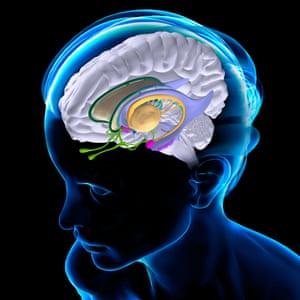
However the state of our understanding today of an integrated plan of brain function remains incomplete. The brain consists of at least several hundred distinct cell types whose complete classification is still at present elusive.Blog post featured image

Ever since man walked out of Africa, developed different cultures and different languages we have being using his brains to kill.

To date we have burnt more neurons on self-destruction than survival.

Step back and view our species objectively from the outside, the way a zoologist would carefully observe any other animal, or see us the way every other creature perceives human beings.  The brutal reality could not be more evident or more horrifying.

We are the most relentless yet oblivious killers on Earth. 

Our violence operates far outside the bounds of any other species.  Human beings kill anything.  Slaughter is a defining behavior of our species.  We kill all other creatures, and we kill our own. We kill strangers. We kill people who are different from us, in appearance, beliefs, race, and social status.  We kill ourselves in suicide.  We kill for advantage and for revenge, we kill for entertainment:

I would venture to say that there has not been one day — not one single day — since the beginning of recorded history when one human being has not killed another. And I don’t mean by accident. I mean deliberately. With purposeful intent.

Not one.

Single.

Day.

…in thousand and thousands of years.

So is violence in our genes.  As Mr Darwin put it; Survival of the Fittest. Evolution requires a struggle to survive, so killing is a must.

Just look at the twentieth century, numerous people were killed in the Armenian Genocide in Turkey, the Jews suffered in the II World War, Ethnic massacres happened in Rwanda and former Yugoslavia.

Today, several Islamic terrorist groups like ISIS and Boko Haram are butchering people in the name of Islam, while thousands of Rohingya Muslims flee Myanmar due to ethnic cleansing the shadow of a nuclear war ( that will bring equality to all, save us all from climate change and mass migration, ) can be summed up in one word: BRAINLESS.  Brain
Yet there’s no reason to assume that our empty brains will be adequate vessels for the voyage towards that answer.

Humanity has been trying to figure out how to bring an end to war since living beings evolved into self-consciousness on this planet. This effort now involves thousands of researchers, consumes billions of dollars in funding, and has generated a vast literature consisting of both technical and mainstream articles and books.

This latest up tick in the hostilities between these parties is almost irrelevant at this stage. Each side, of course, insists that it is only defending itself. And it is. Seen from each side’s point of view, all each side is doing is defending itself. Aggression is always called defense. Unfortunately every religion thinks it is the right one.

All that matters today is what it would take to end the killing, to end the aggression and counter-aggression that is threatening to embroil a whole region — and even, conceivably, the entire world at some level, if not directly — in a war that could prove unspeakably tragic for the entire human race, turning anyone that survives into an atheist, as there will be no invisible means of support as everything will glow.

But if there is a biological explanation for something, it is impossible to hold someone responsible for it. This is simply untrue.

This is a question that has been asked for many centuries. The Greeks philosopher Plato explained violent behavior by the fact that humans had a dual character because of their greedy nature. The Church always blamed the devil for possessing violent people.

Branding behaviors as incurable is hogwash fortuitously most humans are endowed with a sense of disgust but our kinship is often exploited by nations and religions, not surprisingly they are two institutions that are responsible for most, if not all, wars.

There is no satisfying answer to the question of why we go to war other than it feels good to protect our kinship.

All behavior is the product of the brain, and the brain is a product of genetics and the environment. Genes change at a glacial pace.  But territory and society shift constantly and they are molded by man.

So here is what we are not born with: information, data, rules, software, knowledge, lexicons, representations, algorithms, programs, models, memories, images, processors, subroutines, encoders, decoders, symbols, or buffers – design elements that allow digital computers to behave somewhat intelligently. Not only are we not born with such things, we also don’t develop them – ever. We never did, never will.

We don’t store words or the rules that tell us how to manipulate them. We don’t create representations of visual stimuli, store them in a short-term memory buffer, and then transfer the representation into a long-term memory device. We don’t retrieve information or images or words from memory registers.

The idea that memories are stored in individual neurons is preposterous:

Given this reality, why do so many scientists talk about our mental life as if we were computers?

Now here is the good or bad news.

Computers do all of these things, but organisms do not. Computers really do operate on symbolic representations of the world. They really store and retrieve. They really process. They really have physical memories. They really are guided in everything they do, without exception, by algorithms.

Uncontrolled Algorithms will kill us. Now more people have mobile phones than have toilets.

Everything we know about the universe tells us that reality consists only of physical things: atoms and their component particles, busily colliding and combining.

If a smartphone could be conscious, and were it to ultimately prove that the one thing the human mind is incapable of comprehending is itself.

Since anything at all that matters, in life, only does so as a consequence of its impact on conscious brains, could you ever know that it was true?'Because it is limited in characters, texting discourages thoughtful discussion or any level of detail, and its addictive problems are compounded by its hyper-immediacy.'

Our smartphones have become Swiss army knife–like appliances that include a dictionary, calculator, web browser, email, Game Boy, appointment calendar, voice recorder, guitar tuner, weather forecaster, GPS, texter, tweeter, Facebook updater, and flashlight.

The future of the brain and the implications on ethics and human behavior is now in the hands of Algorithms.

Speculating about the ‘algorithms’ of the brain, how the brain ‘processes data’, and even how it superficially resembles integrated circuits in its structure is now all the rage.

In 2013 the European Commission awarded neuron scientist Henry Markram $1.3 billion to pursue an audacious goal: building a simulation of the human brain. It is now in disarray. There’s a fly in the ointment. Although we think we’re doing several things at once, multitasking, this is a powerful and diabolical illusion.

It is the ultimate empty-caloried brain candy.

Instead of reaping the big rewards that come from sustained, focused effort, we instead reap empty rewards from completing a thousand little sugar-coated tasks.

We are sacrificing efficiency and deep concentration. Each time we check a Twitter feed or Facebook update, we encounter something novel and feel more connected socially (in a kind of weird, impersonal cyber way) and get another dollop of reward hormones.

It is the dumb, novelty-seeking portion of the brain driving the limbic system that induces this feeling of pleasure, not the planning, scheduling, higher-level thought centres in the prefrontal cortex. Make no mistake:  texting, email-, Facebook- and Twitter-checking constitute a neural addiction to brainless thought.

Because it is limited in characters, it discourages thoughtful discussion or any level of detail. Texting discourages thoughtful discussion or any level of detail, and its addictive problems are compounded by its hyper-immediacy.

Faulty conclusion: All entities that are capable of behaving intelligently are information processors.

It is safe to say that we aren’t completely doomed to continue killing each other, as the advancement of culture appears not to be having a civilizing effect on us.

The enormous industry of print and broadcast journalism serves predominantly to document our killing.

You know who to write to. Write to them. You know whom to contact. Contact them. Right now. Our world’s leaders need someone to lead them. We thought they were going to lead us, but they can’t. Or won’t. So we need to lead them.

With the amount and duration of wars happening right now in 2017, it’s hard not to get desensitized to death and violence. It really is. That means we have to work harder to stay informed.

Remember the killing fields of Cambodia.Résultat de recherche d'images pour "pictures of killing fields cambodia"

← Back

Thank you for your response. ✨


Share this:

  • Share on WhatsApp (Opens in new window) WhatsApp
  • More
  • Share on Mastodon (Opens in new window) Mastodon

THE BEADY EYE ASKS: WHAT IS HAPPINESS.

31 Thursday Aug 2017

Posted by bobdillon33@gmail.com in Artificial Intelligence., Capitalism, Emotions., Energy, Google it., Happiness., Humanity., Life., Our Common Values., Technology, The Obvious., The world to day., Unanswered Questions.

≈ Comments Off on THE BEADY EYE ASKS: WHAT IS HAPPINESS.

Tags

Capitalism and Greed, Distribution of wealth, Happiness., Inequility, The Future of Mankind

( A follow on read: Twelve minutes from the post – WHAT IS THE CONCEPT OF NOW.)

While writing:( what is the concept of now) my daughter suggested I write a happy post. This post is therefore dedicated to her continuing search for happiness.

What is happiness?  How do we find the key to happiness?

Is happiness the sole purpose of life or is it just good health with a bad memory.

To day this is the default view. Skepticism about the afterlife drives humankind to seek not only immortality but also earthly happiness.

Who would like to live for ever in eternal misery?

What stands between us and an answer to this deceptively complex questions is the problem of subjectivity –happiness means different things to different people.

To behaviorist, happiness is a cocktail of emotions we experience when we do something good or positive. To neurologists, happiness is the experience of a flood of hormones released in the brain as a reward for behavior that prolongs survival. According to the tenets of several major religions, happiness indicates the presence of God.

This question has no straightforward answer, because the meaning of the question itself is unclear. What exactly is being asked? Perhaps you want to know what the word ‘happiness’ means. In that case your inquiry is linguistic.

Chances are you had something more interesting in mind: perhaps you want to know about the thing, happiness, itself. Is it pleasure, a life of prosperity, something else? Yet we can’t answer that question until we have some notion of what we mean by the word.Image associée

Is there anything more to being happy than just thinking you’re happy?

Do we have the power to choose to be happy or unhappy?

Are all kinds of happiness created equal?

Happiness is not a single all-encompassing concept it is a complex the notion.

A state of mind. What is this state of mind we call happiness? Typical answers to this question include life satisfaction, pleasure, or a positive emotional condition.

A life that goes well for the person leading it. Perhaps you are a high-achieving intellectual who thinks that only ignoramuses can be happy. On this sort of view, happy people are to be pitied, not envied.

We are inclined to think that pleasure is the key to happiness.

Is it purpose, or goal?

Has a goal that is an end-in-itself, nothing that he does is actually worth doing.

For most people, happiness is a central aspect of well-being, since most people very much desire to be happy. Even a slave might come to internalize the values of his oppressors and be happy, and this strikes most as an unenviable life indeed.

Is happiness overrated?

How if at all should one pursue happiness as part of a good life?

Is it possible to objectify and even quantify so subjective and elusive a quality as happiness?  The individual pursuit of happiness may be subject to non-moral norms as well, prudence being the most obvious among them.

The pursuit of happiness is self-defeating especially when it is associated with pleasure. The virtue of compassion or kindness, giving not receiving, produce happiness.    

Philosophical “theories of happiness” can be about either of at least two different things: well-being, or a state of mind. To be happy, it seems, is just to be in a certain sort of psychological state or condition.

Is it a psychological state (for example, feeling overall more pleasure than pain) and happiness as a positive evaluation of your life, even if it has involved more pain than pleasure.

Above all, there is the fundamental question: In which sense, if any, is happiness a proper goal of a human life?

Wealth, beauty, and pleasure, for example, have little effect on happiness.

What is needed to achieve genuine happiness?

Answer me this:  Would you choose to attach ourselves to a device that would produce a constant state of intense pleasure, even if we never achieved anything in our lives other than experiencing this pleasure. We all need to answer this question for ourselves.

Morality itself is a worthy goal of human existence. Our good or bad fortune can play a part in determining our happiness; for example, happiness can be affected by factors as our material circumstances, our place in society, and even our looks, whether we are married or not. In the long run marriage is not a major source of either happiness or unhappiness.

When asked Aristotle said” that the supreme good is happiness.”

And of this nature happiness is mostly thought to be, for this we choose always for its own sake, and never with a view to anything further: whereas honour, pleasure, intellect, in fact every excellence we choose for their own sakes, it is true, but we choose them also with a view to happiness, conceiving that through their instrumentality we shall be happy: but no man chooses happiness with a view to them, nor in fact with a view to any other thing whatsoever.

But what is happiness?

For Aristotle, it is by understanding the distinctive function of a thing that one can understand its essence.

Whereas human beings need nourishment like plants and have sentience like animals, their distinctive function, says Aristotle, is their unique capacity to reason. Thus, our supreme good, or happiness, is to lead a life that enables us to use and develop our reason, and that is in accordance with reason. Unlike amusement or pleasure, which can also be enjoyed by animals, happiness is not a state but an activity. And like virtue or goodness, it is profound and enduring.

By living our life to the full according to our essential nature as rational beings, we are bound to become happy regardless.

For this reason, happiness is more a question of behavior and of habit—of virtue—than of luck; a person who cultivates such behaviors and habits is able to bear his misfortunes with balance and perspective, and thus can never be said to be truly unhappy.

Some goals are subordinate to other goals, which are themselves subordinate to yet other goals, but happiness needs sadness. Without sadness there can be no happy moments unlike pleasure which can be manufactured by algorithms.

Being happy doesn’t come easy with the stress of modern life.  Take for instance the average American who uses sixty times more energy than the average stone age hunter-gatherer. Is he sixty times happier?

It took just a piece of bread to make a starving medieval peasant joyful.

It appears that even with all our unprecedented accomplishments even if we provided free food, ensured world peace, provided free medical care, gave everyone a thousand bitcoins the Capitalism system ensures that the ceiling of happiness remains out of reach.

Our exceptions are driven by our biochemistry level rather than our economic, social or political situation. Pleasure v pain. Unpleasant bodily sensations.

PEOPLE WILL ALWAYS DISAPPOINT TO REMAIN HAPPY YOU MUST LEARN HOW TO FORGIVE, FORGET, “ Comparison is the thief of joy.”

Self-actualization is Happiness. Joy goes in and out of vogue. We can deceive ourselves into thinking we’re happy when we’re not and we can be happy without realizing it.

Happy.

It’s pretty hard to tell what does bring happiness; poverty and wealth have both failed.

Résultat de recherche d'images pour "pictures of a pig in shit"

I would be as happy as a pig in shit if I could live in THE CONCEPT OF NOW.

All comments happily appreciated all like clicks chucked in the bin.

← Back

Thank you for your response. ✨


Share this:

  • Share on WhatsApp (Opens in new window) WhatsApp
  • More
  • Share on Mastodon (Opens in new window) Mastodon

THE BEADY EYE SAYS. THE INDIVIDUAL IS BECOMING A TINY CHIP INSIDE A GIANT SYSTEM THAT NOBODY REALLY UNDERSTANDS.

22 Tuesday Aug 2017

Posted by bobdillon33@gmail.com in Artificial Intelligence., Big Data., Evolution, Humanity., Innovation., Life., Post - truth politics., Social Media, Technology, The Future, The Internet., The Obvious., The world to day., Unanswered Questions., Where's the Global Outrage.

≈ Comments Off on THE BEADY EYE SAYS. THE INDIVIDUAL IS BECOMING A TINY CHIP INSIDE A GIANT SYSTEM THAT NOBODY REALLY UNDERSTANDS.

Tags

Algorithms trade., Artificial Intelligence., Social Media, The Future of Mankind


(Two minute read)

Science is converging on an all-encompassing dogma, which says that organism are algorithms a, and life is data processing. Intelligence is decoupling from consciousness. Non-conscious but highly intelligent algorithms may soon know us better than we know ourselves.Image associée

Every day we absorb countless data bits.

This relentless flow of data gives rise to new inventions, disruptions that nobody plans, controls or fully comprehends.

For instance no one knows where global politics is heading, or how the global economy functions or what the climate is doing.

For all intensive purpose we don’t give a fuck providing we don’t pick up a virus, and even then our wireless brains want to remain in the flow of data.

Algorithms are constantly watching us, monitoring our thoughts,and feelings to such an extent that the meaning of life is disappearing into the invisible hand of Dataisim called Google, Face Book. Twitter and their disciples.

Experiences are valueless if not shared with an Algorithm on a smart phone.

No wonder we are all busy converting our experiences into data.

Your Dog or Cat or Fridge, might soon have a Facebook or Twitter account.

By equating the human experience with data patterns it is undermining the main source of authority, meaning of life, and this shift will not be just a philosophical revolution, it will be a practical revolution.

After a few hundred years of data flow your feelings which were once your best algorithms will have being replaced by a filtered personal platform or platforms all attached to the Cloud for an annual fee.Image associée

Its good-by democracy, elections. Have you had your DNA sequenced, are you wearing a biometric device that is connected to your smart phone.

The personal cloud god algorithm will tell you who to marry, what career to follow, what to put in your fridge.

All of this begs the question are we humans developing a seed algorithm that when it combines with machine learning will develop its own path, going where no human has gone before or can follow.

We have no idea whether it will develop consciousness and subjective experience.

Before we are reduced to non- conscious algorithms would it not be prudent to establish a New World organisation that vets all technology against our core values as humans. ( See previous posts)

What prevents us from collaborating in a global effort to solve climate change, or any other problem is probable the same reason why we are being exploited by Social media. Humans are deeply divided by nationalism and sectarian beliefs.. However with knowledge comes responsibility. So this failure is a global moral failure, as well as a failure of political will.

The world is changing faster than ever before with us relinquishing authority to crowd wisdom/data in the form of social media that is being mining by capitalist organisations which is governed by algorithms.Résultat de recherche d'images pour "pictures of humanity"

While inequality on all fronts grows and our world organisations become irrelevant we are flowed with irrelevant information.

The answer is bleakly simple: We cannot get these issues on our political radar screens without a huge prolong popular uprising.  It looks like humanity will soon be a ripple within the cosmic data flow. Résultat de recherche d'images pour "pictures of humanity"

All comments appreciated, all like clicks chucked in the bin.

← Back

Thank you for your response. ✨


Share this:

  • Share on WhatsApp (Opens in new window) WhatsApp
  • More
  • Share on Mastodon (Opens in new window) Mastodon

THE BEADY EYE SAY’S: IS IT NOT TIME WE RE EXAMINED DEMOCRACY.

30 Friday Jun 2017

Posted by bobdillon33@gmail.com in Artificial Intelligence., Big Data., Capitalism, Democracy, HUMAN INTELLIGENCE, Humanity., Modern Day Democracy., Modern day life., Our Common Values., Politics., Post - truth politics., Social Media, Technology, The Future, The Obvious., The world to day., Unanswered Questions., What Needs to change in the World

≈ Comments Off on THE BEADY EYE SAY’S: IS IT NOT TIME WE RE EXAMINED DEMOCRACY.

Tags

Artificial Intelligence., SMART PHONE WORLD, Smartphone., Smartphones, Social Media, The Future of Mankind, Visions of the future.


( A deep read of twenty minutes)

Democracy is the process by which we get ourselves organized to perform capitalism.Résultat de recherche d'images pour "pictures of smartphones"

To claim back power we must turn those shiny mirrors our Smartphones into shields, passports and carriers of personal sovereignty.

The good news is that for hundred of years humankind has enjoyed a growing economy without falling prey to ecological meltdown but the margin for error is narrowing with global warming.  All the talk, all the conferences, all the summits, all the promises and protocols have so far failed to curb emissions.

Why?

Because despite all our achievements we are under constant pressure to produce more and more stuff. We risk the future on the assumption that technological will come up with a solution’s in the future.

What is the price going to be?

If every thing is for sale the connection between capitalism, democracy, and liberalism is in the process of being broken.

The new modern deal is Humanist.

Soundless revolutions, silent reformations, undreamed ideas, new religions, must not be neglected, if we would grasp the unity of history in its highest sense.…The unapparent future….bids us to consider the whole sequence up to the present moment as probably no more than the beginning of a social and psychical development, where of the end is withdrawn from our view by countless millenniums to come.

However the world does not come to an end when the nine billion names of God are uttered. Freedom of speech is not over when we have uttered a certain thing.

We are the ultimate source of meaning, and free will is therefore the highest authority of all.

This is for this reason that democratic elections give expression to the ultimate political authority the People.  It will end when we final hand our future to AI.

Whoever determines the meaning of our actions – whether they be good or evil, right or wrong, beautiful or ugly, also gains the authority to tell us what to think and how to behave.

If we are not careful (because human opinion is necessarily fragile and ephemeral) absolute truths and the meaning of life, not to mention the Universe will soon be based on some external laws from some superhuman source other than God.

Creating meaning for a meaningless world will become impossible without Artificial Intelligence (AI) in all its forms of Algorithms that will and are already affect every facet of daily life.

WE MUST DETERMINE BY OURSELVES WHAT IS GOOD, AND WHAT IS EVIL, WHAT IS RIGHT AND WHAT IS WRONG, WHAT IS BEAUTIFUL AND WHAT IS UGLY, WHAT IS IGNORANCE AND CORRUPTIBLE, WHAT IS TRUTH AND WHAT IS FALSE. NOT A MACHINE.       Knowledge = experiences x Sensitivity.

IF WE LOOSE OUR FEELING THERE IS NO POINT IN BELIEVING ANYTHING.

Résultat de recherche d'images pour "pictures of democracy"

Over the last century, capitalism has repeatedly revealed its worst tendencies: instability and inequality and its failures have turned democracy against liberalism. Across Europe, economic interventionism, nationalism, and even open racism have exerted a greater attraction for those casting their democratic votes than the causes of freedom, deregulation, and equality before the law.

Free markets have not only enlarged the gap between rich and poor, but have also reduced average incomes across the developed and developing worlds.

In turn, liberalism’s intellectual self-identity has been left in tatters.

Liberal theorists are now desperately trying to keep the ship afloat. But instead of addressing the challenges head-on they have turned to the past for solace and validation. While this new liberal historicism may have a certain rhetorical appeal, it fails to convince.

At root, liberty is a concept grounded in the individual.

It is the freedom to be all that one is, to actualize the fullness of one’s potential as a human being endowed with the capacity for creativity and the ability to make autonomous value judgments for ourselves. However surrounded by the confused, jargon-ridden babble of political commentators today, it is perhaps easy to forget that liberalism is defined by a commitment to liberty.

While each of us may wish to be free as an individual, individual freedom is dependent on us all being free; and that means that we all have to cling to our shared humanity, our shared dignity and not to be manipulated by profit seeking  un-vetted Algorithms.

The world was moving toward a politically border less and highly interdependent global economy that might have foster prosperity, international cooperation, and world peace. This is no longer true.  Now thanks to un vetted Algorithms we are witnessing a world characterized by intense economic conflict at both the domestic and international levels. Today we are returning to the huge 19th-century-sized gaps between the richest 1 percent and everyone else.

Rescuing the “disappearing middle class” has become every aspiring politician’s slogan, but this is also coming to an end with targeted Social Media Profiling, (conducted by Algorithms) that are and will produce extreme inequality that will infect all of society, as rich corporations that own these Algorithms move to protect their positions, by buying the politicians, mass media and other cultural forms that are for sale.

Capitalism is today’s version of the what and democracy is the how.

Capitalism does not say that “all men are equal”; it even has difficulty in saying that we are all “created equal.”

If we truly want to move beyond capitalism we have to break away from the employer-employee core relationships. It means no longer assigning a relatively tiny number of people inside each enterprise to the employer position of exclusively. It means that every worker has an interest in the enterprise, a share in its profits its loses and decision-making.  Résultat de recherche d'images pour "pictures capitalism"

While democracy is a consensual hallucination of people concerned with how to divide opportunity fairly or democracy is a process for ensuring that each gets an equal session with the eye while capitalism fosters a desire to keep the eye and not share it. An end in itself, not a means.

Democracy as a rule book is not intended to operate only until a particular individual or class has enough money. It is hard to govern the human heart with rules. The democracy rule book, though it hovers above our laws has not succeeded in making humans cherish democracy.

A Martian visiting earth would not be able to see democracy. It is intangible, a rule book we have agreed to which says that no-one shall be denied opportunity, freedom of speech, or the due process of the laws.

Democracy denies the Hobbesian war of all against all, (Thomas Hobbes saw people as weak and selfish, and thus in constant need of the governance that could save them from destruction) and capitalism, pretending to prophecy it, creates it and enshrines it at the center of our pantheon, as the true, the human, the only way to live.

Under the democracy rule book, we meet as the village council; our concern is how to preserve the commons for our children’s children. All right, shift paradigms: we are now under the capitalist rule book, meeting as the board of directors of the Intercontinental Sheep-Grazing Company run by Social media ruled by Algorithms owned by Google, Apple, etc. Their discussion, abruptly with technology is about how to maximize shareholder value, by extracting every last possible dollar from the commons this fiscal period.

Our grandchildren are nowhere in the conversation; they are not shareholders. Under the separation of powers implied by the two rule books, we are relieved of the necessity of thinking about the future, because it is someone else’s job.

The substantive corrupts the procedural, when the love of things corrupts the spirit of fairness.

So it not surprising that any ambitious youngster, perceiving the differences between the two rule books, will prefer to give his allegiance to capitalism, because it offers quicker personal progress than democracy. Democracy preaches incremental change, but capitalism offers overnight transformation, the opportunity to sell something a day after you bought it for ten times what you paid.

It was not healthy for our two divisions ( Capitalism versus Democracy)  to savage each other.

Cooperation is the key feature of democracy, but capitalism is usually thought of (it need not be) as a zero-sum game in which, if I have more, it is because you have less. Versions of capitalism, like the one I believe in, in which we all grow together, are less interesting to the ambitious, because they too closely resemble democracy.

Everything seemed to suggest that only liberal capitalist democracy allowed people to thrive in an increasingly globalized world, and that only the steady advance of laissez-faire economics would guarantee a future of free, democratic states, untroubled by want and oppression and living in peace and contentment.

Humanity imposes upon us the same basic needs. By virtue of our nature, we all require food, shelter, clothing, security, and a range of other basic goods necessary for sufficiency and survival.

Though deceptively simple, these implications have profound meaning when we consider how individual liberty is to be translated into a social and political construct. If the liberty of each person is to be maintained and maximized, the principles of equity and the common good must be embedded in the structure of society.

And since society is structured above all by law, the law must reflect these precepts. It is only if everyone recognizes the dignity of the human person that they will recognize the inherent value of equity and the common good, and strive to defend and preserve not only their own liberty, but also that of all others in their society using law.

It lies not in economics, or the tides of history. It lies in the recognition of the worthiness of humanity itself. Not wealth-creation which depends on the protection of private property, the “capitalist creep” will invariably demand greater legal protection for individual rights.

In a world still divided by rival national ambitions in which economic factors in effect determine the fate of nations, many conclude that international economic affairs will become increasingly filled with conflict. We are witness the tectonic plates of Nature, democracy, disappearing under automation of AI algorithms.

We make a colossal mistake taking it for granted. We mistakenly believe that capitalism begets inevitably democracy. It doesn’t. 

The last battle between democracy and capitalism will be fought on the field of political campaign contributions.

There is a solution:

It is possible to separate fully the political sphere from the economic sphere, so as to confine the democratic process fully in the political sphere, leaving the economic sphere — the corporate world, if you want — as a democracy-free zone.

The answer lies in the political choice that we shall be making collectively. It is our choice, and we’d better make it democratically because the system we have now is even worse than capitalism.  Nobody wants to leave the certainty of the devil they know, or think they know, for something that promises to be worse.

We have run out of world to commodify. And now commodification can only cannibalize its own means of existence, both natural and social.

What all of us make is intellectual property, which from its point of view is all equivalent and tradable as a commodity.

Of course it is always a tough argument to propose common interests among subordinate classes. Counter-hegemony is hard. Hackers, like workers or farmers, are distracted by particular and local interests. Class consciousness is rare among hackers. Most of us are rather reactionary — even in the nontechnical trades. But than class consciousness is always a rare and difficult thing.

Finally at the start of this post I advocated that: To claim back power we must turn those shiny mirrors our Smartphones into shields, passports and carriers of personal sovereignty.

Of course this can only be achieved if we can form a world on line pressure group, using the combined power of Smartphones to affect change.  

 Once the greatness of a nation could be judged by the way its animals are treated now its the power that moves through the smart phone that can be instrumentally conceptualized and strategically deployed, accounted for, and resisted is the driving force that judges. 

Democracy is using your social media channels to engage and provide feedback.

The perception of the public, how people view what you do, is just as important as what you do.  

I am all ears as to how we can capture the collective power of our phones to lobby the direction of democracy.  

To that end, if scholars, activists, and commentators are to contend with the political potential of devices such as the smartphone camera, then it is imperative to account for the simultaneous processes embodied in its mechanics alongside the cultural and social conditions as these devices are often celebrated for disrupting rather than unifying. 

The Gap between Democracy and Capitalism is widening.
Résultat de recherche d'images pour "pictures of democracy"

All comments appreciated. All like clicks chucked in the BIN.

← Back

Thank you for your response. ✨

Share this:

  • Share on WhatsApp (Opens in new window) WhatsApp
  • More
  • Share on Mastodon (Opens in new window) Mastodon

THE BEADY EYE SAYS: ONE WOULD HAVE TO FEEL A TOUCH OF SYMPATHY FOR THE BRITISH PEOPLE.

16 Friday Jun 2017

Posted by bobdillon33@gmail.com in Brexit v EU - Negotiations., Brexit., England EU Referendum IN or Out., ENGLAND'S SNAP ELECTION, England., European Commission., European Union., The Obvious., Unanswered Questions., Uncategorized

≈ Comments Off on THE BEADY EYE SAYS: ONE WOULD HAVE TO FEEL A TOUCH OF SYMPATHY FOR THE BRITISH PEOPLE.

Tags

England - EU - Nagoiations


( A twenty-minute read)

Recent events in the Uk with the tragic loss of lives are more than lamentable as they have occurred mainly due to man-made decisions, to either save money or conduct phony wars.

It is now inconceivable that they are heading for another man made disaster in a few days without any clear sense of what its wants to achieve all just because a small percentage of its people voted in a referendum a year ago without any clear sense of the alternatives to EU membership.Résultat de recherche d'images pour "pictures of the eu english negotiations"

While the clock is ticking here are a few plain truths:

If the UK wants access to the single market when it has left the EU, it will have to accept three things:

1)  Continued budget contributions
2)  Continued free movement of labour,
3) Continued supremacy of EU law over British law in the single market.

4) Crashing out of the EU without a trade deal is the “alternative to membership with the most negative long-term impact.

5) Some British eurosceptics believe that Britain could negotiate a special status of ‘half-membership’, whereby the UK would remain a full, voting member of the single market, but ditch most other EU policies. However, this would require the existing treaties – which allow no such special status – to be revised, which is not a viable possibility at the moment. In any case, most member-states and the EU institutions believe that allowing such a status for Britain could provoke similar requests from others, possibly leading the entire Union to unravel. So half-membership is not an option.

6) One simple option would be for Britain to join the European
Economic Area (EEA) – the ‘Norwegian’ option. Britain would then be outside the common agricultural and fisheries policies. But its economic relationship with the EU would not change significantly: it would pay nearly as much into the budget as it does today, free movement of labour would continue, and the UK would have to apply the single market’s rules and regulations without having a vote on them.

7) Most other options would involve the negotiation of a withdrawal treaty between the UK and the EU. If that is the result:Résultat de recherche d'images pour "pictures of the eu english negotiations"

Here are the options.

One possibility would be a withdrawal treaty leading to a customised relationship. The best possible outcome for the British, under this option, would be something akin to the Norwegian option but without EEA membership. Britain would gain as much access to the single market as it was prepared to accept EU rules, without having a vote on them; to make payments into the EU budget; and to tolerate free movement of labour.

The Swiss option is unlikely to be on offer from the EU. Switzerland has negotiated a series of bilateral agreements with the EU. The country is part of the single market for goods, but not services. A similar status for Britain would be highly costly for the City of London. But the EU is very unhappy with the
relationship, because it has to negotiate constantly with the Swiss to make sure that their rules are equivalent to the EU’s evolving acquis communautaire. And since the Swiss voted to impose quotas on immigration from the EU in 2014, the EU has demanded a new agreement which would make Switzerland automatically update its rules to match those of the EU, as well as accept the jurisdiction of the European Court of Justice.

Britain could join the EU’s customs union, like Turkey – accepting the EU’s external tariffs without having a say on the setting of those tariffs. The UK would then not face tariffs in exporting to the EU, and it would have access to the single market in goods, in exchange for signing up to all the relevant EU rules. But it would not have access to services markets and Turkey, like Switzerland and Norway, does not
benefit from the free trade agreements (FTAs) that the EU negotiates with other parts of the world.

A free trade agreement is one of the more likely options, but the main benefit of most FTAs is merely tariffs that are lower than those prescribed by World Trade Organisation (WTO) rules. Most FTAs do not cover services, regulatory convergence or public procurement. If Britain sought to negotiate a more substantive FTA than any existing template – giving it good access to the EU’s single market– the other member-states would insist on mechanisms for ensuring that it automatically adopted new EU rules, and for policing the agreement. They would also demand payments into the EU budget and free movement of labour.

Britain could simply trade with the EU under WTO rules. The WTO sets upper limits on the tariffs that countries can impose. So British exports to the EU would be subject to the EU’s common external tariff. And the WTO has made little progress in freeing up services, which would restrict the City of London’s access to the EU market. British exporters to the EU would also face the same non-tariff barriers that most non-EU countries, like Russia and China, have to put up with. As for trading with the rest of the world, the UK would no longer enjoy the benefits of the 60-odd FTAs that the EU has negotiated with other countries. The British would have to negotiate new agreements from scratch; but in doing so – as with any other FTA that the UK pursued – they would have much less clout than the EU as a whole.

Withdrawal would create enormous legal headaches for EU companies and individuals currently in Britain, and for British ones elsewhere in the EU.

After the repeal of the European Communities Act of 1972, the British government would have to hurry to draft new laws covering farming, fishing, competition policy, regional aid, environmental standards and much else, to avoid a regulatory
vacuum.

To the extent that the UK retained any access to the single market, the government would also need a mechanism for adopting new EU regulations and directives as they emerged. British citizens and companies in other member-states would lose rights derived from EU law.

The British government would need to negotiate an accord with the rest of the EU on reciprocal rights. If, as is likely, a post-Brexit government made it harder for EU citizens to live, work or study in the UK, Britons wishing to remain in or move to the continent would face similar problems. 40 per cent of THE UK HIGH TECH workforce is currently made up of EU nationals not to mention the NHS

If there is a change of mind and the UK at any point wish to rejoin the European Union, it would need to make an application to do so, the same as all other non-member states.

The first problem is the euro.

This time a ‘half-member’ solution is not possible.

Ordinarily new member states of the European Union are expected to adopt the euro and to join the currency union. The UK, of course, opted out of that, however it might not be quite as easy to resist the Euro on re-admission.

Where does all of the above leave us.  In short, if the UK chooses to leave the EU, it will be left between a rock and a hard place.  A Disaster.

The conclusion should be clear: none of the options available to the UK, in case it were to decide to withdraw from the EU are attractive. Any option would take the UK in one of two directions:

 The UK would become a kind of satellite of the EU, with the obligation to transpose into its domestic law EU regulations and directives for the single market.

 The UK would suffer from higher barriers between its economy and its main market, obliging the government to start trade negotiations from scratch, both with the EU and with the rest of the world, without having much bargaining power.Résultat de recherche d'images pour "pictures of sinking ships"

All comments appreciated. All like clicks chucked in the Bin.

← Back

Thank you for your response. ✨


Share this:

  • Share on WhatsApp (Opens in new window) WhatsApp
  • More
  • Share on Mastodon (Opens in new window) Mastodon

THE BEADY EYE PUTS: A SPOTLIGHT ON WHAT NEEDS TO BE REFORMED IN THE EUROPEAN UNION.

04 Sunday Jun 2017

Posted by bobdillon33@gmail.com in Brexit v EU - Negotiations., Brexit., European Commission., European Union., France., The New year 2017, The Obvious., Unanswered Questions., What needs to change in European Union.

≈ Comments Off on THE BEADY EYE PUTS: A SPOTLIGHT ON WHAT NEEDS TO BE REFORMED IN THE EUROPEAN UNION.

Tags

European Union


( A eighth minute read)

We all know that the Union is in need of reform, but what exactly are we talking about.

Nobody would seriously argue that the EU doesn’t need to evolve, to do so it must fundamental reform.

It has not delivered the prosperity and growth it promised; the euro has turned out to be part of the problem rather than the solution; the EU’s share of world GDP is set to fall sharply. Moreover, no one is clear what the EU is for, or how ever closer union can be matched with expanding borders and huge disparities of income and culture. The European Union project has been rocked by a series of scandals

Here are a few reforms that are blatantly obvious and need  implementation to save millions of euros.  

The First Reform:

According to a report from the EU’s own internal Audit Service (IAS) an estimated £4.5 billion of the EU’s annual budget is wasted each year. The administrative budget of the IAS totals €18.77 m in 2016 and €19.22 m in 2017.

Although the Commission remains responsible for the implementation of the EU budget, the actual management and control of EU funds and programmes is delegated to Member State authorities, which select beneficiaries and distribute funds.

Cohesion policy accounts for 37 % of spending from the EU budget and is to be some 350 billion euro for each of the periods 2007-2013 and 2014-2020.

It is the Member States’ responsibility to detect, correct and prevent errors in the first instance.

Better regulation is a pressing problem.

Next:

It is time that the blatant absurdity and farce of the EU travelling circus, that requires the moving nearly four thousand trunks of documents between Luxembourg and Strasbourg ever month – stops.

It is perhaps the most outlandish of the European Union’s excesses; a £130 million travelling circus that once a month sees the European Parliament decamp from Belgium to France.

The problem is simple:

The French government, which has a power of veto, will not budge.

The French insist on maintaining Strasbourg’s role because of the substantial amount of money the travelling circus brings to the region. Its status is set in stone under a European treaty signed in 1992,  which can only be revoked should all member states agree it. 

In all, the EU admits that the monthly Strasbourg sitting, which lasts just four days, costs an additional £93 million a year.

A recent study by the European Parliament shows that €103 million (£85 million) could be saved each year if all European Parliament operations were transferred from Strasbourg to Brussels.

It is beyond comprehension that this state of affairs is tolerated.

If Emmanuel Macron France’s new youngest ever president, who says the country had chosen “hope” and promising to relaunch the flagging European Union doing away with this gross misuse of EU funds would show he is serious.

Next: 

MEP’s > “gravy train” salaries and perks.

MEP perks receive free haircuts and 52 gallons of petrol a month.

Maltese MPs get 240 litres of petrol a month.

Two Conservative UK  MEPs have each pocketed over £1 million in taxpayer salary and expenses payments in just five years.  Both men receive a salary of £76,292 a year, plus £2,670 in pension contributions.

Over five years, on top of this figure, Mr Ashworth claimed: £181,705 for subsistence; £164,627 in travel expenses; £222,560 in UK office allowances and £116,000 for his wife’s salary between 2010 and 2014, when the practice was banned.

Mr Karim claimed the same salary and pension contribution package as well as: £159,858 in subsistence allowance; £189,420 in travel expenses and £289,038 in UK office costs.

Both men also have offices provided in Brussels. Both men took home over £1 million over the five-year period, over £200,000 a year.

Nigel Farage claimed over £15,000 in expenses to pay for his bodyguards. The EU has been billed for their services, which include arranging food and drink. One bill for just five events came to almost £60,000, covered by expenses paid to Mr Farage’s Europe of Freedom and Direct Democracy group, which receives £2.5million a year in EU funding. 

French MEPs earn 740% more than average French citizen Lavish, expenses and allowances – entitlements that are worth over £415,000 a year each. 

As well as staff allowances, MEPs are able to earn up to £91,000 a year in “daily subsistence” and “general expenditure” expenses without having to provide any receipts or proof of expenditure. MEPs still vote on their own salaries and perks.

The EU pay divide

The “subsistence allowance” or “per diem” of £258 is paid in cash without any proof of expenditure, when MEPs sign an attendance register in Brussels or the Strasbourg seat of the parliament.

The annual cost of a MEP sitting in the EU assembly is £1.79 million each a year. The European Parliament, with 766 MEPs, cost £1.3 billion in 2012.

Here is the breakdown of an MEP salary:

[The standard monthly payment for all MEPs is 7,957 euros (£6,537). MEPs also get a flat-rate monthly allowance of 4,299 euros to cover office expenses, such as office rent, phone bills and computer equipment.

In addition, MEPs can claim for travel related to their official duties in Brussels and Strasbourg. In the past they could claim for an expensive flexible economy class flight even if they flew low-fare. But under the new rules they have to submit their ticket (which can be business class on air, or first class on rail) and will be reimbursed for what they paid.

A separate annual travel allowance – 4,243 euros maximum – covers official trips to other destinations. And they can claim for up to 24 return journeys in their home country.

MEPs also get a daily subsistence allowance – now 304 euros – for attendance at parliamentary sessions. It is intended to cover things like hotel bills and meals.

And they are entitled to reimbursement of two-thirds of their medical expenses.]

Then there are the 28 EU Commissioners, all of them on a basic salary of

€20 666 per month.

Jean-Claude Juncker, 61, President of the European Commission  Salary: £245,629 plus a residential allowance of £36,844 and a monthly expense allowance of £1,135. Pension of £52,500 for life from age 65.

The salaries and allowances of the MEPs of the 27 EU states now total £137 million.

The figure is almost ten times higher than the average EU wage of £18,617 a year.

But this does not include the cost of the £217,000 office allowance available to each MEP.

The receipt-free allowances system must stop. 

Next reform:  Is the Euro.Résultat de recherche d'images pour "pictures of Euro"

Only by changing the eurozone’s rules and institutions can the euro be made to work.

To achieve the more radical – but necessary – reforms for the Euro, a new treaty will be required.

A major priority for this new treaty would be to create a single fiscal authority for the euro area and to change the ECB’s mandate, so that it could become a full lender of last resort in extreme circumstances.

Euro area citizens need to be given a real choice between continued fragmentation (which leaves the euro exposed to structural weaknesses and recurrent crises), and greater integration (which pools more sovereignty at the same time as it strengthens the governance of EMU).

Abandoning the convergence criteria, which require deficits to be less than 3% of GDP.

Change the mandate of the European Central Bank, which focuses only on inflation, unlike the US Federal Reserve, which takes into account employment, growth, and stability as well.

Lastly, the high rates of unemployment in many euro-area countries are a source of concern. Reforms to harmonize employment protection legislation and integrate outsiders in the labour market should be implemented.

The EU employs more than 55,000 staff from its 28 member states. The majority work for the European Commission which employs about 33,000 officials, temporary staff, contract staff, and special advisers.

Last Reform:Image associée

It is no good just taking the standard nation-based model of representative democracy and applying it to the unique contours of European governance

‘Democracy’ explicitly recognises that the EU lacks a coherent, unified ‘people’, and should therefore encourage the participation of separate ‘peoples’ within the European structure.

If the EU is truly a democracy then the best way of closing the gap between citizens and institutions is to empower the demoi. Finding new ways for the national public to discuss, engage with and interact with the EU is the best way of enhancing their role. To do so, the European Parliament should be made more representative, but by increasing the role of citizens and national parliamentarians in the EU structures the EU can be made more open to bottom-up influence.

Multiple levels of engagement should be created so as to give citizens the maximum capability to engage with the EU’s structures. Such a structure would not be perfect. No democratic structure is. But it remains the best way of creating a more democratic European Union. Make European structures more open to national influence; and give citizens a more direct involvement in EU policymaking.

All comments appreciated. All like clicks chucked in the bin.

← Back

Thank you for your response. ✨

https://youtu.be/PZz3dXCG3Oo?list=PLO1bi4VeyTW7iLDXBKYxh_rG_ovxGkihz

Share this:

  • Share on WhatsApp (Opens in new window) WhatsApp
  • More
  • Share on Mastodon (Opens in new window) Mastodon

THE BEADY EYE SAYS: ROLL UP ROLL UP WE ARE ABOUT TO WITNESS THE BIGGEST MONEY FIGHT EVER SEEN. BREXIT IS EUROPE’S LAST CHANCE.

01 Thursday Jun 2017

Posted by bobdillon33@gmail.com in Brexit v EU - Negotiations., Brexit., Elections/ Voting, ENGLAND'S SNAP ELECTION, England., European Commission., European Union., Politics., Post - truth politics., Social Media., The Obvious., Unanswered Questions., What needs to change in European Union.

≈ Comments Off on THE BEADY EYE SAYS: ROLL UP ROLL UP WE ARE ABOUT TO WITNESS THE BIGGEST MONEY FIGHT EVER SEEN. BREXIT IS EUROPE’S LAST CHANCE.

Tags

Brexit v EU - Negotiations., Brexit., ENGLAND'S SNAP ELECTION, European Union, What needs to change in European Union.

( This is a good thirty minute read.)

The weigh in:

In the blue corner we have England wearing sterling.  In the green corner we have the EU wearing euro.

Regardless of whether you like the sport this fight will be contested across social media keeping the audience at a safe distance while making sure that the fighters don’t withdraw/run away from the fight before it is finished.

Round One:

Put simply, Article 50 gives the 27 continuing member states predominant power.

That comes partly from the fact that, according to Paragraph 4 of Article 50, the withdrawing state no longer counts as a member of the European Council for the purpose of the negotiations.  But mainly it comes from the guillotine imposed by the two-year deadline and the requirement for unanimity to extend that deadline.

Clause 4 says that after a country has decided to leave, the other EU members will decide the terms—and the country leaving cannot be in the ring in those discussions.

Britain depends on the EU for half of its exports, while Britain accounts for only one-sixth of Europe’s.  For Britain, this means any deal would be better than none at all. Keeping substantial access to the single market and having strict immigration controls are mutually exclusive for the EU: achieving both is highly unrealistic.

After a lot of shadow boxing T May with a reduced mandate and new shoes dances around the ring avoiding the total financial obligations, which are understood by the EU to be around €100 billion gross, according to an FT estimate.

But add on the negotiations fees etc and Britain is facing a £140 billion (7.5% of GDP) or the equivalent of £300 million a week over eight years.

May said repeatedly that Britain could walk away without a deal and be fine. Instead, a painless exit without a cliff-like effect on trade is only possible with a transitional arrangement. To obtain that, the UK will likely have to pay the €60 billion it owes from its past years of membership, as well as a membership fee for access to the single market.

The EU knows that  the UK is economically more dependent on the EU; 44% of its exports go there and 48% of its foreign investment comes from them.

This is not to mention the potential damage from a loss of passporting rights to the services sector, which makes up for around 79% of UK GDP.

Hence  the UK may try to act tough at the start of fight but eventually will have to compromise to avoid bigger economic fall-outs.

Round Two:

The EU Commission said citizens in the process of acquiring EU rights (such as permanent residency in another country in the bloc) should be allowed to finish doing so, and that the U.K. will be liable for certain financial payments, such as the salaries of British teachers at schools for the children of EU officials, until 2021.

Round Three:

The U.K. remains under the jurisdiction of the European Court of Justice while all pending cases are completed, and the U.K. would not immediately receive upon departure all the capital it has supplied to the European Investment Bank.

The U.K. is a 16 percent shareholder in the EIB and has €39.2 billion locked up in the institution, which often funds projects with a 20- to 30-year timeline. The U.K.’s liabilities should be “decreased in line with the amortization of the EIB portfolio outstanding at the time of United Kingdom withdrawal,” the Commission said.

Round Four:

Any cherry-picking punches are totally against the rules.  “Until it leaves the Union, the United Kingdom remains a full member of the EU, subject to all rights and obligations set out in the Treaties and under EU law.

Round Five:

United Kingdom will be kept separate from ongoing Union business, and shall not interfere with its progress.

The Council states that an agreement on a future relationship between the EU and the UK can only be concluded once the UK effectively leaves the EU and becomes a third country. When the United Kingdom officially leaves the European Union in March 2019, it will still be entangled in the EU’s financial and legal systems for years.

While the terms of divorce can be agreed with a majority vote, the terms of future EU-UK trade relations are very likely to need a unanimous vote.

The deal must be agreed by all 27 remaining countries in the EU. Individual countries can’t veto a treaty governing the UK’s withdrawal from the EU, but could veto a treaty establishing Britain’s new relationship with the EU. It would go ahead if it were approved by 20 of the 27 remaining EU countries, so long as they also represent 65% of the EU population.

Most of the EU’s free trade agreements require a unanimous vote of all EU governments and ratification by all member countries. That’s because they tend to be ‘mixed agreements’, meaning that they cover some ground that the EU doesn’t have power over. That said, it’s possible for the EU to negotiate a trade agreement that can’t be vetoed, depending on what’s in it.

That implies two major agreements: one on the logistics of divorce, and another on trade. (More treaties might be necessary on other issues, like security.)

Round Six:

Compulsory standing count.

Theresa May’s vision is blurred. Polarizing public opinion against the EU and immigration and away from domestic issues was an easy political win.

An independent and truly global United Kingdom without a new customs agreement. Agreements between the EU and third countries or international organisations, for example on trade, would also cease to apply to the withdrawing state, and it would thus need to negotiate alternative arrangements.

Round Seven:

The UK could change its mind about withdrawing from the EU even after triggering the formal process of leaving under Article 50.

Article 50 doesn’t say whether or not a country can change its mind, so it’s arguable either way. Some eminent lawyers think that it can, but there are also those – especially within the EU itself – who argue that once a country has triggered Article 50 it can’t then abort the process without permission.

It would be perfectly possible for the UK to revoke its decision to quit. That Article 50 is silent on the matter of revocation does not mean that a change of direction would be illegal under EU law.

The place this point might be argued, and ultimately resolved, is the EU court in Luxembourg. It’s possible that the UK courts will refer the question to EU judges as part of the ongoing litigation over the role of Parliament in triggering Article 50.

Round eight:

If there’s no turning back from an EU exit once Article 50 is triggered, there would be no point in voting on the terms of a new agreement verses continued membership.

The choice would instead be to take the deal on offer, or reject it and exit with no long-term deal at all.

Round ten:

In the end while us tax payers lose billions, the Lawyers win hands down.

Round eleven:

No deal:

Round twelve:

In their attempt to create a fairer and more equal country, Britons sought to sever ties from what they saw as a weakened partner. The reality is that Brexit will likely make Britain weaker and, ironically, is making the EU stronger.

The irony is that by running away from a European Union they thought was about to fall apart, Brexiteers have instead made it stronger.

Voters in France and the Netherlands are rejecting populism, and politicians in Brussels and Berlin have switched gears towards reforms and pro-EU spending measures.

Round thirteen:

The composition of the EU institutions changes as of the day the withdrawal takes effect, with members from the withdrawing state losing their seats in the various institutions and bodies, although transitional arrangements might be required for the period immediately after that date.

Review of the fight by social media: 

The debts accumulated by the governments of the U.S., Japan, Europe and dozens of other countries constitute a gigantic mortgage on the next two or three generations, as yet unborn.

The Euro corner>Résultat de recherche d'images pour "pictures of the euro"

As it marks its 60th birthday, the European Union is in poor shape. It needs more flexibility to rejuvenate itself.

However, citizens’ trust in the EU has decreased in line with that for national authorities. Around a third of citizens trust the EU today, when about half of Europeans did so ten years ago.

The latest economic and political developments in Europe are a wake-up call for our political leaders to take swifter action in order to strengthen the foundations of our Union.

The deteriorating geopolitical environment makes matters worse. Turmoil and war across the Middle East and in north Africa were one big cause of the surge in migrant inflows.

It is dying financially, with all the debt bankrupting governments, businesses and individuals. It is sinking economically, weighted down with stifling regulations and taxes. It is being strangled demographically, with birth rates far below replacement and the refugee crisis, which saw 1.2 million people coming to Europe in 2015 will only worsen with climate change and current conflicts.

Given the challenges facing the union, the one-size-fits-all model muddling through may no longer be the safest option. Brexit could yet be copied by another member, leading to the slow collapse of the union. A multi-speed Europe or multi-tier Europe could begin to undo the EU.

Few of the 27 EU member countries that will remain after Brexit favour much deeper political and economic integration.

These 27 are integrated into the EU in many different ways: all are in the single market, 26 in the banking union, 21 in Schengen, a different 21 in NATO and 19 in the euro, to list just few examples.

The European continent is home not just to the 28 EU members but 48 countries in all. Those outside the EU aspire to special relations with the club, and some belong to bits of it already.

To cap it all, America’s new president, Donald Trump, has shown himself hostile not just to multilateral free trade and Muslim immigrants but intermittently to the EU, praising Britain’s decision to leave and urging others to follow.

Turkey’s president, Recep Tayyip Erdogan, is turning his back on a club that seems to have rejected his membership aspirations, and is spurning its democratic values as well.

By 2018, around a third of the world’s population will be use social media networks. These trends will only accelerate and continue to change the way democracy works and the way the EU evolves.

A big reason for this is the politics in EU member countries which make it doubly important for Europe to gets to grips with a profound digitisation of society. The EU covers four million square kilometres in which there are 500 million citizens. It is the world’s largest single market with second most used currency. However Europe’s place in the world is shrinking, as other parts of the world grow.

In 1900, Europe accounted for around 25% of global population. By 2060, it will account for less than 5%.

Europe’s economic power is also expected to wane in relative terms, accounting for much less than 20% of the world’s GDP in 2030, down from around 22% today.

Too often, the discussion on Europe’s future has been boiled down to a binary choice between more or less Europe. New global powers are emerging as old ones face new realities and there is none older than England that has voted to leave.

There is also a mismatch between expectations and the EU’s capacity to meet them. The EU approach is misleading and simplistic, for too many> the EU fell short of their expectations as it struggled with its worst financial, economic and social crisis in post-war history. If it is to survive the EU must embrace greater differentiation not closer union or face potential disintegration.

That leaves the second type of response, which is to muddle through. After all, the euro and migration crises seem to be past their worst. Excessive austerity may have done great harm, but outside Greece it is largely over. The single market, perhaps the union’s greatest achievement, has survived the financial crisis and can surely weather Brexit. Domestic security co-operation on terrorism and crime is closer than ever. In foreign policy, EU countries have displayed commendable unity over sanctions on Russia, and have been vital in striking a nuclear deal with Iran.

At the moment more than 80% support the EU’s four founding freedoms.

These might have being the foundations to the EU but there is no getting away from the fact that money was in more ways than one crucial from the very start of the European project.

70% of euro area citizens support the common currency.

The euro zone is now a partial banking union, with a centralised bail-out fund and a European Central Bank (ECB) prepared to act as a lender of last resort.

As economies improve and this year’s tricky elections are negotiated, the union will somehow manage to keep going. If EU leaders want to negotiate revised membership (and all do say they want the UK to stay in), they could do so.

Sterling corner>Résultat de recherche d'images pour "pictures of the pound"

Britain’s richest and privately educated citizens account for 7% of the population yet makes up two-thirds of judges and around half of journalists and members of parliament, according to a government report. Meanwhile, the Child Poverty Action Group estimates that 3.9 million children live in poverty.

The UK ranks second in the developed world for inequality, after the US.

Brexit will not change that, nor will it make Britain more united:

The English patient was sick long before the divorce from Europe.

With an economy focused on finance and services, and highly dependent on foreign investment, the idea of creating a “truly global Britain” isolated from its closest trading partner is economic la-la land.

Brexit is a symptom of Britain’s deeply rooted economic imbalances: a growth model too concentrated on finance and services and dependent on foreign goods, human and financial capital; record-high social and wealth inequality; a lack of investment in infrastructure and education; and monetary and fiscal policies that have helped create a property bubble and excess household debt.

Brexit will not fix the shortfalls of the Anglo-American growth engine, which ran on credit and rising asset prices over the past few decades, disregarding rising inequality, a lack of inclusive access to education and declining social mobility.

General observations :

Article 50 makes life very difficult for any country wishing to withdraw from EU membership.  You might think this deliberate and take it as yet another symptom of perfidious Brussels.  But we should remember that the English Government and parliament signed up to it.

However the design of the euro suffered from two big defects that still haunt the single currency. The euro, in short, remains a troubled currency, with question-marks over both its membership and its direction. There is general agreement that it needs further integration, but disagreement about how to go about it.

The EU’s Institutions, built up over six decades, are not ideally suited to responding flexibly to challenges such as the single currency, migration or foreign and security policy. The European Parliament needs greater legitimacy to influence the European Commission is much more than a civil service; it is the guardian of the treaties, the originator of almost all legislation and the sole executor of the EU’s budget while suffering from having too many commissioners. (28, one per member country)

Terrorist attacks have struck at the heart of cities in the EU last year and will continue to do so while NATO continues to provide hard security for most EU countries.

Europe cannot be naïve and has to take care of its own security. There is no point any longer being a “soft power.

Finally:

The Horizon 2020, in Europe is the world’s biggest multinational research programme.

Maybe there are some things that could be done for the people of Europe that are not directly related to selling stuff?. Real efficiency comes from rethinking systems of bureaucracy from the ground up, not just using less paper.

The greatest task today is to consolidate the free world around Western values, not just interests,””digitizing” and “decarbonising” the economy.

Perhaps the idea of a Continental Partnership.  Might suit the UK.

Such a partnership could offer non-EU countries partial membership of the single market without full free movement of labour, and also create a system of decision-making that gave them an informal say (but no formal vote) in rule-making.

Perhaps this is the winning blow.

In all fights the promoters set the venue not the result.

England would do well to remember that it is not the EU who promoted this fight.

All comments appreciated. All like clicks chucked out of the ring.

Résultat de recherche d'images pour "pictures of boxing gloves"

← Back

Thank you for your response. ✨


Share this:

  • Share on WhatsApp (Opens in new window) WhatsApp
  • More
  • Share on Mastodon (Opens in new window) Mastodon

THE BEADY EYE ASKS: ARE WE ALL STARING AT SCREENS SO WE DON’T HAVE TO SEE THE PLANET DIE.

10 Wednesday May 2017

Posted by bobdillon33@gmail.com in Climate Change., Evolution, Humanity., Post - truth politics., Sustaniability, The Future, The Obvious., The world to day., Unanswered Questions., What Needs to change in the World, Where's the Global Outrage., World Leaders, World Organisations., World Politics

≈ Comments Off on THE BEADY EYE ASKS: ARE WE ALL STARING AT SCREENS SO WE DON’T HAVE TO SEE THE PLANET DIE.

Tags

Artificial Intelligence., Capitalism and Greed, Environment, Global warming, Inequility, Technology, The Future of Mankind, Visions of the future., World aid commission

( A Seven Minute Read)

Planet Earth is dying all around us on a scale not seen since the annihilation of the dinosaurs thanks to one species and flat screensRésultat de recherche d'images pour "pictures of earth from space high resolution"

It is a story that is both a world away and yet deeply personal because of our flat screens

Humanity could soon be living on a planet stripped of much of its biodiversity — and that’s not even considering the potentially devastating effects of global climate change, which has only recently started to really kick into gear.

Our Screens provide shocking proof that we humans have to change our behaviour.

You would think irrevelent of our different belief, political and religiously, we would all recognise the value of our planet. Instead we are preoccupied with satisfying our short-term greed or power to fuel a world of globalisation that is reflected in the stock exchanges which are run by Artificial Intelligence that also runs our flat screens.

Nothing is real, it’s all entertainment.

It strikes me even if (when) we fall prey to artificial intelligence, nuclear war, GMO viruses, climate change, or an array of other disasters, that we might be better off using our massive resources, technology, and brain power to save the planet we’ve already got rather than trying to colonize others.

Science may well have the power to redeem and inspire, and indeed with the power of flat screens we are sharing the wonder of science, exploration and adventure but it is an antidote, in some small measure, to suffering and destruction going on about us.

There will be around 6.1B Smartphone Users Globally By 2020. Those 6.1 billion smart phone users works out to some 70 percent of the world’s population using smartphones in five years’ time.

In the USA there are 14,728 full power radio stations: 1,774 full power TV stations: with unofficial global figure of approximately 15,000 channels. earning around 400 billion in revenue.

 We are now on the breaking tip of a sixth great wave of extinction.

It is the kind of bad news that makes historical catastrophes like World War II or the Black Death look like picnics.

If the currently elevated extinction pace is allowed to continue, humans will soon (in as little as three human lifetimes) be deprived of many biodiversity benefits.

The principle culprits are human “reproduction, consumption in general and especially agriculture, leading to habitat destruction, burning of fossil fuels [and] spreading of toxic chemicals.” The world economy is a wholly owned subsidiary of the planet’s environment with us being a byproduct.

The Zoological Society of London, has found that the number of vertebrates – mammals, birds, reptiles, amphibians and fish – on earth has fallen by more than half since 1970. In all, the report concludes, there are 52 per cent fewer vertebrates alive on Earth than there were when someone now in their forties was born.

It is the number of animals in an ecosystem that decides its health and functionality. 6.5 percent of all people ever born are alive today. Preventing a sixth great dying requires a rapid return to equilibrium.

The number of insects worldwide had fallen by 45 per cent since the Seventies, while human populations had almost doubled.

But how long does it have, and what will it take to sterilise the entire planet? There’s no shortage of potential apocalypses.

Which of them will finally render the Earth barren?Résultat de recherche d'images pour "pictures of earth from space high resolution"

Researchers can hypothesise almost no end of threats to life on Earth.

Today we worry about the destructive power of Super Volcanoes like Yellowstone. Asteroid that could wipe out all life on Earth, the Earth’s core mysteriously stopping to rotate, the Earth’s magnetic field deflecting ionising particles from the sun, intense waves of radiation called gamma-ray bursts (GRBs), genetically engineered viruses, artificial intelligence and robots could be the end of us all, the Sun exploding in 6.5 billion years time or the arrival of an Alien life form.

All of which would be very unlikely to wipe out all life except the Sun.

Forty per cent of the planet’s forests, for example, have been felled since the 18th century, while 60 per cent of the globe’s “ecosystem services” have been degraded in the past half century alone.

In fact, the take-home message from all of this is that there isn’t a plausible catastrophic agent from outside the solar system that could wipe out life on Earth within the next few billion years.

Life’s biggest threat will come from within.The Sun will expand, and eventually swallow the Earth (Credit: AlgolOnline/Alamy)

The sun is getting hotter as it ages, and as a consequence the Earth will warm up. That means the chemical reaction between rocks and atmospheric carbon dioxide will speed up – a process that’s accelerated even more by the action of plant roots.

Eventually, so much carbon dioxide will have been removed from the air that plants can no longer perform photosynthesis. All plants will die, and animal life won’t be far behind. This could happen surprisingly soon, perhaps in just 500 million years.

Beginning around 5 billion years from now, the Sun will expand, becoming a swollen star called a red giant. By 7.5 billion years in the future, its surface will be past where Earth’s orbit is now. So the expanding Sun will engulf, and destroy, the Earth.

If that’s true, the only hope lies with us. If any humans are still around, they might have the technology to move the Earth to safety. Otherwise, life on Earth has a maximum life expectancy of 7.5 billion years.

Alien forensic scientists might well conclude that life on Earth had a hand in its own demise.

But we also can have a hand in stopping what is destroying our planet. That does not mean living less well, only less wastefully.

WE COULD DEMAND THAT GREED AND PROFIT BE MADE TO PAY 0,05% ON ALL HIGH FREQUENCY TRADING, ON ALL FOREIGN EXCHANGE TRANSACTIONS OVER $ 50,000, ON ALL SOVEREIGN WEALTH FUNDS ACQUISITIONS. CREATING A PERPETUAL FUND TO TACKLE INEQUALITY THE DRIVING FORCE THAT LEADS TO DEFORESTATION, POACHING, POLLUTION, WARS ETC. (See previous posts)

WE COULD REPLACE THE PARIS CLIMATE AGREEMENT WITH FAIR TRADE.

WE COULD REPLACE THE PARIS CLIMATE AGREEMENT WITH FAIR TRADE.

WE COULD ASK OUR GOVERNMENTS TO BAN FLIGHTS ONE DAY A MONTH LIKE WISE PRIVATE CARS.

WE COULD GET EVERY WEATHER FORECAST TO INCLUDE A CLIMATE CHANGE REPORT ONCE A MONTH.

WE COULD LOVE OUR PLANET NOT DESTROY IT.

WE COULD DEMAND THAT EVERY FLAT SCREEN TELLS THE TRUTH.

All comments appreciated. All like clicks chucked in the bin.

← Back

Thank you for your response. ✨


Share this:

  • Share on WhatsApp (Opens in new window) WhatsApp
  • More
  • Share on Mastodon (Opens in new window) Mastodon

THE BEADY EYE SAYS: IT WILL NOT BE LONG BEFORE HUMAN LIFE IS NOT THE MOST SACRED THING IN THE UNIVERSE.

05 Friday May 2017

Posted by bobdillon33@gmail.com in Artificial Intelligence., Humanity., Life., Scientific., Technology, The Future, The Obvious., Unanswered Questions.

≈ Comments Off on THE BEADY EYE SAYS: IT WILL NOT BE LONG BEFORE HUMAN LIFE IS NOT THE MOST SACRED THING IN THE UNIVERSE.


( A Five minute read)

Since death violates the right to life we ought to wage war against it.Résultat de recherche d'images pour "images of life and death"

Death and attendant matters have been seminal topics of reflection, disputatious debate, and other modes of social discourse since the dawn of civilization and, presumably, also among the people who predate civilization.

Philosophers and non-philosophers stand on a level of equality with respect to death.

There are no experts on death, for there is nothing to know about it. Not even those who study the death process have an edge on the rest of us. We are all equals in thinking about death, and we all begin and end thinking about it from a position of ignorance.

The concept of death has a use for the living, while death itself has no use for anything.

Whether we think of death as a wall or a door, we cannot avoid using one metaphor or another. We often say that a person who dies is relieved of suffering. However, if death is real, then it is metaphorical even to say that the dead do not suffer, as though something of them remains not to suffer.

Death is always described from the perspective of the living. All we see when we look at death is a reflection of our own lives. The concept of death is absolutely without any object whatsoever. There is no method for getting to know death better, because death cannot be known at all.

Birth and death are the bookends of our lives.

The young have an intellectual understanding that death comes to us all, but their mortality has not become real to them. Ignoring death leaves us and them with a false sense of life’s permanence and perhaps encourages us to lose ourselves in the minutiae of daily of life.

In the twenty-first century, death and dying will be more visible, more omnipresent, more seminal topics of social concern, and a much more pressing economic reality.

All this had and is still having an impact on our culture and our social lives.

In short, in the future people can be aided to die slowly instead of dropping dead or dying quickly. More persons will be dying slowly, and more attention will be given to dying.

We are now entering an age where the tolerance of death is no longer a one way ticket to afterlife. It is a technical problem to be overcome, that can and should be overcome.

The Flagship of Science and technology is to defeat death.

The human declaration to life has no expiry date.

Google company called Calico state mission is to solve death. “We’re tackling aging, one of life’s greatest mysteries.” Calico is a research and development company whose mission is to harness advanced technologies to increase our understanding of the biology that controls lifespan.

Image associée

There are less and fewer reasons to accept death.  A world without death could well put pay to religion as we know it.

The writing’s on the wall:

Equality is out – immortality is in.  Upgrades or are we on the way that will make our lives as a young person only a distant memory.

The big question is with humanity destined becoming a ripple in the cosmic data flow will it make any difference?

Not really if we have destroyed the planet.

Long life will definitely trigger bitter political conflicts and wars as it will cause misery not happiness.

We might well conquer the pain of death  but misery is another matter.

Like most things, death has both a good side and a bad one.” Life and death depend on each other.  You can’t have one without the other, and if you think life is a good thing, you have to see death as desirable as well.

However if death did not exist, life would continue by definition.

Death might be necessary for uncontrolled procreation under constrained resources, but it is not “absolutely necessary for the continuance of life.”

In truth mortality will be still with us:

Once gone, gone forever or maybe not. If the normal lifespan were a thousand years, death at 80 would be a tragedy. As things are, it may just be a more widespread tragedy. If there is no limit to the amount of life that it would be good to have, then it may be that a bad end is in store for us all.

Each one of us will die, yet the individual’s death is merely a part of the human continuum.

So death is only an unknown, unperceivable or experienceable idea of consciousness. Death of consciousness can’t be perceived by itself. However, if the Consciousness is unfragmented, there is no conditioning and hence no fear at all, and hence the need of coming to terms with death also doesn’t arise.

Greek philosopher Epicurus:

So death, the most terrifying of ills, is nothing to us, since so long as we exist, death is not with us; but when death comes, then we do not exist. It does not then concern either the living or the dead, since for the former, it is not, and the latter are no more.

It is useful to think about death only to the point that it frees us to live fully immersed in the life we have yet to live. 

I certainly don’t want to die any time soon, and you probably don’t either. This is not merely because we can’t see the future. Death deprives us of many futures, good, bad, and middling.

One might argue, future lives could benefit from the knowledge, but why should that matter to us?

For the dead, death is nothing. The best thing about death is that you don’t know you’re dead.

Perhaps it will all come down too: Within this urn my ashes dwell add H20 and stir them well. A pinch of salt perhaps and then I’ll walk upon this earth again.

All comments appreciated. All like clicks chucked in the Bin.

← Back

Thank you for your response. ✨


Share this:

  • Share on WhatsApp (Opens in new window) WhatsApp
  • More
  • Share on Mastodon (Opens in new window) Mastodon

THE BEAD EYE SAYS; IT TIME TO GET A GRIP, IT’S NOT ALL A LIE.

04 Thursday May 2017

Posted by bobdillon33@gmail.com in Artificial Intelligence., Humanity., Modern Day Democracy., Modern day life., Our Common Values., Politics., Post - truth politics., Social Media., The Future, The Obvious., The world to day., Unanswered Questions., What Needs to change in the World, Where's the Global Outrage., World Leaders

≈ Comments Off on THE BEAD EYE SAYS; IT TIME TO GET A GRIP, IT’S NOT ALL A LIE.

Tags

Artificial Intelligence., Democracy, Post - truth politics., Social Media, United Nations, Visions of the future.


( A seven minute truth read)

IN A WORLD THAT IS LOSING ITS GRIP THE TROUBLE IS KNOWING WHAT TO GET A GRIP OF.

There is nothing new about this, other than the manner and the pace it is happening at where facts are deemed less important than beliefs.

For Example: In an age of Post – truth politics we now have a  President of the USA that appears not to care whether his words bear any relation to reality.  Résultat de recherche d'images pour "pictures of post-truth politics"

The declining societal respect for facts, the rise of deceptive partisan media outlets are creating  an echo chamber effect in public discussion.

If people only knew the truth, we wouldn’t have the problems of global warming, economic recession, poverty, War, any Famine. 

Most people now get their news about the world around them pre-digested and customised by social media. They do not get the breadth of information supplied by an even moderately impartial news source.

Material is allotted them not by whether it is true but by whether they might like it.

Which is institutionally biased, and more vulnerable to the dissemination of lies.

Something must be surely be done about this.

Our post-truth era, in short, need not be an obstacle to taking common action.

Feelings trump facts and the power of truth as a tool to solve problems is being diluted by False News. For example the EU is now in danger of breaking up due to a campaign of blatant misinformation.

The lost of truth has many roots, and indeed it is a human failing not to seek it out.  Life at this juncture is practically unimaginable without the technology we enjoy today.

A large amount of social media feeds on getting strangers to follow each other’s random thoughts or tracking our idle page visits to target advertising, and as a society we seem more than happy to provide.

If you OK-ed the latest update for your Facebook app on your phone, you’ve given Facebook permission to read your text messages?

Everybody knows Google has questionable privacy rules, but Gmail is a really good email provider, and most people don’t tend to make their Twitter private.

Today it is almost heresy to suggest that scientific knowledge is not the sum of all knowledge. Unorganized knowledge is the king, driving Climate Change, down to the survival of the cutest.

The continued societal focus on economic growth, both personally and as a society driven by algorithms for profit are all forcing a consumer society.

With the continued societal focus on economic growth, privacy is now arguably subject to consumerism. Critical thinking is sacrificed in favour of having feelings, reinforced by soundbite.

The problem is that Facebook (which has somewhere in the region of 2 billion users) and other so-called net works do not see themselves as media companies and are for the most part run by algorithms that have put artificial intelligence in charge of spreading False News.

As capitalism really gaining a grip on everyday life technology is a society constant. The majority of the Facebook users tend to share every mundane detail of their lives.

The inverted distinction between public and private.

What can we do about it?

We’ve built an awesome, sprawling web of technology with a astonishing bit rates entering the human mind and emotions through eyes, ears and even noses, all creating an accelerating escalation of intensity which is now out of control.

In a world increasingly devoid of person to person contact we are becoming more and more attached to morally ambiguous technologies. Given such biases it is no wonder we are unable to even agree on facts.

Precious little is said about the human, societal and environmental impact of such intense and increasing post-truth politics.

Are we more or are we less?

What is happening to our relationships, to our sensitivities, to our abilities to be moved, to our abilities to perceive?

Content is no longer a fixed format so there is no provenance as to what is true or false. With countervailing views filtered it is no wonder we get like clicks or news to boost hits.

Most of us now get our news on social media with anyone becoming a publisher. This information revolution can now play havoc with political falsehood.Résultat de recherche d'images pour "papers on post-truth politics"

So when Trump says we need to go to war now. We won’t know if he’s telling the truth.

What then?

We might even see this proliferation of belief systems and worldviews as an opportunity for human development. We can agree to disagree and still engage in pragmatic action in the world.

Modern democracy is not indeed flawless, but so far it is the most advanced political system the human kind could come up with. However the features of modern democracy for which we consider it as the most ‘human’ form of governance now comes with shortcomings.

These shortcomings like poor access to institutions, low-level of participation, rising level of elitism, ossification of state authorities, etc., are often the root of discontent among the public. Such reasons are making the discontent more than just and as a matter of fact.

But without opposition and discontent, there can be no democracy.

We as an audience must take into account the nature of media and subsequently different sources before making any assumptions on the content itself. Things like lack of critical thinking, an absence of fact-checking before accepting statements, inability to put things perspective and so on, provide opportunities for the rise of unpleasantly phenomena like post-truth and post-truth politics.

The concept of ‘post-truth’ has reached a point of saturation in present-day popular discourse and media punditry. Driven by digitally mediatized representations of reality and social interaction. Resulting in many of our world organisation becoming irrelevant.

Democracy requires a citizenship that meets, deliberates and interacts without fear and hatred. It requires organisations that give people a “voice” and a feeling that they have a stake and some influence in the system.

The pervasiveness of presumed causal linkages between environmental degradation, violent conflict and human mobility has been utilized by policy makers and pundits to shape public opinion.

Democracy now needs online innovation.

When Microsoft created Windows, it created the possibility of multiple lenses or views of any issue. Why not build on that? Before we all become Twit’s.

The problem which remains is purely one of logic.

The world is populated by other people who aren’t you. This is one of the major tools of democracy.

What does post-truth tell us about the current and future state of democratic engagement and of democracy itself?

Truth must no longer legitimize the politics of Brexit and Trump. No matter how democratic it is, the rug must be pulled out from under Post – truth politics. We have lost our power to them; we cannot lose our truth too. 

The pervasiveness of presumed causal linkages between environmental degradation, violent conflict and human mobility has been utilized by policy makers and pundits to shape public opinion about the predicament we are now in.

What can be done?

“Take back control”

The least we can do to make the United Nations a place where minds, hearts and nations connect for the sake of so many people all over the world.

Obviously, don’t vote for fibbers.

Bombard social media platforms to remove filters.

Create an Online Political platform for the Truth.

Remember that knowledge is power.

All comments appreciated. All like clicks chucked in the bin.

← Back

Thank you for your response. ✨


Share this:

  • Share on WhatsApp (Opens in new window) WhatsApp
  • More
  • Share on Mastodon (Opens in new window) Mastodon
← Older posts
Newer posts →

All comments and contributions much appreciated

  • THE BEADY EYE SAYS. EQUALITY, FAIRNESS, JUSTICE ARE INDIVISIBLE CONCEPTS IF ARE ANYTHING. March 18, 2026
  • THE BEADY EYE SAYS. IT DOES MATTER WHAT YOU THINK ABOUT WAR WHETHER ITS JUSTIFIED OR NOT. March 17, 2026
  • THE BEADY EYE ASKS HOW ARE WE TO MAINTAIN HUMAN DIGNITY IN A WORLD DOMINATED BY TECHNOLOGY. March 15, 2026
  • THE BEADY EYE SAYS THANKS TO CURRENT TECHNOLOGIES WE ARE UNABLE TO BELIEVE ANYTHING WE SEE OR HEAR? March 15, 2026
  • THE BEADY EYE SAYS LET’S PUT THE IRAN/ ISRAEL/ USA WAR IN CONTEX. March 12, 2026

Archives

  • March 2026
  • February 2026
  • January 2026
  • December 2025
  • November 2025
  • October 2025
  • September 2025
  • August 2025
  • July 2025
  • June 2025
  • May 2025
  • February 2025
  • January 2025
  • December 2024
  • November 2024
  • October 2024
  • September 2024
  • August 2024
  • July 2024
  • June 2024
  • May 2024
  • April 2024
  • March 2024
  • February 2024
  • January 2024
  • December 2023
  • October 2023
  • September 2023
  • August 2023
  • July 2023
  • June 2023
  • May 2023
  • April 2023
  • March 2023
  • February 2023
  • January 2023
  • December 2022
  • November 2022
  • October 2022
  • September 2022
  • August 2022
  • July 2022
  • June 2022
  • May 2022
  • April 2022
  • March 2022
  • February 2022
  • January 2022
  • December 2021
  • November 2021
  • October 2021
  • September 2021
  • August 2021
  • July 2021
  • June 2021
  • May 2021
  • April 2021
  • March 2021
  • February 2021
  • January 2021
  • December 2020
  • November 2020
  • October 2020
  • September 2020
  • August 2020
  • July 2020
  • June 2020
  • May 2020
  • April 2020
  • March 2020
  • February 2020
  • January 2020
  • December 2019
  • November 2019
  • October 2019
  • September 2019
  • August 2019
  • July 2019
  • June 2019
  • May 2019
  • April 2019
  • March 2019
  • February 2019
  • January 2019
  • December 2018
  • November 2018
  • October 2018
  • September 2018
  • August 2018
  • July 2018
  • June 2018
  • May 2018
  • April 2018
  • March 2018
  • February 2018
  • January 2018
  • December 2017
  • November 2017
  • October 2017
  • September 2017
  • August 2017
  • July 2017
  • June 2017
  • May 2017
  • April 2017
  • March 2017
  • February 2017
  • January 2017
  • December 2016
  • November 2016
  • October 2016
  • September 2016
  • August 2016
  • July 2016
  • June 2016
  • May 2016
  • April 2016
  • March 2016
  • February 2016
  • January 2016
  • December 2015
  • November 2015
  • October 2015
  • September 2015
  • August 2015
  • July 2015
  • June 2015
  • May 2015
  • April 2015
  • March 2015
  • February 2015
  • January 2015
  • December 2014
  • November 2014
  • October 2014
  • September 2014
  • August 2014
  • July 2014
  • June 2014
  • May 2014
  • April 2014
  • March 2014
  • February 2014
  • January 2014
  • December 2013
  • November 2013
  • October 2013

Talk to me.

Jason Lawrence's avatarJason Lawrence on THE BEADY EYE ASK’S: WIT…
benmadigan's avatarbenmadigan on THE BEADY EYE ASK’S: WHA…
bobdillon33@gmail.com's avatarbobdillon33@gmail.co… on THE BEADY EYE SAYS: WELCOME TO…
Ernest Harben's avatarOG on THE BEADY EYE SAYS: WELCOME TO…
benmadigan's avatarbenmadigan on THE BEADY EYE SAY’S. ONC…

7/7

Moulin de Labarde 46300
Gourdon Lot France
0565416842
Before 6pm.

My Blog; THE BEADY EYE.

My Blog; THE BEADY EYE.
bobdillon33@gmail.com

bobdillon33@gmail.com

Free Thinker.

View Full Profile →

Follow bobdillon33blog on WordPress.com

Blog Stats

  • 97,820 hits

Blogs I Follow

  • unnecessary news from earth
  • The Invictus Soul
  • WordPress.com News
  • WestDeltaGirl's Blog
  • The PPJ Gazette
Follow bobdillon33blog on WordPress.com

The Beady Eye.

The Beady Eye.
Follow bobdillon33blog on WordPress.com

Create a free website or blog at WordPress.com.

unnecessary news from earth

WITH MIGO

The Invictus Soul

The only thing worse than being 'blind' is having a Sight but no Vision

WordPress.com News

The latest news on WordPress.com and the WordPress community.

WestDeltaGirl's Blog

Sharing vegetarian and vegan recipes and food ideas

The PPJ Gazette

PPJ Gazette copyright ©

Privacy & Cookies: This site uses cookies. By continuing to use this website, you agree to their use.
To find out more, including how to control cookies, see here: Cookie Policy
  • Subscribe Subscribed
    • bobdillon33blog
    • Join 222 other subscribers
    • Already have a WordPress.com account? Log in now.
    • bobdillon33blog
    • Subscribe Subscribed
    • Sign up
    • Log in
    • Report this content
    • View site in Reader
    • Manage subscriptions
    • Collapse this bar