• About
  • THE BEADY EYE SAY’S : THE EUROPEAN UNION SHOULD THANK ENGLAND FOR ITS IN OR OUT REFERENDUM.

bobdillon33blog

~ Free Thinker.

bobdillon33blog

Category Archives: Modern Day Democracy.

THE BEADY EYE ASKS: WHAT ARE OR WILL BE THE HARD FACTS RE BRIXIT.

17 Tuesday Jan 2017

Posted by bobdillon33@gmail.com in England EU Referendum IN or Out., England., European Union., Modern Day Democracy., Politics., Social Media., The New year 2017, Unanswered Questions.

≈ Comments Off on THE BEADY EYE ASKS: WHAT ARE OR WILL BE THE HARD FACTS RE BRIXIT.

Tags

Brexit., Britain., European Union

( A troubling seven minute read)

Afficher l'image d'origine


Since ancient times, philosophers have tried to devise systems to try to balance the strengths of majority rule against the need to ensure that informed parties get a larger say in critical decisions, not to mention that minority voices are heard.

The Brixit vote is a case in kind.

Originally the European Community was supposed to be a trade agreement to ease all the tariffs and taxes, lower the cost of goods and improve the efficiency of the European member’s economies.  The British voted overwhelmingly voted yes by 67.2% (historic high) for this in 1975.

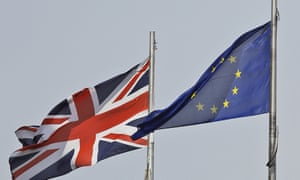
The real lunacy of the United Kingdom’s vote to leave the European Union was not that British leaders dared to ask their populace to weigh the benefits of membership against the immigration pressures it presents. Rather, it was the absurdly low bar for exit, requiring only a simple majority. Given voter turnout of 70%, this meant that the leave campaign won with only 36% of eligible voters backing it.Prime Minister Theresa May plans to trigger article 50 by the end of March.
Does the vote have to be repeated after a year to be sure? No.

A parliamentary petition for a second referendum has attracted more than one million.

Does a majority in Parliament have to support Brexit? Apparently not.

Did the UK’s population really know what they were voting on?

Absolutely not. Indeed, no one has any idea of the consequences, both for the UK in the global trading system, or the effect on domestic political stability.

This isn’t democracy;

Mrs May’s phrase “Brexit means Brexit” has become a tired cliché.

What exactly, is a fair, democratic process for making irreversible, nation-defining decisions?

Is it really enough to get 52% to vote for breakup, in a country that has three devolved parliaments that voted to stay in.

The idea that somehow any decision reached anytime by majority rule is necessarily “democratic” is a perversion of the term.

Modern democracies have evolved systems of checks and balances to protect the interests of minorities and to avoid making uninformed decisions with catastrophic consequences. The greater and more lasting the decision, the higher the hurdles.

The current international standard for breaking up a country is arguably less demanding than a vote for lowering the drinking age.

What we do know is that, in practice, most countries require a “supermajority” for nation-defining decisions, not a mere 51%. There is no universal figure like 60%, but the general principle is that, at a bare minimum this would be the required percentage.

Brexit should have required, say, two popular votes spaced out over at least two years, followed by a 60% vote in the House of Commons.

In this way if Brexit still prevailed, at least we could know it was not just a one-time snapshot of a fragment of the population.

The current norm of simple majority rule is, as we have just seen on TV with her speech on what Britain wants in the upcoming negotiations is a formula for chaos.

I am afraid it is not going to be a pretty picture.

Talks on Britain’s political divorce from the EU and a possible free trade agreement are going to be complex, lengthy and difficult.

So difficult that there will be no agreement that will satisfy both sides.

You don’t have to blind and deaf to realize that The European Union is an economic and political union between 28 member countries that covers more than four million square kilometres.  It spans countries with more than 508 million citizens, which means it has the third largest population in the world after China and India.

Turkey and the Balkan states of Macedonia, Montenegro, Serbia and Albania are now the next in line to join the EU. In addition, Kosovo and Bosnia and Herzegovina have also been promised the prospect of joining when they are ready to. Turkey, alone would add an additional 75 million EU citizens.

The new unelected Prime Minister Theresa May plans to trigger Article 50 – the step that starts the timer on two years of Brexit talks – by the end of March 2017.

Britain, I believe, had the best of all possible deals with the European Union, being a member of the common market without belonging to the euro and having secured a number of other opt-outs from EU rules. And yet that was not enough to stop the United Kingdom’s electorate from voting to leave. Why?

There is no doubt many in England feel the EU is a “bureaucratic monstrosity”, But what exactly do they mean by this? But most of these relate to the terms of UK membership of the Single European Market, where standardisation is needed to ensure a level playing field for trading nations.

None of these, it seems to me, are reasons to go to war with Europe, and deny the benefits of the single market which has undoubtedly boosted prosperity. Trade within Europe has doubled since 1992, thanks to the abolition of tariffs and barriers to the free movement of goods and services in Europe.

What has changed?

European Union (EU) has remained at heart undemocratic, protectionist, centralist and over-bureaucratic.  The EU launched a single currency and the organization now acts as a parliament passing regulations and laws while maintaining an overblown and expensive bureaucracy.

Simply put, unless there was uniformity across all member countries, the aspiration of a single currency and economy, could never hope to be realised.

Here are some hard facts:

What happens if Britain votes for Brexit?

On the day of Brexit, the Great Repeal Bill will come into force and end the supremacy of EU law over Britain’s own legislation.

SNP leader Nicola Sturgeon has raised the prospect of a second Scottish independence referendum because most Scots voted to remain in the EU.

Spain’s Government has also called for joint control of Gibraltar and Sinn Fein has demanded a vote to unite Ireland and Northern Ireland.

There is ongoing uncertainty over what will happen once Britain leaves the EU because it has to make new trade agreements with the rest of the world. Under EU rules the UK cannot negotiate a trade deal until after it leaves the bloc.

The Brexit vote has led to higher import costs but was good news for exporters who had struggled with the high value of the pound.

Now Britain has voted to leave the EU, it will no longer have to contribute billions of pounds a year towards the European Union’s budget.

Britain is now free to take back control of its borders in order to curb immigration and increase security. The UK will no longer have to accept ‘free movement of people’ from Europe if this country leaves the EU’s single market.

Companies based in the UK may decide to relocate if they can no longer access the single market.

Eurosceptic populist parties across the Continent have delightedly seized on Brexit in an attempt to further their own campaigns for independence.

Scare tactics and rumours will intensify from both sides and it will be hard to find clarity.

As a result Brexit negotiations will be made more difficult because EU bosses will want to discourage other countries from following suit.

It looks just as likely Scotland Wales and Norther Ireland that voted to stay could find themselves out of the EU by staying in the UK.

The EU has said that Britain will have to allow the free movement of EU workers if it decides to stay in the internal market. Mrs May looks set to take Britain out of the EU’s single market in order to end the free movement of EU workers that goes with it.

There will be a saving ( depending on which contribution figures you believe of about £136m a week. This equates to  less than 40% of the amount splashed on the battlebus.

MAP

You may rest assured no matter what way these negotiations go they will be very expensive (both politically and economically)  and they will  “mostly amount to hot air”, rather than concrete plans for the future of the European Union or the United Kingdom’s.

“Whatever the UK vote is in the end , we must take long hard look on the future of the European Union.

The election of Donald Trump as the next US President means that Britain is now at the “front of the queue” for an US trade deal. If you believe that

june-in-review-3.jpg

May also said that “no deal for Britain is better than a bad deal for Britain.”

Making threats to the rest of Europe and cozying up to Trump (I hope she wears a cricket box for that first meeting).

It’s the sheer arrogance of the current government to say it’s all about taking back control of our borders and laws.’

Having her cake and eating it. Not on your nanny.

There will be what the EU want and you can bet your life they have their demands.

And if she isn’t going to have her own way – and for the ‘no deal is better than a bad deal’ yeah – try to get those FTA’s if they know you’ll walk out of them when your toys thrown out of the pram – that means anything she signs isn’t worth the paper it’s written on.

Ignoring the fact that, schools and hospitals struggling with budget cuts , a pound worth 20% less than it was in June 2016 and a Scotland that would appear to be now set yet again on the road to independence.

I think the cleaner the break the better.

Change hurts and change is happening at a faster rate than ever before.

In effect you are being sold down the river. Your lives have now been designated as “negotiation capital”. Britannia does not rule the waves. Afficher l'image d'origine

← Back

Thank you for your response. ✨


Share this:

  • Share on WhatsApp (Opens in new window) WhatsApp
  • More
  • Share on Pocket (Opens in new window) Pocket
  • Share on Mastodon (Opens in new window) Mastodon

THE BEADY EYE SAYS: IN FIVE YEARS, THERE WILL NO LONGER BE A ROYAL FAMILY OR UNITED KINGDOM.

09 Monday Jan 2017

Posted by bobdillon33@gmail.com in Brexit., England., European Union., Modern Day Democracy., The New year 2017, What Needs to change in the World

≈ Comments Off on THE BEADY EYE SAYS: IN FIVE YEARS, THERE WILL NO LONGER BE A ROYAL FAMILY OR UNITED KINGDOM.

Tags

Brexit., Britain., England EU Referendum IN or Out., Royal Family

( A three-minute read)

The UK anthem got me thinking…

If you were starting a 21st-century democracy from scratch you wouldn’t

dream of having a hereditary head of state.

These days this is undoubtedly true, it is also true that the history of the past 50 years ago shows that starting democracies from scratch is very hard.

“Is there any point in the Royal family?”

The Royals represent and reiterate that the class system is still firmly in place in the UK.

If the monarchy is to continue in modern Britain they will have to adapt and change. The modern Royal Family must continue to live more in touch with their subjects if they are to survive as an institution in a democratic 21st Century Britain.

Leaving the EU won’t affect the Royals it will however change the Brit culture and add much-needed collective synergy aspiring for common aims.

So is a Royal Family still relevant today, it’s all about equality, and right now, so are they just a parasitic anarchic family blessed with vast riches, or are they essential to a country with no written constitution.

It is hard to shake off the debilitating tag when the head of state and her hangers-on attain their positions not through popularity, talent, or industry, but by the mere fact of their birth.

Presently England is recognized as a monarchy…BRITS ARE SUBJECTS OF THE MONARCH. Ultimately the Parliament and the army are under the control of her highness.

The Royal family aren’t elected, which can be seen as undemocratic.

They inherit their status and for this to apply to a nation that’s so heavy on encouraging democracy it may be seen as hypocritical.

They cost the taxpayer approximately 52p each year

Queen Elizabeth II, is the legal owner of about 6,600 million acres. The value of her landholding. £17,600,000,000,000 (approx). She is the only person on earth who owns whole countries, and who owns countries that are not her own domestic territory.

The Queen may be a constitutional monarch, in which her roles as the head of the state are mostly just symbolic, as she occasionally represents Britain in her state visits – so her holidays are covered as well?

Royalists will say that having a Monarchy makes no difference to the validity of democracy. Just so long as the Monarchy doesn’t interfere with the democratic process of the nation then they are nothing more than national figureheads with no real power or influence.

This may well be so.

Yet in theory, at least, she has considerable powers: to wage war, sign treaties, dissolve Parliament, and more.

They will also say that the monarchy is needed for tourism and the economy. That’s NOT what it’s there for. It’s there for political reasons.

To keep Britain’s monarchy does not entail keeping it in its current form. Britain would be a lot stronger if its head of state were elected.

Why?

Because its entangled history of democracy and monarchy has left Britain with a highly centralized constitution that locates the nation’s sovereignty in “the king in parliament”—a situation that gives the leader of the majority party in the legislature a disturbingly large part of the power that was once vested entirely in the monarchy.

This situation could be remedied quite easily by keeping the crown but changing its constitutional basis to one along the lines of that most excellent of countries, Belgium.

Belgium is a popular monarchy. Its constitution makes clear that sovereignty rests in the people; the King (or Queen, though it has yet to have one)—who is King of the Belgians, a people, not Belgium, a territory— becomes monarch not by right, but by taking an oath to uphold the people’s constitution.

Without a written constitution the question is: Who elected the royal family, they are self-made, what makes them royal? After all, basically, they are German immigrants.

I have nothing against them personally, as I am a humanist at heart and these people are simply other human beings born into their roles.

Britain has a class system which, to be honest, is going to rip that country apart and the royal family is a symbol of that class system and the divide will ultimately dissolve.

All that says;

They are just some human beings, related to every other living organism on our Earth in some way. The fact that a monarchy is not intellectually justifiable does not mean that it does not have a stabilizing role.

To have a real sovereign Nation you need to be free of the monarchy in order to be truly free. To bow down and call somebody ‘your highness?’ It doesn’t make sense to me.

The case against hereditary appointments in public life is straightforward: they are incompatible with democracy and meritocracy.

The second pitfall is subtler: in the belief that the monarchy forms some kind of constitutional backstop against an over-mighty Parliament, Britain is strangely relaxed about the lack of serious checks on its government.

Because it has no written constitution; the current government has plans to repeal a law implementing the European Convention on Human Rights, which many Britons recklessly consider a nuisance rather than a safeguard.

A change to the British constitution which made the kingdom’s various people’s sovereign and the head of state the guardian of that sovereignty, not the source of it, would be a welcome plank in the more general program of reform that the British state clearly needs. The trouble with hereditary succession and leaving the European Union is that you never know quite who or what you’re going to get.

The fourth verse of the UK anthem reads “rebellious Scot to crush” just thought that’s worth mentioning! The Royal family was the most ruthless biggest crooks at some point.

Pressing Articular 50 to disconnect from the EU in a world that is all about connectivity to my mind is Artificial Intelligence personified.

← Back

Thank you for your response. ✨

Share this:

  • Share on WhatsApp (Opens in new window) WhatsApp
  • More
  • Share on Pocket (Opens in new window) Pocket
  • Share on Mastodon (Opens in new window) Mastodon

THE BEADY EYE ASKS: IS THE EU GOING TO FIND IT CHALLENGING TO PRESENT A UNITED FRONT TOWARDS THE UK EXIT NEGOTIATIONS.

04 Wednesday Jan 2017

Posted by bobdillon33@gmail.com in Articular 50., Brexit., England EU Referendum IN or Out., European Commission., European Union., Modern Day Democracy., The New year 2017, The world to day., Unanswered Questions.

≈ Comments Off on THE BEADY EYE ASKS: IS THE EU GOING TO FIND IT CHALLENGING TO PRESENT A UNITED FRONT TOWARDS THE UK EXIT NEGOTIATIONS.

Tags

Brexit., European Union

( A six-minute read)
It’s not long now before we are going to witness two events that will shape the future.Afficher l'image d'origineI am not talking about climate change or Artificial Intelligence rather the arrival of Donald Trump and the beginning of the UK negotiations to leave the EU.

There is little point in addressing the Donald Trump scenario.

A stupid, crass, vile racist, unintelligent, thug that is the laughing-stock of the world will be the US President with his finger on the red button.

What to expect is anyone guess.

If you ask me about 30%+ of Americans live in an alternate, non-fact based reality in which Right-Wing Propaganda is FACT, Lies = Truth.

“My Twitter has become so powerful that I can actually make my enemies tell the truth.” or  “I’ve said if Ivanka weren’t my daughter, perhaps I’d be dating her.

In a weird way both events are connected by Artificial Intelligence/ Money.Afficher l'image d'origineAfficher l'image d'origine

One elected with False Twitter News and the other Nigel Farage fooled the English electorate to vote out of the EU with a pack lies.

Anyway back to the Question:

Until its official withdrawal, the UK will remain a fully fledged member state. However, UK involvement in EU decision-making will quickly become marginal.

UK officials in top management positions will likely have to leave.

(1,126 British nationals are employed in the European Commission (3.8% of the total. 73 British MEPs sit in the Parliament (out of 751 in total). Three EP committees have British chairs: Development; Internal Market and Consumer Protection; and Civil Liberties, Justice and Home Affairs.)

Of course the EU is going to find it, if not impossible to negotiate with the UK.

Because the meaning of Brexit is yet to become clear to the Uk and the EU.

The UK wants to keep the trade relationship with EU members as it is today (free trade) but significantly change the rules surrounding the free movement of people between the EU and the UK.

The real problem, however, is that when you think about the interests and constraints of both sides, it becomes hard to envision any deal that all parties can accept — unless UK negotiators are able to go back to their constituents and sell a deal that falls well short of what was initially promised.

On the EU side, Brexit will change how EU institutions operate not just during the withdrawal period, but also afterwards. It will affect the balance of power among member states and therefore the policies that the EU would pursue.

Depend on the answers, the Union finds to its current crises – stabilising the euro, finding a common line in refugee policy, stemming the surge in Euroscepticism – and on its economic recovery.

Hardening European attitudes is that they do not want to encourage copy-cat referenda in their own countries.

If an agreement is reached, the treaties that currently govern the relationship between the EU and the UK (as a member state) will expire. If no agreement is reached, the treaties will automatically expire two years from when Article 50 was invoked.

 How will the UK and EU negotiate their split?
Afficher l'image d'origine

It’s important to remember that:

The British referendum is not legally binding: The UK government must initiate “Brexit” by invoking Article 50 of the Treaty on European Union.

It’s also important to understand:

That any agreement will need to be ratified by the parliament of every member state, which means every EU country would have a veto. From a negotiation perspective, this not only increases the amount of time needed to reach a comprehensive agreement but also lessens the likelihood of a deal. At least 65% of the population of the EU, must vote in favor of the agreement.

The most immediate and important challenge is to reach a new agreement covering economic relations with the EU. In addition, as a member of the EU, the UK participates in the EU’s trade agreements with non-EU countries: leaving the EU may force the UK to renegotiate these agreements. The EU may not prevent the UK negotiating and entering into such treaties providing that they will not come into force until the UK withdraws from the EU.

There’s an infinite number of potential outcomes in a negotiation like this.

There is also an option of extending negotiations beyond the two-year time limit, but it requires the consent of all countries in the EU.

The UK will have to ask for what it wants in ways that allow the EU to make concessions without setting dangerous precedents.

If no agreement is reached within two years and the EU treaties expire, the default is that the UK and EU would trade according to World Trade Organization rules. Notably, these rules cover only trade, not the many other issues the two sides need to negotiate.

As there is no precedent it is important to bear in mind that the internal process on the EU’s side of the table is itself being negotiated.

No matter what it means the UK is starting from a weak bargaining position.

The UK is due to hold the EU’s rotating presidency from July to December 2017.This will become not only politically untenable. Article 50 disqualifies the UK ‘from chairing any Council meetings on the withdrawal negotiations.

Since the UK joined the EU in 1973, trade policy has played a minor role in UK politics. Now its on the top of its negotiations to leave the EU.

I find it hard to believe that back channel conversations are not under way.

The UK needs to reach some kind of deal with the EU before Brexit happens and puts it in a weak bargaining position.

Brexit could or will alter the balance of power within the EU in other ways too. It could strengthen Germany’s position, shift alliances, and potentially either strengthen or weaken smaller states.

It will result in an increased regulatory burden on EU businesses weaker copyright protection in the EU. A smaller EU budget as a whole, with increased member-state contributions A stronger push for tax harmonisation and higher taxation of financial transactions A less support for nuclear and unconventional energy sources (e.g. shale gas).

The EU is based on the idea of a single market, characterized by four freedoms. They are the free movement, across borders, of goods, services, capital, and people.

( It is estimated that there are currently 2.9 million EU nationals resident in the UK.)
The actual position of such individuals is underpinned by the Human Rights Act and will depend on length of residence and other factors, but Government intentions for both UK and EU citizens remain far from clear.

Brexit could have a domino effect whereby Eurosceptic forces in countries such as Denmark, Austria and Sweden follow the UK and hold their own referenda,

eventually leading to the EU’s disintegration. Should Britain thrive post Brexit,
while the EU stagnates economically, such centrifugal forces would be strengthened.

Given the fact that a “no deal” is possible and that a deal might disappoint UK voters anyway, might there not be a path toward reversing Brexit? There may come a time when the only outcome that allows all parties to declare victory entails no Brexit.

Other member states will find any UK attempt to push a specific policy agenda unacceptable and would be unwilling to accommodate UK interests.

And of course there is the question of how do you do a deal when there remains the question of whether the UK has a prime minister with a mandate. Will a general election will be required prior to any agreement?

The UK is one of the leading Member States in securing funding for research and innovation and various other projects, with a typical aggregate value of £1-1.5 billion per year.

European Agricultural Guarantee Fund: The UK has been allocated €22.5 billion for the period 2014-20.

European Structural and Investment Funds: The bulk of UK funding via this channel comes through the European Regional Development Fund (ERDF), which has been allocated €5.8 billion of EU funds and the European Social Fund (ESF) with an allocation of €4.9 billion.

There is one thing for certain: We are going to witness opportunists counting their fingers after shaking hands with another opportunists.

All comments welcome. All likes chucked in the bin.

← Back

Thank you for your response. ✨


Share this:

  • Share on WhatsApp (Opens in new window) WhatsApp
  • More
  • Share on Pocket (Opens in new window) Pocket
  • Share on Mastodon (Opens in new window) Mastodon

THE BEADY EYES: 2017 WILL BE THE YEAR WHEN DEMOCRACY WILL BE UNDER ATTACK FROM ENTRENCHED POWER MORE THAN EVER.

20 Tuesday Dec 2016

Posted by bobdillon33@gmail.com in Artificial Intelligence., Big Data., Brexit., Capitalism, Climate Change., European Commission., European Union., Humanity., Modern Day Democracy., Modern day life., Politics., Social Media., Sustaniability, Technology, The Future, The Internet., The New year 2017, The world to day., Unanswered Questions., What Needs to change in the World, Where's the Global Outrage., World Organisations.

≈ Comments Off on THE BEADY EYES: 2017 WILL BE THE YEAR WHEN DEMOCRACY WILL BE UNDER ATTACK FROM ENTRENCHED POWER MORE THAN EVER.

Tags

Artificial Intelligence., Community cohesion, European leaders, Internet, People of the Earth, SMART PHONE WORLD, The Future of Mankind, The New year 2017, Visions of the future.


As Digital technologies and digital communications are permeating every aspect of life we seem to be living in both a hopeful but also difficult times.

The instinctive tendency to categorise the world into “us”and “them” is becoming more and more difficult to overcome but traditional power structures are changing.

Current institutions and political systems are out of date.

People are taking matters into their own hands and are taking the initiative to organise public affairs themselves. On the one hand, this is because they are losing confidence in politics; and on the other hand, it is because some issues are simply not being dealt with by governments any more. Afficher l'image d'origine

Thanks to the internet, artificial intelligence, google, facebook, twitter, globalisation, and or inability to plan for the long term future the relations between culture and power IS BREAKING DOWN world wide.

The new terrain of global governance by artificial intelligence is making up its own rules on the fly or going about its activities without even any regard for rules of procedure.

It is amply clear by now that the so-called digital divide cannot be bridged through technological means alone, as it must be understood within broader systems of entrenched social and economic exclusion.

It is then timely for a broader range of other social groups, particularly those most adversely affected by globalisation, to re-think how they believe global governance should work.

Our present global structure of patriarchy and capitalist greed with all its connectivity is still a long way off establishing a new world with justice and freedom at its core.

For example:

The Syrian Civil war precipitated by drought in the region. The Iraq, the Iran, Yemen, Afghanistan

Nuclear power plants require grid-tied electricity, cooling water and people getting paychecks. Without all these, they melt down, thus immersing all life on earth in ionizing radiation.

1 in 3 women across the planet will be beaten or raped during her lifetime.

That’s ONE BILLION WOMEN AND GIRLS.

We’re driving to extinction at least 150 species each day.

There’s more. Much more. The violence of poverty, racial violence, gender violence, violence caused by corruption, occupation and aggression, violence caused by environmental disasters, climate change and environmental plunder.

We seem to be living as if there is no future but the one we are creating.

There is nothing guaranteed but our willingness to live as pioneers of a new consciousness and way.

The past five or six years have seen an explosion of political initiatives around the globe in which tech-minded actors of various kinds (including geeks, hackers, bloggers, tech journalists, digital rights lawyers, and Pirate politicians) have played leading parts.

(Not forgetting capitalist greed in all its forms.)

There is a terrible irony in the assumption that we can transcend our parochial tendencies with artificial intelligence.

There is growing public awareness of the concentration of economic power in the world. The richest 85 people in the world, who could fit onto a single double-decker bus, have just as much wealth as the poorest half of world.

Absolute universalism, is impossible. Morality cannot be everywhere at once.

So culture and power is breaking down.

Perhaps it is time to have a data-based approach and ranking of universal values.

This will not work.

Because culture is a key arena for struggles and has provided dynamism and force to the most effective social movements; and one could argue is the most important area for work if we are to really embed and sustain transformative practices in our communities and states over the long-term.

We are fast approaching foregoing the unrealistic concern of respecting different cultures with their moral diversity at any cost because of the economic exploitation globally enforced by imperialist and capitalist states that place profit over people.

We must start thinking of what a post-venture capitalism age of socio-technical innovation might look like, and how it could contribute to democratic renewal in different cultural contexts.

Digital rights are not only human rights, as we often hear in net freedom circles: digital rights are social rights.

Politics, or rather political parties, seem to have an inherent tendency to close in on themselves – maybe in search of traditional forms of certainty, and linked to this predictability and with it a controlling, monopolistic conception of agency.

Its back to I am alright Jack.

The Election of Donald Trump, the English referendum on in or out European Union are shining examples.Afficher l'image d'origine

Afficher l'image d'origineBoth driven by genuine and false concerns. Both altering millions of Europeans to the way Europe is run and to how the USA                                     might be run.

Both models of politics have been based on nation-specific political parties. Both with consensus-centred policies that have reproduced the crisis now faces in 2017 in the United states which will push Europe into a path that will lead to disintegration with each needing to take a new look at the current rules of engagement in international affairs.

Europe can only work if we all work for unity and commonality, and forget the rivalry between competences and institutions. Europeans want common decisions followed by swift and efficient implementation.

At the moment it is viewed as a cartel:

The Eurozone may be supremely powerful as an entity but where no one is in control.

The whole Euro currency project disempower almost every player that has anything to do with democratic legitimacy. It created a monetary union that was designed to fail and which guaranteed untold hardship for the peoples of Europe. ( see previous post)

The nation-state is dead and democracy in the EU has been replaced by a toxic algorithmic depoliticisation that, if it is not confronted, will lead to depression, disintegration and possibly war.

While politics (the ability to decide which things ought to be done) is confined to the level of the nation-state, power (the ability to get things done) has shifted to a supra-national level.

The concept of sovereignty doesn’t change, but the ways it is applied to multi-ethnic and multi-jurisdictional areas like Europe has to be rethought.

There is no point in a slew of treaties, organisations and agencies that form the scaffolding of the emerging global governance structure regulating and superintending everything from nuclear weapons to the fishing of halibut, and all of them embody election less intergovernmentalism.

What European citizens need much more is that someone governs. That someone responds to the challenges of our time.

The Council is the heart of the problem.

The Council operates as a senate-like legislative chamber, yet there are no elections to this body. It is as if you were permitted to vote for your local MP, but there were never any general elections.

Unless institutional bodies can be censured or dismissed as a body by one common parliament, you don’t have sovereign democracy. So that should be the objective in Europe.

The sovereignty of parliaments has been dissolved by the Eurozone and the Eurogroup; the capacity to fulfil one’s mandate at the level of the nation-state has been eradicated and therefore any manifestos addressed to citizens of a particular member state become theoretical exercises.

If we want a Commission that responds to the needs of the real world, we should encourage Commissioners to seek the necessary rendez-vous with democracy.

But a vision alone will not suffice.Afficher l'image d'origine

(Each is a famous European then whose reach extended much further than their time or their geography, and helped to shape the world we live in today.)

The European Union was never meant to be the beginning of a republic or a democracy where ‘we, the people of Europe’ rule the roost.

When democracy produces what the establishment likes to hear then democracy is not a threat, but when it produces anti-establishment forces and demands, that’s when democracy becomes a threat.

The left has for decades, perhaps hundreds of years, argued that one day, global democracy would be achieved, but until now this has always been something for the far-off future, an abstract dream.

In the era of globalisation, the steady removal of decision-making from democratic chambers by EU elites is serving as a blueprint for post-democratic governance around the world.

The question is how can we harness the discontent it is creating?

Gone is the elites view that elections cannot be allowed to change established economic policy. In other words, that democracy is fine as long as it does not threaten to change anything!

The network of post-democratic intergovernmental structures must be replaced with true global democracy.

If not achieved we will have disintegration and a bleak future.

The central question of the debate will be how to share power, build alliances and establish not only a genuine dialogue, but an equitable distribution of responsibilities between the State, market and ‘community’ at the local, national and European level.

Most of all, at a time when the world seem beset by multiple crises and the disturbing rise of reactionary forces, it seems apt to remember what Antonio Gramsci once wrote: “The crisis consists precisely in the fact that the old is dying and the new is yet to be born. And in the interregnum, a great variety of morbid symptoms appear.”

How ultimately can social movements assert their own power through cultural forms to reject the dangerous symptoms of morbidity and bring the new into being?

What role has the technology industry played in reinforcing power or confronting power?

How has the concentrated power in the ‘Silicon Valleys’ of the world used cultural exchange and shaped culture to further increase their power – and the power of other elites?

How can we build a culture that reinforces values of the commons, solidarity, and harmony with nature?

With what can we replace the legal, political and international processes that have facilitated this power grab. Rather than an ideology that has been designed to benefit certain interests.

Cultural hegemony has also sustained powerful structures from the military through to the banking sector. However, power only becomes hegemonic when it is reinforced continuously through cultural processes that make the exercise of power seem ‘natural’ and irreversible.

The idea you can have the Single Market without political union clashes with the political reality that the only way to have free trade these days is by having common legislation on patents, industry standards, competition rules etc.

Now is the time to begin discussing what global democracy would look like concretely and to start to build it. The network of post-democratic intergovernmental structures must be replaced with true global democracy.

We could start with the United Nations. It has more than 30 affiliated organizations — known as programs, funds, and specialized agencies — with their own membership, leadership, and budget processes. (see previous posts)Afficher l'image d'origine

After World War II, the most powerful governments created the UN Security Council with special seats for themselves.

The option is to rebuild the UN system, giving economic, environmental, and social decision-making the same legal mandatory status as decision-making in the Security Council, so that multilateralism could govern globalisation;

The innovations, enhanced by the new information and communication technologies, of the new movements (culturally rooted in the 1960s’ break of the historic bond between knowledge and authority), has been an ability, creatively to deal with uncertainty, to let go of control without losing the possibility of collaborative agency on the basis of shared principles and a broadly agreed purpose.

It does not matter how wealthy, successful, or famous one has been on earth.  All the money and prestige in the world will be useless on your departure.

Merry Christmas.

Share this:

  • Share on WhatsApp (Opens in new window) WhatsApp
  • More
  • Share on Pocket (Opens in new window) Pocket
  • Share on Mastodon (Opens in new window) Mastodon

THE BEADY EYE ASKS: IS IT TIME FOR POLITICS OF KNOWLEDGE – NOT NECESSARILY THE POLITICS OF WINNING ELECTIONS.

30 Wednesday Nov 2016

Posted by bobdillon33@gmail.com in Artificial Intelligence., Big Data., Elections/ Voting, Modern Day Democracy., Politics., The Future, The Internet., The world to day., Unanswered Questions., World Politics

≈ Comments Off on THE BEADY EYE ASKS: IS IT TIME FOR POLITICS OF KNOWLEDGE – NOT NECESSARILY THE POLITICS OF WINNING ELECTIONS.

Tags

Artificial Intelligence., Depoliticization., politics, Self-disempowerment., The Future of Mankind

( A five to six-minute read)

If someone from past centuries – be it 200 or 2000 years ago – were to time travel to this decade, they would be utterly amazed at our modern technology and it’s capabilities.

Politics and social unrest have been around since man first gathered into groups in order to survive. Someone always wants to be in charge, and someone is always unhappy with the way things are. Leaders have always used private or public communication tools and propaganda to gain or maintain power, and those who oppose them have always used the same to overcome them when necessary (et tu, Brute?).Afficher l'image d'origine

These days a kid in Africa with a smart phone has more intelligent access to knowledge than the President of the United States had 20 years ago.

UNFORTUNATELY ARTIFICIAL iNTELLIGENCE  ( IRRELEVANT OF ALL ITS PROMISED BENEFITS TO MANKIND) IS TRANSFORMING THAT KID AND ALL OF US INTO A DESIRABLE READILY EXCHANGEABLE COMMODITY.

The issue here is how today the political electronic culture and economical orders contribute to the communalization of us all.  Creating a new balance between the different sources of power.  Which are in turn diminishing the resonance of political loyalties, to be replaced by transnational logics of material consumption and self-assertion at cultural level.

A depoliticization.  Self-disempowerment, and self- destruction wrought upon society guided by what I call, Silent Artificial Profit for Capitalism or Corporate Capitalism Artificial Intelligence promoted by unprecedented monopolies such as Google, Apple, Facebook, Amazon, Twitter making all of us monolithic, with internet discourse becoming tighter and more coercive.

To date I have written quite a few post on the effects of AI which have fallen on deaf ears of those who have read them. Nare a comment.

I can’t say that I am surprised.

We are living more and more in a one – dimensional societies with our dignity so degraded it can only be expressed by one’s shopping choices.

Our world at the moment is absurd, ” When every person in a train carriage is staring at a small illuminated device, it is an almost tacky vision of dystopia”  – Eliane Glaser, author of Get Real.

What she saying I think is that we need to expand our horizons or we will all end up in an eternal feed back loop.

A recent Guardian Article, ” FREEDOM TO CHOOSE THE SAME” encaptures the problem. I quote.

“The struggle for recognition, the willingness to risk one’s life for a purely abstract goal, the worldwide ideological struggle that called forth daring, courage,  imagination and idealism will be replaced by economic calculation, the endless solving of technical problems, environmental concerns and the satisfaction of sophisticated consumer demands.”

How will computer technology affect future politics?

Is it time for politics and political theory to face the challenge of artificial intelligence (AI)? Political theory constantly lags behind technological developments.

Perhaps our tendency to dismiss such claims as exaggerations (at best) comes from our inability to get even a slight grip on the complexity of global corporate ownership; it’s all too vast and complicated to get any clear sense of the reality.

One of the ominous trend toward political dysfunction is that the number who vote in national elections continues to slide below fifty percent of the eligible voting-age population.

One possible reason for this trend is that many people believe that political representatives have little to offer in terms of solving the immediate daily concerns of employment, health care, education, housing, transportation, drugs, crime, social decay, injustice, and so on.

With rapid developments in the field of AI, a common estimate is that technological singularity will probably happen in the next 50 to 200 years. Even regardless of the time frame, the very possibility of superhumanly smart AIs poses serious political questions calls for some serious examination.

As AI continues to get smarter, its use will only grow. Virtually every­one’s mental capabilities will be enhanced by it within a decade, or will it be the opposite.

Maybe, if the right tools were available, people would have a better chance to communicate with representatives, know and protect their own rights, engage in deliberation, test hypotheses, discover knowledge, discuss theory, and better understand world events.

The public becoming more politically astute and “awakening from the dormant state.” Success may depend partially on whether participation can be achieved in such a way as to impinge minimally upon the matters of private life.

This “awakening” is the challenge for a politics of knowledge.  Advanced information systems at least may put the right tools on the table.

Citizen and voter are being increasingly monitored through live cameras, social media, drones, etc. Every channel data can then be analyzed to check on changing political inclinations. As our devices get more interconnected and we become more device dependent, the political parties already know whom we will vote for.

Humans have stopped relying on other humans for important tasks like vigilance, politics, driving, etc. They have employed robots to take care of mission-critical tasks. On the same lines, governments of many countries have abolished Democracy and brought in “Mach-cracy” – machine enabled autocracy.

The Election of Donald Trump shows that current trends indicate that the Internet audience and social media users actively participate in some form of disinformation with or without their knowledge.

As Twitter, Facebook, Google increasingly become reliable sources of information, Internet audiences look no further. The Internet has brought in a climate of truth; information regarding corruption and misuse of power are made public using the Internet. . However, the public has difficul- ty in identifying the “true story.” Social media has become a strong weapon; disinformation being the ammunition.

Can electronic discussion be organized and protected from dominance by lobbyists, special interest politicking, and the dirty politics of character assassination and mudslinging, while protecting the right of free speech?

Computer algorithms can execute stock trades in a fraction of a second, much faster than any human.

As these technologies become cheaper, more capable, and more widespread, they will find even more applications in an economy. One field is in the increasingly complex political landscapes and to understand the dynamics of the underlying power realities.

The most common trope is that of a hostile AI taking over and destroying/enslaving humanity. Yet there is another path—AI takes over and makes itself a ruler (openly or behind the scenes), but rules in the genuine best interest of humanity political decisions. We have the opportunity in the decades ahead to make major strides in addressing the grand challenges of humanity.

AI will be the pivotal technology in achieving this progress.

We have a moral imperative to realize this promise while controlling the peril.

It won’t be the first time we’ve succeeded in doing this.

The application of Artificial Intelligence (AI) technology to expand public involvement with information-driven politics, the politics of knowledge, not necessarily the politics of winning elections.

However our perception of the world is greatly influenced by culture and social conditioning. We all becoming Googly eyes |Afficher l'image d'origineConsequently, ‘reality is reconfigured and the natural state of objects is modified, degenerating the subject’s essence and reflexivity. Surfaces are replaced by another sense of ‘reality’-a glossy, hyper-real world that we sometimes choose to believe in over the tangible world.
“Intelligence is quickness in seeing things as they are.” – George Santayana13501802_10207907533945332_7603754631514565598_n

Does the public really want a daily digest of political information?  The press and television industry used to be the principal gatekeepers of political debate. Not anymore, the absurdity of social conditioning formed by our utilitarian habits has taken over.

Now is the time to put in place:

Other wise we will be voting for computers. As computers become more and more powerful they will be categorically different.

We are letting ourselves become enchanted by big data only because we exoticize technology.

THE BRAIN IS A WONDERFUL ORGAN. IT STARTS WORKING THE MOMENT YOU GET UP IN THE MORNING, AND DOES NOT STOP UNTIL YOU TURN YOUR SMARTPHONE ON.

If you treat the future as something definite, it makes sense to understand it in advance and to work to shape it. But if you expect an indefinite future ruled by randomness, you will give up trying to master it. You are not a commodity or a lottery ticket.

WE NEED A NEW WORLD ORGANISATION (THAT IS INDEPENDENT AND TOTALLY TRANSPARENT ) TO EXAM AND APPROVE ALL ARTIFICIAL INTELLIGENT ALGORITHMS THAT ARE NOT DRIVEN BY THE GOOD OF ALL BUT BY PROFIT.

What do you think? All comments appreciated. All like clicks will be bined.

← Back

Thank you for your response. ✨


Share this:

  • Share on WhatsApp (Opens in new window) WhatsApp
  • More
  • Share on Pocket (Opens in new window) Pocket
  • Share on Mastodon (Opens in new window) Mastodon

THE BEADY EYE SAYS. THE SOURCES OF POLITICAL POWER IS CHANGING. SOCIAL MEDIA IS RUNNING POLITICS.

24 Thursday Nov 2016

Posted by bobdillon33@gmail.com in Artificial Intelligence., Big Data., Communication., Elections/ Voting, Facebook, HUMAN INTELLIGENCE, Modern Day Democracy., Politics., Social Media., Technology, The world to day., Twitter, Unanswered Questions., What Needs to change in the World, Where's the Global Outrage.

≈ Comments Off on THE BEADY EYE SAYS. THE SOURCES OF POLITICAL POWER IS CHANGING. SOCIAL MEDIA IS RUNNING POLITICS.

Tags

Artificial Intelligence., Fair Political System., Political power., Politics of the Future, Power of Social Media, Social networking, Technology


( A ten minute read)

Some posts back I wrote a piece asking if there was any Intelligence between Donald Trump’s ears and a subsequent post on what a vote is worth. ( see previous posts)

We live in turbulent times and the structure of the source of power is changing.

Gathering political information via social media brings an increased risk of digesting information from questionable sources.

Why?

Because Facebook now dominates the news being read by young people and its domination is not just national – it is global.

It may well be time to think about what societies need to do to counter this growing, global news monopoly. Facebook may not be in the business of news production but its impact on news is already profound and not always positive.

Because it is provided by organisations or politicians that are paying Facebook for their attention. Gone are the days of the blind following the blind it’s now the misinformed following the distracted reading their news on their Facebook/Twitter feeds.

Ever since the so-called Facebook Obama election of 2008, our political discourse is shrinking to fit our smartphone screens, where we find cover political campaigns more like a horse race, rather than focusing on the issues.

Donald Trump, he’s the first candidate optimized for the Google News algorithm.

Donald Trump got the equivalent of about $55 million in free advertising space from the eight major media outlets.

Trump a vast web audience—four million followers on Twitter alone.

The best way to dominate the online discussion is not to inform but to provoke which is the changing dynamics of political races. You’re only as relevant as your last tweet. What’s important now is not so much image as a personality that bursts into focus at regular intervals without ever demanding steady concentration.

The more visceral the message, the more quickly it circulates and the longer it holds the darting public eye.

Elections are pivotal in shaping that world – for better or worse.

Up to recently elections were the voice of the people expressed by voting.

Hopefully this will remain so, however fears of a robot apocalypse mask the actual problems that we face by increasingly letting our lives be run by algorithms.

AIs will have and are having a knock-on effects that we have not prepared for.

When a computer spits out an answer we are typically unable to see how it got there.

There are algorithms all around us they may seem neutral and objective and unbiased but in a world of pervasive connectivity AI is the key to harnessing the power of electrical data prior to voting. It allows for millions of election related options that are posted online to be classified automatically and analysed to understand the pulse of an election.

Algorithms are now being used to make life-changing decisions such as when a prisoner should be given parole, or who gets elected. So it is time to forget everything you know about democracy.

Microsoft is building an A.I. empire and will appoint its leaders.

Twitter did exactly that : Producing a man who bankrupted his companies not once, not twice, but six times.

( The Trump Taj Mahal, 1991, Trump Castle, 1992,Trump Plaza and Casino, 1992, Plaza Hotel, 1992, Trump Hotels and Casinos Resorts, 2004, Trump Entertainment Resorts, 2009,) and Trump America in 2020, which currently has a National Debt bordering on 20 trillion. 

Since his election to be the next President of the US the media headlines are littered with the rhetoric of powerful people in the form of CRINGING WORLD POLITICAL LEADERS CHANGING THEIR SPOTS IN ORDER TO LICK UP TO A MAN THAT HAS MANY CHARACTERISTICS OF A FASCIST.Afficher l'image d'origine

Mr Trump’s views are some of the most extreme in American politics.

[He has:

  • advocated deporting nearly 11 million undocumented workers.
  • called for a border wall to be built between the US and Mexico.
  • said he would force Mexico to pay for the wall by threatening to ban Mexicans in the US from sending remittances home.
  • Mr Trump changed his position on abortion at least five times, alarming many social conservatives. This flexibility has convinced many social conservatives that Mr Trump cannot be trusted to appoint a Supreme Court justice who would oppose abortion rights.
  • Mr Trump has aggressively criticised international trade agreements.
  • He has repeatedly said the US should rethink its commitments to Nato, saying other member countries do not pay their fair share of the organisation’s budget. He has also floated an idea that South Korea and Japan could arm themselves with nuclear weapons – eliminating the need for US protection.]Afficher l'image d'origine

In the last few years the Internet has borne witness to and facilitated a great deal of social and societal change.

While undoubtedly carrying the potential to do great good, the Internet has been plagued with numerous impediments NONE WORSE THAN ITS ASSISTANCE IN THE ELECTION OF DONALD TRUMP.

I am aware that the Internet cannot be blamed in isolation.

The inequalities of the Capitalist system is a major contributor, but the dumbing down by the smart phone Apps are also influencing the reasons why we cast a vote.

If you not convinced the only thing that might be more perplexing than the psychology of Donald Trump is the psychology of his supporters. It isn’t just that they are misinformed; it’s that they are completely unaware that they are misinformed.

We now find ourselves looking a man and his team of advisors that has an ultimate goal to pursue national greatness in disrespect of the cost which will take the form of a state that will be anti-democratic and totalitarian. The state needed to fulfill this goal is a state that breeds ( As did all major fascist regimes that have ever existed) political parties that spend more time arguing than implementing policies.

At the same time, there is a paradoxical here with a resurgence of interest in universalism within the international legal context and the discourse of human rights, which at this point lack a firm philosophical foundation.

With a world facing problems that requires a vast resurgence of interest in universalism.

Power use to be what goes on in the head, and what goes on is a recognition of a reason – or better and more often: various reasons – to act differently than one would have without that reason…Power rests on perceived and recognized justifications – some good, some bad, some in between.  A threat can be seen as a justification, as can a good argument.

We are turning a blind eye to the day when we will have websites that are themselves artificially intelligent .

This type of power is not accountable and nobody can make it accountable. All AI decision-making is by definition, unknowable and will remain so till 2018 when a new European union comes into force giving citizens –  right to an explanation.

This however will not be of much use as AI processes data in ways we can’t. Ask its creator how it achieves a certain result and you get a shrug.

These  AIs brain responses are automatic, and not influenced by logic or reason.

What does it mean to act, and to act well?

We now have software writing software and soon we have unsupervised learning.

Even with all the technological advances we have seen over the last few years there still remains a large disconnect between technology and the general public.

How do we determine which actions are those which are moral, and which fall outside this sphere? And how do we negotiate the priority of all of these questions?

In fact, digital technology, particularly the internet, offers potential complications into human beings’ discussion and understanding of free will; even as the internet appears to open up options and capacities for individuals to exercise increased autonomy, it also has the potential to change the very ways in which human beings think, thereby impeding human capacities for meaningful self-reflection, a necessary if not sufficient criterion for rational autonomy.

The Internet, we’ve often been told, is a force for “democratization.

It’s worth asking, though, what kind of democracy is being promoted.

People skimmed headlines and posts, seeking information that reinforced their biases and rejecting contrary perspectives. The Internet inspired “participation,” but the participants ended up in “cloistered cocoons of cognitive consonance.”

The social networks operated by companies like Facebook, Twitter and Google don’t just regulate the messages we receive. They regulate our responses. They shape, through the design of their apps and their information-filtering regimes, the forms of our discourse.

All social networks impose these kinds of formal constraints, both on what we see and on how we respond. The restrictions have little to do with the public interest. They reflect the commercial interests of the companies operating the networks as well as the protocols of software programming.

With the instantaneous transmission of information, the internet has revolutionized the way we do business, obtain knowledge, vote, and communicate with others. Instead of a one-way relationship in which the human agent has total control as the sole actor and the tool is merely the object acted upon – a mere means to an end which the human agent has in mind, it would be more accurate today in the face of digital technology, specifically the internet, to recognize that tools also act on their users. When we create things to use for our own purposes, these tools can and do indeed act back on us, in some cases changing the very ways we think.

It is especially poignant to make this observation in the face of the development of the internet because of information technology’s potential to dramatically augment or infringe on human autonomy.

While the internet may indeed open up choices and opportunities to people that were never there before, it also has the potential to degrade individuals’ deep reading capacities, which is a dangerous threat to these individuals’ claims to free will since deep reading is necessary for meaningful introspection which is necessary to claims on rational autonomy.

On the other hand as we continue to enter the digital age, the neutrality of the internet becomes a resource that we must fight to protect, or we risk our further advancement.

Maintaining net neutrality is not simply a matter of protecting existing standards and preventing the extension of authoritative powers, but instead is a matter of establishing a new fundamental human right in the digital age. We can only hope that in unity we can break the barriers which stand between us, and in so doing, provide a living and evolving blueprint for our mutual future.

The Internet is changing the way we think about power and its interaction with economic and international relations.

A blind acceptance of a narrative provided by the Algorithmic world is not acceptable.

Therefore before the names of just and unjust can have place, there must be some coercive power to compel men equally to the performance of their covenants, by the terror of some punishment greater than the benefit they expect by the breach of their covenant, and to make good that propriety which by mutual contract men acquire in recompense of the universal right they abandon.

As a matter of urgency must establish a world governing body to overlook all technology. ( see previous posts)

When it comes to Algorithms the stakes for society are too high because AI may have arbitrarily negative consequences. Algorithms are a source of power and how they manifests themselves in the world cannot be let to the wimp of Capitalism.

If we are to read beyond the archaic dichotomous representation of international conflict, daring to create your own mind on the matter, doing so involves more than simply good intentions and determination.

It requires obtaining a new type of dignity as “selfs.”

Moreover, a willingness to engage in a dialogue concerning Being will allow for a creative and broad interpretation of man’s relationship to his world, and the responsibilities and interconnectedness that characterize it when it is not defined simply as an atomistic “standing reserve.”

This shallow consideration of the context plagues the headlines and propagates a facile belief in domineering great powers as the ‘be all and end all’ saviors of world conflict. The two leading competitors for the prize of… (peace?) in Syria leads one down a dangerous path that bolsters a bellicose Waltzian ‘balance of power’ attitude and neglects the voice of the people. This can be seen in the unacceptable bloodstains of millions around the world to this day.

The implications of Internet Freedom and its assistance or impediment has a knock on effect for International Relations as a whole.

The internet has become such an indispensable part of our everyday life that it is incredibly difficult to imagine life before it. Luckily the general public can align with interest groups via the web, thus making such groups much larger and more powerful than ever before. Unfortunately Ethicists are still confronted by the traditional questions that have plagued them since the ancients. They have been cut adrift from the context out of which they developed, searching for a foundation which is not forthcoming.

The disproportionate impact of the internet on the presidency and special interest groups only furthers the gap of influence between the public and the president.

As we move forward into an era of increasingly powerful digital technologies we have to ask the question WHY IT IS that the electrical system of one of the most powerful country can only produce two candidates that endeavored to buy with billions of $ the position of USA President.

WHEN YOU OBSERVE what are the power dynamics and systems of knowledge in our modern world, and what are their relationships to concepts of morality in general? All men having right to all things: power only exists when such an acceptance exists. Therefore where there is no commonwealth, there nothing is unjust.Two Jewish men lean against a barrier with the New York skyline behind them

The power to decide how things shall be done, the power to shape frameworks within which states relate to each other, relate to people, or relate to corporate enterprises, control over security, production, finance, and knowledge.

What is authenticity? In that respect, like all forms of honesty—intellectual and other— a principle of authenticity stems above all from a powerful sense of universal respect and love.


Charismatic’ domination derives from a population that perceives their leader to be virtuous and deserving of their dedication.

Furthermore, because people perceive their leader’s charisma as being the basis for the validity of the state’s legitimacy, one may infer that they also view their leader as a virtuous person who they understand has an inner calling to lead.

That the supporters and friends of a charismatic leader orient their interests to be in line with his/hers because they genuinely believe in the allure of their leader’s personal qualities.

Hence, because a charismatic leader is someone who many people favor, and due to them believing in his/her devotion to the state, it follows that the validity of a state’s authority under a charismatic leader is dependent on their charisma.

Efforts to engage the public are meant to sidestep the special interest groups that have dominated governmental discourse over the past several decades. The dominant theme according to the “We The People” rollout is to open a dialogue directly between the people and the administration, one that will meaningfully impact policy and legislation. Yet, the website has not led to any significant legislation at present and so far it has failed to promote meaningful interaction between the people and the presidency.Afficher l'image d'origine


Parliament is problematic because This weakens the state and, ultimately, the nation

This writing has merely touched the surface of the issues at hand.


http://www.bbc.com/news/world-us-canada-37999969

http://www.bbc.com/news/world-us-canada-37999969


.


Share this:

  • Share on WhatsApp (Opens in new window) WhatsApp
  • More
  • Share on Pocket (Opens in new window) Pocket
  • Share on Mastodon (Opens in new window) Mastodon

THE BEADY EYE ASKS: WHAT IS MODERN DAY LIFE?

14 Monday Nov 2016

Posted by bobdillon33@gmail.com in Artificial Intelligence., Facebook, HUMAN INTELLIGENCE, Humanity., Innovation., Life., Modern Day Communication., Modern Day Democracy., Modern day life., Social Media., Technology, The Future, The Internet., The world to day., Unanswered Questions., What Needs to change in the World, Where's the Global Outrage.

≈ Comments Off on THE BEADY EYE ASKS: WHAT IS MODERN DAY LIFE?

Tags

Artificial Intelligence., Modern day life., The Future of Mankind

( The very fact that I have to indicate how long it will take to read this post in order to enhance its chances of being read, is in itself an indictment of our lifestyle)

(4/6 minutes)

We are temporal beings – born into a world that existed before us with its religion and culture, its history already written, and to make sense of this world we engage in various pastimes to get by.

YOU COULD NOT BE BLAMED FOR THINKING WHAT THE HELL IS HAPPENING TO THE WORLD YOU LIVE IN. YOU COULD PUT THE BLAME ON THE GREED OF CAPITALISM.

BUT NOT FOR MUCH LONGER.

The “economic problem” that had defined our species from the beginning is now in decline.

IT’S TIME TO UNDERSTAND THAT THE CAPITALISM as we know it will eventually need to be superseded with a post-scarcity system that is built around the new economic reality.

But what will that reality be?

Modern life is, for most of us, a kind of serfdom to mortgage, job and the constant assault to consume. Although we have more time and money than ever before, most of us have little sense of control over our own lives. It is all connected to the apathy that means fewer and fewer people vote. Politicians don’t listen to us anyway. Big business has all the power; religious extremism all the fear.Afficher l'image d'origine

Certainly we can say that the pace of modern life, increased and supported by our technology in general and our personal electronics in particular, has resulted in a short attention span and an addiction to the influx of information.

A mind so conditioned has little opportunity to think critically, and even less chance to experience life deeply by being in the present moment. A complex life with complicated activities, relationships and commitments implies a reflexive busy-ness that supplants true thinking and feeling with knee-jerk reactions.

Modern Life today has become a series of spectacles to be viewed, not actions to be lived. We live in a world of many alarms, none of which sound our true concerns.

The difference between technology and slavery is that slaves are fully aware that they are not free.

The very shaping of history now outpaces the ability of men to orient themselves in accordance with cherished values.

We spend more time gazing at luminous screens, and clicking like buttons than voicing our concerns. Consequently, the void in quality leadership is filled ( as we have recently witness by the Election of Trump) by a charismatic or toxic leader can have disastrous results.

The science of robotics has exploded with revolutionary developments in the past few years and many more previously unimaginable breakthroughs are now on the immediate horizon.

Humanity may be on the verge of experiencing something comparable in effect to the Cambrian Explosion making it possible for machines “to replicate the performance of many of the perceptual parts of the brain,” including, fittingly enough, vision itself.The Death Of Privacy

We are in the midst of a communication revolution on a par with the invention of writing or the printing press which is no doubt bring about a period of considerable turmoil and angst and the effects on economic output and human workers are certain to be profound.

The transformation of employment wrought by robots and digital communication is not restricted to manufacturing. One-half of existing jobs will be eliminated in the coming one or two decades, and there is no sector that will be immune to automation.

Just in case you think you will not be effected white-collar jobs are also on the digital chopping block.

No one in their right mind foresees any new employment sectors opening up that are or will be sufficient to swallow the displaced workers or the hundreds of millions of people entering the workforce across the planet. Not even close.

Even the prospect of ever-lower wages cannot compete with the gigantic promise of the new technologies.

These developments are going to pose direct and mortal challenges to both capitalism and democracy.

The revolutionary advances in technology are hardly a panacea; they only seem to promote ever-greater talk about the need to slash living standards and cut back on social services.

This is a supreme irony – at the exact moment far less human labour is necessary to produce more than enough to satisfy human wants and needs, the system that fostered that abundance is incapable of adapting to it.

The Internet has transformed our economies, our culture and politics, and our very way of life. The tragedy is while the declining system of Capitalism is evolving more into a decaying feudal order than providing the basis for an affluent society with social mobility we are accepting the transformation with the majority of us confused or distracted into silence.

We live in a ready-made world with ready-made values. The days of every action we take is a choice, decided upon by us and no one else are evaporating right in front of our eyes.

Many of us are manipulated into pursuing desires that are not ours. We are being willed towards fruitless endeavours by Artificial Intelligence and therefore excluded ourselves from creating a meaningful future for ourselves.

Once a pound a time these choices used to bring meaning (or not) to our life – and were the cornerstone of existentialism.

Rather than offloading the responsibility onto society or religion, each individual is solely responsible for making their life meaningful and living it authentically.

The question is are we really exercising choice or are our choices now being manipulated by malevolent Algorithms.

Existentialist philosophers teach us that we alone are responsible for creating a meaningful life in an absurd and unfair world, but is this Philosophy no longer true.

The meaning of our being must be tied up with time and our time is the revolution of technology which we accept blindly without any scrutiny or laws.

Mass culture creates a loss of individual significance, instead of engaging in authentic thought by forming our own opinions, most of us passively adopt the opinions constructed by the news.

The Truth is we have no other purpose than the one we set ourselves; no other destiny than the one we forge. Yet many of us remain in denial of our responsibilities, (No doubt this thought may seem harsh to someone who has not made a success out of his life.) but on the other hand I hope that it helps to understand that reality alone counts, and that dreams, expectations and hopes only serve to define a man as a broken dream, aborted hopes and futile expectations; in other words, they define him negatively, not positively.

As with capitalism, political democracy has hardly been experiencing a golden age of informed citizen participation and public service-minded leadership in recent years. The economic reality of extreme inequality and personal greed translates into increased corruption and cynicism in the political sphere, and that undermines effective self-government.

The United States is an extreme example, with money-drenched campaigns and abysmally low voter turnouts – especially among the poor, the young, and the dispossessed.

As the crisis deepens, however, people will return to the political realm, and it is an open question as to whether the system can respond with democratic and humane solutions. Those who greatly benefit from the status quo will likely battle against progressive change as if their lives depended on it. It could just as easily degenerate into propaganda, militarism, and tyranny. Everything rides on the outcome.

All fascist movements invariably played upon racism and chauvinism of one form or another, depending on the nation, to gee up support.  It ranks among the ugliest and most shameful developments in history, and we see it re-emerging as the crisis deepens, even in nations where the scourge of fascism made that notion unthinkable for generations.

A strong commitment to reinvigorating democratic institutions, ending militarism, and guaranteeing all people a secure standard of living as the bulwark against fascism and the only way for humanity to proceed.

To end poverty would be a good place to begin. It was once commonly believed and still is by many, that great leaders were born, not made, by Twitter, Facebook or the internet.

What we consider the freedom of modern-day life is under attack from everyAfficher l'image d'origine technology that is alienate you from some part of your life.

That is its job.Afficher l'image d'origine

Your job is to notice. First notice the difference. And then, every                                        time, choose.

Artificial intelligence are for the moment relatively benign.

The advent of big data and artificial intelligence is creating billions in value for business.  What matters most, however, at least right now, is that we begin building a pathway for human and robot relationships.

It is time we created an independent, totally transparent World Institute to vet all technology that encroaches on our freedoms and values.

Man is not a purely physical system; our thinking, feeling and willing activities do not originate in our physical parts. So it will be impossible to introduce real human mentality into machines, and studying and developing machines will never reveal our real essence; on the contrary, they deviate our attention from it.

← Back

Thank you for your response. ✨


”


trading freedom for security. Why?


we live an inauthentic life.


human beings have no particular purpose. It is only through our actions that we later start defining what our purpose in life is going to be. “Man is nothing other than his own project,”

humans deceive themselves into thinking that they are predestined to be what they are, shifting the responsibility of their actions onto others or onto a moral code. Reality exists only in action,


The problem is that the oppressed often don’t know they are oppressed; they view the world as one that cannot change, as “a natural situation”.“

Life is occupied in both perpetuating itself and surpassing itself; if all it does is maintain itself, then living is only not dying.” “

stationary state” society, where economic growth was unnecessary, commercialism would be reduced, human nature would evolve, and all people could develop their talents and faculties as only the wealthy few could do in the impoverished past.


Share this:

  • Share on WhatsApp (Opens in new window) WhatsApp
  • More
  • Share on Pocket (Opens in new window) Pocket
  • Share on Mastodon (Opens in new window) Mastodon

THE BEADY EYE ASKS: CAN AMERICA BLAME ITS ANTIQUATED VOTE SYSTEM OR DID TWITTER AND FACEBOOK ALGORITHMS ELECT TRUMP.

12 Saturday Nov 2016

Posted by bobdillon33@gmail.com in Artificial Intelligence., Big Data., Brexit., Elections/ Voting, Facebook, HUMAN INTELLIGENCE, Modern Day Democracy., Politics., Social Media., The Internet., Twitter, Unanswered Questions., What Needs to change in the World, Where's the Global Outrage., World Politics

≈ Comments Off on THE BEADY EYE ASKS: CAN AMERICA BLAME ITS ANTIQUATED VOTE SYSTEM OR DID TWITTER AND FACEBOOK ALGORITHMS ELECT TRUMP.

Tags

Artificial Intelligence., Facebook, Facebook and Society., Next USA President., Presidential USA Election, The USA., Twitter, USA


( A three-minute read for all Americans and all of us who value the freedom of a  Vote)

This week, Americans elected a new president who had essentially no support from mainstream politicians or media, SENDING THE CAPITALIST WORLD INTO A FRENZY OF VERBAL DIARRHEA.

How on earth did this happen?

Something else (aside from the design of the Electoral College) was needed to put Trump in the White House.

You don’t get people to see things your way by calling them idiots and racists, or sorting them into baskets of deplorables and pitiables, but with the help of Twitter and Facebook you can sow the seeds of discontent whether true or not.  Its called virtual community manipulation of what they do rather than where they are.

To speak the truth is no longer needed to gain power.

If you bend your values in challenging, strained times they’re not worth much at all when the going gets better.

In that sense, this posting may seem futile, but to any Americans reading this who are presently frustrated by a political system that does not necessarily reward the candidate with the most votes I would pass on this observation.

It is very interesting that the great symbol that is situated in the harbor of New York City, the Statue of Liberty, is a woman, carrying a torch, with her book of wisdom in hand, the crown of light atop of head, and a torch of light held high with her right hand.

She is the keeper of lost wisdom and the guide for lost souls. 

She is also a painful reminder that the liberty she promises is now becoming enslaved to a world of algorithm systems.

Trump was much better than Hillary Clinton at social media use.

Trump’s Twitter — full of ranting tweet storms and things he regretted — looks in broad outline like the account of a human who likes Twitter. Clinton’s looks like a brand.

Plainly, Trump’s election and the Brexit vote are rebellions against elite opinion — that is, against political orthodoxy and its defenders.

In both cases, the question is, how does one account for the uprising?

There’s no single reason.

What they have in common is anger at the existing economic order, and the use of social media.

You might think that after a price tag of $6.8 billion in vested interests (That’s more than what consumers spend on cereal ($6 billion), pet grooming ($5.4 billion) and legal marijuana ($5.4 billion),  would produce a leader better than a man who has spouted misogynistic, racist, xenophobic and climate change-denying views.

Not so.

As we’ve learned in this election, bullshit is highly engaging, with Mr President Trump not giving a flying toss whether he Tweeted the truth or otherwise, but it means that Twitter is harmful — it provides an echo chamber that confirms and intensifies dangerous false views — then there’s not as much it can do about it.

Tweaks to the algorithm won’t help.

As a result we can all look forward to having the biggest megaphone in the world in Jan of next year.

We are entering dangerous times not because of Trump’s Election but because Facebook and Twitter algorithms, of a shapes and sizes are now deciding the government of the United States not the vote.

Both Facebook and twitter news feeds were responsible for fueling “highly partisan, fact-light media outlets” that propelled Donald Trump’s ascension to the presidency.

But Facebook is just a clicks-and-shares company.

Its mission, its ethos, is that people should tell their friends and family what they’re up to. If what they are up to is making videos of cats doing funny things, Facebook doesn’t care if the videos were staged. And if what they’re up to is sharing anti-Semitic memes and fake news, then … I mean … what?

Facebook’s DNA is in the sharing business, not the truth business, and its thinking about how to deal with the truth and harm of what it shares is inchoate and muddled.

It is not far off the truth that both of these companies optimize their content for popularity and profit rather than truth. Behind the scenes, Facebook has been studying and analyzing its effect on news consumption.

They are as old as for-profit media. In general these companies start with an ethic of truth-seeking and fairness that then may or may not be compromised by the quest for clicks and shares.

Where does all of this leave modern-day democracy.

With the unwinding of economic linkages the planet’s wealthiest and most powerful countries face a slow-moving but potentially devastating political and economic crisis.

If we all stay silent when men brag about sexually assaulting women. If we accept lies and hate speech about women, or migrant, refugee and Muslim communities.

If we stop pushing to prevent catastrophic climate change.

“All tyranny needs to gain a foothold is for people of good conscience to remain silent.” It’s easy to lose something you don’t even know you had.Afficher l'image d'origine

Mr Obama would do well during the transition of power to bring the President elect to see the Statue of Liberty “Give me your tired, your poor, your huddled masses yearning to breathe free.”

The liberty she promises is not slavery to world’s system of Facebook, Twitter or the Internet of everything. 

It is so that humanity as a whole can muster the courage to seek the truth.

This can only be achieved by the simply use paper ballots not The Electoral College. Not computerized voting machines.

The problem with algorithm systems is that one can’t guarantee that the software is doing what it is supposed to do. (see previous posts)

It is time we pulled aside the cloak, and take a good look at the real facts, and what they mean for us, today.

The United States electoral system remains a work in progress, as it has for more than 230 years. Surely it time to remove the power of the $ and save the rest of us from eighteen months of bickering.

All comments welcome. Or if you like join the silent brigade and press the like button.


← Back

Thank you for your response. ✨

Share this:

  • Share on WhatsApp (Opens in new window) WhatsApp
  • More
  • Share on Pocket (Opens in new window) Pocket
  • Share on Mastodon (Opens in new window) Mastodon

THE BEADY EYE SAYS IT’S TIME TO STOP THE BREXIT SHADOW BOXING.

16 Sunday Oct 2016

Posted by bobdillon33@gmail.com in England EU Referendum IN or Out., European Commission., European Union., HUMAN INTELLIGENCE, Modern Day Democracy., Politics., The Future, Unanswered Questions.

≈ Comments Off on THE BEADY EYE SAYS IT’S TIME TO STOP THE BREXIT SHADOW BOXING.

Tags

Brexit., European Union


( A four-minute read: Dedicated to the Sacrificial youth of England.)

Neither the UK nor the continuing members of the EU can escape their geographical interdependencies. Both have a stake in economic and political stability in Europe. All of Europe, including Britain, will suffer from the loss of the common market and the loss of common values that the EU was designed to protect.

Whatever happens the process of Brexit is sure to be fraught with further uncertainty and political risk, because what is at stake was never only some real or imaginary advantage for Britain, but the very survival of the European project.

The lack of a written constitution in England could well be critical, because the very absence of a clear pathway means that much is possible.

A British exit – or Brexit – undoubtedly will change the future of the UK and the European Union.Afficher l'image d'origine

It is impossible here to cover all the consequences that will rumble on and on for years and years to come.

No matter whether England now negotiates, a Soft or Hard Brexit it will continue to be a thorn. Ever since England joined the European Union it has been a thorn in its side. During its 43 years of European Adventure, London has often been seen as reluctant to any further deepening of the European Union and further integration. Voluntarily outside the euro area and Schenghen space, the country has regularly criticized the European institutions and undermined its contribution to the EU budget.

It’s hard to know what Britain wants and, more importantly, can plausibly expect from a new deal with its erstwhile EU partners.

Britain. I believe, had the best of all possible deals with the European Union, being a member of the common market without belonging to the euro and having secured a number of other opt-outs from EU rules. And yet that was not enough to stop the United Kingdom’s electorate from voting to leave.

Why?

Because the European migration crisis and the Brexit debate fed on each other.

Because the European authorities delayed important decisions on refugee policy in order to avoid a negative effect on the British referendum vote, thereby perpetuating scenes of chaos like the one in Calais and Greece.

Admittedly, the EU is a flawed construction but will Brexit be the catalyst for an unravelling of the European integration project, or, with the removal of a member that has long been the awkward partner, be an opportunity to move forwards.

I fear that the EU’s response to Brexit could well prove to be another pitfall.

European leaders, eager to deter other member states from following suit, may be in no mood to offer the UK terms – particularly concerning access to Europe’s single market.

After Brexit, all of us in the European Union who believe in the values and principles that the EU was designed to uphold must band together to save it by thoroughly reconstructing it.

The challenges can be framed in stark terms:

The European Union is headed for a disorderly disintegration, and can only be saved if it is reconstructed to satisfy citizens’ needs and aspirations.

In the increasingly unstable interim there is a third option.

A Clean EU Brexit or a rerun of the Referendum.

If England wants leave the European Union by March 2019. Leave means Leave.

So is it time to stop the “shadow boxing” and save billions.

Any other option will result in the collapse of the Union.  Any cherry picking is bound to end up with Europe holding a pole.

At the moment paradoxes abound in the Brexit decision.

The UK economy has achieved something of a turnaround since joining in 1973, with the implication that membership has been good for the economy.

A further paradox is that areas which have benefitted from EU membership – including the parts of Wales and England in receipt of the highest flows from EU Cohesion Policy – have proved to be hostile.

Yet another paradox is the hostility to migrants. 

Migrants crowd-out locals in accessing public services and are blamed for depressing wages at the bottom end of the wage distribution, yet public services will collapse without migrants, as for wages it was not the EU that introduces No hours contracts. 

These phenomena are strong negatives for those who see themselves as losers from globalisation/economic integration. In an increasingly volatile world, neither the EU nor the UK have an interest in a divorce that diminishes their influence as the balance of economic power shifts away from the North-Atlantic world.

The unprecedentedly rapid anointment of Theresa May enforces only the uncertainty of the consequences of Brexit is certain. 

Leaving the EU in its current form is unprecedented and EU law only outlines rough exit procedures. The conditions and results of the leaving agreement negotiations will depend on the judgements of the European Council as well as the European Parliament not the House of Commons.

There is no formula that can calculate the outcome of a Brexit on its security and most importantly, even if there was a formula, there would be too many unknown variables to resolve it.

The UK itself may not survive. Scotland, which voted overwhelmingly to remain in the EU, can be expected to make another attempt to gain its independence, and some officials in Northern Ireland, where voters also backed Remain, have already called for unification with the Republic of Ireland.

Having a major world economy disentangle itself from a powerful geopolitical trading bloc is unprecedented.

The UK will have to answer the question of whether it wants to continue to maintain close economic cooperation with the EU and whether it wants to maintain and potentially even strengthen its engagement in security and, conceivably, defence matters.

This is ultimately a political choice that must be spelled out unambiguously.

However, lower public revenues and higher demands on public spending, not just in Britain but also in the EU, suggesting a plausible lose-lose economic scenario, dominating the direct effects of EU budget changes.

In 2014, the UK exported a total of £515.2bn in goods and services. The share of the total UK exports sold to the listed trade partners or groups of trade partners are as follows: EU (44%); US (17%); China (including Hong Kong) (5%); Switzerland (4%); Japan (2%); Rest of the world (28%).

The UK now imports almost half its energy, more than at any time in history.

The UK is currently importing over 50% of its food and feed, whereas 70% and

64% of the associated cropland and greenhouse gas impacts, respectively, are

located abroad.

A quarter of their food from the EU, and that’s a problem.

In 2015, the UK£38.5 billion it spent to import food and drink.

Now, it will have to re-negotiate its trade and policy relationships with each EU member state. That’s going to be a critical process for the country, which sends 70% of its food and agricultural products to EU nations.

And that just the tip of the iceberg.

The London Stock Exchange is the entry point into Europe for American investors and many other countries. With Brexit, it may lose this status: the European Union may question the “financial passport” London and position the Paris Stock Exchange or the Frankfurt to be the new entry point for investors in Europe.

London is: 20% of country’s GDP.

There is no such thing as Sovereignty in a world that is operating more and more on Artificial Intelligence.  The ‘federal Europe’ project was yesterday’s and it is more probable that the Union of the future will increasingly take the form of differentiated integration.

There are 3.6 million citizens of other countries in the EU currently living in the UK.

This may be the true legacy of Brexit.

Numerically, 17.4 million people have spoken for Brexit and 16.1 million to remain within the EU.Afficher l'image d'origine

It is thought that more than 70% of young voters chose to remain in the EU.

The current price for a British passport on the black market at 2,800 pounds (3,100 euros)  Europe’s trade in forged and stolen passports is so out of control it has doubled in five years. A whole travel package, including an EU passport, can cost up to €10,000.

← Back

Thank you for your response. ✨


Share this:

  • Share on WhatsApp (Opens in new window) WhatsApp
  • More
  • Share on Pocket (Opens in new window) Pocket
  • Share on Mastodon (Opens in new window) Mastodon

THE BEADY EYE SAYS: THE TIME TO BE EMPATHETIC IS TO DAY. THIS MINUTE. NOW..

26 Monday Sep 2016

Posted by bobdillon33@gmail.com in Communication., Emotions., European Union., HUMAN INTELLIGENCE, Humanity., Life., Modern Day Democracy., Natural World Disasters, Social Media., The Refugees, The world to day., What Needs to change in the World

≈ Comments Off on THE BEADY EYE SAYS: THE TIME TO BE EMPATHETIC IS TO DAY. THIS MINUTE. NOW..

Tags

Capitalism and Greed, European Union, Globalization, Inequility, The Future of Mankind, THE UNITED NATIONS, World aid commission


Our world is quickly becoming a desolate island, a screen that we hold six inches in front of our noses, and it’s a hard pill to swallow.

Because of this, we lose touch with nature, we lose touch with reality, we lose touch with each other. We seem to have forgotten the basic tenets of empathy.Afficher l'image d'origine

We have become such a technology-based society, that we have forgotten how to feel. We have forgotten how to relate. We have forgotten how to connect among other humans, let alone with other sentient animals.

We seem to have forgotten what it feels like to be in someone else’s, or some other animal’s, proverbial shoes.

Here in lies one of the major problems.

Some time ago, (some) humans stopped showing empathy, and started killing indiscriminately — people, and other animals. We kill each other over political differences, racial differences, religious differences, and resources. We kill animals for “research,” or for competition and sport, or for a token.

In a world where there is so much doom and gloom about the state of our environment it’s no surprising that the world has lost 10% of its wilderness areas in the past 20 years. The growth of our modern civilisation, spurred on by technological innovations, has been underpinned by the exploitation of the natural environment. Today, a large fraction of the Earth, once swathed in wilderness, is now monopolised by humans. Although the direct causes of wildlife loss are clear enough, what’s less obvious is why many people seemingly don’t care. Society’s ongoing destruction of the environment can be put down to the fact that not enough people value nature and wilderness any more.

Expanding human demands on land, sea and fresh water, along with the impacts of climate change, have made the conservation and management of wild areas and wild animals a top priority.

For some species, our time to see them is rapidly running out.

The richer we are and the more we consume, the more self-centred and careless of the lives of others we appear to become

Human attitudes towards wild nature and wildlife have, historically, been ambivalent.

It seems to me that there are currently two main approaches to wildlife management.

One: The wise use approach aims to accommodate humanity’s continuous use of wild nature as a resource for food, timber, and other raw materials, as well as for recreation.

Two: The preservationists, whose goal is to protect pristine nature, not to use it, carefully or otherwise. Wild places should be allowed to develop on their own with as little interference from humans as possible.

Neither work:

For years we’ve been told that people cannot afford to care about the natural world until they become rich; that only economic growth can save the biosphere, that civilisation marches towards enlightenment about our impacts on the living planet. The results suggest the opposite.

There is only one way to protect what is left.Afficher l'image d'origine

Protected areas, like national parks and wildlife refuges, are the cornerstones of global conservation efforts.

We must pay for it.  Either by buying the land or paying the locals to maintain it.

Why is it so difficult to persuade people to care about our wonderful planet, the world that gave rise to us and upon which we wholly depend?

Because we lack empathy. Empathy is defined as: the capacity to understand or feel what another being (a human or non-human animal) is experiencing from within the other being’s frame of reference, i.e., the capacity to place oneself in another’s position.

Without it we all have different values that give rise to conflicts or dilemmas.

The way in which these different values are prioritized will determine policy of conservation in the future.

For instance, there may be a conflict between sustaining certain human livelihoods and preserving a particular species, or there may be a dilemma between the protection of wild nature and animal welfare.

The question, then, is how we should address such dilemmas and disagreements. The first thing to note, in trying to answer this question, is that the rich anglophone countries are anomalous. The more we consume, the less we feel.

Our erroneous belief that we are more concerned about man-made climate change than the people of other nations informs the sentiment, often voiced by the press and politicians, that there’s no point in acting if the rest of the world won’t play its part.

Our refusal to stop pumping so much carbon dioxide into the atmosphere is pure selfishness. The more harm we do, the less concerned about it we become. And the more hyper consumerism destroys relationships, communities and the physical fabric of the Earth, the more we try to fill the void in our lives by buying more stuff.

In modern debates about wildlife, however, other values have become increasingly important. We don’t know exactly how ecosystems will respond to climate change but you may rest assured that with rising sea levels nature will be the last to be rescued.

Sustaining interest in this great but slow-burning crisis is a challenge no one seems to have mastered. Only when the crisis causes or exacerbates an acute disaster – such as the floods – is there a flicker of anxiety, but that quickly dies away.

So the perennially low-level of concern, which flickers upwards momentarily when disaster strikes, then slumps back into the customary stupor, is an almost inevitable result of a society that has become restructured around shopping, fashion, celebrity and an obsession with money.

It’s hard to understand how anyone could imagine that economic growth is a formula for protecting the planet.

How we break the circle and wake people out of this dream world is the question that all those who love the living planet should address.

Just look at the United Nations:

For the first time in UN history, candidates seeking to replace the organisation’s secretary-general have held a live debate, presenting the case for their candidacy and taking questions from UN member states on key global issues.

All previous secretary-generals were chosen behind closed doors by the UN’s permanent five members: the US, China, Russia, France and Britain.

This remains so:  The permanent five UN Security Council members still fix “who is going to be selected behind closed doors. Don’t think for a moment that the permanent members are going  give up powers they won after World War II readily. Hand-picking the UN secretary-general is still one of their trump cards.

The possibility of  the United Nations getting an energetic idealist to shake up the world body by streamline archaic UN systems, to stand up to the big powers and do more to end wars, and fight poverty is as remote as ever.  It will remain both bloated and overstretched with its staff more interested in winning promotions than fighting malaria, climate change and regulating poverty or stopping wars, not to mention protecting what’s left of nature.

So long as it has to beg for funds it will remain a worthless gossip shop.  ( See previous posts)

There will be no easy answers.

As Leonard Da Vinci said,

” Learn how to see. Realize that everything connects to everything else.”

Empathy is about being we-focused rather than I-focused and understanding that, collectively, we are better off when we step outside of our silos. As a leader, you must emphasize value, not just transactions; people, not just processes.

Empathy brings the big picture into focus.

← Back

Thank you for your response. ✨


Share this:

  • Share on WhatsApp (Opens in new window) WhatsApp
  • More
  • Share on Pocket (Opens in new window) Pocket
  • Share on Mastodon (Opens in new window) Mastodon
← Older posts
Newer posts →

All comments and contributions much appreciated

  • THE BEADY EYE SAYS. ANY OTHER PERSON WOULD BE ARRESTED. February 1, 2026
  • THE BEADY EYE SAYS FROM THE RESURRECTION OF JESUS TO THE PRESENT DAY THE HISTORICAL RECORD OF OUR WORLD IS MORE THAN HORRIBLE. February 1, 2026
  • THE BEADY EYE SAYS: THE WORLD WE LIVE IN IS BECOMING MORE AND MORE UNKNOWN. January 31, 2026
  • THE BEADY ASK. IN THIS WORLD OF FRICTIONS IS THERE ANY DECENCY LEFT ? January 29, 2026
  • THE BEADY EYE ASKS ARE WE WITH ARTIFICIAL INTELLIGENCE LOOSING THE MEANING OF OUR LIVES? January 27, 2026

Archives

  • February 2026
  • January 2026
  • December 2025
  • November 2025
  • October 2025
  • September 2025
  • August 2025
  • July 2025
  • June 2025
  • May 2025
  • February 2025
  • January 2025
  • December 2024
  • November 2024
  • October 2024
  • September 2024
  • August 2024
  • July 2024
  • June 2024
  • May 2024
  • April 2024
  • March 2024
  • February 2024
  • January 2024
  • December 2023
  • October 2023
  • September 2023
  • August 2023
  • July 2023
  • June 2023
  • May 2023
  • April 2023
  • March 2023
  • February 2023
  • January 2023
  • December 2022
  • November 2022
  • October 2022
  • September 2022
  • August 2022
  • July 2022
  • June 2022
  • May 2022
  • April 2022
  • March 2022
  • February 2022
  • January 2022
  • December 2021
  • November 2021
  • October 2021
  • September 2021
  • August 2021
  • July 2021
  • June 2021
  • May 2021
  • April 2021
  • March 2021
  • February 2021
  • January 2021
  • December 2020
  • November 2020
  • October 2020
  • September 2020
  • August 2020
  • July 2020
  • June 2020
  • May 2020
  • April 2020
  • March 2020
  • February 2020
  • January 2020
  • December 2019
  • November 2019
  • October 2019
  • September 2019
  • August 2019
  • July 2019
  • June 2019
  • May 2019
  • April 2019
  • March 2019
  • February 2019
  • January 2019
  • December 2018
  • November 2018
  • October 2018
  • September 2018
  • August 2018
  • July 2018
  • June 2018
  • May 2018
  • April 2018
  • March 2018
  • February 2018
  • January 2018
  • December 2017
  • November 2017
  • October 2017
  • September 2017
  • August 2017
  • July 2017
  • June 2017
  • May 2017
  • April 2017
  • March 2017
  • February 2017
  • January 2017
  • December 2016
  • November 2016
  • October 2016
  • September 2016
  • August 2016
  • July 2016
  • June 2016
  • May 2016
  • April 2016
  • March 2016
  • February 2016
  • January 2016
  • December 2015
  • November 2015
  • October 2015
  • September 2015
  • August 2015
  • July 2015
  • June 2015
  • May 2015
  • April 2015
  • March 2015
  • February 2015
  • January 2015
  • December 2014
  • November 2014
  • October 2014
  • September 2014
  • August 2014
  • July 2014
  • June 2014
  • May 2014
  • April 2014
  • March 2014
  • February 2014
  • January 2014
  • December 2013
  • November 2013
  • October 2013

Talk to me.

Jason Lawrence's avatarJason Lawrence on THE BEADY EYE ASK’S: WIT…
benmadigan's avatarbenmadigan on THE BEADY EYE ASK’S: WHA…
bobdillon33@gmail.com's avatarbobdillon33@gmail.co… on THE BEADY EYE SAYS: WELCOME TO…
Ernest Harben's avatarOG on THE BEADY EYE SAYS: WELCOME TO…
benmadigan's avatarbenmadigan on THE BEADY EYE SAY’S. ONC…

7/7

Moulin de Labarde 46300
Gourdon Lot France
0565416842
Before 6pm.

My Blog; THE BEADY EYE.

My Blog; THE BEADY EYE.
bobdillon33@gmail.com

bobdillon33@gmail.com

Free Thinker.

View Full Profile →

Follow bobdillon33blog on WordPress.com

Blog Stats

  • 95,083 hits

Blogs I Follow

  • unnecessary news from earth
  • The Invictus Soul
  • WordPress.com News
  • WestDeltaGirl's Blog
  • The PPJ Gazette
Follow bobdillon33blog on WordPress.com

The Beady Eye.

The Beady Eye.
Follow bobdillon33blog on WordPress.com

Create a free website or blog at WordPress.com.

unnecessary news from earth

WITH MIGO

The Invictus Soul

The only thing worse than being 'blind' is having a Sight but no Vision

WordPress.com News

The latest news on WordPress.com and the WordPress community.

WestDeltaGirl's Blog

Sharing vegetarian and vegan recipes and food ideas

The PPJ Gazette

PPJ Gazette copyright ©

Privacy & Cookies: This site uses cookies. By continuing to use this website, you agree to their use.
To find out more, including how to control cookies, see here: Cookie Policy
  • Subscribe Subscribed
    • bobdillon33blog
    • Join 222 other subscribers
    • Already have a WordPress.com account? Log in now.
    • bobdillon33blog
    • Subscribe Subscribed
    • Sign up
    • Log in
    • Report this content
    • View site in Reader
    • Manage subscriptions
    • Collapse this bar