The World faces a range of terrifying crises from the threat of climate change to terrorist breeding grounds.
The question is what if anything is our world organisation the United Nations doing about it other than showing its true colour as a failed Organisation which is in need of radical reform or total replacement.
The organisation is now a black hole into which thousands of taxpayers money along with human aspirations disappear to be never seen again.
We all know that it has turned into a farce with no accountability and manifestly incompetent in the light of new technology the current situation it finds its self in is in dire need of fresh thinking.
If you look closely there are few countries willing to commit troop to peacekeeping duties. these days the deployment of troops only adds to the problems of a country and do not address the creation of stable and democratic institutions.
Example are abundant in recent years – Mali, Haiti,
United nations troops know nothing about counterterrorism and are under explicit instructions not to engage in it. They lumber along without any clear goals or exit plan diverting attention from deeper socioeconomic problems, crowding out governments, costing billions, with the unnecessary lost of lives.
Soon there is be the election of a new Secretary General.
Its time for all its members not just the permanent members of the security council to evaluate just what they want out of the United Nations.
The organisation is a Remington typewriter in a smart phone world.
If it is going to advance the cause of peace, human rights, development, and climate it needs a leader genuinely committed to reform.
Perhaps it is time for it to merge with Nato. One way or the other we need more than ever a World Organisation that is led by people for ” whom doing the right thing is normal and expected.
IF THE WORLD IS TO HAVE ANY HOPE AND WE THAT LIVE IN IT ARE TO PASS THE MANTLE OF EQUALITY OF LIFE BEFORE GREED DEVOURS US ALL WE HAVE TO STOP EVOLVING DEMOCRACY BECAUSE OTHER PEOPLE SHARE THE BLAME AND MAKE CAPITALISM PAY RATHER THAN EXPLOITING. (SEE PREVIOUS POSTS)
It is mostly posed with a form of some aggression.
Not so here.
SO I SUPPOSE THE BEST PLACE TO START WITH THIS POST IS WITH WILLIAM SHAKESPEARE, AS YOU LIKE IT.
“ALL THE WORLD’S A STAGE, AND ALL THE MEN AND WOMEN MERELY PLAYERS; THEY HAVE THEIR EXITS AND THEIR ENTRANCES, AND ONE MAN IN HIS TIME PLAYS MANY PARTS.”
We all have roles to play in our lives and these change as we move through it.
Do you find yourself thrashing against the tide of human indifference and selfishness? Are you oppressed by the sense that while you care, others don’t?
That, because of humankind’s callousness, civilisation and the rest of life on Earth are basically stuffed?
Many of those who dominate public life have a peculiar fixation on fame, money and power. Their extreme self-centeredness places them in a small minority, but, because we see them everywhere, we assume that they are representative of humanity.
“It’s all about political opportunism and humanitarian posturing,”
With the best will in the world it is unlikely that you will turn out as an adult with no unhelpful of unintended modifications – or what is called “conditioning”.
The true YOU is the one that finds life fulfilling in a deep sense rather than theoretically good on a purely intellectual level.
The personality is not YOU, you have a personality, so if you want your “self” to be aware of itself, you will have a long wait!
However, you, as an independent observer of your own internal processes, can become aware of what your personality is up to, how it is behaving and the impact on yourself and others.
As Fritz Perls said:
“Truth can be tolerated only if you discover it yourself because then, the pride of discovery makes the truth palatable.”
These days with technologies we hardly understand where we going never mind how we are.
It’s the culture.
Technology isn’t a section in the newspaper any more.
I think people are tired of complexity and they’re hungering for clarity, a simpler time.
The more we do things, the more they become a habit and the more that we think in the same way, the more these patterns of thought and behaviour become our identity.
The more that we depend on the masks and the safer that we feel as a result of wearing them, the greater the risk and uncertainty we feel of taking off our mask and interacting openly, honestly and authentically.
With the massive economic and cultural transformation driven by Silicon Valley are we no longer in control of who we are?
However if the personality is our sense of identity, but is not us, then who are we?
Our personality is like a piece of armour which is at the same time our greatest shield and also potentially our greatest prison. It enables us to deal with the outside world, but it can also insulate us from it – and from other people.
We are also not our personality, which has in large part been forged as a result of the experiences of surviving and protecting ourselves in the real world.
Take for instance, Politicians. given their image-conscious online life in the public eye .
Most millennials still worry about attaching themselves with a click to the wrong clique or hashtag:
“It heightens the level of uncertainty, anxiety and risk aversion, to know that you’re only a bad day and half a dozen tweets from being fired.”
Smart phones are dominating our sense of identity and we will if not careful end up feeling lost when they end.
You need to find an internal source for our identity, not an external one.
The old verities of who you are now seem quaint, but many millennials are now paralyzed by all their choices.
There was a time that we understood that not everyone was destined for greatness.
If you work hard and play by the rules, you’ll lose out to those guys who can wire computers to make bets on Wall Street faster than the next guy to become instant multimillionaires.
Or losers who have soured our sturdy and spiritual DNA with too much food, too much greed, too much narcissism, too many lies, too many spies, too many fat-cat bonuses, too many cat videos on the evening news, too many Buzzfeed listicles like “33 Photos Of Corgi Butts,” and too much mindless and malevolent online chatter?
Our quiet traditional virtues bow to our noisy visceral divisions, while churning technology is swiftly remolding the national character in ways that are still a blur.
Boldness is often chased away by distraction, confusion, hesitation and fragmentation. Or are we forever smaller, stingier, dumber, less ambitious and more cynical?
Have we lost control of our not-so-manifest destiny?
Misanthropy grants a free pass to the grasping, power-mad minority who tend to dominate our political systems. If only we knew how unusual they are, we might be more inclined to shun them and seek better leaders. It contributes to the real danger we confront: not a general selfishness, but a general passivity.
We’re a little bit scared of our own shadow. And, sadly, we see ourselves as a people who can never understand one another. We’ve given up on the notion that we can cohere, by holding together people with deep differences.
We’ve broken Iraq, liberating it to be a draconian state-run on Sharia law, full of America/ English-hating jihadists who were too brutal even for Al Qaeda.
We have to re earn greatness.
But that’s going to be hard to restore in the world today.
Young people are more optimistic than their rueful elders, especially those in the technology world. They think of themselves as global citizens but are more interested in this moments of crazy opportunity.
With awareness comes freedom.
As you become aware of your fixed attitudes, beliefs and values that may no longer be useful to you and you begin to understand that there were good reasons for you to have adopted them, you can begin to see that it is neither good nor bad that this is the way life is – and the way that you are – it is just a natural consequence of living the human experience.
The authentic self is the true self underneath all the conditioning that has been acquired through life’s experiences.
Being in touch with our true selves is about getting real, not living in a fantasy of who we could or should be, but living with what is.
Life has become more complex but we hardly ever notice it because technology has made complexity simpler than ever. Who you are and where you are is tracked and sold on to ever is interested. The Private who is dead and gone.
The only knowledge we need to have is the knowledge of where to find stuff.
Humans today are like most smartphones and tablets – their ability to solve problems depends not on the knowledge they can store but on their capacity to connect to a place where they can retrieve the answer to find a solution.
Technology will continue to evolve and the gap between what can be solved with and without it will only increase. That is, we will become more and more dependent of technology and the only intellectual disadvantage will be the inability (or unwillingness) to learn to use it.
One could also imagine that this IT-overload may prove too much for some — In short, people who are able to keep up with technology will outsmart those who don’t (even more than they do now).
So perhaps there is no need to know how you are but more importantly where you are.
Too much Google, too much Face Book, Twitter, clicking from one site to another, or for that matter reading with out pause, constitutes a kind of scattering, a distraction, an agitation of the mind.
Our reliance on Google Search, is resulting in unrealistic self-confidence in our cognitive abilities.
That’s right, we are all plagiarising the internet without even realising it.
You might think that all is this is just hog wash but in a few hundred years from now most of us will not know the meaning of the word where and if we don’t know where we are from there is little chance of knowing who you are.
If we look at western Europe it appeared that we are not building anything, but merely trying to hang on to something we have inherited, but don’t necessarily value.
With the immigration and refugee influx this will have to change.
What is the narrative that drives what we are building in Europe… and who is creating that narrative? Not us.
We have derived a narrative from a century of conflict, and the received narrative is shaped around not fighting with each other. Fully understandable. But, for my children’s generation the wars of the twentieth century are as remote as the Battles of Agincourt or Waterloo.
This is why I wonder if Europe needs a new driving narrative that helps us consciously shape who and what we want Europe to become.
The old narrative of solidarity no longer applies.
We have Razor Wire replacing open frontiers. The Dutch reverting to extracting gold fillings and the Belgians wanting concentration Camps in Greece never mind what ‘solidarity’ means to young unemployed people in Greece or Spain.
So, the questions remain.
Who do we think we are and what do we want Europe to become? And who will shape the narrative for a new generation?
Billions of decent people tut and shake their heads as the world burns, immobilised by the conviction that no one else cares.
Attitudes of fear and paranoia adopted by many have led to an increasingly hostile global environment.
Cherished and treasured human values are trampled beneath a host of vitriolic “we’re better than you” convictions. Our world is sick, however, facing political and environmental disaster on an unprecedented scale.
Many of the problems plaguing us stem directly from deeply-held convictions of social differentiation and exclusion, rooted in philosophies that justify heinous acts in the service of a ‘greater good’. We are what we do. We have to start doing better.
We have to start somewhere. Why not a World Aid Commission Of 0.05%. ( see previous Post.)
In this century we have had only three brief moments when a majority of us said they were satisfied with the way things were going:
( A two-minute read. A thousands years of consequences)
Industrial society is out of control. Run by Scientific, Technological, Industrial, Business and Financial education.
Billions of, you name it, has being destroyed in the name of progress.
What we now have is unsustainable growth, with almost everything being turned into a commodity for the sake of profit.
It could be said that Industry has turning Urban dwellers into blood suckers of the planet by creating unnecessary, meaningless, futile and destructive jobs and professions to keep them occupied.
To such an extent that they City dwellers are fooling the world with terminologies … Progress, Growth, Development, GDP.
Industrial Society has destroyed most of the biodiversity and ecosystems in just 250 years for the sake of consumer goods, greed and profit.
It seems ridiculous that we complain of overpopulation when it is Industrialisation that is the cause of overpopulation.
So we have now arrived at point in the world where we can’t live with it or without it and are looking at Technological Machines to save us and the planet.
We are confronted with unsolvable problems, spending billion on Space Exploration while our water, air ,rivers, lakes and oceans are being polluted. With billions of acres of agricultural land been poisoned by million of tons of Pesticides, insecticides and fertilizer.
Neither Capitalism, Socialism or Communism matter.
There is little point debating over Capitalism, Socialism and Communism as they are all equally harmful.
Monsanto is not going to become less harmful or is any other Industry whether they are operating under any of the three.
There is little hope of mind set change even if climate change forces mass migration and a Industrial Conscious. Our countries and political leaders are more concerned with what happens to the economic climate rather than what really counts.
Our world media promotes triviality while ignoring the larger picture.
Who cares if it is Mathematically impossible for the USA to pay off 16 trillion dollars of debt. With 5% of the world population it has consumed 20-40% of the world resources with borrowed money.
The earth climate will not be saved by discussion like the Paris Climate Conference.
All political parties in the world are promoting Growth Rate, Economy Rate, GDP which require more and more nuclear plants.
Even if the Taliban, Al Qaeda, and ISIS, were to join forces they will not be able to create Mega Disasters as big as Chernobyl or Fukushima.
Claiming that nuclear power is not harmful is like claiming that the sun is not hot.
It is insanity to the power of infinity.
Why bury nuclear waste when it will remain radioactive for thousands of years poising the soil, water, humans, animals and the plant.
The bigger the Industry the bigger the Industrial accident.
There is no fourth place for the billion of tonnes of Metal waste, Plastic waste, gaseous waste, chemical waste, e waste, nuclear waste other than space which is already polluted.
The production of Plastic uses about 20% of the worlds oil produced.
We cannot save the environment after it has been killed by Industrial Activity.
We have one group trying to save the Forests, another group trying to save the Oceans, another the fresh water, another Air, another whales , another donkeys.
What is the point of saving a few dogs, whales, tigers, elephants when we seem unable to save ourselves.
Earth’s Oceans will contain more discarded plastic than fish when measured by weight by 2050.
Big data, the internet of things and the cloud are all about one thing only cutting costs. They create wealth for only a tiny minority.
What is the point of storing every contact, twitter notification, photo, and documents in a cloud that has a veracious appetite for electricity. The only reason we do it is because it s free.
Millions in the world die for trivial reasons. Million kill for trivial reasons. Billions live on a few dollars a day.
Perhaps we should award the Nobel Prize for Lunacy for the pretending that the environment is getting saved to ourselves.
We have people who pretend to be deeply concerned about Inequality between man and man. But they are totally unconcerned about Inequality between millions of other species.
Equality does not come from Theories, Philosophies, and Terminologies. Nor does it come from Capitalism, Socialism, Communism.
We spend billions on Get Rich quick Lotto’s, pension funds (that in turn invest in Hedge Funds that exploit capitalism) in education, in health, in weapons, in gratification of pleasure, in energy, in Technology ( that cannot create a Forests, a mountains, a rivers, an ocean, it takes million of years.)
Industrialization all ends up on the world Stock Exchange Markets where trillions are made in nanoseconds by Algorithms in High Frequency Transactions, Foreign exchange transactions. These trillions are used to set up Sovereign Wealth Funds the true terrorists of the world which are privatizing the very essence of life.
So are we all so dumb that we think it can go on for ever and ever without exploding.
It is too late for either religions or political systems to create a new world moral code.
Its time we stopped all the gossip in our out of date world organisations and put in place A World Aid Commission of 0.05% of all High Frequency trading transactions, on all Foreign Exchange transactions ( over $20,000) on all Sovereign Wealth Funds Acquisitions, on all new drilling licences.
This will create a perpetual fund spreading the cost of rectifying the world problems evenly amongst the world Industries that caused them in the first place.
How can this be achieved.
The same way that most thing are going to change with the pressure of Social Media and the Smart Phone.
All it needs is a Crickhowell movement. ( Which by the way is led by the local coffee shop, the local book shop, the optician, the bakery, the towns salmon smokery.) A small town in Wales whose independent traders got fed up of being ripped off by the UK Governments taxes. ( Look it up. Were all not stupid.)
What to stop us doing the same, by placing a Worlds people resolution in the United nations.
We live in a world where yesterday news is old news. Where self interest governs to the detriment of a common goal to remove inequality by bestow the riches of our world in opportunities to all.
As riot police dismantle the camps of northern France, ‘forced relocation’ of people into shipping containers is brushing a humanitarian disaster under the carpet. The new accommodation on which the French have spent £20m is shipping containers, each kitted out with 12 bunk beds. There is heating and electricity BUT Humanity is bulldozed away.
The underlying political problem is never dealt with, except ironically by the refugees and migrants themselves, who have put up a sign saying “David Cameron Street” in the Jungle.
The focus of many EU governments now appears to have shifted decisively back to a default position—namely efforts aimed at preventing or discouraging people from attempting to reach EU territory, tackling smuggling networks, and rapidly deporting individuals who do not have a right to remain in the EU.
FOUR MILLION migrants expected to reach Europe by the end of 2017.
EU leadership is more important than ever to reach a Europe-wide deal on refugees.
An estimated 31,244 migrants have braved the deadly boat crossing over the Mediterranean Sea to Greece in the first 16 days of this year. This shocking statistic represents 21 times the number of migrants who crossed during the same period in January 2015, according to the International Organisation for Migration.
Last year children accounted for a quarter of the one million migrants and refugees arriving across the Mediterranean in Europe.
God knows, these people need help. They are not obtruders. Every one of them is in need of protectionand entitled to the rights guaranteed under the Convention on the Rights of the Child.
At the same time, there are still millions caught in situations of conflict, displacement, poverty and underdevelopment – the main causes of the crisis.
UNICEF is appealing for US$14 million to support the needs of affected children and women through 2016.
The rising number of people entering Europe in search of safety and in search of a better life has captured the world’s attention with scenes of heartbreaking tragedy.
JUST IMAGINE IF IT WAS YOUR FAMILY.
Travelling hundreds and thousands of miles over land and over water, from Africa, the Middle East and Asia, people are risking everything in the hope of reaching their goal, and the danger does not end at a border crossing.
Here are a few Graphics to open your eyes.
In September, EU ministers voted by a majority to relocate 120,000 refugees EU-wide, but for now the plan will only apply to 66,000 who are in Italy and Greece.
Whenever people treats others as they treat each other, then we will have no more wars.
We live in a digital age with both positive and negative influences on society.
But is the human brain, that most sensitive of organs, under threat from the modern world?
We are becoming more and more reliant on technological devices for nearly everything we do.
Unless we wake up to the damage that the gadget-filled, pharmaceutically-enhanced 21st century is doing to our brains, we could be sleepwalking towards a future in which neuro-chip technology blurs the line between living and non-living machines, and between our bodies and the outside world.
Human identity, the idea that defines each and every one of us, could be facing an unprecedented crisis.
Of course, there’s nothing new about that:
Human brains have been changing, adapting and developing in response to outside stimuli for centuries.
However our brains to-day are under the influence of an ever- expanding world of new technology: multichannel television, video games, MP3 players, the internet, wireless networks, Bluetooth links, Smart Phones, – the list goes on and on.
Electronic devices and pharmaceutical drugs all have an impact on the micro- cellular structure and complex biochemistry of our brains. And that, in turn, affects our personality, our behaviour and our characteristics.
In short, the modern world could well be altering our human identity.
It is a crisis that is threatening the long-held notions of who we are, what we do and how we behave.
It goes right to the heart – or the head – of us all.
This crisis could reshape how we interact with each other, alter what makes us happy, and modify our capacity for reaching our full potential as individuals.
And it’s caused by one simple fact:
The human brain, that most sensitive of organs, is under threat from the modern world.
Already, it’s pretty clear that the screen-based, two-dimensional world that so many teenagers – and a growing number of adults – choose to inhabit is producing changes in behaviour.
Attention spans are shorter, personal communication skills are reduced and there’s a marked reduction in the ability to think abstractly.
Add that to the huge amount of personal information now stored on the internet – births, marriages, telephone numbers, credit ratings, holiday pictures – and it’s sometimes difficult to know where the boundaries of our individuality actually lie.
And could weaken further still if, and when, neurochip technology becomes more widely available. These tiny devices will take advantage of the discovery that nerve cells and silicon chips can happily co-exist, allowing an interface between the electronic world and the human body.
Then, if both devices were connected to a wireless network, we really would have arrived at the point which science fiction writers have been getting excited about for years. Mind reading! We becoming more and more immune to what we are doing to ourselves in our lives. That cherished sense of self could be diminished or even lost.
So far:
Facebook is eating away at your time. Making you into a Likeaholic.
Our Intimacy is being eroded.
We inundated with information overload to the point that only sensationalism attract our attention.
Pure’ pleasure – that is to say, activity during which you truly “let yourself go” – was part of the diverse portfolio of normal human life. Until now, that is.
Now, coinciding with the moment when technology and pharmaceutical companies are finding ever more ways to have a direct influence on the human brain, pleasure is becoming the sole be-all and end-all of many lives, especially among the young.
We could be raising a hedonistic generation who live only in the thrill of the computer-generated moment, and are in distinct danger of detaching themselves from what the rest of us would consider the real world.
In the mean time we continue polluting the planet will nilly.
But we mustn’t be too pessimistic about the future.
What if we could create an environment that would allow the brain to develop in a way that was seen to be of universal benefit?
I’m not convinced that scientists will ever find a way of manipulating the brain to make us all much cleverer (it would probably be cheaper and far more effective to manipulate the education system).
Well, that debate must start now.
Biometrics has long been put forth as the next big thing in authentication, replacing or supplementing the concept of “things that you know”—passwords, PINs, and so on—with “things that you are.”
Fortunately, there’s no shortage of qualities that are unique to each person on the planet, and which could be potentially combined to create a comprehensive picture of you that’d also be really hard to fake.
Unfortunately the challenge will be to ensure that all income growth does not end up with those who own the machines and shares.
Identity, the very essence of what it is to be human, is open to change – both good and bad. Our children, and certainly our grandchildren, will not thank us if we put off discussion much longer.
Perhaps it will not matter in a few hundred years when we are all singing from the same hymn sheet
Our politics have become so polarized and increasingly volatile; and our politicalinstitutions have lost the public trust.
There is (Almost) No Such Thing as the “Common Good”
We face a choice between a society where people accept modest sacrifices for a common good or a more contentious society where group selfishly protect their own benefits. Our most fundamental social problems grow out of a widespread pursuit of individual interests and greed.
Recommitting ourselves to the general welfare could solve the deepest problems the world now face.
The very idea of a common good is inconsistent with a pluralistic society like ours.
Different people have different ideas about what is worthwhile or what constitutes “the good life for human beings”, differences that have increased during the last few decades as the voices of more and more previously silenced groups, such as women and minorities, have been heard.
Given these differences, some people urge, it will be impossible for us to agree on what particular kind of social systems, institutions, and environments we will all pitch in to support.
It might seem that since all citizens benefit from the common good, we would all willingly respond to urgings that we each cooperate to establish and maintain the common good.
Examples of particular common goods or parts of the common good include an accessible and affordable public health care system, and effective system of public safety and security, peace among the nations of the world, a just legal and political system, and unpolluted natural environment, and a flourishing economic system.
Because such systems, institutions, and environments have such a powerful impact on the well-being of members of a society, it is no surprise that virtually every social problem in one way or another is linked to how well these systems and institutions are functioning.
So why is it that we are unable to act for the Common Good of humanity and the Planet?
Our culture views society as comprised of separate independent individuals who are free to pursue their own individual goals and interests without interference from others.
In this individualistic culture it is difficult, perhaps impossible, to convince people that they should sacrifice some of their freedom, some of their personal goals, and some of their self-interest, for the sake of the “common good”.
This combined with the fact that we have turned everything into a commodity to be bought or make profit on has blurred our values of the common good.
These days one might describe the common good as “certain general conditions that are…equally to everyone’s advantage”.
Even if we agreed upon what we all valued, we would certainly disagree about the relative values things have for us.
Such disagreements are bound to undercut our ability to evoke a sustained and widespread commitment to the common good.
In the face of such pluralism, efforts to bring about the common good can only lead to adopting or promoting the views of some, while excluding others, violating the principle of treating people equally.
Moreover, such efforts would force everyone to support some specific notion of the common good, violating the freedom of those who do not share in that goal, and inevitably leading to paternalism (imposing one group’s preference on others), tyranny, and oppression.
We left with cultural traditions, that in fact, reinforce the individual who thinks that she should not have to contribute to the community’s common good, but should be left free to pursue her own personal ends.
WHERE DOES ANY OF THIS LEAVE US?
A good questions but complicated because complete societies all with different laws, rules, and beliefs,(which we can call ‘polities,’ or ‘countries’) take many forms in different times and places but they always include some kind of rule ordering them to the common good.
This may well be so but the overriding self interest Resulting in a planet of Inequalities, rampant climate change, conflicts, wars, pollution on a massive scale, corruption, and profit at any cost.
Not all people live under a state, but every [complete] human community by definition is a polity.» Polities enable families, local communities (‘villages’), and associations to flourish by realizing many common goods, but polities also allow for the achievement of greater common goods.
The good news is with modern-day technology we are on the threshold of discovering a new way.
It is possible for acts of individual humans armed with powerful technologies to make decisions that may affect the future survival of the whole human race.
We can imagine the possibility of extinction (whether by our own efforts or due to some external cause), and we can agree to work together to prevent such an eventuality.
Of course, even while we work on a common goal of preserving the species, we will still all be competing to maintain a larger share of descendants within the future population, and this may still result in technological developments that threaten the extinction of everyone.
Whether one goal (survival of the species) can win out against the other goal (relative reproductive success of the individual) is not a fore-gone conclusion.
For me it consists primarily of having the social systems, institutions, and environments on which we all depend work in a manner that benefits all people.
The internet revolution is transforming the way knowledge is disseminated and how people unite over causes. ( see post: The Beady Eye asks: Are we condemned to reaction politics for the foreseeable future)
This means that our out of date world organisations need to come up to speed.
Establishing a pro active chamber of Governance with non political expert representatives, immune from lobbing, that would be concerned with the long-term view to avoid potential threats or to capitalize on potential opportunities.
This Chamber actions subject to Social Media network electronic voting by the tax paying citizens.
Placing a World Aid Commission of 0.05% ALL HIGH FREQUENCY STOCK EXCHANGE TRANSACTIONS. ON ALL FOREIGN EXCHANGE TRANSACTIONS OVER $20,000. ON ALL SOVEREIGN WEALTH FUNDS ACQUISITIONS . ON ALL NEW DRILL LICENCES.
THIS WOULD CREATE A PERPETUAL FUND FROM PROFIT FOR PROFIT SAKE TO ADDRESS CLIMATE CHANGE AND ALL OTHER WORLD PROBLEMS OF INEQUALITY.
WHY SUCH A FUND? Because appeals to the common good are confronted by the problem of an unequal sharing of burdens.
Our desire or desires are personal incapable of being satisfied because of our internal sense of imagination.
If good is the cause of desire, how can it be that people do not want what is good?
Indeed, all sense pleasures seem to be intended by nature to be connected to actions that lead toward the lower and more basic of the honorable goods such as the preservation and reproduction of life.
This is lost in large complex societies.
Is this the reason we are unable to act for the common good.
To define the good as ‘what all want’ is therefore a definition not of an effect by its cause, but just the opposite: a definition of a cause by its effect. The good is a cause. It is the final cause, the end or purpose.
If you get what I mean.
Hunger is the desire for food, but food is not good because there is hunger. Rather, there is hunger because food is good and necessary for the preservation of one’s substance.
The good is desirable as known, and therefore as long as it is unknown it is powerless to cause desire.
Many economists claim that in any free exchange each party must think that they are getting something better out of the deal.
But people are not such fools.
Whoever wins, others must lose.
Therefore, for humanity, there is no “Common Good”.
Other than the continued survival of the human race as a species.
Unless, perhaps, we can avoid the finiteness by expanding into outer space.
Historically, our darkest hours on Earth have given birth to some of our most brilliant moments—our brightest ideas and most illuminating conversations.
The challenges we’re facing can spur us towards brilliance—and prompt a course correction. We must be both far-sighted and courageous in our thinking.
Our house is on fire. What will we save?
Not the redistribution of wealth by governments Tax to create greater equality.
Especially insofar as they are only concern with interior acts power rather than the outward behavior which directly affects other people.
We must also support thinkers and leaders who can help expand our collective understanding of what’s valuable beyond the narrow one-dimensionality of a profit margin.
We may never find a truly satisfying and conclusive answer.
Maybe its the wrong question altogether. You will never really know what it is to be me and I will never really what it is to be like you. And this very unknowability of other humans beings is what is the common good.
The human common good—now understanding that phrase without restriction to the state’s or political community’s good is impossible.
It’s only right that I follow the last series of posts on what is Wrong with a post that asks the above question.
BECAUSE ITS MONEY THAT IS AT THE HEART OF THE PROBLEM.
I guess the answer to the question “What is wrong with capitalism today?” is dependent on who you ask.
Capitalism works for capitalists.
The Problem is 90 percent of us are not capitalists, we are employees.
Without us noticing, we are entering the post capitalist era.
We need to reexamine the models that have gotten us to this point.
Complete change will not happen overnight. Nor will it be built on the back of one investor or one innovative entrepreneur.
It will be something that business owners, investors, political leaders, consumers and entrepreneurs must all work together toward.
Currently, our planet is on track to fly past the 2 degrees Celsius warming that scientist have repeatedly warned marks the safe range for humans on this planet, but at the heart of further change to come is information technology, new ways of working and the sharing economy.
The old ways will take a long while to disappear but millions of people are beginning to realise they have been sold a dream at odds with what reality can deliver.
The democracy of riot squads, corrupt politicians, magnate-controlled newspapers and the surveillance state looks as phoney and fragile as East Germany did 30 years ago.
Why should we not form a picture of the ideal life, built out of abundant information, non-hierarchical work and the dissociation of work from wages?
So are we witnessing the first stage of an economy beyond capitalism?
Is technology creating a new route out or is it consolidating power into the hands of a few like Google, Microsoft and Apple?
Will its future be shaped by the emergence of a new kind of human being, reshaping the economy around new values and behaviours?
Will Capitalism as we know it be abolished by creating something more dynamic that exists, at first, almost unseen within the old system, but which will break through because of what Information technology has brought about in the past 25 years.
It is blurring the edges between work and free time and loosened the relationship between work and wages?
Or is the current wave of automation, currently stalled because our social infrastructure cannot bear the consequences, will hugely diminish the amount of work needed – not just to subsist but to provide a decent life for all.
These are all questions to be answered before we see what I call post capitalism.
The Questions are numerous, and there have been hundreds of books, papers, and talks on the subject few however with any positive suggestions.
Before I put the only suggestion that is viable lets start with what is wrong with the present state of Capitalism.
Here is way I see what is wrong;
Today capitalism isn’t about real markets and commodities with the price mechanism being fixed by competing supply and demand, now today it is about casino economics. You throw the dice and when you loose … all that global connectivity means you lose globally. We are all in this together – that is why we call it a global economy – oh apart from the 0.1% – they are the ones throwing the dice. We are just the ones picking up the tab when the bets don’t come off.
Although economics likes to think of itself as a science in reality it ignores the fundamental laws that govern science – the first two laws of thermodynamics. This isn’t a smart thing to do. There actually are limits to growth.
They told us wealth creation was a trickle down theory but in reality it is a trickle up theory. The rich really do get richer and richer and it is not down to merit. The question is what is going to stop them: war or politics?
The big problem is humans are human, both doing bad things and good things. Capitalism only works if enough of us do the right thing.
The price mechanism is faulty unless it includes the environmental cost now and in the future of our consumption. This it doesn’t done at present and we are free-loading off nature.
Often we think it is the only way to do things. It is not the only way to even do capitalism! Alternatives exist, other brands are available. There are even other ways of thinking about economics that we don’t even call capitalism; they may be a bit racy for us right now so lets start with re-imagining what a good effective form of capitalism could be like if humanity fully realized its role and impact upon the planet that sustains it.
Modern capitalism is so big and complex that who can say that really understand it.
I don’t.
But I do understand by building business models and share valuations based on the capture and privatisation of all socially produced information, Google and such firms are constructing a fragile corporate edifice at odds with the most basic need of humanity, which is to use ideas freely.
Never has humanity been better fed, lived longer, used more energy and had more stuff than today so what is wrong.
One of the fundamental faults of capitalism is the basic axiom that if everybody tries to accumulate as much property as possible the general interest of the people will be served.
All this seems to do is create exploitation.
The problem with capitalism is that it isn’t very good as what it says it is good at, spreading wealth, enabling good technological progress and helping us become more human, more free.
Adam Smith – you know him graces the back of the £20 note – founding father of modern capitalism back in the 18th century – hero of Margaret Thatcher. When he famously asserted:
“It is not from the benevolence of the butcher, the brewer, or the baker that we expect our dinner, but from their regard to their own interest.”
What Smith was talking about was the idea that self-interest – the rational underpinning of economic man – was not only good for you but for everybody else – society.
Unfortunately the line between self-interest and greed is always fine – and we are human man not economic man and we find it very easy to cross that line – or certainly some of us do – lets call them the 0.1% – the 700,000 of us who have a lot – somewhere north of $5 million each.
The consequence of this trend as it unwinds over time is that wealth progressively becomes concentrated in fewer and fewer hands.
The rich get richer – that’s that 0.1% again. Or to put it another way wealth stays with those that are born to it and the idea that merit – how good you are at something – determining your economical price in the market place, or wages as most of would say, becomes far less important than we thought.
In fact there are plenty of things wrong with capitalism.
Those that shout this apparent self-evident reality the loudest own the media, the means of communication, they own your stability through the derivative bets they hold and they are telling you don’t blink – this is the natural way of things , capitalism the way we see it, the way the 0.1% see it.
So the more we have of everything, food, power, stuff, the more energy we must use (even if we get more energy-efficient in doing things).
The nitty-gritty of it is we have fucked up the world with Capitalism idealism.
I don’t approve of Communism or Socialism either, the truth is that every system is flawed.
I think a system which is based on an assumption that man is basically piggish and therefore only fit to look after his own needs; such system impedes rather than promotes the good within each person.
Geographers have away of describing this situation it is called the IPAT equation.
Impact = population x affluence x technology. You note there is no Money in the equation.
The impact.
Physicists would call it entropy, biologists pollution and economists externalities – is of an order defined by how many of us are using how much however efficiently.
If you want impact in a nutshell it is climate change, it is salinization of soil, it is depleting geological resources , it is reducing biodiversity.
There really are limits to growth.
Capitalism is a perpetual motion machine, striving for more and more growth makes us in the long run weaker not stronger. Well, if only we were all-knowing, rational and optimal in our behavior maybe it would be so. But we are not.
In the past the trend towards greater and growing inequality has been neutered by war – nothing equalizes society more effectively than war – we do tend to be all in it together at such moments.
Today in our global economy is held together with a digital architecture that enables the reduction of wealth to so much digital code life has become one big transaction.
The most spectacular aspect of this transactional world is the derivatives markets.
(A derivative is a bet on a price changing within a market – say interest rates, or currency exchange values or a commodity price such as that for coffee. The value of all derivatives worldwide in 2013 is thought to be about $1.2 quadrillion although nobody knows exactly as, a like a lot ordinary betting the betters don’t want necessarily want to admit to it.)
So that is $1,200,000 billion laid out in bets about what may or may not happen.
Billions of transactions.
Let’s quickly remind ourselves. The global economy – the real economy – is worth about $85 trillion – that is about 7% of the notional sum bet on what that economy will do.
Now, take a deep breath and think about it.
If you don’t now believe that we could have another global economic crash in the style of 2008 – a massive bursting asset bubble – you need to think again and cast your eyes to Asia – you might be wondering where much of that quantitative easing – free money that the US and the UK created ended up. Try property speculation in Asia.
We are quickly reaching the tipping point where growth in GDP in any particular country comes at the expense of growth in GDP of another.
We do not have global organizations capable of managing these tension points nor are societies willing to curb growth and consumerism.
Capitalism as currently practiced is simply not sustainable.
Modern market capitalism has shifted recently with the emerging supremacy of money markets and the financial system over the actual trade of goods. Under this, you’ll make more money trading in derivatives than actually physically trading in commodities.
Capitalism, or the recent move into financial market dominated capitalism.
The “new capitalism” is based on mathematics rather than trade; credit default swaps over goods and services; when odds are stacked in the favor of big banks because of hedging, derivatives and CDS’s; when there is little to no penalty for market manipulation by investment banks, power brokers, Ponzi schemers … these inefficiencies in the market cause redistribution of wealth to the people in power who design the system.
The mass media is becoming more and more an opiate, an aid for living the unexamined life. replace it (capitalism)?”
Through the millions spent in lobbing reasonable controls upon business have been removed. The desire for economic success and the influence of the powerful elite have ruined the mass media.
Our political problems have deepened with the demise of unions as an effective political force, the continued growth in the belief in the desirability of pyramid economics and class structure (which has been sold by a media controlled by those at the top of the pyramid), and the dependence of our two-party system upon those at the top of the pyramid for funds to cover their election expenses.
Around the world the gains of increased productivity are wasted by this pyramid structure.
For over 40 years I have watched the gradual drift in the minds of the average person from an understanding of our political economic reality and the need for corrective actions.
Those who dominate the means for the production of ideas have served their class well.
This endless cycle of production and consumption for profit is suicide and profit is pretty pointless when we run out of things to burn and things to eat.
I would suggest a world government dedicated to seeing that: (a) everybody was properly fed, clothed, and housed; (b) everyone worked and received a fair return for their work with none receiving too much; (c) intellectual development for all to be encouraged; (d) businesses are the servant to man; (e) the production of war materials end; (f) the ending of all exploitation, including one region by another or one class by another; (g) and the ending of a press which is controlled by those who make up the ruling class.
We is needed is a project based on reason, evidence and testable designs, that cuts with the grain of history and is sustainable by the planet.
Capitalism is not and has never been designed to work in an environment dominated by market controls, regulations, artificial barriers to entry, monetary manipulation and a myriad of other government interventions.
It is Profit at any cost and having taxpayers bail it out when it goes wrong simply means the risk has shifted from corporation to state, or you and me.
Many would say that means a broken model.
Has a new model started. It all depends on what kind of capitalism we are talking about and what force will be applied either at the ballot box or on the barricades or by the Smart Phone or the Gun.
Another question raised about the proposed strategy is whether it actually adds up to the defeat of capitalism.
Do the numerous tactics described above, most of which focus on what not to do, really do the job? How will capitalism actually be defeated? It’s true that many of these recommendations are about what not to do.
this strategy calls for pulling time, energy, and resources out of capitalist civilization and putting them into building a new civilization. The image, then, is one of emptying out capitalist structures, hollowing them out, by draining wealth, power, and meaning from them until there is nothing left but shells.
To think that we could create a whole new world of decent social arrangements overnight, in the midst of a crisis, during a so-called revolution or the collapse of capitalism, is foolhardy.
Our new social world must grow within the old, and in opposition to it, until it is strong enough to dismantle and abolish capitalist relations.
Such a revolution will never happen automatically, blindly, determinable, because of the inexorable materialist laws of history.
It will happen, and only happen, because we want it to, and because we know what we’re doing and how we want to live, what obstacles have to be overcome before we can live that way, and how to distinguish between our social patterns and theirs.
To achieve change we need unlimited finance. Where can we find this? We don’t have to look far.
If a new socialist democratic system is to emerge:
We must place an World Aid Commission on all High Frequency Trading, on all Foreign Exchange Transactions over $ 20,000, on all Sovereign Wealth Funds Acquisitions. This will created a perpetual funded Fund to address the damage Greed and Profit for profit sake has done. ( See Previous Posts)
Who do we achieve this.
Our lives have been shaped by developments which most of us couldn’t have imagined a decade ago.
In effect, they are nine distinct psychological orientations toward the world that structure our perceptions, expectations, and demands whenever and wherever other human beings may be involved. These instincts represent our most basic assumptions about how the social world works, and that includes how the political world works.
With the power of our Smart phones the new political weapon of the future.
In the next decade upwards of 100 billion objects from smartphones to street lamps and our cars will be connected together via a vast ‘internet of everything’. This will impact every aspect of our lives.
The interfaces to all our devices from phones to computers, cars and home appliances will be highly intelligent and adaptive – learning from our behaviours and choices and anticipating our needs.
THE PLANET THAT WE ALL LIVE ON WITH GRAVITY – WITH THE SUN AS ITS MASTER.
But its far more complicated if you sit back and analyze how things are run, or when you examine the question in any depth.
There are however a few thing that are self-evident:
Man has never being in control of himself never mind the Earth.
Since our arrival we have contaminated all that is around us for self Profit, creating borders of different cultures and beliefs for self-protection.
( The US or Russia or China even though their military had the unquestioned capability to take over the world cannot do so because the power on earth is in the hands of a nefarious few and they are not human.)
The Nefarious few are called Stock Exchanges run by Capitalism. Not nuclear weapons system.
Over 100 years ago, people worldwide began burning more coal and oil for homes, factories, and transportation, NOT FORGETTING PROFIT.
Carbon is everywhere, in the oceans, in rocks and soils, in all forms of life and in our atmosphere. Without carbon, life would not exist as we know it. The well-being and functioning of our planet depends on carbon and how it cycles through the Earth’s system. Living things on land, in soils, and in our oceans regulate the carbon cycle.
We are now all in a circle of madness.
While we are busy with our lives we never see the total dominance that a handful of powerful transnational corporations firms may exert control over other firms via a web of direct and indirect ownership relations which extends over many countries. and control they have over our earth and mostly everyone in it.
The global economy is now being dominated by form a giant connected component, possibly with a core-periphery structure that pays lip service to cries for change with Trade Deals.
Indeed, mutual ownership relations among firms within the same sector can, in some cases, jeopardize market competition. Moreover, linkages among financial institutions have been recognized to have ambiguous effects on their financial fragility.
So far, this issue has remained unaddressed, notwithstanding its important implications for Global policy making.
The fact that control is highly concentrated in the hands of few top holders does not determine if and how they are interconnected. It is only by combining topology with control ranking that we obtain a full characterization of the structure of control of the world.
Shareholder control flows upstream from many firms and can result in some shareholders becoming very powerful. Powerful actors tend to belong to the core.
The top holders within the core can thus be thought of as an economic “super-entity” in the global network of corporations.
Recent works have shown that when a financial network is very densely connected it is prone to systemic risk. Indeed, while in good times the network is seemingly robust, in bad times firms go into distress simultaneously.
The recent Banking collapse for example.
Rich-get-richer” mechanisms are at work.
The second issue for me concerns the control that financial institutions effectively exert.
According to some theoretical arguments, in general, financial institutions do not invest in equity shares in order to exert control. This is a total fallacy when you look at our capitalist culture and the business practices that operate within it.
Capitalism as we know it today—an amoral culture of short-term self-interest, profit maximization, emphasis on shareholder value, isolationist thinking, and profligate disregard of long-term consequences—is an unsustainable system, a monster set to destroy itself.
You might think that’s it, but nothing is solid, everything is Energy and our thought hold together this ever-changing energy field into objects that we see.
All our interpretations are solely based on an internal map of reality that we all have and not real truth. Our map is a result of our personal life’s collective experiences.
Your thought literally shift the universe on a particle-particle basis to create your physical life. Look around you.
Everything you see in our physical world started as an idea. You literally become what think about most.
Your life becomes what you have imagined and believed the most.
Another words the world is your mirror, enabling you to experience in the physical plane what you hold as your truth …. until you change it.
What we think is true is really an illusion.
Fortunately we have begun to uncover the illusion. If you looked at yourself under a powerful electron microscope you see that you are made up of clusters of ever – changing energy in the form of electrons, neutrons, photons and so on.
So is everything else around you.
Now this is getting more than confusing.
Quantum physics tells us that it is the act of observing an object that causes it to be there and how we observe it.
Another words the object does not exist independently of its observer! So its your observation your attention to something, and your intention, literally creates that thing.
We have three senses: Sight, Sound and Smell.
Humankind has elevated the role of these senses, and even created technological extensions of them, in order to find order and true knowledge of this Universe in which we exist.
Eventually, however, we must assemble a complete working knowledge of all genes and all of their functions and interactions. We will combine our knowledge of molecular biology with our knowledge of cell biology. Over this synthesis, we will layer our understanding of neuroscience and cognitive psychology.
Who knows what the future may hold or what constraints will be placed on our knowledge, whether through considered intellect and experience or through societal and cultural pressures?
The question is:
Will the underlying structures and functions of all microscopic and macroscopic aspects of the human brain allow us to predict and explain the emergence of consciousness? Only time and science may tell.
What controls us? I have got the foggiest. So I will leave you with:
Who am I? What is the self?
Are you the sum of all your parts, biochemistry, memories, senses, experiences, feelings, and the emergent properties themselves.
How long will it be before a computer or robot passes the Turing test (a conversation in which the human cannot tell whether he or she is talking to a human or a machine)?
Could we theoretically “download” a human consciousness into another brain or into a computer?
There are an estimated 60 trillion (that’s 60 million million) synaptic connections in the brain. Hopefully, we will soon understand exactly how information of our perceived reality is stored in these connections.
We will be able to compare the specific DNA codes of all life on Earth (or as much as we want) to calculate the ultimate Tree of Life on Earth.
Can we engineer our own evolution?
We are already at the point where embryos can be screened for genetic defects, such as Trisomy 21 (Down Syndrome), before being implanted into a woman’s uterus. We will eventually construct a tree of evolution that comes close to outlining the entire history of natural selection on Earth. We may one day be able to direct the course of our own evolution.
How does a single cell turn itself into a thinking, breathing organism?
How does a fertilized egg regulate its own genes and control the timing and three-dimensional growth of cells to form tissues and organs?
Can we Extent Life?
It remains to be seen how long we can extend the human life. Even if we can extend it further, we will have to address issues of quality of life as well.
Can we save our planet?
How much power can we wield over mother earth? Will we learn to alter climate? Will we learn to utilize renewable energy? Can we cure hunger? To me, it seems that we may always remain as ants when compared to the larger forces of this planet.
Is interstellar travel possible?
Our current technology cannot even hit 0.004% the speed of light, so we will not be going anywhere soon.
Are we alone in the Universe?
Our own galaxy contains roughly 100 billion (yes — 100 thousand million) stars. In addition, there are about 100 billion galaxies in our observable Universe. That’s 10,000,000,000,000,000,000,000 stars (assuming our galaxy is average). If I were a betting man I say we are not alone.
If there is no “true randomness”, then every event in existence was determined by those before it, thus eliminating the possibility of free will. However, if there is randomness, this at least leaves open the possibility of true free will.
What is the maximum carrying capacity of the Earth? Will we enact global population control measures?
Given current birth rates and ever-expanding life spans, it seems inevitable that we will be forced to enact population controls on a world scale. It is science that will have to tell us exactly what our resources can handle. No doubt, technology can increase our carrying capacity, if utilized properly.
What is dark energy and dark matter, anyway?
Something seems to be out there, swirling within galaxies, holding them together, and pulling groups of galaxies into clusters and superclusters. We have inferred its existence from its effect on other mass.
What is the true nature of existence? Parallel Universes, multiple dimensions, strings?
If science ever comes to grips with the nature of our physical reality and devises the Grand Unified Theory of everything, I sure hope the math can be translated into more conceptual terms.
If it turns out that we live in only one (or four) of 13 dimensions or some other such craziness, we prove it, and I still cannot understand it, it will be a sad and anticlimactic day.
The mass media form for us our image of the world and then tell us what to think about that image.
Essentially everything we know — or think we know — about events outside of our own neighborhood or circle of acquaintances comes to us via our daily newspaper, our weekly news magazine, our radio, or our television our Smart Phones or I Pads.
It is not just the heavy-handed suppression of certain news stories from our newspapers or the blatant propagandizing of history-distorting TV ‘docudramas’ that characterizes the opinion-manipulating techniques of the media masters. They exercise both subtlety and thoroughness in their management of the news and the entertainment that they present to us.
Almost all media comes from the same six sources.
Telecommunication advances now make instantaneous worldwide satellite transmissions an everyday occurrence. The development of these incredibly advanced technologies, the desire for a one-world government, the building of a one-world church, plus the events in Israel and the Middle East are more than convincing that the end of the age is nigh.
At this point, your reeling mind is probably protesting.
If you are sitting on the fence get off it. Make a stand today whom you will serve. Our lives on earth are going to be changing :WITH TEMPERATURES RISING, SEA LEVELS RISING, IMMIGRATION INCREASING,
With the lure of advanced technology, Capitalism is deceived our governments, our world organisations.
What real controls is Inequality of Opportunity and it will continue to do so unless we tap into Greed by creating a World Aid Fund. ( see previous posts)
We all understand how all the myths and misinformation the public has been exposed to for centuries need to change. This change can only be achieved by spreading the wealth of us all with a perpetual funded effort.
Education can contribute significantly to the promotion of mutual understanding and tolerance.
Today’s revolution in social communications involves a fundamental reshaping of the elements by which people comprehend the world about them, and verify and express what they comprehend. The internet has significant effects on communicating, teaching and learning.
What today is called the digital divide, will be the Educational Disaster of the Future.
It takes a wide range of different communication styles to get across to all the different learning styles that exist, but as our modern world evolves and becomes more sophisticated, so must our learning institutions.
Technology enthusiasts have long heralded the power of technology—from the printing press, to blackboards, to the laptop—to transform education.
The potential of technology to help improve education has significance beyond teaching children reading and math.
Quality education plays an important role in promoting economic development, improving health and nutrition and reducing maternal and infant mortality rates. Economic growth, for example, can be directly impacted by the quality of the education systems in developing countries.
Our first problem is that the internet is not always accessible by all learners and teachers. The second problem is though English all over the world is taught widely as a second language its is the primary language of the internet.
As a result in most of the non-English speaking parts of the world the internet it is only a tool for educational activities.
In my previous post in this series we looked at Communication.
I ended that post by stating that Education is Communication.
With most of the world deprived of any Internet connection we are WiFi our way to a digital divide that will have more than serious consequences for those countries but for all of us.
Of course, education has used technology for centuries, from blackboards to textbooks, yet in recent history very little has changed in how education is delivered.
Modern information and communications technology holds great promise in helping bring quality learning to some of the world’s poorest and hardest to reach communities. But it is highly unlikely that this will happen.
Many emerging and developing nations will be left out of the internet revolution entirely.
Indeed, in some of the most remote regions of the globe, mobile phones and other forms of technology are being used in ways barely envisioned in the United States or Europe.
Here are a few examples.
About half of online Chinese (52%) have used the internet to buy products in the past 12 months.
Majorities of internet users in Bangladesh (62%) and India (55%) say they have looked for a job online in the past year.
54% of internet users across emerging and developing countries use the internet to get political news and information.
In Venezuela, three-quarters of cell phone owners (who constitute 88% of the adult population) use their device to take pictures or video.
More than six-in-ten internet users in Poland (64%) say they have gotten health information online in the past 12 months.
Over half of the reduction in child mortality worldwide since 1970 is linked to “increased educational attainment in women of reproductive age.”
Back to Education.
Four years ago the iPad didn’t even exist.
We don’t know what will be the current technology in another four. Perhaps it will be wearable devices such as Google Glass.
You don’t have to be a genius or a clairvoyant to see that Education as we know it is rapidly becoming obsolete.
So what is the future?
On the possibilities of recent forms of technology, often known as Information Communication Technology (ICT). ICT refers to technologies that provide access to information through telecommunications. It is generally used to describe most technology uses and can cover anything from radios, to mobile phones, to laptops.
The future is about access, anywhere learning and collaboration, both locally and globally.
But the questions are:
What will education be? Who or what will be doing the Education? For what purpose? Is it desirable that we all end up being educated by the cloud if the future of education technology is all about the cloud and anywhere access.
Thanks to the cloud and mobile devices, technology will be integrated into every part of school. In fact, it won’t just be the classrooms that will change. Games fields, gyms and school trips will all change. Whether offsite or on site the school, teachers, students and support staff will all be connected.
In my ideal world, all classrooms will be paperless.
Unfortunately educators working in and with developing countries rarely have an expertise or even a basic grounding in the wide range of technological innovations and their potential uses for education.
Even the most seasoned education expert is likely to stare blankly if terms such as ‘cloud computing’, ‘m-learning’, or ‘total cost of ownership’ are introduced into the conversation.
Students will take ownership of their own learning. Rather than being ‘taught.’
Students can learn independently and in their own way. They could be in the same room or in different countries.
Will this form of education be mass brainwashing?
The cloud will set, collect and grade work online. Students will have instant access to grades, comments and work via a computer, smart phone or tablet.
The great disadvantage will be the lack of oral communication.
The iPads and other mobile technology are the ‘now’.
Reflecting western style democracy.
Schools of the future could have a traditional cohort of students, as well as online only students who live across the country or even the world. Things are already starting to move this way with the emergence of massive open online courses (MOOCs).
Infrastructure is paramount to the future of technology in education.
This should be happening now.
Teaching and learning is going to be social but people are even more leery of the internet’s effect on morality. It is should be driven by the question: How is this changing your capacity to engage the world effectively?
Universities should teach students how to deal with a world in constant motion, a world that doesn’t come labeled and arranged for you, a world in which you have to work with a lot of other people both because you need their help and because they need to understand why you think what you’re doing makes sense.
This is what is going to be importance to our world which is reminding us so every day of the week that Inequality is at the source of all our troubles.
We’ve lost sight of this, but we can reclaim it through education.
It is possible to say that technology is not a purpose but only a tool for all humanistic necessities. This at the moment is totally untrue.
If you don’t believe me, look a Wall Street.
The winner in this process will be humanity as a whole” and not just “a wealthy elite that controls science, technology and the planet’s resources”;
The Internet transmit and help instill a set of cultural values—ways of thinking about social relationships, family, religion, the human condition—whose novelty and glamour can challenge and overwhelm traditional cultures.
The Internet far from diminishing our concern to develop this earth, the expectancy of a new earth should spur us on, for it is here in Education that the body of a new human family grows, foreshadowing in some way the age which is to come”
The Internet can make an enormously valuable contribution to human life. It can foster prosperity and peace, intellectual and aesthetic growth, mutual understanding among people’s and nations on a global scale. If it is married into Education for all.
Wall Street : Every trillionth of a second shares, stock, currency, futures, are bought and sold for profit by Computer programs.
It’s no wonder that a median of only 29% say the internet is a good influence on morality, while 42% say it is a bad influence.
There’s still a way to go to ensure all schools are ready for the future of technology.
So go now, and look with your newly educated eyes at this world.
If students aren’t proficient in their studies to begin with and technology is used incorrectly, a whole mess of problems will arise.
The problem these day is that it has become so complicated that we are not communicating but disconnecting. Without a physical presence its impossible to communicate other than send a message.
When I say Happy New year to you without any physical input I could be a computer that is wishing you happy new year with no understanding of happiness or time.
Let’s start with the digital world of Communication.
Like any other technology it undeniably makes parts of life so much easier and is here to stay.
We are bombarded by information, thanks in large part to the internet and its allied technologies.
But exposure to unlimited information is not the same thing as the ability to capture it as knowledge or synthesize it as understanding.
“We are living in a state of perpetual distraction,”
Everything is moving so fast that we’ve got to adapt to it, keep up with it!
It takes all of one’s energy & speed to simply remain in one place while running.
But what sort of life is that? How much depth does it really have?
Yet the digital world constantly makes us break life into discrete, interchangeable bits that hurtle us forward so rapidly & inexorably that we simply don’t have time to stop & think. And before we know it, we’re unwilling & even unable to think. Not in any way that allows true self-awareness in any real context.
We are fast arriving at the point of confusion of information and personal knowledge.
There’s no app that makes you tolerant — it happens person by person.
Different media encourage different ways of thinking, and helped tie together a number of broad ideas for me regarding the evolution of human cognition and the influence of the tools we use.
On one hand the Internet is short-changing our brain power. It is making us shallower creatures, diverting our attention and fragmenting of our thoughts.
On the other it has made the information universes of all of us much larger.
It has and still is altering the way we read, and the way we pay attention.
Our relationship with technology is just beginning, but we do not need to be the slaves of the predominant technology like the smart phone or be lead by the hypnotic Internet, where portals lead us on from one text, image, or video to another while we’re being bombarded by messages, alerts, and feeds.
Not only are we thinking differently with different media, the Internet is frying our brains?
Reconfiguring our brains, we are also forging a “new intellectual ethic”.
Greater access to knowledge is not the same as greater knowledge.
– An ever-increasing plethora of facts & data is not the same as wisdom.
– Breadth of knowledge is not the same as depth of knowledge.
– Multitasking is not the same as complexity.
What are the consequences of new habits of mind that abandon sustained immersion and concentration for darting about, snagging bits of information? What is gained and what is lost?
“Is Google Making Us Stupid?”
It can be reshaped, and the way that we think can be reshaped, for good or for ill.
Thus, if the brain is trained to respond to & take pleasure in the faster pace of the digital world, it is reshaped to favor that approach to experiencing the world as a whole. More, it comes to crave that experience, as the body increasingly craves more of anything it’s trained to respond to pleasurably & positively. The more you use a drug, the more you need to sustain even the basic rush.
It comes at a price. As the media theorist Marshall McLuhan pointed out in the 1960s, media are not just passive channels of information. They supply the stuff of thought, but they also shape the process of thought. And what the Net seems to be doing is chipping away at our capacity for concentration and contemplation. Our mind now expects to take in information the way the Net distributes it: in a swiftly moving stream of particles.
Once you were a scuba diver in the sea of words. Now you zip along the surface like a guy on a Jet Ski.
The individual seeks out ‘virtual worlds’ that simplify interactions because the ‘real world’ is difficult to access, but when confronted with the ‘real world’ problems, that’s when the individual becomes turned off from dealing with their ‘real’ life, further perpetuating this vicious cycle towards isolation.”
Our future tools and tech may offer a new playing field, but we’re the same old players. Sure, we may wear robotic fighting exoskeletons — but we’re still going to war and falling in love and arguing with our moms.
When relationships become out of balance, would technology really fill the void or is it a vapid substitution?
While fully recognizes the usefulness of the Internet are we buying into the attractive fashionable modern viewpoint that just being exposed to a lot of information via technology will make us smart.
I am afraid not. There is a sleazy, materialist shallowness about it that most of us don’t enjoy called Porn.
Foraging in the Web’s info-thickets’reading and writing e-mails, scanning headlines and blog posts, watching videos and listening to podcasts, or just tripping from link to link to link. (Unlike footnotes, to which they’re sometimes likened, hyperlinks don’t merely point to related works; they propel you toward them.)
The Net is becoming a universal medium, the conduit for most of the information that flows through your eyes and ears and into your mind.
The advantages of having immediate access to such an incredibly rich store of information are many, and they’ve been widely described and duly applauded.
However it’s not communication.
Thinking, has taken on a “staccato” quality, reflecting the way we quickly scans short passages of text from many sources online.
“I can’t read War and Peace anymore, I’ve lost the ability to do that. Even a blog post of more than three or four paragraphs is too much to absorb. I skim it.” The deep reading that used to come naturally has become a struggle.
As our reliance on ever brighter and faster Internet content increases, a new force is taking hold across the culture of the Web-connected world, leading to changes in reading habits and even in human brains.
The Internet trends of today foreshadow the surfing, the teaching, learning, and thinking of tomorrow.
The picture of our intellectual future, rendered thoroughly, convincingly, and often beautifully
I suppose it all boils down to so long as we aren’t stupid enough to stop cultivating our individual minds regardless of technology changes, media itself will not make us stupid.
The wisest will still turn off the TV and other distractions when sustained concentration is called for, and they will understand the difference between various conditions and different kinds of media in general and will use each to its best advantage.
They though when the printed word was invented or the radio, or Television there would be adverse consequences. However none of these things has had the dire consequences that culture critics predicted, we have adapted in turn in some way to each of them, more or less successfully.
Then again if all knowledge ends up store in the Cloud along with our modern-day History. ( History illustrates our failures, and without history, we do not have the tools to create a successful future.) and we have deserts of Technology the art of communication will be lost to generations to come ruled by Holograms and Algorithms of the Internet.
But to think that we “learn” from history is somewhat of an illusion when you look around the world. I feel that we only learn selective elements in history and probably pay more attention to history when it cost resources such as time, money or material. Think of the number of times genocide has happened in our recorded history and despots–even today–continue genocidal practices falsely believing that their regime is justified.
The neurological effects of the Internet are still to come. This is why we should incorporating the best of the latest technology in a way that improves education.
Education is Communication.
Will we do anything? Are we capable of recognizing the dangers? We should be look at the world. We all living in our private clouds designed by The Smart Phone Communication.
If we want a more rewarding life we have to let the whole world know. (see previous posts)
I hope this post is not too long for you to leave a comment rather then pressing the like button.


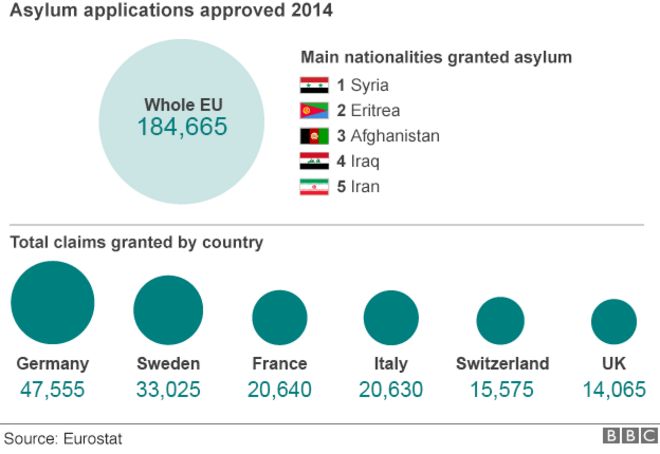


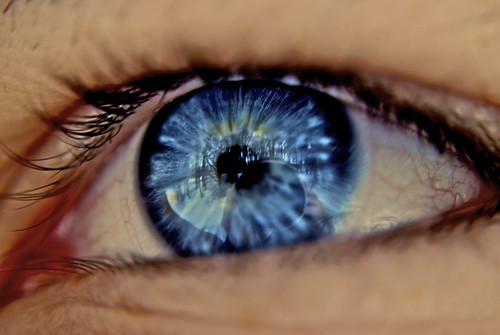


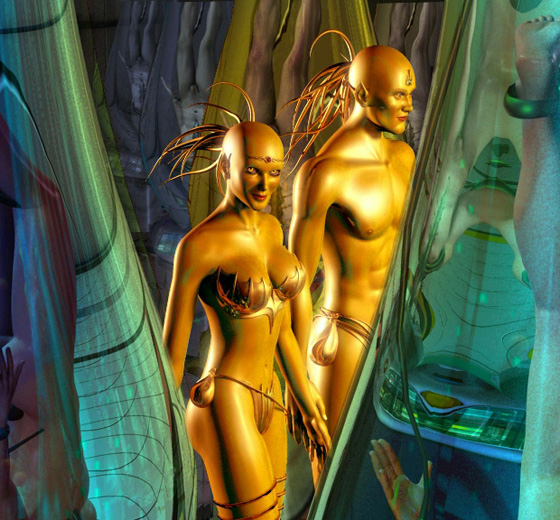


 Like any other technology it undeniably makes parts of life so much easier and is here to stay.
 Everything is moving so fast that we’ve got to adapt to it, keep up with it!
 bobdillon33blog