• About
  • THE BEADY EYE SAY’S : THE EUROPEAN UNION SHOULD THANK ENGLAND FOR ITS IN OR OUT REFERENDUM.

bobdillon33blog

~ Free Thinker.

bobdillon33blog

Category Archives: European Commission.

THE BEADY EYE SAYS: ROLL UP ROLL UP WE ARE ABOUT TO WITNESS THE BIGGEST MONEY FIGHT EVER SEEN. BREXIT IS EUROPE’S LAST CHANCE.

01 Thursday Jun 2017

Posted by bobdillon33@gmail.com in Brexit v EU - Negotiations., Brexit., Elections/ Voting, ENGLAND'S SNAP ELECTION, England., European Commission., European Union., Politics., Post - truth politics., Social Media., The Obvious., Unanswered Questions., What needs to change in European Union.

≈ Comments Off on THE BEADY EYE SAYS: ROLL UP ROLL UP WE ARE ABOUT TO WITNESS THE BIGGEST MONEY FIGHT EVER SEEN. BREXIT IS EUROPE’S LAST CHANCE.

Tags

Brexit v EU - Negotiations., Brexit., ENGLAND'S SNAP ELECTION, European Union, What needs to change in European Union.

( This is a good thirty minute read.)

The weigh in:

In the blue corner we have England wearing sterling.  In the green corner we have the EU wearing euro.

Regardless of whether you like the sport this fight will be contested across social media keeping the audience at a safe distance while making sure that the fighters don’t withdraw/run away from the fight before it is finished.

Round One:

Put simply, Article 50 gives the 27 continuing member states predominant power.

That comes partly from the fact that, according to Paragraph 4 of Article 50, the withdrawing state no longer counts as a member of the European Council for the purpose of the negotiations.  But mainly it comes from the guillotine imposed by the two-year deadline and the requirement for unanimity to extend that deadline.

Clause 4 says that after a country has decided to leave, the other EU members will decide the terms—and the country leaving cannot be in the ring in those discussions.

Britain depends on the EU for half of its exports, while Britain accounts for only one-sixth of Europe’s.  For Britain, this means any deal would be better than none at all. Keeping substantial access to the single market and having strict immigration controls are mutually exclusive for the EU: achieving both is highly unrealistic.

After a lot of shadow boxing T May with a reduced mandate and new shoes dances around the ring avoiding the total financial obligations, which are understood by the EU to be around €100 billion gross, according to an FT estimate.

But add on the negotiations fees etc and Britain is facing a £140 billion (7.5% of GDP) or the equivalent of £300 million a week over eight years.

May said repeatedly that Britain could walk away without a deal and be fine. Instead, a painless exit without a cliff-like effect on trade is only possible with a transitional arrangement. To obtain that, the UK will likely have to pay the €60 billion it owes from its past years of membership, as well as a membership fee for access to the single market.

The EU knows that  the UK is economically more dependent on the EU; 44% of its exports go there and 48% of its foreign investment comes from them.

This is not to mention the potential damage from a loss of passporting rights to the services sector, which makes up for around 79% of UK GDP.

Hence  the UK may try to act tough at the start of fight but eventually will have to compromise to avoid bigger economic fall-outs.

Round Two:

The EU Commission said citizens in the process of acquiring EU rights (such as permanent residency in another country in the bloc) should be allowed to finish doing so, and that the U.K. will be liable for certain financial payments, such as the salaries of British teachers at schools for the children of EU officials, until 2021.

Round Three:

The U.K. remains under the jurisdiction of the European Court of Justice while all pending cases are completed, and the U.K. would not immediately receive upon departure all the capital it has supplied to the European Investment Bank.

The U.K. is a 16 percent shareholder in the EIB and has €39.2 billion locked up in the institution, which often funds projects with a 20- to 30-year timeline. The U.K.’s liabilities should be “decreased in line with the amortization of the EIB portfolio outstanding at the time of United Kingdom withdrawal,” the Commission said.

Round Four:

Any cherry-picking punches are totally against the rules.  “Until it leaves the Union, the United Kingdom remains a full member of the EU, subject to all rights and obligations set out in the Treaties and under EU law.

Round Five:

United Kingdom will be kept separate from ongoing Union business, and shall not interfere with its progress.

The Council states that an agreement on a future relationship between the EU and the UK can only be concluded once the UK effectively leaves the EU and becomes a third country. When the United Kingdom officially leaves the European Union in March 2019, it will still be entangled in the EU’s financial and legal systems for years.

While the terms of divorce can be agreed with a majority vote, the terms of future EU-UK trade relations are very likely to need a unanimous vote.

The deal must be agreed by all 27 remaining countries in the EU. Individual countries can’t veto a treaty governing the UK’s withdrawal from the EU, but could veto a treaty establishing Britain’s new relationship with the EU. It would go ahead if it were approved by 20 of the 27 remaining EU countries, so long as they also represent 65% of the EU population.

Most of the EU’s free trade agreements require a unanimous vote of all EU governments and ratification by all member countries. That’s because they tend to be ‘mixed agreements’, meaning that they cover some ground that the EU doesn’t have power over. That said, it’s possible for the EU to negotiate a trade agreement that can’t be vetoed, depending on what’s in it.

That implies two major agreements: one on the logistics of divorce, and another on trade. (More treaties might be necessary on other issues, like security.)

Round Six:

Compulsory standing count.

Theresa May’s vision is blurred. Polarizing public opinion against the EU and immigration and away from domestic issues was an easy political win.

An independent and truly global United Kingdom without a new customs agreement. Agreements between the EU and third countries or international organisations, for example on trade, would also cease to apply to the withdrawing state, and it would thus need to negotiate alternative arrangements.

Round Seven:

The UK could change its mind about withdrawing from the EU even after triggering the formal process of leaving under Article 50.

Article 50 doesn’t say whether or not a country can change its mind, so it’s arguable either way. Some eminent lawyers think that it can, but there are also those – especially within the EU itself – who argue that once a country has triggered Article 50 it can’t then abort the process without permission.

It would be perfectly possible for the UK to revoke its decision to quit. That Article 50 is silent on the matter of revocation does not mean that a change of direction would be illegal under EU law.

The place this point might be argued, and ultimately resolved, is the EU court in Luxembourg. It’s possible that the UK courts will refer the question to EU judges as part of the ongoing litigation over the role of Parliament in triggering Article 50.

Round eight:

If there’s no turning back from an EU exit once Article 50 is triggered, there would be no point in voting on the terms of a new agreement verses continued membership.

The choice would instead be to take the deal on offer, or reject it and exit with no long-term deal at all.

Round ten:

In the end while us tax payers lose billions, the Lawyers win hands down.

Round eleven:

No deal:

Round twelve:

In their attempt to create a fairer and more equal country, Britons sought to sever ties from what they saw as a weakened partner. The reality is that Brexit will likely make Britain weaker and, ironically, is making the EU stronger.

The irony is that by running away from a European Union they thought was about to fall apart, Brexiteers have instead made it stronger.

Voters in France and the Netherlands are rejecting populism, and politicians in Brussels and Berlin have switched gears towards reforms and pro-EU spending measures.

Round thirteen:

The composition of the EU institutions changes as of the day the withdrawal takes effect, with members from the withdrawing state losing their seats in the various institutions and bodies, although transitional arrangements might be required for the period immediately after that date.

Review of the fight by social media: 

The debts accumulated by the governments of the U.S., Japan, Europe and dozens of other countries constitute a gigantic mortgage on the next two or three generations, as yet unborn.

The Euro corner>Résultat de recherche d'images pour "pictures of the euro"

As it marks its 60th birthday, the European Union is in poor shape. It needs more flexibility to rejuvenate itself.

However, citizens’ trust in the EU has decreased in line with that for national authorities. Around a third of citizens trust the EU today, when about half of Europeans did so ten years ago.

The latest economic and political developments in Europe are a wake-up call for our political leaders to take swifter action in order to strengthen the foundations of our Union.

The deteriorating geopolitical environment makes matters worse. Turmoil and war across the Middle East and in north Africa were one big cause of the surge in migrant inflows.

It is dying financially, with all the debt bankrupting governments, businesses and individuals. It is sinking economically, weighted down with stifling regulations and taxes. It is being strangled demographically, with birth rates far below replacement and the refugee crisis, which saw 1.2 million people coming to Europe in 2015 will only worsen with climate change and current conflicts.

Given the challenges facing the union, the one-size-fits-all model muddling through may no longer be the safest option. Brexit could yet be copied by another member, leading to the slow collapse of the union. A multi-speed Europe or multi-tier Europe could begin to undo the EU.

Few of the 27 EU member countries that will remain after Brexit favour much deeper political and economic integration.

These 27 are integrated into the EU in many different ways: all are in the single market, 26 in the banking union, 21 in Schengen, a different 21 in NATO and 19 in the euro, to list just few examples.

The European continent is home not just to the 28 EU members but 48 countries in all. Those outside the EU aspire to special relations with the club, and some belong to bits of it already.

To cap it all, America’s new president, Donald Trump, has shown himself hostile not just to multilateral free trade and Muslim immigrants but intermittently to the EU, praising Britain’s decision to leave and urging others to follow.

Turkey’s president, Recep Tayyip Erdogan, is turning his back on a club that seems to have rejected his membership aspirations, and is spurning its democratic values as well.

By 2018, around a third of the world’s population will be use social media networks. These trends will only accelerate and continue to change the way democracy works and the way the EU evolves.

A big reason for this is the politics in EU member countries which make it doubly important for Europe to gets to grips with a profound digitisation of society. The EU covers four million square kilometres in which there are 500 million citizens. It is the world’s largest single market with second most used currency. However Europe’s place in the world is shrinking, as other parts of the world grow.

In 1900, Europe accounted for around 25% of global population. By 2060, it will account for less than 5%.

Europe’s economic power is also expected to wane in relative terms, accounting for much less than 20% of the world’s GDP in 2030, down from around 22% today.

Too often, the discussion on Europe’s future has been boiled down to a binary choice between more or less Europe. New global powers are emerging as old ones face new realities and there is none older than England that has voted to leave.

There is also a mismatch between expectations and the EU’s capacity to meet them. The EU approach is misleading and simplistic, for too many> the EU fell short of their expectations as it struggled with its worst financial, economic and social crisis in post-war history. If it is to survive the EU must embrace greater differentiation not closer union or face potential disintegration.

That leaves the second type of response, which is to muddle through. After all, the euro and migration crises seem to be past their worst. Excessive austerity may have done great harm, but outside Greece it is largely over. The single market, perhaps the union’s greatest achievement, has survived the financial crisis and can surely weather Brexit. Domestic security co-operation on terrorism and crime is closer than ever. In foreign policy, EU countries have displayed commendable unity over sanctions on Russia, and have been vital in striking a nuclear deal with Iran.

At the moment more than 80% support the EU’s four founding freedoms.

These might have being the foundations to the EU but there is no getting away from the fact that money was in more ways than one crucial from the very start of the European project.

70% of euro area citizens support the common currency.

The euro zone is now a partial banking union, with a centralised bail-out fund and a European Central Bank (ECB) prepared to act as a lender of last resort.

As economies improve and this year’s tricky elections are negotiated, the union will somehow manage to keep going. If EU leaders want to negotiate revised membership (and all do say they want the UK to stay in), they could do so.

Sterling corner>Résultat de recherche d'images pour "pictures of the pound"

Britain’s richest and privately educated citizens account for 7% of the population yet makes up two-thirds of judges and around half of journalists and members of parliament, according to a government report. Meanwhile, the Child Poverty Action Group estimates that 3.9 million children live in poverty.

The UK ranks second in the developed world for inequality, after the US.

Brexit will not change that, nor will it make Britain more united:

The English patient was sick long before the divorce from Europe.

With an economy focused on finance and services, and highly dependent on foreign investment, the idea of creating a “truly global Britain” isolated from its closest trading partner is economic la-la land.

Brexit is a symptom of Britain’s deeply rooted economic imbalances: a growth model too concentrated on finance and services and dependent on foreign goods, human and financial capital; record-high social and wealth inequality; a lack of investment in infrastructure and education; and monetary and fiscal policies that have helped create a property bubble and excess household debt.

Brexit will not fix the shortfalls of the Anglo-American growth engine, which ran on credit and rising asset prices over the past few decades, disregarding rising inequality, a lack of inclusive access to education and declining social mobility.

General observations :

Article 50 makes life very difficult for any country wishing to withdraw from EU membership.  You might think this deliberate and take it as yet another symptom of perfidious Brussels.  But we should remember that the English Government and parliament signed up to it.

However the design of the euro suffered from two big defects that still haunt the single currency. The euro, in short, remains a troubled currency, with question-marks over both its membership and its direction. There is general agreement that it needs further integration, but disagreement about how to go about it.

The EU’s Institutions, built up over six decades, are not ideally suited to responding flexibly to challenges such as the single currency, migration or foreign and security policy. The European Parliament needs greater legitimacy to influence the European Commission is much more than a civil service; it is the guardian of the treaties, the originator of almost all legislation and the sole executor of the EU’s budget while suffering from having too many commissioners. (28, one per member country)

Terrorist attacks have struck at the heart of cities in the EU last year and will continue to do so while NATO continues to provide hard security for most EU countries.

Europe cannot be naïve and has to take care of its own security. There is no point any longer being a “soft power.

Finally:

The Horizon 2020, in Europe is the world’s biggest multinational research programme.

Maybe there are some things that could be done for the people of Europe that are not directly related to selling stuff?. Real efficiency comes from rethinking systems of bureaucracy from the ground up, not just using less paper.

The greatest task today is to consolidate the free world around Western values, not just interests,””digitizing” and “decarbonising” the economy.

Perhaps the idea of a Continental Partnership.  Might suit the UK.

Such a partnership could offer non-EU countries partial membership of the single market without full free movement of labour, and also create a system of decision-making that gave them an informal say (but no formal vote) in rule-making.

Perhaps this is the winning blow.

In all fights the promoters set the venue not the result.

England would do well to remember that it is not the EU who promoted this fight.

All comments appreciated. All like clicks chucked out of the ring.

Résultat de recherche d'images pour "pictures of boxing gloves"

Go back

Your message has been sent

Warning
Warning
Warning
Warning

Warning.


Share this:

  • Click to share on WhatsApp (Opens in new window) WhatsApp
  • More
  • Click to share on Pocket (Opens in new window) Pocket
  • Click to share on Mastodon (Opens in new window) Mastodon

THE BEADY EYE SAYS: UNLESS EUROPE LOOKS AT ITS HOMELESS IT WILL NEVER BE UNITED.

19 Wednesday Apr 2017

Posted by bobdillon33@gmail.com in European Commission., European Union., homelessness., Humanity., Modern Day Democracy., Our Common Values., Politics., Poverty, Sleeping Rough., The Obvious., The world to day., What needs to change in European Union., WORLD POVERTY WHERE'S THE GLOBAL OUTRAGE

≈ Comments Off on THE BEADY EYE SAYS: UNLESS EUROPE LOOKS AT ITS HOMELESS IT WILL NEVER BE UNITED.

Tags

Eradicate poverty, homelessness., Poverty, Sleeping Rough.

( A THREE MINUTE READ)

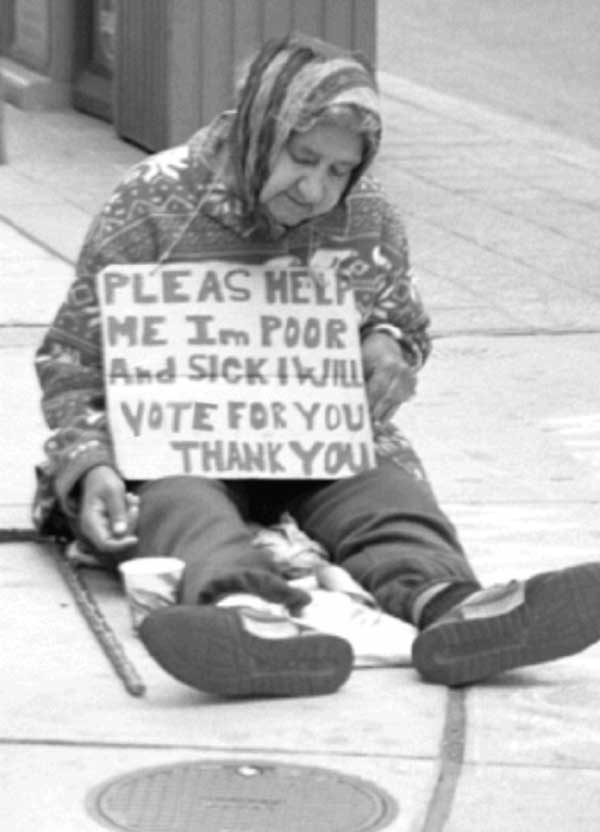
In  Europe alone, there are 3 million people on the streets.

Résultat de recherche d'images pour "pictures of homeless people"

We all know that the  Eu has many problems and is need of reform. All EU countries face major challenges in relation to finding sufficient resources to tackle social problems and it cannot be expected that one country like Germany is going to sort out other country’s homeless.

However it appears to me that homelessness is increasing across a considerable number of EU Member States.

The growing number of people in Europe facing situations of housing vulnerability due to shifting dynamics in housing and labour markets, as well as the diminishing role of states in housing provision requires policies that target different types of homelessness (temporary, long-term) with customized interventions (prevention, supported housing) that are flexible and effective at engaging individuals “where they are.”

As EU member states grapple with immigration and other social changes wrought by EU integration, globalization, and the economic crisis

We are now caught in VICIOUS circular, with the whole area in needs of a fresh approach.

Prevention of homelessness is strongest in social democratic regimes, and the weakest in Mediterranean countries and some eastern European transition nations.

Which strategies in particular are best suited to responding to homelessness, either from a preventive or remedial vantage point is debatable however the provision of housing must ultimately be seen as the primary solution to homelessness, and that, while distinct from their housing needs, the additional health and social service needs of individuals need to be addressed as well.

Housing and services should NOT be linked.

A right to housing for all homeless persons will only be successful to the extent that such a right is legally enforceable.  

Another words in the hands of courts rather than in those of elected governments.

While the numbers of people experiencing homelessness may be relatively low compared to those experiencing other social problems within the EU, the unique distress of homelessness and the potential costs for individuals, families and wider society from homelessness must never be forgotten.

Quantifying homelessness isn’t straightforward and I don’t think it would be beneficial here to list the thousands that are sleeping rough in Europe, country by country.

It is sufficient to state that Homelessness is a violation of fundamental human rights. When you walk by a homeless person it personifies whether the European Union is working or not.

In total, the United Nations Commission on Human Rights estimates that the world has 100 million homeless people.

And we wonder why we have such an unstable political world.

By comparison in Australia and Canada, hundreds of thousands of people are homeless.

There are over 9.5 million homeless people in Columbia and 24.4 million in Nigeria.
Image associée

The argument can be made for approaching homelessness as a problem that affects a set of distinct sub-groups and consequently, for tailoring solutions according to each group’s respective needs. Homeless youth, Homeless women  Homeless migrants. Homeless mentally ill.

This places homelessness interventions squarely within the broader context of poverty.

But poverty is also the inability to use the resources offered.  Poverty should be understood as not merely a problem of access to resources but also as implying a lack of ability in taking advantage of resources.

If the EU does not want social exclusion within its ranks it must address homeless with a Rooflessness subsidy, like it help the farming communities through the Common Agricultural Policy.

Homelessness in Greece has significantly increased to 20,000 homeless people in recent years.

About 50% of the homeless population roams the streets of Athens.

Measuring the scope and extent of homelessness in Europe still remains a significant obstacle along with the whole set of processes that generate homelessness and what results in different histories of homelessness.

The POOR AND HOMELESS WILL CONTINUE TO GROW, BOTH WILL UNDERMINE THE ECONOMIC GROWTH AND UNITY OF THE EU. Résultat de recherche d'images pour "pictures of homeless people"

All comments welcome, all like clicks chucked in the bin.

Go back

Your message has been sent

Warning
Warning
Warning
Warning

Warning.

Share this:

  • Click to share on WhatsApp (Opens in new window) WhatsApp
  • More
  • Click to share on Pocket (Opens in new window) Pocket
  • Click to share on Mastodon (Opens in new window) Mastodon

THE BEADY EYE ASKS: WHAT SHOULD THE EU SEEK IN THE BREXIT NEGOTIATIONS.

23 Thursday Mar 2017

Posted by bobdillon33@gmail.com in Brexit., England., European Commission., European Union., Modern Day Democracy., Our Common Values., The Obvious., Unanswered Questions., What needs to change in European Union.

≈ Comments Off on THE BEADY EYE ASKS: WHAT SHOULD THE EU SEEK IN THE BREXIT NEGOTIATIONS.

Tags

European Union, Forthcoming Brexit Negotiations.


(A six minute read.)

Philip Hammond urged EU countries to “think very carefully about what they want” before hanging Britain out to dry in any post-Brexit settlement.

The fact that even the process for conducting these negotiations is not fully covered by European law his advice although cloaked in threatening rhetoric should be heeded by the EU.

Résultat de recherche d'images pour "pictures of eu brexit negotiators"

Article 50 of the Treaty on European Union (TEU) is the only formal structure for the negotiations but offers no more than a broad framework for the negotiations. More detailed guidance will largely depend on legal interpretation and political bargaining, and will only be issued after the UK activates article 50 and begins exit proceedings.

To date I have only heard in vague terms what the UK wants.

It seems to me at the moment that there is no consensus on how the UK should approach negotiations on its relationship with the EU. In particular which parts of its current relationship with the EU the UK seeks to preserve and which it has to either renegotiate or walk away from.

This post asks what from an EU perspective what will the negotiations mean.

The European Council’s main role is to define the general political direction and the priorities of the EU.

Although it has no formal legislative power, it has an influential strategic role and provides a final escalation level for discord among member states at the ministerial level.

For the negotiations on the exit conditions, the formal role of the European Council is limited to the beginning of the negotiation process.

It will then set out the guidelines for the withdrawal agreement, without the UK’s participation, through unanimous agreement.

These guidelines will provide general directions and key conditions for the Union negotiator, the European Commission. They will also define the role of the other institutions, the time path and sequence of the negotiation process.

The European Commission is ultimately responsible for negotiations related to the common foreign and security policy (CFSP). In addition to this, the European Parliament has voted in favour of having the Commission led the negotiations.

Out of all the EU institutions, the role of the Parliament is, in legal terms, the least clearly pronounced. Although it has to sign off, by simple majority, on both the exit proceedings and the any future trade deal, its involvement throughout the negotiations will remain uncertain until the European Council issues its guidelines. Nonetheless, the possibility that the Parliament can block the deal(s) gives it significant power over the negotiation process and the content of the agreement.

The European institutions that are involved in the negotiations each cater to different interests.

The Council represents the Member States, the Parliament the European citizens, and the Commission stands for the EU as a whole.  For that reason it is crucial that the European Parliament gets a strong role in the negotiation process. It would be difficult to think of a better way to show the benefits of European citizenship, for the British and for Europeans alike.

In a bid to maximise the benefits of the negotiations for European citizens, national governments and for the EU as a whole it is essential:

That the European Council issues negotiation guidelines that serve the interests of European citizens and Europe as a whole, and not just those of the Member States.

That the Parliament’s role is defined by the recognition of its political input and the citizens that it represents, rather than by its mere power to block an agreement.

That the European Parliament, as the highest democratic body of the European Union, be involved in all steps of the negotiation process. This is to be achieved by: setting up a special committee to formalise interinstitutional contacts between the Brexit negotiators from the Council Task Force, the Commission and the Parliament; and by making the European Parliament’s lead negotiator part of the Union’s negotiating team.

It is quite obvious that there is going to be not just one deal, but probably two or more.

So to date on the European side we have only rumors of  a massive exit fees in the billions and little else. ( see previous post)

A pretty core question is whether the UK is prepared to concede even the principle that it has liability for any EU expenditure, beyond the pensions of UK citizen employees of the EU.

My guess is that will not be conceded per se, but that one could imagine some notional payment being made, for purely political presentational reasons, to secure a trade deal. I’m thinking of something like £7bn under some pretext-or-other, plus an annual agreement to participate in this or that research funding programme and some pan-European anti-crime-and-terrorism fund.

It also seems to me that the EU is going to have to re-negotiate some of its own terms of international trade due to a downsizing of its market.

Will the UK be paying the cost of these negotiations.

Unfortunately the English don’t seem to understand that the decision to join the EU was irrevocable.

The people of England listened to a bunch of charlatans promising a “Global Britain”, rubbish; Britain has nothing to sell. Yes, the City of London , due to its peculiar legal status will remain the world center for money laundering and financial manipulation, aside from that what have you got?

You just had to hire the Chinese to build a power station! The apparent prosperity of the last 25 years has been built on a mountain of debt, which means that if BofE is forced to defend the pound by raising interest rates the whole economy will come crashing down.

Expect the GB pound to hit 50cents US within months. And don’t think you have any credit left with the old empire, after the stab in the back of Australia and particularly New Zealand nobody is interested in your BS.

If you had any sense at all you would all ask May to admit that voting to leave was a big mistake and please take us back.

The EU is perfectly within its rights to take into account any repercussions to their union’s stability in the way they approach Brexit. Britain can leave anytime they want – they just can’t expect to receive all the privileges that came with membership.

Britain will find out soon enough that leaving the EU is like the spoiled teenager who runs away from home because their parental units won’t buy them the latest iphone. All of a sudden they are cold, dirty, wet and hungry.

Résultat de recherche d'images pour "pictures of eu brexit negotiators"

Theresa May has said she intends to trigger this process on 29 March, meaning the UK will be expected to have left by the summer of 2019, depending on the precise timetable agreed during the negotiations.

She wants with a “comprehensive free trade deal” giving the UK “the greatest possible access” to the single market  to reach a new customs union deal with the EU without the free movement of people.

No matter what, on both sides there are now massive vested interests under threat and hence they will stop at nothing to protect the machine. Nothing.

In the end it is the people on both sides that count. In or Out.

All comments appreciated. All like clicks chucked in the bin.

Go back

Your message has been sent

Warning
Warning
Warning
Warning

Warning.


Share this:

  • Click to share on WhatsApp (Opens in new window) WhatsApp
  • More
  • Click to share on Pocket (Opens in new window) Pocket
  • Click to share on Mastodon (Opens in new window) Mastodon

THE BEADY EYE SAYS: PERHAPS IT’S TIME FOR EUROPEAN UNION COUNTRIES TO HAVE TWO CURRENCIES.

04 Saturday Mar 2017

Posted by bobdillon33@gmail.com in Brexit., European Commission., European Union., Modern Day Democracy., Modern day life., The Future, Unanswered Questions., Uncategorized, What needs to change in European Union.

≈ Comments Off on THE BEADY EYE SAYS: PERHAPS IT’S TIME FOR EUROPEAN UNION COUNTRIES TO HAVE TWO CURRENCIES.

Tags

European Union, The Euro, The Euro zone., What needs to change in the European union

( A Seven minute Brainstorm read for all Europeans)

I have always thought that the introduction of the Euro without countries being in control of their money was and still is nonsensical.  That a foreign entity prevent two members of the community from exchanging among themselves is farcical in the age of electronic transfers.  Résultat de recherche d'images pour "pictures of european union flags"

We are all aware that we are heading into an age of Automation with its consequences for Jobs and Taxation where money will become more than ever just  a system of signs recording who owes what to whom.

Money is one of the tools that a community bestows on itself for its common operations. That is for a Greek fisherman to pay his Greek baker.,

it should have nothing to do with the money of another one – unless they are not different communities.

ALL THESE ELEMENTS, ALONG WITH COUNTLESS OTHERS ARE RAPIDLY GATHERING TO TEST THE UNITY OF THE EUROPEAN UNION WITH THE PIG IN THE POKE BEING THE EURO.

Résultat de recherche d'images pour "photos de billets de banque en euros"

Euro zone nations first thrived under the euro. The common currency brought with it the elimination of exchange rate volatility (and associated costs), easy access to a large and monetarily unified European market, and price transparency.

Now regional tensions within countries are being fueled by this monetary unification. Irrespective of how any individual nation’s economy performs, all euro zone nations are impacted by the common euro currency valuation.

IN THE LONG RUN THERE IS NO GETTING AWAY FROM: that the future of the euro will depend on how EU policies evolve to address the monetary challenges of individual nations under a single monetary policy.

In the last year, non-euro EU currencies have generally performed better than the euro.

There are currently 28 nations in the European Union and of these, nine countries are not in the eurozone—the unified monetary system using the euro.

EU nations are diverse in culture, climate, population, and economy. Nations have different financial needs and challenges to address. The common currency imposes a system of central monetary policy applied uniformly.

Since the European Central Bank (ECB) sets the economic and monetary policies for all euro zone nations, there is no independence for an individual state to craft policies tailored for its own conditions.

As we witness in 2011 several European countries were and still are mired in the problem of using a currency which they do not control: Greece, Portugal, Ireland, and soon Spain, Italy, France.

These countries all have an important trade deficit which leads each of them to a chronic dearth of money supply and to the nonsensical situation of needing to borrow money from abroad (Germany, Northern Europe, or directly the ECB) in order for their citizens to be able to exchange goods and services among each other.

The problem, is what’s good for the economy of one euro zone nation may be terrible for another.

So is it time to scrap the Euro and introduce a two tier monetary systems.

Electronic Euro and national currencies.  Electronic euro the trading currency and the National currencies the reserve currency.

The “reserve” currency entirely distinct from trade currencies. A separate and distinct difference between the currency being used in trade and the currency being used to store wealth.

This idea might well have being intractable when the money used for everyday expenditures was metal and paper based, but it is no longer the case with the advent of no contact payment systems with mobile telephones and very large databases systems like Google Adsense.

If the European Union is not to disintegrates it easy to foresee that countries will inescapably return to a domestic currency for their internal affairs, while they’ll keep the euro for their external trade within the Euro zone.

In other words, they will use a system of double currency: one internal and one external.

This would allow room individual countries losing price competitiveness for export to addressed by deliberately devaluing its trade currency in order to make its exports cheaper and more attractive.

The future evolution OF THE EUROPEAN UNION IS NOT FEDERALISM it will be in the opposite direction: toward smaller communities, enjoying some autonomy, and being able to have their own currencies.Résultat de recherche d'images pour "pictures of european union flags"

On a practical level, a multiple-currency system requires that payments be made no longer with paper banknotes and coins but with some convenient electronic devices. The new systems of no contact payment with our mobile phones provide a solution. In the background, our payments will be recorded and managed in large databases, just as they are today. Such complex databases are not a thing of the future, Google Adsense is one of them, arguably more complex than what we advocate.

Paper currency came into prominent worldwide use at the time of World War I, and has played a major role in shaping the global history of the last 100 years and despite huge and ongoing technological advances in electronic transactions technologies, it has remained surprisingly durable, even if its major uses seem to be buried in the world underground and illegal economy.

The monetary means were also kept in the hands of the central authority, with the justification that it was one of the fundamental pillars of power. In the XXth century attempts to make central banks independent of the executive ended in failures. For instance the US Fed or the European ECB have demonstrated that they cannot but do what they are told by governments.

With many central banks now near or at the zero interest rate bound, there are increasingly strong arguments for exploring how it might be phased out of use.

There is no good reason why a country could not use its own money for its internal operations (what economists dub its “sheltered activities”). In fact it happens here and there, it is called a local exchange trading system, and is “tolerated” by central authorities as long as it doesn’t become too big, and doesn’t shirk taxes.

Taxes are certainly necessary for a community to function. But they should indeed be in the several currencies used by that country.

Indeed every country with a monetary system with several currencies in the wallet of the citizens. Each currency will correspond to one of the communities to which he or she belongs: city, region, nation, economic zone, and world.

The world could be reduced to only a handful of monetary authorities, with some of them exercising monetary policy internationally, and with strong need for coordination.

This will represent a sharp change from the times when sovereign nations necessarily had their own unique currency; it was even a mark of their power.

All comments or suggestions welcome. All like clicks chucked in the BIN

Go back

Your message has been sent

Warning
Warning
Warning
Warning

Warning.


any attempt to eliminate large-denomination currency would ideally be taken up in a treaty that included at the very least the major global currencies.

In small and very open economies, the presence and use of international currency is unavoidable.


Share this:

  • Click to share on WhatsApp (Opens in new window) WhatsApp
  • More
  • Click to share on Pocket (Opens in new window) Pocket
  • Click to share on Mastodon (Opens in new window) Mastodon

THE BEADY EYE ASKS: IS THE EU GOING TO FIND IT CHALLENGING TO PRESENT A UNITED FRONT TOWARDS THE UK EXIT NEGOTIATIONS.

04 Wednesday Jan 2017

Posted by bobdillon33@gmail.com in Articular 50., Brexit., England EU Referendum IN or Out., European Commission., European Union., Modern Day Democracy., The New year 2017, The world to day., Unanswered Questions.

≈ Comments Off on THE BEADY EYE ASKS: IS THE EU GOING TO FIND IT CHALLENGING TO PRESENT A UNITED FRONT TOWARDS THE UK EXIT NEGOTIATIONS.

Tags

Brexit., European Union

( A six-minute read)
It’s not long now before we are going to witness two events that will shape the future.Afficher l'image d'origineI am not talking about climate change or Artificial Intelligence rather the arrival of Donald Trump and the beginning of the UK negotiations to leave the EU.

There is little point in addressing the Donald Trump scenario.

A stupid, crass, vile racist, unintelligent, thug that is the laughing-stock of the world will be the US President with his finger on the red button.

What to expect is anyone guess.

If you ask me about 30%+ of Americans live in an alternate, non-fact based reality in which Right-Wing Propaganda is FACT, Lies = Truth.

“My Twitter has become so powerful that I can actually make my enemies tell the truth.” or  “I’ve said if Ivanka weren’t my daughter, perhaps I’d be dating her.

In a weird way both events are connected by Artificial Intelligence/ Money.Afficher l'image d'origineAfficher l'image d'origine

One elected with False Twitter News and the other Nigel Farage fooled the English electorate to vote out of the EU with a pack lies.

Anyway back to the Question:

Until its official withdrawal, the UK will remain a fully fledged member state. However, UK involvement in EU decision-making will quickly become marginal.

UK officials in top management positions will likely have to leave.

(1,126 British nationals are employed in the European Commission (3.8% of the total. 73 British MEPs sit in the Parliament (out of 751 in total). Three EP committees have British chairs: Development; Internal Market and Consumer Protection; and Civil Liberties, Justice and Home Affairs.)

Of course the EU is going to find it, if not impossible to negotiate with the UK.

Because the meaning of Brexit is yet to become clear to the Uk and the EU.

The UK wants to keep the trade relationship with EU members as it is today (free trade) but significantly change the rules surrounding the free movement of people between the EU and the UK.

The real problem, however, is that when you think about the interests and constraints of both sides, it becomes hard to envision any deal that all parties can accept — unless UK negotiators are able to go back to their constituents and sell a deal that falls well short of what was initially promised.

On the EU side, Brexit will change how EU institutions operate not just during the withdrawal period, but also afterwards. It will affect the balance of power among member states and therefore the policies that the EU would pursue.

Depend on the answers, the Union finds to its current crises – stabilising the euro, finding a common line in refugee policy, stemming the surge in Euroscepticism – and on its economic recovery.

Hardening European attitudes is that they do not want to encourage copy-cat referenda in their own countries.

If an agreement is reached, the treaties that currently govern the relationship between the EU and the UK (as a member state) will expire. If no agreement is reached, the treaties will automatically expire two years from when Article 50 was invoked.

 How will the UK and EU negotiate their split?
Afficher l'image d'origine

It’s important to remember that:

The British referendum is not legally binding: The UK government must initiate “Brexit” by invoking Article 50 of the Treaty on European Union.

It’s also important to understand:

That any agreement will need to be ratified by the parliament of every member state, which means every EU country would have a veto. From a negotiation perspective, this not only increases the amount of time needed to reach a comprehensive agreement but also lessens the likelihood of a deal. At least 65% of the population of the EU, must vote in favor of the agreement.

The most immediate and important challenge is to reach a new agreement covering economic relations with the EU. In addition, as a member of the EU, the UK participates in the EU’s trade agreements with non-EU countries: leaving the EU may force the UK to renegotiate these agreements. The EU may not prevent the UK negotiating and entering into such treaties providing that they will not come into force until the UK withdraws from the EU.

There’s an infinite number of potential outcomes in a negotiation like this.

There is also an option of extending negotiations beyond the two-year time limit, but it requires the consent of all countries in the EU.

The UK will have to ask for what it wants in ways that allow the EU to make concessions without setting dangerous precedents.

If no agreement is reached within two years and the EU treaties expire, the default is that the UK and EU would trade according to World Trade Organization rules. Notably, these rules cover only trade, not the many other issues the two sides need to negotiate.

As there is no precedent it is important to bear in mind that the internal process on the EU’s side of the table is itself being negotiated.

No matter what it means the UK is starting from a weak bargaining position.

The UK is due to hold the EU’s rotating presidency from July to December 2017.This will become not only politically untenable. Article 50 disqualifies the UK ‘from chairing any Council meetings on the withdrawal negotiations.

Since the UK joined the EU in 1973, trade policy has played a minor role in UK politics. Now its on the top of its negotiations to leave the EU.

I find it hard to believe that back channel conversations are not under way.

The UK needs to reach some kind of deal with the EU before Brexit happens and puts it in a weak bargaining position.

Brexit could or will alter the balance of power within the EU in other ways too. It could strengthen Germany’s position, shift alliances, and potentially either strengthen or weaken smaller states.

It will result in an increased regulatory burden on EU businesses weaker copyright protection in the EU. A smaller EU budget as a whole, with increased member-state contributions A stronger push for tax harmonisation and higher taxation of financial transactions A less support for nuclear and unconventional energy sources (e.g. shale gas).

The EU is based on the idea of a single market, characterized by four freedoms. They are the free movement, across borders, of goods, services, capital, and people.

( It is estimated that there are currently 2.9 million EU nationals resident in the UK.)
The actual position of such individuals is underpinned by the Human Rights Act and will depend on length of residence and other factors, but Government intentions for both UK and EU citizens remain far from clear.

Brexit could have a domino effect whereby Eurosceptic forces in countries such as Denmark, Austria and Sweden follow the UK and hold their own referenda,

eventually leading to the EU’s disintegration. Should Britain thrive post Brexit,
while the EU stagnates economically, such centrifugal forces would be strengthened.

Given the fact that a “no deal” is possible and that a deal might disappoint UK voters anyway, might there not be a path toward reversing Brexit? There may come a time when the only outcome that allows all parties to declare victory entails no Brexit.

Other member states will find any UK attempt to push a specific policy agenda unacceptable and would be unwilling to accommodate UK interests.

And of course there is the question of how do you do a deal when there remains the question of whether the UK has a prime minister with a mandate. Will a general election will be required prior to any agreement?

The UK is one of the leading Member States in securing funding for research and innovation and various other projects, with a typical aggregate value of £1-1.5 billion per year.

European Agricultural Guarantee Fund: The UK has been allocated €22.5 billion for the period 2014-20.

European Structural and Investment Funds: The bulk of UK funding via this channel comes through the European Regional Development Fund (ERDF), which has been allocated €5.8 billion of EU funds and the European Social Fund (ESF) with an allocation of €4.9 billion.

There is one thing for certain: We are going to witness opportunists counting their fingers after shaking hands with another opportunists.

All comments welcome. All likes chucked in the bin.

Go back

Your message has been sent

Warning
Warning
Warning
Warning

Warning.


Share this:

  • Click to share on WhatsApp (Opens in new window) WhatsApp
  • More
  • Click to share on Pocket (Opens in new window) Pocket
  • Click to share on Mastodon (Opens in new window) Mastodon

THE BEADY EYES: 2017 WILL BE THE YEAR WHEN DEMOCRACY WILL BE UNDER ATTACK FROM ENTRENCHED POWER MORE THAN EVER.

20 Tuesday Dec 2016

Posted by bobdillon33@gmail.com in Artificial Intelligence., Big Data., Brexit., Capitalism, Climate Change., European Commission., European Union., Humanity., Modern Day Democracy., Modern day life., Politics., Social Media., Sustaniability, Technology, The Future, The Internet., The New year 2017, The world to day., Unanswered Questions., What Needs to change in the World, Where's the Global Outrage., World Organisations.

≈ Comments Off on THE BEADY EYES: 2017 WILL BE THE YEAR WHEN DEMOCRACY WILL BE UNDER ATTACK FROM ENTRENCHED POWER MORE THAN EVER.

Tags

Artificial Intelligence., Community cohesion, European leaders, Internet, People of the Earth, SMART PHONE WORLD, The Future of Mankind, The New year 2017, Visions of the future.


As Digital technologies and digital communications are permeating every aspect of life we seem to be living in both a hopeful but also difficult times.

The instinctive tendency to categorise the world into “us”and “them” is becoming more and more difficult to overcome but traditional power structures are changing.

Current institutions and political systems are out of date.

People are taking matters into their own hands and are taking the initiative to organise public affairs themselves. On the one hand, this is because they are losing confidence in politics; and on the other hand, it is because some issues are simply not being dealt with by governments any more. Afficher l'image d'origine

Thanks to the internet, artificial intelligence, google, facebook, twitter, globalisation, and or inability to plan for the long term future the relations between culture and power IS BREAKING DOWN world wide.

The new terrain of global governance by artificial intelligence is making up its own rules on the fly or going about its activities without even any regard for rules of procedure.

It is amply clear by now that the so-called digital divide cannot be bridged through technological means alone, as it must be understood within broader systems of entrenched social and economic exclusion.

It is then timely for a broader range of other social groups, particularly those most adversely affected by globalisation, to re-think how they believe global governance should work.

Our present global structure of patriarchy and capitalist greed with all its connectivity is still a long way off establishing a new world with justice and freedom at its core.

For example:

The Syrian Civil war precipitated by drought in the region. The Iraq, the Iran, Yemen, Afghanistan

Nuclear power plants require grid-tied electricity, cooling water and people getting paychecks. Without all these, they melt down, thus immersing all life on earth in ionizing radiation.

1 in 3 women across the planet will be beaten or raped during her lifetime.

That’s ONE BILLION WOMEN AND GIRLS.

We’re driving to extinction at least 150 species each day.

There’s more. Much more. The violence of poverty, racial violence, gender violence, violence caused by corruption, occupation and aggression, violence caused by environmental disasters, climate change and environmental plunder.

We seem to be living as if there is no future but the one we are creating.

There is nothing guaranteed but our willingness to live as pioneers of a new consciousness and way.

The past five or six years have seen an explosion of political initiatives around the globe in which tech-minded actors of various kinds (including geeks, hackers, bloggers, tech journalists, digital rights lawyers, and Pirate politicians) have played leading parts.

(Not forgetting capitalist greed in all its forms.)

There is a terrible irony in the assumption that we can transcend our parochial tendencies with artificial intelligence.

There is growing public awareness of the concentration of economic power in the world. The richest 85 people in the world, who could fit onto a single double-decker bus, have just as much wealth as the poorest half of world.

Absolute universalism, is impossible. Morality cannot be everywhere at once.

So culture and power is breaking down.

Perhaps it is time to have a data-based approach and ranking of universal values.

This will not work.

Because culture is a key arena for struggles and has provided dynamism and force to the most effective social movements; and one could argue is the most important area for work if we are to really embed and sustain transformative practices in our communities and states over the long-term.

We are fast approaching foregoing the unrealistic concern of respecting different cultures with their moral diversity at any cost because of the economic exploitation globally enforced by imperialist and capitalist states that place profit over people.

We must start thinking of what a post-venture capitalism age of socio-technical innovation might look like, and how it could contribute to democratic renewal in different cultural contexts.

Digital rights are not only human rights, as we often hear in net freedom circles: digital rights are social rights.

Politics, or rather political parties, seem to have an inherent tendency to close in on themselves – maybe in search of traditional forms of certainty, and linked to this predictability and with it a controlling, monopolistic conception of agency.

Its back to I am alright Jack.

The Election of Donald Trump, the English referendum on in or out European Union are shining examples.Afficher l'image d'origine

Afficher l'image d'origineBoth driven by genuine and false concerns. Both altering millions of Europeans to the way Europe is run and to how the USA                                     might be run.

Both models of politics have been based on nation-specific political parties. Both with consensus-centred policies that have reproduced the crisis now faces in 2017 in the United states which will push Europe into a path that will lead to disintegration with each needing to take a new look at the current rules of engagement in international affairs.

Europe can only work if we all work for unity and commonality, and forget the rivalry between competences and institutions. Europeans want common decisions followed by swift and efficient implementation.

At the moment it is viewed as a cartel:

The Eurozone may be supremely powerful as an entity but where no one is in control.

The whole Euro currency project disempower almost every player that has anything to do with democratic legitimacy. It created a monetary union that was designed to fail and which guaranteed untold hardship for the peoples of Europe. ( see previous post)

The nation-state is dead and democracy in the EU has been replaced by a toxic algorithmic depoliticisation that, if it is not confronted, will lead to depression, disintegration and possibly war.

While politics (the ability to decide which things ought to be done) is confined to the level of the nation-state, power (the ability to get things done) has shifted to a supra-national level.

The concept of sovereignty doesn’t change, but the ways it is applied to multi-ethnic and multi-jurisdictional areas like Europe has to be rethought.

There is no point in a slew of treaties, organisations and agencies that form the scaffolding of the emerging global governance structure regulating and superintending everything from nuclear weapons to the fishing of halibut, and all of them embody election less intergovernmentalism.

What European citizens need much more is that someone governs. That someone responds to the challenges of our time.

The Council is the heart of the problem.

The Council operates as a senate-like legislative chamber, yet there are no elections to this body. It is as if you were permitted to vote for your local MP, but there were never any general elections.

Unless institutional bodies can be censured or dismissed as a body by one common parliament, you don’t have sovereign democracy. So that should be the objective in Europe.

The sovereignty of parliaments has been dissolved by the Eurozone and the Eurogroup; the capacity to fulfil one’s mandate at the level of the nation-state has been eradicated and therefore any manifestos addressed to citizens of a particular member state become theoretical exercises.

If we want a Commission that responds to the needs of the real world, we should encourage Commissioners to seek the necessary rendez-vous with democracy.

But a vision alone will not suffice.Afficher l'image d'origine

(Each is a famous European then whose reach extended much further than their time or their geography, and helped to shape the world we live in today.)

The European Union was never meant to be the beginning of a republic or a democracy where ‘we, the people of Europe’ rule the roost.

When democracy produces what the establishment likes to hear then democracy is not a threat, but when it produces anti-establishment forces and demands, that’s when democracy becomes a threat.

The left has for decades, perhaps hundreds of years, argued that one day, global democracy would be achieved, but until now this has always been something for the far-off future, an abstract dream.

In the era of globalisation, the steady removal of decision-making from democratic chambers by EU elites is serving as a blueprint for post-democratic governance around the world.

The question is how can we harness the discontent it is creating?

Gone is the elites view that elections cannot be allowed to change established economic policy. In other words, that democracy is fine as long as it does not threaten to change anything!

The network of post-democratic intergovernmental structures must be replaced with true global democracy.

If not achieved we will have disintegration and a bleak future.

The central question of the debate will be how to share power, build alliances and establish not only a genuine dialogue, but an equitable distribution of responsibilities between the State, market and ‘community’ at the local, national and European level.

Most of all, at a time when the world seem beset by multiple crises and the disturbing rise of reactionary forces, it seems apt to remember what Antonio Gramsci once wrote: “The crisis consists precisely in the fact that the old is dying and the new is yet to be born. And in the interregnum, a great variety of morbid symptoms appear.”

How ultimately can social movements assert their own power through cultural forms to reject the dangerous symptoms of morbidity and bring the new into being?

What role has the technology industry played in reinforcing power or confronting power?

How has the concentrated power in the ‘Silicon Valleys’ of the world used cultural exchange and shaped culture to further increase their power – and the power of other elites?

How can we build a culture that reinforces values of the commons, solidarity, and harmony with nature?

With what can we replace the legal, political and international processes that have facilitated this power grab. Rather than an ideology that has been designed to benefit certain interests.

Cultural hegemony has also sustained powerful structures from the military through to the banking sector. However, power only becomes hegemonic when it is reinforced continuously through cultural processes that make the exercise of power seem ‘natural’ and irreversible.

The idea you can have the Single Market without political union clashes with the political reality that the only way to have free trade these days is by having common legislation on patents, industry standards, competition rules etc.

Now is the time to begin discussing what global democracy would look like concretely and to start to build it. The network of post-democratic intergovernmental structures must be replaced with true global democracy.

We could start with the United Nations. It has more than 30 affiliated organizations — known as programs, funds, and specialized agencies — with their own membership, leadership, and budget processes. (see previous posts)Afficher l'image d'origine

After World War II, the most powerful governments created the UN Security Council with special seats for themselves.

The option is to rebuild the UN system, giving economic, environmental, and social decision-making the same legal mandatory status as decision-making in the Security Council, so that multilateralism could govern globalisation;

The innovations, enhanced by the new information and communication technologies, of the new movements (culturally rooted in the 1960s’ break of the historic bond between knowledge and authority), has been an ability, creatively to deal with uncertainty, to let go of control without losing the possibility of collaborative agency on the basis of shared principles and a broadly agreed purpose.

It does not matter how wealthy, successful, or famous one has been on earth.  All the money and prestige in the world will be useless on your departure.

Merry Christmas.

Share this:

  • Click to share on WhatsApp (Opens in new window) WhatsApp
  • More
  • Click to share on Pocket (Opens in new window) Pocket
  • Click to share on Mastodon (Opens in new window) Mastodon

THE BEADY EYE LOOKS AT THE FUTURE OF THE EUROPEAN UNION.

27 Sunday Nov 2016

Posted by bobdillon33@gmail.com in England EU Referendum IN or Out., European Commission., European Union., Politics., Unanswered Questions.

≈ Comments Off on THE BEADY EYE LOOKS AT THE FUTURE OF THE EUROPEAN UNION.

Tags

Community cohesion, European leaders, European Union


( A seven Minute read)

The Post aims to stimulate fresh thinking about the many challenges facing democracies in the context of the European Union in the 21st century. 

Instead of a core group of like-minded countries coming together to embrace closer integration, one country is pulling way, opening the door for others to do the same. 

The question is whether the U.K. would remain sanguine about a more tightly integrated EU once it became a reality or see it as a threat.

Afficher l'image d'origine

The question of the aims, depth and institutional implications of the integration process has become far more pressing now that England has vote to leave.

Nobody would seriously argue that the EU doesn’t need to evolve in order to survive, but Europe is again inching toward the two-speed reality.Afficher l'image d'origineWe all know that Artificial Intelligence, Climate Change, Current Wars, along with a host of other Scientific advancements are not only changing the World but the way we live.

This crisis has also created an opportunity to re-examine the foundations of the European economic and social model and to develop them further. Patching and mending only makes the situation worse.

The crisis gives us the opportunity to rethink the European Union for the 21st century. If the Union fails, Europe will soon be reduced to a shadow of its former historical self.

The current debate about the future of Europe and the European Union has revealed a conflict of interpretation.

It suffers from a lack of creativity. For the most part it is characterized by generalized aspirations – “more Europe”, “genuine EMU” – which are too abstract to contribute usefully to an informed argument about the future direction of the EU.

While there is  a “perfectly credible” case for a second EU referendum, (if the British people decide that, having seen what it means, the pain gain cost-benefit analysis doesn’t stack up) it appears that the EU is making  no attempt to offer Reforms that would reverse the English electrical decision.   “There is no idea what Brexit really means,” The vote to withdraw is not irrevocable.

It must base its offer to England on an inclusive and positive vision of the UK’s role in a reformed EU.

Perhaps it is because the UK now accounts for less than 1 per cent of the world’s population and less than 3 per cent of global income (GDP). This is no time to revert to Little England and I have not heard to date any good alternatives to membership.

One way or the other just what is the future of the European Union?

Constructive engagement is vital when Europe confronts threats from Islamist extremism, migration, Russian aggrandisement and climate change. These can only be tackled collectively .

The fundamental question is whether Brexit will strengthen the integration among the remaining 27 members or throw the EU into a kind of paralysis wondering what has gone wrong and motivated Britain to leave.

If an unreformed Europe, threatened by social decline, continues along its present path, it risks becoming an elite project that benefits only a minority at the expense of the majority.

It needs effective action, but also truly democratic. It must chart a course for a European Union built on democracy, solidarity and justice.

Many people feel that they have little or no influence on the conditions that govern European policy-making. Participation in the last European elections fell to 43% of eligible voters. But the seemingly general disinterest in Europe only reflects the lack of confidence that Europe’s citizens have in the power of the European Parliament to change things.

Now there is a young generation growing up in Europe without prospects, for whom the European promise has not been redeemed, and who are losing faith in a European solution to the crisis. Also many people no longer realize what they owe to peace in Europe, the common market and open borders.

The EU today is no longer synonymous with growing prosperity, rising incomes, more jobs and greater security. In the short-term the drift towards break-up must be halted, because it is leading us in the wrong direction and making long-term solutions impossible.

When contemplating the future process of integration we must be prepared to jettison prejudices and reservations, but also any harmonistic illusions.

For me the Future of the EU is about is all about shaping perceptions.

When you get right down to it, the European Union is simply the system we’ve built to agree how to handle issues that affect us all.

The EU is far from perfect, but if it needs fixing, it should be fixed, not dismantled.

As troubled as Europe is, reform is an ongoing process, not a one-off event.

Logically it is not difficult to grasp that as industrialization fades away and globalization crowds out the nation state, the political engineering to frame industrialization loses its luster. Nowadays the nation-state is squeezed between on the one hand globalization and on the other hand people’s wish to be closer to the decision-making of relevance of their daily life such as the environment, education, health.

The emphasis must be to move away from Independent economic growth, individual cultural identity, to a shared Union.  Solidarity, benevolence, and cohesion are still there but if Union shows any weakness in its forthcoming Brexit negotiations we will see a knock on effects.

This is, however, only the tip of the iceberg.

Below lurks the challenge of living up to its fundamental values confronted with the combination of demography, migrants/refugees, search for an economic and a social model that serves all.

The key invention of pooling sovereignty has weathered the test of time, but most of the remaining principles need retooling or to be replaced by new principles intercepting changes and new trends.

None of this can be achieved without a major shift to transparency whether England leaves or stays. It can only be achieved with reform. With a new model — commitment to the goal of ‘an ever closer union among the people’s of Europe’.

It does not necessarily imply the disappearance of nation-states only their status and influence will be curbed and power transferred either ‘upwards’ to a changed EU or ‘downwards’ to regions or other local communities.

A multilayered political system will emerge.

Either you are member of the EU, committed to solidarity, coherence, common decision-making, and common policies or you are not.

It must link innovation, qualitative growth and less use of resources to make the EU more competitive by tapping into the vast global market for new industries reaping the benefit of spinoffs, and delivering a better environment for citizens.

It must find a way for the Euro to reflect the individuality economies of its members.

Unless this is done the risk that the system cracks are high and the responsibility for letting this happen rests with Europe and the US. Unless the US and Europe can find common ground the prospect of chaos and infighting is too high for comfort.

The partnership albeit still existing at least on paper has slipped down the list of priorities with the Election of Mr D Trump.

The disturbing factor is the absence of confronting the issues among European politicians and Europeans buying into populism.

EU membership needs to take account of the changing geopolitical environment, the new and growing threats to all EU Member States.

North Africa poses a potential problem with its high population combined with low growth per capita and behind the curtain millions of people from countries south of Sahara look to Europe as the savior.

The prospect of seeing EU external border extended to Syria and Iran with the threat of Turkey opens its european gates to immigrants if it is going to be a member is produces nervousness among Europeans.

It must offer the Uk some key reforms in return for a rerun of the recent referendum.

A vote to remain in the EU, on the back of the renegotiation, could thus allow the UK to take the lead in arguing for a more flexible, dynamic and multi-layered EU in which all Member States, not just the UK would have an interest.

It must create more with less, deliver greater value with less input, using resources in a sustainable way, while minimizing waste and environmental impact. For this strategy, protection of the environment and resource efficiency is vital to its continuation.

It must still works as a problem grinder when a member state tables a problem asking for help. But with one proviso: to share benefits and burdens and not just scraping a lot of money together irrespective of repercussions on the EU or other member states.

Freedom and self-determination will only be possible in the future if these countries and their citizens are prepared to accept a greater degree of responsibility for each other than in the past. If they can be persuaded of this, then the European idea can regain its appeal for future generations and become the foundation on which to build a new, united Europe for the 21st century.

It must create a sufficiently strong increase in living standards to compensate for loss of cultural identity.

Things are no longer what they used to be. If members do not feel committed to a common course they will consider withdrawal.

To do so, the European Parliament should be made more representative, but by increasing the role of citizens and national parliamentarians in the EU structures the EU can be made more open to bottom-up influence.

Multiple levels of engagement should be created so as to give citizens the maximum capability to engage with the EU’s structures. Such a structure would not be perfect. No democratic structure is. But it remains the best way of creating a more democratic European Union.

These problems must be tackled alongside attempts to stabilise economic growth. This can only be done by political leaders genuinely reforming.

The euro zone will not be immune from England’s exit shock and other members, goaded by a belligerent far right, may seek to trigger exit votes. Tensions appear to be spreading throughout Europe. We see far-right movements in countries like Italy, France, Austria and Germany, and worrying signs of racially driven attacks.

In today’s globalized world, where emerging nations such as India, China, Brazil and others are getting ready to shape the political, economic and social destinies of our planet alongside the USA, and to some extent in competition with it, the nations of Europe, which are very small by comparison, can only safeguard their political self-determination, their prosperity and their social achievements by joining forces and standing together on all the key issues. That will require a new step towards European unification, and a strengthening of the capacity of the European Union and its members to take effective action at every level.

Disengagement turned into anger.

For years the bloc has lurched from one crisis to the next, promising time and again to heed the growing mistrust of its 500 million citizens, only to return to the business of internal squabbling as another emergency emerges on the continent.

If the EU is truly a democracy then the best way of closing the gap between citizens and institutions is to empower the people.

To the many of whom see the bloc less as a utopian project and more as a means to an end.

The EU is not going away, however it is time to – Reform or die!Afficher l'image d'origine

There are now 751 MEPs in the European Parliament. 

The European Parliament’s budget for 2015 is €1.795 billion. The general breakdown is:
34% – staff, interpretation and translation costs
23% – MEPs’ expenses covering salaries, travel, offices and staff
12% – buildings
25% – information policy, IT, telecommunications
6% – political group activities

The EU’s national governments unanimously decided in 1992 to fix permanently the seat of the EU institutions. The official seat and venue for most of the plenary sessions is Strasbourg, Parliamentary Committees and Political Group meetings are held in Brussels and administrative staff are based in Luxembourg. Any change to this current system would need to be part of a new treaty and unanimously agreed by all Member States.

Here is the first reform;

Stop ripping off the taxpayer, with the  EU Parliament ‘travelling circus’.  It’s an outright waste of money, unjustifiable to the European taxpayer, and its wrong.

Between 3,000 and 4,000 people, among them roughly 800 MEPs, their assistants, employees and interpreters move 400 kilometres from Brussels to Strasbourg. Their workspaces are empty for 317 days per year.

It costs taxpayers an estimated €200 million per year.

Just send the bill to M Hollande who can pass it on to the French taxpayer, annually and inflation adjusted. Everyone in France will then be less unhappy about this charade.

An After thought:

Coming up with a unified foreign policy is perhaps the E.U’s greatest challenge of all for its future.

Go back

Your message has been sent

Warning
Warning
Warning
Warning

Warning.


Share this:

  • Click to share on WhatsApp (Opens in new window) WhatsApp
  • More
  • Click to share on Pocket (Opens in new window) Pocket
  • Click to share on Mastodon (Opens in new window) Mastodon

THE BEADY EYE SAYS IT’S TIME TO STOP THE BREXIT SHADOW BOXING.

16 Sunday Oct 2016

Posted by bobdillon33@gmail.com in England EU Referendum IN or Out., European Commission., European Union., HUMAN INTELLIGENCE, Modern Day Democracy., Politics., The Future, Unanswered Questions.

≈ Comments Off on THE BEADY EYE SAYS IT’S TIME TO STOP THE BREXIT SHADOW BOXING.

Tags

Brexit., European Union


( A four-minute read: Dedicated to the Sacrificial youth of England.)

Neither the UK nor the continuing members of the EU can escape their geographical interdependencies. Both have a stake in economic and political stability in Europe. All of Europe, including Britain, will suffer from the loss of the common market and the loss of common values that the EU was designed to protect.

Whatever happens the process of Brexit is sure to be fraught with further uncertainty and political risk, because what is at stake was never only some real or imaginary advantage for Britain, but the very survival of the European project.

The lack of a written constitution in England could well be critical, because the very absence of a clear pathway means that much is possible.

A British exit – or Brexit – undoubtedly will change the future of the UK and the European Union.Afficher l'image d'origine

It is impossible here to cover all the consequences that will rumble on and on for years and years to come.

No matter whether England now negotiates, a Soft or Hard Brexit it will continue to be a thorn. Ever since England joined the European Union it has been a thorn in its side. During its 43 years of European Adventure, London has often been seen as reluctant to any further deepening of the European Union and further integration. Voluntarily outside the euro area and Schenghen space, the country has regularly criticized the European institutions and undermined its contribution to the EU budget.

It’s hard to know what Britain wants and, more importantly, can plausibly expect from a new deal with its erstwhile EU partners.

Britain. I believe, had the best of all possible deals with the European Union, being a member of the common market without belonging to the euro and having secured a number of other opt-outs from EU rules. And yet that was not enough to stop the United Kingdom’s electorate from voting to leave.

Why?

Because the European migration crisis and the Brexit debate fed on each other.

Because the European authorities delayed important decisions on refugee policy in order to avoid a negative effect on the British referendum vote, thereby perpetuating scenes of chaos like the one in Calais and Greece.

Admittedly, the EU is a flawed construction but will Brexit be the catalyst for an unravelling of the European integration project, or, with the removal of a member that has long been the awkward partner, be an opportunity to move forwards.

I fear that the EU’s response to Brexit could well prove to be another pitfall.

European leaders, eager to deter other member states from following suit, may be in no mood to offer the UK terms – particularly concerning access to Europe’s single market.

After Brexit, all of us in the European Union who believe in the values and principles that the EU was designed to uphold must band together to save it by thoroughly reconstructing it.

The challenges can be framed in stark terms:

The European Union is headed for a disorderly disintegration, and can only be saved if it is reconstructed to satisfy citizens’ needs and aspirations.

In the increasingly unstable interim there is a third option.

A Clean EU Brexit or a rerun of the Referendum.

If England wants leave the European Union by March 2019. Leave means Leave.

So is it time to stop the “shadow boxing” and save billions.

Any other option will result in the collapse of the Union.  Any cherry picking is bound to end up with Europe holding a pole.

At the moment paradoxes abound in the Brexit decision.

The UK economy has achieved something of a turnaround since joining in 1973, with the implication that membership has been good for the economy.

A further paradox is that areas which have benefitted from EU membership – including the parts of Wales and England in receipt of the highest flows from EU Cohesion Policy – have proved to be hostile.

Yet another paradox is the hostility to migrants. 

Migrants crowd-out locals in accessing public services and are blamed for depressing wages at the bottom end of the wage distribution, yet public services will collapse without migrants, as for wages it was not the EU that introduces No hours contracts. 

These phenomena are strong negatives for those who see themselves as losers from globalisation/economic integration. In an increasingly volatile world, neither the EU nor the UK have an interest in a divorce that diminishes their influence as the balance of economic power shifts away from the North-Atlantic world.

The unprecedentedly rapid anointment of Theresa May enforces only the uncertainty of the consequences of Brexit is certain. 

Leaving the EU in its current form is unprecedented and EU law only outlines rough exit procedures. The conditions and results of the leaving agreement negotiations will depend on the judgements of the European Council as well as the European Parliament not the House of Commons.

There is no formula that can calculate the outcome of a Brexit on its security and most importantly, even if there was a formula, there would be too many unknown variables to resolve it.

The UK itself may not survive. Scotland, which voted overwhelmingly to remain in the EU, can be expected to make another attempt to gain its independence, and some officials in Northern Ireland, where voters also backed Remain, have already called for unification with the Republic of Ireland.

Having a major world economy disentangle itself from a powerful geopolitical trading bloc is unprecedented.

The UK will have to answer the question of whether it wants to continue to maintain close economic cooperation with the EU and whether it wants to maintain and potentially even strengthen its engagement in security and, conceivably, defence matters.

This is ultimately a political choice that must be spelled out unambiguously.

However, lower public revenues and higher demands on public spending, not just in Britain but also in the EU, suggesting a plausible lose-lose economic scenario, dominating the direct effects of EU budget changes.

In 2014, the UK exported a total of £515.2bn in goods and services. The share of the total UK exports sold to the listed trade partners or groups of trade partners are as follows: EU (44%); US (17%); China (including Hong Kong) (5%); Switzerland (4%); Japan (2%); Rest of the world (28%).

The UK now imports almost half its energy, more than at any time in history.

The UK is currently importing over 50% of its food and feed, whereas 70% and

64% of the associated cropland and greenhouse gas impacts, respectively, are

located abroad.

A quarter of their food from the EU, and that’s a problem.

In 2015, the UK£38.5 billion it spent to import food and drink.

Now, it will have to re-negotiate its trade and policy relationships with each EU member state. That’s going to be a critical process for the country, which sends 70% of its food and agricultural products to EU nations.

And that just the tip of the iceberg.

The London Stock Exchange is the entry point into Europe for American investors and many other countries. With Brexit, it may lose this status: the European Union may question the “financial passport” London and position the Paris Stock Exchange or the Frankfurt to be the new entry point for investors in Europe.

London is: 20% of country’s GDP.

There is no such thing as Sovereignty in a world that is operating more and more on Artificial Intelligence.  The ‘federal Europe’ project was yesterday’s and it is more probable that the Union of the future will increasingly take the form of differentiated integration.

There are 3.6 million citizens of other countries in the EU currently living in the UK.

This may be the true legacy of Brexit.

Numerically, 17.4 million people have spoken for Brexit and 16.1 million to remain within the EU.Afficher l'image d'origine

It is thought that more than 70% of young voters chose to remain in the EU.

The current price for a British passport on the black market at 2,800 pounds (3,100 euros)  Europe’s trade in forged and stolen passports is so out of control it has doubled in five years. A whole travel package, including an EU passport, can cost up to €10,000.

Go back

Your message has been sent

Warning
Warning
Warning
Warning

Warning.


Share this:

  • Click to share on WhatsApp (Opens in new window) WhatsApp
  • More
  • Click to share on Pocket (Opens in new window) Pocket
  • Click to share on Mastodon (Opens in new window) Mastodon

THE BEADY EYE: CAN WE BE PROUD -SERIES OF POSTS – NO 2. THE EUROPEAN UNION.

12 Wednesday Oct 2016

Posted by bobdillon33@gmail.com in European Commission., European Union., HUMAN INTELLIGENCE, Politics., The Refugees, The world to day., Unanswered Questions., What Needs to change in the World, Where's the Global Outrage.

≈ Comments Off on THE BEADY EYE: CAN WE BE PROUD -SERIES OF POSTS – NO 2. THE EUROPEAN UNION.

Tags

European Union, Inequility

( Sorry:  If you want to know what is wrong with the EU this is a good fifteen minute read.)

In the coming century, we face huge challenges, as a people, as a continent and as a global community.

How to deal with climate change. How to address the overweening power of global corporations and ensure they pay fair taxes. How to tackle cyber-crime and terrorism. How to ensure we trade fairly and protect jobs and pay in an era of globalisation. How to address the causes of the huge refugee movements across the world, and how we adapt to a world where people everywhere move more frequently to live, work and retire.Afficher l'image d'origine

Collective international action through the European Union is clearly going to be vital to meeting these challenges.

The EU comes in for a lot of criticism – often this criticism is entirely justified, often it serves as a convenient cover for domestic failings and incompetence.

No matter.  The alliance made between France and Germany which gave birth to the European Coal and Steel Community, a forerunner of the EU is the biggest peacemaking institution ever created in human history.

The ECSC was first conceived by Robert Schuman, the French foreign minister in 1950 “to make war not only unthinkable but materially impossible”.

And it has worked despite the long years of the Troubles in Northern Ireland, the Basque insurgency, say, in Spain, or the continued partition of Cyprus, no two EU member states have ever gone to war against one another.

It’s a peace that may too often be taken for granted.16202337168_e49b249194_o 870x370

Unfortunately the EU remains incapable of expressing a shared vision of a common future, which is exactly what is needed at a time when Europe seems on the brink of falling apart, when Europeans are taking to the streets to express their wrath towards other partners in the union and when mainstream politicians in the UK are looking for a way out of the club.

—-

The single market is probably the EU’s single biggest achievement.

Europe’s history has been shaped by migration. Millions emigrated from Europe, first to the colonies and later to the Americas and the Antipodes.

Europe to-day should have revised its internal arrangements for dealing with migration flows. But frightened of the political backlash which any reform in immigration procedures entailed, EU government stuck to the old rules, which decree that each European state is responsible for dealing with refugees landed on its soil.

The result was a disgraceful “pass the parcel” game, in which each European country would turn a blind eye to illegal immigrants, provided they moved on to another European country. This has sparked a crisis with countries struggled to cope with the influx, and has created division in the EU over how best to deal with resettling people.

The European Commission and most EU governments are now under huge public pressure to ease the migrant crisis which has to be said is somewhat ironic as the EU accounts for half of all global aid.

Last year, it donated €53.1bn (£42.8bn). Aid constitutes about 9% of the EU budget.

Brussels sets standards of human rights, democracy and the rule of law to which countries must adhere if they want to be part of the European Union. In practical terms these guidelines have had a particular impact on the countries of southern, central and eastern Europe, which joined after they emerged from dictatorships with often underdeveloped civil societies.

More than a million migrants and refugees crossed into Europe in 2015 compared with just 280,000 the year before. (more than 1,011,700 migrants arrived by sea in 2015, and almost 34,900 by land. More than 3,770 migrants were reported to have died trying to cross the Mediterranean in 2015.  More than 1,250 unnamed men, women and children have been buried in unmarked graves in 70 sites in Turkey, Greece and Italy since 2014.

As a result the Schengen agreement to abandon border posts so as to make it  possible to travel freely and easily is now under attack.

Germany received the highest number of new asylum applications in 2015, with more than 476,000.

Faced with a huge influx of people, Hungary was the first to try to block their route with a razor-wire fence. The 175km (110-mile) barrier was widely condemned when it went up along the Serbia border, but other countries such as Slovenia and Bulgaria have erected similar obstacles. Although Germany has had the most asylum applications in 2015, Hungary had the highest in proportion to its population, despite having closed its border with Croatia in an attempt to stop the flow in October. Nearly 1,800 refugees per 100,000 of Hungary’s local population claimed asylum in 2015. It had 177,130 applications by the end of December.

Sweden followed close behind with 1,667 per 100,000.

The figure for Germany was 587 and for the UK it was 60 applications for every 100,000 residents. The EU average was 260.

In September, EU ministers voted by a majority to relocate 160,000 refugees EU-wide, but for now the plan will only apply to those who are in Italy and Greece. Another 54,000 were to be moved from Hungary, but the Hungarian government rejected this plan and will instead receive more migrants from Italy and Greece as part of the relocation scheme.

The UK has opted out of any plans for a quota system but, according to Home Office figures, 1,000 Syrian refugees were resettled under the Vulnerable Persons Relocation scheme in 2015.

Prime Minister David Cameron has said the UK will accept up to 20,000 refugees from Syria over the next five years which is now never going to happen.

Austria has placed a cap on the number of people allowed into its borders. And several Balkan countries, including Macedonia, have also decided only to allow Syrian and Iraqi migrants across their frontiers.

Norway is erecting a controversial steel fence along its border post with Russia following a surge in migrant arrivals last year.

As a result, thousands of migrants have been stranded in makeshift camps in cash-strapped Greece, which has asked the European Commission for nearly €500m in humanitarian aid.

The US has taken just 12,000.

In the same year, more than a million migrants applied for asylum – although applying for asylum can be a lengthy procedure so many of those given refugee status may have applied in previous years.

Clearly, Europe cannot go on accepting more and more migrants.

For not only is the pressure straining existing resources, but the inflow of asylum-seekers is also imperilling all other European achievements. The so-called Schengen agreements under which all controls at the internal borders between most European countries have been abolished is now threatened: barbed wires and border police are re appearing everywhere.

A total of 3.8 million people immigrated to one of the EU-28 Member States during 2014, while at least 2.8 million emigrants were reported to have left an EU Member State.

No Syrian refugees have been resettled by China, Russia or any Gulf states.

By comparison, Jordan, which has a GDP just 1.2% the size of the UK’s, hosts nearly 655,000 Syrian refugees.

With more than 2.7 million refugees in total, Jordan is sheltering more than any other nation. Turkey has taken in more than 2.5 million people; Pakistan 1.6 million; Lebanon more than 1.5 million.

Meanwhile between 2,000 and 5,000 migrants are camped at the French port of Calais in the hope of crossing over to the UK.

There have been two major elements to the effort by the European Union against illegal immigration.

The first is the European Union’s deal with Turkey.

In February the bloc approved €3bn ($3.3bn; £2.2bn) in funding for the country to help it cope with record numbers of Syrian migrants it is already hosting. In return for billions of euros, a promise of visa-free travel and a new legitimate scheme for resettling people who have fled Syria, Turkey agreed to clamp down on the people smugglers as well as accepting migrants caught and deported from Greece.

If the European Commission makes the recommendation that Turks be granted visa-free travel in Europe’s Schengen area as whispers from well-placed EU sources suggest, then it will do so holding its nose and its breath.

The freedom of speech, the right to a fair trial and revising terrorism legislation to better protect minority rights – these are just some of the criteria demanded by the EU of countries before it lifts visa requirements – even for short-term travel.

It’s hard to see how Turkey could be described as meeting those conditions. Ankara increasingly cracks down on its critics in a manner more autocratic than democratic.

In fact, Turkey has not fulfilled quite a number of the criteria required by the EU.

But these are desperate times.

There are currently over 10 million illegal immigrants living in the United States.

Most people think about the asylum issue in domestic terms.

The current surge in migration to the European Union (EU) is rapidly becoming the largest and most complex facing Europe since the Second World War.

Syria in 2011 has killed 250,000 people as well as created an estimated four million refugees. Initially, most of these refugees fled to Syria’s immediate neighbouring states: Turkey took in about half of the total, Lebanon admitted 1.2 million, and Jordan accepted a further million.

The EU urgently needs to put in place a coherent, long-term and comprehensive strategy that maximises the benefits of migration and minimises its human and economic costs, included as part of a wider international effort to manage global migration.

But the stress everywhere has been on reducing the flow, while trying to distinguish genuine asylum-seekers from purely “economic” migrants.

It is obviously beyond the immediate power of the EU to eradicate the root causes of all migration and it is also obvious that the EU has absolutely no solution to this latest migration crisis. We are at an impasse.

Practically every European country thinks about either deporting migrants, making the asylum laws more difficult, or simply shutting the borders:

Every country in Europe is willing, at most, to be the transit point for migrants; none is willing to be the point of settlement.

Thus everybody tries to pass the hot potato of migrants to its neighbor.

Perhaps it might seem odd to an impartial observer that rich Europe of more than 1/2 billion people is unable to cope with one hundred thousand migrants and refugees while much poorer Turkey has accepted 1.7 million refugees from Syria and Pakistan and Iran have accepted several hundred thousand from respectively Afghanistan and Iraq.

In 2015, EU countries offered asylum to 292,540 refugees.

In 2001 the UK had only 169,370 officially recognized refugees living within its borders compared to Germany’s 988,500, Iran’s 1.9 million or Pakistan’s 2.2 million?

But should European states even try to stop economic migration?

No one knows what is really happening now; one reputable estimate puts the number of illegal migrants smuggled into the EU each year as 400,000.,

Permanent factors that are unlikely to abate any time soon. These factors are political chaos in the Middle East and, more importantly, the extraordinarily huge income gaps between Europe and Africa. With globalization, the knowledge of these gaps as well as the practical means to bridge them by migrating to a rich country are more known and affordable than ever.

These trends look even more unmanageable for Europe when one takes a longer-term view and realizes that sub-Saharan African population which is currently only slightly greater than that of all of Europe is expected to be almost six times greater by 2100. Thus, economic migration will, if anything, increase.

Europe’s immigration problem is one which genuinely has no obvious solutions, an emergency which is only containable with partial answers, but there has to be some sort of amnesty, especially for the children of illegal immigrants.

The 2012 Nobel peace prize was awarded to the EU.


As Europeans, we owe it to ourselves and to the world to help them.

One thing is clear:

The response so far does not meet the standards that Europe must set for itself. We must therefore pursue a European asylum, refugee and migration policy that is founded on the principle of solidarity and our shared values of humanity.

We must guarantee a common European code of asylum, so that asylum status is valid throughout the EU and the conditions for receiving it are stable across member states.

Can we be proud. I think not.

I suppose it depends on how one views his fellow human beings.

Immigration is reflecting the complexity of contemporary national and global relations. These include issues of nationalism, sovereignty, racism, demography, human rights, arms sales, war, refugee health, economic policy and moral responsibility.

What do the media have to say about the fact that the UK has recently sold arms to all five countries of origin topping the UK list of asylum applicants in 2001? This, despite the fact that, in each case, violent military conflict remains the dominant root cause of refugee flight.

We must therefore reform the Dublin Convention immediately, and find a way of creating binding and objective refugee quotas which take into account the ability of all member states to bear them.

We must provide immediate assistance to the EU countries that are currently under particular strain.

We cannot stand idly by and watch people risk their lives trying to get to us. The Mediterranean Sea cannot be a mass grave for desperate refugees. Europe’s humanitarian legacy, indeed our European view of humanity, are hanging in the balance. 

Survival has thus become the primary impetus for unauthorized immigration flows. When persons cannot find employment in their country of origin to support themselves and their families, they have a right to find work elsewhere in order to survive. Sovereign nations should provide ways to accommodate this right.

The world – including Europe – will simply go on without you, and it will leave you behind. Like it or loathe it, it’s globalisation. We can’t go back to 1960.

Europe’s preference for debt over shares, must change.

Worldwide, there is an estimated 191 million immigrants;  The world’s wealthiest nations of shirking responsibility towards refugees. Ten countries which account for just 2.5% of the global GDP are sheltering more than half the world’s 21 million refugees.


Given the current economic ailment that Europe is suffering from, EU governments urgently need to recalibrate the economy for entrepreneurs and most of these will be the new Immigrants. It’s just a part of globalism that cannot be resisted.

Not a penny in welfare for immigrants. It really is not that simple.

What is needed in any proposals is to control our borders and that requires tamper-proof identification, and some level of physical border control.

UK’s current process means that the prison-like asylum centers house people who may be waiting up to seven years before their case can be heard.

The European Union is going into unchartered territory.

Championing the rights of poor migrants is difficult as the economic climate is still gloomy, many Europeans are unemployed and wary of foreign workers, and EU countries are divided over how to share the refugee burden.

Let’s hope that the growing inequality is not defining issue of our time. Such inequality is bound to get worse. Not only are the rich seemingly getting richer and the poor poorer, but middle-income earners appear to be gradually disappearing.

Every genuine refugee that has the door slammed in his or hers face is tomorrow’s enemy.

In 2016 so far, around 29,000 have arrived in Italy and they continue to do so at the rate of roughly 1,500 a week – that’s about one-fifth to one-sixth of the traffic that was going via Greece before the EU-Turkey deal came into effect.

What the last few months have shown us is that many governments (notably in central and eastern Europe) are far more interested in preventing illegal migration than they are in living up to refugee quotas. Some have also made clear that they are prepared to use their armed forces to protect their borders if they have to.

Whatever happens EU members, will have to re-evaluate what the Union really means and what should be done to rescue it from its current crisis of illegitimacy, as well as the institutional and political mess so evident today.

The communist government claimed in 1961 that it had to build a wall around the portion of Berlin it controlled to keep the population safe from the evil capitalist wreckers and saboteurs. It didn’t take long for the world to realize that the real threat to the East German leaders was that the people trapped in East Berlin would try to get out.

If the European Union does not reform it will not be just the UK handing in its membership card.

Britain joined what was then the European Economic Community in 1973 as the sick man of Europe it remains so to day sacrificing its young who voted with an overwhelming majority to remain in the European Union.

For years the EU has been struggling to harmonise asylum policy. That is difficult with 28 member states, each with their own police force and judiciary.

It’s a big problem but it’s a very solvable problem.

Eliminate incentives for those who would come here to live off the rest of us, and make it easier and more rational for those who wish to come here legally to contribute to our economy. No walls, no government databases, no biometric national ID cards.

Not the putting up of new procedural and administrative walls risks transforming the immense advantage of being a European into a bureaucratic nightmare, not only for the UK but also for the rest of the EU.

Greece has tottered on the verge of financial bankruptcy throughout this decade why don’t we write off its debt by giving the Olympics Games a permanent home in Greece.

Its time that the EU stops kicking the can down the road and operating like a sort of osmosis.

Of course this leaves the question, where will the funds to achieve change come from. How will pay? 

The answer is personified Capitalist Greed caused the problem in the first place.

If we just share the the responsibility out, say 60 to 90 countries we could be in a very different situation which in this world of I’am alright Jack is impossible leaves only one viable solution.

By placing an World Aid Commission of 0.05% on all High Frequency Trading, on all Foreign Exchange Transactions over $20,000, on all Sovereign Wealth Funds Acquisitions we would create a perpetual fund.  ( see previous posts)

Go back

Your message has been sent

Warning
Warning
Warning
Warning

Warning.

Perhaps some of the funds could also be found by placing an EU Aid commission on

Defence spending by Europe’s Nato states is set to rise for the first time in nearly a decade, figures show, as fears over Russian aggression and the migrant crisis in the Mediterranean stoke anxiety over security across the continent.

Last year, Nato’s European allies spent $253bn on defence compared with a US spend of $618bn. According to Nato European countries should be spending an additional $100bn annually on their militaries. The current spend is equivalent to around 1.43 per cent of gross domestic product.

On the largest lottery activity in the EU comprised of draw based games with brand names like Lotto, EuroMillions and Joker. This category of game, offered in all 27 EU member states, had sales of €50.9bn.

In Europe, some 22% of people aged between 15 and 24 are not in employment, education or training.

On the Common Agricultural Policy was set up in the 1950s to make Europe more self sufficient. The system ensure farmers in Europe can continue to produce food even when the market conditions are not right, therefore maintaining land and jobs. At €55 billion the CAP accounts for 42 percent of the EU budget, making it the largest agricultural aid programme in the world.  The system is expensive to the whole EU bloc, causing tension among voters.

And there is one other thing.

THE farcical travelling circus which sees the European Parliament move between Brussels and Strasbourg every month which has already seen more than an estimated £2 BILLION pounds poured down the drain.The EU parliament in Strasbourg

Before I leave the subject credit where credit is due.

The EU liberalised the telecommunications markets.

EU via legislation to improve the quality of rivers, seas and beaches, and reduce acid rain and sulphur emissions.

Of course the EU needs some reforms to make it more efficient and more accountable.

We must move away from the European Council acting by consensus – which means that everybody has a veto right bringing constant blockage and no interest in common solutions – and behind closed doors, or the EU will sooner or later slip into irrelevance.

All comments welcome.


.


Share this:

  • Click to share on WhatsApp (Opens in new window) WhatsApp
  • More
  • Click to share on Pocket (Opens in new window) Pocket
  • Click to share on Mastodon (Opens in new window) Mastodon

THE BEADY EYE LOOKS AT WHAT IS BEHIND THE EUROPEAN COMMISSION ORDERED TO IRELAND TO CLAW BACK: Up to €13bn in tax from Apple?

01 Thursday Sep 2016

Posted by bobdillon33@gmail.com in Apple. Inc, European Commission., European Union., HUMAN INTELLIGENCE, The world to day., Unanswered Questions., Wealth.

≈ Comments Off on THE BEADY EYE LOOKS AT WHAT IS BEHIND THE EUROPEAN COMMISSION ORDERED TO IRELAND TO CLAW BACK: Up to €13bn in tax from Apple?

Tags

Apple. Inc, Business and Economy, Capitalism and Greed, Distribution of wealth, European Union, Global economic rules, Inequility, SMART PHONE WORLD, World aid commission

( A four minute read)

Be Aware of Invisibility;Afficher l'image d'origine

One bad Apple leads to another.

This decision by the European Commission has implications far beyond Europe Union it opens the hornet’s nest of Capitalism.

The European Commission has launched an effort to rewrite Apple’s history in Europe, ignore Ireland’s tax laws and up-end the international tax system in the process. Every company in Ireland and across Europe is suddenly at risk of being subjected to taxes under laws that never existed.

The Unelected European Commission has ruled that two tax rulings issued by the Irish tax administration on the tax treatment of Apple’s corporate profits represent illegal state aid under EU law.

Brussels has no power over corporation tax rates, which member states have always been able to set themselves. The commissioner is trying to make sure the single market function is maintained and member states do not win business at the cost of others’ tax base.
In practice such rulings destroy fair market competition and undermine the tax sovereignty of democratic states.

So why should Ireland take any notice.

Other than it is a huge sum – more than the €12.9bn annual government spending on the Irish health service and nearly one-third of Ireland’s total government tax revenue in 2015, which was €45.6bn.

It is also the equivalent of €2,830 for every one of Ireland’s 4.6 million population.

It is a potential windfall – but one that the Government does not want.

Under EU rules it would mean that – as it is a once-off payment – it would have to be used to pay down debt, rather than used to fund extra Government spending.

There is little point in the EU enforcing Ireland to issue Apple with a tax bill in order to recoup EU financial Aid.

So are we looking at Cowboy Capitalism.

We all know that the world economy needs to be fundamentally reformed and if let alone it will not right it’s self.

In light of the technological revolution which is going to make most of us unemployable, structural changes are needed to the soul less of systems, one in which the fortune of one individual is most often possible at the expense of another.

The real question is:

How can the tendency of modern-day capitalism ( which is producing high levels of inequality and unsustainable uses of limited resources) be rethought.

Simply put Capitalism ultimate goal is profit. I got mine so fuck you! approach to life.

Trickle down economics is a joke. Capitalism has produced a society which no longer focuses on cooperation but on individual gain at any cost. We live in a society that now prides profit over prudence, compulsively over compassion, technology over tactility. And not too far away Trump over truth.

Global economic rules allow jobs to be offshore and capital to be reallocated in ways that do not benefit the vast majority of people.

Division and fear are sown by our world media . Compliance and desperation are reaped. And as always , there’s a profit.

Soon we will have a generation that does not know anything that does not come out of a smart phone, the God that will make or break presidents, popes, prime ministers, European Union’s, etc.

The most awesome goddamn propaganda force in the whole godless world. Owned by Apple.Afficher l'image d'origine

We all know that it cannot remain the same and the core responsibility of democratic nations is to provide the ground rules. But should these rules be about how should technology best be deployed to serve human needs.

European feudalism failed a long time ago and now it seems that the European Union is also on the verge of failure.

Free enterprise and the market have led to private capitalism’s accumulation.

Capitalism’s problems are so deep that they are almost intractable, and benefits of private enterprise and markets against those of public enterprises and government planning have become blurred.

Giving that the European Union now has the apparatus to play a central role in the economy of its member has this decision reinforced an excessive concentration of power in politics and culture moving the EU to a state form of Capitalism which England recently voted to leave.

Once England it is outside the EU, Britain would have even more leeway than Ireland or other European Countries to offer special deals to multinationals in the hope they would invest in the UK.

That said, such moves could leave Britain looking more and more like a tax haven, and could hamper the willingness of other countries to trade openly with the UK.

With the way the Technological Revolution is going I would say FUNDAMENTAL REFORM IS NEEDED.

The thought that technology is innately progressive and all-powerful so it can solve capitalism’s problems for us by leaving firms and wealthy investors alone to do as they wish will ultimately leads all of us to greater insecurity.

The sheer trickery of Apple’s tax arrangements renders their claims to corporate social responsibility risible, and the economic harm caused by these arrangements is also enormous.

The evidence points in one direction Capitalism is the wrong economic system for the material world that is emerging.

It’s time to redesign.

There is only one way of resetting the elite-driven international capitalism.

All profit for profit sake should be caped with a world aid commission of 0.05%. ( See previous posts)

Go back

Your message has been sent

Warning
Warning
Warning
Warning

Warning.

Share this:

  • Click to share on WhatsApp (Opens in new window) WhatsApp
  • More
  • Click to share on Pocket (Opens in new window) Pocket
  • Click to share on Mastodon (Opens in new window) Mastodon
Newer posts →

All comments and contributions much appreciated

  • THE BEADY EYE SAYS. WE HAVE SURROUND THE EARTH WITH SATELLITES. HERE TO DAY GONE TO MORROW. January 9, 2026
  • THE BEADY EYE SAYS GOVERNANCE IS BECOMING MORE BY REALITY TV, ALGO January 9, 2026
  • THE BEADY EYE SAYS. DONALD TRUMP IS EXPOSING THE WEAKEST OF OUR WORLD ORGANISATIONS January 7, 2026
  • THE BEADY EYE SAYS. MADURO ADDUCTION SHOWS THAT INTERNATIONAL LAW IS A JOKE. January 4, 2026
  • THE BEADY EYE ASKS: January 4, 2026

Archives

  • January 2026
  • December 2025
  • November 2025
  • October 2025
  • September 2025
  • August 2025
  • July 2025
  • June 2025
  • May 2025
  • February 2025
  • January 2025
  • December 2024
  • November 2024
  • October 2024
  • September 2024
  • August 2024
  • July 2024
  • June 2024
  • May 2024
  • April 2024
  • March 2024
  • February 2024
  • January 2024
  • December 2023
  • October 2023
  • September 2023
  • August 2023
  • July 2023
  • June 2023
  • May 2023
  • April 2023
  • March 2023
  • February 2023
  • January 2023
  • December 2022
  • November 2022
  • October 2022
  • September 2022
  • August 2022
  • July 2022
  • June 2022
  • May 2022
  • April 2022
  • March 2022
  • February 2022
  • January 2022
  • December 2021
  • November 2021
  • October 2021
  • September 2021
  • August 2021
  • July 2021
  • June 2021
  • May 2021
  • April 2021
  • March 2021
  • February 2021
  • January 2021
  • December 2020
  • November 2020
  • October 2020
  • September 2020
  • August 2020
  • July 2020
  • June 2020
  • May 2020
  • April 2020
  • March 2020
  • February 2020
  • January 2020
  • December 2019
  • November 2019
  • October 2019
  • September 2019
  • August 2019
  • July 2019
  • June 2019
  • May 2019
  • April 2019
  • March 2019
  • February 2019
  • January 2019
  • December 2018
  • November 2018
  • October 2018
  • September 2018
  • August 2018
  • July 2018
  • June 2018
  • May 2018
  • April 2018
  • March 2018
  • February 2018
  • January 2018
  • December 2017
  • November 2017
  • October 2017
  • September 2017
  • August 2017
  • July 2017
  • June 2017
  • May 2017
  • April 2017
  • March 2017
  • February 2017
  • January 2017
  • December 2016
  • November 2016
  • October 2016
  • September 2016
  • August 2016
  • July 2016
  • June 2016
  • May 2016
  • April 2016
  • March 2016
  • February 2016
  • January 2016
  • December 2015
  • November 2015
  • October 2015
  • September 2015
  • August 2015
  • July 2015
  • June 2015
  • May 2015
  • April 2015
  • March 2015
  • February 2015
  • January 2015
  • December 2014
  • November 2014
  • October 2014
  • September 2014
  • August 2014
  • July 2014
  • June 2014
  • May 2014
  • April 2014
  • March 2014
  • February 2014
  • January 2014
  • December 2013
  • November 2013
  • October 2013

Talk to me.

Jason Lawrence's avatarJason Lawrence on THE BEADY EYE ASK’S: WIT…
benmadigan's avatarbenmadigan on THE BEADY EYE ASK’S: WHA…
bobdillon33@gmail.com's avatarbobdillon33@gmail.co… on THE BEADY EYE SAYS: WELCOME TO…
Ernest Harben's avatarOG on THE BEADY EYE SAYS: WELCOME TO…
benmadigan's avatarbenmadigan on THE BEADY EYE SAY’S. ONC…

7/7

Moulin de Labarde 46300
Gourdon Lot France
0565416842
Before 6pm.

My Blog; THE BEADY EYE.

My Blog; THE BEADY EYE.
bobdillon33@gmail.com

bobdillon33@gmail.com

Free Thinker.

View Full Profile →

Follow bobdillon33blog on WordPress.com

Blog Stats

  • 94,459 hits

Blogs I Follow

  • unnecessary news from earth
  • The Invictus Soul
  • WordPress.com News
  • WestDeltaGirl's Blog
  • The PPJ Gazette
Follow bobdillon33blog on WordPress.com

The Beady Eye.

The Beady Eye.
Follow bobdillon33blog on WordPress.com

Blog at WordPress.com.

unnecessary news from earth

WITH MIGO

The Invictus Soul

The only thing worse than being 'blind' is having a Sight but no Vision

WordPress.com News

The latest news on WordPress.com and the WordPress community.

WestDeltaGirl's Blog

Sharing vegetarian and vegan recipes and food ideas

The PPJ Gazette

PPJ Gazette copyright ©

Privacy & Cookies: This site uses cookies. By continuing to use this website, you agree to their use.
To find out more, including how to control cookies, see here: Cookie Policy
  • Subscribe Subscribed
    • bobdillon33blog
    • Join 223 other subscribers
    • Already have a WordPress.com account? Log in now.
    • bobdillon33blog
    • Subscribe Subscribed
    • Sign up
    • Log in
    • Report this content
    • View site in Reader
    • Manage subscriptions
    • Collapse this bar