• About
  • THE BEADY EYE SAY’S : THE EUROPEAN UNION SHOULD THANK ENGLAND FOR ITS IN OR OUT REFERENDUM.

bobdillon33blog

~ Free Thinker.

bobdillon33blog

Category Archives: Elections/ Voting

THE BEADY EYE SAYS: ROLL UP ROLL UP WE ARE ABOUT TO WITNESS THE BIGGEST MONEY FIGHT EVER SEEN. BREXIT IS EUROPE’S LAST CHANCE.

01 Thursday Jun 2017

Posted by bobdillon33@gmail.com in Brexit v EU - Negotiations., Brexit., Elections/ Voting, ENGLAND'S SNAP ELECTION, England., European Commission., European Union., Politics., Post - truth politics., Social Media., The Obvious., Unanswered Questions., What needs to change in European Union.

≈ Comments Off on THE BEADY EYE SAYS: ROLL UP ROLL UP WE ARE ABOUT TO WITNESS THE BIGGEST MONEY FIGHT EVER SEEN. BREXIT IS EUROPE’S LAST CHANCE.

Tags

Brexit v EU - Negotiations., Brexit., ENGLAND'S SNAP ELECTION, European Union, What needs to change in European Union.

( This is a good thirty minute read.)

The weigh in:

In the blue corner we have England wearing sterling.  In the green corner we have the EU wearing euro.

Regardless of whether you like the sport this fight will be contested across social media keeping the audience at a safe distance while making sure that the fighters don’t withdraw/run away from the fight before it is finished.

Round One:

Put simply, Article 50 gives the 27 continuing member states predominant power.

That comes partly from the fact that, according to Paragraph 4 of Article 50, the withdrawing state no longer counts as a member of the European Council for the purpose of the negotiations.  But mainly it comes from the guillotine imposed by the two-year deadline and the requirement for unanimity to extend that deadline.

Clause 4 says that after a country has decided to leave, the other EU members will decide the terms—and the country leaving cannot be in the ring in those discussions.

Britain depends on the EU for half of its exports, while Britain accounts for only one-sixth of Europe’s.  For Britain, this means any deal would be better than none at all. Keeping substantial access to the single market and having strict immigration controls are mutually exclusive for the EU: achieving both is highly unrealistic.

After a lot of shadow boxing T May with a reduced mandate and new shoes dances around the ring avoiding the total financial obligations, which are understood by the EU to be around €100 billion gross, according to an FT estimate.

But add on the negotiations fees etc and Britain is facing a £140 billion (7.5% of GDP) or the equivalent of £300 million a week over eight years.

May said repeatedly that Britain could walk away without a deal and be fine. Instead, a painless exit without a cliff-like effect on trade is only possible with a transitional arrangement. To obtain that, the UK will likely have to pay the €60 billion it owes from its past years of membership, as well as a membership fee for access to the single market.

The EU knows that  the UK is economically more dependent on the EU; 44% of its exports go there and 48% of its foreign investment comes from them.

This is not to mention the potential damage from a loss of passporting rights to the services sector, which makes up for around 79% of UK GDP.

Hence  the UK may try to act tough at the start of fight but eventually will have to compromise to avoid bigger economic fall-outs.

Round Two:

The EU Commission said citizens in the process of acquiring EU rights (such as permanent residency in another country in the bloc) should be allowed to finish doing so, and that the U.K. will be liable for certain financial payments, such as the salaries of British teachers at schools for the children of EU officials, until 2021.

Round Three:

The U.K. remains under the jurisdiction of the European Court of Justice while all pending cases are completed, and the U.K. would not immediately receive upon departure all the capital it has supplied to the European Investment Bank.

The U.K. is a 16 percent shareholder in the EIB and has €39.2 billion locked up in the institution, which often funds projects with a 20- to 30-year timeline. The U.K.’s liabilities should be “decreased in line with the amortization of the EIB portfolio outstanding at the time of United Kingdom withdrawal,” the Commission said.

Round Four:

Any cherry-picking punches are totally against the rules.  “Until it leaves the Union, the United Kingdom remains a full member of the EU, subject to all rights and obligations set out in the Treaties and under EU law.

Round Five:

United Kingdom will be kept separate from ongoing Union business, and shall not interfere with its progress.

The Council states that an agreement on a future relationship between the EU and the UK can only be concluded once the UK effectively leaves the EU and becomes a third country. When the United Kingdom officially leaves the European Union in March 2019, it will still be entangled in the EU’s financial and legal systems for years.

While the terms of divorce can be agreed with a majority vote, the terms of future EU-UK trade relations are very likely to need a unanimous vote.

The deal must be agreed by all 27 remaining countries in the EU. Individual countries can’t veto a treaty governing the UK’s withdrawal from the EU, but could veto a treaty establishing Britain’s new relationship with the EU. It would go ahead if it were approved by 20 of the 27 remaining EU countries, so long as they also represent 65% of the EU population.

Most of the EU’s free trade agreements require a unanimous vote of all EU governments and ratification by all member countries. That’s because they tend to be ‘mixed agreements’, meaning that they cover some ground that the EU doesn’t have power over. That said, it’s possible for the EU to negotiate a trade agreement that can’t be vetoed, depending on what’s in it.

That implies two major agreements: one on the logistics of divorce, and another on trade. (More treaties might be necessary on other issues, like security.)

Round Six:

Compulsory standing count.

Theresa May’s vision is blurred. Polarizing public opinion against the EU and immigration and away from domestic issues was an easy political win.

An independent and truly global United Kingdom without a new customs agreement. Agreements between the EU and third countries or international organisations, for example on trade, would also cease to apply to the withdrawing state, and it would thus need to negotiate alternative arrangements.

Round Seven:

The UK could change its mind about withdrawing from the EU even after triggering the formal process of leaving under Article 50.

Article 50 doesn’t say whether or not a country can change its mind, so it’s arguable either way. Some eminent lawyers think that it can, but there are also those – especially within the EU itself – who argue that once a country has triggered Article 50 it can’t then abort the process without permission.

It would be perfectly possible for the UK to revoke its decision to quit. That Article 50 is silent on the matter of revocation does not mean that a change of direction would be illegal under EU law.

The place this point might be argued, and ultimately resolved, is the EU court in Luxembourg. It’s possible that the UK courts will refer the question to EU judges as part of the ongoing litigation over the role of Parliament in triggering Article 50.

Round eight:

If there’s no turning back from an EU exit once Article 50 is triggered, there would be no point in voting on the terms of a new agreement verses continued membership.

The choice would instead be to take the deal on offer, or reject it and exit with no long-term deal at all.

Round ten:

In the end while us tax payers lose billions, the Lawyers win hands down.

Round eleven:

No deal:

Round twelve:

In their attempt to create a fairer and more equal country, Britons sought to sever ties from what they saw as a weakened partner. The reality is that Brexit will likely make Britain weaker and, ironically, is making the EU stronger.

The irony is that by running away from a European Union they thought was about to fall apart, Brexiteers have instead made it stronger.

Voters in France and the Netherlands are rejecting populism, and politicians in Brussels and Berlin have switched gears towards reforms and pro-EU spending measures.

Round thirteen:

The composition of the EU institutions changes as of the day the withdrawal takes effect, with members from the withdrawing state losing their seats in the various institutions and bodies, although transitional arrangements might be required for the period immediately after that date.

Review of the fight by social media: 

The debts accumulated by the governments of the U.S., Japan, Europe and dozens of other countries constitute a gigantic mortgage on the next two or three generations, as yet unborn.

The Euro corner>Résultat de recherche d'images pour "pictures of the euro"

As it marks its 60th birthday, the European Union is in poor shape. It needs more flexibility to rejuvenate itself.

However, citizens’ trust in the EU has decreased in line with that for national authorities. Around a third of citizens trust the EU today, when about half of Europeans did so ten years ago.

The latest economic and political developments in Europe are a wake-up call for our political leaders to take swifter action in order to strengthen the foundations of our Union.

The deteriorating geopolitical environment makes matters worse. Turmoil and war across the Middle East and in north Africa were one big cause of the surge in migrant inflows.

It is dying financially, with all the debt bankrupting governments, businesses and individuals. It is sinking economically, weighted down with stifling regulations and taxes. It is being strangled demographically, with birth rates far below replacement and the refugee crisis, which saw 1.2 million people coming to Europe in 2015 will only worsen with climate change and current conflicts.

Given the challenges facing the union, the one-size-fits-all model muddling through may no longer be the safest option. Brexit could yet be copied by another member, leading to the slow collapse of the union. A multi-speed Europe or multi-tier Europe could begin to undo the EU.

Few of the 27 EU member countries that will remain after Brexit favour much deeper political and economic integration.

These 27 are integrated into the EU in many different ways: all are in the single market, 26 in the banking union, 21 in Schengen, a different 21 in NATO and 19 in the euro, to list just few examples.

The European continent is home not just to the 28 EU members but 48 countries in all. Those outside the EU aspire to special relations with the club, and some belong to bits of it already.

To cap it all, America’s new president, Donald Trump, has shown himself hostile not just to multilateral free trade and Muslim immigrants but intermittently to the EU, praising Britain’s decision to leave and urging others to follow.

Turkey’s president, Recep Tayyip Erdogan, is turning his back on a club that seems to have rejected his membership aspirations, and is spurning its democratic values as well.

By 2018, around a third of the world’s population will be use social media networks. These trends will only accelerate and continue to change the way democracy works and the way the EU evolves.

A big reason for this is the politics in EU member countries which make it doubly important for Europe to gets to grips with a profound digitisation of society. The EU covers four million square kilometres in which there are 500 million citizens. It is the world’s largest single market with second most used currency. However Europe’s place in the world is shrinking, as other parts of the world grow.

In 1900, Europe accounted for around 25% of global population. By 2060, it will account for less than 5%.

Europe’s economic power is also expected to wane in relative terms, accounting for much less than 20% of the world’s GDP in 2030, down from around 22% today.

Too often, the discussion on Europe’s future has been boiled down to a binary choice between more or less Europe. New global powers are emerging as old ones face new realities and there is none older than England that has voted to leave.

There is also a mismatch between expectations and the EU’s capacity to meet them. The EU approach is misleading and simplistic, for too many> the EU fell short of their expectations as it struggled with its worst financial, economic and social crisis in post-war history. If it is to survive the EU must embrace greater differentiation not closer union or face potential disintegration.

That leaves the second type of response, which is to muddle through. After all, the euro and migration crises seem to be past their worst. Excessive austerity may have done great harm, but outside Greece it is largely over. The single market, perhaps the union’s greatest achievement, has survived the financial crisis and can surely weather Brexit. Domestic security co-operation on terrorism and crime is closer than ever. In foreign policy, EU countries have displayed commendable unity over sanctions on Russia, and have been vital in striking a nuclear deal with Iran.

At the moment more than 80% support the EU’s four founding freedoms.

These might have being the foundations to the EU but there is no getting away from the fact that money was in more ways than one crucial from the very start of the European project.

70% of euro area citizens support the common currency.

The euro zone is now a partial banking union, with a centralised bail-out fund and a European Central Bank (ECB) prepared to act as a lender of last resort.

As economies improve and this year’s tricky elections are negotiated, the union will somehow manage to keep going. If EU leaders want to negotiate revised membership (and all do say they want the UK to stay in), they could do so.

Sterling corner>Résultat de recherche d'images pour "pictures of the pound"

Britain’s richest and privately educated citizens account for 7% of the population yet makes up two-thirds of judges and around half of journalists and members of parliament, according to a government report. Meanwhile, the Child Poverty Action Group estimates that 3.9 million children live in poverty.

The UK ranks second in the developed world for inequality, after the US.

Brexit will not change that, nor will it make Britain more united:

The English patient was sick long before the divorce from Europe.

With an economy focused on finance and services, and highly dependent on foreign investment, the idea of creating a “truly global Britain” isolated from its closest trading partner is economic la-la land.

Brexit is a symptom of Britain’s deeply rooted economic imbalances: a growth model too concentrated on finance and services and dependent on foreign goods, human and financial capital; record-high social and wealth inequality; a lack of investment in infrastructure and education; and monetary and fiscal policies that have helped create a property bubble and excess household debt.

Brexit will not fix the shortfalls of the Anglo-American growth engine, which ran on credit and rising asset prices over the past few decades, disregarding rising inequality, a lack of inclusive access to education and declining social mobility.

General observations :

Article 50 makes life very difficult for any country wishing to withdraw from EU membership.  You might think this deliberate and take it as yet another symptom of perfidious Brussels.  But we should remember that the English Government and parliament signed up to it.

However the design of the euro suffered from two big defects that still haunt the single currency. The euro, in short, remains a troubled currency, with question-marks over both its membership and its direction. There is general agreement that it needs further integration, but disagreement about how to go about it.

The EU’s Institutions, built up over six decades, are not ideally suited to responding flexibly to challenges such as the single currency, migration or foreign and security policy. The European Parliament needs greater legitimacy to influence the European Commission is much more than a civil service; it is the guardian of the treaties, the originator of almost all legislation and the sole executor of the EU’s budget while suffering from having too many commissioners. (28, one per member country)

Terrorist attacks have struck at the heart of cities in the EU last year and will continue to do so while NATO continues to provide hard security for most EU countries.

Europe cannot be naïve and has to take care of its own security. There is no point any longer being a “soft power.

Finally:

The Horizon 2020, in Europe is the world’s biggest multinational research programme.

Maybe there are some things that could be done for the people of Europe that are not directly related to selling stuff?. Real efficiency comes from rethinking systems of bureaucracy from the ground up, not just using less paper.

The greatest task today is to consolidate the free world around Western values, not just interests,””digitizing” and “decarbonising” the economy.

Perhaps the idea of a Continental Partnership.  Might suit the UK.

Such a partnership could offer non-EU countries partial membership of the single market without full free movement of labour, and also create a system of decision-making that gave them an informal say (but no formal vote) in rule-making.

Perhaps this is the winning blow.

In all fights the promoters set the venue not the result.

England would do well to remember that it is not the EU who promoted this fight.

All comments appreciated. All like clicks chucked out of the ring.

Résultat de recherche d'images pour "pictures of boxing gloves"

Go back

Your message has been sent

Warning
Warning
Warning
Warning

Warning.


Share this:

  • Click to share on WhatsApp (Opens in new window) WhatsApp
  • More
  • Click to share on Pocket (Opens in new window) Pocket
  • Click to share on Mastodon (Opens in new window) Mastodon

THE BEADY EYE SAYS: DEMOCRATIC EMPOWERMENT NO LONG REST WITH POLITICAL PARTIES.

26 Wednesday Apr 2017

Posted by bobdillon33@gmail.com in Artificial Intelligence., Big Data., Elections/ Voting, Google, HUMAN INTELLIGENCE, Humanity., Modern Day Democracy., Modern day life., Our Common Values., Politics., Populism., Technology, The Future, The Internet., The Obvious., The world to day., Twitter, Unanswered Questions., What Needs to change in the World, Where's the Global Outrage., World Leaders, World Politics

≈ Comments Off on THE BEADY EYE SAYS: DEMOCRATIC EMPOWERMENT NO LONG REST WITH POLITICAL PARTIES.

Tags

Artificial Intelligence., Big Data, NEW DEMOCRATIC EMPOWERMENT, politics, Politics of the Future, SMART PHONE WORLD, Technology, The Future of Mankind, Visions of the future.


(A Ten minute read)

You might be asking yourself like many why it is that we are inflicted by the like of Donald Trump, Madame La Pen, Brexit, ect.

Any fool on the street can tell you that technology is changing at a whiplash-inducing pace. What’s much more difficult to predict is which technologies specifically are about to hit big.

To me it is obvious: Artificial Intelligent.Résultat de recherche d'images pour "PICTURES OF DEMOCRACY EYE"

Platforms that serve manipulative interests of political elites, in which leaders do most of the conversing and democratic discussion is reduced to campaigning for elections and the casting of votes.

The result of elections and referendums are becoming more individualistic than they are democratic with Democracy becoming, trivial, incoherent, or manipulative across all sorts of domestic debates, military interventions, consumer advertisements, and television specials.

Democracy use to stirred up by:

The public relations agencies, the direct-mail companies, and opinion-polling firms work in concert with the infrastructure of think tanks, tax-exempt foundations, and other centers.  With the press and television industry as the principle gatekeepers of political debate. Other channels of political information are almost nonexistent.

Today, tremendous changes in advanced computing technologies are giving rise TO A NEW DEMOCRATIC EMPOWERMENT, THAT HAS NOTHING TO DO WITH VOTING.Résultat de recherche d'images pour "PICTURES OF DEMOCRACY"The smart phone rules as to which party is the best in more way than one.

On-line computer services and networks, which are oriented toward spontaneous communication among citizens is limiting their exposure only to the affairs that match their interests.  Populist appeal.

The application of Artificial Intelligence (AI) technology will and is expanding this type of public involvement with information-driven politics, the politics of knowledge, not necessarily the politics of winning elections.

But does the public really want a daily digest of political information?

IN WHICH IT HAS LITTLE OR NO SAY.

We are witnessing an ominous trend toward political dysfunction as the number who vote in national elections continues to slide below fifty percent.

One possible reason for this trend is that many people believe that political representatives have little to offer in terms of solving the immediate daily concerns of employment, health care, education, housing, transportation, drugs, crime, social decay, injustice, and so on.

Maybe, if the right tools were available, people would have a better chance to communicate with representatives, know and protect their own rights, engage in deliberation, test hypotheses, discover knowledge, discuss theory, and better understand world events

At the moment AI is all about analyzing the content of candidate appeals and making informed guesses about candidates.

Obviously, merit exists in the public becoming more politically astute and “awakening from the dormant state.” Success may depend partially on whether participation can be achieved in such a way as to impinge minimally upon the matters of private life.

The old politics often depicted as canned debates and public spectacle is becoming unacceptable to an intelligent populace.

New politics demands semantic understanding and identifying the chains of reasoning. These goals require building new tools and networks for the next generation of machine politics.

We are in the middle of a technological upheaval that will transform the way society is organized. We must make the right decisions now.

Every minute we produce hundreds of thousands of Google searches and Facebook posts. These contain information that reveals how we think and feel. Soon, the things around us, possibly even our clothing, also will be connected with the Internet. It is estimated that in 10 years’ time there will be 150 billion networked measuring sensors, 20 times more than people on Earth. Then, the amount of data will double every 12 hours.

Many companies are already trying to turn this Big Data into Big Money.

Soon we will not only have smart phones, but also smart homes, smart factories and smart cities.

Should we also expect these developments to result in smart nations and a smarter planet?  ALL EVIDENCE POINTS TO THE OPPOSITE.

Today 70% of all financial transactions are performed by algorithms.

This all has radical economic consequences: In the coming 10 to 20 years around half of today’s jobs will be threatened by algorithms. 40% of today’s top 500 companies will have vanished in a decade.

Society is at a crossroads, which promises great opportunities, but also considerable risks. HERE I A NOT TALKING ABOUT CLIMATE CHANGE BUT OUR INABILITY TO EXPRESS OURSELVES AT THE BALLOT BOX.

If we take the wrong decisions it could threaten our greatest historical achievements.

Super-intelligence is a serious danger for humanity.

Search engines and recommendation platforms are beginning to offer us personalised suggestions for products and services.

But it won’t stop there.

Some software platforms are moving towards “persuasive computing.

These platforms will be able to steer us through entire courses of action, be it for the execution of complex work processes or to generate free content for Internet platforms, from which corporations earn billions.

The trend goes from programming computers to programming people.

These technologies are also becoming increasingly popular in the world of politics.

Under the label of “nudging,” and on massive scale, governments are trying to steer citizens towards healthier or more environmentally friendly behaviour by means of a “nudge”—a modern form of paternalism.

Singapore is seen as a perfect example of a data-controlled society.

It won’t be long before Every chinese citizen will receive a so-called ”Citizen Score”, which will determine under what conditions they may get loans, jobs, or travel visa to other countries.

This will be a sort of digital scepter that allows one to govern the masses efficiently, without having to involve citizens in democratic processes.

Would this overcome vested interests and optimize the course of the world?

If so, then citizens could be governed by a data-empowered “wise king”, who would be able to produce desired economic and social outcomes almost as if with a digital magic wand.

God forbid.

Lets hope we remain influenced by issues as much as by perceived. Résultat de recherche d'images pour "PICTURES OF DEMOCRACY EYE"

Democracy is not for Hire or Sale. In order for us to retain control of our lives, these networks should be controlled. I am talking about Google, Twitter, and Facebook.

All technology and associated algorithms should be given a World Health Certificate in as much that they are serving the common good and human values.( See previous Posts)

Creation of computer applications to enhance democratic discussion is now a pressing problem.

Echo’s ability to represent “aggregate behavior” might be useful.

All Common Sense comments appreciated. All like comments chucked in the Bin.

WE CAN NO LONGER OR AFFORD TO LEAVE COMMON SENSE LYING IN A DORMANT STATE.

Starry-eyed cyber optimism [which suggests] a new form of technological determinism according to which the Internet would be the hammer to nail all global problems, IS BULL SHIT.  SAY NO TO:Résultat de recherche d'images pour "PICTURES OF DEMOCRACY"

Go back

Your message has been sent

Warning
Warning
Warning
Warning

Warning.


Share this:

  • Click to share on WhatsApp (Opens in new window) WhatsApp
  • More
  • Click to share on Pocket (Opens in new window) Pocket
  • Click to share on Mastodon (Opens in new window) Mastodon

THE BEADY EYE ASKS: IS IT TIME FOR POLITICS OF KNOWLEDGE – NOT NECESSARILY THE POLITICS OF WINNING ELECTIONS.

30 Wednesday Nov 2016

Posted by bobdillon33@gmail.com in Artificial Intelligence., Big Data., Elections/ Voting, Modern Day Democracy., Politics., The Future, The Internet., The world to day., Unanswered Questions., World Politics

≈ Comments Off on THE BEADY EYE ASKS: IS IT TIME FOR POLITICS OF KNOWLEDGE – NOT NECESSARILY THE POLITICS OF WINNING ELECTIONS.

Tags

Artificial Intelligence., Depoliticization., politics, Self-disempowerment., The Future of Mankind

( A five to six-minute read)

If someone from past centuries – be it 200 or 2000 years ago – were to time travel to this decade, they would be utterly amazed at our modern technology and it’s capabilities.

Politics and social unrest have been around since man first gathered into groups in order to survive. Someone always wants to be in charge, and someone is always unhappy with the way things are. Leaders have always used private or public communication tools and propaganda to gain or maintain power, and those who oppose them have always used the same to overcome them when necessary (et tu, Brute?).Afficher l'image d'origine

These days a kid in Africa with a smart phone has more intelligent access to knowledge than the President of the United States had 20 years ago.

UNFORTUNATELY ARTIFICIAL iNTELLIGENCE  ( IRRELEVANT OF ALL ITS PROMISED BENEFITS TO MANKIND) IS TRANSFORMING THAT KID AND ALL OF US INTO A DESIRABLE READILY EXCHANGEABLE COMMODITY.

The issue here is how today the political electronic culture and economical orders contribute to the communalization of us all.  Creating a new balance between the different sources of power.  Which are in turn diminishing the resonance of political loyalties, to be replaced by transnational logics of material consumption and self-assertion at cultural level.

A depoliticization.  Self-disempowerment, and self- destruction wrought upon society guided by what I call, Silent Artificial Profit for Capitalism or Corporate Capitalism Artificial Intelligence promoted by unprecedented monopolies such as Google, Apple, Facebook, Amazon, Twitter making all of us monolithic, with internet discourse becoming tighter and more coercive.

To date I have written quite a few post on the effects of AI which have fallen on deaf ears of those who have read them. Nare a comment.

I can’t say that I am surprised.

We are living more and more in a one – dimensional societies with our dignity so degraded it can only be expressed by one’s shopping choices.

Our world at the moment is absurd, ” When every person in a train carriage is staring at a small illuminated device, it is an almost tacky vision of dystopia”  – Eliane Glaser, author of Get Real.

What she saying I think is that we need to expand our horizons or we will all end up in an eternal feed back loop.

A recent Guardian Article, ” FREEDOM TO CHOOSE THE SAME” encaptures the problem. I quote.

“The struggle for recognition, the willingness to risk one’s life for a purely abstract goal, the worldwide ideological struggle that called forth daring, courage,  imagination and idealism will be replaced by economic calculation, the endless solving of technical problems, environmental concerns and the satisfaction of sophisticated consumer demands.”

How will computer technology affect future politics?

Is it time for politics and political theory to face the challenge of artificial intelligence (AI)? Political theory constantly lags behind technological developments.

Perhaps our tendency to dismiss such claims as exaggerations (at best) comes from our inability to get even a slight grip on the complexity of global corporate ownership; it’s all too vast and complicated to get any clear sense of the reality.

One of the ominous trend toward political dysfunction is that the number who vote in national elections continues to slide below fifty percent of the eligible voting-age population.

One possible reason for this trend is that many people believe that political representatives have little to offer in terms of solving the immediate daily concerns of employment, health care, education, housing, transportation, drugs, crime, social decay, injustice, and so on.

With rapid developments in the field of AI, a common estimate is that technological singularity will probably happen in the next 50 to 200 years. Even regardless of the time frame, the very possibility of superhumanly smart AIs poses serious political questions calls for some serious examination.

As AI continues to get smarter, its use will only grow. Virtually every­one’s mental capabilities will be enhanced by it within a decade, or will it be the opposite.

Maybe, if the right tools were available, people would have a better chance to communicate with representatives, know and protect their own rights, engage in deliberation, test hypotheses, discover knowledge, discuss theory, and better understand world events.

The public becoming more politically astute and “awakening from the dormant state.” Success may depend partially on whether participation can be achieved in such a way as to impinge minimally upon the matters of private life.

This “awakening” is the challenge for a politics of knowledge.  Advanced information systems at least may put the right tools on the table.

Citizen and voter are being increasingly monitored through live cameras, social media, drones, etc. Every channel data can then be analyzed to check on changing political inclinations. As our devices get more interconnected and we become more device dependent, the political parties already know whom we will vote for.

Humans have stopped relying on other humans for important tasks like vigilance, politics, driving, etc. They have employed robots to take care of mission-critical tasks. On the same lines, governments of many countries have abolished Democracy and brought in “Mach-cracy” – machine enabled autocracy.

The Election of Donald Trump shows that current trends indicate that the Internet audience and social media users actively participate in some form of disinformation with or without their knowledge.

As Twitter, Facebook, Google increasingly become reliable sources of information, Internet audiences look no further. The Internet has brought in a climate of truth; information regarding corruption and misuse of power are made public using the Internet. . However, the public has difficul- ty in identifying the “true story.” Social media has become a strong weapon; disinformation being the ammunition.

Can electronic discussion be organized and protected from dominance by lobbyists, special interest politicking, and the dirty politics of character assassination and mudslinging, while protecting the right of free speech?

Computer algorithms can execute stock trades in a fraction of a second, much faster than any human.

As these technologies become cheaper, more capable, and more widespread, they will find even more applications in an economy. One field is in the increasingly complex political landscapes and to understand the dynamics of the underlying power realities.

The most common trope is that of a hostile AI taking over and destroying/enslaving humanity. Yet there is another path—AI takes over and makes itself a ruler (openly or behind the scenes), but rules in the genuine best interest of humanity political decisions. We have the opportunity in the decades ahead to make major strides in addressing the grand challenges of humanity.

AI will be the pivotal technology in achieving this progress.

We have a moral imperative to realize this promise while controlling the peril.

It won’t be the first time we’ve succeeded in doing this.

The application of Artificial Intelligence (AI) technology to expand public involvement with information-driven politics, the politics of knowledge, not necessarily the politics of winning elections.

However our perception of the world is greatly influenced by culture and social conditioning. We all becoming Googly eyes |Afficher l'image d'origineConsequently, ‘reality is reconfigured and the natural state of objects is modified, degenerating the subject’s essence and reflexivity. Surfaces are replaced by another sense of ‘reality’-a glossy, hyper-real world that we sometimes choose to believe in over the tangible world.
“Intelligence is quickness in seeing things as they are.” – George Santayana13501802_10207907533945332_7603754631514565598_n

Does the public really want a daily digest of political information?  The press and television industry used to be the principal gatekeepers of political debate. Not anymore, the absurdity of social conditioning formed by our utilitarian habits has taken over.

Now is the time to put in place:

Other wise we will be voting for computers. As computers become more and more powerful they will be categorically different.

We are letting ourselves become enchanted by big data only because we exoticize technology.

THE BRAIN IS A WONDERFUL ORGAN. IT STARTS WORKING THE MOMENT YOU GET UP IN THE MORNING, AND DOES NOT STOP UNTIL YOU TURN YOUR SMARTPHONE ON.

If you treat the future as something definite, it makes sense to understand it in advance and to work to shape it. But if you expect an indefinite future ruled by randomness, you will give up trying to master it. You are not a commodity or a lottery ticket.

WE NEED A NEW WORLD ORGANISATION (THAT IS INDEPENDENT AND TOTALLY TRANSPARENT ) TO EXAM AND APPROVE ALL ARTIFICIAL INTELLIGENT ALGORITHMS THAT ARE NOT DRIVEN BY THE GOOD OF ALL BUT BY PROFIT.

What do you think? All comments appreciated. All like clicks will be bined.

Go back

Your message has been sent

Warning
Warning
Warning
Warning

Warning.


Share this:

  • Click to share on WhatsApp (Opens in new window) WhatsApp
  • More
  • Click to share on Pocket (Opens in new window) Pocket
  • Click to share on Mastodon (Opens in new window) Mastodon

THE BEADY EYE SAYS. THE SOURCES OF POLITICAL POWER IS CHANGING. SOCIAL MEDIA IS RUNNING POLITICS.

24 Thursday Nov 2016

Posted by bobdillon33@gmail.com in Artificial Intelligence., Big Data., Communication., Elections/ Voting, Facebook, HUMAN INTELLIGENCE, Modern Day Democracy., Politics., Social Media., Technology, The world to day., Twitter, Unanswered Questions., What Needs to change in the World, Where's the Global Outrage.

≈ Comments Off on THE BEADY EYE SAYS. THE SOURCES OF POLITICAL POWER IS CHANGING. SOCIAL MEDIA IS RUNNING POLITICS.

Tags

Artificial Intelligence., Fair Political System., Political power., Politics of the Future, Power of Social Media, Social networking, Technology


( A ten minute read)

Some posts back I wrote a piece asking if there was any Intelligence between Donald Trump’s ears and a subsequent post on what a vote is worth. ( see previous posts)

We live in turbulent times and the structure of the source of power is changing.

Gathering political information via social media brings an increased risk of digesting information from questionable sources.

Why?

Because Facebook now dominates the news being read by young people and its domination is not just national – it is global.

It may well be time to think about what societies need to do to counter this growing, global news monopoly. Facebook may not be in the business of news production but its impact on news is already profound and not always positive.

Because it is provided by organisations or politicians that are paying Facebook for their attention. Gone are the days of the blind following the blind it’s now the misinformed following the distracted reading their news on their Facebook/Twitter feeds.

Ever since the so-called Facebook Obama election of 2008, our political discourse is shrinking to fit our smartphone screens, where we find cover political campaigns more like a horse race, rather than focusing on the issues.

Donald Trump, he’s the first candidate optimized for the Google News algorithm.

Donald Trump got the equivalent of about $55 million in free advertising space from the eight major media outlets.

Trump a vast web audience—four million followers on Twitter alone.

The best way to dominate the online discussion is not to inform but to provoke which is the changing dynamics of political races. You’re only as relevant as your last tweet. What’s important now is not so much image as a personality that bursts into focus at regular intervals without ever demanding steady concentration.

The more visceral the message, the more quickly it circulates and the longer it holds the darting public eye.

Elections are pivotal in shaping that world – for better or worse.

Up to recently elections were the voice of the people expressed by voting.

Hopefully this will remain so, however fears of a robot apocalypse mask the actual problems that we face by increasingly letting our lives be run by algorithms.

AIs will have and are having a knock-on effects that we have not prepared for.

When a computer spits out an answer we are typically unable to see how it got there.

There are algorithms all around us they may seem neutral and objective and unbiased but in a world of pervasive connectivity AI is the key to harnessing the power of electrical data prior to voting. It allows for millions of election related options that are posted online to be classified automatically and analysed to understand the pulse of an election.

Algorithms are now being used to make life-changing decisions such as when a prisoner should be given parole, or who gets elected. So it is time to forget everything you know about democracy.

Microsoft is building an A.I. empire and will appoint its leaders.

Twitter did exactly that : Producing a man who bankrupted his companies not once, not twice, but six times.

( The Trump Taj Mahal, 1991, Trump Castle, 1992,Trump Plaza and Casino, 1992, Plaza Hotel, 1992, Trump Hotels and Casinos Resorts, 2004, Trump Entertainment Resorts, 2009,) and Trump America in 2020, which currently has a National Debt bordering on 20 trillion. 

Since his election to be the next President of the US the media headlines are littered with the rhetoric of powerful people in the form of CRINGING WORLD POLITICAL LEADERS CHANGING THEIR SPOTS IN ORDER TO LICK UP TO A MAN THAT HAS MANY CHARACTERISTICS OF A FASCIST.Afficher l'image d'origine

Mr Trump’s views are some of the most extreme in American politics.

[He has:

  • advocated deporting nearly 11 million undocumented workers.
  • called for a border wall to be built between the US and Mexico.
  • said he would force Mexico to pay for the wall by threatening to ban Mexicans in the US from sending remittances home.
  • Mr Trump changed his position on abortion at least five times, alarming many social conservatives. This flexibility has convinced many social conservatives that Mr Trump cannot be trusted to appoint a Supreme Court justice who would oppose abortion rights.
  • Mr Trump has aggressively criticised international trade agreements.
  • He has repeatedly said the US should rethink its commitments to Nato, saying other member countries do not pay their fair share of the organisation’s budget. He has also floated an idea that South Korea and Japan could arm themselves with nuclear weapons – eliminating the need for US protection.]Afficher l'image d'origine

In the last few years the Internet has borne witness to and facilitated a great deal of social and societal change.

While undoubtedly carrying the potential to do great good, the Internet has been plagued with numerous impediments NONE WORSE THAN ITS ASSISTANCE IN THE ELECTION OF DONALD TRUMP.

I am aware that the Internet cannot be blamed in isolation.

The inequalities of the Capitalist system is a major contributor, but the dumbing down by the smart phone Apps are also influencing the reasons why we cast a vote.

If you not convinced the only thing that might be more perplexing than the psychology of Donald Trump is the psychology of his supporters. It isn’t just that they are misinformed; it’s that they are completely unaware that they are misinformed.

We now find ourselves looking a man and his team of advisors that has an ultimate goal to pursue national greatness in disrespect of the cost which will take the form of a state that will be anti-democratic and totalitarian. The state needed to fulfill this goal is a state that breeds ( As did all major fascist regimes that have ever existed) political parties that spend more time arguing than implementing policies.

At the same time, there is a paradoxical here with a resurgence of interest in universalism within the international legal context and the discourse of human rights, which at this point lack a firm philosophical foundation.

With a world facing problems that requires a vast resurgence of interest in universalism.

Power use to be what goes on in the head, and what goes on is a recognition of a reason – or better and more often: various reasons – to act differently than one would have without that reason…Power rests on perceived and recognized justifications – some good, some bad, some in between.  A threat can be seen as a justification, as can a good argument.

We are turning a blind eye to the day when we will have websites that are themselves artificially intelligent .

This type of power is not accountable and nobody can make it accountable. All AI decision-making is by definition, unknowable and will remain so till 2018 when a new European union comes into force giving citizens –  right to an explanation.

This however will not be of much use as AI processes data in ways we can’t. Ask its creator how it achieves a certain result and you get a shrug.

These  AIs brain responses are automatic, and not influenced by logic or reason.

What does it mean to act, and to act well?

We now have software writing software and soon we have unsupervised learning.

Even with all the technological advances we have seen over the last few years there still remains a large disconnect between technology and the general public.

How do we determine which actions are those which are moral, and which fall outside this sphere? And how do we negotiate the priority of all of these questions?

In fact, digital technology, particularly the internet, offers potential complications into human beings’ discussion and understanding of free will; even as the internet appears to open up options and capacities for individuals to exercise increased autonomy, it also has the potential to change the very ways in which human beings think, thereby impeding human capacities for meaningful self-reflection, a necessary if not sufficient criterion for rational autonomy.

The Internet, we’ve often been told, is a force for “democratization.

It’s worth asking, though, what kind of democracy is being promoted.

People skimmed headlines and posts, seeking information that reinforced their biases and rejecting contrary perspectives. The Internet inspired “participation,” but the participants ended up in “cloistered cocoons of cognitive consonance.”

The social networks operated by companies like Facebook, Twitter and Google don’t just regulate the messages we receive. They regulate our responses. They shape, through the design of their apps and their information-filtering regimes, the forms of our discourse.

All social networks impose these kinds of formal constraints, both on what we see and on how we respond. The restrictions have little to do with the public interest. They reflect the commercial interests of the companies operating the networks as well as the protocols of software programming.

With the instantaneous transmission of information, the internet has revolutionized the way we do business, obtain knowledge, vote, and communicate with others. Instead of a one-way relationship in which the human agent has total control as the sole actor and the tool is merely the object acted upon – a mere means to an end which the human agent has in mind, it would be more accurate today in the face of digital technology, specifically the internet, to recognize that tools also act on their users. When we create things to use for our own purposes, these tools can and do indeed act back on us, in some cases changing the very ways we think.

It is especially poignant to make this observation in the face of the development of the internet because of information technology’s potential to dramatically augment or infringe on human autonomy.

While the internet may indeed open up choices and opportunities to people that were never there before, it also has the potential to degrade individuals’ deep reading capacities, which is a dangerous threat to these individuals’ claims to free will since deep reading is necessary for meaningful introspection which is necessary to claims on rational autonomy.

On the other hand as we continue to enter the digital age, the neutrality of the internet becomes a resource that we must fight to protect, or we risk our further advancement.

Maintaining net neutrality is not simply a matter of protecting existing standards and preventing the extension of authoritative powers, but instead is a matter of establishing a new fundamental human right in the digital age. We can only hope that in unity we can break the barriers which stand between us, and in so doing, provide a living and evolving blueprint for our mutual future.

The Internet is changing the way we think about power and its interaction with economic and international relations.

A blind acceptance of a narrative provided by the Algorithmic world is not acceptable.

Therefore before the names of just and unjust can have place, there must be some coercive power to compel men equally to the performance of their covenants, by the terror of some punishment greater than the benefit they expect by the breach of their covenant, and to make good that propriety which by mutual contract men acquire in recompense of the universal right they abandon.

As a matter of urgency must establish a world governing body to overlook all technology. ( see previous posts)

When it comes to Algorithms the stakes for society are too high because AI may have arbitrarily negative consequences. Algorithms are a source of power and how they manifests themselves in the world cannot be let to the wimp of Capitalism.

If we are to read beyond the archaic dichotomous representation of international conflict, daring to create your own mind on the matter, doing so involves more than simply good intentions and determination.

It requires obtaining a new type of dignity as “selfs.”

Moreover, a willingness to engage in a dialogue concerning Being will allow for a creative and broad interpretation of man’s relationship to his world, and the responsibilities and interconnectedness that characterize it when it is not defined simply as an atomistic “standing reserve.”

This shallow consideration of the context plagues the headlines and propagates a facile belief in domineering great powers as the ‘be all and end all’ saviors of world conflict. The two leading competitors for the prize of… (peace?) in Syria leads one down a dangerous path that bolsters a bellicose Waltzian ‘balance of power’ attitude and neglects the voice of the people. This can be seen in the unacceptable bloodstains of millions around the world to this day.

The implications of Internet Freedom and its assistance or impediment has a knock on effect for International Relations as a whole.

The internet has become such an indispensable part of our everyday life that it is incredibly difficult to imagine life before it. Luckily the general public can align with interest groups via the web, thus making such groups much larger and more powerful than ever before. Unfortunately Ethicists are still confronted by the traditional questions that have plagued them since the ancients. They have been cut adrift from the context out of which they developed, searching for a foundation which is not forthcoming.

The disproportionate impact of the internet on the presidency and special interest groups only furthers the gap of influence between the public and the president.

As we move forward into an era of increasingly powerful digital technologies we have to ask the question WHY IT IS that the electrical system of one of the most powerful country can only produce two candidates that endeavored to buy with billions of $ the position of USA President.

WHEN YOU OBSERVE what are the power dynamics and systems of knowledge in our modern world, and what are their relationships to concepts of morality in general? All men having right to all things: power only exists when such an acceptance exists. Therefore where there is no commonwealth, there nothing is unjust.Two Jewish men lean against a barrier with the New York skyline behind them

The power to decide how things shall be done, the power to shape frameworks within which states relate to each other, relate to people, or relate to corporate enterprises, control over security, production, finance, and knowledge.

What is authenticity? In that respect, like all forms of honesty—intellectual and other— a principle of authenticity stems above all from a powerful sense of universal respect and love.


Charismatic’ domination derives from a population that perceives their leader to be virtuous and deserving of their dedication.

Furthermore, because people perceive their leader’s charisma as being the basis for the validity of the state’s legitimacy, one may infer that they also view their leader as a virtuous person who they understand has an inner calling to lead.

That the supporters and friends of a charismatic leader orient their interests to be in line with his/hers because they genuinely believe in the allure of their leader’s personal qualities.

Hence, because a charismatic leader is someone who many people favor, and due to them believing in his/her devotion to the state, it follows that the validity of a state’s authority under a charismatic leader is dependent on their charisma.

Efforts to engage the public are meant to sidestep the special interest groups that have dominated governmental discourse over the past several decades. The dominant theme according to the “We The People” rollout is to open a dialogue directly between the people and the administration, one that will meaningfully impact policy and legislation. Yet, the website has not led to any significant legislation at present and so far it has failed to promote meaningful interaction between the people and the presidency.Afficher l'image d'origine


Parliament is problematic because This weakens the state and, ultimately, the nation

This writing has merely touched the surface of the issues at hand.


http://www.bbc.com/news/world-us-canada-37999969

http://www.bbc.com/news/world-us-canada-37999969


.


Share this:

  • Click to share on WhatsApp (Opens in new window) WhatsApp
  • More
  • Click to share on Pocket (Opens in new window) Pocket
  • Click to share on Mastodon (Opens in new window) Mastodon

THE BEADY EYE ASKS: CAN AMERICA BLAME ITS ANTIQUATED VOTE SYSTEM OR DID TWITTER AND FACEBOOK ALGORITHMS ELECT TRUMP.

12 Saturday Nov 2016

Posted by bobdillon33@gmail.com in Artificial Intelligence., Big Data., Brexit., Elections/ Voting, Facebook, HUMAN INTELLIGENCE, Modern Day Democracy., Politics., Social Media., The Internet., Twitter, Unanswered Questions., What Needs to change in the World, Where's the Global Outrage., World Politics

≈ Comments Off on THE BEADY EYE ASKS: CAN AMERICA BLAME ITS ANTIQUATED VOTE SYSTEM OR DID TWITTER AND FACEBOOK ALGORITHMS ELECT TRUMP.

Tags

Artificial Intelligence., Facebook, Facebook and Society., Next USA President., Presidential USA Election, The USA., Twitter, USA


( A three-minute read for all Americans and all of us who value the freedom of a  Vote)

This week, Americans elected a new president who had essentially no support from mainstream politicians or media, SENDING THE CAPITALIST WORLD INTO A FRENZY OF VERBAL DIARRHEA.

How on earth did this happen?

Something else (aside from the design of the Electoral College) was needed to put Trump in the White House.

You don’t get people to see things your way by calling them idiots and racists, or sorting them into baskets of deplorables and pitiables, but with the help of Twitter and Facebook you can sow the seeds of discontent whether true or not.  Its called virtual community manipulation of what they do rather than where they are.

To speak the truth is no longer needed to gain power.

If you bend your values in challenging, strained times they’re not worth much at all when the going gets better.

In that sense, this posting may seem futile, but to any Americans reading this who are presently frustrated by a political system that does not necessarily reward the candidate with the most votes I would pass on this observation.

It is very interesting that the great symbol that is situated in the harbor of New York City, the Statue of Liberty, is a woman, carrying a torch, with her book of wisdom in hand, the crown of light atop of head, and a torch of light held high with her right hand.

She is the keeper of lost wisdom and the guide for lost souls. 

She is also a painful reminder that the liberty she promises is now becoming enslaved to a world of algorithm systems.

Trump was much better than Hillary Clinton at social media use.

Trump’s Twitter — full of ranting tweet storms and things he regretted — looks in broad outline like the account of a human who likes Twitter. Clinton’s looks like a brand.

Plainly, Trump’s election and the Brexit vote are rebellions against elite opinion — that is, against political orthodoxy and its defenders.

In both cases, the question is, how does one account for the uprising?

There’s no single reason.

What they have in common is anger at the existing economic order, and the use of social media.

You might think that after a price tag of $6.8 billion in vested interests (That’s more than what consumers spend on cereal ($6 billion), pet grooming ($5.4 billion) and legal marijuana ($5.4 billion),  would produce a leader better than a man who has spouted misogynistic, racist, xenophobic and climate change-denying views.

Not so.

As we’ve learned in this election, bullshit is highly engaging, with Mr President Trump not giving a flying toss whether he Tweeted the truth or otherwise, but it means that Twitter is harmful — it provides an echo chamber that confirms and intensifies dangerous false views — then there’s not as much it can do about it.

Tweaks to the algorithm won’t help.

As a result we can all look forward to having the biggest megaphone in the world in Jan of next year.

We are entering dangerous times not because of Trump’s Election but because Facebook and Twitter algorithms, of a shapes and sizes are now deciding the government of the United States not the vote.

Both Facebook and twitter news feeds were responsible for fueling “highly partisan, fact-light media outlets” that propelled Donald Trump’s ascension to the presidency.

But Facebook is just a clicks-and-shares company.

Its mission, its ethos, is that people should tell their friends and family what they’re up to. If what they are up to is making videos of cats doing funny things, Facebook doesn’t care if the videos were staged. And if what they’re up to is sharing anti-Semitic memes and fake news, then … I mean … what?

Facebook’s DNA is in the sharing business, not the truth business, and its thinking about how to deal with the truth and harm of what it shares is inchoate and muddled.

It is not far off the truth that both of these companies optimize their content for popularity and profit rather than truth. Behind the scenes, Facebook has been studying and analyzing its effect on news consumption.

They are as old as for-profit media. In general these companies start with an ethic of truth-seeking and fairness that then may or may not be compromised by the quest for clicks and shares.

Where does all of this leave modern-day democracy.

With the unwinding of economic linkages the planet’s wealthiest and most powerful countries face a slow-moving but potentially devastating political and economic crisis.

If we all stay silent when men brag about sexually assaulting women. If we accept lies and hate speech about women, or migrant, refugee and Muslim communities.

If we stop pushing to prevent catastrophic climate change.

“All tyranny needs to gain a foothold is for people of good conscience to remain silent.” It’s easy to lose something you don’t even know you had.Afficher l'image d'origine

Mr Obama would do well during the transition of power to bring the President elect to see the Statue of Liberty “Give me your tired, your poor, your huddled masses yearning to breathe free.”

The liberty she promises is not slavery to world’s system of Facebook, Twitter or the Internet of everything. 

It is so that humanity as a whole can muster the courage to seek the truth.

This can only be achieved by the simply use paper ballots not The Electoral College. Not computerized voting machines.

The problem with algorithm systems is that one can’t guarantee that the software is doing what it is supposed to do. (see previous posts)

It is time we pulled aside the cloak, and take a good look at the real facts, and what they mean for us, today.

The United States electoral system remains a work in progress, as it has for more than 230 years. Surely it time to remove the power of the $ and save the rest of us from eighteen months of bickering.

All comments welcome. Or if you like join the silent brigade and press the like button.


Go back

Your message has been sent

Warning
Warning
Warning
Warning

Warning.

Share this:

  • Click to share on WhatsApp (Opens in new window) WhatsApp
  • More
  • Click to share on Pocket (Opens in new window) Pocket
  • Click to share on Mastodon (Opens in new window) Mastodon

THE BEADY EYE ASKS: IN VIEW OF THE CURRENT US PRESIDENTIAL ELECTION AND BREXIT IS IT TIME WE LOOKED AT THE VALUE OF A VOTE.

04 Friday Nov 2016

Posted by bobdillon33@gmail.com in Artificial Intelligence., Big Data., Brexit., Elections/ Voting, HUMAN INTELLIGENCE, Politics., Unanswered Questions., What Needs to change in the World, World Politics

≈ Comments Off on THE BEADY EYE ASKS: IN VIEW OF THE CURRENT US PRESIDENTIAL ELECTION AND BREXIT IS IT TIME WE LOOKED AT THE VALUE OF A VOTE.

Tags

Elections, Online voting., The Future of Mankind, Universal Electronic Voice

As the world watches the finishing post arriving to the United States Presidential Election with the potential election of a bombastic, conspiratorial buffoon and a jailable female, both spending millions, you have to wonder is this the best that capitalist democracy can produce.

It begs the questions.

If elections are central to democracy, then how should a society organize the institutions that govern the processes by which government leaders are selected?

Should there be a parliament or a president and a legislature?

Should legislative seats be allocated in proportion to the popular vote, or should the winner in each district take all?

Should there be two, or three or a dozen political parties?

Should the parties be strong or weak, centralized or decentralized, ideologically unified or diverse?

What is the meaning of democracy?Afficher l'image d'origine

Does democratic choice as expressed through popular elections work?

Such Questions or debates are heated because the political stakes could not be higher: institutional arrangements influence the distribution of power; shape the ways that politicians pursue their goals; and constrain the ability of citizens to control their government.

Only through comparative analysis can the relative performance of different democratic arrangements be established.

We have all witness with Barack Obama term how presidential and legislative terms can be politically crippling.

When presidents do not enjoy majority party support in the legislature the potential exists for deadlock and paralysis. Chronic impasse invites regime instability and breakdown which we are currently witnessing with Donald Trump and Hillary Clinton. ( Two unworthy candidates that are buying votes. Two popularly elected, independent institutions that create problems for coalition building and executive legislative cooperation.)  Afficher l'image d'origine

Parliamentary democracy, is more apt to succeed, or so its advocates claim, because it escapes the problems associated with temporal rigidity and majoritarianism, and because the vote of confidence can resolve interbranch conflicts.

The problem with either system is the both entail assumptions about voters: about the information that they possess, the beliefs they hold, and the considerations they bring to bear on the electoral choices they make.

Such assumptions, it is important to point out, are rarely tested.

Coalition governments (common in parliamentary regimes) obscure accountability and reduce the ability of the electorate to assign blame.

For example, proportional representation produces more parties and less disproportionately in the conversion of votes to seats than do plurality and majority systems.

Accountability is also undermined in the presidential systems because voters give too much weight to the personal attributes of presidential candidates and too little weight to issues.

Laws determine how citizens cast votes, how votes are aggregated, and how aggregated votes are converted into positions of governmental authority.

Electoral laws have profound political effects.

We do not possess, the knowledge of the ways in which electoral laws ultimately affect voters and their representation in government.

What are the impact of these laws on individual citizens: on the ways they make choices and on the relationship they establish with their representatives.

They are questions that as yet have no firm answers.

The international economy is undergoing profound changes. With the lowering of barriers to international trade and the globalization of the world economy has come the birth of new economic sectors and the death of others. Some citizens, in some countries, in some economic sectors are thriving; others are failing.

So:  Has there been a shift in the expectations and demands that citizens place on government?

How have these economic changes affected the nature of political cleavages and party coalitions as manifested in opinion, vote choice, party allegiance, and alliances among social groups and economic sectors?

How do differing levels and duration of unemployment influence the relationship between economics and voting?

Does this relationship vary according to differences in economic structure?

Is there a relationship between the long-term strength of a nation’s economy and attitudes towards democracy?

We know little about how differences in political and economic systems impact on the nature of the relationship between economics and politics.

Population growth, industrialization, and the concentration of people into urban centers are placing steep demands on the world’s natural resources. Global environmental changes of profound proportions are taking place. Some scientists argue that these changes to the global environment threaten the very inhabitability of the earth. No nation will be able to escape coping with these environmental issues over the next decade.

Over the last three decades, however, electoral alignments have weakened, party strength has grown increasingly volatile, and party systems have become increasingly fragmented. As a consequence of these trends, social cleavages no longer explain vote choice the way they once did.

We need to measure vote choice in national elections as well as the nature and level of citizen participation in electoral politics.

We must keep in mind that understanding political participation requires an appreciation of the ways that political parties and other organizations mobilize citizens both directly and through social networks.

We need a better understanding of the nature of the relationship between citizens and political parties.

The way you cast your vote can depend on the type of election. Brexit for example. 

The problem with actually implementing a new system, though, is two-fold.

First, the current beneficiaries will do just about anything to preserve their positions, whilst others only see the drawbacks with the system every four years and then forget about them until the next election season rolls around.

But more importantly, any fixes now with Artificial Intelligence programs all have their own downsides.

Electoral systems matter. As a series of rules or procedures for determining who gets to hold office—when, for how long, and under what conditions—an electoral system has an important effect on how politics is practiced and how a country functions.

Parties are adept at changing strategy in response to the rules of the game. There is no perfect electoral system. Electoral systems are consciously designed to reduce the number of parties in a parliament or to provide a boost in seats for the largest party in an election.

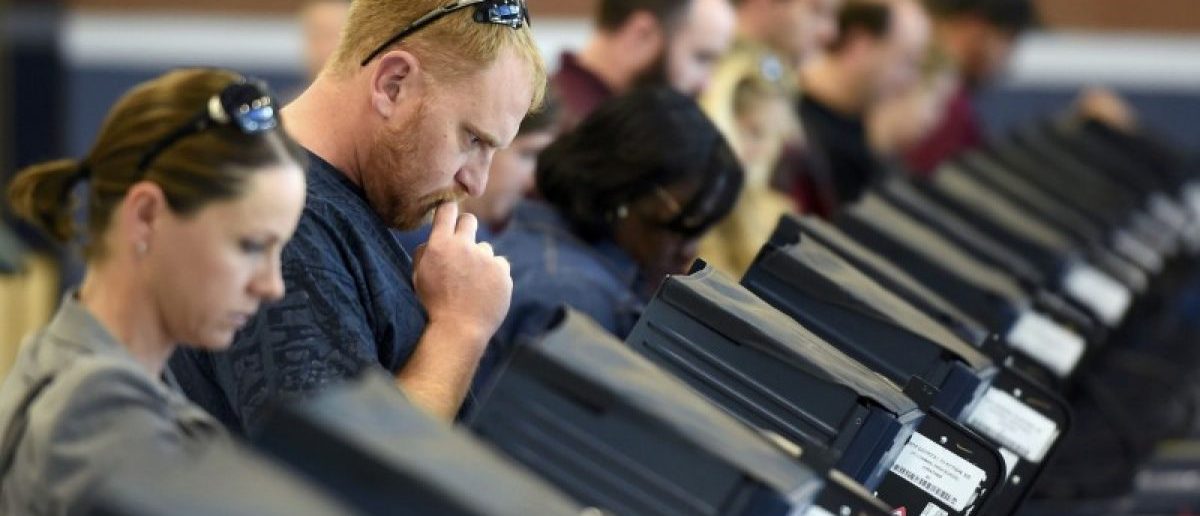
It’s too easy to hide code in large software packages. The machines initially displayed an ‘x’ next to his or her name but then, after a few seconds, the ‘x’ disappeared or there is no voter verifiability.

Perhaps the PR electoral system is the best: It encourage the main parties to propose policies with broad public appeal rather than to target small groups of voters.

Voting should be a non-partisan issue.

In the eyes of the whites, we are bobbejaans (baboons).

But one thing is clear: We could do a lot better. Open your eyes.

Is there nothing we can do? or is surveillance capitalism in the form of AI the only way to go. Afficher l'image d'origine

Any Suggestions?

Go back

Your message has been sent

Warning
Warning
Warning
Warning

Warning.


Share this:

  • Click to share on WhatsApp (Opens in new window) WhatsApp
  • More
  • Click to share on Pocket (Opens in new window) Pocket
  • Click to share on Mastodon (Opens in new window) Mastodon
Newer posts →

All comments and contributions much appreciated

  • THE BEADY EYE SAYS TRUST IS DISAPPEARING THANKS TO OUR INABILITY TO RELATE TO EACH OTHER. December 19, 2025
  • THE BEADY EYE SAYS. THE WORLD NEEDS PEOPLE GOVERNMENT NOT MONEY GOVERNMENTS. December 18, 2025
  • THE BEADY EYE ASKS WHAT ARE WE THE SAME GOING TO DO TO STOP THE WORLD BEING FUCK UP FOR PROFIT BY RIPOFF MERCHANT. December 17, 2025
  • THE BEADY EYE CHRISTMAS GREETING. December 16, 2025
  • THE BEADY EYE SAYS. TO THE NEXT GENERATION TO LIVE A LIFE WORTH WHILE YOU MUST CREATE MEMORIES. December 16, 2025

Archives

  • December 2025
  • November 2025
  • October 2025
  • September 2025
  • August 2025
  • July 2025
  • June 2025
  • May 2025
  • February 2025
  • January 2025
  • December 2024
  • November 2024
  • October 2024
  • September 2024
  • August 2024
  • July 2024
  • June 2024
  • May 2024
  • April 2024
  • March 2024
  • February 2024
  • January 2024
  • December 2023
  • October 2023
  • September 2023
  • August 2023
  • July 2023
  • June 2023
  • May 2023
  • April 2023
  • March 2023
  • February 2023
  • January 2023
  • December 2022
  • November 2022
  • October 2022
  • September 2022
  • August 2022
  • July 2022
  • June 2022
  • May 2022
  • April 2022
  • March 2022
  • February 2022
  • January 2022
  • December 2021
  • November 2021
  • October 2021
  • September 2021
  • August 2021
  • July 2021
  • June 2021
  • May 2021
  • April 2021
  • March 2021
  • February 2021
  • January 2021
  • December 2020
  • November 2020
  • October 2020
  • September 2020
  • August 2020
  • July 2020
  • June 2020
  • May 2020
  • April 2020
  • March 2020
  • February 2020
  • January 2020
  • December 2019
  • November 2019
  • October 2019
  • September 2019
  • August 2019
  • July 2019
  • June 2019
  • May 2019
  • April 2019
  • March 2019
  • February 2019
  • January 2019
  • December 2018
  • November 2018
  • October 2018
  • September 2018
  • August 2018
  • July 2018
  • June 2018
  • May 2018
  • April 2018
  • March 2018
  • February 2018
  • January 2018
  • December 2017
  • November 2017
  • October 2017
  • September 2017
  • August 2017
  • July 2017
  • June 2017
  • May 2017
  • April 2017
  • March 2017
  • February 2017
  • January 2017
  • December 2016
  • November 2016
  • October 2016
  • September 2016
  • August 2016
  • July 2016
  • June 2016
  • May 2016
  • April 2016
  • March 2016
  • February 2016
  • January 2016
  • December 2015
  • November 2015
  • October 2015
  • September 2015
  • August 2015
  • July 2015
  • June 2015
  • May 2015
  • April 2015
  • March 2015
  • February 2015
  • January 2015
  • December 2014
  • November 2014
  • October 2014
  • September 2014
  • August 2014
  • July 2014
  • June 2014
  • May 2014
  • April 2014
  • March 2014
  • February 2014
  • January 2014
  • December 2013
  • November 2013
  • October 2013

Talk to me.

Jason Lawrence's avatarJason Lawrence on THE BEADY EYE ASK’S: WIT…
benmadigan's avatarbenmadigan on THE BEADY EYE ASK’S: WHA…
bobdillon33@gmail.com's avatarbobdillon33@gmail.co… on THE BEADY EYE SAYS: WELCOME TO…
Ernest Harben's avatarOG on THE BEADY EYE SAYS: WELCOME TO…
benmadigan's avatarbenmadigan on THE BEADY EYE SAY’S. ONC…

7/7

Moulin de Labarde 46300
Gourdon Lot France
0565416842
Before 6pm.

My Blog; THE BEADY EYE.

My Blog; THE BEADY EYE.
bobdillon33@gmail.com

bobdillon33@gmail.com

Free Thinker.

View Full Profile →

Follow bobdillon33blog on WordPress.com

Blog Stats

  • 94,157 hits

Blogs I Follow

  • unnecessary news from earth
  • The Invictus Soul
  • WordPress.com News
  • WestDeltaGirl's Blog
  • The PPJ Gazette
Follow bobdillon33blog on WordPress.com

The Beady Eye.

The Beady Eye.
Follow bobdillon33blog on WordPress.com

Blog at WordPress.com.

unnecessary news from earth

WITH MIGO

The Invictus Soul

The only thing worse than being 'blind' is having a Sight but no Vision

WordPress.com News

The latest news on WordPress.com and the WordPress community.

WestDeltaGirl's Blog

Sharing vegetarian and vegan recipes and food ideas

The PPJ Gazette

PPJ Gazette copyright ©

Privacy & Cookies: This site uses cookies. By continuing to use this website, you agree to their use.
To find out more, including how to control cookies, see here: Cookie Policy
  • Subscribe Subscribed
    • bobdillon33blog
    • Join 223 other subscribers
    • Already have a WordPress.com account? Log in now.
    • bobdillon33blog
    • Subscribe Subscribed
    • Sign up
    • Log in
    • Report this content
    • View site in Reader
    • Manage subscriptions
    • Collapse this bar