The international community is a phrase used in geopolitics and international relations to refer to a broad group of people and governments of the world. It slips off the tongue of BBC correspondents and newsreaders as if it is just good old plain common sense.
The international society thinks this … believes that … is concerned about.
HOW OFTEN HAVE WE HEARD COUNTRIES APPEALING TO THE INTERNATIONAL COMMUNITY.
Are they wasting their breath?
If you were to asked me I would say that activists, politicians and commentators often use the term in calling for action to be taken in order to deflect their own countries dismal response.
We all know what is meant by the term ‘international community’, don’t we?
It’s the west, of course, nothing more, nothing less.
Just look at the global issue of climate change which could not be more International which urgently requires a common strategy with binding targets that must be defined on a planetary scale. The central driver of climate change risk is mainstream economic (development) models which aspire to carbon-intensive industrialization.
It is speculated that our global interconnectedness, instead of (only) making us more resilient, makes us more vulnerable to global catastrophe.
Solving climate change will take a global effort not an international effort.
Take Aviation pollution alone it is forecasted to triple by 2050 if there are no global policy measures are agreed.
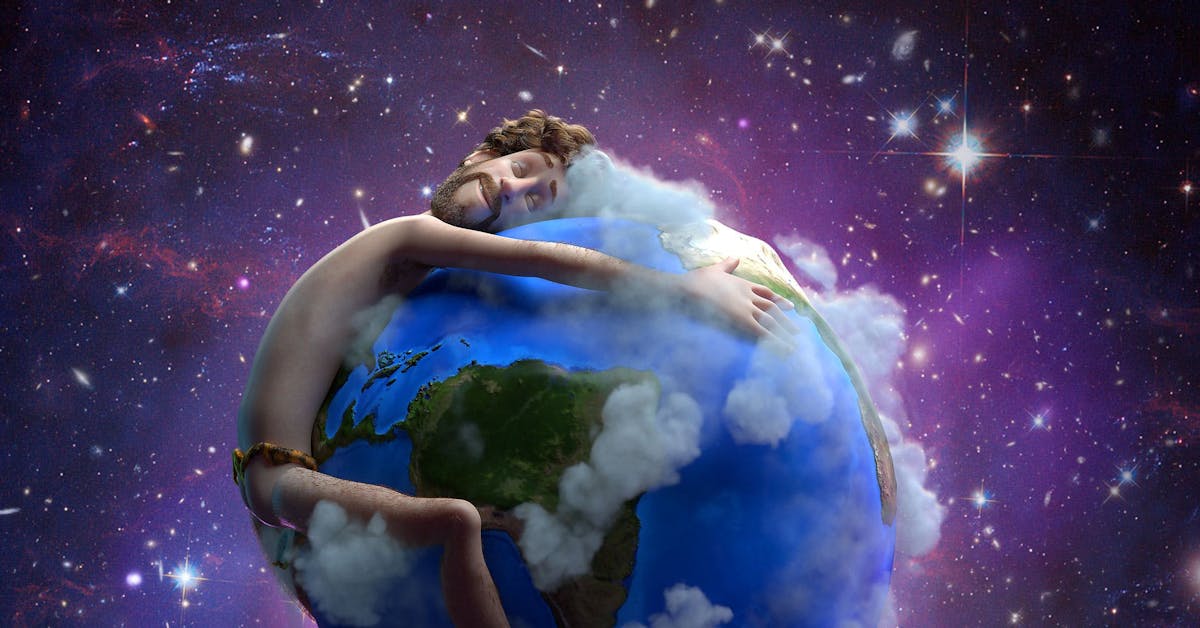
The Earth can not appeal to an International community but our world in whichno individual, and no country, exists in isolation, is now facing perhaps its final disaster.
The involvement of Muslim countries – and from contrasting traditions to those of the Arab world – would be most valuable.
It would also represent a most welcome redefinition of the “international community.
Take China for example:
In fact, the Chinese have their own definition of “international community” to counter what they see as a western-dominated and defined international community.
Take Lebanon, for example:
What did the beloved “international community” think:
Take War-torn Syria, for example:
It is one country where there are sharply divided views between the West on the one side and China and Russia on the other.
Take India, or Latin America, or Africa, or South East Asia?
What do they think?
We are never told. Nobody bothered to find out.
Take Brexit.
Everyone seems to have someone, perhaps some group of people, on whom he or she looks down or whom he or she considers inferior. That is why, for example, the west finds it almost impossible to win votes on many issues in the UN general assembly.
If we are brutally honest with yourself it comes from sheer ignorance.
There is no international community. There is merely a group of states motivated by self-interest.
The international community is a mythical joke.
There will never be one that is worthy of respect rather than a cheap joke.
What we got is a digital dictatorship in its infancy. A world run by Algorithms mostly for profit.
What is needed is an global awaking.
All Human comments appreciated. All like clicks and abuse chucked in the bin.
THE EUROPEAN UNION WAS BORN OUT OF WORLD WAR TWO ON THE 25/MARCH/ 1957 TEN YEARS AFTER IT ENDED TO CHAMPION PEACE.
By establishing a unified economic and monetary system, to promote inclusion and combat discrimination, to break down barriers to trade and borders, to encourage technological and scientific developments, to champion environmental protection.
Fifty-two years later even as it adapts to meet the evolving challenges of the modern world, with all its faults, it has delivery just that- Peace.
Let us all remember the price the world paid to agree with these shared values.
The lessons of World War II — on whose ashes the United Nations was also founded emphasizing that remembrance is a debt owed to those who had lost their lives in World War II.
(By the end of the war, the total deaths ranging from 70 million to 85 million. Civilians deaths totalled 50 to 55 million. Military deaths from all causes totalled 21 to 25 million.)
However, the ideals and spirit that inspired the creation of the United Nations and the EU remain to be transformed into reality.
It is still necessary to remember the causes and overcome the legacies of the Second World War.
To reject and condemn any attempts to rewrite history or undertake attempts to glorify Nazism or any type of fascism.
Today, tolerance and restraint continued to be considered in world policy as signs of weakness and the use of violence and sanctions were praised; the world could therefore not say that the Second World War had been properly remembered.
Indeed it is our duty to revere and preserve and reform both the United Nations and the European Union because too much was paid for them, and too much is now at stake for succeeding generations.
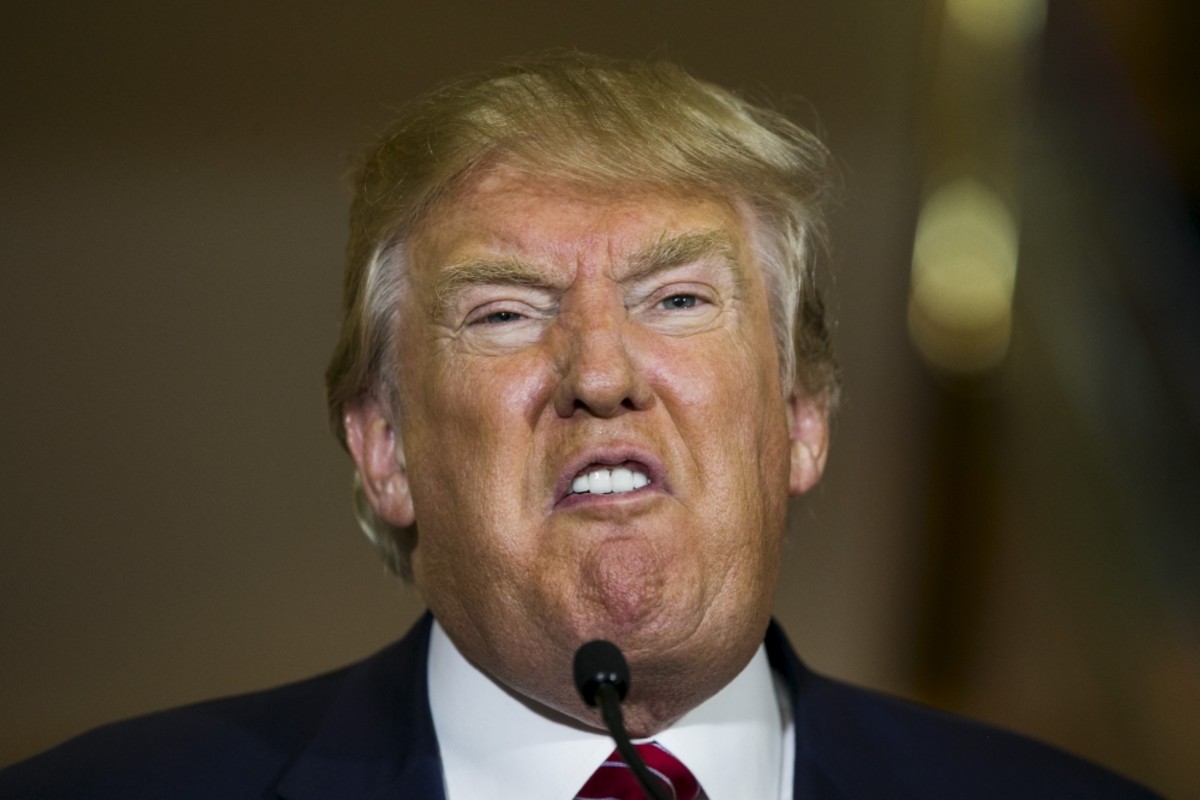
So here below for all the Donald Trumps, Brexiteers, and Populous is a Speech that tells the TRUTH.
All human comments appreciated. All like clicks and abuse chucked in the bin.
We live in a world where consumerism is more important than needs.
It overshadows all of our human activities moving desires to the forefront of any aspirations of democracy.
One can ask how has this happened?
The answer is staring us in the face there is no need to look further than free-market capitalism which has married itself to democracy.
Edward Bernay’s its creator (with the help of President Roosevelt, and his uncle Fraud applied the propaganda of war to the propaganda of peace) at the World Fair in 1893 consecrated the marriage of passive consumerism with the market by Public relations, thus engineering the consent of the masses.
As a result of to this day, we are unable to make decisions on a rational base.
So what!
Just look at the state of the world today. The fourth Industrial revolution.
It makes for dismal reading.
There have been over 250 major wars in the world since World War II.
There are over 35 major conflicts going on in the world today.
There are approximately 30,000 nuclear warheads in the world today.
Current global military spending is approximately $800 billion per year; more than the total annual income of the poorest 45% of the global population.
An estimated 27 million people are enslaved around the world, including an estimated
20 million people held in bonded labour1 billion people – 1/3rd of the world’s labour force, is unemployed or underemployed. At least 700,000 people annually, and up to 2 million, mostly women and children, are victims of human trafficking worldwide (a modern form of slavery.) About 246 million, or 1 out of 6, children ages 5 to 17 worldwide are involved in child labour.
Worldwide, a quarter of all women are raped during their lifetime.
Torture occurred in 125 countries.
There are over 45 million refugees and internally displaced people in the world.
800 million people lack access to basic healthcare. 17 million people, including 11 million children, die every year from easily preventable diseases and malnutrition.
800 million people are hungry or malnourished. Nearly 160 million children are malnourished worldwide. 11 million people die every year from hunger and malnutrition.
2.4 billion people lack access to proper sanitation.
Over 100 million people live in slums.
275 million children never attend or complete primary school education. 870 million of the world’s adults are illiterate.
The richest 1% of the world’s people earned as much income as the bottom 57%.
The wealth of the world’s 7.1 million millionaires ($27 trillion) equals the total combined annual income of the entire planet.
Africa alone spends four times more on repaying its debts than it spends on health care.
Half of the forests that originally covered 46% of the Earth’s land surface are gone.
Between 10 and 20 per cent of all species will be driven to extinction in the next 20 to 50 years. Up to 47% of the world’s plant species are at risk of extinction.
60% of the world’s coral reefs will be gone.
Desertification and land degradation threaten nearly one-quarter of the land surface of the globe. Over 250 million people are directly affected by desertification, and one billion people are at risk.
Global warming is expected to increase the Earth’s temperature by 3C (5.4F) in the next 100 years, without reaching a tipping point – resulting in multiple adverse effects on the environment and human society, including widespread species loss, ecosystem damage, flooding of populated human settlements, and increased natural disasters.
All of this is only the tip of the iceberg.
The scale and nature of the world’s problems demand a full response; and the need for more unification and intensification of efforts to solve the world’s most serious and pervasive problems.
What are we doing about it since 1893?
Poured trillions in to aid to created debt.
Manufactured a financial crash.
In each country, the tendency is to blame “our” history, “our” populists, “our” media, “our” institutions, “our” lousy politicians.
When we discuss “politics”, we refer to what goes on inside sovereign states; everything else is “foreign affairs” or “international relations” – even in this era of global financial and technological integration.
its inability to withstand countervailing 21st-century forces, and its calamitous loss of influence over human circumstance.
Turning products into environmental false benefits with the loss of control over money flows.
Watching on as democracy being digitised. After decades of globalisation, our political system has become obsolete by introducing anxious volatility into the bastion of European stability.
Allowing unregulated algorithms to plunder the world for profit.
Turn a blind eye 65 million refugees – a “new normal”
Even if we wanted to restore what we once had, that moment is gone.
But to acknowledge this is to acknowledge not just the end of politics itself the end of life. Global capital and technology will rule us without any kind of democratic consultation, as naturally and indubitably as the rising oceans.
If we wish to rediscover a sense of political purpose in our era of global finance, big data, mass migration and ecological upheaval, we have to imagine political forms capable of operating at that same scale.
There is every reason to believe that the next stage of the techno-financial revolution will be even more disastrous for national political authority.
Big data companies (Google, Facebook etc) have already assumed many functions previously associated with the state, from cartography to surveillance.
With them taking over the management of all life and resources – this is a more likely vision for the future than any fantasy of a return to social democracy.
The assault on political authority is not a merely “economic” or “technological” event. It is an epochal upheaval.
What if anything can be done.
It is clear to me and by now should be clear to all of us that Capitalism is going underground. Today’s great engines of wealth creation are distributed in such a way as to elude national taxation systems (94% of Apple’s cash reserves are held offshore; this $250bn is greater than the combined foreign reserves of the British government and the Bank of England), which is diminishing all nation-states, materially and symbolically.
It is clear to me that the nation state’s rigid monopoly on political life is becoming increasingly unviable.
It is clear to me that oppressed national minorities must be given a legal mechanism to appeal over the heads of their own governments.
It is clear to me that the United Nations is effectively a gossip shope with vetos and is in needs of reform.
It is clear to me we need to find new conceptions of citizenship. Why, because the essential horizons of life on this planet are already determined at birth.(see previous posts)
It is clear to me that if democracy is supposed to give voters some control over their own conditions, for instance, should a US election not involve most people on earth?
It is clear to me that we are spending trillion trying to get off the earth when we should be spending trillions to try to stay on what is left of the earth.
It is clear to me that everything is linked.
It is time to think about how that capacity might be built.
It is time to wake up, to be conscious and take the needed steps to make a change. Stop pretending like you don’t know. Stop thinking its not going to happen in your lifetime. It will affect you and most of all your children and grandchildren. Do you still want to remain passive or pretend it’s not your problem?
What is clear to you?
They say a picture is worth a thousand words so I leave you with this video.
On viewing it.
It is beyone clear that our future generations will not thank us for their inheritance.
All human comments appreciated. All like clicks and abuse chucked in the bin.
One person, one vote is often a rallying cry for democracy activists.
Everyone should have representation.
Equality should be sacrosanct in a democracy should it not or is it?
But should everyone have equal representation?
THE 2019 EUROPEAN ELECTIONS RESULTS ARE IN AND BECAUSE OF THE RESULTS LITTLE WILL CHANGE EXCEPT THE SQUABBLING WILL BE OFTEN AND MORE INTENSE.
Unequal votes are a result of history.
Inequality between votes may also not be built into the system but a result of the balance of parties within the system.
Under the English system of first past the post a very few voters have a disproportionate influence due to being swing voters in swing constituencies.
The conduct of election and referendum campaigns in the UK is letting voters down. Trust in what politicians say—and in how journalists report it—is at rock bottom.
If British residents aren’t equal, then nor are their representatives.
So should democracies stick the principle that everyone should have equal weight or compromise if for politics?
In a simple majority system of one vote = one person, the outcome is easy to conclude and scrutinise for fairness and election rigging.
Therefore one vote = one voice is also a very practical way to run a democracy.
Or is it?
There are certain reasons to reasonably exclude someone from the voting process – breaking laws is arguably one of these reasons.
Should a vote have weight based on someone’s contributions to their community, and society as a whole? If one has done good things, their vote should be more important than that of a selfish person who does not contribute in a positive way.
Should a Party with no members, no Manifesto, lead by a self-elected leader from a previous Party that spread Falsehoods be allowed to take up its seats in The European Parlement to effectively try to destroy all it stands for at the cost of the taxpayer?
Yes.
Should a party that is in power be allowed to select the leader of a country without a general election?
Yes.
However, we should be striving to deepen our democracy, not just to protect the democracy that we already have. Voters deserve much better. We should be tackling misinformation, promoting quality information, and encouraging open, respectful discussion among citizens.
Almost any misleading claim can be expressed in a way that isn’t strictly false, so a ban on falsehoods would change little. There are also dangers: for example, populist campaigners could “weaponise” adverse rulings to claim victimisation by the “establishment.”
The solution is, for example, Ireland has recently blazed a new path in how to prepare for referendums, convening a group of randomly selected citizens—a “citizens’ assembly”—to meet over several weekends to learn, deliberate, and reach recommendations.
Why is this a solution because of the challenge arising from the digital revolution that has transformed political communications in the last decade.
This allows the citizens of a country to have a unified clear voice on what is to be voted on.
Now is the time to ensure that how we conduct election and referendum campaigns is designed with voters at its heart.
All human comments appreciated. All like clicks and abuse chucked in the bin.





 bobdillon33blog