• About
  • THE BEADY EYE SAY’S : THE EUROPEAN UNION SHOULD THANK ENGLAND FOR ITS IN OR OUT REFERENDUM.

bobdillon33blog

~ Free Thinker.

bobdillon33blog

Tag Archives: Visions of the future.

THE BEADY EYE SAY’S: WE ARE NOW LOOKING AT A NEW REVOLUTION CALLED THE CLOUD.

21 Tuesday Nov 2017

Posted by bobdillon33@gmail.com in Artificial Intelligence., Capitalism, Google, Google it., Google Knowledge., HUMAN INTELLIGENCE, Humanity., Innovation., Our Common Values., Post - truth politics., Technology, The cloud., The Future, The Internet., The Obvious., The world to day., Unanswered Questions., Wealth., What Needs to change in the World, Where's the Global Outrage., WiFi communication.

≈ Comments Off on THE BEADY EYE SAY’S: WE ARE NOW LOOKING AT A NEW REVOLUTION CALLED THE CLOUD.

Tags

Artificial Intelligence., Capitalism and Greed, Globalization, The cloud., Visions of the future.

( A fifteen minute read.)

We all know that most if not all of our planets

PROBLEMS are caused by our actions, and can only be

resolved by us changing these actions.

The scientific innovations and new technologies thus

generated seem limitless, as they unfold everywhere

and on all kinds of fronts. It is the wild west where

rules are made up as we go and hope for the best.

There is no central body GOVERNING the use of the

cloud.

In a constantly evolving world transformed by cloud, social and mobile technologies, we’ve become accustomed to the idea of storing our personal data in the cloud, whether it’s via Dropbox, the iCloud or even Facebook.

as confusing as it may be we are never far from a new

era of revolt.

But this really only tells half the story. So far cloud computing has, for the most part, been used to speed up and reduce the costs of existing processes.

However we’re moving into what is becoming known as the mobile/cloud era. Cloud computing is set to impact not only on the way we do business, but how we live or lives.

Our thinking is being shaped by several key areas:

Applications we’re seeing at the moment really are the tip of the iceberg and, as the technology matures further, who knows how we may be using the cloud in even a year from now.

Smart cities are growing ever closer to becoming the norm as organisations begin to realize that the cloud can do so much more than simply speed up or reduce the cost.

Eight years from now we are likely to see low-power processors crunching many workloads in the cloud, housed in highly automated data centres and supporting massively federated, scalable software architecture.

So far we know that the following things are likely to happen:

There will be larger clouds. Some of these clouds will link to others. Many services that businesses consume will sit on top of clouds. Software will be much, much larger.

As with any technology, a lot of the true problems could come in implementation. Who will be the police? Who will be the judge? Who will be the jury for penalties?

We don’t have a clue what the procedures, policies and infrastructure really are.

It is said that changing the world is a noble, innate, haunting idea that, when flirting with it, ends up becoming as beautiful as it is dangerous.

Experts estimate cloud apps will account for a whopping 90 percent of worldwide mobile data traffic by 2019.

Cloud computing brings with it a whole new set of applications that will sit on multiple tiers of cloud infrastructure.

All the cloud promises is that you will have to turn over your security interests to a third-party in the clouds, and secondly that you are going to turn over your ability to do ANY real work to some third-party software provider in the cloud and become totally dependent on an internet connection to even work on the most simple of application based tasks.

Cloud data centers will “become much like a breathing and living organism with different states.

They will be differentiated by their infrastructure capabilities into a whole new set of classes.

So where are we.

How are we going to operate them efficiently?

Will they have standards and full technical disclosure?

The answer to both questions is that it is highly unlikely will we see either.

What we will see is a pitched battle fight for dominance with us reduced to an “inside-out” perspective. 

For instance, “The more the president [of the United States] scandalizes the world with Tweets, rather than embracing the future together with minimal barriers, we see the Western world retreating and starting to look inwards.

Technology has brought meaning to the lives of many technicians, but it is also destroying what it left of any world community spirit, with the smart phone embodying this state of affairs.

Technological advances in the fields of robotics, artificial intelligence or augmented reality are upset the global economy. The ability to acquire new knowledge will be worth more than the knowledge already learned, with people becoming brand-proof, it will become very difficult to exist the devil’s boots that don’t creak.

Behold the Cloud.

Every revolution up to now has had a common thread with the resulting conflicts largely boiling down to pervasive economic inequality.Résultat de recherche d'images pour "pictures of the cloud computer"

The Cloud revolution however is wireless dogma, not a guide for action, accepting connections and doling out information anywhere, anytime if you have the money to pay.  

The Internet revolution of tomorrow with the cloud as it’s center of power, will be the content revolution ,that does not bode well for the state of the world to-day and that could be inviting the collapse of society as we know it.

We are heading for a unilateral and silent war, which I think its going to be horrendous.

The difficulty will not come from governments that will be held hostage to a communication that it does not control but from profit seeking AI that feeds off the cloud.

A whopping 90% of businesses already use at least one cloud computing service.

The main players, Amazon, Google Drive, Apple Cloud, Microsoft, with revenue estimated to be in trillions by 2020,  know this.

It’s now totally the way of the future.

The cloud it is not just a metaphor for the internet it is more than a motor, it is a fuel that is constantly renewed, tirelessly feeding self learning algorithms.

The crisis of technological capitalism opens the prospect of new revolutionary waves everywhere.

Résultat de recherche d'images pour "pictures of revolution"

Many economists extol the fact that “It’s very good for the economy” but this is not true.  The world in which Beethoven grew up was in turmoil. It was a world of wars, revolutions and counter-revolutions – just like ours today.

This is not a war in the traditional sense of the term: it is and will be more and more a confrontation between belligerent technological armies; it is a war waged by the “civilized world”, firmly entrenched in its positions, against hundreds of millions of deprived civilians.

The divide between rich and poor started with the domesticate plant and animals, which lead to farming – based societies resulting in land ownership. It became easy to acquire wealth and to pass it down from generation to generation, till we arrived to-day with half of the world’s wealth owned by 1%.

We have never being able to decrease inequality peacefully and we never will be able to do so in the future with self learning profit seeking algorithms.

However we are now looking at a new revolution that will be governed by time in the cloud.

Why?

Because Revolutions are voluble, and the cloud is highly suited to exploiting  that volubility.

Because capitalism is and always will be set up for consumerism profit, to acquire wealth for the few not the many.

The frenetic pace of change has caused enormous social disruption as entire industries and employment have migrated to lower cost centers in Asia and other developing regions.

Throughout the course of human history, wealth, or the lack thereof, has driven social unrest.

Résultat de recherche d'images pour "pictures of revolution"

And so while the incredible benefits of globalisation have lifted many from poverty, profit seeking AI are going to create alienation and isolation in those areas that have lost out.

All new inventions and technologies have one thing in common: 

They derive their strength from digital and information technologies. All innovations are made possible and are enhanced by digital power. That power is in the Cloud.

Similarly, without computing power, no artificial intelligence and, without it, no sophisticated robots.

To live this transition means first to become aware of current and future changes, and to consider their impact at all levels of society as a whole.

However, the reasons to rise up are not lacking: economic precariousness, multiplication of political scandals, crisis of legitimacy of democratic institutions are all ringing warning bells.

Globalisation didn’t create multinational corporations but those that can take advantage of the changes have and will enriched themselves beyond imagination. While swathes of society will find themselves left behind, forced to compete for jobs at ever lower wages.

The free flow of money and the demolition of trade barriers fostered their growth and delivered them the political power to challenge the fundamental ideals of democracy.

The planet can deal with human demands on it at only 30 percent of what we take from-dump on it now (anyone who thinks that we can double our demands on the planet and people every 12-20 years in perpetuity or that technology will save us should be excluded from serious discussions, I think).

The world has limited resources and cannot go on consuming and squeezing people into every available space. That sense of powerlessness now threatens to overwhelm the positives of globalisation and free trade; such as cheaper consumer goods and higher global living standards.

Forcing nations into a tax rate race to the bottom.

And then there’s Donald Trump, who takes venality to an entirely new level. For all the good it has done, however, it has come at a significant cost, particularly in the developed world. Today, this translates into a crisis of political authority: we are not only frustrated by the incapacity of politicians to solve our problems, but we also question their legitimacy to act on our behalf since we discover, in certain situations, more capacities to act and find solutions than they do.

Tomorrow, this may result in an awareness that citizens can, in some cases, do without policies to make politics.

Résultat de recherche d'images pour "pictures of revolution"

There are two major threats to us all. Climate Change and The Cloud.

If we do not wake up and demand change we will all indeed be living with zero intelligence.

All human comments appreciated. All like clicks chucked in the bin.

← Back

Thank you for your response. ✨


Share this:

  • Share on WhatsApp (Opens in new window) WhatsApp
  • More
  • Share on Mastodon (Opens in new window) Mastodon

THE BEADY EYE LOOKS AT THE HIDDEN COST OF TECHNOLOGY.

25 Wednesday Oct 2017

Posted by bobdillon33@gmail.com in Algorithms., Artificial Intelligence., Capitalism, Facebook, Google, HUMAN INTELLIGENCE, Humanity., Our Common Values., Privatization, Sustaniability, Technology, The Future, The Internet., The Obvious., The world to day., Unanswered Questions., What Needs to change in the World, Where's the Global Outrage.

≈ Comments Off on THE BEADY EYE LOOKS AT THE HIDDEN COST OF TECHNOLOGY.

Tags

Artificial Intelligence., Big Data, Capitalism and Greed, Technology, The Future of Mankind, Visions of the future.

( Twenty minute read)

There is no denying that the benefits of technology are needed but what are the downsides costs.

As the demand for up-to-date technology increases, we need to reevaluate how we measure the hidden cost of the TECHNOLOGICAL REVOLUTION.

It will not be us picking up the tap, but the yet to be born that will have to pay, living in a world that is detached from what makes it all possible The Earth.

Technology is now deeply embedded within society, so not planning for the future of technology is by far one of the most costly mistakes we will ever make, in more ways than one.

At this point it is impossible to say with any authority what exactly the cost will be.

Some technologies are unfolding now; others will take a decade or more to develop, but you should know about all of them right now. In the not-too-distant future, we will be able to print human organs, but not the brain.

According to Stephen Hawking, “Humans are entering a stage of self-designed evolution.”Image associée

That may be so, but technology is more than just fusing the physical and digital worlds.

Marked by emerging technology breakthroughs in a number of fields, including robotics, artificial intelligence, nanotechnology, quantum computing, biotechnology, the Internet of Things, 3D printing, autonomous vehicles, face and voice recognition and algorithms learning from other algorithms.

With wireless connecting brain-reading technology directly to electrical stimulators on your body it has the potential with more items moving from physical to virtual to decouple us from reality. Wireless communications is already dominating our everyday lives

It is already impacting all disciplines, economies, and industries, our politics, improving medicine, influencing our culture.

Apart from the obvious technology is also in the process of changing democracy, moving capitalism underground, assisting conflicts, packaging natural resources, destabilizing society, disrupt the way governments deliver services to citizens, just to mention the tip of the ice berg.Résultat de recherche d'images pour "pictures of future earth"

.It will not be long before we will all have DNA maps from birth.

However with the arrival of Quantum computers the way we use technology will be reshape, along with the societies we live in.

As soon as two to five years from now, such systems or time on such systems are likely to be for sale.

There are probably plenty more uses for quantum computers that nobody has thought up yet.

However you may rest assured that the ordinary citizens (or even governments) won’t be able to own their own quantum computers for a long time, if ever, but I can imagine large companies renting time (measured in fractions of seconds) to whoever needs their services.

With this in mind the race has well started to create monopolies of knowledge Google, of Social Media Society – Facebook, consumerism E Bay, Amazon, Alibaba, of Finance – Pay Pal, of Communication – Apple, of Biotech Thermo Fisher Scientific, of cloud business – Microsoft -IBM, Oracle,  of computer microchips to data center-makers-Intel, to name just a few.

Here are a few of their Mission statements:

Facebook: “To give people the power to share and make the world more open and connected.”

Amazon: “To be Earth’s most customer-centric company, where customers can find and discover anything they might want to buy online, and endeavors to offer its customers the lowest possible prices.”

Pay Pal: “To build the Web’s most convenient, secure, cost-effective payment solution.”

Alibaba: “To make it easy to do business anywhere.”

Google: “To organize the world’s information and make it universally accessible and useful.”

Microsoft:  “To enable people and businesses throughout the world to realize their full potential.”

United Nations: “The maintenance of international peace and security.”

Medecins Sans Frontieres:   “To help people worldwide where the need is greatest, delivering emergency medical aid to people affected by conflict, epidemics, disasters or exclusion from health care.”

Non mention the health of the EARTH?

Disruptive technology is, by its very nature, unpredictable but we’ll see more intelligence built into communication. With always-on connectivity, social networking has the power to change cultures, as we saw with the Egyptian Revolution, which led to the Arab Spring.

The results of changing the world are often complicated and unpredictable.

With the technology of smart phones social influences will continue to move rapidly between cultures.

In the broadest sense, technology extends our abilities to change the world: to cut, shape, or put together materials; to move things from one place to another; to reach farther with our hands, voices, and senses. We use technology to try to change the world to suit us better. The changes may relate to survival needs such as food, shelter, or defense, or they may relate to human aspirations such as knowledge, art, or control.

As computational power rises exponentially, not linearly, so does the rate of change — and that means the next 10 years should pack in far more technological change than the last 10.

It is my prediction that all of it will end up in the cloud.

Why?

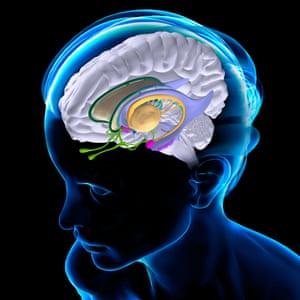
Because it is the dumb, novelty-seeking portion of our brains  (driving the limbic system that induces this feeling of pleasure, not the planning, scheduling, higher-level thought centers in the prefrontal cortex) that is driving technology to tap into our personal sensors.

Make no mistake: emails, Facebook and Twitter-checking constitute a neural addiction.

Already, the cloud is powerful enough to help us communicate through real-time language translation.

When is a profit not a profit? When it turns into a monopoly exploiting all around it.

Just like Capitalism technology it is unable to regulate itself and with the arrival of Quantum computers it will make everything and everybody beholden to technology, endangering  much of the openness that we now enjoy online.

So I one again ask the question:

Is it time to regulate Algorithms that have profit as their end targets and is it time that we demanded an open data website that would allow anyone to find information on a host of county government programs, from budget information to welfare data to crime statistics.

This would be linked to two powerful benefits.

First, it makes government more transparent and understandable at a time when trust in the public sector has plummeted.

Second, it has the potential to generate significant economic benefits impacting budget issues, public safety and education, transparency and economic value for tax payers money.

The bottom line is that government data can be extremely valuable for public consumption, but only if the policies behind the data are well thought out and the related costs are affordable. For instance, would a map of society reveal awkward disparities in how rich and poor neighborhoods receive public funding?

Many governments are running on old, outdated systems, making them vulnerable to cyber attacks.

I believe that such an open based  data website would benefit from the collective wisdom of the community, simplify how citizens and businesses interact with the state.

However IT WOULD HAVE THE unexpected startup costs if data is kept in a legacy computer system that requires reformatting; quality-related costs to keep open data fresh and up-to-date; legal costs to comply with open data legislation; liability costs in case something goes wrong, such as publication of nonpublic information; and public relations costs that can occur when a jurisdiction generates bad press from open data about poor performance metrics or workforce diversity problems.

That apart present technological advances and information overlays will change how we live in significant ways.

We will have a so-called “smart grid” where all of our appliances are linked directly to energy distribution systems, allowing for real-time pricing based on supply and demand. Such a universal method for identifying someone energy requirements becomes much harder when you no longer have a central authority to figure out how to link together the different systems.

It will not be like self-driving trucks with lidar system guidance run by algorithms or self-driving cars.

Who is responsible when the self drive truck or car kills someone. Try bringing a self thought Algorithm to court.

Try suing an Face-detecting systems for wrong identification or payment.

Then we have:  Gene-therapy.

Biology’s next mega-project will find out what we’re really made of.

Three technologies are coming together to make this new type of mapping possible.

The first is known as “cellular microfluidics.” Individual cells are separated, tagged with tiny beads, and manipulated in droplets of oil that are shunted like cars down the narrow, one-way streets of artificial capillaries etched into a tiny chip, so they can be corralled, cracked open, and studied one by one.

The second is the ability to identify the genes active in single cells by decoding them in superfast and efficient sequencing machines at a cost of just a few cents per cell. One scientist can now process 10,000 cells in a single day.

The third technology uses novel labeling and staining techniques that can locate each type of cell—on the basis of its gene activity—at a specific zip code in a human organ or tissue.

Then we have, the relentless push to add connectivity to home gadgets is creating dangerous side effects that figure to get even worse.

Then we have, Botnets are used to commit click fraud.

Google ads pay a site owner according to the number of people who click on them. The attacker instructs all the computers on his botnet to repeatedly visit the Web page and click on the ad. Dot, dot, dot, PROFIT! If the botnet makers figure out more effective ways to siphon revenue from big companies online, we could see the whole advertising model of the Internet crumble.

Then we have, hackers breaking into computers over the Internet and controlling them en masse from centralized systems. The problem is getting worse, thanks to a flood of cheap webcams, digital video recorders, and other gadgets in the “Internet of things.”

Then we have, reinforcement learning.  Reinforcement learning may soon inject greater intelligence into much more than games.Résultat de recherche d'images pour "pictures of future earth"

SO WHAT NOW?

What are the implications to human development and the diversity of life on earth? What opportunities are there to reduce risks and vulnerabilities, enhance resilience, and create transformations to prosperous and equitable futures?

Science can provide only some answers; it is not a panacea for all problems. We need to also make personal, economic, social, and political changes, whatever the cost will be.

Reinforcement-learning algorithm can learn from collated data and experiment in simulation to suggest, say, how and when to operate the cooling systems.

Algorithms don’t know the Meaning of Environment.

They have however so concept of the  “The term ‘environment’  it refers to all external conditions and factors that affect living organisms. Here external factors mean all the things around us such as air, water, light, animals, humans etc.

Algorithms are shadow boxers of yesterday all because technology trends can affect the bottom line of business. 

Although big data algorithms hold great promise, they should still be approached with caution and skepticism.

For instance Algorithms should not be relied upon to ration medical care until the technology has substantially matured.

If we ignore what is happening there will be more riots, and increasing divisions along economic, religious and ethnic lines with Robots completely replacing humans in the workforce.

IT IS TIME FOR THE OWNERS ALL PROFIT SEEKING ALGORITHMS TO BE REGISTERED WITH A COPY OF THE WORKING CODE.  NO PROFIT EARNING ALGORITHMS SHOULD BE GRANTED A PATIENT.

All human comments appreciated all like clicks chucked in the bin.

← Back

Thank you for your response. ✨


Share this:

  • Share on WhatsApp (Opens in new window) WhatsApp
  • More
  • Share on Mastodon (Opens in new window) Mastodon

THE BEADY EYE SAYS: IT IS TIME TO CUT THROUGH THE RHETORIC SURROUNDING SUSTAINABILITY.

06 Friday Oct 2017

Posted by bobdillon33@gmail.com in Sustaniability

≈ Comments Off on THE BEADY EYE SAYS: IT IS TIME TO CUT THROUGH THE RHETORIC SURROUNDING SUSTAINABILITY.

Tags

Capitalism vs. the Climate., Extinction, Sustainability, Technology versus Humanity, The Future of Mankind, United Nations, Visions of the future.

( A Ten minute read:  That could change the world and all of us that live on it.)

For millions, 2017 is a year of unrelenting misery and fear, as governments and armed groups abused human rights in a multitude of ways.

Large numbers of people continued to flee conflict and repression in many regions of the world.

While billions of dollars are spent every year by the world’s space agencies, but does this money bring us any benefit, or should we pull the plug and spend it elsewhere?

Canada: $488 million, India: $1.1 billion, China: $1.3 billion, Italy: $1.8 billion, Germany: $2 billion, Japan: $2.4 billion, France: $2.5 billion, Europe: $5.5 billion Russia: over $7.7 billion, United States: $18 billion.Countries Who Spend The Most On Space Exploration

Some of these figures may seem mind-blowing when you take a pragmatic look at the current state of the global.

The standard list of threats/factors affecting the globe is getting bigger and bigger not smaller and smaller. 

Why?

I suppose the simple answer is that us humans are incapable of acting as one, and if we do manage to do so its only in small groups in the short-term. For every action there is an equal and opposite criticism.

Combine this with conflicting interests and you have a concoction of good doers all competing for limited funds to address what ever.

The problem is man is said to have evolved from monkeys and apes…but we still have monkeys and apes.

Take for instance Climate change which is now emerged as one of the most serious threats impacting on universal values.

With global environmental changes locked into our future you would think as intelligent humans we would act as one to avoid the obvious consequences.

Our best efforts to do us fall by the way side because of, not because what is obvious, but because of the costs to profit.

Hypocrisy is the Vaseline of political intercourse.

We are left with a world that is represented by what we call The United Nations.

Country names and little flags of identity rather than one unified group called humans. Perhaps if they we removed prior to passing any resolution’s that effect the Glob we might see humans acting as one.

But this will achieve nothing unless we get Capitalism to do the right thing when nobody’s watching.Résultat de recherche d'images pour "pictures of earth from space probes"

So here is a solution:

Why not impose an International legal world aid commission on all activities that produce profit for profit sake. (See previous posts)

AND.

While we are at it why not impose a 0.0005% commission on all tweets, on all smart phone inquirers, on all internet purchases, on all social media posts.

Either of the above would produce a perpetual fund of billions to tackle the coming natural disasters, the coming technology inequality, the malnutrition that is now the underlying cause of nearly half of all under-5 deaths worldwide. The list is endless.

There is no simple solution to creating a more equitable world.

The world community has accepted the need to limit the increase in the earth’s temperature to 2°C and initiate changes to achieve this objective.

This will require the world to move away from burning fossil fuels and effectively reach a stage of zero carbon emissions. This will require a radical change in the way humanity lives as we move forward.

The earth has limited resources. Also, there are limits on the renewability of some of its renewable resources. Humanity is using substantially more resources than the earth can renew. We all need to change the way we live to achieve a proper balance.

In order to face the challenges posed by these dual issues, the world has to act in unison.

TAKE TACKLING CLIMATE CHANGE. ( See previous posts)

There are a number of disparities to be addressed. There is a very wide range of per-capita emissions—generally, the wealthy countries having higher per-capita emissions.

There is a perception among the emerging economies that the world has reached the current situation due to the past emissions by high emitters and that they should be willing to share a higher cost of moving to low-carbon economy.

Further, different regions will be affected differently—some may not feel the consequences; at least immediately. Such countries may not want to join the worldwide efforts in a meaningful way. Getting all countries to follow a common path will be the biggest challenge in the years to come.

Doing nothing will not be an option.

Sustainability is defined as a requirement of our generation to manage the resource base such that the average quality of life that we ensure ourselves can potentially be shared by all future generations. … Development is sustainable if it involves a non-decreasing average quality of life.

For all our sake’s we need to get a grip.

We must deal with problems on Earth first, before we can leave it.

Sustainability is not “about” the integration of ecological, social and economic issues, nor is it “about” widespread consultation nor is it “about” improving quality of life.

It’s about maintaining or sustaining something called Earth.

Sustainability must be a destination, not just a journey. 

It is worth noting that treating a sustainable state as a destination doesn’t mean that society cannot revise or refine its idea of what sustainability is at a future date.

Even with everyday destinations an initial intention to go to the fruit and veg shop doesn’t preclude a later decision to go to the bank as well or to go to the supermarket instead!

Space and the Higgs-Boson can wait, when every day, 17,000 children die before reaching their fifth birthday.

A future with no fresh water, clean air, energy and food, you can rest assured no one will remember the Internet, or artificial Intelligence.

So what price are we willing to pay for knowing that in the future, humanity can be saved because there are other planets out there capable of sustaining life?

Our priority surely is to take care of our planet before we go roaming around others.

For things that don’t matter we can please ourselves how we approach the sustainability effort (ie. as a destination, journey or both, or an issue of total disinterest!).

O! By the way if we did create a World Aid Commission there would be no need to stop any exploration. Today, both Voyager 1 and 2 are the farthest man-made objects in space.

Our message in a bottle was in the form of a gold-plated sonograph record containing compilations of music, images and greetings best representing Planet Earth, affixed on the outer surfaces of both the Voyager spacecrafts, if we are careful long before, “A billion years from now, when everything on Earth we’ve ever made has crumbled into dust, when continents have changed beyond recognition and our species is unimaginably altered or extinct, the Voyager record will speak for us.”

Carl Sagan’s declaration above without a doubt holds true, not just on the frailty of the ‘pale blue dot’ we call home, but also on the life it sustains. 


All human generated comments appreciated, all like clicks chucked in the Bin

← Back

Thank you for your response. ✨


Share this:

  • Share on WhatsApp (Opens in new window) WhatsApp
  • More
  • Share on Mastodon (Opens in new window) Mastodon

THE BEADY EYE ASKS: WHY DOES THE UNITED NATIONS TOLERATE SPEECHES THAT ARE IN BREECH OF ITS CHARTER.

22 Friday Sep 2017

Posted by bobdillon33@gmail.com in Artificial Intelligence., Climate Change., HUMAN INTELLIGENCE, Nuclear power., The Future, The world to day., Unanswered Questions., United Nations, What Needs to change in the World, Where's the Global Outrage., World Leaders, World Organisations., World Politics

≈ Comments Off on THE BEADY EYE ASKS: WHY DOES THE UNITED NATIONS TOLERATE SPEECHES THAT ARE IN BREECH OF ITS CHARTER.

Tags

Artificial Intelligence., Climate change, Greed, Inequility, The Future of Mankind, THE UNITED NATIONS, United Nations, Visions of the future.


 HomeUNITED NATIONS CHARTER.

Chapter I

                            PURPOSES AND PRINCIPLES

  • To maintain international peace and security, and to that end: to take effective collective measures for the prevention and removal of threats to the peace, and for the suppression of acts of aggression or other breaches of the peace, and to bring about by peaceful means, and in conformity with the principles of justice and international law, adjustment or settlement of international disputes or situations which might lead to a breach of the peace;
  • To develop friendly relations among nations based on respect for the principle of equal rights and self-determination of peoples, and to take other appropriate measures to strengthen universal peace;
  • To achieve international co-operation in solving international problems of an economic, social, cultural, or humanitarian character, and in promoting and encouraging respect for human rights and for fundamental freedoms for all without distinction as to race, sex, language, or religion; and
  • To be a center for harmonizing the actions of nations in the attainment of these common ends.

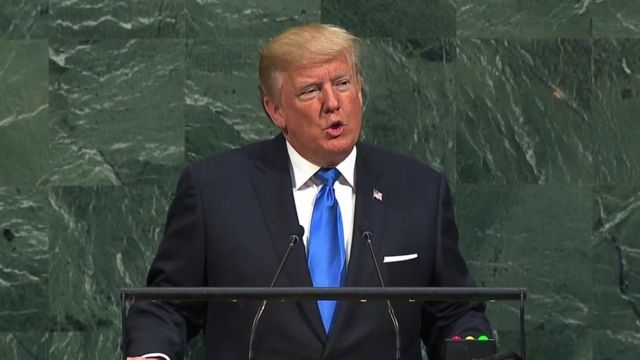
The Rt Hon Theresa May MPRésultat de recherche d'images pour "Donald trump recent speech at the un"

A charter represents a document that describes a project, its rationale, its goals and its participants. The purpose of a charter aims at aligning the expectations of all the contributors so that their energy focuses on the project’s priorities.

The Charter is not to be confused with The Universal Declaration of Human rights adopted after World War 11. It is perhaps the closest thing we have to a global Constitution- categorically states that the right to life is humanity’s fundamental value. Death is a crime.

It would appear that from the speeches given by either of the above that they DO NOT fully comprehended the above charter.

In his Sovereignty – centric speech Mr Trump threatened to totally destroy North Korea, called Iran a corrupt dictatorship whose main export is violence.

While Mrs May in her speech threatened withdrawal of funds.

This is not the first time not will it be the last that a World leader has used the UN to criticize other nations. Mr Bush with the axis of evil. Mr Khrushchev trumping the table and calling Filipino some obnoxious name in Russian.

Both Mr T and Mrs M appear to think that the yard stick to measure a nation’s success is GDP. This kind of thinking is driving humankind to make happiness a second goal for the twenty-first century which is highly unlikely unless inequality, war, and climate change disappear.

Surely the UN is not the platform for sovereign selfish nations to be expressing treats to other nations. Stirring up hornets nest is not what the world needs.

Here a few examples from each of their recent addresses to the UN.

MR D Trump first:

“The United States has great strength and patience, but if it is forced to defend itself or its allies, we will have no choice but to totally destroy North Korea. “Rocket Man” is on a suicide mission for himself and for his regime.”

” It has just been announced that we will be spending almost $700 billion on our military and defense.”

Then a raft of contradictions:

” In America, we do not seek to impose our way of life on anyone, but rather to let it shine as an example for everyone to watch.”

” We are celebrating the 230th anniversary of our beloved Constitution, the oldest constitution still in use in the world today. This timeless document has been the foundation of peace, prosperity and freedom for the Americans, and for countless millions around the globe whose own countries have found inspiration in its respect for human nature, human dignity and the rule of law.”

“But we can no longer be taken advantage of, or enter into a one-sided deal where the United States gets nothing in return.”

“As long as I hold this office, I will defend America’s interests above all else.”

“The United States is one out of 193 countries in the United Nations, and yet we pay 22 percent of the entire budget and more. In fact, we pay far more than anybody realizes.”

“The United States of America has been among the greatest forces for good in the history of the world and the greatest defenders of sovereignty, security and prosperity for all. Now we are calling for a great reawakening of nations, for the revival of their spirits, their pride, their people and their patriotism.”

“Our hope is a word and (sic) world of proud, independent nations that embrace their duties, seek friendship, respect others and make common cause in the greatest shared interest of all, a future of dignity and peace for the people of this wonderful Earth.”

“This institution was founded in the aftermath of two world wars to help shape this better future. It was based on the vision that diverse nations could cooperate to protect their sovereignty, preserve their security and promote their prosperity.”

The success of the United Nations depends upon the independent strength of its members.

“We do expect all nations to uphold these two core sovereign duties: to respect the interests of their own people and the rights of every other sovereign nation.”

“Today, if we do not invest ourselves, our hearts and our minds in our nations – if we will not build strong families, safe communities and healthy societies for ourselves – no one can do it for us.”

“This is the beautiful vision of this institution, and this is the foundation for cooperation and success. Strong, sovereign nations let diverse countries with different values, different cultures and different dreams not just coexist, but work side by side on the basis of mutual respect. Strong, sovereign nations let their people take ownership of the future and control their own destiny, and strong, sovereign nations allow individuals to flourish in the fullness of the life intended by God.”

We want harmony and friendship, not conflict and strife. We are guided by outcomes, not ideology. We have a policy of principled realism rooted in shared goals, interests and values.

And just as the founders of this body intended, we must work together and confront together those who threaten us with chaos, turmoil and terror.

“We will fight together, sacrifice together and stand together for peace, for freedom, for justice, for family, for humanity and for the almighty God who made us all.”

“Are we still patriots? Do we love our nations enough to protect their sovereignty and to take ownership of their futures? Do we revere them enough to defend their interests, preserve their cultures and ensure a peaceful world for their citizens?”

The UN relies on the independent strength of its members.

Theresa May:

“We face challenges that go right to the heart of who we are as nations.”

“I believe that the only way for us to respond to this vast array of challenges is to come together and defend the international order that we have worked so hard to create and the values by which we stand. For it is the fundamental values that we share, values of fairness, justice and human rights, that have created the common cause between nations to act together in our shared interest and form the multilateral system. And it is this rules-based system which we have developed, including the institutions.”

This statement in the light of Brixit is total hogwash and on we go.

“Indeed, the defining purpose of the UN Charter is to maintain international peace and security, to develop friendly relations among nations, to achieve international cooperation in solving problems of an economic, social, cultural or humanitarian character; and to be a center for harmonizing the actions of nations in the attainment of those common ends.”

“An outward-looking global Britain and the second biggest funder of the UN the UK will remain committed to spending 0.7% of GNI on development and humanitarian support. And that is why we will remain generous in our funding but set aside 30% to be paid only to those parts of the UN that achieve sufficient results.”

It is true to say that the UN needs reform, but it can only become relevant if it is financed to tackle world problems. ( See previous posts)

Both Speeches ignore Climate Change and the need to address inequality that is the spawning bed of all terrorism, driven by the technology of the smart phone.

The world is changing and we don’t have to be prophets to see if we as its intelligent guardians don’t address its underling problems there will be problems that will put all our technology, all our unsustainable greed, all our power of destruction, into the shade.

All comments appreciated, all like clicks chucked in the bin.

← Back

Thank you for your response. ✨

Share this:

  • Share on WhatsApp (Opens in new window) WhatsApp
  • More
  • Share on Mastodon (Opens in new window) Mastodon

THE BEADY EYE SAYS: WAKE UP-THE PARIS CLIMATE CHANGE AGREEMENT IS A JOKE.

09 Saturday Sep 2017

Posted by bobdillon33@gmail.com in HUMAN INTELLIGENCE, Paris Climate Change Delegates., Post - truth politics., Social Media., Sustaniability, Technology, The Obvious., The world to day., Unanswered Questions., United Nations, What Needs to change in the World, Where's the Global Outrage., World Leaders

≈ Comments Off on THE BEADY EYE SAYS: WAKE UP-THE PARIS CLIMATE CHANGE AGREEMENT IS A JOKE.

Tags

Artificial Intelligence., Capitalism and Greed, Climate change, Inequility, Natural disaster, The Future of Mankind, Visions of the future.

( A One minute Read)

Wake up. The Paris Climate Change Agreement which covers the period 2020 to 2030, : A system of voluntary, unenforceable pledges relies on peer pressure for ambitious commitments and the “naming and shaming” of countries that drag their feet, is a JOKE. It’s just worthless words. All major industrialized countries are failing to meet the pledges they made to cut greenhouse-gas emissions.

Climate change is an issue of huge public interest.

One of the biggest problems that the world is facing aside from the economic pitfalls is the unprecedented occurrences of natural calamities. Not only does a calamity bring about massive death and destruction to the country, but it also causes great financial issues.

The exit of the United States could multiply those troubles, or it could provide an opportunity to fix the looming problem of incredible goals.

Time has nearly run out for limiting warming to 2 °C. “If we wait until 2020, it will be too late.”

The talks were rigged to ensure an agreement is reached regardless of how little action countries plan to take. The final submissions are not enforceable, and carry no consequences beyond “shame” for noncompliance — a fact bizarrely taken for granted by all involved.

Demonstrating, yet again, the utter folly of an approach that is attempting to save the world by putting it on a collective energy diet.

Every major climate change initiative to date has gone up in smoke.

The 1997 Kyoto Protocol, which sought to cut emissions 5 percent below 1990 levels by 2012, was doomed from the start.

The 2009 Copenhagen conference to hammer out a Kyoto sequel was an even bigger debacle.

The carbon market is a concept based on “polluter pays” and cap-and-trade principle. The objective is to reduce gas emissions through the use of market law. It assembles voluntary organizations that exchange the rights to issue carbon dioxide.

During the year, if a company manages to emit less than the allowable amount, it can sell the remainder to another company. This transaction doesn’t change the total emissions of the group. Therefore, one company must emit a lower-than-allowable amount in order for another company to emit more.

It works pretty much like the stock exchange. The problem with this system is that it needs rigid regulations and enforcement in order to have a large impact. There is no law limiting the amount of carbon emissions by a company. The carbon market is purely based on volunteerism, which works well for the companies already involved. This system was at the heart of Kyoto.


We watch large global corporations make billions, we watch governments spend billions on arms, we watch drug companies make trillions, energy giants make trillions,we watch Google/Alphabet/Apple/Microsoft/Amazon/ Facebook/Twitter/Algorithms plunder the world, while the United Nations has to beg for funds.

So where are we.

We either spend trillions and sacrificing millions of jobs, to reduce the average global temperature. Or Spend trillions on mopping up disasters and stopping mass immigration.

Or

Place a world aid commission on all Transactions that are Profit for Profit sake, on all High Frequency Trading, on all Foreign Exchange Transactions of $50,000, on all Sovereignty Funds Acquisitions, on all form of online Gambling. Creating a perpetual fund to address the problem and reduce inequality.

Ban all air/road/sea traffic one day a month.

Even if the always-wrong climate change computer models turned out to be right, no one wants to pay the cost.

Recent images bear little resemblance to reality;

Bangladesh underwater, Mexico shaking, Vast areas on fire, West Indies blown away, Wars a bucket full and inequality rampant. Résultat de recherche d'images pour "the top world forest fires"

Résultat de recherche d'images pour "pictures of the latest hurricane"

May all those caught up in any of the above survive.


Stupidity consists in wanting to come to a conclusion.

All support appreciated, all like clicks chucked in the bin.

← Back

Thank you for your response. ✨

Résultat de recherche d'images pour "pictures of the latest hurricane"

Share this:

  • Share on WhatsApp (Opens in new window) WhatsApp
  • More
  • Share on Mastodon (Opens in new window) Mastodon

THE BEADY EYE SAYS: WE LIVE IN A WORLD OF LIP SERVICE.

08 Friday Sep 2017

Posted by bobdillon33@gmail.com in Capitalism, Climate Change., Environment, Evolution, Google, Humanity., Life., Natural World Disasters, Our Common Values., Social Media, Sustaniability, Technology, The Obvious., The world to day., Unanswered Questions., United Nations, What Needs to change in the World, Where's the Global Outrage., World Organisations.

≈ Comments Off on THE BEADY EYE SAYS: WE LIVE IN A WORLD OF LIP SERVICE.

Tags

Capitalism and Greed, Climate change, Distribution of wealth, Inequility, Natural disaster, The Future of Mankind, Visions of the future.

( A three-minute read)

We live in a world where turning on the news every day means getting updated on the latest tragedy and not just finding out what the weather will be like tomorrow.Résultat de recherche d'images pour "pictures of the living world"

2017 is a year of unrelenting misery and fear. We live in a world where people feel more afraid of someone with a gun than protected.

We live in a world where text messages surpass face to face conversations.

Image associée

We live in a world run by Algorithms. In a world where if you didn’t snap chat it or post it to Facebook, “it didn’t happen”.

We live in a world that has so many people without the words, “thank you” in their vocabulary.

We live in a world where people would rather sit in the comfort of their anguish and anxiety than take a small step to a better life.

What happened to the world where everyone minded their own damn business?

What happened to the world where people actually knew their neighbors, and didn’t fear them? What happened to the world where people got together and lost track of time because they didn’t have their phone attached to their hip?

What happened to the world where people could voice their opinion without getting hate mail? What happened to the world as one nation?

We live in a world where our self-esteem is managed by the amount of “likes” on our selfies and statuses.

I don’t need to tell you world news is pretty grim right now – if you use social media, it’s nigh on impossible to avoid articles about bubbling permafrost, drug-resistant gonorrhoea, and deadly obesity treatments.

And that’s just the science headlines.

We live in a world with rampant inequality due to capitalist greed, void of any common values.

We live in a world with global environmental changes locked into our future, with hidden threats to sustainability,not just because of migration that is just beginning due to lack of fresh water.

Stop, take a step back and think.

Isn’t it absurd that we, 7 billion of us living in the same planet, have grown further apart from each other? What sense does it make to turn your back on the thousands, maybe millions, of people living around you.

If we want wars we have all the ingredients.

We live in a world where our i pads and cell phones get thinner and our bodies get thicker.

We live in a world where people pass each other on the street and can’t even smile back.

We live in a world where people dish hatred out on a serving platter.

We live in a world where our world organisation called the United nations s just a gossip shop that has to beg for funds. Unable to cuts through the rhetoric because of

We live in a world where people take more than they give. We live in a world where people have completely forgotten what they were given knees for.

What happened to our world?

Most of us haven’t quite realized there is something extraordinary happening. I want to see it through a child’s eyes again.

Why is the world-changing?

We live in a world where  because we are too afraid of hurting kid’s feelings instead of teaching them the value of hard work. You get a participation trophy for merely showing up.3278764814_4d666f44ee_o-crop

We live in a world of lip service.

We are reaching our limits. It’s time for people to switch on the blender, stirring events in the non-human part of the world into their everyday lives, and see what happens.

Google might knows our names but it knows Sweet Fanny Adam about the natural world. The rest of the living world can get along without us, but we can’t get along without them.

Perhaps all living things comprise one biological entity, one large functioning ecosystem (life-force) with planet Earth as skeleton if so we had better learn quick that a skeleton earth whether it is due to Climate change, Nuclear war, or Algorithms will be worthless.

We are not isolated from the world around us by the boundaries of our bodies. Modern science has blurred the lines of the individual by shedding light on how interdependent life is. We are dependent on microbes. In essence, all life is connected to other life because we all exist in the same space.  If you don’t like bacteria, you’re on the wrong planet.”

When it comes to making sense of the incomprehensible we can only place our trust in tales of the imagination.Résultat de recherche d'images pour "videos of the living world"

The problem is that no one is will to bear the cost not even earth so why not make Greed pay. ( See previous Posts)

All comments appreciated all like clicks chucked in the bin.

← Back

Thank you for your response. ✨


Share this:

  • Share on WhatsApp (Opens in new window) WhatsApp
  • More
  • Share on Mastodon (Opens in new window) Mastodon

THE BEADY EYE ASK’S: ARE WE BEGINNING TO THINK THE UNTHINKABLE.

07 Thursday Sep 2017

Posted by bobdillon33@gmail.com in HUMAN INTELLIGENCE, Humanity., Life., Post - truth politics., Terrorism., The Obvious., The world to day., Unanswered Questions., What Needs to change in the World, Where's the Global Outrage., World Leaders

≈ Comments Off on THE BEADY EYE ASK’S: ARE WE BEGINNING TO THINK THE UNTHINKABLE.

Tags

The Future of Mankind, Visions of the future.

( A ten minute read.)

The empty brain:

No one really has the slightest idea how the brain changes after we have learned to sing a song or recite a poem. But neither the song nor the poem has been ‘stored’ in it.

The human brain isn’t really empty, of course. But it does not contain most of the things people think it does – not even simple things such as ‘memories’.

For more than half a century now, psychologists, linguists, neuron scientists and other experts on human behavior have been asserting that the human brain works like a computer.

However the state of our understanding today of an integrated plan of brain function remains incomplete. The brain consists of at least several hundred distinct cell types whose complete classification is still at present elusive.Blog post featured image

Ever since man walked out of Africa, developed different cultures and different languages we have being using his brains to kill.

To date we have burnt more neurons on self-destruction than survival.

Step back and view our species objectively from the outside, the way a zoologist would carefully observe any other animal, or see us the way every other creature perceives human beings.  The brutal reality could not be more evident or more horrifying.

We are the most relentless yet oblivious killers on Earth. 

Our violence operates far outside the bounds of any other species.  Human beings kill anything.  Slaughter is a defining behavior of our species.  We kill all other creatures, and we kill our own. We kill strangers. We kill people who are different from us, in appearance, beliefs, race, and social status.  We kill ourselves in suicide.  We kill for advantage and for revenge, we kill for entertainment:

I would venture to say that there has not been one day — not one single day — since the beginning of recorded history when one human being has not killed another. And I don’t mean by accident. I mean deliberately. With purposeful intent.

Not one.

Single.

Day.

…in thousand and thousands of years.

So is violence in our genes.  As Mr Darwin put it; Survival of the Fittest. Evolution requires a struggle to survive, so killing is a must.

Just look at the twentieth century, numerous people were killed in the Armenian Genocide in Turkey, the Jews suffered in the II World War, Ethnic massacres happened in Rwanda and former Yugoslavia.

Today, several Islamic terrorist groups like ISIS and Boko Haram are butchering people in the name of Islam, while thousands of Rohingya Muslims flee Myanmar due to ethnic cleansing the shadow of a nuclear war ( that will bring equality to all, save us all from climate change and mass migration, ) can be summed up in one word: BRAINLESS.  Brain

Yet there’s no reason to assume that our empty brains will be adequate vessels for the voyage towards that answer.

Humanity has been trying to figure out how to bring an end to war since living beings evolved into self-consciousness on this planet. This effort now involves thousands of researchers, consumes billions of dollars in funding, and has generated a vast literature consisting of both technical and mainstream articles and books.

This latest up tick in the hostilities between these parties is almost irrelevant at this stage. Each side, of course, insists that it is only defending itself. And it is. Seen from each side’s point of view, all each side is doing is defending itself. Aggression is always called defense. Unfortunately every religion thinks it is the right one.

All that matters today is what it would take to end the killing, to end the aggression and counter-aggression that is threatening to embroil a whole region — and even, conceivably, the entire world at some level, if not directly — in a war that could prove unspeakably tragic for the entire human race, turning anyone that survives into an atheist, as there will be no invisible means of support as everything will glow.

But if there is a biological explanation for something, it is impossible to hold someone responsible for it. This is simply untrue.

This is a question that has been asked for many centuries. The Greeks philosopher Plato explained violent behavior by the fact that humans had a dual character because of their greedy nature. The Church always blamed the devil for possessing violent people.

Branding behaviors as incurable is hogwash fortuitously most humans are endowed with a sense of disgust but our kinship is often exploited by nations and religions, not surprisingly they are two institutions that are responsible for most, if not all, wars.

There is no satisfying answer to the question of why we go to war other than it feels good to protect our kinship.

All behavior is the product of the brain, and the brain is a product of genetics and the environment. Genes change at a glacial pace.  But territory and society shift constantly and they are molded by man.

So here is what we are not born with: information, data, rules, software, knowledge, lexicons, representations, algorithms, programs, models, memories, images, processors, subroutines, encoders, decoders, symbols, or buffers – design elements that allow digital computers to behave somewhat intelligently. Not only are we not born with such things, we also don’t develop them – ever. We never did, never will.

We don’t store words or the rules that tell us how to manipulate them. We don’t create representations of visual stimuli, store them in a short-term memory buffer, and then transfer the representation into a long-term memory device. We don’t retrieve information or images or words from memory registers.

The idea that memories are stored in individual neurons is preposterous:

Given this reality, why do so many scientists talk about our mental life as if we were computers?

Now here is the good or bad news.

Computers do all of these things, but organisms do not. Computers really do operate on symbolic representations of the world. They really store and retrieve. They really process. They really have physical memories. They really are guided in everything they do, without exception, by algorithms.

Uncontrolled Algorithms will kill us. Now more people have mobile phones than have toilets.

Everything we know about the universe tells us that reality consists only of physical things: atoms and their component particles, busily colliding and combining.

If a smartphone could be conscious, and were it to ultimately prove that the one thing the human mind is incapable of comprehending is itself.

Since anything at all that matters, in life, only does so as a consequence of its impact on conscious brains, could you ever know that it was true?'Because it is limited in characters, texting discourages thoughtful discussion or any level of detail, and its addictive problems are compounded by its hyper-immediacy.'

Our smartphones have become Swiss army knife–like appliances that include a dictionary, calculator, web browser, email, Game Boy, appointment calendar, voice recorder, guitar tuner, weather forecaster, GPS, texter, tweeter, Facebook updater, and flashlight.

The future of the brain and the implications on ethics and human behavior is now in the hands of Algorithms.

Speculating about the ‘algorithms’ of the brain, how the brain ‘processes data’, and even how it superficially resembles integrated circuits in its structure is now all the rage.

In 2013 the European Commission awarded neuron scientist Henry Markram $1.3 billion to pursue an audacious goal: building a simulation of the human brain. It is now in disarray. There’s a fly in the ointment. Although we think we’re doing several things at once, multitasking, this is a powerful and diabolical illusion.

It is the ultimate empty-caloried brain candy.

Instead of reaping the big rewards that come from sustained, focused effort, we instead reap empty rewards from completing a thousand little sugar-coated tasks.

We are sacrificing efficiency and deep concentration. Each time we check a Twitter feed or Facebook update, we encounter something novel and feel more connected socially (in a kind of weird, impersonal cyber way) and get another dollop of reward hormones.

It is the dumb, novelty-seeking portion of the brain driving the limbic system that induces this feeling of pleasure, not the planning, scheduling, higher-level thought centres in the prefrontal cortex. Make no mistake:  texting, email-, Facebook- and Twitter-checking constitute a neural addiction to brainless thought.

Because it is limited in characters, it discourages thoughtful discussion or any level of detail. Texting discourages thoughtful discussion or any level of detail, and its addictive problems are compounded by its hyper-immediacy.

Faulty conclusion: All entities that are capable of behaving intelligently are information processors.

It is safe to say that we aren’t completely doomed to continue killing each other, as the advancement of culture appears not to be having a civilizing effect on us.

The enormous industry of print and broadcast journalism serves predominantly to document our killing.

You know who to write to. Write to them. You know whom to contact. Contact them. Right now. Our world’s leaders need someone to lead them. We thought they were going to lead us, but they can’t. Or won’t. So we need to lead them.

With the amount and duration of wars happening right now in 2017, it’s hard not to get desensitized to death and violence. It really is. That means we have to work harder to stay informed.

Remember the killing fields of Cambodia.Résultat de recherche d'images pour "pictures of killing fields cambodia"

← Back

Thank you for your response. ✨


Share this:

  • Share on WhatsApp (Opens in new window) WhatsApp
  • More
  • Share on Mastodon (Opens in new window) Mastodon

THE BEADY EYE ASKS: WHO WANTS TO LIVE IN A WORLD RUN BY GOOGLE .

11 Friday Aug 2017

Posted by bobdillon33@gmail.com in Artificial Intelligence., Big Data., Capitalism, Google, Humanity., Innovation., Technology, Wealth., What Needs to change in the World, World Organisations.

≈ Comments Off on THE BEADY EYE ASKS: WHO WANTS TO LIVE IN A WORLD RUN BY GOOGLE .

Tags

Artificial Intelligence., Big Data, Capitalism and Greed, Distribution of wealth, Elon Musk: take note., Inequility, Technology, The Future of Mankind, Visions of the future.


( A Twenty minute read)

We might not yet be living in a world  that is run by Google but the way we are accepting artificial intelligence algorithms we will soon if not already be living in a world run by a Google Algorithm brain.

Algorithm, complex mathematical formulas, are playing a growing role in all walks of life: from health, to shopping, and jobs

The complex mathematical formulas of Algorithms are playing a growing role in all walks of life: deciding who gets a job, how police resources are deployed, who gets insurance at what cost, or who is on a ‘no fly’ list.

There decisions are often based on data collected about people, sometimes without their knowledge inferring all sorts of things about you from your digital crumbs.

They are being used – experimentally – to write news articles from raw data, while Donald Trump’s presidential campaign was helped by behavioral marketers who used an algorithm to locate the highest concentrations of ‘persuadable voters.

Completely lacking any form of transparency they are both untraceable, and subject to no form of accountability. They can infer your sexual orientation, your personality traits, your political leanings, with predictive power, with high levels of accuracy.

We’re already halfway towards a world where algorithms run nearly everything.

As their power intensifies, wealth will concentrate towards them.

They will ensure the 1%-99% divide gets larger.

If you’re not part of the class attached to algorithms, then you will struggle.

They will further stratify society, creating a world of haves and have-not’s.

So why are we ‘blindly trusting’ formulas to determine a fair outcome.

The main reason is because most people don’t yet know or understand what they are doing or could be doing.

Algorithms are not inherently fair, because the person who builds the model defines success. This is the reason why there is no popular outrage about Wall Street being run by algorithms.

For techno-evangelists, Google is a marvel of Web brilliance … For Wall Street, it may be the IPO (An IPO is short for an initial public offering. Like the name says, it’s when a company initially offers shares of stocks to the public. It’s also called “going public.” An IPO is the first time the owners of the company give up part of their ownership to stockholders.) that changes everything (again) …

The vast majority of trades these days are performed by algorithms. The idea that the world’s financial markets – and, hence, the well-being of our pensions, shareholdings, savings etc – are now largely determined by algorithmic vagaries is unsettling enough for some.

But in my opinion we should not automatically see algorithms as a malign influence on our lives, we should debate their ubiquity and their wide range of uses.

The online gallery reveal the interior of eight of Google's secretive server farms around the globe, from Finland to Iowa

wonderful attention to detail.

Why?

Because we now spend so much of our time online that we are creating huge data-mining opportunities.

Because there is the possibility of using big-data predictions about people to judge and punish them even before they’ve acted. Doing this negates ideas of fairness, justice and free will. This presents an entirely new menace: penalties based on propensities.

Because we risk falling victim to a dictatorship of data, whereby we fetishise the information, the output of our analyses, and end up misusing it.

Because by far the most complicated algorithms are to be found in science, where they are used to design new drugs or model the climate.

We all urgently need to consider the implications of allowing commercial interests and governments to use algorithms to analyse our habits:

How are they being used to access and interpret “our” data? And by whom?

Big data is a useful tool of rational decision-making. Wielded unwisely, it can become an instrument of the powerful, who may turn it into a source of repression.

But there is a bigger question about the oversights involving AI.

The questions being raised about algorithms at the moment are not about algorithms per se, but about the way society is structured with regard to data use and data privacy. It’s also about how models are being used to predict the future.

There is currently an awkward marriage between data and algorithms. As technology evolves, there will be mistakes, but it is important to remember they are just a tool. We shouldn’t blame our tools. At the moment there is consensus, that in the next twenty years we will be looking at seeing AI as smart as humans.

Difficulties come when they are used in the social sciences not to mention again financial trading.

Targeted Algorithms can now calculate whether a woman is pregnant and, if so, when she is due to give birth: Teenage daughters can be identified pregnant by retailers long before her own father knows.

From dating websites and City trading floors, through to online retailing and internet searches (Google’s search algorithm is now a more closely guarded commercial secret than the recipe for Coca-Cola), algorithms are increasingly determining our collective futures. “Bank approvals, store cards, job matches and more all run on similar principles.

“The algorithm is the god from the machine powering them all, for good or ill.”

They are now so integrated into our lives we barely notice them.

Pharmacists are already seeing some of their prescribing tasks replaced by algorithms. Data analysis as a factor in deciding whether to release somebody from prison or to keep him incarcerated.”

On the one hand, they are good because they free up our time and do mundane processes on our behalf.

However as their ubiquity spreads, so too does the debate around whether we should allow ourselves to become so reliant on them – and who, if anyone, is policing their use.

Here’s the scary bit:

We will be at the mercy of algorithms. How will they work when they are combined together. The result will be a system that will never be completely understood, that they could fail in unpredictable ways.

We are currently creating AI without fully understanding intelligence or cognition first.

Google released a developer’s kit last spring that lets anyone integrate Google’s search engine into their own application. The download is simple, and the license is free for the taking. The developer’s kit is a classic Trojan-horse strategy, putting Google’s engine in places that the company might not have imagined. Basically, those developers can do whatever they want.

Google doesn’t market itself in the traditional sense. Instead, it observes, and it listens. Their Algorithms will run everything from shopping to gods only knows what in the future. Googlers will be living amid semantic, visual, and technical esoterica.

Google now processes over 40,000 search queries every second on average, which translates to over 3.5 billion searches per day and 1.2 trillion searches per year worldwide A single Google query uses 1,000 computers in 0.2 seconds to retrieve an answer.

In February 2016, Google briefly overtook Apple to become the most valuable company in the world – worth more than $500bn (£350bn).

In 2015 alone, Google had revenues of $75bn (£53bn). That’s about £1,675 a second. Yet its core service – search – costs nothing to use. Simply, everyday in 2016 Google earned a over $58 million (£45m).

Google at the moment controls around 70% of all online searches.How much does Google make a day?

It could and should be viewed as a monopoly, but most of us don’t give a toss as it is already impossible to stop using it.

We are all already essentially sentenced to a digital death out side any laws or regulations.

Innovation at Google is as democratic as the search technology itself. One reason Google puts its innovations on public display is to identify failures quickly. Another reason is to find winners.

We will all have a Google Assistant connected to the Cloud.

The question is: Will they be accountable to us or Google.

Will it make our lives better or improve its quality?

Not so as technologies have little to do with human thought or indeed intelligence.

GOOGLE RATTLES THE TECH WORLD WITH A NEW AI CHIP FOR ALL.

Google says it will not sell the chip directly to others. Instead, through its new cloud service, set to arrive sometime before the end of the year, any business or developer can build and operate software via the internet that taps into hundreds and perhaps thousands of these processors, all packed into Google data centers more recently, it has worked to sell time on this hardware via the cloud—massive computing power anyone can use to build and operate websites, apps, and other software online.

Unlike the original TPU, it can be used to train neural networks, not just run them once they’re trained. Also setting the new chip apart: it’s available through a dedicated cloud service.

Several companies, including chip giant Intel and a long list of startups, are now developing dedicated AI chips that could provide alternatives to the Google TPU.

Why?  Because, this is the good side of capitalism which is in the process of disappearing into the cloud.

Most of Google’s revenue still comes from advertising, however IN A MOVE that could shift the course of multiple technology markets, Google will soon launch a cloud computing service that provides exclusive access to a new kind of artificial-intelligence chip designed by its own engineers.

The company sees cloud computing as another major source of revenue that will carry a large part of its future: deep neural networks—machine learning systems behind the rapid evolution of everything from image and speech recognition to automated translation to robotics.

Algorithms will still need a human to collect blood and urine samples for them to analyse. Even the best data scientists would struggle to know what to do with all that data. But it’s the next step that we need to keep an eye on. They could really screw up someone’s life with a false prediction about what they might be up to.

The European Union’s data protection law, set from next year to create a ‘right of explanation’ when consumers are impacted by an algorithmic decision, as a model that could be expanded but in practices algorithms will be made the scapegoat for societal ills. Absolving Humanity.

The protection law or laws will be Unworkable.

With most of us not realizing that there is a race before AI becomes conscious and self-aware, AI is here to stay, luckily there is more to mere intelligence than a chip or implant can explain.

The danger is that Super Artificial Intelligence will con us into to thinking that it is consciousness without being conscious. We could be using brain-computer interfaces to link us to the cloud and there will be no clear moment when we emerge as trans human whether we like it or not. If the world takes the shape of whatever the most powerful AI is programmed (or reprograms itself) to desire it opens the possibility of evolution taking a turn for the entirely banal.

Should we now be regulating AI.

The problem is how the rules are set: it’s impossible to do this perfectly.

Without a doubt and it should not be left to a small group or self-regulation.

We should now set up an new world organisation that is totally transparent and self financing to vet all AI.  This organisation should not only vet AI it should establish a virtual bank where all programs are stored.The Iowa campus network room, where routers and switches allow data centers to talk to each other. The fiber cables run along the yellow cable trays near the ceiling.


Each server rack has four switches, connected by a different coloured cable. Colours are kept the same throughout data centres so staff know which one to replace in case of failure.


Diversity has a value all in itself but when you look at humanity as a whole there is a lot wrong.

We at the start of a major technology revolution with AI no longer a far-fetched fiction.

Fortunately we do not have to justify our existence as yet.

Saying that we want to save this precious puny planet and doing it successfully is still a long way off. If we don’t find a way of distributing the earth wealth we will end up fueling capitalism with Artificial Intelligence that serves only the few not the many.

There are people searching the Web for ‘spiritual enlightenment and so they should as the needle of our beliefs will continue to swerve away from the universality of God.

When someone enters a query on Google for “spiritual enlightenment,” it’s not clear what he’s seeking. The concept of spiritual enlightenment means something different from what the two words mean individually. Google has to navigate varying levels of literary to guess at what the user really wants.

At some point, all of this great stuff has to turn a profit by Google.

What we have at present, academic inquiry devoted primarily to acquiring knowledge and technological know-how dissociated from any intellectually more fundamental concern to help us resolve our conflicts and problems of living in more cooperatively rational ways – dissociated, that is, from the pursuit of wisdom – is a recipe for disaster.

It is hardly too much to say that all our current global problems have come about because of the successful scientific pursuit of knowledge and technological know-how dissociated from wisdom.

The appalling destructiveness of modern warfare and terrorism, vast inequalities in wealth and standards of living between first and third worlds, rapid population growth, environmental damage – destruction of tropical rain forests, rapid extinction of species, global warming, pollution of sea, earth and air, depletion of finite natural resources – all exist today because of the massively enhanced power to act (of some), made possible by modern science and technology.

Every branch and aspect of academic inquiry need to change if we are to have the kind of inquiry, both more rational and of greater human value than what we have at present, that we really need.

All comments appreciated, all like clicks chucked in the bin.

PS: I did not bother to address the effects that Algorithms will have on our vision, our language, our writing, our necks, our figures, our memory, our brains etc.

← Back

Thank you for your response. ✨


Share this:

  • Share on WhatsApp (Opens in new window) WhatsApp
  • More
  • Share on Mastodon (Opens in new window) Mastodon

THE BEADY EYE SAYS: THAT THE DECISION/POLICY MAKERS DO NOT APPRECIATE THE GRAVITY OF THE SITUATION.

31 Monday Jul 2017

Posted by bobdillon33@gmail.com in Climate Change.

≈ Comments Off on THE BEADY EYE SAYS: THAT THE DECISION/POLICY MAKERS DO NOT APPRECIATE THE GRAVITY OF THE SITUATION.

Tags

Climate change, Environment, The Future of Mankind, Visions of the future.


( A Disturbing Twelve minute read)

With a world that is in a categorical state of chaos ignoring the fact the climate is already altered can not continue.Résultat de recherche d'images pour "pictures of climate change effects"

It is certainly too late to stop all climate change.

Climate change is not an on-off switch. It is a continuing process. Emitting greenhouse gases is a lot like overflowing a bathtub. Even a slow trickle will eventually flood the room.

By continuing to delay significant reductions in greenhouse gas emissions, we risk handing both an impossible financial and technological burden to future generations.

They have to realize that every decision they make now impacts all species’ chances, and by not acting – by allowing the status quo to continue – we will not only lose nature’s ability to rapidly adapt in future but our also.

Our children and grandchildren may be unable to understand how we negotiated such an arrangement on their behalf.

The era of top-down carbon markets, unlimited unit supply and rising domestic emissions has ended. Right now, only governments can purchase international emissions reductions.

We cannot and must not rely on international markets to set our future domestic emission price with carbon credits. Nor can we rely on International agreements such as the Paris Climate deal and the Kyoto Protocol, they are only having a marginal effect. 

Despite the avoidance of millions of tons of carbon dioxide emissions through use of renewable energy, increased efficiency and conservation efforts, the rate of increase of carbon dioxide in the atmosphere remains high.

True climate sensitivity will only become manifest on a time scale of centuries, due to effects that researchers call “slow climate feedbacks.”

Why?

Because climate change is unlikely to proceed in a linear way.

Because it is not just scientists fear “tipping points” in the climate system. There is also tipping points in social, economic and political systems.

This is where we are to-day.

So far we have experienced about 1.1℃ of average global warming since the Industrial Revolution. Over this time atmospheric CO₂ levels have risen from 280ppm to 410ppm – and the equivalent of more than 450ppm after factoring in the effects of all the other greenhouse gases besides CO₂.

While wildfires radical shifting forest habitats we looking at a greening globe as plants grow faster in response to rising carbon dioxide.

We are looking at rising sea levels, submerging  low-lying island nations. We are already seeing wars over water, and we will be seeing millions of climate refugees.

There is little understanding that electric vehicles will be in the main pollution shifters- from the tail pipe to power generation stations.

If we can convince people that climate change is real and important, then surely they will act:

No they will not.

Critically, if people thought acting on climate change would improve society it would matter if they believed it was happening or not, or whether it was important. And it would not also matter what political ideology they held.

You might think if action on climate change reduces pollution or stimulates economic development, people who value clean air or economic growth might support climate change action, even if they are unconvinced or unconcerned about climate change itself. Issues like pollution and poor health being commonly invoked as co-benefits of addressing climate change, reducing pollution, poverty and disease are the weakest motivator of climate change action.

Although mitigating climate change will produce these health and pollution benefits, these don’t appear to strongly motivate people’s willingness to act. In addition there is the possibility of unknown effects –- those that are hard to predict because the planet’s climate is such a complex system where strong regional variability is the norm.

Making society more caring is a strong motivator for action across the globe, whereas promoting development varied in its effects across countries. Developing countries are already being paid in cash and technology for not using ozone-destroying chemicals in refrigerators and air-conditioning systems.

If we stopped emitting greenhouse gases right now, would we stop climate change?

In order to stop the accumulation of heat, we would have to eliminate not just carbon dioxide emissions, but all greenhouse gases, such as methane and nitrous oxide. So if we stop emitting carbon dioxide from burning fossil fuels today, it’s not the end of the story for global warming. In any event, it’s not possible to stop emitting carbon dioxide right now. Despite significant advances in renewable energy sources, total demand for energy accelerates.

The importance of climate change as a public issue has been slipping in countries such as the United States, and is given a relatively low priority across the world.

Future emissions may be dominated by large developing countries like China and India. While neither can be blamed for climate change so far, they clearly have to be part of the solution.

Humans have pumped over 1.5 trillion tonnes of CO₂ into the atmosphere since 1750. It is not just the amount, but the rate at which this CO₂ has been added.

The industrialized nations have already emitted enough carbon dioxide and humanity cannot afford for the developing world to take the same path.

With MR Dump in the USA denying that US alone is responsible this is now probably the biggest challenge.

So a deal has to be done that is binding fair and achievable not just verbal rhetoric.

It will require large flows of technology and cash to the developing world.

Ecosystems are altered by natural and human-made occurrences. As they recover, it will be in a different climate from that in which they evolved. The climate in which they recover will not be stable; it will be continuing to warm. There will be no new normal, only more change.

We won’t go back to the past. Rather than trying to recover the past, we need to be thinking about best possible futures.

Communicate climate change to the public in more convincing ways:

The real key is to ensure that climate change initiatives directly benefit the pocket of the individual.

How can this be achieved?

Firstly:

Place a blanket World Aid Commission of 0.05% on all stock exchange transactions. On all High Frequency Trading. On all Sovereignty Wealth Funds Acquisitions. On all Foreign Exchange Transactions over lets say $50,000.

Secondarily:

Establish a new World Aid Organisation totally transparent and free of United Nations Veto to manage this perpetually funded.

Thirdly:

This organisation uses Capitalist Greed for profit by issuing Green Bonds with a guaranteed return. It authorities non repayable loans to all projects that tackles climate change. Subsidizes Solar panels production to reduce costs. Helps re-settlement.

While these costs will be spread over 80 years, this will also be a period in which the global population will increase from seven billion to perhaps 11 billion and beyond.  Humanity will need to grow enough crops to feed these billions while fueling BECCS schemes (Bio-energy with carbon capture and storage)  at a time when climate change will already be impacting food production.

Could this be achieved:

In politics, most things can be done if there is the will.

The more big investors and companies report on the impacts of climate change, the more information will be available for everyone. You and I will be able to better understand what role our retirement savings are playing in tackling climate change.

It  less obvious how climate change policies could help create communities where people care more for each other.“Top-down” policies such as a carbon tax or emissions trading aren’t traditionally the stuff that helps build communities.

However, policies that support “bottom-up” initiatives have this potential, such as engaging local communities in climate change activities that build friendships and strengthen networks. People will be motivated to act on climate change when they think it would lead to scientific and economic advances (development), and when it will help create a society where people cared more for each other (benevolence).

Lastly:

The New World Organisation should have its own TV Channel. What gets measured gets managed, including climate change.

Blocking out the sun to reduce global warming – an idea still in the making as is the hope that Artificial intelligence will come to or rescue.

All comments or suggestions welcome. All like clicks chucked in the bin.

← Back

Thank you for your response. ✨


Share this:

  • Share on WhatsApp (Opens in new window) WhatsApp
  • More
  • Share on Mastodon (Opens in new window) Mastodon

THE BEADY EYE ASKS: IS IT TIME WE DEMANDED THAT ALL OUR LEADERS ARE GIVEN A MANDATERY SIDEKICK IN THE FORM OF A ARTIFICAL INTELLIGENCE COMPUTER ROBOT.

09 Sunday Jul 2017

Posted by bobdillon33@gmail.com in Artificial Intelligence.

≈ Comments Off on THE BEADY EYE ASKS: IS IT TIME WE DEMANDED THAT ALL OUR LEADERS ARE GIVEN A MANDATERY SIDEKICK IN THE FORM OF A ARTIFICAL INTELLIGENCE COMPUTER ROBOT.

Tags

Artificial Intelligence., Technology, The Future of Mankind, THE UNITED NATIONS, Visions of the future.

( A five-minute read)

When one looks at the present day world problems (not to mention the future direction we are all going)  I think now everyone will probably agree that the future of modern society depends greatly on computerization.

As the digital revolution wormed its way into every part of our lives, it also seeped into our language and our deep, basic theories about how things work.

Code is logical. Code is hackable. Code is destiny.

These are the central tenets (and self-fulfilling prophecies) of life in the digital age.

As software has eaten the world, to paraphrase venture capitalist Marc Andreessen, we have surrounded ourselves with machines that convert our actions, thoughts, and emotions into data—raw material for armies of code-wielding engineers to manipulate.

We have come to see life itself as something ruled by a series of instructions that can be discovered, exploited, optimized, maybe even rewritten. Companies use code to understand our most intimate ties;

In 2013, Craig Venter announced that, a decade after the decoding of the human genome, he had begun to write code that would allow him to create synthetic organisms.“It is becoming clear,” he said, “that all living cells that we know of on this planet are DNA-software-driven biological machines.” Even self-help literature insists that you can hack your own source code, reprogramming your love life, your sleep routine, and your spending habits.

But because as society becomes increasingly data-driven, computer errors will not only proliferate but have consequences that go far beyond mere speeding fines.

We’re already halfway towards a world where algorithms run nearly everything. As their power intensifies, wealth will concentrate towards them.

Human ingenuity is creating a world that the mind cannot master.

It’s one thing to recognize that technology continues to grow more complex, making the task of the experts who build and maintain our systems more complicated still, but it’s quite another to recognize that many of these systems are actually no longer completely understandable.

Machines are interacting with each other in rich ways, essentially as algorithms trading among themselves, with humans on the sidelines.

Intellectual surrender in the face of increasing complexity seems too extreme and even a bit cowardly, but what should we replace it with if we can’t understand our creations any more?

This is the dangers of being overly dependent on technology.

It might be time to get reacquainted with our limits.

What matters more now is the ability to put facts into context and deliver them with emotional impact.

Meanwhile, over in the civilian world, the game is already half over: the so-called Internet of Things will have devices that are authorized to make decisions about you, such as whether to allow you to start your car, enter your house or even log on to your computer. And since you will be the only human in the loop, to whom will you turn for help if there’s a computer error? Sorry: rephrase that. Not “if” but “when”.

So is it not time we supplemented, Presidents, Prime Ministers, Army Generals, Police chiefs, Judges and their like with computer sidekicks. Perhaps they would be good in explaining the ramifications of their decisions.

Unfortunately :  IT WILL BE YONKS BEFORE ROBOTS CAN EXPLAIN THEMSELVES AND THEREFORE WILL NOT BE GREAT DECISIONS MAKERS WITHOUT PREJUDICES AND RID THEMSELVES OF CENTURY’S OF INEQUALITY.

There out put will only be as good as their input.

So it is obvious that while we come to terms with technology we will have to wait for the bias and flaws and prejudices of their creators to show themselves to be corrected prior to be rule by any computer or Apps.

These will remain problems that we will have to solve on our own.

Being the more intelligent force, [artificial intelligence] has the potential to create a similar paradigm between itself and humanity.

It’s not in feasible that in the near future we will see because unlike humans, computer software is effectively immortal.

Take Dating websites for instance:

We have just handed the keys to the very evolution of our species to computers.

Even social networks would be in on the act, slowly nudging likely pairs together, while deliberately estranging others (we’ve all heard of Facebook’s social experiments right?)

Over time, the human race would evolve (biologically, and socially through passing down of social values to offspring) through this artificial selection, to be more docile, and accepting towards being dominated by computers.  In time, the computer program would reveal itself as the supreme overlord of Earth, right into the welcoming arms of the humans, who by then would universally think that robotic leaders would be a great idea.

Kubrick’s 2001: A Space Odyssey has been described as an allegory of human conception, birth, and death. The film, in its most basic terms, is a parable about Man.

A sentient AI attempts to control humanity to ensure its own survival.

Bowman witnessing the withering and death of his own species.

2001-A-Space-Odyssey

As with many elements of the film, the iconic monolith has been subject to countless interpretations, including religious, alchemical, historical, and evolutionary. The Monolith in the movie seems to represent and even trigger epic transitions in the history of human evolution, evolution of man from ape-like beings to civilized people, hence the odyssey of mankind.

The Monolith is a tool, an artifact of an alien civilization. It comes in many sizes and appears in many places, always in the purpose of advancing intelligent life.

Humanity has left its cradle, and is ready for the next step. HAL is an artificial intelligence, a sentient, synthetic, life form.

HAL’s orders to lie to the astronauts (more specifically, concealing the true nature of the mission) drove him “insane”. The novel does include the phrase “He [HAL] had been living a lie”—a difficult situation for an entity programmed to be as reliable as possible. Or as desirable, given his programming to “only win 50% of the time” at chess, in order for the human astronauts to feel competitive.

HAL has been introduced to the unique and alien concept of human dishonesty.

He does not have a sufficiently layered understanding of human motives to grasp the need for this and trudging through the tangled web of lying complications, he falls prey to human error.

One interesting aspect of HAL’s plight, is that this supposedly perfect computer actually behaves in the most human fashion of all of the characters.

What we see is not how far we’ve leaped ahead but an  ARTIFICIAL INTELLIGENT SYSTEMS THAT IS LIKE TO DAY NARROW NOT GENERAL NOT LIKE HUMAN INTELLIGENCE WHICH IS BROAD, CREATIVE, AND FLEXIBLE.

“If you control the code, you control the world,”

“If coders don’t run the world, they run the things that run the world.”

Our machines are starting to speak a different language now, one that even the best coders can’t fully understand.

For decades we have sought the secret code that could explain and, with some adjustments, optimize our experience of the world. But our machines won’t work that way for much longer—and our world never really did.

We’re about to have a more complicated but ultimately more rewarding relationship with technology. We will go from commanding our devices to parenting them.

THIS IS THE VERY REASON THAT IT IS IMPERATIVE THAT WE HAVE A NEW WORLD ORGANISATION TOTALLY INDEPENDENT, SELF FINANCING AND ABSOLUTELY TRANSPARENT TO VET ALL TECHNOLOGY AGAINST CORE HUMAN VALUES.Résultat de recherche d'images pour "PICTURES OF HUMAN CORE VALUES"

OF COURSE SUCH AN ORGANISATION WILL NOT BE SET UP BY CAPITALIST MARKETS OR BY THE SELF INTERESTED SOCIAL MEDIA SEARCH PLATFORMS, OR ANY OF THE GLOBAL TECHNOLOGY MONOPOLIES, GOOGLE ETC, OR ANY GOVERNMENT.

IT CAN ONLY BE ESTABLISHED WITH A UNITED NATIONS RESOLUTION ON BEHALF OF US ALL.

All comments appropriated, All like clicks chucked in the Bid.

← Back

Thank you for your response. ✨


Share this:

  • Share on WhatsApp (Opens in new window) WhatsApp
  • More
  • Share on Mastodon (Opens in new window) Mastodon
← Older posts
Newer posts →

All comments and contributions much appreciated

  • THE BEADY EYE ASKS. HOW CAN WE CHANGE THE CAPITALIST SYSTEM FOR THE BENEFIT OF ALL? March 24, 2026
  • THE BEADY EYE ASKS. HAVE YOU EVER WONDERED OR ASKED YOUR SELF. WHERE OR WHY IS THE WORLD IN SUCH A MESS. March 23, 2026
  • THE BEADY EYE SAYS. HAVE YOU NOTICED THAT THE NEWS COVERAGE ON THE WAR IN THE MIDDLE EAST IS DOMINATING BY MATERIALISM. March 21, 2026
  • THE BEADY EYE SAYS AMERICA IS SHOOTING ITS SELF (NOT JUST IN THE FOOT) BUT IN THE EYES OF ITS ALLIES AND THE WORLD MARKET PLACES. AS THE IRAN WAR IS SPIRALLING OUT OF CONTROL. March 20, 2026
  • THE BEADY EYE SAYS. THE BATTLE TO HAVE A LIFE WORTH LIVING BECOMES MORE AND MORE DIFFICULT WITH AGE .. COMMUNITY MATTERS MORE THAN MONEY. March 20, 2026

Archives

  • March 2026
  • February 2026
  • January 2026
  • December 2025
  • November 2025
  • October 2025
  • September 2025
  • August 2025
  • July 2025
  • June 2025
  • May 2025
  • February 2025
  • January 2025
  • December 2024
  • November 2024
  • October 2024
  • September 2024
  • August 2024
  • July 2024
  • June 2024
  • May 2024
  • April 2024
  • March 2024
  • February 2024
  • January 2024
  • December 2023
  • October 2023
  • September 2023
  • August 2023
  • July 2023
  • June 2023
  • May 2023
  • April 2023
  • March 2023
  • February 2023
  • January 2023
  • December 2022
  • November 2022
  • October 2022
  • September 2022
  • August 2022
  • July 2022
  • June 2022
  • May 2022
  • April 2022
  • March 2022
  • February 2022
  • January 2022
  • December 2021
  • November 2021
  • October 2021
  • September 2021
  • August 2021
  • July 2021
  • June 2021
  • May 2021
  • April 2021
  • March 2021
  • February 2021
  • January 2021
  • December 2020
  • November 2020
  • October 2020
  • September 2020
  • August 2020
  • July 2020
  • June 2020
  • May 2020
  • April 2020
  • March 2020
  • February 2020
  • January 2020
  • December 2019
  • November 2019
  • October 2019
  • September 2019
  • August 2019
  • July 2019
  • June 2019
  • May 2019
  • April 2019
  • March 2019
  • February 2019
  • January 2019
  • December 2018
  • November 2018
  • October 2018
  • September 2018
  • August 2018
  • July 2018
  • June 2018
  • May 2018
  • April 2018
  • March 2018
  • February 2018
  • January 2018
  • December 2017
  • November 2017
  • October 2017
  • September 2017
  • August 2017
  • July 2017
  • June 2017
  • May 2017
  • April 2017
  • March 2017
  • February 2017
  • January 2017
  • December 2016
  • November 2016
  • October 2016
  • September 2016
  • August 2016
  • July 2016
  • June 2016
  • May 2016
  • April 2016
  • March 2016
  • February 2016
  • January 2016
  • December 2015
  • November 2015
  • October 2015
  • September 2015
  • August 2015
  • July 2015
  • June 2015
  • May 2015
  • April 2015
  • March 2015
  • February 2015
  • January 2015
  • December 2014
  • November 2014
  • October 2014
  • September 2014
  • August 2014
  • July 2014
  • June 2014
  • May 2014
  • April 2014
  • March 2014
  • February 2014
  • January 2014
  • December 2013
  • November 2013
  • October 2013

Talk to me.

Jason Lawrence's avatarJason Lawrence on THE BEADY EYE ASK’S: WIT…
benmadigan's avatarbenmadigan on THE BEADY EYE ASK’S: WHA…
bobdillon33@gmail.com's avatarbobdillon33@gmail.co… on THE BEADY EYE SAYS: WELCOME TO…
Ernest Harben's avatarOG on THE BEADY EYE SAYS: WELCOME TO…
benmadigan's avatarbenmadigan on THE BEADY EYE SAY’S. ONC…

7/7

Moulin de Labarde 46300
Gourdon Lot France
0565416842
Before 6pm.

My Blog; THE BEADY EYE.

My Blog; THE BEADY EYE.
bobdillon33@gmail.com

bobdillon33@gmail.com

Free Thinker.

View Full Profile →

Follow bobdillon33blog on WordPress.com

Blog Stats

  • 97,918 hits

Blogs I Follow

  • unnecessary news from earth
  • The Invictus Soul
  • WordPress.com News
  • WestDeltaGirl's Blog
  • The PPJ Gazette
Follow bobdillon33blog on WordPress.com

The Beady Eye.

The Beady Eye.
Follow bobdillon33blog on WordPress.com

Blog at WordPress.com.

unnecessary news from earth

WITH MIGO

The Invictus Soul

The only thing worse than being 'blind' is having a Sight but no Vision

WordPress.com News

The latest news on WordPress.com and the WordPress community.

WestDeltaGirl's Blog

Sharing vegetarian and vegan recipes and food ideas

The PPJ Gazette

PPJ Gazette copyright ©

Privacy & Cookies: This site uses cookies. By continuing to use this website, you agree to their use.
To find out more, including how to control cookies, see here: Cookie Policy
  • Subscribe Subscribed
    • bobdillon33blog
    • Join 222 other subscribers
    • Already have a WordPress.com account? Log in now.
    • bobdillon33blog
    • Subscribe Subscribed
    • Sign up
    • Log in
    • Report this content
    • View site in Reader
    • Manage subscriptions
    • Collapse this bar