THE BEADY EYE : HERE BELOW IS A CRY FOR HUMANITY THAT CAN NO LONGER BE IGNORED.
29 Sunday Nov 2015

29 Sunday Nov 2015
26 Thursday Nov 2015
Posted in Humanity., Paris Climate Change Conference 2015, The Future, The world to day., Unanswered Questions., Where's the Global Outrage.
≈ Comments Off on THE BEADY EYE ( FINAL INSTALLMENT) ASK’S WHY IS THE WORLD LIKE THIS.
We don’t have to be united. We don’t have to agree. We don’t always have to “stand together,” even. If one thing changes everything will change.
We do however have to live on the same planet with conflicts of ideologies political, or religious.
Our painting now has all its elements Money, Religion, the Gun, Humanity, Earth and Woman,and it need of completion, framed and displayed.

Before we go any further if there is an Artist out there and a Sponsor or rich person that wants to do something with this piece of incredible art, fee free to do so on a crediting me with the concept.
We have placed Woman sitting on top of Earth which is represented by a background wash of intense color that shines through a transparent wash of humanity. She is sitting with her back to us. We have then peppered our canvas with the gun, money and religion.
The question is how do we make all the elements come together.
Rather than the usual frame we are going to use a circular frame which will be hung in a large Plexiglas dark glass Pipe. The pipe to represent tunnel vision.
We will fill the pipe with crystal clear waters the source of life and illuminate it with pulsing white light from back-end. This will simply enhances the natural beauty of our painting which is hidden in the transparent wash of humanity.
Light in general changes as it penetrates into the ocean., which is exactly what to achieve with our painting of the world. Placing the viewer in the euphotic zone.
Because all life in the oceans is ultimately dependent upon the light which is selectively scatters and absorbs in water it will act as a filtration of the viewers wavelengths of visible.
Our Pipe will be suspended from the ceiling at the height of an average person.
This will represent Space in which our planet exists. It will also create a clear space for the viewer cutting out any peripheral distractions.
The viewer will be invited to take a set of earphone, because sound is the one element we could not capture on canvas.
The CD will reflect the sounds that are relevant to our elements in the composition.
The “goodness” of sound is a totally scientific and quantifiable thing that allows no room for personal preference, bias, or interpretation. Its heard in a thousand different directions.
There you have it.
I hope the this series of posts has led you through the looms of life that has made our world so difficult to live as one family of humans.
We can only hope with these many-coloured skeins, may we weave the pattern of or spiritual tapestry to give covering for lives yet unborn.
When you don’t know how to do something; where the first place you turn?
The internet Right?
It doesn’t help you truly.
All it takes is for you to imagine the average human being is like you.
If you can do that, you make a better world, and a more difficult one for groups like ISIS to exist in.

The international community is by now quite experienced in pretending that the massive humanitarian crisis exists in some acceptable and remediable form, destined to improve with time.
Insisting on the humanity of the victims is also a political act, and as tragedy is spun into civilisational conflict or an excuse to victimise those who are already victims, it’s a very necessary one.
The world has been encouraged in this dangerously expedient ignorance by the media. The history of misrepresentation is long and ugly.
“Entire generations may be lost” It requires a willful blindness not to see what is occurring.


25 Wednesday Nov 2015
Posted in Humanity., Life., Sustaniability, The Future, The world to day., Where's the Global Outrage.
≈ Comments Off on THE BEADY EYE ( PART FIVE) ASK’S WHY IS THE WORLD LIKE THIS.
In the last post of this series I mentioned that our canvas of the world needed Woman.
Since we men focus on the exterior so much, you would think they are entirely different species. But they are not.
The question is how do we introduce them to our painting.
Inside they couldn’t be any similar.
Both men and women want to be loves and accepted. Both men and women are capable of human tendencies like sympathy and empathy. Both men and women are just as fallible when it comes to greed and vices.
In short, I have no idea what it’s like to be a woman. Every answer will be different.
The belief that women are inferior to men is no more a ‘label’ of inferiority for women it affected their lives and actually made them inferior.
Women presently bear the brunt of economic injustice, violence, poverty and hunger.
The modern global conversation around women’s rights and political participation has been taking place for almost 40 years.
Gender roles have been assigned by society. Examples of this are everywhere.
At the top of industry and government, the faces remain stubbornly male.
You don’t have to believe in patriarchy to realise that the law was made by men and is dominated by men, and that the same goes for parliament. Which means that in all the making of the law, women are largely absent. It is not surprising that the law doesn’t work for women.
More importantly, as a growing world of humanists, we understand that no society can truly be free until every citizen has the same rights; to deny even the least of its members carries the potential to deny all of its members freedom and liberty.
But the question remains do women want absolute parity in all things measurable.
Equality-by-numbers advocates should be thinking about women’s progress in terms of what women show that they want, not what the spreadsheets say they should want.
One way or the other Women are stymied by the need for humanity to reproduce. The ultimate magic trick in the universe.
Being a woman feels like being a human being, with the power to grow another human being inside oneself, and all that entails, including what society thinks you should be doing with that power.
The failure to root out prejudice against women is one of the major barriers to progress and prosperity.
Gender discrimination also breaches international human rights agreements and domestic laws in most countries.
As our canvas is depicting the state of Earth which is mother to us all we will place woman above the grinning men of humanity.

Why?
Because as we know humanity, without woman there would be no humanity. Behind every human is a woman. It is the best feminine qualities which will help us to develop peace on earth. They shared a faith in humanity, whether born of religious conviction or humanism.
In the good fight for peace and reconciliation, we are dependent on persons who set examples, persons who can symbolize what we are seeking and mobilize the best in us.
However fewer than 3 percent of signatories to peace agreements are women. No women have been appointed chief or lead peace mediators in UN-sponsored peace talks.
Is this because woman are primarily ruled by their emotions. It’s not that they lack logic; it’s just that their logic is over-ruled by their emotions.
Human fertility was the highest premium factor in existence
As long as we remain mysterious to ourselves, so will the universe.
We know now that no organization can prosper without tapping into the full mental and emotional potential of both genders.
Recognizing the importance of long-term investments in gender
equality at different stages of the life cycle has never being more important.
This will be the problem with Artificial Intelligence.
There is no magic key to unlocking gender equality in the world of work.
Not only has the United States not ratified the Equal Rights Amendment it is the only developed nation that has not ratified the Convention on the Elimination of all Forms of Discrimination against Women (CEDAW).
Countries who ratify the CEDAW are required to enshrine gender equality into their domestic legislation, repeal all discriminatory provisions in their laws, and enact new provisions to guard against discrimination against women.
The only countries in the United Nations who haven’t ratified CEDAW are: Iran, Palau, Somalia, Sudan, South Sudan, Tonga, and the United States.
Every human being must feel the same because we are all the same species ( Homo Sapiens)
So, to put it plainly, women had a place in society that wasn’t just dictated by male prejudice. There is no mystery in being a woman, whatever a human being wants and need that’s exactly what a woman needs too.
The rights of women in particular are being shunned massively throughout the globe. Sadly, in many countries, women are believed to be inferior. The belief that men are superior to women, otherwise known as patriarchy, has to end.
Human rights are defined as rights that are afforded to all human beings universally on the basis of their common humanity.
So as woman is the foundation stone of all humanity we will apply her with a pallet knife in a seated position with her back towards us (so men are not distracted) right in the center of the top of our canvas.
All that is left is to frame our painting and display it.

Adultry is Haram in Islam and I think in most religions as well, but you know what the consequence is? Stone to death ONLY THE WOMEN! This leads to fear of sex, fear or making love, fear of men, fear of public, fear of love itself!
But middle east is life for men, women are odalisques and servants to please men. That’s how they are raised from childhood, teach them to clean the house well, obey their father, obey their husbands, and obey until death.
23 Monday Nov 2015
Tags
Capitalism and Greed, Distribution of wealth, Extinction, Global warming, Globalization, Inequility, The Future of Mankind, World aid commission
Our painting now has a wash of money, a random application of religion and the Gun with a transparent over wash of humanity.
I think it would be a grave injustice to speak of the human species ( Other than ISIS and their like) as in some sense evil, even though we are destroying the environment so efficiently at the present time.
The nature of humankind is to expand its population, to gain security, to control, to alter. For millions of years that paid off without undue damage.
But then what happened was, as we developed a modern industrial capacity, and then the techno scientific capacity to eliminate entire habitats quickly and efficiently, we succeeded too well and at long last we broke nature. And now, almost too late, we are waking up to the fact that we have overdone it and that we are destroying the very foundation of the environment on which humanity was built.
Its time to add a healthy dollop of Earth to our canvas.
One frequently quoted piece of evidence against a Christian green ethic is the command to our first parents to ‘fill the earth and subdue it’ (Genesis 1:28).
How should we interpret this?
Does this mean we should be thrilled at increasing populations?
Well, to start with, ‘filling’ is not the same as over-filling. We should also remember that it is only in the last 100 years, that over-populating the world has become a real prospect.
In giving us “dominion”, God appointed us as His stewards or care-takers, and will hold us accountable for the way we discharge our responsibility, just like the husband-men and talent-holders in Jesus’ parables (Mat. 25:14-30, Luke. 20:9-16).
It does not matter whether you are a believer or not the ‘State of the Planet’ makes clear that we are unique in terms of our destructive potential, and we alone must change our behavior in response to moral beliefs and challenges.
People with or without religious belief can (and do) recognise and accept that we have a role as Stewards. It is agreed by ALL RELIGIONS that humans are not simply answerable to future generations for their management of nature, but that they are answerable to the one God who created them in his image so that they would manage the earth on his behalf.
The key or ethical argument – an argument of stewardship, an argument of handing on a world as rich as the one we inherited does not need any religious belief.
The rate at which species are becoming extinct as a consequence of human activity is staggering.
The problem is all around us and we are all part of the problem.
The problem now is recognising this fact. It can be the first step in becoming an active part in the solution
Human beings have created derelict industrial sites, open-cast mines, scrap yards and polluted rivers and beaches. Our current actions are producing greater and more rapid changes than ever before.
There is some pallet of colors to pick from. Soil erosion and loss of fertility. Deforestation Water-quality pollution Waste. Generation and global toxification. Human and cultural degradation. Alterations of earth’s energy exchange with the sun – green house gasses keep in too much heat resulting in global warming.
Our life-styles tend to keep us isolated from the awesome power and beauty of creation. Consequently we loose sight of its wonder, and as a result, we have a poorer understanding of the mess we ARE ALL IN.
Most of us are disconnected from our actions and their environmental effects.
We seldom if ever see our food growing, because it comes from shops. Few people who buy petrol from garages have ever seen an oil production platform or refinery. We may claim to deplore environmental damage, but by acquiescing in the system makes us accomplices in the crime.
We can just continue with the inevitable consequences of ignorance and greed, thoughtlessly bending the world to creating more bits of garbage to amuse ourselves…
No matter which course we take knowledge does not lead automatically to action.
The time has come… to destroy those who destroy the earth.
Why is it that the activities of our one species, aiming at no more than living in reasonable comfort and avoiding hunger, should cause such devastation on the rest of the natural world?
The answer is in our back ground wash, and how it has being applied with greed and corruption of power by all societies.
By now we should understand which of humanity’s activities inflict the greatest damage on the diversity of animal and plants of this planet.
But the problem is we are self centered and look like remaining so.


The average American consumes 40 times as much energy as the typical third-world inhabitant and the average European some 20 times as much.
One European uses as much energy as 20 Bangladeshis.
In short, a change to our societies, our economics, and our politics and our world organisations is needed.
Here is a snap shot of what the Paris Climate Change Conference 2015 is up against.
Qatar’s carbon emissions per capita are the highest in the world and three times as high as the United States’. Qatar, gas prices in Kuwait are among the lowest in the world, while GDP is among the highest. This, coupled with a lack of public transit infrastructure, makes road travel the sole means of mobility for both citizens and businesses moving goods. According to the Global Footprint Network, the average Kuwaiti uses 22 times more resources than the country provides per person.
A fuel farm on the outskirts of Dublin, Ireland, grows rapeseed (canola) plants to ultimately make biofuel.
In 2008, however, Ireland’s greenhouse gas emissions per capita were the second highest in the European Union.
Agriculture is the largest source of emissions, but emissions from vehicles have more than doubled since 1998.
However, there have been improvements in recent years: 2009 was the second year in a row in which transport emissions declined, and an increase in renewable sources of energy in the early 2000s reduced emissions from the energy sector by 10 percent in 2009.
The United Arab Emirates:
Despite being the world’s fourth largest oil exporter (behind Saudi Arabia, Russia, and Iran), the United Arab Emirates has publicly pushed for a renewal of the Kyoto protocol (the agreement among industrialized nations to cap emissions), announced a plan to increase renewable energy production, and even launched a 1-gigawatt concentrated solar generation project.
Yet Dubai, a city of 1.5 million people (many of whom are immigrants seeking their fortunes, like the workers pictured above), the world’s largest shopping mall, and an indoor ski resort, currently gets all its energy needs from the burning of natural gas, which is why it ranks third on Global Footprint’s list.
A Danish farmer surveys his Christmas trees shortly before they are sold in December 2008.
Denmark’s carbon emissions are half that of the United States’, but its cropland (the amount of viable land that can be used to produce crops) requirements are much higher. Because so much meat is eaten per capita in Denmark, the country must import a large amount of grain—so much that it would take up 215,000 square feet (2 hectares) of land per person, or 2.5 times more land than the country has.
New York City twinkles at night, with Fifth Avenue and Broadway clogged with cars.
If everyone lived like the average American, the Earth’s annual production of resources would be depleted by the end of March, the Global Footprint Network’s report said.
Americans’ love of road trips, suspicion of public transit, and growing energy demands fuel the country’s high per-capita carbon emissions.
A Belgian farmer drives his tractor in this undated photo.
Belgium’s biocapacity of cropland is extremely low, so much of its food must be imported. This begins to explain Belgium’s high ranking on Global Footprint’s list.
A lumberman cuts down a karri tree, a type of eucalyptus, in Western Australia.
Australians emit 28.1 tons of carbon dioxide equivalent per person, one of the highest per-capita rates in the world. In addition, the country’s demand for wood, food, and pasture uses the equivalent of 753,000 square feet (7 hectares) of land per person, nearly four times greater than what is available on average around the world.
Canada’s biocapacity is 14.92 hectares per capita, 5.5 times average global consumption. So if the world’s resources were as abundant everywhere as in Canada, we’d have more than enough to go around.
Even so, Canada’s cities are energy hogs. The country has the seventh highest rate of carbon dioxide emissions per capita. Total greenhouse gas emissions in Canada rose 24 percent between 1990 and 2008.
Sheep near a village in the Netherlands will go toward feeding Dutch citizens, yes, but for the most part, the Dutch consume more than they produce.
The small country, with its high population density and relatively little land area for crops and pasture, consumes six times more resources (energy, food, and more) than it is able to produce, and about three times more than the Earth overall is able to sustain.
God only know what China, India, and Russia and the rest of the world would add.
This can only be achieved by making Profit for profit sake create a World Aid Fund ( see previous posts) to tackle the Inequalities, Correct the damage to the climate, and protect what is left.

We all know that there is little point to any thing if we are not alive.
Its time to change from selfie square heads, and like button pressers to searchers.
Where there is poverty we must find it. Where there is pain we must find it. Where there is abuse we must find it. Where there is modern day slavery we must find it. Where there is inequality we must find it. Where there is pollution we must find it.
In fact its time to find what is of value to us all. 
Don’t be a square head contribute. All comments are valued.
You might think our canvas is now completed but you be wrong. There is one more color to add and that is Woman.
22 Sunday Nov 2015
Posted in Humanity., Sustaniability, The Internet., The world to day., Where's the Global Outrage., World Organisations., WORLD POVERTY WHERE'S THE GLOBAL OUTRAGE
≈ Comments Off on THE BEADY EYE ( PART THREE) ASK’S WHY IS THE WORLD LIKE THIS.
Tags
Capitalism and Greed, Distribution of wealth, Globalization, The Future of Mankind, Visions of the future.
Our painting of the world now has three elements Money, Religion and the Gun, but how do we knit them together into our modern-day canvas.
We need a large brush of Humanity.  We should endeavor to apply humanity as another wash, somewhat like the magnetic field that surrounds the earth in order to give color to the voices, of Humans.
We are all attracted and attached to one another. Money, Religion and the Gun all melt into the background when we apply Humanity.
The continuing changes in the spread, reception, interaction, sharing, and understanding of global information have altered the process of human and technological communication.
The last few decades have seen a growth in the role of the English language around the world as the lingua franca for economic, scientific, and political exchange.
Since its conception, the Internet has, so it seems,revolutionize the ways of human communication. It is the rise of computer-mediated, communication and the Internet, more than anything else, which has and is reshaping the WORLD.
It enables rich (or technology able) countries to take monopoly over the content generated on the Internet and it is becoming a form of cultural and linguistic imperialism in which western values dominate.
Which is one of the reasons why the world is like this – a Mess.
Our application of Human Language will have to be in a medium that is not permanent as you can only recognize and describe language change once it has occurred. So it will be like the Aurora communicating, untouchable, here to-day gone to-morrow.
The Language of Globalization is a relatively recent term used to describe the changes in societies and the world economy that result from dramatically increased international trade and cultural exchange.
However, this term as a concept is being use now in a wider way to describe all aspects of global human existence – social, cultural, educational and political.
The Web/Internet is a process by which the experience of everyday life, marked by the diffusion of commodities and ideas, is becoming standardized around the world.
It has come to define a level of economic, social and cultural activities that have outgrown national borders and markets through either industrial combinations and commercial groupings that cross national frontiers, international agreements that reduce the cost of doing business in foreign countries, or cultural influences of certain societies on others.
Globalization offers huge potential profits to companies and nations but has been complicated by widely differing expectations, standards of living, cultures and values, and legal systems as well as unexpected global cause-and-effect linkages.
In it Capitalist form it has led to the formation of terrorists groups, wars, unsuitability and poverty along with inequality, climate change, driven by outrageous individual and corporate Greed.
To put it simply, information technology has been termed as the medium of a new, and fourth revolution in human communication and cognition, matched in significance only by the prior three revolutions of language, writing, and print (Harnad, 1991).
Information technology impact on how people interact, access information, and share information akin to the Bi Sheng revolution about 900 years ago in ancient China (Song Dynasty). This impact is occur much more quickly than anticipated, leaving all of our World Organisations in need of radical overhaul.
Globalization is believed by some to lead to an end of a cultural diversity as it imposes sameness in the countries of the world; where everyone in the world is the same when we are far from it.
Globalization has been viewed primarily as an economic phenomenon, involving the increasing interaction, or integration of national economic systems through the growth in international trade, investment, and capital flow. However, this definition has expanded to include also cross-border social, cultural, political, and technological exchanges between nations and in particular.
It was hoped that electronic used for communication between groups who have no other language in common, would erode Inequality and take millions out of poverty. To most extent it has done this, removing the middle man, opening transparency to remove corruption.
Unfortunately it is driven by global corporations that are being dragged through Social Media to table of responsibility. While the rest of us are being turned into modern-day slaves bound together by Debt Bondage.
Despite all its apparent benefits, globalisation has some downsides which could possibly derail the world. 
Of course years ago none of this mattered as the great unwashed were unaware that they were being ripped off.
Giddens (2000) defined globalization as a separation of space and time, emphasizing that with instantaneous communications, knowledge, and culture could be shared around the world simultaneously. As Paolillo (1999: 1) puts it, in his introduction to a paper on the virtual speech community: ‘If we are to understand truly how the Internet might shape our language, then it is essential that we seek to understand how different varieties of language are used on the Internet.
About 85% of the world’s important film productions and markets use English and 90% of the published academic articles in several academic fields, such as linguistics, are written in English.
The Internet is bad for the future of many languages but it might be the saving grace of many others. It can also argued that the Internet must evolve its own principles and standards in order to grow and maintain as a newly emerging linguistic medium (Crystal, 2001)
It must not be transformed from a tool for information processing and display for the few to make money but become a free tool for all. 
It’s important to recognize, though, that it’s our nonverbal communication—our facial expressions, gestures, eye contact, posture, and tone of voice—that speak the loudest.
When your nonverbal signals match up with the words you’re saying, they increase trust, clarity, and rapport. When they don’t, they generate tension, mistrust, and confusion.
Perhaps this is the problem with modern-day communication. The way you look at someone can communicate many things, including interest, affection, hostility, or attraction. Eye contact is also important in maintaining the flow of conversation and for gauging the other person’s response.
You need physical space to communicate many different nonverbal messages, including signals of intimacy and affection, aggression or dominance.
Emotional awareness enables you to:
Our task is not to make societies safe for globalization, but to make the global system safe for decent societies.
20 Friday Nov 2015
Posted in The Future, The world to day., War, Where's the Global Outrage.
≈ Comments Off on THE BEADY EYE ASK’S. (PART TWO) WHY IS THE WORLD LIKE THIS.
As with all paintings it’s beauty is in the eye of the beholder and the artist uses of the colors he sees.
In part one we have applied a wash of Money with a ramble application of religion.
Now its time to dip our brush into more intense colors and forms. Let’s have a dart of “gun culture,” the Gun.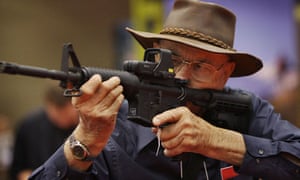
At the risk of turning our picture into naive art as citizens of the world, perhaps we should demand an end to the unimaginable suffering of victims and their families – the maiming and killing by guns of our fellow human beings.
The annual toll from firearms in the US is running at 32,000 deaths and climbing and this is a country at peace.
To absorb the scale of the mayhem, it’s worth trying to guess the death toll of all the wars in American history since the War of Independence began in 1775. The staggering fact, is that 212,994 more Americans lost their lives from firearms in the last 45 years than in all wars involving the US.
In the past decade in which the fear of terror has cost the USA hundreds of billions of dollars in wars, surveillance and intelligence programmes and homeland security. Ten years after 9/11, homeland security spending doubled to $69bn. The total bill since the attacks is more than $649bn.
One more figure.
There have been fewer than 20 terror-related deaths on American soil since 9/11 and about 364,000 deaths caused by privately owned firearms.
If any European nation had such a record and persisted in addressing only the first figure, while ignoring the second, you can bet your last pound that the United States would be warning against travel to that country and no American would set foot in it without body armour.
The historic lunacy of this position in the USA springs from the second amendment right to keep and bear arms, and is derived from English common law and our 1689 Bill of Rights.
The gun lobby is too powerful to challenge and that nothing will ever change. It’s no wonder that it is mostly seen as a matter of personal safety. The AR 15, the gun that Adam Lanza used to murder 20 children in Newtown, is now the most popular rifle in America.
International pressure may be one way of reducing the slaughter over the next generation. This has reached the point where it has ceased to be a domestic issue. The world cannot stand idly by.
You might ask why we did not use Gun as the wash to our painting. The reason is you have to buy a gun.

Our perception of danger is easily distorted by rare events like the Recent Killings in Paris.
You also might say that Guns don’t attack children; psychopaths and sadists and terrorists do.
Weapons may have saved the planet from a future too terrible to imagine.
The one that has and is changing the future is the Kalashnikov AK – 47. The 47 refers to the year of its commission 1947.
Invented by a gifted tank mechanic to save Russia’s Mikhail Kalashnikov, who died in Russia on 23 Dec 2023 aged 94. Russia not only distributes the Kalashnikov rifles all over the world, but also licensed its production in over 30 other countries, including China, Israel, India, Egypt and Nigeria.
It’s the most effective killing machine in human history – a gun that, on its 62nd birthday, is still killing as many as a quarter of a million people every year, in every corner of the globe.
It is believed that AK-47s have caused more deaths than artillery fire, airstrikes and rocket attacks combined. Responsible for more deaths than any other individual model of weapon in human history.
It has truly changed the course of human history in so many different conflicts that we hardly have time to discuss them.
It’s the tool that lets “freedom fighter” groups – or “terrorist” groups, depending on whose politics you follow – hold off entire armies of well-trained soldiers packing million-dollar weapons systems.
The average global price of the assault rifle was estimated at $534 in 2005, according to Oxford University economist Phillip Killicoat. Though in African countries the price of AK-47 is on average $200 cheaper.
In the U.S. it has jump from $600 to $1,500, as gun owners rush to buy genuine Russian weapons before they disappear from store shelves.
It was the US, which gave the Al Qaeda founder his first AK-47 to fight the Soviets in Afghanistan.
The image of AK-47 appears on the flag of Mozambique as well as coats of arms of Zimbabwe, Burkina Faso (1984-97) and East Timor. The Kalashnikov rifle is also present on the flag of Lebanese militant organization, Hezbollah.
Coins dedicated to Mikhail Kalashnikov and his creation were issued not only in Russia, but also in such a peaceful place as New Zealand, which marked the rifle’s 60th birthday with special two-dollar pieces.
The French newspaper, Liberation, named AK-47 the most important invention of the XX century.
Colombian artist, Cesar Lopez, has transformed a dozen of AK-47s into guitars, with then UN General Secretary, Kofi Annan, getting one of the musical instruments as a gift in 2007.
There are more than a thousand types of dangerous guns in the world.
Our brush is now dripping in violence. However every man has the right to risk his life in order to save it.
Our next color should recognize this fact.
However to turn our painting of the future away from destruction and war to the possibilities of living together in peace we need to find a color that is common to all to wipe the earth terrorists of the face of the planet.
19 Thursday Nov 2015
Posted in The Future, The world to day., Where's the Global Outrage.
What lies ahead rests on entire speculation or instinct because we live in a world of great threats that we cannot foresee that is turning everyone to his own way. 
Things never stayed still.
Humans are not limited anymore that much to their instincts, they are able to go beyond using their will power and imagination. However we will always be limited by the technology of our time.
This is a disturbing fact which is not fully understood.
So in this post ( Which I am sure will require further investigation) I will try avoiding the obvious biological reasons and historical truths in approaching the explanation.
I will present it more like a painting where you chose the wash to paint the picture on.
Of course, it’s never that simple.
It should be obvious that we are all far better off today than we were a half-century ago. That this should have been the easiest period in human history in which to make progress and peace.
Never before had there been so many inventors and entrepreneurs. Never before had they so much accumulated science and capital to work with. Never before had there been so many people making things… and so many consumers with money in their pockets to buy them.
And never before were there so many earnest lawmakers, PhD economists, curious researchers, diligent policymakers, and nonprofit-employed do-gooders – millions of people all doing their level best to make us happier, healthier, and richer!
As recent events in Paris highlight, something seems to have gone BADLY wrong on the way to the future… we are still nearer to the animal behavior than to advanced capabilities.
Global peace built on a foundation of nation-states is an oxymoron.
So lets start the painting with the wash of Money and Inequality.
If something grows too big, then it destroys itself from the inside.
To lay claim of bringing tectonic changes to capitalism remains a far cry!
Humans are still in development of their individual personalities.
The truth can be difficult to stomach. Most governments loathe the truth.
Government wants the benefits of what people create, but it doesn’t want anyone to get rich from the creating. Yet economies all over the world are in trouble. Government leaders and economists galore talk about monetary policy as if it could rev up economies that are staggering under excessive taxation, suffocating regulation and massive government spending.
Governments have virtually no concept of taxes being a barrier or hindrance to commercial activity; they simply see them as a way of controlling an economy’s total purchasing power, or “aggregate demand.”
Not to benefit ALL the people.
They pretend that we owe them a portion of our money (our labour, our time) and collect it through taxes and interest on loans and fees. They don’t own the money they only own the currency. They are not unaware of this fact they are simply trying to hide it so that they can justify their claim against our labour which is the only thing of real value in the economy.
When in fact “Economic actors” are the drivers. ( See previous posts-Sovereign Wealth Funds/ High Frequency Trading/ Foreign Exchange transactions.)
Government can either impede their activities or create an environment in which they can rise and flourish. The only single economy is the global economy which is now under attack from Trade Deals.
Free markets are inherently unstable, and capitalists are their own worst enemies. They both see the economy as a machine that should run smoothly. So-called business cycles — booms and busts — irreverent of the consequences to us that make the economy.
Austerity is for losers. There’s always money to wage war and build weapons, indeed, to continue developing weapons, generation after generation after generation. National interests are business interests.
When it comes down to it the economy is a reflection of how people spend their time. Some of their time is dedicated to labouring (creating products and services) while other time is dedicated to eating and sleeping and leisure activities (consuming those products and services).
Money is a value store for the time spent labouring. Currency is how we exchange that value. Money measures wealth; it is not wealth itself. Money reflects what we do in the marketplace.
The problem with our modern economy is that most people (bankers, etc) lead us to believe that currency and money are the same time and they use the terms interchangeably. The banks own the currency but they do not own the money (value store for labour).
Too many countries today formulate policies under a similar assumption.
Economists, bankers and political leaders don’t understand the most basic of subject: ” Money”
When it comes to monetary policy, they have it backwards.
The argument is over eradication of mass poverty. Many are bias to the fact that capitalism has done a great job in lifting billions out of the penniless syndrome. This may be totally or partially true or completely wrong.
Highest GDP and poverty-free are two developments that most like to cheer.
Countries treat their economy as if it is an isolated entity from the prosperity of their people, putting the economy first and not the happiness of the population as a whole.
Just look at the results of Quantitative Easing. (PRIVATELY OWNED Bank’s, with a chairman’s that are appointed and not voted on by, we the people.) They are now printing currency without any legal permission to do so.
When the government does this, it’s called quantitative easing” Although its name sounds official it is NOT part of the government! It is a PRIVATELY OWNED BANK, with a chairman that is appointed and not voted on by, we the people.
Government, not the marketplace, is the real driver of commerce. Money does not controls the economy.
Money as we all know some say is the root of all evil. It certainly has driven such an appetite for profit that is has put our planet into a death spiral of confusion WITH THE HOPE OF technological escape.
The United Nations is that it’s a unity of entities defined by their hatred of one another and committed to the perpetuation of “the scourge of war.
From the very beginning, the principle of nationalism and the United Nations was almost indissolubly linked, both in theory and practice, with the idea of war.
Five centuries of European colonialism and global culture-trashing, and the remaking of the world in the economic interests of competing empires, cannot be undone by a single institution and a cluster of lofty ideals.
Our ‘way of life’, our behavior, our goals and values are making us blind, are confusing us and are driving us more and more into disease and destruction.
Now that we have the wash let’s dip our brush into the color of Religions. The role of religion and religious organizations.
Since the awakening of religion, wars have been fought in the name of different gods and goddesses. When conflicts are couched in religious terms, they become transformed in value conflicts.
By value conflicts I mean they have a tendency to become mutually conclusive or zero-sum issues. They entail strong judgments of what is right and wrong, and parties believe that there cannot be a common ground to resolve their differences except by force or separation.
Obviously religious and spiritual rules made up by humans doesn’t protect humanity from being distinguished. Its more or lees an accident of birth which religion you use. It could be treated it as a marginal variable which would be a mistake so we will apply it to the canvas randomly a dash here and there. Because unless we are born with a piercing eyesight, what lies ahead rests on entire speculation or instinct not religion.
Humans have mostly lost this religious instinct and they are ‘eating’ each other as much as they can and are allowed by others.
There is one part of the population of the world who are overweight and sick because of too much food and an other part who are starving to death. It’s no wonder we have terrorists in all forms.
On one side we have freedom and possibility to make decisions, on the other side they are losing the protection which was given through the instinct that life is sanctimonious.
Religion gives dignity to death.
The West is characterized by a desecularisation of politics and a depolitisation of religion. In the Communist bloc, religion was officially stigmatized as the opium of the people and repressed.
One could start by investigating systematically which positive or negative roles religion plays now.
It should, however, be remembered that it was not religion that has made the twentieth the most bloody century. Lenin, Stalin, Hitler, Mao Tse-tung, Pol Pot and their apprentices in Rwanda maimed and murdered millions of people on an unprecedented scale, in the name of a policy which rejected religious.
It is therefore important to develop a more profound understanding of the basic assumption underlying the different religions and the ways in which people adhering to them see their interests.
It would also be very useful to identify elements of communality between the major religions.
They all could hold a world meeting and at least agreed to differ without the need to inflict Crucifixion on the unborn. The major challenge of religious organizations remains to end existing and prevent new religious conflicts.
Civilizations are differentiated from each other by history, language, culture, tradition and, most importantly, religion. There are no ‘ pure ‘ religious conflicts. People can be empowered by providing them with theological support against injustice. More than two-thirds of the world population belongs to a religion.
Religious organizations have the capacity to mobilize people and to cultivate attitudes of forgiveness, conciliation. They can do a great deal to prevent dehumanization. They have the capacity to motivate and mobilize people for a more peaceful world. Religions and religious organisations have an untapped and under-used integrative power potential.
To assess this potential and to understand which factors enhance or inhibit joint peace ventures between the Christian religions, but also between the prophetic religions (Judaism, Christianity, Islam), the Indian religions (Hinduism and Buddhism) and the Chinese wisdom religions, is an urgent research challenge.
Unfortunately attention is now paid to the militant forms of religious fundamentalism as a threat to peace.

How can we find a way out of the mess?
It is only us, the people, who can change the course of action.
The world cannot survive without a new global ethic, and religions play a major role, as parties in violent conflicts, as passive bystanders and as active peace-makers and peace-builders.
Hans Küngs’ thesis that there cannot be world peace without a religious peace is right.
Our Canvas is now ready for some additional work so if you have any suggestions my paint brush is ready.
The truth in this when you believe “the media”, the unsavory courtisane of “the politics”, is playing to create division, anger and hate. It is their game and they make money from this.
Here below is a woman that talks sense as to what we are in such a mess.
14 Saturday Nov 2015
Posted in Climate Change., Paris Climate Change Conference 2015, Paris terrorist attack., Politics., The world to day., War, Where's the Global Outrage.
≈ Comments Off on THE BEADY EYE SAY’S RECENT EVENTS IN PARIS SHOWS ITS TIME TO FOCUS ON THE BIG PICTURE.
Tags
Capitalism and Greed, Climate change, Globalization, Inequility, Terrorism., The Future of Mankind
We must focused on the “big picture” exploring all avenues for influencing humans everywhere.
How societies have developed through all of human history – from Neanderthals to i Phones.
At the rate things are going, the Earth in the coming decades could cease to be a “safe operating space” for human beings.

The question is why a pretty small group of nations around the shores of the North Atlantic had come to dominate the planet in the last 200 years in a way that the world’s never really seen before is now rapidly becoming irrelevant.
Since no CLARITY is being provided by any of our World Organisations or Political leaders regarding a solution I will offer in this post the reasons why this is true and a solution that is achievable in our life time.
We have four primary issues that must be addressed for us to live in harmony with nature: Overpopulation, Over consumption, dependence on fossil fuels and our harmful and wasteful typical western consumerism.
We have already crossed four “planetary boundaries.”
They are the extinction rate; deforestation; the level of carbon dioxide in the atmosphere; and the flow of nitrogen and phosphorous (used on land as fertilizer) into the ocean.
The urgency now is driven by the fact that we simply don’t have the necessary time to address the first three. They will take many decades (if not centuries) to resolve and we may be down to just a few years as the experts agree that we’re rapidly approaching or passing certain tipping points, beyond which there is no possibility of avoiding the worst effects of crossing all these planetary boundaries.
In the end of all of this mess amounts to simple massive transfers of wealth from the middle classes and the poor to the rich.
Because whatever you’re fighting for: Racism, Poverty, Feminism, Gay Rights, or any type of Equality. It won’t matter in the least, because if we don’t all work together to save the environment, we will be equally extinct.
It has brought us to a situation of the greatest schism between rich and poor in history. The utter breakdown of democratic government in favour of the new technological driven Feudalism.
As our social development continues to accelerate, we continue to change the meaning of the word poor.
We are not apart from nature, we are a part of nature.
I’m sorry that we paid so much attention to ISIS, and very little how fast the ice is melting in the arctic.
It is imperative now than ever that France in honor its recent unnecessary lost of innocent lives insures that the Climate Change Conference is not effected.
Unfortunately we must tried to see beyond the horrific events in Paris – into the misery beyond.
If we cannot see something, it is difficult to know how we can possibly begin to devise ways to avoid it.
It is time to attend to this generation’s apocalypse, and to do so we must recover both the fear and the hope of early ’80s politics.
There has to be another way, and this time it must include all of humanity, and all of our planet.
So far, few works have managed to put the unthinkable in front of our eyes –
The Internet, is the public face of globalization. Corruption is not only thriving online, but winning. The digital revolution has degenerated into an underworld of organized crime, dirty tactics, black ops and terrorism.
There is no such thing as “national cyberspace.” International cooperation will be needed, but be warned that the Internet will not go away in any place it touches.
“Lets just say that today’s Internet is a dirty mess waiting to be cleaned up.”
I am sure that there is no need to give a history lesson but here is one that tells the truth and which I admire.
Written by Roberto Savio.
It out lines why we are in the current mess and if you want to understand why it is so it is compulsory reading.
Roberto Savio, founder and president emeritus of the Inter Press Service (IPS) news agency and publisher of Other News, offers ten explanations of how the current mess in which the world finds itself came about.
1) ” The world, as it now exists, was largely shaped by the colonial powers, which divided the world among themselves, carving out states without any consideration for existing ethnic, religious or cultural realities. This was especially true of Africa and the Arab world, where the concept of state was imposed on systems of tribes and clans.
2) After the end of the colonial era, it was inevitable that to keep these artificial countries alive, and avoid their disintegration, strong men would be needed to cover the void left by the colonial powers. The rules of democracy were used only to reach power, with very few exceptions. The Arab Spring did indeed get rid of dictators and autocrats, just to replace them with chaos and warring factions (as in Libya) or with a new autocrat, as in Egypt.
The case of Yugoslavia is instructive. After the Second World War, Marshal Tito dismantled the Kingdom of Yugoslavia and created the Socialist Federal Republic of Yugoslavia. But we all know that Yugoslavia did not survive the death of its strongman.
The lesson is that without creating a really participatory and unifying process of citizens, with a strong civil society, local identities will always play the most decisive role. So it will take some before many of the new countries will be considered real countries devoid of internal conflicts.
3) Since the Second World War, the meddling of the colonial and super powers in the process of consolidation of new countries has been a very good example of man-made disaster.
Take the case of Iraq. When the United States took over administration of the country in 2003 after its invasion, General Jay Garner was appointed and lasted just a month, because he was considered too open to local views.
Garner was replaced by a diplomat, Jan Bremmer, who took up his post after a two-hour briefing by the then Secretary of State, Condolezza Rice. Bremmer immediately proceeded to dissolve the army (creating 250,000 unemployed) and firing anyone in the administration who was a member of the Ba’ath party, the party of Saddam Hussein. This destabilised the country, and today’s mess is a direct result of this decision.
The current Iraqi Prime Minister, Nouri al-Maliki, whom Washington is trying to remove as the cause of polarisation between Shiites and Sunnis, was the preferred American candidate. So was the President of Afghanistan, Hamid Karzai, who is now virulently anti-American. This is a tradition that goes back to the first U.S. intervention in Vietnam, where Washington put in place Ngo Dihn Dien, who turned against its views, until he was assassinated.
There is no space here to give example of similar mistakes (albeit less important) by other Western powers. The point is that all leaders installed from outside do not last long and bring instability.
4) We are all witnessing religious fighting and Islam extremism as a growing and disturbing threat. Few make any effort to understand why thousands of young people are willing to blow themselves up. There is a striking correlation between lack of development/employment and religious unrest. In the Muslim countries of Asia (Arab Muslims account for less than 20 percent of the world’s Muslim populations), extremism hardly exists.
And few realise that the fight between Shiites and Sunnis is funded by countries like Saudi Arabia, Qatar and Iran.
Those religions have been living side by side for centuries, and now they are fighting a proxy war, for example in Syria. Saudi Arabia has been funding Salafists (the puritan form of Islam) everywhere, and it has provided nearly two billion dollars to the new Egyptian autocrat, Abdel Fattah el-Sisi, because he is fighting the Muslim Brotherhood, which predicates the end of kings and sheiks and power for the people. Iraq is also becoming a proxy war between Saudi Arabia, defender of the Sunnis, and Iran, defender of the Shiites.
So, when looking at these wars of religion, always look at who is behind them. Religions usually become belligerent only if they are used. Just look at European history, where wars of religion were invented by kings and fought by people. Of course, once the genie is out of the bottle, it will take a long time to put it back. So this issue will be with us for quite some time.
5) The end of the Cold War unfroze the world, which had been kept in stability by the balance between the two superpowers.
Attempts to create regional or international alliances to bring stability have always been stymied by national interests. The best example is Europe. While everybody was talking about Crimea, Ukraine and Vladimir Putin (who had been made paranoiac about Western encirclement, from the George Bush Jr. administration onwards) and how to bring him to listen to the United States and Europe, European companies continued trade in spite of a much talked about embargo. And now, Austria has quietly signed an agreement with Russia to join the South Stream, a pipeline that will bring Russian gas to Europe – so much for the unity of a Europe which has been clamouring about the need to reduce its energy dependence on Russia.
A multipolar world is in the making, but it has to be seen how stable it will be.
In Asia, China and Japan are increasing their military investments, as are surrounding countries. And while local conflicts, like Syria, Iraq and Sudan, are not going to escalate into a larger conflict, this would certainly be the case in Asia.
6) In a world more and more divided by a resurgence of national interests, the very idea of shared governance is losing its strength, and not only in Europe.
The United Nations has lost its significance as the arena in which to reach consensus and legitimacy. The two engines of globalisation – trade and finance – are not part of the United Nations, which is stuck with the themes of development, peace, human rights, environment, education and so on. While these issues are crucial for a viable world, they are not seen as such by those in power. Conclusion: the United Nations is sliding into irrelevance.
7) At the same time, values and ideas which were considered universal, such as cooperation, mutual aid, international social justice and peace as an encompassing paradigm are also becoming irrelevant.
French President Francois Hollande meets U.S. President Barack Obama, not to discuss how to stop the genocide in Sudan, or the kidnapping of children in Nigeria, but to ask him to intervene with his Minister of Justice to reduce a giant fine on a French bank, the BNP-Parisbas, for fraudulent activities. The outstanding problem of climate control was largely absent in the last G7 meeting, not to talk of nuclear disarmament … and yet these are the two main threats to the planet!
8) After colonialism and totalitarian regimes, the key phrase after the Second World War was “implementation of democracy”. But after the end of the Cold War, democracy was taken for granted. In fact, in the last twenty years, the formula of representative democracy has been losing its glamour. Pragmatism has led to the loss of long-term vision, and politics have become more and more mere administration.
Citizens feel less and less related to parties, which have basically become self-centred and self-reliant. International affairs are not considered tools of power by parties, and decisions are taken without participation. This leads to choices which often do not represent the feelings and priorities of citizens.
The way in which the bailout of Cyprus from its financial crisis a few years ago was treated in the European Commission was widely recognised as a blatant example of lack of transparency. Few people certainly make more mistakes than many …
9) A very important element of the mess has been the growth of what its proponents, especially in the financial world, call the “new economy” – an economy that contemplates permanent unemployment, lack of social investments, reduced taxation for large capital, the marginalisation of trade unions, and a reduction of the role of the State as the regulator and guarantor of social justice.
Inequalities are reaching unprecedented levels. The world’s 85 richest individuals possess the same wealth as 2.5 billion people.
10) All this brings its corollary. It is not by chance that all mainstream media worldwide have the same reading of the world.
Information today has basically eliminated analysis and process, to concentrate on events. Their ability to follow the world mess is minimal, and they just repeat what those in power say. It is very instructive to see media which are very analytical about national affairs and very superficial about international issues. The media depend largely on three international news agencies, which represent the Western world and its interests. Have you read anywhere about the gas agreement between Austria and Russia?
So, a final point: never be satisfied with what you read in the newspapers, always try to get additional and opposite viewpoints through the net. This will help you to look at the world with your eyes, and not with the eyes of somebody else who is probably part of the system which has created this mess. Do not go with the tide … search for the other face of the moon. And if they tell you that they know, well, just look at the results. So, be yourself and, if you make a mistake, at least it will be your mistake. “
I thank him and I could not agree more with his advise in his summing up. He states what I have being advocating in post after post.
Many factors influenced the civil war in Syria, including long-standing political, religious, and ideological disputes; economic dislocations from both global and regional factors; and the consequences of water shortages influenced by drought, ineffective watershed management, and the growing influence of climate variability and change.
Here is my solution.
Greed is the real terrorist operating under the banner of Profit for Profit sake.
Make Profit for Profit Sake Pay;
By placing a World Aid Commission of 0.05% on all High Frequency Trading, on all Foreign Exchange Transactions (over $20,000) on all Sovereign Wealth Funds Acquisitions, on all new drilling and mining Licences.
A commission rate ranging from 0.005 to 0.25 percent would generate between $15 and $300 billion per year, of which a substantial amount could be allocated to promote international peace and development and resolving Climate Change.
This would create a perpetual Funded Fund to contributed to rectifying the very thing that caused the problems in the first place. Greed.
And as we look forward into a world increasingly dominated by technology, what will geography mean in the 21st century?

What will all the deaths achieve? Every death is a tragedy.
This is a good starting point for a wider debate about the justifications and rationalisations for the great swathe of global violence unleashed in response to the 9/11 attacks.
The under reporting by the media of this human toll attributable to ongoing Western interventions, whether deliberate, or through self-censorship, has been key to removing the “fingerprints” of responsibility.’
The new age of humanitarian war which suggests that war is not as bad as it used to be, or at least that it’s not so bad that the costs outweigh the gains. Is totally naive.
High-tech precision weapons, precision targeting enabled by lawyers, new ethical norms, population-centric counterinsurgency – all this has made it possible to vaporise the bad guys is not true as we all saw up close yesterday in Paris.
Mr Hollands declaration of war is understandable, as was Americas after 9/11. But it should not be the first choice rather than a last resort.
The first choice should be to convince their populations that war will not only be cost-free for them, but that its effects on the countries on the receiving end of it will also be minimal and ultimately beneficial.
This is what we have been told ever since the US invasion of Panama and the first Gulf War and throughout the last fourteen years of the ‘war on terror,’ whenever the US and its allies are considering who next to bomb or hit with a drone.
War used to be a way to learn Geography – Fool me once.
07 Saturday Nov 2015
Posted in Freedom, Humanity., Life., Social Media., The world to day., Unanswered Questions.
Tags
Democracy, Freedom, Freedom of expression, SMART PHONE WORLD, The Future of Mankind, Visions of the future.
These days our Freedoms (which so many died for) are being eroded to the point where there is no such thing as Freedom in our Lifetime. In this post I am going to try to express what exactly personal Freedom is these days.
I am not going to exam the United Nations Declaration of Human Rights which has over 30 Articles, or what is left of free speech, or the Black freedom struggle, or woman’s struggle for freedom. Or the idea of free speech which is a view of freedom that is inseparable from the
political arena, flawed in theory and politicised in practice.
⌈ Human rights are rights inherent to all human beings, whatever our nationality, place of residence, sex, national or ethnic origin, color, religion, language, or any other status. We are all equally entitled to our human rights without discrimination. These rights are all interrelated, interdependent and indivisible.
Universal human rights are often expressed and guaranteed by law, in the forms of treaties, customary international law, general principles and other sources of international law. International human rights law lays down obligations of Governments to act in certain ways or to refrain from certain acts, in order to promote and protect human rights and fundamental freedoms of individuals or groups.⌉
All of which are impossible to implement, and has never been implemented anywhere historically – not even today, in liberal societies.
The freedoms that we once had are now dissolving because of the Internet, and the need for blanket surveillance due to fear mongering politics over terrorists plots ever since 9/11.
Our every move is tracked, we are under surveillance around the clock, our buying habits are logged, our preferences are hacked, and most of us don’t raise an eyebrow.
It is a mistake to think of a search engine as an oracle for anonymous queries they can set off a chain reaction that can have troubling consequences both online and offline. All this is because being online increasingly means being put into categories based on a socioeconomic portrait of you that’s built over time by advertisers and search engines collecting your data—a portrait that data brokers buy and sell, but that you cannot control or even see.
Our background and our relationships are becoming inescapable features of our human existence.
So what is freedom.
In the modern sense freedom is achieved by one’s individual nature, or inner voice. A sovereign self – a monological consciousness that fundamentally excludes the other.
However one can still be imprisoned by an oppressive internal forced liberation from an interior force.
So how can one reconcile two seemingly opposed senses of freedom?
One sense views freedom as bound and situated, while the other sense views freedom as liberation from such bonds.
What is required is a notion of self hood that recognizes and embraces both senses of freedom – to see the self not as an isolated and detached entity from the social world, but one that is deeply enculturated and dialogical while simultaneously liberated.
These are the limits, the boundaries, of what allow us to be free and for things to be meaningful.
So instead of viewing boundaries as something that disables our freedom, we should recognize that boundaries are what might actually enable our freedom.

The received ideas of our present-day institutions are composed of the religious, philosophical, economic, and political status quo.
The goal for each of us is to break free of these ideologies and re describe our world as a whole. This sense of freedom, which I referred to earlier as freedom-within-boundaries, is what ultimately makes possible a freedom-from-oppression.
If men wish to be free, it is precisely sovereignty they must renounce.
As Charles Taylor puts it, this sovereign and self-determining freedom characteristic of the modern individual “demands that I break the hold of all such external impositions, and decide for myself alone.
In this view, individuals could exercise their gifts and powers only by
participating in the common life.
That is to say, our freedom is contingent upon the greater public world.
Modern thought (especially evident in the political philosophy of Rousseau) externalized the source of oppression onto authoritative forces such as society, church, law, and government.
This is no longer true due to the indebtedness of the world.
At the expense of eliminating fundamental characteristics that make us human we are now confronting a world with unlimited new possibilities but having no meaningful boundaries.
Modern Social media come to see others as a part of – Us/Selfies.
Unfortunately this unchecked freedom is leading us to a void in which nothing would be worth doing, nothing would deserve to count for anything.
Life is dialogical by its very nature.
To live means to engage in dialogue, to question, to listen, to answer, to agree, to return to your own position, enriched. We need to identify with others in order to open ourselves up to new ways of being without forgetting where we come from to achieve any freedom.
In the past our background was essential to our identity. These days one’s uniqueness is maintained through continuous exposure to novelty in a consumer culture that thrives on the latest fad.
Is it this quantity of novelties that appears to take precedent over quality of relationships. So where do we turn for redescription of Freedom, to open us up to new and fresh ways of being human?
That can enable us to break free from our own pasts and increase our level of sensitivity and sympathy to those without freedom?
Is it severance from the status quo.
I fear that if you were to ignore you background, and try to break from your own past, “You would be crippled as a person, because you would be repudiating an essential part out of which you evaluate and determine the meanings of things. Our background, often times inarticulate and unformulated, carries the values and traditions that constitute who we are. This background is no longer not just our personal past and memories, but it may also be the lineage, tradition, and culture from which we have emerged.
Instead of dropping our historicity, we should be interested in owning up to the background and tradition that gives significance to our identity.
Meaningful freedom can only be achieved through enculturation.
Therefore, our freedom is bound in a sense, or situated in the environment that has shaped us, because that is likely to be the most meaningful environment to us.
Perhaps it is only in a bounded space that we can move about freely.
Fusion of horizons’ between ourselves and others..we must always have a horizon in order to be able to transpose ourselves into a situation.
Background is what initially provides persons with the possibility for understanding anything at all. Our background, or tacit knowledge of the world, is the horizon out of which things have meaning for us. It gives us our “referential context of significance.” A liberating freedom, which occurs when our world is enlarged not downloaded on to a data base.
Our identity is formed by the web of relationships that surround us. Therefore, it is precisely ourselves, which implies our background, that we must bring into the other’s situation.
The fundamental significance of language and conversation, and its ability to bring us closer to understanding one another is now rapidly diluted by technology.
We are not born precocial and fully hard-wired creatures.
Instead, we are born as incomplete beings, needing enculturation and society for healthy maturation.
Our biological need for one another requires certain physiological signals, that are not possible on the Web. Through facial expressions, infants learn to not only replicate another’s face, but to empathically feel what the face exhibits.
Biologists consider this skill of emotional matching to have been “crucial for escape from predation, foraging, hunting, and mass migrations” before spoken language entered our evolutionary history.
In spite of the modern liberating sense of freedom which may encourage isolation and detachment, we should also note that it can promote a healthy release from oppressive external forces. These forces can manifest in a variety of forms, everything from an abusive relationship to a manipulative religious group.

Emphasis on a socially dependent self can lead to passivity in daily life or submission to totalitarian regimes.
By being sympathetic we are capable of being liberated from ourselves.
On the other hand egocentrism shouldn’t be overcome at the expense of forgetting ourselves. So freedom is one that respects the boundaries of selfhood, instead of annihilating it.
Although we may be transported into the sandals of the Buddha, we still need to come back to our point of departure in order to be enriched.
Because in recognizing the necessity of one’s interpersonal relationships, social and moral commitments, culture, tradition, memories, and of course, biology as constitutive of one’s experience of liberation.

Freedom doesn’t necessarily mean fleeing to a new land. It can also mean discovering the oceanic depth of a single, bounded situation. And this entails having new eyes. Remember, “Life is immense!”
We are free to become authentic only after we accept our boundary, which is our finitude.
Death is the ultimate boundary of human existence, it is only by facing up to this limit that we are capable of becoming truly authentic Free.
Where the mind is without fear and the head is held high;
Where knowledge is free;
Where the world has not been broken up into fragments
by narrow domestic walls;
Where the words come out from the depth of truth;
Where tireless striving stretches its arms towards perfection;
Where the clear stream of reason has not lost its way
into the dreary desert sand of dead habit;
Where the mind is led forward by Thee into ever-widening
thought and action–
Into that heaven of freedom, my Father,
let my country awake.

–Guru Rabindranath Tagore
National Poet, Freedom Fighter
Modern day freedom-is freedom within boundaries.
04 Wednesday Nov 2015
Tags
Capitalism and Greed, Extreme poverty, Food waste in the World, Globalization, Inequility, The Future of Mankind
Our routine practices, unfortunately, make it difficult for us to conceptualize the magnitude of global food waste.
Everyday we hear appeals and yet there are one billion starving people in the world.

40% of all the food produced in the United States is never eaten.
In Europe, we throw away 100 million tonnes of food every year.
These are shamefully shocking facts in their own right. In a world full of hunger, volatile food prices , and social unrest, these statistics are more than just shocking when half the world’s population goes to sleep each night malnourished they are obscene.
They are environmentally, morally and economically outrageous.
Add to this that fact that obesity is rapidly growing in the western world, particularly among children, while 6 million children in the developing world die annually from undernourishment and it is a damning indictment of capitalism – the dominant ideology and economic system that has governed much of the world for the last two centuries.
The rampage of globalisation has given monopoly buying power to a few massive western multinational enterprises, who trample all over the globe sourcing farm supplies from the lowest bidders of impoverished nations.
Prices of farm produce are squeezed to such an extent that it’s more profitable to leave ‘inadequate’ quality crops in the ground to rot or to throw away than to pay the price for its air transport, storage and quality packaging to bring to western supermarkets with discerning consumers.
Today, we produce about four billion metric tonnes of food per annum. Yet due to poor practices in harvesting, storage and transportation, as well as market and consumer wastage, it is estimated that 30–50% (or 1.2–2 billion tonnes) of all food produced never reaches a human stomach.
Furthermore, this figure does not reflect the fact that large amounts of land, energy, fertilisers and water have also been lost in the production of foodstuffs which simply end up as waste. This level of wastage is a tragedy that cannot continue if we are to succeed in the challenge of sustainably meeting our future food demands.
But the problem is bigger than we think.
Here are some hard facts to swallow.
Wasting food means losing not only life-supporting nutrition but also precious resources, including land, water and energy. As a global society therefore, tackling food waste will help contribute towards addressing a number of key resource issues:
About one-third of all food produced worldwide, worth around US$1 trillion, gets lost or wasted in food production and consumption systems.
Every year, consumers in industrialized countries waste almost as much food as the entire net food production of sub-Saharan Africa (222 million vs. 230 million tons)
1.4 billion hectares of land – 28 percent of the world’s agricultural area – is used annually to produce food that is lost or wasted.
The direct economic consequences of food wastage (excluding fish and seafood) run to the tune of $750 billion annually.
The amount of food lost and wasted every year is equal to more than half of the world’s annual cereals crops (2.3 billion tons in 2009/10)
In the USA, organic waste is the second highest component of landfills, which are the largest source of methane emissions.
In the USA, 30-40% of the food supply is wasted, equaling more than 20 pounds of food per person per month.
The Food wastage’s carbon footprint is estimated at 3.3 billion tonnes of CO2 equivalent of GHG released into the atmosphere per year.
Much of it ends up in landfills, and represents a large part of municipal solid waste.
The water used to irrigate wasted crops would be enough for the daily needs of nine million people.
Wasted production contributes 10% to the greenhouse gas emissions of developed countries.
One hectare of land can, for example, produce rice or potatoes for 19–22 people per annum. The same area will produce enough lamb or beef for only one or two people.
The total volume of water used each year to produce food that is lost or wasted (250km3) is equivalent to the annual flow of Russia’s Volga River, or three times the volume of Lake Geneva.
Over the past century, fresh water abstraction for human use has increased at more than double the rate of population growth. Currently about 3.8 trillion m3 of water is used by humans per annum. About 70% of this is consumed by the global agriculture sector,
Indeed, depending on how food is produced and the validity of forecasts for demographic trends, the demand for water in food production could reach 10–13 trillion m3 annually by mid-century. This is 2.5 to 3.5 times greater than the total human use of fresh water today.
Considerable tensions are likely to emerge, as the need for food competes with demands for ecosystem preservation and biomass production as a renewable energy source.
Agriculture is responsible for a majority of threats to at-risk plant and animal species.
A low percentage of all food wastage is composted:
What can be done about it?
Part of the problem is poor shopping habits, but the confusion many consumers have with “use by” and “best before” food labels is also a factor. “Use by” refers to food that becomes unsafe to eat after the date, while “best before” is less stringent and refers more to deteriorating quality.
Consumer households need to be informed and change the behavior which causes the current high levels of food waste. Instead of buying packets of vegetables buy loose veg.
Boycott Supermarkets that don’t accept imperfections and nicks. There’s nothing wrong with a deformed Veg. It’s fine to eat.
Support redistribution urban food programmes.
UK supermarket chain Waitrose is attacking food waste in all parts of its business. The upmarket grocery chain cuts prices in order to sell goods that are close to their “sell by” date, donates leftovers to charity and sends other food waste to bio-plants for electricity generation.
The idea is for Waitrose to earn “zero landfill” status.
Home composting can potentially divert up to 150 kg of food waste per household per year from local collection authorities.
Buy local produced food items not those produced, transformed and consumed in very different parts of the world.
Considering that food security is a major concern in large parts of the developing world. Conflicts around the world mean there is “donor fatigue.
Food crises don’t just affect the countries where people go hungry. It’s a global challenge. Recent data shows the number of hungry in the world has fallen but still stands at 842 million people.
World Food Programme WFP operations in and around Syria are costing around $31 million a week.
Hidden Hunger is a weapon of mass destruction.
Hidden hunger weakens the immune system, stunts physical and intellectual growth, and can lead to death. It wreaks economic havoc as well, locking countries into cycles of poor nutrition, lost productivity, poverty, and reduced economic growth.
Investing in nutrition is one of the smartest development investments we can make.

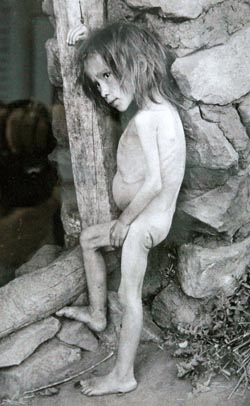

WITH MIGO
The only thing worse than being 'blind' is having a Sight but no Vision
Sharing vegetarian and vegan recipes and food ideas
PPJ Gazette copyright ©