• About
  • THE BEADY EYE SAY’S : THE EUROPEAN UNION SHOULD THANK ENGLAND FOR ITS IN OR OUT REFERENDUM.

bobdillon33blog

~ Free Thinker.

bobdillon33blog

Tag Archives: Globalization

THE BEADY EYE LOOKS AT WORLD ORGANISATIONS . PART FIVE – THE WORLD TRADE ORGANISATION.

19 Monday Oct 2015

Posted by bobdillon33@gmail.com in The Future, The world to day., Where's the Global Outrage., World Organisations.

≈ Comments Off on THE BEADY EYE LOOKS AT WORLD ORGANISATIONS . PART FIVE – THE WORLD TRADE ORGANISATION.

Tags

Capitalism and Greed, Current world problems, Distribution of wealth, Globalization, ongoing Privatization of the world, World Organisations., World Trade Organisation

The UN Development Program reports that the richest 20 percent of the world’s population consume 86 percent of the world’s resources while the poorest 80 percent consume just 14 percent.

The WTO began life on 1 January 1995, but its trading system is half a century older.Afficher l'image d'origine

Since 1948, the General Agreement on Tariffs and Trade (GATT) had provided the rules for the system. (The second WTO ministerial meeting, held in Geneva in May 1998, included a celebration of the 50th anniversary of the system.)

The last and largest GATT round, was the Uruguay Round which lasted from 1986 to 1994 and led to the WTO’s creation.

Whereas GATT had mainly dealt with trade in goods, the WTO and its agreements now cover trade in services, and in traded inventions, creations and designs (intellectual property).

The World Trade Organization (WTO) is an international organization of 161 members that deals with the rules of trade between nations. With Russia’s accession in August 2012, the WTO encompasses all major trading economies.Afficher l'image d'origine

The work of the IMF and the WTO is complementary.

The WTO Agreements require that it consult the IMF when it deals with issues concerning monetary reserves, balance of payments, and foreign exchange arrangement.

The policies of the WTO impact all aspects of society and the planet, but it is not a democratic, transparent institution.

The WTO rules are written by and for corporations with inside access to the negotiations.  The WTO would like you to believe that creating a world of “free trade” will promote global understanding and peace. On the contrary, the domination of international trade by rich countries for the benefit of their individual interests fuels anger and resentment that make us less safe.

WTO rules put the “rights” of corporations to profit over human and labor rights.

It is time that trade was put firmly in its place, so that it is viewed not as a goal in itself but as a means to achieving broader social, environmental and development goals.

At the very least, the world’s richest countries must honour their commitment to tackling their own damaging practices, particularly subsidies that drive down prices and increase poverty for farmers across the world.

Multilateral trade negotiations need fundamental reform, to be based on fair negotiations, not power play, so that developing countries have an equal place at the table. Genuine consultation with civil society in both the global north and south would no doubt produce other proposals for improvement.

If agreement can’t be reached on a small package of measures to help developing countries, as part of development agenda, then the relevance of the WTO and the multilateral trading system must be questioned.

The sad reality is that very often it is not in a business’s financial interests to act ethically. And no amount of persuasion will change that.The point, then, is not so much to persuade businesses that it is in their interests to act ethically and sustainably – they will work that out for themselves – but to make sure that it is.

Which means two things in practice: raising the benefits of acting ethically and sustainably, and raising the costs of not doing so. There are two principal ways, in a democratic capitalist society, of ensuring that the right incentives are in place for a business to act ethically: via the consumer and via the regulator (indirectly influenced by the citizen).

When humans get into big organisations it can be hard to apply moral values, and the incentives of the business context tend to hold sway. Especially when the boardroom is often far from a particular initiative that may be many thousands of miles away.

The big problem is the lack of global level regulation to match our now thoroughly globalised financial system. Such an international regulatory system is very far from being a reality, but if it is needed to guide, enable and sometimes restrict the activities of the financial sector, it is equally needed in other international sectors, from the extractive industries to manufacturing to agricultural trade.

Attempts at getting companies to sign up to voluntary measures (such as the UN Global Compact) are fine, but they are regarded as quaint by the majority of business people.

For every CEO who has a damascene conversion and transforms or builds their business along ethical lines (think Anita Roddick of the Body Shop) there are thousands who don’t. Lip service is paid, the odd children’s playground is built, the business of business goes on.

The point is to change incentives, and voluntary measures don’t do that. Only legal sanction or consumer action is strong enough, and consumer action is too erratic to rely upon.

In a globalised world, national level laws are clearly inadequate. People say international law is impossible, but they say that about everything worth doing. It is not only possible, it is vital, and is the major project of the 21st century. Without it, the global public cannot expect a private sector that works for people, not just for profit.

If you wanted clear evidence of the above just look at the Two trade Agreements recently negotiated The TTIP and TTP.

← Back

Thank you for your response. ✨

Share this:

  • Share on WhatsApp (Opens in new window) WhatsApp
  • More
  • Share on Pocket (Opens in new window) Pocket
  • Share on Mastodon (Opens in new window) Mastodon

THE BEADY EYE. LOOKS AT WORLD ORGANISATIONS -PART ONE – THE UNITED NATIONS.

09 Friday Oct 2015

Posted by bobdillon33@gmail.com in The world to day., World Organisations.

≈ Comments Off on THE BEADY EYE. LOOKS AT WORLD ORGANISATIONS -PART ONE – THE UNITED NATIONS.

Tags

Globalization, Reforming the United Nations., THE UNITED NATIONS

“More than ever before in human history, we share a common destiny. We can master it only if we face it together. And that, is why we have the United Nations.” (Annan: 2001)

It is widely believed that international organizations should be responsible for the maintenance of international peace and stability, be this economic, social or political, and that they should act in the interest of the international community.

However if you look at them they are mostly out of date, with no real secure funding other than begging and most have been corrupted by lobbing. ( See previous postings)

These institutions, should have greater transparency, regulation and control within these organizations so that they reflect more than just the interest of the powerful States.

It appears that the behaviour of institutions can no longer be objectively analysed by quantifiable forces, as social interaction on the Web and Smart Phones gives different meanings to ideas, actors and objects.

If today we find ourselves in a self-help world, this is due to process, not structure.

As nations we don’t want to transmit the notion of a global governance to the world community. 

The the neo-liberal institutionalist approach is misleading as it accounts for some of the weaknesses of institutions, but does not include enough critical analysis of its premises and actions, or lack thereof. Thereby, the role of institutions becomes a more ideological and normative one, where they infuse Member States’ policies with their liberal values and principles.

So let’s start with The United Nations.

It is important to determine what constitutes success and failure as we can approach the United Nations system in different ways, either as an international forum or as a ‘global policing force’ and regardless of what approach one may take, they both have their virtues and drawbacks.

The United Nations.

The creation of an international forum for multi-lateral negotiations came about with the Inter-Parliamentary Union (IPU) in 1889, which is still active today and has membership of 157 national parliaments. The IPU was the predecessor to the League of Nations, created in 1919 after the end of the First World War; this later became the United Nations after the failure of the League to prevent international conflicts.

The legacy of the IPU, the League of Nations, and other early international alliances was not the institutions’ effectiveness as an actor, but rather as a forum, for nations to voice their opinions and promote dialogue. This was the primary objective of the institution in 1945, which is why forcing it to develop into an impartial effective governing force seems quite naïve and unrealistic.

This was arguably their greatest achievement.

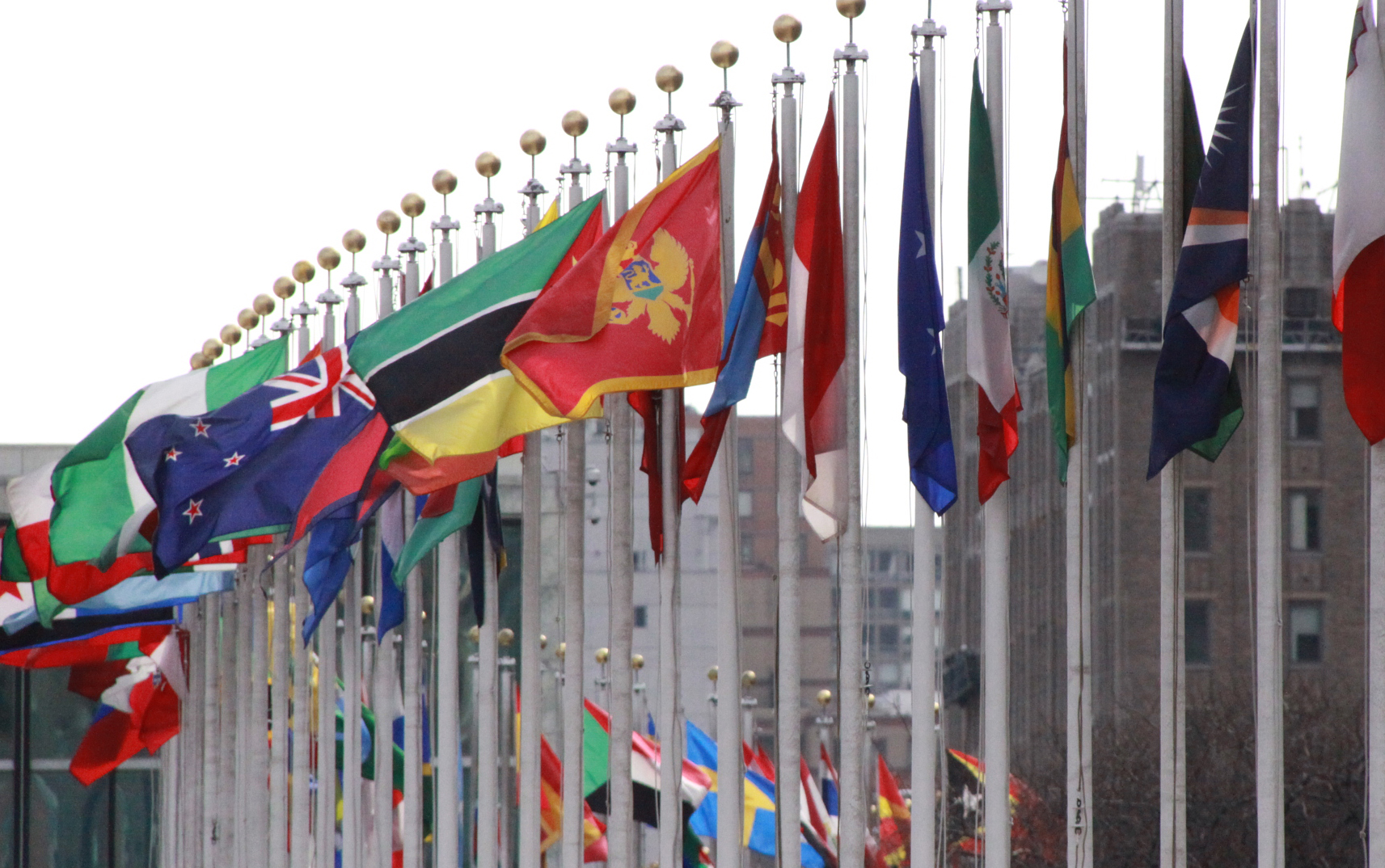
 After the failure of the League, nation States still felt the need for an institution that would allow them to share their ideas and provide an opportunity to settle disputes peacefully. Thus, emerged the United Nations, which to this day remains the only institution with universal membership. It is the largest of all international organisations.

The neo-realist approach argues that international institutions are and always will be fundamentally ineffective, as they cannot prevent States from being self-interested and engaging in power politics.

Neo-realists assert the irrelevance of international institutions, as they believe it does not alter the self-interested anarchic system of States. Classical and neo-realists claim the international system is an anarchic, self-interested, power struggle between States, which is why there is a vast amount of distrust in global institutions such as the UN.

The idea that institutions play a non-role in international relations is a reductionist one as the argument that States will not respond to constraints and opportunities given by these institutions is greatly flawed.

This can be exemplified by the UN’s regulation on the use of military force.

One of the so-called failures of the UN is its inability to prevent conflicts, but in reality the majority of these conflicts arise as a result of deep-rooted ethnic, political, and ideological tensions which cannot even be resolved through bilateral diplomatic efforts, as exemplified in the Arab-Israeli conflict the Syrian Civil War, Ukrainian Conflict, the aftermath of 9/11.

So the primary purpose of the UN is not to intervene in internal affairs but rather to promote discussions and give States the tools to resolve disputes themselves.

An example of this is the Earth Summit, where members discussed actions to be taken regarding environmental sustainability and climate change and then world leaders would reconvene in ten-year follow-up meeting to monitor each other’s progress.

This is fine.

However,“in a world of multiple issues imperfectly linked, in which coalitions are formed trans-nationally and trans govern-mentally, the potential role of international institutions is greatly increased.”

It can be argued while the UN attempts to coordinate the actions of States and harmonize the world community, it becomes increasingly geared towards an ‘utopian’ model, even though it faces numerous challenges when rallying Member States to follow its general principles and vision.

It also can be argued that the United Nations has been vital in furthering decolonization, human rights, environmental protection and international law.

These and many others reflects unrealistic expectations of the UN as an actor.

Neo-liberal institutionalism stresses the importance of the UN’s work with regional organizations, as they become indispensable in the international diplomatic process predicting, “the international community will increasingly direct itself towards combined action of the universal Organization with regional bodies.” (Cassese: 2005: 338)

This can be observed in the recent links between the UN and regional organizations such as the Organisation of American States (OAS), the African Union (AU), the European Union (EU), the Arab League, and the Association of South East Asian Nations (ASEAN).

It take for granted the idea that economic and military power is the primary source of influence in world politics when in fact Climate Change with the rise in sea levels and the lack of fresh water will be the driving forces in the near future.

The Secretary General is the world’s prime example of responsibility without power, which is not always understood. The fact that he has no sovereign rights, duties or resources could signify that he becomes a reflection of the organization itself.

An example of this was in the Secretary-General’s Millennium Report where he ensured States that the Secretariat was fully accountable to them and the founding principles of the United Nations as “an Organization dedicated to the interests of its Member States and of their peoples” would be preserved. (Annan: 2000: 73)

For neo-realists, international institutions are and will always be ineffective, as they cannot alter the anarchic structure of the international system, neo-liberal institutionalists argue the opposite as they believe institutions greatly influence State conduct by both creating strong incentives for cooperation whilst at the same time implementing disincentives, as observed in the case of nuclear proliferation;

Constructivists take a very different approach by questioning the core assumptions of the other theories and drawing attention to the relationship between the structure and the agency, as well as the construction of state and institutional interests.

As an actor, there is so little we can do, and often the people accusing us are the same ones who prevent us from being able to act.” (Weiss: 2008: 8)

As the proportion of democratic states grows, the norms and rules that characterize relations between democracies are likely to alter the norms and rules in international relations.

For this reason, perhaps instead of focusing on the failures and reform within the UN, we should concentrate on the attributes and virtues that it has as an effective center for harmonizing discussions and developing common goals for States.

Rather than reducing the solution to problems of structural reform and widening participation efforts, we could look at promoting the UN as the prime setting for diplomacy and negotiation, as this has undeniably been its role since the beginning.

“We are facing the first breakthroughs in a process called ‘globalisation”

Social Media is demanding more and more from our leaders.

The end to Inequality, by dismantling of Greed within our Capitalist consumption Societies is high on the list.

It should be promoting the remote possibility of Russia and the USA tackling the Syria? ISIS situation together, which could lead to an Israelite/ Palestinian solution’s with the backing of Iran.

Afficher l'image d'origine

To be effective and relevant  in this troubled world it needs to get rid of the Veto.

Pass a people’s resolution to place a World Aid commission of 0.05%  on all High Frequency Trading, on all Sovereign Wealth Funds Acquisitions, and on all Foreign Exchange transaction over $20,000. ( See previous Posts)

← Back

Thank you for your response. ✨

Share this:

  • Share on WhatsApp (Opens in new window) WhatsApp
  • More
  • Share on Pocket (Opens in new window) Pocket
  • Share on Mastodon (Opens in new window) Mastodon

THE BEADY EYE ASK’S WHAT HAS CAPITALISM ACHIEVED

07 Monday Sep 2015

Posted by bobdillon33@gmail.com in Capitalism, Humanity., Unanswered Questions., WORLD POVERTY WHERE'S THE GLOBAL OUTRAGE

≈ 6 Comments

Tags

Capitalism and Greed, Capitalism vs. the Climate., Community cohesion, Distribution of wealth, Globalization, Inequility, World aid commission

To understand the role of capitalism in modern economic times you must understand the word Growth.

Growth at any cost.  Which we are just coming to apprentice thanks to the Internet.

For a long time nothing much happened till Wheat conned humans into growing it.

It is not my intention here to address Money and Power. It is sufficient to say that money leads to power and corruption and that all three intermingle in the notoriously subject of Economics.

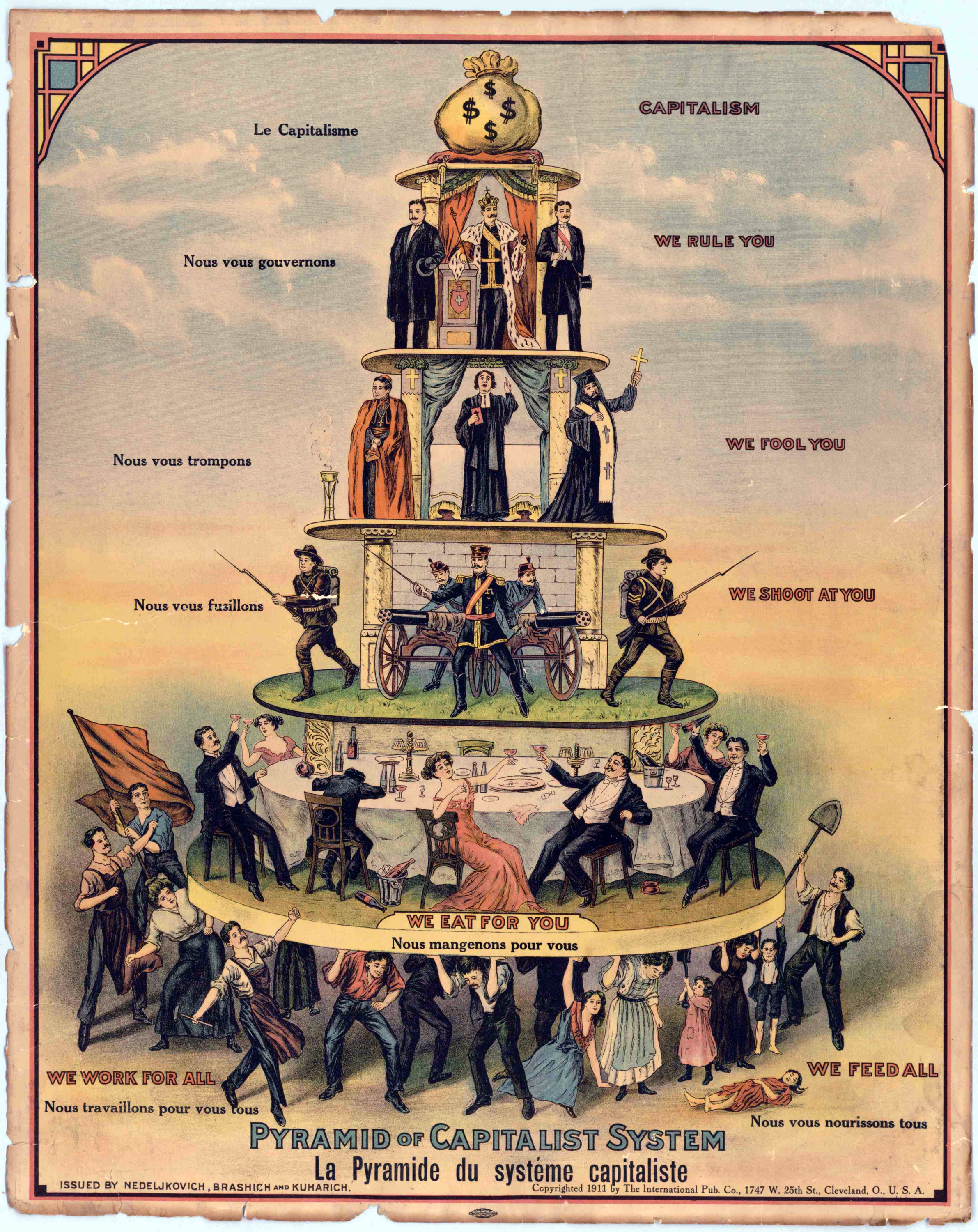
What I want you to do is to look at Capitalism that founded states and ruined them, opened up new horizons and enslaved millions, moved the wheels of Industry and drove hundreds of species of plants and animals into extinction, plundered the earth resources for profit, promoted science, all to the dethronement of a sustainable planet and ask yourself is it easier to imagine the end of the world than the end of capitalism.

There can be no doubt without some system the human race would descend into barbarism based on nothing but self-interest.

Our cultural output throbs with this notion of self-interest. Just look at the present Refugee problem facing the European Union.

So would the collapse of Capitalism lead to misery?

Capitalism in all its credulity and inequality reflects mans barbarous nature. Indeed the horrors of ISIS are trumpeted so vehemently by the western press precisely because they fill this narrative.

However a dog eat dog world with which capitalism and the state justify themselves is in part a fallacy.

In fact nature teems with co-operation – both between animals, between species and within the ecosystem as a whole.

We are the same, but it is no coincidence that where we do co-operate these areas are dominated by capital and constructed in a way that systematically reward the uglier sides of our common nature.

We know that the world in unfair where the few have too much and the most have too little.

The feeling that Capitalism, inequality, and injustice are inevitable and the idea that to struggle for a better world is naive is coming to an end.

If we could only entrench the cooperative compassionate and empathetic sides of our nature as dominant values in society we would redesign our Capitalist world – to a world worth while living in.

The current state of our planet is affording all of us this opportunity.

How can we tackle the world problems ?

A good place to start would be to get Capitalism to pay for it.

By placing a World Aid Commission on all High Frequency Trading, on all Foreign Exchange Transactions over ($20,000) on all Sovereign Wealth Funds Acquisitions, on all Drilling Wells.  This would create a perpetual pot out of Profit for Profit sake that could fund the inevitable cost of climate change.

In doing so we would redistribute the world’s wealth from the whole of the world. ( see previous Posts)

Sooner than later we are going to exhaust the raw materials and energy of the planet Earth. What will happen then?

Which is why, whenever the opportunity arises, we must be prepared to seize it.

← Back

Thank you for your response. ✨


Share this:

  • Share on WhatsApp (Opens in new window) WhatsApp
  • More
  • Share on Pocket (Opens in new window) Pocket
  • Share on Mastodon (Opens in new window) Mastodon

The Beady Eye looks at the benefits and non benefits of Social Media.

20 Monday Jul 2015

Posted by bobdillon33@gmail.com in Social Media., Technology, The Future

≈ 1 Comment

Tags

Big Data, Earths future., Earths Nightmare, Future Society., Globalization, Power of Social Media, Social Media, Social networking, Social world, The Internet of Things, The Internet.

I would like to think you’re here not necessarily because your agree or disagree with what I write, but that you think it is worth hearing and want to learn, interact and debate with me. If you like pressing the like button this is not the place to find the like button.  Lets hear your views.Eyes Robot Cyborg wallpaper background

Social Media a vast and complex subject far to large to cover all aspects.

In this post I am going to try to address some of the more obscure effects it is having on all of us or could have in not the so distant future.

How much do we understand this new dictatorship we’re in?

IF YOU ASKED ME I WOULD SAY: WE DON’T HAVE A CLUE.

Technology has revolutionized the way people go about their daily activities..

Google received over 2 million search queries per minute. The Number of people who use Twitter 302 million monthly active users 28/04/2015. Apple in the last three months turned over 60 billion a 40% profit of 11billion.

Facebook its monthly active users cleared 1.35 billion — roughly equal the population of China, and 9 percent larger than that of India. By these numbers, nearly 20 percent of the world’s population logs into Facebook once a month. And if we just look at the worlds Internet users, roughly half of them — every other person with Internet on the planet — use the site actively. 936 million daily 22/04/2015.

Half of all Internet-users live in “Facebookistan”

In the time it takes you to read this sentence more than 684,478 pieces of content will be shared on Facebook, 100,000 people will tweet, hundreds of thousands more will “like” an Instagram photo…and that’s if you read very quickly.

Access to technology has become an integral part of education, socialisation and industry related requirements, and accordingly Internet usage is evolving and growing rapidly. It is changing the way we shop to the way we drop. It does not care about time or distance. Everyone can be online every time and communicate with everyone everywhere.

The internet is home to millions of sites, representing both commerce and the people who share their thoughts and experiences with anyone who visits. The internet users worldwide now represents 3.17 billion, or in other words half of the current world population.  

The question is whether the effortless, ever-changing world of online social life is in fact one that ultimately undermines the ability to explore narrative, and place people, ideas and events in wider contexts.

There is no argument that it is effecting the way we all live but if we don‟t act to enhance inter generational communication, we risk generating a culture structured by a digital/communication divide between young people, their parents and older members of the community.

Cyber citizenship, if it is to retain relevance and deliver benefits to the community, therefore, is a concept that would more usefully be applied to the community as a whole, rather than as a set of policies that target young people as requiring protecting – or protection from – in a digital landscape.

Our understanding of cyber citizenship must be more holistic, to fully encompass and resonate across all of the settings in which we live our lives – be that home, school, work, our local communities or our communities of interest.

So what effect is Social Media actually having on the world communicates and our life styles.

For example:

The internet is the place to interact with new people and a way to expose yourself to strangers. The partial anonymity available online can be used as a mask for sexual offenders and psychos;

Social media is being used as a tool by movie studios well ahead of a film’s release to help shape the marketing campaign.

Billions of Amateur videos, posted on social media websites.

Americans across the country took to social media to celebrate the Supreme Court’s decision making same-sex marriage a right.

Its replacing communication by letter or phone.

Twitter and Facebook are only two of the online connections people use today to stay in contact with friends and family.

The entire purpose of setting up social media networks around the world is to allow and promote the world to communicate and connect with one another. However, the trend that seems to be following this widespread connection and communication is the exact opposite.

It all appears to boil down to you having no way of really knowing what is the truth and what is the lie. 

Someone’s life and personality neatly tucked away in the cyber-universe.

Do the dangers of online networking far outweigh the benefits?

Who knows.

One of the great dangers as far as I am concerned is the establishment of an economic order that would apply to all, everywhere.

No social animal is ever guided by the interest of the entire species to which it belongs.

Social Media allows cooperation with complete strangers who are imagined to be your friends. This could lead to the entire human race becoming a single unit governed by a single set of laws. These days we think of the planet as a single unit but for most of its history it was in fact an entire galaxy of isolated human worlds.

The ever tightening social media links will in the long run destroy individuality.  We are now living in an age of technology where the information contained on these sites is now being used against us.

So the benefits of SNS use are dependent on good internet and media literacy: having the skills to critically understand, analyse and create media content while avoiding addiction.

Young people are consuming, producing, sharing and remixing media.

This has led to the claim that today‟s young people are produsers‟ they actively produce and consume media. The importance of SNS in young people‟s everyday lives is indisputable: 90% of 12 to 17 year olds, and 97% of 16 to 17 year olds, use SNS

Social media has begun to create an unsociable disconnected generation of young adults… they lack awareness of the public nature of the internet. This include the management of personal information and privacy, the risk of predation and cyber bullying.  Can it be minimised?

It is compromising the development and maintenance of supportive friendships and involvement in institutions traditionally understood as the embodiment of “communities‟, namely school, sports clubs, families etc.

Social networking sites have become an important additional arena for politics. It increasingly important for the expression of identity.

What can be done if anything.

Education MUST increased internet and media literacy – ensuring all young people develop the skills to critically understand, analyse and create media content.

With the lack of parental supervision between the ages of fourteen to seventeen, which makes one of largest demographics using social networking sites, these teens ARE subjected to mature elements..

Teenagers are finding their identity in the world, they are the “my space generation” (Livingstone, 2008) the internet has allowed them to connect with people from all over the world but do they choose to do that…

It is presenting mankind with the biggest opportunity to change the course of history.  It is exposing the Inequalities and making the world aware of our common vulnerabilities.

Then there is growing power of Petitions not to mention the job market or trial by Social Media and the greed of the business world which is beginning to be recognized for what it is by targeting Advertising.

As I said don’t press the like button be an individual and leave a comment.

← Back

Thank you for your response. ✨


Share this:

  • Share on WhatsApp (Opens in new window) WhatsApp
  • More
  • Share on Pocket (Opens in new window) Pocket
  • Share on Mastodon (Opens in new window) Mastodon

The Beady Eye looks at Big Data.

30 Tuesday Jun 2015

Posted by bobdillon33@gmail.com in Big Data., Politics., Privatization, Technology, The Future

≈ Comments Off on The Beady Eye looks at Big Data.

Tags

Artificial Intelligence., Big Brother., Big Data, Distribution of wealth, Drones., Globalization, Inequility, Technological revolution

Is our world along with humanity disappearing into the Cloud.?

We as individuals are turning into “walking data generators”  ” App Material”

The Beady eye is only going to look a the most contentious realms of Big Data. Technologies that drive the explosion of growth of digital information such as the information collected.

Big Data is disseminated from trillions of devices such as smartphones and embedded sensors.

Huge quantities of digital trace data are collected through digitized devices (captured, for example, via social networks, online shopping, blogs, Apps, ATM withdrawals and the like) and through in-built sensors. The latter technologies include those that are equipped with GPS systems (e.g., smartphones and other surveillance and monitoring devices) and thus have the ability to identify a user’s location.

Ever since the dawn of life with language man has been collecting information. Not until written letters or symbols arrived was this information stored for future generations.

It is now being collected to replace us all with AI.

Knowledge was and still is the power that split the world into cultures- the rich in information and the poor with illiteracy – Slave or Master.

To day data is money and it is re splintering the world into the have and have not’s.

A next-generation retailer will be able to track the behavior of individual customers from Internet click streams, update their preferences, and model their likely behavior in real-time. Traditional advertising is shifting rapidly into the realm of personalized and highly targeted online and mobile ads—the realm of data driven marketing. Big Data and Advertising Case Study

Across all industries, including government, healthcare, media, energy, among others, data is becoming central to business operations. Every business is a digital company; and, every customer or employee is a content producer.

Today’s organizations use a plethora of information systems to support their business processes.

Advances in technologies and the increasing amount of information are transforming how business is conducted in many industries, including government.

Every business sector now collects data of one form or another, and the future marketplace will have even more computing power at their fingertips to mine customer behavior. Someone from every major industry is looking at the impact of being able to glean data from multiple data sources, structured and unstructured, from Healthcare to agriculture and more.

Businesses are using the power of insights provided by big data to instantaneously establish who did what, when and where.

The world’s volume of data doubles every 18 month.

In all forms it will grow 650 percent over the next five years.

Despite feeling overwhelmed, there’s an insatiable desire for more data.

The information overload is real and causing problems.

There is little or no regulations governing every time you click on a website, post on social media, use a mobile app and comment via email or to call centers, your data is collected for future use.

In my opinion, the world needs proper regulations about how and what kind of data should be collected.

My bigger concerns are related to unsanctioned organizations using my data and inferences about my interests, passions, affiliations and associations for borderline uses about my political, religious, sexual, etc. preferences. Just because a company can collect all kinds of personal information on consumers, it doesn’t mean they should use it willy nilly.

The more is better” philosophy.  There in lies the trouble.

Tracking customer preferences and purchases can reveal all kinds of private information, like illnesses, financial problems, even pregnancy.

For example a father recently discovered that his daughter was expecting a baby only because of Target’s TGT – 0.5% customer advertising technology. It analyzing his daughter shopping patterns so the store started to send her coupons for baby products which alerted the father.

Data gathering is not going away.

This should have us concerned, not just about targeted marketing but about what can be inferred about all of us every time we “like” something on FACEBOOK or post a snarky tweet on TWITTER.

From what I can tell, what Big Data does best is spy on individuals and collect useless data that helps people develop false and inaccurate assumptions.

Big Data may have wonderful potential, but we’re still going to have to get better at data exchange and integration before it’s going to have its biggest impact. We’ve spent decades digitizing everything, we should be able to analyze it. The problem is, that’s really hard – and it always has been.

THE BIG QUESTION REMAINS: Who does it belong to, and who should have access to it?
Human Face of Big Data

Big Data will let us watch flu outbreaks bloom and direct scarce vaccines to the most critical area’s. Schools are collecting more data than ever on how children are doing. Companies and nonprofits, meanwhile, are racing to put that data to use in the classroom.

Today, we’re at the convergence of these innovations—biotechnology, the ability to remote monitor and sensor, and now Big Data—which puts an augmented reality at our disposal.

However there is an undercurrent of concern about who owns big data and who has the right to access it.

Big Data technologies are at the heart of the intelligent economy and the solutions that enable it.

Big Data technologies are analyzing massive data sets, in science and research as well as mine data to prevent bad actors from committing acts of terror and/or to prevent waste, fraud, and abuse.

Government data generation and digital archiving rates are on the rise due to the rapid growth of mobile devices and applications, smart sensors and devices, cloud computing solutions, and citizen-facing portals.

As digital information expands and becomes more complex, information management, processing, storage, security, and disposition become more complex.

Information is a strategic asset, and government needs to protect, leverage, and analyze both structured and unstructured information to better serve and meet mission requirements.

New technology brings new challenges, and they should be properly educated to use it wisely and critically. It is used to study employee performance and retention.

The younger generations are not always aware of the challenges and dangers that come with big data.

Privacy here is a key issue to consider.

I sometimes get frightened to see what younger generations publish on their social media, without being aware how they expose themselves to the outside world. Just think about recommender systems.

When you want to buy a product or service from an online retailer, you are often frustrated because of the many choices and configurations possible. Thanks to an intelligent, analytical recommender system, purchases (and their customer feedback) are continuously monitored to better tailor future recommendations to customers.

Credit card fraud detection system.

In fact, thanks to credit risk analytics, our savings money is now efficiently safeguarded since every bank is obliged (via the Basel III capital accord) to analytically estimate credit losses and make sure it has enough provisions or equity buffers for worst-case scenarios.

Big Data is being used to detect social security fraud, to detect tax evasion fraud, to employ and fire people.

New data stores have emerged increasing the distribution of data and the complexity of securing and protecting that data along with it. It is now harder to protect sensitive data as it may move around between different transactional and analytical data stores as companies create new analytical workloads.

While there is more to do to wrestle big data to the ground. Defense (DOD) is investing approximately $60 million annually for new projects that will harness and utilize massive data in new ways and bring together sensing, perception, and decision support to make truly autonomous systems that can learn from experience, maneuver and make decisions on their own, and understand the limits of their knowledge.

Governments are facing more and more challenges in managing the life cycle of Big Data as government’s traditional silo approach hinders sharing knowledge and working across organizational boundaries.

While emails, instant messages, data files, document files, and scanned images are all driving the growth of Big Data, managing and storing this information — and its growth — are not trivial tasks. It has raised red flags about privacy, which remain unresolved.

The only way to make data totally safe is to not ever use it or keep it. Big Data Discriminates.

Our currents Laws cannot adequately handle the issues raised by Big data.

Just look at the legal complications created by systems using data and algorithms to include and exclude people from various programs.

What we have are porous laws on how this new technology changes previous understandings of civil liberties, not to mention data analysis, machine learning and the work scientists have been doing on non-discriminatory data mining models.

Individuals should be granted meaningful opportunities to challenge adverse decisions based on scores miscategorizing them.

Where data goes in and a decision comes out it’s unclear, or certainly opaque, just how that decision was arrived at. There is no way to trace why a decision was made.

With programmers doing real-life damage without even knowing it. The question is:  How do we update our understanding of due process for the 21st century?

These black box issues such as credit-scoring systems should be legal required to make their Systems Transparent.

If you take Google’s search algorithms for instance no one knows how it chooses the direction of its search. Perhaps it directs your search only to its profit.  It’s not  just about the quality of the user experience.HUNGARY–DPA Requesting a Flyby

Drones are becoming more widespread globally, the non military use of drones will add a further deluge of big data:

Cameras, heat and motion sensors, GPS, Bluetooth, Wi-Fi signals, facial recognition and bio metric scanners allow for the growing use of drones in the industrial, agricultural, transportation and retail areas.

The use of drones—theoretically—should only be possible upon individual permit irrespective of the drone’s starting point and final destination.

However enforcement may be difficult.

The only way is a world license that creates an official record of the individuals operating/using drones for a commercial purpose.

In practice, the widespread use of drones for private purposes may result in unreasonable administration in connection with the above, drone users and operators may also be reluctant to provide so detailed information on their activities for confidentiality reasons.

If the drone records flight details for aviation safety considerations, personal data captured but not relevant for this purpose should be anonymised and stored separately or should be made unidentifiable, unrecognizable and inaccessible by the controller immediately after the drone finished flying.

Data should be stored on the drones only temporarily.

For example, during the security surveillance of a property, the drone may record pedestrians’ faces, movements, body-temperature etc., and the devices should be configured in a way which prevents them from this kind of processing. Drones should solely be able to signal the location and fact of an allegedly unauthorized attempt at entry onto the premises.

In practice, this principle should be assessed on a case-by-case basis, as the actual use of the drone may require more extended data processing than envisaged at the beginning. The drone may locate a trespasser who needs to be identified (to ensure to security surveillance purpose), and, in such a case, privacy-by-default settings should not prevent the enforcement of the drone operator’s legitimate interests.

For example, a recording of an agricultural land cannot be used for the surveillance of agricultural workers.

Given the amount of data governments store on citizens and the sensitivity of some of that data, it makes sense for state budgets to carve out funds for someone to shepherd how that data is collected, treated and stored.

Should there be a meaningful data life cycle amidst the sea of data.

In fact , big data may ultimately be a key factor in how nations, not just companies , compete and prosper . Algorithmic decision-making:

In a nutshell, the problem with ‘datification’ is that somebody else may … use the data thus produced – often with purposes different from those originally intended.

Make no mistake about it:

Our future, the future of humanity and the planet hangs in the balance.

Do we have what it takes to disrupt what is…in order to create what can be?

Big data as a high concept will never fully define itself it’s just a big scam. Surveillance programs. High Frequency Stock Trading. Electronic Currency Trading. Dooming us all down to rely on Google.

I hope it die’s a miserable death.

← Back

Thank you for your response. ✨

Share this:

  • Share on WhatsApp (Opens in new window) WhatsApp
  • More
  • Share on Pocket (Opens in new window) Pocket
  • Share on Mastodon (Opens in new window) Mastodon

Knock, Knock, Who there? 2015

24 Wednesday Dec 2014

Posted by bobdillon33@gmail.com in Uncategorized

≈ Comments Off on Knock, Knock, Who there? 2015

Tags

Capitalism, Communications, Dignity, Earth, Facebook, Global ethic, Globalization, Human rights, Human society, Nations and cultures, Social world, Wars

Happy New Year to one and all.

As a species, we are social beings who live out our lives in the company of other humans. We organize ourselves into various kinds of social groupings, such as nomadic bands, villages, cities, and countries, in which we work, trade, play, reproduce, and interact in many other ways. Unlike other species, we combine socialization with deliberate changes in social behavior and organization over time.

Consequently, the patterns of human society differ from place to place and era to era and across cultures, making the social world a very complex and dynamic environment.

The ways in which people develop are shaped by social experience and circumstances within the context of their inherited genetic potential.

We are increasingly dependent on one another through international economic systems and shared environmental problems. The growing interdependence of world social, economic, and ecological systems makes it difficult to predict the consequences of social decisions. Changes anywhere in the world can have amplified effects elsewhere, with increased benefits to some people and increased costs to others.

.

All year I have advocated that Greed is the curse of Capitalism. It is at the root cause of Inequality.

One hundred and six billion of us have being born since the dawn of the human species. Making the current population 6% of all the people who ever lived on the planet. ( 7,283,314749)  With 2.8 Billion of us living on less than two dollar a day, with over a billion not having access to healthy water, with 876 million of adults illiterate, with ½ a million murders a year, with 30,000 children under 5 die every day from avoidable diseases it’s no wonder we have terrorists.

Currently we have 20% of the global population with 90% of the wealth.

Christmas is over and all the words of peace to mankind have been sung once more, but the canvas of the World remains weeping. It is time to return dignity to the world. Which can only be achieved by capping greed to create a perpetual fund. ( see previous postings)

Here is the current painting.

A round revolving ball in the vastness of space teaming with life, with 1.35 billion of us spending 20 minutes each day of Facebook each month. The new slavery of our age leading us to the globalization of indifference, born out of ego selfishness, removing our sense of compassion and dignity.

A world on which we have 26 countries in a state of conflict , with 170 Militias, Guerrillas, Separatist, Anarchic, are all represented by a world of 31% Christians, 23% Muslims, 15% Hindus, 7% Buddhists, 6% Folk religionists, 1% Others and 0,02% Jews.

A Disposable world full of Ego Centrism in which man was probably happiest when he was swinging from tree to tree.

A world with 20/30 million in modern-day slavery ( A slave in 1850 in America cost the equivalent of $40,000 in to days money, to-day an average of $90.)

A world that has this much fresh water.  

Fresh groundwater and surface-water make up the bubble over Kentucky, which is about 252 miles in diameter. The sphere over Georgia reresents fresh-water lakes and rivers (about 34.9 miles in diameter).

This much gold. 171.300 tons.

Gold piled up on Wimbledon's centre court

Just enough oil to last the world 53.3 years at the current production rates.

Just enough gas in proven reserves to meet 58.6 years of global production at the end of 2010.

That will run out of phosphorus in 50 to 100 years unless new reserves of the element are found.

That has enough coal to meet 188 years of global production.

A world that when you take a deep breath the chances are, the air filling your lungs is far from pure. Even if you live in a clean, ecologically conscious area, you may be inhaling pollutants from faraway, less-pristine locales. Your hometown air may contain microscopic particles of mercury-coated coal dust from China, diesel from Europe, ozone from Los Angeles, or carbon monoxide from India—or possibly a cocktail of all of the above.

Where Scandium and terbium are just two of the 17 rare earth minerals that are used in everything from the powerful magnets in wind turbines to the electronic circuits in smartphones. The elements are not as rare as their name suggests but currently 97% of the world’s supply comes from China and they can restrict supplies at will. Exact reserves are not known.

Where we are told by the Artists not to don’t worry,( the Artists being our World Leaders places in power by us the people with black x’s in square boxes) because the Economy and World Trade, is turning people into merchandise for trade while depriving its victims of all dignity.

Where there is 75 trillion dollars in circulation. A billion Cars. With roughly 10/11 million standing soldiers between 10 countries.  While 86%-91% of the 8.7 million(± 1.3 million) species that we share the world with still await description before we are all swimming.
Photo: Woman wading through flooded Venice plaza

Where Scientific research indicates sea levels worldwide have been rising at a rate of 0.14 inches (3.5 millimeters) per year since the early 1990s.  The trend, linked to global warming, puts thousands of coastal cities, like Venice, Italy, (seen here during a historic flood in 2008), and even whole islands at risk of being claimed by the ocean.

A world where we now need more than ever to apply different brush strokes if the painting for 2015 is to have any chance of been appreciated in the future.

Day after day I follow news reports of the enormous suffering endured by many people in the Middle East. It is not enough to contain wars, or international terrorism, which displays deep disdain for human life and indiscriminately reaps innocent victims we must stop the bankrolling of these conflicts by the unchecked traffic in weapons.

There seem little point to continue to catalog the illnesses that are plaguing the world. You could continue to list all the shortcomings till the end of the earth.

Communications is about informing people – not collecting “hits.” In order to progress towards the future we need the past. However in doing so we need to move away from the present World model that is more prone to make demands than to serve humanity. 

We all know that the human family, must be grounded on respect, cooperation, solidarity and compassion. That it must be built on justice, socio-economic development, freedom, respect for fundamental human rights, and the participation of all in public affairs and the building of trust between people’s.

None of our present political systems are coming up to the mark ( Democracy, Republic , Monarchy, Communism , Dictatorship) because of Greed.

If we are to break out of the structures that hold us back from a recognition, we must share and share a like. Update our out of date World Organisations that are unable to function due to lack of funds, United Nations, the World Bank, the IMF, the World Health Organisation,that are run by our of date Government Systems (see post: Is Democracies outdated and Disfunctional)

If we are to reduce the Inequalities of the future a Global ethic is needed.

We all deserve a peaceful world order based on unity of purpose. Their dignity is your dignity.

As Pope said. ” It (the earth) is the greatest resource which God has given us and is at our disposal not to be disfigured, exploited, and degraded, but so that, in the enjoyment of its boundless beauty, we can live in this world with dignity.”

We need profound roots, sustainability, not a disposable society, which can only be achieved if we use the power of social media to effect change (see previous posts)

← Back

Thank you for your response. ✨

So there you have it a master piece deserving of to be hung in the Louvre, beside the Mona Lisa.

If your have by any chance read this post, I am not interested in receiving your like tick. I am Interested in any suggestions as to how we might go about setting up a grass roots Organisation to apply pressurize where needed by using the power of Social Media ( Not a Petition site.) more a name and shame site.    Happy New Year.


Share this:

  • Share on WhatsApp (Opens in new window) WhatsApp
  • More
  • Share on Pocket (Opens in new window) Pocket
  • Share on Mastodon (Opens in new window) Mastodon

IS DEMOCRACIES OUTDATED AND DYSFUNCTIONAL ?

16 Tuesday Dec 2014

Posted by bobdillon33@gmail.com in Uncategorized

≈ Comments Off on IS DEMOCRACIES OUTDATED AND DYSFUNCTIONAL ?

Tags

Democracy, FOUNDATIONS /FORUM THINK TANKS, Globalization, Government


As far as I know I have written on this subject before.

Although Democracy may be a universal aspiration it is a culturally rooted practice.

Perhaps it time to recognize that its aspirations (especially presented by American Democracy which is for sale by lobbyists and donors) is not an expression of free speech and is causing extremism.

Here is short overview at where we at.

The Euro was introduced by technocrats in 1999 only two countries held referendums Sweden and Denmark both rejected it.

Italy and Greece have replaced democratically elected leaders with technocrats.

The European Parliament is both ignored and despised. It is a breeding ground for extreme parties such as Marine Le Pen’s National Front in France, Golden Dawn in Greece ( A Nazi Party) U KIP in England, a Raciest party hiding behind the very word Democracy.  There are plenty of other examples.

Democracy is clearly suffering from serious structural problems which can be seen in its institutions that are meant to provide models for new democracies.

It has been infiltrated by big business money with voters becoming if not all ready disenfranchised.

Globalisation is and has changed national politics.

More and more power is surrendered to trade and financial flows resulting is Manifesto promises not been kept. Not surprising.

Single countries can not deal with Climate Change never mind micro powers within their boundaries which are disrupting traditional politics. (NGO’S , brake away’s such as Catalans, Scots, city mayors etc.)

The Internet is making it easier to organise and agitate while people are vetoing on reality TV. With a click of a mouse you can support a petition.

Elections are no longer the biggest challenge to Democracy the deficits are.

France and Italy have not balanced their budgets for more than thirty years.

England and America can only watch as their debt clock tick fast and faster fostering unsustainable. While Sovereign Wealth funds compete for limited resources world-wide.

In the mean time Western population are getting older and more expensive creating a future between inherited entitlements and future investment.

World wide membership of political parties is falling. (1% now compared to 20% in 1950 in England.) More than half of the votes in Europe have no trust in their Governments. 62% of English votes consider there politicians to be liars. A quarter of the votes in Italy recently voted for a party founded by a comedian. In Iceland they voted in the Best Party to run the Reykjavik’s city council a party that openly proclaimed itself to be corrupt.

Across the water President Obama can even pass a budget, paralysed by 9/11, rogue regimes and Jihadists he has no choice but to swallow the ISSI Pill and look on while Mr Putin calls the Worlds bluff.

Not good reading any of it.

So the questions is what can be done.  Here a few suggestions.

  1. Change the vote system to reflect the people and not Majoritarianism.
  2. Put limits on the power of Governments, by written constitutions that reflect the rights and protects individual rights.
  3. Stop Corruption by Lobbyists.
  4. Up date our world Organisations.
  5. Name all donors to Political parties.
  6. Stop handing or selling off resources to profit.
  7. Introduce Fiscal legal rules to balance the budget.
  8. Transparency.
  9. Introduce e Democracy to create direct democracy where the Government is obliged to consider any citizens initiative that attracts 50,000 signatures.
  10. Cap Greed ( See previous Posts)

Democracy has always been a powerful but it has always been imperfect due to human creativity and perversity. It will remain so till we remind our leaders that they only borrow power.

With the state of the world and where it is going we are already in need of bright ideas. 


← Back

Thank you for your response. ✨


Share this:

  • Share on WhatsApp (Opens in new window) WhatsApp
  • More
  • Share on Pocket (Opens in new window) Pocket
  • Share on Mastodon (Opens in new window) Mastodon

Here’s a Question. Is it time to redefine what it means to be a nation?

10 Wednesday Dec 2014

Posted by bobdillon33@gmail.com in Uncategorized

≈ Comments Off on Here’s a Question. Is it time to redefine what it means to be a nation?

Tags

Citizenship., Communities, Community relations, Europeans, global climate change, Globalization, Identity, Immigration, Interculturalism, Multiculturalism, National borders, National identity, Nationhood, Politicians, Population mobility, Sovereignty, transnational relationships, Tribalism, Western economies

This is a vast subject governed by innumerable historical beliefs some of which are set in concrete and blood so I am going to discuss this subject in two parts.

Part One:

If I happen to offend anyone that has lost or might suffer the loss of a love one in defense of their Nation with anything I write in these posts I apologize.

I am not advocating that we should abolish the sense of Nationhood rather that we must look at what it means as there is going to be in the next hundred years a massive remix of people whether we like it or not. 

Population mobility is accelerating and across the globe, people have become far more able and willing to re-locate in search of better employment prospects and a higher standard of living; or increasingly as a lifestyle choice where borders have remained open to them.

The theory of development that has been force-fed into dominant economic discourse all over the world is now contributing as to one of the main reasons we see immigration. With the predictions of climate change in the future this immigration can only increase.

In 2010 there were 214 million international migrants and if they continue to grow in number at the same pace there will be over 400 million by 2050 (IOM 2010).

Forced migration, where people have to move as a result of climate change, conflict and war, threaten to dwarf these numbers.

For the world as a whole at the moment 13% primarily considered themselves as “citizens of the world”, 38% put their Nation-State first, and the larger remainder put local or regional identities first.

There is no getting away from it that Identity is becoming more multi-faceted and whereas multiculturalism has been firmly rooted in racial constructs, ideas about difference has developed in other directions.

Sexual orientation, gender, faith and disability and other aspects of identity are now firmly in the public sphere and contributing to notions of personal identity alongside national identity.

Identity is increasingly complex. As well as the now routine hyphenating of nationality, faith and ethnicity, the consequence of people from different identity groups sharing the same society has also led to the growth of ‘mixed race’ or multiple identities.

This group is now the fastest growing minority in Britain and many other countries.

Inter-marrying, building new virtual networks, and creating real and tangible personal relationships at all levels is currently changing nations from the inside out.  ( What once was Christian will be Muslim. What once was American will be Spanish Mexican, What once was German will to Northern African and so on.)

States – and especially their political elites – have inevitably tried to cling to the idea of clear national boundaries and governance and any suggestions of the loss of sovereignty or the advent political plurality are quickly contested. (For example the recent Resignation of the Israel Government over changing its Constitution to place Jews in a privileged position of citizenship. )

There are now 20 cities with more than 1 million foreign-born people and another 59 cities worldwide with a presence of 100,000 or more foreign-born residents.

These include 11 cities with an immigrant presence of between 500,000 and 1 million people, for example in Argentina, Canada, USA, Russia and Israel (Clark, 2008,).  This is not simply about numerical growth however, migrant communities are also increasingly diverse and this inevitably leads to much greater complexity within nation states, particularly in the Western economies, which are often the target countries for migration.

The extent of population movement is such that all western economies are now characterized by ‘super’ or ‘hyper’ diversity with cities, like London, Stockholm, Toronto, New York and Amsterdam with over 300 language groups.

This is beginning to re-define our notion of multiculturalism which had previously been seen as the then essentially White countries coming to terms with migrants from a limited number of former colonies.  Relationships are now much more complex and community relations are multi-faceted, no longer simply revolving around majority/minority visible distinctions underpinned by distinct sociology-economic positions (Cantle 2012).

The reality is however that national and cosmopolitan identities now also need to sit alongside each other – they are not opposed – something that multiculturalism has never acknowledged.

Governmental responses to date have been ambivalent.

The changing nature of personal identities, with the separate components shaped by increasing diversity in terms of faith, present locality, and ethnicity – as well as an apparently declining sense of nationality is changing what it means to be Irish, English, French, American. Take your choice from Australia to Canada and you finds this taking place.

For the most part, Governments have attempted to reinforce their view of national identity through such measures as the teaching of national history and promoting national citizenship and identity. By steadfastly retaining the pretense of the integrity of national borders and governance, and by attempting to deny the interdependence brought by globalization, they reinforce a fear of ‘others’.

They appear not to want to grasp or lag behind the current reality of multi-faceted identities within their communities and may well find that the new phenomenon of social media will begin to create new transnational relationships which transcend traditional power structures.

Already there is clear evidence of a decline in traditional democratic traditions across Europe, with election turnouts and political party membership in decline. There is also some evidence of the growth of new political movements from the indignados in Spain to that led by the comedian Grillo in Italy and the current lack of trust and disconnection from mainstream parties suggests that these movements could grow still further.

In the UK, along with many other countries, there have been attempts to restrict immigration and to ensure that those immigrants that do come are able to speak the native language and past various tests based on attitudes and knowledge of customs and history (Cantle, 2008).

There has been little by way of any systematic attempt to engage with globalization through intercultural education and to enable people to become more at ease with diversity and globalization

Identity remains promoted on the basis that it is fixed and within boundaries.

Sen, Suggests that conflict and violence are sustained today, no less than the past, by the illusion of a unique identity (Sen, 2006).

He argues that, the world is increasingly divided between religions (or ‘cultures’ or ‘civilizations’), which ignore the relevance of other ways in which people see themselves through class, gender, profession, language, literature, science, music, morals or politics. He challenges ‘the appalling effects of the miniaturization of people’ and the denial of the real possibilities of reasoned choices.

Interculturalism should be part of this response and has been proposed on the basis of a progressive vision (Cantle, 2012) to support the necessary changes, replacing multiculturalism which became completely out of step with this new world order.

The era of transnational relationships, the growth of diasporas, new and pervasive international communications and travel, mean that such policies are no longer tenable. ‘Interculturalism’ can provide a new positive model to mediate change across regions and nations and recognize the multivariate relationships across all aspects of diversity.

When power resides with a global elite, and the economic crisis links our fate across borders, we are, it seems, all ‘citizens of the world. A ‘global village’ mediated through electronic communication.

Globalism, global civil society, global consciousness and cosmopolitanism were to sweep away tribalism of nations to clear the path for a new and better world in which humanity would finally achieve unity and share happiness.

Globalization frees and unites us. Increased freedom of movement, a revolution of communication, the hyper-acceleration of cultural production, have together created a fertile ground for innumerable imagined communities, unrestricted by the limits of geography.

What is now called globalization is only the backlash of an age-old process, constantly fostered by capitalist expansion, which started with the constitution of rival national units, at least in the core of the world economy.

It is very hard to find any trace of this optimistic view of globalization

For me the world economy is evidence of the pervasive ideas of Liberalization, Privatization and Globalization as panacea for all the problems our countries faces today.

World-wide solidarity among workers, disadvantaged and oppressed appears to remain an ideal than a reality and anti-immigrant sentiment is on the rise in the many parts of the world.

The world is certainly globalized and is still globalizing but the old nations and nation-states have not withered away.

If you take Europe it does not exist except as a discursively constructed object of consciousness so it follows that Europeans also do not exist as a people with shared past, other than conflict. Europeaness consists as much in the way of values, interests,and beliefs, modes of justification, etc are mediated and negotiated as in a specific set of identifications. European identity or being European has not seriously undermined the centrality of nationalism in the modern world.

There is little point in contesting the  ‘emptiness’ of so many arguments for global citizenship. It is easier to be a global citizen if you are secure in your rights as a national citizen.

The logic that ‘only if the rich get richer will the poor live better! is a joke.

So why are Nation-states forfeiting their sovereignty in order to support global and regional markets, by selling their natural resources and future infrastructure to Sovereign Wealth Funds. The idea that the Welfare State has failed its citizens is sold through the mechanism of the Public Private Partnership, to pave the way for the take over of public assets by private interests.

The handing over common owned resources by interlinking of rivers, mining projects and disinvestment corroborated by the stock market fly in the face of Nationhood. (see previous Posts) For example in 2007, the total volume of trade by private corporations world over was over $1171 trillion. The sum of the earnings of all countries was a mere $66 trillion, almost twenty times less!

It needs to be understood that the financial power of the multi-nationals’ private business is huge.

The sovereignty of the state is no longer linked to a territory, nor are today’s communication technologies or military strategy, and this dislocation does in fact bring about a crisis in the old European concept of the political Nation.

The nation’ is frequently presented under the banner of Globalization as an outdated inconvenience, a domain of racism and intolerance.

New kinds of national identity are being forged.

A conversion from an ethnic to a multicultural and cosmopolitan community are evolving with alternative forms of belonging. That modernity is almost unthinkable without capitalism (despite any such attempt to render modernity as a democratizing force tied to a conception and experience of time).

Divisions in society are no longer based on citizenship, but rather on economic factors: access to employment, housing conditions and education opportunities.

So is it time for us to redefine the meaning of Nationhood. To rewrite and rethink our individual and collective destinies. Can we turn away from the future of the past and embody the logic of a future to come.

States now need to come to terms with the new circumstances that confront them.

The composition of western societies has become far more dynamic and complex. Ideas about personal and collective identity have inevitably begun to change as a consequence.

While states attempt to assert their relevance in a global age through both multiculturalism and top-down nationalism, new models of identity and strategies of participation need to be developed to deal with the co-existing phenomena of national experience and cosmopolitanism.

We all know that it is all but impossible for races and cultures that have differences going to the root of their immigration to be assimilated into a united whole.

It is my view that a Nation without a written Constitution that enshrines equality across the board can no longer offer Nationhood.

Because the concept of Citizenship and Sovereignty that emerged during the 17th/19th Century have become outdated and remains to this day significantly flawed.

The state remains a very powerful force in the lives of many people and is the most significant unit of democracy in the developed world. For many, being a citizen of a particular state, having absorbed the traditions and cultures, being subject to its laws and economic regulation and taking part in the polity, a sense of belonging is still very evident. This is a key point.

As an elite of politicians, businessmen and media executives literally fly over the great unwashed it is important to recognize that the nation, by now understood as both an antagonistic and unequal grouping as well as the potential for collective sovereignty, really is dead for many of those in positions of global power.

Nationalism will have to develop a new way of comprehending the world.

The answer to all of this will have to wait for the next post.

Why?

Because our Politicians are driven by the economy and not by what their people need to live fulfilled lives.

In the Corporate world Nations only exist in the contested space of conversation. In part two we will address this concept.

← Back

Thank you for your response. ✨


Share this:

  • Share on WhatsApp (Opens in new window) WhatsApp
  • More
  • Share on Pocket (Opens in new window) Pocket
  • Share on Mastodon (Opens in new window) Mastodon

Sovereign Wealth Funds. Alarm.

30 Sunday Nov 2014

Posted by bobdillon33@gmail.com in Uncategorized

≈ Comments Off on Sovereign Wealth Funds. Alarm.

Tags

Business and Economy, Capitalism, Extreme poverty, Globalization, Government, Greed, Inequility, ongoing Privatization of the world, Privatization of the World., sovereign wealth funds (SWF), The European Union

<img alt=”” src=”http://media-cdn.tripadvisor.com/media/photo-s/04/79/29/e0/1728.jpg”/>
This photo of 1728 is courtesy of TripAdvisor

Its back to my hobby-horse the ongoing Privatization of the World.

It is of course is happening in a clever way, with very careful paperwork, so we have the option of pretending that it’s not actually happening, right up until the bitter end.

I often wonder is it just me. You barley hear a mummer about it from any other quarter. Other than Ireland where the population has woken up to the Privatization of water.

Perhaps it’s that no one gives a tosser.

That our Governments are systematically divesting themselves of bits and pieces of their own sovereignty, by transfer of assets and service functions from public to private hands.

It’s taking place all over the world without really anyone noticing it happening — often not even the people are asked to vote formerly on the issue.

It is my contention that it is the quality of the state rather than the fact that assets are owned by the state that matters more. In developing countries with extensive market and information failures the state should play an important role in promoting equitable development over the long run not sell of their assets to the highest buyers.

At the political level privatization has been challenged by workers affected by attendant retrenchments and the restructuring of internal and external labor markets consequent upon privatization that has resulted in increased worker vulnerability, and by consumers who have often been negatively affected by increased prices based on cost recovery pricing regimes instituted as a consequence of privatization, or by reduction in service provision arising from “efficiency enhancing” measures as a consequence of privatization.

No one knows precisely how much money is held by SWFs but it is estimated that they currently own $3.5 trillion in assets, and within one decade they could balloon to $10–15 trillion. (equivalent to America’s gross domestic product, an amount larger than the current global stock of foreign reserves of the USA which is about $5 trillion.)

Imagine the biggest and most aggressive hedge fund on Wall Street, then imagine that same fund is fifty or sixty times bigger and outside the reach of any other major regulatory authority, and you’ve got a pretty good idea of what an SWF is.

The rise of sovereign wealth funds (SWF) as new power brokers in the world economy can no longer be looked at as a singular phenomenon but rather as part of what can be defined a new economic world order.

This new order has been enabled by several mega trends which operate in a self-reinforcing manner, among them the meteoric rise of developing Asia, accelerated globalization, the rapid flow of information and the sharp increase in the price of oil by a delta of over $100 per barrel in just six years which is enabling Russia and OPEC members to accumulate unprecedented wealth and elevate themselves to the position of supreme economic powers.

It will not be long before transactions involving investment by sovereign wealth funds, as with other types of foreign investment, may raise legitimate national security concerns.

Concerns are growing that the purpose of the investments might be to secure control of strategically important industries for political rather than financial gain.

They on the other hand see themselves as passive, long-term investors, driven solely by the need to make a good return on their country’s surplus cash.

There is a degree of looking through the wrong end of the telescope to all this.

Sovereign wealth funds have with total assets estimated at $5.4tn as of October 2013. The funds have gained more than $750bn in additional assets since 2012 of which only $60 billion has gone to recent bank bailouts.

They are rapidly becoming owners of big chunks of American,the UK and Europe infrastructures.

Unlike the central banks of most Western countries, whose main function is to accumulate reserves in an attempt to stabilize the domestic currency, most SWFs have a mission to invest aggressively and generate huge long-term returns.

The origin of these SWFs is not even relevant, necessarily.

What is relevant is that these funds are foreign.

They are state-owned investment pools that thanks to a remarkable series of events in the middle part of the last decade they are buying up your governments services such as water treatment, parking meters, toll highways, rail links, ports, public infrastructure projects, commercial real estate all delivering a lot of cash into the coffers of sovereign wealth funds like the Qatar Investment Authority, the Libyan Investment Authority, Saudi Arabia’s SAMA Foreign Holdings, and the UAE’s Abu Dhabi Investment Authority.

Some recent activity:

(The first was the announcement that the Qatari royal family is planning a large investment in the controversial £50billion HS2 rail link, focused on a major new station and housing scheme in central Birmingham.

Qatar Investment Authority, one of the world’s largest sovereign wealth funds, is soon to table a new bid to take over Songbird Estates which owns the iconic Canary Wharf tower in east London, one of the best-known modern symbols of British capitalism.  

Libya’s sovereign wealth fund is suing French bank Societe Generale in a British court for $1.5 billion for allegedly channeling bribes to allies of the son of slain dictator Muammar Qaddafi.  

Iran’s President Mahmoud Ahmadinejad said on Saturday the country’s sovereign wealth fund could reach $55 billion by March next year if oil prices kept high.

Iran earned $100 billion in oil revenue in 2011. Iran is both the world leader in Shariah Compliant Finance and the world’s most active state sponsor of Jihadist terrorism.

Deutsche Bahn Seeks Sovereign Funds for the state-owned railway, is seeking to sell shares to sovereign wealth funds in the Middle East and Asia during the initial public offering. )

What is more to the point, is we’re being colonized/Privatized.

Industry today may not be regarded as such an industry tomorrow, and vice versa.  Just look at the explosion of energy prices — thanks to a bubble that Western banks and perhaps some foreign SWFs had a big hand in creating.

Out side any regulation these funds are free to plunder the earth in the form of Hedge Funds( (which they have a bunch) with out anyone knowing who the funds investors are.

The point here is if these funds.

Are not regulated by the relevant international bodies determining which kinds of information about their balance sheets, management structures, investment objectives, portfolio breakdowns, and so forth should be supplied by sovereign wealth funds. The European Union could then put curbs on funds failing to comply with the standards for the publication of such information.

One way or the other they should be Capped ( See previous posts)

← Back

Thank you for your response. ✨


”


Share this:

  • Share on WhatsApp (Opens in new window) WhatsApp
  • More
  • Share on Pocket (Opens in new window) Pocket
  • Share on Mastodon (Opens in new window) Mastodon

We don’t live in a digital world – the washing machine has changed lives more than the internet.

23 Sunday Nov 2014

Posted by bobdillon33@gmail.com in Uncategorized

≈ Comments Off on We don’t live in a digital world – the washing machine has changed lives more than the internet.

Tags

Capitalism, Capitalism and Greed, Capitalist World., Distribution of wealth, FOUNDATIONS /FORUM THINK TANKS, Globalization, Greed, Inequility

We do however live in a Capitalist World.

Capitalism is woven into nearly every aspect of our lives, yet it’s rarely subject to substantive conversation.

If we’re to move forward as a society, capitalism needs to be up for serious discussion, honest evaluation and, ultimately, systemic change. Capitalism is often discussed—even dismantled—in academia, but not in terms that make sense to non-specialists.

If there is a problem with capitalism, it is with the greedy few who occasionally foul up the system for the rest of us. The 85 richest people in the world hold as much wealth as today’s “other half”—3.5 billion of the world’s 7 billion humans. Who thinks that’s a fair system? How can it be acceptable that anyone, let alone 2.4 billion people, lives on less than $2 a day?

With more free time, we could build a more robust democracy by engaging with the political issues that affect our lives and organizing more participatory structures to make decisions in our communities. If there’s anything threatening to capitalism, it’s that!

It’s convenient for capitalists to have everyone else thinking they don’t work hard enough and that any ill fortune is their own fault.

How well can capitalism be working when so many say it doesn’t? Capitalism can’t work for everyone. If it did, it wouldn’t be capitalism.”why do we settle for a system that fails so many?

So here is a hypothetical question.

If you were asked to explain Capitalism to an individual who had never experienced or heard of Capitalism what would you say it is.

Here are a few Quotes to get you started then have a look below at what I think.

Gustave Flaubert

“As humanity perfects itself, man becomes degraded. When everything is reduced to the mere counter-balancing of economic interests, what room will there be for virtue? When Nature has been so subjugated that she has lost all her original forms, where will that leave the plastic arts? And so on. In the mean time, things are going to get very murky.” ― Gustave Flaubert

Carl Sagan

“One of the saddest lessons of history is this: If we’ve been bamboozled long enough, we tend to reject any evidence of thebamboozle. We’re no longer interested in finding out the truth. Thebamboozle has captured us. It’s simply too painful to acknowledge, even to ourselves, that we’ve been taken. Once you give a charlatan power over you, you almost never get it back.”

Edward Abbey

“Growth for the sake of growth is the ideology of the cancer cell.” ― Edward Abbey, The Journey Home: Some Words in Defense of the American West

Michael Parenti

“The essence of capitalism is to turn nature into commodities and commodities into capital. The live green earth is transformed into dead gold bricks, with luxury items for the few and toxic slag heaps for the many. The glittering mansion overlooks a vast sprawl of shanty towns, wherein a desperate, demoralized humanity is kept in line with drugs, television, and armed force.” ― Michael Parenti,  Against Empire

Napoleon

“The hand that gives is among the hand that takes. Money has no fatherland, financiers are without patriotism and without decency, their sole object is gain.” ― Napoleon

George Carlin

“Capitalism tries for a delicate balance: It attempts to work things out so that everyone gets just enough stuff to keep them from getting violent and trying to take other people’s stuff.” ― George Carlin

Gustave Flaubert

“As humanity perfects itself, man becomes degraded. When everything is reduced to the mere counter-balancing of economic interests, what room will there be for virtue? When Nature has been so subjugated that she has lost all her original forms, where will that leave the plastic arts? And so on. In the mean time, things are going to get very murky.” ― Gustave Flaubert

Philip Slater

“Our economy is based on spending billions to persuade people that happiness is buying things, and then insisting that the only way to have a viable economy is to make things for people to buy so they’ll have jobs and get enough money to buy things.” ― Philip Slater

Russell Brand

“Perhaps if we could popularise through the techniques of branding and consumerism, a different idea, a different narrative, perhaps the world can change. After all it changes constantly and incessantly, it’s just the perceptions that we have are governed by people with self-interest and are not in alignment with the health and safety of us as individuals or as a planet.” ― Russell Brand

Jonathan Sacks

“To whom is an international corporation answerable? Often they do not employ workers. They outsource manufacturing to places far away. If wages rise in one place, they can, almost instantly, transfer production to somewhere else. If a tax regime in one country becomes burdensome, they can relocate to another. To whom, then, are they accountable? By whom are they controllable? For whom are they responsible? To which group of people other than shareholders do they owe loyalty? The extreme mobility, not only of capital but also of manufacturing and servicing, is in danger of creating institutions that have power without responsibility, as well as a social class, the global elite, that has no organic connection with any group except itself.” ― Jonathan Sacks

Daniel Pinchbeck

“The capitalist mind perceives the world purely in terms of material resources to be used for its benefit, to increase productivity and profit without thought of long-term consequence. If there is still a vague and oppressive sense of guilt, of wrongness and imbalance, this gnawing guilt spurs capitalism on to greater acts of consumption, more …  more violent attempts to subjugate nature, more totalizing efforts to create distractions. To the “rational materialist” mind, death is the end of everything; this thought feeds its rage against nature, which has placed it in this position of despair.” ― Daniel Pinchbeck

Barry Unsworth

“Money is sacred as everyone knows… So then must be the hunger for it and the means we use to obtain it. Once a man is in debt he becomes a flesh and blood form of money, a walking investment. You can do what you like with him, you can work him to death or you can sell him. This cannot be called cruelty or greed because we are seeking only to recover our investment and that is a sacred duty.” ― Barry Unsworth, Sacred Hunger

Chris Hedges

“Unfettered capitalism is a revolutionary force that consumes greater and greater numbers of human lives until it finally consumes itself.” ― Chris Hedges, The Death of the Liberal Class


My Thoughts:

In fact, the term capitalist, is a remnant of sloppy, hysterical, anti-commerce, 19th Century thinking that survives to this day.

I guess it all depends on what kind of capitalism we are talking about and the problem with capitalism is that it is rarely practiced in its entirely.

You might say it is a rat race for the worker who must live a life in which there is a real possibility that changes in consumer demand or in technology will eliminate his/her livelihood and in which his/her ability to find a new job is conditioned by his/her “ability to compete”.

There is not a single day that passes that I don’t hear some complaint about the state of capitalism. “What is wrong with capitalism today?” is dependent on who you ask.

Modern market capitalism has shifted recently with the emerging supremacy of money markets and the financial system over the actual trade of goods. The new capitalism” is based on mathematics rather than trade and its currently practiced is simply not sustainable.

We do not have global organizations capable of managing these tension points nor are societies willing to curb growth and consumerism.

Under capitalism insensitivity to human needs has developed. One of the fundamental faults of capitalism is the basic axiom that if everybody tries to accumulate as much property/money as possible the general interest of the people will be served.

For years now I have watched the gradual drift in the minds of the average person from an understanding of our political economic reality and the need for corrective actions.

The reality is fear and greed are part of the human condition and Growth for the sake of growth is the ideology of the cancer cell.

The mass media is becoming more and more an opiate, an aid for living the unexamined life.

The current world tensions are a result of a struggle for spheres of influence and trade—the socialist markets are essential not open to trade from capitalist countries.

So if I were to explain to days Capitalism I would tempted to say that the essence of capitalism is to turn nature into commodities and commodities into capital. The live green earth is transformed into dead gold bricks, with luxury items for the few and toxic slag heaps for the many.

But no economic order to date has so obviously displayed such an enormous productive capacity as has capitalism.  However whether it aids the poor in escaping their poverty or abets the forces that perpetrate that poverty is still to be seen as Capitalism is inherently exploitative in that it forces people to be “competitive” rather than “cooperative”.

As long as Capitalism exists, there will always be people who will be rich and those that are too poor. One longs for a kind of economic “peaceable kingdom”; such cannot exist under an economic system in which competition plays such a large role as it does in capitalism. For the most part, capitalism can be viewed as complex system based on inequality and monopoly.

In a true Capitalist market economy, we would not price fix, bail out banks, give subsidies, etc.

Peaceful citizens were classed as bloodsuckers, if they asked to be paid a living wage. When morality comes up against profit, it is seldom that profit loses.

In what they call the third world we have glittering mansion overlooking a vast sprawl of shanty towns, wherein a desperate, demoralized humanity is kept in line with drugs, television, and armed force. Let nothing interfere with economic growth, even though that growth is castrating truth, poisoning beauty, turning a continent into a shit-heap and riving an entire civilization insane.

The hand that gives is among the hand that takes.

Money has no fatherland, financiers are without patriotism and without decency, their sole object is gain.

Our political problems have deepened with the demise of unions as an effective political force, the continued growth in the belief in the desirability of pyramid economics and class structure (which has been sold by a media controlled by those at the top of the pyramid), and the dependence of our two-party system upon those at the top of the pyramid for funds to cover their election expenses.
Here’s no such thing as a ‘free’ market.
Globalisation isn’t making the world richer.
Poor countries are more entrepreneurial than rich ones.

Higher paid managers don’t produce better results.

We are quickly reaching the tipping point where growth in GDP in any particular country comes at the expense of growth in GDP of another.

What would replace it (capitalism)?

It’s too late to replaced it by any other system and extremely difficult to prompt any-other system but not too late to rectify its glaring weaknesses.

It’s not to late to suggest/generate ideas to create a better society where everybody is properly fed, clothed, and housed; where everyone worked and received a fair return for their work with none receiving too much; where intellectual development for all is encouraged; where businesses are the servant to man; where the production of war materials end; where the ending of all exploitation, including one region by another or one class by another; where and the ending of a press which is controlled by those who make up the ruling class.

To find the world that could exist after capitalism, we must look to the worlds already being created in the countless cracks of capitalist domination.

Switzerland is to debate the introduction of a living income for all its citizen’s rather than a living wage and social welfare. Perhaps the first step in the right direction. In the meantime Capitalism is still alive and well.

All we can do is to keep on hoping that maybe the corporate government administration and media are on the level with us.

Today’s economy profitability is important, but there are also a plethora of external and internal factors involved which determine the type of model that exists today.

(See Previous Posts. Create a World Aid Fund by capping Greed/profit with a Commission of 0.05%)

← Back

Thank you for your response. ✨

Share this:

  • Share on WhatsApp (Opens in new window) WhatsApp
  • More
  • Share on Pocket (Opens in new window) Pocket
  • Share on Mastodon (Opens in new window) Mastodon
← Older posts
Newer posts →

All comments and contributions much appreciated

  • THE BEADY EYE SAYS. ANY OTHER PERSON WOULD BE ARRESTED. February 1, 2026
  • THE BEADY EYE SAYS FROM THE RESURRECTION OF JESUS TO THE PRESENT DAY THE HISTORICAL RECORD OF OUR WORLD IS MORE THAN HORRIBLE. February 1, 2026
  • THE BEADY EYE SAYS: THE WORLD WE LIVE IN IS BECOMING MORE AND MORE UNKNOWN. January 31, 2026
  • THE BEADY ASK. IN THIS WORLD OF FRICTIONS IS THERE ANY DECENCY LEFT ? January 29, 2026
  • THE BEADY EYE ASKS ARE WE WITH ARTIFICIAL INTELLIGENCE LOOSING THE MEANING OF OUR LIVES? January 27, 2026

Archives

  • February 2026
  • January 2026
  • December 2025
  • November 2025
  • October 2025
  • September 2025
  • August 2025
  • July 2025
  • June 2025
  • May 2025
  • February 2025
  • January 2025
  • December 2024
  • November 2024
  • October 2024
  • September 2024
  • August 2024
  • July 2024
  • June 2024
  • May 2024
  • April 2024
  • March 2024
  • February 2024
  • January 2024
  • December 2023
  • October 2023
  • September 2023
  • August 2023
  • July 2023
  • June 2023
  • May 2023
  • April 2023
  • March 2023
  • February 2023
  • January 2023
  • December 2022
  • November 2022
  • October 2022
  • September 2022
  • August 2022
  • July 2022
  • June 2022
  • May 2022
  • April 2022
  • March 2022
  • February 2022
  • January 2022
  • December 2021
  • November 2021
  • October 2021
  • September 2021
  • August 2021
  • July 2021
  • June 2021
  • May 2021
  • April 2021
  • March 2021
  • February 2021
  • January 2021
  • December 2020
  • November 2020
  • October 2020
  • September 2020
  • August 2020
  • July 2020
  • June 2020
  • May 2020
  • April 2020
  • March 2020
  • February 2020
  • January 2020
  • December 2019
  • November 2019
  • October 2019
  • September 2019
  • August 2019
  • July 2019
  • June 2019
  • May 2019
  • April 2019
  • March 2019
  • February 2019
  • January 2019
  • December 2018
  • November 2018
  • October 2018
  • September 2018
  • August 2018
  • July 2018
  • June 2018
  • May 2018
  • April 2018
  • March 2018
  • February 2018
  • January 2018
  • December 2017
  • November 2017
  • October 2017
  • September 2017
  • August 2017
  • July 2017
  • June 2017
  • May 2017
  • April 2017
  • March 2017
  • February 2017
  • January 2017
  • December 2016
  • November 2016
  • October 2016
  • September 2016
  • August 2016
  • July 2016
  • June 2016
  • May 2016
  • April 2016
  • March 2016
  • February 2016
  • January 2016
  • December 2015
  • November 2015
  • October 2015
  • September 2015
  • August 2015
  • July 2015
  • June 2015
  • May 2015
  • April 2015
  • March 2015
  • February 2015
  • January 2015
  • December 2014
  • November 2014
  • October 2014
  • September 2014
  • August 2014
  • July 2014
  • June 2014
  • May 2014
  • April 2014
  • March 2014
  • February 2014
  • January 2014
  • December 2013
  • November 2013
  • October 2013

Talk to me.

Jason Lawrence's avatarJason Lawrence on THE BEADY EYE ASK’S: WIT…
benmadigan's avatarbenmadigan on THE BEADY EYE ASK’S: WHA…
bobdillon33@gmail.com's avatarbobdillon33@gmail.co… on THE BEADY EYE SAYS: WELCOME TO…
Ernest Harben's avatarOG on THE BEADY EYE SAYS: WELCOME TO…
benmadigan's avatarbenmadigan on THE BEADY EYE SAY’S. ONC…

7/7

Moulin de Labarde 46300
Gourdon Lot France
0565416842
Before 6pm.

My Blog; THE BEADY EYE.

My Blog; THE BEADY EYE.
bobdillon33@gmail.com

bobdillon33@gmail.com

Free Thinker.

View Full Profile →

Follow bobdillon33blog on WordPress.com

Blog Stats

  • 95,089 hits

Blogs I Follow

  • unnecessary news from earth
  • The Invictus Soul
  • WordPress.com News
  • WestDeltaGirl's Blog
  • The PPJ Gazette
Follow bobdillon33blog on WordPress.com

The Beady Eye.

The Beady Eye.
Follow bobdillon33blog on WordPress.com

Blog at WordPress.com.

unnecessary news from earth

WITH MIGO

The Invictus Soul

The only thing worse than being 'blind' is having a Sight but no Vision

WordPress.com News

The latest news on WordPress.com and the WordPress community.

WestDeltaGirl's Blog

Sharing vegetarian and vegan recipes and food ideas

The PPJ Gazette

PPJ Gazette copyright ©

Privacy & Cookies: This site uses cookies. By continuing to use this website, you agree to their use.
To find out more, including how to control cookies, see here: Cookie Policy
  • Subscribe Subscribed
    • bobdillon33blog
    • Join 222 other subscribers
    • Already have a WordPress.com account? Log in now.
    • bobdillon33blog
    • Subscribe Subscribed
    • Sign up
    • Log in
    • Report this content
    • View site in Reader
    • Manage subscriptions
    • Collapse this bar