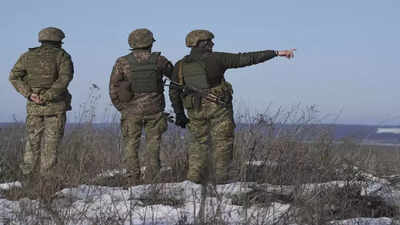
THE BEADY EYE ASKS. WHERE HAVE ALL THE STATEMEN GONE?

Tags

, , , , , ,

(Twenty-minute read ) 

  • Faith in the future is justified when investments succeed in improving the future. 

Every country is a work in progress but there are gaping holes where the leadership should be.

Politicians are hanging on to power instead of working for the construction of a better world. We are getting “selfish politicians and cynicism” instead of the statesmen needed to challenge the current crisis all over the world.

We now have a US President who does not know what the word genocide means and a Uk Prime Minister that lies to his Parlement and a Putin that has lost the plot.

The idea that the Prime Minister or president “runs a country” is just nonsense.

The lack of thought invested in the future is a real and pressing problem.

Today’s politicians play on our inherent, false phobia of the word fear; they milk it for every vote it’s worth.

This creates a natural void between the average citizen and the ruling class. 

The only difference perhaps is that nowadays we put a camera on them 24/7, and we expect them to give an answer to a problem mere minutes after some event occurred.

In the past, politicians probably had more time to think, and far less time to speak (or at least, fewer things they said were being recorded). As a result, modern politicians seem to make more mistakes.

I fear it will take a terrifying depth of crisis before there comes a point when this isn’t enough anymore and they will have to face their people with the big picture – which is to ask how much do we want to survive?

                                  ————————– 

Statesmanship is fleeting, and we don’t really appreciate it until it’s gone.

We desperately need a statesman—but, sadly, all I can hear are politicians.

If the world ever needed a Stateman it is now. 

Real statesmen rise above the tawdry political arguments of the day to the much higher realm of political strategy, what is right for the nation, right for everyone, and betters the human condition.

The statesman shuns media campaigns, opting for the power of the written and spoken word. He is an accomplished public speaker that looks over the horizon for future requirements.

Statesmanship and ethics are inseparable. We need a lot of both. We’ve already got a lot of politicians. We need a lot more statesmen. Making no private promises, granted no special favors, and received no personal gifts which would compromise his official integrity.

                                   _________________

What are the differences between a Statesman and a Politician? Winston Churchill, Franklin D Roosevelt and Joseph Stalin at the Yalta Conference, February 1945.
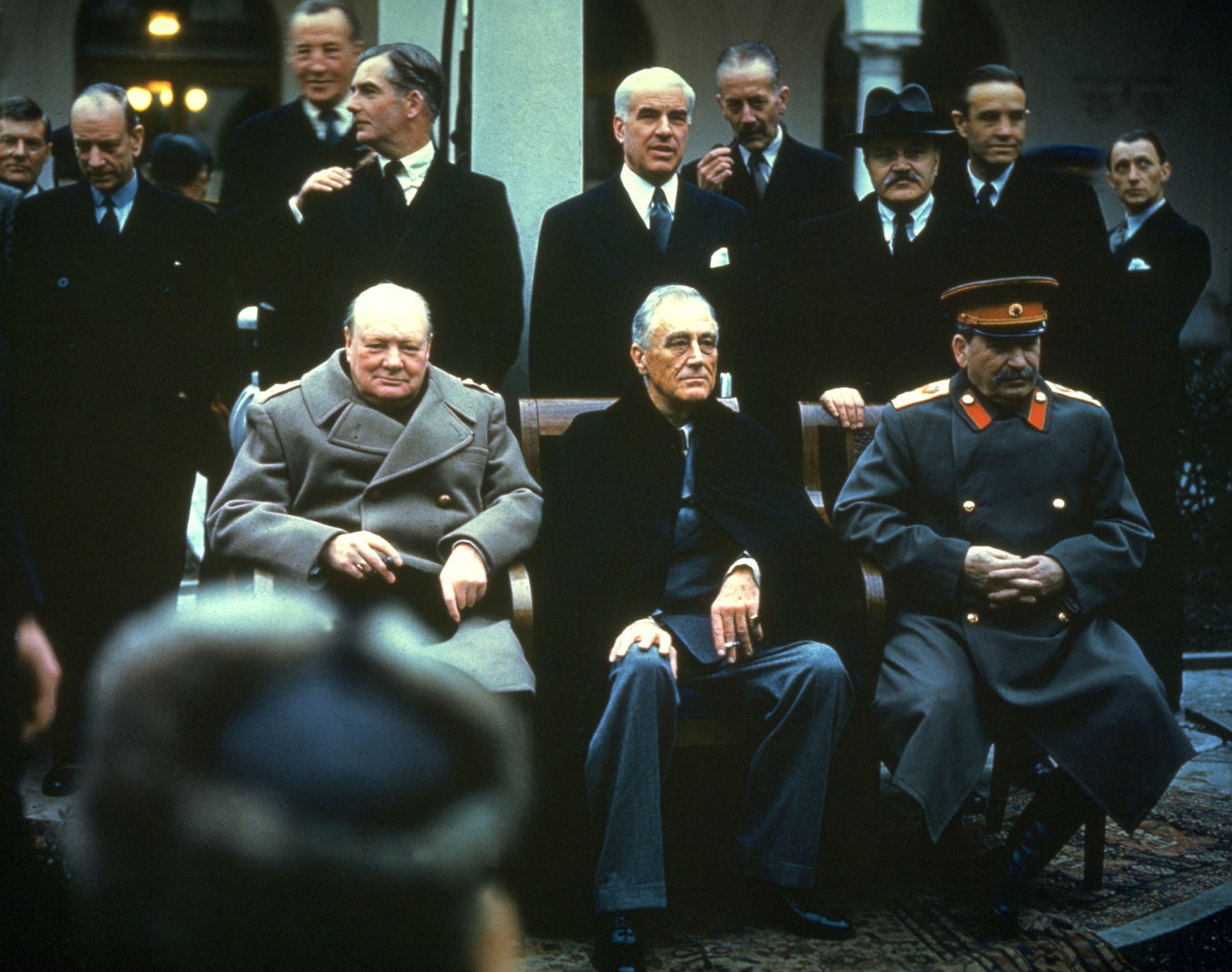
Not all politicians are statesmen. 

Statesmen spend the money, borrowing what’s necessary, to grow the country, restore confidence in the government and the future, and prevent devastating wars—even if the benefits of their actions are not immediate and measurable, but spread instead over many generations. 

Politicians, by contrast, “save money now” to “enhance today’s surplus” or “decrease today’s deficit”—even if “saving money” means leaving embassies unprotected from terrorist bombs, and our intelligence establishment less capable and integrated than it could have been.  

Statesmen see far into the future and know that good investments pay for themselves over and over again, for generations.  

Politicians tend to be penny wise and pound foolish—or perhaps more accurately, present-wise and future-foolish. They are in a “bubble” shuffling portfolios amongst themselves. They have no real-world experience. They go straight from education into politics via internships. They have no choice but to find a way to get people’s attention, in preparation for the next election and fear is one of the best attention-getters of all.

                                           —————

In this age of media coverage, the problem we have is twofold what to believe and what not to believe. 

The Underworld of the huge overarching media presence means that politics is not in control because no system is in control or in a position to lead society.

Take the war in Ukraine for example.

Can The West Stop Russia by Strangling its Economy?   No 

They only reflect liberal frustration over the West’s limited power to

prevent Russia’s war in Ukraine. 

Why?

Because in 2001, the incident of 9/11 changed the whole scenario of the world. US started its War against Terror and announced that it will target anyone, anywhere, who threats the US security and its citizens. Under this US invaded Afghanistan, Iraq, and Libya and attacked Daesh in Syria without facing any opposition from other countries at United Nation Security Council (UNSC).

After 30 years, of peace now Russia led by President Putin has challenged the new world order in Eastern Europe, by accepting two eastern regions of Ukraine (Donetsk and Lugansk) as independent regions and allowing its forces to invade Ukraine on Feb 24, 2022.

It’s clear that Russia is not dependent on the west as the west is dependent on Russia. So there is something amiss with a  black-and-white view of the situation in Ukraine.

Since the end of the Cold War, the West has refused to make any concessions to Russia’s security concerns. Neither NATO nor the Western powers, in general, have been willing or able ‘to empathize with the Russian perspective on this crisis’.

Moscow is repeating that it will withdraw its troops from Ukraine only if Ukraine recognizes Crimea as a part of Russia and two eastern regions, Donetsk and Lugansk as independent states, moreover Ukraine makes the constitutional amendment that it will not join NATO.

The truth is that after fighting alone and not getting ground or air support from the West ( because of the fear of a nuclear war) Ukraine has only one option left to compromise and accept the Russian demands for the sake of their and our survival.

Ukraine must learn from Afghanistan’s lessons, and not allow big powers to play a proxy war in its country.  

Putin’s invasion of Ukraine will lead to a new world order with an era of grinding compromise. The “new world order” is going to be dominated by Russia and China. Mr. Putin and Mr. Xi are writing their own rules.

The real danger is that the global balance of power is not just being recast, but gradually unraveling. History shows that changes to the balance of power rarely occur without serious conflict.

We must do what we can to contain Vladimir Putin’s aggression in Ukraine. But we also need to be clear-eyed about it and face the costs.

Economics can’t be separated from politics, and neither can be separated from history.Illustration on a new world order where Russia and China dominate by Alexander Hunter/The Washington Times
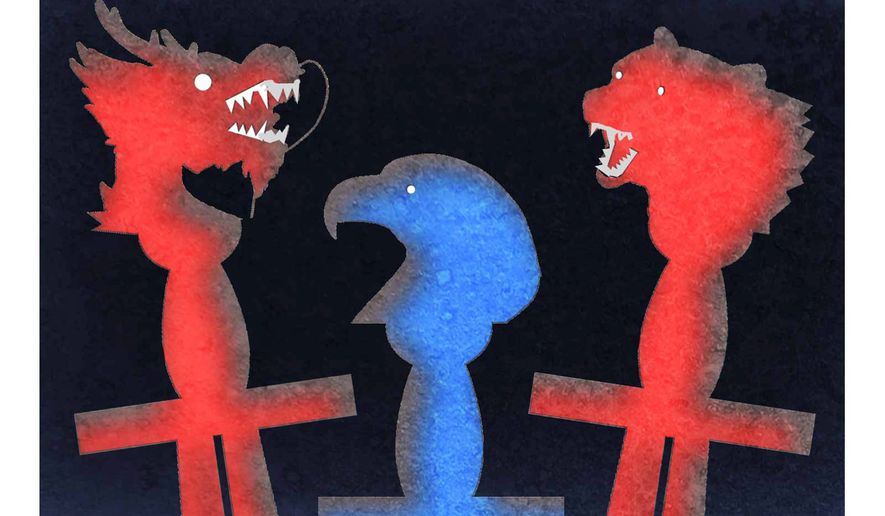
One lasting story of this war could be the way that Europe uses it to launch its next stage of integration.

                                        ————-

 We cannot continue to fight each other in useless wars.

Take Climate Change.

The UN secretary-general, António Guterres, called the recent IPCC report on the climate crisis a “code red” for humanity. “We are on the verge of the abyss,” he said.

You might think those words would sound some kind of alarm in our society.

Since no one treats the crisis like a crisis, the existential warnings keep on drowning in a steady tide of greenwash and everyday media news flow.

The facts are crystal clear, but we just refuse to accept them. We refuse to acknowledge that we now have to choose between saving the living planet or saving our unsustainable way of life.

Because we want both. We demand both. But the undeniable truth is that we have left it too late for that.

And no matter how uncomfortable that reality may seem, this is exactly what our leaders have chosen for us with their decades of inaction. Their decades of blah, blah, blah. In short, we are totally failing to even reach targets that are completely insufficient in the first place.

Science doesn’t lie, nor does it tell us what to do.

But it does give us a picture of what needs to be done. We are of course free to ignore that picture and remain in denial. Or to go on hiding behind clever accounting, loopholes, and incomplete statistics. As if the atmosphere would care about our frameworks. As if we could argue with the laws of physics.

The climate and ecological emergency are, of course, only a symptom of a much larger sustainability crisis. A social crisis. A crisis of inequality that dates back to colonialism and beyond. A crisis is based on the idea that some people are worth more than others and, therefore have the right to exploit and steal other people’s land and resources.

It’s all interconnected.

It’s a sustainability crisis that everyone would benefit from tackling. But it’s naive to think that we could solve this crisis without confronting the roots of it.   Inequality. 

All it would really take is one – one world leader or one high-income nation or one major TV station or leading newspaper who decides, to be honest, to truly treat the climate crisis as the crisis that it is. One leader who counts all the numbers – and then takes brave action to reduce emissions at the pace and scale the science demands. Then everything could be set in motion towards action, hope, purpose, and meaning.

Who will that leader be?

Ask any hundred people to define a good leader and how many definitions do you think we’d hear?

The leaders of the free world just serve to reassure people that there is someone in charge, someone with a plan while high technology is creating the way we think and feel. 

We have to get used to living in a world without leaders.  

We must understand that global warming is a true threat.   

We have to become conscious of environmentally friendly measures of living.

                                       —————–

This is where we are at the moment.

I and you are going to see a lot of the long-term effects of what’s happening now with Climate change. 

Time will tell if great statemen will return to power and change the direction in which current politicians are leading the world.

Without leaders, there is little alignment and hardly any coordinated moving together towards common goals. Without leadership, there is hardly a chance for fair distribution of wealth nor for peace.

This doesn’t mean that leadership as such grants these values but without leadership, it’s probably impossible to enjoy them at all. 

Three-quarters of the world could not give a dame about the war in Ukraine, Syria, and Yemen, or any of the other wars. 

Only resistance from within Russia can shorten the conflict. 

Brussel is pretty much kowtowing to the gazillion of different demands of basically all European leaders and interest groups, resulting in policies that are confused, contradictory, and ultimately useless.

European leaders with the outbreak of war in Ukraine are reduced to the role of extras. 

Unfortunately, we lack business statesmanship in the advertising Industry promoting more and more consumption for short-term profits with the media whose role seems to be to stop the shaping of modern statesmen.

                                      ———————-

There is only one choice that is to declare war on Climate change. 


All human comments are appreciated. All lie clicks and abuse are chucked in the bin.

← Back

Thank you for your response. ✨


THE BEADY EYE ASKS: IS THE UK A GOOD PLACE TO IMMIGRATE?

Tags


(Five-minute read) 

The UK was recently given the title of the most crowded country in Europe with a population of nearly 65,000,000 it is the 10th largest source of migrants to the rest of the world.

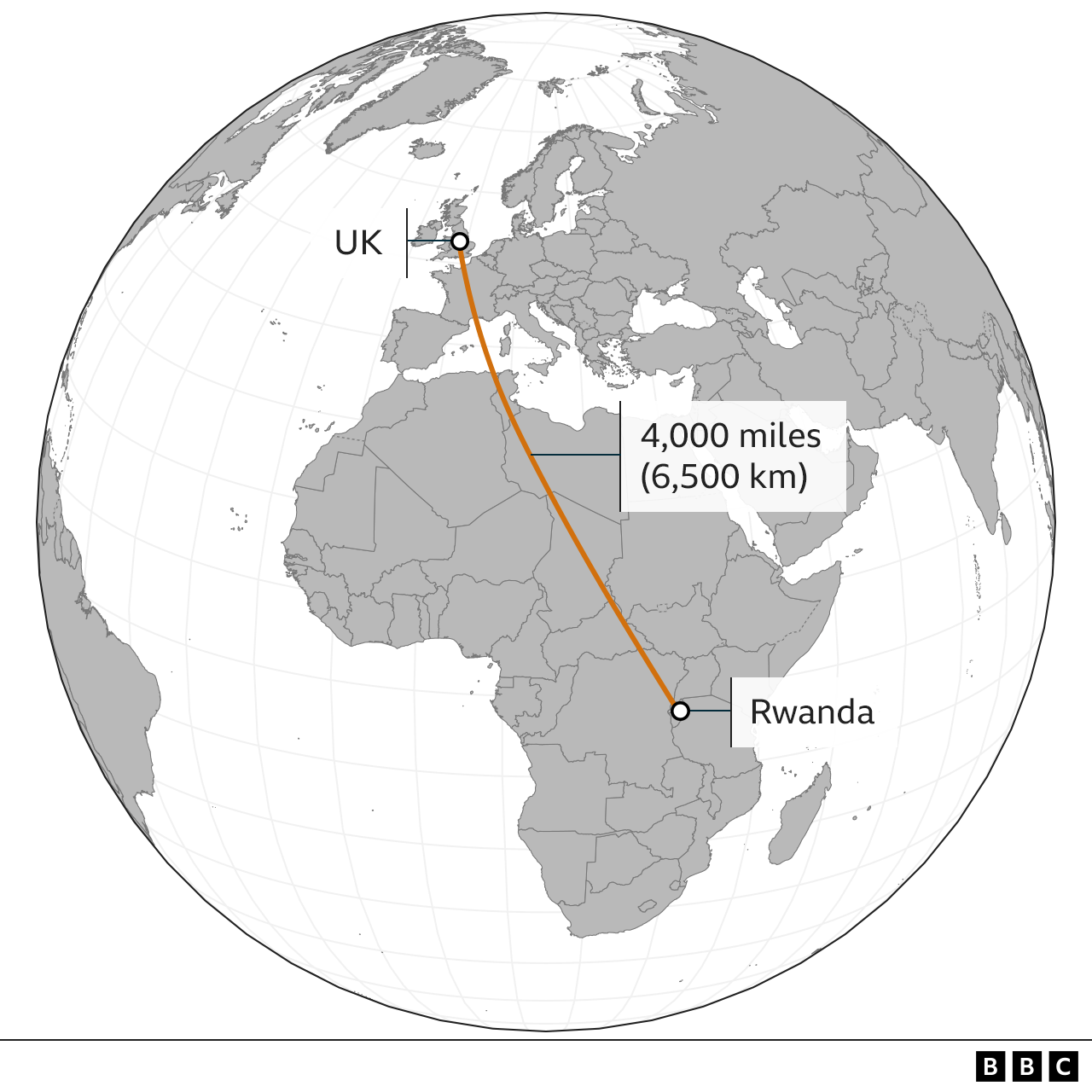
This is a country that made its wealth on the back of slavery and is now intending to provide those deemed to have arrived unlawfully with a one-way ticket to Rwanda.Map showing the distance from the UK to Rwanda.

SHAME ON YOU  Britain.  

In an effort to curtail human trafficking it is resorting to the same despicable trade of human trafficking it wants to stop.

Priti Patel the daughter of a Ugandan-Indian family should know that refugees are among the most vulnerable people in the world.

Your indifference is the engine of entropy that is shining a light on Britain’s apathy to the plight of refugees.

Anti-immigration sentiment existed in Britain long before the referendum.

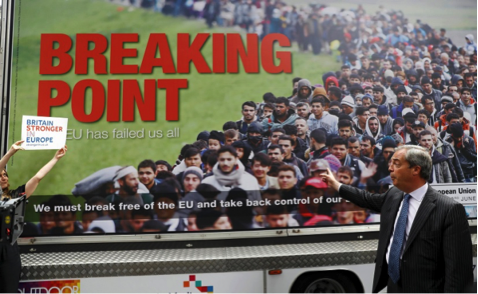
On June 23, 2016, Britain held a referendum to determine the future of its relationship with the European Union. “Immigration” was the single strongest issue driving Brits to vote for Leave and fundamentally reshaping the language of “immigration.”

In reality, the UK’s membership in the EU would have very little effect on the country’s responsibilities concerning the refugee crisis, as the UK had already opted out of common EU asylum policies and instead was bound only by a distinct set of international conventions.

The relentless (negative) coverage of the refugee crisis in the media brought the topic of immigration to unprecedented national salience for the British public.

By blurring the boundaries between EU and non-EU, economic and humanitarian, and legal and illegal migration it has not isolated itself from the Leave campaign.  It not only stripped humanity from the crisis but also misled voters by implying that the forces guiding and controlling both the refugee crisis and internal EU migration were the same and could both be solved by leaving the EU.

Without using the terminology of “refugee,” the umbrella term “migrant” instead of “refugee” to refer to people fleeing war zones, has resulted in sending a strong message that Britain is not a country to migrate to. 

The UK’s referendum to leave the EU was an unequivocal demonstration of the anti-establishment sentiments, xenophobia, populism, and Euroscepticism.  

( There has always been an intersection between populist politics and media discourse, and there is strong evidence that fear-based messages appear during important political and electoral markers, like elections.)

We must hope that the Priti Patel deal with Rwanda falls on the sword of justice and that decency people in the UK make their voices heard.

Now more than ever UNHCR’s role in Britain must come to the fore. Promoting accession to, and implementation of, refugee conventions and laws. 

Ensuring that refugees are treated in accordance with internationally recognized legal standards;

Ensuring that refugees are granted asylum and are not forcibly returned to the countries from which they have fled;

Promoting appropriate procedures to determine whether or not a person is a refugee according to the 1951 Convention definition and/or to other definitions found in regional conventions;  

Seeking durable solutions for refugees.

The definition of a refugee is someone who:

“Owing to a well-founded fear of being persecuted for reasons of race, religion, nationality, membership of a particular social group or political opinion, is outside the country of his nationality and is unable or, owing to such fear, is unwilling to avail himself of the protection of that country; or who, not having a nationality and being outside the country of his former habitual residence, is unable or, owing to such fear, is unwilling to return to it.”

It cost Australia more than £5 billion since 2013 to send 3,127 people to Papua New Guinea and Nauru as part of a similar policy.
 

The realities of conflict, violence, and persecution continue to cause displacement.

THERE GO I BUT FOR THE GRACE OF GOD. 

All human comments are appreciated. All like clicks and abuse chucked in the bin.

← Back

Thank you for your response. ✨


THE BEADY EYE SAYS. WE ALL KNOW THAT WAR IS ORGANIZED BARBARISM ON AN ENORMOUS SCALE.

Tags

, ,


( Seven-minute read) 

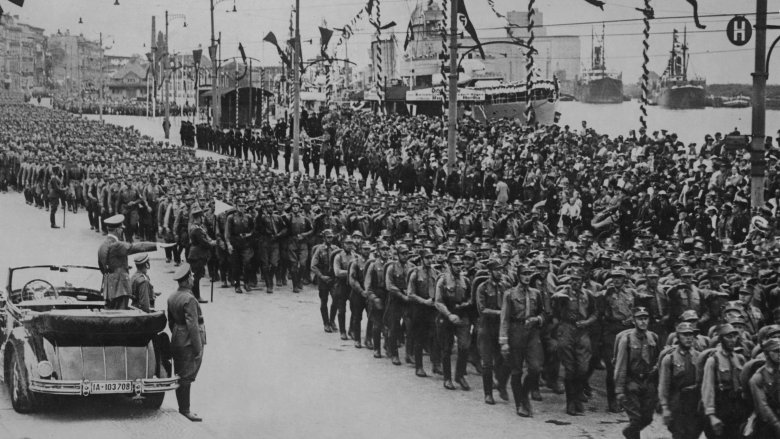
No matter how much you know — or think you know — about any War, there are always more horrible things lurking in the shadows.Nazi military parade

Cast your eyes over any recent conflict, and you’ll see a litany of generals, politicians, and nations that have gotten away with stuff so horrific it defies comprehension.

This post is not an attempt to justify crimes of warfare. It is a feeble attempt to highlight the double standards went it comes to defining them.

                                      —————–

Our best hope of curbing humankind’s peculiar talent for superfluous
violence and extravagant self-destruction lies in the ideal of humanitarianism.

What is a war crime? 

War crimes are often associated with atrocities committed on a scale that defies credulity. I.E the number of victims did not pass some arbitrary threshold. At the most basic level, war crimes are [objectionable] acts committed by combatants, either against other combatants or against noncombatants—that is, civilians—during wartime.

Mass murder and genocide—crimes against humanity and atrocities committed on a large scale—have become the hallmarks of war crimes.

The question is who or what decides which acts are war crimes.

In an eerie echo of our own time, defining war crimes is not so much the issue anymore.

It’s prosecuting them actually, administering justice that is the primary obstacle.

The ICC is the product of a strand of idealistic thinking about justice between waring states stretching back at least to the first world war.

                                  —————-

In world war two was it a crime to kill 60,000 to 80,000 people in Hiroshima and another 75,000 in Nagasaki or 100,000 people in one night during the firebombing of Tokyo, an event barely talked about today.

In the American war in Vietnam, was it a crime to shower 45 million liters of the herbicide Agent Orange? In the process, it doomed up to 4.8 million Vietnamese residents.

Ask someone today to list war crimes of recent history and he or she may think of ethnic cleansing in Bosnia or genocide in Rwanda, the Afghan war, the Syrian War, the Yemeni War, the Iraq war, the list is endless.

The overall theme is hard to miss but there is a vast gulf separating our indifference to war crimes. 

A few months after the terrorist attacks of September 11, 2001 (hereinafter referred to as “9/11”), the Bush Administration decided that the Geneva Conventions did not protect members of Al Qaeda.

The president (George W. Bush) thinks the ICC is fundamentally flawed because it puts American servicemen and women at fundamental risk of being tried by an entity that is beyond America’s reach, beyond America’s laws, and can subject American civilians and military to arbitrary standards of justice.

Another example is that there are clear parallels between Russian and Israeli violations of international law, including the committing of war crimes by Israeli military actions in the occupied Palestinian territories.

There are no sanctions against Israel that have so far desisted from joining nations including the US, Europe, the UK, Australia, and Japan in the imposition of an “unprecedented” number of sanctions on Russia, Belarus, and the two breakaway Ukrainian regions of Donetsk and Luhansk in the wake of the invasion. 

According to Israel’s controversial Law of Return, “Jews, their children, grandchildren and spouses” are all eligible to visit Israel and claim Israeli citizenship. 

However, millions of Palestinian refugees are unable to return to the homes they and their forebears were expelled from in Israel and the occupied West Bank in 1948 and 1967.

Israel has granted citizenship to Russian mining oligarch Mikhail Prokhorov, a figure linked to President Vladimir Putin and known to be one of the world’s richest men.

Last year, the two countries said the ICC should drop an investigation of Israel in part on the grounds that Palestine is not a sovereign country, although it is recognized as a state by the UN.

Netanyahu has accused the ICC of “pure anti-Semitism” for investigating attacks and has said Israel does not accept the ICC’s jurisdiction, however, it does not have to. 

Whatever the answer, it seems unlikely that President Bush or Benjamin Netanyahu, will ever be tried for war crimes but the question of whether they actually committed war crimes remains.

                                         ——————

Neither the US nor Russia nor China nor Ukraine are members of the ICC. 

If justice in general moves slowly, international justice barely moves at all.

Investigations at the ICC take many years. Only a handful of convictions have ever been won and by the time the Barbarian is locked up there is nationwide amnesia.

Court proceedings can be brought in one of two ways:
 
Either a national government or the UN Security Council can refer cases for investigation. Russia, a permanent member of the UN Security Council, has veto power over council actions.
 

In all likelihood, there will never be a trial for either President Bush or Putin not to mention Benjamin Netanyahu,. 

Why?

I think it has a lot to do just with the power, the authority, of well-heeled countries, powerful countries, to shield their political and military members from prosecution by bodies like the ICC. 

Even if we were able to bring War Criminals to trial we just don’t have a true international police force that would arrest the offenders. 

                                   —————————

War is a place where young people who don’t know each other and don’t hate each other, kill each other, by the decision of older rulers who know each other and hate each other, but don’t kill each other. 

It’s a world in which if you have the power you also have the power not to be held accountable for your power.

image003.jpg
Where are we with the Russian Ukraine war?
 
Could Russian leaders be brought to justice under international law?
 
Yes.  Because they fall under the overarching crime of aggression, all uses of armed force by Russia on Ukrainian territory can be viewed as illegal.
 
But that doesn’t mean the country pointing the finger has always been in the right itself.
 
Are countries supplying arms prolonging the war? Yes  
 
The national interest is for this war to end. If we wish to stop war crimes then we need to stop the war. Prolonging it will only see more of the same.
 
We should not be blackmailed and guilt-tripped into feeding more weapons into the meat grinder. How about, just for once, we put our own interests first?                                            
 
On the other hand, understanding the twin meanings of ‘humanity’ means something universal and immensely important”. Recognising its worth is “the least we owe the dead.
 
Meanwhile, NATO is just itching to get further involved in the war. 

We live in a world in which making the wrong comment on social media can lead to people losing their jobs but where politicians and public officials, whose actions affect the lives of millions and whose failure can lead to deaths in the most unimaginable circumstances, can simply walk away and into their next lucrative assignment.

While our own media doubles down on warmongering. They seem not to care if further escalation will plunge all of Europe into economic hardship or risk wider conflict. For some reason, it’s news to Western pundits that war isn’t very nice.

In the end, this war is shining a light on just how useless our United Nations is and dark skin automatically made you less than human.

There was a day that the UN could muster Blue helmets to intervene in conflicts. Now, all it can do is pass worthless resolutions.

                                    —————– 

When it comes to war crimes, Ukraine’s hands are also blooded.

What’s bizarre about this is that these countries that are supplying millions in arms are the same people courting Ukrainian membership of the EU, as though Ukraine was some kind of liberal democracy.

As with all wars, they end with denials of involvement in killing the innocent which are called collateral damage or a mistake of identification by a rogue drone, or ballistic rocket.     

The issue of reparations doubtless will be raised in negotiations to resolve the conflict and as an international condition for resuming any normal relationship with Russia. If the sanctions are eventually lifted in stages, it could prove effective to include conditions requiring the surrender of indicted fugitives.

Perhaps if the United Nations were to tell Mr. Putin that it is going to place a few thousand Blue Helmets between the present front lines Russia would think twice about any further advancement. 

( It is however due to the presence of Nato on the Russian borders too late. As they would be labeled Nato, not UN) 

All human comments are appreciated. All like clicks and abuse chucked in the bin. 

← Back

Thank you for your response. ✨


THE BEADY EYE ASKS: IS THERE ANYTHING THAT IS ACCEPTED UNIVERSALLY?

Tags

, ,

(Twenty-minute read) 

YOU MIGHT THINK THAT IN OUR ONGOING EVOLUTION THAT THIS IS A VERY BASIC QUESTION.

Because value creation is the starting point for all businesses, successful or not, it’s a fundamental concept to understand. 

Value is created through an irreversible process that gives a resource’s ‘order’ greater usefulness to other humans.

Under this definition, almost any activity can be value-producing, and under our Capitalist system, all businesses must create value, and as a result, we have all become products.

But the commoditized of humans into products is not a pathway to success.

In the real world outside of economic theory, a value is considered universal when it goes beyond laws and beliefs; it is considered to have the same meaning for all people and does not vary according to society.

 I don’t think plunder of finite resources counts as value creation. 

UNDERSTANDING THAT THERE IS NO POINT TO LIFE IF WE ARE UNABLE TO UNDERSTAND – THAT THERE CAN BE NO LIFE WITHOUT THE EARTH WE ALL LIVE ON.

This is universally true in all cultures at all times, but achieving this – REMAINS ELUSIVE.

This has led me to stop and ask myself, “What has happened to universal values?

Are there no issues, no beliefs, and no values that people everywhere can agree on?

Is there really no commonly shared right or wrong?”

Because we live in a world where every issue is multi-faceted, where every issue has advocates and detractors, where positive outcomes for some are viewed as negative outcomes for others.

                                               —————– 

Universal values ​​are believed to be the basis of human integrity, but their definition and existence remain concepts widely discussed in psychology, political science, and philosophy.

The idea of ‘human rights is not universal – it is essentially the product of 17th and 18th-century European thought.

Even the idea of ‘rights’ does not necessarily exist in every society or advanced civilization.

A human right is ‘natural’ in that everyone owns them, not because they are subject to any particular system of law or religious or political administration. They can be asserted against individuals, but they express the political objective: that governments must respect, protect and promote them. That so if answered by any of the above you would be hard-pressed to get a straight answer because values interact with each other.

The problem is that any universal values clash in their representation by the breadth of goals, wisdom, social justice, equality between humans, and a world of peace, harmony, and beauty.  All are open to wide interpretations.

The first is that a large number of human beings, under different living conditions and subjected to different beliefs, find a certain human characteristic as valuable. In that case, the characteristic in question would then be called a universal value.

This is the reason that there is no universal acceptance of universal values and this is reflected in the nonunity of nature, the protection of the environment, and the harmony of each person with himself.

Universal values cannot remain constant or change because they haven’t been defined.

                                          ———————–

Besides being alive, what are universally accepted human values that define ‘a good life’? 

The list includes  “Love”, “truth”, “justice”, “freedom”, “unity”, “tolerance”, “responsibility”, and “respect for life. ” 

According to the Oxford Dictionary values are something that deserves esteem for itself, which has intrinsic merit. 

There is no ultimate truth and all things are relative, so everything requires debate and decision.

If universally accepted values exist, do they remain constant or do they change over time?

There is no answer to the question. 

In fact, cultural relativism is a belief that opposes the existence of universal values; proposes that a value can not be universal because it is perceived differently in each culture. All the religions of the world attempt to give meaning and definition to life.

However, it is our conscience that convinces us there is something wrong with suffering, starvation, rape, pain, and evil, and it makes us aware that love, generosity, compassion, and peace are positive things for which we should strive.

In fact, the very laws of science are founded on the existence of absolute truth.

If there are no absolutes that define reality but all scientific study must by necessity be founded upon the belief that there are objective realities existing in the world and these realities can be discovered and proven. Without absolutes, what would there be to study? How could one know that the findings of science are real?

Based on cognitive function and life experience, human values dictate how individuals live, their preferences, priorities, principles, and behavior (Debbarma 2014; Hanel, Litzellachner, and Maio 2018).

So what are human values from the 20th century to date?

What is universal is the phrase ” What we need is ”  not  “what we want.”

There can be no douth with the use of smartphones/social media is changing values to  “situational ethics,” the belief that what is right or wrong is relative to the situation.

As cultures evolve and societies develop, people’s ways of thinking about good and evil are transforming and the nature of this transformation is a matter of speculation.

Human values themselves have transformed into social values that are shared and respected by society members, serve as guidance for individual expectations, and help to manage differences in harmony (for example cultural, political inclination, spiritual, and belief differences) in a peaceful way (Tsirogianni and Gaskell 2011).

Is repetition in mass media shaping our cultures into increasingly censorious-driven societies?

The way we tend to think about matters of right and wrong is different now from how we once did and, if the trends are to be believed, how we will in the future.

                                            ——————-

Today, our political order faces new threats, Changing patterns of language use over time may reveal alterations in how people have made sense of their world and themselves.

Take the modern consciousness of war in terms of our values suggesting ideas of moral virtue are becoming less culturally salient.

The notions of logical truth, a priori truth, and necessary truth are disappearing in the frequency of a set of virtue words such as “conscience”, “honesty” and “kindness” over the 20th century.

A necessary truth is what happens to be the case and could not fail to be the case.

A contingent truth is what happens to be the case but could fail to be the
case. An a priori truth is what is known, independently of any empirical input, to
be the case, while an a posteriori truth is what is known to be the case only given
some antecedent empirical knowledge

In deciding what to count as a truth of logic, another criterion that comes to
mind is that truths of logic should obey the rule of necessitation.

As it turns out, it is very hard to think of universally accepted ideas about what the generic properties of logical truths are or should be. 

Most of these words showed a significant decline in popularity so that many people forget

                               ___________________

In the end, ownership has a lot to do with value. 

Why do some of us take ownership of the state of the world and others don’t?

By creating a disparity between who takes action and who doesn’t, we’re creating a small subset of entitled people and a larger, more insensitive world

Because we are not connected, we don’t give and empathize naturally.

Creating this sense of ownership, connection, empathy, and compassion should not be left to chance, but should be bred into all of us through the education system and how we raise our children.

our attention on the wrong problems and drives us to the wrong answers, taking our politics down rabbit holes that do nothing to help us.

If all of us could feel connected to just one other person in the world, to our immediate environment, or to the food we eat, this domino effect has the power to transform everything.

How do we think about value that’s created, but never monetized?

We all must buy into what is left of the earth, to stop wars, climate change, and inequality. 

We need to open up our views on value so revenue is the measure of value creation — not profit.

In order to do achieve this, we create a perpetual World aid fund by placing a 0.005% commission on all economic activities that are profit for profit’s sake. (see previous Posts)

At the same time, we allow all of us to invest in our future with Green Bonds (see previous posts)

Software and related services dominate more and more of value creation but do not connect us to the planet we live on.  

If we feel connected to the earth big structural changes can and do happen if not rest assured we will be paying for the values of life.

In the meantime, a different approach to news reporting – one that emphasizes the ways people cooperate to solve problems – would have a tonic effect.

Value creation in the future will be based on economies of creativity which is Universal. 

All human comments are appreciated. All like clicks and abuse chucked in the bin.

← Back

Thank you for your response. ✨


THE BEADY EYE ASKS: DID THE QUEEN MAKE A BAD CHOICE IN GIVING HER SON THE DUKE OF YORK SUCH A PROMINENT APPEARANCE AT HIS FATHER’S MEMORIAL SERVICE.

(Two-minute read) 

I suppose we could look at it in many ways. 

I don’t have an issue with him mourning someone in his family, he was the Duke of Edinburgh’s son.

So, you know, really, he is just as entitled to be there as his siblings.

However it’s one thing to accept that he should attend his father’s memorial service, it’s quite another thing to then give him quite a prominent role.

It reopens yet again the whole can of worms about a man that has just settled for millions out of court for sex trafficking. Striped of all royal duties.

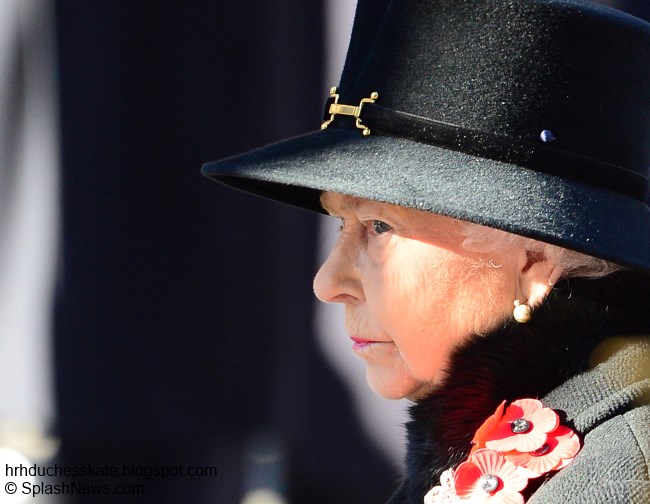
Whatever you think the Queen being assisted by her shamed son Andrew is a bit rich to swallow.

He could have sat in the congregation with others, with his relatives, but it was actively decided that he would have this role of supporting her.

Despite paying millions out of court earlier this month to settle a civil sexual assault case she has chosen, in essence, to remind people that he hasn’t admitted any wrongdoing, he’s not guilty of anything, he’s innocent. 

While it is a complicated situation on a very personal level for the Queen as his mother she’s very clearly stating that he has a role on family occasions, trying to rehabilitate his image, even at the expense of her own.

That’s what makes it uncomfortable.

If one step back from it and see how it is seen around the world, I don’t yet know what that judgment will be.

All human comments are appreciated. Al like clicks and abuse chucked in the bin.

← Back

Thank you for your response. ✨


THE BEADY EYE. TOLD YOU SO: WITH NO SOLOUTION TO THE RUSSIAN/UKRAINE WAR WE ARE HEADING FOR A MASSIVE RECESSION

Tags

,


( Fifteen-minute read) 

Severe sanctions on Russia with the rectitude of the Pandemic are now creating a deep recession, resulting in an economic downfall that will be felt by people around the world.

The Russia-Ukraine conflict has so far driven energy higher but the knock-on effects are yet to be seen. 

If Vladimir Putin retaliates to wester sanctions by cutting off Russian supplies of Oil /Gas the result will not be just a recession but civil unrest.

                             —————–

Of course, one would be a fool to predict what happens in a war. 

Beyond the military cost and the Human costs, this war is rapidly

turning into a quagmire not just for Russians but for all of us.  

It will not just be pushing millions into poverty and threatening

a deep recession as it evolves into a proxy war with which to

attack Russia and through it China. 

We have seen nothing yet.

                            ——————

When it comes to inflation the war’s international economic effect is starting to show in the numbers. 

If the cost of energy and food is pushed up by dwindling supplies caused by the Russian-Ukraine conflict we will see inflation go well beyond 10%.  

Both countries, Russia or Ukraine,  were once dubbed “the breadbasket of Europe”, exporting about a quarter of the world’s wheat and half of its sunflower products, like seeds and oil. 

For example, in the UK there are about 2.2 million homeowners with mortgages linked to the Bank of England’s base rate would see repayments go up, putting further pressure on household budgets that are already being squeezed by the cost of living.

Russian stocks crashed by as much as 45% in the wake of the Ukraine invasion with trading subsequently suspended, with banks and oil companies among the worst affected. It also led to steep falls on stock markets elsewhere around the world: in Europe, the UK’s FTSE 100 index has fallen over 6% since Russia crossed into Ukraine while Germany’s Dax index is nearly 10% lower.

Everyday goods – which may seem far removed from the conflict – but Russia is a leading commodities exporter.

Russia is one of the world’s largest suppliers of metals used in everything from aluminum cans to copper wires, to car components, such as nickel, which is used in lithium-ion batteries, and palladium, which is used in catalytic converters.

What we lack is a government with vision, courage, a sense of urgency, and basic competence coupled with an understanding that the world has changed.

With truth has been rejected by most of the

world’s population well before the shooting wars

started.  It is difficult to discern what the

planned end state of this war is.

However, as we all know the truth is the first casualty of wars so it’s a good time to start really learning how to watch what is going on. 

Here are some raw facts.

Partitioning a state causes all sorts of problems. This is how Ukraine and Northern Ireland were created in the first place – people meddling with the borders of territories.

Russia would need 800,000 troops — almost equal to its entire active-duty military — to control Ukraine long-term in the face of the armed opposition.

The slow advance of Russian troops in Ukraine shows that NATO’s fearmongering about some huge Siberian tiger force is fake; Putin commands only a paper tiger. Ukraine doesn’t need a NATO and neither do bigger states like Germany, France, Italy, or the UK.

The Russian army still has far superior firepower to the Ukrainian army. This superiority means that, despite some localized Ukrainian counter-offensives, it retains the initiative.

Faced with the hostility of the Ukrainian population united by this invasion, the Russian army will have difficulty maintaining control of the conquered territories. A protracted guerrilla war would ensue. 

In a nutshell, the confrontations would continue for many more long months, even years.

Russia will not just let what’s left of Ukraine go its merry way to become another problem in a decade or so.

Something will be formed and the Russians will mostly go home but NATO will not give up on stirring the pot. They may even fold what is left into NATO and then it will really be game on.

So, we have a new war to watch.

For some, it is just a weird kind of entertainment. For others, it is a good way to refine our thinking skills and our understanding of the world. We learn how to work through misinformation and build a clear picture of what is really going on.

Where is this going to stop? 

There is always a need for political courage to create space for peace and leave room for a political settlement. It takes two hands to clap.’ whatever the circumstances.

Ukraine is now engaged in a direct conflict with Russia. As a result, the model must be Ukrainian. In the event of an agreement based on these principles, the Kremlin would undoubtedly struggle to present as a “victory” a situation that, in fact, would be more “locked-in” than the one that existed before the invasion began.

Part of the problem is that Ukraine was not a neutral country when Russia first invaded it. The country formally abandoned its neutral status in late 2014. 

Neutrality is not a neutral concept but a complex political one, with major implications for countries’ international and domestic policies and development.

Relations between the EU and Nato the West, especially those countries that have acted in supplying weapons to Ukraine or implementing sanctions, are very unlikely to return to the state they were in before this conflict but Ukraine is just not the wake-up call to nations that new order is emerging.

So the real question, as civilians continue to be killed throughout Ukraine and negotiators try to hammer out a compromise, is this:

What arrangement would preserve actual independence for Ukraine, while still being acceptable to the Kremlin?

The war going on in Ukraine right now is about using Ukraine as a buffer to all the problems of sovereignty in a world that is going to see more conflict as Climate change forces people to move. 

How best to respond to a Russian invasion that threatens fundamental principles of sovereignty and respect for international borders that had, in theory at least, served as the foundation of European peace and security since the end of the Second World War.

Putin declared at the end of his Feb. 23 address : 

“Whoever tries to interfere with us, and even more so to create threats to our country, to our people, should know that Russia’s response will be immediate and will lead you to such consequences as you have never experienced in your history. We are ready for any development of events. All necessary decisions in this regard have been made. I hope that I will be heard.”

While stopping short of threatening the use of nuclear weapons, Putin’s comments left no doubt that any intervention by NATO as an organization, or individual NATO members, in Ukraine would result in war with Russia.

NATO is playing a risky game, however, by continuing to supply lethal weapons to Ukraine that originate from and are shipped through NATO members’ territory.

While the threat of NATO overreach in providing air support to the Ukrainian government exists, the greatest potential for a NATO-Russian clash in Ukraine rests in the ongoing flow of refugees from Ukraine into neighboring territories.

If Russia begins its long-anticipated assault on Kyiv or otherwise engages in activities that dramatically alter the situation in the rest of Ukraine, it is anticipated that millions more Ukrainians will be seeking refugee status, creating the real potential for one of the greatest humanitarian emergencies since the end of the Second World War.

If the war in Ukraine continues unabated at a level equaling or exceeding its current scope and scale, it is not a stretch of the imagination to think that there will be a refugee-induced crisis that will require some form of humanitarian intervention.

Perhaps it is time for NATO and EU diplomats to act in a proactive fashion, reaching out to their Russian counterparts in an effort to anticipate both the problem and the solution, in a manner that does not create the conditions for inadvertent military conflict.

What is going on in Ukraine is tragic.

Ukraine has always been between a rock and a hard place with its history of being torn between East and West will not be easy to overcome.

However, the most positive outlook for a unified and prosperous Ukraine involves moving beyond this false and outdated dichotomy.

No nation of any standing will accept the presence of inimical ..interests surrounding its geographical borders.

There is a solution to the crisis in Ukraine, however — although it would require the West to think about the country in a fundamentally new way.

Is it time European nations and the USA gave serious thought to the need for the objectives of NATO?

I’m not sure NATO was ever solely a defensive force; it was equally a tool for US domination of Europe. 

We are left with the Question.

Why do wars occur and recur, especially in cases when the decisions involved are made by careful and rational actors?

There are many answers to this question.

For my part, they arise from an agency problem either on the part of the current ruler or the leader of the attack. There must exist incentives for conflict and some barriers to the ability to reach an enforceable bargain.

To fully understand decisions to go to war, such decisions cannot be divorced from the broader endogenous armament environment in which they reside.,

A peace agreement only becomes attainable after the balance of power has shifted so that it becomes in both sides’ interest to agree to peace.

This can take a long time. 

All human comments are appreciated. All like clicks and abuse chucked in the bin.

← Back

Thank you for your response. ✨


How Russia Will Counterpunch the U.S./EU Declaration of War

THE BEADY EYE ASKS. WHEN FORMING A WORLD VIEW WHAT IS UNDERSTANDING?

Tags

, , , , , ,


(Twenty-minute read) 

Mutual understanding is the most important value anyone can have today, right after our need for food, shelter, and health but when it comes to a worldview our understanding appears to be a widening misunderstanding of where we are going.

We witnessed what the Covid pandemic did and what the current wars are doing. Understandable to some extent on one hand, but on the other, completely ununderstandable.

Why?

We have yet to understand that the world we live in is no longer available for making a short-term profit for the few to the detriment of the many and the planet. 

Society now exists in an arc of tension towards that which is not, or is not yet., 

                          ————————-   

It’s so difficult to agree on what understanding is it is almost impossible to mitigate the confusion – by embracing the fact that not only is “understanding” borderline indescribable, but it is also impermanent because understanding is evasive, constantly changing, and as dynamic as our own imaginations.

The challenge is to develop a way of thinking that builds critically upon the initial negative standpoint, a way of understanding that negates the untruth of the world.

Millions of war refugees are loses themselves for the sake of others. In doing so become enslaved and miserable to the most capricious of all gods.   WAR?

If hope is not grounded firmly in that same bitterness of history, it becomes just a one-dimensional and silly expression of optimism.

We can’t get there with science/technology and wars alone.

It is going to take more the purposes of God.,

In a world full of suffering beyond comprehension/understanding I don’t think any of us can fully understand anything and are not meant to.

However, understanding is the only melting pot of wisdom, a gateway to: 

Knowledge: The collective information and facts acquired through education or experience. Knowledge is awareness.

To gain knowledge, one has to spend time and effort to know things by reading, listening, seeing, experiencing, studying, and getting familiar with certain things. Without interest or passion, one can hardly acquire knowledge.

Wisdom:  The quality of having good judgment based on knowledge.

To gain wisdom, one has to have knowledge first, and then use conviction to make a good judgment out of that knowledge.

Understanding:  The ability to understand one’s knowledge and choices. It is the realization of your decision. It is knowledge and wisdom put into action.is the ability to understand one’s knowledge and choices. It is the realization of your decision. It is knowledge and wisdom put into action. If knowledge is power and wisdom is your choice to use that power, understanding is the execution of your choice to use that power. We develop understanding when we practice what we preach.

To gain understanding, one has to have both knowledge and wisdom first, and then put them into action.

Insight:  The capacity to gain an accurate and deep understanding of one’s knowledge and choices.

To gain insight, one has to have all of the above: knowledge, wisdom, and understanding.

Do they all mean the same thing? 

Obviously not but they all need each other.  

So is there such a thing, such as a worldview.? 

worldview or world-view is the fundamental cognitive orientation of an individual or society encompassing the whole of the individual’s or society’s knowledge and point of view. A worldview can include natural philosophy; fundamental, existential, and normative postulates; or themes, values, emotions, and ethics. 

Simply it is the principle of treating others no differently than you would like to be treated yourself. 

There is no such thing as a view from nowhere: We are not data crunching reason machines, but experience the world through the lens of our past, our communities, and our deep values. 

Why is it important to understand worldview?

Understanding our own and others’ worldviews can help build empathy, self–awareness, and understanding in our increasingly diverse societies.

Why?

Because there is no such thing as a neutral perspective on society or a neutral education.

Young people need to learn to interrogate the default secular assumptions of society as much as the assumptions of religious traditions, and a worldview approach would encourage this.

The worldview should not be seen as a focus on the content to be taught but as a way of framing how that content is introduced to the students.

Greater knowledge of religions would still be a key aim of the subject; as it is important for those of us with a Christian worldview to fight for the hearts and minds of people in order to build a society of equality. 

It should be one of the most compelling and socially meaningful segments of the school day, helping pupils grow as citizens equipped for the world as it is now – this requires a shift from the current “world religions” information-based paradigm to a focus on worldviews, which means a more nuanced study of the lived experiences of people of different religions and beliefs. 

Unfortunately the above is only words. We simply cannot oversee all the variables and possible outcomes of events but the human brain is more productive when it is given time to learn what distracting information it can disregard. Even with this shift from curriculum, instruction, and teacher actions, and toward data, assessment, and learning, there remains uncomfortable murkiness.

Currently, because life emerged from non-life and more complex life forms evolved from less complex one’s reality and humankind’s true values are formed by an impenetrable mess of Human beliefs.

These beliefs are Theism. Pantheism.Christianity. Spiritism. Buddhism. Postmodernism. Atheism.  Humanism. Judaism. Islam. Naturalism. Agnosticism. Existentialism. Marxism. Polytheism.  Hinduism. Taoism. New Age Consciousness. Animism. Thousands of Religions.

Nothing in this post has changed the horrors of the society in
which we live. How many children have died needlessly since I started to write it? How many have since you began to read it?

Theism – is the most widely accepted worldview in the United States, with approximately 67% of Americans identifying as Christians, 2% as Jewish, and 1% as Muslim. Even so, few Americans have consciously developed a specific worldview, and many of them embrace various aspects of pantheism, naturalism, humanism, and postmodernism.

Pantheism – is the dominant worldview throughout Asia, and polytheism is prevalent in areas of the world that are predominantly tribal. Many aspects of pantheism and polytheism overlap, so the two terms are sometimes used interchangeably.

Only the spiritual dimension exists. All else is an illusion. In spiritual reality, Brahman is eternal, impersonal, and unknowable. It is possible to say that everything is a part of God, or that God is in everything and everyone. Humankind is one with ultimate reality. Thus man is spiritual, eternal, and impersonal. Man’s belief that he is an individual is an illusion.

Christianity –  An infinite, personal God exists. He created a finite, material world. Reality is both material and spiritual. The universe as we know it had a beginning and will have an end. Humankind is the unique creation of God. People were created “in the image of God,” which means that we are personal, eternal, spiritual, and biological. The truth about God is known through revelation. The truth about the material world is gained via revelation and the five senses in conjunction with rational thought. Moral values are the objective expression of a supernatural and absolute moral being and therefore remain constant over time.

Spiritism –  The world is populated by spirit beings who govern what goes on. Gods and demons are the real reason behind “natural” events. Material things are real but have spirits associated with them and, therefore, can be interpreted spiritually. Humankind is a creation of the gods like the rest of the creatures on earth. Tribes or races often have a special relationship with some gods who protect them and can punish them. The truth about the natural world is discovered through the shaman figure who has visions telling him what the gods and demons are doing and how they feel. Moral values take the form of taboos, which are things that irritate or anger various spirits. Taboos are different from the idea of “good and evil” because it is just as important to avoid irritating evil spirits as it is good ones.

Buddhism – Truth is an experience of unity with “the oneness” of the universe. Truth is beyond all rational description. Rational thought as it is understood in the West cannot show us reality. Ultimate reality is impersonal, so pantheistic thinkers believe that there is no real distinction between good and evil. “Unenlightened” behavior is that which fails to understand essential unity.

Postmodernism –  Reality must be interpreted through our language and cultural “paradigm.” Therefore, the reality is “socially constructed.” Humans are nodes in a cultural reality—they are a product of their social setting. The idea that people are autonomous and free is a myth. Truths are mental constructs meaningful to individuals within a particular cultural paradigm. They do not apply to other paradigms. Truth is relative to one’s culture. Values are part of our social paradigms as well. Tolerance, freedom of expression, inclusion, and refusal to claim to have the answers are the only universal values.

Atheism – The material universe is all that exists. Reality is “one- dimensional.” There is no such thing as a soul or a spirit. Everything can be explained on the basis of natural law. Humankind is the chance product of a biological process of evolution. Man is entirely material. The human species will one day pass out of existence. Truth is usually understood as scientific proof. Only that which can be observed with the five senses is accepted as real or true. No objective values or morals exist. Morals are individual preferences or socially useful behaviors. Even social morals are subject to evolution and change.

Humanism – emphasizes the value and agency of human beings, individually and collectively, and relies on rationalism and evidence over the transcendent or supernatural. Humankind is part of nature and has emerged as the result of a continuous evolutionary process. His total personality bears the imprint of the social and cultural society surrounding him. The truth may be found through science (critical thinking and empiricism) and philosophy. Values are derived and steadily improved from a philosophy of utilitarianism, ethical naturalism, or evolutionary ethics.

The problem with all of them is that when confronted with the armed struggle they accept from the beginning of a war that it is necessary to adopt the methods of the enemy in order to defeat the enemy:

                                  ——————–

airplane flies over the small planet

Even now, many people realize that there is something seriously wrong with the present system (wars, poverty, pollution, inequality, etc.) However, it is the awareness and understanding of an alternative to this which is missing. 

Capitalists in their present form had no economic interest in maintaining those, who worked for them. The vast majority are forced by their circumstances, to become economic slaves to the rich minority.

Employment is accurately described as being exploitation since the value of what the workers produce in the form of goods and services is much greater than the value of the wages/salaries which they receive. (Considering that the richest 10% of the world population earns 52% of the global income, while the poorest 50% of the population earns just 8%.) The surplus-value is pocketed by the capitalist class and is a very important source of the wealth of the ruling class.

The notion of cohesive communities and societies, and their role alongside globalization, privatization, and financialization in restoring trust in capitalism. But if the current system is so bad, what are the alternatives? Is there a way to reach an acceptable standard of living for all people without depleting natural resources and degrading habitat?

Within the confines of the capitalist system, it’s necessary to completely change the economic system.

Many ideas of alternative economic models have popped up over the years, which questions the constant need for growth that capitalism has embedded in the economic system.

Instead of focusing on profits and consumption, the emphasis is on social and environmental well-being as ways to attain a good life for people. We need to rethink the way we organize our economy and undergo a transformation in our way of life.

Societies need to use fewer natural resources and have different lifestyles than today.  

Production and consumption need to be reduced so we have a society that supports each other and only takes what we need.

I’m probably not the only one feeling like this is too idealistic, but at the same time, I think some form of sufficiency thinking is necessary to get back in line with the resources that are available on planet Earth.

A common sense of solidarity among all humans seems a bit naïve in light of both history and current events. But with the plight, our economic system is pushing us and our environment to Wars and to Extension of the very environment that we are all relying on. 

Alternatives are desperately needed.

Why?

Because continuous growth would lead to a stagnant, not reducing, ecological footprint.

Basically, a shift in not only people’s behavior but also their values can only be achieved by the introduction of a universal basic income.

People should learn to live with less and appreciate the value of “conviviality” and non-economic values.

This is no easy feat and has of course invited skepticism from others.

However to grasp the core or essence of the state of the world to date there has been no decoupling on the global scale, and both emissions and GDP are still growing.

We have to lower carbon emissions much faster than we are likely to be able to change the economic system. Even with a world governed by technology the interconnected global nature of the abundant world is coming to an end.

There are so many moving parts in learning what should be a relatively simple relationship between us and the earth perhaps the most powerful thing that you can do to combat the slippery notion of understanding is to use your buying power to Understand and know are interchangeable. 

Not to settle for just paraphrasing understanding and a worldview in overly-simple words and phrases like “they get it” or “proficiency.

Really understand, ‘internalize knowledge in a world view of I’m all right Jack are not founded on religious beliefs, political ideologies, and greed. 

The Earth belongs to all of us.

If you want it to remain so now is the time to play an important role in the evolution of a more intelligent world and inspire a shift in the way we see the planet. 

It is not possible to calculate the value of life. 

“If we can get people to go beyond the aesthetics,” says Astronaut Grant, “and contemplate exactly what it is they’re seeing – and consider what that means for our planet.  

All human comments are appreciated. All like clicks and abuse chucked in the bin.

← Back

Thank you for your response. ✨


THE BEADY EYE SAYS: MUCH WORSE THAN THE RUSSIAN/UKRIAN WAR IS ON THE WAY IF WE DON’T MAKE THE NEEDED CHANGES.

Tags

, ,

(Nine-minute read) 

In the daily hubbub of current “crises” facing humanity, we forget about the many generations we hope are yet to come.

Why?

Here are my reasons.  

Because humans are bad at doing anything about problems that have not occurred yet.

We have extinction happening at alarmingly fast rates combined with short-term political ambitions packed with statistics and updates on the challenges we face.

With no universal legal constitution for the earth, as global citizens, we must come together on every Social media platform to demand change and put us and the earth before profit.  

Because we now live in a world of threats and disasters that could end history.

Human activity such as the development of weapons of mass destruction has been steadily shaping the future of our planet with a sense of powerlessness and fatalism about it. Right now the risk of somebody deliberately releasing something devastating is low but as technology gets more powerful in the future nastier pathogens become easier to design.

Because there is “youth disillusionment” around the world as capitalism has turned everything needed for life into a product. Certain global issues cannot be solved by on-the-ground, grassroots-style projects. 

Because In a world full of risk – geopolitical upheaval, cyber attacks, climate change, and natural disasters the only thing left to avoid wars is Sport which is now, unfortunately, being used for political interference. 

Because it is a mistake to think that nuclear war is impossible. In fact, it might not be improbable but it’s not the explosion that will be a disaster its the nuclear winter that would follow.

Because while people are enjoying the highest standards of living in human history, the interconnected global challenges we face are pushing institutions, communities, and individuals to their limits.

Because the knock-on effects of the coronavirus crisis, threaten to scale back years of progress on reducing global poverty and inequality and further damage social cohesion and global cooperation.

Because the democratic world is being hijacked by technology in the form of the internet with profit-seeking algorithms and social media pluralism.

We do not have a good grip on just how dangerous different forms of superintelligence would be, or what mitigation strategies would actually work. It is very hard to reason about future technology we do not yet have, or intelligence greater than ourselves. (Of the risks on this list, this is the one most likely to either be massive or just a mirage.)

Because of the, I’m alright Jack inequality. Global poverty has not been eradicated.

Billions are at risk of missing out on the digital leap forward, as growing disparities challenge the social fabric. Even more worrying is that in trying to explain things to artificial intelligence we run into profound practical and philosophical problems.

Should such a jump occur there would be a large difference in potential power between the smart system (or the people telling it what to do) and the rest of the world. This has clear potential for disaster if the goals are badly set.

Human values are diffuse, complex things that we are not good at expressing, and even if we could do that we might not understand all the implications of what we wish for. If consciousness or intelligence are lost, it might mean that value itself becomes absent from the universe.

Because we are living toward incredible times where the only constant will be changed. 

Because the Ukrainian war could be the last human war.

There are plenty of more low-hanging fruits on the destructive technology tree.

                            ————————-

Foreign policy of the United States


Even just reading the above list seems overwhelming; imagine being a head of state trying to implement it in your sprawling national bureaucracy.

Of course, the U.N. can’t compel any country to do any of these things. So the goals won’t matter unless individual national governments take them seriously.

Of course, there are some risks we cannot do anything at all about, such as gamma-ray bursts that result from the explosions of galaxies. But if we learn we can do something, the priorities change. For instance, with sanitation, vaccines, and antibiotics, pestilence went from an act of God to bad public health. 

The most unsettling possibility is that there is something out there that is very deadly, and we have no clue about it.

                                    ————————

It comes as no surprise with the outbreak of war in Ukraine that the environmental risks that once weighed heavily on the minds are now on the back burner. 

While the state of our planet is petrified by Putin’s threat to use Nuclear weapons the use of cyberattacks to target critical infrastructure and strategic industrial sectors raises fears that, in a worst-case scenario, attackers could trigger a breakdown in the systems that keep societies functioning.

Nanotechnology like biotechnology, increasing power also increases the potential for abuses that are hard to defend against.

Technology is no longer the major limiting factor. We are.

If we want to be around in a million years we need to correct that.

                                      —————-

In the meantime, we’re heading towards a world of perfect knowledge with blockchain commerce and digital transfers of value and assets disappearing into cyberspace. 

With a trillion sensors gathering data existing healthcare institutions will be crushed because Biometric sensing (wearables) and AI will make each of us the CEOs of our own health. 

The screen as we know it — on your phone, your computer, and your TV — will disappear and be replaced by eyewear.

So where are we?  Where do you even start?

Even though we live in the 21st Century, it’s unbelievable how much prejudice we all have. There’s racism, homophobia, nationalism. There are still classes in our society, even though not as clear as centuries ago. And people still judge other people based on… Well, absolutely everything, which, when you think about it, is… nothing!

To take any resolution to the problem off the page and into practice there has to be unlimited finance.

This can only be achieved by increasing everyone’s stake in the goals ( see the previous post on creating a World Aid Fund)  If we do not put in place a mechanism for social and environmental change, generation after generation will pay the price for our idleness.

Our insatiable appetite for industrial growth only fuels our dependency on ever-dwindling resources – without replenishment or reprise and to devastating effect.

Empowerment is what the world needs. We have the potential to save and improve the quality of millions of lives by providing the people of the world an opportunity to invest in a green bond, ( See previous Post on Green bonds)  

The more I think about it, the more I realize that the progress of society is defined much more from the decisions and the actions of the majority, than the breakthroughs of any one man.

We don’t all have to like each other, we don’t all have to understand each other, but we do have to respect each other. 

Respect is never earned by a Dictator. It is either enforced/bought as Dictatorship is a place where public opinion can’t even be expressed privately.   

All human comments are appreciated. All like click sad abuse chucked in the bin.

← Back

Thank you for your response. ✨


THE BEADY EYE SAYS. PEACE IS ” PERPETUAL WAR “

Tags

, ,


(Eight-minute read) 

Peace is “perpetual war.”       “Global” is imperial.

In today’s world, it is impossible to find a phenomenon that harms people more than war.While Trump Fiddles, Putin Steps Up the War in Ukraine

By now in our history, we all know that any war is to blame for people being killed.

It is not only military deaths but every living individual so you might be well asking why do we now have another war breaking out in Ukraine?

We all know that there are so many reasons for starting these wars that no appeal and no desire for peace will ever be heard if the authorities want so. Sometimes it simply is inevitable.

(This post is not to justify the out brake, rather try and understand why it is occurring in the first place.) 

It’s not just that Putin has become a  “farce with fangs.” in reclaiming Crimea. More than 90 percent of the population of Crimea voted to return the territory to Russia.

The conflict in Ukraine started with the refusal of ex-president Viktor Yanukovich to sign the agreement of Ukraine’s association with the European Union. Thousands of people, shocked by his decision, went to the streets to show their willingness to become part of Europe and live a happier and wealthier life.

Most of us have no knowledge about Ukraine and it’s not possible to explain its history in this post.

However, most of us are still not quite sure what Ukraine was or is. 

“Ukraine was a little bit like Ireland used to be within the United Kingdom” It was a subordinate part of a greater whole, of a greater empire.

“During the revolution that ushered in the Soviet Union, Ukraine fought for independence. It lost, and in 1922 was subsumed inside the communist state.

This was followed by Stalin creating  “The Holodomor an artificial famine,” to crush its people its language and culture. Just like the Irish Potato Famine known as the Great Hunger, which began in 1845 that saw millions of Irish either starve to death or immigrate. Stalin between 1932 and 1933, starved some four million Ukrainians to death.

The significance of the Potato Famine (or, in the Irish language, An Gorta Mor) in Irish history, and its contribution to the Irish diaspora of the 19th and 20th centuries, is beyond doubt still to this day. 

“The attempt to eliminate Ukrainian-ness and the sense of it, of a separate identity and the sense of nationhood, has really been a Russian policy since the 19th century, but its sense of nationhood was growing stronger.

And now this disaster has befallen them and this feeling that they may be dragged back into some horrific Stalin-era or Czarist-era nightmare must be tormenting a lot of them.

                                  —————-

Since the collapse of the Soviet Union, the United States has ringed Russia with military bases, nuclear warplanes, and missiles as part of its Nato Enlargement Project. NATO has, in effect, militarily occupied eastern Europe.

In fact in the former Soviet Caucasus, Nato’s expansion is the biggest military build-up since the Second World War.

Imagine the response if these acts of provocation, or intimidation, were carried out on America’s borders.

“It’s a nice and convenient myth that liberals are peacemakers and conservatives the warmongers.”

The once hopeful concept of  “Russian reform” now means regression, even destruction. In Orwellian fashion, this has been inverted in the west to the “Russian threat”.

The Nuremberg prosecutor Robert Jackson called “the supreme international crime differing only from other war crimes in that it contains within itself the accumulated evil of the whole”

                                  —————————-

As a consequence, we have witnessed Iraq dismembered with between 97,461 and 106,348 civilian deaths up to July 2010.

(The US has lost 4,487 service personnel. Half a million Iraqi infants under the age of five make up the Iraq deaths.) 

Syria flattened.  A decade of war in Syria has left more than 350,200 people dead.

Yemen. Almost a quarter of a million people have died in Yemen’s war. 

Afghanistan, so far the war killed 176,000 people in Afghanistan; some 2,460 US military personnel and 51000 Taliban.  

Israel/Palestine.  At least 10,316 Palestinians and 1,287 Israelis.

Myanmar. The Rohingya genocide.  

Behind each recorded death is a human being, born free and equal, in dignity and rights”.

Some sources say that the Soviet Union had over 20,000,000 casualties, in world war Two. 

                             _________________

” Perhaps the imperialism of the liberal way may be more dangerous because of its open-ended nature: its conviction that it represents a superior form of life.”

It is “so widely accepted as to be virtually unchallengeable”.  

In the modern era, the employment of ethnic differences in western power and propaganda systems is now seen as essential.

Today’s grand illusion is of an information age when, in truth, we live in a media age in which incessant corporate propaganda is insidious, contagious, effective, and liberal is creating a world of inequalities.  

No Shelley speaks for the poor, no Blake for utopian dreams, no Byron damns the corruption of the ruling class, no Thomas Carlyle and John Ruskin reveal the moral disaster of capitalism. William Morris, Oscar Wilde, HG Wells, George Bernard Shaw have no equivalents today.

“Austerity” is the imposition of extreme capitalism on the poor and the gift of socialism for the rich: an ingenious system under which the majority service the debts of the few.

It’s no wonder we have wars. 

All human comments are appreciated. All like clicks chucked in the bin

← Back

Thank you for your response. ✨