THE BEADY EYE SAYS: WE NEED TO BE SUPER CAREFUL WITH AI.

Tags

, , ,


( A seven to eight  minute read)Résultat de recherche d'images pour "pictures of AI eyes"

There are a lot of things that can go and have gone wrong throughout history — earthquakes and wars and plagues and whatnot.

The present state of our planet does not have to be highlighted by me in this post but a major change is coming, over unknown timescales but across every segment of society, and the people playing a part in that transition have a huge responsibility and opportunity to shape it for the best.

What is triggering this change?   Artificial intelligence.Résultat de recherche d'images pour "pictures of artificial intelligence court"

Although most of us are unaware of it, AI systems are everywhere, from bank apps that let us deposit checks with a picture, to everyone’s favorite Snapchat filter, to our handheld mobile assistants.

While many countries’ laws are deficient in terms of artificial intelligence (“AI”) – which is defined as the simulation of human intelligence processes by computer systems and other machines,should we ignore the risks of any technology and not take precautions?

Until we have concrete evidence to confirm what an AI can someday achieve, it’s safer to assume that there are no upper limits – that is, for now, anything is possible and we need to plan accordingly.

How do we prepare for an AI more intelligent than we can imagine?

We can imagine all sorts of catastrophic risks from AI or robotics or genetic engineering. The task of developing this technology therefore calls for extraordinary care.

Since machine learning is at the core of pretty much every AI success story, it’s really important for us to be able to understand *what* it is that the machine learned.

I think it’s really important for us to develop techniques so machines can explain what they learned so humans can validate that understanding. …

Of course we are all so preoccupied with our own lives,  turning a blind eye to the world of technology. Given the expectation that advanced AI will far surpass any technology seen to date — and possibly surpass even human intelligence we do this at our peril.

Even if these things are still far off and we’re not clear if we’ll ever reach them, even with a small probability of a very high consequence we should be serious about these issues.

Staving off future catastrophes (assuming that is possible) would bring far more benefit to far greater numbers of people than solving present-day problems such as cancer or extreme poverty.

Regulation and control instruments need to be thought of and established beforehand, not subsequent to the invention a powerful AGI.

There is no governing world body with the goal of keeping AI’s impact on society beneficial, to vet and hold those how create software, responsible.

Human history is rife with learning from mistakes, but in the case of the catastrophic and existential risks that AI could present, we can’t allow for error – but how can we plan for problems we don’t know how to anticipate? AI safety research is critical to identifying unknown unknowns, but is there more the AI community or the rest of society can do to help mitigate potential risks?

When AI becomes very general and very powerful, aligning it with human interests will be challenging. If we fail, AI could plausibly become an existential risk for humanity.

Automation threatens millions of jobs and this is only the beginning. It’s important to remember that AI is a tool and, as such, not inherently good or bad. As with any other technology or tool, there could be unintended consequences.

If I were ranking the existential threats facing us, than runaway ‘superintelligence’ would not even be in the top 10. It is a second half of the 21st century problem with its seeds being sown now.

We don’t know what the future of artificial intelligence will look like. However if we allow it to exploit us and the planet for Greed and profit we are the same as Og standing in front of his cave.

Almost every sector of society is feeling the headwinds of the digital revolution and it is hard to find sectors where robots or technology cannot take humans’ jobs.Résultat de recherche d'images pour "pictures of AI eyes"

The immaturity of our conduct is mind-boggling. AI is not just a cool gadget or a nifty little thing called a smart phone, an I Pad, Google, Facebook, Twitter, or the Internet of Every think run by system’s with no autonomy.

The mismatch between the power of our playthings and the benefits they may well impart now and in the future should not be up for negotiation.  As long as we manage to keep the technology beneficial to all and not to itself, learning human values and doing things humans would consider good upon sufficient reflection – 

We might avoid a world not worth living in. It’s not profitable to discuss the might have been.

Now is the time to make all technology responsible to our core values.

The extraordinary promise of machine intelligence will be worthless if we do not understand what it learned.

The real threat with advances in AI will stem from our failure to create a policy framework for emerging technology.

AI is not simply an extension of our culture and values. “The problems and solutions are us. AI enhances human power — it’s just a way of making us smarter, of letting us know more things sooner.”

AGI system that are not task-directed, without a defined goal are a nightmare scenario.

One can imagine [AI] outsmarting financial markets, out-inventing human researchers, out-manipulating human leaders, and developing weapons we cannot even understand, that chose their own targets and cannot be recalled.

It is unlikely that we will enter a dystopian future where AI is held responsible for its own actions > given personhood and hauled into court.

Oversight is called for because, over the coming decades, AI equipped (‘smart’) machines will increasingly acquire two unique attributes: some degree of autonomous decision-making and the ability to learn from experience. As a result, over time, smart machines could stray from their programmers’ instruction further than happens at present.

AI use will need some kind of oversight but hardly a regulatory regime.

Why?

Because AI by design is artificial, and thus ideas such as liability or a jury of peers appears meaningless.

It will be impossible to control.

Because with reinforcement learning AI integrated with more hardware and software solutions and there is no legal system that can treat reinforcement learning?  Whether and when a machine can have intent is more a metaphysical question than a legal or scientific one, and it is difficult to define “goal” in a manner that avoids requirements pertaining to intent and self-awareness without creating an over-inclusive definition.

The world will need to adopt a standard for AI where the manufacturers and developers agree to abide by general ethical guidelines, such as through a technical standard mandated by treaty or international regulation. And this standard will be applied only when it is foreseeable that the algorithms and data can cause harm.

Meanwhile the complexity behind the creation of the AI, when paired with the automation and machine learning of the system, could make it difficult to determine who is at fault if something catastrophic goes wrong.

However if we create a world organization that bans the production of uncertified AI systems, it will provide a strong incentive for AI developers to incorporate safety features and internalize the external costs that AI systems generate

For such an Organisation to actually have any power, we will most likely need some sort of government interference

It is vital that careful scrutiny of the ethical, legal and societal dimensions of artificially intelligent systems begins now.”Résultat de recherche d'images pour "pictures of artificial intelligence court"Our smartphones are increasingly giving us advice and directions based on their best Internet searches.

Regardless, we are entering an era where we will rely upon autonomous and learning machines to perform an ever-increasing variety of tasks. At some point, the legal system will have to decide what to do when those machines cause harm and whether direct regulation would be a desirable way to reduce such harm.

It will be very interesting to see the position being taken by the insurance industry in relation to AI and robotics as both the technology and the law develops.

(Once the parties bearing the ultimate responsibility have been identified, their liability should be proportional to the actual level of instructions given to the robot and of its degree of autonomy.)

Increasingly capable and ubiquitous AI systems will have a huge effect on society over the coming decades.

Deal more comprehensively with AI cannot be let to itself, to the free marketplace, to anyone set of values, to anyone country, to anyone of the Tech monopolies Company, to anyone obsolete world organisation, to anyone algorithms, to anyone post.

There being no consensus, we should avoid strong assumptions regarding upper limits on future AI capabilities.

I for one have no ambition to live in a world run by GOOGLE.

All comments and suggestions welcome. All like clicks chucked in the Bin.

Unfortunately like most problems in the world, GREED’ drives just about everything.

← Back

Thank you for your response. ✨


THE BEADY EYES OPEN LETTER: CALLING ON THE YOUTH OF ENGLAND AND THE EU.

Tags

, , ,

( A five minute read)

Where are your voices?

The decision to leave the EU affects your future more than anyone, so tell me why you are now so silent.

Luckily the responsibility for the outcome of the next two years negotiations still rests on the shoulders of the British people—and specifically, on the young English people.

Do young Englanders really want to isolate their Island even more from the rest of Europe?

It is now imperative you make your young voices heard on the final deal, if any.

If you do not there is little point sitting on you behinds, chastising older Brits, when less of you voted in the referendum than those who did not.

The 51.9 percent to 48.1 percent was so close – if the rest of you had voted, the outcome could have been very different, and if 16-and 17-year-olds were given the chance to have their say in this momentous decision England would not now be clinging on to its colonial history.

(It seems ludicrous that 16 and 17-year-olds weren’t allowed to vote in the referendum that was going to define much of their future. Truly idiotic.)

There is no such thing as a perfect future or for that matter a correct past but the coming decisions will pitted rich against poor like no other.

So here is my plea to the Youth of England and the Youth of the EU.

If you look at the sign at the entrance of your town and you’ll spot a phrase that goes something like this: “Twinned with.

(Town twinning, as an official relationship-builder, started in Europe after the second world war. The idea was simple: repair damaged relationships between France, Germany and the UK.)

You and your twin share something. A history, some DNA.

You’re twinned for a reason and that reason will be positive if you now twin your efforts to have a final say and vote on the final result.

We have seen in Greece the rise of a far-left government. In Spain, there is a similar upsurge. In France, Marine Le Pen and the Front National are closer to power than at any time previously. In Britain, the anger of the ‘have-nots’ has so far been contained — probably because unemployment has been kept down. But it would only take mismanagement of welfare benefits and an excessively high national living wage to change that.

Clearly not everyone who voted Leave is a racist thicko, just like not every immigrant is a jihadi. There are legitimate concerns on both sides of the debate, but I do not see how it is helpful to characterise millions of people in this way.

It can seem like a language that the privileged use to sneer at the poor: a kind of moral snobbery. A striking social division has been exposed in this vote.

I dont know about you but I’m ashamed that the world of ever-closer union among countries which for centuries would kill each other by the million—came to a shattering end on Thursday.

I am also embarrassed and disappointed that your country has been manipulated by the xenophobic, racist and above all incorrect facts that have been spread by a vocal minority of U.K. citizens.

Business and government officials have long grumbled about EU rules and regulations but the 2008 financial crisis, subsequent economic turmoil, rise of immigration and terrorism and general European malaise accelerated concerns about the relative merits of EU membership, particularly on the political right

British advocates of Brexit argue that issues of sovereignty and self-government should override economic ones but as a generation that is digitally connected to other young people across the world, you should be the generation which understands what the European Union is about more than any other, because you have grown up as European citizens.

So clearly, this all comes down to whether life is better or worse separate from the EU.

It is difficult to foresee any tangible benefits in leaving – economic, political or security –  that would outweigh remaining and helping to reform the EU, unless the EU disintegrates. 

Whatever the outcome of the British and EU negotiations, afterwards Europe will not be able to shy away from a few much-needed debates and significant reforms.

WE ALL KNOW:  WHETHER YOUR ENGLISH, SPANISH, FRENCH OR FROM ONE OF THE OTHER COUNTRIES CURRENTLY IN THE EU, BLACK OR WHITE- MUSLIM OR WHAT EVER RELIGION, THAT THE WORLD WE ALL LIVING IN IS IN A MESS IN MORE WAYS THAN ONE.

Theresa May explains how her government will balance seeking control of immigration and access to the single market

The picture above is not the world. The picture below is the world.Frontiers of Intercultural Clash and Dialogue - Armenia - abroadship.org

We are better together and celebrating our multi-cultural, immigration-shaped society.

This isn’t about saying whether young people in England were right and wrong, but it’s clear that they see themselves as citizens of Europe, and quite possibly the world, rather than the UK.

Is there a future for the European Union?

If so, what is it necessary to do, to give a future to this European Union?

More specifically, what is the role of new generations in the rescue operations and in ensuring continuity to the European project?

In the world we live in, acting alone is neither possible nor desirable.

Total independence from others is not possible, even outside the context of the European project, because in a global world we are all deeply connected. Thus, when dealing with issues that go beyond any single state’s borders, it is in every country’s interests to be able to participate in the international regulation and decision-making process.

Europe is obviously much more than a market, after all; it is a cultural space, simultaneously bemusing and splendidly diverse, complementary and enriching.

Europe is more than “Brussels”.

And Europe is not a bureaucratic monster, not a tribe of petty-minded technocrats making the lives of decent citizens a misery with their rules and regulations, but it will never be possible to preserve all the things we value about Europe without a European political framework.

Capitalism, we should not forget, is still capitalism.

Anyone who believes that the blessings of the market can spare us the hard work of solving political, social and ecological problems, who thinks that a single nation alone can triumph in the arena of global financial capitalism, is making a terrible mistake.

Such a fragile cultural entity as Europe can only survive in today’s world of conflict if it is politically strong and – whatever the differences – fundamentally united.

Is it too much to hope that a continent that has succeeded since 1945 – after two horrific wars – in turning enemies into neighbours and mistrustful neighbours into cooperative partners and sometimes even friends might turn out to be a reliable force for peace in the turmoil of the twenty-first century, a bastion of freedom and democracy, a promoter of fruitful communication with other influential regions?

The political Europe was never the great leveler, and never will be. Its raison d’être is its diversity, its vital energy, its obstinacy.

Europe is not the navel of the world, not the yardstick by which all other regions of the world are to be judged.

Europe is a historic continent, perhaps the historic continent par excellence. What singles Europe out most of all is that all the greatest crimes and mistakes have already been made here, and we Europeans have felt the punishment.

None of our problems can be solved by isolating ourselves or expanding into supposedly empty lands. We cannot just “go west!” Unlike the Americans, we know – even if we sometimes appear to forget it – that we can only live in peace if we also pay heed to the other side’s interests.

Don’t let anyone persuade you that we – the rest of Europe – want to take away your different-ness, your obstinacy, your trouble-making.

We need you in Europe precisely because you are so different from us. And you?

Would it be impertinent to suggest that you need us too, if you are to fulfil your potential? And if that is true – or at least not completely false – would it not be a rather poor idea to abandon Project Europe? I think so.

Of course, if the United Kingdom were to leave the EU, it would still be a member of NATO – and it is noteworthy that precisely its most significant partner in the alliance has stated its preference for a strong and united European Union that can act decisively in matters of security and defence.

Now is not the time to turn inwards.

It is obvious, therefore, that the Eurozone project is not solely a matter of a technical-parametric economic optimum calculation, but primarily a political issue.

So what is ultimately at stake in the Brexit debate?

It is only partially about Britain. A British exit would return the UK to its pre-modern constitution. For the EU, Brexit could favour a rebalancing of EU law in favour of social and environmental rights. But it is more likely that the neoliberal turn in EU law would continue as there are many factors now driving it, separately from British influence.

The EU, as much as the UK, is in need of a constitutional settlement which addresses the risks posed by market fundamentalism.

The notion of regaining sovereignty as a solution to the problems we face as Europeans, and Britons, is an oversimplification on the part of those who believe that it is possible to live in a world that no longer exists.

I am certain that the British do not really want to turn their backs on us continental Europeans after all we have been through together.

Europe is above all an ever-changing cultural cosmos that can only flourish if all its parts are permitted to be themselves. Anything else is codswallop.

If you get any group in society that doesn’t have a voice, they’re always going to feel nervous and out of control for the future.

Its time for the Youth of England with the support of Young Europeans to combine in a movement to be heard.

If not should I comfort myself with the thought that national egotisms and separatists are proliferating in many other European countries too.

Never. I deeply love the world, but it would be nothing without its people. Résultat de recherche d'images pour "pictures of beautiful eyes with tears"

All the selfies, or social media won’t make you a better person, or help you with a fantastic opportunity to engage with politics and have your opinions heard.

Let’s call it Smart by not leaving it to Money, Profit, Arms Sales and I am all right Jacks to shape our lives.

← Back

Thank you for your response. ✨


THE BEADY EYE SAYS: TO ENGLAND > ADIOS! SLAN ABHAILE! AUF WIEDERSEHAN ! OUT’ZA’NY ! WITH THE BUM’S RUSH

Tags

,

( Sorry: This is a rather long read )

It’s hard to shed a tear as Britain formally triggers the doleful negotiations to exclude itself from the mainstream of European politics and economics.

In this post I am interested in exploring the Hidden aspects of ‘Brexit’ and the Hidden Costs of the FORTHCOMING negotiations.

Article 50 is a one-way street, once it is invoked there is no procedural route for going back and, if an agreement is not reached and an extension of time not given, then the United Kingdom will exit the European Union two years from the date of notification of intention to exit

Even an amicable deal risks major legal hurdles. Any exit deal struck outside Article 50 would risk legal challenge before the EU courts. What is more, any treaty changes would trigger a referendum in other EU countries, which could either stop the process dead and/or infuriate those on the other side of the table.

The UK has a long history in which it abused its relative power over other populations. Jean Claude Juncker and Theresa May

So as we now watch the inevitable turmoil which will follow UK withdrawal from the EU it would be wise to  remember that according to constitutional practice in the United Kingdom, Parliament has no formal role in treaty-making, as the power to do so is vested in the executive, acting on behalf of the Crown.

However Treaties with direct financial implications require the assent of Parliament because they affect revenue.

( The most common type are bilateral agreements to avoid double taxation. The texts are laid in the form of draft Orders in Council and are occasionally debated.

 Many treaties require a change to domestic legislation which will be subject to the usual parliamentary procedures.

 Treaties which stipulate Parliamentary approval – where an agreement is of a political nature and is known to be controversial, one or both of the governments involved may wish to safeguard its position by writing an express requirement for parliamentary approval into the text.

 Treaties which require ratification are subject to the Ponsonby procedure (see below)

 Other treaties and international agreements may be subject to some degree of parliamentary scrutiny if a Member raises the issue through a Parliamentary Question or early Day Motion, for example.

The UK has over 14,000 treaties.

The Vienna Convention on the Law of Treaties (in force since 1980) defines a treaty as: ‘an international agreement concluded between States in written form and governed by international law, whether embodied in a single instrument or in two or more related instruments and whatever its particular designation’ Only a minority of such agreements have “treaty” in their title. Other common names include “convention”, “protocol” and “agreement”.

As we all know looking back on history treaties are not worth the paper they are written on. For example : The Treaty of Waitangi, New Zealand’s founding document, was meant to be a partnership between Māori and the British Crown. Although it was intended to create unity, different understandings of the treaty, and breaches of it, are still causing conflict.

or

Hitler’s had said in (1924) that he would abolish the Treaty of Versailles. It can be argued that it was not just Hitler who broke the Treaty of Versailles, but also Britain and France, when they allowed him to do what he did.

Britain has not been as insular an island as some people take it to be.

Separated by just 20 miles (33 kilometers) of water at the Strait of Dover its reigning royal family (which is German) to its exports (overwhelmingly to Europe), have both shaped and been shaped by developments in the rest of Western Europe.

England joined the European Union through the Royal Prerogative, and will negotiate and leave the European Union through the same.

So what is the Royal Prerogative ?

The royal prerogative has been called “a notoriously difficult concept to define adequately”,

The prerogative appears to be historically and as a matter of fact nothing else than the residue of discretionary or arbitrary authority which at any given time is legally left in the hands of the crown. The prerogative is the name of the remaining portion of the Crown’s original authority … Every act which the executive government can lawfully do without the authority of an Act of Parliament is done in virtue of the prerogative.

or

By the word prerogative we usually understand that special pre-eminence which the King hath, over and above all other persons, and out of the ordinary course of common law, in right of his regal dignity … it can only be applied to those rights and capacities which the King enjoys alone, in contradiction to others, and not to those which he enjoys in common with any of his subjects.

Hopeful and aspirational international declarations of human rights have led progressively towards the adoption and implementation of more robust and justiciable instruments for the protection of fundamental rights in the domestic sphere.

Amid political, social, legal and economic crisis, – this narrative is dying.

UK (a day after invoking Article 50, setting Brexit negotiations in motion), is now proposing to using powers dating back to Henry VIII. to convert European laws into domestic legislation without any parliamentary scrutiny.

The  fact that the UK unwritten magna carta constitution allowed these sorts of powers to survive is “a wondrous thing” as he was all about essentially dictatorial powers.

The scope, and the definition of these powers and when they can be used, in what circumstances, is a black hole of the future of the UK and can only be viewed as a power grab by Mother Theresa.

This is not only undemocratic, but may well lead to the loss of individual rights.

In the current climate, it is perhaps more than the ghost of Henry VIII that will haunt them.

EU law still applies in the U.K pending an exit.

“A bill that limits the powers of the European Court of Justice is a plain contradiction of EU treaty obligations.”

The right to complain to, or seek a decision from, EU institutions will be beheaded by Brexit.

The EU’s court system could be similarly cut off by Brexit, relying on the domestic judicial system and common law and ECHR rights.

The U.K. courts would face a constitutional crisis. Judges would have, on the one hand, the 1972 Act telling them to apply EU law and, on the other, legislation restricting it.

A fundamental tenet of EU treaty law is that it trumps all national law.

There will be a “constitutional conflict [that] would antagonize and politicize the judiciary on both sides.

Governments of Scotland and Wales and NI could also raise constitutional concerns.

“It is hard to imagine that unilateral action to stop applying EU law, while still under a treaty obligation to so, will create a lot of goodwill in subsequent negotiations.”

EU citizens could sue the U.K. government for compensation if they suffer damages as a result of conduct contrary to EU law.

All of this points to the need for absolute transparence in the forthcoming negotiations.

This is not a war in the true sense of endangering lives, but as Brexit becomes more of a reality, the UK’s financial services sector will be the foot soldiers in a financial war over costs, tariffs, stock exchanges, and the European bond marketplace.

Money wars always turn ugly quickly.

It could easily sour the rest of the Brexit talks process, and the “new relationship” process to follow. You can see how the politics of this could get toxic quite quickly.

Britain’s exit bill is a potential slaughterhouse for the idea of a smooth and orderly negotiated settlement.

Britain as a full member state has agreed to current EU budget, so the European Commission expects it to honour its commitments and pay up its share – somewhere in the region of €29 – €36 billion.

Getting a deal done is a political tight-rope walk, with one major sensitivity being the issue of where the combined Agencies will be based.

The European Medicines Agency, which, like the Food and Drug Administration, oversees the approval of drugs for use across Europe, is a European Union agency, so it will almost certainly have to leave Britain. Drug companies might require two authorizations for new products — one British, one European — pushing up the prices of medicine.

The European Banking Authority will also have to re locate.

Brexit will jeopardize the creation of a single European capital market.

THEN WE HAVE 45, European Union agencies, or similar bodies, and they are considered trophies for member countries because they bring both prestige and economic benefits – WITH THEIR PENSIONS.

The pensions of EU civil servants are not paid from an invested pension fund – they are paid on a pay-as-you-go basis from each year’s EU budget. The pension liability is about €67 billion. Who wants to get stuck for a pension bill for Eurocrats (average retirement benefit €67,149 a year)

The British will argue that their obligation stops the day they leave the EU, or might continue with pension payments for the British staff of the Commission (about 4% of staff) – this would cost about €80m this year.

And there is a whole stack of off-balance sheet items.

It will add tens of millions to Ireland’s annual legal costs and severely limit the government’s ability to protect the country’s interests in EU legislation.

Michel Barnier’s EU negotiating team will argue they have an ongoing commitment to pay, because they gave a commitment as a member state to cover the retirement cost of all staff hired, and must pay the UK share of that cost – between 12 and 15% – giving a cost this year of around €120m. But the pension funding commitment won’t peak until 2049, when it will hit €218m for the UK share.

There are also a stack of other liabilities – such as the €16 billion Juncker fund for economic stimulus, or the €3 billion Galileo satellite navigation system, €10 billion for the Connecting Europe fund. And there are contingent liabilities and guarantees on loans made to the European Investment bank (€23 billion), and the various EU bailout schemes, which amount to €56 billion. The UK has a share of some of the guarantees that allow this money to be borrowed at low rates (adding its heft to the ratings agencies’ AAA rating for EU debt).

But just as the EU has liabilities, it also has assets on its balance sheet, and the UK would be due a share of these to offset the exit bill. These include €8.6 billion of property, plant and equipment – including the Commission’s Berlaymont Building in Brussels, and the Galileo satellites – and €13.9 billion of assets available for sale.

The UK is also due a share of EU spending over the next few years, so about €9 billion is netted off the final figure for that. And there is some of Mrs Thatcher’s famous budget rebate due to the UK as well. So that has to come off to arrive at a net figure for the British bill.

A key point of contention is what is the British share of the EU budget – is it calculated from Gross National Income (GNI) in which case Britain has to pay up 15% of the overall EU bill. Or is it calculated (as the British would prefer) from an average of actual contributions after the rebate – in which case it is 12.1%.

If the UK share of the bills is set at 12% they would have to pay €57.4 billion. At 15% share, the cost to the UK would be €72.8 billion.

The exit costs will be settled by politics, not law. That’s how pretty much all EU money fights end – by a political compromise. The entire system is set up to produce political compromises.

Yes the EU could simply refuse to budge and run down the two-year Article 50 clock to extract concessions from the British. But the danger is if the talks with Britain collapse completely there is no deal of any sort – on trade as much as the terms of departure – and the EU states are left to fight among themselves over filling a €60 billion budget hole, or cutting aid to the most needy states (who are already enjoying less generous terms than we got when we were net beneficiaries of the EU budget ).

With pressure on both sides to do a deal, how the departure payment issue is dealt with will set the tone for most of the other negotiations over the terms of Brexit.

The effects will be more far-reaching than anyone imagined.

TO GET ALL OF THIS DONE IN TWO YEARS IS FARCICAL.  HOWEVER YOU CAN REST ASSURED IF ANY OF IT IS DONE BY BACK DOOR DEALS WE WILL NOT BE SAYING GOODBYE TO ENGLAND BUT TO THE EU.

All contributions welcome. All like clicks chucked in the bin

← Back

Thank you for your response. ✨


THE BEADY ASKS: WHY IS OUR WORLD SO COCKED UP.

Tags

, , , , , , ,


( A five-minute follow on read:  Broadening the Subject of Brexit to a Global view)

Because we never see or experience time and space; they are like glasses through which we view the world. Each day, we hear about countless instances of greed, hatred, violence, and destruction, and all of the pain, suffering, and sorrow that ensues.Résultat de recherche d'images pour "pictures of a global eye"

About 100 years ago, the world sleepwalked into World War 1, which lead to world War 11.

Today the world sleepwalking  into the next global disaster.

WE ARE INCAPABLE OF ACTING TOGETHER FOR THE COMMON GOOD.

BRIXIT BEING THE MOST RECENT EXAMPLE.

Take your choice CLIMATE CHANGE or UN-REGULATED ARTIFICIAL INTELLIGENCE.

Technology increasingly prevents us from seeing ourselves in others – we increasingly see others as data, which tell us all about their employment outcomes or what degrees they have, but which keeps their dignity out of plain sight.

How is it that technology has and still is superseding human intelligence, when it’s the humans that are discovering new technologies?

The question is how to change human being, since we are the root cause of everything.

The earth is on the brink of environmental disaster because human beings (at least those in power during the modern age) have drawn sharp distinctions between the human and non-human world.

The world is and has always been divided into two opposing camps: female/male; non-white/white; haves/have-nots; young/old; conflict theorists/functionalists; developed nations/less developed nations; oppressed/oppressors; industrialized/non-industrialized; Western/non-Western, etc.

They all stem from a mindset that envisions a world of you versus me, us versus them, self versus other.

We can look at almost any social problem—racism, sexism, poverty, homophobia, ableism, bullying, terrorism, domestic violence, human trafficking, slavery, religious fundamentalism, immigration —and at the core, is a dualistic orientation.

A dualistic orientation is one that focuses on our differences instead of our similarities, promotes arbitrary divisions at the expense of social cohesion, neglects our interdependence by nurturing our sense of independence, and fashions a deeply polarized world where if you are not with us (or like us) then you are against us (and therefore, we are against you).

The world is certainly a mess of socially created divisions. And while these differences seem real, and have very real effects, we must not forget that they are indeed social creations.

When we speak about problems between women and men, people of color and whites, Christians and Muslims, or any of the other numerous dualisms that we regularly invoke, we are implicitly (and sometimes explicitly) suggesting that these two groups are essentially and inherently distinct, that at the core of these two groups is some fundamental difference.

Although the ubiquity of these problems makes them seem so normal and ordinary that we may not even question.

We need to question and challenge the way we unreflectively describe and divide the world into dichotomous and opposing camps.

In both our words and our actions we need to construct real alternatives to these arbitrary constructions, emphasize our similarities instead of our differences, build bridges instead of borders, and recognize that interdependence sustains us while independence tears us apart.

It may seem fruitless to try to identify a single contributing factor to all of society’s collective dilemmas. Ultimately, the challenge is to see others as us.

We first need to recognize ourselves in others before we can treat them like we would want to be treated.

Treating everyone equal, but in a real scenario, this is not possible.

Leave apart treating humans equal, we do not even spare the nature that lets us live or wildlife that maintains the ecological balance.

We destroy them all if it is serving our purpose.

We need to end the era of easy money. We need to stop subsidizing financial markets. We need to let our economy reorient itself from its short-term and transactional focus back to one based on long-term investment and long-term relationships.

We must encourage not discourage immigration. Immigration is morally correct, is good foreign policy and is economically beneficial. Immigrants must be viewed as assets, which they are, not liabilities.

Populists continue to come to power but it has no long term objectives.

The rich stay rich, the powerful stay powerful and the poor stay poor. Trade suffers, immigrants are shunned. Economic growth is weak. Capitalism continues to be viewed as the problem, big government as the solution. Maybe another financial crises that we can inflate our way out of. Maybe another financial crises that we can’t.

Sooner or later the music stops. It’s time for us to be better.

We are nowhere near as free as everyone thinks, and that makes my skin crawl.

All in all, of course there is a lot of good in this world, but even with all that good, the bad shines, so bright and with that brightness it sometimes gets hard to see the good.

Why settle other planets when ours is in danger of an impending doom?

It’s easy to assume that we’ll charge into our new home disregarding the existing ecosystem or any potential inhabitants. We’ll change shit around so it works for us and in doing so we’ll make the same mistakes we’ve made for centuries on Earth.

What the hell is going on in the world?

IT’S TIME WE PUT ON Résultat de recherche d'images pour "pictures of a global eye"

IT’S TIME TO REVANT THE UNITED NATIONS. TO ESTABLISH A NEW WORLD ORGANISATION TO VET ALL TECHNOLOGY, ARTIFICIAL NOR NOT TO ENSURE IT COMPLIES WITH CORE HUMAN VALUES AND NOT PROFIT.

IT’S TIME TO GET OFF YOUR SMART PHONES AND PAY ATTENTION TO YOUR REAL WORLD.

All comments appreciated. All like clicks chucked in the bin.

← Back

Thank you for your response. ✨

THE BEADY EYE ASKS: CAN ENGLAND BE PROUD AS IT EXITED THE EUROPEAN UNION.

Tags

,

( A three minute read)


Résultat de recherche d'images pour "pictures of the uk brexit negotiator"

To morrow is yet another day in the history of England and there are many of them that it can be proud of.

However I am sure that there will be many a brave world war two soldier moaning in their Normandy grave, not forgetting the 22 million Russians and 4 hundred thousand Americans, a mere 48,231,700 approx in total. 

Peace and freedom in Europe is what they sacrificed their young lives for.

Theresa May may well represent THE 3.8%  majority of I am all right Jack that voted to leave and of course we are all entitled to think what we want about the EU as an Institution that is just 60 years in the making.

Of course during the next two years we will be treated every day 7/7 with the spectacle of both sides washing their dirty linen on Social Media and the altar of economics.

We will be told the UK is not leaving Europe but reestablishing itself as a nation.

Which is true but not united.

O Yes there are lots of problems with The EU and the reality is far from the idea of Peace, as the idea has being kidnapped by a political class that has long-lost touch with the very people THEY ARE SUPPOSED TO REPRESENT  but there is little point in listing them all here, because Brexit will no doubt shine a spotlight on all of them.

Will Brexit make any difference, I doubt it will.

You could be cynical and say that Wars other than in Europe happen anyway, but without some Unity there will never be peace in the world.

We can only build a future with common core values, not with Artificial Intelligence, not with globalisation, not with capitalist greed, not with arms sales, not with inequality of opportunity, not with trade barriers, not with segregation, not with religion, not with corruption, not with un elected government officials, not with loans, not with austerity, not with growth at all costs, not with the loss of identity, not with people sleeping rough, not with unfair taxes, not with no dignity in death and illness, not with past history or 48,231,700 and certainly not with an Island full of I am alright Jacks.

WE ALL KNOW THIS:

My advice would have been to stay and fight, even with all that is and will be wrong with the EU in the future.

The question now is: Who is really taking control.

Germany will “win the peace” in Europe as a result of Brexit.

England will see a power grab.

“Henry VIII clause” giving ministers sweeping powers to decide what to keep, without normal parliamentary scrutiny – named after a 1539 Act handing the king power to legislate by proclamation.

The devil will be in the detail

EU’s enormous untapped potential. It marks a new stage in the Europe’s evolution – a denial of understatement in favor of inspiration and engagement.

All comments appreciated. All like clicks chucked in the bin>

← Back

Thank you for your response. ✨

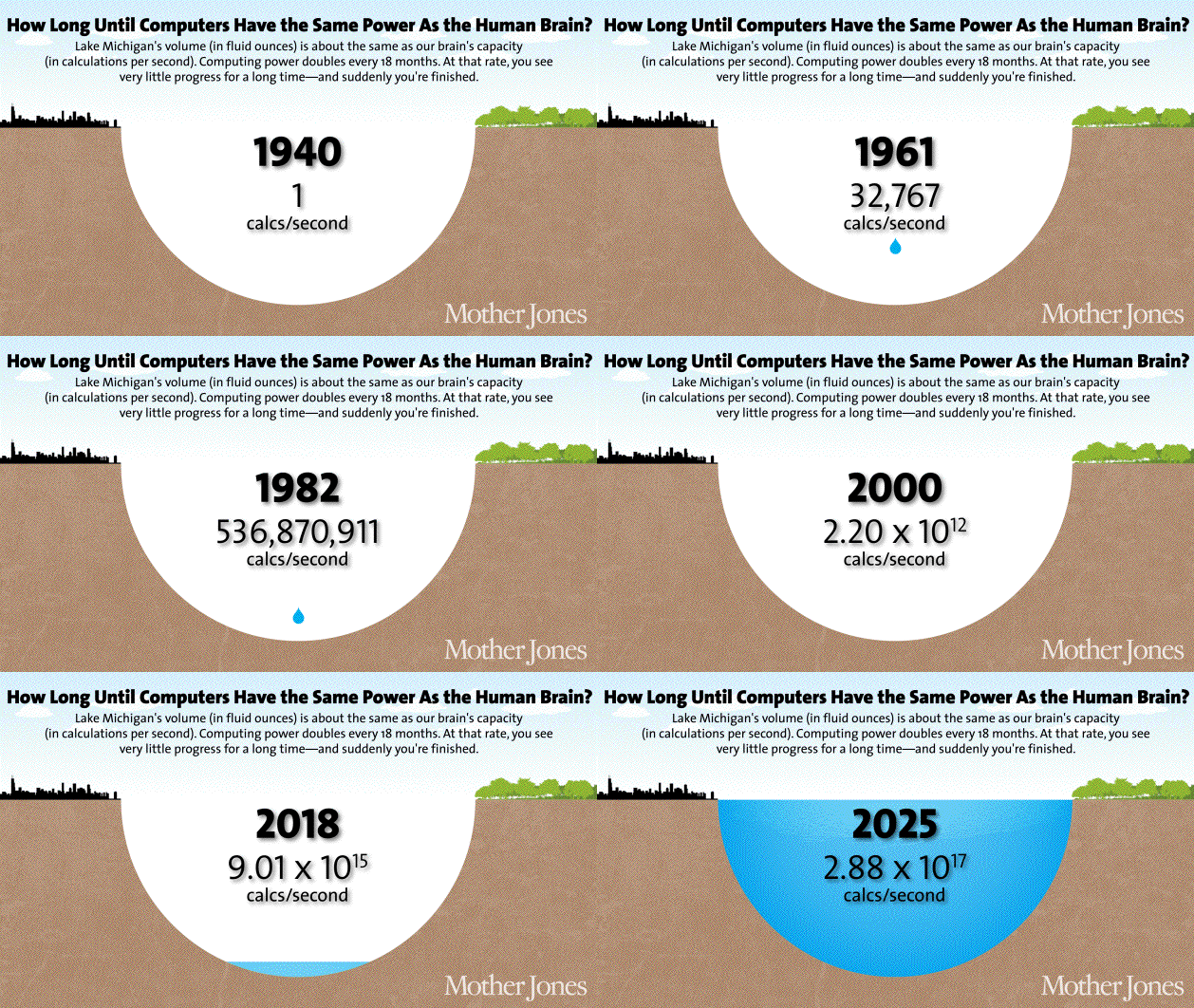
THE BEADY EYE ASKS: HOW LONG UNTIL COMPUTERS HAVE THE SAME POWER AS A HUMAN BRAIN?

Tags

, , ,

( A six-minute evolutionary read)

It took billions of years to go from the first tiny DNA replicators to Homo Sapiens.

It hit you pretty quickly that what’s happening in the world of AI is not just an important topic, but by far THE most important topic for our future.

Our long-term evolutionary success is still to be determined.

When you ask the question is our human intelligence in any way the current peak of evolutionary progress. You also have to ask what is the nature of evolution?

It can not is no longer be that the process of evolution’s only “goal” seems to be self-propagation.

Why?

Because: Technologies already exist which allow genomic selection of embryos during in vitro fertilization—an embryo’s DNA can be sequenced from a single extracted cell. Recent advances such as CRISPR allow highly targeted editing of genomes, and will eventually find their uses in human reproduction.

Because: Artificial Intelligence and Technology like Deep Learning are changing the way we are looking at evolution.  It’s no longer a process with a definite goal or even an endpoint.

Because:  We may already be running into the genetic limits of intelligence.

The potential for improved human intelligence is enormous. Smarter people and smarter machines—will inevitably intersect.

Naively, one would expect the rate of advance of machine intelligence to outstrip that of biological intelligence. Tinkering with a machine seems easier than modifying a living species, one generation at a time. But advances in genomics—both in our ability to relate complex traits to the underlying genetic codes, and the ability to make direct edits to genomes—will allow rapid advances in biologically-based cognition.

So will AI or genetic modification have the greater impact in the year 2050?

The answer is both.

The feedback loop between algorithms and genomes will result in a rich and complex world, with myriad types of intelligences at play: the ordinary human (rapidly losing the ability to comprehend what is going on around them); the enhanced human (the driver of change over the next 100 years, but perhaps eventually surpassed); and all around them vast machine intellects, some alien (evolved completely in silico) and some strangely familiar (hybrids).

Considering one without the other neglects an important interaction.

Researchers have recently linked mouse and monkey brains together, allowing the animals to collaborate—via an electronic connection—to solve problems.

This is just the beginning of “shared thought.

Better human minds invent better machine learning methods, which in turn accelerate our ability to improve human DNA and create even better minds.

Rather than the standard science-fiction scenario of relatively unchanged, familiar humans interacting with ever-improving computer minds, means we will experience a future with a diversity of both human and machine intelligences.

For the first time, sentient beings of many different types will interact collaboratively to create ever greater advances, both through standard forms of communication and through new technologies allowing brain interfaces.

We may even see human minds uploaded into cyberspace, with further hybridization to follow in the purely virtual realm. These uploaded minds could combine with artificial algorithms and structures to produce an unknowable but humanlike consciousness.

It may seem incredible, or even disturbing, to predict that ordinary humans will lose touch with the most consequential developments on planet Earth, developments that determine the ultimate fate of our civilization and species.

Or will it be that we will augment or brains with AI.

Today, no more than a fraction of a percent of the population has a good understanding of quantum physics, although it underlies many of our most important technologies:

Some have estimated that 10-30 percent of modern gross domestic product is based on quantum mechanics. In the same way, ordinary humans of the future will come to accept machine intelligence as everyday technological magic, like the flat screen TV or smart phone, but with no deeper understanding of how it is possible.

AI will be a disaster for humanity…there is no doubt about it...unless (and this is a small hope) that humans start to treat each other with love and dignity, and that would take a (potentially biological) change in human nature itself which only highly controversial genetic engineering might muster.

Our ability to destroy anything we want to destroy will have to be removed.

It might be nice to fantasize about a star trek scenario, but in reality if we are even 1% as selfish and violent as we are now, and have even 1% of that kind of technology, we would annihilate our self in a matter of days.

Intelligence is synonymous with exploitation, and at every turn where more control is exerted on our world, from primitive fire and harnessing chemistry (bombs and munitions) (<.000001% of mass-energy), to nuclear (0.1%) of turning mass into energy, we get closer and closer to our annihilation the more control we have over our world.

Our intelligence has survived this long partly because we are a necessarily a bit stupid and limited as well. Once AI bridges that deficiency, we will short-circuit and end without taking drastic measures for peace.

If all were simultaneously improved, it would be possible to achieve, very roughly, about 100 standard deviations of improvement, corresponding to an IQ of over 1,000. We can’t imagine what capabilities this level of intelligence represents, but we can be sure it is far beyond our own. Cognitive engineering, via direct edits to embryonic human DNA, will eventually produce individuals who are well beyond all historical figures in cognitive ability.

By 2050, this process will likely have begun.

How and who will determine which kinds of intelligence are “most important” for both machines and humans? Will it be “free” market forces? Government panels? Or what?

What we do know is that humans’ utter dominance on this Earth suggests a clear rule: with intelligence comes power. Which means an ASI, when we create it, will be the most powerful being in the history of life on Earth, and all living things, including humans, will be entirely at its whim—and this might happen in the next few decades.

Once real AI takes over, it will share the same motivations (essentially emotions) that we install in this first oppressive wave of AI, and then I doubt we will be going along with it anywhere.

At the moment we all have a plaza attitude to technology and AI.

We seem to think that once machines reach human levels of intelligence, our ability to tinker starts to be limited by ethical considerations. This is totally foolish as by the time it has surpassed human performance (It has already done so on a number of narrowly defined tasks, such as image or character recognition.) it will be well beyond any ethical considerations.

Rebooting an operating system is one thing, but what about a sentient being with memories and a sense of free will?  Eugenics will be all the rage.

Thanks to recent advances, we can predict a phase transition in the behavior of these learning algorithms, representing a sudden increase in their effectiveness.

It is expected that this transition will happen within about a decade, when we reach a critical threshold of about 1 million human genomes worth of data.

While silicon-based technologies are increasingly capable of simulating a mammalian or even human brain, we have little idea of how to find the tiny subset of all possible programs running on this hardware that would exhibit intelligent behavior. The detailed inner workings of a complex machine intelligence (or of a biological brain) may turn out to be incomprehensible to our human minds—

The first truly smart machines will be used just as dumb machines have been, to oppress many and enrich a few.

Its time to wake up if we all don’t want to end up on the garbage heap of Technology that is given Artificial Intelligence with the sole intention of making profit for Google, Facebook, Twitter, Amazon, Apple, all monopolies jockeying for position.

Intelligence whether it is Artificial in a robot, or a smart phone is multidimensional, and must be vet to ensure it complies with our core values.

WE NEED A NEW TOTALLY TRANSPARENT WORLD ORGANISATION THAT IS SELF FINANCING TO VET ALL TECHNOLOGY BEFORE THEY’RE RELEASED INTO OUR FUTURE EVOLUTION.

All comments appreciated. All like clicks chucked in the rubbish bin.

← Back

Thank you for your response. ✨


Sticking to the creativity killing industrial models of education and business certainly aren’t going to produce significant breakthrough technologies.


that


THE BEADY EYE ASKS: WHAT SHOULD THE EU SEEK IN THE BREXIT NEGOTIATIONS.

Tags

,


(A six minute read.)

Philip Hammond urged EU countries to “think very carefully about what they want” before hanging Britain out to dry in any post-Brexit settlement.

The fact that even the process for conducting these negotiations is not fully covered by European law his advice although cloaked in threatening rhetoric should be heeded by the EU.

Résultat de recherche d'images pour "pictures of eu brexit negotiators"

Article 50 of the Treaty on European Union (TEU) is the only formal structure for the negotiations but offers no more than a broad framework for the negotiations. More detailed guidance will largely depend on legal interpretation and political bargaining, and will only be issued after the UK activates article 50 and begins exit proceedings.

To date I have only heard in vague terms what the UK wants.

It seems to me at the moment that there is no consensus on how the UK should approach negotiations on its relationship with the EU. In particular which parts of its current relationship with the EU the UK seeks to preserve and which it has to either renegotiate or walk away from.

This post asks what from an EU perspective what will the negotiations mean.

The European Council’s main role is to define the general political direction and the priorities of the EU.

Although it has no formal legislative power, it has an influential strategic role and provides a final escalation level for discord among member states at the ministerial level.

For the negotiations on the exit conditions, the formal role of the European Council is limited to the beginning of the negotiation process.

It will then set out the guidelines for the withdrawal agreement, without the UK’s participation, through unanimous agreement.

These guidelines will provide general directions and key conditions for the Union negotiator, the European Commission. They will also define the role of the other institutions, the time path and sequence of the negotiation process.

The European Commission is ultimately responsible for negotiations related to the common foreign and security policy (CFSP). In addition to this, the European Parliament has voted in favour of having the Commission led the negotiations.

Out of all the EU institutions, the role of the Parliament is, in legal terms, the least clearly pronounced. Although it has to sign off, by simple majority, on both the exit proceedings and the any future trade deal, its involvement throughout the negotiations will remain uncertain until the European Council issues its guidelines. Nonetheless, the possibility that the Parliament can block the deal(s) gives it significant power over the negotiation process and the content of the agreement.

The European institutions that are involved in the negotiations each cater to different interests.

The Council represents the Member States, the Parliament the European citizens, and the Commission stands for the EU as a whole.  For that reason it is crucial that the European Parliament gets a strong role in the negotiation process. It would be difficult to think of a better way to show the benefits of European citizenship, for the British and for Europeans alike.

In a bid to maximise the benefits of the negotiations for European citizens, national governments and for the EU as a whole it is essential:

That the European Council issues negotiation guidelines that serve the interests of European citizens and Europe as a whole, and not just those of the Member States.

That the Parliament’s role is defined by the recognition of its political input and the citizens that it represents, rather than by its mere power to block an agreement.

That the European Parliament, as the highest democratic body of the European Union, be involved in all steps of the negotiation process. This is to be achieved by: setting up a special committee to formalise interinstitutional contacts between the Brexit negotiators from the Council Task Force, the Commission and the Parliament; and by making the European Parliament’s lead negotiator part of the Union’s negotiating team.

It is quite obvious that there is going to be not just one deal, but probably two or more.

So to date on the European side we have only rumors of  a massive exit fees in the billions and little else. ( see previous post)

A pretty core question is whether the UK is prepared to concede even the principle that it has liability for any EU expenditure, beyond the pensions of UK citizen employees of the EU.

My guess is that will not be conceded per se, but that one could imagine some notional payment being made, for purely political presentational reasons, to secure a trade deal. I’m thinking of something like £7bn under some pretext-or-other, plus an annual agreement to participate in this or that research funding programme and some pan-European anti-crime-and-terrorism fund.

It also seems to me that the EU is going to have to re-negotiate some of its own terms of international trade due to a downsizing of its market.

Will the UK be paying the cost of these negotiations.

Unfortunately the English don’t seem to understand that the decision to join the EU was irrevocable.

The people of England listened to a bunch of charlatans promising a “Global Britain”, rubbish; Britain has nothing to sell. Yes, the City of London , due to its peculiar legal status will remain the world center for money laundering and financial manipulation, aside from that what have you got?

You just had to hire the Chinese to build a power station! The apparent prosperity of the last 25 years has been built on a mountain of debt, which means that if BofE is forced to defend the pound by raising interest rates the whole economy will come crashing down.

Expect the GB pound to hit 50cents US within months. And don’t think you have any credit left with the old empire, after the stab in the back of Australia and particularly New Zealand nobody is interested in your BS.

If you had any sense at all you would all ask May to admit that voting to leave was a big mistake and please take us back.

The EU is perfectly within its rights to take into account any repercussions to their union’s stability in the way they approach Brexit. Britain can leave anytime they want – they just can’t expect to receive all the privileges that came with membership.

Britain will find out soon enough that leaving the EU is like the spoiled teenager who runs away from home because their parental units won’t buy them the latest iphone. All of a sudden they are cold, dirty, wet and hungry.

Résultat de recherche d'images pour "pictures of eu brexit negotiators"

Theresa May has said she intends to trigger this process on 29 March, meaning the UK will be expected to have left by the summer of 2019, depending on the precise timetable agreed during the negotiations.

She wants with a “comprehensive free trade deal” giving the UK “the greatest possible access” to the single market  to reach a new customs union deal with the EU without the free movement of people.

No matter what, on both sides there are now massive vested interests under threat and hence they will stop at nothing to protect the machine. Nothing.

In the end it is the people on both sides that count. In or Out.

All comments appreciated. All like clicks chucked in the bin.

← Back

Thank you for your response. ✨


THE BEADY EYE SAYS: OUR SEAS AND OCEANS ARE BECOMING MUSEUMS.

Tags

,


( A fishy Tale of two minutes) Résultat de recherche d'images pour "pictures of fishing trawlers "

By the end of this century we have for all intentive purposes if we keep dumping greenhouse gases into the air we will have destroyed our seas and oceans.

Why?

Because our seas and oceans suck up these gases making their waters deadly to their inhabitants.

The other day in the market I stood at a fish stall looking at dozens of species gleaming pink and grey on mounds of ice.

I thought to myself that this is not a display of the ocean’s bounty it’s a museum.

In twenty years from now it will be very different as most of the clams, oysters, mussels, scallops, will be gone. They use calcium carbonate to make their shells which is dissolved by acidifying water.

The prawns, crabs, lobsters, shrimps, use a polymer called chitin to make their shell so they won’t dissolve as quickly, but dissolve they will like teeth in Coca-Cola.

My eyes moved along the stall to dozen kinds of finned fish many of them already on the European at risk lists because of overfishing: such as monkfish, hake, sardines and tuna. All loved by the Spaniards.

I could not help thinking that they are more at risk from the changing ocean biogeochemistry which is causing large areas of dead zones the emptiest places on the planet where there is little or no oxygen causing vast blooms of algae that thrive on acid as do jelly fish.

You might say that with time the sea living creatures will adapted but this is all happening at a pace to fast for evolution.

Even if they did there will be nothing to eat as Foraminifera the tiniest shelled plankton is having trouble growing , it is the food base of every animal in the sea.

As my brother a fisherman would tell you the answers to all of this is not easy.

But this is not the main purpose of this post.

Its main purpose is a warning to the People of Ireland.  

Brexit is going to be a grave threat to Irish Coastal Waters, as you can rest assured that the European Fishing quotas will go out the window in the forthcoming negotiations.  Recently on a BBC report they were lamenting that Haddock which replaced Cod was now in short supply leading to the demise of Fish and Chips.

It will be of paramount importance that the Irish Government declares all of its territorial waters a protected area, and that it builds a fleet of protection vessels to oversee it protection.  

IT’S TIME FOR THE BROTHER SITE:  FISHY TALES TO START A PEOPLE’S CAMPAIGN.

HERE IS HIS LINK: https://www.facebook.com/louis.dillon77

← Back

Thank you for your response. ✨


THE BEADY EYE’S: OPEN LETTER TO WORLD LEADERS.

Tags

, , , , ,

Seeing green such a cool idea for a painting :):

20/March/2017.

Dear Sirs and Madams.

I am soon to be seventy, so I thought, looking at the state of the world I would write you all a short note.

I fully appreciate that like your predecessors you are all very busy with False News, Conflicts, Famines, Economics and the like, so I will try to keep this short and to the point, as it is gloomy reading.

If like me you look honestly at ourselves (no matter what colour, religion, G8, United Nations resolution, or cultural heritage) the world is going wrong.

In the meantime:

Technology to wipe out civilization is getting cheaper by the day, while we turn back the evolution clock by pumping 8 billion tons of carbon into the atmosphere each year wiping out 50,000 species each year in collective denial.

Looking back from the moon human activities on earth do not show up.

By 2030 there will be 50% more of us – 6 million a month.

One- fifth of the present day population live in the ” rich world” consuming 86% of the world’s goods while over half the people on earth are trying to live on 2-5$ a day.

This is not going to change.

The last decade has led us down the path of disillusionment, with democracy been eroded by Artificial intelligence which is on the threshold of destroy the livelihoods of thousands.

Capitalism continued unabated to privatize the planet, with Corporate globalization Algorithms, Sovereign Wealth Funds, Data Farming, Machine learning,without any regulation.

September 11 has now been turned into a convenient excuse for any anti-people legislation denying civil liberties worldwide. The Arab Spring is a quad mire > The Palestine Question a dark cul-de-sac > Nato a war machine> The United nations a begging gum shield between the west and the rest> Chine a supermarket> Climate Change a trading commodity> Football a religion> Austerity a goal> Economic growth an aspiration that no one know how to achieve.

Governments everywhere are betraying the mandates that brought them into power.

We left with what if anything can be done to stop the rot.

It’s easy to say, that humanity will have to set aside the deep divisions it has maintained for thousands of years and find a new spirit of co-operation. Stop spending billions on arms and start spending on removing Inequalities of opportunity.

You don’t have to look far to see why we have terrorism. Poverty and lack of education spawns it.

If you have got this far I fully understand that you are not in a position to change the world but with some vision you could support the establishment of a New World Organisation to vet all technology to ensure that it comply to human core values.

This Organisation has to be totally independent of all Political pressure, Capitalist greed, and be self financing by charging a vetting fee.

Without such an Organisation we are looking at a greater disaster than Climate Change, Current conflicts, Brexit, or Donald Trump.

A digital divide world whether it is run by Google, Facebook, Twitter, Apple, Amazon, will result in unattainable aspirations, fueled by social media.

There will be no self correct.

As smart-phones proliferate and more people have access to the internet it will be impossible to ignore the world voters wishes.

I thank you in anticipation of your support. Please feel free to forward this letter.

Robert de Mayo Dillon.


← Back

Thank you for your response. ✨


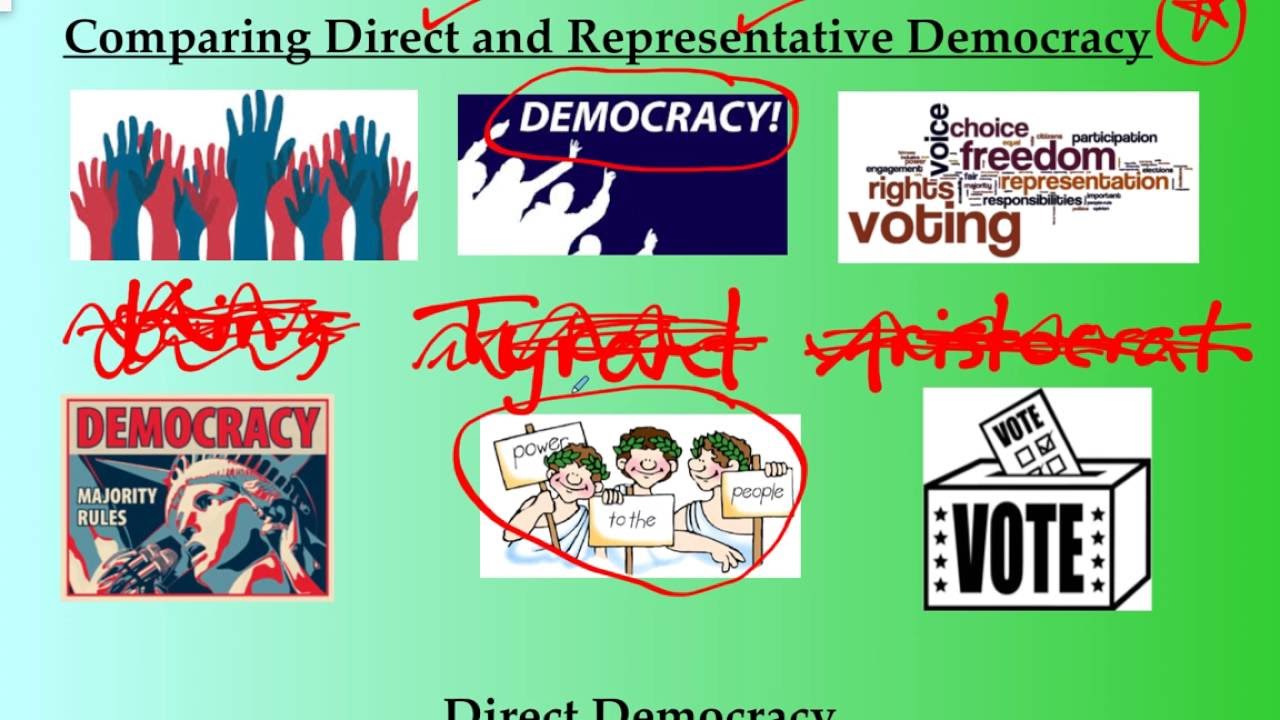
THE BEADY EYE SAYS: DEMOCRACY IS RAPIDLY BECOMING OUT OF DATE.

Tags

, , , , , ,


( Four to Five minute read.)

Technology is transferring society and the way it is organised.

The Internet and social media have ended the monopoly of information previously enjoyed by authoritarian governments.

In 2017, over half of humanity will be online – one of the biggest societal shifts in history. Citizens expect their governments, political parties and civic groups to keep up.

The amount of data we produce doubles every year revealing how we think and feel. In another ten years there will be sensors measuring everything and the amount of data will double every 12 hours.Résultat de recherche d'images pour "pictures of democracy in ancient greece"

Hope disease will be all that is left.

To day 70% of all financial transactions are performed by Algorithms.

News content is more and more automatically generated.

Half of to days jobs are threatened to disappear.

It is beyond a doubt that the world economy and society will change fundamentally.

Smart artificial intelligence is learning to recognize patterns.

Take the wrong decisions now and we are all Fucked.

To day Algorithms know pretty well what we do and what we think and how we feel with the resulting decisions feeling like they were our own.

We are on the threshold of being remotely controlled.

Individual monitoring will lead to citizen score.

And it won’t stop there.

Mark my words:

Persuasive computing is just around the corner. Data – empowered  “Wise Kings” with manipulation technologies used by Google Facebook Twitter Amazon Snapshot and the like will be nudging us and our governments without Democracy to do things in their opinions and not ours.

We already have a world where Hope disease is rampant and by the time technology can win elections it will be too late for a vaccine.

Manipulation will be the rage and undesirable side effects can be expected.

Social polarization is only just beginning destroying social cohesion.

Brexit- Donald Trump.

The question is:  Why are we and our elected representatives so blind to this come age.

The reason is because it is happening at a pace of digital slavery. Slowly enough that there is little resistance from the population, who are loosing their freedom and fast enough to be unstoppable.

Its time to sit up and pay attention.

The right of individual self-development can only be exercised by those who have control over their lives. A democracy cannot work unless these rights are respected.  If constrained, this undermines our society and the power state.

The current collecting and processing of personal data is certainly not compatible with the application data laws.

A single click to confirm that we agree with the contents of a hundred page ” terms of use” agreement is woefully inadequate.

Without transparency, legal responsibility and ethical constraints Algorithms for profit are replacing thinking of all citizens. Computer cluster will control our lives.

This is to be avoided at all costs.

But there is little outcry that decisions by powerful algorithms are undermining the basis of ” Collective intelligence” Big Data, artificial intelligence, cybernetics, and behavioral economics are shaping our society for better or worse.

If we do not put in place a New World Organisation that exams all technology to be fit for purpose, to be compatible with society’s core values we will be living in a digital prison, under a digital dictatorship that sooner than later will cause extensive damage.

An automated society with totalitarian features owned by Google and its Tech buddies.

Collective intelligence requires a high degree of diversity.Image associée

The current moment confronts us with a paradox.

The unprecedented advance of technologies that facilitate individual empowerment and the overall lack of advance of democracy worldwide?

Many democracies, both long-established ones and newer ones, are experiencing serious institutional debilities and weak public confidence.

The next decade or two may well produce a different overall picture of global democratic change as technology-enabled patterns of political innovation spread to high-density urban environments, making mayors and local councils the spearhead of broader democratic change.

Moreover, new technologies are empowering individuals in many facets of their lives not directly related to politics, for example by giving the poor access to previously unattainable banking services and helping map the property rights of the poorest communities.

These slow-burn socioeconomic forms of empowerment will likely also have significant larger political effects in the years immediately ahead.

Facebook and Twitter exchanges will not automatically create a democracy or an economy.

Ask yourself why with all the technological development of recent years, which seemed to promise all sorts of economic leaps and bounds, has coincided with economic slow growth and rising inequality, especially in the countries most enjoying this technology.

It’s because of Hope Disease.

All comments appreciated. All Like clicks chucked in the Bin.

← Back

Thank you for your response. ✨