• About
  • THE BEADY EYE SAY’S : THE EUROPEAN UNION SHOULD THANK ENGLAND FOR ITS IN OR OUT REFERENDUM.

bobdillon33blog

~ Free Thinker.

bobdillon33blog

Category Archives: The Internet.

THE BEADY EYE ASKS. ARE WE ALL BEING DUMBED DOWN?

09 Saturday Apr 2016

Posted by bobdillon33@gmail.com in Humanity., Modern Day Democracy., Politics., Social Media., The Future, The Internet., The USA., The world to day., What Needs to change in the World, Where's the Global Outrage., World Politics

≈ Comments Off on THE BEADY EYE ASKS. ARE WE ALL BEING DUMBED DOWN?

Tags

Capitalism and Greed, Globalization, Inequility, Internet, The Future of Mankind, The USA., World aid commission

Some time ago I posted are we all being Googlified.  

We use the internet and social media is not so much to expand our minds as to lose them.

Social media does not democratise debate. It limits it to the resilient, offering tweet-size solutions.

We tend to validate what we already believe, wish or suspect is true as opposed to challenging our way of thinking.

In this overheated world fulled by attack ads, and social media frenzies, the only think that matter is how an individual feels about something. Feeling validates itself and anything else is an establishment conspiracy.

It is well-known that if you want to rule a people keep them ignorant.

Take the USA for instance.

One has only to look at the rise of Donald Trump, the Tea Party, Climate change deniers, Creationists, and the hold these have and the lengths believers go to push their agendas, contrary to tangible, scientific proof, to understand that ignorance is something people invest in heavily.

In a country that was founded on Immigration the USA that has built some 650 miles of wall along the 1,954-mile US-Mexico boundary. There are around 16,238 murders per year in the United States; this averages out to around 44 murders per day. There were 2.24 million prisoners in the United States as of Dec. 31, 2011. That accounted for about 22 percent of the global prison population.

“It’s a stark fact that the United States has less than five percent of the world’s population, yet we have almost 25 percent of the world’s total prison population.” 

America is killing itself through its embrace and exaltation of ignorance.

Here as elsewhere we see politicians more concerned with appearing approachable than smart or engaging in genuine political discourse.

Celebrity gossip dominates news feeds and cycles.

We have a generation that have not read a book since leaving school. How take selfies posted on Facebook to say look at me I did this or I am here, got the t-shirt. Who cares. Almost all of us have been there before you.

Topical TV discussion ( on this side of the pond Question Time, Hard Talk, News Night and the like) shows use celebrities, sportspeople, or some one from the station’s stable of stars to discuss controversial issues eschewing experts and reducing complex subjects to clickbait.

Shrinking government funding for Education, and other artistic, creative, literary and scientific endeavors, works to erode the significance of scholarship and creativity and all they entail as respectable and seriously useful occupations or pastimes.

Universities are changing as a consequence of fee charging and anti-intellectualism. Instead of teaching students the joy of learning and critical thinking, we train them for jobs.

Ignorance should never be held up as inspirational, convenient fictions, don’t replace facts, and aggressive cyber trolls never silence the truth.

A clever country is where intellectuals are not scorned as elite, but recognised as essential.

If we want inequality to disappear our Leaders must educate for free and capitalism with its unrelenting greed must pay. ( see World Aid commission of 0.05%)

← Back

Thank you for your response. ✨


Share this:

  • Share on WhatsApp (Opens in new window) WhatsApp
  • More
  • Share on Mastodon (Opens in new window) Mastodon

THE BEADY EYE WONDERS WHAT SORT OF DEMOCRACY DO YOU THINK WE HAVE.

30 Wednesday Mar 2016

Posted by bobdillon33@gmail.com in Humanity., Modern Day Democracy., Social Media., Technology, The Future, The Internet., The world to day., Unanswered Questions., Wealth., What Needs to change in the World, Where's the Global Outrage., World Organisations., World Politics

≈ Comments Off on THE BEADY EYE WONDERS WHAT SORT OF DEMOCRACY DO YOU THINK WE HAVE.

Tags

American democracy, Democracy, Out of Date Democracy, The Future of Mankind, The internet and Democracy

(A Four Minute Read:)

We all know that democracy comes in many forms.Afficher l'image d'origine

The question however is, what (if any) form is worthwhile having or is what we have worth keeping.

I ask this because we are now traveling in some of the Earth,s most unforgiving environments where consensus democracy is just beginning to take hold.

We are entering a period in the world thanks to Social Media where old grudges are arising to the surface and are now threatening to destabilize world peace.

We are also entering a biomedical and silicon society with the recombinant DNA enabling the manipulation of life as its genetic essence.

Physics and Math with the help of computer power is not only revealing how the world works but how the Universe was formed with magnificent and dangerous ways to exploit it.

Perhaps because we are the invasive species of all it’s time we have to ask ourselves is Science and the game changing technology collaborating to destroy democracy or enhance it.  

Is it still true to say:

Compared to dictatorships, oligarchies, monarchies and aristocracies, in which the people have little or no say in who is elected and how the government is run, a democracy is often said to be the most challenging form of government, as input from those representing citizens determines the direction of the country. The basic definition of democracy in its purest form comes from the Greek language: The term means “rule by the people.” But democracy is defined in many ways — a fact that has caused much disagreement among those leading various democracies as to how best to run one.

Our governments have made education a chain and ball of debt that locks the mind into materialism.

Instead of looking after their citizens they put ( under the miss comprehension that growth will cure-all ) the Economy first when they should be hanging their heads in shame when one citizen through no fault of his or her own lives life and died in poverty.

There is little point in maintaining a nuclear deterrent if you have to live out you life on the bread line. What’s the point if you all but wiped out before the button is pressed.

I recently visited Singapore Zoo.  The youngest zoo in the world.

It sported a simulated Rainforest, a tropical Polar Bear and hundred of school children which will never see any of the Zoo residents in the wild. I could not shake the feeling that I was looking at our feeble attempts to show what was left of values. Perhaps it is because I was seeing a generation becoming bereft of connection to nature.

The caused of our separation from all these things pervade every aspect of our lives.

The rise of personal computer in the form of smart phones solely promoting free-market capitalism rather than equality, and values that count.

Most of us in the west are crying to have our needs met, and eventually adapting to them not being met. Perhaps such an upbringing is necessary in our cultural democracy contex. We are prepared from birth for a competitive dog-eat-dog economy. That expresses itself in greed by the continuing the imperative need to convert all natural and social into money.

All aspects of our present day democratic culture conspire to strip us of our connection and belongingness.

Property rights, Surveillance, Debt based financial systems where money is scarce, religious indoctrination, a legal culture of liability, Racial, ethnic, national chauvinism, deskilling jobs hat leave us as passive helpless consumers of experiences.

An Internet of everything that most impertantly is a metaphysics that tells us that we are discrete, separate selves in a universe of others.

As this world of separation crumbles so will Democracy.

Because of the atmosphere of scarcity is everywhere everything must change.

To appreciate the sweep of change and magnitude you only have to look at Climate change (perhaps its time to put a monetary value on the sky and people will not treat it like a free dump.) and the billions being spent by the Candidates for the President of the USA.

Ted Cruz $65 million

Mareo Rubio $ 17 million

Jeb Bush $104 million

Ben Carson $39 million

Chris Christie $19 million

Donal Trump $6 Million

Hillary Clinton $100 million

Bernie Sanders $42 million

They are transforming modern-day American democracy into a form of theater and television ads.  The correlation between big money has condensed democracy into buzzwords, glitz, the main currencies attracting attention on our television screens.

With the wealth of the 62 richest people in the word now standing at over $2 trillion which is the cumulative worth of the poor half of the world population we have Google, Facebook, Twitter and other Corporate giants building technologies with artificial neurons that can learn on their own.

These may in time exhibit intelligent behaviours virtually indistinguishable from those of its human masters.

The question is longer what phone should I get? It’s what ecosystem should I join if any as they could all become the same.

Privacy is going out the window.

There are vats of coli bacteria churning out medical insulin, plastic polymers and food additives that might go where they are not wanted.

Limited world resources and being snapped up by sovereign wealth funds and hedge funds.

Algorithms buy and sell share and currencies making a mockery of the stock exchange.

Fusion power is light years away.

Not everybody is happy with the high-tech changes.

The Web is weakened the foundation principles of Democracy or if not reshaping them.

Our World Organisation are out of date, setting in motion a sequence of events that will change the history of life which is one contingent tale, liable to be rerouted at anytime. ( See previous posts)

We left with the question can capitalism Democracy deliver change.

Not on its own as it is based on greed, power, corruption, non transparency, taxies, to name just a few of its ticking cogs. God forbid its is left down to this man.donald Trump

There is only one way we can achieve a better world.

Scrap the United Nations which has become a begging Organisation of worthless resolutions.

Replace it with a World Aid Organisation that is financed by Capitalism with a 0.05% world aid commission on all High Frequency Trading, on all Foreign Exchange Transactions (over $20,000) and on all Sovereign Wealth Funds Acquisitions.

This would create an Organisation with genuine clout and save Democracy.   

I hope this blog will awaken those who are not already conscious. All comments welcome.

← Back

Thank you for your response. ✨

Share this:

  • Share on WhatsApp (Opens in new window) WhatsApp
  • More
  • Share on Mastodon (Opens in new window) Mastodon

THE BEADY EYE ASK’S: IS THE LONG-HELD NOTION OF WHO WE ARE WHAT WE DO AND HOW WE BEHAVE THREATENED.

18 Monday Jan 2016

Posted by bobdillon33@gmail.com in Freedom, Humanity., Life., Technology, The Future, The Internet., The world to day., Unanswered Questions., What Needs to change in the World, Where's the Global Outrage.

≈ Comments Off on THE BEADY EYE ASK’S: IS THE LONG-HELD NOTION OF WHO WE ARE WHAT WE DO AND HOW WE BEHAVE THREATENED.

Tags

Big Data, Community cohesion, Identity, Inequility, The Future of Mankind, Visions of the future.

(4/3 minute read)

We live in a digital age with both positive and negative influences on society.

But is the human brain, that most sensitive of organs, under threat from the modern world?

We are becoming more and more reliant on technological devices for nearly everything we do.

Unless we wake up to the damage that the gadget-filled, pharmaceutically-enhanced 21st century is doing to our brains, we could be sleepwalking towards a future in which neuro-chip technology blurs the line between living and non-living machines, and between our bodies and the outside world.

Human identity, the idea that defines each and every one of us, could be facing an unprecedented crisis.Afficher l'image d'origine

Of course, there’s nothing new about that:

Human brains have been changing, adapting and developing in response to outside stimuli for centuries.

However our brains to-day are under the influence of an ever- expanding world of new technology: multichannel television, video games, MP3 players, the internet, wireless networks, Bluetooth links, Smart Phones, – the list goes on and on.

Electronic devices and pharmaceutical drugs all have an impact on the micro- cellular structure and complex biochemistry of our brains. And that, in turn, affects our personality, our behaviour and our characteristics.

In short, the modern world could well be altering our human identity.

It is a crisis that is threatening the long-held notions of who we are, what we do and how we behave.

It goes right to the heart – or the head – of us all.

This crisis could reshape how we interact with each other, alter what makes us happy, and modify our capacity for reaching our full potential as individuals.

And it’s caused by one simple fact:

The human brain, that most sensitive of organs, is under threat from the modern world.

Already, it’s pretty clear that the screen-based, two-dimensional world that so many teenagers – and a growing number of adults – choose to inhabit is producing changes in behaviour.

Attention spans are shorter, personal communication skills are reduced and there’s a marked reduction in the ability to think abstractly.

Add that to the huge amount of personal information now stored on the internet – births, marriages, telephone numbers, credit ratings, holiday pictures – and it’s sometimes difficult to know where the boundaries of our individuality actually lie.

And could weaken further still if, and when, neurochip technology becomes more widely available. These tiny devices will take advantage of the discovery that nerve cells and silicon chips can happily co-exist, allowing an interface between the electronic world and the human body.

Then, if both devices were connected to a wireless network, we really would have arrived at the point which science fiction writers have been getting excited about for years. Mind reading! We becoming more and more immune to what we are doing to ourselves in our lives. That cherished sense of self could be diminished or even lost.

So far:

Facebook is eating away at your time. Making you into a Likeaholic.

Our Intimacy is being eroded.

We inundated with information overload to the point that only sensationalism attract our attention.

Pure’ pleasure – that is to say, activity during which you truly “let yourself go” – was part of the diverse portfolio of normal human life. Until now, that is.

Now, coinciding with the moment when technology and pharmaceutical companies are finding ever more ways to have a direct influence on the human brain, pleasure is becoming the sole be-all and end-all of many lives, especially among the young.

We could be raising a hedonistic generation who live only in the thrill of the computer-generated moment, and are in distinct danger of detaching themselves from what the rest of us would consider the real world.

In the mean time we continue polluting the planet will nilly.

But we mustn’t be too pessimistic about the future.

What if we could create an environment that would allow the brain to develop in a way that was seen to be of universal benefit?

I’m not convinced that scientists will ever find a way of manipulating the brain to make us all much cleverer (it would probably be cheaper and far more effective to manipulate the education system).

Well, that debate must start now.

Biometrics has long been put forth as the next big thing in authentication, replacing or supplementing the concept of “things that you know”—passwords, PINs, and so on—with “things that you are.”

Fortunately, there’s no shortage of qualities that are unique to each person on the planet, and which could be potentially combined to create a comprehensive picture of you that’d also be really hard to fake.

Unfortunately the challenge will be to ensure that all income growth does not end up with those who own the machines and shares. Afficher l'image d'origine

Identity, the very essence of what it is to be human, is open to change – both good and bad. Our children, and certainly our grandchildren, will not thank us if we put off discussion much longer.

Perhaps it will not matter in a few hundred years when we are all singing from the same hymn sheet

All comments appreciated.

← Back

Thank you for your response. ✨

Share this:

  • Share on WhatsApp (Opens in new window) WhatsApp
  • More
  • Share on Mastodon (Opens in new window) Mastodon

THE BEADY EYE SAY’S OUR FUTURE IS NOT INEVITABLE. PART FOUR WHAT NEEDS TO CHANGE IN THE WORLD: POLITICS.

31 Thursday Dec 2015

Posted by bobdillon33@gmail.com in Politics., Technology, The Future, The Internet., The new year 2016., Unanswered Questions.

≈ Comments Off on THE BEADY EYE SAY’S OUR FUTURE IS NOT INEVITABLE. PART FOUR WHAT NEEDS TO CHANGE IN THE WORLD: POLITICS.

Tags

Community cohesion, Government, Inequility, politics, Technology, The Future of Mankind

Mankind must learn how to appropriately respond to the crises and opportunities that await us, and grow cognizant of the fact that large-scale violence can be so dangerous to humanity so that we become “aware of the need for a radical change in attitude.

So the question is:  Are humans fundamentally too flawed to be trusted with their own paradise?  Should we scrap Politics as we know it? Is it the politician’s very humanity that we distrust?

HAPPY NEW YEAR.

Politicians aren’t popular in WORLD.Politics is rated as the least trustworthy profession and we all know Why.

Elected to represent the people they represent Inequality.

Afficher l'image d'origine

Politics in the Future: Will it be worse or better with the technologies of the Internet.

Let’s say you can no longer make it in society without using technology you don’t understand to buy things at a store, to talk to other people, to conduct business.

People are increasingly dependent, but they don’t have any idea how these things actually work.” In other words, people may fear technology, but does that fear even matter?

There’s no mass movement to completely scrap technological innovation.

But there is a movement operating at the other end of the spectrum composed of people who embrace even greater hybridity between humans and technology as something not just inevitable, but desirable.

They would love to see like Wall Street a truly altruistic entity running our governments.

Right now, all politicians, are motivated by self-interest. This is just how humans are.

So wouldn’t it be nice to have something like a super-intelligent AI running things and it be entirely after our best interest?”

Emerging Technologies, a human enhancement and techno progressive non-profit, the AI politician mostly hinges on the negative personality traits of “meat-bag” politicians, specifically: vanity, rage/revenge, and sex addiction.

Basically, the idea would be that an AI politician would have an ego (“if it has a drive for self-improvement … it will have an ego”), but would be programed to turn off negative impulses that would get in the way of implementing policy or following the law. It would be paideia in binary code.

The rule of reason over desires.

One can look to modern elected American officials—pick almost any name, Donald Trump —and lament their lack of self-knowledge, anemic rhetoric, paucity of wisdom, and wonder what they might have been had they been exposed to paideia.

So what would be wrong with a political system run by “altruistic” machine overlords.

Algorithms so completely permeate our day-to-day lives that it can be difficult for people to recognize when and how technology is helping them.

Consumer devices like phones and laptops are obvious, but there are less visible things like the network of satellites used for GPS, distribution software used by power companies, and high-end medical equipment.

On the other hand, abuses of cutting-edge technology have been prominent in the last decade: National Security Agency data collection, cyber warfare, hacks of financial information.

Christopher Bader, a co-author of the fear study and a professor in sociology at Chapman University, recently articulated our fear of technology: “People tend to express the highest level of fear for things they’re dependent on but that they don’t have any control over, and that’s almost a perfect definition of technology.”

But should we really outsource morality to machines?

Unfettered by personality, machines would be rulers without greed, fear, hate, or love, going about the drudgery of administering to human clients free of the disastrous trappings of the ego.(Image: Mopic/Shutterstock)

Back to Reality.

The Politics of the future will be connected to technological and data advances, campaigns will increasingly be personalized to the individual.

From the television to the smart phone to the doorstep, campaigns will target you.

Perhaps eventually as you walk through a store or through a subway station. Not you as a member of a voter cohort. But you, the individual.

Campaigns cannot have a million different messages, however; these personalized messages still must be connected to an overall message architecture.

The ability to deliver the right message to the right voter and measure its effectiveness will continue to take more of the guesswork out of politics.

We are entering the age of the billionaire political arms race. Like missiles soaring over the Earth in space, these big spenders will fire back and forth at one another, attempting to control more of our politics.

In some races, the candidates will be mere bystanders to the super PAC main event. But this inevitably will lead to positions being taken, votes being cast, and legislation being sponsored to please political benefactors—or to court them.

This super PAC era is in its infancy.

Strong candidates with a compelling message and the right timing will still matter more than anything else. But the campaigns around them will continue to change rapidly.

As we get deeper into the 21st century, new factors will impact, if not help shape, our politics, including: more concrete changes brought on by global warming, more sophisticated and frequent cyber warfare and cyber attacks, technology companies that claim to know more about you than you do (and the attendant privacy issues), baby boomers moving fully into retirement, increasing urbanization, and the rise and fall of competitor nations.

Data and its smart use will only improve campaigns’ understanding of the electorate.

Campaigns will increasingly be fought out on mobile devices as much as television and computers.

The there is the coming use of holograms. Politicians will use them  throughout the country to extend his or hers  reach. With advancements in artificial intelligence, you could soon have holograms of government candidates at your door, interacting with you and asking and answering questions.

Will it change anything? No other than “transhumans” will emerge from the ashes of mid-21st century planetary warfare is a bit hard to swallow.

Every time you press the like button you are voting.  So go on press the button as you have no opinion worth while expressing. What you vote for is not what you get.

If we want Politics to represent us all decisions that affect us must be vote on by the people for the people.  Lets have a Government Political Voting App. Then we will have true representation.

← Back

Thank you for your response. ✨

Share this:

  • Share on WhatsApp (Opens in new window) WhatsApp
  • More
  • Share on Mastodon (Opens in new window) Mastodon

THE BEADY EYE LOOKS AT WHAT NEEDS TO CHANGE IN THE WORLD: PART TWO: EDUCATION.

30 Wednesday Dec 2015

Posted by bobdillon33@gmail.com in Education, Humanity., Modern Day Communication., Social Media., Technology, The Future, The Internet., Unanswered Questions., Where's the Global Outrage.

≈ 1 Comment

Tags

Capitalism and Greed, Distribution of wealth, Education in the Future., Inequility, Internet, Modern day education, The Future of Mankind

Education can contribute significantly to the promotion of mutual understanding and tolerance.

Today’s revolution in social communications involves a fundamental reshaping of the elements by which people comprehend the world about them, and verify and express what they comprehend. The internet has significant effects on communicating, teaching and learning.

What today is called the digital divide, will be the Educational Disaster of the Future.

Afficher l'image d'origine

It takes a wide range of different communication styles to get across to all the different learning styles that exist, but as our modern world evolves and becomes more sophisticated, so must our learning institutions.

Technology enthusiasts have long heralded the power of technology—from the printing press, to blackboards, to the laptop—to transform education.

The potential of technology to help improve education has significance beyond teaching children reading and math.

Quality education plays an important role in promoting economic development, improving health and nutrition and reducing maternal and infant mortality rates. Economic growth, for example, can be directly impacted by the quality of the education systems in developing countries.

Our first problem is that the internet is not always accessible by all learners and teachers. The second problem is though English all over the world is taught widely as a second language its is the primary language of the internet.

As a result in most of the non-English speaking parts of the world the internet it is only a tool for educational activities.

In my previous post in this series we looked at Communication.

I ended that post by stating that Education is Communication.

With most of the world deprived of any Internet connection we are WiFi our way to a digital divide that will have more than serious consequences for those countries but for all of us. 

Of course, education has used technology for centuries, from blackboards to textbooks, yet in recent history very little has changed in how education is delivered.Afficher l'image d'origine

Modern information and communications technology holds great promise in helping bring quality learning to some of the world’s poorest and hardest to reach communities. But it is highly unlikely that this will happen.

Many emerging and developing nations will be left out of the internet revolution entirely.

Indeed, in some of the most remote regions of the globe, mobile phones and other forms of technology are being used in ways barely envisioned in the United States or Europe.

Here are a few examples.

About half of online Chinese (52%) have used the internet to buy products in the past 12 months.

Majorities of internet users in Bangladesh (62%) and India (55%) say they have looked for a job online in the past year.

54% of internet users across emerging and developing countries use the internet to get political news and information.

In Venezuela, three-quarters of cell phone owners (who constitute 88% of the adult population) use their device to take pictures or video.

More than six-in-ten internet users in Poland (64%) say they have gotten health information online in the past 12 months.

Over half of the reduction in child mortality worldwide since 1970 is linked to “increased educational attainment in women of reproductive age.”Internet Has Most Positive Influence on Education, Least Positive on Morality

Back to Education.

Four years ago the iPad didn’t even exist.

We don’t know what will be the current technology in another four. Perhaps it will be wearable devices such as Google Glass.

You don’t have to be a genius or a clairvoyant to see that Education as we know it is rapidly becoming obsolete.

So what is the future?

On the possibilities of recent forms of technology, often known as Information Communication Technology (ICT). ICT refers to technologies that provide access to information through telecommunications. It is generally used to describe most technology uses and can cover anything from radios, to mobile phones, to laptops.

The future is about access, anywhere learning and collaboration, both locally and globally.

But the questions are:

What will education be? Who or what will be doing the Education? For what purpose?  Is it desirable that we all end up being educated by the cloud if the future of education technology is all about the cloud and anywhere access. 

Thanks to the cloud and mobile devices, technology will be integrated into every part of school. In fact, it won’t just be the classrooms that will change. Games fields, gyms and school trips will all change. Whether offsite or on site the school, teachers, students and support staff will all be connected.

In my ideal world, all classrooms will be paperless.

Unfortunately educators working in and with developing countries rarely have an expertise or even a basic grounding in the wide range of technological innovations and their potential uses for education.

Even the most seasoned education expert is likely to stare blankly if terms such as ‘cloud computing’, ‘m-learning’, or ‘total cost of ownership’ are introduced into the conversation.

Students will take ownership of their own learning. Rather than being ‘taught.’

Students can learn independently and in their own way. They could be in the same room or in different countries.

Will this form of education be mass brainwashing?

The cloud will set, collect and grade work online. Students will have instant access to grades, comments and work via a computer, smart phone or tablet.

The great disadvantage will be the lack of oral communication.

The iPads and other mobile technology are the ‘now’.

Reflecting western style democracy.

Schools of the future could have a traditional cohort of students, as well as online only students who live across the country or even the world. Things are already starting to move this way with the emergence of massive open online courses (MOOCs).

Infrastructure is paramount to the future of technology in education.

This should be happening now.

Teaching and learning is going to be social but people are even more leery of the internet’s effect on morality. It is should be driven by the question: How is this changing your capacity to engage the world effectively?

Universities should teach students how to deal with a world in constant motion, a world that doesn’t come labeled and arranged for you, a world in which you have to work with a lot of other people both because you need their help and because they need to understand why you think what you’re doing makes sense.

This is what is going to be importance to our world which is reminding us so every day of the week that Inequality is at the source of all our troubles.

We’ve lost sight of this, but we can reclaim it through education. 

It is possible to say that technology is not a purpose but only a tool for all humanistic necessities. This at the moment is totally untrue.

If you don’t believe me, look a Wall Street.

 The winner in this process will be humanity as a whole” and not just “a wealthy elite that controls science, technology and the planet’s resources”;

The Internet transmit and help instill a set of cultural values—ways of thinking about social relationships, family, religion, the human condition—whose novelty and glamour can challenge and overwhelm traditional cultures.

The Internet far from diminishing our concern to develop this earth, the expectancy of a new earth should spur us on, for it is here in Education that the body of a new human family grows, foreshadowing in some way the age which is to come”

The Internet can make an enormously valuable contribution to human life. It can foster prosperity and peace, intellectual and aesthetic growth, mutual understanding among people’s and nations on a global scale. If it is married into Education for all.


Afficher l'image d'origine


Wall Street : Every trillionth of a second shares, stock, currency, futures, are bought and sold for profit by Computer programs.

It’s no wonder that a median of only 29% say the internet is a good influence on morality, while 42% say it is a bad influence.

There’s still a way to go to ensure all schools are ready for the future of technology.

So go now, and look with your newly educated eyes at this world.

Afficher l'image d'origine

If students aren’t proficient in their studies to begin with and technology is used incorrectly, a whole mess of problems will arise.

← Back

Thank you for your response. ✨

Share this:

  • Share on WhatsApp (Opens in new window) WhatsApp
  • More
  • Share on Mastodon (Opens in new window) Mastodon

THE BEADY EYE LOOKS AT WHAT NEEDS TO CHANGE IN THE WORLD: PART THREE COMMUNICATION.

28 Monday Dec 2015

Posted by bobdillon33@gmail.com in Education, Humanity., Modern Day Communication., Social Media., The Future, The Internet.

≈ Comments Off on THE BEADY EYE LOOKS AT WHAT NEEDS TO CHANGE IN THE WORLD: PART THREE COMMUNICATION.

Tags

Big Brother., Communication Technology, Education World wide., Google ambitions, Human interaction, The cloud., The future effect of the Internet, Visions of the future.


You might think that with all the problems in the world that communication is of little importance.

You would be wrong.  Now more than ever we need to be able to communicate.

Unfortunately it’s under attack by the Internet, leading to wars, inequality, abuse of power. It is disconnecting the world rather than connecting it.

Why do I say this?

Because through the Internet we are loosing physical touch with not only ourselves but with the foundations of the human mind’s perception of harmony.

The Net is turning the world upside down.  Into them and us cultures.

These day it might be somewhat difficult to get your head around the history of communication.

From the first vision to the first grunt ( which were probably both misinterpreted then, as they are now) to its Ground Control to Major Tom.

Communication has come in all form of life.

Afficher l'image d'origine

Nonverbal sign language, eye contact, sound, silence.

YOU NAME IT AND ITS TRYING TO COMMUNICATE.

The problem these day is that it has become so complicated that we are not communicating but disconnecting. Without a physical presence its impossible to communicate other than send a message.

When I say Happy New year to you without any physical input I could be a computer that is wishing you happy new year with no understanding of happiness or time.

Afficher l'image d'origine


Let’s start with the digital world of Communication.Afficher l'image d'origine

Afficher l'image d'origineLike any other technology it undeniably makes parts of life so much easier and is here to stay.

We are bombarded by information, thanks in large part to the internet and its allied technologies.

But exposure to unlimited information is not the same thing as the ability to capture it as knowledge or synthesize it as understanding.

“We are living in a state of perpetual distraction,”

Everything is moving so fast that we’ve got to adapt to it, keep up with it!

It takes all of one’s energy & speed to simply remain in one place while running.

But what sort of life is that? How much depth does it really have?

Yet the digital world constantly makes us break life into discrete, interchangeable bits that hurtle us forward so rapidly & inexorably that we simply don’t have time to stop & think. And before we know it, we’re unwilling & even unable to think. Not in any way that allows true self-awareness in any real context.

We are fast arriving at the point of confusion of information and personal knowledge.

There’s no app that makes you tolerant — it happens person by person.

Different media encourage different ways of thinking, and helped tie together a number of broad ideas for me regarding the evolution of human cognition and the influence of the tools we use.

On one hand the Internet is short-changing our brain power. It is making us shallower creatures, diverting our attention and fragmenting of our thoughts.

On the other it has made the information universes of all of us much larger.

It has and still is altering the way we read, and the way we pay attention.

Our relationship with technology is just beginning, but we do not need to be the slaves of the predominant technology like the smart phone or be lead by the hypnotic Internet, where portals lead us on from one text, image, or video to another while we’re being bombarded by messages, alerts, and feeds.

Not only are we thinking differently with different media, the Internet is frying our brains?

Reconfiguring our brains, we are also forging a “new intellectual ethic”.

Greater access to knowledge is not the same as greater knowledge.

– An ever-increasing plethora of facts & data is not the same as wisdom.

– Breadth of knowledge is not the same as depth of knowledge.

– Multitasking is not the same as complexity.

What are the consequences of new habits of mind that abandon sustained immersion and concentration for darting about, snagging bits of information? What is gained and what is lost?

“Is Google Making Us Stupid?”

It can be reshaped, and the way that we think can be reshaped, for good or for ill.

Thus, if the brain is trained to respond to & take pleasure in the faster pace of the digital world, it is reshaped to favor that approach to experiencing the world as a whole. More, it comes to crave that experience, as the body increasingly craves more of anything it’s trained to respond to pleasurably & positively. The more you use a drug, the more you need to sustain even the basic rush.

It comes at a price. As the media theorist Marshall McLuhan pointed out in the 1960s, media are not just passive channels of information. They supply the stuff of thought, but they also shape the process of thought. And what the Net seems to be doing is chipping away at our capacity for concentration and contemplation.  Our mind now expects to take in information the way the Net distributes it: in a swiftly moving stream of particles.

Once you were a scuba diver in the sea of words. Now you zip along the surface like a guy on a Jet Ski.

The individual seeks out ‘virtual worlds’ that simplify interactions because the ‘real world’ is difficult to access, but when confronted with the ‘real world’ problems, that’s when the individual becomes turned off from dealing with their ‘real’ life, further perpetuating this vicious cycle towards isolation.”

Our future tools and tech may offer a new playing field, but we’re the same old players. Sure, we may wear robotic fighting exoskeletons — but we’re still going to war and falling in love and arguing with our moms.

When relationships become out of balance, would technology really fill the void or is it a vapid substitution?

While fully recognizes the usefulness of the Internet are we buying into the attractive fashionable modern viewpoint that just being exposed to a lot of information via technology will make us smart.

I am afraid not. There is a sleazy, materialist shallowness about it that most of us don’t enjoy called Porn.

Foraging in the Web’s info-thickets’reading and writing e-mails, scanning headlines and blog posts, watching videos and listening to podcasts, or just tripping from link to link to link. (Unlike footnotes, to which they’re sometimes likened, hyperlinks don’t merely point to related works; they propel you toward them.)

The Net is becoming a universal medium, the conduit for most of the information that flows through your eyes and ears and into your mind.

The advantages of having immediate access to such an incredibly rich store of information are many, and they’ve been widely described and duly applauded.

However it’s not communication.

Thinking, has taken on a “staccato” quality, reflecting the way we quickly scans short passages of text from many sources online.

“I can’t read War and Peace  anymore, I’ve lost the ability to do that. Even a blog post of more than three or four paragraphs is too much to absorb. I skim it.” The deep reading that used to come naturally has become a struggle.

As our reliance on ever brighter and faster Internet content increases, a new force is taking hold across the culture of the Web-connected world, leading to changes in reading habits and even in human brains.

The Internet trends of today foreshadow the surfing, the teaching, learning, and thinking of tomorrow.

The picture of our intellectual future, rendered thoroughly, convincingly, and often beautifully

I suppose  it all boils down to so long as we aren’t stupid enough to stop cultivating our individual minds regardless of technology changes, media itself will not make us stupid.

The wisest will still turn off the TV and other distractions when sustained concentration is called for, and they will understand the difference between various conditions and different kinds of media in general and will use each to its best advantage.

They though when the printed word was invented or the radio, or Television there would be adverse consequences.  However none of these things has had the dire consequences that culture critics predicted, we have adapted in turn in some way to each of them, more or less successfully.

Then again if all knowledge ends up store in the Cloud along with our modern-day History.  ( History illustrates our failures, and without history, we do not have the tools to create a successful future.) and we have deserts of Technology the art of communication will be lost to generations to come ruled by Holograms and Algorithms of the Internet.

But to think that we “learn” from history is somewhat of an illusion when you look around the world.  I feel that we only learn selective elements in history and probably pay more attention to history when it cost resources such as time, money or material. Think of the number of times genocide has happened in our recorded history and despots–even today–continue genocidal practices falsely believing that their regime is justified.

The neurological effects of the Internet are still to come.  This is why we should  incorporating the best of the latest technology in a way that improves education.

Education is Communication. Afficher l'image d'origine

Will we do anything? Are we capable of recognizing the dangers? We should be look at the world. We all living in our private clouds designed by The Smart Phone Communication.

If we want a more rewarding life we have to let the whole world know. (see previous posts)

I hope this post is not too long for you to leave a comment rather then pressing the like button.

← Back

Thank you for your response. ✨

Share this:

  • Share on WhatsApp (Opens in new window) WhatsApp
  • More
  • Share on Mastodon (Opens in new window) Mastodon

THE BEADY EYE SAY’S WE ALL BEING BRAINWASHED. THE WAY YOU THINK IS BEING CHANGED.

11 Friday Dec 2015

Posted by bobdillon33@gmail.com in Google it., Google Knowledge., Humanity., Life., Social Media., Technology, The Internet., The world to day., Unanswered Questions., Uncategorized

≈ Comments Off on THE BEADY EYE SAY’S WE ALL BEING BRAINWASHED. THE WAY YOU THINK IS BEING CHANGED.

Tags

Big Data, Brainwashing., Internet, SMART PHONE WORLD, The Future of Mankind


A little knowledge can be a dangerous thing.Afficher l'image d'origine

THE INTERNET IS CHANGING THE WAY WE THINK.

There’s been little consideration of how, exactly, it’s reprogramming us.

My mind isn’t going—so far as I can tell—but it’s changing. I’m not thinking the way I used to think. I can feel it most strongly when I’m reading.

For me, as for others, the Net media are not just passive channels of information. They supply the stuff of thought, but they also shape the process of thought. And what the Net seems to be doing is chipping away my capacity for concentration and contemplation. My mind now expects to take in information the way the Net distributes it: in a swiftly moving stream of particles.

Once I was a scuba diver in the sea of words. Now I zip along the surface like a guy on a Jet Ski.

When we read online, we tend to become “mere decoders of information.” Our ability to interpret text, to make the rich mental connections that form when we read deeply and without distraction, remains largely disengaged.

We’re assaulted with facts, pseudo facts, jibber-jabber, and rumour, all posing as information. Trying to figure out what you need to know and what you can ignore is exhausting.

Never has a communications system played so many roles in our lives—or exerted such broad influence over our thoughts—as the Internet does today.

It is replacing real wisdom with the conceit of wisdom.

It is filling us up with “content,” to the point that we are sacrifice something important not only in our selves but in our culture.

It is destroying deep thinking, and eroding quiet spaces.

It is replacing compassion with selfishness. It is partly to blame for the current world conflicts.

Our thinking, has taken on a “staccato” quality. A form of skimming activity,” hopping from one source to another and rarely returning to any source we have already visited.

Smartphones  have become Swiss army knife–like appliances that include a dictionary, calculator, web browser, email, Game Boy, appointment calendar, voice recorder, guitar tuner, weather forecaster, GPS, texter, tweeter, Facebook updater, and flashlight.

They are  becoming a universal medium, the conduit for most of the information that flows through our eyes and ears and into our minds.time from human events.

We are becoming ever more adept at scanning and skimming, but what we are losing is our capacity for concentration, contemplation, and reflection.

The Internet is a machine designed for the efficient and automated collection, transmission, and manipulation of information, and its legions of programmers are intent on finding the “one best method”—the perfect algorithm—to carry out every mental movement of what we’ve come to describe as “knowledge work.”

The idea that our minds should operate as high-speed data-processing machines is not only built into the workings of the Internet, it is the network’s reigning business model as well.

But there comes a design point when there are so many tools available that our environments lose their simplicity and the cost in added complexity outweighs the benefits of convenience.

In fact it is makes us demonstrably less efficient. Instead of reaping the big rewards that come from sustained, focused effort, we instead reap empty rewards from completing a thousand little sugar-coated tasks.

The faster we surf across the Web—the more links we click and pages we view—the more opportunities Google and other companies gain to collect information about us and to feed us advertisements.

Most of the proprietors of the commercial Internet have a financial stake in collecting the crumbs of data we leave behind as we flit from link to link—the more crumbs, the better.

The Internet, an immeasurably powerful computing system, is subsuming most of our other intellectual technologies. It’s becoming our map and our clock, our printing press and our typewriter, our calculator and our telephone, and our radio and TV, our conscience.

When the Net absorbs a medium, that medium is re-created in the Net’s imageDaniel J Levitan
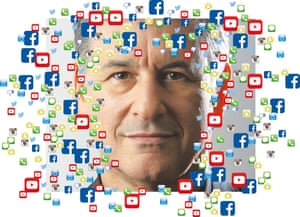
Email, telephone calls, electronic discussion groups, websites, pushed intranet news, letters and memos, faxes, stick-ems, calendars, pagers, and, of course, physical conversations and meetings, are just a few of the communicative events that bombard today’s knowledge worker. Thanks to the ubiquity of text on the Internet, not to mention the popularity of text-messaging on cell phones, we may well be reading more today than we did in the 1970s or 1980s, when television was our medium of choice.

But it’s a different kind of reading, and behind it lies a different kind of thinking—perhaps even a new sense of the self.

Printed book served to focus our attention, promoting deep and creative thought. In stark contrast, the Internet encourages the rapid, distracted sampling of small bits of information from many sources.

Although we think we’re doing several things at once, multitasking, this is a powerful and diabolical illusion.

It injects the medium’s content with hyperlinks, blinking ads, and other digital gewgaws, and it surrounds the content with the content of all the other media it has absorbed. A new e-mail message, for instance, may announce its arrival as we’re glancing over the latest headlines at a newspaper’s site. The result is to scatter our attention and diffuse our

We can turn the ringer off our phones, we can close our doors, we can auto-filter our email, we can personalize search engines, ask people to honor privacy, and so forth. But blocking out sacred time segments or sealing ourselves off from outside contact and even filtering email is not a serious solution. 

The last thing these companies want is to encourage leisurely reading or slow, concentrated thought. It’s in their economic interest to drive us to distraction.

Google carries out thousands of experiments a day, according to the Harvard Business Review, and it uses the results to refine the algorithms that increasingly control how people find information and extract meaning from it.

The company has declared that its mission is “to organize the world’s information and make it universally accessible and useful.” It seeks to develop “the perfect search engine,” which it defines as something that “understands exactly what you mean and gives you back exactly what you want.”

The more pieces of information we can “access” and the faster we can extract their gist, the more productive we become as thinkers. Which is totally untrue.

Their desire is to turn their search engine into an artificial intelligence, a HAL-like machine that might be connected directly to our brains. “The ultimate search engine is something as smart as people—or smarter.”If you had all the world’s information directly attached to your brain, or an artificial brain that was smarter than your brain, you’d be better off.”

A load of cobblers. To solve problems that have never been solved before, and artificial intelligence is the hardest problem out there.

If our brains were supplemented, or even replaced, by an artificial intelligence it would be more than unsettling. We would drain of our “inner repertory of dense cultural inheritance,” turning  our thoughts and actions into scripted, as if they’re following the steps of an algorithm.

Weakening our capacity for the kind of deep reading that emerged when an earlier technology, the printing press, made long and complex works of prose commonplace.

Remapping the neural circuitry, reprogramming the memory.

The technologies we use to find, store, and share information can literally reroute our neural pathways.  Every information technology carries an intellectual ethic. We stopped listening to our senses and started obeying the clock.

What the sociologist Daniel Bell has called our “intellectual technologies”—the tools that extend our mental rather than our physical capacities—we inevitably begin to take on the qualities of those technologies.

The missing premise is quality: The ratio of high quality to low quality information is falling.

In Google’s world, the world we enter when we go online, there’s little place for the fuzziness of contemplation. Ambiguity is not an opening for insight but a bug to be fixed. The human brain is just an outdated computer that needs a faster processor and a bigger hard drive.

Last year, Page told a convention of scientists that Google is “really trying to build artificial intelligence and to do it on a large-scale.

Information is relentlessly pushed at us, and no matter how much we get we feel we need more, and of better quality and focus.

  • Pushed information is information arriving in our work space over which we have little short-term control – the memos, letters, newspapers, email, telephone calls, journals, calendars etc. that land in one of our in boxes. To deal with it we have to make decisions. Is this garbage? Might it be useful? When? Where should I put it? Must I make a new file or new category for this?
  • Pulled or retrievable information is information we can tap into when we want to find an answer to a question or acquire background knowledge on a topic. Most people harbor a lingering belief that even more relevant information lies outside, somewhere, and if found will save having to duplicate effort.

Our lives ought to get easier in information rich environments but the question is at what cost.

He who knows it not and can no longer wonder, no longer feel amazement is as good as dead.

← Back

Thank you for your response. ✨


Yet no search engine seems to return hits with sufficient precision to save us from having to browse dozens of useless pages in our effort to berry pick the best items. The result is that we spend more time searching
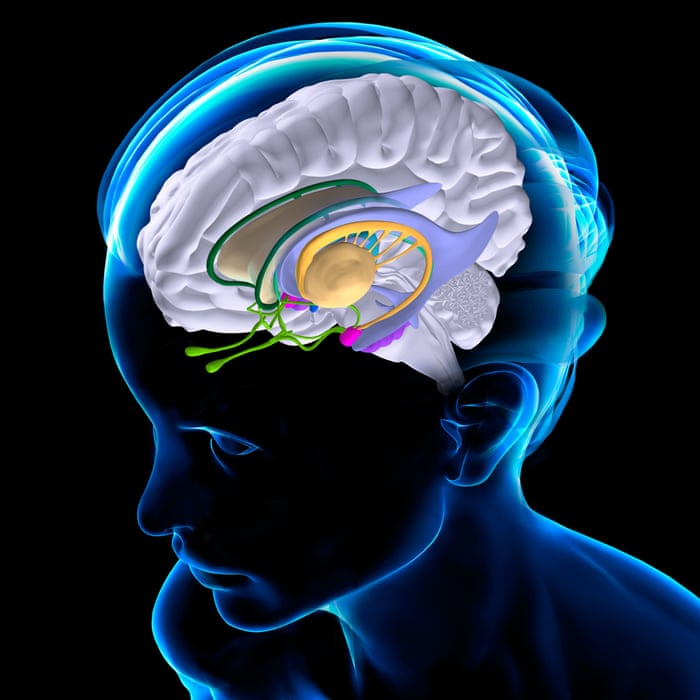
more people have mobile phones than have toilets. This has created an implicit expectation that you should be able to reach someone when it is convenient for you, regardless of whether it is convenient for them.

we need a new theoretical understanding of our activity space and our dynamic relation to our environments.Cognitive overload is a brute fact of modern life. It is not going to disappear. In almost every facet of our work life, and in more and more of our domestic life, the jobs we need to do and the activity spaces we have in which to perform those jobs are ecologies saturated with overload.

As technology increases the omnipresence of information, both of the pushed and pulled sort, the consequence for the workplace, so far, is that we are more overwhelmed. There is little reason to suppose this trend to change.

Share this:

  • Share on WhatsApp (Opens in new window) WhatsApp
  • More
  • Share on Mastodon (Opens in new window) Mastodon

THE BEADY EYE ( PART THREE) ASK’S WHY IS THE WORLD LIKE THIS.

22 Sunday Nov 2015

Posted by bobdillon33@gmail.com in Humanity., Sustaniability, The Internet., The world to day., Where's the Global Outrage., World Organisations., WORLD POVERTY WHERE'S THE GLOBAL OUTRAGE

≈ Comments Off on THE BEADY EYE ( PART THREE) ASK’S WHY IS THE WORLD LIKE THIS.

Tags

Capitalism and Greed, Distribution of wealth, Globalization, The Future of Mankind, Visions of the future.

Our painting of the world now has three elements Money, Religion and the Gun, but how do we knit them together into our modern-day canvas.

We need a large brush of Humanity. Afficher l'image d'origineWe should endeavor to apply humanity as another wash, somewhat like the magnetic field that surrounds the earth in order to give color to the voices, of Humans.

We are all attracted and attached to one another.  Money, Religion and the Gun all melt into the background when we apply Humanity.

The continuing changes in the spread, reception, interaction, sharing, and understanding of global information have altered the process of human and technological communication.

The last few decades have seen a growth in the role of the English language around the world as the lingua franca for economic, scientific, and political exchange.

Since its conception, the Internet has, so it seems,revolutionize the ways of human communication. It is the rise of computer-mediated, communication and the Internet, more than anything else, which has and is reshaping the WORLD.

It enables rich (or technology able) countries to take monopoly over the content generated on the Internet and it is becoming a form of cultural and linguistic imperialism in which western values dominate.

Which is one of the reasons why the world is like this – a Mess.

Our application of Human Language will have to be in a medium that is not permanent as you can only recognize and describe language change once it has occurred. So it will be like the Aurora communicating, untouchable, here to-day gone to-morrow.  

The Language of Globalization is a relatively recent term used to describe the changes in societies and the world economy that result from dramatically increased international trade and cultural exchange.

However, this term as a concept is being use now in a wider way to describe all aspects of global human existence – social, cultural, educational and political.

The Web/Internet is a process by which the experience of everyday life, marked by the diffusion of commodities and ideas, is becoming standardized around the world.

It has come to define a level of economic, social and cultural activities that have outgrown national borders and markets through either industrial combinations and commercial groupings that cross national frontiers, international agreements that reduce the cost of doing business in foreign countries, or cultural influences of certain societies on others.

Globalization offers huge potential profits to companies and nations but has been complicated by widely differing expectations, standards of living, cultures and values, and legal systems as well as unexpected global cause-and-effect linkages. 

In it Capitalist form it has led to the formation of terrorists groups, wars, unsuitability and poverty along with inequality, climate change, driven by outrageous individual and corporate Greed.

To put it simply, information technology has been termed as the medium of a new, and fourth revolution in human communication and cognition, matched in significance only by the prior three revolutions of language, writing, and print (Harnad, 1991).

Information technology impact on how people interact, access information, and share information akin to the Bi Sheng revolution about 900 years ago in ancient China (Song Dynasty). This impact is occur much more quickly than anticipated, leaving all of our World Organisations in need of radical overhaul. 

Globalization is believed by some to lead to an end of a cultural diversity as it imposes sameness in the countries of the world; where everyone in the world is the same when we are far from it. 

Globalization has been viewed primarily as an economic phenomenon, involving the increasing interaction, or integration of national economic systems through the growth in international trade, investment, and capital flow. However, this definition has expanded to include also cross-border social, cultural, political, and technological exchanges between nations and in particular.

It was hoped that electronic used for communication between groups who have no other language in common, would erode Inequality and take millions out of poverty. To most extent it has done this, removing the middle man, opening transparency to remove corruption.

Unfortunately it is driven by global corporations that are being dragged through Social Media to table of responsibility. While the rest of us are being turned into modern-day slaves bound together by Debt Bondage.

Despite all its apparent benefits, globalisation has some downsides which could possibly derail the world. Afficher l'image d'origine

Of course years ago none of this mattered as the great unwashed were unaware that they were being ripped off.

Giddens (2000) defined globalization as a separation of space and time, emphasizing that with instantaneous communications, knowledge, and culture could be shared around the world simultaneously.Afficher l'image d'origineAs Paolillo (1999: 1) puts it, in his introduction to a paper on the virtual speech community: ‘If we are to understand truly how the Internet might shape our language, then it is essential that we seek to understand how different varieties of language are used on the Internet.

About 85% of the world’s important film productions and markets use English and 90% of the published academic articles in several academic fields, such as linguistics, are written in English.

The Internet is bad for the future of many languages but it might be the saving grace of many others. It can also argued that the Internet must evolve its own principles and standards in order to grow and maintain as a newly emerging linguistic medium (Crystal, 2001)

It must not be transformed from a tool for information processing and display for the few to make money but become a free tool for all. Afficher l'image d'origine

It’s important to recognize, though, that it’s our nonverbal communication—our facial expressions, gestures, eye contact, posture, and tone of voice—that speak the loudest.

When your nonverbal signals match up with the words you’re saying, they increase trust, clarity, and rapport. When they don’t, they generate tension, mistrust, and confusion.

Perhaps this is the problem with modern-day communication. The way you look at someone can communicate many things, including interest, affection, hostility, or attraction. Eye contact is also important in maintaining the flow of conversation and for gauging the other person’s response.

You need physical space to communicate many different nonverbal messages, including signals of intimacy and affection, aggression or dominance.

Emotional awareness enables you to:

  • Accurately read other people, including the emotions they’re feeling and the unspoken messages they’re sending.
  • Create trust in relationships by sending nonverbal signals that match up with your words.
  • Respond in ways that show others that you understand, notice, and care.
  • Know if the relationship is meeting your emotional needs, giving you the option to either repair the relationship or move on.
  • Our body language, expressions, and words can sometimes fire different signals all at the same time.

Our task is not to make societies safe for globalization, but to make the global system safe for decent societies.

← Back

Thank you for your response. ✨


Share this:

  • Share on WhatsApp (Opens in new window) WhatsApp
  • More
  • Share on Mastodon (Opens in new window) Mastodon

THE BEADY EYE LOOKS INTO THE COMING DIGITAL BLACK HOLE OF HISTORY.

17 Monday Aug 2015

Posted by bobdillon33@gmail.com in Education, Google Knowledge., History., Privatization, Sustaniability, Technology, The Future, The Internet.

≈ Comments Off on THE BEADY EYE LOOKS INTO THE COMING DIGITAL BLACK HOLE OF HISTORY.

Tags

Bit rot., Digital, DNA, Google, HISTORICAL Intelligence., Technology, The Ethereum., Wikipedia.

Time spent looking at a cellphone is time spent oblivious to the world.

Humanity’s first steps into the digital world could be lost to future historians.

We faced a “forgotten generation, or even a forgotten century.” through “bit rot,” when old computer files become useless junk.

There is a sense of powerlessness and fatalism about TECHNOLOGY.

If consciousness or HISTORICAL intelligence are lost, it might mean that value itself becomes absent from the universe.

We are nonchalantly throwing all of our data into what could become an information black hole without realising it.

Ancient civilizations suffered no such problems, because histories written in cuneiform on baked clay tablets, or rolled papyrus scrolls, needed only eyes to read them.

To day “intelligence” is related to statistical and economic notions of rationality – colloquially, the ability to make good decisions, plans, or inferences.  To study today’s culture, future scholars will be faced with PDFs, Word documents, and hundreds of other file types that can only be interpreted with dedicated software and sometimes hardware too.

 From This to This      

Most of the images we take today are uploaded straight from a digital camera or a phone, with the picture never actually existing as a physical artifact.

The significance of documents and correspondence is often not fully appreciated until hundreds of years later.

We’ve learned from objects that have been preserved purely by happenstance that give us insights into an earlier civilisation,”

We need history to embrace new values and institutions in pursuit of a just, fulfilling, and sustainable civilization not a “digital black hole”.

In fact, due to the intricate disconnectedness of production and economies around the world today, our technological civilization is perhaps more prone to a sudden collapse than other societies through history.

When you think about the quantity of documentation from our daily lives that is captured in digital form, like our interactions by email, people’s tweets, and all of the world-wide web the more important it is that we create legal permissions to copy and store software before it dies.

So digital objects we create today can still be rendered far into the future.

Deciding on the best format to preserve them for the next hundred years relies on anticipating what technology is likely to still be available in the future.

Computer hard disks can hold vast amounts of digitised information, but everything is lost if it fails or is wiped.

How do we preserve our interaction on Facebook, Twitter, comment threads and citizen journalism across the web?

In fact, due to the intricate disconnectedness of production and economies around the world today, our technological civilization is perhaps more prone to a sudden collapse than other societies through history. Plenty of once-great civilisations have collapsed, and our current industrialised society is by no means invulnerable –

Who will decide what worth keeping and where will we preserve a core kernel of human knowledge.

The significance of documents and correspondence is often not fully appreciated until hundreds of years later.

Even though Wikipedia represents a vast repository of information, it is not structured in a way that would guide a post-catastrophe society through stages of recovery.

Google certainly is not.

It has already changed the world by altering the way we interact with technology and there can be no questions its long-term ambitions.

Its mission is to collect information which you will have to buy with a google wallet.

“We envision a marketplace for payment instruments, commerce and loyalty services”

It’s not hard to envision a fully intact ecosystem of Google offerings with location-based mobile ads driving tracked incremental revenue via etail integrated mobile commerce, or via sales that are picked up in-store, via mobile payment.

“Now toss in Google Offers, NFC and QR codes for trigger point marketing, and the fact that Google already has the accounts open and the pot gets even richer.”

Personally I have little time for Banks but I would rather have a bank to provide a of mobile wallet products, not technology companies that can disappear into the cloud.

If Google was to make a move into supporting bank-branded wallets we would all become Googlefyed.

Google has far more on its plate than just financial services.

It’s a major player in telecommunications with its Android smart phone platform. It’s made forays into thermostats, home security and satellite imaging.

So it’s not just words and images that we risk losing for ever it’s the “grey literature” of official reports, briefings and policy statements that are only published online also risk being lost to the future?

Redstone Computer Tertiary Memory.PNG

Bit rot, a digital dark age is on the horizon unless we store information in DNA.

“It is very possible that … one machine would suffice to solve all the problems … of the whole [world]” – Sir Charles Darwin, 1946.

“Technology gives us the facilities that lessen the barriers of time and distance – the telegraph and cable, the telephone, radio, and the rest.” – Emily Greene Balch.

Perhaps The ETHEREUM IS THE ANSWER.

Importantly, because there is not a company or indeed any entity in charge of or controlling Ethereum, the cost of running the infrastructure doesn’t have to include any profit margin.

It might allow us to push the boundary on what the digital realm can cover.

But this is a what if for the history books.

← Back

Thank you for your response. ✨

Share this:

  • Share on WhatsApp (Opens in new window) WhatsApp
  • More
  • Share on Mastodon (Opens in new window) Mastodon

The Beady Eye looks at Google Knowledge.

12 Wednesday Aug 2015

Posted by bobdillon33@gmail.com in Google it., Google Knowledge., Social Media., The Internet.

≈ Comments Off on The Beady Eye looks at Google Knowledge.

Tags

Google, Google ambitions, Google knowledge.

Out of the seven billion people in the world how many really understand quantum mechanics, cell biology, or macroeconomics?

Knowledge is power.

The real test of knowledge is not whether it is true, but whether it empowers us. Consequently, these days truth is a poor test for knowledge. The test seems to be utility. A theory that enables us to do new things constitutes knowledge.

Knowledge is a the root of many (dare I say most) challenges we face in a given day and I have to admit I could do with a large refresher course.

Once you get past basic survival we’re confronted with knowledge issues on almost every front.

These days most of us are becoming reliant on Google it.

But when you get an answer is that answer universal knowledge or is it Google cods wallop.

It’s not possible to completely shed all our lenses which color our view of things and so it’s not possible to be certain that we’re getting at some truth “out there.” If all beliefs are seen through a lens, like Google how do we know the postmodernists beliefs are “correct?”

In order to have certainty, postmodernists claim, we would need to be able to “stand outside” our own beliefs and look at our beliefs and the world without any mental lenses or perspective.

If we do not fully understand what it is, will we not fully understand ourselves either?

But then again knowledge — can ever be fully understood.

The nature of knowledge is answerable to intuitions. This means that what may count as knowledge for you may not count as knowledge for me. An other words what you know may not be something I know even though we have the same evidence and arguments in front of us.

The bottom line is that “universal knowledge” – something everybody knows—may be very hard to come by.

I think, therefore I am.

Truth, if it exists, isn’t like this.

Truth is universal. It’s our access to it that may differ widely.

Okay, a definition is tough to come by.

But philosophers have been attempting to construct one for centuries. Over the years, a trend has developed in the philosophical literature and a definition has emerged that has such wide agreement it has come to be known as the “standard definition.”

As with most things in philosophy, the definition is controversial and there are plenty who disagree with it. But as these things go, it serves as at least the starting point for studying knowledge.

The person believes the statement to be true
The statement is in fact true
The person is justified in believing the statement to be true

Belief:

They’re in your head and generally are viewed as just the way you hold the world (or some aspect of the world) to be.

It implies that what you think could be wrong. In other words, it implies that what you think about the world may not match up with the way the world really is and so there is a distinction between belief and the next item in our list.

People will generally act, according to what they really believe rather than what they say they believe

Truth:

Truth is not in your head but is “out there.”

When you believe something, you hold that or accept that a statement or proposition is true. It could be false that’s why your belief may not “match up” with the way the world really is.

Justification:

If the seed of knowledge is belief, what turns belief into knowledge?

This is where justification comes in (some philosophers use the term “warrant” to refer to this element). A person knows something if they’re justified in believing it to be true (and, of course, it actually is true).

Justification is hard to pin down because beliefs come in all shapes and sizes and it’s hard to find a single theory that can account for everything we would want to claim to know. Even so, justification is a critical element in any theory of knowledge.

So.

  • Everyone comes to belief with a cognitive structure that cannot be set aside.
  • Our cognitive structure serves as a lens through which we view the world. Because of this, knowledge is said to be perspectival or a product of our perspective.
  • Since the evaluation of our beliefs is based on our cognitive lens, it’s not possible to be certain about any belief we have. This should make us tentative about truth claims and more open to the idea that all of our beliefs could be wrong.
  • Truth emerges in the context (or relative to) community agreement. For example  if the majority of scientists agree that the earth is warming and that humans are the cause, then that’s true. Notice that the criteria for “truth” is that scientists agree.

Are you now any more knowledgeable.   Google it and see.

There is one thing without doubt:

The fact that you are a thinking things.

In order to doubt you have to think. (The very reason that it’s not possible to doubt something without thinking about the fact that you’re doubting it). Thinking then you must be a thinking thing and so it is impossible to doubt that you are a thinking being.

If you know it all leave a comment, otherwise press the like button. Ignorance is bliss.

Some further reading and viewing>

Knowing how to Google something is not enough. 2014/09/02

Google is a business. 2015/03/02

The Imparting and Acquiring of knowledge. 2015/03/03

← Back

Thank you for your response. ✨


Share this:

  • Share on WhatsApp (Opens in new window) WhatsApp
  • More
  • Share on Mastodon (Opens in new window) Mastodon
← Older posts
Newer posts →

All comments and contributions much appreciated

  • THE BEADY EYE SAYS., NONE OF US UNDERSTAND WHAT IS COMING WITH ARTIFICIAL INTELLIGENCE. February 19, 2026
  • THE BEADY EYE ASKS WHAT HAPPENS WHEN PEOPLE NO LONGER MAKE DECISIONS. February 18, 2026
  • THE BEADY EYE: ASK WHY IS IT IMPOSSIBLE FOR HUMANS TO GET ALONG WITH EACH OTHER? February 17, 2026
  • THE BEADY EYE SAYS. AT 130 THOUSAND OF TAX PAYERS MONEY ITS TIME TO RETIRE THE ROYAL FAMILY. THE EPSTEIN FILES CAST A SPOT LIGHT ON THEIR WORTH. February 17, 2026
  • THE BEADY EYE SAYS. WITH THE EPSTEIN FILES IT IS BECOMING CLEAR THAT THE TRAFFICKING OF YOUNG WOMEN IS LESS REPULSIVE WHEN THE WEALTHY ARE INVOLVED. February 12, 2026

Archives

  • February 2026
  • January 2026
  • December 2025
  • November 2025
  • October 2025
  • September 2025
  • August 2025
  • July 2025
  • June 2025
  • May 2025
  • February 2025
  • January 2025
  • December 2024
  • November 2024
  • October 2024
  • September 2024
  • August 2024
  • July 2024
  • June 2024
  • May 2024
  • April 2024
  • March 2024
  • February 2024
  • January 2024
  • December 2023
  • October 2023
  • September 2023
  • August 2023
  • July 2023
  • June 2023
  • May 2023
  • April 2023
  • March 2023
  • February 2023
  • January 2023
  • December 2022
  • November 2022
  • October 2022
  • September 2022
  • August 2022
  • July 2022
  • June 2022
  • May 2022
  • April 2022
  • March 2022
  • February 2022
  • January 2022
  • December 2021
  • November 2021
  • October 2021
  • September 2021
  • August 2021
  • July 2021
  • June 2021
  • May 2021
  • April 2021
  • March 2021
  • February 2021
  • January 2021
  • December 2020
  • November 2020
  • October 2020
  • September 2020
  • August 2020
  • July 2020
  • June 2020
  • May 2020
  • April 2020
  • March 2020
  • February 2020
  • January 2020
  • December 2019
  • November 2019
  • October 2019
  • September 2019
  • August 2019
  • July 2019
  • June 2019
  • May 2019
  • April 2019
  • March 2019
  • February 2019
  • January 2019
  • December 2018
  • November 2018
  • October 2018
  • September 2018
  • August 2018
  • July 2018
  • June 2018
  • May 2018
  • April 2018
  • March 2018
  • February 2018
  • January 2018
  • December 2017
  • November 2017
  • October 2017
  • September 2017
  • August 2017
  • July 2017
  • June 2017
  • May 2017
  • April 2017
  • March 2017
  • February 2017
  • January 2017
  • December 2016
  • November 2016
  • October 2016
  • September 2016
  • August 2016
  • July 2016
  • June 2016
  • May 2016
  • April 2016
  • March 2016
  • February 2016
  • January 2016
  • December 2015
  • November 2015
  • October 2015
  • September 2015
  • August 2015
  • July 2015
  • June 2015
  • May 2015
  • April 2015
  • March 2015
  • February 2015
  • January 2015
  • December 2014
  • November 2014
  • October 2014
  • September 2014
  • August 2014
  • July 2014
  • June 2014
  • May 2014
  • April 2014
  • March 2014
  • February 2014
  • January 2014
  • December 2013
  • November 2013
  • October 2013

Talk to me.

Jason Lawrence's avatarJason Lawrence on THE BEADY EYE ASK’S: WIT…
benmadigan's avatarbenmadigan on THE BEADY EYE ASK’S: WHA…
bobdillon33@gmail.com's avatarbobdillon33@gmail.co… on THE BEADY EYE SAYS: WELCOME TO…
Ernest Harben's avatarOG on THE BEADY EYE SAYS: WELCOME TO…
benmadigan's avatarbenmadigan on THE BEADY EYE SAY’S. ONC…

7/7

Moulin de Labarde 46300
Gourdon Lot France
0565416842
Before 6pm.

My Blog; THE BEADY EYE.

My Blog; THE BEADY EYE.
bobdillon33@gmail.com

bobdillon33@gmail.com

Free Thinker.

View Full Profile →

Follow bobdillon33blog on WordPress.com

Blog Stats

  • 97,415 hits

Blogs I Follow

  • unnecessary news from earth
  • The Invictus Soul
  • WordPress.com News
  • WestDeltaGirl's Blog
  • The PPJ Gazette
Follow bobdillon33blog on WordPress.com

The Beady Eye.

The Beady Eye.
Follow bobdillon33blog on WordPress.com

Create a free website or blog at WordPress.com.

unnecessary news from earth

WITH MIGO

The Invictus Soul

The only thing worse than being 'blind' is having a Sight but no Vision

WordPress.com News

The latest news on WordPress.com and the WordPress community.

WestDeltaGirl's Blog

Sharing vegetarian and vegan recipes and food ideas

The PPJ Gazette

PPJ Gazette copyright ©

Privacy & Cookies: This site uses cookies. By continuing to use this website, you agree to their use.
To find out more, including how to control cookies, see here: Cookie Policy
  • Subscribe Subscribed
    • bobdillon33blog
    • Join 222 other subscribers
    • Already have a WordPress.com account? Log in now.
    • bobdillon33blog
    • Subscribe Subscribed
    • Sign up
    • Log in
    • Report this content
    • View site in Reader
    • Manage subscriptions
    • Collapse this bar