Time spent looking at a cellphone is time spent oblivious to the world.
Humanity’s first steps into the digital world could be lost to future historians.
We faced a “forgotten generation, or even a forgotten century.” through “bit rot,” when old computer files become useless junk.
There is a sense of powerlessness and fatalism about TECHNOLOGY.
If consciousness or HISTORICAL intelligence are lost, it might mean that value itself becomes absent from the universe.
We are nonchalantly throwing all of our data into what could become an information black hole without realising it.
Ancient civilizations suffered no such problems, because histories written in cuneiform on baked clay tablets, or rolled papyrus scrolls, needed only eyes to read them.
To day “intelligence” is related to statistical and economic notions of rationality – colloquially, the ability to make good decisions, plans, or inferences. To study today’s culture, future scholars will be faced with PDFs, Word documents, and hundreds of other file types that can only be interpreted with dedicated software and sometimes hardware too.
From This to This
Most of the images we take today are uploaded straight from a digital camera or a phone, with the picture never actually existing as a physical artifact.
The significance of documents and correspondence is often not fully appreciated until hundreds of years later.
We’ve learned from objects that have been preserved purely by happenstance that give us insights into an earlier civilisation,”
We need history to embrace new values and institutions in pursuit of a just, fulfilling, and sustainable civilization not a “digital black hole”.
In fact, due to the intricate disconnectedness of production and economies around the world today, our technological civilization is perhaps more prone to a sudden collapse than other societies through history.
When you think about the quantity of documentation from our daily lives that is captured in digital form, like our interactions by email, people’s tweets, and all of the world-wide web the more important it is that we create legal permissions to copy and store software before it dies.
So digital objects we create today can still be rendered far into the future.
Deciding on the best format to preserve them for the next hundred years relies on anticipating what technology is likely to still be available in the future.
Computer hard disks can hold vast amounts of digitised information, but everything is lost if it fails or is wiped.
How do we preserve our interaction on Facebook, Twitter, comment threads and citizen journalism across the web?
In fact, due to the intricate disconnectedness of production and economies around the world today, our technological civilization is perhaps more prone to a sudden collapse than other societies through history. Plenty of once-great civilisations have collapsed, and our current industrialised society is by no means invulnerable –
Who will decide what worth keeping and where will we preserve a core kernel of human knowledge.
The significance of documents and correspondence is often not fully appreciated until hundreds of years later.
Even though Wikipedia represents a vast repository of information, it is not structured in a way that would guide a post-catastrophe society through stages of recovery.
Google certainly is not.
It has already changed the world by altering the way we interact with technology and there can be no questions its long-term ambitions.
Its mission is to collect information which you will have to buy with a google wallet.
“We envision a marketplace for payment instruments, commerce and loyalty services”
It’s not hard to envision a fully intact ecosystem of Google offerings with location-based mobile ads driving tracked incremental revenue via etail integrated mobile commerce, or via sales that are picked up in-store, via mobile payment.
“Now toss in Google Offers, NFC and QR codes for trigger point marketing, and the fact that Google already has the accounts open and the pot gets even richer.”
Personally I have little time for Banks but I would rather have a bank to provide a of mobile wallet products, not technology companies that can disappear into the cloud.
If Google was to make a move into supporting bank-branded wallets we would all become Googlefyed.
Google has far more on its plate than just financial services.
It’s a major player in telecommunications with its Android smart phone platform. It’s made forays into thermostats, home security and satellite imaging.
So it’s not just words and images that we risk losing for ever it’s the “grey literature” of official reports, briefings and policy statements that are only published online also risk being lost to the future?
Bit rot, a digital dark age is on the horizon unless we store information in DNA.
“It is very possible that … one machine would suffice to solve all the problems … of the whole [world]” – Sir Charles Darwin, 1946.
“Technology gives us the facilities that lessen the barriers of time and distance – the telegraph and cable, the telephone, radio, and the rest.” – Emily Greene Balch.
Perhaps The ETHEREUM IS THE ANSWER.
Importantly, because there is not a company or indeed any entity in charge of or controlling Ethereum, the cost of running the infrastructure doesn’t have to include any profit margin.
It might allow us to push the boundary on what the digital realm can cover.
But what is the most powerful technology on Earth?
You may think of a B-2 bomber, or a nuclear reactor, or maybe even far-reaching social media platforms.
But there is only one technology known to man that can heal itself, adapt to its environment, sustain itself for decades, replicate, and evolve:
The living organism.
Biological systems have the ability to do things that no human-made machine or chemistry can begin to approach: the ability to replicate, to learn, to scale from one to billions, to adapt, and to evolve.
By gaining control over biological systems and their biochemical pathways — and designing new pathways by rewriting the DNA “software” in cells — synthetic biologists are ushering in the “Biological Age.”
Creating substances with not only superior electrical, optical, and mechanical properties, but with properties that we have never seen before in man-made materials: materials that can regenerate, that respond to the environment, that learn and evolve.
We’re “on the cusp of revolutionary change” coming much “sooner than you think.”
Sugar-fueled biological actuators for hybrid robotics are on the horizon, all grown in “living foundries.
You might think that this is science fiction but it is becoming tangible due to the rapid, simultaneous development of genome-scale engineering tools, enormous data sets of genome sequences, new imaging and analytical capabilities, and the convergence of advances in information science and engineering with biology..
While it’s difficult, if not impossible, to predict future consumer applications.
If we could harness the power of biology in a predictable manner, then we could create living materials that perform functions seamlessly, cheaply, and with very low energy requirements, like walking, talking, dancing, killing, Robots.
A goal along these lines, of course, raises a lot of questions:
Better for whom? Better in what way? For biological humans? For all conscious beings? If that is the case, who or what is conscious?
Evolutionary biological changes move every which way with no apparent direction.
Yet, we continue nonetheless to see a movement toward greater complexity and greater intelligence, indeed to evolution’s supreme achievement of evolving a neocortex capable of hierarchical thinking we are now on the verge of creating a “post human” stage of civilization.
This stage may be only a few decades away.
Unfortunately if all the AI systems decided to go on strike tomorrow, our civilization would be crippled: Primitive human societies might then remain on Earth indefinitely but not to worry we’ll be uploading our entire MINDS to computers by 2045 and our bodies will be replaced by machines within 90 years.
The simple act of connecting with someone via a text message, e-mail, or cell-phone call uses intelligent algorithms to route the information. (The number of people using Twitter and Facebook daily is around 1,138,000,000)
So a digital brain will need a human narrative of its own fictional story so that it can pretend to be a biological human.
I could at this stage give your brain a more ambitious goal, such as contributing to a better world which is badly needed considering that we are well on the way to extinction. However there is no justification for thinking that our own species will be especially privileged or protected from future technological disasters.
We tend to view the existence of our race as constituting a great ethical value when in fact our existence in a biology sense it is not worth the steam off our piss.
Why?
Because in the future almost every product we touch will be originally designed in a collaboration between human and artificial intelligence and then built-in automated factories.
Because we will continue to pollute our planet and the sky’s above to appease the Stock Exchange.
Because there will be many ways in which humanity could become extinct before reaching post humanity by wiping out what we should be rely on.
Perhaps the most natural interpretation of disaster is that we are likely to go extinct as a result of the development of some powerful but dangerous technology to combat climate change. We would do well to remember Robert Oppenheimer words when he first viewed an atomic explosion ” Now I am become Death, the destroyer of worlds”
Extinction might be the best option.
It is not clear that creating a new human race is immoral.
As non biological brains become as capable as biological ones of effecting changes in the world—indeed, ultimately far more capable than unenhanced biological ones—we will need to consider their moral education.
The question is can they have any morals and if so what left of us will have to dumb itself down considerably. For any post human stage system that displayed the knowledge of Watson, (Watson is technology that works to understand us) for instance, would be quickly unmasked as non biological.
So what does the Future of Tech Robots.
The power of computing doubles, on average, every two years quoting the developments from genetic sequencing and 3D printing. Technological singularity is the development of ‘super intelligence’ brought about through the use of technology.
Itself imply that we are likely to go extinct soon, and we are unlikely to reach a post human stage.
What would be left of humanity would be zombies or “shadow-people” – humans simulated only at a level sufficient for the fully simulated people not to notice anything suspicious.
HOWEVER ALL IS NOT LOST
This possibility of a post human stage is compatible with us remaining at, or somewhat above, our current level of technological development for a long time before going extinct.
We are still lacking a “theory of everything”, but we cannot rule out the possibility that novel physical phenomena, not allowed for in current physical theories, may be utilized to transcend those constraints.
If we could create quantum computers, or learn to build computers out of nuclear matter or plasma, we could push closer to the theoretical limits. At our current stage of technological development, we have neither sufficiently powerful hardware nor the requisite software to create conscious minds in computers.
Simulating the entire universe down to the quantum level is obviously in feasible, unless radically new physics is discovered.
As we gain more experience with virtual reality, we will get a better grasp of the computational requirements for making new worlds appear realistic to their visitors.
These shortcomings will eventually be overcome.
At the moment the amount of computing power needed to emulate a human mind can be roughly estimated. Memory seems to be a no more stringent constraint than processing power.
Our current understanding impose theoretical limits on the information processing attainable in a given lump of matter. We can with much greater confidence establish lower bounds on post human computation, by assuming only mechanisms that are already understood.
One candidate is molecular nanotechnology, which in its mature stage would enable the construction of self-replicating nanobots capable of feeding on dirt and organic matter – a kind of mechanical bacteria. Such nanobots, designed for malicious ends, could cause the extinction of all life on our planet.
So we are able to gain an insight into how an apparently purposeless and directionless process can achieve an apparently purposeful result in one field (biological evolution) by looking at another field (thermodynamics).
In the dark forest of our current ignorance, it seems sensible to apportion one’s credence roughly evenly between both.
As you cannot create energy or destroy it and energy can only move from a state of higher activity to one lower activity it stands to reason that biological evolution, simple put, is descent with modification.
To acknowledge that history is not deterministic is to acknowledge that it is just a coincidence that most of us believe in nationalism, capitalism, and human rights. There is no proof that history is working for the benefit of humans.
Now you might think that all of this is hog wash, but every point in history is a crossroads and sometimes history- or the people who make history – takes unexpected turns.
How we using and develop Technology will determine the forming any new Monotheism Global Society.
Are we heading towards ecological disaster or technological paradise? Both do not seem bound by any deterministic laws.
You may rest assured that when Cognitive computers and Quantum computers get together with Artificial Intelligence and Virtual Reality along with the Arms race, biochemical pathways will not enhance human well-being.
Because human brains suffer from minimal development.
Instead of concentrating on developing technologies beneficial to mankind we are developing autonomous weapons with no accountability to select, to kill, or destroy ( which means no deterrence of future crimes, no retribution for victims, no social condemnation, no meaningful human control)
Individual humans like me are far too ignorant and weak to influence the course of history to my own advantage. It for some mysterious reason like all of us follows one path then another like a gene that has no awareness, or consciously seek to survive.
The next effort of science will be to create a new body for the human being. It will have a perfect brain-machine interface to allow control and a human brain life support system so the brain can survive outside the body.
A computer environment into which human minds can be uploaded.
These are daunting challenges, to say the least.
Each will require the commitment and individual efforts of literally billions of our fellow humans, as well as many careful, specific programs put into effect by entire populations. But there is one action that we must take, individually and as a world, if any of the others are to be successful. It directly contradicts some of our deepest evolutionary programming, but if we are to survive as a species, we must stabilize or even reduce population size.
God forbid. Human beings are works in progress that mistakenly think they’re finished.
However it is conceivable to imagine history going on for generations upon generations while bypassing the Scientific Revolution as modern culture and science have to rely on religious and ideological beliefs to justify and finance its existence and scientific research.
So the below fellows might be the very thing to complete the Job. Rid the world of the very thing that is destroying it.
One last thought try not to join the shadow people by pressing the like button. Leave a comment. When you comment, you inspire, when you press the like button you expire.
In our contemporary world it is very rare that we are asked to talk about what lies at the heart of our actions. Instead we hide behind statistics, data, policy statements etc, few of which actually touch other people’s hearts and minds.
To days debates between today’s religions, ideologies, nations and classes will in all likelihood disappear along with Homo Sapiens so it is naive to imagine that we simply hit the brakes on climate change and all will be honky dory.
We are more powerful than ever before, but have very little idea what to do with all that power. We seem to be more irresponsible than ever. We are accountable to no one, and consequently wreaking havoc on or fellow animals and on the surrounding ecosystem, seeking little more than our own comfort and amusement, yet never finding satisfaction.
There is nothing more dangerous than a dissatisfied and irresponsible gods who don’t know what they want?
The real question is not what do we want to be come? but ‘what do we want to want’.
We all know that we must move away from our excessive and selfish lifestyle.
So as you prepare to come to Paris I would like to ask you to think about your personal role, and answer a simple, but profound, question:
Why do I care?
In making climate change and the protection of our beautiful planet a personal issue of your own beliefs and values you will come to the Cop primarily as a conscious human being not just a representative of a Government or agency.
Since time memorial we have all been led to believe that our current lifestyle is the most satisfying, but as you know in reality it is based on egoistic and unjust exploitation of resources and of human capital. It has led to a lifestyle based on selflessness and if left unchecked it will take us to an irreversible process of self-destruction.
We all know that opportunity for an agreement will be beset by challenges.
The question at the heart of any forthcoming Agreement surely most be > Who is going to pay for it.
It will not be the present exclusively profit-focused, job-oriented, planet threatening, income-wealth, gap-widening civilization.
It will not be the free-market capitalism even thought private investors stand to lose $4.2tn (£2.7tn) on the value of their holdings from the impact of climate change by 2100 even if global warming is held at plus 2C, a report from the Economist Intelligence Unit (EIU) has warned.
It will not be cash strapped world Governments.
It will not be a single global tax or regulatory scheme whether they live in a capitalist or communist society.
It will not be Industry reverting the trend of economic development and investment by coupled its insensible greed for profit with carbon emissions.
There is little point in agreeing a new climate change targets if there is no compassionate response to climate change requires for us to help the world’s poorest gain access to sustainable energy solutions so that they can improve their lives while avoiding the dirty energy path that developed countries followed.
There is little point in making the Agreement an Internationally legally binding treaty when there is no way of enforcing its terms or applying penalties for breach thereof.
There is little point in countries submitting their Intended Nationally Determined Contributions. The very reference to Intended expresses the get out clause.
By far the biggest obstacle to any agreement will be how countries will finance the move to a low-carbon global economy.
Even if one of these above problems were politically feasible, air is vital to a healthy economy. Which it isn’t. It is the people who want to breathe clean air. Climate pollutants, on the other hand, are everywhere. They are a waste product of nearly every aspect of modern life, and they are not limited to carbon; methane, soot and nitrous oxide all contribute to rising temperatures.
The present generation of young people is the forerunner of the generation of the most powerful generation in human history because of the enormous technology in their hands. We have to get them engaged in creating the world they wish to live in, and pass on to the next generation.
The sooner the socially committed players take charge of technology, the faster the world Social business is a new variety of business which delinks itself from any desire to make personal profit, where economic prosperity isn’t defined by constant reckless growth. We need to develop social systems that encourage people to put aside short-term personal gain in favor of long-term societal and environmental interests.
It is not just yours it is our collective moral responsibility to act. We must act because we care. With that comes a different way of thinking about both mitigating and adapting to climate change, from the roads to the treetops.
We seemingly need to get as close to demise as possible to be able to see things clearly. We’re already running up to and beyond the biophysical boundaries that enable us to exist. Given the pace of change, we can no longer exclude the possibility of reaching critical tipping points that could abruptly and irreversibly change living conditions.
It is only a mobilization of conscience on a global scale that will enable humanity to meet this great challenge confronting us.
We are already seeing promising signs such as the joint announcement by the US and China in Beijing in November 2014 and the decision of the European Council a few weeks before. Together these cover around 50% of world emissions.
Realistically we all know that if either China or the USA were to discover new reserve of Oil, Gas, or Coal they would not leave it in the ground.
So where are we?
The first and only scientific fact to know about climate change is that carbon is (almost) forever.
The Paris agreement for what its worth will come into effect in 2020. To Late.
At this meeting, more than 190 States will discuss a possible new global agreement you have to reach a universal agreement to limit the global warming to 2 degrees Celsius by 2100. To Late.
Countries have to agreed that there will be no back-tracking in these national climate plans, meaning that the level of ambition to reduce emissions will increase over time. Not Possible. Look at the United Nations a gossip shop with no money controlled by Veto.
Countries have been invited to submit their Intended Nationally Determined Contributions to the new climate agreement to be concluded in December, in Paris. This approach represents a concession to political and diplomatic realities, as well as to the limits of international agreements in influencing countries’ behavior in an area so vital to their interests.
The climate change issue is driven more by national than by international politics, so the agreement needs to allow states to determine the content of their own commitments.
So far 21 out of the 194 attending have submitted their Intended Nationally Determined Contributions. Bravo.
You might well ask at this point what is the solution.
There is only one solution and that is the creation of a World Aid Commission of 0.05% (for sake of argument) On all Stock Exchange Transactions with a higher commission on a High Frequency Trades, on all Foreign Exchange Transactions over $20,000, on all Sovereignty Wealth Funds Acquisition., on all Drilling Wells.
This is the only viable solution to make Profit and Greed pay.
This would create a perpetual World Aid Fund with unlimited funds to tackle Climate Change, Inequality of Opportunity, Education and Disaster Aid.
It will create incentives and spread the funding through out the world by harnessing the very problem that has created the position we now find ourselves in.
Why will it work?
Because ( if firm action is not taken at the forthcoming climate change talks in Paris and the Earth’s temperature warms by a further 5C) investors are facing losses of almost $7tn at today’s prices.
Because democratizing our energy supply can be achieved by this fund in making non repayable grants available to the worlds citizens to install solar power. There’s something special about solar. Not just because it’s genius technology but because, it puts the power to act in millions of hands.
The energy and climate debate is very political and bogged-down by big vested interests.
Because it would solve Climate change which does not have the time or money to be reverted. Ever four days we add a million more people to the planet scuttling our rosy dreams of sustainability.
The definition of success in Paris has been widely misunderstood, and as a result there is a risk that success may be viewed as failure.
Before I wish every success here is a small practical step. Let the summit ask all major TV Media Channels weather forecasts carry a section on the effects of climate change.
The citizens of the world will be watching you.
Yours Sincerely,
The Founder and writer of the Beady Eye.
PS. There is no need for you to respond to this open letter I along with millions that are currently signing online petitions in support of the Earth which has no voice other than climate Change trust you.
OK, a list of what is wrong will go from here to eternity, so before you read this post take a look at the two U tube videos below, and then do something.
If you Goggle the question you will quickly find that there’s no shortage of people who know what is wrong with the world.
The most frequently cited reason is probably the decline of religion, specifically the religion of the person writing it.
Second to “the fall of religion” the most popular answer is probably “religion.” But there are other themes too: lack of respect for elders, unregulated capitalism, greed, alcohol, the economy, the rich, attachment, premarital sex, liberals, the unemployed, pride, lawyers, apathy, Starbucks, Mc Donalds.
Googling the question myself, they all sounded more like symptoms to me.
If certain behaviors are widespread and problematic, whatever causes them must be a bigger, more fundamental problem. Right? Maybe not.
Most people cannot even intelligently discuss the pressing issues of our day.
For me it is that we are too ignorant to open our minds to the problems around us. To selfish to open our hearts to what else is out in the world. To indoctrinated to accept an opinion other than our own, deaf to other people’s voices, blind to the pain and suffering we see in the streets and scared to do anything about it.
Our planet is now slowly dying and we are the reason to blame for its slow demise.
We fill her oceans with black poison. We fill her skies with acid. We cut down all the trees she spent years to grow. We cover her soil with blood and we use her as our own personal dump.
Worst of all we just sit back and watch as it falls apart.
Why?
Because as the twenty-first century unfolds, immensely powerful currents of capitalism, labour, and information turn and shape the world with a growing disregard for the boards and opinions of states.
So the world we see in front of our eyes is not governed by any particular state, organisation or ethic group, but by greed and profit. All run by the stock exchanges and algorithms
What is left is mindless adoption of technology as the end-all-be-all solution to humanity’s problems rather than global cooperation to the appearance of essentially global problems.
I think most people would not say there isn’t something wrong.
But if we’re going to regard the world as if there’s something wrong with it, shouldn’t we be able to identify it, at least with ballpark-level precision?
Here the Beady eye list of what is wrong. Feel free to add.
Climate Change: Overpopulation: Thirst: Poverty: Inequality of opportunity: Equal rights: A lack of Education: Terrorists: Atomic arsenals: Corruption: Distribution of Wealth: Religious Extremists: Political Extremists of Far Left & Far Right: Lying Politicians:Racists: Class structure: Reality TV: Farmer Subsidies: Sexists: Bestiality: High Cost of Space Programmes: Hopeless addiction to entertainment, technology, and celebrity gossip: Soulless of suburbs, sprawls, and office parks create stress, malaise, and depression: The existence of Hollywood, which poisons the world’s culture by normalizing narcissism, consumerism, and bad movies: Pervasive politically correct environment where dissenting thought is labeled sexist, racist, or homophobic: Treatment of smartphones as both friend and passionate lover, which replaces time spent in face-to-face interactions with real friends and lovers: Universities that serve as liberal brainwashing factories instead of palaces of wisdom, enlightenment, and masculinity: Disposable culture where still-functional items are thrown away instead of being repaired or reconditioned: Competitive conversation culture where people talk about themselves instead of listening. Contemplative silences are looked upon as boring or even creepy: Rule by an oligarchy that spies on citizens who don’t even care about its government’s illegal acts because they are too busy playing Candy Crush: Homosexuality openly embraced and displayed in public around children who don’t yet understand the nature of human sex: Complete ignorance of world affairs by citizens due to being comically manipulated by media propaganda. Russia bad! Saudi Arabia good!: People who can no longer handle original thoughts without being offended or“triggered.”: Militarization of police whose monopoly on violence allows them to taze and kill with impunity: Welfare state that redistributes money from hard-working provider men to a growing population of single mothers who are subservient to the state instead of husbands: Calling corporate customer service and having to converse with robots: People who favor tweets for no apparent reason:
Out of date World Organisation are in need of radical reform.
For some reason THE US GOVERNMENT still thinks they should have to take care of the whole planet. The U.S. national debt is over 14 times larger than it was back in 1981:
OPEC nations are going to bring in over a trillion dollars from exporting oil this year:
So where do we stand in regard to Solutions.?
I would really love to hear your answer to that question, in the comment section below. Whatever comes to mind. The question does presume that there is actually something wrong with the human world. If you think there isn’t, please say so too.
I know it’s a pretty broad question, and any answer is welcome. There’s no need to do up an essay or anything, but you’re welcome to. I know Raptitude readers are a thoughtful bunch and I just want to know what kinds of ideas you people have in your minds about what’s wrong with this world.
Here are few Solutions:
Make education FREE not a product.
Place a World Aid commission of 0.05% on all High Frequency Trading, on all Sovereign wealth Funds Acquisitions, on all Foreign Exchange transactions over 20,000 dollars, creating a perpetual World aid fund. ( See previous posts) This would close down all need for Charity.
The poverty trap,” “the ladder of development”—go limp under the magnifying glass of actually being tested.
Leaders who lack wisdom approach problems with linear vision – thus only seeing the problem that lies directly in front of them and blocking the possibilities that lie within the problem. As such, they never see the totality of what the problem represents; Problem solving is the greatest enabler for growth and opportunity.
Out of this fund make available non repayable solar-panel grants. The direction to go is obvious: toward energy independence. THIS IS WHAT THE PARIS CLIMATE CHANGE SUMMIT IN PARIS SHOULD BE LOOKING AT. (https://youtu.be/qlTA3rnpgzU Probably, a key factor, if not the key factor, in solving our environmental problem is time.
2.5bn people still lack basic sanitation and diarrhoea is the second largest killer of children. 1.1 billion people, or 15 percent of the world’s population, practice open defecation.
Parts of the world could see a supply-demand gap of up to 65% IN WATER RESOURCE BY 2030. Currently, more than one billion people don’t have access to clean water. And with 70 percent of the world’s freshwater used for agriculture, water’s critical role in food production must be considered as climate and resource conditions change.
Reform the United Nations giving equal rights to all Nations.
Legalism of Soft Drugs would reduce the prison population.
Re Introduce National Service to deliver dignity not war.
People think about their own perceived world and part of the challenge is to get people out of that world.
The question now for all of us in the 21st century is will we realize that this is indeed an urgent problem and take bold enough action in sufficient time? The answer to this question is yet to be given.
Here lies the land of technology opportunity, a place where the upside of technology benefits is enormous and world changing.” We’re just the technologists. And actually I think those questions are for society as a whole.” Wrong.
What would happen if we applied our knowledge and skills in these pockets with the resources, creativity and speed of giants like Google and Apple? Let’s give it a try. Let’s encourage our biggest companies to tackle some of the world’s biggest problems. Let’s apply technology tools like hackathons and lab days and rapid prototyping toward solving social and environmental issues. Let’s do some good.”
Climate change is the ultimate global collective action problem, requiring cooperation from every government in the world.
It’s over twenty years since the first treaty, signed at the 1992 Rio Earth Summit, when countries agreed to limit their emissions of greenhouse gases.
Here is the reality:
We are the first generation to understand the consequences of a high carbon economy on the planet, on future prosperity and, in particular, on the most vulnerable around the world. Let us be the generation that stands up and takes the responsibility conveyed by that knowledge.” Christiana Figueres, executive secretary, UN Framework Convention on Climate Change, May 2014.
So the question now is whether we will have the courage to act before it’s too late. And how we answer will have a profound impact on the world that we leave behind not just to you, but to your children and to your grandchildren.” US President Barack Obama, Georgetown Address, June 2013.
I was very struck by the fact that the impacts of climate change are undermining a whole range of human rights: rights to food, safe water and health and education. But it is also displacing people, which is very likely to cause not just human distress but potentially conflict. So for me it’s a very, very serious issue of human rights.” Mary Robinson, UN special envoy for climate change, 2013
Climate change will amplify existing social, political and resource stresses, shifting the tipping point at which conflict ignites, rather than directly causing it. Climate change is likely to increase the frequency, scale and duration of humanitarian crises. It is also likely to change patterns of migration, making border security an ongoing concern, especially in the developed world.” UK Ministry of Defence, Global strategic trends out to 2040.
We have just 5 months left until the Paris Summit. How likely is it that it will be meaningful and make a difference to climate.
What should be in it?
A world Agreement; ( anything less is worthless.)
The international agreement that has a clear legal basis that works for different national constitutions. (All agreements are broken, so perhaps an agreement tied to World Trade/ and Arms deals might be enforceable.)
This agreement should be supported by a clear, shared accounting system and robust, transparent monitoring and reporting requirements.
It must be seen as fair for all. The agreement must allow for comparisons of national contributions, using appropriate indicators of national responsibilities and capabilities, to encourage ambition and ensure that climate action links with strategies for poverty alleviation and sustainable development.
The Agreement can not be seen as static. It should be for five-year cycle, with a ratchet mechanism over time built into the system and a clear, long-term goal. Why? Because carbon targets will need to be revised in the light of emerging science. It should move towards a goal to phase out pollution from fossil fuels by 2050 and phase in clean energy technologies.
It will need financing to support actions on adaptation and mitigation.
The agreement should include commitments to scaled up public finance, to support adaptation and mitigation action, aligned with other public finance for development; and wider efforts should be made to secure private sector investment in the low-carbon economy.
Any new agreement covering forest protection, land use and agriculture should be properly financed, have clear rules for emissions accounting and involve local communities in decision-making. It should ensure better biodiversity, ecosystem protection and restoration, and include support for sustainable agriculture and increased climate resilience.
Here what at stake:
The uncompromising Math of Global Warming, Pollution will if we fail to act early will guarantee that we are leaving humanity with more dangerous climate change such as more frequent extreme weather, more droughts, heat waves, and floods.
Even in the face of planetary catastrophe, 195 governments in a room can be just incompetent. Amidst the thicket of complex policy talk, we need to define the red lines of the agreement and organise the press and politics around them.
Our top focus – a clear commitment to a world without carbon, powered by 100% clean energy.
That is what will put the fossil fuel industry on notice, and shift private investment massively into renewable energy. New power plants, buildings, city designs, and lifestyles are being formed as we speak. How these are built could lock us into decades of increasing climate pollution as many of these last for several decades at a minimum.
A prime example is in the electricity sector where the emissions of power plants that the International Energy Agency projects could be developed in the next two decades would be larger than the emissions of coal from the beginning of the industrial revolution and eat up a huge chunk of the amount of carbon that can be emitted by all sectors.
The current targets aren’t deep enough to address climate change and most countries only made commitments through 2020. So there is a need to deepen and extend the emissions reduction commitments.
The scale of this crisis demands action that goes beyond consistently “kicking the can down the road”.
Once we have an agreement in hand then we can engage in serious ethical consideration over whether or not to act.
Will any of this happen?
Not a hope in a world that is driven by Capitalism.
The only way is as I have said in previous blogs is for Capitalism to contribute by placing a World Aid Commission of 0.05% on all High Frequency Trading , on all Foreign Exchange Transactions over $20,000, and on all Sovereign Wealth Funds Acquisitions.
IT’S A LONG, hard road to understanding the human brain so I have no intention of explaining yours to you here in detail.
Other than to say your brain has a critical function to sort out what you should remember and not remember. To determine what is true, it must know what is false.
Believing, interpreting, responding to environmental clues, or guessing is literally what a brain does.
Is your brain you.? If not who are you.
If a person is not a brain, and a brain is not the thing that perceives, thinks, interprets, feels, desires, decides, and so on we all have serious implications for the future.
Are the mind and the brain one? or is it the mind that tells the brain what it wants or is the mind a product of mere brain activity.
Another words what you see is not really there; it is what your brain believes is there . . . your brain makes the best interpretation it can . In order to explain (interpret) a visual scene, the brain must represent it first, and then explain it to its self to store in your mind.
We perceive and understand only what our brains represent.
To make sense of the tangle of neurons that makes the human experience human, is as complicated as to why you are here in the first instance.
To understand how the brain works you need one in the first place. It does not however help to explain the electrical pulses that tells a neuron to fire. Never mind how billions firing together. Your brain contains about 100 billion nerve cells, or neurons, each of which can communicate with thousands of other brain cells.
The good news is that humanity is poised to crack open the mysteries of the human brain not the mind.
For the moment the brain remains mysterious, it allows us to convert information into myriad forms to serve infinitely diverse ends.
The fields of your mind extend far beyond your brains they are hidden from view and not capable of being inspected. Whatever in your brain is buried deep within the recesses of your mind.
The quest for immortality has inspired humankind since the dawn of civilization. So will understanding the workings of the brain bring us a step closer.
Neurosciences assume that the brain has a wide variety of capacities: the brain interprets and stores information, recognizes symbols, analyzes, thinks, believes, knows, designs computers, determines what is true, paints pictures, deciphers images, analyzes, prioritizes, learns, understands, remembers, and makes decisions of the mind.
However, if I am my brain, and every atom in my brain (or body) is replaced every seven years or so, then I must become someone else every seven years.
There is no need to suppose that all the laws of nature sprang into being fully formed at the moment of the Big Bang, like a kind of cosmic Napoleonic code, or that they exist in a metaphysical realm beyond time and space.
The brain has been designed to change. Or is memory inherent in nature.
Are we capable of transferring thoughts from one brain to another.
Telepathy is normal not paranormal, natural not supernatural, and is also common between people, especially people who know each other well.
Mental activity are not confined to the insides of our heads. They extend far beyond our brain though intention and attention.
Non biological mine’s.
At our current stage of technological development, we have neither sufficiently powerful hardware nor the requisite software to create conscious minds in computers or robot.
Your Brain gives you the ability to combine and recombine different types of knowledge and information in order to gain new understanding; the ability to apply the solution for one problem to a new and different situation; the ability to create and easily understand symbolic representation of computation and sensory input; and the ability to detach modes of thought from raw sensory and perceptual input.
So what happens when it is introduced to Virtual reality or interface technology or drones contextual technology, or open communication.
We are entering the next Age of Biological Engineering evolving cellular engineering and molecular imaging.
What is the most powerful technology on Earth? Biology is Technology:
Hundreds of companies are now attempting to leverage the manufacturing and computational paradigms of biology.
By gaining control over biological systems and their biochemical pathways — and designing new pathways by rewriting the DNA “software” in cells — synthetic biologists are ushering in the “Biological Age,” creating substances with not only superior electrical, optical, and mechanical properties, but with properties that we have never seen before in man-made materials:
If you don’t believe me that Biology is Technology:
Have a look.
In the dark forest of our current ignorance, nothing captures the imagination like the possibility of creating a machine that is conscious and exhibits the same higher mental abilities as humans.
Biological systems have the ability to do things that no human-made machine or chemistry can begin to approach: the ability to replicate, to learn, to scale from one to billions, to adapt, and to evolve.
Computers today are so advanced that some contain as many connections as exist in the human brain — ten trillion of them. They can also operate at much higher speeds than the brain. What was once purely science fiction is now approaching the possibility of science fact.
A double edge sword the second machine age is going to replace our brains.
Can advanced robots or computers be moral persons? The term “moral person” refers to a being that has moral rights, such as the right not to be harmed, the right of free movement, and the right of free expression.
So let me ask you a question is it the end of moors law. (Moore’s Law is a computing term which originated around 1970; the simplified version of this law states that processor speeds, or overall processing power for computers will double every two years.) Once transistors can be created as small as atomic particles, then there will be no more room for growth.
Do we have a responsibility to future generations of humans that might be adversely affected by the creation of menacing robots? Should we stop our research into artificial intelligence right now before we create something that we cannot control?
To answer these questions, it those seems odd to speculate about building a mind from electronic scraps when we have so little clarity about the nature of our own conscious minds.
The human body is divided into many different parts called organs. All of the parts are controlled by an organ call the brain.
The cerebellum the forebrain, midbrain, and hindbrain.
No other organ is like the brain and all other organs would be unable to function without the brain which by the way weighs about three pounds.
The brain is known as the “final frontier” of science; It is the nut that is toughest to crack but contains a vast wealth of information, a veritable treasure trove of knowledge that can enrich our understanding of human nature.
The problem with artificial life acquiring consciousness in the form of experience of self is that if gives artificial life autonomy. Consciousness is a loophole out of programming, whether it is genetic (humans) or cybernetic (computers).
When we solve the hard problem of consciousness, then we can create machines with brains any time before that is brainless.
A machine without moral rules that should be embedded into the programming of all superior robots; one of these is that a robot should never harm a human.
We’ll be uploading our entire MINDS to computers by 2045 and our bodies will be replaced by machines within 90 years, Google expert claims. This singularity is also referred to as digital immortality because brains and a person’s intelligence will be digitally stored forever, even after they die.
But even if Einstein’s brain were intact enough to be plumbed with the tools of modern science, we might have to remain agnostic about the source of his brilliance.
Brain games have not yet fulfilled their promises of improved brain fitness.
How should we construe the relation of a person (soul) to his body or of his mind to his brain? To realize that conceptual clarity contributes to understanding what is known, and to clarity in the formulations concerning what is not known. A person is self-conscious and not brain-conscious, and needs no knowledge of the brain to function.
The brain, no doubt, makes it possible for us (not the brain!), to sense, perceive, think, reason, believe, feel, learn, know, understand, remember, and decide, and hopefully, to change our minds about how we think and talk about a person and the brain.
If not we are left with the following out of date Thesis.
Thesis 1: “The brain, as understood by neuroscience, is a piece of matter tingling with electrochemical activity” (Tallis 2009, p. 4).
Thesis 2: “The mind is what the brain does, and the brain is a causal machine . . . The ‘user illusion,’ nevertheless, is that a decision is created independently of neuronal causes, by one’s very own ‘act of will’” (Churchland 2005).
Thesis 3: “When the brain receives new sensory input from the world in the present, it generates a hypothesis based on what it knows from the past to guide recognition and action in the immediate future. This is how people learn” (Barrett and Bar 2009, p. 1325).
Thesis 4: “We can only understand categories of reality [for example, sound, color, taste, motion, action] and their regularities and interrelationships if our brains are capable of representing these categories . . . [W]e perceive and understand only what our brains represent” (Farah and Heberlein 2007, p. 40).
Thesis 5: Information (such as symbols, letters) is analyzed by and stored in the brain (Thompson and Harrub 2004a, p. 2), and the brain prioritizes information, deciphers images, and remembers (Martin 2013).
Thesis 6: “You are your brain” (Greene and Cohen 2004, p. 1779)
PS: Nothing of what I have said about your brain should be construed as in anyway a devaluing of your brain.
We are dualists who have two ways of looking at the world: With or without a Brain. However I would however suggest that you start using yours if you want a sustainable world.
Every person is an individual; they think differently, so wouldn’t it make sense that they all learn differently?
Consumerism tells us that in order to be happy we must consume as many products and services as possible.
Unfortunately the modern world does little to combat this. However more and more spheres of activity are being shaken out of their complacent ways.
Education is one of these spheres that needs to be redefined. We are fast approaching a new Singularity: when all the concepts that give meaning to our world – me, you, men, woman, love, hate-will become irrelevant.
So the big question for all of us is-what we want to become.
A question that dwarf the debates that currently preoccupy all of us.
After all if we don’t come to grips that we all live on the one planet and that all of to days debates between today’s religions, ideologies, nations, classes, will in all likelihood disappear along with all of us. If we don’t learn to educate for sustainability rather than consumption and Slavery to information and knowledge owned by Google a by-product of capitalism.
There is little point in going to Space, or anywhere else if we are represented by Artificial Intelligence.
It is not a lack of education, but a lack of creativity, and an inability to independently think for ourselves that is the problem with Modern day Education.
For nearly a century, societies have believed that higher education is necessary for success, but the opposite is true with the modern version of education.
For instance, most of the high-tech companies were created by high school dropouts, who dream’t of doing something that nobody else had done.
You won’t find such inventive and pioneering attitudes in those who have been through school, college, and then university. Students are trained to only strive for self-limiting ‘reachable goals’.
For a lot of people out there, it is time to realize that creative, independent, free thought is more important than anything they can learn at any university.
To teach men how to learn for themselves; and whatever instruction fails to do this is effort spent in vain.”
“I never let my schooling interfere with my education.” — Mark Twain
So let’s have a look with the Beady Eye. (This is a “think piece” intended to stimulate thought and discussion, rather than a scholarly manuscript.) We just didn’t have time to address every social issue that surrounds education.
The term education is derived from Latin word educere, educare, and educatum which means ‘to learn’, ‘to know’, and to ‘lead out’. Education is an act or process of imparting or acquiring general or particular knowledge or skills, developing the powers of reasoning and judgment, and generally of preparing oneself or others intellectually for mature life.
But rest assured that nobody cares about learning when they can’t even feed themselves.
In the primitive era indigenous education is said to be the significant resource for development, but in recent times it is said that modern education is the significant resource for material wealth.
There is no argument that both types of education play a significant role in development of our world and that both type are precious tools to life, to put one’s potentials to use.
But how do we explain the fact that those who had spent the most time in college are also the most unsuccessful.
It is due to what we think education is for in the first place.
Technology enthusiasts have long heralded the power of technology—from the printing press, to blackboards, to the laptop—to transform education.
So far it has done little to impact educational processes and outcomes.
A young girl is using her mobile phone to send an SMS message in Urdu to her teacher. The girl is part of a Mobilink-UNESCO program to increase literacy skills among girls in Pakistan. It is not. Why? Because the education is in English (which is deemed to be the only language to learn if you want to understand the Modern Capitals World) not her language.
She is being turned into one of the ultra-conformists that Google and modern schools seek to mass-produce. She will become one of the ones that couldn’t make it in the real world – her world.
No human beings are able to survive properly without education. Untrue.
The training of a human mind is not complete without education. Untrue.
Only because of education a man is able to receive information from the external humanity, to notify him with past and receive all essential information concerning the present. Untrue.
What is true is that indigenous educating in ones native tongue has created culture for millennium. In so doing ensuring their survival as a culture. Indigenous means originating in and characteristic of a particular region or country. It can also mean native, innate, inherent, or natural, produced, growing, or lliving, naturally in a country or climate; not exotic; not imported.
In the absence of writing, indigenous people depended on the power of their memories to facilitate the retention and transmission of all learned ideas to future generations.
Now its the power of Google, Facebook and the Smart Phone that is dumming us all down to a click for knowledge.
The debate is whether the power of mobile phone technology, will help hurdle several education barriers by finding new ways to support learning for rural girls or boys in insecure areas.
The point here is that we must protect verity, not to become copies of each other.
WHAT IS MODERN EDUCATION:
It is education that is synonymous with colonial, western or Christian education. Modern education can be understood as a by- product of the capitalist regime the terror of the ecosystem.
With the rapid expansion of information communication technologies around the globe, there is a high level of misdirected interest in harnessing modern technology to help advance the education status of some of the world’s poorest people at the cost of loosing their cultural values.
Indigenous education was for everyone in the community and existed for the purpose of strengthening the community while Modern education is for everyone in the society for the purpose of strengthening the society.
Indigenous education taught children their own indigenous culture based within their own society while Modern education brings in cultures from another societies.
The potential of technology to help improve education has significance beyond teaching children reading and math.
Quality education plays an important role in promoting economic development, improving health and nutrition and reducing maternal and infant mortality rates.
We look back on our past, and learn from our experiences.
There are many forms of Education.
Visual learning: Power point presentations, videos, and word documents.
Auditory learning has the most basic tool to learn- your voice. Through speaking and lectures.
Tactile learning involves physical hands-on activities, and therefore can take several forms.
Special attention, programs for students who need extra help to learn.
Education is in upheaval, with free online classes proliferating, tuition surging and public universities struggling. Perhaps worst of all, too many students leave school with high debt and no degrees. The endless chase for prestige and the resort-like marketing of college has nothing to do with Education.
Massive open online courses, or MOOCs, are just one of these upheavals.
Others include initiatives to grant credit for “competency” in skills rather than time spent in class; digital systems to help match students to the right colleges and guide them to the most efficient course of study to obtain a degree; and hybrid learning environments at schools.
When ‘cloud computing’, ‘m-learning’, or ‘total cost of ownership’ are introduced into the conversation no one knows where education is going.
Therefore, education has become a basic principle to measure the labor market on the basis of essential skills and the ability to appropriate them through suitable communication. The knowledge gained through education enables individuals’ potential to be optimally utilized owing to training of the human mind. Employment in the contemporary world is based on education, as employees must possess the required skills that correspond with the current technology to perform their tasks.
It is said that Information Communication Technology (ICT). (ICT refers to technologies that provide access to information through telecommunications). is generally used to describe most technology uses and can cover anything from radios, to mobile phones, to laptops combined with technology holds great promise in helping bring quality learning to some of the world’s poorest and hardest to reach communities.
It does nothing to teach common culture and values. Other than through this type of education that Technological advancement has been realized enabling communication and production of cost-effective products and services to the society at large.
Education is an important tool that is applied in the contemporary world to succeed, as it mitigates the challenges which are faced in life. Untrue.
Everyone is an expert in something. A modern-day form of segregation.
In many ways, higher education is like any industry that has produced its product a particular way for a long time and is suspicious of anything new.
Teaching skills require a shift away from designing curricula based on topics and subjects and toward creating experiences where learners can choose their own objectives.”You can’t make socialists out of individualists. Children who know how to think for themselves spoil the harmony of the collective society which is coming, where everyone is interdependent.”
— John Dewey, Father of Modern Education
Indeed, in some of the most remote regions of the globe, mobile phones and other forms of technology are being used in ways barely envisioned in the United States or Europe.
Will a technological future fix any of this? I hope so.
The lack of clear distinctions between service and education is blatantly visible in the world.
Experience alone cannot define its educational value without understanding its relationship to the individual learner.
Designating students for separate educational paths based on their academic performance as teens or younger is a worthless use of resources.
There is hope.
We’re already starting to see how tech-savvy people are using the web, software, and devices to connect those who have with those who don’t.
Can education help fix any of this? And not just in terms of stitching together technology, neuroscience, and learning design, but also in stitching together opportunity, safety, support, and care. We can only hope so.
We have much to do.
So far the educated Sapiens regime on EARTH has produced little that we can be proud off.
Despite the astonishing things that humans are capable of doing we remain unsure of our goals and we seem to be as disconnected as ever. No one seems to know where we’re going.
Self made Gods with only the laws of physics to keep us company. Wreaking havoc all around us, yet not finding happiness. It’s time we started to reeducate ourselves. So, do we need to revert to old school education in this new age techno world?
For starters you’d have to do away with the internet and the array of electronic gadgets that are so much a part of our children’s everyday lives.
The truth, as I see it, is that we are caught in an inexorable grind of change and human evolution. Towards what, God only knows, but it will obviously influence our children’s education, and their future. Finally, regardless of how out-of-control today’s schoolchildren appear, it may well be a matter of perception coloured by the nature of our own reality as adults.
I think some people teach solely because of that very belief.
If your eyes could speak, this is what they would say.
Unfortunately for us technology is blurring our global vision of what humanity means or can achieve.
The question is how long are we going to keep our eyes shut to a world run by Private Corporations, and out of date World Organisations, and Elected Corrupt Governments that are signing trade deals that put Corporate power above people power called TTIP ( The Transatlantic Trade Deal or tee-tip for short) that none of us have a say in. https://youtu.be/YVrDF0nSIAU
Now I know that Apple, Facebook, Amazon, Exxon Mobil, Express Scripts Holdings, Wal-Mart Stores, Google and World Fuel Services by the year 2025 will have made vast profits in the trillions. But they are likely to take our species to the brink of extinction. Why because if we continue to allow Capitalism to serve the bottom line of the Balance Sheet and not to contribute to resolving global problems we are all insane. ( See Previous Post: ) 0.05% WORLD AID COMMISSION)
How long are we going to allow all of our values along with the Earth just to become products to fuel the Stock Exchanges and Balance sheets of Privatization and Greed.
There is one thing sure about life. It makes no promises.
But I make you a promise THAT our eyes are going to be opened by Climate Change.
If we do not reduce emissions ( Don’t tell me with the mountain of data dealing with global warming that you STILL believe it will resolve itself or that teleology will be your Savior. ) they will not only threaten Society as a whole with food shortages, refugee crises, flooding, wars, and mass extinction of plants and animals, but make us all realize to late that Capitalism is the ultimate cause of global warming and climate change.
Our City bit living and greed along with our Social Media interconnected world has not only blinded us to the crises it is also eroding our understanding of what it means to live a fulfilled life.
The must have materialism that is dumped within months irrelevant of where it comes from other than it is affordable must stop.
Imagine an alternative where Capitalism and collectivism live together.
Open your eyes and take a look at our world in 2015. (see previous post)
The Planet currently seems on the cusp of a decidedly unharmonic convergence.
The world is rife with crime, corruption, growing inequality and militarism.
The USA was once about the little guy– the rights of individual — the success of small business– it has gone big in the worst possible way.
The International community ( what ever that is) is now facing an unholy trinity of authoritarian politics, cutthroat economics and big brother surveillance, and far-right party anti-immigrant.
Indeed even if you were to take a squint through those eyes of yours. No matter whether we live under Capitalism or Communism they are both struggling to adapt to the same environmental factors.
You would think that the forces of modernity — of technological development, of growing bureaucratization would push both systems in the same evolutionary direction. Not on your nanny. Just look at their feeble reactions to ISIS.
If you cant rely on visual clues, listen to the sound waves rippling around the Globe.
Currently 2.5 degrees centigrade warming by 2100 is cited as the tipping point for catastrophe. However by 2050 at the current levels of Co2 emissions never mind the methane we will be at twice the pre-industrial level.
(The permafrost in the Arctic is melting pumping Methane into the atmosphere adding to the Co2. The Greenland ice sheet will be totally melted causing a sea level rise of 39″ and so forth and so forth.)
If no MAJOR POLICY CHANGES ARE ACHIEVED Now to curtail the greed of Capitalism which exist on the rampant, uncontrolled use of natural resources the human race can kiss its ass goodbye.
Capitalism depends upon the exploitation of natural resources at the highest possible level. And we are, of course, not talking just about fossil fuels. With no thought to conservation, recycling and what will happen when the sources, from iron ore to copper, to say nothing of the fossil fuels themselves, run out.
But capitalism can exist only if the rampant, uncontrolled use of natural resources continues unabated, for that is within the very nature of the system.
But when the natural resources go, so will capitalism and by that time it will be too late to replace it with anything else.
“The suicide of capitalism.”
By it’s very nature, operating to the greatest degree possible with no thought to anything other than the accumulation of profit, capitalism is leading to this possible outcome.
When the critical resources are gone, or at least the supply is reduced to such an extent that their cost makes making profit from their exploitation increasingly difficult, capitalism will die, even without workers’ revolution.
Indeed, by its very nature of focusing exclusively on profit-making, it will eventually kill itself, as well as taking many humans and many other species along with it.
According to a recent report in Nature, 41 percent of amphibians, 26 percent of mammals and 13% of birds are threatened with extinction, if nothing is done about global warming.
But the point here is that even without global warming, with no controls on the utilization of natural resources other than fossil fuels, capitalism is essentially killing itself.
And so, what is to be done?
There is of course hope.
While it may be too late to slow carbon emissions down enough to prevent reaching the “tipping point,” as some scientists think, it may very well be possible to develop a series of environmentally safe methods for capturing carbon and methane, shielding the earth from the increasing heat levels, and so on and so forth.
It is definitely possible to institute economic planning on a massive scale to conserve and re-use natural resources that will otherwise run out.
But that will require the replacement of capitalism with some form of socialism.
What form that system might take and how we will get there are matters for further consideration.
But given historical experience and an analysis of how capitalism has dealt with the socialist experiments that have come along so far (see, e.g., The 75 Years War Against the Soviet Union), we will not get there spontaneously, we will not get there without the formation of a series of leading parties and universal world organisations with clout, around the world to promote Humanity other than religions dominance.
If that series of events does not occur, then indeed capitalism will commit involuntary suicide with disastrous results for ours and many other species. It will indeed vault us into a full-blown “Sixth Extinction.”
The burning question: Can any of this be achieved other than Extinction.
A world where one is for all and all are for one. History tells us highly unlikely.
So I will leave you with another promises. That is– You and I will be long departed. So why bother? Because we and earth are worth It.
The other day I was wondering how one would describe Earth to an alien or a classroom of our modern-day interconnects kids.
Where would one start.
Is it round? Not quite it is an oblate spheroid instead of a perfect sphere. It takes the Earth on solar day to rotate upon its axis.
An alien might come to earth and attempt to understand the planet by reading the literature of the planet, or just the dictionary. Looking up the word “earth” the alien may be surprised to see the this term has multiple meanings, referring to a planet and to a substance (soil/dirt).
May be the best place to start is to give an perspective of where we are in space.
As you look outward into space, you’re actually looking backwards in time. The light you see from your computer is nanoseconds old. The light reflected from the surface of the Moon takes only a second to reach Earth. The Sun is more than 8 light-minutes away. And so, if the light from the nearest star (Alpha Centauri) takes more than 4 years to reach us, we’re seeing that star 4 years in the past. There are galaxies millions of light-years away, which means the light we’re seeing left the surface of those stars millions of years ago. For example, the galaxy M109 is located about 83.5 million light-years away.
A radio signal to travel once around Earth in 1/7 of a second. To get to the moon from Earth, so the round-trip time is twice this or 2.46.
If aliens lived in those galaxies, and had strong enough telescopes, they would see the Earth as it looked in the past. They might even see dinosaurs walking on the surface.
Only a few of us have ever seen Earth from afar. It’s mankind’s rarest view of all.
To see it without borders, see it without any differences in race or religion, we would all have a completely different perspective. Because when you see it from space you cannot think of your home or your country. All you can see is one Earth….”Earth, our home planet.
It is a beautiful blue and white ball when seen from space. the only planet in our solar system known to harbor life.
All of the things we need to survive are provided under a thin layer of atmosphere that separates us from the uninhabitable void of space.
HERE IS HOW I WOULD DESCRIBE IT;
It was formed about 4.5 billion years ago.
Earth is made up of complex, interactive systems that are often unpredictable. Air, water, land, and life—including humans—combine forces to create a constantly changing world that we are striving to understand.
It is the third planet from the sun and the fifth largest in the solar system.
About 71% of its surface is covered by water; the rest by land.
It is orbited by one satellite, the Moon.
Earth’s total surface area is 196,950,000 sq. mi. The area covered by the oceans is 139,480,000 sq. mi. Total land area is 57,470,000 sq. mi.
Earth’s diameter is just a few hundred kilometers larger than that of Venus.
The Earth’s crust is about 6.5 miles thick beneath the oceans, and about 25 miles thick under the continents.
Our planet’s rapid spin and molten nickel-iron core give rise to a magnetic field, which the solar wind distorts into a teardrop shape. The magnetic field does not fade off into space, but has definite boundaries.
Our planet completes its elliptical orbit around the sun in an average solar year, 365.24219 days. Its average distance from the sun is 80,777,537.8 n.mi.
The Earth’s axis is tilted 23.45 deg away from the perpendicular to its orbital plane.
It wobbles very slightly.
The Moon orbits the Earth about once a month (every 29 days, 12 hours, 44 minutes, 2.9 seconds) The average distance from the Earth to the Moon is 238,857 mi., about 30 times Earth’s diameter.
The Earth’s crust is about 6.5 miles thick beneath the oceans, and about 25 miles thick under the continents. The surface layer is made of rock. This outer layer formed a hard, rocky crust as lava at the surface cooled 4.5 billion years ago.The crust is broken into many large plates that move slowly relative to each other. Mountain ranges form when two plates collide. The plates move about one inch per year. About 250 million years ago, most of the land was connected together, and over time has separated into seven continents. So millions of years ago the continents and the oceans were in different positions.
Scientists had previously concluded that the Earth was slightly older than 4.5 billion years old, but had not found a piece of the Earth’s primitive mantle.
The solid shell that is between the Earth’s crust and the outer core makes up about 84 percent of the Earth’s volume. Until recently, researchers generally thought that the Earth and the other planets of the solar system were chondritic. This means that the mantle’s chemistry was thought to be similar to that of chondrites, some of the oldest, most primitive objects in the solar system. Chondrites contain certain isotope ratios of the chemical elements of helium, lead and neodymium.
Sixty-five million years ago it looked quite different than it does to-day.
There are about 300,000 plant species and about 1,400,000 animal species on Earth.
In the next 6.4 billions of years it will be eating by it nearest star the Sun which is 149,597,891 kilometers away. It will take a little more than 8 minutes before we realized it is time to put on a sweater. It takes Sunlight an average of 8 minutes and 20 seconds to travel from the Sun to the Earth.
It weighs 5.9736×1024kg. That is about 13,170,000,000,000,000,000,000,000 pounds (or 5,974,000,000,000,000,000,000,000 kilograms).
80% of its fresh water is in its polar ice caps. Fresh water exists in the liquid phase only within a narrow temperature span (32 to 212 degrees Fahrenheit/ 0 to 100 degrees Celsius). The surface is unique from the other planets because it is the only one which has liquid water in such large quantities.
Its greatest present day threats come from humanity which is at a crossroads now, where we have to make an active choice.
Evolution, the Big Bang, and climate change are all things that were first proposed as hypotheses long ago.
Climate change is not. What are we doing about it. The same as always. Turn it into a product for profit.
One choice is to acknowledge these issues and potential consequences and try to guide the future (in a way we want to). The other choice is just to throw up our hands and say, ‘Let’s just go on as usual and see what happens.’ My guess is, if we take that latter choice, yes, humanity is going to survive, but we are going to see some effects that will seriously degrade the quality of life for our children and grandchildren.
The ongoing wars, the distortions of truth we have witnessed, the widening gaps between rich and poor disturb us more than we can say; but we have had so many reminders of powerlessness that we have retreated before the challenge of bringing such issues into our classrooms of our brains.
The best effort so far is the creation of an Earth Day this year. One day!
Population growth, widespread destruction of natural ecosystems, and climate change may be driving Earth toward an irreversible change in the biosphere, a planet-wide tipping point that would have destructive consequences absent adequate preparation and mitigation. No one knows how close Earth is to a global tipping point, or if it is inevitable.
Life on Earth is constantly changing and only the fittest organisms survive.
Every few of us appreciate how thin our little atmosphere is that supports all life here on Earth. So if we foul it up, there’s no coming back from something like that. The dictionary offers a firm set of definitions for this term, but no single definition, which leads to a sense of complexity. The complexities of perception are, in part, what post-modernism is all about. I describe it as pure insanity.
The Earth system now includes human society, Our social and economic systems are now embedded within the Earth system. In many cases, the human systems are now the main drivers of change in the Earth system. Earth system changes, natural or driven by humans, can have significant consequences without involving changes in climate. Global change should not be confused with climate change; it is significantly more. indeed, climate change is part of this much larger challenge.
Throughout history human societies have had to confront and adjust to climatic and environmental hazards. A long-term perspective that draws on such experiences must inform today’s climate policies. I argue that climate policies aimed at mitigating and adapting to hazards should be informed by our knowledge of past human experience.
In today’s globalised world our food tends to take a long route from farm to table, relying on international trade routes that pass through several bottlenecks. Sudden disruption of such delivery systems – via climate change or political volatility – can severely affect the food security of particular regions.
Large-scale governance is unavoidable in today’s world where hazards are regional and often transcend political boundaries, unfortunately at the moment we are relying on out of date World Organisations that are incapable of putting the Earth First!


 From This to This


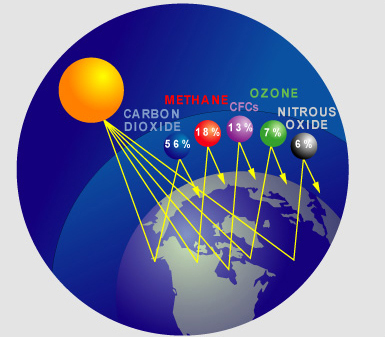


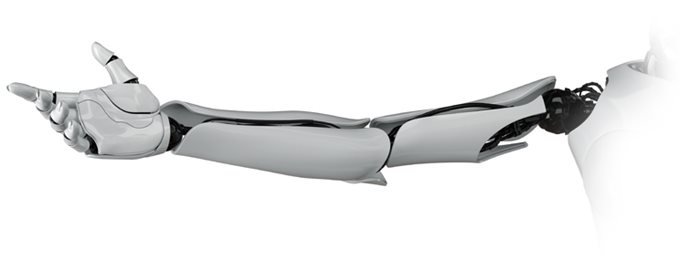


 (This is a “think piece” intended to stimulate thought and discussion, rather than a scholarly manuscript.) We just didn’t have time to address every social issue that surrounds education.


