The world we live in and on has and will continue to face many threats from extinction to survival till its demise in 6.5 billion years from now.
We all know that most of its present day problems have being created and propagated by us humans.
Some are easy to eradicate others not so.
WHY? Because global wealth concentrates is now in fewer hands resulting in inequality destroying our attitudes to world problems.
There is little need to state that there are many form of Inequality.
It come dressed in all colors along well beaten paths.
But one form for me leads to many of the others and that is Income Inequality.
(The income from capital continues growing faster than the income from labor.)
While Economists are conditioned to believe in the optimality of the market the newest economic inequality numbers, which ran counter to the expectations of almost all experts, are frightening.
.That’s why they have been in denial for so long that change is not likely in the short run.
But we have to try, because getting this wrong means that economists promote machine-like models that suggest that it is simply some invisible mechanism (or maybe an invisible hand) that ensures that workers don’t get paid very much, that owners make high profit rates, and that the economy will be just fine under these conditions.
Market forces alone cannot determine who gets wealthy and who doesn’t.
Owners of capital seek higher returns through speculation in financial assets, in effect bidding up prices in an eternal quest for ever higher returns, returns that can’t be matched by investments in productive capital (the returns from which have been declining for decades).
Economics can no longer be accepted as a discrete, coherent discipline. It through inequality has left millions impoverished laying in its wake.
As a result there is tremendous anger, disillusionment and fear. All of which are corrosive to democracy.
Just look at the unfolding elections in the USA.
Nearly total disillusionment with established politics due to a dysfunctional government, with the Republican party now barely a political party with a candidate that has risen out of the poplar base called Trump that the establishment could not squash. The main stream spectrum of world politics is moving to the right. Neoliberal policies have led to declines and near stagnation.
You can rest assured that we are going to see a very ugly scene.
Their solutions are the same old failed tactics.
When both parties kowtow to money, the people’s needs are ignored, and
politics becomes illegitimate.
You might say that redistribution of wealth is theft. But Redistribution of investment Profit for Profit’s sake is not.
You might think that 21st century technology such as the internet is going to change everything. But it is money that is writing the laws, the behind the door trade agreements, through lobbyist undermining democracy. This is happening all over the world.
There is no clear relationship between the total value of capital and profitability.
Whether distributions of income and wealth are partly shaped by social and political relationships – class conflict if you will – or mostly by “market forces.”
The forces of technology are what they are.
Take the contemporary communication technologies it can be used for various purposes, to increase surveillance, to increase power, control or it can be used for to empower people. Technology does not care you can use it both ways.
The technological connectedness is a myth.
If there is to be a rebalancing. The current trade agreements could be designed for the people. They are not.
They are however designed for the benefits of investors. They are not trade agreements except very marginally. That is the reason that they are keep secret, not quite totally as the details are being written by corporate lawyers and lobbyist.
They are however up to now effectively secret from the population.
We can fix the problem, but it will take bold steps. It will take a combined movement not splintered movements to force change. This is highly unlikely.
There is hatred and anger about just about all institutions.
There is only one way to effect redistribution.
Place a World Aid commission on all financial and acquisition activity that are made for the sake of profit. ( See previous Posts)
It is us the tax payer that bailed out the Banks, that paid for the research to create the internet. Are we getting any return on the investment. No.
Some time ago I posted are we all being Googlified.
We use the internet and social media is not so much to expand our minds as to lose them.
Social media does not democratise debate. It limits it to the resilient, offering tweet-size solutions.
We tend to validate what we already believe, wish or suspect is true as opposed to challenging our way of thinking.
In this overheated world fulled by attack ads, and social media frenzies, the only think that matter is how an individual feels about something. Feeling validates itself and anything else is an establishment conspiracy.
It is well-known that if you want to rule a people keep them ignorant.
Take the USA for instance.
One has only to look at the rise of Donald Trump, the Tea Party, Climate change deniers, Creationists, and the hold these have and the lengths believers go to push their agendas, contrary to tangible, scientific proof, to understand that ignorance is something people invest in heavily.
In a country that was founded on Immigration the USA that has built some 650 miles of wall along the 1,954-mile US-Mexico boundary. There are around 16,238 murders per year in the United States; this averages out to around 44 murders per day. There were 2.24 million prisoners in the United States as of Dec. 31, 2011. That accounted for about 22 percent of the global prison population.
“It’s a stark fact that the United States has less than five percent of the world’s population, yet we have almost 25 percent of the world’s total prison population.”
America is killing itself through its embrace and exaltation of ignorance.
Here as elsewhere we see politicians more concerned with appearing approachable than smart or engaging in genuine political discourse.
Celebrity gossip dominates news feeds and cycles.
We have a generation that have not read a book since leaving school. How take selfies posted on Facebook to say look at me I did this or I am here, got the t-shirt. Who cares. Almost all of us have been there before you.
Topical TV discussion ( on this side of the pond Question Time, Hard Talk, News Night and the like) shows use celebrities, sportspeople, or some one from the station’s stable of stars to discuss controversial issues eschewing experts and reducing complex subjects to clickbait.
Shrinking government funding for Education, and other artistic, creative, literary and scientific endeavors, works to erode the significance of scholarship and creativity and all they entail as respectable and seriously useful occupations or pastimes.
Universities are changing as a consequence of fee charging and anti-intellectualism. Instead of teaching students the joy of learning and critical thinking, we train them for jobs.
Ignorance should never be held up as inspirational, convenient fictions, don’t replace facts, and aggressive cyber trolls never silence the truth.
A clever country is where intellectuals are not scorned as elite, but recognised as essential.
If we want inequality to disappear our Leaders must educate for free and capitalism with its unrelenting greed must pay. ( see World Aid commission of 0.05%)
More than a million migrants and refugees crossed into Europe in 2015, sparking a crisis as countries struggled to cope with the influx, and creating division in the EU over how best to deal with resettling people.
Under the terms of the EU’s deportation deal 202 people from Greece to Turkey have to-day being forcibly returned to Turkey.
On the island of Lesbos, which lies just across the Aegean Sea from Dikili, the 136 deportees boarded two Turkey-bound boats in what some witnesses described as a “sedate state”. On Chios, a Greek island farther to the south, violence briefly erupted as police attempted to transfer selected deportees to a third ferry.
The calmness of proceedings belied the horror of what they represented.
“This is the bargaining and bartering of human bodies,”
Only two of the 202 deportees were Syrian. The rests were mostly Pakistanis, and so could have been deported back to Turkey under pre-existing international agreements, or Afghans, who the Greek government claimed had elected to return to Greece of their own accord.
“It is absolutely mind-boggling that neither the media nor human rights organisations had access to the detention facilities to monitor the asylum procedures,” said a Human Rights Watch spokesman.
The first day of deportations has been met with affirmative statements by credible international organisations, including the UN High Commissioner for Refugees (UNHCR), who confirmed that all procedures were regular and rights of deportees were observed.
Even as the expulsions were under way, a rubber dinghy with about 40 men, women and children arrived from the shores of Turkey, and on the other side of the Aegean dozens of others were arrested trying to follow in their wake.
Turks are now putting up blue tarp to stop the prying eyes of the press.
The conflict in Syria continues to be by far the biggest driver of migration. But the ongoing violence in Afghanistan and Iraq, abuses in Eritrea, as well as poverty in Kosovo, are also leading people to look for new lives elsewhere.
Europe needs to be reminded that Deportation from Europe has a dark history.
Without genuine transparency over the enacting of the EU-Turkey deal, pictures alone won’t be enough. Amid this crisis, children are the most vulnerable of all. Many are travelling with their families, while many others are on their own. Every one of them is in need of protection and entitled to the rights guaranteed under the Convention on the Rights of the Child.
This is an appalling deal.
We that is Europe is responsible in more ways that one for the Crises. If we were less concerned and not driven by fear we would have set up proper immigration enter channels and now of this would now be necessary.
Our world organisation like UNICEF can only stand by and appeal for funds.
There are still millions caught in situations of conflict, displacement, poverty and underdevelopment – the main causes of the crisis
“It’s what happens when the media is not looking that will matter most.”
Tensions in the EU have been rising because of the disproportionate burden faced by some countries, particularly the countries where the majority of migrants have been arriving: Greece, Italy and Hungary.
In September, EU ministers voted by a majority to relocate 160,000 refugees EU-wide, but for now the plan will only apply to those who are in Italy and Greece.
Another 54,000 were to be moved from Hungary, but the Hungarian government rejected this plan and will instead receive more migrants from Italy and Greece as part of the relocation scheme.
The UK has opted out of any plans for a quota system but, according to Home Office figures, 1,000 Syrian refugees were resettled under the Vulnerable Persons Relocation scheme in 2015. Prime Minister David Cameron has said the UK will accept up to 20,000 refugees from Syria over the next five years.
Let me ask you.
What would you do to escape ISIS and the Taliban?
Even if we have taken in the odd million.
Shame on us all. That we can’t offer at least temporary sanctuary.
“The journey is difficult but we have no choice,” We have to endure.
It goes without saying that before the Nov 8th US Presidential Elections are over there will be billions of Tweets, Media, News/ Mags Articles written on a man called Donald Trump.
But what is known about him other than he imagine himself as a spectacular success in every arena he enters.
He is unquestionably one of the biggest show-off on planet earth. An irrational, ego-driven tyrant that is living the life of a modern-day Gatsby and is only too happy to tell you all about it.
He’s the brash, 69 years Zodiac: Gemini billionaire real estate mogul and television personality who has already shaken up the 2016 presidential race.
While this is true, the motivation behind his ostentatious public persona is primarily to further his brand.
Life is merely a giant game for Trump. A game in which the winners collect lots of fame and money, and the losers don’t.
He is a child of New York who inherited a real-estate business and turned it into an empire and then some, with a brand that is unequaled in America.
The problem arises when it comes to Trump’s definition of greatness.
Without any obvious respect for the Constitution or Bill of Rights, a President Trump could very quickly transform himself into a very dangerous strongman, all the while believing that he is merely doing what is necessary to make America great.
No matter it is extremely crucial to understand that the traits that make someone an incredible showman and billionaire are not the same traits needed in a President to restore a Constitutional Republic.
He instinctively mistrust many people. He thinks that the USA is being ripped off so badly by our so-called allies; i.e., Japan, West Germany, Saudi Arabia, South Korea, etc.
He holds journalists in low regard – he thinks journalists are less reputable than members of every other profession, including politicians.
He intentionally stir up anger and hate by demonizing minorities such as Muslims and Mexicans or is merely telling groups of frustrated people what they want to hear to get elected?
With foreign leaders he simply thinks that he will outsmart them. “you are either with me, or you hate America.”
He is the only Republican candidate who can claim the “Triple Crown” in American life, having become one of the foremost leaders in business, politics, and entertainment.
He likes hamburgers and fries and there’s a part of him that is unfulfilled because he is not easily capable of being vulnerable.
Where did he come from?
With German ancestry from his father and Scottish ancestry from his mother, millionaire real estate developer Donald Trump epitomizes the American immigrant experience.
Born to Frederick and Mary MacLeod Trump in Queens, New York on June 14, 1946, Donald John Trump learned the real-estate business firsthand from his father who, himself, began in the family construction business at the age of 13 when his own father (Donald’s grandfather) died in the influenza epidemic of 1918.
Frederick Christ Trump, grandfather of Donald Trump, was also a true American entrepreneur. Immigrating to America in 1885, he began his fortune running the Arctic Restaurant and Hotel in Bennett, British Columbia, during the Klondike Gold Rush. Christine, who would later become his wife, was only 5 when he left Germany, but they kept in touch by mail and eventually married.
When he was thirteen, his parents sent him to the military academy in New York, hoping to channel his energy. Subsequently, he joined the Fordham university before obtaining his degree in economics at the University of Pennsylvania.
Trump’s grandparents anglicized their name from Drumpf. His grandfather Friedrich and grandmother Elisabeth were born in Germany and emigrated to the United States. Their son Fred Trump married Donald Trump’s mother Mary Ann MacLeod, who was born in Scotland and met Donald Trump’s father during a vacation trip to New York.
In 1971 Donald Trump was given control of the company, which he later renamed the Trump Organization.
In 1977, Trump married Ivana Zelnickova Winklmayr, a New York fashion model who had been an alternate on the 1972 Czech Olympic Ski Team.
After the 1978 birth of the couple’s first of three children, Donald John Trump Jr., Ivana Trump was named vice president in charge of design in the Trump Organization and played a major role in supervising the renovation of the Commodore.
1991 divorce from his wife Ivana.
But in 1993 he married again, this time to Marla Maples, a fledgling actress with whom he had been involved for some time and already had a child. Trump filed for a highly publicized divorce from Maples in 1997, which became final in June 1999. A prenuptial agreement allotted $2 million to Maples.
In January 2005, Trump married for a third time in a highly publicized wedding to model Melania Knauss, who gave birth to a son, Barron William Trump, in March 2006; it was her first child and Trump’s fifth.
He supports the death penalty.
He thinks that Russia is out of control.
Donald Trump boasted Saturday that support for his presidential campaign would not decline even if he shot someone in the middle of a crowded street. “I could stand in the middle of 5th Avenue and shoot somebody and I wouldn’t lose voters,” Trump said at a campaign rally here.
The scary part is, I think he’s right.
But can you separate the real policies of the man from those of our warped imaginations?
Abolish the position of secretary of state. Not true.
Stop the president chewing gum on overseas trips. True
Ban windmills. True
Ban the national curriculum. True
Become besties with Vladimir Putin. True
Re-invade Iraq and take all its oil. True
Ban handshakes. True
Start a trade war with China. True
Build a giant wall around Mexico and make Mexico pay for it. True
Stop Japan selling so many cars to the US. True
Enforce a top-secret, “foolproof” plan that will defeat Isis “quickly and effectively” but not tell anyone what it is. True
Ban ‘perverts’ from public office. True
By this time next year this could be the Front Row of World Politics.
The 2016 presidential election could cost as much as $5 billion, according to top fundraisers and bundlers who are already predicting it will more than double the 2012 campaign’s price tag.
The big concern as relates to Trump as President would be his strongman type of personality coupled with a cult of personality worship amongst his followers. This worship is something that Trump himself is well aware of, and it makes him all the more dangerous.
As riot police dismantle the camps of northern France, ‘forced relocation’ of people into shipping containers is brushing a humanitarian disaster under the carpet. The new accommodation on which the French have spent £20m is shipping containers, each kitted out with 12 bunk beds. There is heating and electricity BUT Humanity is bulldozed away.
The underlying political problem is never dealt with, except ironically by the refugees and migrants themselves, who have put up a sign saying “David Cameron Street” in the Jungle.
The focus of many EU governments now appears to have shifted decisively back to a default position—namely efforts aimed at preventing or discouraging people from attempting to reach EU territory, tackling smuggling networks, and rapidly deporting individuals who do not have a right to remain in the EU.
FOUR MILLION migrants expected to reach Europe by the end of 2017.
EU leadership is more important than ever to reach a Europe-wide deal on refugees.
An estimated 31,244 migrants have braved the deadly boat crossing over the Mediterranean Sea to Greece in the first 16 days of this year. This shocking statistic represents 21 times the number of migrants who crossed during the same period in January 2015, according to the International Organisation for Migration.
Last year children accounted for a quarter of the one million migrants and refugees arriving across the Mediterranean in Europe.
God knows, these people need help. They are not obtruders. Every one of them is in need of protectionand entitled to the rights guaranteed under the Convention on the Rights of the Child.
At the same time, there are still millions caught in situations of conflict, displacement, poverty and underdevelopment – the main causes of the crisis.
UNICEF is appealing for US$14 million to support the needs of affected children and women through 2016.
The rising number of people entering Europe in search of safety and in search of a better life has captured the world’s attention with scenes of heartbreaking tragedy.
JUST IMAGINE IF IT WAS YOUR FAMILY.
Travelling hundreds and thousands of miles over land and over water, from Africa, the Middle East and Asia, people are risking everything in the hope of reaching their goal, and the danger does not end at a border crossing.
Here are a few Graphics to open your eyes.
In September, EU ministers voted by a majority to relocate 120,000 refugees EU-wide, but for now the plan will only apply to 66,000 who are in Italy and Greece.
Whenever people treats others as they treat each other, then we will have no more wars.
Our politics have become so polarized and increasingly volatile; and our politicalinstitutions have lost the public trust.
There is (Almost) No Such Thing as the “Common Good”
We face a choice between a society where people accept modest sacrifices for a common good or a more contentious society where group selfishly protect their own benefits. Our most fundamental social problems grow out of a widespread pursuit of individual interests and greed.
Recommitting ourselves to the general welfare could solve the deepest problems the world now face.
The very idea of a common good is inconsistent with a pluralistic society like ours.
Different people have different ideas about what is worthwhile or what constitutes “the good life for human beings”, differences that have increased during the last few decades as the voices of more and more previously silenced groups, such as women and minorities, have been heard.
Given these differences, some people urge, it will be impossible for us to agree on what particular kind of social systems, institutions, and environments we will all pitch in to support.
It might seem that since all citizens benefit from the common good, we would all willingly respond to urgings that we each cooperate to establish and maintain the common good.
Examples of particular common goods or parts of the common good include an accessible and affordable public health care system, and effective system of public safety and security, peace among the nations of the world, a just legal and political system, and unpolluted natural environment, and a flourishing economic system.
Because such systems, institutions, and environments have such a powerful impact on the well-being of members of a society, it is no surprise that virtually every social problem in one way or another is linked to how well these systems and institutions are functioning.
So why is it that we are unable to act for the Common Good of humanity and the Planet?
Our culture views society as comprised of separate independent individuals who are free to pursue their own individual goals and interests without interference from others.
In this individualistic culture it is difficult, perhaps impossible, to convince people that they should sacrifice some of their freedom, some of their personal goals, and some of their self-interest, for the sake of the “common good”.
This combined with the fact that we have turned everything into a commodity to be bought or make profit on has blurred our values of the common good.
These days one might describe the common good as “certain general conditions that are…equally to everyone’s advantage”.
Even if we agreed upon what we all valued, we would certainly disagree about the relative values things have for us.
Such disagreements are bound to undercut our ability to evoke a sustained and widespread commitment to the common good.
In the face of such pluralism, efforts to bring about the common good can only lead to adopting or promoting the views of some, while excluding others, violating the principle of treating people equally.
Moreover, such efforts would force everyone to support some specific notion of the common good, violating the freedom of those who do not share in that goal, and inevitably leading to paternalism (imposing one group’s preference on others), tyranny, and oppression.
We left with cultural traditions, that in fact, reinforce the individual who thinks that she should not have to contribute to the community’s common good, but should be left free to pursue her own personal ends.
WHERE DOES ANY OF THIS LEAVE US?
A good questions but complicated because complete societies all with different laws, rules, and beliefs,(which we can call ‘polities,’ or ‘countries’) take many forms in different times and places but they always include some kind of rule ordering them to the common good.
This may well be so but the overriding self interest Resulting in a planet of Inequalities, rampant climate change, conflicts, wars, pollution on a massive scale, corruption, and profit at any cost.
Not all people live under a state, but every [complete] human community by definition is a polity.» Polities enable families, local communities (‘villages’), and associations to flourish by realizing many common goods, but polities also allow for the achievement of greater common goods.
The good news is with modern-day technology we are on the threshold of discovering a new way.
It is possible for acts of individual humans armed with powerful technologies to make decisions that may affect the future survival of the whole human race.
We can imagine the possibility of extinction (whether by our own efforts or due to some external cause), and we can agree to work together to prevent such an eventuality.
Of course, even while we work on a common goal of preserving the species, we will still all be competing to maintain a larger share of descendants within the future population, and this may still result in technological developments that threaten the extinction of everyone.
Whether one goal (survival of the species) can win out against the other goal (relative reproductive success of the individual) is not a fore-gone conclusion.
For me it consists primarily of having the social systems, institutions, and environments on which we all depend work in a manner that benefits all people.
The internet revolution is transforming the way knowledge is disseminated and how people unite over causes. ( see post: The Beady Eye asks: Are we condemned to reaction politics for the foreseeable future)
This means that our out of date world organisations need to come up to speed.
Establishing a pro active chamber of Governance with non political expert representatives, immune from lobbing, that would be concerned with the long-term view to avoid potential threats or to capitalize on potential opportunities.
This Chamber actions subject to Social Media network electronic voting by the tax paying citizens.
Placing a World Aid Commission of 0.05% ALL HIGH FREQUENCY STOCK EXCHANGE TRANSACTIONS. ON ALL FOREIGN EXCHANGE TRANSACTIONS OVER $20,000. ON ALL SOVEREIGN WEALTH FUNDS ACQUISITIONS . ON ALL NEW DRILL LICENCES.
THIS WOULD CREATE A PERPETUAL FUND FROM PROFIT FOR PROFIT SAKE TO ADDRESS CLIMATE CHANGE AND ALL OTHER WORLD PROBLEMS OF INEQUALITY.
WHY SUCH A FUND? Because appeals to the common good are confronted by the problem of an unequal sharing of burdens.
Our desire or desires are personal incapable of being satisfied because of our internal sense of imagination.
If good is the cause of desire, how can it be that people do not want what is good?
Indeed, all sense pleasures seem to be intended by nature to be connected to actions that lead toward the lower and more basic of the honorable goods such as the preservation and reproduction of life.
This is lost in large complex societies.
Is this the reason we are unable to act for the common good.
To define the good as ‘what all want’ is therefore a definition not of an effect by its cause, but just the opposite: a definition of a cause by its effect. The good is a cause. It is the final cause, the end or purpose.
If you get what I mean.
Hunger is the desire for food, but food is not good because there is hunger. Rather, there is hunger because food is good and necessary for the preservation of one’s substance.
The good is desirable as known, and therefore as long as it is unknown it is powerless to cause desire.
Many economists claim that in any free exchange each party must think that they are getting something better out of the deal.
But people are not such fools.
Whoever wins, others must lose.
Therefore, for humanity, there is no “Common Good”.
Other than the continued survival of the human race as a species.
Unless, perhaps, we can avoid the finiteness by expanding into outer space.
Historically, our darkest hours on Earth have given birth to some of our most brilliant moments—our brightest ideas and most illuminating conversations.
The challenges we’re facing can spur us towards brilliance—and prompt a course correction. We must be both far-sighted and courageous in our thinking.
Our house is on fire. What will we save?
Not the redistribution of wealth by governments Tax to create greater equality.
Especially insofar as they are only concern with interior acts power rather than the outward behavior which directly affects other people.
We must also support thinkers and leaders who can help expand our collective understanding of what’s valuable beyond the narrow one-dimensionality of a profit margin.
We may never find a truly satisfying and conclusive answer.
Maybe its the wrong question altogether. You will never really know what it is to be me and I will never really what it is to be like you. And this very unknowability of other humans beings is what is the common good.
The human common good—now understanding that phrase without restriction to the state’s or political community’s good is impossible.
When you look at the state of the Planet is it time for world Governments to have a third level of Governance.
Our political discourse is shrinking to fit our smart phone screens.
( If we don’t open our eyes we will be governed by natural-born troll, such as MR TRUMP who is adept at issuing inflammatory bulletins at opportune moments, he’s the first candidate optimized for the Google News algorithm.)
A pro active house of power with non political representatives immune from lobbing that know what they are talking about.
Such a house would address the long-term views about family welfare, social conditions, the environment, crime and virtually every aspect of our lives that our national government policy effects.
“When you’re up to your ass in alligators, it’s difficult to remind
yourself that your initial objective was to drain the swamp.”
Our political actors can only focus on a few core issues simultaneously, the construction and selection of the problems on the agenda constitute a key phase of the policymaking process.
It is far more effective and cheaper to prevent problems from occurring than to let problems grow and then try to solve them.
A proactive approach to change is needed to avoid a potential future threat or to capitalize on a potential future opportunity.
It would not be effected by the political strategies surrounding the construction of insecurity or the currently political needs of focusing on the acquisition and retention of power.
Unfortunately, as human organizations or societies get bigger, older and more complex, “Destructive Achievers” tend to become dominant. They are promoted or elected to power because they are willing to satisfy the short-term desires of the most powerful members of the group, even at the expense of the group’s long-term health.
Every political power has to go through the media.
These days it is impossible to deny the significant role of the media in the life of societies it influence the opinions and beliefs prevailing in society through content management – which is more difficult now with social media , however, to categorically determine the nature of this impact.
While this maybe true political actors wanting to create and maintain their place in the media must comply with the policies of the mass media, based primarily on the desire to garner the greatest possible interest in the message.
Hence, politicians in their activity must adapt not only to the needs of potential voters, but also to the needs of the media, among which the most prominent ones are the sensational nature of the content and availability of the politician.
As a Result the politics presented is superficially world that is reduced to news, schemas and scandals.
A pro active Chamber may cause in the electorate the expectation of integrity, reliability, conscientiousness from their potential political leaders.
Is such a suggestion feasible or foolish?
Both the development of transmission technology and dissemination of information, increased strength and importance of the media in society. As a result political discourse is contaminated.
It would be feasible if all decisions from this house were electronically vote on by the electorate before submission too Parliament for approval.
The Internet revolution has transformed the way knowledge is disseminated and how people unite over causes.
It is now more than ever necessary to understanding some of the most influential social and political processes of our time. Social networks are playing a key. It is and has transformed elections.
In the 1920s, radio disembodied candidates, reducing them to voices. It also made national campaigns far more intimate. In the 1960s, television gave candidates their bodies back, at least in two dimensions. Today, with the public looking to smartphones for news and entertainment, we seem to be at the start of the third big technological makeover of modern electioneering.
This shift is changing the way politicians communicate with voters, altering the tone and content of political speech. But it’s doing more than that. It’s changing what the country wants and expects from its would-be leaders.
What’s important now is not so much image as personality.
Social media favors the bitty over the meaty, the cutting over the considered.
It also prizes emotionalism over reason.
The more visceral the message, the more quickly it circulates and the longer it holds the darting public eye.
In something of a return to the pre-radio days, the fiery populist now seems more desirable, more worthy of attention, than the cool wonk.
In my eyes, social media is one of the most important global leaps forward in recent human history. It provides for self-expression and promotes a mutual understanding. It enables a rapid formation of networks and demonstrates our common humanity across cultural differences. It connects people, their ideas and values, like never before.
It is in its infancy.
Once we truly learn how to harness this new technology and these new ways of communicating, we will feel the full impacts of social media.
It is responsible for the roots of the Arab Spring in the Middle East, Twitter, YouTube, Facebook and others have played not just an important role, but also an instrumental one.
The truth is the fear that some governments have about truly empowering their citizens through these new technologies. They are afraid of power of human connections online forming communities of interest because they are self-monitoring, with their own norms and expectations.
In China, the government of President Xi Jinping has expressed concern about the real power that social media has to spread information
From the printing press to the telephone to the Internet, each of these tools has been a way to organize and activate — to give people the voice they want and deserve.
Forward-thinking governments will listen to those voices and empower them.Others will be fearful of the voice of the people and remain on the losing side of history.
Today’s society, in a similar manner to liquid, adopts various unstable forms under small amounts of pressure. They are incapable of stabilizing in a consistent form, which results in consequences to social relationships and politics.
Meanwhile, political parties, bureaucracy and institutions seem to remain firmly in the 17th Century.
Democracy has to reinvent itself in accordance with this new “liquid society” where collaboration happens between many millions of people directly.
Leadership is not vertical, as in the past, but horizontal.
There is no time and space limitation for public accountability on the Internet.
Creative commonality is standard and does not resemble the authoritarian style of the dead communist experience.
It seems that it is no longer society’s obligation to understand legislation, it is a duty for governments to be understood by their people.
More than ever, the citizen is now part of the solution. Decision-makers must take advantage of technological tools to listen to the people and raise public awareness of controversial debates. If society has logged out of the virtual world it is time for government to realistically log on in an effective way to chat with citizens.
Ultimately, the discussion is all about what government is doing to the people, as in France in 1779, Russia in 1917 and 1991, in addition to many other uprisings in past. After all, it is much easier to listen to people now.
Open government is what politics will be in the Future.
While the possibilities are promising, there is also risk and danger.
It is now evident that there is no such thing as privacy. Google is omniscient of what people search for and do. Facebook has over a billion subscribers meaning Mark Zuckerberg has personal information about one in every seven people on earth. USA, Brazil, Mexico, India and Indonesia are at the top of that list.
Companies collect and negotiate information about customers and often without permission. There have been notorious cases of non-authorized government investigations on people, from autocratic regimes to alleged democracies.
Evgeny Morozov calls for a cyber utopia of ingenuity with the perspective for digital technologies. The dark side seems closer to scenarios depicted in fiction such as 1984, A Brave New World or, more recently, the Guy Fawkes face mask borrowed by the Anonymous movement from the V for Vendetta movie that has become omnipresent throughout the latest uprisings in Turkey, Egypt, Brazil and the United States.
President Obama is the best-known politician to be exploring the possibilities of new technologies to converse with the people.
Others must follow his lead and innovate. It is inevitable.
Facebook´s average user is 22 years old and the digital world continues to evolve bringing greater potential. Soon, every protester will have a smart phone with an HD 3D camera. The ascension of mobile caused Steve Wozniak to announce the end of the personal computer, which he himself invented with Steve Jobs three decades ago.
Politics needs to adapt. Like it or unlike it.
The technology is just scratching the surface of its promise.
Smartphones are cheaper than computers and will become ubiquitous; Everyone will be connected through phones.
A major effort needs to be made to educate voters about proactive vs. reactive approaches to issues.
It’s not just about economics.
We are dealing with the mechanism of the spiral of silence, which pulls individuals into a paradox of sorts: to ensure social acceptance, he or she resigns from forming own thoughts and views on certain topics, withdrawing from discussion
The culture of diversity removes any moral (good/bad) and evaluative (positive/negative) dimension that justifies the political, social and ethical associations linked to the dynamics of diversity.
It’s only right that I follow the last series of posts on what is Wrong with a post that asks the above question.
BECAUSE ITS MONEY THAT IS AT THE HEART OF THE PROBLEM.
I guess the answer to the question “What is wrong with capitalism today?” is dependent on who you ask.
Capitalism works for capitalists.
The Problem is 90 percent of us are not capitalists, we are employees.
Without us noticing, we are entering the post capitalist era.
We need to reexamine the models that have gotten us to this point.
Complete change will not happen overnight. Nor will it be built on the back of one investor or one innovative entrepreneur.
It will be something that business owners, investors, political leaders, consumers and entrepreneurs must all work together toward.
Currently, our planet is on track to fly past the 2 degrees Celsius warming that scientist have repeatedly warned marks the safe range for humans on this planet, but at the heart of further change to come is information technology, new ways of working and the sharing economy.
The old ways will take a long while to disappear but millions of people are beginning to realise they have been sold a dream at odds with what reality can deliver.
The democracy of riot squads, corrupt politicians, magnate-controlled newspapers and the surveillance state looks as phoney and fragile as East Germany did 30 years ago.
Why should we not form a picture of the ideal life, built out of abundant information, non-hierarchical work and the dissociation of work from wages?
So are we witnessing the first stage of an economy beyond capitalism?
Is technology creating a new route out or is it consolidating power into the hands of a few like Google, Microsoft and Apple?
Will its future be shaped by the emergence of a new kind of human being, reshaping the economy around new values and behaviours?
Will Capitalism as we know it be abolished by creating something more dynamic that exists, at first, almost unseen within the old system, but which will break through because of what Information technology has brought about in the past 25 years.
It is blurring the edges between work and free time and loosened the relationship between work and wages?
Or is the current wave of automation, currently stalled because our social infrastructure cannot bear the consequences, will hugely diminish the amount of work needed – not just to subsist but to provide a decent life for all.
These are all questions to be answered before we see what I call post capitalism.
The Questions are numerous, and there have been hundreds of books, papers, and talks on the subject few however with any positive suggestions.
Before I put the only suggestion that is viable lets start with what is wrong with the present state of Capitalism.
Here is way I see what is wrong;
Today capitalism isn’t about real markets and commodities with the price mechanism being fixed by competing supply and demand, now today it is about casino economics. You throw the dice and when you loose … all that global connectivity means you lose globally. We are all in this together – that is why we call it a global economy – oh apart from the 0.1% – they are the ones throwing the dice. We are just the ones picking up the tab when the bets don’t come off.
Although economics likes to think of itself as a science in reality it ignores the fundamental laws that govern science – the first two laws of thermodynamics. This isn’t a smart thing to do. There actually are limits to growth.
They told us wealth creation was a trickle down theory but in reality it is a trickle up theory. The rich really do get richer and richer and it is not down to merit. The question is what is going to stop them: war or politics?
The big problem is humans are human, both doing bad things and good things. Capitalism only works if enough of us do the right thing.
The price mechanism is faulty unless it includes the environmental cost now and in the future of our consumption. This it doesn’t done at present and we are free-loading off nature.
Often we think it is the only way to do things. It is not the only way to even do capitalism! Alternatives exist, other brands are available. There are even other ways of thinking about economics that we don’t even call capitalism; they may be a bit racy for us right now so lets start with re-imagining what a good effective form of capitalism could be like if humanity fully realized its role and impact upon the planet that sustains it.
Modern capitalism is so big and complex that who can say that really understand it.
I don’t.
But I do understand by building business models and share valuations based on the capture and privatisation of all socially produced information, Google and such firms are constructing a fragile corporate edifice at odds with the most basic need of humanity, which is to use ideas freely.
Never has humanity been better fed, lived longer, used more energy and had more stuff than today so what is wrong.
One of the fundamental faults of capitalism is the basic axiom that if everybody tries to accumulate as much property as possible the general interest of the people will be served.
All this seems to do is create exploitation.
The problem with capitalism is that it isn’t very good as what it says it is good at, spreading wealth, enabling good technological progress and helping us become more human, more free.
Adam Smith – you know him graces the back of the £20 note – founding father of modern capitalism back in the 18th century – hero of Margaret Thatcher. When he famously asserted:
“It is not from the benevolence of the butcher, the brewer, or the baker that we expect our dinner, but from their regard to their own interest.”
What Smith was talking about was the idea that self-interest – the rational underpinning of economic man – was not only good for you but for everybody else – society.
Unfortunately the line between self-interest and greed is always fine – and we are human man not economic man and we find it very easy to cross that line – or certainly some of us do – lets call them the 0.1% – the 700,000 of us who have a lot – somewhere north of $5 million each.
The consequence of this trend as it unwinds over time is that wealth progressively becomes concentrated in fewer and fewer hands.
The rich get richer – that’s that 0.1% again. Or to put it another way wealth stays with those that are born to it and the idea that merit – how good you are at something – determining your economical price in the market place, or wages as most of would say, becomes far less important than we thought.
In fact there are plenty of things wrong with capitalism.
Those that shout this apparent self-evident reality the loudest own the media, the means of communication, they own your stability through the derivative bets they hold and they are telling you don’t blink – this is the natural way of things , capitalism the way we see it, the way the 0.1% see it.
So the more we have of everything, food, power, stuff, the more energy we must use (even if we get more energy-efficient in doing things).
The nitty-gritty of it is we have fucked up the world with Capitalism idealism.
I don’t approve of Communism or Socialism either, the truth is that every system is flawed.
I think a system which is based on an assumption that man is basically piggish and therefore only fit to look after his own needs; such system impedes rather than promotes the good within each person.
Geographers have away of describing this situation it is called the IPAT equation.
Impact = population x affluence x technology. You note there is no Money in the equation.
The impact.
Physicists would call it entropy, biologists pollution and economists externalities – is of an order defined by how many of us are using how much however efficiently.
If you want impact in a nutshell it is climate change, it is salinization of soil, it is depleting geological resources , it is reducing biodiversity.
There really are limits to growth.
Capitalism is a perpetual motion machine, striving for more and more growth makes us in the long run weaker not stronger. Well, if only we were all-knowing, rational and optimal in our behavior maybe it would be so. But we are not.
In the past the trend towards greater and growing inequality has been neutered by war – nothing equalizes society more effectively than war – we do tend to be all in it together at such moments.
Today in our global economy is held together with a digital architecture that enables the reduction of wealth to so much digital code life has become one big transaction.
The most spectacular aspect of this transactional world is the derivatives markets.
(A derivative is a bet on a price changing within a market – say interest rates, or currency exchange values or a commodity price such as that for coffee. The value of all derivatives worldwide in 2013 is thought to be about $1.2 quadrillion although nobody knows exactly as, a like a lot ordinary betting the betters don’t want necessarily want to admit to it.)
So that is $1,200,000 billion laid out in bets about what may or may not happen.
Billions of transactions.
Let’s quickly remind ourselves. The global economy – the real economy – is worth about $85 trillion – that is about 7% of the notional sum bet on what that economy will do.
Now, take a deep breath and think about it.
If you don’t now believe that we could have another global economic crash in the style of 2008 – a massive bursting asset bubble – you need to think again and cast your eyes to Asia – you might be wondering where much of that quantitative easing – free money that the US and the UK created ended up. Try property speculation in Asia.
We are quickly reaching the tipping point where growth in GDP in any particular country comes at the expense of growth in GDP of another.
We do not have global organizations capable of managing these tension points nor are societies willing to curb growth and consumerism.
Capitalism as currently practiced is simply not sustainable.
Modern market capitalism has shifted recently with the emerging supremacy of money markets and the financial system over the actual trade of goods. Under this, you’ll make more money trading in derivatives than actually physically trading in commodities.
Capitalism, or the recent move into financial market dominated capitalism.
The “new capitalism” is based on mathematics rather than trade; credit default swaps over goods and services; when odds are stacked in the favor of big banks because of hedging, derivatives and CDS’s; when there is little to no penalty for market manipulation by investment banks, power brokers, Ponzi schemers … these inefficiencies in the market cause redistribution of wealth to the people in power who design the system.
The mass media is becoming more and more an opiate, an aid for living the unexamined life. replace it (capitalism)?”
Through the millions spent in lobbing reasonable controls upon business have been removed. The desire for economic success and the influence of the powerful elite have ruined the mass media.
Our political problems have deepened with the demise of unions as an effective political force, the continued growth in the belief in the desirability of pyramid economics and class structure (which has been sold by a media controlled by those at the top of the pyramid), and the dependence of our two-party system upon those at the top of the pyramid for funds to cover their election expenses.
Around the world the gains of increased productivity are wasted by this pyramid structure.
For over 40 years I have watched the gradual drift in the minds of the average person from an understanding of our political economic reality and the need for corrective actions.
Those who dominate the means for the production of ideas have served their class well.
This endless cycle of production and consumption for profit is suicide and profit is pretty pointless when we run out of things to burn and things to eat.
I would suggest a world government dedicated to seeing that: (a) everybody was properly fed, clothed, and housed; (b) everyone worked and received a fair return for their work with none receiving too much; (c) intellectual development for all to be encouraged; (d) businesses are the servant to man; (e) the production of war materials end; (f) the ending of all exploitation, including one region by another or one class by another; (g) and the ending of a press which is controlled by those who make up the ruling class.
We is needed is a project based on reason, evidence and testable designs, that cuts with the grain of history and is sustainable by the planet.
Capitalism is not and has never been designed to work in an environment dominated by market controls, regulations, artificial barriers to entry, monetary manipulation and a myriad of other government interventions.
It is Profit at any cost and having taxpayers bail it out when it goes wrong simply means the risk has shifted from corporation to state, or you and me.
Many would say that means a broken model.
Has a new model started. It all depends on what kind of capitalism we are talking about and what force will be applied either at the ballot box or on the barricades or by the Smart Phone or the Gun.
Another question raised about the proposed strategy is whether it actually adds up to the defeat of capitalism.
Do the numerous tactics described above, most of which focus on what not to do, really do the job? How will capitalism actually be defeated? It’s true that many of these recommendations are about what not to do.
this strategy calls for pulling time, energy, and resources out of capitalist civilization and putting them into building a new civilization. The image, then, is one of emptying out capitalist structures, hollowing them out, by draining wealth, power, and meaning from them until there is nothing left but shells.
To think that we could create a whole new world of decent social arrangements overnight, in the midst of a crisis, during a so-called revolution or the collapse of capitalism, is foolhardy.
Our new social world must grow within the old, and in opposition to it, until it is strong enough to dismantle and abolish capitalist relations.
Such a revolution will never happen automatically, blindly, determinable, because of the inexorable materialist laws of history.
It will happen, and only happen, because we want it to, and because we know what we’re doing and how we want to live, what obstacles have to be overcome before we can live that way, and how to distinguish between our social patterns and theirs.
To achieve change we need unlimited finance. Where can we find this? We don’t have to look far.
If a new socialist democratic system is to emerge:
We must place an World Aid Commission on all High Frequency Trading, on all Foreign Exchange Transactions over $ 20,000, on all Sovereign Wealth Funds Acquisitions. This will created a perpetual funded Fund to address the damage Greed and Profit for profit sake has done. ( See Previous Posts)
Who do we achieve this.
Our lives have been shaped by developments which most of us couldn’t have imagined a decade ago.
In effect, they are nine distinct psychological orientations toward the world that structure our perceptions, expectations, and demands whenever and wherever other human beings may be involved. These instincts represent our most basic assumptions about how the social world works, and that includes how the political world works.
With the power of our Smart phones the new political weapon of the future.
In the next decade upwards of 100 billion objects from smartphones to street lamps and our cars will be connected together via a vast ‘internet of everything’. This will impact every aspect of our lives.
The interfaces to all our devices from phones to computers, cars and home appliances will be highly intelligent and adaptive – learning from our behaviours and choices and anticipating our needs.
Mankind must learn how to appropriately respond to the crises and opportunities that await us, and grow cognizant of the fact that large-scale violence can be so dangerous to humanity so that we become “aware of the need for a radical change in attitude.
So the question is: Are humans fundamentally too flawed to be trusted with their own paradise? Should we scrap Politics as we know it? Is it the politician’s very humanity that we distrust?
HAPPY NEW YEAR.
Politicians aren’t popular in WORLD.Politics is rated as the least trustworthy profession and we all know Why.
Elected to represent the people they represent Inequality.
Politics in the Future: Will it be worse or better with the technologies of the Internet.
Let’s say you can no longer make it in society without using technology you don’t understand to buy things at a store, to talk to other people, to conduct business.
People are increasingly dependent, but they don’t have any idea how these things actually work.” In other words, people may fear technology, but does that fear even matter?
There’s no mass movement to completely scrap technological innovation.
But there is a movement operating at the other end of the spectrum composed of people who embrace even greater hybridity between humans and technology as something not just inevitable, but desirable.
They would love to see like Wall Street a truly altruistic entity running our governments.
Right now, all politicians, are motivated by self-interest. This is just how humans are.
So wouldn’t it be nice to have something like a super-intelligent AI running things and it be entirely after our best interest?”
Emerging Technologies, a human enhancement and techno progressive non-profit, the AI politician mostly hinges on the negative personality traits of “meat-bag” politicians, specifically: vanity, rage/revenge, and sex addiction.
Basically, the idea would be that an AI politician would have an ego (“if it has a drive for self-improvement … it will have an ego”), but would be programed to turn off negative impulses that would get in the way of implementing policy or following the law. It would be paideia in binary code.
The rule of reason over desires.
One can look to modern elected American officials—pick almost any name, Donald Trump —and lament their lack of self-knowledge, anemic rhetoric, paucity of wisdom, and wonder what they might have been had they been exposed to paideia.
So what would be wrong with a political system run by “altruistic” machine overlords.
Algorithms so completely permeate our day-to-day lives that it can be difficult for people to recognize when and how technology is helping them.
Consumer devices like phones and laptops are obvious, but there are less visible things like the network of satellites used for GPS, distribution software used by power companies, and high-end medical equipment.
On the other hand, abuses of cutting-edge technology have been prominent in the last decade: National Security Agency data collection, cyber warfare, hacks of financial information.
Christopher Bader, a co-author of the fear study and a professor in sociology at Chapman University, recently articulated our fear of technology: “People tend to express the highest level of fear for things they’re dependent on but that they don’t have any control over, and that’s almost a perfect definition of technology.”
But should we really outsource morality to machines?
Unfettered by personality, machines would be rulers without greed, fear, hate, or love, going about the drudgery of administering to human clients free of the disastrous trappings of the ego.
Back to Reality.
The Politics of the future will be connected to technological and data advances, campaigns will increasingly be personalized to the individual.
From the television to the smart phone to the doorstep, campaigns will target you.
Perhaps eventually as you walk through a store or through a subway station. Not you as a member of a voter cohort. But you, the individual.
Campaigns cannot have a million different messages, however; these personalized messages still must be connected to an overall message architecture.
The ability to deliver the right message to the right voter and measure its effectiveness will continue to take more of the guesswork out of politics.
We are entering the age of the billionaire political arms race. Like missiles soaring over the Earth in space, these big spenders will fire back and forth at one another, attempting to control more of our politics.
In some races, the candidates will be mere bystanders to the super PAC main event. But this inevitably will lead to positions being taken, votes being cast, and legislation being sponsored to please political benefactors—or to court them.
This super PAC era is in its infancy.
Strong candidates with a compelling message and the right timing will still matter more than anything else. But the campaigns around them will continue to change rapidly.
As we get deeper into the 21st century, new factors will impact, if not help shape, our politics, including: more concrete changes brought on by global warming, more sophisticated and frequent cyber warfare and cyber attacks, technology companies that claim to know more about you than you do (and the attendant privacy issues), baby boomers moving fully into retirement, increasing urbanization, and the rise and fall of competitor nations.
Data and its smart use will only improve campaigns’ understanding of the electorate.
Campaigns will increasingly be fought out on mobile devices as much as television and computers.
The there is the coming use of holograms. Politicians will use them throughout the country to extend his or hers reach. With advancements in artificial intelligence, you could soon have holograms of government candidates at your door, interacting with you and asking and answering questions.
Will it change anything? No other than “transhumans” will emerge from the ashes of mid-21st century planetary warfare is a bit hard to swallow.
Every time you press the like button you are voting. So go on press the button as you have no opinion worth while expressing. What you vote for is not what you get.
If we want Politics to represent us all decisions that affect us must be vote on by the people for the people. Lets have a Government Political Voting App. Then we will have true representation.
We must focused on the “big picture” exploring all avenues for influencing humans everywhere.
How societies have developed through all of human history – from Neanderthals to i Phones.
At the rate things are going, the Earth in the coming decades could cease to be a “safe operating space” for human beings.
The question is why a pretty small group of nations around the shores of the North Atlantic had come to dominate the planet in the last 200 years in a way that the world’s never really seen before is now rapidly becoming irrelevant.
Since no CLARITY is being provided by any of our World Organisations or Political leaders regarding a solution I will offer in this post the reasons why this is true and a solution that is achievable in our life time.
We have four primary issues that must be addressed for us to live in harmony with nature: Overpopulation, Over consumption, dependence on fossil fuels and our harmful and wasteful typical western consumerism.
We have already crossed four “planetary boundaries.”
They are the extinction rate; deforestation; the level of carbon dioxide in the atmosphere; and the flow of nitrogen and phosphorous (used on land as fertilizer) into the ocean.
The urgency now is driven by the fact that we simply don’t have the necessary time to address the first three. They will take many decades (if not centuries) to resolve and we may be down to just a few years as the experts agree that we’re rapidly approaching or passing certain tipping points, beyond which there is no possibility of avoiding the worst effects of crossing all these planetary boundaries.
In the end of all of this mess amounts to simple massive transfers of wealth from the middle classes and the poor to the rich.
Because whatever you’re fighting for: Racism, Poverty, Feminism, Gay Rights, or any type of Equality. It won’t matter in the least, because if we don’t all work together to save the environment, we will be equally extinct.
It has brought us to a situation of the greatest schism between rich and poor in history. The utter breakdown of democratic government in favour of the new technological driven Feudalism.
As our social development continues to accelerate, we continue to change the meaning of the word poor.
We are not apart from nature, we are a part of nature.
I’m sorry that we paid so much attention to ISIS, and very little how fast the ice is melting in the arctic.
It is imperative now than ever that France in honor its recent unnecessary lost of innocent lives insures that the Climate Change Conference is not effected.
Unfortunately we must tried to see beyond the horrific events in Paris – into the misery beyond.
If we cannot see something, it is difficult to know how we can possibly begin to devise ways to avoid it.
It is time to attend to this generation’s apocalypse, and to do so we must recover both the fear and the hope of early ’80s politics.
There has to be another way, and this time it must include all of humanity, and all of our planet.
So far, few works have managed to put the unthinkable in front of our eyes –
The Internet, is the public face of globalization. Corruption is not only thriving online, but winning. The digital revolution has degenerated into an underworld of organized crime, dirty tactics, black ops and terrorism.
There is no such thing as “national cyberspace.” International cooperation will be needed, but be warned that the Internet will not go away in any place it touches.
“Lets just say that today’s Internet is a dirty mess waiting to be cleaned up.”
I am sure that there is no need to give a history lesson but here is one that tells the truth and which I admire.
Written by Roberto Savio.
It out lines why we are in the current mess and if you want to understand why it is so it is compulsory reading.
Roberto Savio, founder and president emeritus of the Inter Press Service (IPS) news agency and publisher of Other News, offers ten explanations of how the current mess in which the world finds itself came about.
1) ” The world, as it now exists, was largely shaped by the colonial powers, which divided the world among themselves, carving out states without any consideration for existing ethnic, religious or cultural realities. This was especially true of Africa and the Arab world, where the concept of state was imposed on systems of tribes and clans.
2) After the end of the colonial era, it was inevitable that to keep these artificial countries alive, and avoid their disintegration, strong men would be needed to cover the void left by the colonial powers. The rules of democracy were used only to reach power, with very few exceptions. The Arab Spring did indeed get rid of dictators and autocrats, just to replace them with chaos and warring factions (as in Libya) or with a new autocrat, as in Egypt.
The case of Yugoslavia is instructive. After the Second World War, Marshal Tito dismantled the Kingdom of Yugoslavia and created the Socialist Federal Republic of Yugoslavia. But we all know that Yugoslavia did not survive the death of its strongman.
The lesson is that without creating a really participatory and unifying process of citizens, with a strong civil society, local identities will always play the most decisive role. So it will take some before many of the new countries will be considered real countries devoid of internal conflicts.
3) Since the Second World War, the meddling of the colonial and super powers in the process of consolidation of new countries has been a very good example of man-made disaster.
Take the case of Iraq. When the United States took over administration of the country in 2003 after its invasion, General Jay Garner was appointed and lasted just a month, because he was considered too open to local views.
Garner was replaced by a diplomat, Jan Bremmer, who took up his post after a two-hour briefing by the then Secretary of State, Condolezza Rice. Bremmer immediately proceeded to dissolve the army (creating 250,000 unemployed) and firing anyone in the administration who was a member of the Ba’ath party, the party of Saddam Hussein. This destabilised the country, and today’s mess is a direct result of this decision.
The current Iraqi Prime Minister, Nouri al-Maliki, whom Washington is trying to remove as the cause of polarisation between Shiites and Sunnis, was the preferred American candidate. So was the President of Afghanistan, Hamid Karzai, who is now virulently anti-American. This is a tradition that goes back to the first U.S. intervention in Vietnam, where Washington put in place Ngo Dihn Dien, who turned against its views, until he was assassinated.
There is no space here to give example of similar mistakes (albeit less important) by other Western powers. The point is that all leaders installed from outside do not last long and bring instability.
4) We are all witnessing religious fighting and Islam extremism as a growing and disturbing threat. Few make any effort to understand why thousands of young people are willing to blow themselves up. There is a striking correlation between lack of development/employment and religious unrest. In the Muslim countries of Asia (Arab Muslims account for less than 20 percent of the world’s Muslim populations), extremism hardly exists.
And few realise that the fight between Shiites and Sunnis is funded by countries like Saudi Arabia, Qatar and Iran.
Those religions have been living side by side for centuries, and now they are fighting a proxy war, for example in Syria. Saudi Arabia has been funding Salafists (the puritan form of Islam) everywhere, and it has provided nearly two billion dollars to the new Egyptian autocrat, Abdel Fattah el-Sisi, because he is fighting the Muslim Brotherhood, which predicates the end of kings and sheiks and power for the people. Iraq is also becoming a proxy war between Saudi Arabia, defender of the Sunnis, and Iran, defender of the Shiites.
So, when looking at these wars of religion, always look at who is behind them. Religions usually become belligerent only if they are used. Just look at European history, where wars of religion were invented by kings and fought by people. Of course, once the genie is out of the bottle, it will take a long time to put it back. So this issue will be with us for quite some time.
5) The end of the Cold War unfroze the world, which had been kept in stability by the balance between the two superpowers.
Attempts to create regional or international alliances to bring stability have always been stymied by national interests. The best example is Europe. While everybody was talking about Crimea, Ukraine and Vladimir Putin (who had been made paranoiac about Western encirclement, from the George Bush Jr. administration onwards) and how to bring him to listen to the United States and Europe, European companies continued trade in spite of a much talked about embargo. And now, Austria has quietly signed an agreement with Russia to join the South Stream, a pipeline that will bring Russian gas to Europe – so much for the unity of a Europe which has been clamouring about the need to reduce its energy dependence on Russia.
A multipolar world is in the making, but it has to be seen how stable it will be.
In Asia, China and Japan are increasing their military investments, as are surrounding countries. And while local conflicts, like Syria, Iraq and Sudan, are not going to escalate into a larger conflict, this would certainly be the case in Asia.
6) In a world more and more divided by a resurgence of national interests, the very idea of shared governance is losing its strength, and not only in Europe.
The United Nations has lost its significance as the arena in which to reach consensus and legitimacy. The two engines of globalisation – trade and finance – are not part of the United Nations, which is stuck with the themes of development, peace, human rights, environment, education and so on. While these issues are crucial for a viable world, they are not seen as such by those in power. Conclusion: the United Nations is sliding into irrelevance.
7) At the same time, values and ideas which were considered universal, such as cooperation, mutual aid, international social justice and peace as an encompassing paradigm are also becoming irrelevant.
French President Francois Hollande meets U.S. President Barack Obama, not to discuss how to stop the genocide in Sudan, or the kidnapping of children in Nigeria, but to ask him to intervene with his Minister of Justice to reduce a giant fine on a French bank, the BNP-Parisbas, for fraudulent activities. The outstanding problem of climate control was largely absent in the last G7 meeting, not to talk of nuclear disarmament … and yet these are the two main threats to the planet!
8) After colonialism and totalitarian regimes, the key phrase after the Second World War was “implementation of democracy”. But after the end of the Cold War, democracy was taken for granted. In fact, in the last twenty years, the formula of representative democracy has been losing its glamour. Pragmatism has led to the loss of long-term vision, and politics have become more and more mere administration.
Citizens feel less and less related to parties, which have basically become self-centred and self-reliant. International affairs are not considered tools of power by parties, and decisions are taken without participation. This leads to choices which often do not represent the feelings and priorities of citizens.
The way in which the bailout of Cyprus from its financial crisis a few years ago was treated in the European Commission was widely recognised as a blatant example of lack of transparency. Few people certainly make more mistakes than many …
9) A very important element of the mess has been the growth of what its proponents, especially in the financial world, call the “new economy” – an economy that contemplates permanent unemployment, lack of social investments, reduced taxation for large capital, the marginalisation of trade unions, and a reduction of the role of the State as the regulator and guarantor of social justice.
Inequalities are reaching unprecedented levels. The world’s 85 richest individuals possess the same wealth as 2.5 billion people.
10) All this brings its corollary. It is not by chance that all mainstream media worldwide have the same reading of the world.
Information today has basically eliminated analysis and process, to concentrate on events. Their ability to follow the world mess is minimal, and they just repeat what those in power say. It is very instructive to see media which are very analytical about national affairs and very superficial about international issues. The media depend largely on three international news agencies, which represent the Western world and its interests. Have you read anywhere about the gas agreement between Austria and Russia?
So, a final point: never be satisfied with what you read in the newspapers, always try to get additional and opposite viewpoints through the net. This will help you to look at the world with your eyes, and not with the eyes of somebody else who is probably part of the system which has created this mess. Do not go with the tide … search for the other face of the moon. And if they tell you that they know, well, just look at the results. So, be yourself and, if you make a mistake, at least it will be your mistake. “
I thank him and I could not agree more with his advise in his summing up. He states what I have being advocating in post after post.
Many factors influenced the civil war in Syria, including long-standing political, religious, and ideological disputes; economic dislocations from both global and regional factors; and the consequences of water shortages influenced by drought, ineffective watershed management, and the growing influence of climate variability and change.
Here is my solution.
Greed is the real terrorist operating under the banner of Profit for Profit sake.
Make Profit for Profit Sake Pay;
By placing a World Aid Commission of 0.05% on all High Frequency Trading, on all Foreign Exchange Transactions (over $20,000) on all Sovereign Wealth Funds Acquisitions, on all new drilling and mining Licences.
A commission rate ranging from 0.005 to 0.25 percent would generate between $15 and $300 billion per year, of which a substantial amount could be allocated to promote international peace and development and resolving Climate Change.
This would create a perpetual Funded Fund to contributed to rectifying the very thing that caused the problems in the first place.Greed.
And as we look forward into a world increasingly dominated by technology, what will geography mean in the 21st century?
A new report claiming the numbers killed by ‘the war on terror’ globally may be as high as 2 million has been met with almost total silence.
What will all the deaths achieve? Every death is a tragedy.
This is a good starting point for a wider debate about the justifications and rationalisations for the great swathe of global violence unleashed in response to the 9/11 attacks.
The under reporting by the media of this human toll attributable to ongoing Western interventions, whether deliberate, or through self-censorship, has been key to removing the “fingerprints” of responsibility.’
The new age of humanitarian war which suggests that war is not as bad as it used to be, or at least that it’s not so bad that the costs outweigh the gains. Is totally naive.
High-tech precision weapons, precision targeting enabled by lawyers, new ethical norms, population-centric counterinsurgency – all this has made it possible to vaporise the bad guys is not true as we all saw up close yesterday in Paris.
Mr Hollands declaration of war is understandable, as was Americas after 9/11. But it should not be the first choice rather than a last resort.
The first choice should be to convince their populations that war will not only be cost-free for them, but that its effects on the countries on the receiving end of it will also be minimal and ultimately beneficial.
This is what we have been told ever since the US invasion of Panama and the first Gulf War and throughout the last fourteen years of the ‘war on terror,’ whenever the US and its allies are considering who next to bomb or hit with a drone.
War used to be a way to learn Geography – Fool me once.


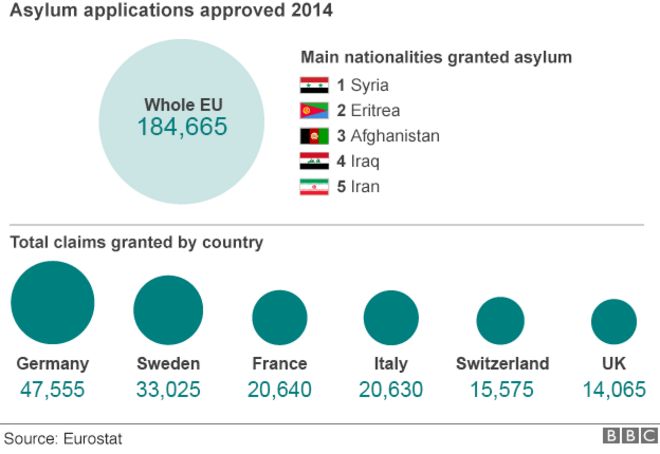




 bobdillon33blog