( Thirteen minute read)
In answering this question one has to remember that England is reaping the rewards of an empire that was created by military/sea power, leaving a global heritage of blood and guts, for the sake of power and wealth.
Officially known as The United Kingdom of Great Britain and Northern Ireland, it’s no longer a sovereign nation, unable to participate in international affairs by itself.
Attached to the remnants of an empire that has long disappeared, called the Common Wealth, it has become a country that does not know what it is, with a people that recently voted to leave its European neighbours.
The countries in white are the ones Britain has never invaded, or had military action with. There are 22.

A country rich with a history and royal magnificence, that has no written constitution other than the Magna Carta ( A medieval Document ) remaining as a cornerstone of the British constitution.
(Although most of the clauses of Magna Carta have now been repealed) many divergent uses that have been made of it since the Middle Ages, have shaped its meaning in the modern era, with its potent, international rallying cry, against the arbitrary use of power/sovereignty.
A country with a first past the post voting system.
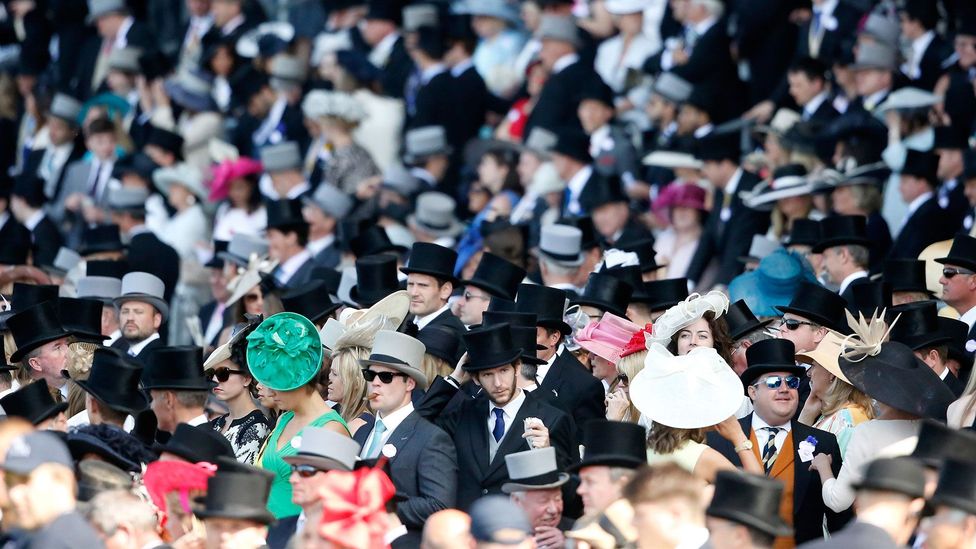
A country of inherited titles: For example, a hereditary peer becomes a Lord following the death of his father when the title is passed to him. Originally the Lords were “wise men” drawn together to advise Saxon monarchs now they are appointed about eight hundred. If you’re really desperate to add a touch of prestige to your name, you can simply call yourself Lord (Whateveryoufancy). Under UK and International Law you have the right to call yourself and be known as anything you like, as long as you are not doing it for fraudulent purposes. So really, assessing how may ‘Lords’ there are in England at any one time is a pretty impossible task. Barons, viscounts, earls, and marquesses can all be referred to as ‘Lords’ instead of their full title, as can their sons. Lords can claim £300 a day for attendance or choose to claim a lower rate, or not at all. They can also claim for some expenses.
A country dotted with estate homes from a past social class, built on slavery and sugar cane.
A country that burdens it youth with an average debt of 50000 pounds for an university education, while making millions out of foreign students.
A country that had been the centre of the gold market for 300 years, that sold tons of its gold reserve.
( Globalisation was re-ordering the financial world; the euro created a new – and, hoped-for, stronger – monetary system; there were calls for the International Monetary Fund to sell its gold to help write off Third World debt; private investors had lost interest in the precious metal, preferring to help fuel the dotcom bubble.)
A country that privatised its national industries such as Cable & Wireless and British Aerospace, Britoil and British Gas, Water, British Coal, a doctrine that was to make the large utilities more efficient and productive, and thus make British capitalism competitive relative to its continental rivals.
By opening the public sector to profit, it gets a lot of capital into circulation – contributing to inflation and siding off profits to the share holders. It was not just a question of stimulating private sector investment, but also of culture war intended to re-engineer the electorate along the lines of the “popular capitalism” vaunted by Thatcher.
A country that has pumped billions into its economy with quantitative easing to save its banks, and its economy during the Covid pandemic, now wondering why it has inflation, heading for a recession.
A country that is still pumping raw sewerage into its river and lakes.
A country with a gutter press, purveyors of sensationalist propagandist opinions and gossip, falsely labelled as NEWS. In other words, the headline deliberately suggested the exact opposite of the truth. Until recently had topless woman as the centre page. These days what passes for scandal is accounted journalism, while what was once called journalism is what used to be called ‘creative writing’.
A country building a high speed railway that is costing billion to take 30 minute of going to London.
A country that built two new aircraft carriers while food bank are needed to feed its people..
A country spending billions on football players and billions on Olympic gold medals (worth a few hundred euros) while its health system is going broke.
A country of 696 victims of homicide in the year ending March 2022,
A country full of drug abuse, violent crime, teenage delinquency, family breakdown, welfare dependency, poor urban environments, educational failure, poverty, the loss of traditional values, teenage pregnancy, dysfunctional families, binge drinking, children who kill and Obesity from junk food.
A country where it’s starkly evident that major ethnic and racial inequalities persist in employment, housing and the justice system and sport. Proving that racism and discrimination are the driving forces behind the inequalities. For every ten positive replies that the British applicant (James or Emily) received, a person with a recognisably African (Akintunde or Adeola) or Pakistani name (Tariq or Yasmin) received only six.
A country of churches full of war glorification.
A country that put economics before its people.
A country where land ownership is far from transparent, that needs to build 340,000 Social homes per year until 2031.
How it is use has implications for almost everything: the affordability of housing, the way food is growing, how much space is is put aside for nature. The law of trespass still prevails over vast swathes of England, with 24 million land titles in the country, buying the lot would set you back a cool £72 million. Land has always conferred wealth and power, and concealing wealth is part and parcel of preserving it. Just over 400 hectares (1,000 acres) of central London’s super-prime real estate belongs to the Crown, the Church, and four wealthy aristocratic estates. Over 200,000 hectares (500,000 acres) of the English uplands are tied up in huge grouse-moor estates owned by around 150 people. The Duke of Northumberland, whose family lineage stretches back to Domesday, owns 40,468 hectares (100,000 acres) – a tenth of his home county. Indeed, many of the largest landowners in the country today owe their standing to decisions made by the Norman king William almost 1,000 years ago. After conquering England, William declared all land belonged ultimately to him, before parcelling it out to his cronies: his barons and his allies in the Church.
The Crown Estate owns London’s Regent Street, including the freehold for Apple’s flagship UK store, from which the Crown collects more rent than from all its agricultural land.
The National Trust owns around a fifth of the Lake District National Park in Cumbria.
The Duke of Westminster’s trusts own Abbeystead Estate in Lancashire, a huge grouse moor that covers much of the Forest of Bowland.
Paternoster Square in the City of London, home of the London Stock Exchange, is owned by the Church Commissioners.
It’s high time the Government opened up the Land Registry, forced it to complete its founding mission, and told us who owns England.
A country that is now thinking of dumping the European Bill of human rights so it can deport immigrants and refugees, fleeing wars and poverty, to Rwanda a country that recently had a genocide.
All of which can be cited as proof of a broken society.

But what, exactly, is this country called?
England? The United Kingdom? Great Britain? Or just Britain? Are any of these names correct? Are all of them? Which part of the UK presents its greatest existential challenge? Scotland as it tests the waters of independence? Northern Ireland with its borders buffeted by the winds of Brexit?
Being English is now more than a factual statement about place of birth or citizenship. It is an attitude and a state of mind, resulting in the more English you are the the more retrospective you are.
————-
With England recently remembering Windrush, the question has become what is a common understanding of what constitutes fairness. What goes around comes back.
The picture is bleak for the living standards of Britain’s most at-risk and ‘forgotten’ groups
of people, who are in danger of becoming stuck in their current situation for years to come.
Those who can’t work rely on an increasingly restricted welfare regime that is projected to lower their living standards even further.
Wealth and political fairness still appears to be wanting in Britain.
The majority of the British public believe that wealth differences are unfair, while fewer than four in ten agree that justice prevails over injustice or that people get what they deserve.
This attitudes towards fairness and justice in Britain are not very different from those recorded in other large Western European democracies.
Only 20% of the British public think that differences in wealth in Britain are fair, whilst a majority
(59%) think that wealth differences in Britain are unfairly.
People whose main income comes from benefits are the least likely to think that the political system does a lot to ensure everyone has a fair chance to be involved in politics. People with a university degree are the most likely to think the political system does a lot to encourage participation.
For people to feel that they have a fair chance to succeed, they need to believe that they are subject to the same rules as their fellow citizens.
——–
For some people, fairness and equality may closely align if they believe that fair outcomes see everyone receiving a comparable amount of a particular resource.
For others, fairness may actually be in conflict with equality if they believe that individuals should be rewarded for their effort or abilities.
Therefore income inequality (reflecting differences in ongoing financial incomings and outcomings) and wealth inequality (reflecting differences in the financial resources accumulated over time) are likely to be considered fair by people who believe that these inequalities reflect differences in individuals’ hard work or talents. Nonetheless, wealth inequalities in particular risk embedding economic advantages among those citizens who can accumulate and hand down wealth to future generations.,
Questions as to who holds power and privilege in Britain are as salient as ever.
Only a quarter of the British public thinks that the political system does “a lot” or “a great deal” to ensure that everyone has a fair chance to participate in politics.
Political activity in Britain has been dominated by older and more highly educated people, and socioeconomic disparities in politics may simply reinforce or exacerbate a lack of–or a perceived lack of–fairness in the way Britain operates. As with age, education levels can also be seen as a dividing line in Britain for a range of political and social attitudes and behaviours.
I think England is possibly a country which is not honest with itself.
The history of England over the past 100 years is largely the history of Britain, and one of diminishing individual importance on a global scale.
The Union flag and the British National Anthem don’t speak for me.
England to me is much more than a football team.
National identities in the UK are diverging. In truth, most English people have long abandoned ethnic and racist ideas of Englishness. The vast majority don’t believe you have to be white to be English.
Shockingly England, has no state, no citizenship and no national political space. England is the only part of the UK not to have its own elected parliament or assembly. Yet England is the biggest country within the UK and has by a long way the biggest population and economy.
What modern country in its right mind would allow a monarch to still play a constitutional role of authorising the formation of a government. Add in that indefensible anachronism that is the House of Lords and surely you’re left with some patchwork, make do and mend set up?
England has an image problem.
Up until relatively recently the English merely saw themselves as “British”. Indeed, for foreigners, England and Britain are one and the same (much to the annoyance of the Scots and Welsh and now growing in Northern Ireland.
There has never been a demand for English independence because England were the conquerors, the senior partners in the UK. Even in the devolution of Scotland, Wales and Northern Ireland, this was England granting “home rule” to the Celtic nations. The very thought of English devolution never crossed the government’s mind.
Geography is no better a way to divide people than gender, skin colour, sexual preference etc etc – it is something that any one individual has no say over. You are born where you are born, and are arguably to different degrees lucky in that respect – and we are free to say it does not define us, most of us have some choice over where we live.
I think there is a cognitive disconnect, an ignorance about the scale of oppression England and Britain caused across the world – across the largest global empire ever to exist – and the legacy it bear.
If England had the same level of representation as the other UK nations, if the UK was a truly federal country like Germany or the United States, then England might finally be seen as an equal partner in the UK. People could take their identity from the largest, most inclusive denomination English, but also be British.
It’s time for all parties and politicians to embrace federalism as a way to keep the UK from tearing itself apart.
How much would you say that the political system in Britain ensures that everyone has a fair chance to participate in politics?
Bin the House of Lords.
Without Proportional representation very little. Gripped by a struggle between an increasingly liberal secular society that pushed for change and a conservative opposition that rooted its worldview in divine scripture of an empire, it is creating a dangerous sense of winner-take -all conflict over the future of the country.
One would need to be blinkered not to see the signs of justification for violence.
Instead of just culture wars, there’s now a kind of class-culture conflict promoted by Social Media that has moved beyond the simple boundaries of religiosity.
So now, instead of just culture wars, there’s now a kind of class-culture conflict. With a sense of being on the losing side of our global economy and its dynamics which are turning to algorithms that are understood by no one.
You might say that this doesn’t necessarily lead to a shooting war, but you never have a shooting war without a culture war prior to it, because culture provides the justifications for violence.
——–
[Nowadays,] with climate change it is a position that is mainly rooted in fear of extinction.
On political matters, one can compromise; on matters of ultimate moral truth, one cannot.
Where does that leave us? What does it portend for the decades to come?
Well, in a world that has politicized everything, there’s a sense that politics is both the root cause of the problems we face and, ultimately, the solution.
Straightforward, materialist social science would say that people are voting their economic interests all the time. But they don’t.
The seeming contradiction of people voting against their economic interests only highlights that point: That, in many respects, our self-understanding as individuals, as communities and as a nation trumps all of those things.
I think that there are ways in which serious and substantive democratic discourse is made difficult, if not impossible, by the democratization and proliferation of free speech. That seems like a strange thing to say, but .. .Democracy, in my view, is an agreement that we will not kill each other over our differences, but instead we’ll talk through those differences.
The range of the culture war seems to be all-encompassing.
Most of the time, it is in terms of race and ethnicity, immigration and the like; it is not about the poor, per se. I think that’s a pretty significant shift in the left’s self-understanding.
Therefore, the “culture wars” that we are now witnessing are really about the mobilization of political resources —of people and votes and parties—around certain positions on cultural issues. In that sense, a “culture wars” are really about politics.
In simpler terms, I would make the distinction between the weather and the climate.
Almost all journalists and most academics focus on what’s happening in the weather: “Today, it’s cold. Tomorrow, it’s going to be warm. The next day, it’s going to rain.” I find the climatological changes that are taking place to be much more interesting. And it’s those that are really animating our politics and polarization, animating dynamics within democracy right now.
Conservatives see as an existential threat to their way of life, to the things that they hold sacred.
Latent within these struggles is a conflict over the meaning of a country.
The UK’s economic performance has been disastrous for 15 years. The consequences are plain to see: people are struggling to make ends meet; taxes are high, yet public services are overloaded; fights over a shrinking economic pie are leading to widespread strikes. All this is taking place at a time of low unemployment, so we cannot simply wait for the business cycle to rescue us.
If England were to concentrate on a green economy, become self efficient with green power its economy would boom.
I cannot see any reason as to why its people should not be encouraged to buy into wind turbines, to own them and befits from the energy generated.
People in power only enjoy it at our (the people’s) pleasure.
All human comments appreciated. All like clicks and abuse chucked in the bin.
Contact: bobdillon33@gmail.com





 bobdillon33blog
You must be logged in to post a comment.