• About
  • THE BEADY EYE SAY’S : THE EUROPEAN UNION SHOULD THANK ENGLAND FOR ITS IN OR OUT REFERENDUM.

bobdillon33blog

~ Free Thinker.

bobdillon33blog

Tag Archives: History.

THE BEADY EYE ASK’S. WHAT DO YOU KNOW WHEN IT COMES TO IRIAN?

15 Monday Apr 2024

Posted by bobdillon33@gmail.com in Uncategorized

≈ Comments Off on THE BEADY EYE ASK’S. WHAT DO YOU KNOW WHEN IT COMES TO IRIAN?

Tags

History., Iran, Iranian Israel, Israel, middle-east, politics

( Ten minute read)

Iran has scarcely been out of the headlines in recent months. But how far back does the history of Iran stretch?

Like me I am sure we know little or nothing of it history.National Flag of Iran | Iran Flag History, Meaning and Pictures

Long before Iran came to be known in the mid-twentieth century as one of the countries of the Middle East, for nearly two and a half millennia it was known to the Western world as Persia.

So here is a starting point for an exploration of the history of modern Iran.

The Islamic Republic has been in a state of influx almost from its start. It has managed to survive in this state of perpetual crisis — and sometimes even benefited from it — because confrontation, or anticipation of confrontation with a nemesis, that is with the United States, played into its hand. It gives the regime the pretention of legitimacy as the core to national resistance against Western hegemony and regime change. The sense of emergency hence contributed to its survival. Moreover, the ruling clergy and its associated groups, such as the Revolutionary Guards, although a small minority devoid of the true support of a majority of Iranians, survived in power probably because of a strong sense of group solidarity.

The 1979 Iranian Revolution represented the first time in the modern history of the Muslim world that a movement dominated by the clergy took control of a state. Historically, this is a very unusual event, not just in the Islamic world, but anywhere. Religion and state were seen as two pillars of stability in Iranian society.

Shi’ism as a belief system, supported and reinforced by the region’s geopolitical complexity, preserved Iran’s socio-cultural identity.

Through the preservation of the language, Iran managed to preserve a collective memory of its past, which is also rather unusual.

Basically, the memory of Islamic conquest became the foundation myth for the sense of Islamic identity that emerged in Egypt, Syria and eventually Iraq. Iran was different. It preserved its memories of pre-Islamic times and grew quite proud of them.

Iran’s oil industry was basically a colonial industry created and developed by the British. A massive amount of the revenue went to the British government while a much smaller percentage went to the Iranian government. But even that share of the revenue was crucial for a nearly bankrupt Iranian state in the post-WWI era. It provided the necessary funds for greater centralization; for enforcing modern reforms; for strengthening the armed forces; and for the creation of an autocratic regime under the Pahlavis that no longer sought the traditional support of the religious establishment.

The Allied occupation of Iran in September 1941 was a rude shock to most Iranians.

Facing the soldiers of the Red Army, the British Indian Army, and soon after American military personnel seemed almost a surreal reversal of two decades of Pahlavi assurances of Iran’s reclaimed sovereignty and the might of the Iran’s Imperial Armed Forces.

The occupation triggered one of the most eventful episodes in Iran’s modern history and revealed persistent themes in the country’s recent past: the struggle for democracy. The gradual return to autocratic practices after 1953 put an undue end to Iran’s perilous experiment with participatory politics. Instead, an era of stability, albeit politically repressive, began to set in, and with the exception of a brief interlude in the early 1960s, it remained essentially unchanged until the Islamic Revolution in 1979.

The exile of Ayatollah Khomeini and the shah’s success, at least for a while, in silencing the forces of opposition generated a sense of royal self-confidence with an almost prophetic mission. The decade of 1963 to 1973 represented, with all its shortcomings, the best of the shah’s years: an age of economic development, success in foreign policy, and relative popularity at home.

Iran in the 1960s and 1970s witnessed an era of cultural florescence, a period remarkable for artistic creativity, the rise of new talents, and greater international exposure but also greater state sponsorship. Expressions of artistic and intellectual dissent, often transmitted through a language of symbols, emerged in cinema, poetry, and popular music.

The tumultuous events that led to the revolution of 1979 and the establishment of the Islamic Republic of Iran were a classic example of modern popular revolution.  Out of a broad alliance of Islamic tendencies there emerged a militant clerical leadership, led by Ayatollah Khomeini. Over the course of the following decade, Khomeini played a decisive part in defining the Islamic Republic.

Between August 1978 and February 1979, a period of less than seven months, Iran witnessed a revolution that brought down the Pahlavi regime and abolished the institution of monarchy, wiped out the privileges of the Pahlavi elite, and significantly weakened its secularized middle classes. In its stead Ayatollah Khomeini and his associates created the Islamic Republic, which aimed to establish the “Guardianship of the Jurist” (welayat-e faqih) as the only legitimate model of governance.

That Ayatollah Khomeini and his cohorts put their mark on the Islamic Revolution was more than an accident of history. At least since 1961, and with a greater resolve since 1970, clerical Shi‘ism explored ideological Islam and contemplated juridical authority as an alternative to secular power.

In less than a year after victory of the revolution in February 1979, the new regime managed to consolidate its base, build new institutions, and eliminate its contenders for power.

It conducted a referendum on the change of regime to an Islamic republic, ratified a new constitution, elected a parliament, elected a president to office, and established revolutionary courts, the Revolutionary Guards Corps, the Guardian Council, and the Assembly of Experts. All the while the newly established republic was engaged in major domestic and international crises that threatened its very existence.

A crisis of great magnitude was in progress, one that shook Iran’s relations with the outside world and initiated an adversarial encounter with the United States that shaped their relationship for decades to come.

—————–

1979 November – Islamic militants take 52 Americans hostage inside the US embassy in Tehran. They demand the extradition of the Shah, in the US at the time for medical treatment, to face trial in Iran.

The hostage crisis of November 1979 started an international tremor that for the following fourteen months would enrage the United States, preoccupy world media, appal public opinion worldwide, and irreparably damage the image of the Islamic Republic.

1980 22 September – Start of Iran-Iraq war, which lasts for eight years.

1981 January – The American hostages are released, ending 444 days in captivity.

1989 November – The US releases 567 million dollars of frozen Iranian assets.

The magnitude of this paradigmatic shift, and the way a conservative Shi‘i establishment transformed into a radical force of dissent, becomes all the more striking when we set the Islamic Revolution in the broader political and cultural contexts of the past five centuries.

2002 January – US President George Bush describes Iraq, Iran and North Korea as an “axis of evil”, warning of the proliferation of long-range missiles being developed in these countries.

2002 September – Russian technicians begin construction of Iran’s first nuclear reactor at Bushehr despite strong objections from US.

2003 December – 40,000 people are killed in an earthquake in south-east Iran. The city of Bam is devastated

.2007 October – US announces sweeping new sanctions against Iran, the toughest since it first imposed sanctions almost 30 years ago.

2009 September – Iran admits that it is building a uranium enrichment plant near Qom, but insists it is for peaceful purposes.

The country test-fires a series of medium- and longer-range missiles that put Israel and US bases in the Gulf within potential striking range.

2015 July – After years of negotiations, world powers reach deal with Iran on limiting Iranian nuclear activity in return for lifting of international economic sanctions. The deal gives UN nuclear inspectors extensive but not automatic access to Iranian sites.

2018 May-June – President Trump announces the US withdrawal from the 2015 international deal on Iran’s nuclear programme. Iran in turn warns that it will begin increasing its uranium enrichment capacity if the deal collapses as a result of the US move.

2020 January – Quds Force commander Qasem Soleimani, responsible for Iran’s military support for the Syrian government, killed in a US air strike at Baghdad Airport, prompting Iranian threats of retaliation.

2024 April  Iran fires hundreds of drones and missiles at Israel in retaliation of Israel attack on its Embassy in Syria.

If the current regime caves under another popular upheaval, the outcome may not be promising at all.

The recent Middle East popular movements of political reform, such as the Arab Spring, have by and large failed. Likewise, any attempt toward a regime change through military option or covert operation almost definitely helps strengthen the regime’s popular base. On the other hand, if it is left to its own devices, will Iran become another China? Whether it moves away from a hostile ideological position to a more pragmatic regime with capitalist economy and friendlier posture toward the outside world is a matter of speculation. The recent U.S. departure from the Five Plus One nuclear deal with Iran, and the impending re-imposition of sanctions, does not offer a bright prelude for success of the latter option.

You only have to look at Israeli and the Iranian recent UN Security Council presentations after Iran’s direct attack to see that the Middle East is now a tinder box that no amount of Verbal is going to solve.

Iran’s ambassador repeated Tehran’s claim that it was responding in “self-defence” after the April 1 explosion at its Damascus consulate in Syria, for which Iran blamed Israel.

Israel will exact a price from Iran in response to Saturday’s attack when the time is right.

All human comments appreciated. All like clicks and abuse chucked in the bin.

Contact: bobdillon33@gmail.com

Share this:

  • Click to share on WhatsApp (Opens in new window) WhatsApp
  • More
  • Click to share on Pocket (Opens in new window) Pocket
  • Click to share on Mastodon (Opens in new window) Mastodon

THE BEADY EYE ASK’S: IF YOU HAD A CHOICE WHAT SORT OF WORLD WOULD YOU LIVE IN?

13 Tuesday Feb 2024

Posted by bobdillon33@gmail.com in 2024 the year of disconnection, Artificial Intelligence., Civilization., Collective stupidity., CULTURES COLLIDE, Disaster Capitalism., Earth, Earth from Space., Environment, Human Collective Stupidity., HUMAN INTELLIGENCE, Human values., Humanity., Our Common Values., Reality., Space Exploration., Sustaniability, Technology v Humanity, The Future, The Obvious., The world to day., THE WORLD YOU LIVE IN., THIS IS THE STATE OF THE WORLD.  , War, Wars, What is shaping our world., WHAT IS TRUTH, What Needs to change in the World, Where's the Global Outrage.

≈ Comments Off on THE BEADY EYE ASK’S: IF YOU HAD A CHOICE WHAT SORT OF WORLD WOULD YOU LIVE IN?

Tags

blog, History., politics, Science, Technology, The Future of Mankind, Visions of the future.

( Five minute read)

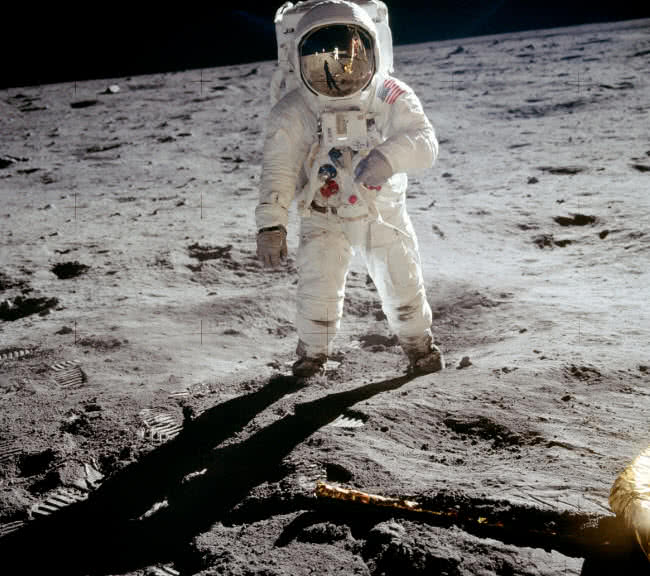
On July the 20th this year it will be fifty five years since one of us stood on another planet. Since then only 24 people have seen the whole of Earth. Achived with less computer power that is now in our phone’s.

In those fiftyfive years we have had fifty-five active conflicts. Eight of these 55 conflicts were classified as wars.

This is the world we got.

21st Century
  • Vietnam War (1962 – 1973
  • Persian Gulf War (1991)
  • War in Afghanistan (2001)
  • Operation Pillar of Defence (2012)
  • War in Iraq (2011)
  • 2014 Gaza War (2014)
  • Russian Annexation of Crimea (2014)
  • War in Donbas (2014-present)
  • Yemeni Civil War (2015-present)
  • Turkish coup d’état attempt (2016)
  • 2021 Israel-Palestine crisis (2021)
  • Russian Invasion of Ukraine (2022)

We are truly living in a very unique time in the history of our civilization, facing several simultaneous challenges and converging crises:

Because the world is a cauldron where dozens of cultures, religions and ideologies mix with each other, which always leads to a conflict. We are all born of frailty and error.

A deteriorating environment, a very unequal distribution of dwindling resources, widespread poverty, wars, climate change, oppression of many peoples, and dissatisfaction with life even in those countries with a surplus of material wealth.

What can we do about it?

The answer to such question is certainly not simple, and you will not find it in any textbook.

All these problems and converging crises are systemic.

For the most part these crises we humans have brought upon ourselves over the course of many centuries by our attitudes towards each other and towards Nature, and by the concepts we have developed regarding who we are and the very purpose of our being here — in other words, our worldview.

The 20th century revolution of technologies that permits long distance travel and instant communication across the world has brought all cultures closer together, making us more aware than ever of the many diverse spiritual-cultural traditions that have flourished for millennia as intricate, elaborate meta-solutions to the challenges and opportunities of living in a particular place.

Now we are challenged to integrate the wealth of knowledge and capability that this remarkable period has brought us into a new narrative of interbeing — a synthesis of ancient wisdom of our interconnectedness and interdependence with modern science and technology.

We now have a choice to make!

Either we move into a new phase in the evoloution of consciouness and a new ear of life on planet Earth, or we will witness the unraveling of the web of life and the immature end of our species and much of the community of life along with us. 

The time to make this choice is now!

It starts with a fundamental shift in our dominant worldview. It is time to grow up!

A world with less gravity and more humanity.

Where people get what they deserve rather than deserve what they get.
Where there is a God for everyone and no one God is better than other.
Where an empty stomach is an alien concept.
Where mind is held high and heart is held higher.

Where people are immaterialistic.
Where people think logically, question and reason everything without blindly following anything or be superstitious.

Where people respect each other and not judge others for their actions.
Where one should treat others as one would like others to treat oneself.

History shows us that none of the above is possible without AI augmentation of human intelligence to enshrin values of beauty, agency, and individuality. by benevolent, incorruptible agencies that are beyond human intelligence.

The era of Artificial Intelligence is here. AI has already started.

AI is not a living being that has been primed by billions of years of evolution to participate in the battle for the survival of the fittest, as animals are, and as we are. It is math – code – computers, built by people, owned by people, used by people, controlled by people.

Its true that AI doesn’t have goals of its own, but its influnce on our lives is endangering the very meaning of life and  instead of us embracing a worldview based on facts, it will cause us to lose our ability to focus on the things that threaten us most.

Understanding what “we” want is among the biggest challenges facing AI.

It is very difficult to encode human values in a programming language, but the problem is made more difficult by the fact that we as humanity do not agree on common values, and even parts we do agree on change with time. The question then becomes how do we aligne AI with Human values.

Whose human values?

Ah, that’s where things get tricky.

A major change is coming, over unknown timescales but across every segment of society, and the people playing a part in that transition have a huge responsibility and opportunity to shape it for the best.

So here are some of the questions we should be asking.

What does it mean to you to have artificial intelligence aligned with your own life goals and aspirations?

How can it be aligned with you and everyone else in the world at the same time?

How do we ensure that one person’s version of an ideal AI doesn’t make your life more difficult?

How do we go about agreeing on human values, and how can we ensure that AI understands these values?

If you have a personal AI assistant, how should it be programmed to behave?

If we have AI more involved in things like medicine or policing or education, what should that look like?

What else should we, as a society, be asking?

Globally, humankind must think about the kind of future we want to have.

The recently articulated United Nations Sustainable Development Goals (SDGs) offer a good starting point, but these goals are merely the preconditions necessary for survival and flourishing, so they are not
enough. A further step is needed to determine our common goals as a civilization, and more
philosophically, the purpose of human existence, and how AI will fit into it.

Generative AI is not hype.

Instead, it acts at a scale so large that it will transform how we interact with technology itself.  It will far outpace what we’ve seen so far today.

AI has been used to help sequence RNA for vaccines and model human speech, technologies that rely on model- and algorithm-based machine learning and increasingly focus on perception, reasoning and generalization.

If we reach a point where AI is able to understand our languages, AI systems would be able to read and understand everything ever written. In the mean time rest assured that we will continue to fight wars against each other, as we have done since day until the end of time, or at least Earth’s time which is in about 5.4 billion years.

All human comments appriciated. All like clicks and abuse chucked in the bin.

Contact: bobdillon33@gmail.com

Share this:

  • Click to share on WhatsApp (Opens in new window) WhatsApp
  • More
  • Click to share on Pocket (Opens in new window) Pocket
  • Click to share on Mastodon (Opens in new window) Mastodon

THE BEADY EYE ASKS: WHY DO THE US SUPPORT ISRAEL?

11 Thursday Jan 2024

Posted by bobdillon33@gmail.com in American Cultures, CULTURES COLLIDE, Dehumanization., Donald Trump Presidency., Extermination., Uncategorized

≈ Comments Off on THE BEADY EYE ASKS: WHY DO THE US SUPPORT ISRAEL?

Tags

gaza, Genocide, History., Israel, palestine

( Five minute read)

We have the spectral of Mr Antony J. Blinken the Secretary of State for the USA (the largest and once the most powerful military country in the world) running around the middle east unable to call for a cease fire in the current war Israel/Palestine.

Why?

Because, President Joe Biden’s promise for the US to “stand with Israel” continues a special relationship that dates back to 1948, when President Harry Truman became the first world leader to recognize the Jewish state, moments after its creation.

Even before 7 October, support for Israel among American Jews – who constitute the world’s second largest Jewish population after Israel – was shifting. At this point, more Americans, but not a majority, think Israel’s response has been appropriate.

The idea that of all nations in the world, Israel alone doesn’t have the right to respond in self-defense, of course is wrong, but as the saying goes two wrongs don’t make a right.

The question is why does the US support a country that is committing a genocide.

I believe this is because americans learned very few details about the role of racist violence in American history. They are not always familiar with the often coded language and imagery of antisemitism.

The answer lies in its history.

The USA is a country founded on immigration, so it has historical roots of support for Israel.The Israeli and U.S. flags are projected against the wall of the old city of Jerusalem during the visit of President Biden.

In our current age of unapologetic racism and resurgent authoritarianism, for dismantlers of democracy, there is no better exemplar than a Genocide.

The mechanics of Hitler’s rise are a particularly example.

Hitler had no blueprint for the Holocaust.

Nazis took inspiration from American racism of the late nineteenth and early twentieth centuries.

He was a student of history and admired America’s rapid industrialization and growth, which he attributed to a vast, diverse continental empire and agricultural base. So Hitler’s plan was for Germany to emulate the United States.

What possessed a society of seemingly, sane, educated and cultured people to implement a policy of barbarism and depraved violence upon the Jews of Europe during World War II?

Hitler’s understanding of how the American republic came to industrialize and prosper through expulsion of indigenous people and, especially, through the institution of slavery, which is now understood to have been central to America’s economic development.

First by seizing large tracts of productive land by pushing the indigenous populations out. If those natives could not be pushed out, they were to be killed. And then slave labor was to be employed to produce the food necessary to support industrialization and militarization, just as the United States had done.

When Hitler praised American restrictions on naturalization, he had in mind the Immigration Act of 1924, which imposed national quotas and barred most Asian people altogether.

Commodification and suffering and forced labor of African-Americans is what made the United States powerful and rich.

Nazi ideology also embraced virulent European anti-semitism.

The kind of genocidal hatred that erupted in Germany had been seen before and has been seen since.

Why?

First, the very application of the term “genocide” is applied too slowly and cautiously when atrocities happen. Second, the international community fails to act effectively against genocides. Third, too few perpetrators are actually convicted of their crimes.

Seventy years after the UN Convention, genocide remains ever present in our global society. Now consider that only three have been legally recognised – and led to trials – under the convention:

The world watched in apparent indifference. Rwanda in 1994, Bosnia (and the 1995 Srebrenica massacre), and Cambodia under the 1975-9 Pol Pot regime. The widespread killing and displacement of Yazidi by IS and Rohingya in Myanmar and Darfur, are ongoing.

Add the Indonesian genocide of 1965-66 and the Guatemalan genocide of 1981-83, the Kurds in 1988-91 in Iraq, and by West Pakistan forces against Bangladeshis in 1971, the Tamils in Sri Lanka between 1983 and 2009, not to mention the Australia’s “stolen generations”, the Irish Famine that might fall under the UN definition is frighteningly long.

The US, for example, famously never officially recognised the 1915 Armenian genocide as one.

Only by stripping away its national regalia and comprehending its essential human form do we have any hope of vanquishing genocide.

———————-

The “tyranny of hindsight”—the lordly perspective that reduces a complex, contingent sequence of events to an irreversible progression.

So Hitler’s model was in fact the U.S.A.

It goes without saying that he was an extreme narcissist lacking in empathy. a loner.

He had a Jewish grandfather; that he had encephalitis; that he contracted syphilis from a Jewish prostitute; that he blamed a Jewish doctor for his mother’s death; that he was missing a testicle;

Hundreds of thousands of Americans died fighting Nazi Germany. Still, bigotry toward Jews persisted, even toward Holocaust survivors.

These chilling points of contact are little more than footnotes to the history of Nazism.

But they tell us rather more about modern America.

Since Trump entered politics, he has repeatedly been compared to Hitler, not least by neo-Nazis.

What is worth pondering is how a demagogue of Hitler’s malign skill might more effectively exploit flaws in American democracy. He would certainly have at his disposal craven right-wing politicians who are worthy heirs to Hindenburg, He would also have millions of citizens who acquiesce in inconceivably potent networks of corporate surveillance and control.


The above however is not the only reason as such, it is only fair to my American readers to point out.

We certainly live in a VUVA world; Volatile, Uncertain, Complex and Ambiguous.

Undoubtedly our world is becoming increasingly digital and there is a blurring between the digital and non-digital world.

The excesses of social media and the impact that this has on people’s psychological wellbeing needs to be addressed.  (I think that psychology; understanding of people, their behaviour and how the mind functions, will be increasingly important.)

Desensitization is an unsettling phenomenon which stems from individuals refusing or being unable to react to or express emotion towards a certain situation. Through the click of a button on our device, we distance ourselves from the serious happenings of society.

Ours is a forgetful age. In an era of instant news, amnesia is baked in. And amnesia has consequences.

While it is vital to be aware of current events and their impacts, like the war in Ukraine and the current Israeli/Palestinian war, both are purposeless if we aren’t able to understand these events and empathize with the people involved.

We spend much of our lives on devices that are designed to need replacing every three years, accessing social media platforms that amplify the sense of a continuous present and an absent past. Everything feels unexpected, as if it is coming out of nowhere. Developments appear unconnected to the past, and indeed to each other. In the absence of a plausible historical narrative, people retreat into tribalism or conspiracy theories (perhaps both) to help them make sense of the pace of change.

The vast majority of people in human history have not shared our views of work, family, government, religion, sex, identity, or morality, no matter how universal or self-evident we may think they are.

They expose vulnerabilities in the national consciousness that:

All men are equally entitled to the free exercise of religion, according to the dictates of conscience.

With one in every ten people in Gava now killed the future of further any peace efforts with Arab nations could now be in doubt, as Israel continues to bomb the Gaza Strip in its effort to punish Hamas.

——————–

Finally:

The spread of white-supremacist propaganda on the Internet. YouTube is a superb vehicle for the circulation of such content, its algorithms guiding users toward ever more inflammatory material.

Given its billion or so users, YouTube may be one of the most powerful radicalizing instruments of the 21st century.

The internet is a breeding ground for loners who have a “vague notion of being reserved for something else. Suicide bomber, Mass killer, may attempt to turn metaphor into reality.

He might be out there now, cloaked by the blue light of a computer screen, ready, waiting.

For me, this digital and data analytically world emphasises the important of social connections and networks. There will be a need for collaboration and for different ways of working.

Part of this will be reflected in the changing power dynamics. Organisations may operate in different ways. This includes social change, climate, and the balance that we want in our lives, simply because the repetition can be overwhelming. When things occur again and again, we become too-familiar with the situation, thus not treating it as important, unable to put intense situations into perspective.

Which inclines us to fawn over the future, and either patronize the past or ignore it altogether.

To sum up, as Albert Einstein said ‘learn from yesterday, live for today, hope for tomorrow.

The important thing is not to stop questioning. A person who never made a mistake, never tried anything new.

The question is, are we happy to live in a world that deliberately creates destitution for some?

Our technology does not help us here.

Now as ever, great-power politics will drive events, and international rivalries will be decided by the relative capacities of the competitors.

Memory, in contrast, should generate humility:

The acknowledgment of our past, with all its strengths and weaknesses, and the recognition that the reason we have the moral convictions we do, and the material advantages we do, is because of our ancestors.

As James Baldwin relentlessly pointed out, we are our history.

All human comments appreciated. All like clicks and abuse chucked in the bin.

Contact: bobdillon33@gmail.com

 

Share this:

  • Click to share on WhatsApp (Opens in new window) WhatsApp
  • More
  • Click to share on Pocket (Opens in new window) Pocket
  • Click to share on Mastodon (Opens in new window) Mastodon

THE BEADY EYE ASK’S; WHAT WERE THE MOST SIGNIFICANT EVENTS IN HISTORY THAT HAVE HAD THE GREATEST IMPACT ON THE WORLD.

06 Monday Jan 2020

Posted by bobdillon33@gmail.com in History.

≈ 1 Comment

Tags

HISTORICAL Intelligence., HISTORY OF THE WORLD., History.

(Twenty-minute read)

Before we get started let’s try and explain the dating system of History.

Why?

Because people of different cultures and belief systems should be able to access and discuss history without having to date it according to the Christian belief in Jesus as the son of God and the messiah.

In order to date, a present event from a past event one must know when that past event occurred.

We have BCE/CE rather than BC/AD – Before Christ/Anno Dominior – Year of Our Lord.

 BCE/CE makes no sense because it refers to exactly the same event as BC/AD.

BC/AD also has no year zero but does not need one because it is not claiming to date history from a specific event.

After the time of Christ” or “in the common era” which eventually came to be written simply as “common era” and then CE which gave rise to BCE in defining events prior to the common era.

BCE/CE continues to be used because it is more accurate than BC/AD so forgive me for using both.

  1. First humans communicated only through speaking and picture drawings.
  2. 3000 B.C., the Sumerians in Mesopotamia (what is today southern Iraq) devised cuniform (shapes)
  3. Around 2000 B.C., Phoenicians created symbols ancient Egyptian writing is known as hieroglyphics
  4. The Greeks later adopted the Phoenician alphabet and added vowels.
  5. The Romans gave the letters Latin names to create the alphabet we use today.
  6. Around 875 A.D., the concept of zero was developed.

———–

Your birth as there would be no history for you if not born.

Herodotus of Halicarnassus 484 BC – ca.425 BC has generally been acclaimed as the “father of history”.

Or was it the birth of Temujin c.1162 who DNA is in 16 million men alive today.

Sitting Bull, Lakota Tatanka Iyotake, born c. 1831.

It is said that the events in history alter the lives of mankind, and human civilization never remains the same after that. The history of the world is the memory of the past.

So was it, Plato born in 428/427 BCE, or Socrates who sought the impartial arbitration of a “thinking machine.” AI, credited as one of the founders of Western philosophy in c. 470 – 399 BC (which is probably only an inference from…Plato or  Aristotle born in 384 BC.)

In July 356 BC. Alexander the Great was born a military genius he was educated by the philosopher Aristotle.

Or was it Confucius born in 551 BCE considered as one of the most important and influential individuals in shaping human history.

Whoever it was the understanding of the linkages between past and present is absolutely basic for a good understanding of the condition of being human.

It is not just ‘useful’, it is essential. All people and peoples are living histories.

It is also essential for ‘rooting’ people in time. And why should that matter?

The answer is that people who feel themselves to be rootless live rootless lives, often causing a lot of damage to themselves and others in the process.

It took a long unfolding history to get everything to NOW.

Was it 11,000 years ago, with the invention of porridge or to put it differently, the first of at least five separate moments when farming was discovered, that is the planting and selection of cereal planting and selection of cereals, alongside the tethering of some animals. It meant that people stopped being nomadic hunters, and human populations grew, trapping farmers with more mouths to feed.

It also meant tooth decay, bad backs and a lot of very boring work. But without it, there would have been no villages, towns – no empires, no cars, no moon landing, no history, really, at all. And, of course, with GM foods and fish farms, it’s an ancient story that hasn’t stopped. In his book Sapiens: ( A Brief History of Humankind, Yuval Noah Harari states that we were all conned by a plant called Wheat.)

Anyway!

3500 AD the wheel was invented.

Prophet Muhammad Abū al-Qāsim Muḥammad ibn ʿAbd Allāh ibn ʿAbd al-Muṭṭalib ibn Hāshim, born after his father’s death in Mecca, Arabia, around c. 570  giving birth to Islam as a religion.

Jesus was born in 3 or 2 B.C.

Julius Caesar was born in Rome on 12 or 13 July 100 BC.

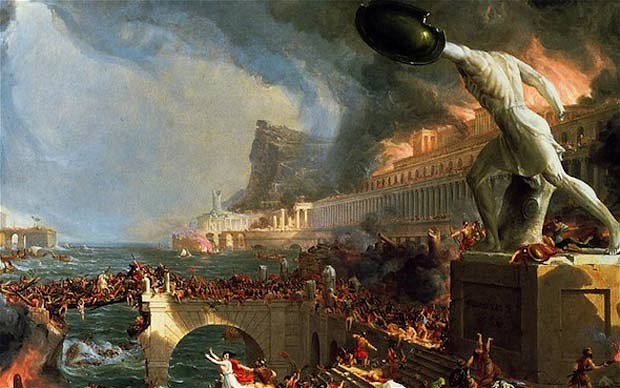
With the final fall of the Western Roman Empire in 476 AD came the dark ages which led to a complete deterioration of the Roman culture. The progressed and developed culture (law, architecture, literature, government, etc.) of the Roman Empire was lost forever.

850AD Gunpower was invented.

The Earth grew colder, and the world is plunged into a cold, pitch-black, chaotic hell with the Black Plague just suddenly appeared in Europe in the 1300s.PHOTO: telegraph

The Song dynasty in China that began in 960c lasted until 1279.

What happened? Where did all of the knowledge of the Greeks and Romans go? Why did people forget how to read and write and sculpt and build?

There was no one factor that we can pin as the cause of the Dark Ages a period from about the 6th to the 10th century CE. Now referred to as the Middle Ages it is a time of superstition, a stagnant decadent ghettoed holocaust for anyone who is not a noble or a priest, ridden with illiteracy, disease, war, and poverty, into the minds of the masses.

1066. William the Conqueror a normans from France invade England.

Around 1552 Walter Raleigh was born he has been credited with bringing potatoes and tobacco back to Britain, although both of these were already known via the Spanish. In 1616, he went off to search for El Dorado, never found it and got executed on 29 October 1618.

Out of this came Colonialism, Imperialism and Slavery, Capitalism with the Industrial Revolution.

There is no doubt that colonialism had a major effect on the entire world followed by the Reformation. It triggered off the American Revolutionary War. Great Britain lost one of its most important colony, and all the participating nations suffered economic losses with the American Revolution influence the French Revolution to a great extent.

1642 Isaac Newton born.

Napoleon Bonaparte born on August 15, 1769, uprooted the old concepts of aristocracy and hierarchy. (Pasteur As ) Germ Theory of Disease.

Samuel Morse born April 27, 1791, invented the telegraph system.

Newton’s theory of gravity in 1798  took place 111 years after the publication of Newton’s Principia and approximately 71 years after his death before we all came down to the ground.

1884 the machine gun.

On 19 March 1813, David Livingstone was born. In October 1871 found Stanley in Africa with the famous phrase: ‘Dr Livingstone I presume?’

Alexander Graham Bell was born on 3 March 1847 credited with inventing the telephone.

On July 1, 1858, Charles Darwin put forth the theory of Natural Selection.

Henry Ford, born July 30, 1863  “You can’t learn in school what the world is going to do next year.”

Nikolai Aleksandrovich Romanov was born near St Petersburg on 18 May 1868.

On 6 June 1868, Robert Falcon Scott was born. Beaten to the South Pole by Roald Amundsen.

Guglielmo Marconi

Ernest Henry Shackleton was born on 15 February 1874 died of a heart attack off South Georgia.

Pasteur’s a Microbiologist 1877 to 1887 presents the germ theory revolutionized biology and medicine.

1879 Albert Einstein born.

Adolf Hitler is Born at 6:30 p.m. on the evening of April 20, 1889. He rose to power as the chancellor of Germany in 1933, and as Führer in 1934.

World War I lasted from 28 July 1914 to 11 November 1918 it killed 16 million people—soldiers and civilians alike giving rise to the Russian Revolution and the Second World War. It helped to spread one of the world’s deadliest global pandemics, the Spanish flu epidemic of 1918, which killed an estimated 20 to 50 million people.

World War II September 1st, 1939 was the deadliest war in human history, with over 75 million deaths all over the world. Two Atom bombs dropped on the cities of Hiroshima and Nagasaki contributed to ending of the war on May 7, 1945, after which the Union of Soviet Socialist Republics (USSR or the Soviet Union) was formed, emerged as a superpower.

Germany was occupied by the Allies and the Soviet army.

However, the failing relations of the Soviet Union with the other Allies ultimately resulted in the division of Germany, and building of the Berlin Wall (also a symbol of the ‘Iron Curtain’)

The Cold War and the arms race was the indirect effects of the war, that were to define world politics for many years to come.

Titanic sinks. At 2:20 a.m. on April 15, 1912.

In 1925 the first Television.

Donald Trump is born on June 14, 1946.

1947 the Kalashnikova.

In 1953 the structure of DNA was a discovery with the field of artificial intelligence research founded as an academic discipline in 1956.

1954, Roger Bannister broke the 4-minute.

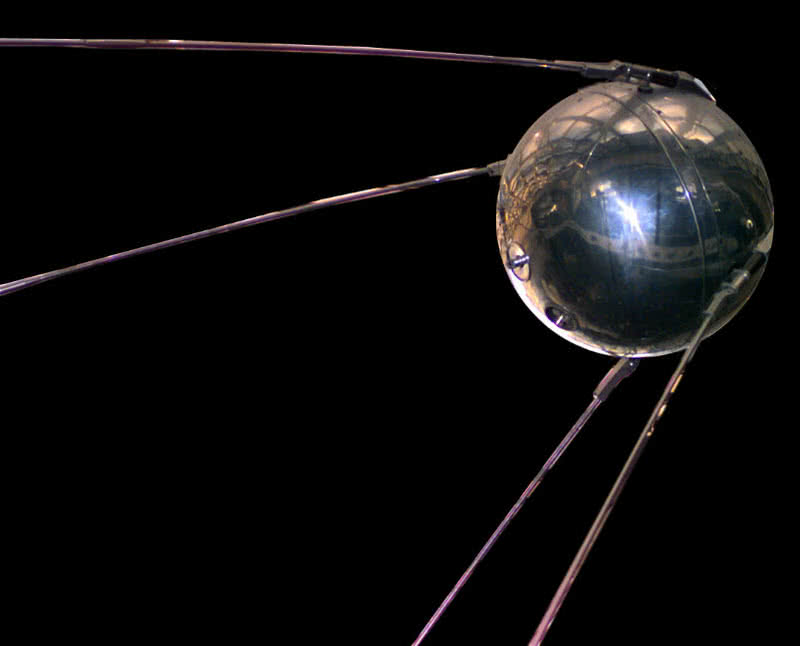
ON 4 October 1957 the Soviet Union inaugurates the “Space Age” with its launch of Sputnik, the world’s first artificial satellite and the start of the internet. Almost one-third of the world’s 6.8 billion people use the internet regularly today.

On April 12, 1961, Yuri Gagarin became both the first person in the world to enter space and the first person to orbit the Earth.

John Fitzgerald Kennedy, the 35th President of the United States, was assassinated on November 22, 1963.

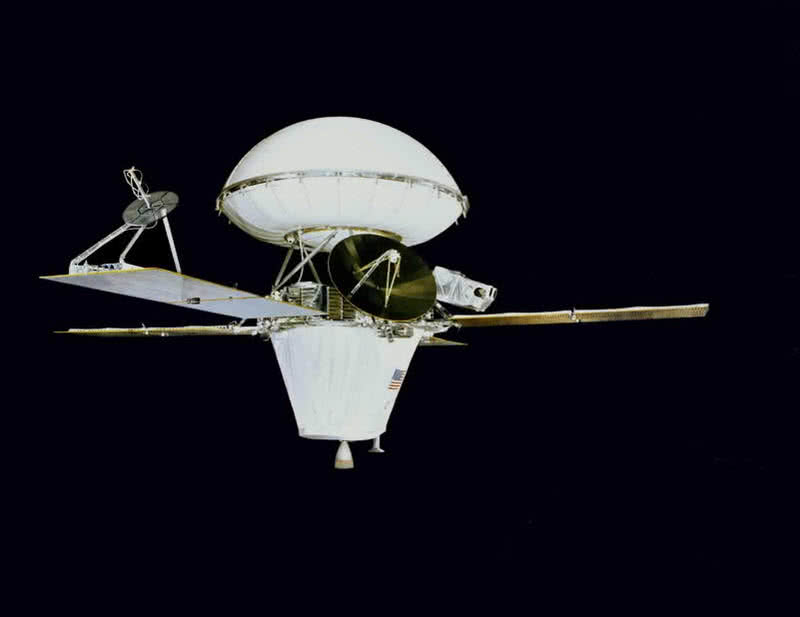
Viking 1 was launched on August 20, 1975, and the second craft, Viking 2, was launched on September 9, 1975.

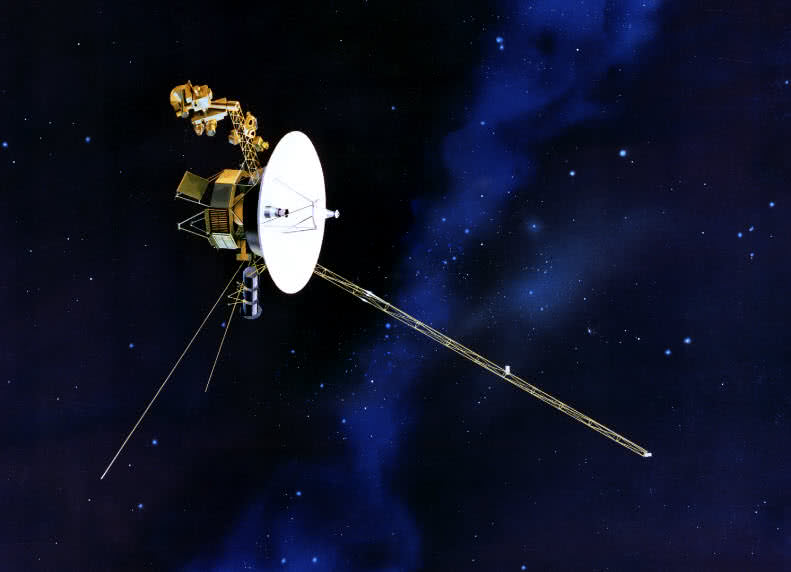
On September 5, 1977, Voyager I was launched and Voyager 11 on August 20, 1977. 

On July 20, 1969, Armstrong and Apollo 11 Lunar Module (LM) pilot Buzz Aldrin became the first people to land on the Moon. Man on MoonBill Gates and Microsoft got their start in 1975.

MS Windows debuts in 1983.

The fall of the Berlin Wall and Reunification of Germany on November 9, 1989. marked the end of the Cold War, and the ultimate fall of the Soviet Union.

Hubble’s launch and deployment in April 1990 marked the most significant advance in astronomy since Galileo’s telescope 400 years ago.

On 20 November 1998 International Space Station starts to get built.

The European Union (EU) was created by the Maastricht Treaty on November 1st 1993.

September 11, 2001, two planes were flown into the World Trade Center towers in New York triggering off the Global War on Terrorism.

In 2015 the Fourth Industrial Revolution starts. It is the fourth major industrial era since the initial Industrial Revolution of the 18th century.

2019. First picture of a Blackhole  55 million light year from the Earth.

It is revolutionizing the present scenario in the world, The main innovations should develop in the fields of nanotechnologies, alternative fuel and energy systems, biotechnologies, genetic engineering, new materials technologies and so on.

It started with Automata, the predecessors of today’s robots, date back to ancient Egyptian figurines.

It is now transforming the world in exceptional ways.

With AI becoming increasingly ingrained into our lives, it offers a lot of promise, but can also be a double-edged sword.

It is offering a plethora of opportunities yet to be ushered in.  AI can now handle complex tasks including Object detection, Speech and Face recognition, etc. However, today it has broad intellectual challenges of its own. It is not limited to specific applications or certain biological structures. It requires combined basic research in cognition, statistics, algorithms, linguistics, neurosciences and much more.

It controls how we communicate and connect, search, buy and sell.

What is called Social media is now dividing and manipulating us, catapulting us towards an Algorithm society that is tearing the connective tissue of our civilisation.

No current program based on mathematics or frame systems has common sense.

Given that all people are living histories, how can we all best learn about the long-unfolding human story in which all participate?’

My answer is: Think again about why and who we elect as leaders and how and where we use neuro-symbolic AI.

So I repeat,  History is not just ‘useful’, it is essential.

All people and peoples are living histories.

We will need to rediscover what it means to be human.

If we are not careful history will repeat itself.

It is obvious that the reason why history repeats itself is that, people do not learn from mistakes. Its lessons must remain indelible on our minds, be it AI, time, money or even a life.

All human comments appreciated. All like clicks and abuse chucked in the bin.

Go back

Your message has been sent

Warning
Warning
Warning
Warning

Warning.

Share this:

  • Click to share on WhatsApp (Opens in new window) WhatsApp
  • More
  • Click to share on Pocket (Opens in new window) Pocket
  • Click to share on Mastodon (Opens in new window) Mastodon

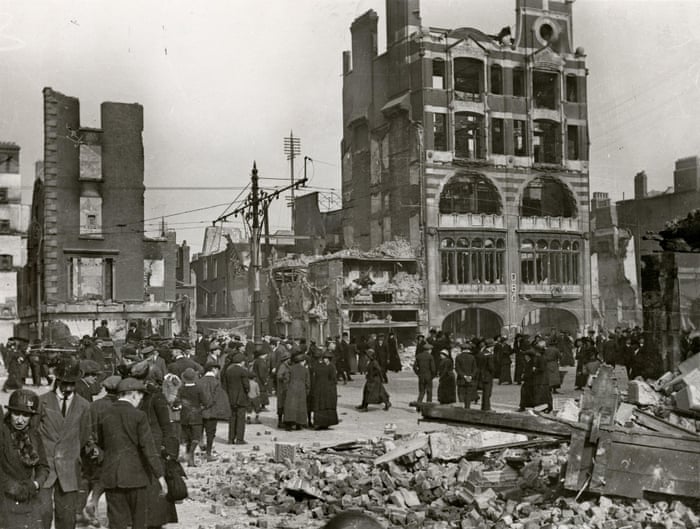
THE BEADY EYE LOOKS AT THE FORTHCOMING IRISH CELEBRATION OF THE 1916 EASTER RISING.

02 Tuesday Feb 2016

Posted by bobdillon33@gmail.com in History., Unanswered Questions.

≈ Comments Off on THE BEADY EYE LOOKS AT THE FORTHCOMING IRISH CELEBRATION OF THE 1916 EASTER RISING.

Tags

History.


( A two-minute Historical Read.)

This could be a tricky post in so far that there is no intention or wish on my part to offend any reader.

I must declare my self as a nationalist married to the most exquisite English Lady.

I also wish to state that I do not and never will condone violence as a means to an end.

Indeed those that planted explosive devices and walked away not knowing who was going to die were and are more repugnant than the Jihadis who at least blow themselves up.
Afficher l'image d'origine

It seems appropriate because this will be the last post for a month or so that I return to my roots and aspiration to see my country united.

There is no need here to lament the long and painful history of Ireland.

As a myth, the Easter Rising no longer exerts power over the collective Irish psyche in the way it once did.

Now, as the Troubles are fading into history, the tumultuous events of Easter 1916 are about to be remembered.

The ashes of the past will certainly be raked over again this Easter in Ireland and, no doubt, greeted with bemused indifference in the UK, where there seems to be little public interest in Britain’s long and often brutal role in shaping its neighbour’s contested history and divided culture.

For me it is not whether or not Ireland will be united, only a case of when.

We have waited about 8 centuries so another few generations is a dawdle.

As a military adventure the Rising was, of course, a dismal failure but it was the first major armed uprising against the British empire in the 20th century.

It was and is being marked 100 years later in Ireland as the turning point for Irish freedom from London rule.Afficher l'image d'origine

It may well take another centenary to come and go before the turbulent spirit of the “unquiet founders” is stilled by history and for their heirs to accept that, as Yeats put it, it is “enough to know they dreamed and are dead”.

So why is this relatively minor disturbance so potent?

Precisely because it is so hard to say what it means.

It is one of those events that has a protean quality – it continually changes its shape.

The most famous lines about the Rising are WB Yeats’s from Easter 1916: All changed, changed utterly / A Terrible beauty is born.

But in fact the terrible beauty was not just born: it remains alive. And, like any living thing, it alters over time.

Among the things that change utterly and constantly is the meaning of the Rising itself.

It was a little sideshow to the cataclysmic main event: the first world war.

Even in Irish terms, it was, objectively, quite marginal.

As a historical fact, the Rising seems quite small and self-contained.

About 1,600 men and women took some part in the rebellion during Easter week of 1916. By contrast, about a quarter of a million Irishmen fought in the Great War.

The 1916 rebellion, was organised by a band of poets, Irish language enthusiasts, former British soldiers and a revolutionary Marxist, capturing international headlines when it took place while Britain’s armed forces, including tens of thousands of Irishmen, were still mired in the first world war.

During the Rising 485 men, women and children (mostly civilians) died in Dublin.

In the same week 570 Irish soldiers were killed in a single horrific German gas attack at Hulluch on the western front – an event that is scarcely remembered.

1916 was not just about the Easter Rising, but also landmarks such as the Battle of the Somme in July – an event sacred to unionists, given the large number of casualties suffered by the 36th Ulster Division.

The Rising is just a drop in an ocean of blood.

Drop or not it can be seen as a foundational event for three political entities:

The Republic of Ireland, Northern Ireland and (though this is conveniently ignored) the current United Kingdom, which changed radically when most of Ireland won its independence.

Yet the struggle has always been to decide whether it is history or current affairs, something that has happened or a harbinger of something yet to happen, done and dusted or unfinished business.

Most unionists look back at the Easter Rising as a stab in the back, given that Britain was embroiled in the first world war and the rebels were backed by the Germans.

It has often been said that every Englishman should know about Irish history and every Irishman should ignore it.

I don’t know about the latter, but I certainly agree with the former.

The Brits made the mistake of murdering the leaders in 1916 and thus provoked the Irish people to join the republican cause.

The executions of the rebel leaders, the imposition of conscription and British military actions – including the deployment of the semi-irregular Black and Tans – pushed the majority of the population in the 26 counties of what is now the Irish Republic into the arms of the IRA and Sinn Féin.

When the British authorities executed 15 rebel leaders during May 1916 (a 16th, Sir Roger Casement, was hanged in London in August) the public mood began to change.

The rebels, instead of being dangerous lunatics, became martyrs.

England  tried a similar tactic of repression in 1971 by imprisoning people without trial and then murdering 13 people in Derry.

Again, what this did was swell the ranks of the nascent IRA.

On Easter Sunday 1966 Paisley organised a counter-demonstration against the 50th anniversary of the Rising and this time 5,000 people turned up.

It was Paisley’s first major protest and from then on he built his power base.

Without the jingoism of Easter 1966, Paisley might have been relegated to the sidelines and, as I have always argued, without the rise of Paisley and his opposition to reforms inside Northern Ireland there would have been no Troubles.

The 50th anniversary provided a major step up for Paisley and Paisleyism.

The events of 1968 and all that flowed from them are a reminder of how potent that moment was and how quickly its cause can be reinvigorated.

August 1969 was the most sustained period of political violence in Ireland since the 1920s, and it changed everything, not least because it left many fearful Northern Irish Catholics asking a question that reverberated back though Irish history: who will protect us if the state will not?

When the war of independence ended, Ireland was partitioned, the province of Northern Ireland established and an even more bloody civil war was fought between the majority of those who backed that Anglo-Irish Treaty of 1921 and the diehards who opposed it.

The sacrifice of Easter, 1916, which WB Yeats called “a terrible beauty”, again became the defining symbol for a new generation of young people prepared to die – and kill – in pursuit of a united Ireland. Their deaths, in turn, inspired other young volunteers throughout the 30 years of violence that followed

”Ireland did not achieve its independence in 1916.”

To day Northern Ireland is officially British, instinctively Irish.

There is another potential twist in the long grass and that is if England votes to leave the EU and Scotland then ask for a second independence referendum. NI will then be in a quandary of allegiance and identity it has not had to make for a long time

Enda Kenny, the current taoiseach, will take the salute as thousands of troops file past the GPO. His party Fine Gael is directly descended from Michael Collins and his faction of the IRA, which accepted the 1921 treaty and which, ironically, for decades since, has been accused by generations of republicans of betraying the legacy of 1916.Afficher l'image d'origine

I am sure that the Nation will like it did when England played on the Green in Croke Park show the World that there is dignity in a Deeply rooted History.

Go back

Your message has been sent

Warning
Warning
Warning
Warning

Warning.


Share this:

  • Click to share on WhatsApp (Opens in new window) WhatsApp
  • More
  • Click to share on Pocket (Opens in new window) Pocket
  • Click to share on Mastodon (Opens in new window) Mastodon

All comments and contributions much appreciated

  • THE BEADY EYE SAYS. WE HAVE SURROUND THE EARTH WITH SATELLITES. HERE TO DAY GONE TO MORROW. January 9, 2026
  • THE BEADY EYE SAYS GOVERNANCE IS BECOMING MORE BY REALITY TV, ALGO January 9, 2026
  • THE BEADY EYE SAYS. DONALD TRUMP IS EXPOSING THE WEAKEST OF OUR WORLD ORGANISATIONS January 7, 2026
  • THE BEADY EYE SAYS. MADURO ADDUCTION SHOWS THAT INTERNATIONAL LAW IS A JOKE. January 4, 2026
  • THE BEADY EYE ASKS: January 4, 2026

Archives

  • January 2026
  • December 2025
  • November 2025
  • October 2025
  • September 2025
  • August 2025
  • July 2025
  • June 2025
  • May 2025
  • February 2025
  • January 2025
  • December 2024
  • November 2024
  • October 2024
  • September 2024
  • August 2024
  • July 2024
  • June 2024
  • May 2024
  • April 2024
  • March 2024
  • February 2024
  • January 2024
  • December 2023
  • October 2023
  • September 2023
  • August 2023
  • July 2023
  • June 2023
  • May 2023
  • April 2023
  • March 2023
  • February 2023
  • January 2023
  • December 2022
  • November 2022
  • October 2022
  • September 2022
  • August 2022
  • July 2022
  • June 2022
  • May 2022
  • April 2022
  • March 2022
  • February 2022
  • January 2022
  • December 2021
  • November 2021
  • October 2021
  • September 2021
  • August 2021
  • July 2021
  • June 2021
  • May 2021
  • April 2021
  • March 2021
  • February 2021
  • January 2021
  • December 2020
  • November 2020
  • October 2020
  • September 2020
  • August 2020
  • July 2020
  • June 2020
  • May 2020
  • April 2020
  • March 2020
  • February 2020
  • January 2020
  • December 2019
  • November 2019
  • October 2019
  • September 2019
  • August 2019
  • July 2019
  • June 2019
  • May 2019
  • April 2019
  • March 2019
  • February 2019
  • January 2019
  • December 2018
  • November 2018
  • October 2018
  • September 2018
  • August 2018
  • July 2018
  • June 2018
  • May 2018
  • April 2018
  • March 2018
  • February 2018
  • January 2018
  • December 2017
  • November 2017
  • October 2017
  • September 2017
  • August 2017
  • July 2017
  • June 2017
  • May 2017
  • April 2017
  • March 2017
  • February 2017
  • January 2017
  • December 2016
  • November 2016
  • October 2016
  • September 2016
  • August 2016
  • July 2016
  • June 2016
  • May 2016
  • April 2016
  • March 2016
  • February 2016
  • January 2016
  • December 2015
  • November 2015
  • October 2015
  • September 2015
  • August 2015
  • July 2015
  • June 2015
  • May 2015
  • April 2015
  • March 2015
  • February 2015
  • January 2015
  • December 2014
  • November 2014
  • October 2014
  • September 2014
  • August 2014
  • July 2014
  • June 2014
  • May 2014
  • April 2014
  • March 2014
  • February 2014
  • January 2014
  • December 2013
  • November 2013
  • October 2013

Talk to me.

Jason Lawrence's avatarJason Lawrence on THE BEADY EYE ASK’S: WIT…
benmadigan's avatarbenmadigan on THE BEADY EYE ASK’S: WHA…
bobdillon33@gmail.com's avatarbobdillon33@gmail.co… on THE BEADY EYE SAYS: WELCOME TO…
Ernest Harben's avatarOG on THE BEADY EYE SAYS: WELCOME TO…
benmadigan's avatarbenmadigan on THE BEADY EYE SAY’S. ONC…

7/7

Moulin de Labarde 46300
Gourdon Lot France
0565416842
Before 6pm.

My Blog; THE BEADY EYE.

My Blog; THE BEADY EYE.
bobdillon33@gmail.com

bobdillon33@gmail.com

Free Thinker.

View Full Profile →

Follow bobdillon33blog on WordPress.com

Blog Stats

  • 94,460 hits

Blogs I Follow

  • unnecessary news from earth
  • The Invictus Soul
  • WordPress.com News
  • WestDeltaGirl's Blog
  • The PPJ Gazette
Follow bobdillon33blog on WordPress.com

The Beady Eye.

The Beady Eye.
Follow bobdillon33blog on WordPress.com

Create a free website or blog at WordPress.com.

unnecessary news from earth

WITH MIGO

The Invictus Soul

The only thing worse than being 'blind' is having a Sight but no Vision

WordPress.com News

The latest news on WordPress.com and the WordPress community.

WestDeltaGirl's Blog

Sharing vegetarian and vegan recipes and food ideas

The PPJ Gazette

PPJ Gazette copyright ©

Privacy & Cookies: This site uses cookies. By continuing to use this website, you agree to their use.
To find out more, including how to control cookies, see here: Cookie Policy
  • Subscribe Subscribed
    • bobdillon33blog
    • Join 223 other subscribers
    • Already have a WordPress.com account? Log in now.
    • bobdillon33blog
    • Subscribe Subscribed
    • Sign up
    • Log in
    • Report this content
    • View site in Reader
    • Manage subscriptions
    • Collapse this bar