In the last few days we all watched a few hundred people if that clapping themselves on the back all over a photo or photos of a planet 6 billion mile away that we never set foot upon. A technological achievement indeed.
Knowledge is invaluable. Furthering our understanding of how the universe came into being, and ultimately how we came into being, cannot be measured as useful solely in terms of cost.
The question is looking at the present state of our planet do we really need to be taking photos of planets that we will never step on.
America was the first nation to land on the moon, but what tangible benefits to mankind have occurred as a result?
The Hubble Telescope has sent back fascinating pictures of our universe. But again, how has this benefited anyone other than providing marvelous sights which awe us?
The only life found on Mars, from the incredibly expensive probes, is some dead amoeba.
All of it hasn’t led to any medical cures or any answers to the origins of the universe.
There are many things in our world that have not discovered yet; do cures to AIDS and cancer ring a bell? And what about over coming poverty?
The point is, space exploration is extremely expensive.
I don’t feel that the solution’s to our problems can be solved by a space expedition. Perhaps it time to find a solution to what we don’t know in our world before exploring a different one. We simply don’t have the money or resources.
Besides, if it’s unemployment you’re worried about, more people to devote their lives to over-coming the problems we know about, and not digging up more for us to “solve”.
We all know that there are major crisis going on at your home planet.
Global warming and the world wild economic crisis, which will cause the collapse of Capitalism not to mention a return to Barbarity – ISIS.
Why rush off to space when we’ve can see our own planet yet?
Why bother spending all this money on exploring space when we could be helping our own planet that us humans live on.? It’s a strong argument.
Why Not?
Out in space there is virtually unlimited resources. It is all just a matter of collecting it and bringing it back, which granted will not be an easy task.
Many discoveries and products have been developed from the knowledge gained from space exploration.
For example, NASA created Velcro which is now used in many clothing items, bags and so forth. Non-stick pans and surfaces were also created as a result of space exploration.
Space travel has also given us a lot of other new things for example the micro chip, the CAT scan and so on. Plastic was invented by material engineers working on the space program. The Internet was a joint military and NASA project.
Satellites were some of the first venturers into space and are now a critical part of our society. Very important for hurricanes and dangerous storm systems.
GPS allows Google to track you ever movement.
If we compared space exploration to other areas of government spending (e.g. military), the cost of space exploration simply isn’t ridiculously high.
It’s about $10,000 to put a pound of anything into a near-earth orbit. To put a pound of anything on the moon costs about 10 times as much.
It use to costs $500 to $700 million every time the shuttle flies combined with overall cost yielding a per-flight cost of nearly $1.7 billion. The average cost to launch a Space Shuttle is about $450 million per mission.
Billionaire space tourists have flown to the space station at a reputed price of $20 million per head.
The space station costs upward of $100 billion.
The bottom line:
So was the shuttle program worth the 40 years (10 years of development and 30 years of flight) of the $209 billion that NASA and the nation poured into it? That probably depends on your priorities and your point of view.
In 1966, NASA’s budget was $5.9 billion (4.4 percent of the federal budget). By 1972, Nixon had cut it to $3.4 billion (1.6 percent of the budget). To Day its less than one half of one penny out of each dollar the national government spends goes to NASA.
It’s still a lot of money—about 17.7 billion dollars.
And in the four decades since, NASA’s budget has continued to decrease as a proportion of national spending. The agency got $18.45 billion in fiscal year 2011, less than 0.5 percent of the federal budget.
Space exploration isn’t cheap. Let’s put those trillions of dollars to good use here on Earth, where it could change the lives of millions. Send probes to space, but spend the money here on Earth.
For me the real value lies in we are starting to see how small and fragile we are out there floating in space, maybe, just maybe we will not be so prone to abusing our one true home.
To put it in perspective think about this: Apple earns $325,000 every minute.
The next and last step of human evolution is overcoming the mind and learning the truth of life.
≈ Comments Off on The Beady eye looks at the Quantum Leap.
We are only at the beginning of this journey and if you are like me the very word Quantum Mechanics /Physics not to mention Quantum Computing, sends me in a dizzy.
I have little or no concept of quantum other than entanglement occurs when two particles become related such that they can coordinate their properties instantly even across a galaxy.
Think of wormholes in space or Star Trek transporters that beam atoms to distant locations.
Quantum mechanics posits other spooky things too: Particles with a mysterious property called superposition, which allows them to have a value of one and zero at the same time; and particles’ ability to tunnel through barriers as if they were walking through a wall.
All of this seems crazy, but it is how things operate at the atomic level: the laws of physics are different.
So or what it’s worth. Here is what I have learnt.
Quantum computing will lead to breakthroughs in science, engineering, modeling and simulation, financial analysis, optimization, logistics and national defense applications.
It is likely that building a quantum computer will lead to unforeseen technologies and transform our understanding of the possibilities and limits of computation.
Despite the incredible power of today’s supercomputers, there are many complex computing problems that can’t be addressed by conventional systems. The huge growth of data (“Big Data”) and our need to better understand everything from the universe to our own DNA leads us to seek new tools that can help provide answers.
If we really could build a magic computer capable of solving an NP-complete problem, a decision problemin a snap, the world would be a very different place: An NP problem contains problems for which a computer can quickly check a proposed solution.
Imagine a computer that can teach your mobile phone to recognize any object it sees, or that can trawl through millions of social media posts to identify a potential terrorist.
The spy world, in particular, is looked to quantum computing for its use in encryption and code breaking – a mainstay of the intelligence business.
The technology sounds like a science-fiction caricature. It is based on a novel type of superconducting processor that uses quantum mechanics to massively accelerate computation. A quantum computer taps directly into the fundamental fabric of reality so how about conducting virtual experiments.
The question is has it being done.
To my mind a computer without any limitations would get boring pretty quickly.
We could ask our magic computer to look for whatever patterns might exist in stock-market data or in recordings of the weather or brain activity. Unlike with today’s computers, finding these patterns would be completely routine and require no detailed understanding of the subject of the problem.
The magic computer could also automate mathematical creativity which would be a transformation in the ways computers are thought about.
So what might be the benefits.
Quantum computers could solve multiple problems at the same time.
We would have really accurate weather forecasting: Quantum computing could analyse all that data at once and give us a better idea of when and where bad weather will strike. We’d have advanced notice of major storms like hurricanes and the extra prep time could help save lives.
More efficient drugdiscovery:
A quantum computer would be able to map out trillions of molecular combinations and quickly identify the ones that would most likely work, significantly cutting down the cost and the time of drug development.
No more traffic nightmares:
Beefing up military and defence:
Satellites are constantly collecting tons of images and video. A quantum computer would sort through that mountain of data and direct your car.
Secure, encrypted communication:
If a third-party intercepts the key then, thanks to the weird magic of quantum mechanics, it becomes useless and no one can read the message.
Accelerating space exploration:
Astronomers have discovered nearly 2,000 confirmed planets outside our solar system using the Kepler space telescope. A quantum computer could tackle more data in any given telescope view, spot more exoplanets, and help quickly identify which ones have the most potential to harbour life.
It could even uncover exoplanets that Kepler missed during its first run through older images.
Quantum computing could streamline both air traffic and ground-based traffic control because they’re so good at quickly calculating the optimal route.
Machine learning and automation:
It sounds super creepy, but like humans, quantum computers can learn from experience. They can self correct. For example, a quantum computer could actually modify the code of a program that keeps messing up.
The security of every Internet transaction would be broken if a quantum computer were to be built.
Not much more is known about what could be done with a practical quantum computer.
Except: A classical computer would have to run for thousands of years to compute the quantum equations of motion for just 100 atoms. A quantum simulator could do it in less than a second. Problems that would take a state-of-the-art classical computer the age of our universe to solve, can, in theory, be solved by a universal quantum computer in hours.
The quest to harness the computational might of quantum weirdness continues to occupy hundreds of researchers around the world.
Physicist Richard Feynman once famously said: “If you think you understand quantum physics, you don’t understand quantum physics.”
As technology shrinks to nanoscale levels, quantum effects need to be dealt with whether we want them or not. It would be a revolution not unlike the early days of computing. A game changer for humanity.
If quantum computers promised such godlike mathematical powers, maybe we should expect them on store shelves at about the same time as warp-drive generators and anti gravity shields.
There is a long ways to go before any of the above are available.
Not so; In 2013 Google, NASA and USRA created the Quantum Artificial Intelligence Lab and installed a D-Wave Two™ quantum computer at the NASA Ames Research Center.
It is the most advanced quantum computer in the world but is not an universal quantum computer.
There you have it.
If you are any the wiser let me know as we need to be preparing for the spooky technology future we are rapidly heading into.
As Horizon fly’s pass Pluto poor old Hubble is left in the dark.
Launched aboard the shuttle Discovery 25 years ago on the April 24, it had its vision restored in December 1993.
Orbiting the Earth for over two decades, Hubble has helped to answer some of the most compelling astronomical questions of our time – and uncovered mysteries we never knew existed. Investigating everything from black holes to planets around other stars, Hubble has changed the face of astronomy, ushering in a new chapter of humanity’s exploration of the universe.
So in honor of Hubble – The beady eye of Space- here is what it has achieved
Over 100 Terabytes of observations all captured in digital files.
Astronomers have used all those observations to generate over 12,800 scientific papers, making the Hubble one of the most productive scientific instruments ever designed and built.
There are no rockets or thrusters on board the Hubble. To change directions, it spins reaction wheels that, thanks to Newton’s Third Law of Motion, make the telescope spin in the opposite direction. The wheels spin at about the speed of a clock’s minute hand, turning 90 degrees in 15 minutes.
Hubble operates on only 2,800 W, a little more than an electric range’s largest burner on high.
The telescope gets all its electricity from a pair of solar panels that measure approximately 23 х 9 ft (each).
Engineers gave Hubble a pointing accuracy of 0.007 arc seconds, which is analogous to aiming a laser and hitting a dime 200 miles away.
The most distant objects Hubble has seen are 13.4 billion light years.
The Hubble takes only black-and-white images. The spectacular color images you see from the Hubble are made by combining two or more black-and-white exposures through colored filters. Then, when the image is further processed, colors matching the filters are added.
Hubble helped construct the largest scale 3-D maps scientists have of where dark matter is distributed in the universe.
Also, by helping to find out the mass of Eris, which is 27 percent more massive than Pluto, the realization that similar bodies might lurk in the Kuiper Belt and beyond it helped demote Pluto and similar objects to dwarf planet status.
By gazing at star-forming regions such as the Orion Nebula, Hubble was able to show that protoplanetary disks of gas and dust are ubiquitous around many young stars.
Gamma ray bursts. Hubble helped discover these bursts typically occur in galaxies that were actively forming stars and were low in metallicity.
The comet Shoemaker-Levy 9 collided spectacularly with Jupiter in 1994, an impact Hubble captured in all its startling glory.
Hubble may have helped solve the mystery of how old the universe is, but it unexpectedly turned up an even more profound one — the fact that the rate of the universe’s expansion is not slowing down or even constant, but is inexplicably accelerating.
Hubble discovered that super-massive black holes probably lurk in every galaxy that has a bulge of stars at its center.
Hubble has made some important advances in our research into alien worlds, such as determining the composition of the atmosphere of an exoplanet for the first time and actually imaging the visible light of Fomalhaut b.
Hubble helped refine estimates of the universe’s age down to roughly 13.75 billion years, a result that not only plays a role in modeling how our universe has evolved over time, but also in our understanding other seemingly unrelated cosmic parameters, such as the mass of neutrinos.
It’s re-written a lot of what we know. Re-engineer humans for a better planet.
Climate change is the ultimate global collective action problem, requiring cooperation from every government in the world.
It’s over twenty years since the first treaty, signed at the 1992 Rio Earth Summit, when countries agreed to limit their emissions of greenhouse gases.
Here is the reality:
We are the first generation to understand the consequences of a high carbon economy on the planet, on future prosperity and, in particular, on the most vulnerable around the world. Let us be the generation that stands up and takes the responsibility conveyed by that knowledge.” Christiana Figueres, executive secretary, UN Framework Convention on Climate Change, May 2014.
So the question now is whether we will have the courage to act before it’s too late. And how we answer will have a profound impact on the world that we leave behind not just to you, but to your children and to your grandchildren.” US President Barack Obama, Georgetown Address, June 2013.
I was very struck by the fact that the impacts of climate change are undermining a whole range of human rights: rights to food, safe water and health and education. But it is also displacing people, which is very likely to cause not just human distress but potentially conflict. So for me it’s a very, very serious issue of human rights.” Mary Robinson, UN special envoy for climate change, 2013
Climate change will amplify existing social, political and resource stresses, shifting the tipping point at which conflict ignites, rather than directly causing it. Climate change is likely to increase the frequency, scale and duration of humanitarian crises. It is also likely to change patterns of migration, making border security an ongoing concern, especially in the developed world.” UK Ministry of Defence, Global strategic trends out to 2040.
We have just 5 months left until the Paris Summit. How likely is it that it will be meaningful and make a difference to climate.
What should be in it?
A world Agreement; ( anything less is worthless.)
The international agreement that has a clear legal basis that works for different national constitutions. (All agreements are broken, so perhaps an agreement tied to World Trade/ and Arms deals might be enforceable.)
This agreement should be supported by a clear, shared accounting system and robust, transparent monitoring and reporting requirements.
It must be seen as fair for all. The agreement must allow for comparisons of national contributions, using appropriate indicators of national responsibilities and capabilities, to encourage ambition and ensure that climate action links with strategies for poverty alleviation and sustainable development.
The Agreement can not be seen as static. It should be for five-year cycle, with a ratchet mechanism over time built into the system and a clear, long-term goal. Why? Because carbon targets will need to be revised in the light of emerging science. It should move towards a goal to phase out pollution from fossil fuels by 2050 and phase in clean energy technologies.
It will need financing to support actions on adaptation and mitigation.
The agreement should include commitments to scaled up public finance, to support adaptation and mitigation action, aligned with other public finance for development; and wider efforts should be made to secure private sector investment in the low-carbon economy.
Any new agreement covering forest protection, land use and agriculture should be properly financed, have clear rules for emissions accounting and involve local communities in decision-making. It should ensure better biodiversity, ecosystem protection and restoration, and include support for sustainable agriculture and increased climate resilience.
Here what at stake:
The uncompromising Math of Global Warming, Pollution will if we fail to act early will guarantee that we are leaving humanity with more dangerous climate change such as more frequent extreme weather, more droughts, heat waves, and floods.
Even in the face of planetary catastrophe, 195 governments in a room can be just incompetent. Amidst the thicket of complex policy talk, we need to define the red lines of the agreement and organise the press and politics around them.
Our top focus – a clear commitment to a world without carbon, powered by 100% clean energy.
That is what will put the fossil fuel industry on notice, and shift private investment massively into renewable energy. New power plants, buildings, city designs, and lifestyles are being formed as we speak. How these are built could lock us into decades of increasing climate pollution as many of these last for several decades at a minimum.
A prime example is in the electricity sector where the emissions of power plants that the International Energy Agency projects could be developed in the next two decades would be larger than the emissions of coal from the beginning of the industrial revolution and eat up a huge chunk of the amount of carbon that can be emitted by all sectors.
The current targets aren’t deep enough to address climate change and most countries only made commitments through 2020. So there is a need to deepen and extend the emissions reduction commitments.
The scale of this crisis demands action that goes beyond consistently “kicking the can down the road”.
Once we have an agreement in hand then we can engage in serious ethical consideration over whether or not to act.
Will any of this happen?
Not a hope in a world that is driven by Capitalism.
The only way is as I have said in previous blogs is for Capitalism to contribute by placing a World Aid Commission of 0.05% on all High Frequency Trading , on all Foreign Exchange Transactions over $20,000, and on all Sovereign Wealth Funds Acquisitions.
In the next few months and for years to come perhaps you will be reading a lot of bull shit on this subject.
Where is the European Union going or has gone wrong.
Well you don’t have to wait to know why.
It is the deformed structure of globalisation, which favors the owners of capital and concentrates of wealth that is the culprit.
(Add the demographic tipping point across the Pacific Rim and central Europe, and you have a portrait of worldwide “secular stagnation”.)
The current Greece crises in the Euro Zone is shining a light on a technocrat dictatorship which is beyond democratic control if ever attempted.
The euro zone is least able to respond to the Greek crises because it is a dysfunctional construct.
∑ The European Union with 751 Members and 24 official working languages costs , € 1,756 billion (2014) of which 35% is for staff expenses, mainly salaries for the 6000 officials working in the General Secretariat and in the Political Groups. Moreover, this expenditure covers interpretation costs, the costs of external translation and staff mission expenses.
Another words about 27% (of the 2014 budget) is dedicated to MEPs’ expenses, including salaries, costs for travel, offices and the pay of personal assistants.
Expenditure on Parliament’s buildings accounts for 11% (2014)
Information policy and administrative expenditure such as IT and telecommunications account for 21% (2014)
Political Group activities account for a further 6% ( 2014) ∑
What’s wrong then?
More to the point what can be done?
The first is the recognition of sharing a common history, which usually means sharing episodes of violence, pain, suffering, and, yes, achievement.
Next there is no meaningful representative democracy without taxation.
Citizens and voters pay attention when they are taxed.
A European tax that replaces government approved transfers of funds could do wonders for getting Europeans interested in Europe.
(The willingness to transfer significant spending and taxing powers to European institutions is very limited.)
The European project needs anchor figures chosen directly by Europeans.
A presidential figure elected through the rule “one European, one vote”would be a good start. A figure to love and to hate, that could engage Europeans with the legitimacy of the vote and (why not?) have an important say in the dying and the paying issues that can promote a new citizenship and a new polity.
We all know that the founding aspiration of the European Union was born out of War and that is where it is going if it does not represent the people of Europe not the Free market with its proxy behind the doors trade agreements.
And we all know that once money enters any equation aspirations go out the window. What follows is the erosion of the common good, democracy and in comes – I am all right Jack.
The regulation of money creation is, essentially, a undemocratic economic policy and there is no better example of this than the current Greek crises.
Indeed the greatest risk for the survival of the Euro zone today is the risk emanating from social and political upheavals in countries that are forced into a deflationary spiral.
The euro zone has let it happen in Greece.
Europe’s authorities have so mismanaged monetary and fiscal strategy that the whole currency bloc has tipped into deflation.
The ideas of Europeanism, federalism, and even “post-material” politics appeal, albeit in different ways, to new possibilities for political, cultural, and
social cohesion will force Europe to think deeper about its first motivation for establishing a common economic market: attaining a long-lasting peace in Europe.
The means to create and pass on a similar European narrative to a wide mass of individuals is now open to question.
We ought to know by now, economic fluctuations hit different jurisdictions differently. If these economic fluctuations are relatively synchronous or resources sufficiently mobile, monetary policy is an appropriate instrument, and the area to which it is applied is a so-called “optimal currency area”.
The problem is that we are still, evidently, in the process of making Europe, but may be well advised to start making Europeans at the same time.
It can be sum up in one word. Diversity.
Often seen not as a liability it is the core fact that allows for change and progress. The “unity in diversity” motto is but a starting point, which urgently needs new incarnations.
http://business.financ€35bn to help the economy” ialpost.com/news/economy/drachma-diplomacy-what-would-life-after-the-eu-look-like-for-greece
The question is:
Is Tsipras really looking for a deal with Europe?
The Greek government now accounts for about 60% of the country’s entire GDP. Leaving the euro zone could cost the Greek economy up to 36% of its GDP over the next few years.
If Greece switches currency, any euros left in Greek bank accounts would depreciate by 50% to 60% in a matter of days.
The recent decision by the ECB to act a lender of last resort is a major regime change for the Euro zone. It is not sufficient, however, to guarantee the survival of the monetary union.
Perhaps Debt pooling would ties the hands of the member countries of the Euro zone and shows that they are serious in their intentions to stick together.
Where did all the Quantitative Easing go ? Not to Greece – 60 billion a month till Sep 2016.
When the one size of the single monetary policy does not fit all, supplementary, possibly coordinated, national fiscal policies should also be activated – where national fiscal policies are tightly constrained and loosely coordinated, especially so in the countries where the QE impact will be smaller.
The result may eventually be dim.
It is the case with any monetary policy instrument in a monetary union, QE in the EZ is fraught with the heterogeneity problem of the recipients of monetary policy. The institutional strictures and pressures under which the ECB operates will make the task harder. Of course, easier monetary conditions will help the EZ economies.
The endogenous dynamics of booms and busts that are endemic in capitalism continued to work at the national level in the Euro zone and that the monetary union in no way disciplined these into a union-wide dynamics.
The monetary union probably exacerbated these national booms and busts.
The existing stabilizers that existed at the national level prior to the start of the union were stripped away from the member-states without being transposed at the monetary union level. This left the member states “naked” and fragile, unable to deal with the coming national disturbances.
Even if Greece signs up to the package of tax and spending reforms demanded the most likely outcome – is that Greece’s debt would still be 118% of GDP in 2030.
IT’S A LONG, hard road to understanding the human brain so I have no intention of explaining yours to you here in detail.
Other than to say your brain has a critical function to sort out what you should remember and not remember. To determine what is true, it must know what is false.
Believing, interpreting, responding to environmental clues, or guessing is literally what a brain does.
Is your brain you.? If not who are you.
If a person is not a brain, and a brain is not the thing that perceives, thinks, interprets, feels, desires, decides, and so on we all have serious implications for the future.
Are the mind and the brain one? or is it the mind that tells the brain what it wants or is the mind a product of mere brain activity.
Another words what you see is not really there; it is what your brain believes is there . . . your brain makes the best interpretation it can . In order to explain (interpret) a visual scene, the brain must represent it first, and then explain it to its self to store in your mind.
We perceive and understand only what our brains represent.
To make sense of the tangle of neurons that makes the human experience human, is as complicated as to why you are here in the first instance.
To understand how the brain works you need one in the first place. It does not however help to explain the electrical pulses that tells a neuron to fire. Never mind how billions firing together. Your brain contains about 100 billion nerve cells, or neurons, each of which can communicate with thousands of other brain cells.
The good news is that humanity is poised to crack open the mysteries of the human brain not the mind.
For the moment the brain remains mysterious, it allows us to convert information into myriad forms to serve infinitely diverse ends.
The fields of your mind extend far beyond your brains they are hidden from view and not capable of being inspected. Whatever in your brain is buried deep within the recesses of your mind.
The quest for immortality has inspired humankind since the dawn of civilization. So will understanding the workings of the brain bring us a step closer.
Neurosciences assume that the brain has a wide variety of capacities: the brain interprets and stores information, recognizes symbols, analyzes, thinks, believes, knows, designs computers, determines what is true, paints pictures, deciphers images, analyzes, prioritizes, learns, understands, remembers, and makes decisions of the mind.
However, if I am my brain, and every atom in my brain (or body) is replaced every seven years or so, then I must become someone else every seven years.
There is no need to suppose that all the laws of nature sprang into being fully formed at the moment of the Big Bang, like a kind of cosmic Napoleonic code, or that they exist in a metaphysical realm beyond time and space.
The brain has been designed to change. Or is memory inherent in nature.
Are we capable of transferring thoughts from one brain to another.
Telepathy is normal not paranormal, natural not supernatural, and is also common between people, especially people who know each other well.
Mental activity are not confined to the insides of our heads. They extend far beyond our brain though intention and attention.
Non biological mine’s.
At our current stage of technological development, we have neither sufficiently powerful hardware nor the requisite software to create conscious minds in computers or robot.
Your Brain gives you the ability to combine and recombine different types of knowledge and information in order to gain new understanding; the ability to apply the solution for one problem to a new and different situation; the ability to create and easily understand symbolic representation of computation and sensory input; and the ability to detach modes of thought from raw sensory and perceptual input.
So what happens when it is introduced to Virtual reality or interface technology or drones contextual technology, or open communication.
We are entering the next Age of Biological Engineering evolving cellular engineering and molecular imaging.
What is the most powerful technology on Earth? Biology is Technology:
Hundreds of companies are now attempting to leverage the manufacturing and computational paradigms of biology.
By gaining control over biological systems and their biochemical pathways — and designing new pathways by rewriting the DNA “software” in cells — synthetic biologists are ushering in the “Biological Age,” creating substances with not only superior electrical, optical, and mechanical properties, but with properties that we have never seen before in man-made materials:
If you don’t believe me that Biology is Technology:
Have a look.
In the dark forest of our current ignorance, nothing captures the imagination like the possibility of creating a machine that is conscious and exhibits the same higher mental abilities as humans.
Biological systems have the ability to do things that no human-made machine or chemistry can begin to approach: the ability to replicate, to learn, to scale from one to billions, to adapt, and to evolve.
Computers today are so advanced that some contain as many connections as exist in the human brain — ten trillion of them. They can also operate at much higher speeds than the brain. What was once purely science fiction is now approaching the possibility of science fact.
A double edge sword the second machine age is going to replace our brains.
Can advanced robots or computers be moral persons? The term “moral person” refers to a being that has moral rights, such as the right not to be harmed, the right of free movement, and the right of free expression.
So let me ask you a question is it the end of moors law. (Moore’s Law is a computing term which originated around 1970; the simplified version of this law states that processor speeds, or overall processing power for computers will double every two years.) Once transistors can be created as small as atomic particles, then there will be no more room for growth.
Do we have a responsibility to future generations of humans that might be adversely affected by the creation of menacing robots? Should we stop our research into artificial intelligence right now before we create something that we cannot control?
To answer these questions, it those seems odd to speculate about building a mind from electronic scraps when we have so little clarity about the nature of our own conscious minds.
The human body is divided into many different parts called organs. All of the parts are controlled by an organ call the brain.
The cerebellum the forebrain, midbrain, and hindbrain.
No other organ is like the brain and all other organs would be unable to function without the brain which by the way weighs about three pounds.
The brain is known as the “final frontier” of science; It is the nut that is toughest to crack but contains a vast wealth of information, a veritable treasure trove of knowledge that can enrich our understanding of human nature.
The problem with artificial life acquiring consciousness in the form of experience of self is that if gives artificial life autonomy. Consciousness is a loophole out of programming, whether it is genetic (humans) or cybernetic (computers).
When we solve the hard problem of consciousness, then we can create machines with brains any time before that is brainless.
A machine without moral rules that should be embedded into the programming of all superior robots; one of these is that a robot should never harm a human.
We’ll be uploading our entire MINDS to computers by 2045 and our bodies will be replaced by machines within 90 years, Google expert claims. This singularity is also referred to as digital immortality because brains and a person’s intelligence will be digitally stored forever, even after they die.
But even if Einstein’s brain were intact enough to be plumbed with the tools of modern science, we might have to remain agnostic about the source of his brilliance.
Brain games have not yet fulfilled their promises of improved brain fitness.
How should we construe the relation of a person (soul) to his body or of his mind to his brain? To realize that conceptual clarity contributes to understanding what is known, and to clarity in the formulations concerning what is not known. A person is self-conscious and not brain-conscious, and needs no knowledge of the brain to function.
The brain, no doubt, makes it possible for us (not the brain!), to sense, perceive, think, reason, believe, feel, learn, know, understand, remember, and decide, and hopefully, to change our minds about how we think and talk about a person and the brain.
If not we are left with the following out of date Thesis.
Thesis 1: “The brain, as understood by neuroscience, is a piece of matter tingling with electrochemical activity” (Tallis 2009, p. 4).
Thesis 2: “The mind is what the brain does, and the brain is a causal machine . . . The ‘user illusion,’ nevertheless, is that a decision is created independently of neuronal causes, by one’s very own ‘act of will’” (Churchland 2005).
Thesis 3: “When the brain receives new sensory input from the world in the present, it generates a hypothesis based on what it knows from the past to guide recognition and action in the immediate future. This is how people learn” (Barrett and Bar 2009, p. 1325).
Thesis 4: “We can only understand categories of reality [for example, sound, color, taste, motion, action] and their regularities and interrelationships if our brains are capable of representing these categories . . . [W]e perceive and understand only what our brains represent” (Farah and Heberlein 2007, p. 40).
Thesis 5: Information (such as symbols, letters) is analyzed by and stored in the brain (Thompson and Harrub 2004a, p. 2), and the brain prioritizes information, deciphers images, and remembers (Martin 2013).
Thesis 6: “You are your brain” (Greene and Cohen 2004, p. 1779)
PS: Nothing of what I have said about your brain should be construed as in anyway a devaluing of your brain.
We are dualists who have two ways of looking at the world: With or without a Brain. However I would however suggest that you start using yours if you want a sustainable world.
Dream boated that we have won the Lotto. Dreams of Easy Money.
And why not, most people have a strong fascination with easy money.
If you look at history money is a comparatively recent invention. It seems that most people who got rich by creating wealth did it by developing new technology.
Making wealth is not the only way to get rich. Until a few centuries ago, the main sources of wealth were mines, slaves and serfs, land, and cattle, and the only ways to acquire these rapidly were by inheritance, marriage, conquest, or confiscation.
These days people who pursue happiness through material possessions are liked less by their peers than people who pursue happiness through life experiences.
We all know that there are many senses of the word “wealth,” not all of them material. Here I am talking not about what people will give you money for (materialism), but the quick wealth fix, winning a vast amount of cash.
If You Do Win: There is the painful proposition of managing sudden, Unearned Wealth. The argument that people always use when talking about lottery tickets is “What if I win?”
Well, what if you do win?
People you’ve known all your life suddenly start viewing you as their meal ticket. You’re now a target to criminals, a meal ticket and/or a lender to the people who used to form your close inner circle, and the source of angst not only in virtually every relationship you have with others, but often in the relationship between people you care about.
Anyway just in case your dreams have not come true here are a couple of other ways to get Rich:
Rob A Bank.
Inherit a fortune.
Bet on the right horse, with free money.
Get a hole-in-one for $1 million.
Buy and hold Long-term stock that clicks.
Find treasure.
Get lucky at a car booth sale and buy a Picasso.
Marry rich- with strings attached.
Divorce a Beatle or Rolling Stone- with strings attached.
Be born rich.
Sue.
Unearth gold with a metal detector.
Register a generic domain name.
Have a “non-affair” with a bigwig.
Live on a lake of oil.
Or crack the algorithm that produced the numbers. You will be able to plunder the lottery.
Most of us chase success by working hard, sacrificing our personal lives and even our health in an all-out pursuit of Mammon. But it doesn’t always have to be that way. For a fortunate few, it doesn’t mean a Harvard MBA or years spent perfecting a new drug. It just means doing as little as possible and still making more money than you ever dreamed of.
As much as industrious overachievers hate to admit it, sometimes all you need to get rich is dumb luck.
So what are the odds of winning the Lotto.
A 1 in 80,089,128 chance, or roughly 1 in 80 million.
Matching four of five normal numbers plus the “power ball” is a 1 in 1,668,523 chance.
Matching all five white numbers is a 1 in 1,906,884 chance.
You have a better chance of being struck by lightning than you do of winning either the grand prize or a top secondary prize.
If buying 1,906,884 tickets it could guarantee you that you would win $200,000, which is the prize (in Florida, at least) for matching all five white numbers, you’d still be spending $1,906,884 to win $200,000 – a roughly 90% loss on your investment.
If you were to play the “Power Play” version, you’d spend $3.8 million to win $1 million – a roughly 72% loss on your investment.
The Beady eye does not question your right to buy a ticket or for you to have dreams on whether you sue, marry, divorce, or buy or whatever.
It’s concerned is whether our TVs, our Governments should be promoting wealth.
Are Government Lotteries a regressive tax. They suck billions out of the economy.
Most people buy tickets and win little or nothing.
This is taking more money from the poor, working and lower middle-classes than from those most able to pay taxes. These billions also are diverted away from local businesses.
In other words, why is the government in the lottery business at all?
Government-run lotteries generated more than $70 billion in gross sales in North America during the fiscal year ended June 2010, up $1 billion year on year.
In North America every Canadian province, 43 U.S. states, the District of Columbia, Mexico, Puerto Rico, and the U.S. Virgin Islands all offer government-operated lotteries.
Elsewhere in the world publicly-operated lotteries exist in at least 100 countries on every inhabited continent. In some cases they are operated by national governments, in other cases by state or provincial governments, and in still others by cities.
Lottery proceeds benefit different programs.
In many cases lottery profits are combined with tax and other revenues in a government’s general fund. In other cases lottery proceeds are dedicated to a wide range of causes, including education, economic development, the environment, programs for senior citizens, health care, sports facilities, capital construction projects, cultural activities, tax relief, and others. Lottery beneficiaries.
Therefore the lottery is not a tax. Webster defines a tax as “a compulsory payment … for the support of government.” No one is coerced to play the lottery. The purchase of a lottery ticket is completely voluntary.
Some say its the poor who are targeted to play. The poor are allowed to vote, get married, and sign contracts. Economic status is not a measure of intelligence.
But make no mistake. Profit is what the state is after.
In other words, governments are raising revenue by tempting the worst off of their citizens to hand over their hard-earned money by playing a game with a ridiculously low return.
So are our Governments teaching our young people who Gambling that it is cool.
Scratch Cards; Online betting: TV Game Shows, all feast on Greed.
If you take Scratch cards.
The tickets are clearly mass-produced, which means there must be some computer program that lays down the numbers. Of course, it would be really nice if the computer could just spit out random digits. But that’s not possible, since the lottery corporation needs to control the number of winning tickets. The game can’t be truly random. Instead, it has to generate the illusion of randomness while actually being carefully determined.”
Money is Not Wealth.
Money is a way of moving wealth.
They are usually interchangeable. People think that what a business does is make money. But money is just the intermediate stage– just a shorthand– for whatever people want.
In fact; ants have wealth.
When you hear someone talking about how x percent of the population have y percent of the wealth. This is a fallacy.
There is not a fixed amount of wealth in the world. You can make more wealth.
A programmer can sit down in front of a computer and create wealth. A good piece of software is, in itself, a valuable thing. A great programmer, on a roll, could create a million dollars worth of wealth in a couple of weeks. A mediocre programmer over the same period will generate zero or even negative wealth.
Wealth can be created without being sold. We are all richer for knowing about penicillin. The same recipe that makes individuals rich makes countries powerful.
So let the Lions DEN nerds keep their lunch money, for you and I rule the world.
(The Lion DEN by the way is a BBC program where five millionaires sit with large bundles of money in front of them. Young and old Hopeful’s present their innovations or business in the hope of securing an offer of cash for a percentage of their invention or business. If an offer is made the millionaires then squabble with each other offering more or less cash for a percentage share in the victims dream’s of making it Rich.)
Ask yourselves: Is this family entertainment or Capitalist rape.
The same goes for;
The Briefcase:Millionaire Misers: Rich As Finns: Still Pretty Rich: Money For Nothing: Job Creators In Action: Undercover Employee:
The Undateables: Exploiting people with disabilities for entertainment
The Hunger Games: New CBS reality show exploits poor families by making them grovel for $101,000.
There are plenty of others.
What leads people astray here in all cases is the abstraction of money.
Both Worldstar videos and these television programs dehumanize the people they show and will continue to do so unless we, as viewers, choose to stop watching.
Every person is an individual; they think differently, so wouldn’t it make sense that they all learn differently?
Consumerism tells us that in order to be happy we must consume as many products and services as possible.
Unfortunately the modern world does little to combat this. However more and more spheres of activity are being shaken out of their complacent ways.
Education is one of these spheres that needs to be redefined. We are fast approaching a new Singularity: when all the concepts that give meaning to our world – me, you, men, woman, love, hate-will become irrelevant.
So the big question for all of us is-what we want to become.
A question that dwarf the debates that currently preoccupy all of us.
After all if we don’t come to grips that we all live on the one planet and that all of to days debates between today’s religions, ideologies, nations, classes, will in all likelihood disappear along with all of us. If we don’t learn to educate for sustainability rather than consumption and Slavery to information and knowledge owned by Google a by-product of capitalism.
There is little point in going to Space, or anywhere else if we are represented by Artificial Intelligence.
It is not a lack of education, but a lack of creativity, and an inability to independently think for ourselves that is the problem with Modern day Education.
For nearly a century, societies have believed that higher education is necessary for success, but the opposite is true with the modern version of education.
For instance, most of the high-tech companies were created by high school dropouts, who dream’t of doing something that nobody else had done.
You won’t find such inventive and pioneering attitudes in those who have been through school, college, and then university. Students are trained to only strive for self-limiting ‘reachable goals’.
For a lot of people out there, it is time to realize that creative, independent, free thought is more important than anything they can learn at any university.
To teach men how to learn for themselves; and whatever instruction fails to do this is effort spent in vain.”
“I never let my schooling interfere with my education.” — Mark Twain
So let’s have a look with the Beady Eye. (This is a “think piece” intended to stimulate thought and discussion, rather than a scholarly manuscript.) We just didn’t have time to address every social issue that surrounds education.
The term education is derived from Latin word educere, educare, and educatum which means ‘to learn’, ‘to know’, and to ‘lead out’. Education is an act or process of imparting or acquiring general or particular knowledge or skills, developing the powers of reasoning and judgment, and generally of preparing oneself or others intellectually for mature life.
But rest assured that nobody cares about learning when they can’t even feed themselves.
In the primitive era indigenous education is said to be the significant resource for development, but in recent times it is said that modern education is the significant resource for material wealth.
There is no argument that both types of education play a significant role in development of our world and that both type are precious tools to life, to put one’s potentials to use.
But how do we explain the fact that those who had spent the most time in college are also the most unsuccessful.
It is due to what we think education is for in the first place.
Technology enthusiasts have long heralded the power of technology—from the printing press, to blackboards, to the laptop—to transform education.
So far it has done little to impact educational processes and outcomes.
A young girl is using her mobile phone to send an SMS message in Urdu to her teacher. The girl is part of a Mobilink-UNESCO program to increase literacy skills among girls in Pakistan. It is not. Why? Because the education is in English (which is deemed to be the only language to learn if you want to understand the Modern Capitals World) not her language.
She is being turned into one of the ultra-conformists that Google and modern schools seek to mass-produce. She will become one of the ones that couldn’t make it in the real world – her world.
No human beings are able to survive properly without education. Untrue.
The training of a human mind is not complete without education. Untrue.
Only because of education a man is able to receive information from the external humanity, to notify him with past and receive all essential information concerning the present. Untrue.
What is true is that indigenous educating in ones native tongue has created culture for millennium. In so doing ensuring their survival as a culture. Indigenous means originating in and characteristic of a particular region or country. It can also mean native, innate, inherent, or natural, produced, growing, or lliving, naturally in a country or climate; not exotic; not imported.
In the absence of writing, indigenous people depended on the power of their memories to facilitate the retention and transmission of all learned ideas to future generations.
Now its the power of Google, Facebook and the Smart Phone that is dumming us all down to a click for knowledge.
The debate is whether the power of mobile phone technology, will help hurdle several education barriers by finding new ways to support learning for rural girls or boys in insecure areas.
The point here is that we must protect verity, not to become copies of each other.
WHAT IS MODERN EDUCATION:
It is education that is synonymous with colonial, western or Christian education. Modern education can be understood as a by- product of the capitalist regime the terror of the ecosystem.
With the rapid expansion of information communication technologies around the globe, there is a high level of misdirected interest in harnessing modern technology to help advance the education status of some of the world’s poorest people at the cost of loosing their cultural values.
Indigenous education was for everyone in the community and existed for the purpose of strengthening the community while Modern education is for everyone in the society for the purpose of strengthening the society.
Indigenous education taught children their own indigenous culture based within their own society while Modern education brings in cultures from another societies.
The potential of technology to help improve education has significance beyond teaching children reading and math.
Quality education plays an important role in promoting economic development, improving health and nutrition and reducing maternal and infant mortality rates.
We look back on our past, and learn from our experiences.
There are many forms of Education.
Visual learning: Power point presentations, videos, and word documents.
Auditory learning has the most basic tool to learn- your voice. Through speaking and lectures.
Tactile learning involves physical hands-on activities, and therefore can take several forms.
Special attention, programs for students who need extra help to learn.
Education is in upheaval, with free online classes proliferating, tuition surging and public universities struggling. Perhaps worst of all, too many students leave school with high debt and no degrees. The endless chase for prestige and the resort-like marketing of college has nothing to do with Education.
Massive open online courses, or MOOCs, are just one of these upheavals.
Others include initiatives to grant credit for “competency” in skills rather than time spent in class; digital systems to help match students to the right colleges and guide them to the most efficient course of study to obtain a degree; and hybrid learning environments at schools.
When ‘cloud computing’, ‘m-learning’, or ‘total cost of ownership’ are introduced into the conversation no one knows where education is going.
Therefore, education has become a basic principle to measure the labor market on the basis of essential skills and the ability to appropriate them through suitable communication. The knowledge gained through education enables individuals’ potential to be optimally utilized owing to training of the human mind. Employment in the contemporary world is based on education, as employees must possess the required skills that correspond with the current technology to perform their tasks.
It is said that Information Communication Technology (ICT). (ICT refers to technologies that provide access to information through telecommunications). is generally used to describe most technology uses and can cover anything from radios, to mobile phones, to laptops combined with technology holds great promise in helping bring quality learning to some of the world’s poorest and hardest to reach communities.
It does nothing to teach common culture and values. Other than through this type of education that Technological advancement has been realized enabling communication and production of cost-effective products and services to the society at large.
Education is an important tool that is applied in the contemporary world to succeed, as it mitigates the challenges which are faced in life. Untrue.
Everyone is an expert in something. A modern-day form of segregation.
In many ways, higher education is like any industry that has produced its product a particular way for a long time and is suspicious of anything new.
Teaching skills require a shift away from designing curricula based on topics and subjects and toward creating experiences where learners can choose their own objectives.”You can’t make socialists out of individualists. Children who know how to think for themselves spoil the harmony of the collective society which is coming, where everyone is interdependent.”
— John Dewey, Father of Modern Education
Indeed, in some of the most remote regions of the globe, mobile phones and other forms of technology are being used in ways barely envisioned in the United States or Europe.
Will a technological future fix any of this? I hope so.
The lack of clear distinctions between service and education is blatantly visible in the world.
Experience alone cannot define its educational value without understanding its relationship to the individual learner.
Designating students for separate educational paths based on their academic performance as teens or younger is a worthless use of resources.
There is hope.
We’re already starting to see how tech-savvy people are using the web, software, and devices to connect those who have with those who don’t.
Can education help fix any of this? And not just in terms of stitching together technology, neuroscience, and learning design, but also in stitching together opportunity, safety, support, and care. We can only hope so.
We have much to do.
So far the educated Sapiens regime on EARTH has produced little that we can be proud off.
Despite the astonishing things that humans are capable of doing we remain unsure of our goals and we seem to be as disconnected as ever. No one seems to know where we’re going.
Self made Gods with only the laws of physics to keep us company. Wreaking havoc all around us, yet not finding happiness. It’s time we started to reeducate ourselves. So, do we need to revert to old school education in this new age techno world?
For starters you’d have to do away with the internet and the array of electronic gadgets that are so much a part of our children’s everyday lives.
The truth, as I see it, is that we are caught in an inexorable grind of change and human evolution. Towards what, God only knows, but it will obviously influence our children’s education, and their future. Finally, regardless of how out-of-control today’s schoolchildren appear, it may well be a matter of perception coloured by the nature of our own reality as adults.
I think some people teach solely because of that very belief.
As if there are not enough problems in the world here is another that is out of control.
THIS IS THE LADY, that initiated the privatisation boom.
She saw privatisation as “fundamental to improving Britain’s economic performance”.
But it also chimed with her political ideology.
“It was one of the central means of reversing the corrosive and corrupting effects of socialism,” she declared, adding: “Just as nationalisation was at the heart of the collectivist programme by which Labour governments sought to remodel British society, so privatisation is at the centre of any programme of reclaiming territory for freedom.”
England is now one of the most sold off countries on earth.
Here is just a few items recently sold.
Before you look remember that the rest of the world governments are doing the same thing flogging off what is not belong to them but belongs to the generations of people who worked and payed taxes.
Governments of very different political and ideological streams are bent on privatizing, and governments that are already privatizing are moving from selling small retail outlets and industries to selling larger mining and infrastructure enterprises. Just look what happened when the World Bank forced Bolivia to sell its water to Privatization.
Above all, perhaps, in shifting the democratic to market-based principles of allocation, it favors those who are strongest in their control of the market, and who also happen to represent the social basis of Conservatism.
The UK has sold: Gold Reserves, Transportation, Mail, Water, Banks, Health, Universities, Prisons, Power, Car parking, Schools, Telecom, Gas, Steel, Airports, Gambling, Fire and Ambulance services, Rolls Royce, Jaguar, British Airways, Shipbuilding, Council Housing, Sea link, and the list goes on.
Whats’ left: Scotland, and the crown Jewels. It has already sold Northern Ireland and Democracy many times ( MP Expenses Scandal)
Privatisations by share offer, 1981-91 From Nigel Lawson, The View from No. 11(Bantam, 1992).
Date
Company
% of equity initially sold
Proceeds £m
Feb 1981
British Aerospace
51.6
150
Oct 1981
Cable & Wireless
50
224
Feb 1982
Amersham International
100
71
Nov 1982
Britoil
51
549
Feb 1983
Associated British Ports
51.5
22
June 1984
Enterprise Oil
100
392
July 1984
Jaguar
99
294
Nov 1984
British Telecom
50.2
3,916
Dec 1986
British Gas
97
5,434
Feb 1987
British Airways
100
900
May 1987
Rolls-Royce
100
1,363
July 1987
British Airports Authority
100
1,281
Dec 1988
British Steel
100
2,500
Dec 1989
Regional Water Companies
100
5,110
Dec 1990
Electricity Distribution Companies
100
5,092
Mar 1991
National Power and PowerGen
60
2,230
May 1991
Scottish Power and Scottish Hydro Electric
100
2,880
Whatever way you look at it the acceleration of interest in privatization evident in the last two to three years is striking.
Here is the list of sales in the rest of the world-wide.
You will be shocked and hopefully made a aware or appreciate what is going on.
We have rampaging Sovereign Wealth Funds buy up the world resources, and manipulating Governments. This combined with the World Bank and the IMF SUPPORT IT IS THE GREATEST SALE OF ALL. EARTH. BUY AND GET NOTHING FOR FREE.
So what is privatization and what is happening in privatization?
Privatization is the transfer of ownership of assets to the private sector. Through management contracts and leases and sell off (sale of minority shares.)
Why privatize?
All types of privatization have the potential to increase so-called static efficiency-what economists like to call X-efficiency-which means pushing enterprises to operate cost effectively on their production frontier.
What Is Being Privatized?
There are virtually no limits on what can be privatized.
The argument that privatization creates additional public resources is illusory.
Attempts to sell nonviable firms as going concerns may not only invite special protection or subsidies, but may also lead to subsequent government bail-outs.
Markets fail, but so do governments. which lead to government bail-outs, financed either through taxes or inflation and the new buzz word Austerity a Capitalist word for Privatization by the back door. Greece!
Both taxes and inflation hit the poorer citizen harder than the rich.
The World Bank and the IMF act as a catalyst for privatization.
From Water, to Oxygen, to Time, everything that you take for granted will be privatized and subject to easy and affordable payments.
Not in your wildest dreams will it be affordable.
Get used to it. For there is absolutely nothing that you can do.
Or is there. (See below)
The most concerning effects of all this is – The Race to Buy Up the World’s Fresh Water supplies.
Out of the 1,226 billionaires around the world four billionaires including filmmaker James Cameron and Google co-founder Larry Page are backing a newly unveiled asteroid-mining venture, Planetary Resources Inc adding to an impressive list of ultra-rich people trying to reshape spaceflight and exploration in the 21st century. Each man is worth $1 billion or more, according to recent estimates by Forbes magazine, with Google execs Page and Schmidt having about $16.7 billion and $6.2 billion to their names, respectively. Film maker James Cameron worth $700 million or so.
H20 will open up a Trillion dollar market in Space.
We are in the midst of a global freshwater crisis.
Around the world, rivers, lakes, and aquifers are dwindling faster than Mother Nature can possibly replenish them; industrial and household chemicals are rapidly polluting what’s left.Meanwhile, global population is ticking skyward.
Goldman Sachs estimates that global water consumption is doubling every 20 years, and the United Nations expects demand to outstrip supply by more than 30 percent come 2040.
Water has been a public resource under public domain for more than 2,000 years,”
If all goes according to plan, 80 million gallons of Blue Lake water will be siphoned into the kind of tankers normally reserved for oil—and shipped to a bulk bottling facility near Mumbai. From there it will be dispersed among several drought-plagued cities throughout the Middle East.
The project is the brainchild of two American companies. One, True Alaska Bottling, has purchased the rights to transfer 3 billion gallons of water a year from Sitka’s bountiful reserves.
The other, S2C Global, is building the water-processing facility in India. If the companies succeed, they will have brought what Sitka hopes will be a $90 million industry to their city, not to mention a solution to one of the world’s most pressing climate conundrums.
They along with Nestle are turning life’s most essential molecule into a global commodity.
Fresh Air is next on the list.
By definition, a commodity is sold to the highest bidder, not the customer with the most compelling moral claim.
As the crisis worsens, companies like True Alaska that own the rights to vast stores of water (and have the capacity to move it in bulk) won’t necessarily weigh the needs of wealthy water-guzzling companies like Coca-Cola or Nestlé against those of water-starved communities
In Phoenix or Ghana; privately owned water utilities will charge what the market can bear, and spend as little as they can get away with on maintenance and environmental protection. Other commodities are subject to the same laws, of course. But with energy, or food, customers have options: they can switch from oil to natural gas, or eat more chicken and less beef.
There is no substitute for water, not even Coca-Cola.
The Colorado River Basin is struggling through its 11th year of drought. In the USA the real water barons cannot be reduced to a simple archetype. They include a diverse array of buyers and sellers—from multinational water giants like Suez and Veolia that together deliver water to some 260 million taps around the world, to wildcatter oil converts like T. Boone Pickens who wants to sell the water under his Texas Panhandle ranch to thirsty cities like Dallas.
Eventually every last drop will be privately controlled.
And when that happens, the world will find itself divided along a new set of boundaries: water haves on one side, water have-nots on the other. The winners (Canada, Alaska, Russia) and losers (India, Syria, Jordan)will be different from those of the oil conflicts of the 20th century, but the bottom line will be much the same: countries that have the means to exploit large reserves will prosper.
The rest will be left to fight over ever-shrinking reserves. Some will go to war.
The World Bank infamously required scores of impoverished countries—most notably Bolivia—to privatize their water supplies as a condition of desperately needed economic assistance. These days, global water barons have set their sights on a more appealing target: countries with dwindling water supplies and aging infrastructure,
Nowhere is this truer than China.
As the water table under Beijing plummets, wells dug around the city must reach ever-greater depths (nearly two-thirds of a mile or more, according to a recent World Bank report) to hit fresh water. Since 2000, when the country opened its municipal services to foreign investment, the number of private water utilities has skyrocketed. But as private companies absorb water systems throughout the country, the cost of water has risen precipitously. “It’s more than most families can afford to pay,
Meanwhile, more than half a million pipes burst every year, according to the American Water Works Association, and more than 6 billion gallons of water are lost to leaky pipes.
Privatization of basic human needs is never good.
Our governments are controlled by private corporations and banks.
Privatization of government services (such that benefit the people, all the people) is perverting Democracy.
Privatization of public services is the death knell of parliamentary democracy, the death knell of the extreme form of capitalism currently practiced in too many countries.
We face a global water crisis, made worse by the warming temperatures of climate change.
A quarter of the world’s people don’t have sufficient access to clean drinking water.
Water privatization is used here as a shorthand for private sector participation in the provision of water services and sanitation. has turned a public good into a private good.
Many believe that the privatization of water is incompatible with ensuring the international human right to water.909 million people were served by “private players” in 2011 globally, up from 681 million people in 2007.
The World Bank Group pushes privatization as a key solution to the water crisis.
Instead of using its position to line the pockets of water companies, the World Bank should support what is most needed: affordable and clean – and public – water for all. When the private sector engages in water provision, greater disparities in access and cost follow.
The current Chairman and former CEO of Nestlé, the largest producer of food products in the world, believes that the answer to global water issues is privatization.
For profit” everything! Profit is killing the planet.
Human males seek dominance even at the price of self-annihilation.
Are we all mad, it looks like it.
We can talk till the cows come home > We Can have Summits on Climate Change > We can listen to the G8 the G7 the United Nations, the World Health, the President of the USA, the technocrats, the Economic Gurrous, Religious Leaders, the Free market, China, the International space station, your neighbor.
If the truth was known no one has a blind notion how to change course.
WELL LET ME TELL YOU AS CAPTAIN OF THIS BLOG AND POST THERE IS ONLY ONE SOLUTION’S.
That is to make Capitalism with its insatiably greed for profit PAY by placing a World Aid Commission of all High frequency stock trading, on all Foreign Exchange transactions over $20,000, on all Sovereign Wealth Funds Acquisition. (See previous posts). This can be achieved with little or no cost to the world economy by the click of a button. Producing a vast perpetual fund to address the Inequality the bane of the modern world.
Before I finish I can hear you saying who, how, where this fund would operate.
It does not matter as long as the funds are allocated on a lotto bases.
Every deserving project (world wise) after a vetting process to see if viable would be placed in a once a year draw according to its capital requirements.
Unlike the World bank or IMF the winners would not have to repay the funds, (provided the project undertake was totally transparent and completed in full. ) any residual funds could be places in a People World fund to protect against privatization.
Any comments, ideas, positive or negative – Welcome.
I dare you to change the course of humanity with me.
How are you? If you stretched out all the DNA in your body and put them end to end, it would be about six times the distance that Pluto is from the Sun.
You are capable of abstract reasoning, language, introspection, and emotion. You are notable for your desire to understand and influence the world around you, seeking to explain and manipulate natural phenomena through science, philosophy, mythology and religion.
Your brain weights about 2% of our body mass but consumes 20% of our oxygen at resting state.
The changes in your DNA are completely random.
But not all evolutionary changes make inherent sense.
Sperm hold a much higher chance of carrying an error or mutation than an egg, especially among older men.
You decide who to have as a mate or how best to rear your children.
You have develop in a cultural sense; inheriting knowledge from previous generations and building upon it.
Your intellectual and emotional abilities are genetically surprisingly fragile.
Although you are now surrounded by the technological and medical benefits of a scientific revolution, these have masked an underlying decline in your brain power which is set to continue into the future leading to the ultimate dumbing-down of the human species.
You cannot step away from evolution.
In fact no matter how unique you think you are: you are living and dying like me on this planet called Earth.
“Uniquely in the living world, what makes humans what we are is in our minds, in our society, and not in our evolution.”
So what type of Modern Human are you.?
This is who you are.
Many people conceptualize evolution to be a gradual process, with natural selection blindly tinkering away at genetic and phenotypic diversity across generations. As long as people are tempted to confuse evolution with improvement dramatic changes in a species, under certain circumstances, can accelerate rapidly.
You don’t have to be right to be doing something useful.
Modern day human evolution is a contentious topic.
Is the human species doomed to intellectual decline?
Will our intelligence ebb away in centuries to come leaving our descendants incapable of using the technology their ancestors invented?
In short: Will Homo be left without his sapiens?
Our intelligence is designed to allow us to build houses and throw spears straighter at pigs in the bush, but that is not the real driver of brain size… In reality, what has driven human and primate brain evolution is the complexity of our social world, [and] that complex world is not going to go away.
Will the fruits of science and technology enabled humans to rise above the constraints of nature and cushioned our fragile intellect from genetic mutations. I don’t think so.
Humans of the future may have less hair.
Humans of the future may be more resistant to diabetes and heart disease.
Humans of the future may be physically weaker and more susceptible to pathogens.
Humans of the future may lack wisdom teeth.
Race differences may disappear.
But natural forces of evolution will still continue to shape humanity despite the power we have to profoundly alter the world around us.
This time does seem to mark a watershed where modern humans are pushing the boundaries further and further.
In my last post (The beady eye look’s at history’s greatest frauds) I argued that humanity’s collective intelligence has gone downhill ever since we started living on farms.
Its continuing with the iPad man.
The cost of greater intelligence is marginally more expensive.
Human beings have stopped evolving after becoming the only species to “put halt to natural selection of its own free will”. Says David Attenborough
Humanity is fragile.
Are we genetically different from our Homo sapiens ancestors who lived 10-20,000 years ago?
When we think of human evolution, our minds wander back to the thousands of years it took natural selection to produce the modern-day man. But are we still changing as a species, even today.
But not only are we still evolving, we’re doing so even faster than before.
In the last 10,000 years, the pace of our evolution has sped up 100 times, creating more mutations in our genes, and more natural selections from those mutations.
In recent years, enormous advances in techniques for the recovery and analysis of ancient DNA have unlocked new secrets about our human evolutionary family tree. These advances indicate that modern humans did not completely replace other human species, as had once been suggested. Instead there was some interbreeding. This model has become known as replacement-hybridisation, ‘leaky replacement’, or ‘mostly out of Africa’.
All people today are classified as Homo sapiens.
Living in cities has produced a genetic variant that allows us to be more resistant to diseases like tuberculosis and leprosy. While we may like to believe our big brains make us smarter than the rest of the animal world, our brains have actually been shrinking over the last 30,000 years.
The average volume of the human brain has decreased from 1,500 cubic centimeters to 1,350 cubic centimeters, which is equivalent to a chunk the size of a tennis ball.
But about 10,000 years ago, someone who lived near the Black Sea developed a genetic mutation that turned brown eyes blue. It is virtually impossible for two blue-eyed mates to create a brown-eyed baby, our blue-eyed male ancestors may have sought out blue-eyed mates as a way of ensuring fidelity.
Finally, can we say what direction human evolution will take in the future?
This is a fascinating question to consider but impossible to answer because of innumerable unknown factors. Though, it is certain that we will continue to evolve until we reach the point of extinction.
Is Technology making modern-day MUMMIES: The world suffers global recession, enormous inequity, hunger, deforestation, pollution, climate change, nuclear weapons, terrorism, etc.
Are we going to stand back and spectate while the ugly foundations of a modern-day. More people have a mobile phone than a toilet.
It’s obvious to anybody that looks around at the behavior of Homo sapiens that we’re not really perfected in any way.
The violence and vandalism unleashed by the so-called Islamic State of Iraq and Syria (ISIS) in the Middle East in recent years is seen from Yerevan as a logical continuation of the world’s failure to properly recognize and condemn the past genocides, including the Ottoman-era massacres of 1.5 million Armenians.
To those who say we’re are really making progress, there are more slaves than at any time in human history — 27 million. On average, in the past half-hour, one more person will have been trafficked to the United States into slavery. Never mind the rest of the word.
But there are also other forms, where people voluntarily agree to take what’s presented to them as a job. It’s usually an opportunity for a better life and much-needed income. They go willingly.
There’s a lot of illegal money being made buying, selling, and exploiting humans — about $32 billion a year.
Until human rights are elevated to a serious consideration for all decision-making, the rights enshrined in the Universal Declaration will remain an unattained goal. We are all human beings therefore we all have a stake in our history.
What if Darwin Got Wrong? Has our culture and our technology stopped or changed our evolutionary trajectory?
The Judeo-Christians believed that nature was placed here on Earth to be dominated by humans.
What is the present day relationship between nature and society?
Men are presented as being more powerful in society than women. As a species, we have naively disconnected ourselves from the ecology of life and have never fully credited our interdependence with nature. We are acting in ignorance to this whole and we are only beginning to feel the repercussions. The results of any evolution right now won’t really be visible until thousands of years in the future.
This is what we did look like:
This is what we might look like 100,000: years in the future.
So where does this leave us, evolutionarily speaking?
Don’t take received wisdom as the truth. All scientific knowledge is provisional. Question everything.
We differ from each other not only in our outward appearance, but also in the inner workings of our bodies. If humans had access to more than the 10% of the mental capacity that they now use, we would be able to control our body’s involuntary functions.
Evolution Has Never Been Observed.
But we are on the path to liberal eugenics?
Liberal eugenics is the idea of using genetic technologies to enhance human abilities and characteristics. Imagine the possibility of giving birth to your child without the possibility of any genetic mutations or ‘undesirable’ traits being passed along.
What would happen if we could change our physical appearance by the power of our own minds.
I believe that one day, we will be left with only two human races: those privileged enough to go through the process of designing their offspring’s own genome and those who will continue to roll the evolutionary die.
Is this the way we simply must go?
Society is the sum of the inventions, institutions, and relationships created and reproduced by human beings across particular places and times.


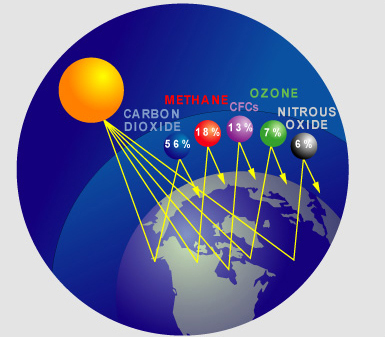







 (This is a “think piece” intended to stimulate thought and discussion, rather than a scholarly manuscript.) We just didn’t have time to address every social issue that surrounds education.




 Meanwhile, global population is ticking skyward.


