The fewer young people that vote. The worse for the future.

Tags

, , , , ,


We are all too busy living our lives. Its time to wake up.

In my last post I endeavor to height-light just how complacent we are all becoming to the effects of Technologically advancement. ( The Internet is dissolving National Borders. Are we heading towards Electronic Governance)

It’s the 21st century! Why aren’t we voting online yet?

After all, we trust billions of financial transactions to the Internet every day: Why can’t we use technology to do something simple like vote? 

What if voting were extended to mobile phones?

Shifting to online voting would lower the costs of conducting elections by reducing the need for polling places, staff, and equipment. Just as it’s less expensive for Amazon to take an order via the Web, states could lower their costs conducting elections online.

Few would argue requiring citizens to show up in person at schools, churches, Mayor halls and other locations to cast votes is a perfect system.

In this technological, gadget-crazy world, where everyone is addicted to their Smartphone or their iPad or their laptop – or all three – it is hard to believe that voters are still having their say by placing a simple paper slip in an envelope through a slit in a cardboard box.

Estonia has offered online voting since 2007, with roughly a quarter of its population of 1.3 million voting online — although, it should be noted, Estonia also has a national smart-card ID card system.

The problem is even if we have all the software and connectivity necessary to operate widespread electronic voting, implementing it will probably involve at least as much politicking as technology.

So we are left with the problem of enfranchisement, empowering democracy by enabling more eligible voters to cast ballots – especially the Youth.

Instead of producing the leaders of tomorrow, the voting system is producing a bunch of sheep that are trained to take orders and that are pretty good at taking multiple choice tests.

On the other hand our early education systems are too focused on educating for the work market place. It absolutely amazes me that these days how students can get all the way through school without ever learning how to read, write or speak at a functional level.  They do not know how to form a sentence. They cannot write an intelligible paragraph but they can vote.

And we wonder why Young people today do not feel they have much of a stake in society.

What is more depressing is simply that in many places, young people do not feel that there is anyone worth voting for.Voting Printables

Well the freedom of speech lie at the tips of our fingers.

We know, from the hash tags that flood our screens, that there are other ways to get things done..if we don’t start now, in 20 years’ time there’ll be a huge swathe of 40-something year-olds with no idea how to interact with the electoral system.

With two major General Elections coming up this year – Spain, England,  there is never a better time for the Young to get involved.

Young people have borne the brunt of austerity because politicians knew they could get away with it, that there would be no repercussions come election day. The less the young vote, the more politicians will feel they can ignore them without risk of being punished at the ballot box.

We are just seeing the Results of the Greek Election.

We the people simply must recapture a sense of power, ideology, and imagination in our politics. Only with a massive turn out by Young educated voters can this be achieve.

The question is?  How do we achieve a fair Political system.

Here are some suggestions (in no particular order) that could transform how current day Politics are conducted.

1)  Remove money:

Reduce the number of seats in Parliament. Make the monetary reward sufficiently for those elected to fulfill they elected duties and term. Make it a legal offence with large finds against lobbied for favors, commercially or otherwise, applicable to both sides.

Another words Money is power; take money out of the electoral system, and you take away the corporations’ power and corruption.

2)  Introduce. Internet vote, same-day voter registration, and an Election Day Bank holiday.

The most practical way to validate people for online voting may be to send them one-time V PIN numbers via postal mail. The Pin opens My Vote app with the list of Candidates relevant to their post code.  The Pin self destruct on voting. This would make it impossible to hack.  

3)  Apathy and inconvenience need to be conquered.

The prolonged period of abnormally low-interest rates, combined with quantitative easing, has inflated the value of assets, which are concentrated in the hands of the more advanced in years. Sadly, cynicism breeds cynicism. If people think it is more “normal” not to vote than it actually is. If elected officials acted more on “bread and butter” economic issues, most people of all ages would consider their votes much more meaningful.

4) The point of a manifesto is to offer a bold and alternate vision for the future, for a party to declare what it is fighting for, what it thinks the country needs, regardless of how many votes it will win.  The issues in Manifesto presented by parties need to be more relevant to daily life-rather than visions of pie-in-the-sky utopianism.

We on the other hand need to re imagine the point of policies and manifesto’s. Policies aren’t there to win votes.

5)  Enriching and utilising social media and e-petitions instead of belittling them as the work of ‘keyboard warriors’.  Everyone says social media should be part of the solution and all the parties are trying to exploit it, but little of their effort is imaginative.

6) The current system of winner-take-all elections is out of date.

It is raising the threat of ever decreasing turnouts at elections and governments with less and less claim to have a proper mandate from the people.

Through the implementation of a PR system, the voice of more voters can be heard-and a more representative government created.

The lower threshold of votes needed to elect a candidate under PR will allow smaller groups to elect representative officials more in tune with their political philosophy without the having to constitute the majority of the voting body.

By providing a greater number of people voting incentives, paired with the increased likelihood that third-party candidates can be voted in, PR insures a more representative government that will better serve the people.

Furthermore, PR will eliminate much of the opportunity to predetermine elections through the mastery of gerrymandering, again allowing for a more accurately representative government.

The system of Proportional representation, allows for the evolution by creating a governing body that will change with the electorate, rather than one that continually alienates voters by ignoring their demands.

By implementing proportional representation we will be moving towards actually making every vote count and every perspective heard.

Proportional representation, if used in conjunction with programs to increase voter awareness and voting ease, will ensure a more politically involved youth and a more democratic democracy. This also translates into the vote of each person carrying a greater weight, thus giving that person more of an incentive to become involved in the political process. Then representative democracy could really have a chance to work again.

But the adoption of PR alone is not enough.

7) It has to be paired with the implementation of Internet voting that will engage the Youth vote. If people were allowed to vote over the Internet, many that did not vote previously would do so due to the ease with which it could be done.

If we don’t address this deficit in our democracy, it will become everyone’s problem at every election.

 8) We must change the dream from the success of the individual to the success of the group.

9)  The ideological platform of various parties should be introduced to student in schools so that when they come of voting age they have the background to vote for the parties that will best represent their interests. The better-informed youth are about the facts of issues, the more informed a decision they could make during elections. Better educated about the political process and the issues that they will face as voters.

10) We are often told that every vote counts but unfortunately in today’s system this is false, and a great deal of our votes count for nothing at all.

11) Reform the electoral registration system to bring it into the 21st century.

Young people should be automatically registered when they reach voting age. Online voter registration and automatic registration for young people as soon as they turn 16. The reason the young don’t get on the electoral register is that they move about more and are harder to capture on party databases.

12) Introduce a British version of the Skimm, a daily chatty breakdown of the main news stories of the day, sent straight to their inbox. This would shatter the illusion of impenetrability that lots of young Brits assume goes hand-in-hand with politics. The less politics has to offer to the young, the less they are likely to vote. Youth tend to get most excited about issues rather than politicians.

I don’t see a great future for Britain if it turns into a gerontocracy in which the political classes privilege the interests of the old over investing in the young.  British Politics is becoming little more than a brawl for the middle ground, devoid of ideology or passion. The only way to reverse this is through the adoption of a system of proportional representation. Thus, an alternative electoral system should be seriously considered.

By failing to get the young to the polling stations in May it could be said that we are raising the stupidest generation in English History.

The “illusion” of political democracy is under attack. We need to wake up. If you don’t believe me read my next post. THE – PACIFIC-PARTNERSHIP- AGREEMENT.

There you have it.  Even though you can’t do it from your smart phone or computer, please do vote.

product design, voting machines hacked, diebold voting machines, voting machine companies, voting machines for sale, voting machines 2012, voting machines manufacturers, electronic voting machines, why are voting machines used

As this is my 200 Posting I expect those that read this post either to comment or pass it on, I don’t want your like vote.

← Back

Thank you for your response. ✨


The Internet is dissolving National borders. Are we heading towards Electronic Governance

Tags

, ,

I have a feeling that this post will require more than one visit to the keyboard.

Sorry this is rather a long-winded post.

As technology is influencing every aspect of living the problem is where to start.

I am at this very minute using technology that is advancing at such a rate it seems to have control over our lives. So let’s start by saying that I am not against Technology but I don’t want to end up with my Fridge controlling my Life. (Previous Post on Technology)

In this post I want to look at the effects of Technology on Society in general. The impact of technology on human behavior.

As the barriers to information come down, we are all already living longer, eating, drinking, going about our business differently with totally complacency as to the effects it is having or will have on our lives.

The impact of technology on society is deep. It is both positive and negative.

Is it now the principal driving force of society, determining societies mode of operation?  I would not say yes, however we are fast coming to the point of no return.  We need to protect ourselves from its negative and predatory influences before it’s too late.

The meanings assigned to technologies are determined by the norms and values of social groups which draw on the “wider context” of sociocultural and political environment.

The heterogeneous and hierarchical community of technological development functions as a mediator of social values and forces value orientation in society to change. They bring new technological constructs or their complete generation to life.

For example;

Capital mobility has increased incredibly, the economy has shifted to the service sector, innovation has become the primary source of productivity growth in relation to engineering, organizations, institutions as well as individual workers. The “technical construction of society” has become a major issue, that is social processes are mainly mediated by technological development.

The nature of economic competition has been undergoing huge changes, as more and more people think that there have been profound changes in the relation between economy and society and innovation requirements.

People start moving on a different time scale, time has been speeded up. Space has become globalized, by turning into more unified and more complex at the same time. The society’s level of being informed, with exploiting the opportunities provided by information and communication technology, has been increased dramatically.

Socio-economic processes create new virtual spaces or even real spaces are modified: the processes are arranged in new ways in the interacting local, regional, national and supranational spaces. While integration processes are considered to be a general tendency, clear attempts for isolation also appear repeatedly.

Knowledge has become the main economic source, and learning abilities and skills have become a criterion of adaptation at the levels of individuals, companies, local communities, nations, supranational organizations and the world taken as a global system.

As the internet dissolves national borders how will we help indigenous cultures co-exist with an increasingly homogenous global culture?

The internet is stripping the world of privacy. More and more people store personal information on the internet, how will we ensure that information is kept secret?

It is causing massive changes to;

Social/Isolation/Social Skills/Obesity/Depression/Sleep Habits/E Waste/Cyber-bullying/Deceit/Reality/Stress/Social Boundaries/Sexual Boundaries/Social Bonds/Distraction/Attention Span /Addiction/Lack of Empathy/Violence/Energy Consumption/Neurosis.

People fail to realize that technology is the root cause of many of our modern troubles;

The current financial crisis might not of happened but for Technology. Internet gambling has become an addiction for many. Uncontrolled Porn is debasing us all. The development of smart weapons.

I believe that people have too readily embraced technology, seeking only the benefits, and ignoring the many downfalls.

The excessive use of machines in every field can result in an under-utilization of human brains. Over time, we may even lose our intellectual abilities. You know of the declining mathematical abilities in children due to use of calculators since school, don’t you?

Where is the digital divide going to take us? How is our ‘tomorrow’ going to be?

It has made life easy, but so easy that it may lose its charm one day. One can cherish an accomplishment only if it comes after effort. But everything has become so easily available due to technology that it has lost its value. There is a certain kind of enjoyment in achieving things after striving for them. But with everything a few clicks away, there is no striving, there’s only striking. With the developments in technology, we may be able to enjoy all the pricey luxuries in life but at the cost of losing its priceless joys.

If you read Google’s privacy policy carefully, it is clear that they retain the right to make significant decisions about our data without regard for our interests.

Nearly everything is being assimilated into technology Google Earth documented the entire map of the Earth; taxes, email, chatting, shopping, and work can be done over the internet; you can read on your Kindle; you can make home-made movies on Windows Movie Maker; and hundreds of other such ways.

According to a new creed, technologists are turning ourselves, the planet, our species, everything, into computer peripherals attached to the great computing clouds.

The news is no longer about us but about the big new computational product that is greater than us.

Is constant contact with the world really a good thing?

The continuous and self accelerating innovation processes characterized by the intense competition has brought about some changes in time relations.

If you are always in contact, there will be a decreasing amount of time to devote to yourself, and others will shape your opinions more and more.

The question is whether the hyper-connected life is taking us where we want to go.

It is it possible for technology to have value without facilitating a human goal?

We live more in our heads than any society has at any time in history, and for some the only reality is the one inside their heads.

By 2020 it will enabled the sending of messages via wireless headsets and visors”virtual telepathy”

At present, it is used largely for profit of individual or corporate gain.

It is used for short-term, monetary expediency, with little thought to the long-term survival of the human and other species on this planet.

Our present method of operations has become like a cancer, devouring its host.  It just cannot continue for much longer.

When we become habituated to the amazing technological achievements of recent years, we forget to be thrilled and amazed. We lose that great sense of wonder, of awe. We take brilliance for granted and so we ignore the human elements of fortitude, creativity, and intelligence” (Vaidnyanathan, 51-52).

When you stare at a screen too long, and it feels like your mind stops “Thinking.” You are socially and psychologically cut off from your fellow citizens.

You can see evidence everywhere.

It has become incredibly easy with the rise of the internet to become popular just by making the biggest impression. Being the funniest, cruelest, the one with the saddest story are all similar ways of becoming an internet phenomenon.

It is even reflected in popular culture, where being the fastest rapper or wearing the sexiest fashions all makes the headlines. These are all the same; they are shallow. You really do not have to work hard at being sexy, or rapping, or even having a sad story.

This generation leans on technology to serve their pleasures, and claim to be successful, or at least act like it. The internet is leading to a decline in “normal” social behaviors.

The news is a great example: Presented without any indebted analyst.  You see or read an interesting story, think about it for a second, and then you brush it over your shoulder, without any critical thinking, or wondering how it will affect your life.

So should we be concerned that an informational inequality often exists between governments and citizens.  More and more governments are using information and communication technology especially Internet or web-based network, to provide services between government agencies and citizens, businesses, employees and other  nongovernmental agencies.

Government activities that take place over electronic communications among all levels of government, citizens, and the business community, including: acquiring
and providing products and services; placing and receiving orders; providing and obtaining information; and completing financial transactions.

E Government is becoming an integrated tool of Governance – comprising three enabling sets of new technology: infrastructure, solutions and the exploitation of public portals.

Is E-governance beyond the scope of e-government?

Can Smart government equal smart governance resulting in Trans formative government, lean government, cloud computing, open government data, participation governance, digital divide, universal and mobile access, trust, security, identity, interoperability, and social media among others.

It might create a digital divide between those with ready access to electronic media and those without. It is changing the way people and businesses interact with government.

One of the most important aspects of e-government is how it brings citizens and businesses closer to their governments. An e-government infrastructure enabling the implementation of specific applications to address specific problems and issues of government management.

So when providing Internet access and email services in public portals, the most positive impact will come from the solutions and services that can be accessed from the exploitation of public portals with these communication tools.

Most recently we have seen agreements established between the U.S. and the EU on the transfer of personal data of airline passengers well beyond the scope of reasonable requirements.

Data retention, National Identification systems, e-government and joined-up databases, among other risks to privacy. What is the meaning of “identity”; the implications of turning several identities into one (without questioning consequences); what are the different scenarios and contexts for identification? This is changing the way information enters and flows around the system of government, introducing new—and sometimes uncontrollable—influences into decision-making

If we truly want to be successful we need to engineer the machines. ‘Machines replacing human beings’ does not portray a rosy picture, does it?

Overexposure to the Internet has taken its toll. In this virtual world, you can be who you are not, you can be virtually living even after you die. Isn’t this weird?

How can we prevent the invention of new purposes? That are often based on flawed assumptions, including dangerous ones.

In the current climate of fight against terrorism and cyber crime this imbalance is currently shifting towards greater government control over citizen data.

Is IT  a good thing’ for government?

Consequences and implications for e-government from wide-ranging surveillance and spying of digital communication. Ignoring the evidence about downsides to technology and ignoring the evidence of the widespread costs of failure of e ­government about how one should gather data about the world in e­ government as elsewhere – has always been about self ­promotion as much as promotion of knowledge.

Virtually unknown a decade ago impacts associated with e­ government, cost­saving and improvements in public service quality.  computers in the public sector cause job losses

It can lead to serious issues like unemployment and crime.


These days, smartphones don’t just make calls, they’re an electronic extension of our lives.


Have you ever stopped to think about how many people use the Internet in this world? The answers are astounding.

  • One-third of the entire global popular uses the Internet every day.
  • There are more tweets sent every second than the amount of breaths you take in an hour.
  • $116,220 worth of iPhone apps are downloaded each hour. That’s not even considered Android or others!
  • 98 years worth of digital video are uploaded to YouTube every day.
  • We spend more hours each day on devices than sleeping.

These technologies have completely redefined how companies carry out their most essential activities.

– 91% of employers screen prospective employees through social media

– 76% of employers screen prospective employees through Facebook

– 53% of employers screen prospective employees through Twitter

– 48% of employers screen prospective employees through LinkedIn

No matter what type of advancement we make, we’ll always have something to complain about and I can hear a lot of you saying I am just another nerd doing exactly that.

There is no doubt that we need technology but we must guard against technology that does not need us. I cannot imagine a single technology that only has upsides.

← Back

Thank you for your response. ✨

100 Years - Then and Now

100 Years - Then and Now


It’s one thing to be famous. It’s quite another to be notorious,

Tags

, ,

Some time ago I wrote a post under the Banner  “Adam and Eve were Black. They lived in Africa at the same time – but probably never met. ” Adam and Eve

Although there are much more serious subjects to be addressed for some unknown reason this post seems to be popular with my readers.

So let’s have another look.  Did they exist?  Did they meet?  What did they look like?

The Sumerian records reveal that “Adam” and “Eve” were not created by “God”, but rather they were genetically engineered by an advanced race of extraterrestrials called the Anunnaki.

Right so they did exist in alien form. They certainly did not exist in the form of human as we know it.

Leaving us with perhaps the most convoluted puzzle to ever exist, a timeline which pits some of today’s most dominant dogmas, whether scientific or theological, in an unrelenting war against one another.

The history of human civilization and evolution.

As Far as we know life on Earth began more than 3 billion years ago, evolving from the most basic of microbes into a dazzling array of complexity over time – to life in the universe develop from the primordial soup?

The question is :  Did the Garden of Eden exist before this soup.

Genesis puts Adam and Eve together in the Garden of Eden, but geneticists’ version of the duo — the ancestors to whom the Y chromosomes and mitochondrial DNA of today’s humans can be traced — were thought to have lived tens of thousands of years apart.

There is a saying that if you believe in God, you can’t believe in evolution. If you believe in evolution, you can’t believe in God.

According to the scientific knowledge that we have to-day man fell out of a tree, eventually stood up on two legs and walked out of Africa.

Now the problem is Adam was created as a Selfie of God and if he arrived at the time humans evolved (and I mean on offense to God) God would look like an Ape.

However God created Adam using the lowest element of the Earth, the dust. This part of the account of the creation of Adam being made from the dust indicates that man has a thanatos origin (an unconscious urge to die) being made up of the lowest form of the elements.

If ignorance is bliss, than Adam and Eve were the happiest people ever but they were set up by God.

Adam’s primary loyalty is meant to be towards God, while Eve is meant to submit and be loyal to Adam rather than God. For Adam, the constant gaze of the Other is almost maternal; to live without it would be to cease to exist. He just wants things to stay the same. Adam, who was once lifeless, could now move and speak and becomes a living organism that can learn and progress under the direction of with his newly found father, God.

The fact that God created Adam first “suggests that God saw Adam as having a leadership role in his family” (Grudem, 1994).  According to Genesis 2:18 and 2:20, Eve was created to be a helper for Adam.

So was Adam a superior to Eve?

He was created in the image of God, she in the image of man. Adam and Eve are created by the same God and have nature in common, but in some ways nurture separates them. Adam is given the gift of life and the responsibility of caring for God’s creation. Eve is created shortly thereafter as a companion and partner.

At the point of creation they knew no evil. It simply did not exist in their minds. In essence, children lose their innocence following the acquisition of knowledge. Knowledge is a powerful tool.

So why would God put the tree or the fruit or the knowledge of good and evil in their path unless he had wanted them to partake.

“Good and Evil, if they exist at all, are after all two sides of the same state of being.

Life is mapped out with no regard for individual choice while contrary belief tells us that mankind is capable of free will and therefore has control over his own life and the consequences of his actions. So once God has set things in motion, he pretty much exits.

So how does the story of Adam and Eve end?

They (or shall I say “we”) are still evolving.

If we compare the Bible to the Qur’an, we can clearly see that Eve, the mother of all human beings, has a different standing in each book.

Could that be why there has been so much abuse and disregard in the past for women; or why women have never received full equality rights with men, even if they are more qualified?

Do the men within the Christianity faith blame it on Eve?

Is this where Fundamentalism finds its origins.

Fundamentalism: The belief in old and traditional forms of religion, or the belief that what is written in a holy book, such as the Christian Bible, as being completely and literally true.

The Cambridge International Dictionary of English Fundamentalism: a: a movement in 20th century Protestantism emphasizing the literally interpreted Bible as Fundamental to Christian life and teaching; b: the beliefs of this movement; c: adherence t such beliefs.

Webster’s English Dictionary: Fundamentalism is a religious phenomenon which has taken 20th century politics by storm. As defined by Webster’s English dictionary fundamentalism has a direct correlation with Protestant Christianity; however, it has in the past, and is currently, impacting many other forms of religion. Since the 1970’s many religious movements have emerged into political governments and ideologies all over the world.

The dominating religion in Europe is Catholicism; Hinduism is very strong in eastern Asia; Judaism is the ranking religion in Israel and Israeli’s political decision; and finally, Islam is the principal religion in the Middle East.

According to Kepel (1994) all of these religions share the characteristic of challenging the way society is organized: either its secular foundation, or the way it has deviated from a foundation based upon religion, as in the United States for example. When the American government was constructed by its founding fathers, the guidelines for America’s laws and ideas were based on what Biblical principles, Christian values and morals.

Fundamentalism. How far can each be understood as a reaction to liberal-capitalist modernity?  Islam is the second largest religion in the world, second only to Christianity which has been the main religion in the United States and is actually making a strong comeback in America.

The roles of father and son played by God Adam was created on the 6th day..Gods intentions regarding this human capacity is very much in doubt.

Adam is the first man and the father of mankind. He prefigures the human race, representing the perfect male form. Adam is all fathers, sons and brothers rolled into one. Formed in the image of God, he is God-like, but not a God.

He and Eve are illusions, a Dreamboat of Fundamentalism and the original sin.
 

← Back

Thank you for your response. ✨


Is Britain heading for an EU exit?

Tags

,

The issues here are so complex there is a danger that voters may go with their gut instincts and unwittingly take Britain out the EU.

Membership of the EU cannot be weighed solely in pounds and pence. But any decision about membership will inevitably be shaped by the economic costs and benefits. Unfortunately, the British debate has lacked objective analysis of these, with both ‘outs’ and ‘ins’ using evidence selectively to make their case.

Here are some what I consider disputable pros and cons from an outsider.

A Certainty:  In a referendum, the question is simple : Britain will have to choose between national sovereignty and unimpeded access to EU markets.

What exactly would be the consequences be for Britain if it voted to leave the EU.

It would necessarily mean that more than 50% of the population had bought into the vision of a right-wing and isolationist government. So it would do well to ask what kind of national identity would assert itself if it went it alone.

A Probability:  An exit will lead to collapse of the United Kingdom with Scotland separating. Northern Ireland & Ireland Reunited. Wales A Federal UK State.

A Certainty:  After 44 years of half-hearted membership it would be a bleak move in cultural terms – with huge cultural ramifications.

The trade-off that the UK must make is quite simple:

A Fact: It is between regulatory sovereignty – which would not transform Britain’s growth prospects – and unimpeded access to the EU’s single market. At present, around 30% of the UK’s gross domestic product is exported in the form of goods and services. Of that, around 45% goes to the EU. As a result, Britain exports roughly 14% of its GDP to the EU.

A Certainty: If it leaves the EU, the UK will have to negotiate terms. Britain will face an invidious choice: access to the single market, but less influence on the rules that govern it; or freedom from the rules, but loss of access to the single market.

Britain could trade with the EU under WTO rules in order to regain regulatory sovereignty. But its exporters would face EU tariff s, and would have to comply with EU product standards if they wanted to sell their wares on the continent.

A Fact: Britain’s economy is far smaller than the EU’s – and would be less of a priority for the US or China.

The UK would be free to negotiate trade agreements with countries outside the EU. But it would not inherit the EU’s existing bilateral trade agreements that are already in existence: it would have to negotiate new ones. So, upon exit, it would have less access to markets outside the EU, not more. While membership of the EU is as much about broader, political questions as economics, the economic case for staying in the Union is strong.

It is hard to believe that Britain would find it easy to forge new deals.

To persuade a trading partner to start negotiating, it would need to be able to offer something attractive. The UK is already very open to imports and inward investment, so it would have little to offer in return for its demands that other countries reduce tariffs and other trade barriers.

A Fact: Britain benefits from the EU’s size in trade negotiations, which gives it something to bargain with.

And as Britain has one of the least regulated economies in the world, according to the OECD, any economic gains from repealing the EU’s rather limited social legislation would be small.

A Fact : Half of Britain’s FDI stock is owned by companies with headquarters in other EU countries. A sizeable chunk of the rest is from non-European companies who seek a base for their European operations in a lightly regulated economy.

A Probability:  There is the question of London’s huge financial services sector. Will it decides to stay put or decamp to Frankfurt, Dublin or Zürich.

The alternatives to EU membership are unsatisfactory: they either give Britain less control over regulation than it currently enjoys, or they offer more control but less market access. The EU’s single market has brought sizeable benefits to Britain that it could not have won without sharing some sovereignty in the European institutions.

A Fact : Eurosceptics are wrong to say that the EU offers little market access for a good deal of red tape, or that it constrains Britain’s trade with fast growing economies outside Europe. The EU has no tariff s and quotas on internal trade, while common rules have further reduced trade costs

If Britain walked away entirely—the most extreme scenario—it would quickly see some benefits.

A Fact : The country would no longer have to transfer funds to the EU to subsidise farm incomes or poorer regions. Treasury figures suggest it would be £8 billion ($13 billion) better off each year. Food could become cheaper. Under WTO rules, countries may slash import barriers unilaterally as long as they do not favour some countries over others. Britain could do this for agricultural produce. It would regain control over fishing rights around its coast.

Some irksome regulations could be ditched, too.

A Fact : First to go (if the Tories are in power when Britain leaves) would be the working-time directive. This limits how long people can be at work without a break or a holiday and caps the working week at 48 hours. The scrapping of the EU’s agency-worker directive, which gives temporary staff the same rights as regular employees, would be cheered by business, too. Britain would be free to set itself a less exacting target for green-power generation than it is bound to under the EU’s renewable-energy directive. That could mean cheaper power.

If it looks to Norway that is not a member of the EU but is a member of the European Economic Area, which means it is part of the European single market.

They will see that Norway’s access comes at a price: Norway has to accept EU laws and regulations without having a say in how they are made.

Even Switzerland, which has a set of bilateral agreements with the EU, has limited access to those areas of the single market whose rules it cannot stomach, such as financial services.

A Fact : If the UK were to retain some links with the EU in order to benefit from access to the single market, it would find it difficult to avoid payments to the EU budget.  In recent years, Norway has paid £524 million annually (£106 per capita) and Switzerland £420 million (£53 per capita). Since the UK net contribution amounts £117 per capita, if it withdrew to the EEA and paid into the EU budget on the same basis as Norway, it would reduce its contribution by 9 per cent. 

A Certainty:   Immigration to and from the UK will require Visas. The free movement of people – one of the ‘four freedoms’ of goods, capital, services and labour – is a fundamental principle of the EU’s single market.  

A Certainty: Its UN AND WORLD POWER STATUS WILL CHANGE.

A Probability: Sterling could be forces to join the US Dollar if it will have it.

A Certainty:    High Tech Industry will move. Should Britain leave, more research funding will have to be made available to make up the shortfall, to avoid damage to the country’s scientific base.

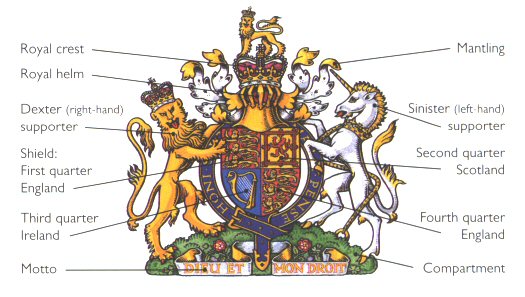
A Fact:  Say good-bye to the Royal Family as you know it, and the present voting system, say hallow to Proportional Representation and higher taxes. .


Résultat de recherche d'images pour "pictures of britain's royal family"

A Certainty:   If Britain seeks a looser relationship with the EU, but one which includes full access to the single market, it will have to pay for it. Both the Swiss and the Norwegians make contributions to the EU budget. If it joins the EEA, it will have to sign up to all new single market rules with little hand in their drafting.

A Fact :  Switzerland provides an alternative model. It is neither a member of the EU nor the EEA, but has negotiated agreements with Brussels that give it tariff-free access to the single market for its exports of goods. Exports of services, including financial services, are not covered.

A Fact : If Spain’s Podemos party continues to grow, then the contrast between northern and southern Europe will be even more striking. Britain would be well advised to put off calling a referendum till the dust from the Greek Crises is well settled – whether Britain should control its own destiny or be part of a family of European nations – rather than rely on a narrow cost-benefit analysis Britain needs to wake up to the real world.

A Result:  HashtagEuropeBritian wins for me.

← Back

Thank you for your response. ✨


Abracadabra – Can 1.3 trillion of Imaginary Money save the Euro.

Tags

, ,

European institutions appear weak and incapable of defending European principles and the proper functioning of the euro.Euro coins on fire

Greece is on the verge of balking on billions of Euro it has borrowed.

If they do it will trigger a free for all and the end of the Euro.

The euro is seen as the ultimate underpinning for the edifice of European integration. The financial crisis and its aftermath have shown that the euro instead has the potential to destroy the whole project.

Political reform is needed to sustain the euro but this is unlikely to pass the political feasibility test with the current governments of Europe. At present the European Union is a club with virtually no economic union: no fiscal union, no banking union, no shared economic governance institutions, and no meaningful coordination of structural economic policies.

The Greek crisis will pitted debtors against creditors.

Not with standing the deep interdependence between them Debtor countries want salvation through solidarity and are thus committed to policy solutions that distribute the costs beyond their borders. Creditor countries, on the other hand, want to insulate their tax payers from exposure to the debtor states and are reluctant to discuss large-scale burden-sharing.

We all know that Greece cooked the books to join the euro in the first place. However, France and Germany also broke the very rules that they had insisted on for everyone else. In 2004, Greece announced it had lied to get around the Maastricht Criteria. Surprisingly, the EU imposed no sanctions! Why not?

Because the EU wanted to strengthen, not weaken, the power of the euro in international currency markets. A strong euro would convince other EU countries, like the UK, Denmark, and Sweden, to adopt the euro.

Greece has been a chief benefactor of the EU budget; Since 2009, Greece has been kept on life support by two bailouts from the European Union, European Central Bank and International Monetary Fund worth a total of €240 billion ($320 billion).

In 2009, EU transactions summed up to 2.35% of GDP. From 1994-99, about $20 billion in EU structural funds and Greece federal financing were exhausted on projects to urbanize and build up Greece’s transportation system in time for the Olympics in 2004.

GERMANY-ECB-EU-FOREX-RATE-EUROZONE-BANK-MONEY

Would a Greek default  plunge the world into a  financial crisis? No. It prove systemic for the EU as a whole.

Greece, Ireland and Portugal, are already in their fourth year of austerity, face many difficult years ahead, as do states with high levels of debt. 

If the single currency survives, it will survive on the basis of more integration within the euro area as the ‘hardest of hard cores’ and hence deep divisions between the ‘ins’ and ‘outs’.

There is also the deeper question of the consent of the people. If the euro area reaches a federal moment and a federal question, then the consent of Europe’s peoples must be sought at least within the euro area.

Without it the currency the European Union as we know it would not be sustainable in the longer term.

Whether an exit for Greece can be achieved without triggering a massive financial crisis is doubtful. The result will be a disorderly collapse of the euro and probably of the single market as well.

The result of a Greek walk away would be substantial losses for established governing parties and more electoral success for extreme populist parties and National elections remain the most legitimate channel for selecting political office holders in Europe. European parliament elections are second order political events.

Next in  line would be Italy: It is too big to fail and too big to bail.

Greece’s creditors must accept the necessity of a write-off of at least a portion of Greek debt. The current practice of extending the terms of Greek loans and pretending that Greek will – some day – make good on its commitments cannot be sustained.

A Greek default would have a more immediate effect. First, Greek banks — already on the brink — would go bankrupt. Next, losses would threaten the solvency of other European banks, particularly in Germany and France. Even worse, the EU’s central bank (ECB) holds a lot of Greek and other sovereign debt. If Greece defaults, it could put the future of the ECB at risk. Other indebted countries might decide, or be forced, to default. Without a central bank to bail them out, the EU itself may not survive.

The crisis requires collective action from the ECB and the 17 member states in an environment of deep divergence of preferences and interests.

Make no mistake: this is going to end badly. By this time next year, either Greece will be out of the euro – or Syriza will be out of power.

Luckily I have thought of a solution.

Why not give the Greeks a huge pile of imaginary Quantitative Easing Money. Then they can give this imaginary money back to pay off their debts.

Abracadabra the Euro is saved.

← Back

Thank you for your response. ✨

We know what fate we’re going towards.

Tags

, ,

You don’t have to be told that the World is in a mess or for me to tell you why –  it is in this post.

Of all the places in the world you would think that the European Union (which was built out of the ashes and grief of two World Wars) would extend the hand of help to Refugees.

I am not saying that the EU should accept every Tom Dick and Harry on a  Willy – Nilly bases.

I am saying that in order to save lives the EU should have safer routes for refugees run by EU border agency.

Italy Mare Nostrum at a costs 9 million euro per month has now fished out over 150,000 migrants/refugees – mostly from northern Africa and the Middle East.

Italy ended its full-scale coastguard operation known as Mare Nostrum, and the EU replaced it with Operation Triton.  An under-resourced scheme whose primary focus, officials admitted, was securing maritime borders rather than rescuing migrants.  While on the other hand it is commencing to pump billions into the economies by Quantitative Easing.  

Shame on us all.

If the EU is not willing to set safer routes  it needs to get serious about preventing future tragedies, it needs to give Triton the mandate and resources to rescue boats throughout the Mediterranean.

The morality of Europe’s decision to downsize maritime rescue operations last autumn fly’s in the face of everything it stands for.

The drowning of over 400 migrants since the start of the year, once again raises concerns over Europe’s reduced coastguard rescue operations.

If we believed that families drowning in the Mediterranean would be a deterrent to other migrants to attempt the crossing, well it’s not.

People are leaving because they’re being pushed out.”One survivor from Wednesday’s disaster told their rescuers: “We know what fate we’re going towards and [we understand] the probabilities of dying, but it’s a sacrifice we consciously make to have a future.”

God forbid it was one of us.

The Mediterranean Sea is over 2.5 million square kilometers.

The European Union must guarantee that there are no more push-backs at its land and sea borders:

Such refoulement (The expulsion of refugees) is an infringement of international law. Fundamental rights and fundamental values are just that, and should not be modified or curtailed based upon the strength of economic indicators. For if that is the case, they were not fundamental rights or values at all.

The true measure of a country, as well as a person, is how it deals with the most vulnerable. Our children may not consider this one of Europe’s finest hours.

Foreign Office minister:  Baroness Anelay has said such operations can encourage more people to attempt to make the dangerous sea crossing to enter Europe and claims that the demand for smuggling trips will continue despite the cancellation of Mare Nostrum. The UK would not support future search and rescue operations to prevent migrants drowning in the Mediterranean Sea. Migration is seen as something negative.

The UK looks about migrants as a burdens on the labor market, security risks linked to immigration, burdens on the social security system – these are three issues that are immediately brought up when migration is discussed by UKIP. And we can see from the political discussion of the last few weeks with what strength this defense mechanism comes into operation, even though we are talking about such small numbers.

I would suggest that the Baroness should spend a few day on a Life raft.

Since refugees have little chance of legal resettlement in countries such as Britain, which has settled only 90 Syrian refugees.  Europe unlike the UK must open its arms in an act of humanity. The costs will be about EUR 2.8 million per month creating badly need jobs.

Let me tell her that the protection of asylum seekers are shared challenges. The new EU refugee operation “Triton”  will be different in nature to Mare Nostrum, as it does not have a search and rescue function, but it has only a third of the budget of the Italian mission.

The operation has six ships, two planes and one helicopter at its disposal.

The EU needs to reconsider how it deals with refugees. The invasion is a myth which has been encouraged over decades, but it has nothing to do with the reality of the global figures.

Here is what a few that survived say:

Justice Amin, Ghana

“I’m here to find work to do so that I can help my family in Africa. That’s why I’m here in Europe. So I’m not happy. I mean, I like this area, this place I am living. But I’m not happy.


Vito, Nigeria

He explained life in Europe isn’t what he was expecting: “They are not treating us well… there is no work for black people, for illegal immigrants, all of them are wandering the street, looking for, begging money.”


Atiku, Ghana

After be saved, he was buzzing with excitement and ambition, now he’s sleeping rough in a train station, scavenging in litter bins and begging:
“I can’t steal… so begging is better for me.That will be better for me to survive.”
He would still like to go to England, but his priority is finding work and somewhere to live.


One idea would be an EU-wide distribution key with clear criteria, including possibly distribution according to population and tax revenue. That way, one wouldn’t always have this jealousy and bad feeling and the refugees wouldn’t be politically instrumentalized.

← Back

Thank you for your response. ✨

Ask Yourself—— Where do my thoughts come from.

Tags

, ,

The other day I was sitting in the garden looking at a cherry tree.

I had a though that lead me to another thought – Where do thoughts come from.

How does the cherry tree know when to flower? You can look it up on Google.

Anyway this might be a bit deep for some.

You often hear the expression “I have lost my mind “

The question is where was it in the first place. Your brain is still there.

Back to the cherry tree.

All living thinks on Earth share a basic Mechanism. The tree get its energy from the sun and its mechanism activate the flowers. We on the other hand get our energy like animals from protein and like animals our brains compute data that is controlled based on our Memories, Emotions, and Thoughts that come from the Brain; which cannot be measured directly or objectively.

So where does Ego,Self,Sprite, fit in?

The brain works on information within itself by chemical and electrical transmission which we can these day see on MRI Scans. But it has no muscles, so you can’t see it moving. Its activity is invisible.

So where does the mind get its thoughts from. What is it ?  Where is it ?

Unlike Animals brains our brains allows self-awareness.

Is the mind Independent from the brain. Or are the mind and brain  the same.

To day they say that the mind is a function of the brain activity – as far as I can see there is no physical proof of this fact.

Is the mind located elsewhere? Or is it indeed the sum of the functions of the Entire Brain.

The Egyptians believed it was in the heart and in Babylonia times it was in the liver.

Plato ( c 428 bce- c 247 bce) in the spinal cord.

Aristotle ( c 348 bce- c 322 bce) the heart.

Hippocrates ( c 460 bce- c 377 bce) The mind was a function of the brain.

Rene Descartes (1596-1650) In the Pineal Gland- in the Brain.

Blaise Pascal ( 1632-1662) Man is a thinking Reed.

Robert De Mayo Dillon ( 1947-    ) The mind is just a though it does not exist.

It was the Cherry tree that gave me the thought in the first place.

Your real nature is like the sky, like space. Just remain like the sky and let thought-clouds come and go. If you cultivate this attitude of indifference towards the mind, gradually you will cease to identify yourself with it.

← Back

Thank you for your response. ✨

The limits of my language are the limits of my world.

Tags

, , ,

Our physical world is polluted with dangerous chemicals, but our language, too, suffers its own kind of pollution.

Everyone is society is affected by language and communication in some way or other, no more so than Europeans.

So lets ask a few questions;

The Treaty of Rome in 1957 founded what is now the European Union, and was supposed to be the beginning of the end of nationalism in Europe. But over a half-century later, nationalism never went away. Officially, deputies and delegates will only speak in their national languages, as a matter of principle.

You might wonder then, when most, if not all, EU bureaucrats master English, what’s the point in maintaining 23 official languages, especially at such expense? Why not just use a single language and, what’s more, why not use the language all EU bureaucrats master — English?

Within the EU institutions, ideology trumps pragmatism, and the founding ideology of the Union is “Unity in Diversity.”

Back in 1957, when there were only six member states and four languages, it was an easy credo to follow. But fast-forward to today and things are not so easy: 27 member states and 23 official languages. It’s costing the EU a lot of money, it’s having a negative impact on its global competitiveness and it will only get more complex as the union continues to enlarge. Croatia will make 24th official language.

Just imagine a General with an army of 24 different nations all awaiting the order to advance in their own language. The war would be over before it started. God knows we have moved on from Nelson days where every order had to giving in triplicate, but the idea for establishing English as the language of the EU, remains politically toxic. Long live Nelson.

English is the language of the most eurosceptic country — the United Kingdom. What’s more, France and Germany are very touchy when it comes to having their languages eclipsed by English. Any single language wouldn’t be democratic, or in the shared spirit of the union.

So we are left with. Once a delegate or bureaucrat delivers a speech in his or her native language, it’s taken up by dozens of interpreters, who simultaneously translate into their respective languages, or tune into the English interpretation and translate from that. Meanwhile, an official release of the speech is produced and sent to the translation unit and a separate group of text-based translators gets to work.

The process is costly, unproductive, and most of all, unnecessary.

So how are national and European identities tied to language and communication? And what role does power have – power in discourse, over discourse and of discourse?

In our daily lives, we often encounter combinations of words and images of all kinds. We take them as given, we use them to communicate and interpret information.

Just imagine you were born stone deaf. Your language would be based on sight–lip reading which translates to sign language which appears to be on the increase in modern forms of communication.

But we are no longer communicate only in ‘traditional’ written or spoken genres, but also using new ones, such as text messages, e-mail, tweets and Facebook posts. These force us to get accustomed to the reduction of geographical distance and of time-spans due to the GLOBALIZATION OF COMMUNICATION. These day you can get fired by a text while on holidays.

However, in all available genres, the use of language and communication as a ‘social practice’enables dialogue, negotiation, argument and discussion, learning and remembering, and other functions.

Languages and using language manifest ‘who we are’, and we define reality partly through our language and linguistic behavior.

But who determines who can speak with whom, and how? Who decides on the norms of language use; who sets these norms and enforces them; who determines whether languages, linguistic behaviors and identities are accepted?

Who, for example, decides, in the end, which language and which form of language is ‘good’ enough to pass a language test to attain citizenship or resident status? Or look at the other side of the pond. Spanish is like a creeping tide in the USA.

With the recent appearance of new states in Europe and the flow of populations across state boundaries, a new criterion centered on proficiency in the official language(s) of a state has emerged.

The acquisition of language proficiency is apparently frequently perceived as being solely in the interests of migrants and not also in the interests of the host country, as well as being the host country’s responsibility.

Moreover,many politicians still have to be convinced that second language acquisition depends on the availability of professional teachers, good teaching materials and sufficient competence in one’s native language.

Unfortunately, the worlds of language experts and politicians (and their bureaucrats) remain far apart, and much dialogue would be required to bring them together. Parameters for determining exactly who is (or can become) a ‘resident’ and/or a ‘citizen’ are at present unresolved, with little consensus across the states.

In creating language tests of various kinds, language competence has acquired the status of a key gatekeeper – providing access for some and rejecting it for others.

There are certainly no easy recipes for dealing with second language acquisition and migration. However, it is clear that we must acknowledge the close, emotional relationship between language and identity, and take account of it in the many political and educational policy decisions made every day.

All human identities are social in nature, because identity is about meaning, and meaning is not an essential property of words and things:

Two established criteria for determining citizenship, common in policy discourse,are birthplace and bloodline both are indelible printed and cannot be replaced by citizenship.

Language, power and identity’ closely these three are connected. How the discursive construction of  identities is influenced by vested interests, and how identities are thus continually re- and co-constructed and negotiated.

However, these co-constructions operate within clear borders created in politics, in the economy and in legal frameworks. The contrast between policy regulations and the ‘voices of migrants’ allows the exposition of the many inherent contradictions in the search for European identities and related values, as stated in the Charter of Fundamental Rights

Meaning develops in context-dependent use.

Meanings are always the ‘outcome of agreement or disagreement, always a matter of contention, to some extent shared and always negotiable’ (Jenkins 1996: 4–5).

The cost of Translation in the EU is (estimated) — to be €330m a year or some €0.60 for every EU citizen.

According to certain very rough estimates, the cost of all language services in all EU institutions amounts to less than 1% of the annual general budget of the EU. Divided by the population of the EU, this comes to around €2 per person per year.

In 2014 output was 2.30 million pages. Of this, 71% was done in-house and the rest by contractors. A page is 1 500 typed characters not including spaces.

                  The limits of my language are the limits of my world.

                         Learning second language ‘slows brain ageing.

Speaking a second language is better than just knowing how to speak it.

When the world changes, sometimes a new language is needed to handle that change. For instance, telegraphs spawned Morse code, airplanes spawned air traffic control signals, and computers spawned machine language, C++, Java, and many others. You may decide that no existing language can satisfy the needs of your world, and so you may choose to become a language maker, which presents its own challenges.

That leaves us with : Do words make a language or is it the other way around.  Words can be x-rays, if you use them properly- they’ll go through anything, you read them and you’re pierced. Prized possessions  are words are words that are never spoken, sometimes the thought in my head get so bored they go out for a stroll through my mouth.

← Back

Thank you for your response. ✨


Taxation is the Price we have to pay to get it.

Tags

,

A little bit of government is a good and necessary thing and taxation is the price we have to pay to get it. Zurich

Taxation is very much in the lime light at the moment.

One individual:

Hervé Falciani. In 2009 this Franco-Italian systems engineer for HSBC’s Swiss private bank handed over a list of more than 100,000 HSBC clients to the French Finance Minister at the time, Christine Lagarde.

HSBC’s Swiss banking arm helped wealthy customers dodge taxes and conceal millions of dollars of assets, doling out bundles of untraceable cash and advising clients on how to circumvent domestic tax authorities, according to a huge cache of leaked secret bank account files.

Now you don’t have to be a raw prawn to know way most of us would avoid pay tax if we could.

“For we, the people, understand that our country cannot succeed when a shrinking few do very well and a growing many barely make it,” Obama said.

Here is the real reason why we avoid paying Taxes, (apart from Governments spending billions on useless warheads, conducting iff proxies wars, and privatizing national resources for short-term profits)

By taking half of everything that people own in a year the earnings of the 2,654.4 hours of the first 110.6 days go to the government.

Then our earnings can finally be our own.

For every 8-hour workday, we labor for 2 hours and 26 minutes to pay government and local taxes. One hour and 7 minutes goes to corporate and personal income taxes.

Eliminating this tax on productive earnings would eliminate 46.24% of the tax burden.

It would also allow us to keep our finances private. We dedicate an average of 20 minutes of our labor to personal savings. It should be more like 1 hour and 12 minutes.

A total TOT +1.19% of 35 minutes of the 8-hour workday pays for Social Security and Medical Insurance.

If Social Security was privatized, instead of constantly decreasing benefits, personal retirement accounts would be over funded.

An additional 19 minutes goes to consumption taxes like excise and sales tax.

Some people suggest our country could operate on a “fair tax” of entirely sales taxes. But such a method of taxation has its own problems. Critics counter that a national sales tax is regressive, favoring the rich (although this depends on how you measure “rich”). They claim foreign companies would have an unfair advantage in the international market over their domestic counterparts.

Fifteen minutes of each workday goes to property taxes.

Even renters pay this tax as businesses and landlords pass the expense on to them.

Property taxes are highest for city dwellers because real estate assessments increase in proximity to a big city. Thus they tend to be a regressive tax, taxing the poor who live in relatively highly assessed areas and shop at stores with higher assessed buildings whose high property taxes trickle down into their prices.

For the price of property taxes, average workers could purchase all of their clothing. As it is, workers have to labor an extra 13 minutes to afford their clothes.

The final 9 minutes go to other state, federal and local taxes.

So how do we create a stronger, fairer, and more sustainable economic model in which the many and not just the few benefit from rising prosperity now and into the future?

Supplement wages for low-income workers

Increases the wages of low-income workers.

Progressive tax reform.

Payroll taxes are still sharply regressive.

Make housing cheaper.

Keep unemployment low to maintain worker bargaining power.

Deregulate copyright and patent law.

How can this be done in The European Union.

The euro zone debt crisis shows that something is seriously wrong with Europe.

But what is it?

The Euro zone is a heterogeneous federation of independent states, an area of ​​exchange where markets for goods, labor and financial assets are segmented by national boundaries and often scarcely competitive.

European nations have basically been moving apart for centuries, developing their own national languages and cultures.

So far, the organisation’s leaders seem to have shown little recognition of the inherent structural flaws of the currency, preferring instead to prop up failure.

Across much of the continent, the EU’s fatal lack of real popular consent may be catching up with it to the extent that it has actually amplified the differences in terms of income, unemployment, fiscal balances and public debt. The rules for budgetary discipline are imposed from the center and are ineffective, particularly in adverse economic conditions.

The crisis has also highlighted the inadequacy of European institutions and exposed their design faults. Public apathy towards the EU is also increasing, as citizens feel isolated from the institutions in Brussels and see no way to influence European level decisions.

The Euro zone federal budget is negligible and always balanced, so that the burden of macroeconomic stabilization falls on national budgets, which are defenseless against aggregate shocks.

Last but not least, it ultimately requires the Euro zone to move away from centralized system of ineffective and invasive rules towards a system of national ownership of budgetary discipline, combined with a binding no-bail-out commitment by European institutions.

In addition to the solvency risks for states and banks, the return to national currencies carries the risk of taking the continent back to an era of competitive devaluations, trade protectionism and retaliations.

The way to shed the Euro zone from the risk of disintegration is long and fraught with political obstacles. It requires each country to jump-start the path of structural reforms, to eliminate barriers to competition, contrasting rents of firms, trade unions and national banks; it requires Europe to gradually establish a federal budget and inter-state insurance scheme, devolving the proceeds and the administration of a tax base (VAT) to the center.

The integrity of the Euro zone ultimately depends on the political will of each
member state. The benefits of free movement of goods, persons and investments – the factors that could make the EU economy strong –could be at stake.

The mantra that price stability and fiscal responsibility, together with market-friendly micro economic reforms, will not put Europe back onto a path of rapid growth and restore full employment. Nor will Quantitative Easing have the desired effect.

The disintegration of the Euro area, will be quite dire.

Take the Forthcoming Elections in Spain, and the recent Election result in Greece

The Forthcoming disintegration of the UK political system and its promised referendum on staying in the EU.

If the UK votes to leave considering the amount of trade it does with the EU it will still have to follow most of its rules – while no longer having any role in setting them. Reducing social security provisions just when the need for them may be increasing hardly seems wise.

 “We are true to our creed when a little girl born into the bleakest poverty knows that she has the same chance to succeed as anybody else, because she is an European; she is free, and she is equal, not just in the eyes of God but also in our own.”

← Back

Thank you for your response. ✨

The excitement and dreams about becoming wealthy.

Tags

,

Right if you read the last posts and survived here is something that you might just survive.

A win on the Lotto.

A large number of articles in the press and on TV news are devoted to what people are dreaming to do with the money they could win, or interviewing past winners.

Just in case there is some one reading this and they have won or happen to win I need to say I have never won anything other than a headache from a bottle of whiskey.

Here is my survival plan:

If you win it in the next drawing, you won’t ever have to worry about money again–right?

Wrong.

The first thing to do is:

A lottery ticket is a bearer instrument meaning that whoever signs the ticket and presents a photo ID can claim the prize. So if you haven’t signed the ticket and it blows out of your hand while you are waiting for a bus, or if you show it to a friend in a bar and accidentally leave it on the counter, you’ve lost the loot.

The next move:

Remain anonymous if the rules permit it.

Once people know you’re suddenly wealthy, you’ll be badgered by requests for handouts from everyone from charities to long-lost friends and relatives–not to mention all the financial “experts” who will be vying for your business. So check the rules to see whether you can dodge them all by remaining anonymous.

The next move:

You have the choice between taking the prize money all at once or having it paid out over 26 years in the form of an annuity.

If you didn’t have smart money habits up until now, you could easily turn out to be your own worst enemy by quickly squandering the fortune.

With a lump sum payment, you must immediately pay tax on the entire amount. With an annuity, you are taxed only as you receive the payments. People who have trouble controlling their spending might prefer the discipline of receiving the money as an annuity. But this payout form has other drawbacks.  You will want to compare the effective yield of the annuity with what you could earn by taking the money as a lump sum, paying the taxes and investing the proceeds.

Next:

For the first six months after you win the lottery, don’t do anything drastic, like quitting your job, buying a home in the Caribbean, trading up for a luxury car or building a collection of handbags. Meanwhile, set aside a fixed amount for splurges—it’s only natural to want to celebrate your windfall. Save the big purchases for later.

Next:

There is no better investment than paying off debts.

Next:

Hand pick your own lawyer, accountant and investment adviser, and requiring them to work together.

Putting the money in safe, short-term investments and not even touching it for the first six months. Only spend income–not principal. Especially in today’s investment world, “It takes a lot of principal to generate income and once you start spending principal, the principal quickly dissipates.

Next :

Don’t buy a ticket in an office pool.

You could end up getting unwanted attention if someone believes that they are owed a share, as happened in these cases:

Office pools seem to be a one-way ticket to disaster.

Consider the nine Bell Canada call center employees who sued 19 co-workers for a share of a $50-million prize won in January 2011, claiming to have not been told that they were left out of the group. (A court ruled in their favor two years later.

Last but not least the Bad luck streaks.

Like one that befell 77-year-old Lucient Nault of Montreal — whose daughter-in-law drowned in a pool built with the winnings before his son — who was suing people he said took advantage of his father’s sudden wealth — was hit by a car while chasing a runaway dog. All of this led to Nault’s wife leaving him, make one wonder if every good fortune comes with the risk of a curse.

New Westminster, B.C.: A woman who claimed she was tricked out of her equal share of a $12.6-million jackpot is currently suing her former business partner and the former business partner’s husband over their deal to buy tickets with the money from their delivery truck cash boxes. The couple claimed that the money they spent on this particular 6/49 draw was their own.

Windsor, Ont.: An 83-year-old man sued his wife — plus her two daughters and their spouses — after she cashed in 6/49 numbers worth $3.5-million in 2008, then initiated divorce proceedings. The owner of the Pioneer Snack Express later produced video evidence that the retired carpenter bought the ticket himself and posted a sign with a security camera photo to publicize this fact.

Cambridge, Ont.: A woman who established a long-distance relationship with a man who owned a convenience store, then later moved from Toronto to help him run the business, was dumped right after he scored a $21-million 6/49 jackpot in 2006 — violating a verbal agreement she claimed they had. Right after the win, though, the store owner opted to get back together with his wife.

Burnaby, B.C.: Fingerprints factored into a claim that a man had his $10-million winning ticket stolen by neighbours in 1992 —  the result of losing a wallet and getting it back with one slip of paper removed — even though it took 11 years for an affidavit to be filed in court. The wallet-loser took over a decade to pursue the matter because he didn’t think science could help him.

Winnipeg: A home care worker unsuccessfully sued the elderly wheelchair-bound woman she looked after on the grounds that they had a verbal agreement to split any winnings. But the $11.4-million jackpot winner’s son, who was photographed collecting his prize in 2000, admitted that he initially lied that he bought the ticket himself in order to spare his mother the media attention.

London, Ont.: The Super 7 winner who curiously waited until nearly the end of the one-year deadline to pick up his $30-million prize in 2004 eventually settled out-of-court after a long legal battle with the woman he dumped after one last hotel room romp. The trial involved a detailed deconstruction of their torrid decade-long relationship — and the couple might have even reconciled.

Winning the lottery sounds great on the surface.  But what are the odds that a scenario similar to one of these will happen to you?

Are lottery tickets a good investment? Not really.

A West Virginia man who won a $315 million Powerball jackpot back in 2002. At first he gave millions to charity, including $14 million to start his own foundation. But later, a briefcase with $545,000 in cash and cashier’s checks was taken from his car while it was parked outside a strip club. His office and home were broken into and he was arrested twice for drunk driving. His granddaughter died under suspicious circumstances and by 2007, he had spent most of his money. He told reporters, “I wish I’d torn that ticket up.

To sum up:

Sudden wealth is most likely to exaggerate your current situation, but it won’t fundamentally change your sense of well-being. The overall happiness levels of lottery winners spiked when they won but people tend to return to a set point.

But the good news is that the general mental well-being of winners vastly improved. If you feel fulfilled, you are a careful financial planner and you have strong relationships in your life, a lottery win is likely to build on those strengths.

However if you’re unhappy, you’re not good at managing money and you’re surrounded by people you don’t trust, a big win will probably make your problems worse.

Big winners ruffle spend 44% of their lottery winnings after five years, but only a few spent their entire winnings in their lifetime.

Legal gambling has a net impact on state tax revenues.  There is little doubt, however, that politicians see the potential tax revenues as a key benefit. The purported beneficiaries of state lotteries rarely experience a significant increase in state government expenditures instead, unrelated expenditures increase.

Individuals are merely shifting charitable expenditures to lottery expenditures. This is because of the high level of publicity that lotteries and their intended beneficiaries receive. As a tax, lotteries are highly regressive.

Lotto’s  are now camouflaged by the mass media and advertising as doing good, (“good causes”) without support or highlight any one cause in particular.

There is now a Web site ( www. the Lotto.com) who will buy your tickets world-wide so you can stay anxious and anonymous best of luck.

Powerball Lotto The mother of all lotteries. In less than 25 years it has paid out over $5 Billion dollars in first prizes.

Mega Millions Lotto is the one with the single largest jackpot in the history of North America, at $656 Million Dollars. Subject to taxation both for US citizens and non-US citizens, with the latter category taxed at a flat rate of 25%.

Euro Millions Lotto The Euro Millions Lotto is so loose, in fact, that as of January 2012, there is a permanent cap placed on the jackpot at 190 Million Euros. The second reason the Euro Millions Lotto is so popular is because winners outside of Switzerland are not subject to taxes.

Euro Jackpot designed to service countries not included in the Euro Millions Lotto.

UK National Lotto The UK National Lottery operates in this manner, advertising that the Lottery supports “380,000 … good causes… across the UK.

SuperEnalotto Italian lottery 34.648% of the revenues gathered from ticket sales are apportioned for winners.

La Primitiva Lotto Based in Spain 70% of ticket sale revenue goes into the prize.

El Gordo Lotto the most popular in Spain the win can remain secret the Spanish government allows winners to keep everything.

Are players affected by the attention media devote’s to the game? They sure are. When the jackpot increases the media attention induces players to buy more tickets.

For those of us who dream about becoming wealth the best feeling in the world is friendship.