THE BEADY EYE LOOK AT WORLD ORGANISATIONS. PART TWO- IS NATO RELEVANT.

Tags

, , , ,

In the past 60 plus years, many changes have taken place with society, technology and governments but world peace is for the most part pie in the sky.

It is true that their have been no major global conflicts in the latter half of the twentieth century and into the twenty-first.

So is Nato still relevant?  Or is it just a pension club for the military old boys.

Since 1999 Nato has struggled in performing ever mission it has launched- Bosnia, Kosova, Afghanistan.

When Estonians pulled the Nato emergency chain on a cyber attack it was left with a lukewarm response raising the question what constitutes an attack on a country that Nato will react to.

What would happen if a war started, or the market crashed? I don’t think that NATO would fight a war together ( Including USA and Canada there are currently 28 member states) to be honest.

The conflicting priorities of Europe and the USA and the absence of a common foe all point to the need for Nato to be refilled into either a new European defense force or into the United Nations as a total peaceful organisation. Since the end of the cold war, NATO and the UN have become nearly interchangeable.

However some still say that the North Atlantic Treaty Organization (Nato) is more relevant than it has been for years even if many of its members are moving further away from meeting their defense spending obligations.An Italian sailor from the frigate "Alieso" removes a cover from a cannon in the Black Sea port of Varna, Bulgaria, March 9, 2015.

The end of the Cold War and, consequently, the absence of the Soviet threat, did not render NATO ( The North Atlantic Treaty Organisation) obsolete. There is no Warsaw Pact anymore, so why is there NATO?

The Alliance is now expanding like crazy. Faster than EU itself.

This means they either feel their power is crumbling and need more power, more allies, or the simple fact NATO has no more meaning.

It is the last surviving relic of the Cold War and is now the centerpiece of US-European relations. It has served as an integrating mechanism for Europe for more than sixty-five years.Afficher l'image d'origine

Here what it cost to-day.

Nato                         2014 Actual         2014                2015              2015

  • Member State        Expenditure       % of GDP      Project Exp        % of GDP
  1. Bulgaria              $604 million              1.3           $565 million        1.16
  2. Canada              $14.3 billion              1             $12.2 billion          null
  3. Estonia               $430 million              2             $461 million          2.05
  4. France                $40.90 billion            1.5          $41.2 billion          1.5
  5. Germany             $44.3 billion             1.14         $41.72 billion        1.09
  6. Hungary              $1.03 billion             0.79          $0.79 billion          0.75
  7. Italy                    $17.3 billion             1.2            $16.3 billion         null
  8. Latvia                  $252 million            0.9            $283 million          1
  9. Lithuania             $359 million             0.78            $474 million        1.11
  10. Netherlands         $8.7 billion             1                $9 billion              null
  11. Norway                $5.8 billion              1.58           $6.8 billion           1.6
  12. Poland                  $10.4 billion           1.9             $10.4 billion         1.95
  13. Romania               $2 billion                1.4         Not yet announced   1.7
  14. UK                        $55 billion              2.07            $54 billion           1.88
  15. US                       $582.4 billion          3.6              $585 billion          3.1
  16. Turkey                   Not known
  17. Albania                         “
  18. Czech Rep                    “
  19. Denmark                      “
  20. Greece                         “
  21. Iceland                        “
  22. Luxembourg                 “
  23. Poland                          “
  24. Slovakia                       “
  25. Slovenia                       “
  26. Portugal                       “
  27. Spain                           “
  28. Belgium                         “

Unfortunately the US funding of  Nato has it wrapped around its finger. It funds between one-fifth and one-quarter of Nato’s budget.

The civil budget for 2015 is € 200 million. The civil budget provides funds for personnel expenses, operating costs, and capital and programme expenditure of the International Staff at NATO Headquarters.

The military budget for 2015 is €1.2 billion. This budget covers the operating and maintenance costs of the NATO Command Structure. It is composed of over 50 separate budgets, which are financed with contributions from Allies’ national defence budgets (in most countries) according to agreed cost-shares.

While there is stagnation in military expenditure from the larger military powers in NATO — the UK, France, Germany, and Canada — that has led to several smaller NATO states to increase their funding. Not coincidentally, some of them would be front line states in a future military conflict between Russia and the NATO alliance.

NATO was founded to promote democratic values and encourage cooperation on defense and security issues. What started as a good idea that was backed by powerful nations, now is not the case.

With Russia involvement in Syria not to mention the Ukraine the real question is: Do we need what I see as a duplication Organisation that appears determined, for the first time in its history, to intervene beyond its borders.

Operational partnerships, such as the one Nato established with Australia in Afghanistan, are an additional source of personnel and resources for Nato-led operations.

Even militarily it does not make sense to have an European Union relining on an Organisation that has as its linchpin of the alliance Article 5 of the North Atlantic Treaty, which states that “an armed attack against one or more of them [NATO members] in Europe or North America shall be considered an attack against them all” and that all members are obliged to assist the state(s) under attack.

Article 5 has been invoked only once in NATO’s history, after the terrorist attacks against the US homeland on September 11, 2001.

It says it committed to the peaceful resolution of disputes.

NATO provides security to the world because of their rules and regulations that prevent war. Considering those FACTS it is foolish to say that NATO is not relevant.

No wars have taken place in any country that is part of NATO after they joined.

It is supposed to act under resolutions that are carried out under Article 5 of the Washington Treaty – NATO’s founding treaty – or under a UN mandate, alone or in cooperation with other countries and international organizations.

So tell me what irresolution was passed about ring fencing Russia with rockets.

NATO’s incessant push to the east is an attempt to reinstate a Berlin Wall that spans the entire western border of Russia. This has no place in a peaceful world.

It’s no wonder that Russia is worries about that, as well as the new identity and tasks that NATO has awarded itself.

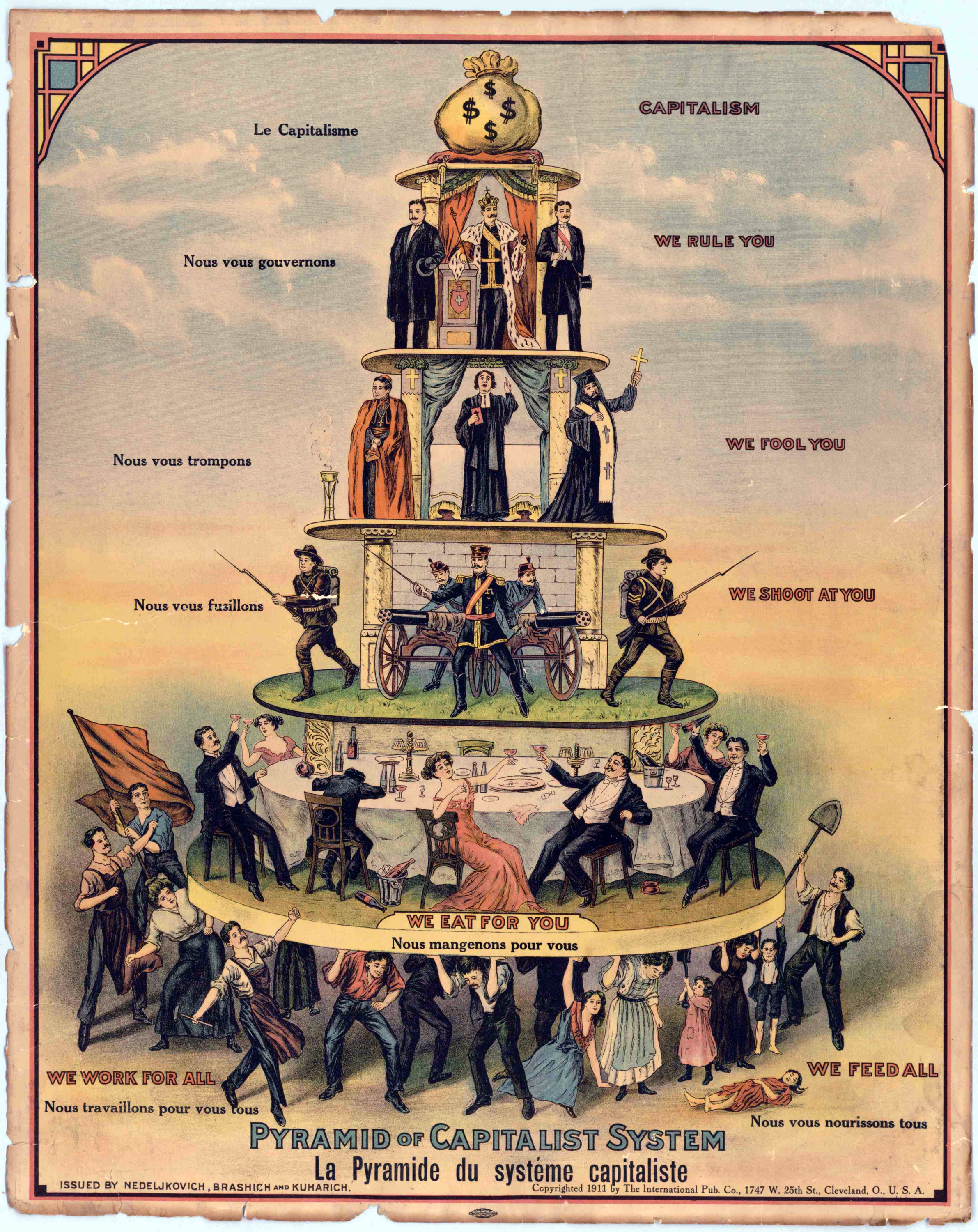
Russia opposes expansion mainly because she fears that the West is trying to isolate her in the corner of Europe, deprive her of her privileged relationship with her former satellites and undermine her national interests. This is why she is so fiercely opposing enlargement to include the Baltic States and Ukraine. NATO is viewed by Russia as nothing more than the club wielded by capitalist sharks.

Without a unified military force Europe (an area of the world that for many centuries was the most warlike on the globe) relies on the Nato. The dissolution of which without a replacement would leave the Continent without the existence of a military option to ensure stability within in its borders.

There is one thing for sure in light of NATO’s character as a political forum of democratic nations, expansion to incorporate those states that had authoritatively been excluded from it and pushed into the arms of the Soviet Union seems a logical consequence.

It can no longer be seen merely as a military Alliance with a defensive character, but as a political one as well, gathering the nations that share common democratic values and respect for human rights and the rule of law. However this is a new world where NATO seems confrontational and counter productive with limited capability to undertake even crisis management operations.

One of the major problems with the preceding league of nations, was the lack of ‘teeth’.

Instead of focusing on the rapidly declining interstate conflicts (as a result of interdependence), maybe Nato should be focusing more on threats such as cyber warfare, terrorism, and piracy, and vetting refugees.

It would be impossible to think a couple of decades ago that the Americans and the Russians might sit at the same table and plan common military operations.

You would think that Nato which is deeply involved in the Syrian war and the United Nations would be encouraging such a move to avoid Turkey being dragged into the War.

Instead Jens Stoltenberg, the Nato secretary-general, said that the organisation intended to “send a clear message” to show that the world’s most powerful military alliance was prepared to act in defence of its citizens. “Nato will defend you, Nato is on the ground, Nato is ready,” he said.

Nato says it is prepared to send troops to Turkey to defend its ally after violations of Turkish airspace by Russian jets,

Then all hell breaks loose as if this was the ultimate pretext for a NATO-Russia war.

But wait; NATO is actually too busy to go to war. The priority, until at least November, is the epic Trident Juncture 2015; 36,000 troops from 30 states, more than 60 warships, around 200 aircraft, all are seriously practicing how to defend from the proverbial “The Russians are Coming!”

Russia’s spectacular entry into the war theater threw all these elaborate plans into disarray.

Surely, there are differences between the US and Russia, but these can be overcome step by step with constructive dialogue and mutual understanding. They are no longer afraid of each other. They do have their differences, as it is natural that they should.

As events in the Ukraine, Syria and now Turkey are tragically demonstrating Nato could become a source of potential danger for the entire world.

The World has enough problems this is not a time for Nato saber-rattling.

Finally it is otter stupidity to think that if a nuclear device designed to emit an EMP (Electro Magnetic Pulse) were detonated about 300 miles over EUROPE ( most of Europe as we now know it would be gone) that Nato or the USA would do anything other than issue wet wipes.

Also one may wonder why Turkey — a country that is about 2,000 miles to the east of the Atlantic Ocean — finds itself in an entity called the “North Atlantic Treaty Organization. The answer is the roots of accepting non-North Atlantic nations into NATO, mainly Greece and Turkey lies at the heart of the Truman Doctrine — extending military and economic aid to states vulnerable to Soviet threat / expansion. NATO membership should guarantee, in essence, that Turkey would not become a Soviet ally.

Moving forward means dissolving what does not work and finding what will work.

The next two decades will make or break humanity.

Perhaps Nato should stand down as a military force and take up the mantel of fighting Climate Change.

Finally how can we have an ordered world where Russia and China are excluded from the police force?

If Nato is to be relevant it could start by building a world environmental police force.

← Back

Thank you for your response. ✨


THE BEADY EYE. LOOKS AT WORLD ORGANISATIONS -PART ONE – THE UNITED NATIONS.

Tags

, ,

“More than ever before in human history, we share a common destiny. We can master it only if we face it together. And that, is why we have the United Nations.” (Annan: 2001)

It is widely believed that international organizations should be responsible for the maintenance of international peace and stability, be this economic, social or political, and that they should act in the interest of the international community.

However if you look at them they are mostly out of date, with no real secure funding other than begging and most have been corrupted by lobbing. ( See previous postings)

These institutions, should have greater transparency, regulation and control within these organizations so that they reflect more than just the interest of the powerful States.

It appears that the behaviour of institutions can no longer be objectively analysed by quantifiable forces, as social interaction on the Web and Smart Phones gives different meanings to ideas, actors and objects.

If today we find ourselves in a self-help world, this is due to process, not structure.

As nations we don’t want to transmit the notion of a global governance to the world community. 

The the neo-liberal institutionalist approach is misleading as it accounts for some of the weaknesses of institutions, but does not include enough critical analysis of its premises and actions, or lack thereof. Thereby, the role of institutions becomes a more ideological and normative one, where they infuse Member States’ policies with their liberal values and principles.

So let’s start with The United Nations.

It is important to determine what constitutes success and failure as we can approach the United Nations system in different ways, either as an international forum or as a ‘global policing force’ and regardless of what approach one may take, they both have their virtues and drawbacks.

The United Nations.

The creation of an international forum for multi-lateral negotiations came about with the Inter-Parliamentary Union (IPU) in 1889, which is still active today and has membership of 157 national parliaments. The IPU was the predecessor to the League of Nations, created in 1919 after the end of the First World War; this later became the United Nations after the failure of the League to prevent international conflicts.

The legacy of the IPU, the League of Nations, and other early international alliances was not the institutions’ effectiveness as an actor, but rather as a forum, for nations to voice their opinions and promote dialogue. This was the primary objective of the institution in 1945, which is why forcing it to develop into an impartial effective governing force seems quite naïve and unrealistic.

This was arguably their greatest achievement.

 After the failure of the League, nation States still felt the need for an institution that would allow them to share their ideas and provide an opportunity to settle disputes peacefully. Thus, emerged the United Nations, which to this day remains the only institution with universal membership. It is the largest of all international organisations.

The neo-realist approach argues that international institutions are and always will be fundamentally ineffective, as they cannot prevent States from being self-interested and engaging in power politics.

Neo-realists assert the irrelevance of international institutions, as they believe it does not alter the self-interested anarchic system of States. Classical and neo-realists claim the international system is an anarchic, self-interested, power struggle between States, which is why there is a vast amount of distrust in global institutions such as the UN.

The idea that institutions play a non-role in international relations is a reductionist one as the argument that States will not respond to constraints and opportunities given by these institutions is greatly flawed.

This can be exemplified by the UN’s regulation on the use of military force.

One of the so-called failures of the UN is its inability to prevent conflicts, but in reality the majority of these conflicts arise as a result of deep-rooted ethnic, political, and ideological tensions which cannot even be resolved through bilateral diplomatic efforts, as exemplified in the Arab-Israeli conflict the Syrian Civil War, Ukrainian Conflict, the aftermath of 9/11.

So the primary purpose of the UN is not to intervene in internal affairs but rather to promote discussions and give States the tools to resolve disputes themselves.

An example of this is the Earth Summit, where members discussed actions to be taken regarding environmental sustainability and climate change and then world leaders would reconvene in ten-year follow-up meeting to monitor each other’s progress.

This is fine.

However,“in a world of multiple issues imperfectly linked, in which coalitions are formed trans-nationally and trans govern-mentally, the potential role of international institutions is greatly increased.”

It can be argued while the UN attempts to coordinate the actions of States and harmonize the world community, it becomes increasingly geared towards an ‘utopian’ model, even though it faces numerous challenges when rallying Member States to follow its general principles and vision.

It also can be argued that the United Nations has been vital in furthering decolonization, human rights, environmental protection and international law.

These and many others reflects unrealistic expectations of the UN as an actor.

Neo-liberal institutionalism stresses the importance of the UN’s work with regional organizations, as they become indispensable in the international diplomatic process predicting, “the international community will increasingly direct itself towards combined action of the universal Organization with regional bodies.” (Cassese: 2005: 338)

This can be observed in the recent links between the UN and regional organizations such as the Organisation of American States (OAS), the African Union (AU), the European Union (EU), the Arab League, and the Association of South East Asian Nations (ASEAN).

It take for granted the idea that economic and military power is the primary source of influence in world politics when in fact Climate Change with the rise in sea levels and the lack of fresh water will be the driving forces in the near future.

The Secretary General is the world’s prime example of responsibility without power, which is not always understood. The fact that he has no sovereign rights, duties or resources could signify that he becomes a reflection of the organization itself.

An example of this was in the Secretary-General’s Millennium Report where he ensured States that the Secretariat was fully accountable to them and the founding principles of the United Nations as “an Organization dedicated to the interests of its Member States and of their peoples” would be preserved. (Annan: 2000: 73)

For neo-realists, international institutions are and will always be ineffective, as they cannot alter the anarchic structure of the international system, neo-liberal institutionalists argue the opposite as they believe institutions greatly influence State conduct by both creating strong incentives for cooperation whilst at the same time implementing disincentives, as observed in the case of nuclear proliferation;

Constructivists take a very different approach by questioning the core assumptions of the other theories and drawing attention to the relationship between the structure and the agency, as well as the construction of state and institutional interests.

As an actor, there is so little we can do, and often the people accusing us are the same ones who prevent us from being able to act.” (Weiss: 2008: 8)

As the proportion of democratic states grows, the norms and rules that characterize relations between democracies are likely to alter the norms and rules in international relations.

For this reason, perhaps instead of focusing on the failures and reform within the UN, we should concentrate on the attributes and virtues that it has as an effective center for harmonizing discussions and developing common goals for States.

Rather than reducing the solution to problems of structural reform and widening participation efforts, we could look at promoting the UN as the prime setting for diplomacy and negotiation, as this has undeniably been its role since the beginning.

“We are facing the first breakthroughs in a process called ‘globalisation”

Social Media is demanding more and more from our leaders.

The end to Inequality, by dismantling of Greed within our Capitalist consumption Societies is high on the list.

It should be promoting the remote possibility of Russia and the USA tackling the Syria? ISIS situation together, which could lead to an Israelite/ Palestinian solution’s with the backing of Iran.

Afficher l'image d'origine

To be effective and relevant  in this troubled world it needs to get rid of the Veto.

Pass a people’s resolution to place a World Aid commission of 0.05%  on all High Frequency Trading, on all Sovereign Wealth Funds Acquisitions, and on all Foreign Exchange transaction over $20,000. ( See previous Posts)

← Back

Thank you for your response. ✨

THE BEADY EYE ASK’S : IS IT LIFE OR DEATH THAT GIVES MEANING TO LIFE.

Tags

,

There is no simple answer to this question.

Humans have been put on this earth with the knowledge of self-awareness and the ability to manipulate the environments that they inhabit to a greater extent than any other species on the planet.

Ultimately one must wonder what purpose there is to one’s own existence and define what it means to be.

So before we go any further let’s get a few definitions out-of-the-way.

Philosophers such as Socrates and Plato believed that our purpose in this life was to gain knowledge in preparation for the next life.

Epicurus believed that pleasure is the main goal in life. He did not believe in an afterlife or that a person had a soul that lived forever.

Richard Robinson’s viewpoint: Life Has No Purpose he argues that “there is no god to make up for the limitations of our power” and that man must look after himself and live his life for himself.

James Joyce’s “There is no person in this universe to love us except ourselves”.

“Araby” displays the theme that life has no meaning through the use of setting, characters, symbols, and motifs.

“If a man hasn’t discovered something he will die for, then he hasn’t got a reason to live.” These were famous words of the late Reverend Dr. Martin Luther King Jr.“

To live is to suffer; to survive is to find some meaning in the suffering.” Friedrich Nietzsche’s articulate definition of life.

However the problem is that every type of human activity has a malignant equivalent.

Like the pursuit of happiness, the accumulation of wealth, the exercise of power, the love of one’s self are all tools in the struggle to survive, they all lead to the pursuing pleasures (hedonism), greed and avarice as manifested in criminal activities, murderous authoritarian regimes and narcissism. 

We create ourselves and that is what life is all about. Not so.

This is vanity not meaning. We struggle to be better than others so we can have the money, the glory, and the luxuries and when we achieve this like Bill Gates we will have to find meaning by doing good deeds.  

A desire to find a higher purpose or meaning keeps people from the possibility that life has no meaning.

Lives that are filled with vanity, which is meaningless, have no meaning other than looking at yourself in the mirror.

These things cause us to think about what we can’t see and even allow us to engage ourselves in questioning the meaning behind our existence and what our purpose is here on earth.

As soon as the caveman progressed to the point where he ceased living in terror of the animals, the weather and all the gods, he started thinking about his life and what it meant. Since the conception of language and the thousands of technical refinements that brought us to the printed page, mankind has written much about this mysterious force.

It is interesting to note that “life” has 44 definitions — one of the most defined words in the world.

Where did we come from?’, `Why are we here?’, `Where are we going?’.

The abstract idea of life cannot be explained by such simple ideas as being animated, breathing, or speaking. Ordinary machines in this century can perform all of these basic functions.

If humanity was not able to say what they were thinking and feeling it would be very hard to create a life. Also if humanity was not able to speak what was on their mind, we might as well be dead.

The most difficult thing in life is finding something worth living for. The second most difficult thing is knowing when you’ve found it.

Maybe you are frustrated and confused when you think about this.

That is good. Frustration is a push on the back, to get you moving, so you will look around and make discoveries.

So we have to examine the nature of meaning itself.

Meaning is by definition the point, or the intended goal.

If life and the universe is some sort of toy or form of entertainment for some prime mover, what would then be the meaning of humans and the universe.

Consider the goals of the deities of various cultures. Some strive for a balance between the forces of ‘good’ and ‘evil’. This balance seems to simply be a choice of the deity, the way he thinks it ought to be.

The concept of a prime mover as a source of the meaning of life is flawed, because in talking about an actual point to absolutely everything, we are simply considering the goals of a being more powerful than ourselves who has chosen one of many possible goals that humans can conceive of.

This is to say that, if a God like this exists, his goal for life and the universe is not necessarily valid as a meaning of life, the universe, and himself.

For instance, the Bible claims that the Christian deity created the universe and placed humans in it that they might be in awe of his power.  If this is so, why is worship the correct response?  The meaning of the universe as created by God is the entertainment of God, but what is the meaning of the larger system containing God and his creations?

Is there a POINT to this?

Is there some kind of logic circuit in the brain that emulates the universe. It is true, then this structure in the brain is truth itself, defined, the pattern of the universe, and we need search no further than ourselves to find a meaning.

So why do we have so much trouble thinking about things that we have never actually encountered, like infinity.

But there can be no singular meaning of life to stand for us all, or even any one of us.  Life is different for us all.  A person’s lifetime is filled with self-examination.

Life and its meaning is far too complex for any human to fully comprehend because it to come from some outside source “‘Everything that ever has been always will be, and everything that ever will be always has been”

Up to now we have used logic and reasoning in order to explain why things happen and to advance ourselves.

THIS TRIED AND TESTED METHOD IS NOW BEING REPLACED AS YOU READ WITH AI

( ARTIFICIAL INTELLIGENCE)

Trying to put words to the meaning of life is a task of absolute absurdity, as life gives meaning to Life.

For me it’s realizing that the purpose of human life, no matter who is controlling it, is to love whoever is around to be loved. For me, this is a work in progress.

Unfortunately there isn’t anyway for me to figure out whether I am right or wrong so I will leave you with the words of Robert Browning,

“Each life unfulfilled you see,
It hangs still, patchy and scrappy;
We have not sighed deep, laughed free,
Starved, feasted, despaired-been happy.”

In order to create the perfect life things need to be said whether they have meaning or not.

The quandary with defining death is not as abstract and elusive as that of life.

All that we have accomplished, ends.

Then the process begins all over again with the next generation. We are here to reproduce. It has been genetically coded into us.

Is that the meaning of life.?

Interpreting the idea of life in terms death may become something of the past but without death there will be no point in living for eternity.

What are you as an individual contributing to this life? I dare you to press the like button.

← Back

Thank you for your response. ✨


Quote

THE BEADY EYE LOOKS AT THE STORY OF THE SYRIAN WAR.

Tags

, , ,

What began as another Arab Spring uprising against an autocratic ruler has mushroomed into a brutal proxy war that has drawn in regional and world powers.

How’s this all going to end?

No one knows, really. While plenty of countries (including Germany, the U.K., Iran, Russia, France and the U.S.) have tried to offer support to one side or the other to try to end the conflict, there’s been little success.

What ever happens this war is developing into a war that is going to have far reaching  unseen effects not only on the Middle East but on the World. (Not to mention the balance of world power.)

So it important that we see it as such.

To the victor go the spoils:

That might be true for most other wars, but the Syrian conflict has proven to be far outside the established norms and conventions governing the conduct of battle . (That is if you are of the opinion that such things exist in a modern warfare.)

In Syria the spoils are going to whoever has a gun, and there are plenty of those about.

How did it all Start?

In March 2011 in the southern city of Deraa some teenagers painted revolutionary slogans on a school wall. THEY WERE ARRESTED AND TORTURED which lead to Pro-democracy protests which were fired on by security forces killing several demonstrators leading to more demonstrations triggering nationwide protests demanding President Assad’s resignation.

By July 2011, hundreds of thousands were taking to the streets across the country.

Violence escalated and the country descended into civil war as rebel brigades were formed to battle government forces for control of cities, towns and the countryside. Fighting reached the capital Damascus and second city of Aleppo in 2012.

Hundreds of people were killed in August 2013 after rockets filled with the nerve agent sarin were fired at several agricultural districts around Damascus. Western powers, outraged by the attack, said it could only have been carried out by Syria’s government.

The regime and its ally Russia blamed rebels.

Facing the prospect of US military intervention, President Assad agreed to the complete removal or destruction of Syria’s chemical weapons arsenal as part of a joint mission led by the UN and the Organisation for the Prohibition of Chemical Weapons (OPCW).

The destruction of chemical agents and munitions was completed a year later.

By June 2013, the UN said 90,000 people had been killed in the conflict.

However, by August 2014 that figure had more than doubled to 191,000 – and continued to climb to 220,000 by March 2015, according to activists and the UN. Despite the operation, the OPCW has since documented the use of toxic chemicals, such as chlorine and ammonia, by the government in attacks on rebel-held northern villages between April and July 2014 that resulted in the deaths of at least 13 people.

The conflict has now acquired sectarian overtones, pitching the country’s Sunni majority against the president’s Shia Alawite sect, and drawn in neighboring countries and world powers.

The rise of the jihadist groups, including Islamic State, has added a further dimension.

Both sides of the conflict have committed war crimes – including murder, torture, rape and enforced disappearances.

The so-called Islamic State has also been accused by the UN of waging a campaign of terror in northern and eastern Syria.

It has inflicted severe punishments on those who transgress or refuse to accept its rule, including hundreds of public executions and amputations. Its fighters have also carried out mass killings of rival armed groups, members of the security forces and religious minorities, and beheaded hostages, including several Westerners.

Almost 4 million people have fled Syria since the start of the conflict, most of them women and children.

It is one of the largest refugee exodus in recent history.

Neighboring countries have borne the brunt of the refugee crisis, with Lebanon, Jordan and Turkey struggling to accommodate the flood of new arrivals.

A further 7.6 million Syrians have been internally displaced within the country, bringing the total number forced to flee their homes to more than 11 million – half the country’s pre-crisis population.

Overall, an estimated 12.2 million are in need of humanitarian assistance inside Syria, including 5.6 million children, the UN says.

In December 2014, the UN launched an appeal for $8.4bn (£5.6bn) to provide help to 18 million Syrians, after only securing about half the funding it asked for in 2014.

Four in every five Syrians were now living in poverty – 30% of them in abject poverty. Syria’s education, health and social welfare systems are also in a state of collapse.

The armed rebellion has evolved significantly since its inception. Secular moderates are now outnumbered by Islamists and jihadists, whose brutal tactics have caused widespread concern and triggered rebel infighting.

Capitalising on the chaos in the region, IS or ISIS or ISIL – the extremist group that grew out of al-Qaeda in Iraq – has taken control of huge swathes of territory across northern and eastern Syria, as well as neighboring Iraq.

Its many foreign fighters in Syria are now involved in a “war within a war”, battling rebels and jihadists from the al-Qaeda-affiliated Nusra Front, who object to their tactics, as well as Kurdish and government forces.

In September 2014, a US-led coalition launched air strikes inside Syria in an effort to “degrade and ultimately destroy” IS, ultimately helping the Kurds repel a major assault on the northern town of Kobane. However, the coalition has little influence on the ground in Syria and its primacy is rejected by other groups, leaving the country without a convincing alternative to the Assad government.

In January 2014, the US, Russia and UN convened a conference in Switzerland to implement the 2012 Geneva Communique, an internationally-backed agreement that called for the establishment of a transitional governing body in Syria formed on the basis of mutual consent. The talks, which became known as Geneva II, broke down in February after only two rounds.

So who is backing who?

Iran and Russia have propped up the Alawite-led government of President Assad and gradually increased their support, providing it with an edge that has helped it make significant gains against the rebels. The government has also enjoyed the support of Lebanon’s Shia Islamist Hezbollah movement, whose fighters have provided important battlefield support since 2013.

The Sunni-dominated opposition has, meanwhile, attracted varying degrees of support from its main backers – Turkey, Saudi Arabia, Qatar and other Arab states along with the US, UK and France. However, the rise of hard-line Islamist rebels and the arrival of jihadists from across the world has led to a marked cooling of international and regional backing.

The US is now supposed to be arming a 5,000-strong force of “moderate” rebels to take the fight to IS on the ground in Syria, and its aircraft provide significant support to Kurdish militia seeking to defend three autonomous enclaves in the country’s north.

September 2015 Russia openly (in the United Nations) declares its supports for President Assad under the umbrella of tackling ISIS.  On 30 September, Russia’s parliament approved a request by President Vladimir Putin to launch air strikes in Syria. Within hours, the country’s first intervention in the Middle East in decades began. The following day, Russian Foreign Minister Sergei Lavrov clarified that the air campaign was targeting “all terrorists” in Syria, and not just IS.

But the US and its allies noted that the strikes took place where IS had little or no presence. They instead appeared to be aimed at rebels backed by Gulf Arab and Western states who are advancing on Latakia province – the coastal heartland of Mr Assad’s Alawite sect. At least one group that has been armed and trained by the CIA was hit. Says the Americans.

Russia has made clear that its intervention was approved by Mr Assad, who sent a letter to Mr Putin requesting military assistance. “By supporting Assad and seemingly taking on everyone who is fighting Assad, you’re taking on the whole rest of the country of Syria.”

The Russian president is one of Mr Assad’s most important international backers.

Ties between their countries go back four decades and the Syrian port of Tartous is the location of the last Russian naval base in the Middle East.

Russia has blocked several resolutions critical of Mr Assad at the UN Security Council and supplied weapons to the Syrian military, saying it is violating no international laws.

We are now facing new kind of mentality that rules those people doing the fighting in Syria, a complete disregard for the lives and property of ordinary civilians. This goes for both sides in the war.

The fortunes of some are fast accumulating, while the rest of the nation languishes in dreary poverty and destitution, waiting for an end to the greed and hatred that fuels this seemingly never-ending nightmare.

There’s also tons of conflict among European countries about what their responsibilities are and whether anything could’ve been done to prevent the Civil War and the massive loss of life. There are understandable hesitations, strategic rivalries and unwillingness to take on financial commitment, making it impossible to pursue potential solutions.

There is one thing for sure we would be better off legalizing the migration process in order to leave the slave traders of the 21st century empty-handed.

Why?, because there is growing major culture of fear and suspicion when it comes to Muslim refugees.

The struggle in Syria could be ended in one way only.

And that is when the US and Russia with Europe countries agree and support one man to take Bashar Alassad place.

But unfortunately this won’t happen because the U.S government believes that he is the best person to keep Israel safe from Syria. While Russia (which has been crippled by sanctions due to Ukraine ) see it as an opportunity to unshackle itself for isolation and a opportunity to boost its economy.

assadgraf, cc Flickr thierry ehrmann This was once just a civil war between Shiites and Sunnis in the wider Arab world, especially in Syria and Iraq. Now it is turning into a free for all. The consequences of which will be only seen by those left alive.

Meanwhile, the failure to understand the ‘Arab Spring’ for what it was facilitated the destruction of Syria’s delicate balance such that the Islamic State represents the first real challenge to the Middle East which emerged from the Sykes-Picot Agreement of 1916, under which the British and French empires secretly agreed to divide the Middle East domains of the dying Ottoman Empire between them.

As for the military route, proposed by several Conservative political leaders, masking as armchair generals, air raids are clearly insufficient yet no government wants to send ground troops.

Syria could remain at war for years.

There remains one more danger to the Free World ( for lack of a better noun) and that is the pressing of a nuclear button which will resolve the war leaving nothing to fight about. 

← Back

Thank you for your response. ✨

THE BEADY EYE LOOKS AT WHAT IS BEHIND MR PUTIN UNITED NATIONS ADDRESS ON THE MIDDLE EAST.

Tags

, , , , ,

Right I am no military general or foreign policy guru but Russia recent backing of Assad to tackle extremists and terrorists and the so-called Islamic State militants ( IS, formerly ISIS/ISIL) is a recipe for a war that is going to expand and last for some considerable time.However when you look on at the inability of the free world to resolve the Middle East problems now it is not an option to turn our backs on Mr Putin latest offer because there has being a cultural shift in the Middle East sparked by West and Smart phones.

There is no doubt that Mr Putin geo-political announcements at the United Nations emphasizes the problems of a joint international coalition to confront IS. ( The reporting of which by RT.Com keeps crashing on Flip Board Cover Stories. I wonder why? http://on.rt.com/6sg4 )

Perhaps his offer should be TAKEN SERIOUSLY.    

”There is a belief that “creative destruction and chaos” in the Middle East are beneficial assets to reshaping the Middle East, creating the “New Middle East,” and furthering the Anglo-American road map in the Middle East and Central Asia:

There is no denying that now more than ever we are achieved this with a new road map by Mr Putin.

The United Nations as usual is a lame duck, (with 7.5 million children displaced and over 16 million people homes and livelihoods destroyed) all it can do is pass resolution’s that are vetoed.

WE NEED TO SCRAP THE UN TO BE REPLACED it with A NEW PROTECTION WORLD ORGANISATION THAT REPRESENTS THE WORLD – FULLY FINANCED. ( SEE PREVIOUS POSTS)

While the two world powers will now be at logger heads and the small players like France and the UK play Ludo with the situation.  ISIS continues to extend the group’s self-styled caliphate, which now stretches from Turkey’s border with Syria to south of Fallujah in Iraq, an area roughly the size of Indiana.

For nearly 70 years, Lebanon was a proxy battleground for the conflict between Israel and Palestine.

As Paul Rodriguez said ” Sometimes I think war is God’s way of teaching us geography.”

If you ask yourself how did it all get into such a hell hole you can come up with reasons that cover every aspect of Power, Greed, Religion, History, Oil,etc.

The answer however to a great part is a lot more simple.

NO MATTER WHAT HAPPENS. Climate change and the issue of whether there will be enough water for a future global population double its present size is controversial and the answer to this question is of particular importance to the people’s and political leaders of the Middle East and North Africa.

It requires an inhuman level of political courage for a political leader of any country which for five thousand years has enjoyed water security to announce that water resources are no longer adequate.

To make the announcement would be political suicide.

SO BACK TO TODAY.

It has been nearly impossible for two U.S. presidents — Bush, a conservative evangelical; and Obama, a progressive liberal — to address the plight of Christians explicitly for fear of appearing to play into the crusader and ‘‘clash of civilizations’’ narratives the West is accused of embracing.

The above does not apply to Mr Putin, but there are limits to what the international community and Russia can do.’’

For instance the fate of Christians in the Middle East isn’t simply a matter of religion; it is also integral to what kinds of societies will flourish as the region’s map fractures.

No matter what solution’s presents itself there will be a requirement for a buffer between Sunni and Shia.

Across the region, that conflict is now secondary to the shifting tectonic plates of the Sunni-Shia divide, which threatens terrible bloodshed. Everyone has seen the ISIS forced conversions, crucifixions and beheadings that is displacing millions.

Even if ISIS is defeated, the fate of religious minorities in Syria and Iraq remains bleak because Iraq is devolving into three regions — Sunnis, Shia and Kurds — as it is obvious that there will be a need for a fourth region for minorities. Iraq is a forced marriage between Sunni, Shia, Kurds and Christians, and it has failed with the resulting wasted lives lost.

The term “New Middle East” was introduced to the world in June 2006 in Tel Aviv by U.S. Secretary of State Condoleezza Rice.

International borders are never completely just. But the degree of injustice they inflict upon those whom frontiers force together or separate makes an enormous difference — often the difference between freedom and oppression, tolerance and atrocity, the rule of law and terrorism, or even peace and war.

Our continuing failure to candidly depict the roots of the problems and conflicts in the contemporary Middle East has now being exposed by Mr Putin – POINTING A FINGER AT THE WEST FAILURE AND SECRETIVE TRADE DEALS.

His good news is complicated and indigestible as well as unsensational – throwing stones in a glass house is never a good idea.

The truth is that the Middle East has been conditioned by outside forces into a powder keg that is ready to explode with the right trigger, possibly the launching of Anglo-American and/or Israeli air raids against Iran and Syria. A wider war in the Middle East could result in redrawn borders that are strategically advantageous to Anglo-American interests and Israel.

We must think creatively about how to act on Mr Putin address to the United Nations.

What the media does not acknowledge or inform us about is the fact that almost all major conflicts afflicting the Middle East are the consequence of overlapping Anglo-American-Israeli agendas.

Many of the other problems affecting the contemporary Middle East are the result of the deliberate aggravation of pre-existing regional tensions.

Among the problems in the contemporary Middle East is the lack of genuine democracy which U.S. and British foreign policy has actually been deliberately obstructing.

The United States has deliberately blocked or displaced genuine democratic movements in the Middle East from Iran in 1953 (where a U.S./U.K. sponsored coup was staged against the democratic government of Prime Minister Mossadegh) to Saudi Arabia, Egypt, Turkey, the Arab Sheikdoms, and Jordan where the Anglo-American alliance supports military control, absolutists, and dictators in one form or another. The latest example of this is Palestine.

Attempts at intentionally creating animosity between the different ethno-cultural and religious groups of the Middle East have been systematic.

Even more ominous, many Middle Eastern governments, such as that of Saudi Arabia, are assisting Washington in fomenting divisions between Middle Eastern populations. The ultimate objective is to weaken the resistance movement against foreign occupation through a “divide and conquer strategy” which serves Anglo-American and Israeli interests in the broader region.

Where might one find a useful analysis of what is happening today in the market democracies of the West?

How about this: “The executive of the modern State is but a committee for managing the common affairs of the bourgeoisie.” Or this: “Modern bourgeois society…is like the sorcerer, who is no longer able to control the power of the nether world which he has called up by his spells.” Or this: “The productive forces no longer tend to further the development of the conditions of bourgeois property: on the contrary, they have become too powerful for these conditions…[and] they bring disorder into the whole of bourgeois society, endanger the existence of bourgeois property.”

Karl Marx and Friedrich Engels

The celebrated bearded communists had argued that capitalism would reduce all of society to only two classes: the prosperous bourgeoisie, who owned the capital, and the impoverished proletariat, who contributed their labor. Modern industrial production would inevitably depress the living standards of the proletariat, they believed, but also, in the end, increase their power. Having created a form of slavery, capitalism would be overthrown by its slaves. The proletarian masses would become the dictators.

This did not happen.

But now the West see itself as prisoners of the system that they helped to create.

I am no alarmist, and no one should worry that I have become a late convert to Marxism. Marx’s prescriptions were mostly wrong, and his spirit was intolerant and coercive. He did not understand markets or respect political institutions, and he thought liberty was a sham.

However, Sectarian division, ethnic tension and internal violence have been traditionally exploited by the United States and Britain in various parts of the globe including Africa, Latin America, the Balkans, and the Middle East. Iraq is just one of many examples of the Anglo-American strategy of “divide and conquer.” Other examples are Rwanda, Yugoslavia, the Caucasus, and Afghanistan.

Besides believing that there is “cultural stagnation” in the Middle East Western-style “Democracy” has been a requirement only for those Middle Eastern states which do not conform to Washington’s political demands.

Invariably, it constitutes a pretext for confrontation. Saudi Arabia, Egypt, and Jordan are examples of undemocratic states that the United States has no problems with because they are firmly alligned within the Anglo-American orbit or sphere.

Also we need to support Iran as a bulwark against Sunni extremism.

Additionally,

Turkey and Iran, the two most powerful states of the “Eurasian Balkans,” located on its southern tier, are “potentially vulnerable to internal ethnic conflicts [balkanization],” and that, “If either or both of them were to be destabilized, the internal problems of the region would become unmanageable.

In the end it all comes down who is willing to receive body bags.

Rest assured that the striking images of body bags depict the physical residue of war and time. Yet even more horrific than the physical scars of the war is the sense of sorrow and loss, floating in their expressions like ghosts.

← Back

Thank you for your response. ✨


THE BEADY EYE ASK THE QUESTION DO WE REALLY CARE.

Tags

, ,

UNFORTUNATELY THE SAPIENS REGIME ON EARTH HAS SO FAR PRODUCED LITTLE THAT WE CAN BE PROUD OF.

Time and time again massive increases in human power has not improved the well-being of individual humans and has caused immense misery to other animals.

In the last few decades we have made some progress as far as human condition is concerned , with reductions in world wars, plagues, and famines.

But we remain unsure of our goals and remain as discontented as ever.

No body seems to know where we are going. We are more powerful than ever before, but have little idea what to do with the power.

Worse still we seem to be more irresponsible than ever, wreaking havoc on the world and nature while seeking little more than self-satisfaction which we never find.

I am sure like me that you are finding it difficult if not impossible to assimilate never mind keep up with all that is presently taking place in world.

Mass migration, climate change, return to the dark ages ISIS, not to mention wars, terrorists, cheat, (Volkswagen) Countries going broke, Designer drugs, Space exploration, the Web/Internet/Apps.

THE FACT IS THAT WE ARE THE TERROR OF THE ECOSYSTEM and it seems lost on us due to short-term profit and greed.

Most of our world organisations with the advance of technology are out of date, underfunded and unrepresentative of humanity and the planet and in need of radical overhauls, but it is of little concern to the populist at large.

However the good news is that in the back ground there is a revolution going on that is changing the way we live and is going to change evolution itself.

Once more we are being presented with opportunities that are opening up so quickly they are outpacing our collective capacity for making wise and far-sighted decisions.

Presently, only a tiny fraction of these opportunities have being realized.

We are releasing ourselves from the shackles of biology.

We are beginning to re shape our minds and our bodies.

If you think that the mapping the first genome require fifteen years and three billion dollars that to day a persons DNA can be mapped within a few weeks for a mere few hundred bucks which means nothing to most people, but soon we will be able to know what you will die from other than accident or bullet.

The road to designer medical care is well on the way for those that can afford it.

Our social media is blinding us to the true consequences of supplementary devices we now use to live our lives.

Or is it telling us that we are standing on the brink of becoming true cyborgs.

Like storing or brains in the cloud, having inorganic features that are inseparable from our bodies that are modify our abilities, our desires, personalities, and identities.

Do we care that bio-engineering could resurrect the Neanderthals. No

Do we care that we are braking the laws of natural selection with impunity by producing a rabbit that glows.  No

Do we care that we can produce mice that grow human ears, or change sex through hormonal treatment, or creating computer versus that are self learning, or bring back extinct creatures. Are these examples not the first steps of genetically engineer that are changing an individual abilities but also their social structure.  No

Tinkering with or genes won’t necessarily kill us.

But we might be fiddle with Homo Sapiens to such an extent that we will be no longer be Homo Sapiens.

Do we care that the Defense Advance research project Agency in the US is developing cyborgs out of insects? No

Do we care that computer algorithms are running the stock exchange or selecting target for drones, running our economies, teaching the next generation? No

What if we have quantum computer power?  Our successors will then function on a different level of consciousness.  Not  to worried we are human.

The Good news. If indeed we become cyborgs with some thing beyond consciousness that we cannot conceive, it seems doubtful that Christianity or Islam will be of much interest to us or our current social organisation of Communist or Capitalist, or which gender we are.

At this point you might think why worry we are only upgrading into a different type of human being.

Even though the implications of creating a mind inside a computer is far more dramatic than anything we have seen to date there is a great and urgent danger that our complacency which is hidden by science under the umbrella of The Gilgamesh Project (that justifies everything that science does by labeling it as curing diseases and saving human lives) is going to be nonrecoverable in the near future.

In my view its time we decide what we want to want by influencing the direction that scientists are taking.

If what is happening is allowed to continue and continue it will without imaginative social policies blight our society and there will be millions of people living wretchedly lives and reacting accordingly.

Globalization, technological changes, and governments policies have produced a class structure with a tiny plutocracy of billionaires, corporations and algorithms that are doing away with people.

We need a politics of time.

We need to scrap the United Nations and replace it with a new fully funded¨( see previous post) World People Protection Organisation that reflects the needs of the planet and all that live on it.

We must realize before its to late that the growing structural inequality is socially unsustainable. A basic world wage would be a good start. ( See Post We don’t live in a digital world the washing machine has changed lives more than the internet)

← Back

Thank you for your response. ✨

THE BEADY EYE LOOKS AT LIFE.

Tags

, , ,

“ FOLLOW YOUR BLISS AND THE UNIVERSE OPENS DOORS FOR YOU WHERE THERE WERE ONLY WALLS”

Everything has being figured out except how to live.

Life exists in individual moments and it is up to us make sure that those moments are vast, interconnected and grand.

To make a masterpiece out of life. One that we would live again and again for all eternity. This is what we should strive for.

I love this idea, essentialising our lives, of italicising our experiences, of turning our story into thus story, of seeing the universe in the pacific and sort of align ourselves with the archetype of the Hero’s journey, of trying to see a departure from the ordinary in every single instant. A chance to learn something new, a chance to leverage obstacles and learn from them and met people along the way that can teach us something.

Transcend your own limitations, as Stephen Johnston says, “ the world is full of clues and you can read your way through it.” If you are able to turn your life into an art piece. If you are able to turn your narrative into a non-narrative, then you become that Hero; you become the God of your life. It is the archetype of every Film. It’s the Joseph Campbell Hero’s journey.

The problem is that Capitalism has turned life into Consumerism. If people are richer and healthier, then they must be happier.

But social, ethical and spiritual factors have as great an impact on our happiness as material conditions.

Perhaps in this time of modern technology we are beginning to see alienation and meaninglessness replacing prosperity.

So what is happiness? What is it that really makes people happy? What do we measure?

A few weeks ago I wrote a post on Desire.

We all desire to be happy but is it just something we feel inside us.  A sense of either immediate pleasure or long-term contentment.

Or is it the correlation between objective conditions and subjective expectations.

It is quite obvious that money does indeed bring happiness, but only up to a point and beyond that point it has little significance.

Are people happier when living in democracies or dictatorships or living married or single?

Has the democratization process of the last decades contributed to the happiness of humankind or has it had an opposite effect with more divorce?

Questionnaires correlate happiness with various objective factors. But if it is inside who can it be measured ?

Illness decreases happiness.

Family and community have a great impact on happiness.    

The importance of human expectations has far-reaching implications for happiness.

Our intolerance of inconvenience and reliance on technology may well lead to discontent on a massive scale.

Through advertising and mass media we are depleting the reservoirs of global contentment by pasting our expectations on to the material conditions of others.

Face book is becoming the giant billboard of life with the smart phone the messenger of contentment and discontentment.

Supposing science did come up with cures for all diseases and an effective anti ageing therapies and regenerative treatments the immediate result will be an unprecedented epidemic of anger and anxiety.

Those that cannot afford the treatments which will be the vast majority will be beside themselves with rage.

So lets ask the question once more, – what is happiness?

Winning the lotto – No.

Because people are made happy by one thing and one thing only

A PLEASANT SENSATION FROM WITHIN.

There is no happy genetic line. Happiness is enjoyed for a momentary rush that does not last for ever. When you get what you desire you not any happier.

Happiness consists in seeing one’s life in its entirety as meaningful and worthwhile. Our values make all the difference.

If we have a why to live such as a belief of everlasting bliss in the life thereafter perhaps the trick is in synchoronising one’s personal delusions of meaning with the prevailing collective delusions of the capitalist world.  So we are in line with the narratives of the people around us you can convince yourself that your life has a meaning.

Quite a depressing conclusion. Does happiness really depend on self- delusion?

Perhaps its time for Capitalism to have some Liberalism with Socialism before we are all swallowing pills.

The relentless pursuit of happiness may be misguided.

With the current revolution of technology and the arrival of Artificial Intelligence we humans are going to discover that it is not so important that our expectations are fulfilled.

The Question will be do we understand the truth about ourselves before it too late.

What influences the happiness and suffering of individuals is within our grasp and we had better start grasping it.

← Back

Thank you for your response. ✨


THE BEADY EYE LOOKS AT DESIRE

Tags

, , , ,

How often have you said  “I crave this substance, long to see that person again, would die for another piece of something I just ate.

The first time that many people consume an alcoholic beverage, they have no particular desire to drink it. They just go along with the crowd. Then the alcohol hits and they discover that the feeling is very pleasant — in other words, rewarding.

I am sure like me that this is a subject you know little about and seldom question. Like many subjects this is a human attribute we take for granted.

Indeed my desire to explain clearly what I want to, I am sure will fail miserably.

Nothing Ventured nothing gained.

So let’s ask where does desire come from?

How could anything be a desire without one having an urge to obtain the object of desire?

The obvious answer is our senses, sight, smell, touch, taste, pain, combined with abstract stimulants like shape, color, and mood or for example Donald Trump’s taste leaves a lot to be desired.

Some of our thoughts are accepted, some are rejected, and others are ignored.

There are two distinctions of orientation or of intention of a subject toward any phenomenon: “to” or “from” it, attraction or repulsion, acceptance or rejection.

The words ‘desire’, ‘want’, ‘wish’, one’s desires provide one with reasons to act.

The three faces of desire are, in a nutshell, that desires are motivating, that satisfying desires is usually pleasurable, and that desires determine what will count as rewards and punishments.

There can be reward without desire.

When a desire is not satisfied, it is rational to change the world, not the desire.

Changing the desire would leave one with nothing, neither pleasure nor displeasure.

Desire is often for pleasure and satisfying desires is often extremely pleasurable, but the very possibility of a causal relationship between the two speaks to them being different from one another.

But then again for an individual attempting to realize his self-regarding desires, the satisfaction of the satisfaction of a desire is unmeaning.

By the time we desire something, we do not have to learn that getting it would be rewarding; we already believe that.

This does not mean that the desirability of desires is a good guide to anything else about them. There are certain kinds of conflict of desire and how do you distinguish between wishes and desires?

Desires are held to conflict just in case the satisfaction of one precludes the satisfaction of the other; second, a desire is said to be satisfied just in case the propositional content of the desire is true.

Yet little is actually known about well-being. The satisfaction of one’s present desires for present states of affairs can affect one’s well-being.

So if I desire fame today and become famous tomorrow, my well-being is positively affected only if tomorrow, when I am famous, I still desire to be famous.

An individual’s well-being is enhanced when her desires are satisfied.

“Well-being,” “welfare,” “utility,” and “quality of life,” all closely related concepts, and are at the center of morality, politics, law, and economics.

Subjective theories of well-being claim that how well our lives go for us is a matter of our attitudes towards what we get in life rather than the nature of the things themselves.

The concept of preference dominates economic theory today.

I could write till the cows come home on the misrepresentations of the bodies, desires and sexualities of people in the world which are embedded in the colonial histories, and in the social, economic and political complexities of the world, with all their racial, ethnic, class and religious diversity.

Exploiting the erotic is a foundational aspect of hegemonic knowledge production, war and colonization.

The distortion of the erotic is tied to the objectification of women, the reproduction of reductive Brown and Black and White masculinities, and to the sensationalization of our identities and lives, thus reinforcing consumerist and fundamentalist politics.

The erotic has been distorted and used to oppress women and distance them from their power.

The Internet stimulates continuing change in sociality and sexual markets.  Economic growth, globalisation and the Internet facilitate access to the world’s oldest profession.

Dating websites cater to people of all ages, all socio-economic groups, married and non-married. Some websites specialise in particular social and/or sexual groups, making it easier for people with arcane tastes and interests to meet up. Commercial sexual services have also take to the Internet, and advertise their services under the guise of ‘call girl’ or ‘escort’ services and the popular ‘Girl-Friend Experience’ (GFE).

As my interest here is to ask the question what is desire, where does it come from rather than the obvious male sexual desire which manifested at least twice as often as female desire I will leave this side of desire for others to comment.

It is sufficient to say that the commercial sex industry is impervious to prohibitions and cannot be eliminated. It should be completely decriminalised.

The sex industry is estimated to be worth over four billion pounds to the British economy.

Capitalism is the economy of desire with advertising its weapon.

Welfare economics defines individual welfare in terms of preference satisfaction or utility, and social welfare as a function of individual preferences.

The desire for status is a controversial topic. On the one hand, many theorists have argued that the desire for status is a fundamental human motive.

So what are desires like that we encounter in ourselves and others?

Will Goggle Glasses create desires?

Will artificial intelligence have desires.?

The only replacement for Desire is Excellence. That state is not, of course, within the experience of normal, sane mortals. Just look at the state of the world.

Can we explore space if we desire to be home.?

Here is a desire of mine. Don’t press the like button leave a comment.

← Back

Thank you for your response. ✨


THE BEADY EYE LOOKS AT WHAT NOW FOR POLITICS IN THE UK.

Tags

, ,

People are always going on about ‘left wing’ and ‘right wing’ – but what does it mean?

Well it basically means what people believe a country should do for its citizens.

Left wing beliefs are usually progressive in nature, they look to the future, aim to support those who cannot support themselves, are idealist and believe in equality. People who are left-wing believe in taxation to redistribute opportunity and wealth – things like a national health service, and job seeker’s allowance are fundamentally left-wing ideas. They believe in equality over the freedom to fail.

Right wing beliefs value tradition, they are about equity, survival of the fittest, and they believe in economic freedom. They typically believe that business shouldn’t be regulated, and that we should all look after ourselves.

Right wing people tend believe they shouldn’t have to pay for someone else’s education or health service. They believe in freedom to succeed over equality.

Left wing beliefs are usually progressive in nature, they look to the future, aim to support those who cannot support themselves, are idealist and believe in equality.

In the UK the main right-wing parties are the Conservative (or Tory) Party, and UKIP (who focus on the UK not being a part of the European Union).

They believe that if you have more money, you should get to keep it, and buy better education and health services for yourself. They believe that businesses should be less regulated, and that the more money they earn, they’ll bring more benefits to the country.

In the UK the main left-wing parties are the Labour Party and the Green Party.

They believe in making laws that protect women, ethnic minorities, and gay people against discrimination. They believe that we should tax rich people more to support people less well off, and they believe we should regulate big businesses so they serve people’s interests.

The Liberal Democrats (Lib Dems) are another major party in the UK but people often argue about where they fall, politically. They have some traditionally left-wing ideas, and some right-wing ones as well.


Most of us in the west live in a system that makes growth an imperative; but this growth involves huge environmental threats and doesn’t improve our real well-being. To counter this we need a radical redistribution of income, within countries and between them.

Increasing incomes are not making us happier.

More important is the environmental issue: growth eats up the world’s resources and generates carbon with the inevitable and catastrophic effects on the climate.

So what is going to change with the election of Jeremy Corbyn as the leader of the Labour Party?

The major challenge in the short-term is of course political.

The reality is that economic relations in the UK are becoming set in stone.

If you are a stranger to the truth here are a few facts as to why a different approach is needed.

It’s not just that the very rich no longer fall while the very poor no longer rise. It’s that the system itself is protected from risk. Through bail-outs, quantitative easing and delays in interest rate rises, speculative investment has been so well cushioned that, as financial markets are one of the last bastions of socialism left on earth.

In the UK Public services, infrastructure, the very fabric of the nation have been sold to Private Enterprise. These too are being converted into risk-free investments. Social cleansing is transforming inner London into an exclusive economic zone for property speculation.

Nor should we be surprised when governments help to negotiate, without public consent, treaties such as TTIP and CETA (the Comprehensive Economic and Trad Agreement, which undermine the sovereignty of both parliament and the law.

Is he going to provide effective opposition to the government and address austerity and neoliberalism as the problems, instead of whimpering about “aspiration”.

Is he going to be able to stop the conservatives squeeze themselves into the centre ground and cause the extinction of Labour in 2020.

Labour lost the last election because they failed to present a credible alternative to the government’s programme. 56% say Labour’s platform is unclear.

One thing for sure it can’t be lefte politics of envy it will have to be the politics of justice.

Labour have just realised that the public do not like the word TABLET.

If he adopts a program of building social homes he will see an electoral shift.

The biggest divides these days are cultural rather than those of class.

How can anyone in their right mind ever imagine that the Tories while in coalition with the Liberals  – who pissed away your money defending bankers’ bonuses in Brussels – have the interests of anyone other than the richest 1% at heart? There is a growing divergence between private and public sector workers and the rise in economic inequality is matched by voting trends.

Scrapping tuition fees, Trident, and nationalizing Energy, Transport, Water, are all admiral aspirations.

We all want a better lifestyle, but do our desires exacerbate global inequality? How do we know when enough is enough? The average income in the UK is around £25,000 or nearly three times the world average, and 60 times that in Afghanistan.

We have enough, but Afghanistan and  most developing countries clearly do not.  That we have enough is shown by surveys showing we – in rich countries – don’t get happier when we get richer.

In short Europe is changing right in front of our eyes. News Media Industry is all about grooming people’s attitudes and their feelings about other people and – above all – persuading people to think in a certain way.

With the influx of Refugees the EU in or out vote will be a complete fares.

Who on the left would wish to stand on the sidelines as this carve-up continues? Who would vote for anything but sweeping change?

To fail to confront this system is to collaborate with it.

← Back

Thank you for your response. ✨


THE BEADY EYE ASK’S WHAT HAS CAPITALISM ACHIEVED

Tags

, , , , , ,

To understand the role of capitalism in modern economic times you must understand the word Growth.

Growth at any cost.  Which we are just coming to apprentice thanks to the Internet.

For a long time nothing much happened till Wheat conned humans into growing it.

It is not my intention here to address Money and Power. It is sufficient to say that money leads to power and corruption and that all three intermingle in the notoriously subject of Economics.

What I want you to do is to look at Capitalism that founded states and ruined them, opened up new horizons and enslaved millions, moved the wheels of Industry and drove hundreds of species of plants and animals into extinction, plundered the earth resources for profit, promoted science, all to the dethronement of a sustainable planet and ask yourself is it easier to imagine the end of the world than the end of capitalism.

There can be no doubt without some system the human race would descend into barbarism based on nothing but self-interest.

Our cultural output throbs with this notion of self-interest. Just look at the present Refugee problem facing the European Union.

So would the collapse of Capitalism lead to misery?

Capitalism in all its credulity and inequality reflects mans barbarous nature. Indeed the horrors of ISIS are trumpeted so vehemently by the western press precisely because they fill this narrative.

However a dog eat dog world with which capitalism and the state justify themselves is in part a fallacy.

In fact nature teems with co-operation – both between animals, between species and within the ecosystem as a whole.

We are the same, but it is no coincidence that where we do co-operate these areas are dominated by capital and constructed in a way that systematically reward the uglier sides of our common nature.

We know that the world in unfair where the few have too much and the most have too little.

The feeling that Capitalism, inequality, and injustice are inevitable and the idea that to struggle for a better world is naive is coming to an end.

If we could only entrench the cooperative compassionate and empathetic sides of our nature as dominant values in society we would redesign our Capitalist world – to a world worth while living in.

The current state of our planet is affording all of us this opportunity.

How can we tackle the world problems ?

A good place to start would be to get Capitalism to pay for it.

By placing a World Aid Commission on all High Frequency Trading, on all Foreign Exchange Transactions over ($20,000) on all Sovereign Wealth Funds Acquisitions, on all Drilling Wells.  This would create a perpetual pot out of Profit for Profit sake that could fund the inevitable cost of climate change.

In doing so we would redistribute the world’s wealth from the whole of the world. ( see previous Posts)

Sooner than later we are going to exhaust the raw materials and energy of the planet Earth. What will happen then?

Which is why, whenever the opportunity arises, we must be prepared to seize it.

← Back

Thank you for your response. ✨