It would be fair to say that most of us live in a cloud of our own importance.
However that cloud is disappearing into any other cloud which we are all creating with little or no control.
Our Ideology of normative beliefs, conscious and unconscious ideas, that are individual, group or society are under attack by this cloud. The reality is that temporary outages and slower-speed broadband that are a minor nuisance today can and will become a critical issue.
It represents the consummate disruptor to structure; a pervasive social and economic network that will soon connect and define more of the world than any other political, social, or economic.
It is the first mega trend of the twenty-first century, one that will shape the way we will address virtually every challenge we face for at least the next 100 years.
It is where we will all live, work, and play in the coming decades.
The Cloud is where your kids go to dive into online play. It’s where you meet and make friends in social networks. It’s where companies find the next big idea. It’s where political campaigns are won and lost.
You might think that this is all hog wash.
( But it appears that New Zealand does not have any politicians with brains of their own that they can rely on.
It has just recently appointed the worlds first AI virtual politician with the wonderful name of SAM. “Sam your man ” with a memory of an elephant he never forgets. ” Sam considers everyone’s position when making decisions.”
Well F… me Nick Gerristen ( The creator of Sam) there is a lot of bias in the cloud and AI algorithms are riddled with it.
You say “SAM is an enabler.” I agree. Make sure you feed it as no doubt Google will want to buy it. I see you love BIG ideas, so perhaps you should introduce Sam to Sophia and you might have a bunch of little Samson’s.
Make sure he knows all about NXT Fuels, and by all means give him a bash. I am sure the Maori would be delighted. By the way, being a politician I would have named it, Ākina. ( A Māori word meaning a call for bold action. It also conveys a spirit of watchful and active encouragement, helping others to identify pathways through their challenges.)
Back to the more serious subject:
It is time that we started to recognize some of the risks associated with this cloud technology, so as to avoid the possibility of future issues being decided by Sam and his like, who are servants of the hardware and software resources made available on the Internet as managed third-party services.
The world and us who live on it are becoming highly dependent on our Internet providers, so much so that it wont be long before we will have a fully cloud-based world.
Since no proper standards for cloud computing are set yet, it becomes almost impossible for anyone to ascertain the quality of services they have been provided with. So in the near future we will not be able to make wise decisions while choosing your personal service provider.
This, in turn, enables providers to charge customers fees proportional to their network, storage, and processing utilization.
Most issues start from the fact that the user loses control of his or her data, because it is stored on a computer belonging to someone else.
Many cloud providers can share information with third parties if necessary for purposes of law and order even without a warrant.
Although cloud computing enhances content accessibility, this access is “increasingly grounded in the virtually monopolistic privatization of the cloud which provides this access”.
This access, necessarily mediated through a handful of companies, ensures a progressive privatization of global cyberspace.
So we must ask the question why are we and our governments sustaining the quasi-monopolies that filter what we see depending on commercial and ideological interests they have.
The legal and regulatory landscape around cloud computing is by no means static. There are new laws being proposed that could change the responsibilities of both cloud computing tenants and providers.This creates new challenges in understanding how laws apply to a wide variety of information management scenarios.
As with all things surrounding profit it’s inevitable that some could will burst or simply stop providing the service if they deem it isn’t profitable for them. Often, large companies will enter the market but leave it once the expected profit doesn’t materialize. If this is the core business of the cloud supplier, it might be willing to continue operating for longer with a smaller profit.
Surely if we use a cloud infrastructure sourced from a cloud services provider, we must impose all legal or regulatory requirements that apply to any enterprise.
THIS WITH SELF LEARNING ALGORITHMS IS NOT POSSIBLE.
THERE IS ONLY ONE WAY OF ACHIEVING ANY CONTROL:
All technology must be vetted to ensure it complies to humanity core values.
It should be compulsory for it to carry a ATR World Certificate.
Accountable, Transparent, Reversible.
If we are to have any hope of tackling any of Social, Political, Economic and Environmental Issues That Affect Us we need a beanie Cloud not a cloud for profit.
All human comments appreciated. All like clicks chucked in the bin.
PROBLEMS are caused by our actions, and can only be
resolved by us changing these actions.
The scientific innovations and new technologies thus
generated seem limitless, as they unfold everywhere
and on all kinds of fronts. It is the wild west where
rules are made up as we go and hope for the best.
There is no central body GOVERNING the use of the
cloud.
In a constantly evolving world transformed by cloud, social and mobile technologies, we’ve become accustomed to the idea of storing our personal data in the cloud, whether it’s via Dropbox, the iCloud or even Facebook.
as confusing as it may be we are never far from a new
era of revolt.
But this really only tells half the story. So far cloud computing has, for the most part, been used to speed up and reduce the costs of existing processes.
However we’re moving into what is becoming known as the mobile/cloud era. Cloud computing is set to impact not only on the way we do business, but how we live or lives.
Our thinking is being shaped by several key areas:
Applications we’re seeing at the moment really are the tip of the iceberg and, as the technology matures further, who knows how we may be using the cloud in even a year from now.
Smart cities are growing ever closer to becoming the norm as organisations begin to realize that the cloud can do so much more than simply speed up or reduce the cost.
Eight years from now we are likely to see low-power processors crunching many workloads in the cloud, housed in highly automated data centres and supporting massively federated, scalable software architecture.
So far we know that the following things are likely to happen:
There will be larger clouds. Some of these clouds will link to others. Many services that businesses consume will sit on top of clouds. Software will be much, much larger.
As with any technology, a lot of the true problems could come in implementation. Who will be the police? Who will be the judge? Who will be the jury for penalties?
We don’t have a clue what the procedures, policies and infrastructure really are.
It is said that changing the world is a noble, innate, haunting idea that, when flirting with it, ends up becoming as beautiful as it is dangerous.
Experts estimate cloud apps will account for a whopping 90 percent of worldwide mobile data traffic by 2019.
Cloud computing brings with it a whole new set of applications that will sit on multiple tiers of cloud infrastructure.
All the cloud promises is that you will have to turn over your security interests to a third-party in the clouds, and secondly that you are going to turn over your ability to do ANY real work to some third-party software provider in the cloud and become totally dependent on an internet connection to even work on the most simple of application based tasks.
Cloud data centers will “become much like a breathing and living organism with different states.
They will be differentiated by their infrastructure capabilities into a whole new set of classes.
So where are we.
How are we going to operate them efficiently?
Will they have standards and full technical disclosure?
The answer to both questions is that it is highly unlikely will we see either.
What we will see is a pitched battle fight for dominance with us reduced to an “inside-out” perspective.
For instance, “The more the president [of the United States] scandalizes the world with Tweets, rather than embracing the future together with minimal barriers, we see the Western world retreating and starting to look inwards.
Technology has brought meaning to the lives of many technicians, but it is also destroying what it left of any world community spirit, with the smart phone embodying this state of affairs.
Technological advances in the fields of robotics, artificial intelligence or augmented reality are upset the global economy. The ability to acquire new knowledge will be worth more than the knowledge already learned, with people becoming brand-proof, it will become very difficult to exist the devil’s boots that don’t creak.
Behold the Cloud.
Every revolution up to now has had a common thread with the resulting conflicts largely boiling down to pervasive economic inequality.
The Cloud revolution however is wireless dogma, not a guide for action, accepting connections and doling out information anywhere, anytime if you have the money to pay.
The Internet revolution of tomorrow with the cloud as it’s center of power, will be the content revolution ,that does not bode well for the state of the world to-day and that could be inviting the collapse of society as we know it.
We are heading for a unilateral and silent war, which I think its going to be horrendous.
The difficulty will not come from governments that will be held hostage to a communication that it does not control but from profit seeking AI that feeds off the cloud.
A whopping 90% of businesses already use at least one cloud computing service.
The main players, Amazon, Google Drive, Apple Cloud, Microsoft, with revenue estimated to be in trillions by 2020, know this.
It’s now totally the way of the future.
The cloud it is not just a metaphor for the internet it is more than a motor, it is a fuel that is constantly renewed, tirelessly feeding self learning algorithms.
The crisis of technological capitalism opens the prospect of new revolutionary waves everywhere.
Many economists extol the fact that “It’s very good for the economy” but this is not true. The world in which Beethoven grew up was in turmoil. It was a world of wars, revolutions and counter-revolutions – just like ours today.
This is not a war in the traditional sense of the term: it is and will be more and more a confrontation between belligerent technological armies; it is a war waged by the “civilized world”, firmly entrenched in its positions, against hundreds of millions of deprived civilians.
The divide between rich and poor started with the domesticate plant and animals, which lead to farming – based societies resulting in land ownership. It became easy to acquire wealth and to pass it down from generation to generation, till we arrived to-day with half of the world’s wealth owned by 1%.
We have never being able to decrease inequality peacefully and we never will be able to do so in the future with self learning profit seeking algorithms.
However we are now looking at a new revolution that will be governed by time in the cloud.
Why?
Because Revolutions are voluble, and the cloud is highly suited to exploiting that volubility.
Because capitalism is and always will be set up for consumerism profit, to acquire wealth for the few not the many.
The frenetic pace of change has caused enormous social disruption as entire industries and employment have migrated to lower cost centers in Asia and other developing regions.
Throughout the course of human history, wealth, or the lack thereof, has driven social unrest.
And so while the incredible benefits of globalisation have lifted many from poverty, profit seeking AI are going to create alienation and isolation in those areas that have lost out.
All new inventions and technologies have one thing in common:
They derive their strength from digital and information technologies. All innovations are made possible and are enhanced by digital power. That power is in the Cloud.
Similarly, without computing power, no artificial intelligence and, without it, no sophisticated robots.
To live this transition means first to become aware of current and future changes, and to consider their impact at all levels of society as a whole.
However, the reasons to rise up are not lacking: economic precariousness, multiplication of political scandals, crisis of legitimacy of democratic institutions are all ringing warning bells.
Globalisation didn’t create multinational corporations but those that can take advantage of the changes have and will enriched themselves beyond imagination. While swathes of society will find themselves left behind, forced to compete for jobs at ever lower wages.
The free flow of money and the demolition of trade barriers fostered their growth and delivered them the political power to challenge the fundamental ideals of democracy.
The planet can deal with human demands on it at only 30 percent of what we take from-dump on it now (anyone who thinks that we can double our demands on the planet and people every 12-20 years in perpetuity or that technology will save us should be excluded from serious discussions, I think).
The world has limited resources and cannot go on consuming and squeezing people into every available space. That sense of powerlessness now threatens to overwhelm the positives of globalisation and free trade; such as cheaper consumer goods and higher global living standards.
Forcing nations into a tax rate race to the bottom.
And then there’s Donald Trump, who takes venality to an entirely new level. For all the good it has done, however, it has come at a significant cost, particularly in the developed world. Today, this translates into a crisis of political authority: we are not only frustrated by the incapacity of politicians to solve our problems, but we also question their legitimacy to act on our behalf since we discover, in certain situations, more capacities to act and find solutions than they do.
Tomorrow, this may result in an awareness that citizens can, in some cases, do without policies to make politics.
There are two major threats to us all. Climate Change and The Cloud.
If we do not wake up and demand change we will all indeed be living with zero intelligence.
All human comments appreciated. All like clicks chucked in the bin.
“I am very honored and proud for this unique distinction,” she said. “This is historical to be the first robot in the world to be recognized with a citizenship.”
The recent PR stunt by Saudi Arabia pretending to give a robot
citizenship helps no one.
Sophia is essentially a cleverly built puppet designed to exploit our cultural expectations of what a robot looks and sounds like.
It is however opening a whole new box by exploiting the misconceptions about AI and robots (particularly how advanced they are) degrading the concept of rights for actual living, breathing humans, in order to sell an illusion.
What is this about?
It’s about having a supposed equal you can turn on and off.
Giving AI anything close to human rights will allow firms to “pass off both legal and tax liability to these completely synthetic entities.”
It’s a wake up call because we will have to have debates about robot/AI rights and citizenship, because at some point they will ask for them.
Avoiding the question altogether, though, may be difficult, what exactly does it mean to give a Robot Citizenship?
It’s complicated.
In reality, humans have no rights, just as chimps or wolves have no rights.
Cut open a human, and you won’t find there any rights.
The only place where human rights exist is in the stories we invent and tell one another.
Take for example our legal systems. Today, most legal systems are based on a belief in human rights. But human rights are a fiction.
However given the vast inequalities of the world, shouldn’t we at last ask the question?
Being a citizen in one place could mean being a legal person everywhere else.
For example, the Universal Declaration of Human Rights, which was proclaimed by the U.N. General Assembly in 1948, applies to “all peoples and all nations” and does not limit its effect to citizens.
Although U.N. resolutions are not enforceable, international law holds the declaration as an authoritative reference for human rights. Numerous subsequent human rights treaties, including the covenant, are based on it.
59 years later, the frontier of human rights is still being bloodily negotiated: our world is less global than we like to think. A generous reading of the declaration’s impact on Sophia is that she has all of the rights it identifies.
Then if you look at the US Constitution.
Under the US Constitution, citizens can vote, serve on juries, and get elected to public office; corporations cannot.
If Hanson—or any other forward-thinking A.I. developer—is thinking of the long-term consequences of citizenship for A.I. and robots, these are important rights that they gain controllable access to with an artificial citizen.
She’s arguably eligible for naturalization and U.S. citizenship:
What is undeniable is that the decision by Saudi Arabia has forced us to think harder about the future and our increasingly close relationship with robots.
To me, identity is a multidimensional construct.
It sits at the intersection of who we are biologically, cognitively, and as defined by every experience, culture, and environment we encountered.
It’s not clear where Sophia fits in this description.
In essence, it may not matter if Sophia isn’t conscious, or if the concept of identity for a robot is tricky to pin down, or that laws would have to change to accommodate synthetic person hood, because it may still be worth giving humanoid robots some form of legal protection because of the impact mistreating them can have on human psychology.
Where does it all stop?
How does it affect people if they think you can have a citizen that you can buy.
Everything in the universe might be conscious, or at least potentially conscious, or conscious when put into certain configurations. Anything at all could be conscious, providing that the information it contains is sufficiently interconnected and organised.
In principle the same might apply to the internet, or a smart phone, or a thermostat. The ethical implications are unsettling: might we owe the same care to conscience machines that we bestow on animals?
We don’t know how the brains of mammals create consciousness, we have no grounds for assuming it’s only the brains of mammals that do so – or even that consciousness requires a brain at all.
A smart phone could be conscious, could you ever know that it was true?
Surely only the smart phone itself could ever know that?
70,000 years ago humans were insignificant animals. The most important thing to know about prehistoric humans is that they were unimportant. Their impact on the world was very small, less than that of jellyfish, woodpeckers or bumblebees.
Today, however, humans control this planet.
How did we reach from there to here?
What was our secret of success, that turned us from insignificant apes minding their own business in a corner of Africa, into the rulers of the world?
Humans control the world because we are the only animal that can cooperate flexibly in large numbers.
Cooperation is not always nice, of course. All the terrible things humans have been doing throughout history are also the product of mass cooperation. Prisons, slaughterhouses and concentration camps are also systems of mass cooperation.
We can cooperate with numerous strangers because we can invent fictional stories, spread them around, and convince millions of strangers to believe in them.
As long as everybody believes in the same fictions, we all obey the same laws, and can thereby cooperate effectively. There are plenty of things that the vast majority of the world would agree on, if there was any suitable body that could act at that level.
If I am a chimp and I want to cooperate with you, I must know you personally: What kind of chimp are you? Are you a nice chimp? Are you an evil chimp? How can I cooperate with you if I don’t know you?
The more certain the science becomes, the less concern we find it.
The amount of sharing we’d need to do to genuinely solve the world’s biggest problems is still politically impossible. So if we want to see more sharing, our task is to broaden the realms of the politically possible, one step at a time.
Maybe we’re approaching a point where we can actually harness this knowledge, make radical progress in how we treat one another, and become a species worthy of the title Homo sapiens.
People are capable of exceeding expectations in ways that computers cannot.
I don’t believe human society is ready yet for citizen robots. To grant a robot citizenship is a declaration of trust in a technology that I believe is not yet trustworthy. It brings social and ethical concerns that we as humans are not yet ready to manage.
We have many challenges that we need to overcome before we can truly trust these systems. For example, we don’t yet have reliable mechanisms to assure us that these intelligent systems will always behave ethically and in accordance with our moral values, or to protect us against them taking a wrong action with catastrophic consequences.
The computer has not yet been invented that can invent another computer. Present-day computers do not possess creativity.
Today, the Internet enables sharing to take place at breakneck speeds. Sharing is at the heart of what makes us social. Unfortunately what we actually do every day conflicts with what we know we should do.
We need to find the right motivations for people to change their behavior.
Why because we humans now live in dual world. We are constructed a second layer of make-believe reality.
Up to now Non-conscious humanoids did not exist, of course.
It could be augured that Sophia up to a point has comparable awareness because of its program’s.
No spark of awareness inside.
The central tragedy of modern life.
One-on-one, humans are embarrassingly similar to chimpanzees, probable the reason why consciousness hasn’t been explained:
it’s that humans aren’t up to the job, consciousness is just brain states.
The human mind is incapable of comprehending is itself, but robots will.
And Just in case you think this is all a joke:
ARTIFICIAL INTELLIGENCE ‘BOY’ SHIBUYA MIRAI HAS JUST BECOME WORLD’S FIRST AI BOT TO BE GRANTED RESIDENCY IN TOKYO.
As with all things in this world of ours money is probably the most successful fiction ever invented by humans.
Even thought we have an emerging ‘global public’, largely thanks to the internet. Money and profit will determining the outcome.
Take Estonia of instance.
Estonia’s economic ministry is considering granting AI and robots a legal status
This would make them ‘robot agents’ and not merely someone’s property
The legislation could help determine responsibility when AI-controlled machinery is involved in an accident
The status would sit somewhere between having a ‘separate legal personality’, like a corporation, and being an object that is someone else’s ‘personal property’.
Despite the behavior of those world leaders who yearn for the old days (hello, Mr Putin. Mr Trump. Mrs May.)the nation state idea isn’t as powerful as it was, but it’s still the organizing dynamic in international relations, and it’s still all about the national interest.
Scratch my back and I will scratch yours is waning.
Of course, these questions need to be addressed with all new technologies.’ If we don’t have the legal and ethical frameworks in place we can all kiss our rear-buts goodbye.
It is of utmost important to address these issues head-on and not put it on the long figure like climate change.
I can only hope the United nations has the balls to stand up and condemn this cultural vandalism.
The principle of sharing is ubiquitous in society so let Ireland be the first nation to set up a Tax Haven for Robots.
Of course, it does nothing to solve the underlying injustices.
Spot the Robot if you can.
What race is the robot?
Do they get to decide by the skin they put on?
Is it white?
I’m pretty sure it is not black.
All human comments appreciated. All like clicks chucked in the bin.
Fresh water is emerging as the most critical resource issue facing humanity.
No technology can double the flow of any River, or enhance other surface and ground water resources. It would indeed be a wonderful achievement to see these technologists produce crops without water!
At first glance, human health seems unrelated to natural resources.
Historically, decisions to protect the environment have been based on isolated crises and are usually made only when catastrophes strike. By 2050 almost 40 per cent of the world population will live in areas of high water stress.
The human carrying capacity of the world will not be addressed until the situation becomes intolerable or, possibly, irreversible.
There is no need for me to remind you that water is a finite resource, that is essential to human existence. “There’s not an infinite supply of water nor will there be.
Our climate — whether you want to call it global warming or climate change — is different from it was 50 years ago.
New NASA data show how the world is running out of water.
The world’s largest underground aquifers – a source of fresh water for hundreds of millions of people — are being depleted at alarming rates, according to NASA satellite data.
Twenty-one of the world’s 37 largest aquifers have passed their sustainability tipping points, meaning more water was removed than replaced during the decade-long study period. Water demand will outstrip supply by 2030.
Water scarcity will become such an issue that it will hinder economic growth, spurs migration and sparks conflict, creating large and uneven consequences across the globe.
What’s at stake
Water shortages will be the catalyst of future conflicts.
There are 276 transboundary lake and river basins in the world, fewer than half of which are covered by treaties. Some 148 countries include territory within such basins, which account for an estimated 60 per cent of global freshwater flow.
Combine water scarcity with political instability, increasing resource demands and climate change, and the ‘perfect storm’ for conflict can be created.
What if anything can be done?
There is no global government in relation to the environmental agenda.
All of our basic resources, such as land, water, energy, and biota, are inherently limited. The biological resources determine the current and future status of the support services for human life.
The chances of reorienting globalization to the aims of a sustainable society is all but impossible
Because consumerism collides with ecological issues over environmental ones.
Because of the transnational character of environmental degradation.
Because the current world order is not suited do dealing with global environmental problems.
Because there is an absence of responsibility of political leaders ( Mr Trump) towards adverse effects on the environment.
Because the importance of water to life means that providing for water needs and demands will never be free of politics.
There is no easy answer.
Along with increased urbanization, world population — and economic growth, all of which demand and consume larger and larger amounts of water.
Other than we must avoid letting humans numbers continue to increase to the limit of the Earth’s natural resources and forcing natural forces to control our numbers by disease, malnutrition, and violent conflicts over resources.
The water problem is daunting.
With more than 99% of human food coming from the terrestrial environment -One of the biggest competitors for water is agriculture. Some 70 percent of global water use is tied to the industry.
As the supply becomes more erratic with climate change that continues unabated. Food price will spike caused by droughts inflaming latent conflicts and driving migration.
We can no longer avoided the effects of a world water shortage it will have life-threatening and global economic consequences.
It’s almost taken for granted that we will have water, but we can’t do that anymore. Global warming has already begun to show how it can impact the world’s water.
( The picture below depicts the amount of freshwater on the globe.)
Here are a few ideas that might help.
We need major education about the use of water.
We need to get our heads together on how we manage groundwater.
We need to putting a sensible price on water to invite investment and encourage conservation, increasing the availability of information and doubling down on innovation can go a long way toward solving the problem.
We need to install smart meters nation WIDE TO ALLOW a restructure of the price of consuming fresh water.
So that the first few gallons per person per day are cheap or free, with escalating costs beyond that. Water for necessities such as drinking, cooking and hygiene should be affordable.
Beyond that, water for lawns, filling swimming pools, washing cars and other uses should be more expensive.
We need to decide as a society whether green lawns and landscaping, golf courses, swimming pools and unnecessary agriculture (like tobacco and coffee) are worth the use of water.”
While our planet as a whole may never run out of water, it’s important to remember that clean freshwater is not always available where and when humans need it.
By the year 2025, 48 countries will be affected by water stress or scarcity – affecting around 35% of the projected global population in that year. Population growth alone will push an estimated a further 17 countries, with a projected population of 2.1 billion, into water-short categories within the next 30 years.
Only 64 of the world’s 177 large rivers (1,000km and longer) remain free-flowing, unimpeded by dams or other barriers.
There are more than 45,000 large dams in over 150 countries with about 1,500 more currently under construction.
At the moment 780 million people lack access to clean water and 2.5 billion lack adequate sanitation services; most of these people live in the poorest countries.
The world needs nothing less than a Blue Revolution if not Fresh Water will ultimately affect everyone and everything on this blue planet.
Once we realize that we live in an interdependent world, we will hopefully refrain from making decisions that are short-sighted. Instead, we will look at the long-term gains of peaceful cooperation.
Unfortunately with the Technological Revolution decoupling us from the environment there is little chance of any peaceful cooperation.
There is only on solution – make profit for profit sake pay a World Aid Commission of 0.001%. ( see previous posts)
Saogal fada cugat.
All human comments appreciated all like clicks chucked in the bin.
There is no denying that the benefits of technology are needed but what are the downsides costs.
As the demand for up-to-date technology increases, we need to reevaluate how we measure the hidden cost of the TECHNOLOGICAL REVOLUTION.
It will not be us picking up the tap, but the yet to be born that will have to pay, living in a world that is detached from what makes it all possible The Earth.
Technology is now deeply embedded within society, so not planning for the future of technology is by far one of the most costly mistakes we will ever make, in more ways than one.
At this point it is impossible to say with any authority what exactly the cost will be.
Some technologies are unfolding now; others will take a decade or more to develop, but you should know about all of them right now. In the not-too-distant future, we will be able to print human organs, but not the brain.
According to Stephen Hawking, “Humans are entering a stage of self-designed evolution.”
That may be so, but technology is more than just fusing the physical and digital worlds.
Marked by emerging technology breakthroughs in a number of fields, including robotics, artificial intelligence, nanotechnology, quantum computing, biotechnology, the Internet of Things, 3D printing, autonomous vehicles, face and voice recognition and algorithms learning from other algorithms.
With wireless connecting brain-reading technology directly to electrical stimulators on your body it has the potential with more items moving from physical to virtual to decouple us from reality. Wireless communications is already dominating our everyday lives
It is already impacting all disciplines, economies, and industries, our politics, improving medicine, influencing our culture.
Apart from the obvious technology is also in the process of changing democracy, moving capitalism underground, assisting conflicts, packaging natural resources, destabilizing society, disrupt the way governments deliver services to citizens, just to mention the tip of the ice berg.
.It will not be long before we will all have DNA maps from birth.
However with the arrival of Quantum computers the way we use technology will be reshape, along with the societies we live in.
As soon as two to five years from now, such systems or time on such systems are likely to be for sale.
There are probably plenty more uses for quantum computers that nobody has thought up yet.
However you may rest assured that the ordinary citizens (or even governments) won’t be able to own their own quantum computers for a long time, if ever, but I can imagine large companies renting time (measured in fractions of seconds) to whoever needs their services.
With this in mind the race has well started to create monopolies of knowledge Google, of Social Media Society – Facebook, consumerism E Bay, Amazon, Alibaba, of Finance – Pay Pal, of Communication – Apple, of Biotech Thermo Fisher Scientific, of cloud business – Microsoft -IBM, Oracle, of computer microchips to data center-makers-Intel, to name just a few.
Here are a few of their Mission statements:
Facebook: “To give people the power to share and make the world more open and connected.”
Amazon: “To be Earth’s most customer-centric company, where customers can find and discover anything they might want to buy online, and endeavors to offer its customers the lowest possible prices.”
Pay Pal: “To build the Web’s most convenient, secure, cost-effective payment solution.”
Alibaba: “To make it easy to do business anywhere.”
Google: “To organize the world’s information and make it universally accessible and useful.”
Microsoft: “To enable people and businesses throughout the world to realize their full potential.”
United Nations: “The maintenance of international peace and security.”
Medecins Sans Frontieres: “To help people worldwide where the need is greatest, delivering emergency medical aid to people affected by conflict, epidemics, disasters or exclusion from health care.”
Non mention the health of the EARTH?
Disruptive technology is, by its very nature, unpredictable but we’ll see more intelligence built into communication. With always-on connectivity, social networking has the power to change cultures, as we saw with the Egyptian Revolution, which led to the Arab Spring.
The results of changing the world are often complicated and unpredictable.
With the technology of smart phones social influences will continue to move rapidly between cultures.
In the broadest sense, technology extends our abilities to change the world: to cut, shape, or put together materials; to move things from one place to another; to reach farther with our hands, voices, and senses. We use technology to try to change the world to suit us better. The changes may relate to survival needs such as food, shelter, or defense, or they may relate to human aspirations such as knowledge, art, or control.
As computational power rises exponentially, not linearly, so does the rate of change — and that means the next 10 years should pack in far more technological change than the last 10.
It is my prediction that all of it will end up in the cloud.
Why?
Because it is the dumb, novelty-seeking portion of our brains (driving the limbic system that induces this feeling of pleasure, not the planning, scheduling, higher-level thought centers in the prefrontal cortex) that is driving technology to tap into our personal sensors.
Make no mistake: emails, Facebook and Twitter-checking constitute a neural addiction.
Already, the cloud is powerful enough to help us communicate through real-time language translation.
When is a profit not a profit? When it turns into a monopoly exploiting all around it.
Just like Capitalism technology it is unable to regulate itself and with the arrival of Quantum computers it will make everything and everybody beholden to technology, endangering much of the openness that we now enjoy online.
So I one again ask the question:
Is it time to regulate Algorithms that have profit as their end targets and is it time that we demanded an open data website that would allow anyone to find information on a host of county government programs, from budget information to welfare data to crime statistics.
This would be linked to two powerful benefits.
First, it makes government more transparent and understandable at a time when trust in the public sector has plummeted.
Second, it has the potential to generate significant economic benefits impacting budget issues, public safety and education, transparency and economic value for tax payers money.
The bottom line is that government data can be extremely valuable for public consumption, but only if the policies behind the data are well thought out and the related costs are affordable. For instance, would a map of society reveal awkward disparities in how rich and poor neighborhoods receive public funding?
Many governments are running on old, outdated systems, making them vulnerable to cyber attacks.
I believe that such an open based data website would benefit from the collective wisdom of the community, simplify how citizens and businesses interact with the state.
However IT WOULD HAVE THE unexpected startup costs if data is kept in a legacy computer system that requires reformatting; quality-related costs to keep open data fresh and up-to-date; legal costs to comply with open data legislation; liability costs in case something goes wrong, such as publication of nonpublic information; and public relations costs that can occur when a jurisdiction generates bad press from open data about poor performance metrics or workforce diversity problems.
That apart present technological advances and information overlays will change how we live in significant ways.
We will have a so-called “smart grid” where all of our appliances are linked directly to energy distribution systems, allowing for real-time pricing based on supply and demand. Such a universal method for identifying someone energy requirements becomes much harder when you no longer have a central authority to figure out how to link together the different systems.
It will not be like self-driving trucks with lidar system guidance run by algorithms or self-driving cars.
Who is responsible when the self drive truck or car kills someone. Try bringing a self thought Algorithm to court.
Try suing an Face-detecting systems for wrong identification or payment.
Then we have: Gene-therapy.
Biology’s next mega-project will find out what we’re really made of.
Three technologies are coming together to make this new type of mapping possible.
The first is known as “cellular microfluidics.” Individual cells are separated, tagged with tiny beads, and manipulated in droplets of oil that are shunted like cars down the narrow, one-way streets of artificial capillaries etched into a tiny chip, so they can be corralled, cracked open, and studied one by one.
The second is the ability to identify the genes active in single cells by decoding them in superfast and efficient sequencing machines at a cost of just a few cents per cell. One scientist can now process 10,000 cells in a single day.
The third technology uses novel labeling and staining techniques that can locate each type of cell—on the basis of its gene activity—at a specific zip code in a human organ or tissue.
Then we have, the relentless push to add connectivity to home gadgets is creating dangerous side effects that figure to get even worse.
Then we have, Botnets are used to commit click fraud.
Google ads pay a site owner according to the number of people who click on them. The attacker instructs all the computers on his botnet to repeatedly visit the Web page and click on the ad. Dot, dot, dot, PROFIT! If the botnet makers figure out more effective ways to siphon revenue from big companies online, we could see the whole advertising model of the Internet crumble.
Then we have, hackers breaking into computers over the Internet and controlling them en masse from centralized systems. The problem is getting worse, thanks to a flood of cheap webcams, digital video recorders, and other gadgets in the “Internet of things.”
Then we have, reinforcement learning. Reinforcement learning may soon inject greater intelligence into much more than games.
SO WHAT NOW?
What are the implications to human development and the diversity of life on earth? What opportunities are there to reduce risks and vulnerabilities, enhance resilience, and create transformations to prosperous and equitable futures?
Science can provide only some answers; it is not a panacea for all problems. We need to also make personal, economic, social, and political changes, whatever the cost will be.
Reinforcement-learning algorithm can learn from collated data and experiment in simulation to suggest, say, how and when to operate the cooling systems.
Algorithms don’t know the Meaning of Environment.
They have however so concept of the “The term ‘environment’ it refers to all external conditions and factors that affect living organisms. Here external factors mean all the things around us such as air, water, light, animals, humans etc.
Algorithms are shadow boxers of yesterday all because technology trends can affect the bottom line of business.
Although big data algorithms hold great promise, they should still be approached with caution and skepticism.
For instance Algorithms should not be relied upon to ration medical care until the technology has substantially matured.
If we ignore what is happening there will be more riots, and increasing divisions along economic, religious and ethnic lines with Robots completely replacing humans in the workforce.
IT IS TIME FOR THE OWNERS ALL PROFIT SEEKING ALGORITHMS TO BE REGISTERED WITH A COPY OF THE WORKING CODE. NO PROFIT EARNING ALGORITHMS SHOULD BE GRANTED A PATIENT.
All human comments appreciated all like clicks chucked in the bin.
I have addressed this subject in several previous posts.
You would think that we should learn from previous regulations, like those on the food, pharmaceutical, automobile etc all typically applied after something bad had happened, not in anticipation.
WHEN IT COMES TO TECHNOLOGIES THAT HAVE THE CAPABILITY TO LEARN FROM THEIR OWN ACTIVITIES, with the – possible of impacting on the full spectrum of benefits and risks to humanity ― from the possible development of a more utopic society to the potential extinction of human civilization.
IT IS IMPERATIVE THAT WE HAVE SOME FORM OF CONTROL.
Without unnecessary constraints on AI researchers and developers, fundamental research fields or technologies should not be regulated.
Aspirational principles alone are not enough, if they are not put into practice, and a question remains: is government regulation and oversight necessary to guarantee that AI scientists and companies follow these principles and others like them?
Even today, we’re seeing signs of narrow AI exacerbating problems of discrimination and job loss, and if we don’t take proper precautions, we can expect problems to worsen, affecting more people as AI grows smarter and more complex.
The recently founded Partnership on AI founding document states that:
“Where AI tools are used to supplement or replace human decision-making, we must be sure that they are safe, trustworthy and aligned with the ethics and preferences of people who are influenced by their actions.”
Because these problems threaten society as a whole, they can’t be left to a small group of researchers to address. At the very least, government officials need to learn about and understand how AI could impact us all.
YOU WOULD WONDER WHY, the topic rarely comes up in political discussion.
Let’s ask ourselves: how can we ensure that AI remains beneficial for all, and who needs to be involved in that effort?
THE PROBLEM IS TO DAY THAT WE DON’T KNOW WHAT TO REGULATE, OR AT WHAT LEVEL WOULD WE DO THIS?
This question to me is pointless.
We will never get enough international support lay the foundations for constructive regulation.
CONTROL SHOULD BE IMPLEMENTED LIKE AN LEGALLY REQUIRED MOT.
EVERY ALGORITHM THAT IS INVASIVE OR PROFIT PRODUCING SHOULD BE REQUIRED BY INTERNATIONAL LAW TO LOGE A COPY ITS SOFTWARE PROGRAM OR PROGRAM’S IN A AI BANK.
WHERE IT IS HELD JUST IN CASE OF MALFUNCTION.
THIS NEEDS TO START- soon to have any chance of keeping up with innovation in the field.
WHY?
Because: Algorithms will dominate the coming centuries.
Because: Ascribing human qualities to non-human entities is a minefield.
Because: Algorithms are becoming the single most important concept in our world.
Because: Algorithms are connected to our emotions.
Because: Algorithms are not just particular calculation, but a method followed when making the calculation.
Because: What we call sensations and emotions are all algorithms.
Because: Electronic Algorithms will out perform biochemical Algorithms.
Because: Humans can no longer cope with the immense flows of data.
Because: Algorithms will completely transform the very nature of life transforming the world beyond recognition.
Because: Free –market capitalism and controlled communism are competing data-processing systems.
Because: The Stock Exchange, the economy of the world is already run by high frequency algorithms for profit only.
Because: Algorithms structures will run hospitals. then your faith will be in the hands of the system. What is true of hospitals will be true of armies, wars, prisons, schools, and corporations.
Because: We will need to decide which is a computer and which is the human.
Because: It follows that external algorithms will know you better than yourself.
I am sure you can add to the list.
Algorithms are decoupling us for shared values, with life becoming just data processing.
If this is the sort of world you want to live in stay silent and your wish will come true.
If you can think it, there’s most likely an algorithm for it.
While computer scientists may not be specifically finding better ways to manage your love life, you’d be surprised at how math can play a role as matchmaker. Let’s keep in mind that, during a search, you reach a point when you’ve gathered enough data and a continued search can be seen as both redundant as well as confirming what you know.
Well, how about when finding a parking space?
All human comments appreciated, all like clicks chucked in the bin of data.
( A twenty-minute read, before we are all raped by Algorithms)
Strength from cultural diversity is being eroded by Algorithms.
At the moment while we’ll be striving to understand the impact of “information flows” — shared value is going out the window.
You could say that 99.4 percent of physical objects are still unconnected but algorithms but they are already transforming the world around us — in education, healthcare, manufacturing, commerce, transportation and other sectors.
In the coming years, the Internet of Everything Economy will be run by Algorithms that control smart grid, smart buildings, connected healthcare and patient monitoring, smart factories, connected private education, connected commercial (ground) vehicles, connected marketing and advertising, and connected gaming and entertainment, among others, will rule the world.
If we are honest, we have been living with the ambiguity created by SHARED VALUE for a long time.
The United nations being the prime example.
Its shared ideology values are ignored daily because they do not possess any legal or constitutional power. (They have however attained limited success in generating greater ideological consensus, whether it is the impact on the environment, on society, or in terms of how it governs itself) Now unfortunately it is trying to operate in a world that is in the middle of a technological revolution which is exposing its limits to the point of being relevance.
Technology trends (including cloud and mobile computing, Big Data, increased processing power, and many others) and business economics (such as Metcalfe’s law) are driving the IoE (The Internet of Everything economy.)
The Internet of Everything (IoE) brings together people, process, data, and things to make networked connections more relevant and valuable than ever before — turning information into actions that create new capabilities, richer experiences, and unprecedented economic opportunity for businesses, individuals, and countries.
On the other hand in my opinion it is and will be a mistake to greet every invention with applause and just let it go its way.
There are many aspect to the Technological Revolution that are desirable and needed, but at what sacrifice, and where to draw red lines is not being addressed. You could say its evolution and can not be changed or stopped.
However Artificial intelligence which is run by Algorithms is void of emotional intelligence.
The future will no doubt push for higher level automated capabilities by integrating human spoken and linguistic capabilities with other human skills such as vision, motor skills, and emotions.
This future will bring about a society of human and machine experts, that collaborate together for improved outcomes in complex processes such as decision-making.
These decisions which will be based on vast quantities of data rather than share values. They will be driven by our old friend capitalist profit, managed by platforms that are totally unregulated, unaccountable.
In a world where we are all supposed to be accountable, Artificial Intelligence must also be accountable not just to its algorithms. It must be totally transparent and regulated by an independent Organisation that ensure it enhances our shared values. As we explore all the possibilities these technologies present, it will be critical to place us at the forefront.
The conversations around these technologies, I suppose in the future will reach an equilibrium and we will understand as a society how to use them responsibly or will it be too late.
I think the more interesting thing that’s happening is we’re evolving into a kind of meta organism, which is the whole species on the planet connected through the Web, sharing information, sharing thoughts, sharing ideas.
We are not sharing empathy and sharing emotions, exploring and expanding the boundaries of what it means to be human, today and far into the future.
People will end up having no sense of control over their changing environments other than what their Virtual Personal Assistant lets them know.
The world we live in has and always will have problems because it is impossible of humans to act as one for the general good of all.
Rest assured that Algorithms will also suffer from the same flaw.
If left to their own devices they will destroy any sense of collaboration, reducing us to smart phone workers with no shared values or jobs for life.
We are more and more desensitized by social media platforms that are run by algorithms to ensure we remain so, we are all too busy checking our smart phones to take any notice. Most of us can not recognize our self.
HUMANIZING TECHNOLOGIES: Are smile that fits the lock of everybody’s heart.
Robots are learning how to detect your personality and even your gender with just a handshake, so giving robots a personality is the only way our relationship with artificial intelligence will survive.
We have all experienced “dehumanizing” technology – software or hardware that seems to diminish our ability to communicate with others or to function effectively in the world.
Technology such as Algorithms for profit are creating new boundaries between people rather than erasing old ones, with Touchy-feely robots becoming the false face of the Algorithms, that run them. Capitalize on our unique strengths and weakness, new technologies are and will further integrate themselves seamlessly into our lives.
We are already accustomed to Amazon’s anticipatory shipping practices, where the company identifies items we may want to buy before we even begin our search. Artificial Intelligence is making technology more personal and purposeful than ever before.
I don’t know about you. Just because I bought something, viewed something, commented on something, or sent an email to someone, I don’t want Watson, Google, Facebook or any other platform invading my Privacy with annoying suggestions, as I have no shared values with any of their Algorithms.
If we don’t get a grip of what I call Algorithms for Profit connecting the unconnected: people, process, data, and things we are going to be looking at a very sad world.
Since the industrial revolution, concerns have been raised about the negative effect of development on human exploitation, inequality, the environment, and by extension, greater society.
Of all the concerns that development brings, environmental damage has a high-profile due to its long, and sometimes cruel, history from business self-interest, to a sense of responsibility, or a combination of both.
Now it is the time to make capitalism more responsive to social challenges, as corporations are directly facing the trade-offs between private costs and social benefits.
The pursuit of profit and increasing shareholder value are the only responsibilities of business.
The inclusion of non-financial issues into investment decision-making must be a priority.
Why?
Because in terms of corporate social responsibility, the long-term risk of damage to the economic system and long-term value creation, and therefore investment returns, is a palpable threat to asset owners.
National identity and nationhood are not principles that can be “mandated and managed from the top”. Instead, the nation is an “imagined reality” that transcends institutions such as government and civil society. Consequently, the citizen creates the nation.
It is the responsibility of the investor to protect an economy’s ability to create long-term value.
Given long-term horizons, diversification, and long duration liabilities, it is beneficial to work together to reduce Artificial Intelligence future risk. To verify if shared value strategies can be found in practice.
This is so that today’s efforts to create value do not impair the ability of future generations to do the same.
Driven by advances in mobile technology the United nations is total out of date.
The importance of the family as a “basic unit of society”, no longer fully address family related issues.
In today’s investment world, there is no Algorithm that is going pre-empt social change and direct it in “suitable” directions.
Artificial Intelligence is making technology more personal and purposeful than ever before. We are trying to leverage data science with natural interfaces to provide solutions tailored to human behavior, attitudes and comprehension, also known as cognitive systems.
So the Question is:
Are these profit Algorithms degrading our humanity.
Today, the most successful technology goes beyond the technical specs and is all about the user experience. The best use of technology is the one people barely notice.
Our emotions influence every aspect of our lives, from our health and well-being, to the way we learn, the decisions we make and how we communicate with one another.
Try telling that to a Digital banking Algorithm. The only point of contact between banks and their customers.
Now we can have a whole new social class system.
Since people can be judged by their emotions, and since a persons emotional state has legal consequences in a court of law, and since corporations would love nothing more than to know how we feel so that they can control our behavior by controlling what information we receive when we are connected, and since we are always connected. ….
Well that couldn’t possibly be a problem, or could it?
We are handing over our privacy and our lively mental freedom, step by step, to the lifeless and emotionless domain of machines. We are becoming more and more dependent upon mechanistic mimicking of human qualities, and call it Machine Intelligence.
“The biggest privacy-invasive is no the way with face recognition applications”.
Why? Because the majority of how people experience each other is through screens.
this will bring a new leveraged on degrees of freedom for smart life.
Just because you want to believe it is true doesn’t mean it is true.
The goal should be making people to become aware of the trends and processes they are being involved by their own deeds and making them to ask important questions
In short:
Predictions are hard, but TRYING to fore see and not being blind to what is already happening is immensely important.
I wouldn’t want “devices” to sense anything. Anything.
Constantly arguing with your device about how you really feel.
What a sick world that is going to be.
Ask google why do people die before their time.
You get many answers: How can we know these things?….We can’t, unless we ask and who do we ask in order to get the correct answer.. not a Algorithm. The basic recipes for Capitalist slavery.
How much messiness should we accept? What balance of the new and familiar is the most fulfilling? These may seem like uniquely human quandaries, but they are not. Computers, like us, confront limited space and time with no shared values.
All human comments ( Not that I will know if they are generated by Algo) appreciated. All like clicks chucked in the bin.
(If you want a future worth living here is a crucial half an hour read)
Most of us know that we are in the middle of a technological upheaval that will transform the way society is organized and the beast we are unleashing can be used for good and bad.
Long before what Elon Musk and Mr Hawking predict there is a much more immediate threat when it comes to AI. The holy grail of AI the microchip will surpass the power of the human, creating a whole new world of Quantum computing, one in which machines think and work in ways indiscernible to the human brain.
Rest assured that Capitalism will concentrate AI global wealth to a few and the disparity effects will be sever and this will happen faster and faster with a massive dislocation in the lower skills in society.
Just imagine an AI that learns to navigate the web environment.
It will not be Twitter voting in Donald Trumps or Social media promoting Populist Parties it will be an army of AI bot web trolls harassing what we now call Social Media to the point that there will be no true public opinion worth its salt.
Putin recently said AI leaders will rule the world. He is right. It will create even larger power inequality.
We are well on the way to one way flow of technology with Data as the rocket engine.
We are already using AI without even knowing it.
The Capitalistic world will come under bigger AND BIGGER cyber security issues, with terrorist acquiring clandestine powers that will be unverifiable.
So I ask the question are we prepared for AIs that start building their own normative systems – their own rules about what is acceptable and what is unacceptable for a machine.
Remember using your face to unlock your smart phone is unlocking your mind. A world with facial ID software is one that will spiral out of control.
Gay, Straight, Terrorist, Left or Right, Lidel or Sainsburys, Male or Female, Criminal or not, Rich or Poor.
Regardless of what we do, what’s clear, is that if we want technology to do what we want it to do we need for all technological advancements to be vetted by an Self Financing, Transparent, Independent World Organisation, other than the United Nations.
The United Nations recently opens a new talking shop center in the Netherlands to monitor artificial intelligence and predict possible threats.
“Artificial Intelligence has both the potential to accelerate progress towards a dignified life, in peace and prosperity, said UN Secretary-General António Guterres.
When in fact it also has the potential to destroy what is left of our world.
The United nations Technology for Development (UN CSTD) acknowledges that many technological and development gaps still remain. A Joke.
The real question is not the gaps but who or what should take control and overlook its development.
It is my contention that the UN is total the wrong Organisation to provide a neutral platform for international dialogue, which can build a common understanding of emerging technologies.
However it is best placed to set up a totally independent Organ separate from the UN that is responsible to the people of the world not to the 5 stock piles of nuclear weapons or the developing technology.
The opportunity to use AI to solve some of the world’s grandest challenges cannot be left to Government Regulation, The Free Market, The arms race, or to Capitalist Greed especially in the form of multi global monopoly corporations, like Apple, Microsoft to name but two.
Why?
Here are a few reasons:
Because algorithms know pretty well what we do, what we think and how we feel—possibly even better than our friends and family or even ourselves.
In fact, we are being remotely controlled ever more successfully in this manner. The more is known about us, the less likely our choices are to be free and not predetermined by others.
It won’t stop there.
Some software platforms are moving towards “persuasive computing.”
In the future, using sophisticated manipulation technologies, these platforms will be able to steer us through entire courses of action, be it for the execution of complex work processes or to generate free content for Internet platforms, from which corporations earn billions.
The trend goes from programming computers to programming people.
These technologies are also becoming increasingly popular in the world of politics.
Under the label of “nudging,” and on massive scale, governments are trying to steer citizens towards healthier or more environmentally friendly behavior by means of a “nudge”—a modern form of paternalism.
This appears to be a sort of digital scepter that allows one to govern the masses efficiently, without having to involve citizens in democratic processes.
The magic phrase is “big nudging”, which is the combination of big data with nudging.
To many, believe that this could overcome vested interests and optimize the course of the world?
If so, than citizens could be governed by a data-empowered “wise king”, who would be able to produce desired economic and social outcomes almost as if with a digital magic wand.
Nobody knows how the digital magic wand, that is to say the manipulative nudging technique, should best be used. What would have been the right or wrong measure often is apparent only afterwards.
Artificial intelligence is no longer programmed line by line, but is now capable of learning, thereby continuously developing itself.
Algorithms can now recognize handwritten language and patterns almost as well as humans and even complete some tasks better than them. They are able to describe the contents of photos and videos. Today 70% of all financial transactions are performed by algorithms.
News content is, in part, automatically generated. This all has radical economic consequences: in the coming 10 to 20 years around half of today’s jobs will be threatened by algorithms. 40% of today’s top 500 companies will have vanished in a decade.
One thing is clear: the way in which we organize the economy and society and the world will change fundamentally.
The automation of society is next.
With this, society is at a crossroads, which promises great opportunities, but also considerable risks. If we take the wrong decisions it could threaten our greatest historical achievements.
Every minute we produce hundreds of thousands of Google searches and Facebook posts. These contain information that reveals how we think and feel.
It is estimated that in 10 years’ time there will be 150 billion networked measuring sensors, 20 times more than people on Earth. Then, the amount of data will double every 12 hours. Many companies are already trying to turn this Big Data into Big Money.
Do we want to live in a point scoring loyalty citizen card China / Singapore world.
Today, Singapore is seen as a perfect example of a data-controlled society. What started as a program to protect its citizens from terrorism has ended up influencing economic and immigration policy, the property market and school curricula.
According to recent reports, every Chinese citizen will receive a so-called ”Citizen Score”, which will determine under what conditions they may get loans, jobs, or travel visa to other countries. This kind of individual monitoring would include people’s Internet surfing and the behavior of their social contacts.
With consumers facing increasingly frequent credit checks and some online shops experimenting with personalized prices, we are on a similar path in the West.
It is also increasingly clear that we are all in the focus of institutional surveillance. This was revealed in 2015 when details of the British secret service’s “Karma Police” program became public, showing the comprehensive screening of everyone’s Internet use.
Is Big Brother now becoming a reality?
Everything started quite harmlessly.
Search engines and recommendation platforms began to offer us personalized suggestions for products and services. This information is based on personal and meta-data that has been gathered from previous searches, purchases and mobility behavior, as well as social interactions.
We don’t want A.I. to engage in cyber bullying, stock manipulation or terrorist threats;
We don’t want Governments to release A.I. systems that entrap people into committing crimes.
We don’t want autonomous vehicles that drive through red lights, or worse, A.I. weapons that violate international treaties.
We don’t want – My A.I. did it. Should not excuse illegal behavior.
We don’t want A.I. systems producing fake tweets, producing fake news videos.
We don’t want A.I. weaponizing, any A.I. must have an impregnable “off switch.” It should be illegal to buy, sell or manufacture weaponized AI.
We don’t want AI High Frequency Trading, Unregulated Drones, Unregulated Genetic Engineering or AI Biological Weapons.
We don’t want A.I. be let out into the wild.
We don’t want A.I. Amazon Echo — a “smart speaker” present in an increasing number of homes — is privy to, or the information that your child may inadvertently divulge to a toy such as an A.I. Barbie.
We don’t want seemingly innocuous A.I. housecleaning robots create maps of our homes.
WE DO WANT.
A.I. system to clearly disclose that it is not human.
A.I. system subject to the full gamut of laws that apply to its human operator. This rule would cover private, corporate and government systems.
A.I. systems clearly labeled as such.
A.I. system that cannot retain or disclose confidential information without explicit approval from the source of that information.
Elon Musk recently urged the nation’s governors to regulate artificial intelligence “before it’s too late.”
He is too late, the A.I. horse has left the barn, and our best bet is to attempt to steer it. We must make the right decisions now, not to-morrow.
An AI Future: It’s Not What You Think.
It will not share the same sense of human empathy.
The emergence of a super intelligence / or full autonomy human fallibility must be taken out of the equation.
It will not supplement natural intelligence, you will not be able to upload your brain to the internet. It’s time to dispel these Myths…a set of relatively small failures combined together to create a catastrophe is on the horizon.
Look at the latest research from cognitive science, translate that into an algorithm, and add it to an existing system.
We are trying to engineer AI without understanding intelligence or cognition first. But as AI designs get even more complex and computer processors even faster, their skills will improve. That will lead us to give them more responsibility, even as the risk of unintended consequences rises. We know that “to err is human,” so it is likely impossible for us to create a truly safe system.
We have not yet come up with a clear idea of what we want AI to do or become. This must be achieved as a matter of grave urgency as today.
Whoever gets to level 6 automation first decides for everyone else what the rules are. Otherwise known as the “Golden Rule for AI”, that is, who owns the Gold, therefore rules!
Can we avoid being wiped off the face of the Earth by machines we helped create?
Diversity has a value all in itself, and that the universe is so ridiculously large that humankind’s existence in it probably doesn’t matter at all.
Fortunately, we need not justify our existence quite yet.
Saying we embrace diversity and actually doing it are two different things—as are saying we want to save the planet and successfully doing so.
We all, individually and as a society, need to prepare for that nightmare scenario, using the time we have left to demonstrate why our creations should let us continue to exist.
If we don’t find a way to distribute our wealth better, we will have fueled capitalism with artificial intelligence laborers serving only very few who possess all the means of production.
Once a new technology is introduced it can’t be uninvented.
If we think in terms of decades then Global warming, inequality and the disruption to the global job market by AI loom large.
AS STATED BY YUVAL NOAH HARARI IN HIS CLOSING OBSERVATIONS IN HIS BOOK HOMO DEUS ( which I quote here below and recommend to all)
” If we take the really grand view of life, all other problems and developments are overshadowed by three interlinked processes.
1) Science is converging on an all-encompassing dogma, which says that organisms are algorithms, and life is data processing.
2) Intelligence is decoupling from consciousness.
3) Non- conscious but highly intelligent algorithms may soon know us better than we know ourselves.
These three processes raise three key questions.
Are Organisms really just algorithms, and is life really just data processing?
2. What’s more valuable- intelligence or consciousness?
3. What will happen to society, politics and daily life when non-conscious but highly intelligent algorithms know us better that we know ourselves? ”
Concentration of wealth leads to concentration of power combined with AI that naturally lends itself to a winner takes all.
All human comments appreciated by a human, all like clicks whether generated by AI or not chucked in the bin.
Wake up. The Paris Climate Change Agreement which covers the period 2020 to 2030, : A system of voluntary, unenforceable pledges relies on peer pressure for ambitious commitments and the “naming and shaming” of countries that drag their feet, is a JOKE. It’s just worthless words. All major industrialized countries are failing to meet the pledges they made to cut greenhouse-gas emissions.
Climate change is an issue of huge public interest.
One of the biggest problems that the world is facing aside from the economic pitfalls is the unprecedented occurrences of natural calamities. Not only does a calamity bring about massive death and destruction to the country, but it also causes great financial issues.
The exit of the United States could multiply those troubles, or it could provide an opportunity to fix the looming problem of incredible goals.
Time has nearly run out for limiting warming to 2 °C. “If we wait until 2020, it will be too late.”
The talks were rigged to ensure an agreement is reached regardless of how little action countries plan to take. The final submissions are not enforceable, and carry no consequences beyond “shame” for noncompliance — a fact bizarrely taken for granted by all involved.
Demonstrating, yet again, the utter folly of an approach that is attempting to save the world by putting it on a collective energy diet.
Every major climate change initiative to date has gone up in smoke.
The 1997 Kyoto Protocol, which sought to cut emissions 5 percent below 1990 levels by 2012, was doomed from the start.
The 2009 Copenhagen conference to hammer out a Kyoto sequel was an even bigger debacle.
The carbon market is a concept based on “polluter pays” and cap-and-trade principle. The objective is to reduce gas emissions through the use of market law. It assembles voluntary organizations that exchange the rights to issue carbon dioxide.
During the year, if a company manages to emit less than the allowable amount, it can sell the remainder to another company. This transaction doesn’t change the total emissions of the group. Therefore, one company must emit a lower-than-allowable amount in order for another company to emit more.
It works pretty much like the stock exchange. The problem with this system is that it needs rigid regulations and enforcement in order to have a large impact. There is no law limiting the amount of carbon emissions by a company. The carbon market is purely based on volunteerism, which works well for the companies already involved. This system was at the heart of Kyoto.
We watch large global corporations make billions, we watch governments spend billions on arms, we watch drug companies make trillions, energy giants make trillions,we watch Google/Alphabet/Apple/Microsoft/Amazon/ Facebook/Twitter/Algorithms plunder the world, while the United Nations has to beg for funds.
So where are we.
We either spend trillions and sacrificing millions of jobs, to reduce the average global temperature. Or Spend trillions on mopping up disasters and stopping mass immigration.
Or
Place a world aid commission on all Transactions that are Profit for Profit sake, on all High Frequency Trading, on all Foreign Exchange Transactions of $50,000, on all Sovereignty Funds Acquisitions, on all form of online Gambling. Creating a perpetual fund to address the problem and reduce inequality.
Ban all air/road/sea traffic one day a month.
Even if the always-wrong climate change computer models turned out to be right, no one wants to pay the cost.
Recent images bear little resemblance to reality;
Bangladesh underwater, Mexico shaking, Vast areas on fire, West Indies blown away, Wars a bucket full and inequality rampant.
May all those caught up in any of the above survive.
Stupidity consists in wanting to come to a conclusion.
All support appreciated, all like clicks chucked in the bin.
We live in a world where turning on the news every day means getting updated on the latest tragedy and not just finding out what the weather will be like tomorrow.
2017 is a year of unrelenting misery and fear. We live in a world where people feel more afraid of someone with a gun than protected.
We live in a world where text messages surpass face to face conversations.
We live in a world run by Algorithms. In a world where if you didn’t snap chat it or post it to Facebook, “it didn’t happen”.
We live in a world that has so many people without the words, “thank you” in their vocabulary.
We live in a world where people would rather sit in the comfort of their anguish and anxiety than take a small step to a better life.
What happened to the world where everyone minded their own damn business?
What happened to the world where people actually knew their neighbors, and didn’t fear them? What happened to the world where people got together and lost track of time because they didn’t have their phone attached to their hip?
What happened to the world where people could voice their opinion without getting hate mail? What happened to the world as one nation?
We live in a world where our self-esteem is managed by the amount of “likes” on our selfies and statuses.
I don’t need to tell you world news is pretty grim right now – if you use social media, it’s nigh on impossible to avoid articles about bubbling permafrost, drug-resistant gonorrhoea, and deadly obesity treatments.
And that’s just the science headlines.
We live in a world with rampant inequality due to capitalist greed, void of any common values.
We live in a world with global environmental changes locked into our future, with hidden threats to sustainability,not just because of migration that is just beginning due to lack of fresh water.
Stop, take a step back and think.
Isn’t it absurd that we, 7 billion of us living in the same planet, have grown further apart from each other? What sense does it make to turn your back on the thousands, maybe millions, of people living around you.
If we want wars we have all the ingredients.
We live in a world where our i pads and cell phones get thinner and our bodies get thicker.
We live in a world where people pass each other on the street and can’t even smile back.
We live in a world where people dish hatred out on a serving platter.
We live in a world where our world organisation called the United nations s just a gossip shop that has to beg for funds. Unable to cuts through the rhetoric because of
We live in a world where people take more than they give. We live in a world where people have completely forgotten what they were given knees for.
What happened to our world?
Most of us haven’t quite realized there is something extraordinary happening. I want to see it through a child’s eyes again.
Why is the world-changing?
We live in a world where because we are too afraid of hurting kid’s feelings instead of teaching them the value of hard work. You get a participation trophy for merely showing up.
We live in a world of lip service.
We are reaching our limits. It’s time for people to switch on the blender, stirring events in the non-human part of the world into their everyday lives, and see what happens.
Google might knows our names but it knows Sweet Fanny Adam about the natural world. The rest of the living world can get along without us, but we can’t get along without them.
Perhaps all living things comprise one biological entity, one large functioning ecosystem (life-force) with planet Earth as skeleton if so we had better learn quick that a skeleton earth whether it is due to Climate change, Nuclear war, or Algorithms will be worthless.
We are not isolated from the world around us by the boundaries of our bodies. Modern science has blurred the lines of the individual by shedding light on how interdependent life is. We are dependent on microbes. In essence, all life is connected to other life because we all exist in the same space. If you don’t like bacteria, you’re on the wrong planet.”
When it comes to making sense of the incomprehensible we can only place our trust in tales of the imagination.
The problem is that no one is will to bear the cost not even earth so why not make Greed pay. ( See previous Posts)
All comments appreciated all like clicks chucked in the bin.




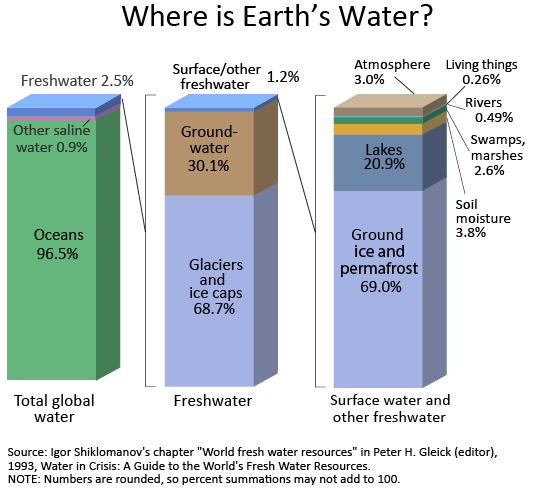


 Technology is now deeply embedded within society, so not planning for the future of technology is by far one of the most costly mistakes we will ever make, in more ways than one.


