As Horizon fly’s pass Pluto poor old Hubble is left in the dark.
Launched aboard the shuttle Discovery 25 years ago on the April 24, it had its vision restored in December 1993.
Orbiting the Earth for over two decades, Hubble has helped to answer some of the most compelling astronomical questions of our time – and uncovered mysteries we never knew existed. Investigating everything from black holes to planets around other stars, Hubble has changed the face of astronomy, ushering in a new chapter of humanity’s exploration of the universe.
So in honor of Hubble – The beady eye of Space- here is what it has achieved
Over 100 Terabytes of observations all captured in digital files.
Astronomers have used all those observations to generate over 12,800 scientific papers, making the Hubble one of the most productive scientific instruments ever designed and built.
There are no rockets or thrusters on board the Hubble. To change directions, it spins reaction wheels that, thanks to Newton’s Third Law of Motion, make the telescope spin in the opposite direction. The wheels spin at about the speed of a clock’s minute hand, turning 90 degrees in 15 minutes.
Hubble operates on only 2,800 W, a little more than an electric range’s largest burner on high.
The telescope gets all its electricity from a pair of solar panels that measure approximately 23 х 9 ft (each).
Engineers gave Hubble a pointing accuracy of 0.007 arc seconds, which is analogous to aiming a laser and hitting a dime 200 miles away.
The most distant objects Hubble has seen are 13.4 billion light years.
The Hubble takes only black-and-white images. The spectacular color images you see from the Hubble are made by combining two or more black-and-white exposures through colored filters. Then, when the image is further processed, colors matching the filters are added.
Hubble helped construct the largest scale 3-D maps scientists have of where dark matter is distributed in the universe.
Also, by helping to find out the mass of Eris, which is 27 percent more massive than Pluto, the realization that similar bodies might lurk in the Kuiper Belt and beyond it helped demote Pluto and similar objects to dwarf planet status.
By gazing at star-forming regions such as the Orion Nebula, Hubble was able to show that protoplanetary disks of gas and dust are ubiquitous around many young stars.
Gamma ray bursts. Hubble helped discover these bursts typically occur in galaxies that were actively forming stars and were low in metallicity.
The comet Shoemaker-Levy 9 collided spectacularly with Jupiter in 1994, an impact Hubble captured in all its startling glory.
Hubble may have helped solve the mystery of how old the universe is, but it unexpectedly turned up an even more profound one — the fact that the rate of the universe’s expansion is not slowing down or even constant, but is inexplicably accelerating.
Hubble discovered that super-massive black holes probably lurk in every galaxy that has a bulge of stars at its center.
Hubble has made some important advances in our research into alien worlds, such as determining the composition of the atmosphere of an exoplanet for the first time and actually imaging the visible light of Fomalhaut b.
Hubble helped refine estimates of the universe’s age down to roughly 13.75 billion years, a result that not only plays a role in modeling how our universe has evolved over time, but also in our understanding other seemingly unrelated cosmic parameters, such as the mass of neutrinos.
It’s re-written a lot of what we know. Re-engineer humans for a better planet.
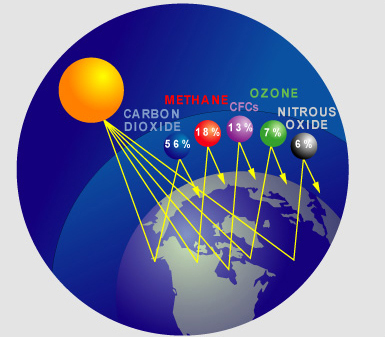
Climate change is the ultimate global collective action problem, requiring cooperation from every government in the world.
It’s over twenty years since the first treaty, signed at the 1992 Rio Earth Summit, when countries agreed to limit their emissions of greenhouse gases.
Here is the reality:
We are the first generation to understand the consequences of a high carbon economy on the planet, on future prosperity and, in particular, on the most vulnerable around the world. Let us be the generation that stands up and takes the responsibility conveyed by that knowledge.” Christiana Figueres, executive secretary, UN Framework Convention on Climate Change, May 2014.
So the question now is whether we will have the courage to act before it’s too late. And how we answer will have a profound impact on the world that we leave behind not just to you, but to your children and to your grandchildren.” US President Barack Obama, Georgetown Address, June 2013.
I was very struck by the fact that the impacts of climate change are undermining a whole range of human rights: rights to food, safe water and health and education. But it is also displacing people, which is very likely to cause not just human distress but potentially conflict. So for me it’s a very, very serious issue of human rights.” Mary Robinson, UN special envoy for climate change, 2013
Climate change will amplify existing social, political and resource stresses, shifting the tipping point at which conflict ignites, rather than directly causing it. Climate change is likely to increase the frequency, scale and duration of humanitarian crises. It is also likely to change patterns of migration, making border security an ongoing concern, especially in the developed world.” UK Ministry of Defence, Global strategic trends out to 2040.
We have just 5 months left until the Paris Summit. How likely is it that it will be meaningful and make a difference to climate.
What should be in it?
A world Agreement; ( anything less is worthless.)
The international agreement that has a clear legal basis that works for different national constitutions. (All agreements are broken, so perhaps an agreement tied to World Trade/ and Arms deals might be enforceable.)
This agreement should be supported by a clear, shared accounting system and robust, transparent monitoring and reporting requirements.
It must be seen as fair for all. The agreement must allow for comparisons of national contributions, using appropriate indicators of national responsibilities and capabilities, to encourage ambition and ensure that climate action links with strategies for poverty alleviation and sustainable development.
The Agreement can not be seen as static. It should be for five-year cycle, with a ratchet mechanism over time built into the system and a clear, long-term goal. Why? Because carbon targets will need to be revised in the light of emerging science. It should move towards a goal to phase out pollution from fossil fuels by 2050 and phase in clean energy technologies.
It will need financing to support actions on adaptation and mitigation.
The agreement should include commitments to scaled up public finance, to support adaptation and mitigation action, aligned with other public finance for development; and wider efforts should be made to secure private sector investment in the low-carbon economy.
Any new agreement covering forest protection, land use and agriculture should be properly financed, have clear rules for emissions accounting and involve local communities in decision-making. It should ensure better biodiversity, ecosystem protection and restoration, and include support for sustainable agriculture and increased climate resilience.
Here what at stake:
The uncompromising Math of Global Warming, Pollution will if we fail to act early will guarantee that we are leaving humanity with more dangerous climate change such as more frequent extreme weather, more droughts, heat waves, and floods.
Even in the face of planetary catastrophe, 195 governments in a room can be just incompetent. Amidst the thicket of complex policy talk, we need to define the red lines of the agreement and organise the press and politics around them.
Our top focus – a clear commitment to a world without carbon, powered by 100% clean energy.
That is what will put the fossil fuel industry on notice, and shift private investment massively into renewable energy. New power plants, buildings, city designs, and lifestyles are being formed as we speak. How these are built could lock us into decades of increasing climate pollution as many of these last for several decades at a minimum.
A prime example is in the electricity sector where the emissions of power plants that the International Energy Agency projects could be developed in the next two decades would be larger than the emissions of coal from the beginning of the industrial revolution and eat up a huge chunk of the amount of carbon that can be emitted by all sectors.
The current targets aren’t deep enough to address climate change and most countries only made commitments through 2020. So there is a need to deepen and extend the emissions reduction commitments.
The scale of this crisis demands action that goes beyond consistently “kicking the can down the road”.
Once we have an agreement in hand then we can engage in serious ethical consideration over whether or not to act.
Will any of this happen?
Not a hope in a world that is driven by Capitalism.
The only way is as I have said in previous blogs is for Capitalism to contribute by placing a World Aid Commission of 0.05% on all High Frequency Trading , on all Foreign Exchange Transactions over $20,000, and on all Sovereign Wealth Funds Acquisitions.
IT’S A LONG, hard road to understanding the human brain so I have no intention of explaining yours to you here in detail.
Other than to say your brain has a critical function to sort out what you should remember and not remember. To determine what is true, it must know what is false.
Believing, interpreting, responding to environmental clues, or guessing is literally what a brain does.
Is your brain you.? If not who are you.
If a person is not a brain, and a brain is not the thing that perceives, thinks, interprets, feels, desires, decides, and so on we all have serious implications for the future.
Are the mind and the brain one? or is it the mind that tells the brain what it wants or is the mind a product of mere brain activity.
Another words what you see is not really there; it is what your brain believes is there . . . your brain makes the best interpretation it can . In order to explain (interpret) a visual scene, the brain must represent it first, and then explain it to its self to store in your mind.
We perceive and understand only what our brains represent.
To make sense of the tangle of neurons that makes the human experience human, is as complicated as to why you are here in the first instance.
To understand how the brain works you need one in the first place. It does not however help to explain the electrical pulses that tells a neuron to fire. Never mind how billions firing together. Your brain contains about 100 billion nerve cells, or neurons, each of which can communicate with thousands of other brain cells.
The good news is that humanity is poised to crack open the mysteries of the human brain not the mind.
For the moment the brain remains mysterious, it allows us to convert information into myriad forms to serve infinitely diverse ends.
The fields of your mind extend far beyond your brains they are hidden from view and not capable of being inspected. Whatever in your brain is buried deep within the recesses of your mind.
The quest for immortality has inspired humankind since the dawn of civilization. So will understanding the workings of the brain bring us a step closer.
Neurosciences assume that the brain has a wide variety of capacities: the brain interprets and stores information, recognizes symbols, analyzes, thinks, believes, knows, designs computers, determines what is true, paints pictures, deciphers images, analyzes, prioritizes, learns, understands, remembers, and makes decisions of the mind.
However, if I am my brain, and every atom in my brain (or body) is replaced every seven years or so, then I must become someone else every seven years.
There is no need to suppose that all the laws of nature sprang into being fully formed at the moment of the Big Bang, like a kind of cosmic Napoleonic code, or that they exist in a metaphysical realm beyond time and space.
The brain has been designed to change. Or is memory inherent in nature.
Are we capable of transferring thoughts from one brain to another.
Telepathy is normal not paranormal, natural not supernatural, and is also common between people, especially people who know each other well.
Mental activity are not confined to the insides of our heads. They extend far beyond our brain though intention and attention.
Non biological mine’s.
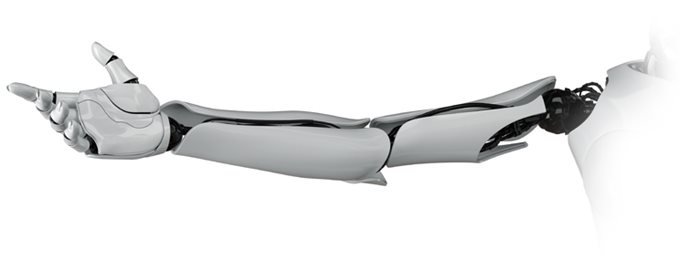
At our current stage of technological development, we have neither sufficiently powerful hardware nor the requisite software to create conscious minds in computers or robot.
Your Brain gives you the ability to combine and recombine different types of knowledge and information in order to gain new understanding; the ability to apply the solution for one problem to a new and different situation; the ability to create and easily understand symbolic representation of computation and sensory input; and the ability to detach modes of thought from raw sensory and perceptual input.
So what happens when it is introduced to Virtual reality or interface technology or drones contextual technology, or open communication.
We are entering the next Age of Biological Engineering evolving cellular engineering and molecular imaging.
What is the most powerful technology on Earth? Biology is Technology:
Hundreds of companies are now attempting to leverage the manufacturing and computational paradigms of biology.
By gaining control over biological systems and their biochemical pathways — and designing new pathways by rewriting the DNA “software” in cells — synthetic biologists are ushering in the “Biological Age,” creating substances with not only superior electrical, optical, and mechanical properties, but with properties that we have never seen before in man-made materials:
If you don’t believe me that Biology is Technology:
Have a look.
In the dark forest of our current ignorance, nothing captures the imagination like the possibility of creating a machine that is conscious and exhibits the same higher mental abilities as humans.
Biological systems have the ability to do things that no human-made machine or chemistry can begin to approach: the ability to replicate, to learn, to scale from one to billions, to adapt, and to evolve.
Computers today are so advanced that some contain as many connections as exist in the human brain — ten trillion of them. They can also operate at much higher speeds than the brain. What was once purely science fiction is now approaching the possibility of science fact.
A double edge sword the second machine age is going to replace our brains.
Can advanced robots or computers be moral persons? The term “moral person” refers to a being that has moral rights, such as the right not to be harmed, the right of free movement, and the right of free expression.
So let me ask you a question is it the end of moors law. (Moore’s Law is a computing term which originated around 1970; the simplified version of this law states that processor speeds, or overall processing power for computers will double every two years.) Once transistors can be created as small as atomic particles, then there will be no more room for growth.
Do we have a responsibility to future generations of humans that might be adversely affected by the creation of menacing robots? Should we stop our research into artificial intelligence right now before we create something that we cannot control?
To answer these questions, it those seems odd to speculate about building a mind from electronic scraps when we have so little clarity about the nature of our own conscious minds.
The human body is divided into many different parts called organs. All of the parts are controlled by an organ call the brain.
The cerebellum the forebrain, midbrain, and hindbrain.
No other organ is like the brain and all other organs would be unable to function without the brain which by the way weighs about three pounds.
The brain is known as the “final frontier” of science; It is the nut that is toughest to crack but contains a vast wealth of information, a veritable treasure trove of knowledge that can enrich our understanding of human nature.
The problem with artificial life acquiring consciousness in the form of experience of self is that if gives artificial life autonomy. Consciousness is a loophole out of programming, whether it is genetic (humans) or cybernetic (computers).
When we solve the hard problem of consciousness, then we can create machines with brains any time before that is brainless.
A machine without moral rules that should be embedded into the programming of all superior robots; one of these is that a robot should never harm a human.
We’ll be uploading our entire MINDS to computers by 2045 and our bodies will be replaced by machines within 90 years, Google expert claims. This singularity is also referred to as digital immortality because brains and a person’s intelligence will be digitally stored forever, even after they die.
But even if Einstein’s brain were intact enough to be plumbed with the tools of modern science, we might have to remain agnostic about the source of his brilliance.
Brain games have not yet fulfilled their promises of improved brain fitness.
How should we construe the relation of a person (soul) to his body or of his mind to his brain? To realize that conceptual clarity contributes to understanding what is known, and to clarity in the formulations concerning what is not known. A person is self-conscious and not brain-conscious, and needs no knowledge of the brain to function.
The brain, no doubt, makes it possible for us (not the brain!), to sense, perceive, think, reason, believe, feel, learn, know, understand, remember, and decide, and hopefully, to change our minds about how we think and talk about a person and the brain.
If not we are left with the following out of date Thesis.
Thesis 1: “The brain, as understood by neuroscience, is a piece of matter tingling with electrochemical activity” (Tallis 2009, p. 4).
Thesis 2: “The mind is what the brain does, and the brain is a causal machine . . . The ‘user illusion,’ nevertheless, is that a decision is created independently of neuronal causes, by one’s very own ‘act of will’” (Churchland 2005).
Thesis 3: “When the brain receives new sensory input from the world in the present, it generates a hypothesis based on what it knows from the past to guide recognition and action in the immediate future. This is how people learn” (Barrett and Bar 2009, p. 1325).
Thesis 4: “We can only understand categories of reality [for example, sound, color, taste, motion, action] and their regularities and interrelationships if our brains are capable of representing these categories . . . [W]e perceive and understand only what our brains represent” (Farah and Heberlein 2007, p. 40).
Thesis 5: Information (such as symbols, letters) is analyzed by and stored in the brain (Thompson and Harrub 2004a, p. 2), and the brain prioritizes information, deciphers images, and remembers (Martin 2013).
Thesis 6: “You are your brain” (Greene and Cohen 2004, p. 1779)
PS: Nothing of what I have said about your brain should be construed as in anyway a devaluing of your brain.
We are dualists who have two ways of looking at the world: With or without a Brain. However I would however suggest that you start using yours if you want a sustainable world.
How are you? If you stretched out all the DNA in your body and put them end to end, it would be about six times the distance that Pluto is from the Sun.
You are capable of abstract reasoning, language, introspection, and emotion. You are notable for your desire to understand and influence the world around you, seeking to explain and manipulate natural phenomena through science, philosophy, mythology and religion.
Your brain weights about 2% of our body mass but consumes 20% of our oxygen at resting state.
The changes in your DNA are completely random.
But not all evolutionary changes make inherent sense.
Sperm hold a much higher chance of carrying an error or mutation than an egg, especially among older men.
You decide who to have as a mate or how best to rear your children.
You have develop in a cultural sense; inheriting knowledge from previous generations and building upon it.
Your intellectual and emotional abilities are genetically surprisingly fragile.
Although you are now surrounded by the technological and medical benefits of a scientific revolution, these have masked an underlying decline in your brain power which is set to continue into the future leading to the ultimate dumbing-down of the human species.
You cannot step away from evolution.
In fact no matter how unique you think you are: you are living and dying like me on this planet called Earth.
“Uniquely in the living world, what makes humans what we are is in our minds, in our society, and not in our evolution.”
So what type of Modern Human are you.?
This is who you are.
Many people conceptualize evolution to be a gradual process, with natural selection blindly tinkering away at genetic and phenotypic diversity across generations. As long as people are tempted to confuse evolution with improvement dramatic changes in a species, under certain circumstances, can accelerate rapidly.
You don’t have to be right to be doing something useful.
Modern day human evolution is a contentious topic.
Is the human species doomed to intellectual decline?
Will our intelligence ebb away in centuries to come leaving our descendants incapable of using the technology their ancestors invented?
In short: Will Homo be left without his sapiens?
Our intelligence is designed to allow us to build houses and throw spears straighter at pigs in the bush, but that is not the real driver of brain size… In reality, what has driven human and primate brain evolution is the complexity of our social world, [and] that complex world is not going to go away.
Will the fruits of science and technology enabled humans to rise above the constraints of nature and cushioned our fragile intellect from genetic mutations. I don’t think so.
Humans of the future may have less hair.
Humans of the future may be more resistant to diabetes and heart disease.
Humans of the future may be physically weaker and more susceptible to pathogens.
Humans of the future may lack wisdom teeth.
Race differences may disappear.
But natural forces of evolution will still continue to shape humanity despite the power we have to profoundly alter the world around us.
This time does seem to mark a watershed where modern humans are pushing the boundaries further and further.
In my last post (The beady eye look’s at history’s greatest frauds) I argued that humanity’s collective intelligence has gone downhill ever since we started living on farms.
Its continuing with the iPad man.
The cost of greater intelligence is marginally more expensive.
Human beings have stopped evolving after becoming the only species to “put halt to natural selection of its own free will”. Says David Attenborough
Humanity is fragile.
Are we genetically different from our Homo sapiens ancestors who lived 10-20,000 years ago?
When we think of human evolution, our minds wander back to the thousands of years it took natural selection to produce the modern-day man. But are we still changing as a species, even today.
But not only are we still evolving, we’re doing so even faster than before.
In the last 10,000 years, the pace of our evolution has sped up 100 times, creating more mutations in our genes, and more natural selections from those mutations.
In recent years, enormous advances in techniques for the recovery and analysis of ancient DNA have unlocked new secrets about our human evolutionary family tree. These advances indicate that modern humans did not completely replace other human species, as had once been suggested. Instead there was some interbreeding. This model has become known as replacement-hybridisation, ‘leaky replacement’, or ‘mostly out of Africa’.
All people today are classified as Homo sapiens.
Living in cities has produced a genetic variant that allows us to be more resistant to diseases like tuberculosis and leprosy. While we may like to believe our big brains make us smarter than the rest of the animal world, our brains have actually been shrinking over the last 30,000 years.
The average volume of the human brain has decreased from 1,500 cubic centimeters to 1,350 cubic centimeters, which is equivalent to a chunk the size of a tennis ball.
But about 10,000 years ago, someone who lived near the Black Sea developed a genetic mutation that turned brown eyes blue. It is virtually impossible for two blue-eyed mates to create a brown-eyed baby, our blue-eyed male ancestors may have sought out blue-eyed mates as a way of ensuring fidelity.
Finally, can we say what direction human evolution will take in the future?
This is a fascinating question to consider but impossible to answer because of innumerable unknown factors. Though, it is certain that we will continue to evolve until we reach the point of extinction.
Is Technology making modern-day MUMMIES: The world suffers global recession, enormous inequity, hunger, deforestation, pollution, climate change, nuclear weapons, terrorism, etc.
Are we going to stand back and spectate while the ugly foundations of a modern-day. More people have a mobile phone than a toilet.
It’s obvious to anybody that looks around at the behavior of Homo sapiens that we’re not really perfected in any way.
The violence and vandalism unleashed by the so-called Islamic State of Iraq and Syria (ISIS) in the Middle East in recent years is seen from Yerevan as a logical continuation of the world’s failure to properly recognize and condemn the past genocides, including the Ottoman-era massacres of 1.5 million Armenians.
To those who say we’re are really making progress, there are more slaves than at any time in human history — 27 million. On average, in the past half-hour, one more person will have been trafficked to the United States into slavery. Never mind the rest of the word.
But there are also other forms, where people voluntarily agree to take what’s presented to them as a job. It’s usually an opportunity for a better life and much-needed income. They go willingly.
There’s a lot of illegal money being made buying, selling, and exploiting humans — about $32 billion a year.
Until human rights are elevated to a serious consideration for all decision-making, the rights enshrined in the Universal Declaration will remain an unattained goal. We are all human beings therefore we all have a stake in our history.
What if Darwin Got Wrong? Has our culture and our technology stopped or changed our evolutionary trajectory?
The Judeo-Christians believed that nature was placed here on Earth to be dominated by humans.
What is the present day relationship between nature and society?
Men are presented as being more powerful in society than women. As a species, we have naively disconnected ourselves from the ecology of life and have never fully credited our interdependence with nature. We are acting in ignorance to this whole and we are only beginning to feel the repercussions. The results of any evolution right now won’t really be visible until thousands of years in the future.
This is what we did look like:
This is what we might look like 100,000: years in the future.
So where does this leave us, evolutionarily speaking?
Don’t take received wisdom as the truth. All scientific knowledge is provisional. Question everything.
We differ from each other not only in our outward appearance, but also in the inner workings of our bodies. If humans had access to more than the 10% of the mental capacity that they now use, we would be able to control our body’s involuntary functions.
Evolution Has Never Been Observed.
But we are on the path to liberal eugenics?
Liberal eugenics is the idea of using genetic technologies to enhance human abilities and characteristics. Imagine the possibility of giving birth to your child without the possibility of any genetic mutations or ‘undesirable’ traits being passed along.
What would happen if we could change our physical appearance by the power of our own minds.
I believe that one day, we will be left with only two human races: those privileged enough to go through the process of designing their offspring’s own genome and those who will continue to roll the evolutionary die.
Is this the way we simply must go?
Society is the sum of the inventions, institutions, and relationships created and reproduced by human beings across particular places and times.