
THIS IS WHERE YOU LIVE.
ITS WORTH SAVING.

23 Wednesday Dec 2015
Posted in Humanity., The Future, The world to day., Uncategorized
THIS IS WHERE YOU LIVE.
ITS WORTH SAVING.
11 Friday Dec 2015
Posted in Google it., Google Knowledge., Humanity., Life., Social Media., Technology, The Internet., The world to day., Unanswered Questions., Uncategorized
≈ Comments Off on THE BEADY EYE SAY’S WE ALL BEING BRAINWASHED. THE WAY YOU THINK IS BEING CHANGED.
A little knowledge can be a dangerous thing.
THE INTERNET IS CHANGING THE WAY WE THINK.
There’s been little consideration of how, exactly, it’s reprogramming us.
My mind isn’t going—so far as I can tell—but it’s changing. I’m not thinking the way I used to think. I can feel it most strongly when I’m reading.
For me, as for others, the Net media are not just passive channels of information. They supply the stuff of thought, but they also shape the process of thought. And what the Net seems to be doing is chipping away my capacity for concentration and contemplation. My mind now expects to take in information the way the Net distributes it: in a swiftly moving stream of particles.
Once I was a scuba diver in the sea of words. Now I zip along the surface like a guy on a Jet Ski.
When we read online, we tend to become “mere decoders of information.” Our ability to interpret text, to make the rich mental connections that form when we read deeply and without distraction, remains largely disengaged.
We’re assaulted with facts, pseudo facts, jibber-jabber, and rumour, all posing as information. Trying to figure out what you need to know and what you can ignore is exhausting.
Never has a communications system played so many roles in our lives—or exerted such broad influence over our thoughts—as the Internet does today.
It is replacing real wisdom with the conceit of wisdom.
It is filling us up with “content,” to the point that we are sacrifice something important not only in our selves but in our culture.
It is destroying deep thinking, and eroding quiet spaces.
It is replacing compassion with selfishness. It is partly to blame for the current world conflicts.
Our thinking, has taken on a “staccato” quality. A form of skimming activity,” hopping from one source to another and rarely returning to any source we have already visited.
Smartphones have become Swiss army knife–like appliances that include a dictionary, calculator, web browser, email, Game Boy, appointment calendar, voice recorder, guitar tuner, weather forecaster, GPS, texter, tweeter, Facebook updater, and flashlight.
They are becoming a universal medium, the conduit for most of the information that flows through our eyes and ears and into our minds.time from human events.
We are becoming ever more adept at scanning and skimming, but what we are losing is our capacity for concentration, contemplation, and reflection.
The Internet is a machine designed for the efficient and automated collection, transmission, and manipulation of information, and its legions of programmers are intent on finding the “one best method”—the perfect algorithm—to carry out every mental movement of what we’ve come to describe as “knowledge work.”
The idea that our minds should operate as high-speed data-processing machines is not only built into the workings of the Internet, it is the network’s reigning business model as well.
But there comes a design point when there are so many tools available that our environments lose their simplicity and the cost in added complexity outweighs the benefits of convenience.
In fact it is makes us demonstrably less efficient. Instead of reaping the big rewards that come from sustained, focused effort, we instead reap empty rewards from completing a thousand little sugar-coated tasks.
The faster we surf across the Web—the more links we click and pages we view—the more opportunities Google and other companies gain to collect information about us and to feed us advertisements.
Most of the proprietors of the commercial Internet have a financial stake in collecting the crumbs of data we leave behind as we flit from link to link—the more crumbs, the better.
The Internet, an immeasurably powerful computing system, is subsuming most of our other intellectual technologies. It’s becoming our map and our clock, our printing press and our typewriter, our calculator and our telephone, and our radio and TV, our conscience.
When the Net absorbs a medium, that medium is re-created in the Net’s image
Email, telephone calls, electronic discussion groups, websites, pushed intranet news, letters and memos, faxes, stick-ems, calendars, pagers, and, of course, physical conversations and meetings, are just a few of the communicative events that bombard today’s knowledge worker. Thanks to the ubiquity of text on the Internet, not to mention the popularity of text-messaging on cell phones, we may well be reading more today than we did in the 1970s or 1980s, when television was our medium of choice.
But it’s a different kind of reading, and behind it lies a different kind of thinking—perhaps even a new sense of the self.
Printed book served to focus our attention, promoting deep and creative thought. In stark contrast, the Internet encourages the rapid, distracted sampling of small bits of information from many sources.
Although we think we’re doing several things at once, multitasking, this is a powerful and diabolical illusion.
It injects the medium’s content with hyperlinks, blinking ads, and other digital gewgaws, and it surrounds the content with the content of all the other media it has absorbed. A new e-mail message, for instance, may announce its arrival as we’re glancing over the latest headlines at a newspaper’s site. The result is to scatter our attention and diffuse our
We can turn the ringer off our phones, we can close our doors, we can auto-filter our email, we can personalize search engines, ask people to honor privacy, and so forth. But blocking out sacred time segments or sealing ourselves off from outside contact and even filtering email is not a serious solution.
The last thing these companies want is to encourage leisurely reading or slow, concentrated thought. It’s in their economic interest to drive us to distraction.
Google carries out thousands of experiments a day, according to the Harvard Business Review, and it uses the results to refine the algorithms that increasingly control how people find information and extract meaning from it.
The company has declared that its mission is “to organize the world’s information and make it universally accessible and useful.” It seeks to develop “the perfect search engine,” which it defines as something that “understands exactly what you mean and gives you back exactly what you want.”
The more pieces of information we can “access” and the faster we can extract their gist, the more productive we become as thinkers. Which is totally untrue.
Their desire is to turn their search engine into an artificial intelligence, a HAL-like machine that might be connected directly to our brains. “The ultimate search engine is something as smart as people—or smarter.”If you had all the world’s information directly attached to your brain, or an artificial brain that was smarter than your brain, you’d be better off.”
A load of cobblers. To solve problems that have never been solved before, and artificial intelligence is the hardest problem out there.
If our brains were supplemented, or even replaced, by an artificial intelligence it would be more than unsettling. We would drain of our “inner repertory of dense cultural inheritance,” turning our thoughts and actions into scripted, as if they’re following the steps of an algorithm.
Weakening our capacity for the kind of deep reading that emerged when an earlier technology, the printing press, made long and complex works of prose commonplace.
Remapping the neural circuitry, reprogramming the memory.
The technologies we use to find, store, and share information can literally reroute our neural pathways. Every information technology carries an intellectual ethic. We stopped listening to our senses and started obeying the clock.
What the sociologist Daniel Bell has called our “intellectual technologies”—the tools that extend our mental rather than our physical capacities—we inevitably begin to take on the qualities of those technologies.
The missing premise is quality: The ratio of high quality to low quality information is falling.
In Google’s world, the world we enter when we go online, there’s little place for the fuzziness of contemplation. Ambiguity is not an opening for insight but a bug to be fixed. The human brain is just an outdated computer that needs a faster processor and a bigger hard drive.
Last year, Page told a convention of scientists that Google is “really trying to build artificial intelligence and to do it on a large-scale.
Information is relentlessly pushed at us, and no matter how much we get we feel we need more, and of better quality and focus.
Our lives ought to get easier in information rich environments but the question is at what cost.
He who knows it not and can no longer wonder, no longer feel amazement is as good as dead.
Yet no search engine seems to return hits with sufficient precision to save us from having to browse dozens of useless pages in our effort to berry pick the best items. The result is that we spend more time searching
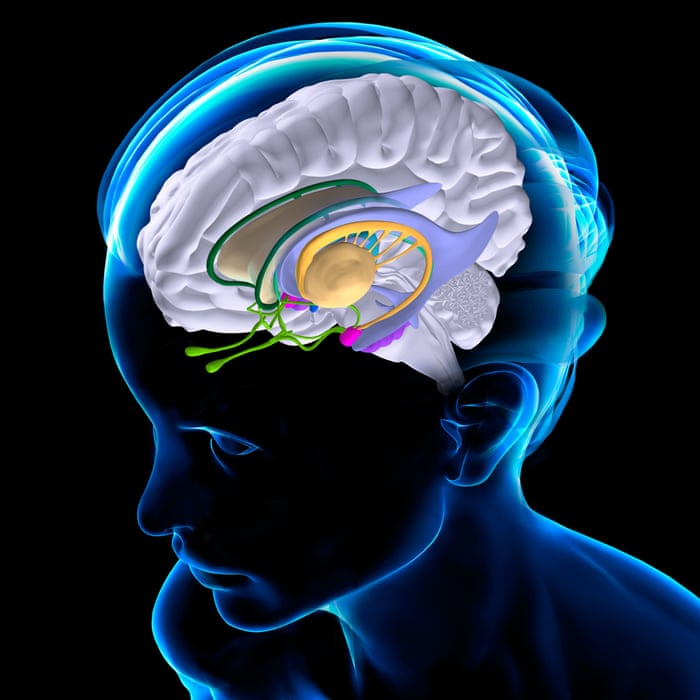
more people have mobile phones than have toilets. This has created an implicit expectation that you should be able to reach someone when it is convenient for you, regardless of whether it is convenient for them.
we need a new theoretical understanding of our activity space and our dynamic relation to our environments.Cognitive overload is a brute fact of modern life. It is not going to disappear. In almost every facet of our work life, and in more and more of our domestic life, the jobs we need to do and the activity spaces we have in which to perform those jobs are ecologies saturated with overload.
As technology increases the omnipresence of information, both of the pushed and pulled sort, the consequence for the workplace, so far, is that we are more overwhelmed. There is little reason to suppose this trend to change.
08 Tuesday Dec 2015
Posted in Humanity., The world to day., War, Where's the Global Outrage.
Tags
Syria has become the Middle East’s biggest humanitarian disaster in decades.
For most of the last 40 years, Syria’s leaders imposed stability on the country’s mix of religious and ethnic groups. Then civil war erupted, drawing in an array of outsiders.
Secular Syrians, homegrown Islamist radicals and foreign Sunni jihadists battle forces loyal to President Bashar al-Assad, Lebanon’s Shiite Hezbollah militia, and — at times — each other.
After more than four years of violence that has killed more than 250,000 people and led to the rise of Islamic State, the effects of the conflict are being felt ever further afield.
Russia and a U.S.-organized coalition are both fighting Islamic State inside Syria, with Russia supporting Assad and the U.S. on the side of the Syrian rebels.
There’s concern that Assad’s defeat could leave a vacuum that radical Islamic groups would rush to fill.
The war-weary U.S. is taking a cautious approach that minimizes harm to its forces.
There are worries that if foreign governments supply more-advanced weapons to the opposition, they might fall into the hands of the Islamic State or other al-Qaeda-inspired groups, which could turn them against the U.S. and its allies.
Russia, for its part, says its goal is to keep Syria secular, independent and, most important, intact. Russia has used its UN Security Council veto repeatedly to protect the regime and maintains its only military base outside the former Soviet Union at Syria’s Mediterranean port of Tartus.
THIS WAR NOW IS A WAR of identity—those in which populations are mobilised by grievances that have ripened over decades or centuries.
THE QUESTION IS HOW ARE WE TO GET THE GUNS TO FALL SILENT EARLIER THAN LATER.
At the risk of stating the obvious.
We all know, that bombing is not the final solution.
We all know, that in the Western Powers, there is no stomach for an overt armed intervention. (Putting boots on the ground especially now that Russia is involved.)
We all know, that war is good for business.
We all know, that the war will spread.
We all know, that our current ideologies about war (random episodes of senseless violence- Paris) makes it hard to understand why we still have wars.
We all know, that Sects and tribes are rarely neatly divided, waiting for a line to be drawn between them. Separating them, if need be by force, will make some safer, but it will cause others great misery and may well spark new conflicts.
We all know, that both sides in a civil war often feel they must carry on fighting if they are to escape slaughter. (As those fighting in Syria know, defeat often looks like death, rather than retreat.)
We all know, that only when the fighters have been disillusioned, can mediators get to work—and then only for a limited period.
We all know, that Power-sharing creates weak governments; nobody trusts anyone else enough to grant them real power. Poor administration hobbles business. Ethnic mafias become entrenched. Integration is postponed indefinitely. Lacking genuine political competition, with no possibility of decisive electoral victories, public administration in newly pacified nations is often a mess.
We all know, that Warlords who start conflicts are rarely prepared to admit that they cannot win, and their charisma can be central to the cause.
We all know, that not only does war have a special political and economic interest for many it can be addictive in nature even seeming fun and exciting.
We all know, that the best predictor of a civil war is having a war next door.
We all know, that military victories tend to provide more stable outcomes than negotiated settlements.
We all know, that the prospect of an ending can quite often intensify the fighting.
We all know, that Angola, Chad, Sri Lanka and other places long known for bloodletting are now at peace, though hardly democratic.
We all know, that killing innocent people seems to have a common theme in religion. It gets us accustomed and hypnotized into subservience once our brains enter the alpha state of conditioning.
We all know, that Civil wars unresolved for more than a decade seem to drag on for ever, with both sides resigned to perpetual fighting, too disgusted or exhausted to face their enemies across the negotiating table.
We all know, that one reason for backsliding is that peace often fails to bring the prosperity that might give it lasting value to all sides.
We all know, that from birth, virtually all of us have been brainwashed through various outlets that encourage materialism, ego, subservience, control and conformity.
We all know, that myths are created to drive war and how those myths differ so enormously from the reality.
We all know, that our children are not learning the true history of our origin while being forced to learn a propaganda filled view of what history looks like through biased.
We all know, that there can be no peace in the middle east till Israel takes down its Sectarian Wall and offers a one state Solution. There is little point in clinging to their original dreams long after all possibility of attaining them has faded.
We all know, that civil wars do end.
We all know, there are worries that if foreign governments supply more-advanced weapons to the opposition, they might fall into the hands of the Islamic State or other al-Qaeda-inspired groups, which could turn them against the U.S. and its allies.
We all know, that Russia, for its part, says its goal is to keep Syria secular, independent and, most important, intact. Russia has used its UN Security Council veto repeatedly to protect the regime and maintains its only military base outside the former Soviet Union at Syria’s Mediterranean port of Tartus.
We all know, that if the war continues untreated that there will be millions of more refugees.
We all know, that the world organisations
We all know, that there are casualties on both sides of the conflict.
We all don’t know the Human Toll.
The United Nations estimated in July that more than 100,000 people have been killed in the conflict in Syria. About 2 million Syrians have registered as refugees or are pending registration, with an average of almost 5,000 people fleeing into neighboring countries each day, the office of the UN High Commission on Refugees said Sept. 3. At the end of August, there were 110,000 refugees in Egypt, 168,000 in Iraq, 515,000 in Jordan, 716,000 in Lebanon and 460,000 in Turkey, it said. Inside Syria, a further 4.25 million people are displaced, according to data from the UN’s Office for the Coordination of Humanitarian Affairs.
We all don’t know, that Leadership changes are a factor in the termination of between 25% and 40% of civil wars.
We all don’t know, that the majority of victories come in the first year of a civil war.
We all don’t know, that the war has pitted the U.S. and its Sunni-Muslim Gulf allies, who want to see Assad removed from power, against Russia and Shiite-Muslim Iran.
We all don’t know, that there are about 10,000 jihadists — who include foreign fighters — fighting for factions linked to al-Qaeda. Another 30,000 to 35,000 are Islamists who share much of the outlook of the jihadists, but are focused purely on the Syrian war rather than a wider international struggle.
We all don’t know, that Fighters from the rebel group are financed and armed in part by some Gulf Arab countries, including Saudi Arabia and Qatar. They have struggled to hold territory. They have also battled Islamists, who see the Syrian conflict as a religious war.
We all don’t know, that the Syrian National Council: The council of opposition groups has its main offices in Istanbul and Cairo, and was formed in 2011. It falls under the umbrella of the Syrian National Coalition. The group seeks a civil and democratic state in Syria after the toppling of Assad. It has a president, a prime minister and about 114 members. It’s an umbrella group of opposition blocs whose main goal is toppling Assad’s government. The group has sought international recognition and the formation of a transitional government, according to its website. It has pledged to guarantee the “rights, interests and the participation of all components of Syria.
We all don’t know, that the Assad’s family has ruled the country for 40 years, and has been backed by the Alawite community and other minorities. Assad’s father left behind an authoritarian government that’s been led by the socialist Baath Party since 1963. Under Hafez al-Assad, Syria allied itself with Shiite Muslim-led Iran. Lebanon’s Shiite-Muslim Hezbollah has aligned with the Syrian government and fought with them to take the strategic city of al-Qusair in June.
We all don’t know that General Salim Idris:
He became the head of the rebel Free Syrian Army’s Supreme Military Command in December. The East Germany-trained electronics professor was a general in the Syrian army when he defected in July 2012. He has been vocal in trying to persuade the U.S. to intervene militarily against Assad after the use of chemicals weapons in August. Idris has tried to convince the U.S. that the FSA isn’t an Islamist or radical group as portrayed by the Assad government.
We all don’t know that George Sabra:
He was elected in April as the acting president of the coalition, and held the post until July. He’s still head of the Syrian National Council after being appointed in November 2012. During his role leading the opposition bloc he stirred controversy by refusing to rule out talks with Assad’s government. He speaks about Syria without any religious or sectarian bias and supports the formation of a secular government after the ouster of Assad.
We all don’t know Ahmad al-Jarba:
He became the opposition coalition’s new president in July. As a leader of the Shammar tribe, one of the largest in the region and from which the mother of King Abdullah of Saudi Arabia also hailed, Al-Jarba is viewed as someone the leadership in Riyadh can work with. Al-Jarba was born in 1969 in the north-eastern Syrian city of Qameshli.
We all don’t know Ghassan Hitto:
Hitto stepped down as opposition prime minister in July. He was given the responsibility of administering areas inside Syria held by the rebels. He pledged to enforce laws and provide logistical support for opposition forces. The communications executive was born in Damascus and has a bachelor’s degree from Indiana’s Purdue University and an MBA from Indiana Wesleyan University.
We all don’t know Ahmad Tomeh:
Syria’s opposition National Coalition elected Tomeh as prime minister this month and tasked him with forming a transitional government. The 48-year-old is thought to be have been a consensus candidate accepted by secular members in the coalition and moderate Islamist groups fighting to oust Assad. He replaced Ghassan Hitto, a Syrian American businessman. Tomeh is from the country’s oil producing east.
We all don’t know that Syria’s conflict began with peaceful anti-government protests in March 2011, part of a wave of popular opposition to authoritarian regimes across the Arab world. It evolved into a sectarian war after President Bashar al-Assad’s troops fired on demonstrators.
What about the sham Peace conference in Vienna misleads the world about the lack of any realistic solution to the war.is a sham conference that is not capable of delivering any peace negotiations, and that the Obama administration knew that perfectly well from the start. 
None of the Syrian parties to the war were invited. The obvious implication of that decision is that the external patrons of the Syrian parties – especially Russia, Iran and Saudi Arabia – are expected to move toward the outline of a settlement and then use their clout with the clients to force the acceptance of the deal. The idea of leaping over the Syrian parties to the conflict by having an outside power negotiate a peace agreement on behalf of it clients is perfectly logical in the abstract.
Iran, on the other hand, is fighting a war in Syria that it regards a vital to its security. And Russia’s political and security interests in Syria may be less clear-cut, but it also has no incentive to agree to a settlement that would risk a victory for terrorism in Syria.
All the conference achieved it to mislead the rest of the world about the lack of any realistic solution to the war.
The way to end the war is to get Russia to ask Mr Assad to help with a transition into a new government.
It must create a Mutually hurting stalemates. Governments often need less pressure, since they find stalemates painful in themselves. Without full control of their territory, legitimacy seeps away. This weakens them and encourages others who have grievances to make a stand, adding to the problems.
Separate measures are needed for the Rebels. They will require extra pressure, since they are less likely to find a stalemate intrinsically painful.
Fighting becomes their raison d’être; keeping the ability to fight on is all they need. “The guerrilla wins if he does not lose,”
The trickiest part is getting both sides into painful positions at the same time. Knowing that the enemy is under the cosh can tempt embattled combatants to hold out.
The Assad regime obviously has no incentive to make peace the least bad option.
What is essential in peace negotiations is combatants’ acceptance, at least privately, that the hope of winning has died away.
They then can turn their attention to those that blindly believe anything they are told in the name of “faith”.
Civil wars tend to end as messily as they are fought. Negotiations often take place in parallel with combat.
There may well be some conflicts better fought to their conclusion than left unresolved. This is not one of them. The violence needed for a military victory has already destroy the state institutions required to stabilise a country in the long-term. The announcement by David Cameron that the UK is now engaged in drone strikes and bombing against targets in Syria is just what the wars needs. Britain will be at the mercy of events which are being shaped by the numerous other players in the conflict, all of whom have their own highly contradictory agendas.

eyes.https://youtu.be/yMZnX4PnubI
30 Monday Nov 2015
Posted in Google Knowledge., Humanity., Social Media., Technology, The Future, The world to day.
≈ Comments Off on THE BEADY EYE SAY’S, It’s time to redefine our “lifespaces”—the way we live

Humans started to separate from the rest of the great apes about 7M years ago and we became modern humans 200k years ago.
Are we now throwing the old blueprint out the window?
So Are we more attuned to our modern needs for the twenty-first century and beyond?
Have we moved beyond the paradigm of living in a nuclear family home in the suburbs?
What do the objects we select tell us about the relationships that exist between designer, retailer and consumer?
What is the design thinking behind some of the everyday items that shape our lives?
First we have to look at ourselves and according to the fountain of modern-day knowledge Google it.
An average person.
“The New Frugality”
The average adult spends more than 20 hours online a week.
On average, people spend more than 490 minutes of their day with some sort of media,.with global average consumption set to rise to 506 minutes.
The internet accounted for 13% of average daily media use in 2010, but is set to reach nearly 30% in 2017.
Instant messaging use has leaped from 38% of mobile phone users in 2013 to 42% in 2014, driven by services such as Whats App and Facebook Messenger.
The mobile phone is now the primary device used for gaming with a quarter of mobile users playing games at least once a week.
80% of internet users aged between 35 and 44 are now on social media.
70% of internet users say they feel comfortable giving away personal information on the internet, including their home address, and a quarter say they don’t read website terms and conditions or privacy statements at all.

Are all becoming shut-ins.?
Or are we closer today to a global revolution than ever before. Can you feel it?
Or are we all disappearing into the Cloud.
The Question is how can we ensure that this is not going to happen.
HERE IS A SUGGESTION THAT COULD NOT BRAKE DOWN THE MESS WE SEE THE WORLD IN.
A UNIVERSITY TRAVEL SUBSIDIARITY AIR TICKET AWARDED TO GRADUATES.
THE SUBSIDY COULD BE GRADED ACCORDING TO THE MARKS RECEIVED.
STUDENTS COULD BE ENCOURAGED TO SAVE THE BALANCE DURING THEIR COURSE.
THERE IS NOTHING LIKE TRAVEL TO OPEN THE MIND.
Here below are a few observations to help you make your mind up.
29 Sunday Nov 2015
26 Thursday Nov 2015
Posted in Humanity., Paris Climate Change Conference 2015, The Future, The world to day., Unanswered Questions., Where's the Global Outrage.
≈ Comments Off on THE BEADY EYE ( FINAL INSTALLMENT) ASK’S WHY IS THE WORLD LIKE THIS.
We don’t have to be united. We don’t have to agree. We don’t always have to “stand together,” even. If one thing changes everything will change.
We do however have to live on the same planet with conflicts of ideologies political, or religious.
Our painting now has all its elements Money, Religion, the Gun, Humanity, Earth and Woman,and it need of completion, framed and displayed.

Before we go any further if there is an Artist out there and a Sponsor or rich person that wants to do something with this piece of incredible art, fee free to do so on a crediting me with the concept.
We have placed Woman sitting on top of Earth which is represented by a background wash of intense color that shines through a transparent wash of humanity. She is sitting with her back to us. We have then peppered our canvas with the gun, money and religion.
The question is how do we make all the elements come together.
Rather than the usual frame we are going to use a circular frame which will be hung in a large Plexiglas dark glass Pipe. The pipe to represent tunnel vision.
We will fill the pipe with crystal clear waters the source of life and illuminate it with pulsing white light from back-end. This will simply enhances the natural beauty of our painting which is hidden in the transparent wash of humanity.
Light in general changes as it penetrates into the ocean., which is exactly what to achieve with our painting of the world. Placing the viewer in the euphotic zone.
Because all life in the oceans is ultimately dependent upon the light which is selectively scatters and absorbs in water it will act as a filtration of the viewers wavelengths of visible.
Our Pipe will be suspended from the ceiling at the height of an average person.
This will represent Space in which our planet exists. It will also create a clear space for the viewer cutting out any peripheral distractions.
The viewer will be invited to take a set of earphone, because sound is the one element we could not capture on canvas.
The CD will reflect the sounds that are relevant to our elements in the composition.
The “goodness” of sound is a totally scientific and quantifiable thing that allows no room for personal preference, bias, or interpretation. Its heard in a thousand different directions.
There you have it.
I hope the this series of posts has led you through the looms of life that has made our world so difficult to live as one family of humans.
We can only hope with these many-coloured skeins, may we weave the pattern of or spiritual tapestry to give covering for lives yet unborn.
When you don’t know how to do something; where the first place you turn?
The internet Right?
It doesn’t help you truly.
All it takes is for you to imagine the average human being is like you.
If you can do that, you make a better world, and a more difficult one for groups like ISIS to exist in.

The international community is by now quite experienced in pretending that the massive humanitarian crisis exists in some acceptable and remediable form, destined to improve with time.
Insisting on the humanity of the victims is also a political act, and as tragedy is spun into civilisational conflict or an excuse to victimise those who are already victims, it’s a very necessary one.
The world has been encouraged in this dangerously expedient ignorance by the media. The history of misrepresentation is long and ugly.
“Entire generations may be lost” It requires a willful blindness not to see what is occurring.


25 Wednesday Nov 2015
Posted in Humanity., Life., Sustaniability, The Future, The world to day., Where's the Global Outrage.
≈ Comments Off on THE BEADY EYE ( PART FIVE) ASK’S WHY IS THE WORLD LIKE THIS.
In the last post of this series I mentioned that our canvas of the world needed Woman.
Since we men focus on the exterior so much, you would think they are entirely different species. But they are not.
The question is how do we introduce them to our painting.
Inside they couldn’t be any similar.
Both men and women want to be loves and accepted. Both men and women are capable of human tendencies like sympathy and empathy. Both men and women are just as fallible when it comes to greed and vices.
In short, I have no idea what it’s like to be a woman. Every answer will be different.
The belief that women are inferior to men is no more a ‘label’ of inferiority for women it affected their lives and actually made them inferior.
Women presently bear the brunt of economic injustice, violence, poverty and hunger.
The modern global conversation around women’s rights and political participation has been taking place for almost 40 years.
Gender roles have been assigned by society. Examples of this are everywhere.
At the top of industry and government, the faces remain stubbornly male.
You don’t have to believe in patriarchy to realise that the law was made by men and is dominated by men, and that the same goes for parliament. Which means that in all the making of the law, women are largely absent. It is not surprising that the law doesn’t work for women.
More importantly, as a growing world of humanists, we understand that no society can truly be free until every citizen has the same rights; to deny even the least of its members carries the potential to deny all of its members freedom and liberty.
But the question remains do women want absolute parity in all things measurable.
Equality-by-numbers advocates should be thinking about women’s progress in terms of what women show that they want, not what the spreadsheets say they should want.
One way or the other Women are stymied by the need for humanity to reproduce. The ultimate magic trick in the universe.
Being a woman feels like being a human being, with the power to grow another human being inside oneself, and all that entails, including what society thinks you should be doing with that power.
The failure to root out prejudice against women is one of the major barriers to progress and prosperity.
Gender discrimination also breaches international human rights agreements and domestic laws in most countries.
As our canvas is depicting the state of Earth which is mother to us all we will place woman above the grinning men of humanity.

Why?
Because as we know humanity, without woman there would be no humanity. Behind every human is a woman. It is the best feminine qualities which will help us to develop peace on earth. They shared a faith in humanity, whether born of religious conviction or humanism.
In the good fight for peace and reconciliation, we are dependent on persons who set examples, persons who can symbolize what we are seeking and mobilize the best in us.
However fewer than 3 percent of signatories to peace agreements are women. No women have been appointed chief or lead peace mediators in UN-sponsored peace talks.
Is this because woman are primarily ruled by their emotions. It’s not that they lack logic; it’s just that their logic is over-ruled by their emotions.
Human fertility was the highest premium factor in existence
As long as we remain mysterious to ourselves, so will the universe.
We know now that no organization can prosper without tapping into the full mental and emotional potential of both genders.
Recognizing the importance of long-term investments in gender
equality at different stages of the life cycle has never being more important.
This will be the problem with Artificial Intelligence.
There is no magic key to unlocking gender equality in the world of work.
Not only has the United States not ratified the Equal Rights Amendment it is the only developed nation that has not ratified the Convention on the Elimination of all Forms of Discrimination against Women (CEDAW).
Countries who ratify the CEDAW are required to enshrine gender equality into their domestic legislation, repeal all discriminatory provisions in their laws, and enact new provisions to guard against discrimination against women.
The only countries in the United Nations who haven’t ratified CEDAW are: Iran, Palau, Somalia, Sudan, South Sudan, Tonga, and the United States.
Every human being must feel the same because we are all the same species ( Homo Sapiens)
So, to put it plainly, women had a place in society that wasn’t just dictated by male prejudice. There is no mystery in being a woman, whatever a human being wants and need that’s exactly what a woman needs too.
The rights of women in particular are being shunned massively throughout the globe. Sadly, in many countries, women are believed to be inferior. The belief that men are superior to women, otherwise known as patriarchy, has to end.
Human rights are defined as rights that are afforded to all human beings universally on the basis of their common humanity.
So as woman is the foundation stone of all humanity we will apply her with a pallet knife in a seated position with her back towards us (so men are not distracted) right in the center of the top of our canvas.
All that is left is to frame our painting and display it.

Adultry is Haram in Islam and I think in most religions as well, but you know what the consequence is? Stone to death ONLY THE WOMEN! This leads to fear of sex, fear or making love, fear of men, fear of public, fear of love itself!
But middle east is life for men, women are odalisques and servants to please men. That’s how they are raised from childhood, teach them to clean the house well, obey their father, obey their husbands, and obey until death.
23 Monday Nov 2015
Tags
Capitalism and Greed, Distribution of wealth, Extinction, Global warming, Globalization, Inequility, The Future of Mankind, World aid commission
Our painting now has a wash of money, a random application of religion and the Gun with a transparent over wash of humanity.
I think it would be a grave injustice to speak of the human species ( Other than ISIS and their like) as in some sense evil, even though we are destroying the environment so efficiently at the present time.
The nature of humankind is to expand its population, to gain security, to control, to alter. For millions of years that paid off without undue damage.
But then what happened was, as we developed a modern industrial capacity, and then the techno scientific capacity to eliminate entire habitats quickly and efficiently, we succeeded too well and at long last we broke nature. And now, almost too late, we are waking up to the fact that we have overdone it and that we are destroying the very foundation of the environment on which humanity was built.
Its time to add a healthy dollop of Earth to our canvas.
One frequently quoted piece of evidence against a Christian green ethic is the command to our first parents to ‘fill the earth and subdue it’ (Genesis 1:28).
How should we interpret this?
Does this mean we should be thrilled at increasing populations?
Well, to start with, ‘filling’ is not the same as over-filling. We should also remember that it is only in the last 100 years, that over-populating the world has become a real prospect.
In giving us “dominion”, God appointed us as His stewards or care-takers, and will hold us accountable for the way we discharge our responsibility, just like the husband-men and talent-holders in Jesus’ parables (Mat. 25:14-30, Luke. 20:9-16).
It does not matter whether you are a believer or not the ‘State of the Planet’ makes clear that we are unique in terms of our destructive potential, and we alone must change our behavior in response to moral beliefs and challenges.
People with or without religious belief can (and do) recognise and accept that we have a role as Stewards. It is agreed by ALL RELIGIONS that humans are not simply answerable to future generations for their management of nature, but that they are answerable to the one God who created them in his image so that they would manage the earth on his behalf.
The key or ethical argument – an argument of stewardship, an argument of handing on a world as rich as the one we inherited does not need any religious belief.
The rate at which species are becoming extinct as a consequence of human activity is staggering.
The problem is all around us and we are all part of the problem.
The problem now is recognising this fact. It can be the first step in becoming an active part in the solution
Human beings have created derelict industrial sites, open-cast mines, scrap yards and polluted rivers and beaches. Our current actions are producing greater and more rapid changes than ever before.
There is some pallet of colors to pick from. Soil erosion and loss of fertility. Deforestation Water-quality pollution Waste. Generation and global toxification. Human and cultural degradation. Alterations of earth’s energy exchange with the sun – green house gasses keep in too much heat resulting in global warming.
Our life-styles tend to keep us isolated from the awesome power and beauty of creation. Consequently we loose sight of its wonder, and as a result, we have a poorer understanding of the mess we ARE ALL IN.
Most of us are disconnected from our actions and their environmental effects.
We seldom if ever see our food growing, because it comes from shops. Few people who buy petrol from garages have ever seen an oil production platform or refinery. We may claim to deplore environmental damage, but by acquiescing in the system makes us accomplices in the crime.
We can just continue with the inevitable consequences of ignorance and greed, thoughtlessly bending the world to creating more bits of garbage to amuse ourselves…
No matter which course we take knowledge does not lead automatically to action.
The time has come… to destroy those who destroy the earth.
Why is it that the activities of our one species, aiming at no more than living in reasonable comfort and avoiding hunger, should cause such devastation on the rest of the natural world?
The answer is in our back ground wash, and how it has being applied with greed and corruption of power by all societies.
By now we should understand which of humanity’s activities inflict the greatest damage on the diversity of animal and plants of this planet.
But the problem is we are self centered and look like remaining so.


The average American consumes 40 times as much energy as the typical third-world inhabitant and the average European some 20 times as much.
One European uses as much energy as 20 Bangladeshis.
In short, a change to our societies, our economics, and our politics and our world organisations is needed.
Here is a snap shot of what the Paris Climate Change Conference 2015 is up against.
Qatar’s carbon emissions per capita are the highest in the world and three times as high as the United States’. Qatar, gas prices in Kuwait are among the lowest in the world, while GDP is among the highest. This, coupled with a lack of public transit infrastructure, makes road travel the sole means of mobility for both citizens and businesses moving goods. According to the Global Footprint Network, the average Kuwaiti uses 22 times more resources than the country provides per person.
A fuel farm on the outskirts of Dublin, Ireland, grows rapeseed (canola) plants to ultimately make biofuel.
In 2008, however, Ireland’s greenhouse gas emissions per capita were the second highest in the European Union.
Agriculture is the largest source of emissions, but emissions from vehicles have more than doubled since 1998.
However, there have been improvements in recent years: 2009 was the second year in a row in which transport emissions declined, and an increase in renewable sources of energy in the early 2000s reduced emissions from the energy sector by 10 percent in 2009.
The United Arab Emirates:
Despite being the world’s fourth largest oil exporter (behind Saudi Arabia, Russia, and Iran), the United Arab Emirates has publicly pushed for a renewal of the Kyoto protocol (the agreement among industrialized nations to cap emissions), announced a plan to increase renewable energy production, and even launched a 1-gigawatt concentrated solar generation project.
Yet Dubai, a city of 1.5 million people (many of whom are immigrants seeking their fortunes, like the workers pictured above), the world’s largest shopping mall, and an indoor ski resort, currently gets all its energy needs from the burning of natural gas, which is why it ranks third on Global Footprint’s list.
A Danish farmer surveys his Christmas trees shortly before they are sold in December 2008.
Denmark’s carbon emissions are half that of the United States’, but its cropland (the amount of viable land that can be used to produce crops) requirements are much higher. Because so much meat is eaten per capita in Denmark, the country must import a large amount of grain—so much that it would take up 215,000 square feet (2 hectares) of land per person, or 2.5 times more land than the country has.
New York City twinkles at night, with Fifth Avenue and Broadway clogged with cars.
If everyone lived like the average American, the Earth’s annual production of resources would be depleted by the end of March, the Global Footprint Network’s report said.
Americans’ love of road trips, suspicion of public transit, and growing energy demands fuel the country’s high per-capita carbon emissions.
A Belgian farmer drives his tractor in this undated photo.
Belgium’s biocapacity of cropland is extremely low, so much of its food must be imported. This begins to explain Belgium’s high ranking on Global Footprint’s list.
A lumberman cuts down a karri tree, a type of eucalyptus, in Western Australia.
Australians emit 28.1 tons of carbon dioxide equivalent per person, one of the highest per-capita rates in the world. In addition, the country’s demand for wood, food, and pasture uses the equivalent of 753,000 square feet (7 hectares) of land per person, nearly four times greater than what is available on average around the world.
Canada’s biocapacity is 14.92 hectares per capita, 5.5 times average global consumption. So if the world’s resources were as abundant everywhere as in Canada, we’d have more than enough to go around.
Even so, Canada’s cities are energy hogs. The country has the seventh highest rate of carbon dioxide emissions per capita. Total greenhouse gas emissions in Canada rose 24 percent between 1990 and 2008.
Sheep near a village in the Netherlands will go toward feeding Dutch citizens, yes, but for the most part, the Dutch consume more than they produce.
The small country, with its high population density and relatively little land area for crops and pasture, consumes six times more resources (energy, food, and more) than it is able to produce, and about three times more than the Earth overall is able to sustain.
God only know what China, India, and Russia and the rest of the world would add.
This can only be achieved by making Profit for profit sake create a World Aid Fund ( see previous posts) to tackle the Inequalities, Correct the damage to the climate, and protect what is left.

We all know that there is little point to any thing if we are not alive.
Its time to change from selfie square heads, and like button pressers to searchers.
Where there is poverty we must find it. Where there is pain we must find it. Where there is abuse we must find it. Where there is modern day slavery we must find it. Where there is inequality we must find it. Where there is pollution we must find it.
In fact its time to find what is of value to us all. 
Don’t be a square head contribute. All comments are valued.
You might think our canvas is now completed but you be wrong. There is one more color to add and that is Woman.
22 Sunday Nov 2015
Posted in Humanity., Sustaniability, The Internet., The world to day., Where's the Global Outrage., World Organisations., WORLD POVERTY WHERE'S THE GLOBAL OUTRAGE
≈ Comments Off on THE BEADY EYE ( PART THREE) ASK’S WHY IS THE WORLD LIKE THIS.
Tags
Capitalism and Greed, Distribution of wealth, Globalization, The Future of Mankind, Visions of the future.
Our painting of the world now has three elements Money, Religion and the Gun, but how do we knit them together into our modern-day canvas.
We need a large brush of Humanity.  We should endeavor to apply humanity as another wash, somewhat like the magnetic field that surrounds the earth in order to give color to the voices, of Humans.
We are all attracted and attached to one another. Money, Religion and the Gun all melt into the background when we apply Humanity.
The continuing changes in the spread, reception, interaction, sharing, and understanding of global information have altered the process of human and technological communication.
The last few decades have seen a growth in the role of the English language around the world as the lingua franca for economic, scientific, and political exchange.
Since its conception, the Internet has, so it seems,revolutionize the ways of human communication. It is the rise of computer-mediated, communication and the Internet, more than anything else, which has and is reshaping the WORLD.
It enables rich (or technology able) countries to take monopoly over the content generated on the Internet and it is becoming a form of cultural and linguistic imperialism in which western values dominate.
Which is one of the reasons why the world is like this – a Mess.
Our application of Human Language will have to be in a medium that is not permanent as you can only recognize and describe language change once it has occurred. So it will be like the Aurora communicating, untouchable, here to-day gone to-morrow.
The Language of Globalization is a relatively recent term used to describe the changes in societies and the world economy that result from dramatically increased international trade and cultural exchange.
However, this term as a concept is being use now in a wider way to describe all aspects of global human existence – social, cultural, educational and political.
The Web/Internet is a process by which the experience of everyday life, marked by the diffusion of commodities and ideas, is becoming standardized around the world.
It has come to define a level of economic, social and cultural activities that have outgrown national borders and markets through either industrial combinations and commercial groupings that cross national frontiers, international agreements that reduce the cost of doing business in foreign countries, or cultural influences of certain societies on others.
Globalization offers huge potential profits to companies and nations but has been complicated by widely differing expectations, standards of living, cultures and values, and legal systems as well as unexpected global cause-and-effect linkages.
In it Capitalist form it has led to the formation of terrorists groups, wars, unsuitability and poverty along with inequality, climate change, driven by outrageous individual and corporate Greed.
To put it simply, information technology has been termed as the medium of a new, and fourth revolution in human communication and cognition, matched in significance only by the prior three revolutions of language, writing, and print (Harnad, 1991).
Information technology impact on how people interact, access information, and share information akin to the Bi Sheng revolution about 900 years ago in ancient China (Song Dynasty). This impact is occur much more quickly than anticipated, leaving all of our World Organisations in need of radical overhaul.
Globalization is believed by some to lead to an end of a cultural diversity as it imposes sameness in the countries of the world; where everyone in the world is the same when we are far from it.
Globalization has been viewed primarily as an economic phenomenon, involving the increasing interaction, or integration of national economic systems through the growth in international trade, investment, and capital flow. However, this definition has expanded to include also cross-border social, cultural, political, and technological exchanges between nations and in particular.
It was hoped that electronic used for communication between groups who have no other language in common, would erode Inequality and take millions out of poverty. To most extent it has done this, removing the middle man, opening transparency to remove corruption.
Unfortunately it is driven by global corporations that are being dragged through Social Media to table of responsibility. While the rest of us are being turned into modern-day slaves bound together by Debt Bondage.
Despite all its apparent benefits, globalisation has some downsides which could possibly derail the world. 
Of course years ago none of this mattered as the great unwashed were unaware that they were being ripped off.
Giddens (2000) defined globalization as a separation of space and time, emphasizing that with instantaneous communications, knowledge, and culture could be shared around the world simultaneously. As Paolillo (1999: 1) puts it, in his introduction to a paper on the virtual speech community: ‘If we are to understand truly how the Internet might shape our language, then it is essential that we seek to understand how different varieties of language are used on the Internet.
About 85% of the world’s important film productions and markets use English and 90% of the published academic articles in several academic fields, such as linguistics, are written in English.
The Internet is bad for the future of many languages but it might be the saving grace of many others. It can also argued that the Internet must evolve its own principles and standards in order to grow and maintain as a newly emerging linguistic medium (Crystal, 2001)
It must not be transformed from a tool for information processing and display for the few to make money but become a free tool for all. 
It’s important to recognize, though, that it’s our nonverbal communication—our facial expressions, gestures, eye contact, posture, and tone of voice—that speak the loudest.
When your nonverbal signals match up with the words you’re saying, they increase trust, clarity, and rapport. When they don’t, they generate tension, mistrust, and confusion.
Perhaps this is the problem with modern-day communication. The way you look at someone can communicate many things, including interest, affection, hostility, or attraction. Eye contact is also important in maintaining the flow of conversation and for gauging the other person’s response.
You need physical space to communicate many different nonverbal messages, including signals of intimacy and affection, aggression or dominance.
Emotional awareness enables you to:
Our task is not to make societies safe for globalization, but to make the global system safe for decent societies.
07 Saturday Nov 2015
Posted in Freedom, Humanity., Life., Social Media., The world to day., Unanswered Questions.
Tags
Democracy, Freedom, Freedom of expression, SMART PHONE WORLD, The Future of Mankind, Visions of the future.
These days our Freedoms (which so many died for) are being eroded to the point where there is no such thing as Freedom in our Lifetime. In this post I am going to try to express what exactly personal Freedom is these days.
I am not going to exam the United Nations Declaration of Human Rights which has over 30 Articles, or what is left of free speech, or the Black freedom struggle, or woman’s struggle for freedom. Or the idea of free speech which is a view of freedom that is inseparable from the
political arena, flawed in theory and politicised in practice.
⌈ Human rights are rights inherent to all human beings, whatever our nationality, place of residence, sex, national or ethnic origin, color, religion, language, or any other status. We are all equally entitled to our human rights without discrimination. These rights are all interrelated, interdependent and indivisible.
Universal human rights are often expressed and guaranteed by law, in the forms of treaties, customary international law, general principles and other sources of international law. International human rights law lays down obligations of Governments to act in certain ways or to refrain from certain acts, in order to promote and protect human rights and fundamental freedoms of individuals or groups.⌉
All of which are impossible to implement, and has never been implemented anywhere historically – not even today, in liberal societies.
The freedoms that we once had are now dissolving because of the Internet, and the need for blanket surveillance due to fear mongering politics over terrorists plots ever since 9/11.
Our every move is tracked, we are under surveillance around the clock, our buying habits are logged, our preferences are hacked, and most of us don’t raise an eyebrow.
It is a mistake to think of a search engine as an oracle for anonymous queries they can set off a chain reaction that can have troubling consequences both online and offline. All this is because being online increasingly means being put into categories based on a socioeconomic portrait of you that’s built over time by advertisers and search engines collecting your data—a portrait that data brokers buy and sell, but that you cannot control or even see.
Our background and our relationships are becoming inescapable features of our human existence.
So what is freedom.
In the modern sense freedom is achieved by one’s individual nature, or inner voice. A sovereign self – a monological consciousness that fundamentally excludes the other.
However one can still be imprisoned by an oppressive internal forced liberation from an interior force.
So how can one reconcile two seemingly opposed senses of freedom?
One sense views freedom as bound and situated, while the other sense views freedom as liberation from such bonds.
What is required is a notion of self hood that recognizes and embraces both senses of freedom – to see the self not as an isolated and detached entity from the social world, but one that is deeply enculturated and dialogical while simultaneously liberated.
These are the limits, the boundaries, of what allow us to be free and for things to be meaningful.
So instead of viewing boundaries as something that disables our freedom, we should recognize that boundaries are what might actually enable our freedom.

The received ideas of our present-day institutions are composed of the religious, philosophical, economic, and political status quo.
The goal for each of us is to break free of these ideologies and re describe our world as a whole. This sense of freedom, which I referred to earlier as freedom-within-boundaries, is what ultimately makes possible a freedom-from-oppression.
If men wish to be free, it is precisely sovereignty they must renounce.
As Charles Taylor puts it, this sovereign and self-determining freedom characteristic of the modern individual “demands that I break the hold of all such external impositions, and decide for myself alone.
In this view, individuals could exercise their gifts and powers only by
participating in the common life.
That is to say, our freedom is contingent upon the greater public world.
Modern thought (especially evident in the political philosophy of Rousseau) externalized the source of oppression onto authoritative forces such as society, church, law, and government.
This is no longer true due to the indebtedness of the world.
At the expense of eliminating fundamental characteristics that make us human we are now confronting a world with unlimited new possibilities but having no meaningful boundaries.
Modern Social media come to see others as a part of – Us/Selfies.
Unfortunately this unchecked freedom is leading us to a void in which nothing would be worth doing, nothing would deserve to count for anything.
Life is dialogical by its very nature.
To live means to engage in dialogue, to question, to listen, to answer, to agree, to return to your own position, enriched. We need to identify with others in order to open ourselves up to new ways of being without forgetting where we come from to achieve any freedom.
In the past our background was essential to our identity. These days one’s uniqueness is maintained through continuous exposure to novelty in a consumer culture that thrives on the latest fad.
Is it this quantity of novelties that appears to take precedent over quality of relationships. So where do we turn for redescription of Freedom, to open us up to new and fresh ways of being human?
That can enable us to break free from our own pasts and increase our level of sensitivity and sympathy to those without freedom?
Is it severance from the status quo.
I fear that if you were to ignore you background, and try to break from your own past, “You would be crippled as a person, because you would be repudiating an essential part out of which you evaluate and determine the meanings of things. Our background, often times inarticulate and unformulated, carries the values and traditions that constitute who we are. This background is no longer not just our personal past and memories, but it may also be the lineage, tradition, and culture from which we have emerged.
Instead of dropping our historicity, we should be interested in owning up to the background and tradition that gives significance to our identity.
Meaningful freedom can only be achieved through enculturation.
Therefore, our freedom is bound in a sense, or situated in the environment that has shaped us, because that is likely to be the most meaningful environment to us.
Perhaps it is only in a bounded space that we can move about freely.
Fusion of horizons’ between ourselves and others..we must always have a horizon in order to be able to transpose ourselves into a situation.
Background is what initially provides persons with the possibility for understanding anything at all. Our background, or tacit knowledge of the world, is the horizon out of which things have meaning for us. It gives us our “referential context of significance.” A liberating freedom, which occurs when our world is enlarged not downloaded on to a data base.
Our identity is formed by the web of relationships that surround us. Therefore, it is precisely ourselves, which implies our background, that we must bring into the other’s situation.
The fundamental significance of language and conversation, and its ability to bring us closer to understanding one another is now rapidly diluted by technology.
We are not born precocial and fully hard-wired creatures.
Instead, we are born as incomplete beings, needing enculturation and society for healthy maturation.
Our biological need for one another requires certain physiological signals, that are not possible on the Web. Through facial expressions, infants learn to not only replicate another’s face, but to empathically feel what the face exhibits.
Biologists consider this skill of emotional matching to have been “crucial for escape from predation, foraging, hunting, and mass migrations” before spoken language entered our evolutionary history.
In spite of the modern liberating sense of freedom which may encourage isolation and detachment, we should also note that it can promote a healthy release from oppressive external forces. These forces can manifest in a variety of forms, everything from an abusive relationship to a manipulative religious group.

Emphasis on a socially dependent self can lead to passivity in daily life or submission to totalitarian regimes.
By being sympathetic we are capable of being liberated from ourselves.
On the other hand egocentrism shouldn’t be overcome at the expense of forgetting ourselves. So freedom is one that respects the boundaries of selfhood, instead of annihilating it.
Although we may be transported into the sandals of the Buddha, we still need to come back to our point of departure in order to be enriched.
Because in recognizing the necessity of one’s interpersonal relationships, social and moral commitments, culture, tradition, memories, and of course, biology as constitutive of one’s experience of liberation.

Freedom doesn’t necessarily mean fleeing to a new land. It can also mean discovering the oceanic depth of a single, bounded situation. And this entails having new eyes. Remember, “Life is immense!”
We are free to become authentic only after we accept our boundary, which is our finitude.
Death is the ultimate boundary of human existence, it is only by facing up to this limit that we are capable of becoming truly authentic Free.
Where the mind is without fear and the head is held high;
Where knowledge is free;
Where the world has not been broken up into fragments
by narrow domestic walls;
Where the words come out from the depth of truth;
Where tireless striving stretches its arms towards perfection;
Where the clear stream of reason has not lost its way
into the dreary desert sand of dead habit;
Where the mind is led forward by Thee into ever-widening
thought and action–
Into that heaven of freedom, my Father,
let my country awake.

–Guru Rabindranath Tagore
National Poet, Freedom Fighter
Modern day freedom-is freedom within boundaries.
WITH MIGO
The only thing worse than being 'blind' is having a Sight but no Vision
The latest news on WordPress.com and the WordPress community.
Sharing vegetarian and vegan recipes and food ideas
PPJ Gazette copyright ©


 bobdillon33blog