
( Six minute read)
Although we have been raising public awareness on climate change for years, this is not enough.
Despite the effects of climate change becoming more and more obvious, big polluting corporations – the ones responsible for the majority of carbon emissions – continue to carry on drilling for and burning fossil fuels.
Climate change is happening now, and it’s the most serious threat to life on our planet.
The global temperature increases day by day with much of Southern Europe and Northern Africa already in the grips of back-to-back heatwaves, which have caused wildfires and broken temperature records.
We all know that this warming causes harmful impacts such as the melting of Arctic sea ice, more severe weather events like heatwaves, floods and hurricanes, rising sea levels, spread of disease and the acidification of the ocean.
To date we have had around 26 global conferences resulting in agreements and promises, with insufficient actions to make any material changes to global temperatures rising.
Unless greenhouse gas emissions and global temperature are reduced within years, the world will face demanding consequences.
While every fraction of a degree making climate tipping points more likely the next UN Climate Change Conference will convene from 30 November to 12 December 2023 in Dubai, United Arab Emirates (UAE).
With signs that some climate tipping points are already approaching / irreversible we will witness once more the who’s the how’s and where while the melting of polar glaciers and sea ice, die-back of the Amazon rainforest and coral reef extinction are all on the edge of tipping over into a feedback loop of self-destruction, whereby their decline itself becomes a source of warming.
We can’t be sure exactly when tipping becomes inevitable.
Because of war in the Ukrain (which is affecting the world food supply) the climate targets will become looser and looser, higher and higher with world governments doing even less in the future.
We don’t have the policies in place, we don’t have the financing in place to reach any of the goals required.
Seven million people are already being killed by climate change around the world – as many as those killed by Covid. Yet progress by world governments has been achingly slow. it’s never been more important to demand that our leaders act.
Current policies are “totally inadequate” and you may rest assured that world leaders will once again make a “terrible mistake” in prioritising inflation, the pandemic and the Ukraine war over the climate.
We need concrete solutions to make it less uncomplicated to achieve any goals.
The world cannot be at “positive tipping point” in the fight against climate change without addressing the lack of financing. ( See previous posts)

Many commitments to reduce carbon emissions have been set, but few are binding and targets are often missed.
Climate change isn’t just a scientific problem or a political challenge its a distribution of wealth problem including technologies such as artificial intelligence.
It’s easy to feel overwhelmed, and to feel that climate change is too big to solve. It can be challenging to wrap your head around such a complex issue, These impacts are severe and far-reaching – both now and into the future – with no sign of slowing down unless drastic action is taken.
To work, all of these solutions need strong international cooperation between governments and businesses, including the most polluting sectors.
Many of the world’s biggest challenges, from poverty to wildlife extinction, are made more difficult by climate change.
But we already have the answers, now it’s a question of making them happen.
Mitigating greenhouse gas emissions requires changes in many areas, namely buildings, transportation, and the energy industry.
Governments want to be re-elected, and businesses can’t survive without customers. Demanding action from them is a powerful way to make change happen.
Transitioning to a sustainable future comes with a massive price tag, but it isn’t always clear who should foot the bill – or how the money should be spent.
Developing countries will increasingly be stuck with debts to pay for their climate solutions.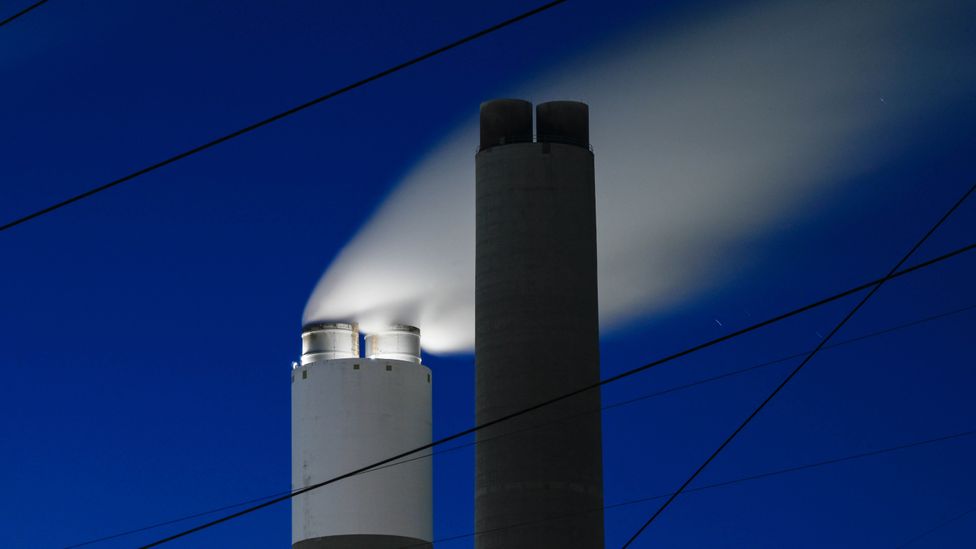
We are now facing an important crossroads. Make profit out of climate change or see it as a one-off, last-chance opportunity – to restructure economies at the pace and scale that climate science requires by integrating climate action into the economic recovery.
As the impacts of climate change add up, economists are trying to figure out what the true cost of a tonne of carbon really is. ” The most important figure you’ve never heard of”
It is basically a complete denial of climate science that underpinned the social cost of carbon.
Such as the cost of adapting to sea-level rise, or how increased temperatures affect labour productivity, and how crop yields will be affected. The impacts of climate change will be felt over many hundreds of years, whereas cutting emissions costs money now. A high discount rate suggests those alive today are worth more than future generations, whereas a low one suggests the opposite.
It defines how much society should pay to avert future damages caused by climate change. It also accounts for the impact that today’s emissions will have on future generations.
Instead of making assumptions about issues such as the relationship between temperature and human wellbeing at some abstract point in the future, there is now a lot of real-life data. If we pass certain climate tipping points, such as thawing permafrost and ice sheet disintegration, the runaway damage caused will increase the social cost of carbon. It will certainly affect the actions that people undertake.
It’s overwhelmingly accepted that climate change is a very significant threat to humanity.
We probably underestimated the consequences but every small step we take as individuals contributes.
So why not demand solar panel’s be put on every roof, free of costs, or that villages build solar farm to supply greed energy to their inhabitants, instead of military spending that will be worthless in the fight against rising tempts.
By financing renewable energy, “smart grid” technologies and other green innovations, of course things do not suddenly stabilise at 2030, but at the very least its a concrete step in the right direction.
All human comments appreciated. All like clicks and abuse chucked in the bin
Contact: bobdillon33@gmail.com
 bobdillon33blog