• About
  • THE BEADY EYE SAY’S : THE EUROPEAN UNION SHOULD THANK ENGLAND FOR ITS IN OR OUT REFERENDUM.

bobdillon33blog

~ Free Thinker.

bobdillon33blog

Tag Archives: Written constitution.

THE BEADY EYE ASK’S AGAIN: WHO, WHAT, AND HOW WILL THE EU SIGN A NEW AGREEMENT WHEN THERE IS NO WRITTEN CONSTITUTION THAT CAN BE HELD TO ACCOUNT.

26 Thursday Sep 2019

Posted by bobdillon33@gmail.com in Brexit Language., Brexit v EU - Negotiations., Brexit.

≈ Comments Off on THE BEADY EYE ASK’S AGAIN: WHO, WHAT, AND HOW WILL THE EU SIGN A NEW AGREEMENT WHEN THERE IS NO WRITTEN CONSTITUTION THAT CAN BE HELD TO ACCOUNT.

Tags

Brexit v EU - Negotiations., Written constitution.


(Twenty minutes read.)

In a previous post, I asked the above question:

Just who are the European Union dealing with when negotiating England’s withdrawal from the EU?

The EU is negotiating with three separate entities all under the rule of a Monarchy with no written constitution.

1707, Scotland and England join together to form Great Britain

1801, Ireland was forcibly attached to Great Britain and the name became “The United Kingdom of Great Britain and Ireland.

1922, The southern part of Ireland became a Republic, independent from the UK but a small part of Ireland (the northern part) stay under the UK.

When Northern Ireland is included, the country then gets its full internationally recognised name of ‘The United Kingdom of Great Britain and Northern Ireland’.

The United Kingdom is just the name given to the union of these countries and it is not a country.

Difference Between Constitutional Monarchy and Democracy

Where are we at the present moment?

The British Constitution can be summed up in eight words:

What the Queen in Parliament enacts is law.

It is a clear fact that Britain has survived very well until now.

Up to date parliament was supreme and can make or break laws. No parliament can bind its successors or be bound by its predecessors.

Fortunately, without a written constution Brexit is exposing a country with an out of date system.

The UK needs a fully written constitution?

Why?

Because a written constitution would offer protection if an extremist came to power and wanted to disregard democratic procedures.

Because unlike the great majority of countries there is no single legal document which sets out in one place the fundamental laws outlining how the state works.

Because without a written constitution, the UK has no Bill of Rights to protect its citizens.

Because without a written constitution the recent ruling by the Uk supreme court is, in fact, replaced the power of Parlement.

So does the recent ruling by the English Supreme Court open the door to a written constitution as a written constitution are ruled upon by judges?

In Britain judges are unelected and therefore it is undemocratic to take power away from our elected representatives and give it to judges who tend to be quite reactionary.

There is no specific procedure for changing the law, that is, very important law can be changed by a simple majority. This simply means that the decision-making process is not muted in any way by past legislation.

It is a fact that the UK is a unitary state with Parliament sitting at Westminster is the only body competent to legislate for the UK and all laws in the UK including laws relating to the constitution may be enacted, repealed or amended by the Queen in Parliament.

Since both monarchy and democracy are important forms of government one should know the difference between the two.

Democracy is a form of government in which the power of governing is derived from the people. On the other hand, a monarchy is a form of government in which an individual called the monarch is given all the political power.

However, there are different forms of democracy, namely, representative democracy, parliamentary democracy, liberal democracy, constitutional democracy and direct democracy.

In a democracy, the citizens are promised in terms of equality and freedom indirectly through representatives elected by eligible citizens who still hold the sovereign power. In a democracy, the people remain sovereign.

Also, there are different types of monarchy such as absolute monarchy, constitutional monarchy, as well as an elective monarchy and hereditary monarchy.

In a monarchy, it is the monarch, who is the head of state. Unless the monarch dies or someone overthrows the monarch, he or she remains as the ruler as long as he or she lives. This monarch can be a King, Queen, Prince or Princess.

It is very important to know that the individuals from the heritage and bloodline get the power and position in the case of a monarchy.

The constitution of the United Kingdom is the system of rules that shapes the political governance of the country. It is not contained in a single code but principles have emerged over the centuries from statute, case law, political conventions and social consensus.

England with a constitutional monarchy is a democratic government that consists of a constitution and a monarch who functions as a non-party political head of state within the limits set by the constitution, written or unwritten.

The current monarch Queen Elizabeth II is by tradition, commander-in-chief of the British Armed Forces with her powers being limited to non-partisan functions such as appointing the prime minister and bestowing honours.

The monarch does not set public policy or choose political leaders although they may hold certain reserved powers. When it comes to decision making in a monarchy, the monarch is the law. That means what the monarch decides as justice is justice, even when it is not so. Moreover, a monarchy is different in the sense that the monarch is not restricted by law as he or she is the one who frames the law in the land.

Also, a monarchy does not restrict the freedom of the individuals but the privilege depends on the considerations of the monarch. That means there is no one to stop the monarch from favouring those he or she likes and punishing those he or she does not like.

In a hereditary monarchy, the position of monarch is inherited by one’s relatives according to the customary order of succession. Countries such as the United Kingdom and Thailand are examples of constitutional monarchies.

Monarch is the head of state in a monarchy. A President or Prime Minister is the head of state in a democracy.

Britain Her Majesty’s Government is the core of its Westminster-style parliamentary democracy and federalism.

This twin status is only avaible and achievable when there is no written constitution.

All compounded by First Past the post-election system which results in Governments being elected on a minority of votes cast. Meaning those in government who are making all the decision does not represent the opinions of the majority of the country.

Couldn’t a future Supreme Court ruling simply repeal the Fixed Term

Parliaments Act?

Without a written constitution all of this is leading to doubts about democratic legitimacy with political disengagement.

Is the Supreme court now able to rule that Britain Taken Into The EU Illegally?

Is it now necessary that a general election or referendum must take place before any related parliamentary debate on any deal in or out?

What would happen if the court repealed the Scotland Act? to stop Scotland

from leaving the Union.

What would happen if Boris Johnson signes an agreement and the Supreme Court overrules it?

You could argue that England problems is now that it doesn’t have strict rules that need a public referendum to be changed. People verses Parlement.

All human comments appreciated. All like clicks and abuse chuked in the bin.

Go back

Your message has been sent

Warning
Warning
Warning
Warning

Warning.


Share this:

  • Click to share on WhatsApp (Opens in new window) WhatsApp
  • More
  • Click to share on Pocket (Opens in new window) Pocket
  • Click to share on Mastodon (Opens in new window) Mastodon

THE BEADY EYE ASK’S: SHOULD THE MONARCHY BE DISMANTLED IN LIGHT OF BREXIT.

13 Friday Sep 2019

Posted by bobdillon33@gmail.com in 2019: The Year of Disconnection., Brexit., Democracy

≈ Comments Off on THE BEADY EYE ASK’S: SHOULD THE MONARCHY BE DISMANTLED IN LIGHT OF BREXIT.

Tags

Brexit Language., Brexit v EU - Negotiations., Democracy, No-deal Brexit., The Queens powers., The Royal family., Written constitution.


(Ten-minute read)


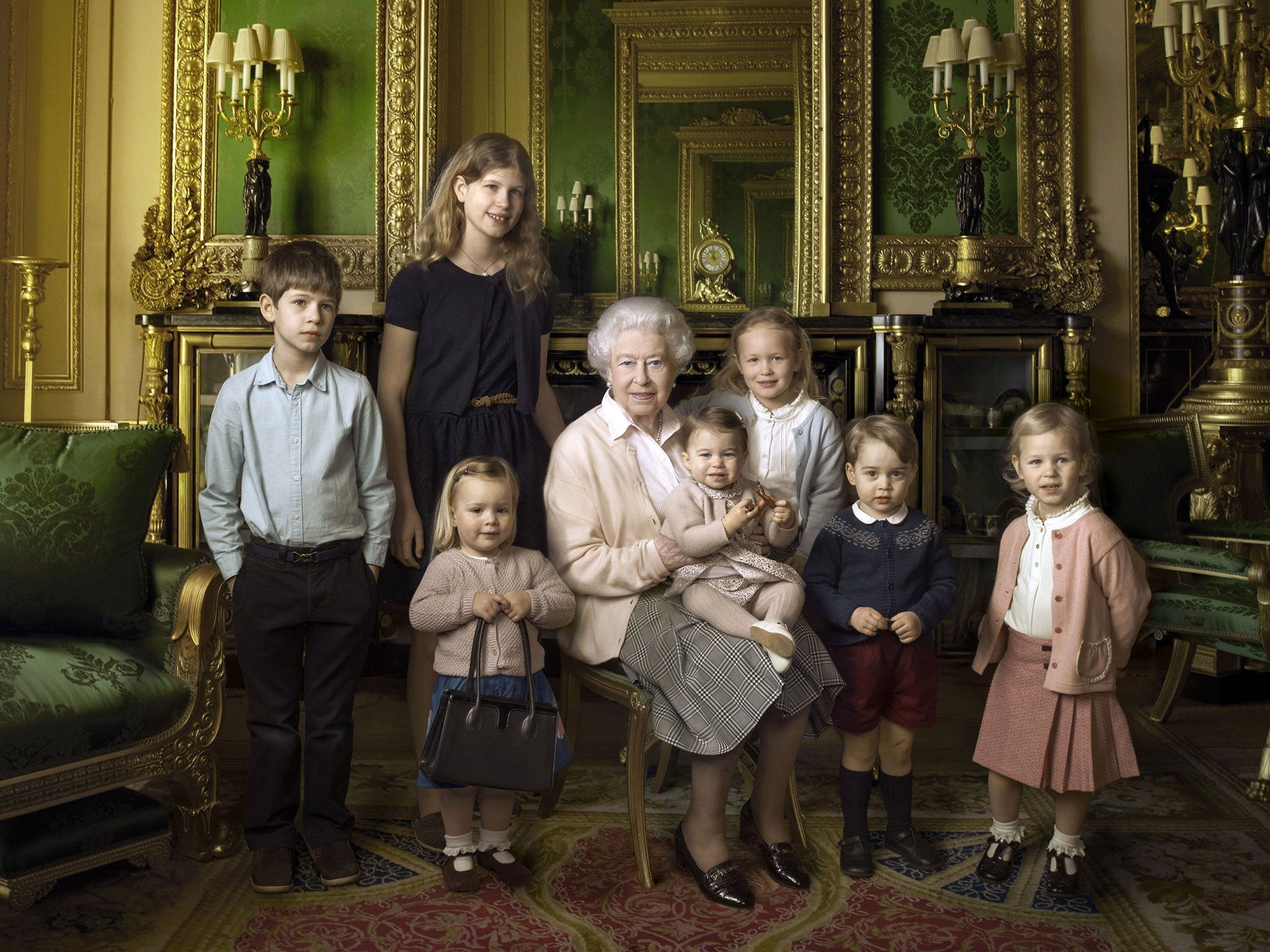
The monarchy has been part of the British constitution for centuries and it symbolises the unity and traditional standards of the nation.An official photograph, released by Buckingham Palace to mark her 90th birthday, shows Queen Elizabeth II with her five great-grandchildren and her two youngest grandchildren at Windsor Castle

However, no matter how it is dressed up in order to marry into modern times it represents a feudal society of medieval England in a modern democratic state that has no written constitution.

This feudal system is now outdated and Britain needs a change in order to revolutionalise the country and live in a more modern and democratic society.

The monarchy’s existence is undemocratic it is unaccountable even if serves no political purpose other than just a figurehead for the country.

Living in modern democratic society and having a constitutional monarchy underlines a string of values which hinder the modernisation of the country.

Having a monarch creates social and class divisions.

The hereditary privilege which the royals are ultimately born in to is no guarantee that the person in the office is fit by birth to be head of state.

As we are witnessing with the ongoing chariot of Brexit the crown prerogative is exploited by ministers, and parliament cannot do anything to take away or reduce these powers as they have been derived from the royal prerogative.

It is said that the queen is powerless and pointless and all her powers are invested in the prime minister. However, officials hide the real nature of this truth by saying the queen “acts on the advice of the prime minister”, meaning she does what she is told.the

“Royal Prerogative” can be described more accurately as “prime ministerial powers” due to the huge amount of power the government exercises.

There are some powers which she can and has used, on occasions when there is a hung parliament. In an event of a hung parliament, the queen will have to choose who to appoint if the incumbent prime minister resigns straight away or is defeated in the commons.

In her position as head of the Church of England, she is in a direct conflict of interest with her role as head of the armed forces and the government. As head of the Armed forces, everyone swears allegiance to her, not the Government. 

At this point the question arises, should the queen consider dissolving parliament again?

It is for this reason some have called for a reform of the sovereign’s personal prerogative.

The call for this reform is one of the arguments for getting rid of the monarchy as many people do not agree with why an unelected and unaccountable monarch should have the right to play any part in the political process.

This brings us again to why the monarchy should be eradicated; she plays no political role for the UK and she gives the government enormous amount of political power which the government take full advantage of because they are not accountable to parliament. She is immune from prosecution?

The monarchy is actually paid for by the taxpayer’s money.

While the official figure is that the Royal family costs only about £40m per annum, this doesn’t take into account security costs, royal visits and others of less significance. The actual figure is estimated by some to be about £200m every year.

Other countries maintain their monarchies at a fraction of the cost of the British monarchy.

In fact, to take the monarchy out of the British constitution you would actually need a written constitution to do this, which currently does not exist. The royal family contributes a lot to the economy through tourism, but it is not sufficient reason to give the government powers.queen elizabeth ii birthday trooping the colour

She is still consulted weekly on government business by the prime minister in person.

Yes, the historic “prerogative powers” of the Sovereign have been devolved largely to government ministers. But this still means that when the British government declares war, or regulates the civil service, or signs a treaty, it is doing so only on her authority.

The Queen’s consent is necessary to turn any bill into actual law.

However, Royal Assent is different than “Queen’s consent.”

Queen’s consent is exercised only on the advice of ministers, but its existence provides the government with a tool for blocking debate on certain subjects if bills are tabled by backbench rebels or the opposition.

There is one exception that allows her to wield power herself. Only “in a grave constitutional crisis,” the Sovereign can “act contrary to or without Ministerial advice.”

With no precedent in modern times, it’s not clear what would actually constitute this, but the possibility remains.

However, due to the Fixed Term Parliament Act, she can not dissolve Parliament, two-thirds vote in the commons is required. But she does play a part after an election when she calls on the MP able to form a government to do so.

All prosecutions are carried out in the name of the Sovereign, and she is both immune from prosecution and cannot be compelled to give evidence in court. But no immunity attaches to the name Elizabeth WINDSOR, which is her legal name as an individual.

God help the idiots that try.

All human comments appreciated. All like clicks and abuse chucked in the bin.

Go back

Your message has been sent

Warning
Warning
Warning
Warning

Warning.


Share this:

  • Click to share on WhatsApp (Opens in new window) WhatsApp
  • More
  • Click to share on Pocket (Opens in new window) Pocket
  • Click to share on Mastodon (Opens in new window) Mastodon

The English 2015 General Election. First past the post system; is in fact a legitimate way to govern as a dictatorship

30 Thursday Apr 2015

Posted by bobdillon33@gmail.com in Politics.

≈ 1 Comment

Tags

PPrortional representation, The English 2015 General Election., Written constitution.

The concept of “power in numbers” is omnipotent in every form within society.

It is my belief that this will be the last English Election using the First Past the Post system.

The biggest problem with plurality is the obvious problems with representation and regional conflict that it has plagued the English government with for many decades.

Although there is a great representation of the parties that receive the “majority” of the votes, there is hardly any representation for the minority parties; this then causes a large regional conflict. Resulting in the Scottish Referendum 2014 for Independence.

Plurality only increases the amount of tensions between regions.

The majority of the population that does not vote is probably no longer concerned with politics because of the discrimination of the plurality system. “…inequalities in the representation of the different political parties… are regarded by some commentators as factors leading to a loss of interest in politics, and even to disaffection.

This is a very substantial reason why proportional representation is the better electoral system than the first-past-the-post system.

It has been proven in other countries to increase voter turnout in local, provincial and national levels.

Proportional representation (PR) proves to the population that every vote counts it tightens the gap of women’s representation.

This is largely because of the knowledge of voters that their vote will count for more in the PR system than it would in the plurality system.

It is completely evident that proportional representation is the most reliable and feasible method for electing the Members of Parliament to the House of Commons. The reason for this is that with plurality, one can only count on the larger parties to win; therefore, instead of “throwing away” a vote for a smaller, less popular party, the voter would either vote for the larger party or not vote at all. “Because seats can be gained [in PR] with only a fraction of the total vote, voters have fewer incentives to abandon their most preferred candidates.Accordingly, the number of viable candidates increases with PR.

Democracy is often perceived as the ‘rule of the majority.’

In many mature democracies in the world, only those candidates are eligible to be elected who secure more than 50 percent of the polled vote in an election where more than 50 percent of the electorate has cast its vote.

People here vote for political parties and not individuals based on the policies and programmes of these parties. Every party submits a priority list to the election authorities prior to the elections. Depending on its vote share, the number of MPs is selected from this list.

This has an inbuilt mechanism whereby any government that is formed post-elections will necessarily have the support of more than 50 percent of those who have voted.

There are significant problems to a PR system as well. For one, in an apparent contradiction, the PR system could make all future governments inherently unstable as no party would ever be able to get a majority.

This in itself may not be a bad outcome, since stability is often a code word for suppressing marginal voices.

Second, a PR system would empower party leaders over local representatives if a list model is adopted and this will not give small parties, which now can win a seat or two in their region of influence and have a voice in Parliament, any national presence.

Third, even if a mixed-PR model is adopted, there is no guarantee that this complicated system would address the problem of instability and the need to provide representation to the small parties.

The State Opening of Parliament marks the formal start of the parliamentary year and the Queen’s Speech sets out the government’s agenda for the coming session, outlining proposed policies and legislation. It is the only regular occasion when the three constituent parts of Parliament – the Sovereign, the House of Lords and the House of Commons – meet.  Although the Queen reads the Speech, it is written by the government.

It contains an outline of its policies and proposed legislation for the new parliamentary session.

That leaves us with The Big Question:

Why doesn’t the UK have a written constitution, and does it matter?

( Nor is there a single statement of citizens’ rights and freedom.)

Is this because it is ruled by a heredity Monarch. Royalty Queen Crown The british royal jewel is aMost people might struggle to put their finger on where their rights are.

Britain’s entry into the European Economic Community in 1973, which brought the country for the first time under a degree of international judicial control.

After this election Britain could finally get a written constitution spelling out citizens’ rights and codifying this country’s political system.

Britain’s constitution has developed in haphazard fashion, building on common law, case-law, historical documents, Acts of Parliament and European legislation. It is not set out clearly in any one document.

It does have a  Bill of Rights dated 1689.

Ten years ago Britain came closer than before to codifying individuals’ rights when the Human Rights Act enshrined the European Convention on Human Rights into UK law.

What are the advantages of a written constitution?

It has become almost a truism that British politics, beset by cynicism about politicians and undermined by falling turn-outs at general elections, is in crisis.

If such a document could be drawn up.

Would it be wide-ranging and largely abstract or would it list individuals’ rights in detail and provide an exhaustive summary of Britain’s constitutional settlement? If the latter, it could prove beyond the grasp of most of the citizens it would be designed to protect.

Britain is not going to get the ground-breaking document any time in the near future. It would require a national referendum to be held to approve the document if it ushered in significant changes.

Do they need a written constitution?

Yes…

* Britain’s arcane hotch-potch of freedoms and rights cannot be defended in the 21st century

* It could help citizens clarify their rights and protect themselves against the state

* Most flourishing democracies base their institutions on a written constitution

No…

* The system should not be tampered with as it has served Britain well for centuries

* The practical problems over what to include and leave out would be a logistical nightmare

* It could undermine the power of Parliament to scrutinise ministers on behalf of the public.

What are your thoughts?

A written constitution is “a formal document defining the nature of the constitutional settlement, the rules that govern the political system and the rights of citizens and government in a codified form.

Written or unwritten, one thing is for sure: there is no such thing as a perfect constitution.

Go back

Your message has been sent

Warning
Warning
Warning
Warning

Warning.

Share this:

  • Click to share on WhatsApp (Opens in new window) WhatsApp
  • More
  • Click to share on Pocket (Opens in new window) Pocket
  • Click to share on Mastodon (Opens in new window) Mastodon

All comments and contributions much appreciated

  • THE BEADY EYE SAYS TRUST IS DISAPPEARING THANKS TO OUR INABILITY TO RELATE TO EACH OTHER. December 19, 2025
  • THE BEADY EYE SAYS. THE WORLD NEEDS PEOPLE GOVERNMENT NOT MONEY GOVERNMENTS. December 18, 2025
  • THE BEADY EYE ASKS WHAT ARE WE THE SAME GOING TO DO TO STOP THE WORLD BEING FUCK UP FOR PROFIT BY RIPOFF MERCHANT. December 17, 2025
  • THE BEADY EYE CHRISTMAS GREETING. December 16, 2025
  • THE BEADY EYE SAYS. TO THE NEXT GENERATION TO LIVE A LIFE WORTH WHILE YOU MUST CREATE MEMORIES. December 16, 2025

Archives

  • December 2025
  • November 2025
  • October 2025
  • September 2025
  • August 2025
  • July 2025
  • June 2025
  • May 2025
  • February 2025
  • January 2025
  • December 2024
  • November 2024
  • October 2024
  • September 2024
  • August 2024
  • July 2024
  • June 2024
  • May 2024
  • April 2024
  • March 2024
  • February 2024
  • January 2024
  • December 2023
  • October 2023
  • September 2023
  • August 2023
  • July 2023
  • June 2023
  • May 2023
  • April 2023
  • March 2023
  • February 2023
  • January 2023
  • December 2022
  • November 2022
  • October 2022
  • September 2022
  • August 2022
  • July 2022
  • June 2022
  • May 2022
  • April 2022
  • March 2022
  • February 2022
  • January 2022
  • December 2021
  • November 2021
  • October 2021
  • September 2021
  • August 2021
  • July 2021
  • June 2021
  • May 2021
  • April 2021
  • March 2021
  • February 2021
  • January 2021
  • December 2020
  • November 2020
  • October 2020
  • September 2020
  • August 2020
  • July 2020
  • June 2020
  • May 2020
  • April 2020
  • March 2020
  • February 2020
  • January 2020
  • December 2019
  • November 2019
  • October 2019
  • September 2019
  • August 2019
  • July 2019
  • June 2019
  • May 2019
  • April 2019
  • March 2019
  • February 2019
  • January 2019
  • December 2018
  • November 2018
  • October 2018
  • September 2018
  • August 2018
  • July 2018
  • June 2018
  • May 2018
  • April 2018
  • March 2018
  • February 2018
  • January 2018
  • December 2017
  • November 2017
  • October 2017
  • September 2017
  • August 2017
  • July 2017
  • June 2017
  • May 2017
  • April 2017
  • March 2017
  • February 2017
  • January 2017
  • December 2016
  • November 2016
  • October 2016
  • September 2016
  • August 2016
  • July 2016
  • June 2016
  • May 2016
  • April 2016
  • March 2016
  • February 2016
  • January 2016
  • December 2015
  • November 2015
  • October 2015
  • September 2015
  • August 2015
  • July 2015
  • June 2015
  • May 2015
  • April 2015
  • March 2015
  • February 2015
  • January 2015
  • December 2014
  • November 2014
  • October 2014
  • September 2014
  • August 2014
  • July 2014
  • June 2014
  • May 2014
  • April 2014
  • March 2014
  • February 2014
  • January 2014
  • December 2013
  • November 2013
  • October 2013

Talk to me.

Jason Lawrence's avatarJason Lawrence on THE BEADY EYE ASK’S: WIT…
benmadigan's avatarbenmadigan on THE BEADY EYE ASK’S: WHA…
bobdillon33@gmail.com's avatarbobdillon33@gmail.co… on THE BEADY EYE SAYS: WELCOME TO…
Ernest Harben's avatarOG on THE BEADY EYE SAYS: WELCOME TO…
benmadigan's avatarbenmadigan on THE BEADY EYE SAY’S. ONC…

7/7

Moulin de Labarde 46300
Gourdon Lot France
0565416842
Before 6pm.

My Blog; THE BEADY EYE.

My Blog; THE BEADY EYE.
bobdillon33@gmail.com

bobdillon33@gmail.com

Free Thinker.

View Full Profile →

Follow bobdillon33blog on WordPress.com

Blog Stats

  • 94,154 hits

Blogs I Follow

  • unnecessary news from earth
  • The Invictus Soul
  • WordPress.com News
  • WestDeltaGirl's Blog
  • The PPJ Gazette
Follow bobdillon33blog on WordPress.com

The Beady Eye.

The Beady Eye.
Follow bobdillon33blog on WordPress.com

Create a free website or blog at WordPress.com.

unnecessary news from earth

WITH MIGO

The Invictus Soul

The only thing worse than being 'blind' is having a Sight but no Vision

WordPress.com News

The latest news on WordPress.com and the WordPress community.

WestDeltaGirl's Blog

Sharing vegetarian and vegan recipes and food ideas

The PPJ Gazette

PPJ Gazette copyright ©

Privacy & Cookies: This site uses cookies. By continuing to use this website, you agree to their use.
To find out more, including how to control cookies, see here: Cookie Policy
  • Subscribe Subscribed
    • bobdillon33blog
    • Join 223 other subscribers
    • Already have a WordPress.com account? Log in now.
    • bobdillon33blog
    • Subscribe Subscribed
    • Sign up
    • Log in
    • Report this content
    • View site in Reader
    • Manage subscriptions
    • Collapse this bar