( A two-minute read. A thousands years of consequences)
Industrial society is out of control. Run by Scientific, Technological, Industrial, Business and Financial education.
Billions of, you name it, has being destroyed in the name of progress.
What we now have is unsustainable growth, with almost everything being turned into a commodity for the sake of profit.
It could be said that Industry has turning Urban dwellers into blood suckers of the planet by creating unnecessary, meaningless, futile and destructive jobs and professions to keep them occupied.
To such an extent that they City dwellers are fooling the world with terminologies … Progress, Growth, Development, GDP.
Industrial Society has destroyed most of the biodiversity and ecosystems in just 250 years for the sake of consumer goods, greed and profit.
It seems ridiculous that we complain of overpopulation when it is Industrialisation that is the cause of overpopulation.
So we have now arrived at point in the world where we can’t live with it or without it and are looking at Technological Machines to save us and the planet.
We are confronted with unsolvable problems, spending billion on Space Exploration while our water, air ,rivers, lakes and oceans are being polluted. With billions of acres of agricultural land been poisoned by million of tons of Pesticides, insecticides and fertilizer.
Neither Capitalism, Socialism or Communism matter.
There is little point debating over Capitalism, Socialism and Communism as they are all equally harmful.
Monsanto is not going to become less harmful or is any other Industry whether they are operating under any of the three.
There is little hope of mind set change even if climate change forces mass migration and a Industrial Conscious. Our countries and political leaders are more concerned with what happens to the economic climate rather than what really counts.
Our world media promotes triviality while ignoring the larger picture.
Who cares if it is Mathematically impossible for the USA to pay off 16 trillion dollars of debt. With 5% of the world population it has consumed 20-40% of the world resources with borrowed money.
The earth climate will not be saved by discussion like the Paris Climate Conference.
All political parties in the world are promoting Growth Rate, Economy Rate, GDP which require more and more nuclear plants.
Even if the Taliban, Al Qaeda, and ISIS, were to join forces they will not be able to create Mega Disasters as big as Chernobyl or Fukushima.
Claiming that nuclear power is not harmful is like claiming that the sun is not hot.
It is insanity to the power of infinity.
Why bury nuclear waste when it will remain radioactive for thousands of years poising the soil, water, humans, animals and the plant.
The bigger the Industry the bigger the Industrial accident.
There is no fourth place for the billion of tonnes of Metal waste, Plastic waste, gaseous waste, chemical waste, e waste, nuclear waste other than space which is already polluted.
The production of Plastic uses about 20% of the worlds oil produced.
We cannot save the environment after it has been killed by Industrial Activity.
We have one group trying to save the Forests, another group trying to save the Oceans, another the fresh water, another Air, another whales , another donkeys.
What is the point of saving a few dogs, whales, tigers, elephants when we seem unable to save ourselves.
Earth’s Oceans will contain more discarded plastic than fish when measured by weight by 2050.
Big data, the internet of things and the cloud are all about one thing only cutting costs. They create wealth for only a tiny minority.
What is the point of storing every contact, twitter notification, photo, and documents in a cloud that has a veracious appetite for electricity. The only reason we do it is because it s free.
Millions in the world die for trivial reasons. Million kill for trivial reasons. Billions live on a few dollars a day.
Perhaps we should award the Nobel Prize for Lunacy for the pretending that the environment is getting saved to ourselves.
We have people who pretend to be deeply concerned about Inequality between man and man. But they are totally unconcerned about Inequality between millions of other species.
Equality does not come from Theories, Philosophies, and Terminologies. Nor does it come from Capitalism, Socialism, Communism.
We spend billions on Get Rich quick Lotto’s, pension funds (that in turn invest in Hedge Funds that exploit capitalism) in education, in health, in weapons, in gratification of pleasure, in energy, in Technology ( that cannot create a Forests, a mountains, a rivers, an ocean, it takes million of years.)
Industrialization all ends up on the world Stock Exchange Markets where trillions are made in nanoseconds by Algorithms in High Frequency Transactions, Foreign exchange transactions. These trillions are used to set up Sovereign Wealth Funds the true terrorists of the world which are privatizing the very essence of life.
So are we all so dumb that we think it can go on for ever and ever without exploding.
It is too late for either religions or political systems to create a new world moral code.
Its time we stopped all the gossip in our out of date world organisations and put in place A World Aid Commission of 0.05% of all High Frequency trading transactions, on all Foreign Exchange transactions ( over $20,000) on all Sovereign Wealth Funds Acquisitions, on all new drilling licences.
This will create a perpetual fund spreading the cost of rectifying the world problems evenly amongst the world Industries that caused them in the first place.
How can this be achieved.
The same way that most thing are going to change with the pressure of Social Media and the Smart Phone.
All it needs is a Crickhowell movement. ( Which by the way is led by the local coffee shop, the local book shop, the optician, the bakery, the towns salmon smokery.) A small town in Wales whose independent traders got fed up of being ripped off by the UK Governments taxes. ( Look it up. Were all not stupid.)
What to stop us doing the same, by placing a Worlds people resolution in the United nations.
We live in a world where yesterday news is old news. Where self interest governs to the detriment of a common goal to remove inequality by bestow the riches of our world in opportunities to all.
It’s only right that I follow the last series of posts on what is Wrong with a post that asks the above question.
BECAUSE ITS MONEY THAT IS AT THE HEART OF THE PROBLEM.
I guess the answer to the question “What is wrong with capitalism today?” is dependent on who you ask.
Capitalism works for capitalists.
The Problem is 90 percent of us are not capitalists, we are employees.
Without us noticing, we are entering the post capitalist era.
We need to reexamine the models that have gotten us to this point.
Complete change will not happen overnight. Nor will it be built on the back of one investor or one innovative entrepreneur.
It will be something that business owners, investors, political leaders, consumers and entrepreneurs must all work together toward.
Currently, our planet is on track to fly past the 2 degrees Celsius warming that scientist have repeatedly warned marks the safe range for humans on this planet, but at the heart of further change to come is information technology, new ways of working and the sharing economy.
The old ways will take a long while to disappear but millions of people are beginning to realise they have been sold a dream at odds with what reality can deliver.
The democracy of riot squads, corrupt politicians, magnate-controlled newspapers and the surveillance state looks as phoney and fragile as East Germany did 30 years ago.
Why should we not form a picture of the ideal life, built out of abundant information, non-hierarchical work and the dissociation of work from wages?
So are we witnessing the first stage of an economy beyond capitalism?
Is technology creating a new route out or is it consolidating power into the hands of a few like Google, Microsoft and Apple?
Will its future be shaped by the emergence of a new kind of human being, reshaping the economy around new values and behaviours?
Will Capitalism as we know it be abolished by creating something more dynamic that exists, at first, almost unseen within the old system, but which will break through because of what Information technology has brought about in the past 25 years.
It is blurring the edges between work and free time and loosened the relationship between work and wages?
Or is the current wave of automation, currently stalled because our social infrastructure cannot bear the consequences, will hugely diminish the amount of work needed – not just to subsist but to provide a decent life for all.
These are all questions to be answered before we see what I call post capitalism.
The Questions are numerous, and there have been hundreds of books, papers, and talks on the subject few however with any positive suggestions.
Before I put the only suggestion that is viable lets start with what is wrong with the present state of Capitalism.
Here is way I see what is wrong;
Today capitalism isn’t about real markets and commodities with the price mechanism being fixed by competing supply and demand, now today it is about casino economics. You throw the dice and when you loose … all that global connectivity means you lose globally. We are all in this together – that is why we call it a global economy – oh apart from the 0.1% – they are the ones throwing the dice. We are just the ones picking up the tab when the bets don’t come off.
Although economics likes to think of itself as a science in reality it ignores the fundamental laws that govern science – the first two laws of thermodynamics. This isn’t a smart thing to do. There actually are limits to growth.
They told us wealth creation was a trickle down theory but in reality it is a trickle up theory. The rich really do get richer and richer and it is not down to merit. The question is what is going to stop them: war or politics?
The big problem is humans are human, both doing bad things and good things. Capitalism only works if enough of us do the right thing.
The price mechanism is faulty unless it includes the environmental cost now and in the future of our consumption. This it doesn’t done at present and we are free-loading off nature.
Often we think it is the only way to do things. It is not the only way to even do capitalism! Alternatives exist, other brands are available. There are even other ways of thinking about economics that we don’t even call capitalism; they may be a bit racy for us right now so lets start with re-imagining what a good effective form of capitalism could be like if humanity fully realized its role and impact upon the planet that sustains it.
Modern capitalism is so big and complex that who can say that really understand it.
I don’t.
But I do understand by building business models and share valuations based on the capture and privatisation of all socially produced information, Google and such firms are constructing a fragile corporate edifice at odds with the most basic need of humanity, which is to use ideas freely.
Never has humanity been better fed, lived longer, used more energy and had more stuff than today so what is wrong.
One of the fundamental faults of capitalism is the basic axiom that if everybody tries to accumulate as much property as possible the general interest of the people will be served.
All this seems to do is create exploitation.
The problem with capitalism is that it isn’t very good as what it says it is good at, spreading wealth, enabling good technological progress and helping us become more human, more free.
Adam Smith – you know him graces the back of the £20 note – founding father of modern capitalism back in the 18th century – hero of Margaret Thatcher. When he famously asserted:
“It is not from the benevolence of the butcher, the brewer, or the baker that we expect our dinner, but from their regard to their own interest.”
What Smith was talking about was the idea that self-interest – the rational underpinning of economic man – was not only good for you but for everybody else – society.
Unfortunately the line between self-interest and greed is always fine – and we are human man not economic man and we find it very easy to cross that line – or certainly some of us do – lets call them the 0.1% – the 700,000 of us who have a lot – somewhere north of $5 million each.
The consequence of this trend as it unwinds over time is that wealth progressively becomes concentrated in fewer and fewer hands.
The rich get richer – that’s that 0.1% again. Or to put it another way wealth stays with those that are born to it and the idea that merit – how good you are at something – determining your economical price in the market place, or wages as most of would say, becomes far less important than we thought.
In fact there are plenty of things wrong with capitalism.
Those that shout this apparent self-evident reality the loudest own the media, the means of communication, they own your stability through the derivative bets they hold and they are telling you don’t blink – this is the natural way of things , capitalism the way we see it, the way the 0.1% see it.
So the more we have of everything, food, power, stuff, the more energy we must use (even if we get more energy-efficient in doing things).
The nitty-gritty of it is we have fucked up the world with Capitalism idealism.
I don’t approve of Communism or Socialism either, the truth is that every system is flawed.
I think a system which is based on an assumption that man is basically piggish and therefore only fit to look after his own needs; such system impedes rather than promotes the good within each person.
Geographers have away of describing this situation it is called the IPAT equation.
Impact = population x affluence x technology. You note there is no Money in the equation.
The impact.
Physicists would call it entropy, biologists pollution and economists externalities – is of an order defined by how many of us are using how much however efficiently.
If you want impact in a nutshell it is climate change, it is salinization of soil, it is depleting geological resources , it is reducing biodiversity.
There really are limits to growth.
Capitalism is a perpetual motion machine, striving for more and more growth makes us in the long run weaker not stronger. Well, if only we were all-knowing, rational and optimal in our behavior maybe it would be so. But we are not.
In the past the trend towards greater and growing inequality has been neutered by war – nothing equalizes society more effectively than war – we do tend to be all in it together at such moments.
Today in our global economy is held together with a digital architecture that enables the reduction of wealth to so much digital code life has become one big transaction.
The most spectacular aspect of this transactional world is the derivatives markets.
(A derivative is a bet on a price changing within a market – say interest rates, or currency exchange values or a commodity price such as that for coffee. The value of all derivatives worldwide in 2013 is thought to be about $1.2 quadrillion although nobody knows exactly as, a like a lot ordinary betting the betters don’t want necessarily want to admit to it.)
So that is $1,200,000 billion laid out in bets about what may or may not happen.
Billions of transactions.
Let’s quickly remind ourselves. The global economy – the real economy – is worth about $85 trillion – that is about 7% of the notional sum bet on what that economy will do.
Now, take a deep breath and think about it.
If you don’t now believe that we could have another global economic crash in the style of 2008 – a massive bursting asset bubble – you need to think again and cast your eyes to Asia – you might be wondering where much of that quantitative easing – free money that the US and the UK created ended up. Try property speculation in Asia.
We are quickly reaching the tipping point where growth in GDP in any particular country comes at the expense of growth in GDP of another.
We do not have global organizations capable of managing these tension points nor are societies willing to curb growth and consumerism.
Capitalism as currently practiced is simply not sustainable.
Modern market capitalism has shifted recently with the emerging supremacy of money markets and the financial system over the actual trade of goods. Under this, you’ll make more money trading in derivatives than actually physically trading in commodities.
Capitalism, or the recent move into financial market dominated capitalism.
The “new capitalism” is based on mathematics rather than trade; credit default swaps over goods and services; when odds are stacked in the favor of big banks because of hedging, derivatives and CDS’s; when there is little to no penalty for market manipulation by investment banks, power brokers, Ponzi schemers … these inefficiencies in the market cause redistribution of wealth to the people in power who design the system.
The mass media is becoming more and more an opiate, an aid for living the unexamined life. replace it (capitalism)?”
Through the millions spent in lobbing reasonable controls upon business have been removed. The desire for economic success and the influence of the powerful elite have ruined the mass media.
Our political problems have deepened with the demise of unions as an effective political force, the continued growth in the belief in the desirability of pyramid economics and class structure (which has been sold by a media controlled by those at the top of the pyramid), and the dependence of our two-party system upon those at the top of the pyramid for funds to cover their election expenses.
Around the world the gains of increased productivity are wasted by this pyramid structure.
For over 40 years I have watched the gradual drift in the minds of the average person from an understanding of our political economic reality and the need for corrective actions.
Those who dominate the means for the production of ideas have served their class well.
This endless cycle of production and consumption for profit is suicide and profit is pretty pointless when we run out of things to burn and things to eat.
I would suggest a world government dedicated to seeing that: (a) everybody was properly fed, clothed, and housed; (b) everyone worked and received a fair return for their work with none receiving too much; (c) intellectual development for all to be encouraged; (d) businesses are the servant to man; (e) the production of war materials end; (f) the ending of all exploitation, including one region by another or one class by another; (g) and the ending of a press which is controlled by those who make up the ruling class.
We is needed is a project based on reason, evidence and testable designs, that cuts with the grain of history and is sustainable by the planet.
Capitalism is not and has never been designed to work in an environment dominated by market controls, regulations, artificial barriers to entry, monetary manipulation and a myriad of other government interventions.
It is Profit at any cost and having taxpayers bail it out when it goes wrong simply means the risk has shifted from corporation to state, or you and me.
Many would say that means a broken model.
Has a new model started. It all depends on what kind of capitalism we are talking about and what force will be applied either at the ballot box or on the barricades or by the Smart Phone or the Gun.
Another question raised about the proposed strategy is whether it actually adds up to the defeat of capitalism.
Do the numerous tactics described above, most of which focus on what not to do, really do the job? How will capitalism actually be defeated? It’s true that many of these recommendations are about what not to do.
this strategy calls for pulling time, energy, and resources out of capitalist civilization and putting them into building a new civilization. The image, then, is one of emptying out capitalist structures, hollowing them out, by draining wealth, power, and meaning from them until there is nothing left but shells.
To think that we could create a whole new world of decent social arrangements overnight, in the midst of a crisis, during a so-called revolution or the collapse of capitalism, is foolhardy.
Our new social world must grow within the old, and in opposition to it, until it is strong enough to dismantle and abolish capitalist relations.
Such a revolution will never happen automatically, blindly, determinable, because of the inexorable materialist laws of history.
It will happen, and only happen, because we want it to, and because we know what we’re doing and how we want to live, what obstacles have to be overcome before we can live that way, and how to distinguish between our social patterns and theirs.
To achieve change we need unlimited finance. Where can we find this? We don’t have to look far.
If a new socialist democratic system is to emerge:
We must place an World Aid Commission on all High Frequency Trading, on all Foreign Exchange Transactions over $ 20,000, on all Sovereign Wealth Funds Acquisitions. This will created a perpetual funded Fund to address the damage Greed and Profit for profit sake has done. ( See Previous Posts)
Who do we achieve this.
Our lives have been shaped by developments which most of us couldn’t have imagined a decade ago.
In effect, they are nine distinct psychological orientations toward the world that structure our perceptions, expectations, and demands whenever and wherever other human beings may be involved. These instincts represent our most basic assumptions about how the social world works, and that includes how the political world works.
With the power of our Smart phones the new political weapon of the future.
In the next decade upwards of 100 billion objects from smartphones to street lamps and our cars will be connected together via a vast ‘internet of everything’. This will impact every aspect of our lives.
The interfaces to all our devices from phones to computers, cars and home appliances will be highly intelligent and adaptive – learning from our behaviours and choices and anticipating our needs.
Our painting now has a wash of money, a random application of religion and the Gun with a transparent over wash of humanity.
I think it would be a grave injustice to speak of the human species ( Other than ISIS and their like) as in some sense evil, even though we are destroying the environment so efficiently at the present time.
The nature of humankind is to expand its population, to gain security, to control, to alter. For millions of years that paid off without undue damage.
But then what happened was, as we developed a modern industrial capacity, and then the techno scientific capacity to eliminate entire habitats quickly and efficiently, we succeeded too well and at long last we broke nature. And now, almost too late, we are waking up to the fact that we have overdone it and that we are destroying the very foundation of the environment on which humanity was built.
Its time to add a healthy dollop of Earth to our canvas.
One frequently quoted piece of evidence against a Christian green ethic is the command to our first parents to ‘fill the earth and subdue it’ (Genesis 1:28).
How should we interpret this?
Does this mean we should be thrilled at increasing populations?
Well, to start with, ‘filling’ is not the same as over-filling. We should also remember that it is only in the last 100 years, that over-populating the world has become a real prospect.
In giving us “dominion”, God appointed us as His stewards or care-takers, and will hold us accountable for the way we discharge our responsibility, just like the husband-men and talent-holders in Jesus’ parables (Mat. 25:14-30, Luke. 20:9-16).
It does not matter whether you are a believer or not the ‘State of the Planet’ makes clear that we are unique in terms of our destructive potential, and we alone must change our behavior in response to moral beliefs and challenges.
People with or without religious belief can (and do) recognise and accept that we have a role as Stewards. It is agreed by ALL RELIGIONS that humans are not simply answerable to future generations for their management of nature, but that they are answerable to the one God who created them in his image so that they would manage the earth on his behalf.
The key or ethical argument – an argument of stewardship, an argument of handing on a world as rich as the one we inherited does not need any religious belief.
The rate at which species are becoming extinct as a consequence of human activity is staggering.
The problem is all around us and we are all part of the problem.
The problem now is recognising this fact. It can be the first step in becoming an active part in the solution
Human beings have created derelict industrial sites, open-cast mines, scrap yards and polluted rivers and beaches. Our current actions are producing greater and more rapid changes than ever before.
There is some pallet of colors to pick from. Soil erosion and loss of fertility. Deforestation Water-quality pollution Waste. Generation and global toxification. Human and cultural degradation. Alterations of earth’s energy exchange with the sun – green house gasses keep in too much heat resulting in global warming.
Our life-styles tend to keep us isolated from the awesome power and beauty of creation. Consequently we loose sight of its wonder, and as a result, we have a poorer understanding of the mess we ARE ALL IN.
Most of us are disconnected from our actions and their environmental effects.
We seldom if ever see our food growing, because it comes from shops. Few people who buy petrol from garages have ever seen an oil production platform or refinery. We may claim to deplore environmental damage, but by acquiescing in the system makes us accomplices in the crime.
We can just continue with the inevitable consequences of ignorance and greed, thoughtlessly bending the world to creating more bits of garbage to amuse ourselves…
No matter which course we take knowledge does not lead automatically to action.
The time has come… to destroy those who destroy the earth.
Why is it that the activities of our one species, aiming at no more than living in reasonable comfort and avoiding hunger, should cause such devastation on the rest of the natural world?
The answer is in our back ground wash, and how it has being applied with greed and corruption of power by all societies.
By now we should understand which of humanity’s activities inflict the greatest damage on the diversity of animal and plants of this planet.
But the problem is we are self centered and look like remaining so.
The average American consumes 40 times as much energy as the typical third-world inhabitant and the average European some 20 times as much.
One European uses as much energy as 20 Bangladeshis.
In short, a change to our societies, our economics, and our politics and our world organisations is needed.
Here is a snap shot of what the Paris Climate Change Conference 2015 is up against.
Qatar :
Qatar’s carbon emissions per capita are the highest in the world and three times as high as the United States’. Qatar, gas prices in Kuwait are among the lowest in the world, while GDP is among the highest. This, coupled with a lack of public transit infrastructure, makes road travel the sole means of mobility for both citizens and businesses moving goods. According to the Global Footprint Network, the average Kuwaiti uses 22 times more resources than the country provides per person.
Ireland:
A fuel farm on the outskirts of Dublin, Ireland, grows rapeseed (canola) plants to ultimately make biofuel.
In 2008, however, Ireland’s greenhouse gas emissions per capita were the second highest in the European Union.
Agriculture is the largest source of emissions, but emissions from vehicles have more than doubled since 1998.
However, there have been improvements in recent years: 2009 was the second year in a row in which transport emissions declined, and an increase in renewable sources of energy in the early 2000s reduced emissions from the energy sector by 10 percent in 2009.
Yet Dubai, a city of 1.5 million people (many of whom are immigrants seeking their fortunes, like the workers pictured above), the world’s largest shopping mall, and an indoor ski resort, currently gets all its energy needs from the burning of natural gas, which is why it ranks third on Global Footprint’s list.
Denmark :
A Danish farmer surveys his Christmas trees shortly before they are sold in December 2008.
Denmark’s carbon emissions are half that of the United States’, but its cropland (the amount of viable land that can be used to produce crops) requirements are much higher. Because so much meat is eaten per capita in Denmark, the country must import a large amount of grain—so much that it would take up 215,000 square feet (2 hectares) of land per person, or 2.5 times more land than the country has.
United States :
New York City twinkles at night, with Fifth Avenue and Broadway clogged with cars.
If everyone lived like the average American, the Earth’s annual production of resources would be depleted by the end of March, the Global Footprint Network’s report said.
Americans’ love of road trips, suspicion of public transit, and growing energy demands fuel the country’s high per-capita carbon emissions.
Belgium :
A Belgian farmer drives his tractor in this undated photo.
Belgium’s biocapacity of cropland is extremely low, so much of its food must be imported. This begins to explain Belgium’s high ranking on Global Footprint’s list.
Australia :
A lumberman cuts down a karri tree, a type of eucalyptus, in Western Australia.
Australians emit 28.1 tons of carbon dioxide equivalent per person, one of the highest per-capita rates in the world. In addition, the country’s demand for wood, food, and pasture uses the equivalent of 753,000 square feet (7 hectares) of land per person, nearly four times greater than what is available on average around the world.
Canada :
Canada’s biocapacity is 14.92 hectares per capita, 5.5 times average global consumption. So if the world’s resources were as abundant everywhere as in Canada, we’d have more than enough to go around.
Even so, Canada’s cities are energy hogs. The country has the seventh highest rate of carbon dioxide emissions per capita. Total greenhouse gas emissions in Canada rose 24 percent between 1990 and 2008.
The Netherlands :
Sheep near a village in the Netherlands will go toward feeding Dutch citizens, yes, but for the most part, the Dutch consume more than they produce.
The small country, with its high population density and relatively little land area for crops and pasture, consumes six times more resources (energy, food, and more) than it is able to produce, and about three times more than the Earth overall is able to sustain.
God only know what China, India, and Russia and the rest of the world would add.
What ever it is we must spread the riches of World more evenly.
This can only be achieved by making Profit for profit sake create a World Aid Fund ( see previous posts) to tackle the Inequalities, Correct the damage to the climate, and protect what is left.
We all know that there is little point to any thing if we are not alive.
Its time to change from selfie square heads, and like button pressers to searchers.
Where there is poverty we must find it. Where there is pain we must find it. Where there is abuse we must find it. Where there is modern day slavery we must find it. Where there is inequality we must find it. Where there is pollution we must find it.
In fact its time to find what is of value to us all.
Don’t be a square head contribute. All comments are valued.
I am sure that there is no need to remind you of the outcomes of previous Climate Change Conferences.
They all failed.
In the vain hope that any one of you might read this:
HERE IS THE REASON WHY and THE SOLUTION.
The debates that are likely to dominate the Paris talks will not be about emissions but about – Money.
If nations can meet and agree equitable goals on the climate, on economic development, on social and environmental issues, and do so in a spirit of cooperation, this alone will be a huge achievement.
That as you know this is hoping for a “miracle.”
We already know that the commitments made, and likely to be made by December, will not by themselves be enough to hold the world to no more than 2C of warming.
So far, countries have made formal emissions pledges. They cover more than 65 percent of current global emissions. The pledges vary. Some are absolute targets expressed as tons of carbon dioxide per year in 2030; others are targets measured against business as usual, or promises to reduce emissions for every dollar of economic activity.
The EU is to cut its emissions by 40%, compared with 1990 levels, by 2030. The US is to cut its emissions by 26% to 28%, compared with 2005 levels, by 2025. China is to agree that its emissions will peak by 2030.
Nations responsible for about two-thirds of global emissions have come up with their targets known in the UN jargon as Intended Nationally Determined Contributions or INDCs – but some countries, most notably India.
Are the current pledges enough to keep global warming below 2 degrees C?
Nobody can be certain.
Serious doubts remain as to whether these promised cuts will be nearly enough to avoid the most severe impacts of climate change.
There are too many scientific uncertainties about exactly how sensitive the atmosphere is to growing concentrations of greenhouse gases. We could get lucky, but equally there might be tipping points that could suddenly accelerate warming.
In the Unite Nations own words it is attaching a set of “sustainable development goals,” on to the Conference which will take over from the millennium development goals that were pegged to 2015.
These will include issues such as access to clean water and sanitation, access to energy, gender equality, education and health. ” Those SDGs will have a profound effect on whether the world can meet its climate change targets, and meet them in an equitable fashion that allows poor countries to lift their citizens out of poverty while not passing climate thresholds.”
While these United Nations aspirations are essential Climate Change has to tackled without interference.
Poor nations want all the money to come from rich country governments, but those governments are adamant that they will not provide such funding solely from the public purse. They want international development banks, such as the World Bank, to play a role, and they want most of the funding to come from the private sector.
There is strong disagreement over how this should be done.
At Copenhagen, where the finance part of the deal was only sorted out at the very last-minute, rich countries agreed to supply $30bn ($20bn) of “fast-start” financial assistance to the poor nations, and they said that by 2020, financial flows of at least $100bn a year would be provided.
These pledges are already backsliding.
This is a hugely contentious issue:
Why because any core agreement, will be contested over issues such as “loss and damage”, by which developing countries want assistance on coping with extreme weather events, likely to be made worse by climate change. An agreement on this is still possible.
African countries, and others with little or no responsibility for climate change, want a separate fund to compensate them for “loss and damage” resulting from climate disasters such as extreme heat, wild weather, floods, and droughts. This would be a 21st century equivalent of war reparations — for climate crimes rather than war crimes.
This will be one of the main obstacles to a Paris deal.
While you as a negotiator will be mired in the paragraphs, sub-headings and addenda of texts thick with square brackets denoting unresolved issues, heads of government have the power to sweep aside such details and order them to agree.
What can we expect before Paris?
Most delegates believe that funding issues are the most likely deal breakers in Paris.
That would be bad for the world.
So here is the solution:
Make Profit for Profit Sake Pay;
By placing a World Aid Commission of 0.05% on all High Frequency Trading, on all Foreign Exchange Transactions (over $20,000) on all Sovereign Wealth Funds Acquisitions, on all new drilling and mining Licences.
A commission rate ranging from 0.005 to 0.25 percent would generate between $15 and $300 billion per year, of which a substantial amount could be allocated to promote international peace and development and Climate Change.
This would create a perpetual Funded Fund to contributed to rectifying the very thing that caused the problems in the first place.Greed.
There will be one further week of negotiations, in October, before the Paris meeting agrees, so there is much work to be done on the software to make this possible.
Over many centuries, human societies across the globe have established progressively closer contacts.
Recently, the pace of global integration has dramatically increased.
Unprecedented changes in communications, transportation, and computer technology have given the process new impetus and made the world more interdependent than ever.
All giving rise to the question:
Why is our world in such a mess and our World Organisations so helpless to do anything about it.
The Answer is simple and can be summed up in one Paragraph.
Self Interest, no long-term planning, greed, unsustainable consumption, religion beliefs, drugs, guns, inequality and our out of date reactionary World Organisations which are not funded and have zero power to do anything about it.
At the turn of the Millennium, the atmosphere of optimism at the end of the Cold War and the confidence that globalization would “lift all boats” led to the belief that extreme deprivation could be overcome without any major change in global economic governance.
Now, after two decades of increasing inequalities and having reached or surpassed many of the planetary boundaries identified by science, it is extremely difficult to argue that the SDGs (Sustainable Development Goals) can be achieved without affecting some privileges of the rich and powerful.
This won’t happen without social and political struggle.
The good news is that the emerging global consensus is not any more on the side of plutocracies.
The Globalization of Politics, of Culture and of Law sweeps away regulation and undermines local and national politics, just as the consolidation of the nation-state swept away local economies, dialects, cultures and political forms.
Globalization may well create new markets and wealth, but it is a source of repression and a catalyst for global movements of social justice and emancipation.
Even as it causes widespread suffering, disorder, and unrest and now threatens the very atmosphere that we all rely on we carry on regardless of its consequences.
It is beyond comprehension, that we all sit in front of our TV, walk about with our Smart phones and worry about personnel satisfaction when the very world we live in is going to rack and ruin.
In the global partnership for development the focus has shifted towards private sector involvement while minimizing the goals for fair trade, debt relief and neglecting the regulation and control of capital movement.
Multinational corporations manufacture products in many countries and sell to consumers around the world. Money, technology and raw materials move ever more swiftly across national borders. Along with products and finances, ideas and cultures circulate more freely.
As a result, laws, economies, and social movements are forming at the international level are woven together in a complex manner, making it difficult to summarize positive or negative effects.
For example, giving the business sector the key role, being a contributor to job-generating growth. This comes before the adoption of “business-binding human rights standards.
However, it also reflects a new concept for “international partnership for development,” which has been based on the following:
(1) promoting fair trade to help developing nations improve their economic performance and revenues; (2) reconsidering foreign debts, which are consuming large public budget revenues; (3) increasing development aid in quantity and quality (the aid effectiveness track was launched in 2003); (4) speeding up technology transfer to help developing nations overcome the challenges of improving development tools; and (5) addressing the issue of medicines for dangerous illnesses, which is part of commitments by rich nations towards developing ones.
However there is little point to the above if there is no funds to effect the reforms. Why adopt goals at all?
Any systematic effort to answer this seemingly elementary conceptual question has been disturbingly absent in all our World Organisations.
UN reform is endlessly discussed, but there is sharp disagreement on what kind of reform is needed and for what purpose.
UN ‘fit for purpose’, but it is important to ask, ‘whose purpose will it be fit for’?
Funding of all UN system-wide activities is around US$40 billion per year.
While this may seem to be a substantial sum, in reality it is smaller than the budget of New York City, less than a quarter of the budget of the European Union, and only 2.3 per cent of the world’s military expenditures.
We needs to move from ‘Billions’ to ‘Trillions.
Member States have failed to provide reliable funding to the UN system at a level sufficient to enable it to fulfill the mandates they have given it.
With the ongoing financial constraints, it has opened the space for corporate sector engagement.
Increasingly the UN is promoting market-based approaches and multi-stakeholder partnerships as the business model for solving global problems.
Driven by a belief that engaging the more economically powerful is essential to maintaining the relevance of the UN. This practice has harmful consequences for democratic governance and general public support, as it aligns more with power centers and away from the less powerful.
Donors’ priorities are limited to humanitarian intervention to help refugees and victims of wars and conflicts and to dealing with security concerns in countries torn by wars and conflicts.
The UN working methods reflect a bygone era.
The question of how a fair sharing of costs, responsibilities and opportunities among and within countries can be achieved in formulating and implementing a Post-2015 Sustainability Agenda is overlooked.
The goal to reduce inequality within and among countries, the goal to ensure sustainable consumption and production patterns, and the goal to strengthen the means of implementation and revitalize the global partnership for development are all unattainable without funding.
The Post-2015 Agenda will only succeed if these goals include specific and time-bound targets and commitments for the rich that trigger the necessary regulatory and fiscal policy changes.
This will never happen.
The five permanent members of the Security Council (China, France, Russia, United Kingdom, and United States) enjoy the privilege of veto power. This power has been intensely controversial since the drafting of the UN Charter in 1945.
Without the veto privilege. Fifty years later, the debate on the existence and use of the veto continues, reinvigorated by many cases of veto-threat as well as actual veto use.
The UN cannot perform effectively as long as its budget remains tightly constrained.
For all the talk about auditors and oversight bodies, the UN mainly needs cash. Financial reforms must consider new ways to raise funds, including “alternative financing” such as a global system of revenue-raising must be put in place to fund genuinely international initiatives.
There is only one way to achieve this.
By placing a world Aid Commission of 0.05% on all High Frequency Trading, on all Foreign Exchange Transactions over $20,000, on all Sovereign Wealth Funds acquisitions and on all New Drilling licences Gas/Oil.
The foreign exchange market is the largest market in the world, with an estimated $4 trillion of foreign exchange traded per day (2011).
This means that in less than one year, currency worth 25 times the global GDP is traded.
Of this massive amount, international trade in goods and services, which requires foreign exchange, accounts for only a small percentage ($9 trillion per year) of the total trading.
A commission rate ranging from 0.005 to 0.25 percent would generate between $15 and $300 billion per year, of which a substantial amount could be allocated to promote international peace and development.
Add High Frequency Trading and SWFs not forgetting Oil and Gas Drilling and you have a perpetual funded UN.
Apart from the potential to tackle inequalities and injustices worldwide, it would trigger decisive action to protect the integrity of our planet, to combat climate change, and put an end to the overuse of resources and ecosystems by acknowledging planetary boundaries and promoting the respect for nature.
This is the only real solution.
Meanwhile exchange rate speculation accounts for at least 80 percent of the global currency market. These speculative movements, which can take place rapidly and unpredictably, threaten to empty central banks’ currency reserves and trigger financial crises such as those in Mexico (1994), East Asia (1997-98), Russia (1998), Brazil (1999), Turkey (2000) and Argentina (2001).
These crises have had far-reaching socio-economic consequences, throwing millions of people into poverty and unemployment.
Unfortunately, social achievements in reality are often fragile particularly for the socially excluded and can easily be rolled back as a result of conflict (as in the case of Ukraine/Syria/ Middle East), of capitalism in crisis (in many countries after 2008) or as a result of wrong-headed, economically foolish and socially destructive policies, as in the case of austerity policies in many regions, from Latin America to Asia to Southern Europe.
In the name of debt reduction and improved competitiveness, these policies brought about large-scale unemployment and widespread impoverishment, often coupled with the loss of basic income support or access to basic primary health care.
More often than not, this perversely increased sovereign debt instead of decreasing it.
In the United States poverty increased steadily in the last two decades and currently affects some 50 million people, measured by the official threshold of US$23,850 a year for a family of four. In Germany, 20.3 percent of the population – a total of 16.2 million people – were affected by poverty or social exclusion in 2013. In the European Union as a whole, the proportion of poor or socially excluded people was 24.5 percent.
Last, but not least, rich countries tend to be more powerful in terms of their influence on international and global policy making and standard setting. Actions by international institutions like the IMF or World Bank are shaped by their governing bodies, whose composition is directly linked to the affluence of member countries.
Similar patterns exist in donor-recipient relationships or in the dynamics of international and/or inter-state negotiations.
The results can be very tangible, as in the case of the creditor-debtor-relationship between Greece and EU and IMF, or rather subtle as sometimes in the voting behavior of smaller actors in the UN Security Council.
If we are to have a global transformation, it would require not only the mobilization of the international community but also a fair sharing of costs, responsibilities and opportunities among and within the countries of the World. Include fair trade and investment regimes and migration policies, and international financial system reforms; more specifically they include the revision of bilateral and international investment agreements, the creation of a global regulatory framework for transnational corporations, greater flexibility in intellectual property rights protection for developing countries, genuine efforts to combat tax evasion and profit shifting, the creation of a debt workout mechanism for highly indebted countries as well as the reform of existing global economic governance institutions.
Not secret Trade Agreements like the TTP and the TTIP
All countries have responsibilities in this regard, but the rich have a greater responsibility given their capacity, resources and influence in international institutions and economic governance.
A UN study has estimated that about $150 billion per year is needed to meet the Millennium Development Goals, including halving the proportion of people living in extreme poverty and hunger by 2015, ensuring primary schooling for all children, and reversing the spread of HIV/AIDS, malaria and other major diseases.
The richest 85 people in the world own more wealth than the bottom half of the entire global population.
Yes, that equation works out to: 85 > 3,000,000,000.
By the end of 2016 the wealthiest 1% to own more than 50% of the world’s wealth
People everywhere want to be free to determine their own future so we must take the profit out of war and profit for profit sake.
The Conclusion can only be:
That unless we the citizens of the Planet demand change nothing or any reform will be possible. We must make profit for profit sake provide the Funds. Take the current Climate Change Conference in Paris. With no funds any agreements to tackle the problem will be worthless.
If you agree: Join me. Get off your rear end and get involved. ( see previous posts.)
To understand the role of capitalism in modern economic times you must understand the word Growth.
Growth at any cost. Which we are just coming to apprentice thanks to the Internet.
For a long time nothing much happened till Wheat conned humans into growing it.
It is not my intention here to address Money and Power. It is sufficient to say that money leads to power and corruption and that all three intermingle in the notoriously subject of Economics.
What I want you to do is to look at Capitalism that founded states and ruined them, opened up new horizons and enslaved millions, moved the wheels of Industry and drove hundreds of species of plants and animals into extinction, plundered the earth resources for profit, promoted science, all to the dethronement of a sustainable planet and ask yourself is it easier to imagine the end of the world than the end of capitalism.
There can be no doubt without some system the human race would descend into barbarism based on nothing but self-interest.
Our cultural output throbs with this notion of self-interest. Just look at the present Refugee problem facing the European Union.
So would the collapse of Capitalism lead to misery?
Capitalism in all its credulity and inequality reflects mans barbarous nature. Indeed the horrors of ISIS are trumpeted so vehemently by the western press precisely because they fill this narrative.
However a dog eat dog world with which capitalism and the state justify themselves is in part a fallacy.
In fact nature teems with co-operation – both between animals, between species and within the ecosystem as a whole.
We are the same, but it is no coincidence that where we do co-operate these areas are dominated by capital and constructed in a way that systematically reward the uglier sides of our common nature.
We know that the world in unfair where the few have too much and the most have too little.
The feeling that Capitalism, inequality, and injustice are inevitable and the idea that to struggle for a better world is naive is coming to an end.
If we could only entrench the cooperative compassionate and empathetic sides of our nature as dominant values in society we would redesign our Capitalist world – to a world worth while living in.
The current state of our planet is affording all of us this opportunity.
How can we tackle the world problems ?
A good place to start would be to get Capitalism to pay for it.
By placing a World Aid Commission on all High Frequency Trading, on all Foreign Exchange Transactions over ($20,000) on all Sovereign Wealth Funds Acquisitions, on all Drilling Wells. This would create a perpetual pot out of Profit for Profit sake that could fund the inevitable cost of climate change.
In doing so we would redistribute the world’s wealth from the whole of the world. ( see previous Posts)
Sooner than later we are going to exhaust the raw materials and energy of the planet Earth. What will happen then?
Which is why, whenever the opportunity arises, we must be prepared to seize it.
When policies on emissions reductions collide with policies focused on economic growth, economic growth will win out every time.
There is no point in spending a lovely week in Paris talking about what should be done about Climate change and coming up with an agreement to cut emissions by placing A Price Tag on carbon.
The true financial costs of climate change is away beyond any price tag or unenforceable agreement.
What value do we place on the ocean’s coral reefs and the myriad animals they support, and how do we weigh their loss against other values? What price tag do you put on a species of bird or fish or mammal which, once gone, will never return?
How does humanity weigh moral accountability if our own carbon emissions contributed to that destruction?
Isn’t it about a sustainable planet? A sustainable and biologically diverse planet?
Most likely our descendants will be left to adapt to a warmer world where greater climatic uncertainties, depleted resources and human migrations, amongst other, will be the norm.
If climate change affects not only a country’s economic output but also its growth, then that has a permanent effect that accumulates over time, leading to a much higher social cost of carbon than any price tag agreed.
The economic damage caused by a ton of carbon dioxide emissions – often referred to as the “social cost” of carbon – will actually be far higher than any of us can imagine.
There is no solution to an event that is all ready taking place.
There can only be a change to the event or a confinement to the end result.
If there is no solution to how the world is going to finance this change your and you fellow delegates might as well go home and bask in the sunshine of an agreement that is as porous as the paper it is written on.
In his fascinating book “Catastrophe: Risk and Response”, published in 2004, Richard Posner argues that we do not do enough to hedge against catastrophic risks such as climate change, asteroid impacts or bioterrorism.
In light of the “competition” of existential risks, how much should humanity invest in the mitigation of climate change?
The answer is: Human extinction is a risk we all share—and it would be an unprecedented event that can happen only once.
Growth at all costs is the mantra of the technological world we live. Climate policies that require public sacrifice and limiting economic growth are doomed to failure.
Believe in the current pledge-and-review mechanism is a farce.
From current projections we know that climate change will pose a serious challenge by 2040 for many organisations. Putting a true economic cost on these risks can act as a catalyst to taking action today in order to help organisations better prepare for the future.
There is only one way to achieve this and that is the creation of a World Aid Commission or tax on profit for profit sake.
Would you rather have a one percent tax increase on everyone in the country or kill one percent of the population? This will not work as the cost of collection and administration, or culling, would out weigh any benefits.
The solution is a Universal 0.05% commission on all High Frequency Trading, on all Foreign Exchange Transactions (over $20,000) on all Sovereign Wealth Funds Acquisitions and on all Drilling Wells.
This will create a perpetual Fund to tackle the world problems.
The expected loss to society because of catastrophic climate change is so large that it cannot be reliably estimated.
Climate policies should flow with the current of public opinion rather than against it, and efforts to sell the public on policies that will create short-term economic discomfort. People are willing to bear costs to reduce emissions, but they are only willing to go so far.
This subject has vexed many a mind, and will continue to do so for yonks with no solution.
Capitalism is paraded as the indomitable system that brings prosperity and democracy, the system that would prevail unto the end of history.
Is there is no alternative to market society, or capitalism, and to democracy neither.?
If you’ve ever pondered the issues surrounding the tenuous relationship between democracy and capitalism, most likely, you’ve considered them as both foreign and abstract (much as the elite media oftendoes).
Most of the world is capitalist, and most of the world is neither prosperous nor particularly democratic. In fact, we must question the very possibility of genuine democracy in a society in which capitalism is the basic economic system real democracy is absent in both.
Democracy is now more than ever under threat from a variety of forces originating in the transnational capitalist economy.
V
Are, say, China and Russia authoritarian, capitalist or both at the same time? Can Middle Eastern countries use their sovereign wealth funds to build prosperous free-market economies while those nations also deny their citizens basic freedoms? Do transnational corporations that operateunder the aegis of repressive regimes prove that capitalism can exist wholly without democracy?
The challenge of resolving these conflicting views is perhaps the most fundamental issue facing the world apart from Climate Change which they both created in the first place and now has the potential to destroy them both.
For a quarter of a century, we have tried the approach of polite incremental change, attempting to bend the physical needs of the planet to our economic model’s need for constant growth and new profit-making opportunities. The results have been disastrous, leaving us all in a great deal more danger than when the experiment began.
Free markets were supposed to lead to free societies. Instead, today’s supercharged global economy is eroding the power of the people in democracies around the globe. Welcome to a world where the bottom line trumps the common good and government takes a back seat to big business.
The savage global capitalism we have today is already entering into crises that will create enormous social and ecological damage, some of which is already obvious. In the corporate world of “free-trade,” the number of billionaires is increasing faster than ever while the number of people living in poverty is growing at a faster rate than the world’s population.
Poverty spreads as wealth accumulates.
Finding new ways to privatize the commons and profit from disaster is what our current system is built to do; left to its own devices, it is capable of nothing else.
Taxpayer-sponsored bailouts of — and direct subsidies to — particular politically connected industries effectively employ our democracy’s public power to undermine capitalism’s notion of “creative destruction. Which leads me to wonder then, why aren’t people (like you?) who claim to align themselves with democratic ideas and ideals insisting on it at every turn and railing against all the non-democratic and anti-democratic systems and structures that stand so obviously behind this thin façade called social democracy?
In a democracy, the social contract is ours to forge and ours to live. Our freedom of thought and action to pursue happiness liberates us from a life of slavery to someone else’s ideals. But nothing comes for free, and to say yes to something we usually need to say no to something else. This leaves us with a few choices: what do we do as individuals–how can we become the change we wish to see in the world?
Democracy isn’t a difficult concept to grasp and it doesn’t require specialist knowledge or years of education to be practiced – in fact, illiterate and uneducated people can ‘do’ democracy just as well as the most scholarly…it’s a great leveler in that respect.
So why is that democracy must be diluted and subverted, smothered with disinformation and media puffery.
Perhaps it is because a populace with high expectations about its standard of living and a keen sense of entitlement, pushing for continually better social conditions, is not the plutocracy’s notion of an ideal workforce and a properly pliant polity. Corporate investors prefer poor populations. The poorer you are, the harder you will work—for less. The poorer you are, the less equipped you are to defend yourself against the abuses of wealth.
If you want an example just look at what is happening in the USA where capitalism is wedded to democracy,
It costs approximately $1 billion to become president, $10 million to become a Senator, and $1 million to become a Member of the House.
These conditions have corrupted American democracy, turning it into a system of rule that favors the wealthy and marginalized ordinary citizens. This is why corporations are now citizens, money is political speech, limits on corporate spending are a form of censorship, democracy is a free market, and political equality and democratic integrity are unconstitutional constraints on money in politics.
Don’t tell me that this is not reflected in the European Union.
Taking a step nearer home we see another fine example in the recent referendum on Scottish Independence. Where the sense of Nationhood became blurred in the face of Capitalism. Hopefully it’s knock on effect will see the replacement of the first past the post system of election in the UK which is designed to blunt the impact of popular demands. Conservative forces continue to reject more equitable electoral features such as proportional representation. They continue to create barriers to voting such as electrical boundaries while rolling back democracy’s social gains, such as public education, affordable housing, health care, befits, collective bargaining, a living wage and immigration.
We can have democracy with wealth concentrated in the hands of a few. You can have one or the other.
The case for free market capitalism is one of efficiency.
Interference is a burden and drag on performance that generates cost to all of us and thereby limits how well and how quickly we evolve.
Capitalism essence is the transformation of living nature into mountains of commodities and commodities into heaps of dead capital. When left entirely to its own devices, capitalism foist its diseconomies and toxicity upon the general public and upon the natural environment–and eventually begins to devour itself.
The immense inequality in economic power that exists in our capitalist society translates into a formidable inequality of political power, which makes it all the more difficult to impose democratic regulations.
We are subjected to power, as opposed to being the rightful and democratically empowered wielders of power… Are ‘modern societies’ necessarily democratic societies and capitalist (or: market) societies?
Take of instance the conflicts that have arisen in our societies in recent years—the backlash over globalization, the financial crisis, the European debt crisis, and many others—have parallels in history that led to global conflagration.
Worse still, the government bailouts are themselves being turned into an opportunity for pillage. Not only does the state fail to regulate, it becomes itself a source of plunder, pulling vast sums from the central bank money machine, leaving the taxpayers to bleed. We now have banks and their share holders anticipating fines, setting aside large sum.
Free-market corporate capitalism is by its nature a disaster waiting to happen.
The pressing questions are:
How or should we stop the capitalist system from devouring itself?
How can we promote a fair allocation of benefits and burdens.
How can we affect the changes in the social contract that will achieve the objective of social and economic fairness for which we can all subscribe?
How can we become the best we are capable of becoming and what changes to our economic system and our systems of governance are necessary to achieve that across society without undermining the real benefits to society of property rights and the freedom to contract?
How do we contract the in sustainability of the lack, or weakness, of comprehensive regulatory mechanisms the revival of the nation-state as the political form that created the historical possibility of inclusive collective self-determination. While remembering that together with basic human rights, property rights and the freedom to contract have done more to advance mankind than any other force in history to date.
As you see it’s almost impossible to separate one from the other. Both are contaminated by each other.
We can choose to be audacious enough to take responsibility for the entire human family. We can choose to make our love for the world be what our lives are really about. Each of us now has the opportunity, the privilege, to make a difference in creating a world that works for all of us. It will require courage, audacity, and heart. It is much more radical than a revolution – it is the beginning of a transformation in the quality of life on our planet.
Capitalism excludes workers from deciding what is produced, how it is produced, where it is produced and how profits are to be used and distributed.
Good government must be able to create strategy for where our society should be heading and plans to get there for the common good of the people, future people, and the planet – all about true sustainability.
Private companies may fill a role to provide goods and services to fulfill that strategy within the plans.
So the question is.
Will the social progress of the twentieth century be preserved as we return to the wealth disparities of the eighteenth century? And will reform be impossible – is this tyrannical system now essentially permanent?
Imagine a country where the majority of the population reaps the majority of the benefits for their hard work, creative ingenuity, and collaborative efforts. Imagine a country where corporate losses aren’t socialized, while gains are captured by an exclusive minority. Imagine a country run as a democracy, from the bottom up, not a plutocracy from the top down.
It is my belief that no matter how we address the subject mans greed will never be removed.
There is only one solution and that is to tap into profit.
This can be done by creating a World Aid Commission of 0.05% on all Foreign Exchange Transactions (Over $20,000) on all Foreign Wealth Funds Acquisitions and all High Frequency Transactions.
( Foreign Exchange Transactions are 3 Trillion a day.
Marauding Sovereign Wealth Funds are tapping directly into the money streams of the world economy itself.
High frequency trading is secretive and mysterious. It rigs the markets in favor of the big guys with data cables. )
Such a Commission would create a perpetual fund of billions to tackle the world problems.
Will the Capitalistic world or any of our Democrat world leaders adopt such a commission. Of course not. So how can it be achieved?
When I started this blog it was my mission to use the power of Mobil/Smart phones to effect change. If we were to use our phones to send the United Nations millions of Twits/e mails requesting a people resolution to implement the Commission they would eventually have to table it as their communications could be jammed ever time we flooded their Organisation with the request.
The power of the mobile phone is only in its Democratic infancy.
You have the power to fire the shot heard ‘round the world.
This site might interest you: http://www.democracyatwork.info/
Not because there are numerous nuttier’s or religions organizations that say so.
But because of power, which is a zero-sum game that takes no account of past or future history.
While the world is choking in the dust of Iraq International agreements are being robbed of their meaning by Russia takeover of Crimea while sitting on the Security Council of the United Nations vetoing all resolutions.
Throughout the twentieth century, the list of the world’s great powers was predictably short: the United States, the Soviet Union, Japan, and northwestern Europe.
Decades of unchallenged supremacy for the United States is now coming to an end. America now has no stomach to get involved in world policing.
China holds over a trillion dollars in hard currency reserves, India’s high-tech sector is growing by leaps and bounds, and both countries, already recognized nuclear powers, are developing blue-water navies.
While the European Union discusses new sanctions on Russia France is selling it Navy War ships, England is welcoming Russian oligarchs money which is permeating the upper reaches of society buying up London Property and football clubs, all before Russia turns off the gas to the European Economy.
You don’t have to look far to see other signs of change.
The Oceans of the world are in a critical state of health.
The death of the Aral Sea has become a never-ending nightmare.
The Arctic — a once pristine wilderness is under siege.
Google had 2,161,530,000 searches.
More than 3 trillion has being wiped off global share prices since the start of January.
Climate change is the biggest single threat.
More than two decades after the Cold War ended, the world’s combined inventory of nuclear warheads remains at a very high level: more than 16,000.
More than a billion people don’t have access to safe drinking water. 2.6 billion people, almost half the world’s population doesn’t have access to adequate sanitation services.
More than 130 million children who are under the age of five will still remain malnourished by 2020.
More than 130 million children who are under the age of five will still remain malnourished by 2020.
If current trends continue, by 2050 something on the order of a third or 40% of all species will either have become extinct or will be on the threshold of going extinct.
The Earth has been sending us distress signals and the distress signals have to do with the pressures of human population and the pressures of the human economy on the ecosystems.
Incredibly, the world’s population grew more in the past fifty years than in the preceding 4 million years .Today our numbers have surged to nearly six and half billion and our population is increasing by nearly 80 million people each year – 220,000 each day.
In the face of poverty people will tend to utilize whatever they can to survive.
The State of the World Finances is in disarray.
In the mean time Sovereignty Wealth Funds blunder the earth for profit.
Disregarding the current conflicts there are I am sure hundreds of additional indicators that a New World Order is needed.
We can only hope that Social media is not turning us all into morons blindly asking Google for answers.
We need a new world order that has at its heart the concept of ‘needs’, in particular the essential needs of the world’s poor, to which overriding priority should be given;
That understands the requirement for there to be a re orientation of technology the key link between humans and nature.
That understands in broadest sense, the strategy for sustainable development.
That aims to promote harmony among human beings and between humanity and nature.
a political system that secures effective citizen participation in decision-making. Democracy as it stands is now a rhetorical device.
an economic system that is able to generate surpluses and technical knowledge on a self-reliant and sustained basis.
a social system that provides for solutions for the tensions arising from disharmonious development.
a production system that respects the obligation to preserve the ecological base for development.
a technological system that can search continuously for new solutions.
an international system that fosters sustainable patterns of trade and finance.
an administrative system that is flexible and has the capacity for self-correction.
a new United Nations with all participants on equal terms.
a Cap on Capitalist Greed.
a watertight ban on trading of arms.
a transitioning to clean energy.
a move away from the Production and consumer society which cannot be sustained by the planet.
Each person’s definition of values differs so maybe I am biting of rather a big subject to address in one go, but here goes.
Look around, do you feel safe, happy and encouraged by what you see?
What would be said if someone randomly came up to you and asked your opinion of the modern-day society.
Have human values become meaningless? Or is it that rich, having purchased the human mind with their money.
Our world inexorably and inevitably changes, from decade to decade, from generation to generation; no doubt about it, our values are disappearing down Smart phones, I Pads. How many friends on Face book with photos of friends that mean nothing to you, do you have? Valueless.
Gone are the old days;
We all know that Big business is to be blamed for “FUELING inequality and CONSUMERISM > the values of 21st Century.
“Values were invaluable and principles were once priceless”
Modern day Communication has made people more aware and more keen of their rights, and of the rights of others but it is also eroding our values and somehow or other making all of us increasingly detached from nature.
In other words, our cultures are literally being turned upside down, and the “values” that our national leaders speak of today are far different from the “values” that our grandparents grew up with.
Sanctions are the value of the Hippocratic’s United Nations Security Council especiallywent you look at countries on the Council that are selling arms sanctions or not.
We used to have ‘life’. Today we have only ‘existence’.
Today, nobody knows the value of anything but everybody knows the price of everything.
When you have a sense of the past it is a light that illuminates the present and directs attention toward the possibilities of the future.
Many of the things that used to be considered “evil” are now considered to be “good”, and many of the things that used to be considered “good” are now considered to be “evil”.
No matter which side of the “culture war” that you are on, you have to admit that our culture is being fundamentally transformed.
In fact, if you look at the world there has been a colossal shift in moral values just since 2001. Over the past 13 years, we have become a dramatically different world.
Take Porn for instance. It is without doubt the most powerful form of sex education today, with studies showing that the average age of first viewing porn is between 11 and 14. Porn sites get more visitors per month than Netflix, Amazon and Twitter combined, a third of all downloads contain porn and the Internet now hosts 4.2 million porn websites.
There are 20 million new cases of sexually transmitted disease in the United States every single year, and Americans in the 15 to 24-year-old age range account for about 50 percent of those new cases. America has just about reached a new milestone – it currently have close to three-quarters of a million registered sex offenders.
The World is becoming a place where “anything goes”, and most of us are okay with that it seems.
So is this loss of values a good thing or a bad thing?
Now I realize that Life has no rewind button or fast forward button.
But ” what is in it for me now” is no replacement for the vanishing word Values.
So do we need to thank technology for all the wonders it has done to our health, transportation, communication and energy needs? Yes.
Or should we realize that in doing so we are also selling all of our values to big data
We have less time for each other and we seem to doubt the knowledge of our ancestors all the time.
All of us are equally responsible for what society is today, we cannot disown our consumerism that is causing the erosion of the very things that make life livable as human being, as we are called.
The future is surely for better but at the same time we can never bury the past and forget the bygones.
There is commerce in every thing we do today. Forget the past, someone said. Why should one?
There is an attitude of ‘I don’t care, as it does not affect me now’ which is tragically leading us towards animal behavior and slowly we will reach it if are not careful. Today, everything is about instant gratification and pleasure.
May be it can all be put down to that the present is unbearable. Drugs and alcohol, immigration and responses to it, crime and violence, poverty and inequality as the things people are most worried about.
That the mind should not be tortured with the glory of the past? Now we no time for family members to greet each other; all in own routine with cell phone, tablet and PC glued for all time.
Maybe we should make time to teach values. Wouldn’t society be better if our youth did not have conflicting values?
There is a decreasing sense of wonder among the kids and no one seems to talk about the future. Children are not taught moral values which is most important in life.
“Morality is the base, spiritual effort is the means, and life divine is the goal.”
It is customary to give preference to social value over human value.
Humanity is superior to the state.
At present life is valued on the basis of money.
If a nation does not feel respect for other nations, then one cannot mention freedom of thought, criticism and exchange of ideas, and expect good things done for the sake of humanity. If you want an example turn your biased Telly on – Israel or Palestine, not to mention Syria,
Today we need a new approach, which uncompromisingly affirms neo-Humanism. This emphasizes individual freedom, human rights, a new morality, the empathetic imperative, and the realization of human dignity, lives of joyful creativity and exuberance for all persons on the planet.
Laws which do not apply to everyone eventually apply to no one.
But I am not that pessimist to believe we have nothing to be happy about.
Not for nothing “present is called present”.
“Those were the days,when the
moon was a flawless beauty
now are the days when moon is a flawed beauty.
Those were the days, when the sun was a warmth
now are the days, when the sun is a scorching hearth.
Lust has replaced love, rust has replaced trust
grins have taken for smile, comments for compliment”.
THESE ARE THE DAYS WHEN WE MUST CAP GREED FOR THE BENEFIT OF THE WORLD.
YESTERDAY WHILE ONE CHILD DIES EVERY FIVE SECONDS THE FOREIGN EXCHANGE MARKET WORTH THREE TRILLION A DAY WAS CAUGHT MANIPULATION THE EXCHANGE RATES.
The suggestion is that dealers at several banks colluded over a number of years by using instant messaging systems and online chat rooms to discuss where it would be most favorable to set the day’s benchmarks.
( SEE MY POSTS ON PLACING A 0.05% WORLD AID COMMISSION ON ALL FX DEALINGS OVER $ 20,000 AND ON ALL SOVEREIGN WEALTH FUNDS ACQUISITIONS AND HIGH FREQUENCY TRADING.)
THERE IS NO ARGUMENT THAT IT WOULD DO A LOT FOR OUR VALUES:




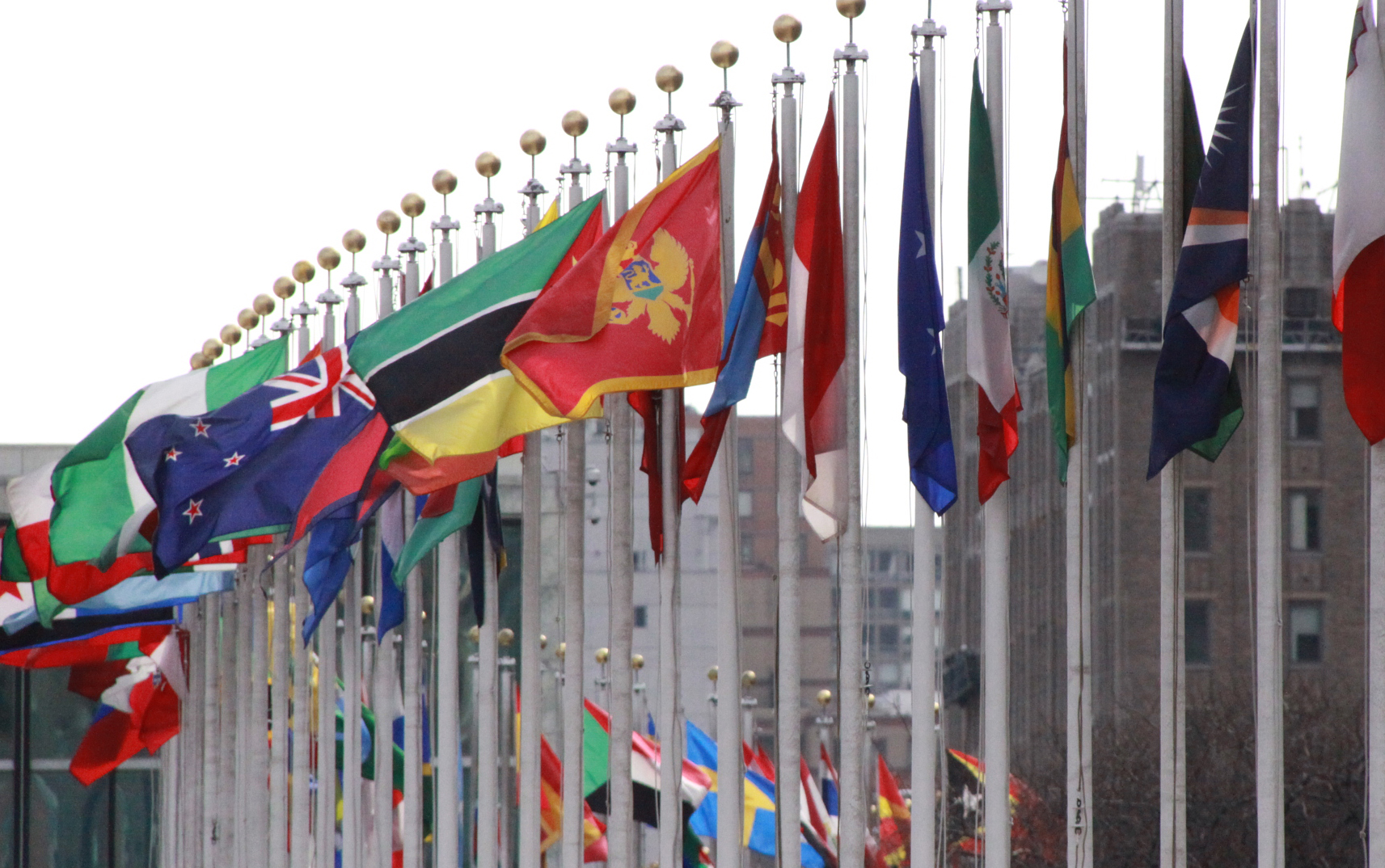


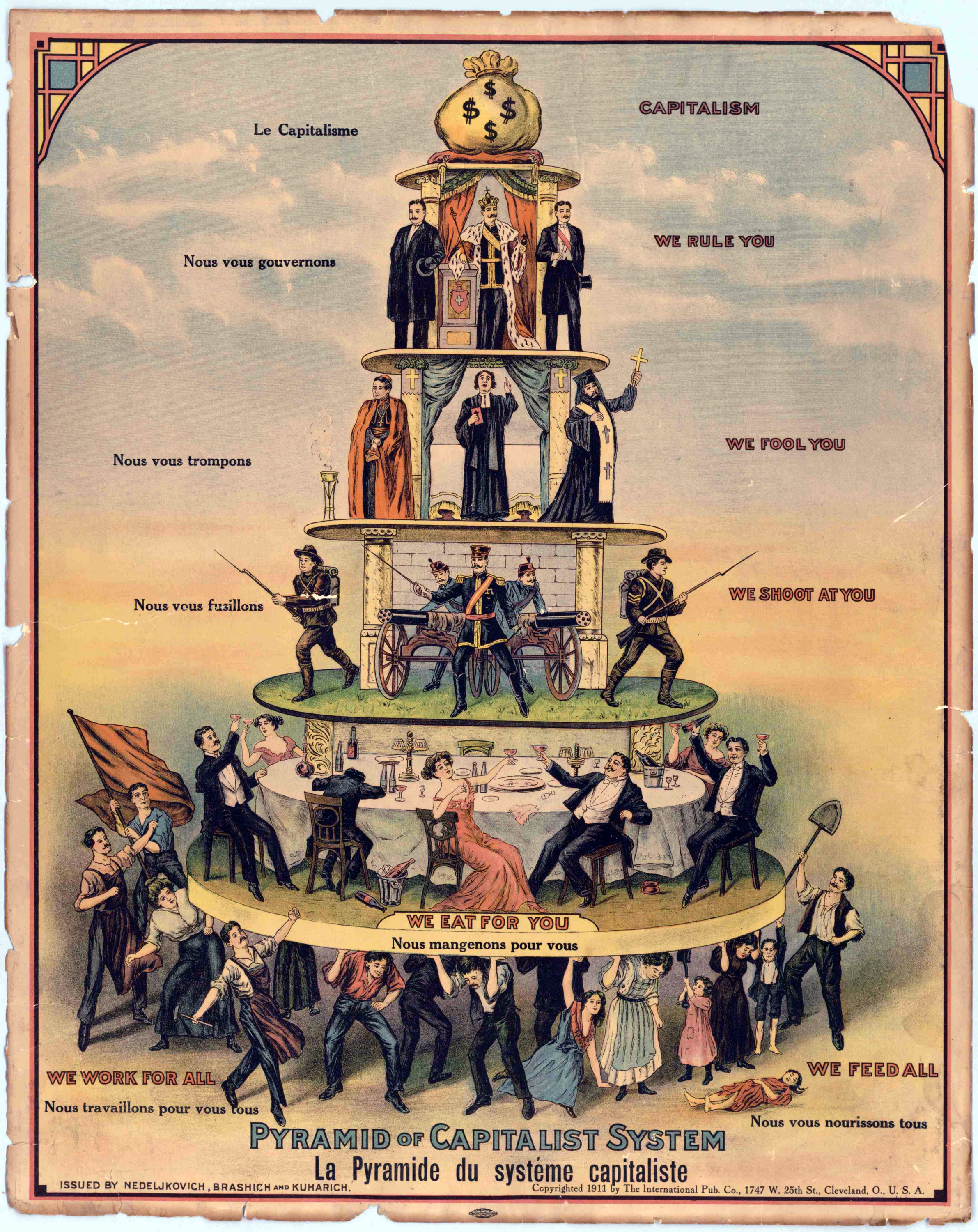


 bobdillon33blog