• About
  • THE BEADY EYE SAY’S : THE EUROPEAN UNION SHOULD THANK ENGLAND FOR ITS IN OR OUT REFERENDUM.

bobdillon33blog

~ Free Thinker.

bobdillon33blog

Tag Archives: European Union

THE BEADY EYE SAYS: IS IT NOT TIME TO CALL A SPADE A SPADE WHEN IT COMES TO ENGLAND DEPARTURE FROM THE EU.

23 Saturday Sep 2017

Posted by bobdillon33@gmail.com in Articular 50., Brexit v EU - Negotiations.

≈ Comments Off on THE BEADY EYE SAYS: IS IT NOT TIME TO CALL A SPADE A SPADE WHEN IT COMES TO ENGLAND DEPARTURE FROM THE EU.

Tags

Brexit v EU - Negotiations., Brexit., European Union, Forthcoming Brexit Negotiations.

( A ten minute read)

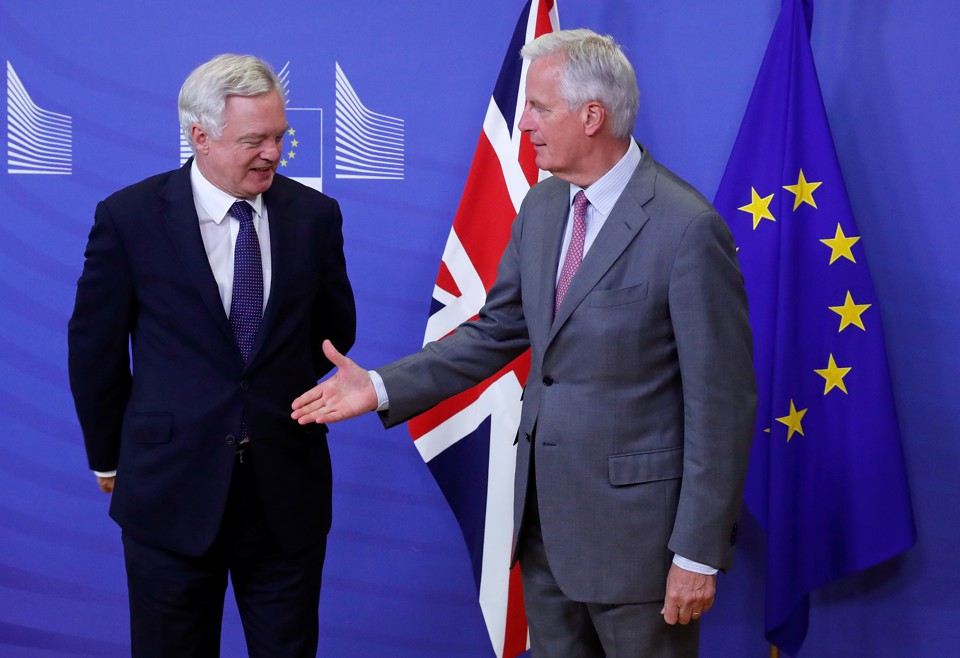
Should the EU agreed to a transit exit period of two years? Which ultimately kicks Brexit down the road.Résultat de recherche d'images pour "pictures of the uk negoiators re brexit"

Should a time-limited prolongation of Union acquis be considered, this would require existing Union regulatory, budgetary, supervisory, judiciary and enforcement instruments and structures to apply.

For the most part there is a shared interest in continuing arrangements, since many nations will not want to lose preferential access terms to the UK.

So yes the EU should grant more time provided the UK continues to meet its obligations.

It is obvious that a clean break without any transit arrangements would be better for both. God forbid we start going down the road of one set of rules for the transit and another set to leave. 

Why ?

Because without England clearly identifying what it wants it to do we are opening a Pandora box.

It is the UK that wants to leave the EU not the other way around.

As I have already said in previous posts only the Lawyers will make hay, never mind the terms for the fish.  They will love a transit period with Tax payers money on both sides flowing into their coffers.  The longer the better.

The EU has it hands tied when it comes to any negotiation because it must reflect the fact that the advantages of EU membership are not available to outsiders.

It may be possible for the EU and UK to collaborate on finding a smooth transition at the WTO. But it will require consensus at some point, a vulnerability open to exploitation. Britain’s most important external agreements — nuclear, airline access, fisheries and financial services are either entirely, or in large part, handled by the EU.

Even if England creates a new trade department, the task of negotiating new free-trade deals and maintaining existing ones will require a huge amount of money and manpower. The civil service and ministers are not even close to being ready to negotiate, let alone implement, new global trading relationships.

The nearest precedent you can think of is a cessation of a country.

Britain will find itself at the diplomatic starting line, with the status quo upended and all sides reassessing their interests. After Brexit the UK will lose more than 750 international arrangements.  Even if it were simple to renegotiate these arrangements, it will open a bureaucratic vortex, sapping energy and resources, creating a huge legal tangle.

The big question is, how will the UK’s political system react once the realization has sunk in about how little the EU will ultimately offer?

What Mrs May really wants is an association agreement.

There is a strong political case for such an association agreement, also from an EU perspective. But I fear that the idea is time-inconsistent. There is no Goldilocks “creative solution”, or a sector-by-sector approach.

Therea

There is no way that the EU will agree freedom of movement for aircraft, for example, but not for passengers.

Businesses need to prepare. Two more years before having to move key employees to European capitals.

The EU only knows a very limited number of external relationships. There is the European Economic Area, the so-called Norway option full EU access in exchange for accepting all EU rules. It’s a member of the European Economic Area (EEA), which means full access to the single market but being under all EU rules.

The other is a customs union agreement — the Turkey option.

The EU will not offer the UK the “Swiss option”. It regrets having offered it to Switzerland.  Then there is the Canada option – It took hundreds of skilled negotiators, dozens of video conferences and seemingly endless days in Brussels to produce the 1,600-page text. Some seven years after Canada and the EU began negotiating a trade deal, the future of the agreement remains shrouded in doubt. The agreement – which has yet to be ratified.

This leaves a single option: a free-trade agreement.

On top of all this the EU is only just starting to talk about institutional reform.

And how can they deal seriously with a government in which the foreign secretary might at any moment move to topple the prime minister to further his own career?

To continental ears, Mrs May’s call for a unique economic partnership sounds suspiciously like another, albeit subtler, attempt for Britain to have its cake and eat it — to retain the privileges but not the responsibilities of EU membership.

The British now believe they have made reassuring noises on money, security and citizens’ rights. But the insistence that the UK will leave the customs union means that it will be hard to point to progress on another issue that the EU deems critical: the Irish border.

The future relationship will need to be based on a balance of rights and obligations. It will need to respect the integrity of the Union’s legal order and the autonomy of its decision-making.

History has the habit of repeating itself,  Britain has been a torn in the side of the EU ever since it joined and English treaties have proven themselves over its history to be not worth the paper they are written on.

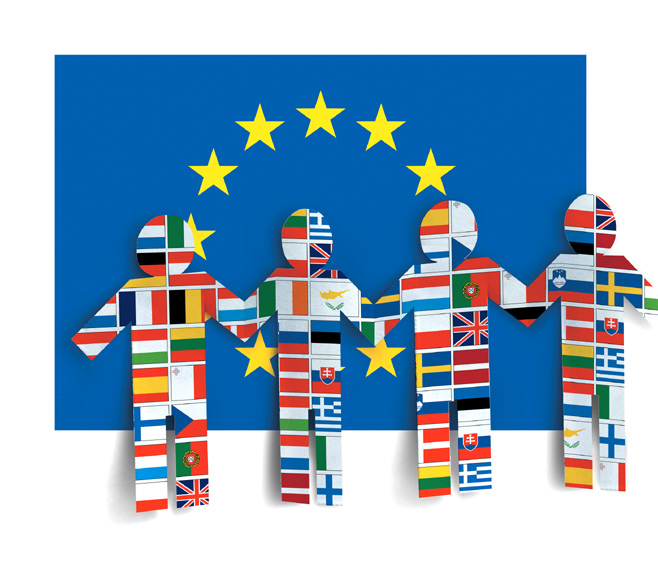
Get rid of the Nigel Farage’s, Renew your membership, i.e. stay and fight your quarter, otherwise a Clean Brake would be best for all. Résultat de recherche d'images pour "pictures of eu democracy"

All comments appreciated all like clicks chucked in the bin.

← Back

Thank you for your response. ✨

Share this:

  • Share on WhatsApp (Opens in new window) WhatsApp
  • More
  • Share on Pocket (Opens in new window) Pocket
  • Share on Mastodon (Opens in new window) Mastodon

THE BEADY EYE SAYS: THE EUROPEAN UNION (EU) AND ITS 27 MEMBERS FACE FUNDAMENTAL CHANGES OVER THE COMING 5-10 YEARS.

04 Friday Aug 2017

Posted by bobdillon33@gmail.com in Brexit v EU - Negotiations., Brexit., European Commission., European Union., Modern Day Democracy., Our Common Values., Post - truth politics., Unanswered Questions., What needs to change in European Union.

≈ Comments Off on THE BEADY EYE SAYS: THE EUROPEAN UNION (EU) AND ITS 27 MEMBERS FACE FUNDAMENTAL CHANGES OVER THE COMING 5-10 YEARS.

Tags

European Union

( A twenty-minute read)

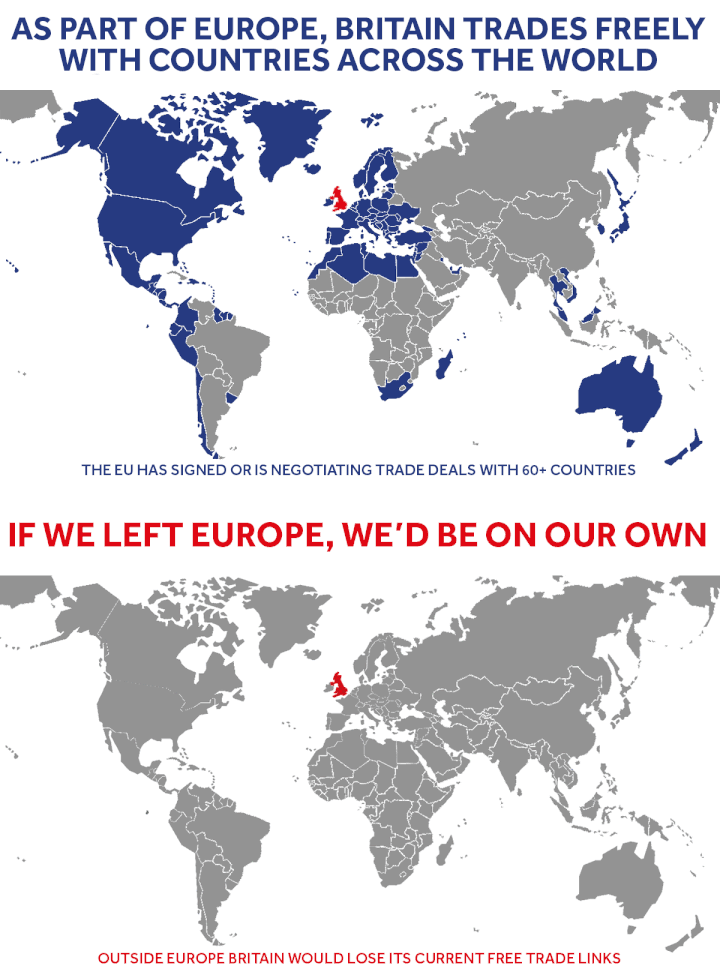
While Britain selfie sleep walks to its exit to become a free trade satellite off the shores of the European Continent a revision of the structure — institutionally and functionally — becomes inevitable for the EU.Résultat de recherche d'images pour "pictures of Britain as a free trade country"

My recent post highlighted that the EU project suffers from not having any real democratic legitimacy – without constitutional accountability, it is heading for trouble. ( see previous posts: THE BEADY EYE SAYS: IT IS TIME TO PUT PAY TO THE TRAVELING EU CIRCUS COSTING £9/10 BILLION TAX PAYERS MONEY.) However the Euro zone ends up it is the only place in the world trying to combine social welfare with a competitive economic structure.

The Europeans took a while to discover that killing each other and pursuing imperialistic and colonial policies are not in accordance with European values. Atrocities and crimes were committed, now it has a chance to create a remarkable political maturity of consensus, cooperation, and compromises.

Global governance sounds good, but out of reach for either the EU or Britain.

The digital age implies that a global opinion exists but the game now is about shaping perceptions of that opinion. Perhaps the EU is going to be forced by Social Media to go down the road to a form of Direct Democracy.

A new political system with another balance between centralized power and decision-making closer to the citizen spearheaded by Europe would be a revelation. 

Solidarity looks fine on paper and in declarations, but is much tougher to deal with in practice. Rebooting Europe’s economic model to combine welfare and competition and introduce a much higher awareness of resource scarcities will be no mean achievement. It strives hard to remain faithful to all that Europe stands for purified by the purgatory over centuries.

But is any of this realistic in light of England’s Departure.

The disturbing factor is the absence of confronting the issues among European politicians.

So what is in store and where is it going to go in the next ten or more years.

In reality there were two groups of Euro members: Strong countries mainly in Northern Europe and weak countries primarily in Southern Europe.

The fact that the EU’s politics will be devoted to tackle self-created problem sideling other pressing matters are an appalling thought. Confusion, non-transparency, peculiarity even queer ways obscured by meetings and personalities may rule the headlines.

Politically the consequences are much more severe and next to impossible to foresee.

As of 2015 the Euro zone morphs itself into a genuine Economic and Monetary Union with a common economic structure and a common economic policy underpinned by a fiscal union and a banking union. This was bound to happen and it can only be regretted that it had to be done as a response to a debt crisis making the process laborious and burdensome.

As of now 19 countries out of 28 EU member states have joined the Euro.

Europeans may not fully trust each other, but mutual trust is stronger and deeper than in any other political conglomerate around the world.

One its greatest challenges is that Europe is not multicultural, but the world is.

The Union is founded on the values of respect for human dignity, freedom, democracy, equality, the rule of law and respect for human rights, including the rights of persons belonging to minorities. These values are common to the Member States in a society in which pluralism, non-discrimination, tolerance, justice, solidarity and equality between women and men prevail.

This core element is now in question with the influx of migrants not sharing the same cultural identity, causing internal pressure which is why migration/refugees are an existential challenge.

This is why the solution can only be to allow migrants/refugees getting into Europe, to do so with two provisos:  That they do not be allowed to disrupt the existing societal structure and they are educated to adapt to European norms and values. A European citizen approaching the authorities feel that if the roles were reversed the decision would be the same.

In doing so Europe can solve its demographic problem number wise by remaining opening for immigration, to vetted people wanting and ready to enter Europe — actually more than ready as they are banging on the door — do not share cultural identity with the Europeans.

Britain should have accepted that for the EU-27, the idea of free movement is not just political posturing, but an essential part of the single market.  The EU is unlikely to agree on major changes to free movement rules in the next few years.

The core demand for new terms tabled by the incumbent conservative government is to roll back the situation to 1992 and get guarantees that EU social provisions (broadly speaking) do not apply to Britain. This festered till the in or out vote now giving rise to the question of what economic and societal model Britain wants and the answer is a different one from what is found on the continent.

Psychologically the British people may be uneasy companions of former enemies like Germany, France, Spain, and Italy. Links with the Commonwealth fade which probably is regretted by many Britons. The Anglo-American partnership that has for decades given Britain a privileged role is judged by some politicians and part of the public to be closer outside the EU than inside despite American statements to the contrary.

Because of the Franco-German axis which is firmly in control of the EU, Britain has never felt comfortable and probable never will.

However access to the market of the 27 member states weighs heavier for Britain than access to the British market for the rest of the EU.

The tricky part is that the treaty provisions cease to apply to the member in question when such agreement is reached or in case of failing to agree within two years from the decision to secede.

Everybody will try to rescue what can be rescued from this shipwreck, but obviously the 27 remaining member states will take the view that Britain has decided to leave so leave you do.

The main argument apparently falling on a lot of deaf ears in Britain is that inside or outside the EU, economic transactions require compliance with EU norms, standards, and various rules. Those rules are shaped by the member countries promoting own interests. Britain outside will not participate in this sometimes laborious process resulting in British interests not being fed into the legislative process.

The two-year clause strengthens the EU hand, as they better than Britain can live without free movement of goods, services, capital and labor.

The Euro zone countries will tend to share views and interests to a much larger degree keeping EU member states not inside the Euro with a different economic structure on the sidelines.

It is true that no EU citizen has a fundamental, unlimited right to move freely across the EU. To be lawfully resident in another member-state, EU citizens need to be working, studying, or able to prove that they are self-sufficient. Otherwise, they can be kicked out. It is also true that free movement of persons was introduced after the free movement of goods, capital and services.

It is difficult to estimate how strong the negative impact will be.

As seen in many cases it is the long-term effect that matters and continuous lower growth will in the long run add up to a substantial loss even if England reduces corporation and personal taxes.

While EU free movement rules have been a toxic political issue in Britain for years, many on the Continent consider them a core achievement of the EU.

So could there be a free trade agreement between the UK and the European Union that allows the UK to limit freedom of movement.

My answer is no. Out is Out.

The conclusion to draw is a sentiment among the majority of member states and in particular the original six ones that either you are member of the EU, committed to solidarity, coherence, common decision-making, and common policies or you are not.

Résultat de recherche d'images pour "pictures of Britain as a free trade country"

Britannia will “survive” without a post-Brexit free-trade deal with the EU.

The process of Brexit is likely to be a series of humiliating meetings in which the country is forced to accept a procession of ruinous trade deal terms – ruinous, at least, for the majority of the population.  In reality, the UK has never stood alone in the global free trade environment as we understand it today;

It may all end in disaster. But it does show consistency by the British. The EU can be replaced by countries full of fond memories of the empire. The UK has a long history of hypocritically claiming to want only trade in its international relations.

The British Empire stood by and watched one million Irish die of famine just 150 years ago while it continued to export pork and ham and lots of other produce to England. One million Irish! Has there been a word of regret about that genocide ever from the British State? Not one word.

“The British Empire was a great and glorious thing that did much good(such as ending slavery) ”

Such statements are totally untrue.

It was an evil kleptocracy and extortion racket. Imperialism is the geo-political equivalent of rape. There can be no defense for it. To call it “glorious” is nothing short of sick. It certainly wasn’t the empire which ended slavery. The empire not only fought tooth and nail to retain it, it actually managed to extort compensation for the vermin who had profited from it. It was the entire foundation of Britain’s wealth – or rather the wealth of Britain’s ruling class.

Far from benefiting from “free trade”, Britain got rich by imposing tariffs on imports and sending gunboats or troops to deal with anyone who presented problems.

If Britain is expecting to encounter fond sentiments from x colonial countries in free trade agreements it is about to be bitterly disappointed.

Britain did not make its fortune by trading freely.

The wealth of the UK was EXPLICITLY derived from its military domination of overseas territories, control of cheap inputs (such as cotton) and export markets that were enforced. So, the ludicrous idea of the Brexiteers that the UK can compete in the global economy does not stand up to scrutiny even historically.

In the contemporary world, it is nothing other than laughable. In the context of a highly open economy, dependent on imports of almost everything, the only effect of a devalued currency is inflationary pressure and an increased trade deficit. This policy approach almost qualifies as a definition of insanity.

We don’t need to wait to judge Brexit, because any clear-thinking and informed person can see outright what a disaster this is almost certain to be.Résultat de recherche d'images pour "pictures of Britain as a free trade country"

The ECHR is an international human rights treaty that is independent of the EU and predates it. If the UK denounces the ECHR as well as leaving the EU it is setting itself up as another North Korea. Every single country in Europe — including Russia and Turkey — is in the ECHR. Write your own laws!

We are living at a moment when an old economic settlement is in crisis, but a new settlement has yet to be formed.

Unless the US and Europe can find common ground the prospect of chaos and infighting is too high for comfort as no other country or group of countries are waiting in the wings with ideas and economic power to lead. Some decades down the road the US and Europe will still account for more than 1/3 of global Gross Domestic Product — maybe more.

The politics of the future will belong to those leaders both in Europe and Britain who are prepared to face up to our present problems and future challenges.

Britain’s future is a nostalgic past that never really existed.

Yes, this is the way forward for “Poverty UK” — back to the 1950s! Résultat de recherche d'images pour "pictures of Britain as a free trade country"

← Back

Thank you for your response. ✨


Share this:

  • Share on WhatsApp (Opens in new window) WhatsApp
  • More
  • Share on Pocket (Opens in new window) Pocket
  • Share on Mastodon (Opens in new window) Mastodon

THE BEADY EYE SAYS: IT IS TIME TO PUT PAY TO THE TRAVELING EU CIRCUS COSTING £9/10 BILLION TAX PAYERS MONEY.

25 Tuesday Jul 2017

Posted by bobdillon33@gmail.com in European Commission., European Union.

≈ Comments Off on THE BEADY EYE SAYS: IT IS TIME TO PUT PAY TO THE TRAVELING EU CIRCUS COSTING £9/10 BILLION TAX PAYERS MONEY.

Tags

European Union, Social Media

( A ten minute read)

The EU project suffers from not having any real democratic legitimacy – without constitutional accountability, it is heading for trouble.

The unaccountable nature of the EU, coupled with the hardship caused by the “austerity for some, gravy trains for others” policies and the failure to either deal with the still-mounting debt crisis, and the real problems caused by all this and the lack of support for any further social, economic and political integration, it’s debatable whether the EU will even survive for long… just wait till the next crisis hits.

A self-created bubble for the MEP’s where their loyalty to the EU above the people is assured by massive wages, expenses and pensions and if kicked out by the electorate in elections they’ll get other jobs in the Commission or the wider EU structure.

On top of all this we have Strasbourg a symbol of waste and stupidity – the perfect example of all that is wrong with the EU. True democracy at work. No one gets a vote on it.European Parliament strasbourg

Approximately 10 per cent of the Parliament’s annual budget, between €156 and €204 million is spent to sustain this traveling circus.

The annual CO2 emissions associated with the transfers to and from the three working locations – Brussels, Luxembourg and Strasbourg – is estimated to be between 11,000 and 19,000 tonnes. That is the equivalent of 12,000 cars driving around the circumference of the world. (Is it not ironic that the European Parliament voted to reduce CO2 emissions by 2030?)

Between 3,500 and 4,000 people every month set out for Strasbourg – this includes MEPs, assistants, political group staff, parliament staff, interpreters and translators. This is done by trains, by air and by road. In order to transport the 2,500 trunks and all the equipment required for the plenary session a large convey of trucks travel the 409 kilometers from Brussels to Strasbourg. This is then reversed four days later.

Among the costs are £250,000 a year to transport the plastic boxes containing documents, diaries and other items from Brussels to Strasbourg and back again.

£2.5 million bill for relocating freelance translators from Brussels to Strasbourg and back again, including costs of travel, accommodation and other expenses.

Depending on how you read it, you might find the E.U.’s tendency to translate nearly everything it does into all 24 of its official languages a testimony to its internationalist glory or a wasteful use of resources. By E.U. custom, all public E.U. documents are translated into every language. All high-level E.U. meetings are the same way. The European Commission says it employs 1,750 linguists, 600 full-time interpreters and 3,000 freelancers.

In Strasbourg, extra money is needed for computers and IT support and for maintenance and security of the sleek parliament building, which was completed in 1999. In total, the cost of looking after the French buildings and infrastructure and other charges comes to about £50 million a year.

About 100 people are employed in Strasbourg full-time, even though the European Parliament meets for 12 sessions, each lasting four days, a total of only 48 days each year.

Hotels in Strasbourg typically double their rates when the EU comes to stay. Last week, the Hilton Hotel in Strasbourg was offering rooms at £82 for Sunday night, but this rose to a cheapest rate of £161 a night for Monday, when the sessions begin.

Naturally, the French are totally opposed to ANY CHANGE not only because of the €20 Million it provides to the Strasbourg economy each year but also because it is an important European symbol within France.

Why does the European parliament move from Brussels to Strasbourg once a month?

It is a disgrace that €9.5 million is wasted in this way every month.

Strasbourg is the official seat of the European Parliament, so the EU treaties would have to be changed if that were no longer the case. A final decision would rest with the member countries.

The so-called traveling circus that sees MEPs and staff decamp from Brussels to Strasbourg once a month has long been a bone of contention. It costs the institution some €114 million a year to make the trip.

In a November 2013 resolution, MEPs called for a treaty change to allow Parliament to decide where it sits.

Over three-quarters, of MEPS from across the political spectrum, want to abolish this practice but they have no power to change it. Under the Lisbon Treaty the parliament is legally bound to meet 12 times a year in Strasbourg. A session takes place every month – except in August but a second session in September or October replaces it. This can only be changed if unanimous agreement on the issue is reached at a European Council Summit – a meeting of heads of Governments of each Member State.

The EU’s national governments unanimously decided in 1992 to fix the seats of the EU institutions permanently. This decision also affected the working arrangements for the Parliament: its official seat and the venue for most of the plenary sessions would be Strasbourg; parliamentary committees would have their meetings in Brussels; and Parliament’s Secretariat (its staff) would be based in Luxembourg. In 1997 this whole arrangement was incorporated into the EU treaty.

Any change in the current system would need to be part of a new treaty, agreed unanimously by all 28 member states and ratified by each of their national parliaments. However only with a workable alternative for Strasbourg could a French veto be avoided.

I can fully appreciate that if you move an existing institution, the member state which currently houses it will also have to be compensated, setting off a chain reaction. So you have to give proper consideration to all of the links in the chain before you come up with a proposal.

But will it change?

For the foreseeable future, I honestly don’t think so. Unfortunately, France will never agree, which holds a veto.

The continuation of the monthly migration between Brussels and Strasbourg has for most EU citizens become a symbolic, negative issue (…), especially at a time when the financial crisis has led to serious and painful expenditure cuts in the member states”, said the resolution, which was approved by 483 votes to 141, with 34 abstentions.

France and Germany got everything they wanted and everyone else got shafted.. French MEPs could quit the largest political group in the European Parliament if their colleagues support a plan to scrap the assembly’s base in Strasbourg. It’s up to us with the power of Social Media to demand a stop to this blatant waste of our hard-earned money.

How can we achieve this:

There is only one way and that is by bombarding Emmanuel Macron the new French President through Social Media with the following message.Résultat de recherche d'images pour "pictures of the new french president"

Not a one day bombardment but a sustained bombardment.

 [Palais de L’Élysée

55 Rue du Faubourg Saint-Honoré

75008 Paris, France.

Your Excellency,

The Strasbourg-Brussels merry-go-round has gone on long enough, it’s deeds, not words, that count.  With due respect The European Parliament’s travelling circus represents all that is wrong about the EU in the eyes of electorates across Europe: A useless and huge cost for our European community. 

A recent study by the European Parliament shows that €103 million (£85 million) could be saved each year if all European Parliament operations were transferred from Strasbourg to Brussels.

As a taxpayer I have no objection to maintaining the status quo, providing the total costs are financed by the French Tax payer.  

They say the definition of madness is doing the same thing repeatedly and expecting different results. The unnecessary waste and the political stalemate that perpetuates it must stop. This craziness has to stop.

Yours sincerely:    ………………………………….  ]  EU Citizen.

Optional PS:

Why not give everyone a smart phone with a voice recognition app. Press Translate. A saving of £2.5 million. ( 750 linguists, 600 full-time interpreters and 3,000 freelancers.)

← Back

Thank you for your response. ✨


Share this:

  • Share on WhatsApp (Opens in new window) WhatsApp
  • More
  • Share on Pocket (Opens in new window) Pocket
  • Share on Mastodon (Opens in new window) Mastodon

THE BEADY EYE PUTS: A SPOTLIGHT ON WHAT NEEDS TO BE REFORMED IN THE EUROPEAN UNION.

04 Sunday Jun 2017

Posted by bobdillon33@gmail.com in Brexit v EU - Negotiations., Brexit., European Commission., European Union., France., The New year 2017, The Obvious., Unanswered Questions., What needs to change in European Union.

≈ Comments Off on THE BEADY EYE PUTS: A SPOTLIGHT ON WHAT NEEDS TO BE REFORMED IN THE EUROPEAN UNION.

Tags

European Union


( A eighth minute read)

We all know that the Union is in need of reform, but what exactly are we talking about.

Nobody would seriously argue that the EU doesn’t need to evolve, to do so it must fundamental reform.

It has not delivered the prosperity and growth it promised; the euro has turned out to be part of the problem rather than the solution; the EU’s share of world GDP is set to fall sharply. Moreover, no one is clear what the EU is for, or how ever closer union can be matched with expanding borders and huge disparities of income and culture. The European Union project has been rocked by a series of scandals

Here are a few reforms that are blatantly obvious and need  implementation to save millions of euros.  

The First Reform:

According to a report from the EU’s own internal Audit Service (IAS) an estimated £4.5 billion of the EU’s annual budget is wasted each year. The administrative budget of the IAS totals €18.77 m in 2016 and €19.22 m in 2017.

Although the Commission remains responsible for the implementation of the EU budget, the actual management and control of EU funds and programmes is delegated to Member State authorities, which select beneficiaries and distribute funds.

Cohesion policy accounts for 37 % of spending from the EU budget and is to be some 350 billion euro for each of the periods 2007-2013 and 2014-2020.

It is the Member States’ responsibility to detect, correct and prevent errors in the first instance.

Better regulation is a pressing problem.

Next:

It is time that the blatant absurdity and farce of the EU travelling circus, that requires the moving nearly four thousand trunks of documents between Luxembourg and Strasbourg ever month – stops.

It is perhaps the most outlandish of the European Union’s excesses; a £130 million travelling circus that once a month sees the European Parliament decamp from Belgium to France.

The problem is simple:

The French government, which has a power of veto, will not budge.

The French insist on maintaining Strasbourg’s role because of the substantial amount of money the travelling circus brings to the region. Its status is set in stone under a European treaty signed in 1992,  which can only be revoked should all member states agree it. 

In all, the EU admits that the monthly Strasbourg sitting, which lasts just four days, costs an additional £93 million a year.

A recent study by the European Parliament shows that €103 million (£85 million) could be saved each year if all European Parliament operations were transferred from Strasbourg to Brussels.

It is beyond comprehension that this state of affairs is tolerated.

If Emmanuel Macron France’s new youngest ever president, who says the country had chosen “hope” and promising to relaunch the flagging European Union doing away with this gross misuse of EU funds would show he is serious.

Next: 

MEP’s > “gravy train” salaries and perks.

MEP perks receive free haircuts and 52 gallons of petrol a month.

Maltese MPs get 240 litres of petrol a month.

Two Conservative UK  MEPs have each pocketed over £1 million in taxpayer salary and expenses payments in just five years.  Both men receive a salary of £76,292 a year, plus £2,670 in pension contributions.

Over five years, on top of this figure, Mr Ashworth claimed: £181,705 for subsistence; £164,627 in travel expenses; £222,560 in UK office allowances and £116,000 for his wife’s salary between 2010 and 2014, when the practice was banned.

Mr Karim claimed the same salary and pension contribution package as well as: £159,858 in subsistence allowance; £189,420 in travel expenses and £289,038 in UK office costs.

Both men also have offices provided in Brussels. Both men took home over £1 million over the five-year period, over £200,000 a year.

Nigel Farage claimed over £15,000 in expenses to pay for his bodyguards. The EU has been billed for their services, which include arranging food and drink. One bill for just five events came to almost £60,000, covered by expenses paid to Mr Farage’s Europe of Freedom and Direct Democracy group, which receives £2.5million a year in EU funding. 

French MEPs earn 740% more than average French citizen Lavish, expenses and allowances – entitlements that are worth over £415,000 a year each. 

As well as staff allowances, MEPs are able to earn up to £91,000 a year in “daily subsistence” and “general expenditure” expenses without having to provide any receipts or proof of expenditure. MEPs still vote on their own salaries and perks.

The EU pay divide

The “subsistence allowance” or “per diem” of £258 is paid in cash without any proof of expenditure, when MEPs sign an attendance register in Brussels or the Strasbourg seat of the parliament.

The annual cost of a MEP sitting in the EU assembly is £1.79 million each a year. The European Parliament, with 766 MEPs, cost £1.3 billion in 2012.

Here is the breakdown of an MEP salary:

[The standard monthly payment for all MEPs is 7,957 euros (£6,537). MEPs also get a flat-rate monthly allowance of 4,299 euros to cover office expenses, such as office rent, phone bills and computer equipment.

In addition, MEPs can claim for travel related to their official duties in Brussels and Strasbourg. In the past they could claim for an expensive flexible economy class flight even if they flew low-fare. But under the new rules they have to submit their ticket (which can be business class on air, or first class on rail) and will be reimbursed for what they paid.

A separate annual travel allowance – 4,243 euros maximum – covers official trips to other destinations. And they can claim for up to 24 return journeys in their home country.

MEPs also get a daily subsistence allowance – now 304 euros – for attendance at parliamentary sessions. It is intended to cover things like hotel bills and meals.

And they are entitled to reimbursement of two-thirds of their medical expenses.]

Then there are the 28 EU Commissioners, all of them on a basic salary of

€20 666 per month.

Jean-Claude Juncker, 61, President of the European Commission  Salary: £245,629 plus a residential allowance of £36,844 and a monthly expense allowance of £1,135. Pension of £52,500 for life from age 65.

The salaries and allowances of the MEPs of the 27 EU states now total £137 million.

The figure is almost ten times higher than the average EU wage of £18,617 a year.

But this does not include the cost of the £217,000 office allowance available to each MEP.

The receipt-free allowances system must stop. 

Next reform:  Is the Euro.Résultat de recherche d'images pour "pictures of Euro"

Only by changing the eurozone’s rules and institutions can the euro be made to work.

To achieve the more radical – but necessary – reforms for the Euro, a new treaty will be required.

A major priority for this new treaty would be to create a single fiscal authority for the euro area and to change the ECB’s mandate, so that it could become a full lender of last resort in extreme circumstances.

Euro area citizens need to be given a real choice between continued fragmentation (which leaves the euro exposed to structural weaknesses and recurrent crises), and greater integration (which pools more sovereignty at the same time as it strengthens the governance of EMU).

Abandoning the convergence criteria, which require deficits to be less than 3% of GDP.

Change the mandate of the European Central Bank, which focuses only on inflation, unlike the US Federal Reserve, which takes into account employment, growth, and stability as well.

Lastly, the high rates of unemployment in many euro-area countries are a source of concern. Reforms to harmonize employment protection legislation and integrate outsiders in the labour market should be implemented.

The EU employs more than 55,000 staff from its 28 member states. The majority work for the European Commission which employs about 33,000 officials, temporary staff, contract staff, and special advisers.

Last Reform:Image associée

It is no good just taking the standard nation-based model of representative democracy and applying it to the unique contours of European governance

‘Democracy’ explicitly recognises that the EU lacks a coherent, unified ‘people’, and should therefore encourage the participation of separate ‘peoples’ within the European structure.

If the EU is truly a democracy then the best way of closing the gap between citizens and institutions is to empower the demoi. Finding new ways for the national public to discuss, engage with and interact with the EU is the best way of enhancing their role. To do so, the European Parliament should be made more representative, but by increasing the role of citizens and national parliamentarians in the EU structures the EU can be made more open to bottom-up influence.

Multiple levels of engagement should be created so as to give citizens the maximum capability to engage with the EU’s structures. Such a structure would not be perfect. No democratic structure is. But it remains the best way of creating a more democratic European Union. Make European structures more open to national influence; and give citizens a more direct involvement in EU policymaking.

All comments appreciated. All like clicks chucked in the bin.

← Back

Thank you for your response. ✨

https://youtu.be/PZz3dXCG3Oo?list=PLO1bi4VeyTW7iLDXBKYxh_rG_ovxGkihz

Share this:

  • Share on WhatsApp (Opens in new window) WhatsApp
  • More
  • Share on Pocket (Opens in new window) Pocket
  • Share on Mastodon (Opens in new window) Mastodon

THE BEADY EYE SAYS: ROLL UP ROLL UP WE ARE ABOUT TO WITNESS THE BIGGEST MONEY FIGHT EVER SEEN. BREXIT IS EUROPE’S LAST CHANCE.

01 Thursday Jun 2017

Posted by bobdillon33@gmail.com in Brexit v EU - Negotiations., Brexit., Elections/ Voting, ENGLAND'S SNAP ELECTION, England., European Commission., European Union., Politics., Post - truth politics., Social Media., The Obvious., Unanswered Questions., What needs to change in European Union.

≈ Comments Off on THE BEADY EYE SAYS: ROLL UP ROLL UP WE ARE ABOUT TO WITNESS THE BIGGEST MONEY FIGHT EVER SEEN. BREXIT IS EUROPE’S LAST CHANCE.

Tags

Brexit v EU - Negotiations., Brexit., ENGLAND'S SNAP ELECTION, European Union, What needs to change in European Union.

( This is a good thirty minute read.)

The weigh in:

In the blue corner we have England wearing sterling.  In the green corner we have the EU wearing euro.

Regardless of whether you like the sport this fight will be contested across social media keeping the audience at a safe distance while making sure that the fighters don’t withdraw/run away from the fight before it is finished.

Round One:

Put simply, Article 50 gives the 27 continuing member states predominant power.

That comes partly from the fact that, according to Paragraph 4 of Article 50, the withdrawing state no longer counts as a member of the European Council for the purpose of the negotiations.  But mainly it comes from the guillotine imposed by the two-year deadline and the requirement for unanimity to extend that deadline.

Clause 4 says that after a country has decided to leave, the other EU members will decide the terms—and the country leaving cannot be in the ring in those discussions.

Britain depends on the EU for half of its exports, while Britain accounts for only one-sixth of Europe’s.  For Britain, this means any deal would be better than none at all. Keeping substantial access to the single market and having strict immigration controls are mutually exclusive for the EU: achieving both is highly unrealistic.

After a lot of shadow boxing T May with a reduced mandate and new shoes dances around the ring avoiding the total financial obligations, which are understood by the EU to be around €100 billion gross, according to an FT estimate.

But add on the negotiations fees etc and Britain is facing a £140 billion (7.5% of GDP) or the equivalent of £300 million a week over eight years.

May said repeatedly that Britain could walk away without a deal and be fine. Instead, a painless exit without a cliff-like effect on trade is only possible with a transitional arrangement. To obtain that, the UK will likely have to pay the €60 billion it owes from its past years of membership, as well as a membership fee for access to the single market.

The EU knows that  the UK is economically more dependent on the EU; 44% of its exports go there and 48% of its foreign investment comes from them.

This is not to mention the potential damage from a loss of passporting rights to the services sector, which makes up for around 79% of UK GDP.

Hence  the UK may try to act tough at the start of fight but eventually will have to compromise to avoid bigger economic fall-outs.

Round Two:

The EU Commission said citizens in the process of acquiring EU rights (such as permanent residency in another country in the bloc) should be allowed to finish doing so, and that the U.K. will be liable for certain financial payments, such as the salaries of British teachers at schools for the children of EU officials, until 2021.

Round Three:

The U.K. remains under the jurisdiction of the European Court of Justice while all pending cases are completed, and the U.K. would not immediately receive upon departure all the capital it has supplied to the European Investment Bank.

The U.K. is a 16 percent shareholder in the EIB and has €39.2 billion locked up in the institution, which often funds projects with a 20- to 30-year timeline. The U.K.’s liabilities should be “decreased in line with the amortization of the EIB portfolio outstanding at the time of United Kingdom withdrawal,” the Commission said.

Round Four:

Any cherry-picking punches are totally against the rules.  “Until it leaves the Union, the United Kingdom remains a full member of the EU, subject to all rights and obligations set out in the Treaties and under EU law.

Round Five:

United Kingdom will be kept separate from ongoing Union business, and shall not interfere with its progress.

The Council states that an agreement on a future relationship between the EU and the UK can only be concluded once the UK effectively leaves the EU and becomes a third country. When the United Kingdom officially leaves the European Union in March 2019, it will still be entangled in the EU’s financial and legal systems for years.

While the terms of divorce can be agreed with a majority vote, the terms of future EU-UK trade relations are very likely to need a unanimous vote.

The deal must be agreed by all 27 remaining countries in the EU. Individual countries can’t veto a treaty governing the UK’s withdrawal from the EU, but could veto a treaty establishing Britain’s new relationship with the EU. It would go ahead if it were approved by 20 of the 27 remaining EU countries, so long as they also represent 65% of the EU population.

Most of the EU’s free trade agreements require a unanimous vote of all EU governments and ratification by all member countries. That’s because they tend to be ‘mixed agreements’, meaning that they cover some ground that the EU doesn’t have power over. That said, it’s possible for the EU to negotiate a trade agreement that can’t be vetoed, depending on what’s in it.

That implies two major agreements: one on the logistics of divorce, and another on trade. (More treaties might be necessary on other issues, like security.)

Round Six:

Compulsory standing count.

Theresa May’s vision is blurred. Polarizing public opinion against the EU and immigration and away from domestic issues was an easy political win.

An independent and truly global United Kingdom without a new customs agreement. Agreements between the EU and third countries or international organisations, for example on trade, would also cease to apply to the withdrawing state, and it would thus need to negotiate alternative arrangements.

Round Seven:

The UK could change its mind about withdrawing from the EU even after triggering the formal process of leaving under Article 50.

Article 50 doesn’t say whether or not a country can change its mind, so it’s arguable either way. Some eminent lawyers think that it can, but there are also those – especially within the EU itself – who argue that once a country has triggered Article 50 it can’t then abort the process without permission.

It would be perfectly possible for the UK to revoke its decision to quit. That Article 50 is silent on the matter of revocation does not mean that a change of direction would be illegal under EU law.

The place this point might be argued, and ultimately resolved, is the EU court in Luxembourg. It’s possible that the UK courts will refer the question to EU judges as part of the ongoing litigation over the role of Parliament in triggering Article 50.

Round eight:

If there’s no turning back from an EU exit once Article 50 is triggered, there would be no point in voting on the terms of a new agreement verses continued membership.

The choice would instead be to take the deal on offer, or reject it and exit with no long-term deal at all.

Round ten:

In the end while us tax payers lose billions, the Lawyers win hands down.

Round eleven:

No deal:

Round twelve:

In their attempt to create a fairer and more equal country, Britons sought to sever ties from what they saw as a weakened partner. The reality is that Brexit will likely make Britain weaker and, ironically, is making the EU stronger.

The irony is that by running away from a European Union they thought was about to fall apart, Brexiteers have instead made it stronger.

Voters in France and the Netherlands are rejecting populism, and politicians in Brussels and Berlin have switched gears towards reforms and pro-EU spending measures.

Round thirteen:

The composition of the EU institutions changes as of the day the withdrawal takes effect, with members from the withdrawing state losing their seats in the various institutions and bodies, although transitional arrangements might be required for the period immediately after that date.

Review of the fight by social media: 

The debts accumulated by the governments of the U.S., Japan, Europe and dozens of other countries constitute a gigantic mortgage on the next two or three generations, as yet unborn.

The Euro corner>Résultat de recherche d'images pour "pictures of the euro"

As it marks its 60th birthday, the European Union is in poor shape. It needs more flexibility to rejuvenate itself.

However, citizens’ trust in the EU has decreased in line with that for national authorities. Around a third of citizens trust the EU today, when about half of Europeans did so ten years ago.

The latest economic and political developments in Europe are a wake-up call for our political leaders to take swifter action in order to strengthen the foundations of our Union.

The deteriorating geopolitical environment makes matters worse. Turmoil and war across the Middle East and in north Africa were one big cause of the surge in migrant inflows.

It is dying financially, with all the debt bankrupting governments, businesses and individuals. It is sinking economically, weighted down with stifling regulations and taxes. It is being strangled demographically, with birth rates far below replacement and the refugee crisis, which saw 1.2 million people coming to Europe in 2015 will only worsen with climate change and current conflicts.

Given the challenges facing the union, the one-size-fits-all model muddling through may no longer be the safest option. Brexit could yet be copied by another member, leading to the slow collapse of the union. A multi-speed Europe or multi-tier Europe could begin to undo the EU.

Few of the 27 EU member countries that will remain after Brexit favour much deeper political and economic integration.

These 27 are integrated into the EU in many different ways: all are in the single market, 26 in the banking union, 21 in Schengen, a different 21 in NATO and 19 in the euro, to list just few examples.

The European continent is home not just to the 28 EU members but 48 countries in all. Those outside the EU aspire to special relations with the club, and some belong to bits of it already.

To cap it all, America’s new president, Donald Trump, has shown himself hostile not just to multilateral free trade and Muslim immigrants but intermittently to the EU, praising Britain’s decision to leave and urging others to follow.

Turkey’s president, Recep Tayyip Erdogan, is turning his back on a club that seems to have rejected his membership aspirations, and is spurning its democratic values as well.

By 2018, around a third of the world’s population will be use social media networks. These trends will only accelerate and continue to change the way democracy works and the way the EU evolves.

A big reason for this is the politics in EU member countries which make it doubly important for Europe to gets to grips with a profound digitisation of society. The EU covers four million square kilometres in which there are 500 million citizens. It is the world’s largest single market with second most used currency. However Europe’s place in the world is shrinking, as other parts of the world grow.

In 1900, Europe accounted for around 25% of global population. By 2060, it will account for less than 5%.

Europe’s economic power is also expected to wane in relative terms, accounting for much less than 20% of the world’s GDP in 2030, down from around 22% today.

Too often, the discussion on Europe’s future has been boiled down to a binary choice between more or less Europe. New global powers are emerging as old ones face new realities and there is none older than England that has voted to leave.

There is also a mismatch between expectations and the EU’s capacity to meet them. The EU approach is misleading and simplistic, for too many> the EU fell short of their expectations as it struggled with its worst financial, economic and social crisis in post-war history. If it is to survive the EU must embrace greater differentiation not closer union or face potential disintegration.

That leaves the second type of response, which is to muddle through. After all, the euro and migration crises seem to be past their worst. Excessive austerity may have done great harm, but outside Greece it is largely over. The single market, perhaps the union’s greatest achievement, has survived the financial crisis and can surely weather Brexit. Domestic security co-operation on terrorism and crime is closer than ever. In foreign policy, EU countries have displayed commendable unity over sanctions on Russia, and have been vital in striking a nuclear deal with Iran.

At the moment more than 80% support the EU’s four founding freedoms.

These might have being the foundations to the EU but there is no getting away from the fact that money was in more ways than one crucial from the very start of the European project.

70% of euro area citizens support the common currency.

The euro zone is now a partial banking union, with a centralised bail-out fund and a European Central Bank (ECB) prepared to act as a lender of last resort.

As economies improve and this year’s tricky elections are negotiated, the union will somehow manage to keep going. If EU leaders want to negotiate revised membership (and all do say they want the UK to stay in), they could do so.

Sterling corner>Résultat de recherche d'images pour "pictures of the pound"

Britain’s richest and privately educated citizens account for 7% of the population yet makes up two-thirds of judges and around half of journalists and members of parliament, according to a government report. Meanwhile, the Child Poverty Action Group estimates that 3.9 million children live in poverty.

The UK ranks second in the developed world for inequality, after the US.

Brexit will not change that, nor will it make Britain more united:

The English patient was sick long before the divorce from Europe.

With an economy focused on finance and services, and highly dependent on foreign investment, the idea of creating a “truly global Britain” isolated from its closest trading partner is economic la-la land.

Brexit is a symptom of Britain’s deeply rooted economic imbalances: a growth model too concentrated on finance and services and dependent on foreign goods, human and financial capital; record-high social and wealth inequality; a lack of investment in infrastructure and education; and monetary and fiscal policies that have helped create a property bubble and excess household debt.

Brexit will not fix the shortfalls of the Anglo-American growth engine, which ran on credit and rising asset prices over the past few decades, disregarding rising inequality, a lack of inclusive access to education and declining social mobility.

General observations :

Article 50 makes life very difficult for any country wishing to withdraw from EU membership.  You might think this deliberate and take it as yet another symptom of perfidious Brussels.  But we should remember that the English Government and parliament signed up to it.

However the design of the euro suffered from two big defects that still haunt the single currency. The euro, in short, remains a troubled currency, with question-marks over both its membership and its direction. There is general agreement that it needs further integration, but disagreement about how to go about it.

The EU’s Institutions, built up over six decades, are not ideally suited to responding flexibly to challenges such as the single currency, migration or foreign and security policy. The European Parliament needs greater legitimacy to influence the European Commission is much more than a civil service; it is the guardian of the treaties, the originator of almost all legislation and the sole executor of the EU’s budget while suffering from having too many commissioners. (28, one per member country)

Terrorist attacks have struck at the heart of cities in the EU last year and will continue to do so while NATO continues to provide hard security for most EU countries.

Europe cannot be naïve and has to take care of its own security. There is no point any longer being a “soft power.

Finally:

The Horizon 2020, in Europe is the world’s biggest multinational research programme.

Maybe there are some things that could be done for the people of Europe that are not directly related to selling stuff?. Real efficiency comes from rethinking systems of bureaucracy from the ground up, not just using less paper.

The greatest task today is to consolidate the free world around Western values, not just interests,””digitizing” and “decarbonising” the economy.

Perhaps the idea of a Continental Partnership.  Might suit the UK.

Such a partnership could offer non-EU countries partial membership of the single market without full free movement of labour, and also create a system of decision-making that gave them an informal say (but no formal vote) in rule-making.

Perhaps this is the winning blow.

In all fights the promoters set the venue not the result.

England would do well to remember that it is not the EU who promoted this fight.

All comments appreciated. All like clicks chucked out of the ring.

Résultat de recherche d'images pour "pictures of boxing gloves"

← Back

Thank you for your response. ✨


Share this:

  • Share on WhatsApp (Opens in new window) WhatsApp
  • More
  • Share on Pocket (Opens in new window) Pocket
  • Share on Mastodon (Opens in new window) Mastodon

THE BEADY EYE: HAS A FURTHER THOUGHT ON BREXIT.

05 Friday May 2017

Posted by bobdillon33@gmail.com in Brexit v EU - Negotiations., Brexit.

≈ Comments Off on THE BEADY EYE: HAS A FURTHER THOUGHT ON BREXIT.

Tags

Brexit v EU - Negotiations., brix, European Union


( A one minute read)

The meaning of Brexit is yet to become clear.Résultat de recherche d'images pour "pictures of the eu english negotiations 2016"

However it is clear that a British exit from the EU will carry with it large economic and political costs.

It is also evident that none of the alternative relations with the EU presents itself as more advantageous compared to EU membership.

It is also clear that leaving the EU will be a historical mistake of paramount proportions and it will impact on the UK for many years to come.

It is also clear that they will become impossible.

These set aside the above and you don’t have to be a genius to know that it is going to be a money war with us ( by us I mean Eu citizens living in England and vice a versa English living in the Eu) becoming political footballs.

The signs are already out in the open.

Tough leaked documents say EU wants Britain to have to pay off obligations to Brussels for years after Brexit, remain subject to European Union courts and continue to let relatives of European immigrants settle in the UK, according to draft EU negotiating documents.

On the English side: Résultat de recherche d'images pour "pictures of the eu english negotiations 2016"

Ending free movement of workers from EU states, budget contributions to Brussels and oversight by the European court of justice (ECJ) are central to Theresa May’s plans for leaving the EU, due to happen in March 2019 after a two-year negotiating period.

This put her at odds with EU negotiators.

The chances of  Agreeing reciprocal guarantees to safeguard the status and rights derived from EU law at the date of withdrawal of EU and UK citizens, and their families, affected by the UK’s withdrawal from the union should be the first priority for the negotiations.

The money separation costs of 50 billion or 100 billion will become a gold mine for lawyers for years.

There is another option.

Secure the agreed reciprocal guarantees to safeguard the status and rights of all.  On agreement write off the money costs with no further negotiations on trade or otherwise.

It would save both sides a fortune.

If we all stand back and take a ruthless, non-tribal, unheroic look at the standards on offer in political leaders the incompetence on offer is near universal.

We can only hope for a Messy Brexit or a Clean Brexit.

The belief in free markets does not extend to the electoral marketplace, which would be in all of our interests. In the last 30 years, has any one thing actually ever been sorted out properly and left well alone to function?

None of this is the fault of the political parties: they have been born into a system that makes them incompetent in government. But they are to blame for not changing it. We all get so sucked into the low-level debates that today’s politics depend upon.

The main concern of the people is neither unemployment nor immigration, but the reform of EU institutions.Résultat de recherche d'images pour "pictures of the eu english negotiations 2016"

It’s a mixture of the bare essentials of basic democracy, human rights, and rule of law, and stuff bolted on as the EU role has expanded hugely, and its operation become complex.

All comments appreciated. All like clicks chucked in the Bin.

← Back

Thank you for your response. ✨


Share this:

  • Share on WhatsApp (Opens in new window) WhatsApp
  • More
  • Share on Pocket (Opens in new window) Pocket
  • Share on Mastodon (Opens in new window) Mastodon

THE BEADY EYE SAYS: TO ENGLAND > ADIOS! SLAN ABHAILE! AUF WIEDERSEHAN ! OUT’ZA’NY ! WITH THE BUM’S RUSH

31 Friday Mar 2017

Posted by bobdillon33@gmail.com in Brexit.

≈ 1 Comment

Tags

European Union, Forthcoming Brexit Negotiations.

( Sorry: This is a rather long read )

It’s hard to shed a tear as Britain formally triggers the doleful negotiations to exclude itself from the mainstream of European politics and economics.

In this post I am interested in exploring the Hidden aspects of ‘Brexit’ and the Hidden Costs of the FORTHCOMING negotiations.

Article 50 is a one-way street, once it is invoked there is no procedural route for going back and, if an agreement is not reached and an extension of time not given, then the United Kingdom will exit the European Union two years from the date of notification of intention to exit

Even an amicable deal risks major legal hurdles. Any exit deal struck outside Article 50 would risk legal challenge before the EU courts. What is more, any treaty changes would trigger a referendum in other EU countries, which could either stop the process dead and/or infuriate those on the other side of the table.

The UK has a long history in which it abused its relative power over other populations. Jean Claude Juncker and Theresa May

So as we now watch the inevitable turmoil which will follow UK withdrawal from the EU it would be wise to  remember that according to constitutional practice in the United Kingdom, Parliament has no formal role in treaty-making, as the power to do so is vested in the executive, acting on behalf of the Crown.

However Treaties with direct financial implications require the assent of Parliament because they affect revenue.

( The most common type are bilateral agreements to avoid double taxation. The texts are laid in the form of draft Orders in Council and are occasionally debated.

 Many treaties require a change to domestic legislation which will be subject to the usual parliamentary procedures.

 Treaties which stipulate Parliamentary approval – where an agreement is of a political nature and is known to be controversial, one or both of the governments involved may wish to safeguard its position by writing an express requirement for parliamentary approval into the text.

 Treaties which require ratification are subject to the Ponsonby procedure (see below)

 Other treaties and international agreements may be subject to some degree of parliamentary scrutiny if a Member raises the issue through a Parliamentary Question or early Day Motion, for example.

The UK has over 14,000 treaties.

The Vienna Convention on the Law of Treaties (in force since 1980) defines a treaty as: ‘an international agreement concluded between States in written form and governed by international law, whether embodied in a single instrument or in two or more related instruments and whatever its particular designation’ Only a minority of such agreements have “treaty” in their title. Other common names include “convention”, “protocol” and “agreement”.

As we all know looking back on history treaties are not worth the paper they are written on. For example : The Treaty of Waitangi, New Zealand’s founding document, was meant to be a partnership between Māori and the British Crown. Although it was intended to create unity, different understandings of the treaty, and breaches of it, are still causing conflict.

or

Hitler’s had said in (1924) that he would abolish the Treaty of Versailles. It can be argued that it was not just Hitler who broke the Treaty of Versailles, but also Britain and France, when they allowed him to do what he did.

Britain has not been as insular an island as some people take it to be.

Separated by just 20 miles (33 kilometers) of water at the Strait of Dover its reigning royal family (which is German) to its exports (overwhelmingly to Europe), have both shaped and been shaped by developments in the rest of Western Europe.

England joined the European Union through the Royal Prerogative, and will negotiate and leave the European Union through the same.

So what is the Royal Prerogative ?

The royal prerogative has been called “a notoriously difficult concept to define adequately”,

The prerogative appears to be historically and as a matter of fact nothing else than the residue of discretionary or arbitrary authority which at any given time is legally left in the hands of the crown. The prerogative is the name of the remaining portion of the Crown’s original authority … Every act which the executive government can lawfully do without the authority of an Act of Parliament is done in virtue of the prerogative.

or

By the word prerogative we usually understand that special pre-eminence which the King hath, over and above all other persons, and out of the ordinary course of common law, in right of his regal dignity … it can only be applied to those rights and capacities which the King enjoys alone, in contradiction to others, and not to those which he enjoys in common with any of his subjects.

Hopeful and aspirational international declarations of human rights have led progressively towards the adoption and implementation of more robust and justiciable instruments for the protection of fundamental rights in the domestic sphere.

Amid political, social, legal and economic crisis, – this narrative is dying.

UK (a day after invoking Article 50, setting Brexit negotiations in motion), is now proposing to using powers dating back to Henry VIII. to convert European laws into domestic legislation without any parliamentary scrutiny.

The  fact that the UK unwritten magna carta constitution allowed these sorts of powers to survive is “a wondrous thing” as he was all about essentially dictatorial powers.

The scope, and the definition of these powers and when they can be used, in what circumstances, is a black hole of the future of the UK and can only be viewed as a power grab by Mother Theresa.

This is not only undemocratic, but may well lead to the loss of individual rights.

In the current climate, it is perhaps more than the ghost of Henry VIII that will haunt them.

EU law still applies in the U.K pending an exit.

“A bill that limits the powers of the European Court of Justice is a plain contradiction of EU treaty obligations.”

The right to complain to, or seek a decision from, EU institutions will be beheaded by Brexit.

The EU’s court system could be similarly cut off by Brexit, relying on the domestic judicial system and common law and ECHR rights.

The U.K. courts would face a constitutional crisis. Judges would have, on the one hand, the 1972 Act telling them to apply EU law and, on the other, legislation restricting it.

A fundamental tenet of EU treaty law is that it trumps all national law.

There will be a “constitutional conflict [that] would antagonize and politicize the judiciary on both sides.

Governments of Scotland and Wales and NI could also raise constitutional concerns.

“It is hard to imagine that unilateral action to stop applying EU law, while still under a treaty obligation to so, will create a lot of goodwill in subsequent negotiations.”

EU citizens could sue the U.K. government for compensation if they suffer damages as a result of conduct contrary to EU law.

All of this points to the need for absolute transparence in the forthcoming negotiations.

This is not a war in the true sense of endangering lives, but as Brexit becomes more of a reality, the UK’s financial services sector will be the foot soldiers in a financial war over costs, tariffs, stock exchanges, and the European bond marketplace.

Money wars always turn ugly quickly.

It could easily sour the rest of the Brexit talks process, and the “new relationship” process to follow. You can see how the politics of this could get toxic quite quickly.

Britain’s exit bill is a potential slaughterhouse for the idea of a smooth and orderly negotiated settlement.

Britain as a full member state has agreed to current EU budget, so the European Commission expects it to honour its commitments and pay up its share – somewhere in the region of €29 – €36 billion.

Getting a deal done is a political tight-rope walk, with one major sensitivity being the issue of where the combined Agencies will be based.

The European Medicines Agency, which, like the Food and Drug Administration, oversees the approval of drugs for use across Europe, is a European Union agency, so it will almost certainly have to leave Britain. Drug companies might require two authorizations for new products — one British, one European — pushing up the prices of medicine.

The European Banking Authority will also have to re locate.

Brexit will jeopardize the creation of a single European capital market.

THEN WE HAVE 45, European Union agencies, or similar bodies, and they are considered trophies for member countries because they bring both prestige and economic benefits – WITH THEIR PENSIONS.

The pensions of EU civil servants are not paid from an invested pension fund – they are paid on a pay-as-you-go basis from each year’s EU budget. The pension liability is about €67 billion. Who wants to get stuck for a pension bill for Eurocrats (average retirement benefit €67,149 a year)

The British will argue that their obligation stops the day they leave the EU, or might continue with pension payments for the British staff of the Commission (about 4% of staff) – this would cost about €80m this year.

And there is a whole stack of off-balance sheet items.

It will add tens of millions to Ireland’s annual legal costs and severely limit the government’s ability to protect the country’s interests in EU legislation.

Michel Barnier’s EU negotiating team will argue they have an ongoing commitment to pay, because they gave a commitment as a member state to cover the retirement cost of all staff hired, and must pay the UK share of that cost – between 12 and 15% – giving a cost this year of around €120m. But the pension funding commitment won’t peak until 2049, when it will hit €218m for the UK share.

There are also a stack of other liabilities – such as the €16 billion Juncker fund for economic stimulus, or the €3 billion Galileo satellite navigation system, €10 billion for the Connecting Europe fund. And there are contingent liabilities and guarantees on loans made to the European Investment bank (€23 billion), and the various EU bailout schemes, which amount to €56 billion. The UK has a share of some of the guarantees that allow this money to be borrowed at low rates (adding its heft to the ratings agencies’ AAA rating for EU debt).

But just as the EU has liabilities, it also has assets on its balance sheet, and the UK would be due a share of these to offset the exit bill. These include €8.6 billion of property, plant and equipment – including the Commission’s Berlaymont Building in Brussels, and the Galileo satellites – and €13.9 billion of assets available for sale.

The UK is also due a share of EU spending over the next few years, so about €9 billion is netted off the final figure for that. And there is some of Mrs Thatcher’s famous budget rebate due to the UK as well. So that has to come off to arrive at a net figure for the British bill.

A key point of contention is what is the British share of the EU budget – is it calculated from Gross National Income (GNI) in which case Britain has to pay up 15% of the overall EU bill. Or is it calculated (as the British would prefer) from an average of actual contributions after the rebate – in which case it is 12.1%.

If the UK share of the bills is set at 12% they would have to pay €57.4 billion. At 15% share, the cost to the UK would be €72.8 billion.

The exit costs will be settled by politics, not law. That’s how pretty much all EU money fights end – by a political compromise. The entire system is set up to produce political compromises.

Yes the EU could simply refuse to budge and run down the two-year Article 50 clock to extract concessions from the British. But the danger is if the talks with Britain collapse completely there is no deal of any sort – on trade as much as the terms of departure – and the EU states are left to fight among themselves over filling a €60 billion budget hole, or cutting aid to the most needy states (who are already enjoying less generous terms than we got when we were net beneficiaries of the EU budget ).

With pressure on both sides to do a deal, how the departure payment issue is dealt with will set the tone for most of the other negotiations over the terms of Brexit.

The effects will be more far-reaching than anyone imagined.

TO GET ALL OF THIS DONE IN TWO YEARS IS FARCICAL.  HOWEVER YOU CAN REST ASSURED IF ANY OF IT IS DONE BY BACK DOOR DEALS WE WILL NOT BE SAYING GOODBYE TO ENGLAND BUT TO THE EU.

All contributions welcome. All like clicks chucked in the bin

← Back

Thank you for your response. ✨


Share this:

  • Share on WhatsApp (Opens in new window) WhatsApp
  • More
  • Share on Pocket (Opens in new window) Pocket
  • Share on Mastodon (Opens in new window) Mastodon

THE BEADY EYE ASKS: WHAT SHOULD THE EU SEEK IN THE BREXIT NEGOTIATIONS.

23 Thursday Mar 2017

Posted by bobdillon33@gmail.com in Brexit., England., European Commission., European Union., Modern Day Democracy., Our Common Values., The Obvious., Unanswered Questions., What needs to change in European Union.

≈ Comments Off on THE BEADY EYE ASKS: WHAT SHOULD THE EU SEEK IN THE BREXIT NEGOTIATIONS.

Tags

European Union, Forthcoming Brexit Negotiations.


(A six minute read.)

Philip Hammond urged EU countries to “think very carefully about what they want” before hanging Britain out to dry in any post-Brexit settlement.

The fact that even the process for conducting these negotiations is not fully covered by European law his advice although cloaked in threatening rhetoric should be heeded by the EU.

Résultat de recherche d'images pour "pictures of eu brexit negotiators"

Article 50 of the Treaty on European Union (TEU) is the only formal structure for the negotiations but offers no more than a broad framework for the negotiations. More detailed guidance will largely depend on legal interpretation and political bargaining, and will only be issued after the UK activates article 50 and begins exit proceedings.

To date I have only heard in vague terms what the UK wants.

It seems to me at the moment that there is no consensus on how the UK should approach negotiations on its relationship with the EU. In particular which parts of its current relationship with the EU the UK seeks to preserve and which it has to either renegotiate or walk away from.

This post asks what from an EU perspective what will the negotiations mean.

The European Council’s main role is to define the general political direction and the priorities of the EU.

Although it has no formal legislative power, it has an influential strategic role and provides a final escalation level for discord among member states at the ministerial level.

For the negotiations on the exit conditions, the formal role of the European Council is limited to the beginning of the negotiation process.

It will then set out the guidelines for the withdrawal agreement, without the UK’s participation, through unanimous agreement.

These guidelines will provide general directions and key conditions for the Union negotiator, the European Commission. They will also define the role of the other institutions, the time path and sequence of the negotiation process.

The European Commission is ultimately responsible for negotiations related to the common foreign and security policy (CFSP). In addition to this, the European Parliament has voted in favour of having the Commission led the negotiations.

Out of all the EU institutions, the role of the Parliament is, in legal terms, the least clearly pronounced. Although it has to sign off, by simple majority, on both the exit proceedings and the any future trade deal, its involvement throughout the negotiations will remain uncertain until the European Council issues its guidelines. Nonetheless, the possibility that the Parliament can block the deal(s) gives it significant power over the negotiation process and the content of the agreement.

The European institutions that are involved in the negotiations each cater to different interests.

The Council represents the Member States, the Parliament the European citizens, and the Commission stands for the EU as a whole.  For that reason it is crucial that the European Parliament gets a strong role in the negotiation process. It would be difficult to think of a better way to show the benefits of European citizenship, for the British and for Europeans alike.

In a bid to maximise the benefits of the negotiations for European citizens, national governments and for the EU as a whole it is essential:

That the European Council issues negotiation guidelines that serve the interests of European citizens and Europe as a whole, and not just those of the Member States.

That the Parliament’s role is defined by the recognition of its political input and the citizens that it represents, rather than by its mere power to block an agreement.

That the European Parliament, as the highest democratic body of the European Union, be involved in all steps of the negotiation process. This is to be achieved by: setting up a special committee to formalise interinstitutional contacts between the Brexit negotiators from the Council Task Force, the Commission and the Parliament; and by making the European Parliament’s lead negotiator part of the Union’s negotiating team.

It is quite obvious that there is going to be not just one deal, but probably two or more.

So to date on the European side we have only rumors of  a massive exit fees in the billions and little else. ( see previous post)

A pretty core question is whether the UK is prepared to concede even the principle that it has liability for any EU expenditure, beyond the pensions of UK citizen employees of the EU.

My guess is that will not be conceded per se, but that one could imagine some notional payment being made, for purely political presentational reasons, to secure a trade deal. I’m thinking of something like £7bn under some pretext-or-other, plus an annual agreement to participate in this or that research funding programme and some pan-European anti-crime-and-terrorism fund.

It also seems to me that the EU is going to have to re-negotiate some of its own terms of international trade due to a downsizing of its market.

Will the UK be paying the cost of these negotiations.

Unfortunately the English don’t seem to understand that the decision to join the EU was irrevocable.

The people of England listened to a bunch of charlatans promising a “Global Britain”, rubbish; Britain has nothing to sell. Yes, the City of London , due to its peculiar legal status will remain the world center for money laundering and financial manipulation, aside from that what have you got?

You just had to hire the Chinese to build a power station! The apparent prosperity of the last 25 years has been built on a mountain of debt, which means that if BofE is forced to defend the pound by raising interest rates the whole economy will come crashing down.

Expect the GB pound to hit 50cents US within months. And don’t think you have any credit left with the old empire, after the stab in the back of Australia and particularly New Zealand nobody is interested in your BS.

If you had any sense at all you would all ask May to admit that voting to leave was a big mistake and please take us back.

The EU is perfectly within its rights to take into account any repercussions to their union’s stability in the way they approach Brexit. Britain can leave anytime they want – they just can’t expect to receive all the privileges that came with membership.

Britain will find out soon enough that leaving the EU is like the spoiled teenager who runs away from home because their parental units won’t buy them the latest iphone. All of a sudden they are cold, dirty, wet and hungry.

Résultat de recherche d'images pour "pictures of eu brexit negotiators"

Theresa May has said she intends to trigger this process on 29 March, meaning the UK will be expected to have left by the summer of 2019, depending on the precise timetable agreed during the negotiations.

She wants with a “comprehensive free trade deal” giving the UK “the greatest possible access” to the single market  to reach a new customs union deal with the EU without the free movement of people.

No matter what, on both sides there are now massive vested interests under threat and hence they will stop at nothing to protect the machine. Nothing.

In the end it is the people on both sides that count. In or Out.

All comments appreciated. All like clicks chucked in the bin.

← Back

Thank you for your response. ✨


Share this:

  • Share on WhatsApp (Opens in new window) WhatsApp
  • More
  • Share on Pocket (Opens in new window) Pocket
  • Share on Mastodon (Opens in new window) Mastodon

THE BEADY EYE ASKS: WHO IS GOING TO PAY FOR BREXIT.

17 Friday Mar 2017

Posted by bobdillon33@gmail.com in Brexit., England., European Union.

≈ Comments Off on THE BEADY EYE ASKS: WHO IS GOING TO PAY FOR BREXIT.

Tags

Brexit., European Union


( A TWO MINUTE READ: THAT WILL SAVE THE EUROPEAN UNION BILLIONS)

Button 50 might not be nuclear but it will have collateral damage to revile one.

It is the greatest disaster to befall the European Union in its 59-year history.

Theresa May vows if EU tries to ‘punish’ Britain we will walk away WITHOUT a Brexit deal (Photo: Getty)

The economic consequences for the UK from leaving the EU are complex.

You don’t have to be a genius to recognise THAT to unscramble 40 years of European integration is going to cost sheds loads of loot – euros and sterling. 

The total bill kicked around at the moment is estimated to be between €40 billion (£34 billion) and €60 billion (£52 billion).

We all know what happens with estimates.

All 28 member states have to unanimously agree to the terms of a deal meaning the negotiations could take years.

In the meantime Britain is still bound by the obligations and responsibilities of EU membership.

ARE THEY INDEED.

Theoretically, there is nothing to stop a British Government unilaterally withdrawing from the EU by simply repealing the 1972 European Communities Act. Article 50 compels only the EU to seek a negotiation, not the withdrawing member state.

Triggering Article 50, formally notifying the intention to withdraw, starts the clock running. After that, the Treaties that govern membership no longer apply to Britain.

At a glance | What is Article 50?

  • Article 50 of the Treaty of Lisbon gives any EU member the right to quit unilaterally, and outlines the procedure for doing so
  • There was no way to legally leave the EU before the Treaty was signed in 2007
  • It gives the leaving country two years to negotiate an exit deal
  • Once set in motion, it cannot be stopped except by unanimous consent of all member states
  • Any deal must be approved by a “qualified majority” of EU member states and can be vetoed by the European Parliament
  • In November 2016, the High Court ruled that the Government cannot trigger Article 50 without MPs voting on the matter first. The Supreme Court upheld the ruling in January 2017

Under the Vienna Convention, the termination of a treaty “releases the parties from any obligation further to perform the treaty”.

Furthermore under EU’s own laws mean there is no “legal obligation” to cough up any cash if no deal is struck.

THERESA MAY can walk away from the EU without paying a penny of the Brussels’ £50-£60 billion divorce bill.

European Union and the Union flag sit on top of a sand castle

The EU will lose more than just economic and political strength — it will also see billions of euros disappear from its budget. Net revenues that flow into the EU from Britain each year range from 14 to 21 billion euros. If you subtract the money Britain gets back from Brussels, the EU budget would shrink by up to 10 billion euros per year.

Of course, there is a lot of money at stake.

HOWEVER THERE IS ONE THING THAT IS FOR SURE.

THE EU MOST INSURE THAT IF THE UK LEAVES OR NOT, ENGLAND MUST FOOT ALL THE BILLS THAT ARE DIRECTLY INVOLVED WITH THE PENDING NEGOTIATIONS. 

AFTER ALL: NONE OF THE COST INVOLVED ARE A RESULT OF ACTIONS TAKEN BY THE EU.

Not to demand so would be act of calamitous self-harm.

Ongoing spending commitments -Being without legal precedent, there is no simple answer to whether the EU Treaty, to which all members are signatories, or the secondary legislation arising from it, would apply to a state that is leaving.

 Legally, the UK’s obligation to these payments or others is unclear.

IN THE MEANTIME IT IS THE DUTY OF THE EUROPEAN PARLIAMENT TO PROTECT THE INTERESTS OF THE CITIZENS OF THE EU.

We all know that the EU is in need of radical change.

ONCE MRS MAY ENACTS ARTICLE 50 BEFORE ANY NEGOTIATIONS OR TRANSITION DEAL THE EU MUST PUT IN PLACE A TOTALLY TRANSPARENT COSTING AND REMUNERATION PACKET.

Agreement on this WILL be needed before talks over trade deal negotiations begin.

The member states will be forced to negotiate the bloc’s finances at the same time they begin Brexit negotiations. But how will Brussels be able to determine its budget without knowing how much the British government will be paying into it?

Britain needs to define its position concerning the direct costs before any kind of future relationship the British will seek with the EU.

That, though, will determine the price of future ties NOT THE COSTS OF SEPARATION.

The main thing, in my opinion, is that Brexit is an opportunity to reform the Union in a way which will make it more effective and stop countries wanting to break away.

On March 25, 2017, European leaders will mark the sixtieth anniversary of the signing of the Treaty of Rome, the EU’s founding document. It will be a fraught celebration.

The EU Treaties would also need to be amended to reflect the UK’s departure. In effect, this means that the final deal at the end of a negotiated UK exit from the EU would need to be ratified by EU leaders via a qualified majority vote, a majority in the European Parliament and by the remaining 27 national parliaments across the EU.

Life goes on,

EU and GB flag face paint kiss

It is almost certain that we will end up with no deal.

All comments appreciated. All like clicks chucked in the bin.

← Back

Thank you for your response. ✨

Share this:

  • Share on WhatsApp (Opens in new window) WhatsApp
  • More
  • Share on Pocket (Opens in new window) Pocket
  • Share on Mastodon (Opens in new window) Mastodon

THE BEADY ASKS: WHY IS IT SO DIFFICULT TO ENACT THE BLEEDING OBVIOUS.

07 Tuesday Mar 2017

Posted by bobdillon33@gmail.com in Artificial Intelligence., Big Data., Donald Trump Presidency., European Union., Google it., Google Knowledge., HUMAN INTELLIGENCE, Modern Day Democracy., Politics., Social Media., Technology, The Future, The Obvious., The world to day., Twitter, Unanswered Questions., What needs to change in European Union., What Needs to change in the World, World Politics

≈ Comments Off on THE BEADY ASKS: WHY IS IT SO DIFFICULT TO ENACT THE BLEEDING OBVIOUS.

Tags

Artificial Intelligence., European Union, Social Media, Technology, The Future of Mankind, The Obvious.

( A Ten Minute read that might open your eyes to the Obvious)

I am sure like me you often wonder why it is that when something is obvious we humans are unable to react.  It is obvious that Technology is changing the world and us but nothing hides like the obvious. The obvious is best disguised into itself. One obvious hides another. Résultat de recherche d'images pour "pictures of the blatantly obvious"

Intelligent reason should visit its basic assumptions, regularly; but it doesn’t.

We all know that an own goal is an accident when it comes in sport unless there is some ulterior motive.

In the course of our own lives we have many own goals, some obvious, some accidental, but when it comes to collective action on one hand we cannot bear to notice our children becoming strangers and our parents growing senile. However on the other we are less concerned about Nations heading to war, companies going bust, greed and technology ruining our civilisation.

The obvious turns perverse.

We have too much stake in them to see clear and hear change ringing.

Is this the reason we cannot enact the obvious.?

We do not see what we do not wish to see, hoping that it will go away or solve itself. We grow blind to things we cannot cope with. We see and hear but we keep forgetting at once as if under a spell of neglect.

Our attention is so easily diverted… we just move on with inertia and sleep-walk unable to draw the undesired conclusion and to do something.

We do not grasp the incommensurable, out of proportion with us, with which we have no common standard of measurement: the trillions of billions, the hazy dots shown by the electronic microscope in a cell, or all the same, the blurred dots being huge stars of the infinite, mean nothing to us, exactly like the hypocrite warnings of cancer and death on cigarette packs. Is this because the things smalled below our threshold or amplified huge – in proportions or in meaning – we do not grasp;

If this is so we have a narrow human window of perception and judgement with limited parameters in wavelength, amplitude, intensity and nature.

However we are the measure of all things we conceive.

Whether it be demographic and social change, shifts in economic power, technological breakthroughs or natural resource scarcities, climate change – the world, and those of us in it, need to be more adaptable than ever before.

Overwhelmed by the creativity of Artificial Intelligence, our governments do not protect us anymore, so that the risk is now our own business.

Reason has become asks references, with a hidden price of selective blindness and thus freedom diminished.  It is easier to observe other people’s basic assumptions than yours.

 If that which is not there is difficult to see,  that which is obvious, plain and evident, is at times even harder to notice.

For instance:

Is it not blinding obvious that Twitter now holds unmitigated power when it comes to posting Donald Trump’s tweets.Résultat de recherche d'images pour "pictures of confused politicians"

Is it not bleeding obvious that Google wants to control all knowledge.  Very few of us spending an instant to examine Google Fraud answers.Résultat de recherche d'images pour "image of google logo"

It is beyond the obvious that in a world that is getting more complex and multipolar each and every single day the truth does not cease to exist when it is ignored.

Not missing the things right under our nose is our last protection against danger, loss and disappointment; it grants our judgement to be sound and wise, with feet on ground.

You will agree though that the obvious is the very face of reality.

Take notice of the obvious and suddenly, instead of nodding sheepishly “This is how things are.” you gain the power to make choices which you and most people around you ignored before.

The obvious known, comes alive for us to do something about it only when understanding turns it into personal image, vivid and simple enough to be of our size; otherwise we stay paralysed and dumb.

If you are like me, we need to let  people participate in democracy and get collective decisions that are reasonable.

I often think when it comes to politics and our governments that there are things that are so blinding obvious (when all the bullshit is set aside) to do.

For example to reform the European Union.

Is it not blinding obvious that we should stop the moving of  the £130 million travelling circus that sees MEPs decamp once a month from Brussels to Strasbourg.

Why should we all be held to ransom by France.  On Monday, about 1,000 politicians, officials and translators will make the same journey on two specially chartered trains hired at taxpayers’ expense. If France want it let them pay for it.  “Its madness.” Just think how many better ways there are to spend this money.

It boggles my mind as to why we put up with it.

God only knows what the cost of Brixit will be.

There is no doubt that seething resentment over widening inequalities in the wake of the financial crisis played a big role in boosting the Brexit vote but it is also blinding obvious that England is now facing a major realignment that will need the EU market and the free movement of people to survive economically.

There is NO simple solution – if there was it would have been done by now.

How do you know a politician is being dishonest? He blames something on “special interests.” What is a special interest? Why, it is an interest opposed to the “general interest” or collective will.  There ain’t no such thing.

That might not be possible.  The challenge for me – and you – is to sort out which is which.


But this is not the purpose of this post, rather to examine the broader question.

I am also all too conscious that there are any number of people out there who have deeply held convictions about what’s right and what’s wrong. I may just be right about some things, I may be wrong about others.

In a world predominated by power of a more self-interest nature, has the obvious being consigned to the rubbish bin of politics.

Without having read and understood the instructions book of life, algorithms are switching on an immensely complicated machine.

Once injected into to the political system they can develop a life of their own.

Politics stems from human misbehaviour, which clashes with the terms of modern democratic belief systems in which all adults are assumed to be entitled to behave as they feel inclined, at least within the scope of their income and the constraints of public law and insofar as they refrain from damaging the opportunities of their fellow citizens to do likewise.  Algorithms have none of these constraints.

” It is blinding obvious with the election of Donald Trump a man who revels in his own ignorance, racism and misogyny, that there is no single way of acting.”

Even if there was how would we set about determining what it is? Whom can we trust to do so?

Whom is to be judge? What is an advantage to one group of human beings and what is not to the advantage of another.

Until recent times politics and science usually managed to ignore each other.

Not any more:

Social Media which is riddled with algorithms are now blindly leading us down the road of Technological Inequality by turning the obvious into Fake News.

As a result politics appears where the main contours of collective and social life set the principal interests of groups of humans beings against one another.

Where they do not Conflict politics will not occur.

Social Media politics by Twitter will achieve conflict with a plum. Watch this Space.

So where does this leave us.

You would think that when something becomes blatantly obvious it would be common sense with no need for political input to enact or rectify it.

Isn’t that blindingly obvious to everyone except our politicians.

Contrary to popular belief, “the capacity to err is crucial to human cognition” and that “wrongness is a vital part of how we learn and change.” DONALD TRUMP’S LEGACY. Politicians and bureaucrats, naturally, don’t enjoy being criticised. But if the response is to shut out those who criticise then they are making their work even harder and setting themselves up for more criticism.

The view that to understand politics we first need to know what politics is has a certain immediate force.  BUT WHAT IS NEEDED is something which reaches beyond the tribe and doesn’t rely on conventional party politics within the existing structures. Instead of “to me” we need to change it “to us”.

I know that people drown in stats and often put their fingers in their ears when it comes to the blinding obvious. The fact of the matter is that all wisdom does not, and never has, resided in government’s. Changes must be initiated with Indigenous people’s informed consent, in ways that resonate with their views of what is legitimate and in ways that gain their support.

This will not happen by coercion and imposition.

Consider this:

The most incontrovertible long-range social observation ever made? Was the Galilean carpenter Jesus’ comment that “The poor will be with you always”

Governments have had 222 years to get this right. On any evaluation, governments have fallen seriously short. Every indicator says government is not capable of solving this alone.

The words that feature prominently in Politic confronted with the squalor are appalling, dismal, neglect, waste.

Without comprehending the magnitude of different cultural outlooks – and without often understanding our own – we make it artificially difficult to create the kind of society we think we are as a nation – or the one we want to be.

It’s blatantly obvious that to solve the world’s problems we need a renewed reformed United Nations that is fully funded. (See previous Posts)

I do speak as someone who gives a damn, I don’t share is any thought that nothing can be done. “ Not bleeding hearts, just the bleeding obvious”

Or will we dare create something that people can point to and say “Now that’s what justice and decently looks like?” The answer, I am convinced, lies with us working – together – for humanity. And that, to me, is just “bleeding obvious”.

Let me conclude by being so bold as to suggest the “bleeding obvious”…..

I avoid the word “solutions” We’ve got to look to the future.”

All Technology must be vetted by a new World Organisation that is totally transparent  to ensure that it complies to enhancing our lives, and that is has a source of responsibility.

We cannot have various visionaries tell us that the real world is not what we experience but the one they reveal and proclaim, so that we must follow them.

I invite government to let go of the idea of imposing universal solutions and support those programs that respect and honour the multiplicity of cultural differences.

The useless conclusion is that our senses and memories cheat us, our common sense is no good and our judgement false.

Science does almost the same in all good faith; it invites us not to believe our impressions and intuitive reasoning but to delegate all-knowing to its specialists, the knowers and witnesses of verified truth too-complicated- for- common- people- to-understand.

Knowing our history is part of being human.

What are the seeds our common humanity? What right and decent? And so I ask will our final words be tragic, like those Henry Dunant “Where has humanity gone?”

The passion and commitment of so many decent people out there is constantly being tested. Keeping up the energy and the enthusiasm is a constant battle and it shouldn’t be obvious.

Liberty is not about thinking or saying or doing whatever we want. It is about exercising our freedom in such a way as to make a difference in the world and make a difference for more than just ourselves.

That should be obvious to one in all.Résultat de recherche d'images pour "pictures of confused politicians"

All comments obviously welcome. All like clicks chucked in the Bin.

← Back

Thank you for your response. ✨


I am still pissed off.


We need Bottom up development. If Europe does not set social limits to competition then the market outcome will be exploitation of workers and not innovation. European social standards together with massive investment in skills are more than ever necessary.

The Syria crisis will only make things worse for Europe, which remains incapable of fixing its broken migration policy, and the chance for migration reform in the United States has faded away.


Globalisation-induced changes in the sharing of wealth in the world, combined with the demographic trends of the continents will soon generate new needs for regulation

All this is easy to say but what to do about it?


Detecting the obvious, the one which we do not notice any more, is a vital art of liberation; glimpses that can change the world.


Share this:

  • Share on WhatsApp (Opens in new window) WhatsApp
  • More
  • Share on Pocket (Opens in new window) Pocket
  • Share on Mastodon (Opens in new window) Mastodon
← Older posts
Newer posts →

All comments and contributions much appreciated

  • THE BEADY EYE SAYS. ANY OTHER PERSON WOULD BE ARRESTED. February 1, 2026
  • THE BEADY EYE SAYS FROM THE RESURRECTION OF JESUS TO THE PRESENT DAY THE HISTORICAL RECORD OF OUR WORLD IS MORE THAN HORRIBLE. February 1, 2026
  • THE BEADY EYE SAYS: THE WORLD WE LIVE IN IS BECOMING MORE AND MORE UNKNOWN. January 31, 2026
  • THE BEADY ASK. IN THIS WORLD OF FRICTIONS IS THERE ANY DECENCY LEFT ? January 29, 2026
  • THE BEADY EYE ASKS ARE WE WITH ARTIFICIAL INTELLIGENCE LOOSING THE MEANING OF OUR LIVES? January 27, 2026

Archives

  • February 2026
  • January 2026
  • December 2025
  • November 2025
  • October 2025
  • September 2025
  • August 2025
  • July 2025
  • June 2025
  • May 2025
  • February 2025
  • January 2025
  • December 2024
  • November 2024
  • October 2024
  • September 2024
  • August 2024
  • July 2024
  • June 2024
  • May 2024
  • April 2024
  • March 2024
  • February 2024
  • January 2024
  • December 2023
  • October 2023
  • September 2023
  • August 2023
  • July 2023
  • June 2023
  • May 2023
  • April 2023
  • March 2023
  • February 2023
  • January 2023
  • December 2022
  • November 2022
  • October 2022
  • September 2022
  • August 2022
  • July 2022
  • June 2022
  • May 2022
  • April 2022
  • March 2022
  • February 2022
  • January 2022
  • December 2021
  • November 2021
  • October 2021
  • September 2021
  • August 2021
  • July 2021
  • June 2021
  • May 2021
  • April 2021
  • March 2021
  • February 2021
  • January 2021
  • December 2020
  • November 2020
  • October 2020
  • September 2020
  • August 2020
  • July 2020
  • June 2020
  • May 2020
  • April 2020
  • March 2020
  • February 2020
  • January 2020
  • December 2019
  • November 2019
  • October 2019
  • September 2019
  • August 2019
  • July 2019
  • June 2019
  • May 2019
  • April 2019
  • March 2019
  • February 2019
  • January 2019
  • December 2018
  • November 2018
  • October 2018
  • September 2018
  • August 2018
  • July 2018
  • June 2018
  • May 2018
  • April 2018
  • March 2018
  • February 2018
  • January 2018
  • December 2017
  • November 2017
  • October 2017
  • September 2017
  • August 2017
  • July 2017
  • June 2017
  • May 2017
  • April 2017
  • March 2017
  • February 2017
  • January 2017
  • December 2016
  • November 2016
  • October 2016
  • September 2016
  • August 2016
  • July 2016
  • June 2016
  • May 2016
  • April 2016
  • March 2016
  • February 2016
  • January 2016
  • December 2015
  • November 2015
  • October 2015
  • September 2015
  • August 2015
  • July 2015
  • June 2015
  • May 2015
  • April 2015
  • March 2015
  • February 2015
  • January 2015
  • December 2014
  • November 2014
  • October 2014
  • September 2014
  • August 2014
  • July 2014
  • June 2014
  • May 2014
  • April 2014
  • March 2014
  • February 2014
  • January 2014
  • December 2013
  • November 2013
  • October 2013

Talk to me.

Jason Lawrence's avatarJason Lawrence on THE BEADY EYE ASK’S: WIT…
benmadigan's avatarbenmadigan on THE BEADY EYE ASK’S: WHA…
bobdillon33@gmail.com's avatarbobdillon33@gmail.co… on THE BEADY EYE SAYS: WELCOME TO…
Ernest Harben's avatarOG on THE BEADY EYE SAYS: WELCOME TO…
benmadigan's avatarbenmadigan on THE BEADY EYE SAY’S. ONC…

7/7

Moulin de Labarde 46300
Gourdon Lot France
0565416842
Before 6pm.

My Blog; THE BEADY EYE.

My Blog; THE BEADY EYE.
bobdillon33@gmail.com

bobdillon33@gmail.com

Free Thinker.

View Full Profile →

Follow bobdillon33blog on WordPress.com

Blog Stats

  • 95,083 hits

Blogs I Follow

  • unnecessary news from earth
  • The Invictus Soul
  • WordPress.com News
  • WestDeltaGirl's Blog
  • The PPJ Gazette
Follow bobdillon33blog on WordPress.com

The Beady Eye.

The Beady Eye.
Follow bobdillon33blog on WordPress.com

Blog at WordPress.com.

unnecessary news from earth

WITH MIGO

The Invictus Soul

The only thing worse than being 'blind' is having a Sight but no Vision

WordPress.com News

The latest news on WordPress.com and the WordPress community.

WestDeltaGirl's Blog

Sharing vegetarian and vegan recipes and food ideas

The PPJ Gazette

PPJ Gazette copyright ©

Privacy & Cookies: This site uses cookies. By continuing to use this website, you agree to their use.
To find out more, including how to control cookies, see here: Cookie Policy
  • Subscribe Subscribed
    • bobdillon33blog
    • Join 222 other subscribers
    • Already have a WordPress.com account? Log in now.
    • bobdillon33blog
    • Subscribe Subscribed
    • Sign up
    • Log in
    • Report this content
    • View site in Reader
    • Manage subscriptions
    • Collapse this bar