Now is the time for CHANGE.

Tags

, , , , , , ,

As the human race keeps on making steps in technology & science in a world of shallow values, instant gratification and quick fixes we can all congratulate ourselves for have made enormous steps since the invention of fire.

But our prospects are gloomy.

Are you like me not sick to death of all the rhetoric coming from our out of date, unfunded World Organisations to save the world.

We might be able to see further than ever before into galaxies that allows to us to discover habitable planets like the Gliese 581 but to date we are unable to see (as one) the need to address what is wrong with our world.

We also might  be connected to each other by star-dust but it seem more like sawdust.

And there is no denying that science has made huge steps, but society has not.

The changes that people around the world have said they want to see are extremely complex but the sooner we fix them, the sooner we move to the future we imagine.

If we can’t convince people that we need a safe planet with no one forced to live in poverty then we’re clearly not doing something right.

It is obvious the world will not be sustainable if we continue to have more than a billion people living in extreme poverty.

Where to begin is the big question.

For me. We must begin with either Reforming the United Nations or replacing it.

The question is this.

For effective change to take place, does one first change the organizational structure and systems and then adapt a strategy (and human strategy as well) to fit the new structure and system, or does one start with the strategy and mindset changes and then adapt the systems and structure to fit it?

earth_moon

There has to be a way of prioritising some issues politically, without leaving the unchosen issues neglected.

We all know that our problems revolve around governance, climate or sustainable consumption and production. By this I mean Improving Education World wide. Eliminating Racism. Resource Efficiency. Eliminating Hunger. Environmental awareness. Overcome Religion.

For change to work, leaders have to have open minds and hearts and be willing to understand that they don’t understand. We have to get away from believing that there is one way to either make change happen or even to describe the phenomenon that occurs during change within an organization.

The data revolution for public policy will be driven by those outside governments; with more data and more participation a more intense spotlight will be shone on the choices and behaviour of public and private sectors alike.

Everything depends, in the end, on the voters and their political leaders.

Willing voters and braver politicians will mean better policies. And better policies will enable mankind to make a big difference to the planet’s future at a surprisingly small cost. We need to open the doors to new exciting boundaries. We can change it.

The First step is Finance.

No Organisation that has to beg for funds is worth its weight in salt or gold.

It must be independent to have any clout.

It is time for Greed and Profit which is at the heart of Capitalism to contribute.

This can only be achieved by Placing a 0.05% Aid commission on all High Frequency Trading , on all Foreign Exchange Transactions ( Over $20,000) and on all Sovereign Wealth Funds Acquisitions.   

Why do we need to change?

Everybody is in it together whether some countries are more responsible than others—is unreasonable.

Society is slowing our movement making it harder to our own existence.

Society is crucial to the well-being of all of us.

We should quit acting as if the “change process” is a unique and perhaps frequent stand alone event. In the current environment, change is not separate from leadership…IT IS LEADERSHIP.

We have become a complex environment and diverse perspectives will provide the framework for understanding what and how change will enable the new United Nations.

To Put simply we only have one planet and we are destroying it.

As Martin Luther King aid  “Today, our very survival depends on our ability to stay awake, to adjust to new ideas, to remain vigilant and to face the challenge of change.”
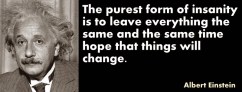
Let’s not make the grave mistake of ignoring patterns that are screaming at us upfront and center. Man has been, since the beginning, defying the natural order of things… literally.

You could say that Poverty is a perception – it is a status which is bestowed on people who have relatively little – even in societies of plenty. That’s why we probably can’t really ever “end” poverty.

The above says it all.

Don’t just read this have the courage to leave a comment.

← Back

Thank you for your response. ✨


” Selling out ” is a part of life.

Tags

, , ,

Imagine if the world map was redrawn not based on territories and treaties, but money and power.

This might be the best way to control the populations of the world.

It’s Not A ‘Law Of Capitalism’ That You Pay Your Employees As Little As Possible.

It is a choice.

Its a Fight Against Wage Slavery and Corporate Greed.

Greed clarifies, cuts through, and captures the essence of the evolutionary spirit. Greed, in all of its forms; greed for life, for money, for love, knowledge has marked the upward surge of mankind.

One company’s “wages” are other companies’ revenues.

Once you understand that “wages” become “revenues,” you can begin to understand what has happened to our economy over the past 30 years.

“Wages” aren’t just an expense line on a single company’s income statement.

Why?

Because the employees who are paid those wages use the wages to buy things–houses, food, clothing, cars, vacations, you name it. And in buying those things, they create revenue for other companies.

So, when wages go down as a percent of the economy, companies may get more profitable, but the employees paid those wages (or not paid any wages worth while if they are on No Hours Contracts at the Minimum Wage) have less money to spend. And that lack of spending power eventually hurts the revenue growth of most companies in the economy.

You don’t have to be a Professor of Economics to understand that producing stuff that the majority of the population can not afford leads to discontent all around.

The more income becomes concentrated at the very top of the economy, the less money is spent on the goods and services produced by the economy.

Because the people who spend most of the money–the average English or American–have less to spend the economy becomes greedier.

We are all being royally screwed over by bureaucrats, with their luncheons, their hunting and fishing trips, their corporate jets and golden parachutes.

Our companies have become extraordinarily profitable. But they have become extraordinarily profitable at the expense of their rank-and-file-employees, who have not shared in this prosperity and do not have much money to spend.

Only the companies’ owners have benefited with their shareholders developing a warped consensus that the only value that companies create is financial (cash) and that the only thing managers and owners should ever worry about is making more of it.

As a result, although our companies are extraordinarily profitable they are growing slowly.

Why?

Because the middle class–which contributes most of the work and most of the spending in our economy–has not shared in our companies’ prosperity.

The trend reflects growing concerns about the disproportionate spread of low-wage jobs in the U.S. and English/European economy, creating millions of financially strained workers and putting too little money in consumers’ pockets to spur faster economic growth.

Now you might think that all of this is hog wash but lets return to opening remarks of this post .

If we were to take the World according to Monsanto.

Seed can be owned as their property, royalties can be collected. We will depend on them for every seed we grow of every crop we grow. If they control seed, they control food, they know it – it’s strategic. It’s more powerful than bombs. It’s more powerful than guns.

If we take Google.

Every day that goes by Google becomes both more powerful.

Through G Mail Google stores and never deletes your email.

They catalog it and can do a LOT with that data. With time google can write robots to parse the data to find out every bit of data about you, who you know, what you talk about, etc.

G mail bundled with Orkut Google really has a solid grip on your social network with more detail and structure than email alone. Google knows who joebob62@aol.com really is, where he lives, what his pass times are, etc and can link it up with your email conversations. Now to get even further into your life they have the Google Desktop Search which has already been called on being invasive bypassing security on people’s PC’s and cataloging files that it shouldn’t.

http://onforb.es/1irxkWo

These are just two examples.

Certain industries dominate the global business landscape.

It is no surprise that banks and diversified financials still dominate thanks to their outsize revenues and massive total assets. The next three biggest industries are oil & gas (125 companies), insurance (114), and utilities (110). In terms of growth, the semiconductor industry leads all sectors in sales (up 11%); diversified financial companies in aggregate have an astounding 90% growth rate in profit; construction leads asset growth (up 18%).

Are we worried, not on you nanny.

Is the “commodity super cycle” nearing the end? All evidence seems to point to “yes.”

We have Governments elected to represent the people who are selling of your country assets for short-term profit to prop-up their shrinking economies. ( see previous posts)

We have world organisations that are total out of date, overburdened with bureaucrats, void of funds.

We have Media run by computers.

We have Sovereign Wealth Funds plundering the Earth for resources such as water, energy, land.

We have an English General Election in the next two days with the present Government that bailed out the Banks with Billions of tax payers money, now offering the share back to the tax payer at a discount. Somebody explain.

It’s no better across the pond.

In the USA they have turned war into profit. There are over 100,000 private contractors to run everything from security detail to weapons training to air surveillance of your enemies.

Normally, the military is accountable to the government.

Not so with private security companies. Private firms like Black Water and Dyn Corp have graciously offered to fill in the gaps.

Privatization is all the rage.

What we need is for the people of the earth to be represented, with sustainability, not greed.

This will never be achievable so why not make Greed contribute. ( See 0.05% WORLD AID COMMISSION)

Of course this in not the whole story.

There is the power of the Mobil Phone yet to be exploited by us not the other way around.  There is spending power probable more powerful than the vote.

“For the first time in many years, the people who put fuel in jets might just be able to buy a ticket on one.”

← Back

Thank you for your response. ✨


The clock is ticking for: A new world DISASTER AID REACTION Organisation.

Tags

, , , ,

On January 12, 2010, a 7.0-magnitude earthquake struck Haiti, affecting more than 3 million people — one of every three. The quake killed 222,570 people and injured more than 300,000. More than 1 million people were left homeless and vulnerable.

On August, 2005, Hurricane Katrina hit the Gulf of Mexico and various Southern regions of the United States. A 100,000 people were displaced. 10,000 originally feared dead — revised down by government.

On March 11, 2011, a tsunami some 40 meters (133 feet) high hit northeast coast of Japan.15,000 people were killed, 300,000 were evacuated, and 3,100 people are still unaccounted for. A nuclear emergency was triggered in the Fukushima area.

On April 25,2015 a 7.8-magnitude earthquake rocked the south-central Asian country of Nepal. 8 million people have been affected by the quake. To date the death toll is above 6,000.

Extreme disasters catch the public eye, often resulting in massive infusions of aid that affect not just individual well-being but the fabric of societies.

What I want to address here is  (with the predicted effects of Climate Change we are going to witness a massive increase in natural disaster world-wide) how if any of our various UN organizations are in a position to meet the challenges that lie ahead: (World Food Program, World Health Organisation, Relief Web, UNICEF, Oxfam International, International Federation of Red Cross, Red Crescent Societies, International Rescue Committee, Medicins Sans Frontiers, Doctors Without Boards) to mention just a few.

And the question I want an answered to is:  How do we evaluate their efficacy.

Understanding and analyzing the organization of aid delivery is essential to evaluating aid efficacy. Disaster relief projects involve multiple parties in different organizational configurations delivering in-kind aid, where each party has distinct objectives.

The behavior of an aid agency that operates on the ground is a composite outcome of the organizational structure of the donating and implementing arms.

Depending on how that organization is set up, the quality of hard aid and the delivery of social agendas may vary considerably within the same disaster area. Donors face potential trade-offs between higher quality aid, pursuit of certain social agendas, and paying the cost to do their own implementation.

In a nutshell, industry and private donations are feel-good, short-term interventions and no substitute for the vastly larger, and essentially political, task of bringing aid to poor people in need.

It is the long-term Recovery phase of disaster which places the most severe financial strain on local or state.

The needs of the poor don’t get met because the poor have little money or political power with which to make their needs known and they cannot hold anyone accountable to meet those needs. They are stuck with Planners. The … tragedy [of failed foreign aid] continues.

A big part of the problem originates with the rich-country governments who set the mandates of the aid agencies. ( See previous post: Roughly half of global aid – is phantom aid or The Clock is ticking for a New World Aid Organisation)

I hardly think your/our measly donations to charity are worth talking about;

Media coverage of natural disasters seems to vary a lot depending on the disaster. Is it selective?

An Example is the Present Nepal Disaster lasted three days on the top of the BBC news.

It was replaced by a Royal princess presented to world. One new life against thousands lost.

If you compare what the new born Royal can expect from life to the 360,000 other children all born on the same day elsewhere in the world.

〈 While the Duke of Cambridge does not receive money directly from the Sovereign Grant ( that’s £35.7m the taxpayer gives to the Royal Family each year), he does receive from the Queens Grant-in-Aid fund and the Duchy of Cornwall (the tax-exempt estate valued at £763m in 2013 with an annual income of £19m, bestowed on the family in 1337) , the surplus of which traditionally goes to the eldest son ( i.e. Prince William). If you break that £19m down into a a weekly rate, the Duke and Duchess of Cambridge can expect a share of £365,384.61, compared to the £34.40 ( combined Child Benefit for two babies) for the average family in the UK. 〉 

There is certainly no need for any Aid.

It does not take long in this days media world for Disasters to become Forgotten

 “Forgotten” disasters are often chronic and diffuse, changing little day by day. Unlikely to qualify as news, such crises may feature as current affairs stories – especially on the websites of news organizations.

It is more than obvious that if we are to manage the pending Disasters ( And there will be many).

We need one Organisation under one roof to handle all aspects.

Examine the whole process/system/operation of providing relief supplies in a disaster scenario. Think of total packaging re-use of all materials and containers from the shipping/air container onwards.

This can be achieved by all the world aid organisations assembling at a World Response Aid conference to form a One World Response/Reaction Team.

This conference should present the UNITED NATIONS WITH A RESOLUTION TO PLACE: a 0.05% AID COMMISSION ON ALL HIGH FREQUENCY STOCK EXCHANGE TRANSACTIONS ON ALL FOREIGN EXCHANGE TRANSACTIONS (OVER $20,000) AND ON ALL SOVEREIGN WEALTH FUNDS ACQUISITIONS)

This resolution could be adopted by a its veto members without lost of power.

Instead of holding aid agencies individually responsible for what they own program achieve, we would have Instead of letting different agencies specialize in different areas we would have Capitalism for once WOULD contributing to the world by creating a perpetual fund, giving the reaction team total independence.

IT WOULD ONLY TAKE A COMPUTER PROGRAM TO COLLECT THE FUNDS.

We would have global goals. Instead of letting different agencies specialize in different areas we would have coordination.

Instead of wasting aid and relief to victims of natural disasters there would be a professional action PLAN IN PLACE THAT COULD BE ACTIVATED NOT TO SET UP BY A BEGGING BOWL.

  ‘How did the rich countries really become rich?’

The short answer to this question is that the developed countries did not get to where they are now through the policies and the institutions that they recommend to developing countries today.

  • In 1970, rich countries of the OECD agreed at the United Nations (Resolution 2626) to give 0.7% of their GNP (now GNI) as aid to the developing countries.
  • Known as ODA, this aid would be for long-term development.
  • Over 40 years on, most of the 20 or so rich OECD countries have never reached that figure, or come close.

Annually, the global foreign aid shortfall is high.

Although rich countries have given an enormous $3.62 trillion dollars in aid since 1970, the accumulated total shortfall in their aid since 1970 (when the target of 0.7% was set) amounts to $4.98 trillion (at 2012 prices).

Don’t tell me that it is not time for change INORDER to save lives when the next natural disaster strikes.

← Back

Thank you for your response. ✨

Life goes on.

Tags

, , , , , ,

While the scary numbers pile up.

The state of the Planet hit several remarkable records.Earth From Moon Wallpaper Hd Earth from moon hd crescent

The amount of carbon dioxide gas hits the highest level in at least the last 800,000 years.

The Arctic Ice since satellite records is at it lowest. 13.3% per decade.

We dump 19.4 billion pounds of plastic into our oceans every year.

An estimated 18 million acres of forest are lost each year.

We will be facing a 40% shortfall in water supply by 2030.

Climate change-related extreme events, plus population growth, could increase hunger by up to 20% by 2050.

What are we doing about it. Not much that will make a difference. Curbing emissions which is a joke wont be enough to halt a looming climate catastrophe.

When you take something out of the Earth, you need to put something back in.

The Selfish wasteful ways of Capitalism combined with modern humans is destroying the very planet we all have to live on.

Thoughtless mindless use of its limited resources for short-term profit, and the use of pesticides and there like is destroying life forms that took million of years to appear on our planet.

We all know the interconnectedness of all life. The we’re here, we’re powerful with nuclear weapons , we’ve got the technology, we therefore are entitled to every dame thing on this planet, is at the root of much of our problems.

Perhaps our current ecological crisis is telling us that something is wrong with our relationship with ourselves, with others, and earth.

The Dangers are clear.

We all want to live.

Without a reverence for all life that lives in the midst of other life we the brainy ones will be going no further than the moon, space station or not. 

If you are interested there are plenty of previous post covering a verity of subjects interconnected to this post.

← Back

Thank you for your response. ✨

The English 2015 General Election. First past the post system; is in fact a legitimate way to govern as a dictatorship

Tags

, ,

The concept of “power in numbers” is omnipotent in every form within society.

It is my belief that this will be the last English Election using the First Past the Post system.

The biggest problem with plurality is the obvious problems with representation and regional conflict that it has plagued the English government with for many decades.

Although there is a great representation of the parties that receive the “majority” of the votes, there is hardly any representation for the minority parties; this then causes a large regional conflict. Resulting in the Scottish Referendum 2014 for Independence.

Plurality only increases the amount of tensions between regions.

The majority of the population that does not vote is probably no longer concerned with politics because of the discrimination of the plurality system. “…inequalities in the representation of the different political parties… are regarded by some commentators as factors leading to a loss of interest in politics, and even to disaffection.

This is a very substantial reason why proportional representation is the better electoral system than the first-past-the-post system.

It has been proven in other countries to increase voter turnout in local, provincial and national levels.

Proportional representation (PR) proves to the population that every vote counts it tightens the gap of women’s representation.

This is largely because of the knowledge of voters that their vote will count for more in the PR system than it would in the plurality system.

It is completely evident that proportional representation is the most reliable and feasible method for electing the Members of Parliament to the House of Commons. The reason for this is that with plurality, one can only count on the larger parties to win; therefore, instead of “throwing away” a vote for a smaller, less popular party, the voter would either vote for the larger party or not vote at all. “Because seats can be gained [in PR] with only a fraction of the total vote, voters have fewer incentives to abandon their most preferred candidates.Accordingly, the number of viable candidates increases with PR.

Democracy is often perceived as the ‘rule of the majority.’

In many mature democracies in the world, only those candidates are eligible to be elected who secure more than 50 percent of the polled vote in an election where more than 50 percent of the electorate has cast its vote.

People here vote for political parties and not individuals based on the policies and programmes of these parties. Every party submits a priority list to the election authorities prior to the elections. Depending on its vote share, the number of MPs is selected from this list.

This has an inbuilt mechanism whereby any government that is formed post-elections will necessarily have the support of more than 50 percent of those who have voted.

There are significant problems to a PR system as well. For one, in an apparent contradiction, the PR system could make all future governments inherently unstable as no party would ever be able to get a majority.

This in itself may not be a bad outcome, since stability is often a code word for suppressing marginal voices.

Second, a PR system would empower party leaders over local representatives if a list model is adopted and this will not give small parties, which now can win a seat or two in their region of influence and have a voice in Parliament, any national presence.

Third, even if a mixed-PR model is adopted, there is no guarantee that this complicated system would address the problem of instability and the need to provide representation to the small parties.

The State Opening of Parliament marks the formal start of the parliamentary year and the Queen’s Speech sets out the government’s agenda for the coming session, outlining proposed policies and legislation. It is the only regular occasion when the three constituent parts of Parliament – the Sovereign, the House of Lords and the House of Commons – meet.  Although the Queen reads the Speech, it is written by the government.

It contains an outline of its policies and proposed legislation for the new parliamentary session.

That leaves us with The Big Question:

Why doesn’t the UK have a written constitution, and does it matter?

( Nor is there a single statement of citizens’ rights and freedom.)

Is this because it is ruled by a heredity Monarch. Royalty Queen Crown The british royal jewel is aMost people might struggle to put their finger on where their rights are.

Britain’s entry into the European Economic Community in 1973, which brought the country for the first time under a degree of international judicial control.

After this election Britain could finally get a written constitution spelling out citizens’ rights and codifying this country’s political system.

Britain’s constitution has developed in haphazard fashion, building on common law, case-law, historical documents, Acts of Parliament and European legislation. It is not set out clearly in any one document.

It does have a  Bill of Rights dated 1689.

Ten years ago Britain came closer than before to codifying individuals’ rights when the Human Rights Act enshrined the European Convention on Human Rights into UK law.

What are the advantages of a written constitution?

It has become almost a truism that British politics, beset by cynicism about politicians and undermined by falling turn-outs at general elections, is in crisis.

If such a document could be drawn up.

Would it be wide-ranging and largely abstract or would it list individuals’ rights in detail and provide an exhaustive summary of Britain’s constitutional settlement? If the latter, it could prove beyond the grasp of most of the citizens it would be designed to protect.

Britain is not going to get the ground-breaking document any time in the near future. It would require a national referendum to be held to approve the document if it ushered in significant changes.

Do they need a written constitution?

Yes…

* Britain’s arcane hotch-potch of freedoms and rights cannot be defended in the 21st century

* It could help citizens clarify their rights and protect themselves against the state

* Most flourishing democracies base their institutions on a written constitution

No…

* The system should not be tampered with as it has served Britain well for centuries

* The practical problems over what to include and leave out would be a logistical nightmare

* It could undermine the power of Parliament to scrutinise ministers on behalf of the public.

What are your thoughts?

A written constitution is “a formal document defining the nature of the constitutional settlement, the rules that govern the political system and the rights of citizens and government in a codified form.

Written or unwritten, one thing is for sure: there is no such thing as a perfect constitution.

← Back

Thank you for your response. ✨

General Election 2015 UK.

Tags

Are you undecided about who to vote for on 7 May?

I have no intention here of addressing all the Election issues. There is more than enough verbal diarrhea out here.

Here are some of the issues that are not spot lighted.

Are you voting for an UK Government or the dismantlement of the UK.

One thing for sure this election will be it curtains for the plurality rule voting system for future general elections.

It’s appears that it is no longer racist to be worried about immigration.

Scotland could just decide the entire election.

An early re-election can only be held “if a motion of no confidence is passed and no alternative government is confirmed by the Commons within 14 days”, or “if a motion for an early general election is agreed either by at least two-thirds of the whole House”. So if, for example, a minority Conservative government failed to pass its Queen’s Speech and then lost a confidence vote, Labour would have two weeks in which to put together a coalition or pact, and could form a new government without going to the polls again.

While employment performance has been strong since the crisis and is now back to pre-crisis levels, this is largely due to a fall in real wages which has priced workers into jobs (wages are still 8-10% below pre-crises level.s

Productivity should be the no one issue.

You can’t have productivity with zero hour contracts.

GDP growth, underpinned by growing productivity, is essential for a robust recovery and long-run prosperity. Growth is clearly also an essential ingredient for reducing the deficit.

The Conservatives fear that mentioning productivity undermines their narrative of the UK as an unmitigated success story. It is an implicit admission that the economy is not as strong as they have claimed.

In the last 18 months, following a July 2013, newspaper exposé on a major retailer which was found to be employing 90% of their 23,000-workers in this way.

Insecure scheduling on people’s lives for profit does not make a country prosper, it leads to food banks and discontent.

In 2013 the Chartered Institute of Personnel and Development estimated that 4% of the UK workforce might be on zero-hours contracts, which would equate to 1 million workers.

8% of workplaces now employ people on such contracts. This is the biggest increase in Western Europe and means that around 7 million people in the UK experience employer controlled alterations to their schedules! To make things worse, workers often have little notice of these changes. In fact analysis of the 2005 and 2010 waves of the European Working Conditions Survey shows that employer-controlled flexible scheduling has increased in the UK by seven percentage points to 24%.

100,000 zero-hours contracts are reported to be in use in the NHS.

A third of voluntary sector organisations used zero-hours contracts, along with a quarter of public sector employers and 17% of private sector firms.

The reality is that there is no accurate way to measure the number of people on zero-hours contracts. A living wage will not remove zero-hours contracts nor will Apprenticeships. Some employers may simply offer contracts with minimal fixed hours to limit its impact.

We are dealing with a phenomenon that is causing misery to individuals and families on an industrial scale.

As there is no legal definition of a zero hours contract, there is some understandable confusion as to what they are. As there is no clear definition of a zero-hours contract, and they can take many forms, there is an inevitable lack of clarity about the consequences of agreeing to work on a zero-hours contract as well as a lack of awareness about employment rights and routes for redress.

The arguments for and against polarised around the themes of flexibility versus
exploitation.

If a deeper structural change is taking place in the UK labour market, then it may be affecting young people most. The prevalence of zero-hours contracts appears to be highest among people aged between 16 and 24, with an estimated 37% of those employed on zero-hours contracts falling within this age group.

They are creating imbalance of power in the employment relationship’  ‘climate of fear’, often caused by an employer’s threat, explicit or implied, to ‘zero down’ a worker’s hours if they do not work when they are asked to.

However there is a roll for legitimate Zero Hour Contracts. employees using such contents would have to pay an hourly rate in excess of the National Minimum Wage, Limits Casual Working to 13 weeks, and (ii) Provides protection to employees to ensure they received the same protection as full-time employees.

Without adequate investment in the future generation, and first past the post system the United Kingdoms will be far from United in or out of the EU.

There is little point in a Nuclear Deterrent, and a high speed railway or new Nuclear Power that costs billions and it owned by a Sovereign Wealth Fund when you cant afford a home, while the wealthy apply suntan cream on some distant tropical beach.


With Proportional representation you vote counts.

← Back

Thank you for your response. ✨


”

increasing the National Minimum wage to £8 an hour by 2019 and extend payment of the Living Wage.


It seems to happen at a disturbingly frequent rate.

Tags

, , , , , , , , ,

A 7.8-magnitude earthquake rocked the south-central Asian country of Nepal last Saturday, causing an estimated 5,000 deaths and widespread devastation.

More than 90 percent of natural disaster-related deaths occur in developing countries, where poverty and lack of resources exacerbate the suffering.

The biggest obstacles for charities working in Disaster areas is : Roads and other infrastructure are often destroyed, so charities can’t get supplies to those in need, even with your donations.

This is why you should not trash your old Mobile phone. Send them to ( See Below)

The power of mobile devices to coordinate is paramount.

fulfillment.http://go.ted.com/bFYJ

The media show heart-wrenching images of disaster beyond anything most people have seen or could even begin to imagine. People want to help; it is human nature to want to help. And many aid agencies offer just that opportunity as they fundraising for relief efforts. But if we give to them, does it actually make a difference?

The answer is yes, but disaster relief is notably less effective than many other forms of aid. ( See previous posts)

Are you not ashamed to see the head of the U.N. Disaster Relief Organization appealed for food, medical supplies every time there is a natural disaster.

Why not establish Swat life boat centers around the world. Fully equipped fully funded. Recent Disasters have shown the need for an international system to coordinate major rescue and relief efforts.

Whenever a disaster strikes, it seems that the job of relief and reconstruction goes to some agency run by someone well-connected politically and staffed by well-meaning people with little formal knowledge in the field of disaster relief.

Universities should have a discipline known as disaster relief and reconstruction.

Experts would teach courses in evacuation, emergency healthcare, debris removable, providing temporary shelter and other phases of disaster relief.

The emotional and sensationalized climate of disaster response has prevented the adoption of a cost-effectiveness approach in decision-making. It requires putting the needs of others ahead of your own emotional needs.

When catastrophe strikes, people rush to donate to help the victims. But disaster relief is rarely cost-effective.

What would be cost-effective is a 0.05% Aid Commission on all High Frequency Trading, on all Foreign Exchange Transactions (over $20,000) and on all Sovereign Wealth Funds Acquisitions.

This would create a perpetual fund of billions.

It would be Capitalism biggest glorious moment in its history:  To assist man kind and the planet we all live on. ( See Previous Posts)

Displaced people raise their hands as they wait for food distribution in central Africa.

International Offices

WORLD VISION INTERNATIONAL EXECUTIVE OFFICE

1 Roundwood Avenue Stockley Park Uxbridge, Middlesex UB11 1FG, UK

WORLD VISION BRUSSELS AND EUROPEAN UNION REPRESENTATION IVZW

18, Square de Meeûs 1st floor, Box 2 B-1050, Brussels Belgium EULO-info@wvi.org

WORLD VISION INTERNATIONAL GENEVA AND UNITED NATIONS LIAISON OFFICE

Chemin de Balexert 7-9 Case Postale 545 CH-1219 Châtelaine Switzerland geneva@wvi.org

WORLD VISION INTERNATIONAL NEW YORK AND UNITED NATIONS LIAISON OFFICE

919 2nd Avenue, 2nd Floor New York, NY 10017  USA wvun_offices@wvi.org

If you DON’T have a phone a laptop or i pad will do.

Thanks.

← Back

Thank you for your response. ✨

Roughly half of global aid—is “phantom aid”

Tags

, , , , , , , , ,

Many in the first world imagine the amount of money spent on aid to developing countries is massive.

In fact, it amounts to only 0.3% of GNP of the industrialized nations.

Most wealthy nations spend far more on military than development.  Northern countries exhibiting mercantilist, or monopoly capitalist principles, rather than free market capitalism, even though that is what is preached to the rest of the world.

Aid Amounts are dwarfed By Effects Of First World Subsidies, Third World Debt, Unequal Trade, Etc.  Aid does not aid the recipient, it aids the donor.

There are numerous forms of aid, from humanitarian emergency assistance, to food aid, military assistance, etc. Development aid has long been recognized as crucial to help poor developing nations grow out of poverty. In 1970, the world’s rich countries agreed to give 0.7% of their GNI (Gross National Income) as official international development aid, annually.

This year it is estimated that $37 billion—roughly half of global aid—is “phantom aid”  

Year after year almost all rich nations have constantly failed to reach their agreed obligations of the 0.7% target.  Instead of 0.7%, the amount of aid has been around 0.2 to 0.4%, some $150 billion short each year.

Considering the typical aid amount at around 0.25 to 0.4% of GNI for over 40 years, the total shortfall is a substantial and staggering amount: just under $5 trillion aid shortfall at 2012 prices:

And you wonder why we have problems in the world. 

Rich nations have rarely met their actual promised targets. Recent increases [in foreign aid] do not tell the whole truth about rich countries’ generosity, or the lack of it. Moreover, development assistance is often of dubious quality.

For example, the US is often the largest donor in dollar terms, but ranks amongst the lowest in terms of meeting the stated 0.7% target.

Most aid does not actually go to the poorest who would need it the most.

For example,

  • The US recently increased its military budget by some $100 billion dollars alone
  • Europe subsidizes its agriculture to the tune of some $35-40 billion per year, even while it demands other nations to liberalize their markets to foreign competition.
  • The US also introduced a $190 billion dollar subsidy to its farms through the US Farm Bill, also criticized as a protectionist measure.
  • While aid amounts to around $70 to 100 billion per year, the poor countries pay some $200 billion to the rich each year.

Some of the largest benefactors of European agricultural subsidies include the Queen of England and other royalties in Europe. 

Furthermore, aid has often come with a price of its own for the developing nations:

Sub-Saharan Africa is a massive $272 billion worse off because of ” free” trade policies forced on them as a condition of receiving aid and debt relief.

Aid amounts are also dwarfed by rich country protectionism that denies market access for poor country products, while rich nations use aid as a lever to open poor country markets to their products.

Aid systems based on the interests of donors instead of the needs of recipients’ make development assistance inefficient.

  • In effect then, there is more aid to the rich than to the poor.
  • The US, Europe and Japan spend $350 billion each year on agricultural subsidies (seven times as much as global aid to poor countries)
  • These subsidies are crippling Africa’s chance to export its way out of poverty.

Rich countries might be going through some tough times but that doesn’t change the fact that they owe the rest of the world. Rich countries need to switch from traditional forms of aid-giving to supporting global goods in new ways.

The UK gave not £10, not £1, but 56p ($0.91) in overseas aid for every £100 ($163) we earned as a country. On average, since 1990, we have given even less, 35p ($0.57).

Being truly generous requires rich countries to undergo fairly profound changes in the way they have lived for the last few decades.

We are creating is hugely unequal societies that will in the long run bite our hands off.

To suggest that we should seek to help the poorest at home by withdrawing support from people abroad who are much poorer, while the rich make off with their millions, is surely morally indefensible in any philosophy. It will take a long time to carry out the radical reform needed to bring aid to something verging on sanity and fairness.

Rich countries need to be more generous not less and, they should be proud when they stand in solidarity with the worse off. For the OECD countries to meet their obligations for aid to the poorer countries is not an economic problem.

It is a political one.

Just look at the most recent EU plans to allow only 5,000 refugees for resettlement by asylum seekers in response to the Mediterranean refugee crisis.

Wow I can’t say but I am impressed.

If they offered 5,000 places to persons qualifying for protection. That would be one 30th of the number of immigrants who reached Europe in 2014. This year more than 36,000 of them have arrived in countries like Italy, Malta and Greece.

https://soundcloud.com/rttv/worse-boat-capsizing

They need to make a commitment to resettle all the refugees who get over to Europe immediately as a basic humanitarian gesture, and then they need to get onto the problem of providing the resources and the funds to countries that have been decimated by Western foreign policy over the last 10-15 years. That would cost again a fraction of the amount of money that was spent on occupying Afghanistan, bombing Iraq; the amount of money that is pumped into Israel to ensure that they clamp down and repress the Palestinian people.

Western powers need to end their war policy in the Middle East, recognize the responsibility for the catastrophe in the region, and pump billions of pounds of emergency aid into the destroyed countries.

With the recent Earth Quakes in Nepal the eyes of the world will once again focus for a few weeks on the disaster and Aid. There will be the usual outpouring of support and offers of aid.

Every country’s foreign aid is a tool of foreign policy.

For example you would wonder why when Hurricane Katrina hit the richest country in the world.

  • Bangladesh offered $1 million and a disaster management team. The monetary aid was accepted, but the disaster management team was ultimately turned down on September 14, 2005.
  • “Pakistan offered doctors and paramedics, and $1 million to the American Red Cross, tents, sheets and pillows. The monetary aid was accepted, but the material aid was turned down on September 14, 2005.
  • “Honduras offered experts on flooding, sanitation and rescue personnel. This aid was turned down on October 6, 2005.
  • The government of Kuwait made the largest offer, with $100 million in cash and $400 million in oil. Because of the delay in accepting this aid, Kuwait eventually gave its monetary support to two private groups in order to support relief indirectly.

Not forgetting the most embarrassing diplomatic snafu during Hurricane Katrina involved the donation of nearly 400,000 Meals Ready to Eat (MREs) from the United Kingdom, which the U.S. government gladly accepted in September of 2005. That acceptance, however, had to be rescinded shortly thereafter when it was learned that the British MREs contained beef, which the U.S. still banned at that time due to the outbreak of mad-cow disease in the UK in the mid-1990s.

Furthermore, while $854 million was pledged, not all of this money reached the U.S.

My point here is-  if the USA could not handle the assistance on offer so what hope had the Philippines and now Nepal.

It begs the question as to why in this age of technology there is no software package to coordinator and track the Aid on offer.

It appears that the sheer number of donations from foreign countries only help complicate matters.

Take the Philippines currently suffering from Typhoon Hagupit. The country was donated by the US more than $37 million worth of food and relief goods to those who were affected by the typhoon. Whether it was ever delivered no one knows.

Too little aid reaches countries that most desperately need it;  All too often, aid is wasted on overpriced goods and services from donor countries.

'Total aid from all development assistance committee countries at a Glance, 2011-2012' from the OECD

Some aid money that is pledged often involves double accounting of sorts. Sometimes offers have even been reneged or just not delivered.

Aid tied with conditions cut the value of aid to recipient countries by some 25-40 percent, because it obliges them to purchase uncompetitive priced imports from the richer nations.

European and American farm subsidies “are crippling Africa’s chance to export its way out of poverty. It kicks away the ladder by which Africa could eventually climbed out of poverty. It purpose is to deprive others of the means of climbing up the ladder.

And to top it all we are now looking at the privatization of water and water services where the poor often can no longer access clear drinking water.

I suppose we have to grateful for the aid that does reach where it is needed whether it is privately donated or otherwise. As we all know when in need you get to know your friends.

← Back

Thank you for your response. ✨

Is man going to recreate himself?

Tags

, , , ,

Determination of the entire DNA sequence contained in the human genome will not answer the question:

What is a human?


Geneticists will not be able to look at a person’s DNA sequence and predict everything about the appearance and characteristics of that person. Even if geneticists can identify segments of DNA as genes, the vast majority of the genes they discover still will have unknown functions.

In addition, many human traits such as body stature and intelligence result from multiple genes, and the exact number of genes that might contribute to such a trait is not obvious, nor are the ways in which those genes interact.

An individual’s genetic make-up greatly contributes to the type of person he or she is, but environmental variables such as diet, education, climate, family values, and access to health care also play a considerable role in determining an individual’s characteristics.

Before I go any further I have to declare that this subject is away beyond me, so if there is any one who has gone to the trouble of reading this far please feel free to contribute. All I can say if we do recreate ourselves I hope we do a better job than the first time around.

The increased understanding of the human genome is driven largely by rapid advances in technology. And the single most profound advance has been in the cost and the speed of sequencing.

The chromosomes of a sperm or egg contain about 3 billion base pairs, so a body cell has 6 billion. The whole set of base pairs in a gamete is the genome.

I don’t think it is possible to know all of the future effects of the human genome project, because people are coming up with new ways to use the information all the time.

Of course, the farther we peer into the future, the cloudier is our vision.

And it has a Scary side.

You will have read recently that scientists in China are editing the genetic code in human embryos.

So What wrong with that?

Is this unethical and will it be used to further the goals of those who wish to become ‘ creators’ in their own eyes.

Science has struggled to understand the mysteries of “less-than-human” beings since the late 1400s when the Spanish Inquisition first formalized state persecution of Jews and Muslims. And while the horrors of Nazi Germany exposed fatal flaws in science’s quest to build the master race, the ethical dilemmas posed by the science of eugenics are far from behind us.

While I understand that there are or will be many benefits to man from genetic engineering this is another step to manipulation for enhancing.

So are we on the threshold of modifying our own germ line and take control of our genetic destiny.?

The genetic engineering of humans — tools more powerful than a Nazi’s wildest dreams is unlocking life’s code.

The prospect of creating heritable modified genes and manufacturing designer babies that are more intelligent and beautiful than their peers is unthinkable for some.

But you would be naive to think that is wont happen . The potential for profit, in terms of both cash and the welfare of humanity, is almost limitless.

Understanding the genome will undoubtedly be the most important achievement of the 21st century, and perhaps of all time.

People looking back 50 years from now will consider medicine a barbaric, random process. If the promise of genomics is fulfilled, it will transform the lives of everyone.

It will spark many complex questions both ethical and not.

Human societies are not inferior or superior to one another but they could become so in not the so distant future.

The sequence of the human genome will underpin bio medical research for decades:

Genetic testing is not only a medical procedure. It is also a way of creating social categories that will be discriminated against based on their genetics, never mind race or religion.  Genetic discrimination” will be on our heads.

Is sequencing the human genome an intellectually appropriate project for biologists?”

How close actually are we to personalized medicine?

When will we begin to see the benefits of the Human Genome Project?

To Date the genomic mapping of humans can even be used to track the migration of humans from Africa over 50,000 years ago, as well as unlock the evolutionary timeline of the origin of man.

Genomics will be used to create better crops, better meat, more sophisticated robotics, new materials, and even whole new forms of life.

However in man the things which are not measurable are more important than those which are measurable.

Because of the ethical issues that it raises and the potential that it has to change human reproduction, and ultimately human society, it is crucial that we start to establish the boundaries of this science before the technology advances even farther.

On the other hand.

If man is to colonize the vastness of the Universe he will have to be recreated.

← Back

Thank you for your response. ✨


It is an age of growing information inequality.

Tags

, , , , ,

Millions of people are online, millions are not.future of news

The internet is not keeping everyone informed, nor will it.

It is, in fact, magnifying problems of information inequality, misinformation, polarisation and disengagement.

The world is dividing into those who seek the news and a growing number who skim it.

A generational change in the way we consume the news is already well under way.

Who cares?

If you extrapolate from the number of smartphones globally, the total addressable market for news by 2020 is around 5 billion people worldwide.

The future of news will be determined by social media platforms. Citizen reporting and blogging have opened up the world to millions of people.

Thanks to the rise of social media, news is no longer gathered exclusively by reporters and turned into a story but emerges from an ecosystem in which journalists, sources, readers and viewers exchange information.

This is facilitating an easy slide into probabilistic “truth.”

On the Internet, there is no limitation to the number of outlets or voices in the news chorus. Therefore, quality can easily coexist with crap. There is no baseline of reliability or verification of the material that is circulated in Social Networks?

(Verification is vital in order to report accurately and not risk loosing trust and credibility – something that is at stake when faked, manipulated or untrue events or stories are reported by established and generally trusted media brands.)

People say access to the news has never been better. It’s easier than it’s ever been to know what’s going on in the world. It is true that there is ever more data, more opinion, more freedom of expression, but it’s harder to know what’s really going on.

The problem of how to distinguish good information from bad. That problem has been with us since we started communicating.

So even though we have a new technology where information comes to us instantly over the wires… the art and science of journalism is becoming really important to separate the news from the increasing amount of noise generated in the online world, where it can be difficult to know who or what to believe.

It is an environment where unconfirmed information can go viral, where opinions are an increasing part of the news business . . . an environment where anybody can be his or her own journalist, and publish content on the web.

People are increasingly unsure of the facts and unclear what they mean.

Unfortunately what many people don’t understand is the ethical obligation to do everything they can to get the facts right.

For example, the British think 24% of the population are immigrants (almost twice the actual figure of 13%) and believe that nearly 24% of the working age population are unemployed (the real figure is 7%).

As technology continues to evolve faster and faster, the information gap between younger people, poorer people and some ethnic minority groups, on the one hand – and older people, richer people and some groups of white people, on the other – is widening.

In a world where everyone can report on news, the internet is bypassing the professional reporter.  The breaking of news is no longer solely going to be the domain of news organisations. Smartphones, tablets and social media have changed how we consume and share the news.

So the question is should the news medium, as ever, be shaping the message?

Big news organizations turning to algorithms to create content.

The AP — which is an investor in Automated Insights — already uses Wordsmith to generate stories on corporate quarterly earnings reports. Meanwhile, automated content competitor Narrative Science provides similar services to publications such as Fortune and Big Ten Network. A Los Angeles Times journalist used custom software to auto-generate a story minutes after an earthquake hit Los Angeles last year.

But is anyone actually reading any of this machine generated content?

Automated Insights generated over one billion pieces of content in 2014 alone, most of this verbiage isn’t meant for a mass audience but it begs the question— How will news organisations report and tell stories and, what, indeed, will count as a story? What’s really going on. What it really means. What really matters.

There was a time when the news industry could help determine the kind of connected society we are. Not any more. Audience are picking up information in different ways.  IE by Tweeting and Facebook to mention just two.

In a democracy, news is an essential public service but we are well on the way to personalised news services.

Social media and weblogs are becoming more important as additional sources for media coverage.

We are all practicing investigative journalism.

While Television news puts a premium on dramatic pictures, telegenic politicians and snappy soundbites. Computers can do what journalists used to, namely compile the football results, produce travel news bulletins and write-up company results stories.

The coverage of politics, economics, and sports will remain important, however coverage of art and culture is become less important. Google News which offer free access to newspaper headlines, snippets of text, thumbnail pictures and direct links to newspaper articles is engaging in transformative use of the news content.

Nine out of ten of us have no idea of the quality of the news report.

Embedded image permalink

One day you might even have your own personal robot journalist, filing daily stories just for you on your fitness tracking data and your personal finances.

CNN The 24-hour news network has signed a research agreement with the Federal Aviation Administration that will “advance efforts” to bring more unmanned aerial vehicles (UAVs) into its news gathering and reporting process.

The key skill and market of the future will not be in collecting information, it will be in limiting it to what is true.

← Back

Thank you for your response. ✨