THE BEADY EYE: LOOKS AT THE TREATMENT OF REFUGEES.

Tags

, , , ,

( A shameful read of twenty minutes)

One of this century’s greatest tragedies.Résultat de recherche d'images pour "papers on refugees"

This is an issue that is long on rhetoric, as newspaper and TV news reports testify. The number of people forcibly displaced from their homes due to conflict and war continues to increase at a staggering rate and will soon be overshadow by Global warming climate change migration.

This post attempts to look at where we have been, and where we are likely to go, in coping with this worlds endless stream of refugees. The refugee problems and crises are far from over and will continue to require urgent international cooperative treatment.Résultat de recherche d'images pour "papers on refugees"
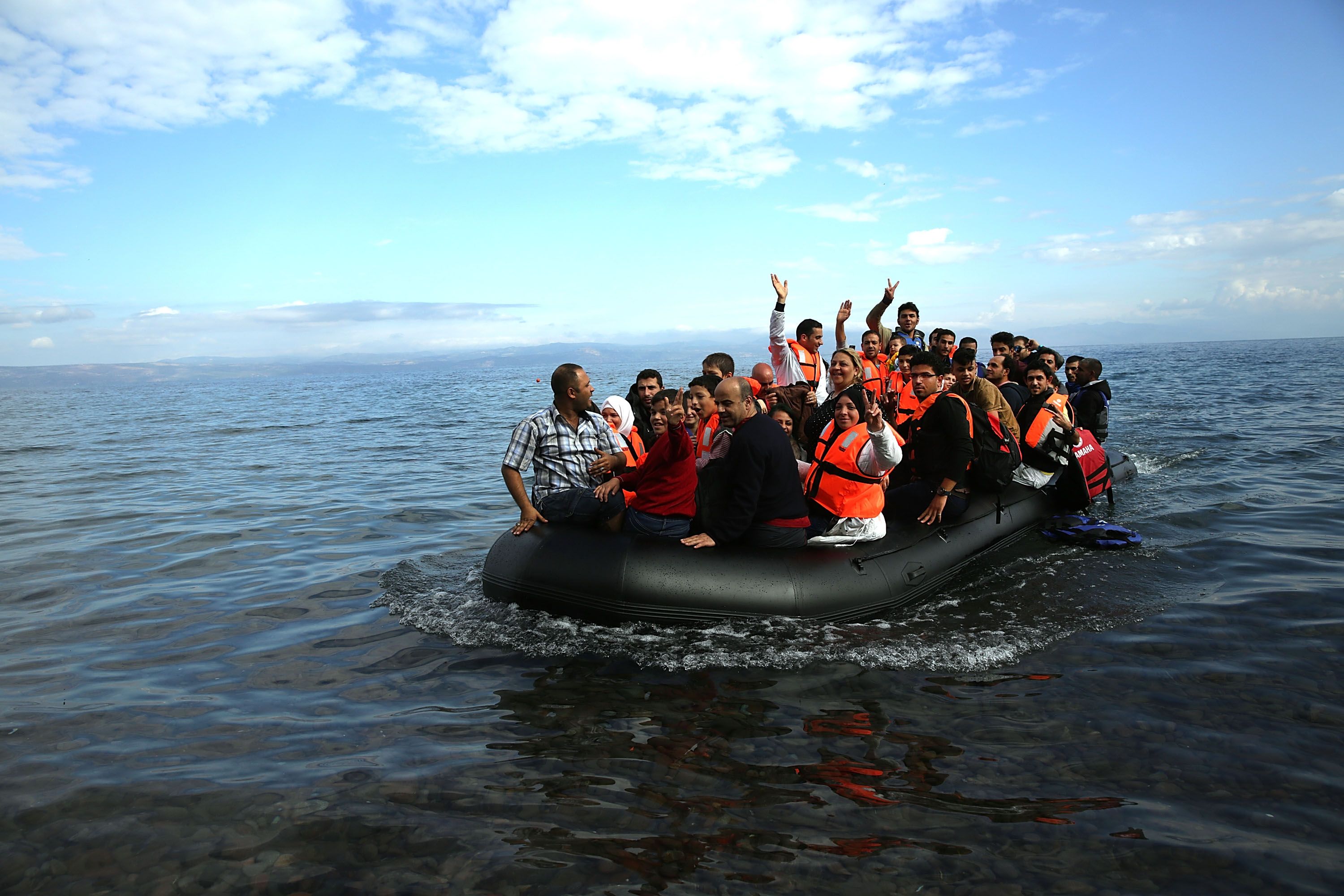
Half of all current refugees have been displaced for over ten years.

At the moment most displaced people stay in their own country this will not be so with climate change.

We all know what causes refugee displacements and asylum flows, but the effects of conflict, political upheaval and economic incentives to migrate, are going to be dwarfed by climate migration.

Universal Declaration of Human Rights, adopted by the United Nations General Assembly resolution 217A (III), on the 10 December 1948 will be out of date. 

“All human beings are born free and equal in dignity and rights.”

This may well represents the first global international expression of rights to which all human beings are inherently entitled but Artificial Intelligence, and technology combined with global warming is going to create a different kind of refugee or migrant.

The right to life is humanity’s most fundamental value.   Résultat de recherche d'images pour "papers on refugees"

More than 65 million people are today, asylum seekers, internally displaced persons (IDPs) or refugees, illegal immigrants, to put a label on them.

The distinction between an economic migrant and a refugee is simple:

Are you running from or to? all are escaping.

Half of the world’s refugees are children under 18 years of age. The average length of time a refugee spends in exile is about 20 years, which is more than an entire childhood, and represents a significant portion of a person’s productive working years.

So let’s try to comprehend ( not that it is possible to do so with written or spoken words)  what refugees have to face.

What is a camp?  What characterizes a camp and how camps affect the lives of those who are placed in them.

On a global scale, millions of refugees are contained in camps of one sort or another.

Life goes on in camps—albeit a life that is affected by the camp.

They are places where the depoliticization of life takes place, due to humanitarian government, paradoxically they also produces a hyper-politicized space where nothing is taken for granted and everything is contested.

They are places of social dissolution, of new beginnings where sociability is remolded in new ways.

They are places with little or no human rights, dignity strippers, with no education, they are terrorist recruitment centers.

Camps are defined along two dimensions: spatially and temporally.

Temporally, refugee camps are meant to be temporary, while in practice this temporariness are becoming permanent.

Temporary are legal anomalies, in which the administration of justice is virtually in the hands of the humanitarian agencies that exercise this function either directly, or by delegating it to community leaders.

In reality temporary camp are exceptional space put in place to deal with populations that disturb the national order of things, while spatially, camps always have boundaries the fact is that in despite of ubiquitous images of sprawling refugee camps the majority of refugees are no longer confined to camps they now live in cities or towns.

So try to imagine yourself in Zaatari a Jordanian Camp set on a lump of desert.A Syrian refugee woman walks in Zattari Syrian refugee camp, Mafraq city, Jordan

It has a current population of over 100,000 souls,( Equivalent to the population of Exeter Uk or  Reykjavík  Iceland.) of which 70% are woman and children.

People are reduced to ants in this dystopian, chronically parched science – fiction setting in Jordan.

A population that is utterly poverty-stricken and powerless, reduced to de facto prisoners with no hope no food no running water, imagine the toilets. Anger blooms, mothers sell their daughters, gangs roam, children go feral:

(Non of this can be blamed on Jordan who have contributed over £500 million against contributions from other countries of around £150 million. With 14,000 new arrivals a week a half a million will only keep the camp open for a few months.)

Or

Imagine you are on a disposable barque approaching Lampedusa with 500 passenger packed like sardines having paid traffickers $ 1000 to $1600. ( Newspapers headlines constantly refer to these people as illegal immigrants. They’er not, they’er refugees. ) You have survived crossing of the Sahara, the violence in Libya and all told your family have raised $6000 for you to make the journey in the likelihood that they will never see you again.

Anyway lets say you don’t drown, now add the screaming and crying ringing in your ears as you scramble the shore to be warped in a tinfoil, and bused to a reception camp, fingerprinted though you are not a criminal.

Your only option is to vanish to continue your journey in the hands of traffickers and gangs who exploit, enslave, rape and bully.

The EU Dublin convention stipulates that people political asylum must remain in the first safe country you land in. There is no picking and choosing.

According to the 1951 UN Refugee Convention and the EU Charter of Fundamental Rights, European countries have the obligation to provide asylum to those who seek it. This is not the matter of politics and economy, but of basic human rights. There is no person that should live in fear for their life and the lives of their close ones.

Its only by not looking, by turning or backs that we can sail away and think that this is sad, but it is not our sadness.

Refugees are not spread evenly across the world.

Seven countries – Syria, Iran, Pakistan, Lebanon, Turkey, Palestine and Jordan – host more than 50% of all refugees. Many countries, including some of the richest and most developed countries like the US, UK and Australia, are not fully living up to their responsibility under the Refugee Convention.

At the moment, there are over 9 million refugees seeking asylum.

If all refugees were distributed evenly across all the countries in the world, each country would host 100,000 refugees.

By mid-2015, the World Bank’s estimated cost of the Syrian war for the Middle Eastern countries is $35 billion.

Current funding models for displacement are no sustainable.

Whether greater international coordination could produce better outcomes for refugee-receiving countries and for the refugees themselves is of course governed by funds.

The United Nations’ annual appeal for international aid has risen 500% in 10 years due to the “new norm” of multiple humanitarian crises. Only 26% of the money needed has been committed, to enable the UN to provide assistance to 78.9 million people in 37 countries.

To quote António Guterres: The UN high commissioner for refugees. “Today’s needs are at unprecedented levels and without more support there simply is no way to respond to the humanitarian situations we’re seeing in region after region and in conflict after conflict.”

It has been widely suggested that more resources should be devoted to providing aid to refugees closer to home. “80% of our emergency response is to man-made crises which are now “apocalyptic” with displacement of people the highest since the second world war and multiple crises being the “new norm”.

On average, around 100 million people are affected by natural disasters per year and disasters now cost more than $100bn in economic damages. The number of displaced people has also increased, with 65 million people displaced at the close of 2015 compared with 33.3 million in 2013.

While donors give more generously every year, the gap between funds needed and funds provided continues to widen.

This raises questions about our ability to continue to meet affected people’s needs.

Then there is the question whether to devote resources directly to repatriation and reintegration programs, or simply to provide some form of economic incentive to return.

Neither will stem the flow of long-distance illegal migrants, once such flows have become established.

The best option by far is to find ways of preventing civil wars or to stop them recurring. Civil wars suggest that the causes are chiefly economic rather than political.

To really help displaced people, aid agencies must better understand how people are helping themselves, to figure out how to support these initiatives and advocate on behalf of refugees to overcome the barriers.

Education is to be seen as key to contributing to long-term solutions for refugees, ensuring that displaced generations are equipped to rebuild their lives and communities − either in the country of asylum or upon
their return home.

Résultat de recherche d'images pour "papers on refugees"

We need to fix the system – not for today, but to be ready for what the situation will be like five years from now never mind 20 or 30 years in the future.

It’s no wonder that we are living in disturbed times.

It is now time to unite and provide a new home for those who need it the most. What is needed, therefore, is a comprehensive, fully funded global program.

The world can’t keep pretending the refugee catastrophe is a European problem. The brunt of the crisis has fallen on the Turks, the Egyptians, the Jordanians, the Iraqis and the Lebanese.

All the goodwill, all the technology, all the appeals, all the solutions will not stop people fleeing wars, or climate change.

A smart phone can be a lifeline if you’ve had to leave everything else behind, because when you take to the roads, to the boats and to the trains, all our political leaders can think of is fences, barbed wire and more police.

There is only one way to help:

And that is to get Profit for Profit sake to contribute.

By placing a world Aid Commission on all High Frequency Trading, on all Foreign Exchange Transactions over $50,000, on all Sovereign Wealth funds Acquisitions. Combined this with a 0.00005% charge on all tweets, and all online purchases, on all google inquires, on all Facebook postings, etc.

Will create a permanent self funding resource of funds doing away with begging for resources.

Mr António Guterres should call a world summit of all Industrial world leaders not countries with a view to passing a people resolution to implement such a World Aid commission.

Then we might have some hope of a more peacefully world for all.

All suggestions and comments appreciate. All like clicks chucked in the bin.

← Back

Thank you for your response. ✨


THE BEADY EYE SAYS: IT IS TIME TO CUT THROUGH THE RHETORIC SURROUNDING SUSTAINABILITY.

Tags

, , , , , ,

( A Ten minute read:  That could change the world and all of us that live on it.)

For millions, 2017 is a year of unrelenting misery and fear, as governments and armed groups abused human rights in a multitude of ways.

Large numbers of people continued to flee conflict and repression in many regions of the world.

While billions of dollars are spent every year by the world’s space agencies, but does this money bring us any benefit, or should we pull the plug and spend it elsewhere?

Canada: $488 million, India: $1.1 billion, China: $1.3 billion, Italy: $1.8 billion, Germany: $2 billion, Japan: $2.4 billion, France: $2.5 billion, Europe: $5.5 billion Russia: over $7.7 billion, United States: $18 billion.Countries Who Spend The Most On Space Exploration

Some of these figures may seem mind-blowing when you take a pragmatic look at the current state of the global.

The standard list of threats/factors affecting the globe is getting bigger and bigger not smaller and smaller. 

Why?

I suppose the simple answer is that us humans are incapable of acting as one, and if we do manage to do so its only in small groups in the short-term. For every action there is an equal and opposite criticism.

Combine this with conflicting interests and you have a concoction of good doers all competing for limited funds to address what ever.

The problem is man is said to have evolved from monkeys and apes…but we still have monkeys and apes.

Take for instance Climate change which is now emerged as one of the most serious threats impacting on universal values.

With global environmental changes locked into our future you would think as intelligent humans we would act as one to avoid the obvious consequences.

Our best efforts to do us fall by the way side because of, not because what is obvious, but because of the costs to profit.

Hypocrisy is the Vaseline of political intercourse.

We are left with a world that is represented by what we call The United Nations.

Country names and little flags of identity rather than one unified group called humans. Perhaps if they we removed prior to passing any resolution’s that effect the Glob we might see humans acting as one.

But this will achieve nothing unless we get Capitalism to do the right thing when nobody’s watching.Résultat de recherche d'images pour "pictures of earth from space probes"

So here is a solution:

Why not impose an International legal world aid commission on all activities that produce profit for profit sake. (See previous posts)

AND.

While we are at it why not impose a 0.0005% commission on all tweets, on all smart phone inquirers, on all internet purchases, on all social media posts.

Either of the above would produce a perpetual fund of billions to tackle the coming natural disasters, the coming technology inequality, the malnutrition that is now the underlying cause of nearly half of all under-5 deaths worldwide. The list is endless.

There is no simple solution to creating a more equitable world.

The world community has accepted the need to limit the increase in the earth’s temperature to 2°C and initiate changes to achieve this objective.

This will require the world to move away from burning fossil fuels and effectively reach a stage of zero carbon emissions. This will require a radical change in the way humanity lives as we move forward.

The earth has limited resources. Also, there are limits on the renewability of some of its renewable resources. Humanity is using substantially more resources than the earth can renew. We all need to change the way we live to achieve a proper balance.

In order to face the challenges posed by these dual issues, the world has to act in unison.

TAKE TACKLING CLIMATE CHANGE. ( See previous posts)

There are a number of disparities to be addressed. There is a very wide range of per-capita emissions—generally, the wealthy countries having higher per-capita emissions.

There is a perception among the emerging economies that the world has reached the current situation due to the past emissions by high emitters and that they should be willing to share a higher cost of moving to low-carbon economy.

Further, different regions will be affected differently—some may not feel the consequences; at least immediately. Such countries may not want to join the worldwide efforts in a meaningful way. Getting all countries to follow a common path will be the biggest challenge in the years to come.

Doing nothing will not be an option.

Sustainability is defined as a requirement of our generation to manage the resource base such that the average quality of life that we ensure ourselves can potentially be shared by all future generations.Development is sustainable if it involves a non-decreasing average quality of life.

For all our sake’s we need to get a grip.

We must deal with problems on Earth first, before we can leave it.

Sustainability is not “about” the integration of ecological, social and economic issues, nor is it “about” widespread consultation nor is it “about” improving quality of life.

It’s about maintaining or sustaining something called Earth.

Sustainability must be a destination, not just a journey. 

It is worth noting that treating a sustainable state as a destination doesn’t mean that society cannot revise or refine its idea of what sustainability is at a future date.

Even with everyday destinations an initial intention to go to the fruit and veg shop doesn’t preclude a later decision to go to the bank as well or to go to the supermarket instead!

Space and the Higgs-Boson can wait, when every day, 17,000 children die before reaching their fifth birthday.

A future with no fresh water, clean air, energy and food, you can rest assured no one will remember the Internet, or artificial Intelligence.

So what price are we willing to pay for knowing that in the future, humanity can be saved because there are other planets out there capable of sustaining life?

Our priority surely is to take care of our planet before we go roaming around others.

For things that don’t matter we can please ourselves how we approach the sustainability effort (ie. as a destination, journey or both, or an issue of total disinterest!).

O! By the way if we did create a World Aid Commission there would be no need to stop any exploration. Today, both Voyager 1 and 2 are the farthest man-made objects in space.

Our message in a bottle was in the form of a gold-plated sonograph record containing compilations of music, images and greetings best representing Planet Earth, affixed on the outer surfaces of both the Voyager spacecrafts, if we are careful long before, “A billion years from now, when everything on Earth we’ve ever made has crumbled into dust, when continents have changed beyond recognition and our species is unimaginably altered or extinct, the Voyager record will speak for us.”

Carl Sagan’s declaration above without a doubt holds true, not just on the frailty of the ‘pale blue dot’ we call home, but also on the life it sustains. 


All human generated comments appreciated, all like clicks chucked in the Bin

← Back

Thank you for your response. ✨


THE BEADY EYE ASKS: WITH SPAIN HEADING FOR TURMOIL AND THE UK FOR SUICIDE IS THE EU GOING TO END UP AN ECONOMIC DUMP.

Tags

, ,


( A five-minute read)

Brace yourself.

Things look bleak.

It‘s time to call a spade a spade:

We all know that the present crisis in European Union has freighting potential to undermine all our lives?Résultat de recherche d'images pour "pictures of spain"

The problem is that despite all the rhetoric Wall Street and World Stock Markets underpin the hard nose of business with the priesthood of economists.

Financial experts and commentators worshiping it worldwide as a God.

Leaving us incapable of grasping that at one point in human history the Laws of the market can only be a human construction which now seen as absolute – even when they clearly do not work.

The high priests of today oblivious to the anti-market nature of their behavior do not hesitate to intervene to fix it on a colossal scale in contravention of the market’s own precepts.

The idea that money-making is the primary Goal of the most admired people in Society, the Goal of our Nations economic philosophies, the G 20, the European Union, our education, combined with our central defining consumerism greed is back firing.

What we got is the results that we see today:

Quantitative Easing, Money Printing /Austerity/ /Germany bailouts /Guarantees/ Banks before people Interest fixing /Elections/ Unemployment/ Bonuses/Tax confusion/ Independent Referendums, all served up with large daily doses of verbal diarrhea by every expert that has written a book.

I have not written any book on the subject and I am no expert but I am beginning to wake up to the need for our Captains of Industry, our political leaders and business to realize that competitiveness is not all that it is dressed up to be.

It can severely impair a given country’s ability to choose its own social and economic destiny and our individuality.

No currency can set the boundaries of a nation.

So it is worth reminding ourselves how grandiose the dreams of the European Union founders were.

Our present world can be seen as full of conflict, pain, misery, wars, while across the world ecological, economic and political spaces are being enclosed through privateering, Algorithms, liberalization and globalization and the hidden purchasing power of Sovereign Funds – All breeding new insecurities anxieties and stresses.

In this world Europe was renamed the European Common Market with its inhabitants viewed chiefly in economic terms, as producers or consumers, not countries with vastly different histories, problems, and circumstances.

The notion that trade and wealth creation would create a Europe laisser-faire was not basis on its history but on a vague notion that togetherness would make us less likely to repeat World War One /Two.

Reducing our society to markets and us humans to consumers.

Those that are rich have status and those who are poor do not.

You only have to read a newspaper to see how the overpaid footballers, film and soap star, business people are held up to be admired. While we the people fooled by capitalism that has made work the center of our lives and are now in the process of destroying it as a satisfying meaningful activity through the world stock exchanges that are driven by algorithms that determine whether we should retire at 63, 65, and 68 remain voiceless.

As a Species we have basis needs for meaning of identity, for community, and security, for food water and freedom.

So it stands to reason to prevent our collectively insane political leaders terminating life in Europe never mind the earth that we need to do something.

We all know that banks can’t stop themselves. Bail them out by all means but only under strict regulations.

If we in Europe want to avoid a repeat of the wars that devastated the Continent in the past all that is required (a saving of trillions) is a united military European Army. This will provide Europe with reasonably secure environment, safe from the threat of major war with its countries being let find their own versions of modernity or not to modernize at all.

Europe does not need a free market to thrive.

How can we achieve this?

There is only one solution scrap the Euro and let each country set its own exchange rates according to its own GDP (without the tanks, planes, nuclear weapons) set against the value of human resources, social capital, and ecological assets.

The present melt down of the EU could not have come at a better time.

If we do not preserve the Capital of Europe its different cultures /languages/ history and the like there will be no Economics.

We all know that economic is not a science however each time history repeats its self the price goes up.

The Euro is fundamental flawed and please god will remain so to protect what is the very essence of living or being born in Europe.

It’s time we all realize that the Natural Capital of the world, water, clean air, oceans, forests have to be protected so we must pay the keepers of the natural capital if we as humans are to live at all.

So let’s start in Europe with some common European aspirations.

Self sufficiency in Power- creates a common European kilowatt price: Abolish road tolls: Proper periphery border controls: Freedom of movement of currencies within the market – abolish commission charges: European Youth employment programs: European health / pension Euro bonds backed by all countries – to mention a few.

God knows it not difficult to identify what is needed, just attached the words total transparency to any common Goal and it will be achieved without Greed.Résultat de recherche d'images pour "pictures of spain"

← Back

Thank you for your response. ✨

THE BEADY EYE LOOKS AT: THE VALUE OF COMMENTING ON A BLOGS.

( Three to Four minute read)

The world is awash with Social Media embedded with algorithms to the extent that everything heard or read is an opinion, not a fact, everything we see is a perspective of the truth.

Résultat de recherche d'images pour "where are opinions heard anymore"

I’m a huge fan of reader interaction but how are you supposed to decide what to do with the comments on your own blog?

We’ve got countless video calling apps, messaging apps, photo sharing apps etc. Apps may come and go, but the medium of communication is here to stay. It has impacted all of our lives in different ways, and we can no longer imagine a world without social media.

We don’t have to just communicate with someone face-to-face to tell them about the latest gossip.

In fact social media helped us to raise our voice about issues and be heard by millions across the globe. In doing so it is killing any fragment of privacy in our life. On the other hand it has helped us spread awareness about a million different things.

No vile act can go unpunished anymore.

We can all agree on one point- it has had an impact on all of our lives.

It has its advantages and disadvantages.

It has provided a platform for anyone to post anything, which is a means to influencing people.

Influencing someone is a big power and nowadays, an issue can be resolved through the support of millions of strangers on the internet who feel like your cause is worth supporting. Petitions on the internet have become a huge thing for people who want change but can’t bring it about themselves.

Gone are the days when politicians only stood up on a dais and shouted their poll promises.

People no longer only look to news houses to update them with information. A simple search on Twitter about the issue can give you much more information about it than news houses. Now, however, with the social media, people can immediately seek relief by posting about it.

Social media has given a platform to share practically everything.

The fact is, today’s social environment is a digital one.

There is no doubt that social media plays an intricate part in the lives of many people. There are more than 2.3 billion active social media accounts in the world.

This means that more than 30 percent of the world’s population is using sites like Facebook and Twitter regularly.Image associée

Many disasters like floods, earthquakes or terror attacks have garnered attention on social media and have gotten support from millions across the world. Facebook came up with the ‘safe’ option which lets you update your loved ones that you are safe and secure after the disaster.

If someone tells they have been someplace and there is no evidence of it on their social media, did it really happen?

Social media has definitely shown us that it is here to stay.

Connecting to the Internet, see what’s new around, search for new ideas waiting for funding in Kick starter.

It has become the norm of the society, and will probable go down in history as the fetish that broke democracy. 

Opinion use to be held by individuals with little or no effect other than expressed it in private conversations or written books or articles, (with a limited audience) they have now turned into bush fires that are spread by comments on Internet platforms, doing immense damage to two aspects life:  Privacy and Accountability.

For example:

If Trump’s opinion tweets in any way reflected actual US policy, we would be in serious trouble. It’s impossible to suggests that Trump’s tweets don’t cause substantial damage in and of themselves.

However is it the comments that he attracts with his opinion that are causing the damage.

(We can’t change who he is, but we can use Social Media to get rid of him.)

Or

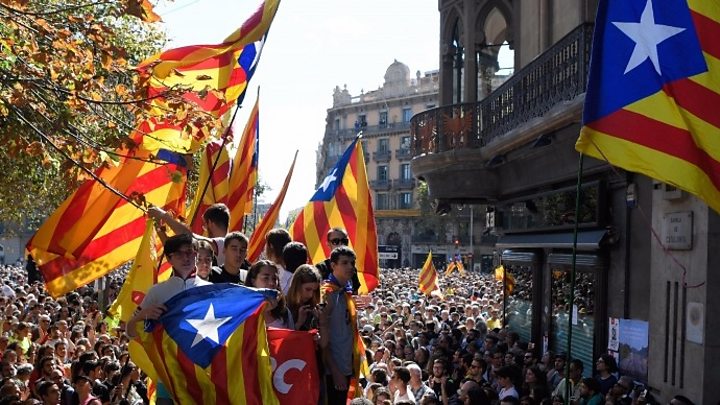
This week:  Catalonia’s separatist government staged a referendum on leaving Spain – against the wishes of the national authorities. Catalan leader Carles Puigdemont says the Spanish region has won the right to statehood following a contentious referendum that was marred by violence.

Or

The mess England finds its self in due to baseless untrue comments concerning immigration, loss of Sovereignty etc.

For many people, including myself, something changed when we saw the Britons wanting to leave the EU. They have already forgotten what life was like without the EU and its freedoms.

So when it comes to the value of comments, one blog may have tons of comments with little traffic, whereas another blog may have tons of traffic with little comments.  However you can rest assured that all comments are being monitored by Big brother who is always watching for key whether they be relevant or not.

Comments are not a reliable indicator of blog traffic.

The Question is are they data-driven decisions– are comments generating revenue for unseen Algorithms?

Comments are sometimes shallow pitches for back links or marketing.

Another words there is no correlation between the number of comments on a post and the number of links that post gets.

Do blog comments lead to more traffic?

Almost no one clicks through to your blog via comments.

If you go to Google Analytics:  26.7% of the keywords that are ranked in Google are most likely to come from the comments section.

It could be that Google may not be placing as much value on text created through comments or words appearing lower on a page (since comments are located below each blog post) as it does on the post itself.

The theory is that the more blog comments you have, the more content you’ll have on each page, and the more keywords you should rank for, which should increase your overall search traffic.

Who comments on blogs?

Random people on the Internet.

Lackluster comments like “Great Post, ‘me too!’ ‘you’re awesome!’ These types of comments, with like clicks definitely do not add value to a post.

The assumption is that on hot topics, like climate change, readers already come to the article with preconceived notions, and thus the civility of the comments would have no effect on them – they are already polarized.

However, it takes more than just having a social profile to get people to follow your blog post.

For instance, Tweets between 71 and 100 characters have a 17 percent higher engagement rate. Facebook posts with approximately 40 characters are 86 percent more likely to engage fans as opposed to longer pieces. The most popular YouTube videos are less than three minutes long.

In fact, Facebook Groups experienced more than 25 billion “likes” within the posts on the group platform in 2015.

Social posts that include imagery have a higher engagement rate by 650 percent than just plain text.

There are more than 313 million active users on Twitter each month. It accounts for almost 30 percent of all social media traffic on the Internet.Résultat de recherche d'images pour "pictures of bloggers"

Recently I received a comment:

That pointed out that I had a grammar error in the opening paragraph of a post. The comment went on to express his or her opinion, encouraging others not to read the post.

After considering whether I should approve or delete the comment I decided to remove it.  Perhaps I should responded ( “Criticizing minutia points in my posts that didn’t matter — “do you have a toothbrush? syndrome”.)

Our attention is our most valuable commodity, and with unlimited channels competing for it, we’re in a dire situation if we don’t put some emphasis into where our attention falls.

Do we want to ask our readers to commit time and energy to commenting on blogs all over the Net when we know for certain that their focus is best spent creating worlds of their own for the digital future?

It is becoming increasingly obvious as time goes on that comments are being screened. Follow us on Facebook/ Twitter.

Genuine Commentators have most definitely increased the value of my posts and I can’t even fathom the idea of not letting their voice become a part of my posts.

So is there a value to comments particularly when you are inundated by tons of spammy or low-quality comments?

As a blogger I feel it is my duty to reply.

My view is no.

However, I ask you to leave your comments whenever you want. I’m not looking for high ratings or views.

← Back

Thank you for your response. ✨


.


THE BEADY EYE RETURNS TO THE ISRAELI- PALESTINIAN PROBLEM.

Tags

,


( A four-minute read.)

Are you “pro-Israel” or “pro-Palestine”?

It isn’t even noon yet as I write this, and I’ve already been accused of being both.Résultat de recherche d'images pour "pictures of israel"

These terms intrigue me because they directly speak to the doggedly tribal nature of the Israeli-Palestinian conflict.

You don’t hear of too many other countries being universally spoken of this way. Why these two?

Both Israelis and Palestinians are complex, with diverse histories and cultures, and two incredibly similar (if divisive) religions.

After World War II, Britain decided to let the United Nations decide what to do with Palestine.

The common representation of Israel’s birth is that the UN created Israel, that the world was in favor of this move, and that the US governmental establishment supported it.

All these assumptions are demonstrably incorrect.

The United Nations suggested dividing Palestine into two countries, one Arab and one Jewish.

The Arab leaders said no to the plan, but the Jewish leaders accepted it and declared the state of Israel. The American President gave his support to the new state.

In reality, while the UN General Assembly recommended the creation of a Jewish state in part of Palestine, that recommendation was non-binding and never implemented by the Security Council.

The General Assembly passed that recommendation only after Israel proponents threatened and bribed numerous countries in order to gain a required two-thirds of votes.

In 1967 it took still more Palestinian and Syrian land, which is now illegally occupied territory, since the annexation of land through military conquest is outlawed by modern international law.

Israel, which claims to be the “only democracy in the Middle East,” decided not to declare official borders or to write a constitution, a situation which continues to this day.

To this day it has continued this campaign of growth through armed acquisition and illegal confiscation of land.

So where are we?

To come down completely on the side of one or the other doesn’t seem rational to me.

It is telling that most Muslims around the world support Palestinians, and most Jews support Israel.

This, of course, is natural — but it’s also problematic.

It means that this is not about who’s right or wrong as much as which tribe or nation you are loyal to. It means that Palestinian supporters would be just as ardently pro-Israel if they were born in Israeli or Jewish families, and vice versa.

It means that the principles that guide most people’s view of this conflict are largely accidents of birth — that however we intellectualize and analyze the components of the Middle East mess, it remains, at its core, a tribal conflict.

By definition, tribal conflicts thrive and survive when people take sides. Choosing sides in these kinds of conflicts fuels them further and deepens the polarization. And worst of all, you get blood on your hands.

It’s still too early to call Israel an apartheid state, but when John Kerry said Israel could end up as one in the future, he wasn’t completely off the mark. It’s simple math.

Israel was carved out of Palestine for Jews with help from the British in the late 1940s just as Pakistan was carved out of India for Muslims around the same time. The process was painful, and displaced millions in both instances.

There are now only a limited number of ways a bi-national Jewish state with a non-Jewish majority population can retain its Jewish identity.

Let’s face it, the land belongs to both of them now.

BUT Israelis and Palestinians remain caught in a sad, frustrating and vicious cycle that must be broken.
The Israeli occupation of Palestinian lands will turn 50 years old this year.

Some considerable time ago I wrote a blog on the subject.

Then as now I stated that the two state solution is not possible and that the only solution is for Israel to grant Palestinians full Israeli citizenship, creating one state for all.

Settlement expansion is simply incomprehensible. No one really understands the point of it. Virtually every US administration — from Nixon to Bush to Obama — has unequivocally opposed it.

It’s been almost 70 years since Israel came into existence.

There are now at least two or three generations of Israelis who were born and raised in this land, to whom it really is a home, and who are often held accountable and made to pay for historical atrocities that are no fault of their own. They are programmed to oppose “the other” just as Palestinian children are.

At its very core, this is a tribal religious conflict that will never be resolved unless people stop choosing sides.

With Israel now legalizing land grab is it not time to stop dealing with Israel as a country above the law and to make it responsible for systematic violations of international conventions and the rights of the Palestinian people.

There is no justification for it except a Biblical one which makes it slightly more difficult to see Israel’s motives as purely secular.

Let’s go straight to the point:

To end the Israeli-Palestinian conflict, everyone would like a two-state solution.

This solution is impossible.

But if it Israel doesn’t work harder towards a two-state (maybe three-state, thanks to Hamas) solution, it will eventually have to make that ugly choice between being a Jewish-majority state or a democracy.

Nothing in the current situation excuses the abhorrent and immoral attacks on civilians, whether coming from Palestinians or Israelis, and any lasting solution must work to guarantee peace and security for everyone.

It’s high time we recognize that the Oslo Accords are as likely to bring peace to the Middle East as Donald Trump is to unite America.

From its conception, Oslo never required Israel to recognize Palestinian rights to statehood and has instead enabled Israeli encroachment on the West Bank.

Until now, the international consensus has been focused on a state-oriented resolution as a way to confer rights and stability to Palestinians and Israelis.

But what if that equation were flipped, if the focus were instead on enshrining full equality for everyone before even considering the creation of two states?

If this was supported by a larger Arab consensus framework, Israel would have little option as would Palestine but to come together.

This is the only realistic goal at this juncture.

To create interim arrangements to set the ground for a final agreement.

Of course both sides as in any conflict would have to want peace which now seems very unlikely.

On the Palestinian side, a lack of internal consensus remains challenging while security is the most important issue to Israel.

In such a context, nearly seventy years after the creation of Israel and the beginning of the conflict, whether the result of such an approach leads to one state or two states or 21 states on the land is immaterial.

We must put aside the concept of an Israeli-Palestinian agreement in favor of an Israeli-Arab agreement as the only realistic means to end the Israeli-Palestinian conflict.

The reality on the ground shows that the search for a two-state solution is a farce that suits those who aim at apartheid.

Although the entire world knows that a durable resolution to the conflict is imperative, not in the interests of justice but also in the pursuit of peace in the region. There is only one solution the creation of a single state, in which the safety and the right to the dignity of each one will be preserved.

There are 2,898,927 Palestinians living in the West Bank, 1,850,559 in the Gaza Strip, 1,471,201 in Israel, and a total of 12,365,761 worldwide.

Palestinian citizens of Israel struggle under a system that accords them fewer rights and opportunities than their Jewish counterparts. And regardless of what one thinks of Hamas, the siege that Israel imposes (with Egyptian collusion) on Gaza affects all of its inhabitants and is unconscionable.

According to the Israeli organization Gisha, over 70% of Gaza’s population relies on humanitarian aid, while 47% suffer from food insecurity. In the second quarter of 2016, unemployment was at 41.7%, and at a staggering 57.6% among young people.

(In fact, slim majorities of both Palestinians and Israelis still support a two-state solution.)

What matters is that we finally wake from the 23-year-old slumber induced by Oslo, the numbing half-century of occupation, and the nearly 70 years of Palestinian dispossession, to see that the only durable resolution to this conflict will be one that protects Israelis and Palestinians equally, with liberty and justice for all.

Israelis “deserve security” (and Palestinians don’t?)

Such a move would break with the political history of the United States and would run counter to the UN position, for which the status of Jerusalem, the Palestinian eastern part was occupied in 1967 and annexed by Israel in 1980, could be settled through negotiation.

A Confederation of Districts according to the historical name, defined by the good geographical and ethnic sense. As homogeneous as possible, they would necessarily include religious minorities.

Each have a Parliament and a Constitution which legislate on everything related to religion, taxation, police and education.

Insurance law, the management of national research institutes, diplomacy and the army remain the prerogative of the Confederation.

Thus, the cantonal tax authorities collect the tax and return a minority share to the central power, the wealth of each canton being largely the result of the labor of its inhabitants.

Each canton freely decides its name (in the image of Switzerland, where the Republic and Canton of Geneva, then the State of Vaud, and later the Canton of Valais, With whom everyone lives in peace).

Each district decides on the religion it wishes to inscribe in its Constitution (if it wishes to inscribe one … In Switzerland, the cases are very diverse).Image associée

Thus, Tel Aviv could decide that its official religion is Judaism, with a taxation in support of its religious institutions.

Many issues remain to be negotiated, including the division of districts, the question of return, the participation of the Palestinian populations in the army (with a staggering of the rules over several years), the creation of a national Constitution, a Constituent Assembly, etc.

From the outset, the state would be recognized by all the countries of the Arab world.

According to the initiative of Saudi Arabia in 2002, the benefits would no longer be counted: Disappearance of separation walls and checkpoints, development of very fruitful economic links, and especially the normal life, finally. For everyone.

So you really don’t have to choose between being “pro-Israel” or “pro-Palestine.” If you support secularism, democracy, and a two-state solution — and you oppose Hamas, settlement expansion, and the occupation — you can be both.

Again you don’t have to like what Israel is doing.

If Israel truly wanted to destroy Gaza, it could do so within a day, right from the air.

How can this possibly ever be in Israel’s interest?

 When civilians die, Israel looks like a monster. It draws the ire of even its closest allies. Horrific images of injured and dead innocents flood the media. Ever-growing anti-Israel protests are held everywhere from Norway to New York. And the relatively low number of Israeli casualties repeatedly draws allegations of a “disproportionate” response. Most importantly, civilian deaths help Hamas immensely.
So please tell me — how can anyone conclude that religion isn’t at the root of this, or at least a key driving factor?

THE BEADY EYE SAYS: ARTIFICIAL INTELLIGENCE IS OUT OF CONTROL AND WILL IF LEFT TO ITS SELF DESTROY WHAT IS LEFT.

Tags

,


(If you want a future worth living here is a crucial half an hour read)

Most of us know that we are in the middle of a technological upheaval that will transform the way society is organized and the beast we are unleashing can be used for good and bad.

Long before what Elon Musk and Mr Hawking predict there is a much more immediate threat when it comes to AI. Résultat de recherche d'images pour "pictures of iflytek"The holy grail of AI the microchip will surpass the power of the human, creating a whole new world of Quantum computing, one in which machines think and work in ways indiscernible to the human brain.

Rest assured that Capitalism will concentrate AI global wealth to a few and the disparity effects will be sever and this will happen faster and faster with a massive dislocation in the lower skills in society.

Just imagine an AI that learns to navigate the web environment.

It will not be Twitter voting in Donald Trumps or Social media promoting Populist Parties it will be an army of AI bot web trolls harassing what we now call Social Media to the point that there will be no true public opinion worth its salt.

Putin recently said AI leaders will rule the world. He is right. It will create even larger power inequality.

We are well on the way to one way flow of technology with Data as the rocket engine.

We are already using AI without even knowing it.

The Capitalistic world will come under bigger AND BIGGER cyber security issues, with terrorist acquiring clandestine powers that will be unverifiable.

So I ask the question are we prepared for AIs that start building their own normative systems – their own rules about what is acceptable and what is unacceptable for a machine.

Remember using your face to unlock your smart phone is unlocking your mind. A world with facial ID software is one that will spiral out of control.

Gay, Straight, Terrorist, Left or Right, Lidel or Sainsburys, Male or Female, Criminal or not, Rich or Poor.

Regardless of what we do, what’s clear, is that if we want technology to do what we want it to do we need for all technological advancements to be vetted by an Self Financing, Transparent, Independent World Organisation, other than the United Nations.

The United Nations recently opens a new talking shop center in the Netherlands to monitor artificial intelligence and predict possible threats.

“Artificial Intelligence has both the potential to accelerate progress towards a dignified life, in peace and prosperity, said UN Secretary-General António Guterres.

When in fact it also has the potential to destroy what is left of our world.

The United nations Technology for Development (UN CSTD) acknowledges that many technological and development gaps still remain. A Joke.  Résultat de recherche d'images pour "pictures of AI"

The real question is not the gaps but who or what should take control and overlook its development.

It is my contention that the UN is total the wrong Organisation to provide a neutral platform for international dialogue, which can build a common understanding of emerging technologies.

However it is best placed to set up a totally independent Organ separate from the UN that is responsible to the people of the world not to the 5 stock piles of nuclear weapons or the developing technology.

The opportunity to use AI to solve some of the world’s grandest challenges cannot be left to Government Regulation, The Free Market, The arms race, or to Capitalist Greed especially in the form of multi global monopoly corporations, like Apple, Microsoft to name but two.

Why?

Here are a few reasons:

Because algorithms know pretty well what we do, what we think and how we feel—possibly even better than our friends and family or even ourselves.

In fact, we are being remotely controlled ever more successfully in this manner. The more is known about us, the less likely our choices are to be free and not predetermined by others.

It won’t stop there.

Some software platforms are moving towards “persuasive computing.”

In the future, using sophisticated manipulation technologies, these platforms will be able to steer us through entire courses of action, be it for the execution of complex work processes or to generate free content for Internet platforms, from which corporations earn billions.

The trend goes from programming computers to programming people.

These technologies are also becoming increasingly popular in the world of politics.

Under the label of “nudging,” and on massive scale, governments are trying to steer citizens towards healthier or more environmentally friendly behavior by means of a “nudge”—a modern form of paternalism.

This appears to be a sort of digital scepter that allows one to govern the masses efficiently, without having to involve citizens in democratic processes.

The magic phrase is “big nudging”, which is the combination of big data with nudging.

To many, believe that this could overcome vested interests and optimize the course of the world?

If so, than citizens could be governed by a data-empowered “wise king”, who would be able to produce desired economic and social outcomes almost as if with a digital magic wand.Résultat de recherche d'images pour "pictures of iflytek"

Nobody knows how the digital magic wand, that is to say the manipulative nudging technique, should best be used. What would have been the right or wrong measure often is apparent only afterwards.

Artificial intelligence is no longer programmed line by line, but is now capable of learning, thereby continuously developing itself.

Algorithms can now recognize handwritten language and patterns almost as well as humans and even complete some tasks better than them. They are able to describe the contents of photos and videos. Today 70% of all financial transactions are performed by algorithms.

News content is, in part, automatically generated. This all has radical economic consequences: in the coming 10 to 20 years around half of today’s jobs will be threatened by algorithms. 40% of today’s top 500 companies will have vanished in a decade.

One thing is clear: the way in which we organize the economy and society and the world will change fundamentally.

The automation of society is next.

With this, society is at a crossroads, which promises great opportunities, but also considerable risks. If we take the wrong decisions it could threaten our greatest historical achievements.

Every minute we produce hundreds of thousands of Google searches and Facebook posts. These contain information that reveals how we think and feel.

It is estimated that in 10 years’ time there will be 150 billion networked measuring sensors, 20 times more than people on Earth. Then, the amount of data will double every 12 hours. Many companies are already trying to turn this Big Data into Big Money.

Do we want to live in a point scoring loyalty citizen card China / Singapore world.

Today, Singapore is seen as a perfect example of a data-controlled society. What started as a program to protect its citizens from terrorism has ended up influencing economic and immigration policy, the property market and school curricula.

According to recent reports, every Chinese citizen will receive a so-called ”Citizen Score”, which will determine under what conditions they may get loans, jobs, or travel visa to other countries. This kind of individual monitoring would include people’s Internet surfing and the behavior of their social contacts.

With consumers facing increasingly frequent credit checks and some online shops experimenting with personalized prices, we are on a similar path in the West.

It is also increasingly clear that we are all in the focus of institutional surveillance. This was revealed in 2015 when details of the British secret service’s “Karma Police” program became public, showing the comprehensive screening of everyone’s Internet use.

Is Big Brother now becoming a reality?

Everything started quite harmlessly.

Search engines and recommendation platforms began to offer us personalized suggestions for products and services. This information is based on personal and meta-data that has been gathered from previous searches, purchases and mobility behavior, as well as social interactions.

We don’t want A.I. to engage in cyber bullying, stock manipulation or terrorist threats;

We don’t want Governments to release A.I. systems that entrap people into committing crimes.

We don’t want autonomous vehicles that drive through red lights, or worse, A.I. weapons that violate international treaties.

We don’t want – My A.I. did it. Should not excuse illegal behavior. 

We don’t want A.I. systems producing fake tweets, producing fake news videos.

We don’t want A.I.  weaponizing, any A.I. must have an impregnable “off switch.” It should be illegal to buy, sell or manufacture weaponized AI.

We don’t want AI High Frequency Trading, Unregulated  Drones, Unregulated Genetic Engineering  or AI Biological Weapons.

We don’t want A.I. be let out into the wild.

We don’t want  A.I. Amazon Echo — a “smart speaker” present in an increasing number of homes — is privy to, or the information that your child may inadvertently divulge to a toy such as an A.I. Barbie.

We don’t want seemingly innocuous A.I. housecleaning robots create maps of our homes.

WE DO WANT.

A.I. system to clearly disclose that it is not human.

A.I. system subject to the full gamut of laws that apply to its human operator. This rule would cover private, corporate and government systems.

A.I. systems clearly labeled as such.

A.I. system that cannot retain or disclose confidential information without explicit approval from the source of that information.

Elon Musk recently urged the nation’s governors to regulate artificial intelligence “before it’s too late.”

He is too late, the A.I. horse has left the barn, and our best bet is to attempt to steer it. We must make the right decisions now, not to-morrow.

An AI Future: It’s Not What You Think.

It will not share the same sense of human empathy.

The emergence of a super intelligence / or full autonomy human fallibility must be taken out of the equation.

It will not supplement natural intelligence, you will not be able to upload your brain to the internet. It’s time to dispel these Myths…a set of relatively small failures combined together to create a catastrophe is on the horizon.

Look at the latest research from cognitive science, translate that into an algorithm, and add it to an existing system.Résultat de recherche d'images pour "pictures of iflytek"

We are trying to engineer AI without understanding intelligence or cognition first. But as AI designs get even more complex and computer processors even faster, their skills will improve. That will lead us to give them more responsibility, even as the risk of unintended consequences rises. We know that “to err is human,” so it is likely impossible for us to create a truly safe system.

We have not yet come up with a clear idea of what we want AI to do or become. This must be achieved as a matter of grave urgency as today.

Whoever gets to level 6 automation first decides for everyone else what the rules are. Otherwise known as the “Golden Rule for AI”, that is, who owns the Gold, therefore rules!

Can we avoid being wiped off the face of the Earth by machines we helped create?

Diversity has a value all in itself, and that the universe is so ridiculously large that humankind’s existence in it probably doesn’t matter at all.

Fortunately, we need not justify our existence quite yet.

Saying we embrace diversity and actually doing it are two different things—as are saying we want to save the planet and successfully doing so.

We all, individually and as a society, need to prepare for that nightmare scenario, using the time we have left to demonstrate why our creations should let us continue to exist.

If we don’t find a way to distribute our wealth better, we will have fueled capitalism with artificial intelligence laborers serving only very few who possess all the means of production.

Once a new technology is introduced it can’t be uninvented.

If we think in terms of decades then Global warming, inequality and the disruption to the global job market by AI loom large.

AS STATED BY YUVAL NOAH HARARI IN HIS CLOSING OBSERVATIONS IN HIS BOOK HOMO DEUS  ( which I quote here below and recommend to all)

” If we take the really grand view of life, all other problems and developments are overshadowed by three interlinked processes.

1) Science is converging on an all-encompassing dogma, which says that organisms are algorithms, and life is data processing.

2) Intelligence is decoupling from consciousness.

3) Non- conscious but highly intelligent algorithms may soon know us better than we know ourselves.

These three processes raise three key questions.

  1. Are Organisms really just algorithms, and is life really just data processing?

2. What’s more valuable- intelligence or consciousness?

3. What will happen to society, politics and daily life when non-conscious but highly intelligent algorithms know us better that we know ourselves? ”

Concentration of wealth leads to concentration of power combined with AI that naturally lends itself to a winner takes all.

All human comments appreciated by a human, all like clicks whether generated by AI or not chucked in the bin.

← Back

Thank you for your response. ✨


THE BEADY EYE SAYS. ITS TIME FOR THE UNITED NATIONS TO STAND ON ITS OWN FEET.

Tags

,

( A FIFTEEN MINUTE READ)

You only have to look at the state of the World that we all live on to know what is coming needs to be addressed.

For more than 70 years, world leaders have gathered before the United Nations General Assembly to speak and to be heard.

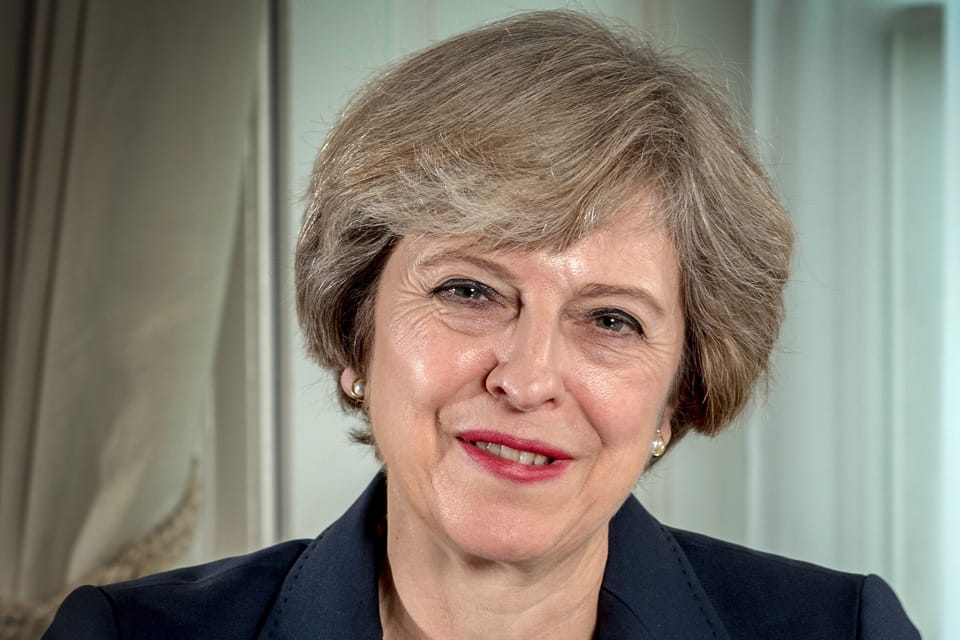
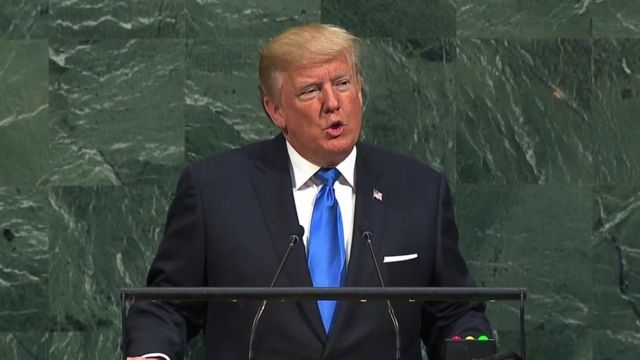
Recent remarks by President Trump and Mrs T May during the 72nd Session of the United Nations General Assembly showed that the General Assembly is in need of revitalization in order to stop rhetoric that clearly breached the core principle of the United Nations aspirations, Peace in the world.

Résultat de recherche d'images pour "how is the current united nations president"

The United Nations Emblem

The design is “a map of the world representing an azimuthal equidistant projection centred on the North Pole, inscribed in a wreath consisting of crossed conventionalized branches of the olive tree, in gold on a field of smoke-blue with all water areas in white. The projection of the map extends to 60 degrees south latitude, and includes five concentric circles”

The “UN” stands for the united nations. Nations meaning just that…all of the nations on our GLOBE.  The olive branches signify peace.

It is easy to call for reforms and to threaten withholding funds or for that matter to stir up what is already a threat to world peace by making promises of total nuclear destruction.

On the other hand it is right to call on the Organisation to reform so that it can addresses the world it now exist in.

So is the UN still a force for global good, or is it another of those world organisations that is out of date.

If one looks beyond the organisation’s flaws and points to the importance of the UN on the global stage there is no doubt providing aid to the more than 55 million refugees in 123 countries is good.

The UN is a large employer but it can only operate if it receives sufficient funds.

To turn it from a begging organisation to an organisation with clout to handle the worlds coming problems due to Climate Change, Artificial Intelligence the UN needs a source of unlimited funding, so that is not attached , or reliant on any donator Country. (See previous posts)

To have any chance of being relevant in a world that is changing it must remove the United Nations Security Council “power of veto” wielded solely by the five permanent members (China, France, Russia, United Kingdom, and United States), that enabling them to prevent the adoption of any “substantive” resolution.

At this point in the post it is worth mentioning how we got the UN in the first place.

After two major wars, it was relatively easy to get smaller nations and middle powers to give up a level of sovereignty while providing little to no recourse in return. At the same time, a carrot needed to be used to lure the major world powers to the table. In an effort to give these countries a reason to come to the table — and, in effect, subjecting themselves to the will of the other major powers — they were given the power to stop substantive resolutions that might impinge on their interests from passing.

It is important to remember that the United Nations is an institution that largely owed itself to American foreign-policy thought and, as such, it was understandably influenced a great deal by how America perceived the world to be (and, just as importantly, how America perceived the world would be).

This was centered around the idea that the post-war system was going to be predicated on the idea that each of the four major players of the Allied powers– the United States, the Soviet Union, the British Empire, and the Republic of China– were going to be responsible for looking after their respective sections of the world and trying to prevent smaller conflicts from growing into larger conflicts.

In order to entice countries to join everyone agreed that decisions would require unanimity. This was, as one might guess, an astoundingly stupid decision since it meant that anything of substance was really hard to pass and remains so to the present day.

With or without the veto power the Security Council would continue to be the ultimate authority in the UN.

If somehow the veto power were taken away I personally doubt that any state would leave especially if the organisation became self financing.

If the US left, suddenly all their diplomatic power in the UN would be diminished and they run the risk of it being dominated by China or Russia.

I would say that the UN’s existence has become far more integrated and involved than the League of Nations and even with the US leaving would continue to be so important that it would not be the end of it.

It has become too useful and with almost 200 members interacting not just on security issues but environment, social, economic, refugees, labour, health, trade etc.. it has become far too important not to reform. 

The UN already does pass lots of resolutions that states such as China and the US ignore anyways, and removing the veto power would hardly change that.

Bilateral treaties and multilateral between states are not upheld because of the UN or because of the veto power, but because of the principle of pacta sunt servanda (agreements must be kept). Multilateral treaties as well as UN resolutions have vast exception mechanisms in order to get states to agree to them, and getting rid of the veto power again would not change that.

It is difficult to assess or speculate towards any consequences of removing the veto power as the process of how it happens needs to be known. If done in agreement the UN would probably continue to live on, most likely becoming more focused on negotiations and dealings with states on the Security Council to ensure that whatever proposed resolutions are passed/blocked.

Many different scenarios could be created that could change the outcome, but one thing is certain.  If the UN wants to live up to its Legitimacy it must be able to override concerns of Sovereignty which will come to the forefront in the next hundred years or so.

This can only be achieved when it becomes an Organisation that truly representative the people’s of the world, is totally transparent and Self financing.

Here is what it looks like to-day.

At the moment it’s better for the U.N. if the permanent members keep their veto power and continue funding the U.N. (particularly, the U.S., since it supplies approximately 22% of the U.N. budget at the current time).

(In 2000, the UN employed 33,049 people. In December 2016, the latest figures provided by the UN, 76,234 people were employed by the organisation – that’s more than double. Those figures don’t include people working on the UN’s peacekeeping operations.

The largest part of the total is the secretariat – the UN’s bureaucracy. That’s more than trebled in size since 2000 – from 13,164 to 39,651. But recently it’s been getting smaller. The secretariat has shrunk every year since 2010.

UNICEF, which provides aid to children, employed 13,093 people in December and has seen staff numbers rise by more than 75% since 2000.

Numbers in the office of the UN High Commissioner for Refugees have grown by nearly 160% from 4,142 to 10,763.

The biggest percentage change was the International Court of Justice – it has nearly four times as many staff as it did in 2000, although it still only employs 107 people.

Not everyone working for the UN will be a staff member.

For example, Unops, the UN’s project management service, employs fewer staff than it did in 2000. But it hires people for particular jobs on consultancy contracts – and those people aren’t counted.

In total, around 4,500 people are currently working for Unops – but only 843 of those are staff.)

The regular budget is agreed for two-year blocks – for 2000-01, it was a little over $2.5bn (£1.9bn at today’s rates). For 2016-17, it’s just over $5.4bn – a rise of roughly 119%, not adjusted for inflation. Not quite 140%, but still a significant increase in cash terms.

The regular budget isn’t the whole story, though. It doesn’t include the cost of peacekeeping operations. A sum of $2.7bn was set aside for those in the year 2000-01, compared with $6.8bn for 2017-18 – an increase of 148% in cash terms.

There are other costs at the UN, which fall outside both of those budgets.

There’s the cost of running the UN’s special tribunals when they’re in session – most recently examining alleged war crimes and genocide in Rwanda and the former Yugoslavia.

And the UN spent an extra $1.9bn outside the regular budget on refurbishing its headquarters between 2002 and 2013.

The World is bigger than 5. nuclear stockpiles.  

Most current world problems have their roots in inequality caused by greed.Résultat de recherche d'images pour "pictures of famines"

Take Yemen for example it is in the grip of the world’s worst humanitarian crisis.

What can be done to bring an end to the war in Yemen? And is the international community ignoring what is happening on the ground?

Nothing can be achieved, unless the United Nations taps into Greed to fund itself. 

Apart from current wars it is more than shameful that in the 21st century with all our technology, globalization, and so-called International community we have not one, not two, nor three, but four famines. That we continue to destroy the planet for shot term gain to the point that there will be no need for nations never mind United Nations.     Résultat de recherche d'images pour "pictures of famines"

It must pass a people’s resolution to place a World Aid Commission of 0.05% (See previous posts)

All comments or sharing of this post appreciated. All like clicks chucked in the bin.

← Back

Thank you for your response. ✨


http://players.brightcove.net/665003303001/SJg0bzqkZ_default/index.html?videoId=5579866419001&autoplay

THE BEADY EYE SAYS: IS IT NOT TIME TO CALL A SPADE A SPADE WHEN IT COMES TO ENGLAND DEPARTURE FROM THE EU.

Tags

, , ,

( A ten minute read)

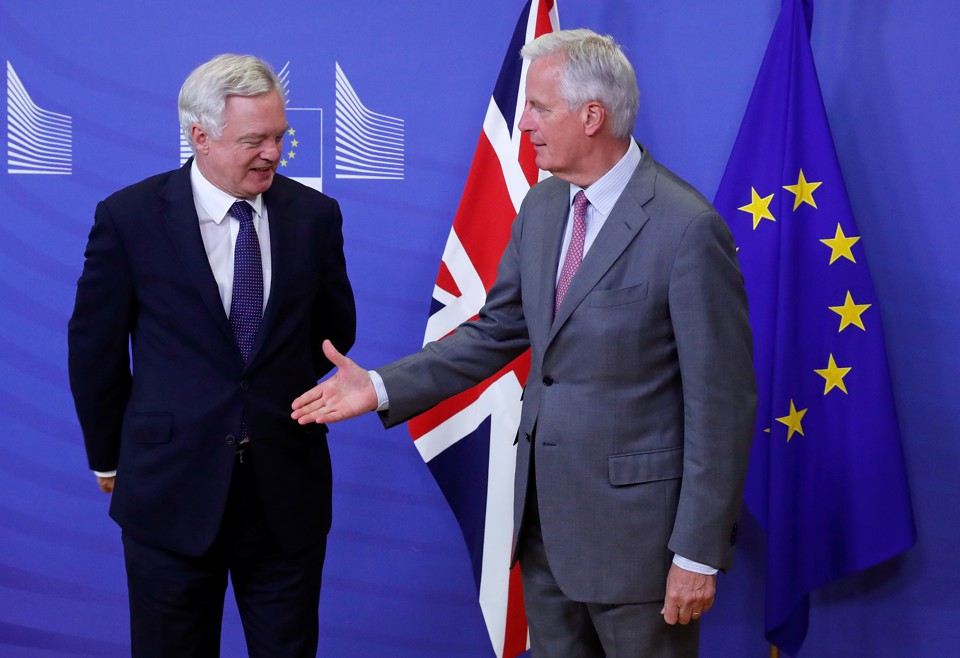
Should the EU agreed to a transit exit period of two years? Which ultimately kicks Brexit down the road.Résultat de recherche d'images pour "pictures of the uk negoiators re brexit"

Should a time-limited prolongation of Union acquis be considered, this would require existing Union regulatory, budgetary, supervisory, judiciary and enforcement instruments and structures to apply.

For the most part there is a shared interest in continuing arrangements, since many nations will not want to lose preferential access terms to the UK.

So yes the EU should grant more time provided the UK continues to meet its obligations.

It is obvious that a clean break without any transit arrangements would be better for both. God forbid we start going down the road of one set of rules for the transit and another set to leave. 

Why ?

Because without England clearly identifying what it wants it to do we are opening a Pandora box.

It is the UK that wants to leave the EU not the other way around.

As I have already said in previous posts only the Lawyers will make hay, never mind the terms for the fish.  They will love a transit period with Tax payers money on both sides flowing into their coffers.  The longer the better.

The EU has it hands tied when it comes to any negotiation because it must reflect the fact that the advantages of EU membership are not available to outsiders.

It may be possible for the EU and UK to collaborate on finding a smooth transition at the WTO. But it will require consensus at some point, a vulnerability open to exploitation. Britain’s most important external agreements — nuclear, airline access, fisheries and financial services are either entirely, or in large part, handled by the EU.

Even if England creates a new trade department, the task of negotiating new free-trade deals and maintaining existing ones will require a huge amount of money and manpower. The civil service and ministers are not even close to being ready to negotiate, let alone implement, new global trading relationships.

The nearest precedent you can think of is a cessation of a country.

Britain will find itself at the diplomatic starting line, with the status quo upended and all sides reassessing their interests. After Brexit the UK will lose more than 750 international arrangements.  Even if it were simple to renegotiate these arrangements, it will open a bureaucratic vortex, sapping energy and resources, creating a huge legal tangle.

The big question is, how will the UK’s political system react once the realization has sunk in about how little the EU will ultimately offer?

What Mrs May really wants is an association agreement.

There is a strong political case for such an association agreement, also from an EU perspective. But I fear that the idea is time-inconsistent. There is no Goldilocks “creative solution”, or a sector-by-sector approach.

Therea

There is no way that the EU will agree freedom of movement for aircraft, for example, but not for passengers.

Businesses need to prepare. Two more years before having to move key employees to European capitals.

The EU only knows a very limited number of external relationships. There is the European Economic Area, the so-called Norway option full EU access in exchange for accepting all EU rules. It’s a member of the European Economic Area (EEA), which means full access to the single market but being under all EU rules.

The other is a customs union agreement — the Turkey option.

The EU will not offer the UK the “Swiss option”. It regrets having offered it to Switzerland.  Then there is the Canada option – It took hundreds of skilled negotiators, dozens of video conferences and seemingly endless days in Brussels to produce the 1,600-page text. Some seven years after Canada and the EU began negotiating a trade deal, the future of the agreement remains shrouded in doubt. The agreement – which has yet to be ratified.

This leaves a single option: a free-trade agreement.

On top of all this the EU is only just starting to talk about institutional reform.

And how can they deal seriously with a government in which the foreign secretary might at any moment move to topple the prime minister to further his own career?

To continental ears, Mrs May’s call for a unique economic partnership sounds suspiciously like another, albeit subtler, attempt for Britain to have its cake and eat it — to retain the privileges but not the responsibilities of EU membership.

The British now believe they have made reassuring noises on money, security and citizens’ rights. But the insistence that the UK will leave the customs union means that it will be hard to point to progress on another issue that the EU deems critical: the Irish border.

The future relationship will need to be based on a balance of rights and obligations. It will need to respect the integrity of the Union’s legal order and the autonomy of its decision-making.

History has the habit of repeating itself,  Britain has been a torn in the side of the EU ever since it joined and English treaties have proven themselves over its history to be not worth the paper they are written on.

Get rid of the Nigel Farage’s, Renew your membership, i.e. stay and fight your quarter, otherwise a Clean Brake would be best for all. Résultat de recherche d'images pour "pictures of eu democracy"

All comments appreciated all like clicks chucked in the bin.

← Back

Thank you for your response. ✨

THE BEADY EYE ASKS: WHY DOES THE UNITED NATIONS TOLERATE SPEECHES THAT ARE IN BREECH OF ITS CHARTER.

Tags

, , , , , , ,


 UNITED NATIONS CHARTER.

Chapter I

                            PURPOSES AND PRINCIPLES

  • To maintain international peace and security, and to that end: to take effective collective measures for the prevention and removal of threats to the peace, and for the suppression of acts of aggression or other breaches of the peace, and to bring about by peaceful means, and in conformity with the principles of justice and international law, adjustment or settlement of international disputes or situations which might lead to a breach of the peace;
  • To develop friendly relations among nations based on respect for the principle of equal rights and self-determination of peoples, and to take other appropriate measures to strengthen universal peace;
  • To achieve international co-operation in solving international problems of an economic, social, cultural, or humanitarian character, and in promoting and encouraging respect for human rights and for fundamental freedoms for all without distinction as to race, sex, language, or religion; and
  • To be a center for harmonizing the actions of nations in the attainment of these common ends.

The Rt Hon Theresa May MPRésultat de recherche d'images pour "Donald trump recent speech at the un"

A charter represents a document that describes a project, its rationale, its goals and its participants. The purpose of a charter aims at aligning the expectations of all the contributors so that their energy focuses on the project’s priorities.

The Charter is not to be confused with The Universal Declaration of Human rights adopted after World War 11. It is perhaps the closest thing we have to a global Constitution- categorically states that the right to life is humanity’s fundamental value. Death is a crime.

It would appear that from the speeches given by either of the above that they DO NOT fully comprehended the above charter.

In his Sovereignty – centric speech Mr Trump threatened to totally destroy North Korea, called Iran a corrupt dictatorship whose main export is violence.

While Mrs May in her speech threatened withdrawal of funds.

This is not the first time not will it be the last that a World leader has used the UN to criticize other nations. Mr Bush with the axis of evil. Mr Khrushchev trumping the table and calling Filipino some obnoxious name in Russian.

Both Mr T and Mrs M appear to think that the yard stick to measure a nation’s success is GDP. This kind of thinking is driving humankind to make happiness a second goal for the twenty-first century which is highly unlikely unless inequality, war, and climate change disappear.

Surely the UN is not the platform for sovereign selfish nations to be expressing treats to other nations. Stirring up hornets nest is not what the world needs.

Here a few examples from each of their recent addresses to the UN.

MR D Trump first:

“The United States has great strength and patience, but if it is forced to defend itself or its allies, we will have no choice but to totally destroy North Korea. “Rocket Man” is on a suicide mission for himself and for his regime.”

” It has just been announced that we will be spending almost $700 billion on our military and defense.”

Then a raft of contradictions:

” In America, we do not seek to impose our way of life on anyone, but rather to let it shine as an example for everyone to watch.”

” We are celebrating the 230th anniversary of our beloved Constitution, the oldest constitution still in use in the world today. This timeless document has been the foundation of peace, prosperity and freedom for the Americans, and for countless millions around the globe whose own countries have found inspiration in its respect for human nature, human dignity and the rule of law.”

“But we can no longer be taken advantage of, or enter into a one-sided deal where the United States gets nothing in return.”

“As long as I hold this office, I will defend America’s interests above all else.”

“The United States is one out of 193 countries in the United Nations, and yet we pay 22 percent of the entire budget and more. In fact, we pay far more than anybody realizes.”

“The United States of America has been among the greatest forces for good in the history of the world and the greatest defenders of sovereignty, security and prosperity for all. Now we are calling for a great reawakening of nations, for the revival of their spirits, their pride, their people and their patriotism.”

“Our hope is a word and (sic) world of proud, independent nations that embrace their duties, seek friendship, respect others and make common cause in the greatest shared interest of all, a future of dignity and peace for the people of this wonderful Earth.”

“This institution was founded in the aftermath of two world wars to help shape this better future. It was based on the vision that diverse nations could cooperate to protect their sovereignty, preserve their security and promote their prosperity.”

The success of the United Nations depends upon the independent strength of its members.

“We do expect all nations to uphold these two core sovereign duties: to respect the interests of their own people and the rights of every other sovereign nation.”

“Today, if we do not invest ourselves, our hearts and our minds in our nations – if we will not build strong families, safe communities and healthy societies for ourselves – no one can do it for us.”

“This is the beautiful vision of this institution, and this is the foundation for cooperation and success. Strong, sovereign nations let diverse countries with different values, different cultures and different dreams not just coexist, but work side by side on the basis of mutual respect. Strong, sovereign nations let their people take ownership of the future and control their own destiny, and strong, sovereign nations allow individuals to flourish in the fullness of the life intended by God.”

We want harmony and friendship, not conflict and strife. We are guided by outcomes, not ideology. We have a policy of principled realism rooted in shared goals, interests and values.

And just as the founders of this body intended, we must work together and confront together those who threaten us with chaos, turmoil and terror.

“We will fight together, sacrifice together and stand together for peace, for freedom, for justice, for family, for humanity and for the almighty God who made us all.”

“Are we still patriots? Do we love our nations enough to protect their sovereignty and to take ownership of their futures? Do we revere them enough to defend their interests, preserve their cultures and ensure a peaceful world for their citizens?”

The UN relies on the independent strength of its members.

Theresa May:

“We face challenges that go right to the heart of who we are as nations.”

“I believe that the only way for us to respond to this vast array of challenges is to come together and defend the international order that we have worked so hard to create and the values by which we stand. For it is the fundamental values that we share, values of fairness, justice and human rights, that have created the common cause between nations to act together in our shared interest and form the multilateral system. And it is this rules-based system which we have developed, including the institutions.”

This statement in the light of Brixit is total hogwash and on we go.

“Indeed, the defining purpose of the UN Charter is to maintain international peace and security, to develop friendly relations among nations, to achieve international cooperation in solving problems of an economic, social, cultural or humanitarian character; and to be a center for harmonizing the actions of nations in the attainment of those common ends.”

“An outward-looking global Britain and the second biggest funder of the UN the UK will remain committed to spending 0.7% of GNI on development and humanitarian support. And that is why we will remain generous in our funding but set aside 30% to be paid only to those parts of the UN that achieve sufficient results.”

It is true to say that the UN needs reform, but it can only become relevant if it is financed to tackle world problems. ( See previous posts)

Both Speeches ignore Climate Change and the need to address inequality that is the spawning bed of all terrorism, driven by the technology of the smart phone.

The world is changing and we don’t have to be prophets to see if we as its intelligent guardians don’t address its underling problems there will be problems that will put all our technology, all our unsustainable greed, all our power of destruction, into the shade.

All comments appreciated, all like clicks chucked in the bin.

← Back

Thank you for your response. ✨

THE BEADY EYE ASKS: WHAT SHOULD YOU EXPECT TO PAY FOR YOUR FUNERAL AND BURIAL EXPENSES.

Tags

( A seven minute read)

Why haven’t we evolved immortality?

Switch off those genes that lead to death. Weed out those genes that cause ageing. It’s an Evolution oversight.

Religion asserts that we humans are subjects to a system of moral laws that we did not invent and that we cannot change, revealed by different prophets.

If and when science makes significant progress in the war against death, the real war will shift from religions (That would be quite a surprise. If it were true, it would be the most important discovery in the entire history of philosophy. Death is the thing most of us dread above all else. This attitude is nearly universal across all cultures and eras.) to parliaments, courthouses, and streets. It will trigger bitter political conflicts.

Can millions of years of conditioning of man’s consciousness be removed?

‘Conditioning’ isn’t a genetic disorder. It occurs, only after birth, most of us think it’s a bad thing to die but no one minds being dead.

The dead never complain.

Human beings are conditioned, though the levels vary. Hence, their behaviors also vary and the possibilities of conflicts are there. Hence, there is no point in blaming others, even if they are not able to correct themselves, so when I point out that there is little point in reminding you that all of you going to die there is vast silence on the subject.

To be dead is not to exist at all, and there’s nothing unpleasant about that.

Our loathing of death is all a mistake. Our own death does not affect us while we’re alive only the expectation or fear of death can affect us, but not death itself. Our own death does not affect us while we’re alive.

However The Funeral Time Bomb’ awaiting us all is repugnant.

Faced with the choice between dying now and being brutally tortured for 10 years and then dying, we ought to be completely indifferent. That’s what it would mean for death to be nothing to us. Yet if we know anything about what’s good or bad, we know that it’s good to be spared pointless suffering. And since death can bring this about, there must be something good about death.

This however is not the main subject of the post rather the rising cost of dying:

No one really wants to think about their own funeral, but like it or not, this event typically ranks among the most expensive purchases a consumer makes in their lifetime.

Socrates said and I quote,

“Wherefore, be of good cheer about death and know of a certainty that no evil can happen to a good man either in this life or after death. The hour of my departure has arrived and we go our separate ways – I to die and you to live.”

Sure, death is a one-off expense (unless you believe in reincarnation) but it can easily set you back more than ten grand.

People are living longer, so the cost of dying is steadily increased.

There is little analysis about what is driving these costs and how they are likely to shift over future generations. We could reach an impasse where funerals become unaffordable for the vast majority of households.

If you pop your clogs without a plan in place, you could leave friends and relatives picking up the tab. If death puts us beyond harm’s reach, it must also put us beyond the reach of any benefit.Rising costs: The average cost of a funeral as risen by 80 per cent since 2004

There are big differences in the cost of a funeral depending on where you live. Of course, your final send-off doesn’t have to be an extravagant affair. The most crucial factor is whether you opt for a burial or cremation.

It is estimated that in the UK over the next 20 years the number of deaths is likely to rise by 20%. By the end of 2015 the last of the baby boomers will turn 50, and the oldest among them will turn 70.

The Increasing numbers of deaths are potentially a game changer for the
funeral industry by 2020 the spending on funerals in the UK will be around £3.7bn with UK funeral debt reaching a quarter of a billion by the mid-2030s.

Funeral homes run a business out of death to make profit with insurance companies pushing for people to take out burial policies in the hope you will have paid more than the cost. Funeral director fees make up the majority of the cost. Cremation now cost £683 on average and burial fees £1,645.

Is it time for Funeral expenses be capped and should grave management be change to a lease holding system?

Should governments offer pre-paid plan funeral trusts that are set aside for your death, regardless of whether you stop contributing.

As life and death depend on each other, you can’t have one without the other, should it be law to set up a savings account or pool of money clearly earmarked for funeral costs.

Mankind has acquired ‘knowledge’ about all matters in the universe, but may not have acquired enough ‘Knowledge about the Knowledge itself, per se’.

From birth man is struggling to avoid death any cost,.our survival instinct is deeply inserted in our brains. Only one moment of voluntary exit from intellectual arena is enough for consciousness to get liberated for ever.

If you think life is a good thing, you have to see death as desirable as well.

Thinking Outside the Box.

Alternative burials could be promoted.  We are well-aware that even in death we still cause an adverse impact on the environment. Why not memorialize your loved ones through any of the below biodegradable and eco-friendly options?

Green burial maintains a healthy balance between the earth’s natural processes and the human life cycle.

  • Scattering of ashes in the wind.
  • Resomation has been praised by some as the most environmentally friendly way to be buried.
  • Urn burias at sea are possible at almost all of the coasts of the North- and Baltic-Sea.
  • Urns can be buried in special forest areas.
  • Get Public Parks and Golf courses to offer green burial.
  • Forget tombstones and cemeteries. An Italian company has created a beautiful and eco-friendly alternative.( picture below)

← Back

Thank you for your response. ✨

All comments appreciated. All like clicks chucked in the bin.


.