• About
  • THE BEADY EYE SAY’S : THE EUROPEAN UNION SHOULD THANK ENGLAND FOR ITS IN OR OUT REFERENDUM.

bobdillon33blog

~ Free Thinker.

bobdillon33blog

Category Archives: Uncategorized

What will money look like in the future.

06 Saturday Dec 2014

Posted by bobdillon33@gmail.com in Uncategorized

≈ Comments Off on What will money look like in the future.

Tags

alternative monetary system, Apple, Banking, Bitcoin, CASH, Cryptocurrencies, Electronic payments., Facebook, Google, Money, Money of the future, Twitter


At the moment there is a lot of hysterical futuristic crap been written, about the money of the future.

” We will be making payment with the blink of an eye”  and the like.

” The cash register is coming to an end?” Not so far-fetched.

When it comes to money, there’s a lot of change going on.

Over 5000 complementary monetary experiments are already under way around the world…

Everybody knows that electronic currencies is changing the form of our conventional national currencies. (smart cards, e purses,etc.)

It seems more than likely that our current model will be replaced by electronic payments.

However the question remain whether today’s governments will allow money to disappear or we have to wait for them to fade out – or be thrown out – of existence. One way or the other there is no doubt that in a few years or several decades the hardened walls of the banking and government institutions running our economies are in for a shock when a new monetary system arises that is entirely private and not run by states.

Its shape and features will ultimately be decided by the market.  Free market monetary systems, in which the supply of money is outside political control, are likely to be systems in which money proper is a commodity of limited and fairly inelastic supply.

But it also seems improbable that a completely free market would grant any private entity the right to produce (paper or electronic) money at will and without limit. The present system is unusual in this respect and it is evidently not a free market solution. Neither is it sustainable.

Future economic historians will pity us for having worked under a strange and inefficient global patchwork of local paper currencies – and for having naively believed that this represented the pinnacle of modern capitalism.

Today, every government wants to have its own local paper money and its own local central bank, and run its own monetary policy (of course, on the basis of perfectly elastic local fiat money). This is naturally a great impediment to international trade and the free flow of capital. They are parastatal dinosaurs, joined at the hip with the bureaucracy and politics, bloated and dependent on cheap money and state subsidy for survival. They are ripe for the taking.

The world is ready for an alternative monetary system, and when the present system collapses under the weight of its own inconsistencies, there will be something there to take its place.

Money however is one of society’s most embedded, ancient institutions anchored in trust and the race to win that trust is on.

So there are many questions to be answered.

How will own the money?  How much freedom will they allow, when freedom is so attainable? How will they treat banks when, with merely a download, anyone can be their own bank?  What will they have to say about currencies which compete with their own?

What exactly is money?

Economic Textbooks define money by what it does, not by what it is – e.g. Functions of Standard of Value, Medium of Exchange, Store of Value, etc…. Money is an Agreement, within a Community, to use something as a Medium of Exchange.

Take the dollar.

It has lost over 92% of its value since its initial issuance in 1913. After the revaluation in 1934, the dollar dropped another 41%. The very volume of dollars in the world has given many people a conviction that the currency is worthless and doomed to lose its status as a global reserve currency and turn into toilet paper money by letting the printing presses run wild.

“Short-termism” is programmed by the interest feature of our conventional money.

1.3 trillion of it is traded in foreign exchange markets every day. 100 times more than the trading volume of all the stock markets of the world combined.

Only 3% of these foreign exchange transactions relate to real goods and
services. 97% is purely speculative.

What happened is that ‘speculative’ trading (i.e. trading whose sole
purpose is to make a profit from the changes in the value of the
currencies themselves) has all but taken over the foreign exchange
markets. The currency market has become the biggest single market in the
world. Foreign exchange transactions purchases and sales of
currencies) today dwarf the trading volume of all other asset classes,
even of the entire global economy.  

2/3 of all human beings who ever reached the age of 65 are alive today are looking at unfunded pensions liabilities now $3.5 Trillion in the OECD countries alone. Three times the GDP of the USA.

Not to worry as long as all major corporate decisions are made with a short-term horizon => long-term sustainability is going to be an illusion.

85% of all insurance payments worldwide compensate natural disasters. For times more people die in natural disasters than in all war and civil disturbances combined.

69% of professional biologists say we’re in ‘sixth extinction’ – we are in the process of losing 30%- 70% of the planet’s biodiversity by 2030 due to the actions of humanity!

Back to Money:

The latest smart phone technology is revolutionizing the payment process with the death of the wallet not far off.

Remittances are a gateway drug to Twitter, Facebook, Google, to achieve financial inclusion in the future.

Facebook is readying itself to provide financial services in the form of remittances and electronic money. It wants to become a utility in the developing world.

If Ireland’s central bank becomes an “e-money” institution it will allow Facebook to issue units of stored monetary value that represent a claim against the company.

Obtaining an e-money authorization in Ireland would require Facebook to hold capital of €350,000 and segregate funds equivalent to the amount of money it has issued. Facebook is already authorized for some forms of money transfer in the United States, allowing it to process payments for developers who charge users for in-app purchases.

Facebook takes a fee of up to 30 percent for such payments, and these fees account for about 10 per cent of its revenues. It recently reiterated its commitment to expanding its mobile payments and wallet products, which have yet to be widely adopted by consumers.

In 2013, the company facilitated $2.1 billion worth of transactions, almost exclusively from games.

I personally am not surprise that it is viewed with skepticism as a payment vehicle, when you look at all the crap one sees on Face Book – Would you trust Facebook to handle your money.

Google is registered in the UK to issue electronic money, in a process similar to the authorization which Facebook is seeking in Ireland.

Google and its NFC-driven Wallet, and PayPal are well on the way to providing digital payment that can move between two people as they pass each other on the street, or between two people on opposite sides of the Earth – with no difference between the character of the two payments.

Vodafone has acquired an e-money licence for the phone company to operate financial services in Europe.

Twitter, Square, PayPal, Apple are also in the race to replace Money.

The question of ‘what’s next?’ Depending on how it’s answered by governments, it might be very exciting or very frightening.

The importance of digital – potential changes in payments, branch banking, financial advice and the use of social media will accelerate change in the industry, most likely to the benefit of fast-moving incumbents.

New technologies are threatening to disrupt existing models in retail financial services; the pressure of increased operating and capital costs reducing capacity in wholesale banking; and a struggle for growth and profitability in insurance waning customer loyalty as their biggest challenge.

The banking system fundamentally makes money by keeping customers confused, making the lion’s share of profits from fees and charges, not from banking. They will have to think no longer of themselves as mere providers of financial products and services and enablers of transactions. They will need to be solution providers that play a greater role not just at the moment of transactions, but before and afterward as well.

The global e-payments value reached $256 billion in 2012, and is expected to grow three-fold by 2014 to a total of $796 billion. An average person touches his / her smart phone 150 times in a day.

So it’s no wonder that the single biggest area of investment is mobile apps for tablets and smartphones, with the ultimate target to consolidate everything you carry on you till financial transaction that involve buying something is paid for by simply saying your name.

And before I sign off we have Cryptocurrencies,

Bitcoin is a peer-to-peer currency with no centralized authority

Bitcoin is regulated by code, which determines how quickly new Bitcoins are generated without the intervention of humans. Bitcoins are stored in a wallet that resides on your computer – or a hosted wallet service off in the cloud, if that’s your preference – and transactions are nearly instantaneous. It’s the prototype for whatever improved implementation overtakes traditional currency in the future.

In the meantime, the debasement of paper money continues.

In the end, It’s great news that non-banks are challenging the traditional banking monopoly.

I leave you with a few Quotes;

“Maybe money is unreal for most of us, easier to give away than things we want. ” Lillian Hellman.

“Money is the only substance which keep a cold world from nicknaming a citizen “Hey You”. Wilson Mizner.

“Money is the poor people’s credit card. Marshall McLuhan.

“Money is what you’d get on beautifully without if only other people weren’t so crazy about it” Margaret Case Harriman.

” Wealth is nothing in itself; it is not useful but when it departs from us; its value is found only in that which it can purchase. As to corporal enjoyment, money can neither open new avenues of pleasure, nor block up the passages of anguish. Disease and infirmity still continue to torture and enfeeble, perhaps exasperated by luxury, or promoted by softness,. With respect to the mind, it has rarely been observed that wealth contributes much to quicken the discernment or elevate the imagination, but may,by hiring flattery, or laying diligence asleep, confirm error and harden stupidity.” Samuel Johnston.


4791385567_4a146e78c7_o

“Remember money has no sign of human worth.” Robert de Mayo Dillon.

Share this:

  • Share on WhatsApp (Opens in new window) WhatsApp
  • More
  • Share on Mastodon (Opens in new window) Mastodon

How Much Can A Government Borrow? Should we the Citizens have a say?

04 Thursday Dec 2014

Posted by bobdillon33@gmail.com in Uncategorized

≈ Comments Off on How Much Can A Government Borrow? Should we the Citizens have a say?

Tags

Budget deficits, Central Banks, Governments borrowing, National debt

With public sector debt increasing around the world, an important issue to consider is just how much can governments borrow?

The clock is ticking. Every second, it seems, someone in the world takes on more debt.

Unfortunately, the manner in which the debt level is conveyed to the general public is usually very obscure.

Couple this problem with the fact that many people do not understand how the national debt level affects their daily life, and you have a center piece for discussion, and which could be written on till the cows come home

The debt, and the developed world’s willingness to borrow to fuel growth, is an indicator of the wildcat figures we now see in almost every country.

The world is in hock up to its neck.

Is the sky’s the limit?  Who is going to pay it?  How is responsible?

Does voting or paying taxes implies consent.?

There is no easy answer.

Since we are subjected to the government’s impositions whether or not we vote — opting out is forbidden — any given individual may have cast a vote purely in self-defense, for the perceived lesser of two evils. And paying taxes certainly cannot signify consent, because the penalty for nonpayment is theft of one’s property, imprisonment, or (should one resist) death.

The amount governments can borrow depends upon many factors such as the level of private sector savings, confidence and expectations of future growth.

So what is the National debts. Or as governments like to describe it the National Debt Per Person.

A Simply explained,

The government generates a budget deficit whenever it spends more money than it brings in through income generating activities such as taxes.

In order to operate in this manner, the Central Bank has to issue treasury bills, treasury notes and treasury bonds to compensate for the difference. These are then placed on the market with varying interest rate of return and repayment terms to the Investors. As the rate offered on treasury securities increases, corporations are viewed as riskier, also necessitating an increase in the yield on newly issued bonds. This in turn will require corporations to raise the price of their products and services in order to meet the increased cost of their debt service obligation. Over time, this will cause people to pay more for goods and services, resulting in inflation.

By issuing these types of securities, the government can acquire the cash that it needs to provide governmental services.

The national debt is simply the net accumulation of the government’s annual budget deficits.

The national debt level is one of the most important public policy issues. When debt is used appropriately, it can be used to foster the long-term growth and prosperity of a country.

However, the national debt must be evaluated in an appropriate manner, such as comparing the amount of interest expense paid to other governmental expenditures or by comparing debt levels on a per capita basis.

Today’s budget deficits can impoverish future generations and it is utterly absurd to pretend that debts to the amount of  trillions are binding upon millions of people who are not yet born or were not born when the debts were incurred. The National Debt Per Person.

Take for instance the UK Debt.

During WWII, UK national debt increased from £7.1 billion to £21 billion. In the early 1950s, UK public sector debt increased to over 200% of GDP much higher than in the financial crisis 2008-11.  Could the UK borrow 200% of GDP again?  The real national debt to-day is closer to £4.8 trillion, some £78,000 for every person in the UK. Around £2bn of First World War debt remains, which is one graphic illustration of the legacy of this war on our nation and the long-term effects of high debt.

The UK Treasury will pay back the £1.9 billion ($2.9 billion) outstanding war loan perpetual bond on March 9, 2015. This is the successor to the loans that were sold to the public in 1917 to help finance World War I( 120,000 individuals holding them) Britain will also pay off other historical debts, some of which date from the 18th century. Eight undated government bonds remain outstanding. UK would also pay back £218 million ($341 million) of debts dating back to the so-called South Sea Bubble in 1720, created to reduce and consolidate national debt.

The US government has racked up $16 trillion in debt.

The US debt is now bigger than the entire US economy.

Does it matter? After all, world governments owe the money to their own citizens, not to the Martians.

The rising total is important for two reasons.

First, when debt rises faster than economic output (as it has been doing in recent years), higher government debt implies more state interference in the economy and higher taxes in the future.

Second, debt must be rolled over at regular intervals. This creates a recurring popularity test for individual governments, rather as reality TV show contestants face a public phone vote every week. Fail that vote, as various euro-zone governments have done, and the country (and its neighbors) can be plunged into crisis.

To pay back one million dollars, at a rate of one dollar per second, would take you 11.5 days.

•   To pay back one billion dollars, at a rate of one dollar per second, would take you 32 years.
•   To pay back one trillion dollars, at a rate of one dollar per second, would take you 31,688 years.

That’s five hundred and twelve million years.  Yes, 512,000,000 years for 15 trillion.

What to be done?  Not much on a global scale.

To preserve our independence, we must not let our rulers load us with perpetual debt…We must make our choice between economy and liberty or profusion and servitude.

On a national scale all government spends over 6 billion could be posted on-line with their pros and cons for the population to approve or disapprove.

No human being, in the history of the world has ever amassed a trillion dollars.

 There’s never enough time to do all
the nothing to do. A lie told 100 times becomes a truth.
If you have any interest have a look at the below. If you don’t I would not blame you with all the rest that going down in the world at the moment.
http://youtu.be/TSDIHPTJels
http://youtu.be/C8xAXJx9WJ8
http://youtu.be/fk9IZ9R1XEg

← Back

Thank you for your response. ✨


Share this:

  • Share on WhatsApp (Opens in new window) WhatsApp
  • More
  • Share on Mastodon (Opens in new window) Mastodon

Perhaps the next century—we all be in a permanent identity crisis, constantly asking ourselves what humans are for.

03 Wednesday Dec 2014

Posted by bobdillon33@gmail.com in Uncategorized

≈ Comments Off on Perhaps the next century—we all be in a permanent identity crisis, constantly asking ourselves what humans are for.

Tags

Artificial Intelligence., Google, Steven Hawkins

You no doubt heard Steven Hawkins recently prediction that the human race as we know it will come to and end with the creation of a Super Artificial Intelligence.


He could be right.

Over the past 60 years, we have seen mechanical processes replicated behaviors and talents we thought were unique to humans,

We are not just redefining what we mean by AI—we are redefining what it means to be human. ( Greed v Poverty.  Muslim v Christian. Wealth v Benefits. Black v White. War v Peace. Health v Consumerism. Life v Death. Gratification v Pain. Space v Sustainability, Climate Change v Profit. To mention just a few)

It will be long before we’ve have to change our minds about what sets us apart. (ISIS v The Rest.)

Every day we are being forced to surrender more of what is supposedly unique about humans and we will spend the next decades doing so.

Indeed, the grandest irony of all, the greatest benefit of an everyday, utilitarian AI will not be increased productivity or an economics of abundance or a new way of doing science—although all those will happen.

The greatest benefit of the arrival of artificial intelligence is that AIs will help define humanity. We need AIs to tell us who we are.

In order to appreciate this we are we going to need a large dose of artificial smartness. Smartness is focused, measurable, specific.

If you think about it, much of the technology humans interact with is about putting you in a particular bucket. This is exactly what Online marketing is about. Making finer and finer distinctions as to which bucket you belong in.

The long-term scientific goal of artificial intelligence is human-level intelligence as it Artificial immortality is to the goals of modern medicine.

AI has attracted more than $17 billion in investments since 2009. Last year alone more than $2 billion was invested in 322 companies with AI-like technology.

Every time you type a query, click on a search-generated link, or create a link on the web, you are training the Google AI.

Each of the 12.1 billion queries that Google’s 1.2 billion searchers conduct each day tutor the deep-learning AI over and over again. With another 10 years of steady improvements to its AI algorithms, plus a thousand-fold more data and 100 times more computing resources, Google will have an unrivaled AI.

At first glance, you might think that Google is beefing up its AI portfolio to improve its search capabilities, since search contributes 80 percent of its revenue. But I think that’s backward. Rather than use AI to make its search better, Google is using search to make its AI better.

My prediction: By 2024, Google’s main product will not be search but AI.( See My Flip board ” Silent Wittiness to Google Ambitions.)

Where are we at the moment?

Parallel computation, bigger data, and deeper algorithms generated the 60-years-in-the-making overnight success of AI. As these technological trends continue—and there’s no reason to think they won’t—AI will keep improving. The smarter it gets, the more people use it. The more people that use it, the smarter it gets.

Our AI future is likely to be ruled by an oligarchy of two or three large, general-purpose cloud-based commercial intelligences offering more like IQ as you want but no more than you need.

It is transforming the Internet, the global economy, and civilization. It is enliven inert objects, much as electricity did more than a century ago.

There is almost nothing we can think of that cannot be made new, different, or interesting by infusing it with some extra IQ.

Non-Inheritable Neural Architecture intelligent machines will increasingly replace knowledge workers in the near future.

Many knowledge workers today get paid to do things that computers will soon be able to do. AI will increasingly move up the skill ladder to replace the middle-class workers.

There’s no way a human can keep on top of all possible financial instruments in the world or is it possible for doctors and nurses to stay on top of medical innovations.

Every success in AI redefines it.

A child born today will rarely need to see a doctor to get a diagnosis by the time they are an adult.  Computer Medical diagnostics is a potential “game changer,”

At this very moment it is possible to have you DNA sequence read by 23 and Me (for a fee.)

Curious.  Go on try it.

Find out if you are a suitable partner, what you are most likely to died from, WHETHER YOU ARE going to win the lotto – sorry not true.

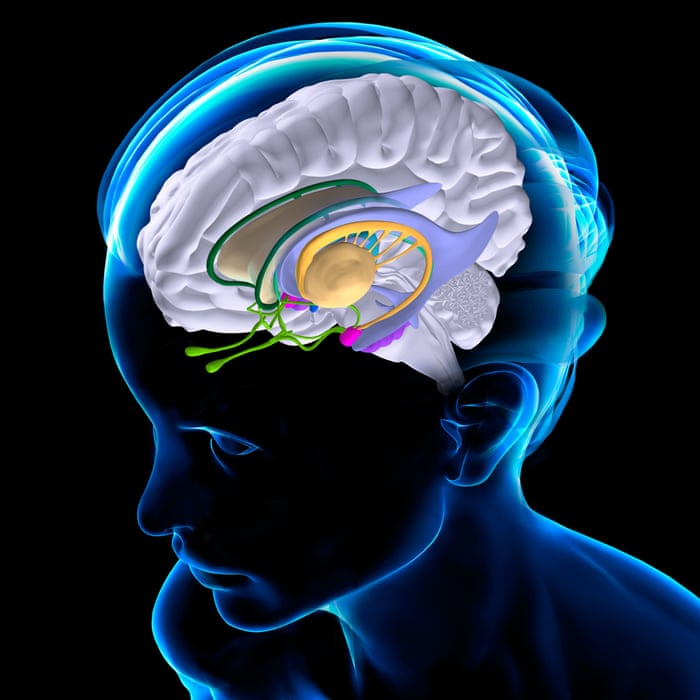
We are still a ways off from equaling the processing power of the human brain.

An AI program may be able to write code to manipulate the stock exchange but not the lotto draw. It is still not able to “solve the problem of common sense, of endowing a computer with the knowledge that every 5-year-old is still a few years off.

Representations are the fruits of perception. Recognizing the centrality of perceptual processes makes artificial intelligence more difficult, but it also makes it more interesting, for the two types of process are inextricably intertwined.

As AIs develop, we might have to engineer ways to prevent consciousness in them—and our most premium AI services will likely be advertised as consciousness-free.

In fact, the business plans of the next 10,000 start ups are easy to forecast: Take X and add AI. 

So Is he Right.

New utilitarian AI will also augment us individually as people (deepening our memory, speeding our recognition) and collectively as a species.

Will it replace us.

Rather you than I too comeback in a few hundred years.

Food will differently be different. manufacturing materials  will differently be different, clothes, money, or any branch of science and art will have changed beyond recognition.

Concepts without precepts are empty. The essence of human perception lies in the ability of the mind to hew order from chaos. Perception goes on at many levels.

AI perception will be rigid, inflexible, and unable to adapt to the
problems provided by many different contexts.

Cognition is infused with perception.  If there is none neither human or non human will know which is which. Therefore there will be no interaction between humans and artificially intelligent beings other than war. 

So he is right.


Share this:

  • Share on WhatsApp (Opens in new window) WhatsApp
  • More
  • Share on Mastodon (Opens in new window) Mastodon

The Future of the Consumer Society will decide our Future.

02 Tuesday Dec 2014

Posted by bobdillon33@gmail.com in Uncategorized

≈ Comments Off on The Future of the Consumer Society will decide our Future.

Tags

Economic practices, environmental degradation, Future, Human impact, Internet, Social Media, Sustainability, The environment, The Future of Mankind, Universal Electronic Voice, Visions of the future.


Consumerism quotes

The world-wide spread of extremely resource-intensive lifestyles and economic practices has become one of the most important challenges we face.

There is an increased awareness of human impact on the environment, however, the rate of environmental degradation is still on the rise.

Although many people are uncomfortable with the way things are, they are not motivated to act on their beliefs because they see no other way.

The environmental discourse is still confined to a relatively small minority
of elites and ‘experts’, and it remains incredibly top-down but there are no experts as we are all dancing on the edge of acceptable risk.

Is economic growth making us happier?

What type of change is possible?

By addressing things such as human well-being and the meeting of the needs in environmentally in a sound way, the discourse brings economy down to the grass root level of everyday life.

It enables us to ask questions such as:

How do we change the present day short-shortsightedness which is the source of most modern environmental and economic problems?

Messages of environmental risk should be effective in relaying seriousness and immediacy, but arguably, they are also in danger of breeding hopelessness and fatalism. Although many people are uncomfortable with the way things are, they are not motivated to act on their beliefs because they see no other way.

This is tragic because the way in which we perceive the future has a significant influence on the choices we make.

It affects our values, attitudes, coping mechanisms, expectations feelings, motivations and behaviors. The very act of articulating a future presents a tendency and inclination, which increases its likeliness of occurrence.Consumerism quotes

Could it therefore be possible to produce a set of different outcomes by providing engaging, lucid and optimistic alternative ecological future narratives?

I have posted many posts on the Subject but let’s try an other approach.

Suggest an inexpensive tool that could make a difference.  

Sufficient living questions the connection made between growth and quality of life.

The last time climate change happened was approximately 55 million years ago and it took 1000 years to recover from the level of elevated carbon after the extinction of dinosaurs.

Imagine a world without pollution and waste: Products are made from materials that are beneficial for humans and their surroundings. Imagine a world where humans can be glad that their actions benefit those around them.

It seems that people are not good at providing (quasi) exact statements of the future, but they can be better in stating whether the past trend will change and in which direction.

Over a hundred species are still becoming extinct everyday.  One and a half acres of rain forest is still disappearing every second.

These problems are link to a lack of ideas concerning how to deal with environmental problems and the future of our society.

It is always useful to conceive futures in a generational paradigm, because we find it easier to think of futures in terms of our children and grandchildren’s lifetimes. The decisions we make in the next 20 years will determine the fate of the earth and human civilization for centuries to come.

In this context, online news gives a quick overview on what is happening in the world and the use of the Internet as information source has become an inherent part of everyday life  leading to a sort of “big brother feeling” of being observed.

Unfortunately, most of our ecological future narratives are ambiguous or inherently pessimistic.

For instance, one of the most popularized means of living within nature are ‘sustainable futures. However this vision lacks clarity or a consensus over what it means to live ‘sustainably’. Moreover, a proliferation of ‘sustainability’ definitions leave some to regard it as a landfill dump for everyone’s environmental and social wish list.

In a sense of powerlessness. people perceive the environment to be a single totalising entity that is ‘out there,’ enabling them to remain emotionally distant, despondent and in a state of resignation.

High levels of non-engagement are further exacerbated by the lack of faith in the institutions tasked with combating the problems. People are choosing not to dwell on ecological problems by using reflexive strategies of non-engagement with global issues including the future.

The apparent lack of desirable alternatives is highly dangerous.

Could it therefore be possible to produce a set of different outcomes by providing engaging, lucid and optimistic alternative ecological future narratives?

In other words, if governments continue to think in four-year election cycles, businesses work from one financial year to the next and stock markets re-start everyday there is no hope of achieving anything.

When imagining futures, we also need to invent time for change.

What is needed is long-term thinking that reconciles itself to a planet that is 4.6 billion years old?

We support in the capacity to imagine and articulate preferred outcomes, which in turn mobilise action and creates an opportunity for the visions to embed themselves as possibilities in reality.  As opposed to the current approach of endlessly treating symptoms of a much deeper problem that is both out of sight and out of control.

Each and every individual needs to be actively (and creatively) involved by, possibly, visualising, spreading and implementing ideas of alternative societal models. We need a method that enables us to think beyond existing societal models.

While Industrial welfare state mainly defends business-as-usual change can only be achieved in the world to-day by what I call,

– An Universal Electronic Voice that demands change –
# UEV- Universal Electronic Voice.
When we want to enable consumers to execute truly effective change it is central to empower them to understand their role as important actors in the field.

This is beyond governments, and our present day world institutions.

Governments:  Because before they can mend a road there is an other government.  Institutions:  Because they have turned into gossip shops with no funds, run by the market.

We need to re-define what it meant by people power.

A unified electronic voice will do just that resulting in a movement that unified our cohesive efforts. That will enable the ‘democratisation’ of modern environmentalism that are fixated on finding solutions to one that imagines entirely new possibilities

The debate over climate change and whether it is being influenced by man’s activity has ceased. The prevailing view is that climate change is real and that it is influenced by human activity. The link between rising consumption and climate change is becoming clear and opposition to consumerism is growing.

Images of the future in which the Universal E Voice should be used as tools for making images become part of reality, it can be used to direct actions and decision-making.

Of course none of the above has any hope of becoming a reality unless we tap into the world of greed.

This can only be done by a collective demand to place a world aid commission of 0.05% on all High Frequency trading, Sovereign wealth funds acquisitions and foreign exchange transactions over $20.000, creating a perpetual funded fund. ( see previous posts)

As such UEV(universal electronic voice) does not describe the actions needed to achieve the described future however it would be the first step in the right direction to be heard.  We all know timescales are the best until after the critical period is over and we have the benefit of hindsight.

Now it the time to combine all of those how are Whining on the Internet and Social Media into one voice.

With the rather elusive and volatile character of the Internet creating a focus point for the over strain user of the Net when it comes to selecting individually important and relevant information to establish a collection pool offering one voice has many difficulties to over come.

Perhaps # UEV- Universal Electronic Voice might to the trick.

I am all ears to any suggestions.

The mere fact that more of these devices are constantly introduced to the market and the ways in which they are advertised show that yet again a different perception of the future.

This is only the top of the iceberg.

What more ecologically benign consumption and production patterns would mean in practice? is another question to be discussed.

And to what extent it is fruitful to talk about economy beyond the social? Is another in dire need of serious discussion.

← Back

Thank you for your response. ✨


Share this:

  • Share on WhatsApp (Opens in new window) WhatsApp
  • More
  • Share on Mastodon (Opens in new window) Mastodon

THE FUTURE OF TAXATION.

02 Tuesday Dec 2014

Posted by bobdillon33@gmail.com in Uncategorized

≈ Comments Off on THE FUTURE OF TAXATION.

Tags

Business and Economy, Community cohesion, Consumption Tax, Distribution of wealth, Fiscal stimulus, Inequility, Inflation, ongoing Privatization of the world, Over-consumption, Political spectrum, Sovereign wealth fund, Tax, VAT, Wealth Tax

Tax Due Warning - A single, angled spotlight reveals a...

A common thief does not typically act with greater force or stealth.

I would guess like me you have tried to get your head around the taxes you pay without much success.

With the rising inequality concerns maybe it time you did as taxation has a future that will affect you and your love ones.

But where, and in what guise? Let’s have a look.

Slow population growth is depressing income growth, which leads to higher taxes.

Virtually every government could pay off its debts by taxing wealth.

Luckily for the rich such taxes are often politically unacceptable.

In other words, fiscal problems are best regarded as problems of dysfunctional governance by governments that are selling off state assets into Privatization until there will not be enough national wealth to pay off any debts.

Anyway for the purpose of this post it is essential that we try to appreciate the difference between real taxes and current (or nominal) taxes.

The real tax over any significant period is the level of government spending in relation to national output. The higher public spending as a percentage of GDP, the higher the real tax. That amount must in time be transferred from private to public hands—be it now or later.

The current tax, for its part, is the amount actually paid to a government in any given period, and is almost never equal to the real tax.

Got it. No. Shame on you. Try again.

A current tax lower than the real tax (that is, a public deficit) implies higher current taxes in the future, while a current tax higher than the real
tax (a public surplus—a phenomenon observable in only three of the past 50 years) implies lower current taxes in the future.

Now. You have.

So the stated political orientation of the administration presiding over a gap between current and real taxation—be it social democratic or of the supply side right—does not matter.

Because deferred taxes are simply claims against the public.

There are two ways to meet these claims:

1) higher current taxes in some future period or 2) inflating the claims away.

Inflation, which generally induces a shift of wealth from private to public hands, is the functional equivalent of a tax increase. These relations do not follow from any policy or ideology, but are purely matters of arithmetic.

Any clearer.? It’s of no matter.

Because what appears on the surface to be public debate over the appropriate level of taxation—and this goes on all the time—is in fact political maneuver by interested constituencies to get out of the line of fire of inevitable tax increases while deflecting the higher taxes onto someone else.

Now you have.

Different taxes do have different allocative effects.

Future taxes will perpetuate or even compound the misallocative effects of the present tax system.

Taxes in the next ten years, even though considerably higher than today’s, will nonetheless be insufficient, in all likelihood, to fill the revenue gap that opened wide during the last ten.

Inflation is all that remains to look forward to.

For a governments it will be like letting go to the pull of gravity.

Most wealth has already been subjected to income and other taxes, perhaps multiple times. It doesn’t seem fair to the holders of that wealth to suddenly pay additional taxes on assets that they thought were in the clear, and such taxes would signal that previous policy has failed.

It seems to me that on both ends of the political spectrum there is remarkably little concern with the allocative effects of taxation in its various forms.

However it matters how you tax if we are to halt the growing inequality in our life styles as over the next 10 to 15 years current taxes will increase mightily. Why?  Because our own consumption, fueled by debt, outstripped our incomes in recent years, while foreign savers, predominantly from Asia/China/and the Far East financed the bulk of new investment in our economies.

Why aren’t foreign savers put off by double tax on capital income?

The answer is that they would be, if they paid it. But they don’t.

Another reason it that the massive fiscal stimulus that have been pumped into our economies by Quantitative easing and the selling off of state Assets (To Sovereign Wealth Funds, see previous posts) will in their wake pull up current taxes or spread inflation, another form of higher taxation —whether consumers or savers, suppliers of capital or suppliers of labor, or both in a maelstrom of inflation.

When income from labor is saved rather than consumed, the income from that saving (now capital income, in economic terms) is taxed again.

This “second” tax on saving makes the tax cost of capital income greater than that of labor income spent on immediate consumption. The two separate layers of income tax imposed on corporate earnings and then again on dividends distributed to shareholders actually imply a third tax on corporate profits. This goes far toward explaining why we don’t save.

What can be done:

What is needed is a shift in the burden of taxation away from capital income and onto consumption.  In short, some form of consumption tax should be the predominant national tax.

The problem with a value-added tax is that people can to a considerable extent earn their incomes in one tax environment and spend them (either at retail on vacation or wholesale in retirement) in a different (and VAT-free) environment, so that ultimately both their incomes and their consumption are untaxed.

Value-added taxes and payroll taxes are analogous to an income tax that is imposed territorialy, whereas a tax on consumed income is imposed on worldwide income, minus the component of saving, and is therefore a tax on the worldwide consumption of a taxpayer.

(Turnover-type taxes such as sales taxes and value-added taxes are widely and correctly understood as consumption taxes. So is any tax that does not reach capital income.)

A tax on consumed income is an income tax in which personal saving is deducible from taxable income, thus excluding capital income and leaving only the amount of income that is consumed subject to current taxation.

In stead of contemplating such a tax in many EU Member States we got political, academic and public debate on wealth taxation which always gains traction in times of strained public finances.

The question is who ultimately bears the burden of wealth taxation (tax incidence)

The existence of a blurry frontier between capital and labor, income for the high-income earners, the role of transparency and automatic exchange of information in facilitating tax compliance and the serious political economy constraints makes any form of wealth tax unworkable.

Just imagine the difficulty to evaluate one’s wealth and the administrative costs along with the risks of tax evasion and capital flight.

Many people have become distressed about their taxes because they have been led to believe that the property they acquired would not he taxed to the extent that it has been. Accordingly, they have paid prices for the property that have reflected those expectations. They may be the reasons they are “mad as hell” simply because they feel that they have been misled by their government and that they not only have had to give up taxes but also have had to give up wealth in terms of reduced market prices for their property.

Economics have performed the heroic task of measuring wealth for eight leading economies: the United States, Canada, Britain, France, Italy, Germany, Japan and Australia.

Their estimates reveal some striking trends. For instance, wealth accumulation in these eight countries has risen relative to yearly production.

Wealth-to-income ratios in these nations climbed from a range of 200 to 300 percent in 1970 to a range of 400 to 600 percent in 2010. Behind the changing ratios is some bad news, namely that slow productivity growth and but also some good news — that relative peace and capital gains have preserved wealth up to now.

Virtual economies pose a real-world tax compliance risk, even if citizens aren’t purposefully shielding their money.

No one has a clue on how to manage the Planet. The only way forward is a consumption tax regime.


← Back

Thank you for your response. ✨


Share this:

  • Share on WhatsApp (Opens in new window) WhatsApp
  • More
  • Share on Mastodon (Opens in new window) Mastodon

Is Black Friday our worst example of unchecked consumerism.

30 Sunday Nov 2014

Posted by bobdillon33@gmail.com in Uncategorized

≈ Comments Off on Is Black Friday our worst example of unchecked consumerism.

Tags

Advertising industry, Black Friday, Buy Nothing Day (BND), Consumerism, Economic Growth, Media technologies., Modern global economy, Online retailers, Society, TV commercials

This year, the shopping orgy called Black Friday became untethered from Thanksgiving and floated across to the U.K., where it most assuredly did not increase happiness and gratitude. It did however exposed a society that is encouraged by its Government since Maggie Thatcher day to treat   shopping as a sport.

We were all treated to woman fighting over leggings, people stampeding to get the latest TV/Smart phone/i Pad till the police had to be summoned to stop them from biting or killing each other. An extremely shameful, embarrassing thing to watch.

Many of the more extreme political movements in the world today claim that they are a response to the power and force of the modern global economy and its accompanying set of values. We should not be surprised when Social Media carries such pictures.

Today, young people are building a shared understanding of how the world works through social and other web-based media..

In 2008, a Walmart employee was killed when a mob of deal-desperate Black Friday shoppers tore the store’s doors from their hinges and stormed inside, trampling him to death. The chain was eventually fined $7000 for their role in the employee’s death — but six years and $2 million later, the world’s largest retailer has yet to pay up. I am sure the poor brighter did not collect his Loyalty points either.

The shape of the global economy, media, and world-wide society now being born is difficult to predict. On the one hand, the logic of economic growth can lead to the pursuit of short-term economic gain to the exclusion of other values.

On the other hand, a sustainable growth strategy could help ensure that the pursuit of economic growth factors in long-term considerations such as environmental impacts and human well-being.

Consumerism has is part to play in this well-being but because humans are like wildebeests the advertising industry spends $12 billion per year on ads targeted to children, bombarding young audiences with persuasive messages through media such as television and the Internet.

The average child is exposed to more than 40,000 TV commercials a year and ads are reaching children through new media technologies.

Some researchers say that consumerism is baked into our DNA, nestled in our neurons. They say our consumptive tendencies will forever evolve in response to marketing, culture, policy and changing needs on our one and only, tiny blue planet.

In light of Black Friday let’s rediscover the full meaning of the word consume.

Is it a modern American tradition gone wrong or just one more bizarre piece in the backbone of our wobbly world economy?

Now days to consume has become a negative word, but there are other meanings.

The verb to consume can also mean to enjoy avidly and to engage fully.

More and more people are coming to the realization they much prefer to consume experiences than stuff — they prefer doing over owning.

Nature has massive value that we may never be able to put a value on. This is truth, not a fad or a trend. For example if you love the ocean, share it, and don’t be afraid to consume it in the very best sense of the word. But also, fight for it. Protect it.

Black Friday has its roots in shopping frenzies. Online retailers such as Apple and Amazon have facilitated the spread of Black Friday far beyond its american frameworks, to any would-be consumer with an internet connection.

While it is easy to brush of all this behavior off as dystopian present-day phenomena, consumerism and taste-makers set the course of this nations culture, with purchasing power playing a huge role in the nationalistic negativism of or nations.

The technologies of information, stimulation, and comfort are seductive and addictive. People and their needs remain constant. Little else seems to be very stable. We are literally drowning in information. Still, the great difficulty with the empirical base of the information age is that much of the data we rely on to understand the world we live in is unverified.

So much so that the reality behind all that glam and glitter is that joy of engaging in the natural world might be forgotten.

As Pope Francis succinctly wrote: “Today’s economic mechanisms promote inordinate consumption, yet it is evident that unbridled consumerism combined with inequality proves doubly damaging to the social fabric.”

So what can we do to slow or even work against the hordes of mindless buyers?

We could and should promote a Buy Nothing Day (BND)

A global day of exercised purchasing power, where social activists or other concerned people work to counteract the rampant avarice and shopping orgy of Black Friday with a day dedicated to purchasing… nothing.

Let’s call it neoconsumerism.

Our economies are being artificially kept afloat, and despite all the signs (shuttered businesses, monetary easing, disastrous world politics and energy issues looming), businesses are now pulling out what appears to be the “final act” for the phrase BLACK FRIDAY.

Thank god there are some gnus that are still evolving.

Black Friday Shoppers

These are rich experiences worthy of consumption. Think of the parts of your life that give you immeasurable joy, yet cost nothing taking time to eat good local food and to consume nature, together, is perceived as valuable, because it is valuable.


Many of us worry about the addiction to the information streaming out of smart phones as people walk the street, oblivious to vehicular and even pedestrian traffic.


,

The market revolution was a boom-period in american culture derivative of advancements in technology, infrastructure, and communications, as well as the shift in public attitudes after the Great Awakenings.

The mirrors, furs, furniture, hats, and fine clothes allowed for consumers to express their individuality, not only as sovereign beings with varied tastes, but as citizens who were beginning to desire a sovereign nation.


Share this:

  • Share on WhatsApp (Opens in new window) WhatsApp
  • More
  • Share on Mastodon (Opens in new window) Mastodon

Sovereign Wealth Funds. Alarm.

30 Sunday Nov 2014

Posted by bobdillon33@gmail.com in Uncategorized

≈ Comments Off on Sovereign Wealth Funds. Alarm.

Tags

Business and Economy, Capitalism, Extreme poverty, Globalization, Government, Greed, Inequility, ongoing Privatization of the world, Privatization of the World., sovereign wealth funds (SWF), The European Union

<img alt=”” src=”http://media-cdn.tripadvisor.com/media/photo-s/04/79/29/e0/1728.jpg”/>
This photo of 1728 is courtesy of TripAdvisor

Its back to my hobby-horse the ongoing Privatization of the World.

It is of course is happening in a clever way, with very careful paperwork, so we have the option of pretending that it’s not actually happening, right up until the bitter end.

I often wonder is it just me. You barley hear a mummer about it from any other quarter. Other than Ireland where the population has woken up to the Privatization of water.

Perhaps it’s that no one gives a tosser.

That our Governments are systematically divesting themselves of bits and pieces of their own sovereignty, by transfer of assets and service functions from public to private hands.

It’s taking place all over the world without really anyone noticing it happening — often not even the people are asked to vote formerly on the issue.

It is my contention that it is the quality of the state rather than the fact that assets are owned by the state that matters more. In developing countries with extensive market and information failures the state should play an important role in promoting equitable development over the long run not sell of their assets to the highest buyers.

At the political level privatization has been challenged by workers affected by attendant retrenchments and the restructuring of internal and external labor markets consequent upon privatization that has resulted in increased worker vulnerability, and by consumers who have often been negatively affected by increased prices based on cost recovery pricing regimes instituted as a consequence of privatization, or by reduction in service provision arising from “efficiency enhancing” measures as a consequence of privatization.

No one knows precisely how much money is held by SWFs but it is estimated that they currently own $3.5 trillion in assets, and within one decade they could balloon to $10–15 trillion. (equivalent to America’s gross domestic product, an amount larger than the current global stock of foreign reserves of the USA which is about $5 trillion.)

Imagine the biggest and most aggressive hedge fund on Wall Street, then imagine that same fund is fifty or sixty times bigger and outside the reach of any other major regulatory authority, and you’ve got a pretty good idea of what an SWF is.

The rise of sovereign wealth funds (SWF) as new power brokers in the world economy can no longer be looked at as a singular phenomenon but rather as part of what can be defined a new economic world order.

This new order has been enabled by several mega trends which operate in a self-reinforcing manner, among them the meteoric rise of developing Asia, accelerated globalization, the rapid flow of information and the sharp increase in the price of oil by a delta of over $100 per barrel in just six years which is enabling Russia and OPEC members to accumulate unprecedented wealth and elevate themselves to the position of supreme economic powers.

It will not be long before transactions involving investment by sovereign wealth funds, as with other types of foreign investment, may raise legitimate national security concerns.

Concerns are growing that the purpose of the investments might be to secure control of strategically important industries for political rather than financial gain.

They on the other hand see themselves as passive, long-term investors, driven solely by the need to make a good return on their country’s surplus cash.

There is a degree of looking through the wrong end of the telescope to all this.

Sovereign wealth funds have with total assets estimated at $5.4tn as of October 2013. The funds have gained more than $750bn in additional assets since 2012 of which only $60 billion has gone to recent bank bailouts.

They are rapidly becoming owners of big chunks of American,the UK and Europe infrastructures.

Unlike the central banks of most Western countries, whose main function is to accumulate reserves in an attempt to stabilize the domestic currency, most SWFs have a mission to invest aggressively and generate huge long-term returns.

The origin of these SWFs is not even relevant, necessarily.

What is relevant is that these funds are foreign.

They are state-owned investment pools that thanks to a remarkable series of events in the middle part of the last decade they are buying up your governments services such as water treatment, parking meters, toll highways, rail links, ports, public infrastructure projects, commercial real estate all delivering a lot of cash into the coffers of sovereign wealth funds like the Qatar Investment Authority, the Libyan Investment Authority, Saudi Arabia’s SAMA Foreign Holdings, and the UAE’s Abu Dhabi Investment Authority.

Some recent activity:

(The first was the announcement that the Qatari royal family is planning a large investment in the controversial £50billion HS2 rail link, focused on a major new station and housing scheme in central Birmingham.

Qatar Investment Authority, one of the world’s largest sovereign wealth funds, is soon to table a new bid to take over Songbird Estates which owns the iconic Canary Wharf tower in east London, one of the best-known modern symbols of British capitalism.  

Libya’s sovereign wealth fund is suing French bank Societe Generale in a British court for $1.5 billion for allegedly channeling bribes to allies of the son of slain dictator Muammar Qaddafi.  

Iran’s President Mahmoud Ahmadinejad said on Saturday the country’s sovereign wealth fund could reach $55 billion by March next year if oil prices kept high.

Iran earned $100 billion in oil revenue in 2011. Iran is both the world leader in Shariah Compliant Finance and the world’s most active state sponsor of Jihadist terrorism.

Deutsche Bahn Seeks Sovereign Funds for the state-owned railway, is seeking to sell shares to sovereign wealth funds in the Middle East and Asia during the initial public offering. )

What is more to the point, is we’re being colonized/Privatized.

Industry today may not be regarded as such an industry tomorrow, and vice versa.  Just look at the explosion of energy prices — thanks to a bubble that Western banks and perhaps some foreign SWFs had a big hand in creating.

Out side any regulation these funds are free to plunder the earth in the form of Hedge Funds( (which they have a bunch) with out anyone knowing who the funds investors are.

The point here is if these funds.

Are not regulated by the relevant international bodies determining which kinds of information about their balance sheets, management structures, investment objectives, portfolio breakdowns, and so forth should be supplied by sovereign wealth funds. The European Union could then put curbs on funds failing to comply with the standards for the publication of such information.

One way or the other they should be Capped ( See previous posts)

← Back

Thank you for your response. ✨


”


Share this:

  • Share on WhatsApp (Opens in new window) WhatsApp
  • More
  • Share on Mastodon (Opens in new window) Mastodon

We must change the way we perceive ourselves.

30 Sunday Nov 2014

Posted by bobdillon33@gmail.com in Uncategorized

≈ Comments Off on We must change the way we perceive ourselves.

Tags

American Way of Life, Bio-economy, Changing ecosystems, CO2 emissions, Conflicts over resources, Conservation, Earth’s biological wealth, Extinction, Greed, Green infrastructure, investments in science and technology., Lifestyles, MAN v NATURE, Manage the planet, Population growth, Wasteful fossil-fueled


I don’t know if like me you see the urgent need for all of us to recognize our role in the world and the enormity of humanity’s responsibility we all have as stewards of the Earth.

Given humanity’s enormous alteration of the Earth we need our Governments/ Leaders and world organisations to change the way they view the world that we all live in.

What they now call economic “growth” amounts too often to a Great Recession for the web of life we all depend on. 

The need to build a culture that grows with Earth’s biological wealth instead of depleting it is more urgent than ever.

We have as a species a duty to protect it and manage it with love and intelligence. It is beautiful still, and can be even more beautiful, if we work together and care for it rather than what we have today a nightmare facing us all

It’s no longer us against ‘Nature.’ It’s we who decide what nature is what it will be.

I am tired of the well worn rhetorical trick for stirring the fears of people unperturbed by current, relatively modest changes that we are all can see are for the sake of the Financial world.

Imagine our descendants in the year 2200 or 2500. They might liken us to aliens who have treated the Earth as if it were a mere stopover for refueling, or even worse, characterize us as barbarians who would ransack their own home.

The Earth’s history shows that the planet can indeed tip from one state to another.

To underestimate the sheer scale of what is going on (caused by us) is a joke in the extreme.

A long-held religious and philosophical idea — humans as the masters of planet Earth — has turned into a stark reality.

Dam by dam, mine by mine, farm by farm and city by city is remaking the Earth before your eyes.

What are we doing about it?  Let me remind you.

To date while driving uncountable numbers of species to extinction, we create new life forms through gene technology, and, soon, through synthetic biology.

We have acidified the oceans and changed global climate with our use of fossil fuels.

We have bent more than 75 percent of the ice-free land on Earth to our will.

We have built so many dams that half of the world’s river flow is regulated, stored or impeded by human-made structures.

We have transported plants and animals hither and yon as crops and livestock and as accidental stowaway.

We have cut down rain forests, moving mountains to access coal deposits and acidifying coral reefs,

We have fundamentally change the biology and the geology of the planet.

We have infuse huge quantities of synthetic chemicals and persistent waste into Earth’s metabolism. Where wilderness remains, it’s often only because exploitation is still unprofitable.

We have through industry disrupted the key biochemical cycles. For good or ill, it will do yet more.

What we do now already affects the planet of the year 3000 or even 50,000 and I can hear you saying that Humans have been changing ecosystems for millenniums. Ecosystems are not — and have never been — static entities.

However if your definition demands that nature be completely untouched by humans, there is indeed no nature left.

First:

We need to learn to grow in different ways than with our current hyper-consumption.

We need bio-adaptive technologies to render “waste” a thing of the past, among them compostable cars and gadgets.

We need innovations tailored to the needs of the poorest, for example new plant varieties that can withstand climate change and robust iPads packed with practical agricultural advice and market information for small-scale farmers.

Global agriculture must become high-tech and organic at the same time, allowing farms to benefit from the health of natural habitats.

We need to develop technologies to recycle substances like phosphorus, a key element for fertilizers and therefore for food security.

We need to move towards “negative CO2 emissions,” e.g. by using plant residues in power plants with carbon capture and storage technology. In addition to cutting industrial CO2 emissions and protecting forests, large investments will be needed to maintain the huge carbon stocks in fertile soils, currently depleted by exploitative agricultural practices.

After years of stalemate and the infamous Copenhagen collapse, there is now at least a glimmer of hope that humanity can act together.

In Cancún, countries agreed that Earth must not warm more than 2 degrees Celsius above the average temperature level before industrialization. This level is already very risky — it implies higher temperature increases in polar regions and therefore greater chance of thawing in permafrost regions, which could release huge amounts of CO2 and methane.

The problem will not be solved soon enough to avert significant climate change unless the Earth system is a lot less prone to climate change than most scientists think. But that does not mean it will not be solved at all.

(For biodiversity, green remnants in a sea of destruction will not be enough.)

We need to build a “green infrastructure,” where organisms and genes can flow freely over vast areas and maintain biological functions.

We also need to develop geoengineering capabilities in order to be prepared for worst-case scenarios.

We need to stop Conservation management turns wild animals into a new form of pets for TV Documentaries. The impression that nowhere on earth is natural and because the concept of pervasive human-caused change may cultivate hopelessness in those dedicated to conservation and may even be an impetus for accelerated changes in land use motivated by profit. But that does not mean we inhabit an ecological hell.

We need to do far more than just hold back the tide of change and build higher and stronger fences around the Arctic, the Himalayas and the other relatively intact ecosystems.

We need to consider actively moving species at risk of extinction from climate change. We can design ecosystems to maintain wildlife, filter water and sequester carbon.

We need countries worldwide to stop striving to attain the “American Way of Life,” citizens of the West should redefine it.

We need Honesty in politics not the Hippocrates we see to-day.

We need to abolish modern-day slavery, stamp out corruption and poverty  by ensuring all round equality.

We need to fight sprawl and mindless development even as we cherish the exuberant nature that can increasingly be found in our own cities, from native gardens to green roofs.

We need to pioneer a modest, renewable, mindful, and less material lifestyles.

We need to cut the consumption of industrially produced meat and changing from private vehicles to public transport.

We need to replace the wasteful fossil-fueled infrastructure of today with a system fueled by solar energy in its many forms, from artificial photosynthesis to fusion energy. Our troubles will deepen exponentially if we fail.

We need to build a world culture that grows with Earth’s biological wealth instead of depleting it.  Remember, in this new era, nature is us.

We need to far surpass our current investments in science and technology.

We need to cap Greed by introducing a world aid commission of 0.05% on all High frequency trading, Sovereign wealth funds and foreign exchange transactions over $20.000$. ( See previous posts)

Finally, we need to adapt our culture to sustaining what can be called the “world organism.”

Human population will approach ten billion within the century. Between now and 2020, however, the commitments on paper must be turned into real action.

To prevent conflicts over resources and to progress towards a durable “bio-economy” will require a collaborative mission that dwarfs the Apollo program. We must invest at least as much in understanding, managing, and restoring our “green security system” — the intricate network of climate, soil, and biodiversity.

Global military expenditure reached 1,531 billion U.S. dollars in 2009, an increase of 49 percent compared to 2000.

The Earth provides enough to satisfy every man’s needs, but not every man’s greed. Gandhi pointed out that To accommodate the Western lifestyle for 9 billion people, we’d need several other planets.

On a planetary scale, intelligence is something genuinely new and powerful from which the planet, and its people, cannot simply revert to the status quo. Our management and care of natural places and the millions of other species with which we share the planet could and should be improved.

We humans are becoming the dominant force for change on Earth. — This phrase was not coined by an esoteric Gaia guru, but by eminent German scientist Alexander von Humboldt some 200 years ago. Humboldt wanted us to see how deeply interlinked our lives are with the richness of nature, hoping that we would grow our capacities as a part of this world organism, not at its cost.

His message suggests we should shift our mission from crusade to management, so we can steer nature’s course symbiotically instead of enslaving the formerly natural world.

So the Question is can man create Institutions to save him from the dark forces of his own nature and from the overwhelming consequences of high technological successes.

In this disturbed world, there is nothing left that has not being touched by man who still does not have a clue how to manage the planet.Man-vs-machine.jpg

There you have it. What do you think? Don’t be shy lets have your comments, or contributions.

← Back

Thank you for your response. ✨

http://preview.discovery.com/tv-shows/klondike/videos/man-vs-nature/


Share this:

  • Share on WhatsApp (Opens in new window) WhatsApp
  • More
  • Share on Mastodon (Opens in new window) Mastodon

At Long Last a World Figure Speaking the Truth:

27 Thursday Nov 2014

Posted by bobdillon33@gmail.com in Uncategorized

≈ Comments Off on At Long Last a World Figure Speaking the Truth:

Tags

Climate change, European Union, Pope Francis, Syria, Tony Blair

The other day Pope Francis addressed the Strasbourg Parliament.

Pope Francis addresses the European Parliament

In his speech he referred to the European Union as an Institution/ Organisation run by aloof and opulent leaders that treat their citizens as cogs in a machine. ” They have forgotten how to talk about anything but economics, and treat people as humans beings”

He went on to Call the Europe a ” Barren Grandmother” run by bureaucratic technicalities of Institutions.

How right he is.

When technology is allowed to take over there is a confusion between ends and means. This can be seen in all aspects of present day life. The inevitable consequence of throwaway culture and uncontrolled consumerism.

He believes that people of faith must build bridges from one community to another, and from the present to a future of peace, tolerance and goodwill.

Another words prosperity and dignity for all in a world where humankind lives in harmony with nature. He is not the first or will he be the last to have this aspiration.

Never before has man had such capacity to control his own environment: to end thirst and hunger; to conquer poverty and disease, to banish illiteracy and massive human misery. We have the power to make this the best generation of mankind in the history of the world—or to make it the last.”

What we have is a world faces multiple crises with most if not all of our world organisations out of date and in dire need of reform. ( See previous Posts.)

Conflict continues to rage in Syria, Iraq and beyond. The Ebola virus continues its deadly grip on West Africa. Threats such as drug trafficking, transnational crime and terrorism are growing in intensity and feeding off each other.

Today’s pre-eminent powers seem to have forgotten that they are elected by the people for the people not the Economy. They need to go back to Basics before we all forced to do business in a new way.

Climate change is the defining issue of our time. We can no longer afford to burn our way to prosperity and we cannot eradicate extreme poverty without fighting climate change. We must all act – as individuals, communities, businesses and governments – individually and together to transform our world. Lives of innocent people are being claimed in unacceptable numbers from Syria to Iraq, from Ukraine to the Central African Republic and South Sudan. Children are being drawn into conflict and kidnapped simply for wanting to learn to read and write.

There is no good in verbalizing these challenges we must surmount them, or together we will suffer the consequences of inaction. We need change in mindset from one of arguing over dividing the work, to one where we all do the maximum that we can, always asking, What more can we do.

The first concrete commitment of any Government be to ensure that any economy gains are inclusive of all its people not the Privatization of its peoples rights to clean water, to clean sustainable energy, to affordable health, education, and public transport. Not to manufacturing arms, bailing out Banks.

Multinational corporations search the globe for the lowest possible labor costs and weakest environmental safeguards. It is not unusual for them to get help from governments that compete in the global marketplace by refusing to protect their citizens from environmental degradation and workplace abuse—ranging from below-survival wages to physical attacks.

Take Immigration as an example.  View by the economy as useful only to grow the economy. A form of modern-day slavery labor that leads to social tensions, as you can see in Great Britain.

Global economy is the exchange of goods and services integrated into a huge single global market that ignores and is blind to the unheard voices.

Copernicus the father of modern-day Astronomy taught the Vatican that the center of the Universe was not earth. Pope Francis has just discovered that the Ten Commandants have to be voiced to be heard.

When you boil down all the valiant words they all fall on deaf ears, and will continue doing so till you and I learn to vote with our wallets, and demand change with our Smart phones.( see post;  what a 0.05% aid commission on all High frequency trading, Sovereign wealth funds and foreign exchange transactions could achieve.) We deserve to do more than just survive.

He did not mention the Hippocratic disease that is spreading throughout our world leaders. Sell arms with one hand and give aid with the other.

This Disease now seems to have spread to a world charity Save the Children how recently awarded Mr Blair a Legacy award.

The Iraq war, George W Bush and Tony Blair – est killed – 500,000. The Syria’s civil war more than doubled in the past year to at least 191,000.

They say that Sarcasm is the lowest for of wit. For such a well supported Charity that does excellent work you would think that with the sadness they see in the world they could pick some one deserving of a Legacy.

Here is a list of some well known people that perhaps they might consider giving a retrospective legacy award too >

Mao Ze Dong         –  killed – 49 – 78,000,000

Adolf Hitler           –  killed   12,000,000

Stalin                   –  killed   7,000,000

Lenin                    – killed       30,000

Pol Pot                  –  killed   1,700,000

IDI Amin                – killed        300,000

Castro                   – killed       30,000                   (All to depressing.)

Milosevic                – killed      100,000

Saddam Hussein   – killed       600,000

Mugaba                  – killed       20,000

Bin Laden               – killed         3,300

 If you want to get a grip of what humanity is have a look the below Videos.. which you might not have viewed. 

Marshallese poet Kathy Jetnil-Kijiner speaks on behalf of civil society during the opening ceremony of the UN Climate Leaders Summit in New York City. Check out this high-quality version of Kathy’s poem with footage of climate action around the world: https://www.youtube.com/watch?v=DJuRj…

http://youtu.be/L4fdxXo4tnY

 http://youtu.be/DIIrrPyK0eU

Shanghai   The best cruises for 2014

Aerial night view of Liverpool Street on August 6, 2007 in London.    Tokyo at night

← Back

Thank you for your response. ✨

Share this:

  • Share on WhatsApp (Opens in new window) WhatsApp
  • More
  • Share on Mastodon (Opens in new window) Mastodon

Trans humanist philosophy :

25 Tuesday Nov 2014

Posted by bobdillon33@gmail.com in Uncategorized

≈ Comments Off on Trans humanist philosophy :

Tags

Bio medicine, Biological limitations, Computer technology, fabric of human civilization., Genetic engineering, Nanotechnology, Technology advances, The human race, Visions of the future.

Don’t read this if you have a closed mind.

As If we need more problems in the world here is one that is going to blow the minds of our children’s children.

It’s the belief or theory that the human race can evolve beyond its current physical and mental limitations, especially by means of science and technology.

If you were to build a human from scratch, from the bottom up, at some point you cross the threshold into humanity — if you believe in evolution, at some point we ceased being a great ape and became human.

Likewise, if you slowly remove parts from a human, you cross the threshold into inhumanity. Again, though, we run into the same problem: How do we codify, classify, and ratify what actually makes us human?

Does adding empathy make us human? Does removing the desire to procreate make us inhuman? If I physically alter my brain to behave in a different, non-standard way, am I still human? If I have all my limbs removed and my head spliced onto a robot, am I still human?

As technology advances, so do our visions of the future.

Artificial wombs? Not so far-fetched. We already have the ability to keep donor hearts pumping externally with nutrient-rich oxygenated blood before transplants are performed.  We are already putting animal brain cells into robots as a control system.

The only thing creeper than a baby robot named Diego-San is a cyborg fetus with no name. It’s an interesting concept that before long we might be incubating our unborn children in tanks, but we might want to think about what that means for population control.

We can’t find a single reason to make a human-gazelle hybrid, but fusing animals and humans (however frightening the concept may be) could be good for something.

It’s only a matter of time before we start digging up skeletons of robots past. With all of these robot dogs walking around and being taught new tricks, how long will it take for robots to adopt other more efficient animal designs?

Whether or not you’re a Transhumanist, future society and all of the potential it brings does seem exciting.

Now all we need is a box that keeps our brain working long enough for a cyborg transplant. Sounds routine enough.

Humans are extending current biological limitations, and in the next few decades what it means to be human might change considerably.

At first glance these questions might sound inflammatory and hyperbolic, or perhaps surreal and sci-fi, but don’t be fooled: In the next decade, given the continued acceleration of computer technology and bio medicine, we will be forced to confront these questions and attempt to find some answer.

Through genetic engineering, nano tech, cloning, and other emerging technologies, eternal life may soon be possible.

So what will happen when we finally craft a computer with greater-than-human intelligence? (the technological singularity).

If every human on Earth suddenly stopped dying, overpopulation would trigger a very rapid and very dramatic socioeconomic disaster. Unless we stopped giving birth to babies, of course, but that merely rips open another can of worms: Without birth and death, would society and humanity continue to grow and evolve, or would it stagnate, suffocated by the accumulated ego of intellectuals and demagogues who just will not die?

Likewise, if only the rich have access to intelligence and strength-boosting drugs and technologies, what would happen to society? Should everyone have the right to boost their intellect? Would society still operate smoothly if everyone had an IQ of 300 and five doctorate degrees?

Humans have always used technology, but never has society been so intrinsically linked and underpinned by it as is to days Society.

As we have seen in just the last few years, with the advent of the smart phone and ubiquitous high-speed mobile networks, just a handful of new technologies now have the power to completely change how we interact with the world and people around us.

In just the last 100 years, we’ve doubled our life span again, created bionic eyes and powered exoskeletons, begun to understand how the human brain actually works, and started to make serious headway with boosting intellectual and physical prowess. Trans cranial direct current stimulation is being used to boost cranial capacity, and as we’ve seen in recent years, sportspeople have definitely shown the efficacy of physical doping.

If you were born 500 years ago, odds are that you wouldn’t experience a single societal-shifting technology in your lifetime — today, a 40-year-old will have lived through the creation of the PC, the internet, the smart phone, and brain implants, to name just a few life-changing technologies.

Just think about how many industries and jobs have been obliterated or subsumed by the arrival of the digital computer, and it’s easy to see why we’re wary of transhumanist technologies that will change the very fabric of human civilization.

That all changes with the children of today, however.

To them, anything that isn’t computerized, digital, and touch-enabled seems unnatural. To them, the smart phone is already an extension of the brain; to them, mind uploading, bionic implants and augmentations, and powered exoskeletons will just be par for the course. To them, transhumanism will just seem like natural evolution — and anyone who doesn’t follow suit, just like those fuddy-duddies who still don’t have a smart phone, will seem thoroughly  inhuman.

For the children of tomorrow, living through a series of disruptive technologies that completely change their lives will be the norm.


← Back

Thank you for your response. ✨

Share this:

  • Share on WhatsApp (Opens in new window) WhatsApp
  • More
  • Share on Mastodon (Opens in new window) Mastodon
← Older posts
Newer posts →

All comments and contributions much appreciated

  • THE BEADY EYE ASKS HOW CAN THE WORLD DEAL WITH IRIAN NOW A TERRORIST COUNTRY. May 18, 2026
  • THE BEADY EYE SAYS WE AT RISK WITH AI OF DECOUPLING COGNITIVE THINKING FROM EDUCATION. May 15, 2026
  • THE BEADY EYE SAYS LIFE IS NOT A REHSAL. SO YOUR HAD BETTER GET ON WITH IT. May 14, 2026
  • THE BEADY EYE SAYS WE NEED TO SEE CLEARLY WHAT ARTIFICIAL INTELLIGENCE IS D0ING TO THE WORLD. May 13, 2026
  • THE BEADY EYE SAYS We’re rapidly approaching the point where no one would be able to shut down a rogue AI. May 11, 2026

Archives

  • May 2026
  • April 2026
  • March 2026
  • February 2026
  • January 2026
  • December 2025
  • November 2025
  • October 2025
  • September 2025
  • August 2025
  • July 2025
  • June 2025
  • May 2025
  • February 2025
  • January 2025
  • December 2024
  • November 2024
  • October 2024
  • September 2024
  • August 2024
  • July 2024
  • June 2024
  • May 2024
  • April 2024
  • March 2024
  • February 2024
  • January 2024
  • December 2023
  • October 2023
  • September 2023
  • August 2023
  • July 2023
  • June 2023
  • May 2023
  • April 2023
  • March 2023
  • February 2023
  • January 2023
  • December 2022
  • November 2022
  • October 2022
  • September 2022
  • August 2022
  • July 2022
  • June 2022
  • May 2022
  • April 2022
  • March 2022
  • February 2022
  • January 2022
  • December 2021
  • November 2021
  • October 2021
  • September 2021
  • August 2021
  • July 2021
  • June 2021
  • May 2021
  • April 2021
  • March 2021
  • February 2021
  • January 2021
  • December 2020
  • November 2020
  • October 2020
  • September 2020
  • August 2020
  • July 2020
  • June 2020
  • May 2020
  • April 2020
  • March 2020
  • February 2020
  • January 2020
  • December 2019
  • November 2019
  • October 2019
  • September 2019
  • August 2019
  • July 2019
  • June 2019
  • May 2019
  • April 2019
  • March 2019
  • February 2019
  • January 2019
  • December 2018
  • November 2018
  • October 2018
  • September 2018
  • August 2018
  • July 2018
  • June 2018
  • May 2018
  • April 2018
  • March 2018
  • February 2018
  • January 2018
  • December 2017
  • November 2017
  • October 2017
  • September 2017
  • August 2017
  • July 2017
  • June 2017
  • May 2017
  • April 2017
  • March 2017
  • February 2017
  • January 2017
  • December 2016
  • November 2016
  • October 2016
  • September 2016
  • August 2016
  • July 2016
  • June 2016
  • May 2016
  • April 2016
  • March 2016
  • February 2016
  • January 2016
  • December 2015
  • November 2015
  • October 2015
  • September 2015
  • August 2015
  • July 2015
  • June 2015
  • May 2015
  • April 2015
  • March 2015
  • February 2015
  • January 2015
  • December 2014
  • November 2014
  • October 2014
  • September 2014
  • August 2014
  • July 2014
  • June 2014
  • May 2014
  • April 2014
  • March 2014
  • February 2014
  • January 2014
  • December 2013
  • November 2013
  • October 2013

Talk to me.

Jason Lawrence's avatarJason Lawrence on THE BEADY EYE ASK’S: WIT…
benmadigan's avatarbenmadigan on THE BEADY EYE ASK’S: WHA…
bobdillon33@gmail.com's avatarbobdillon33@gmail.co… on THE BEADY EYE SAYS: WELCOME TO…
Ernest Harben's avatarOG on THE BEADY EYE SAYS: WELCOME TO…
benmadigan's avatarbenmadigan on THE BEADY EYE SAY’S. ONC…

7/7

Moulin de Labarde 46300
Gourdon Lot France
0565416842
Before 6pm.

My Blog; THE BEADY EYE.

My Blog; THE BEADY EYE.
bobdillon33@gmail.com

bobdillon33@gmail.com

Free Thinker.

View Full Profile →

Follow bobdillon33blog on WordPress.com

Blog Stats

  • 99,679 hits

Blogs I Follow

  • unnecessary news from earth
  • The Invictus Soul
  • WordPress.com News
  • WestDeltaGirl's Blog
  • The PPJ Gazette
Follow bobdillon33blog on WordPress.com

The Beady Eye.

The Beady Eye.
Follow bobdillon33blog on WordPress.com

Create a free website or blog at WordPress.com.

unnecessary news from earth

WITH MIGO

The Invictus Soul

The only thing worse than being 'blind' is having a Sight but no Vision

WordPress.com News

The latest news on WordPress.com and the WordPress community.

WestDeltaGirl's Blog

Sharing vegetarian and vegan recipes and food ideas

The PPJ Gazette

PPJ Gazette copyright ©

Privacy & Cookies: This site uses cookies. By continuing to use this website, you agree to their use.
To find out more, including how to control cookies, see here: Cookie Policy
  • Subscribe Subscribed
    • bobdillon33blog
    • Join 222 other subscribers
    • Already have a WordPress.com account? Log in now.
    • bobdillon33blog
    • Subscribe Subscribed
    • Sign up
    • Log in
    • Report this content
    • View site in Reader
    • Manage subscriptions
    • Collapse this bar