We don’t have to be united. We don’t have to agree. We don’t always have to “stand together,” even. If one thing changes everything will change.
We do however have to live on the same planet with conflicts of ideologies political, or religious.
Our painting now has all its elements Money, Religion, the Gun, Humanity, Earth and Woman,and it need of completion, framed and displayed.
Before we go any further if there is an Artist out there and a Sponsor or rich person that wants to do something with this piece of incredible art, fee free to do so on a crediting me with the concept.
We have placed Woman sitting on top of Earth which is represented by a background wash of intense color that shines through a transparent wash of humanity. She is sitting with her back to us. We have then peppered our canvas with the gun, money and religion.
The question is how do we make all the elements come together.
Rather than the usual frame we are going to use a circular frame which will be hung in a large Plexiglas dark glass Pipe. The pipe to represent tunnel vision.
We will fill the pipe with crystal clear waters the source of life and illuminate it with pulsing white light from back-end. This will simply enhances the natural beauty of our painting which is hidden in the transparent wash of humanity.
Light in general changes as it penetrates into the ocean., which is exactly what to achieve with our painting of the world. Placing the viewer in the euphotic zone.
Because all life in the oceans is ultimately dependent upon the light which is selectively scatters and absorbs in water it will act as a filtration of the viewers wavelengths of visible.
Our Pipe will be suspended from the ceiling at the height of an average person.
This will represent Space in which our planet exists. It will also create a clear space for the viewer cutting out any peripheral distractions.
The viewer will be invited to take a set of earphone, because sound is the one element we could not capture on canvas.
The CD will reflect the sounds that are relevant to our elements in the composition.
The “goodness” of sound is a totally scientific and quantifiable thing that allows no room for personal preference, bias, or interpretation. Its heard in a thousand different directions.
There you have it.
I hope the this series of posts has led you through the looms of life that has made our world so difficult to live as one family of humans.
We can only hope with these many-coloured skeins, may we weave the pattern of or spiritual tapestry to give covering for lives yet unborn.
When you don’t know how to do something; where the first place you turn?
The internet Right?
It doesn’t help you truly.
All it takes is for you to imagine the average human being is like you.
If you can do that, you make a better world, and a more difficult one for groups like ISIS to exist in.
The international community is by now quite experienced in pretending that the massive humanitarian crisis exists in some acceptable and remediable form, destined to improve with time.
Insisting on the humanity of the victims is also a political act, and as tragedy is spun into civilisational conflict or an excuse to victimise those who are already victims, it’s a very necessary one.
The world has been encouraged in this dangerously expedient ignorance by the media. The history of misrepresentation is long and ugly.
“Entire generations may be lost” It requires a willful blindness not to see what is occurring.
Don’t close your eyes to the truth. The truth is difficult to accept at
times. This is a humanitarian crisis !! not just caused by Climate
In the last post of this series I mentioned that our canvas of the world needed Woman.
Since we men focus on the exterior so much, you would think they are entirely different species. But they are not.
The question is how do we introduce them to our painting.
Inside they couldn’t be any similar.
Both men and women want to be loves and accepted. Both men and women are capable of human tendencies like sympathy and empathy. Both men and women are just as fallible when it comes to greed and vices.
In short, I have no idea what it’s like to be a woman. Every answer will be different.
The belief that women are inferior to men is no more a ‘label’ of inferiority for women it affected their lives and actually made them inferior.
Women presently bear the brunt of economic injustice, violence, poverty and hunger.
The modern global conversation around women’s rights and political participation has been taking place for almost 40 years.
Gender roles have been assigned by society. Examples of this are everywhere.
At the top of industry and government, the faces remain stubbornly male.
You don’t have to believe in patriarchy to realise that the law was made by men and is dominated by men, and that the same goes for parliament. Which means that in all the making of the law, women are largely absent. It is not surprising that the law doesn’t work for women.
More importantly, as a growing world of humanists, we understand that no society can truly be free until every citizen has the same rights; to deny even the least of its members carries the potential to deny all of its members freedom and liberty.
But the question remains do women want absolute parity in all things measurable.
Equality-by-numbers advocates should be thinking about women’s progress in terms of what women show that they want, not what the spreadsheets say they should want.
One way or the other Women are stymied by the need for humanity to reproduce. The ultimate magic trick in the universe.
Being a woman feels like being a human being, with the power to grow another human being inside oneself, and all that entails, including what society thinks you should be doing with that power.
The failure to root out prejudice against women is one of the major barriers to progress and prosperity.
Gender discrimination also breaches international human rights agreements and domestic laws in most countries.
As our canvas is depicting the state of Earth which is mother to us all we will place woman above the grinning men of humanity.
Why?
Because as we know humanity, without woman there would be no humanity. Behind every human is a woman. It is the best feminine qualities which will help us to develop peace on earth. They shared a faith in humanity, whether born of religious conviction or humanism.
In the good fight for peace and reconciliation, we are dependent on persons who set examples, persons who can symbolize what we are seeking and mobilize the best in us.
However fewer than 3 percent of signatories to peace agreements are women. No women have been appointed chief or lead peace mediators in UN-sponsored peace talks.
Is this because woman are primarily ruled by their emotions. It’s not that they lack logic; it’s just that their logic is over-ruled by their emotions.
Human fertility was the highest premium factor in existence
As long as we remain mysterious to ourselves, so will the universe.
We know now that no organization can prosper without tapping into the full mental and emotional potential of both genders.
Recognizing the importance of long-term investments in gender
equality at different stages of the life cycle has never being more important.
This will be the problem with Artificial Intelligence.
There is no magic key to unlocking gender equality in the world of work.
Not only has the United States not ratified the Equal Rights Amendment it is the only developed nation that has not ratified the Convention on the Elimination of all Forms of Discrimination against Women (CEDAW).
Countries who ratify the CEDAW are required to enshrine gender equality into their domestic legislation, repeal all discriminatory provisions in their laws, and enact new provisions to guard against discrimination against women.
The only countries in the United Nations who haven’t ratified CEDAW are: Iran, Palau, Somalia, Sudan, South Sudan, Tonga, and the United States.
Every human being must feel the same because we are all the same species ( Homo Sapiens)
So, to put it plainly, women had a place in society that wasn’t just dictated by male prejudice. There is no mystery in being a woman, whatever a human being wants and need that’s exactly what a woman needs too.
The rights of women in particular are being shunned massively throughout the globe. Sadly, in many countries, women are believed to be inferior. The belief that men are superior to women, otherwise known as patriarchy, has to end.
Human rights are defined as rights that are afforded to all human beings universally on the basis of their common humanity.
So as woman is the foundation stone of all humanity we will apply her with a pallet knife in a seated position with her back towards us (so men are not distracted) right in the center of the top of our canvas.
All that is left is to frame our painting and display it.
Adultry is Haram in Islam and I think in most religions as well, but you know what the consequence is? Stone to death ONLY THE WOMEN! This leads to fear of sex, fear or making love, fear of men, fear of public, fear of love itself!
But middle east is life for men, women are odalisques and servants to please men. That’s how they are raised from childhood, teach them to clean the house well, obey their father, obey their husbands, and obey until death.
Our painting now has a wash of money, a random application of religion and the Gun with a transparent over wash of humanity.
I think it would be a grave injustice to speak of the human species ( Other than ISIS and their like) as in some sense evil, even though we are destroying the environment so efficiently at the present time.
The nature of humankind is to expand its population, to gain security, to control, to alter. For millions of years that paid off without undue damage.
But then what happened was, as we developed a modern industrial capacity, and then the techno scientific capacity to eliminate entire habitats quickly and efficiently, we succeeded too well and at long last we broke nature. And now, almost too late, we are waking up to the fact that we have overdone it and that we are destroying the very foundation of the environment on which humanity was built.
Its time to add a healthy dollop of Earth to our canvas.
One frequently quoted piece of evidence against a Christian green ethic is the command to our first parents to ‘fill the earth and subdue it’ (Genesis 1:28).
How should we interpret this?
Does this mean we should be thrilled at increasing populations?
Well, to start with, ‘filling’ is not the same as over-filling. We should also remember that it is only in the last 100 years, that over-populating the world has become a real prospect.
In giving us “dominion”, God appointed us as His stewards or care-takers, and will hold us accountable for the way we discharge our responsibility, just like the husband-men and talent-holders in Jesus’ parables (Mat. 25:14-30, Luke. 20:9-16).
It does not matter whether you are a believer or not the ‘State of the Planet’ makes clear that we are unique in terms of our destructive potential, and we alone must change our behavior in response to moral beliefs and challenges.
People with or without religious belief can (and do) recognise and accept that we have a role as Stewards. It is agreed by ALL RELIGIONS that humans are not simply answerable to future generations for their management of nature, but that they are answerable to the one God who created them in his image so that they would manage the earth on his behalf.
The key or ethical argument – an argument of stewardship, an argument of handing on a world as rich as the one we inherited does not need any religious belief.
The rate at which species are becoming extinct as a consequence of human activity is staggering.
The problem is all around us and we are all part of the problem.
The problem now is recognising this fact. It can be the first step in becoming an active part in the solution
Human beings have created derelict industrial sites, open-cast mines, scrap yards and polluted rivers and beaches. Our current actions are producing greater and more rapid changes than ever before.
There is some pallet of colors to pick from. Soil erosion and loss of fertility. Deforestation Water-quality pollution Waste. Generation and global toxification. Human and cultural degradation. Alterations of earth’s energy exchange with the sun – green house gasses keep in too much heat resulting in global warming.
Our life-styles tend to keep us isolated from the awesome power and beauty of creation. Consequently we loose sight of its wonder, and as a result, we have a poorer understanding of the mess we ARE ALL IN.
Most of us are disconnected from our actions and their environmental effects.
We seldom if ever see our food growing, because it comes from shops. Few people who buy petrol from garages have ever seen an oil production platform or refinery. We may claim to deplore environmental damage, but by acquiescing in the system makes us accomplices in the crime.
We can just continue with the inevitable consequences of ignorance and greed, thoughtlessly bending the world to creating more bits of garbage to amuse ourselves…
No matter which course we take knowledge does not lead automatically to action.
The time has come… to destroy those who destroy the earth.
Why is it that the activities of our one species, aiming at no more than living in reasonable comfort and avoiding hunger, should cause such devastation on the rest of the natural world?
The answer is in our back ground wash, and how it has being applied with greed and corruption of power by all societies.
By now we should understand which of humanity’s activities inflict the greatest damage on the diversity of animal and plants of this planet.
But the problem is we are self centered and look like remaining so.
The average American consumes 40 times as much energy as the typical third-world inhabitant and the average European some 20 times as much.
One European uses as much energy as 20 Bangladeshis.
In short, a change to our societies, our economics, and our politics and our world organisations is needed.
Here is a snap shot of what the Paris Climate Change Conference 2015 is up against.
Qatar :
Qatar’s carbon emissions per capita are the highest in the world and three times as high as the United States’. Qatar, gas prices in Kuwait are among the lowest in the world, while GDP is among the highest. This, coupled with a lack of public transit infrastructure, makes road travel the sole means of mobility for both citizens and businesses moving goods. According to the Global Footprint Network, the average Kuwaiti uses 22 times more resources than the country provides per person.
Ireland:
A fuel farm on the outskirts of Dublin, Ireland, grows rapeseed (canola) plants to ultimately make biofuel.
In 2008, however, Ireland’s greenhouse gas emissions per capita were the second highest in the European Union.
Agriculture is the largest source of emissions, but emissions from vehicles have more than doubled since 1998.
However, there have been improvements in recent years: 2009 was the second year in a row in which transport emissions declined, and an increase in renewable sources of energy in the early 2000s reduced emissions from the energy sector by 10 percent in 2009.
Yet Dubai, a city of 1.5 million people (many of whom are immigrants seeking their fortunes, like the workers pictured above), the world’s largest shopping mall, and an indoor ski resort, currently gets all its energy needs from the burning of natural gas, which is why it ranks third on Global Footprint’s list.
Denmark :
A Danish farmer surveys his Christmas trees shortly before they are sold in December 2008.
Denmark’s carbon emissions are half that of the United States’, but its cropland (the amount of viable land that can be used to produce crops) requirements are much higher. Because so much meat is eaten per capita in Denmark, the country must import a large amount of grain—so much that it would take up 215,000 square feet (2 hectares) of land per person, or 2.5 times more land than the country has.
United States :
New York City twinkles at night, with Fifth Avenue and Broadway clogged with cars.
If everyone lived like the average American, the Earth’s annual production of resources would be depleted by the end of March, the Global Footprint Network’s report said.
Americans’ love of road trips, suspicion of public transit, and growing energy demands fuel the country’s high per-capita carbon emissions.
Belgium :
A Belgian farmer drives his tractor in this undated photo.
Belgium’s biocapacity of cropland is extremely low, so much of its food must be imported. This begins to explain Belgium’s high ranking on Global Footprint’s list.
Australia :
A lumberman cuts down a karri tree, a type of eucalyptus, in Western Australia.
Australians emit 28.1 tons of carbon dioxide equivalent per person, one of the highest per-capita rates in the world. In addition, the country’s demand for wood, food, and pasture uses the equivalent of 753,000 square feet (7 hectares) of land per person, nearly four times greater than what is available on average around the world.
Canada :
Canada’s biocapacity is 14.92 hectares per capita, 5.5 times average global consumption. So if the world’s resources were as abundant everywhere as in Canada, we’d have more than enough to go around.
Even so, Canada’s cities are energy hogs. The country has the seventh highest rate of carbon dioxide emissions per capita. Total greenhouse gas emissions in Canada rose 24 percent between 1990 and 2008.
The Netherlands :
Sheep near a village in the Netherlands will go toward feeding Dutch citizens, yes, but for the most part, the Dutch consume more than they produce.
The small country, with its high population density and relatively little land area for crops and pasture, consumes six times more resources (energy, food, and more) than it is able to produce, and about three times more than the Earth overall is able to sustain.
God only know what China, India, and Russia and the rest of the world would add.
What ever it is we must spread the riches of World more evenly.
This can only be achieved by making Profit for profit sake create a World Aid Fund ( see previous posts) to tackle the Inequalities, Correct the damage to the climate, and protect what is left.
We all know that there is little point to any thing if we are not alive.
Its time to change from selfie square heads, and like button pressers to searchers.
Where there is poverty we must find it. Where there is pain we must find it. Where there is abuse we must find it. Where there is modern day slavery we must find it. Where there is inequality we must find it. Where there is pollution we must find it.
In fact its time to find what is of value to us all.
Don’t be a square head contribute. All comments are valued.
As with all paintings it’s beauty is in the eye of the beholder and the artist uses of the colors he sees.
In part one we have applied a wash of Money with a ramble application of religion.
Now its time to dip our brush into more intense colors and forms. Let’s have a dart of “gun culture,” the Gun.
At the risk of turning our picture into naive art as citizens of the world, perhaps we should demand an end to the unimaginable suffering of victims and their families – the maiming and killing by guns of our fellow human beings.
The annual toll from firearms in the US is running at 32,000 deaths and climbing and this is a country at peace.
To absorb the scale of the mayhem, it’s worth trying to guess the death toll of all the wars in American history since the War of Independence began in 1775. The staggering fact, is that 212,994 more Americans lost their lives from firearms in the last 45 years than in all wars involving the US.
In the past decade in which the fear of terror has cost the USA hundreds of billions of dollars in wars, surveillance and intelligence programmes and homeland security. Ten years after 9/11, homeland security spending doubled to $69bn. The total bill since the attacks is more than $649bn.
One more figure.
There have been fewer than 20 terror-related deaths on American soil since 9/11 and about 364,000 deaths caused by privately owned firearms.
If any European nation had such a record and persisted in addressing only the first figure, while ignoring the second, you can bet your last pound that the United States would be warning against travel to that country and no American would set foot in it without body armour.
The historic lunacy of this position in the USA springs from the second amendment right to keep and bear arms, and is derived from English common law and our 1689 Bill of Rights.
The gun lobby is too powerful to challenge and that nothing will ever change. It’s no wonder that it is mostly seen as a matter of personal safety. The AR 15, the gun that Adam Lanza used to murder 20 children in Newtown, is now the most popular rifle in America.
International pressure may be one way of reducing the slaughter over the next generation. This has reached the point where it has ceased to be a domestic issue. The world cannot stand idly by.
You might ask why we did not use Gun as the wash to our painting. The reason is you have to buy a gun.
Our perception of danger is easily distorted by rare events like the Recent Killings in Paris.
You also might say that Guns don’t attack children; psychopaths and sadists and terrorists do.
Weapons may have saved the planet from a future too terrible to imagine.
The one that has and is changing the future is the Kalashnikov AK – 47. The 47 refers to the year of its commission 1947.
Invented by a gifted tank mechanic to save Russia’s Mikhail Kalashnikov, who died in Russia on 23 Dec 2023 aged 94.Russia not only distributes the Kalashnikov rifles all over the world, but also licensed its production in over 30 other countries, including China, Israel, India, Egypt and Nigeria.
It’s the most effective killing machine in human history– a gun that, on its 62nd birthday, is still killing as many as a quarter of a million people every year, in every corner of the globe.
It is believed that AK-47s have caused more deaths than artillery fire, airstrikes and rocket attacks combined. Responsible for more deaths than any other individual model of weapon in human history.
It has truly changed the course of human history in so many different conflicts that we hardly have time to discuss them.
It’s the tool that lets “freedom fighter” groups – or “terrorist” groups, depending on whose politics you follow – hold off entire armies of well-trained soldiers packing million-dollar weapons systems.
The average global price of the assault rifle was estimated at $534 in 2005, according to Oxford University economist Phillip Killicoat. Though in African countries the price of AK-47 is on average $200 cheaper.
In the U.S. it has jump from $600 to $1,500, as gun owners rush to buy genuine Russian weapons before they disappear from store shelves.
It was the US, which gave the Al Qaeda founder his first AK-47 to fight the Soviets in Afghanistan.
The image of AK-47 appears on the flag of Mozambique as well as coats of arms of Zimbabwe, Burkina Faso (1984-97) and East Timor. The Kalashnikov rifle is also present on the flag of Lebanese militant organization, Hezbollah.
Coins dedicated to Mikhail Kalashnikov and his creation were issued not only in Russia, but also in such a peaceful place as New Zealand, which marked the rifle’s 60th birthday with special two-dollar pieces.
The French newspaper, Liberation, named AK-47 the most important invention of the XX century.
Colombian artist, Cesar Lopez, has transformed a dozen of AK-47s into guitars, with then UN General Secretary, Kofi Annan, getting one of the musical instruments as a gift in 2007.
There are more than a thousand types of dangerous guns in the world.
Our brush is now dripping in violence. However every man has the right to risk his life in order to save it.
Our next color should recognize this fact.
However to turn our painting of the future away from destruction and war to the possibilities of living together in peace we need to find a color that is common to all to wipe the earth terrorists of the face of the planet.
What lies ahead rests on entire speculation or instinct because we live in a world of great threats that we cannot foresee that is turning everyone to his own way.
Things never stayed still.
Humans are not limited anymore that much to their instincts, they are able to go beyond using their will power and imagination. However we will always be limited by the technology of our time.
This is a disturbing fact which is not fully understood.
But Something else is going Wrong On The Way To The Future,
AND ITS A dilemma ; Latin for a mess.
So in this post ( Which I am sure will require further investigation) I will try avoiding the obvious biological reasons and historical truths in approaching the explanation.
I will present it more like a painting where you chose the wash to paint the picture on.
These days you can get any opinion you want. The problem is you can
also get any fact you want… In general, we have little confidence in
numbers or statistics. Except in the world of science, where they mean
something precise, they are mostly lies and misunderstandings that you
believe because Goggle says it.
Of course, it’s never that simple.
It should be obvious that we are all far better off today than we were a half-century ago. That this should have been the easiest period in human history in which to make progress and peace.
Never before had there been so many inventors and entrepreneurs. Never before had they so much accumulated science and capital to work with. Never before had there been so many people making things… and so many consumers with money in their pockets to buy them.
And never before were there so many earnest lawmakers, PhD economists, curious researchers, diligent policymakers, and nonprofit-employed do-gooders – millions of people all doing their level best to make us happier, healthier, and richer!
As recent events in Paris highlight, something seems to have gone BADLY wrong on the way to the future… we are still nearer to the animal behavior than to advanced capabilities.
Global peace built on a foundation of nation-states is an oxymoron.
So lets start the painting with the wash of Money and Inequality.
If something grows too big, then it destroys itself from the inside.
To lay claim of bringing tectonic changes to capitalism remains a far cry!
Humans are still in development of their individual personalities.
The truth can be difficult to stomach. Most governments loathe the truth.
Government wants the benefits of what people create, but it doesn’t want anyone to get rich from the creating. Yet economies all over the world are in trouble. Government leaders and economists galore talk about monetary policy as if it could rev up economies that are staggering under excessive taxation, suffocating regulation and massive government spending.
Governments have virtually no concept of taxes being a barrier or hindrance to commercial activity; they simply see them as a way of controlling an economy’s total purchasing power, or “aggregate demand.”
Not to benefit ALL the people.
They pretend that we owe them a portion of our money (our labour, our time) and collect it through taxes and interest on loans and fees. They don’t own the money they only own the currency. They are not unaware of this fact they are simply trying to hide it so that they can justify their claim against our labour which is the only thing of real value in the economy.
When in fact “Economic actors” are the drivers. ( See previous posts-Sovereign Wealth Funds/ High Frequency Trading/ Foreign Exchange transactions.)
Government can either impede their activities or create an environment in which they can rise and flourish. The only single economy is the global economy which is now under attack from Trade Deals.
Free markets are inherently unstable, and capitalists are their own worst enemies. They both see the economy as a machine that should run smoothly. So-called business cycles — booms and busts — irreverent of the consequences to us that make the economy.
Austerity is for losers. There’s always money to wage war and build weapons, indeed, to continue developing weapons, generation after generation after generation. National interests are business interests.
When it comes down to it the economy is a reflection of how people spend their time. Some of their time is dedicated to labouring (creating products and services) while other time is dedicated to eating and sleeping and leisure activities (consuming those products and services).
Money is a value store for the time spent labouring. Currency is how we exchange that value. Money measures wealth; it is not wealth itself. Money reflects what we do in the marketplace.
The problem with our modern economy is that most people (bankers, etc) lead us to believe that currency and money are the same time and they use the terms interchangeably. The banks own the currency but they do not own the money (value store for labour).
Too many countries today formulate policies under a similar assumption.
Economists, bankers and political leaders don’t understand the most basic of subject: ” Money”
When it comes to monetary policy, they have it backwards.
The argument is over eradication of mass poverty. Many are bias to the fact that capitalism has done a great job in lifting billions out of the penniless syndrome. This may be totally or partially true or completely wrong.
Highest GDP and poverty-free are two developments that most like to cheer.
Countries treat their economy as if it is an isolated entity from the prosperity of their people, putting the economy first and not the happiness of the population as a whole.
Just look at the results of Quantitative Easing. (PRIVATELY OWNED Bank’s, with a chairman’s that are appointed and not voted on by, we the people.) They are now printing currency without any legal permission to do so.
When the government does this, it’s called quantitative easing” Although its name sounds official it is NOT part of the government! It is a PRIVATELY OWNED BANK, with a chairman that is appointed and not voted on by, we the people.
Government, not the marketplace, is the real driver of commerce. Money does not controls the economy.
Money as we all know some say is the root of all evil. It certainly has driven such an appetite for profit that is has put our planet into a death spiral of confusion WITH THE HOPE OF technological escape.
The United Nations is that it’s a unity of entities defined by their hatred of one another and committed to the perpetuation of “the scourge of war.
From the very beginning, the principle of nationalism and the United Nations was almost indissolubly linked, both in theory and practice, with the idea of war.
Five centuries of European colonialism and global culture-trashing, and the remaking of the world in the economic interests of competing empires, cannot be undone by a single institution and a cluster of lofty ideals.
Our ‘way of life’, our behavior, our goals and values are making us blind, are confusing us and are driving us more and more into disease and destruction.
Now that we have the wash let’s dip our brush into the color of Religions. The role of religion and religious organizations.
Since the awakening of religion, wars have been fought in the name of different gods and goddesses. When conflicts are couched in religious terms, they become transformed in value conflicts.
By value conflicts I mean they have a tendency to become mutually conclusive or zero-sum issues. They entail strong judgments of what is right and wrong, and parties believe that there cannot be a common ground to resolve their differences except by force or separation.
Obviously religious and spiritual rules made up by humans doesn’t protect humanity from being distinguished. Its more or lees an accident of birth which religion you use. It could be treated it as a marginal variable which would be a mistake so we will apply it to the canvas randomly a dash here and there. Because unless we are born with a piercing eyesight, what lies ahead rests on entire speculation or instinct not religion.
Humans have mostly lost this religious instinct and they are ‘eating’ each other as much as they can and are allowed by others.
There is one part of the population of the world who are overweight and sick because of too much food and an other part who are starving to death. It’s no wonder we have terrorists in all forms.
On one side we have freedom and possibility to make decisions, on the other side they are losing the protection which was given through the instinct that life is sanctimonious.
Religion gives dignity to death.
The West is characterized by a desecularisation of politics and a depolitisation of religion. In the Communist bloc, religion was officially stigmatized as the opium of the people and repressed.
One could start by investigating systematically which positive or negative roles religion plays now.
It should, however, be remembered that it was not religion that has made the twentieth the most bloody century. Lenin, Stalin, Hitler, Mao Tse-tung, Pol Pot and their apprentices in Rwanda maimed and murdered millions of people on an unprecedented scale, in the name of a policy which rejected religious.
It is therefore important to develop a more profound understanding of the basic assumption underlying the different religions and the ways in which people adhering to them see their interests.
It would also be very useful to identify elements of communality between the major religions.
They all could hold a world meeting and at least agreed to differ without the need to inflict Crucifixion on the unborn. The major challenge of religious organizations remains to end existing and prevent new religious conflicts.
Civilizations are differentiated from each other by history, language, culture, tradition and, most importantly, religion. There are no ‘ pure ‘ religious conflicts. People can be empowered by providing them with theological support against injustice. More than two-thirds of the world population belongs to a religion.
Religious organizations have the capacity to mobilize people and to cultivate attitudes of forgiveness, conciliation. They can do a great deal to prevent dehumanization. They have the capacity to motivate and mobilize people for a more peaceful world. Religions and religious organisations have an untapped and under-used integrative power potential.
To assess this potential and to understand which factors enhance or inhibit joint peace ventures between the Christian religions, but also between the prophetic religions (Judaism, Christianity, Islam), the Indian religions (Hinduism and Buddhism) and the Chinese wisdom religions, is an urgent research challenge.
Unfortunately attention is now paid to the militant forms of religious fundamentalism as a threat to peace.
How can we find a way out of the mess?
It is only us, the people, who can change the course of action.
The world cannot survive without a new global ethic, and religions play a major role, as parties in violent conflicts, as passive bystanders and as active peace-makers and peace-builders.
Hans Küngs’ thesis that there cannot be world peace without a religious peace is right.
Our Canvas is now ready for some additional work so if you have any suggestions my paint brush is ready.
The truth in this when you believe “the media”, the unsavory courtisane of “the politics”, is playing to create division, anger and hate. It is their game and they make money from this.
Our routine practices, unfortunately, make it difficult for us to conceptualize the magnitude of global food waste.
Everyday we hear appeals and yet there are one billion starving people in the world.
40% of all the food produced in the United States is never eaten.
In Europe, we throw away 100 million tonnes of food every year.
These are shamefully shocking facts in their own right. In a world full of hunger, volatile food prices , and social unrest, these statistics are more than just shocking when half the world’s population goes to sleep each night malnourished they are obscene.
They are environmentally, morally and economically outrageous.
Add to this that fact that obesity is rapidly growing in the western world, particularly among children, while 6 million children in the developing world die annually from undernourishment and it is a damning indictment of capitalism – the dominant ideology and economic system that has governed much of the world for the last two centuries.
The rampage of globalisation has given monopoly buying power to a few massive western multinational enterprises, who trample all over the globe sourcing farm supplies from the lowest bidders of impoverished nations.
Prices of farm produce are squeezed to such an extent that it’s more profitable to leave ‘inadequate’ quality crops in the ground to rot or to throw away than to pay the price for its air transport, storage and quality packaging to bring to western supermarkets with discerning consumers.
Today, we produce about four billion metric tonnes of food per annum. Yet due to poor practices in harvesting, storage and transportation, as well as market and consumer wastage, it is estimated that 30–50% (or 1.2–2 billion tonnes) of all food produced never reaches a human stomach.
Furthermore, this figure does not reflect the fact that large amounts of land, energy, fertilisers and water have also been lost in the production of foodstuffs which simply end up as waste. This level of wastage is a tragedy that cannot continue if we are to succeed in the challenge of sustainably meeting our future food demands.
But the problem is bigger than we think.
Here are some hard facts to swallow.
Wasting food means losing not only life-supporting nutrition but also precious resources, including land, water and energy. As a global society therefore, tackling food waste will help contribute towards addressing a number of key resource issues:
About one-third of all food produced worldwide, worth around US$1 trillion, gets lost or wasted in food production and consumption systems.
Every year, consumers in industrialized countries waste almost as much food as the entire net food production of sub-Saharan Africa (222 million vs. 230 million tons)
1.4 billion hectares of land – 28 percent of the world’s agricultural area – is used annually to produce food that is lost or wasted.
The direct economic consequences of food wastage (excluding fish and seafood) run to the tune of $750 billion annually.
The amount of food lost and wasted every year is equal to more than half of the world’s annual cereals crops (2.3 billion tons in 2009/10)
In the USA, organic waste is the second highest component of landfills, which are the largest source of methane emissions.
In the USA, 30-40% of the food supply is wasted, equaling more than 20 pounds of food per person per month.
The Food wastage’s carbon footprint is estimated at 3.3 billion tonnes of CO2 equivalent of GHG released into the atmosphere per year.
Much of it ends up in landfills, and represents a large part of municipal solid waste.
The water used to irrigate wasted crops would be enough for the daily needs of nine million people.
Wasted production contributes 10% to the greenhouse gas emissions of developed countries.
One hectare of land can, for example, produce rice or potatoes for 19–22 people per annum. The same area will produce enough lamb or beef for only one or two people.
The total volume of water used each year to produce food that is lost or wasted (250km3) is equivalent to the annual flow of Russia’s Volga River, or three times the volume of Lake Geneva.
Over the past century, fresh water abstraction for human use has increased at more than double the rate of population growth. Currently about 3.8 trillion m3 of water is used by humans per annum. About 70% of this is consumed by the global agriculture sector,
Indeed, depending on how food is produced and the validity of forecasts for demographic trends, the demand for water in food production could reach 10–13 trillion m3 annually by mid-century. This is 2.5 to 3.5 times greater than the total human use of fresh water today.
Considerable tensions are likely to emerge, as the need for food competes with demands for ecosystem preservation and biomass production as a renewable energy source.
Agriculture is responsible for a majority of threats to at-risk plant and animal species.
A low percentage of all food wastage is composted:
What can be done about it?
Part of the problem is poor shopping habits, but the confusion many consumers have with “use by” and “best before” food labels is also a factor. “Use by” refers to food that becomes unsafe to eat after the date, while “best before” is less stringent and refers more to deteriorating quality.
Consumer households need to be informed and change the behavior which causes the current high levels of food waste. Instead of buying packets of vegetables buy loose veg.
Boycott Supermarkets that don’t accept imperfections and nicks. There’s nothing wrong with a deformed Veg. It’s fine to eat.
Support redistribution urban food programmes.
UK supermarket chain Waitrose is attacking food waste in all parts of its business. The upmarket grocery chain cuts prices in order to sell goods that are close to their “sell by” date, donates leftovers to charity and sends other food waste to bio-plants for electricity generation.
The idea is for Waitrose to earn “zero landfill” status.
Home composting can potentially divert up to 150 kg of food waste per household per year from local collection authorities.
Buy local produced food items not those produced, transformed and consumed in very different parts of the world.
Considering that food security is a major concern in large parts of the developing world. Conflicts around the world mean there is “donor fatigue.
Food crises don’t just affect the countries where people go hungry. It’s a global challenge. Recent data shows the number of hungry in the world has fallen but still stands at 842 million people.
World Food Programme WFP operations in and around Syria are costing around $31 million a week.
Hidden Hunger is a weapon of mass destruction.
Hidden hunger weakens the immune system, stunts physical and intellectual growth, and can lead to death. It wreaks economic havoc as well, locking countries into cycles of poor nutrition, lost productivity, poverty, and reduced economic growth.
Investing in nutrition is one of the smartest development investments we can make.
He who knows it not and can no longer wonder no longer feel
amazement is a good as dead.
“If you worry about what might be, and wonder what might have been, you will ignore what is.” Unknown.
Awe can rock our world, making us reassess our beliefs and revise our theories of how things work.
What may sometimes appear to be devious or deceptive, is, in the end mysterious, and (almost?) magical.
Wonder is the accidental impetus behind our greatest achievements.
There in may lie the power of priests, doctors, politicians, psychoanalysts, and, (dare we say it?) teachers.
We are creatures of boundless curiosity.
For example: To think or speculate curiously; To be filled with admiration, amazement, astonishment, or awe; To doubt; something strange and surprising; producing puzzlement or curiosity; the reverse of what might be expected are disappearing down a Smart Phone or a Google Search.
These days everything is awesome.
We marvel at mundane everyday experiences and not objects that evoke mystery, doubt, and uncertainty.
For most city-dwellers, the night sky is merely a murky orange haze. We are becoming estranged from natural sources of awe with electronic media becoming the only source of awe.
One can’t say when, in our evolutionary history, our ancestors first got blown away by something immense or amazing.
SENSE OF WONDER n.
A feeling of awakening or awe triggered by an expansion of one’s awareness of what is possible or by confrontation with the vastness of space and time, as brought on by reading science fiction or standing on the top of Everest.
The sense of inspired awe that is aroused in a reader when the full implications of an event or action become realized, or when the immensity of a plot or idea first becomes known, or (Not that I have ever stood on the summit of Everest) the view of the Himalayan peaks.
What do we really desire from our future technologies?
We claim that just as in life, it should assist us in solving problems and improving our everyday efficiency. However, we could further argue that technology also must prompt us to think, be curious, and wonder.
If we fail or, worse yet, ignore this vital design space of wonderment for technology, we are almost certainly doomed to live amongst emotionless, servant-like, lifeless, problem solving, scientific systems.
We deserve more.
Feelings of wonderment are difficult to measure and nearly impossible to assign a value. Nonetheless, these episodes are part of our lives and as such deserve a place within the discussion of our future digital technologies.
We still need to understand how conviction and belief actually arise in a human being.
How far have I walked today? How many people have ever sat on that bench? Does that woman own a cat? Did a child or adult spit that gum onto the sidewalk? These are all feelings of what we call “wonderment” that color and enrich our lives.
Step back with me for a moment. What really matters?
Everyday life spans a wide range of emotions and experiences – from improving productivity and efficiency to promoting wonderment and daydreaming.
Our successful future technological tools, the one we really want to cohabited with, will be those that incorporate the full range of life experiences.
We are at an important technological inflection point.
The value of invisibility, but does not make it visible.
It is this important element of human mystery and curiosity that is underrepresented as a design practice for technological interactive systems.
Currently our mobile phones are doomed to live out only short product lifespan. As these fully functional objects fail to satisfy our technological fetishes and trends, they are replaced by I Pads, by Watches, by Glasses, by Virtual Reality.
Changing people’s sense of control can influence the kinds of scientific explanations they prefer: if you feel that you don’t have control, you’ll be more drawn to explanations that promise order and predictability.
People have become more individualistic, more self-focused, more materialistic and less connected to others.
To reverse this trend, I suggest that people insist on experiencing more everyday awe, to actively seek out what gives them goose bumps, be it in looking at trees, night skies, patterns of wind on water.
While as I have said it is difficult to place quantitative measurements on wonder in terms of enjoyment, benefit, or even improved quality of life, it is indeed a essential element of daily human life.
We need to understand two elements of belief:
Suggestibility and Surrender.
“These are not only elements of religious conviction, they are part and parcel of the experience of learning and teaching, of certainty and persuasion, as much as they are part of various social strategies to modulate and sooth doubt and anxiety, as well as strategies meant to shock and gain influence.” (Frank 1974, Galanter 1993).
Education comes in all different forms and many people believe if they can look up information on their phone, including current news, then they are learning and expanding their mind. So what’s the problem?
Although mobile apps and texting have made our lives easier, some question the impact they’ve having on the relationships we have with one another. The use of texting and Facebook and Twitter and other sites as a form of communication is eroding people’s ability to write sentences that communicate real meaning and inhibit the art of dialogue of the impossible.
We will soon have a generation that has no clue how to read any of the cues of wonderment.
Wonders never cease!
Nine days’ wonder: No wonder: Time works wonders: Gutless wonder: Wonder about: Wonder at: Wonders will never cease: A one-hit wonder: A chinless wonder: Little wonder: Wonder Drugs: Wonder boy.
The sky would have been the most pervasive natural influence of wonder now it’s the Mobil Phone. There ringtones have a private meaning but are a public experience. They are as expressive as the clothing we wear and an obvious extension of our public presentation of self.
Ringtone sales are a $4 billion market worldwide. Now ain’t that awesome.
Wonder is sometimes said to be a childish emotion, one that we grow out of. But that is surely wrong. Wonder might be humanity’s most important emotion.
Wondrous things engage our senses.
Wonder is what leads us to try to understand our world.
Knowledge does not abolish wonder; indeed, scientific discoveries are often more wondrous than the mysteries they unravel.
Wonder, then, unites science and religion, two of the greatest human institutions.
Art, science and religion are all forms of excess; they transcend the practical ends of daily life. Science, religion and art are unified in wonder.
Without wonder, it is hard to believe that we would engage in these distinctively human pursuits.
We needed to master our environment enough to exceed the basic necessities of survival before we could make use of wonder.
Art, science and religion are inventions for feeding the appetite that wonder excites in us. They also become sources of wonder in their own right, generating epicycles of boundless creativity and enduring inquiry.
Each of these institutions allows us to transcend our animality by transporting us to hidden worlds.
In harvesting the fruits of wonder, we came into our own as a species.
Personally I wonder who read this blog.
For those that do:
I leave with a wonder of all time but don’t spend too long contemplating the wonder.
Infinity.
It’s enough to drive anyone mad, as well as a good point at which to bring to an end this blog.
Following the 2014 Ebola outbreak in West Africa, the organization was heavily criticized for its bureaucracy, insufficient financing, regional structure, and staffing profile.
OBTAINING AN INSIGHT INTO THIS ORGANISATION REQUIRES AN UNDERSTANDING OF THE COMPLICATIONS OF NOT ONLY OF WORLD HEALTH AND ALL THAT ENCOMPASSES. BUT THE OVERLAPPING OF THE UNITED NATIONS AND THE WORLD BANK/ IMF AND DRUGS.
It is impossible to objectively and fairly assess the functioning of WHO as a whole.
It may in fact be impossible to assess WHO’s functioning in individual policy areas in a manner that is objective, fair and just.
Another words since the World Health Organization (WHO) was founded in 1948, the development of many new institutions in the field of health challenges its original vision as the ‘directing and coordinating body on international health work.
In a world with increasing isolation, tension and recourse to violence, it is clear that the Red Cross Red Crescent must champion the individual and community values which encourage respect for other human beings and a willingness to work together to find solutions to community problems.The Movement’s seven Fundamental Principles as they stand today were unanimously adopted in 1965 by the 20th International Conference of the Red Cross.
Its purpose is to protect life and health and to ensure respect for the human being. It endeavors to relieve the suffering of individuals, being guided solely by their needs, and to give priority to the most urgent cases of distress.
Doctors Without Borders/ Médecins Sans Frontières (MSF) is an international medical humanitarian organization working in more than 60 countries to assist people whose survival is threatened by violence, neglect, or catastrophe.
Health is vitally important for every human being in the world. Global health matters to everyone, not just to those living in developing countries. The Movement is independent.
The World Health Organization (WHO) defines health as “the state of complete physical, mental and social well-being and not merely the absence of disease or infirmity.
Since 15 June 2007, the world has been implementing the International Health Regulations (IHR).
WHO evolved from a body principally aimed at the control of infectious diseases to a more holistic approach to the improvement of health characterized in the 1970s by the slogan ‘Health for All.
The International Health Regulations are a legally binding international agreement that govern the roles of the World Health Organization and its Member States around the globe in identifying, sharing information about, and responding to public health events that may have international consequences.
Under Director-General Dr Gro Harlem Brundtland in the 1990s a serious attempt was made to refocus WHO and raise its status as a player in the development policy arena, but with mixed success and limited sustainability.
More recently WHO’s chronic financial problems, characterized by excessive dependence on voluntary short-term funding by donors, have precipitated another round of reform.
The World Health Organization (WHO) is the body of the United Nations (UN) responsible for directing and coordinating health.
The United Nations’ system is comprised of the UN itself and more than 30 affiliated organizations — known as programs, funds, and specialized agencies — with their own membership, leadership, and budget processes. Many of these Programs and funds overlap each other.
For example.
UNICEF,United Nations Children’s Fund provides long-term humanitarian and development assistance to children and mothers. Recent UNICEF initiatives have included polio immunization for 5.5 million children in Angola when WHO is supposed to be responsible for global vaccination campaigns.
A WORTHY FUND that is giving today’s children a chance to grow into useful and happier citizens, it contributes to removing some of the seeds of world tension and future conflicts.
UNFPA, United Nations Population Fund– UNFPA works on the ground in 140 nations to “ensure that every pregnancy is wanted, every birth is safe, every young person is free of HIV/AIDS. The Joint United Nations Programme on HIV/AIDS is co-sponsored by 10 UN system agencies: UNHCR, UNICEF, WFP, UNDP, UNFPA, UNODC, the ILO, UNESCO, WHO and the World Bank and has ten goals related to stopping and reversing the spread of HIV/AIDS.
As such WHO has come to play a vital role as an actor in the field of international public health and international public health policy. Since its inception in 1947 WHO has been at the forefront of many breakthroughs in the field including, most notably, what has come to be described as one of the greatest humanitarian achievements of the 20th century, the elimination of Smallpox in 1979.
However WHO’s inability to control the spread of HIV/AIDS, particularly in Africa has cast doubt on its effectiveness.
Though much of the media attention given to WHO concentrates on its role in controlling and ultimately eliminating infectious disease, WHO’s mandate as you can see from the above is far broader.
The constitution of the World Health Organization entered into force on the 7th April 1948; however the idea of an international (or at least transnational) approach to dealing with matters of health had existed since the middle of the 19th century with efforts centered on combating infectious disease.
As the 20th century progressed, the focus of international health policy broadened.
The constitution of WHO indicates that, by the middle of the 20th century nations were willing to cooperate in a broad range of health-related policy matters. Chapter II, Article 2 of WHO’s constitution lists the twenty-two functions of WHO.
The top six functions are:
Providing leadership on matters critical to health and engaging in partnerships where joint action is needed;
Shaping the research agenda and stimulating the generation, translation and dissemination of valuable knowledge;
setting norms and standards and promoting and monitoring their implementation;
Articulating ethical and evidence-based policy options;
Providing technical support, catalysing change, and building sustainable institutional capacity;
Monitoring the health situation and addressing health trends.
The constitution of the World Health Organization also addresses its structures.
These structures are complex, with three levels of organization at an international level, the World Health Assembly (WHA), comprising representatives of every WHO member state, The Executive board, which comprises members elected by the WHA and The Secretariat composed of WHO’s Director-General and technical and administrative staff.
The constitution also specifies provisions to create regional organizations and “committees considered desirable to serve any purpose within the competence of the organization.
In addition to a continuing focus on infectious disease there are also functions that specifically deal with areas including research, assistance to government and addressing non-infectious disease that had previously been given little attention on the international health policy stage.
The focus of WHO’s work has shifted over time. This is not surprising, considering the broad scope of WHO’s mandate that the organization tends to focus its work around only some of its functions at any given time.
The question is whether WHO member states and its secretariat are asking sufficiently searching questions about WHO’s place in the international system and what might need to be done to put its future on a more secure footing.
WHO is acutely aware of the challenges it faces if it is to remain a relevant actor in international health and second, the direction of WHO’s work for is geared towards meeting the health related Millennium Development Goals.
Before examining WHO’s role in maternal health it is important to understand how the Millennium Development Goals (MDGs) have come to play such a prominent role in shaping WHO’s work.
The MDGs came out of the United Nations Millennium Declaration which was endorsed by 189 countries in September 2000 and resolves to work towards combating poverty, ill-health, discrimination and inequality, lack of education and environmental degradation.
The MDGs are eight specific goals that the 191 United Nations (UN) states have committed themselves to achieving by 2015.
The MDGs goals are:
1. to eradicate extreme poverty and hunger;
2. to achieve universal primary education;
3. to promote gender equality and empower women;
4. to reduce child mortality;
5. to improve maternal health;
6. to combat HIV/AIDS, malaria and other diseases;
7. to ensure environmental sustainability;
8. and to develop a global partnership for development.
These goals are interdependent, progress or lack thereof in achieving one goal will have effects on progress towards achieving the others.
Likewise it is acknowledged that in order to achieve the MDGs goals all sections of the UN system will be required to work together and, more importantly, that the UN alone cannot achieve the MDGs goals.
The MDGs are unique in that they have broad support across the international system. The constituent bodies of the UN and all 191 UN member states are committed to achieving the MDGs.
Achieving the MDGs goals will require the cooperation and action of UN member states and of other international, regional and local governmental and non-governmental organizations.
WHO in particular accepts this to be the case.
WHO’s need to work closely with other UN bodies, states and other actors in the international system is a major theme of WHO’s Eleventh General Programme of Work 2006-2015.
0NCE AGAIN both of these points indicate that WHO is aware of the fact that it cannot function as an independent actor in the international system.
Any action WHO takes must be informed by the actions of other actors in the international system and likewise WHO’s actions impact upon the actions of other actors in the international system.
Enter the World Bank. Who’s major health funder in the 1980s and a proponent of market-based health policies challenged WHO’s pre-eminent position in the field.
Along with regional organizations including the European Union and the Association of Southeast Asian Nations(ASEAN) frame, to varying extents, their policies in a variety of areas around the achievement of the MDGs.
Many major international charities such as the Red Cross and OXFAM are focusing their work, again to varying degrees, on achieving the MDGs.
There are also many civil society organizations, operating at local, national, regional and international levels that are engaged with the MDGs.
Considering this broad support it is little wonder that WHO have chosen to focus so heavily on the achievement of the MDGs in the Eleventh General Programme of Work 2006-2015
The 2014/2015 proposed budget of the WHO is about US$4 billion.
About US$930 million are to be provided by member states with a further US$3 billion to be from voluntary contributions.
( As of 2012, the largest annual assessed contributions from member states came from the United States ($110 million), Japan ($58 million), Germany ($37 million), United Kingdom ($31 million) and France ($31 million). The combined 2012–2013 budget has proposed a total expenditure of $3,959 million, of which $944 million (24%) will come from assessed contributions. This represented a significant fall in outlay compared to the previous 2009–2010 budget, adjusting to take account of previous under spends. Assessed contributions were kept the same. Voluntary contributions will account for $3,015 million (76%), of which $800 million is regarded as highly or moderately flexible funding, with the remainder tied to particular programmes or objectives.)
When you consider the value of the Drugs market.
As a result of the pressure to maintain sales, there is now, in WHO’s words, “an inherent conflict of interest between the legitimate business goals of manufacturers and the social, medical and economic needs of providers and the public to select and use drugs in the most rational way”.
The global pharmaceuticals market is worth US$300 billion a year, a figure expected to rise to US$400 billion within three years. The 10 largest drugs companies control over one-third of this market, several with sales of more than US$10 billion a year and profit margins of about 30%. Six are based in the United States and four in Europe.
A similar conflict of interests exists in the area of drug research and development (R&D) particularly in the area of neglected diseases.
The private sector dominates R&D, spending millions of dollars each year developing new drugs for the mass market. The profit imperative ensures that the drugs chosen for development are those most likely to provide a high return on the company’s investment. As a result, drugs for use in the industrialized world are prioritized over ones for use in the South, where many patients would be unable to pay for them.
In a number of cases, international corporations and foundations have contributed drugs or products free of charge to help in disease eradication.
Smith Kline Beecham has made a US$500 million commitment to WHO of its drug albendazole, used to treat lymphatic filariasis (elephantiasis).
American Home Products has provided a non-toxic larvicide and the DuPont Company has contributed free cloth water filters for the eradication of guinea-worm disease (dracunculiasis).
The Japanese Nippon Foundation has enabled WHO to supply blister packs containing the drugs needed for multi-drug therapy (MDT) of TB in sufficient quantities to treat about 800 000 patients a year in some 35 countries.
Tomorrow, the World Health Organization (WHO) is expected to officially certify that south-east Asia, formerly one of the regions with the worst levels of polio, has eradicated the disease, after India found new no cases in the previous three years. (The WHO counts India as part of south-east Asia.)
The cost of achieving this has stretched past $10 billion, much of it fronted by donors from wealthy countries that have already eliminated the disease, as the US did in 1979.
For comparison, eliminating smallpox cost $500 million in 2008 dollars.
In 1998, researchers forecast that the eradication of measles in the US by 2010 would save $45 million a year.
Despite official “eradication” in 2000, cases of the measles are growing again thanks to the anti-vaccine movement’s push against immunization.
The World Health Organisation (WHO), the health body of the United Nations (UN), has released a new report stating the huge leaps made in the global fight against malaria. In the space of only 15 years, between 2000 and 2015, the rate of new malaria infections has dropped by approximately 37 per cent, with the global death rate falling by a dramatic 60 per cent during the same period. This means over six million deaths have been prevented since 2000.
“In the last decade of the previous century, malaria was rampant, killing more than one million people every year,” “Today, global malaria control ranks as one of the most successful stories in public health, since the start of the century.” However “Malaria still causes one in ten child deaths in Africa and costs the continent’s economies around £8bn every year.”
There is no doubting that this World Organisation and the work it does is essential to us all.
Being a humanitarian organisation which is much more than just giving people medicine it must recognize that everybody is an individual with a story, with a life, with a right to a future.
It is incapable of achieving this because it has to rely on ( like the United Nations, the World Wildlife Fund, and the United Nations Children’s Fund) insecure sourcing of financing.
A 0.05% World Aid Commission on all High Frequency Trading, on all Foreign Exchange Transactions ( over $20,000) on all Sovereign Wealth Funds Acquisitions would create a perpetual fund that would transform all them.
There seems little point in begging for funds when thinks go wrong.
There has never been a more pressing time for our out of date world organisation to function. Order has broken down in numerous countries. Armed groups and individuals explicitly target girls and women for rape, trafficking, and forced “marriage.” Smugglers sell desperate refugees into slavery. Predators attack the displaced, exploiting their vulnerability. And the consequences, both immediate and long-term, are profound.
The UN Development Program reports that the richest 20 percent of the world’s population consume 86 percent of the world’s resources while the poorest 80 percent consume just 14 percent.
The WTO began life on 1 January 1995, but its trading system is half a century older.
Since 1948, the General Agreement on Tariffs and Trade (GATT) had provided the rules for the system. (The second WTO ministerial meeting, held in Geneva in May 1998, included a celebration of the 50th anniversary of the system.)
The last and largest GATT round, was the Uruguay Round which lasted from 1986 to 1994 and led to the WTO’s creation.
Whereas GATT had mainly dealt with trade in goods, the WTO and its agreements now cover trade in services, and in traded inventions, creations and designs (intellectual property).
The World Trade Organization (WTO) is an international organization of 161 members that deals with the rules of trade between nations. With Russia’s accession in August 2012, the WTO encompasses all major trading economies.
The work of the IMF and the WTO is complementary.
The WTO Agreements require that it consult the IMF when it deals with issues concerning monetary reserves, balance of payments, and foreign exchange arrangement.
The policies of the WTO impact all aspects of society and the planet, but it is not a democratic, transparent institution.
The WTO rules are written by and for corporations with inside access to the negotiations. The WTO would like you to believe that creating a world of “free trade” will promote global understanding and peace. On the contrary, the domination of international trade by rich countries for the benefit of their individual interests fuels anger and resentment that make us less safe.
WTO rules put the “rights” of corporations to profit over human and labor rights.
It is time that trade was put firmly in its place, so that it is viewed not as a goal in itself but as a means to achieving broader social, environmental and development goals.
At the very least, the world’s richest countries must honour their commitment to tackling their own damaging practices, particularly subsidies that drive down prices and increase poverty for farmers across the world.
Multilateral trade negotiations need fundamental reform, to be based on fair negotiations, not power play, so that developing countries have an equal place at the table. Genuine consultation with civil society in both the global north and south would no doubt produce other proposals for improvement.
If agreement can’t be reached on a small package of measures to help developing countries, as part of development agenda, then the relevance of the WTO and the multilateral trading system must be questioned.
The sad reality is that very often it is not in a business’s financial interests to act ethically. And no amount of persuasion will change that.The point, then, is not so much to persuade businesses that it is in their interests to act ethically and sustainably – they will work that out for themselves – but to make sure that it is.
Which means two things in practice: raising the benefits of acting ethically and sustainably, and raising the costs of not doing so. There are two principal ways, in a democratic capitalist society, of ensuring that the right incentives are in place for a business to act ethically: via the consumer and via the regulator (indirectly influenced by the citizen).
When humans get into big organisations it can be hard to apply moral values, and the incentives of the business context tend to hold sway. Especially when the boardroom is often far from a particular initiative that may be many thousands of miles away.
The big problem is the lack of global level regulation to match our now thoroughly globalised financial system. Such an international regulatory system is very far from being a reality, but if it is needed to guide, enable and sometimes restrict the activities of the financial sector, it is equally needed in other international sectors, from the extractive industries to manufacturing to agricultural trade.
Attempts at getting companies to sign up to voluntary measures (such as the UN Global Compact) are fine, but they are regarded as quaint by the majority of business people.
For every CEO who has a damascene conversion and transforms or builds their business along ethical lines (think Anita Roddick of the Body Shop) there are thousands who don’t. Lip service is paid, the odd children’s playground is built, the business of business goes on.
The point is to change incentives, and voluntary measures don’t do that. Only legal sanction or consumer action is strong enough, and consumer action is too erratic to rely upon.
In a globalised world, national level laws are clearly inadequate. People say international law is impossible, but they say that about everything worth doing. It is not only possible, it is vital, and is the major project of the 21st century. Without it, the global public cannot expect a private sector that works for people, not just for profit.
If you wanted clear evidence of the above just look at the Two trade Agreements recently negotiated The TTIP and TTP.
It would be foolish to assume that the world has entered an “end of crises” stage in its history.
Today, with the Web we should all beware of the challenges facing our existence, but are our World Organisations up to speed.
This series of post examines the biggest and there is none more powerful than this one. The International Monetary Fund (IMF) — yet few know how it works.
It’s the must powerful because the economic and financial linkages which bind us together have brought substantial benefits to people around the world, but they have also had destabilizing effects.
The IMF works actively with the World Bank, the World Trade Organization, the United Nations, and other international bodies that share an interest in international trade.
Because we live in an increasingly globalized world and the expansion of the role of markets and their increasing globalization will continue to transform the international economy.
As the Second World War ends, the job of rebuilding national economies begins.
The International Monetary Fund (IMF) was founded in 1945 on multilateral principles, which stood in sharp contrast to the unilateralism and beggar-thy-neighbour policies of the 1930s.
Also known as the Fund, it was conceived at a United Nations conference convened in Bretton Woods, New Hampshire, United States, in July 1944.
The 44 governments represented at that conference sought to build a framework for economic cooperation that would avoid a repetition of the vicious circle of competitive devaluations that had contributed to the Great Depression of the 1930s.
To Day the IMF’s primary purpose is to ensure the stability of the international monetary system—the system of exchange rates and international payments that enables countries (and their citizens) to transact with each other.
Also to serve three related purposes.
First, it would operate as a forum for multilateral economic cooperation, in recognition of the fact that one country’s policies affect other countries. Second, it would help countries to identify and adopt the macroeconomic policies that would help them to achieve and maintain high levels of employment and real income. Third, the Fund would provide temporary financial support, under appropriate safeguards, to help members address balance of payments difficulties without resorting to measures that could damage national or international prosperity.
The primary source of the IMF’s financial resources is its members’ quotas, which broadly reflect members’ relative position in the world economy.
Currently, total quota resources amount to about SDR 238 billion (about $334 billion).
With its near-global membership of 188 countries, the IMF is uniquely placed to help member governments take advantage of the opportunities—and manage the challenges—posed by globalization and economic development more generally.
The IMF tracks global economic trends and performance, alerts its member countries when it sees problems on the horizon, provides a forum for policy dialogue, and passes on know-how to governments on how to tackle economic difficulties.
However it has difficulty conforming to the new global power balance.
The US holds 16.7 percent of the voting power in the Fund, which gives it an effective veto over any major changes in its structure and activities. China meanwhile has a 3.8 percent voting share, not far from Italy’s, which has an economy one-fifth the size.
Its Managing Director Christine Lagarde is one of the few woman in the world of power.
Headquarters: Washington, D.C.
Executive Board: 24 Directors representing countries or groups of countries
Staff: Approximately 2,630 from 147 countries
Total quotas: US$334 billion (as of 9/4/15)
Additional pledged or committed resources: US $903 billion
Committed amounts under current lending arrangements (as of 8/27/15): US$164 billion, of which US$145 billion have not been drawn (seetable).
Biggest borrowers (amount outstanding as of 9/3/15): Portugal, Greece, Ukraine, Ireland
Biggest precautionary loans (amount agreed as of 9/3/15): Mexico, Poland, Colombia, Morocco
Since the debt crisis of the 1980’s, the IMF has assumed the role of bailing out countries during financial crises (caused in large part by currency speculation in the global casino economy) with emergency loan packages tied to certain conditions, often referred to as structural adjustment policies (SAPs). It now acts like a global loan shark, exerting enormous leverage over the economies of more than 60 countries.
These countries have to follow the IMF’s policies to get loans, international assistance, and even debt relief. Thus, the IMF decides how much debtor countries can spend on education, health care, and environmental protection.
Unlike a democratic system in which each member country would have an equal vote, rich countries dominate decision-making in the IMF because voting power is determined by the amount of money that each country pays into the IMF’s quota system.
It’s a system of one dollar, one vote.
The U.S. is the largest shareholder with a quota of 18 percent. Germany, Japan, France, Great Britain, and the US combined control about 38 percent.
The disproportionate amount of power held by wealthy countries means that the interests of bankers, investors and corporations from industrialized countries are put above the needs of the world’s poor majority.
The IMF is funded with taxpayer money, yet it operates behind a veil of secrecy.
Members of affected communities do not participate in designing loan packages. The IMF works with a select group of central bankers and finance ministers to make polices without input from other government agencies such as health, education and environment departments.
The institution has resisted calls for public scrutiny and independent evaluation.
IMF loans and bailout packages are paving the way for natural resource exploitation on a staggering scale. It does not consider the environmental impacts of lending policies, and environmental ministries and groups are not included in policy making.
The focus on export growth to earn hard currency to pay back loans has led to an unsustainable liquidation of natural resources. For example, the Ivory Coast’s increased reliance on cocoa exports has led to a loss of two-thirds of the country’s forests.
The IMF routinely pushes countries to deregulate financial systems.
The removal of regulations that might limit speculation has greatly increased capital investment in developing country financial markets. More than $1.5 trillion crosses borders every day. Most of this capital is invested short-term, putting countries at the whim of financial speculators. The Mexican 1995 peso crisis was partly a result of these IMF policies.
When the bubble popped, the IMF and US government stepped in to prop up interest and exchange rates, using taxpayer money to bail out Wall Street bankers. Such bailouts encourage investors to continue making risky, speculative bets, thereby increasing the instability of national economies.
During the bailout of Asian countries, the IMF required governments to assume the bad debts of private banks, thus making the public pay the costs and draining yet more resources away from social programs.
Is the IMF Obsolete?. Several years ago, even asking such a question would have seemed absurd.
Yet today, with the narrowing of risk spreads in an era of increasingly interconnected markets and more efficient risk management, is the IMF’s role still relevant? Has the rise of Asia, with its reliance on self-insurance by reserve accumulation since 1998, shown the Fund the door?
So is it time for it to consolidate merging with the World Bank. But that might make for conflicting irrelevant missions.
The IMF has thrived over the years by constantly reinventing itself to meet the evolving needs of global financial governance.
The United States, European Union, Japan, and China can do pretty much as they please—in terms of fiscal stance, interest rates, or exchange rates—either cooperating or not as suits their tastes.
For the big boys, the IMF can be no better than a scholarly scold.
A useful role, to be sure, but not a task that justifies a staff of thousands.
The IMF has lost a clear sense of mission and purpose, and it has lost the support of many members. Members have built reserves and made other arrangements to avoid borrowing from the IMF.
The new world order needs a credible, independent global institution to guide it, and make all the other entities—such as a revamped (and constantly reforming) G8 and G20—effective.
The IMF should be a natural to lead this new world order, but unfortunately there is no sign they are really seizing the moment.
Never in the history of the world has a bureaucracy on its own shut itself down. Could this be the first time? Should it be?
On the one hand, globalization and the rapid growth of emerging markets allow prosperity to be shared more broadly. On the other, many countries remain mired in poverty. There are also moves worldwide toward stronger regionalism in political, monetary and trade relations. Global trends toward democracy, broader participation in decision-making, and a growing prominence of civil society groups within and across borders have highlighted the importance of participatory process and outreach in decision-making.
With its near universal membership, it is the only organization that maintains regular discussions on economic policies with almost all countries. It has the capacity to conduct comprehensive economic policy analysis at the global, regional and country levels. And its members are committed to providing information and engaging in peer review.
The IMF is the only global multilateral institution that brings officials with monetary and financial responsibilities together to monitor international developments and to respond when problems arise.
It was taken for granted that one of the world’s largest international institutions, and certainly one of its most important, would forever be part of the economic and political landscape.
Now, this isn’t the case.
In the USA Congress has refused thus far to approve the Administration’s request for $18 billion to help replenish the IMF’s resources, which have been severely depleted by the various Asian rescue packages the Fund arranged earlier this year.
A shortage of resources is one reason (but certainly not the only one) why the Fund didn’t offer to provide Russia more money during late summer (after arranging a package in July).
Even if the US Congress eventually approves the $18 billion the acrimonius debate over the IMF’s funding and future this time does not augur well for approval of additional funding in the future.
In 2014, the China-led Asian Infrastructure Investment Bank was established as a rival to the IMF and World Bank.
In July 2014 the BRICS nations (Brazil,Russia,India,China,and South Africa) announced the BRICS CONTINGENT RESERVE ARRANGEMENT (CRA) with an initial size of US$100 billion. A framework to provide liquidity through currency swaps in response to actual or potential short-term balance-of-payments pressures.
Some experts voiced concern that the IMF was not representative, and that the IMF proposals to generate only US$200 billion a year by 2020 with the SDRs as seed funds, did not go far enough to undo the general incentive to pursue destructive projects inherent in the world commodity trading and banking systems—criticisms often levelled at the World Trade Organisation and large global banking institutions.
The greatest amount currently on loan is to Mexico, and then Greece. But when you look at the loan as a percentage of GDP, Liberia then Iceland are the highest with 8.5% and 7.4% respectively.
The greatest amount to be paid back per member of the population is Iceland ($2,828.67 per person) and Ireland ($2,619.14 per person).
The IMF has made €2.5 billion of profit out of its loans to Greece since 2010. If Greece does repay the IMF in full this will rise to €4.3 billion by 2024.
Out of its lending to all countries in debt crisis between 2010 and 2014 the IMF has made a total profit of €8.4 billion, over a quarter of which is effectively from Greece.
All of this money has been added to the Fund’s reserves, which now total €19 billion. These reserves would be used to meet the costs from a country defaulting on repayments. Greece’s total debt to the IMF is currently €24 billion.
The International Monetary Fund is meant to be the firefighter of the world economy. Recently, though, it is China that has responded to the ringing of alarms. First, it lent Argentina cash to replenish its dwindling foreign-exchange reserves. Next, with the rouble crashing, China offered credit to Russia. Then Venezuela begged for funds to stave off a default. Strategic interests dictate where China points its financial hose: these countries supply it with oil and food.
If a government anywhere goes bust, it now has an alternative to the IMF.
Whether the IMF truly benefits the international economy is the subject of considerable debate. Much of the criticism centers on the IMF’s requirements to adopt certain economic policies in order to receive IMF loans, which may encourage poor countries to neglect social concerns in order to comply.
The IMF’s role grows more controversial. It gets a reputation – as a rich bully – bursting into emerging market economies, telling them how to live their life.
If you don’t pay back the IMF, the lender of the last resort to the world, then no one will lend you money. I mean really, no one. Ultimately they paid the IMF in full. Everyone pays. If you want to play in the international economy, if you want to have credit, if you want to have any kind of normal relationship with the outside world, you need to have a normal relationship with the IMF.
Through its notorious structural adjustment programs (SAPs), it has imposed harsh economic reforms in over 100 countries in the developing and former communist worlds, throwing hundreds of millions of people deeper into poverty.
Its fingers and those of the World Bank are all over the (The Trans-Pacific Partnerhsip and The EU trade and investment deal with the US – the Transatlantic Trade and Investment Partnership – or TTIP.) both of which are quickly becoming the subject of increased interest and criticism. These two trade deals – the former being discussed between the US and Europe, and the latter between the US and Asian nations including Japan and South Korea – stand to change the face of global trade.
This agreement includes Australia, Brunei, Chile, Malaysia, New Zealand, Peru, Singapore, and Vietnam to start. Eventually, its advocates hope, it will include every nation on the Pacific rim, including Indonesia, the Philippines, Japan, Mexico, Russia, and China.
The TPP is also a profoundly anti-democratic agreement which signs away our right to govern our own economy. Taken to its logical conclusion, this all ultimately amounts to the idea that the profitability of investments must be the supreme priority of state policy–overriding health, safety, human rights, labor law, fiscal policy, macroeconomic stability, industrial policy, national security, cultural autonomy, the environment, and everything else.
Who would fall for a brazen scheme that strengthens protection under the guise of free trade?
You’ve probably heard the old saying that the definition of insanity is doing the same thing over and over again but expecting a different result.
It is the holy grail, the fundamental principle that underpins much of modern economic thinking.
It may be too late to stop the TPP but we need to think beyond the narrow circle of its signatories.
Just to add to the mind-boggling complexity, ask yourself this: If you own a business and want to trade with Japan, should you access the recently inked Australia Japan deal? Or should you go with the TPP?
The TPP is being driven by America. Like most of these deals, it is politically driven. Fearful of China’s rise, America wants to corral its allies under a trade umbrella. In the process, it also wants to further the interests of American corporations and American workers.
It wants copyright laws and patents tightened and extended. These are agreements that offer protection to corporations and investors, usually justified on the grounds that innovation requires a reward not us the people.
When it comes to economic benefits, both of these Agreements can be and will be downright harmful.






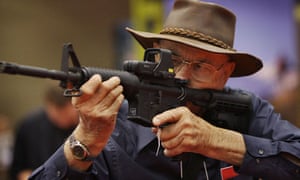

 Russia not only distributes the Kalashnikov rifles all over the world, but also licensed its production in over 30 other countries, including China, Israel, India, Egypt and Nigeria.


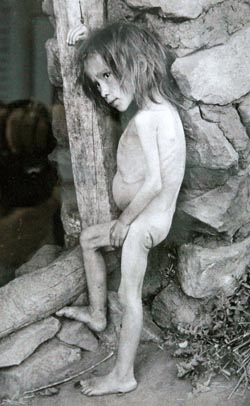

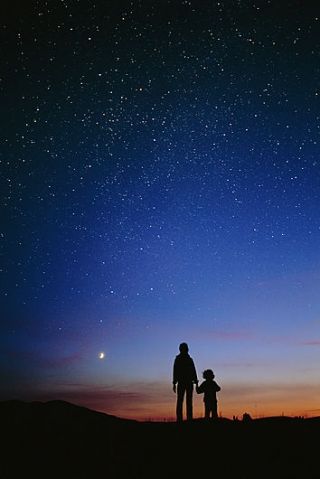




 bobdillon33blog