• About
  • THE BEADY EYE SAY’S : THE EUROPEAN UNION SHOULD THANK ENGLAND FOR ITS IN OR OUT REFERENDUM.

bobdillon33blog

~ Free Thinker.

bobdillon33blog

Category Archives: Social Media.

THE BEADY EYE SAY’S WE ALL BEING BRAINWASHED. THE WAY YOU THINK IS BEING CHANGED.

11 Friday Dec 2015

Posted by bobdillon33@gmail.com in Google it., Google Knowledge., Humanity., Life., Social Media., Technology, The Internet., The world to day., Unanswered Questions., Uncategorized

≈ Comments Off on THE BEADY EYE SAY’S WE ALL BEING BRAINWASHED. THE WAY YOU THINK IS BEING CHANGED.

Tags

Big Data, Brainwashing., Internet, SMART PHONE WORLD, The Future of Mankind


A little knowledge can be a dangerous thing.Afficher l'image d'origine

THE INTERNET IS CHANGING THE WAY WE THINK.

There’s been little consideration of how, exactly, it’s reprogramming us.

My mind isn’t going—so far as I can tell—but it’s changing. I’m not thinking the way I used to think. I can feel it most strongly when I’m reading.

For me, as for others, the Net media are not just passive channels of information. They supply the stuff of thought, but they also shape the process of thought. And what the Net seems to be doing is chipping away my capacity for concentration and contemplation. My mind now expects to take in information the way the Net distributes it: in a swiftly moving stream of particles.

Once I was a scuba diver in the sea of words. Now I zip along the surface like a guy on a Jet Ski.

When we read online, we tend to become “mere decoders of information.” Our ability to interpret text, to make the rich mental connections that form when we read deeply and without distraction, remains largely disengaged.

We’re assaulted with facts, pseudo facts, jibber-jabber, and rumour, all posing as information. Trying to figure out what you need to know and what you can ignore is exhausting.

Never has a communications system played so many roles in our lives—or exerted such broad influence over our thoughts—as the Internet does today.

It is replacing real wisdom with the conceit of wisdom.

It is filling us up with “content,” to the point that we are sacrifice something important not only in our selves but in our culture.

It is destroying deep thinking, and eroding quiet spaces.

It is replacing compassion with selfishness. It is partly to blame for the current world conflicts.

Our thinking, has taken on a “staccato” quality. A form of skimming activity,” hopping from one source to another and rarely returning to any source we have already visited.

Smartphones  have become Swiss army knife–like appliances that include a dictionary, calculator, web browser, email, Game Boy, appointment calendar, voice recorder, guitar tuner, weather forecaster, GPS, texter, tweeter, Facebook updater, and flashlight.

They are  becoming a universal medium, the conduit for most of the information that flows through our eyes and ears and into our minds.time from human events.

We are becoming ever more adept at scanning and skimming, but what we are losing is our capacity for concentration, contemplation, and reflection.

The Internet is a machine designed for the efficient and automated collection, transmission, and manipulation of information, and its legions of programmers are intent on finding the “one best method”—the perfect algorithm—to carry out every mental movement of what we’ve come to describe as “knowledge work.”

The idea that our minds should operate as high-speed data-processing machines is not only built into the workings of the Internet, it is the network’s reigning business model as well.

But there comes a design point when there are so many tools available that our environments lose their simplicity and the cost in added complexity outweighs the benefits of convenience.

In fact it is makes us demonstrably less efficient. Instead of reaping the big rewards that come from sustained, focused effort, we instead reap empty rewards from completing a thousand little sugar-coated tasks.

The faster we surf across the Web—the more links we click and pages we view—the more opportunities Google and other companies gain to collect information about us and to feed us advertisements.

Most of the proprietors of the commercial Internet have a financial stake in collecting the crumbs of data we leave behind as we flit from link to link—the more crumbs, the better.

The Internet, an immeasurably powerful computing system, is subsuming most of our other intellectual technologies. It’s becoming our map and our clock, our printing press and our typewriter, our calculator and our telephone, and our radio and TV, our conscience.

When the Net absorbs a medium, that medium is re-created in the Net’s imageDaniel J Levitan
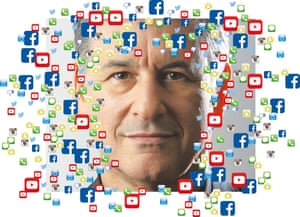
Email, telephone calls, electronic discussion groups, websites, pushed intranet news, letters and memos, faxes, stick-ems, calendars, pagers, and, of course, physical conversations and meetings, are just a few of the communicative events that bombard today’s knowledge worker. Thanks to the ubiquity of text on the Internet, not to mention the popularity of text-messaging on cell phones, we may well be reading more today than we did in the 1970s or 1980s, when television was our medium of choice.

But it’s a different kind of reading, and behind it lies a different kind of thinking—perhaps even a new sense of the self.

Printed book served to focus our attention, promoting deep and creative thought. In stark contrast, the Internet encourages the rapid, distracted sampling of small bits of information from many sources.

Although we think we’re doing several things at once, multitasking, this is a powerful and diabolical illusion.

It injects the medium’s content with hyperlinks, blinking ads, and other digital gewgaws, and it surrounds the content with the content of all the other media it has absorbed. A new e-mail message, for instance, may announce its arrival as we’re glancing over the latest headlines at a newspaper’s site. The result is to scatter our attention and diffuse our

We can turn the ringer off our phones, we can close our doors, we can auto-filter our email, we can personalize search engines, ask people to honor privacy, and so forth. But blocking out sacred time segments or sealing ourselves off from outside contact and even filtering email is not a serious solution. 

The last thing these companies want is to encourage leisurely reading or slow, concentrated thought. It’s in their economic interest to drive us to distraction.

Google carries out thousands of experiments a day, according to the Harvard Business Review, and it uses the results to refine the algorithms that increasingly control how people find information and extract meaning from it.

The company has declared that its mission is “to organize the world’s information and make it universally accessible and useful.” It seeks to develop “the perfect search engine,” which it defines as something that “understands exactly what you mean and gives you back exactly what you want.”

The more pieces of information we can “access” and the faster we can extract their gist, the more productive we become as thinkers. Which is totally untrue.

Their desire is to turn their search engine into an artificial intelligence, a HAL-like machine that might be connected directly to our brains. “The ultimate search engine is something as smart as people—or smarter.”If you had all the world’s information directly attached to your brain, or an artificial brain that was smarter than your brain, you’d be better off.”

A load of cobblers. To solve problems that have never been solved before, and artificial intelligence is the hardest problem out there.

If our brains were supplemented, or even replaced, by an artificial intelligence it would be more than unsettling. We would drain of our “inner repertory of dense cultural inheritance,” turning  our thoughts and actions into scripted, as if they’re following the steps of an algorithm.

Weakening our capacity for the kind of deep reading that emerged when an earlier technology, the printing press, made long and complex works of prose commonplace.

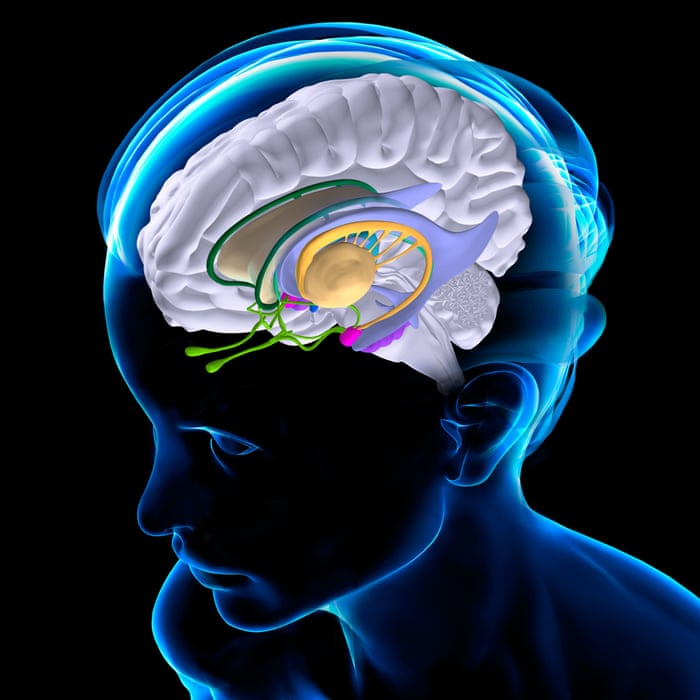
Remapping the neural circuitry, reprogramming the memory.

The technologies we use to find, store, and share information can literally reroute our neural pathways.  Every information technology carries an intellectual ethic. We stopped listening to our senses and started obeying the clock.

What the sociologist Daniel Bell has called our “intellectual technologies”—the tools that extend our mental rather than our physical capacities—we inevitably begin to take on the qualities of those technologies.

The missing premise is quality: The ratio of high quality to low quality information is falling.

In Google’s world, the world we enter when we go online, there’s little place for the fuzziness of contemplation. Ambiguity is not an opening for insight but a bug to be fixed. The human brain is just an outdated computer that needs a faster processor and a bigger hard drive.

Last year, Page told a convention of scientists that Google is “really trying to build artificial intelligence and to do it on a large-scale.

Information is relentlessly pushed at us, and no matter how much we get we feel we need more, and of better quality and focus.

  • Pushed information is information arriving in our work space over which we have little short-term control – the memos, letters, newspapers, email, telephone calls, journals, calendars etc. that land in one of our in boxes. To deal with it we have to make decisions. Is this garbage? Might it be useful? When? Where should I put it? Must I make a new file or new category for this?
  • Pulled or retrievable information is information we can tap into when we want to find an answer to a question or acquire background knowledge on a topic. Most people harbor a lingering belief that even more relevant information lies outside, somewhere, and if found will save having to duplicate effort.

Our lives ought to get easier in information rich environments but the question is at what cost.

He who knows it not and can no longer wonder, no longer feel amazement is as good as dead.

← Back

Thank you for your response. ✨


Yet no search engine seems to return hits with sufficient precision to save us from having to browse dozens of useless pages in our effort to berry pick the best items. The result is that we spend more time searching
more people have mobile phones than have toilets. This has created an implicit expectation that you should be able to reach someone when it is convenient for you, regardless of whether it is convenient for them.

we need a new theoretical understanding of our activity space and our dynamic relation to our environments.Cognitive overload is a brute fact of modern life. It is not going to disappear. In almost every facet of our work life, and in more and more of our domestic life, the jobs we need to do and the activity spaces we have in which to perform those jobs are ecologies saturated with overload.

As technology increases the omnipresence of information, both of the pushed and pulled sort, the consequence for the workplace, so far, is that we are more overwhelmed. There is little reason to suppose this trend to change.

Share this:

  • Share on WhatsApp (Opens in new window) WhatsApp
  • More
  • Share on Mastodon (Opens in new window) Mastodon

THE BEADY EYE SAY’S, It’s time to redefine our “lifespaces”—the way we live

30 Monday Nov 2015

Posted by bobdillon33@gmail.com in Google Knowledge., Humanity., Social Media., Technology, The Future, The world to day.

≈ Comments Off on THE BEADY EYE SAY’S, It’s time to redefine our “lifespaces”—the way we live

Tags

SMART PHONE WORLD, Technology, The Future of Mankind, The Internet., Visions of the future.

Afficher l'image d'origine

Humans started to separate from the rest of the great apes about 7M years ago and we became modern humans 200k years ago.

Are we now throwing the old blueprint out the window?

So Are we more attuned to our modern needs for the twenty-first century and beyond?

Have we moved beyond the paradigm of living in a nuclear family home in the suburbs?

What do the objects we select tell us about the relationships that exist between designer, retailer and consumer?

What is the design thinking behind some of the everyday items that shape our lives?

First we have to look at ourselves and according to the fountain of modern-day knowledge Google it.

An average person.

Spends 25 years sleeping.

10.3 years working.

48 days having sex.

Women spend 17 years of their lives trying to lose weight.

Spends 9.1 years watching TV.

Spends 2 years watching commercials.

Spends 1.1 years cleaning.

Spends 2.5 years cooking.

Spends 3.66 years eating, about 67 minutes a day.

Spends 4.3 years driving a car.

Spends 3 months of our life in traffic, about 38 hours a year.

Spends 1.5 years in the bathroom.

Spends a total of 92 days on the toilet.

Spends 70% of our waking life in front of digital media.

We laugh out loud 290,000 times in your life.

We walk a total of 110,000 miles.

We spend 90% of your time indoors.

We consume. 1 teaspoons of alcohol per day.

We have between 4 and 6 dreams a night for a total of 2,000 a year.

We fart 402,000 times in your lifetime.

We spend 14 days of your life kissing.

We drink 12,000 cups of coffee.

If you’re more into tea, you drink 48 pounds in your lifetime.

Women spend nearly 1 year deciding what to wear.

The average man will spend 1 year staring at women.

Women spend 8 years of their life shopping.

Women spend 1.5 years doing their hair.

An office worker spends 5 years sitting at a desk.

The average employee spends 2 years sitting in work meetings.

The average person swears 2,000,000 times.

Your heart beats about 100,000 times in one day and about 35 million times in a year. During an average lifetime, the human heart will beat more than 2.5 billion times.

The heart pumps about 1 million barrels of blood during an average lifetime

Your body has about 5.6 liters (6 quarts) of blood. This 5.6 liters of blood circulates through the body three times every minute. In one day, the blood travels a total of 19,000 km (12,000 miles)

the human body is about 60 percent water.

You pass around 42,759…. Liters of Urine in an average life time.

You are awake 16 to 18 hours a day.

“The New Frugality”

The average adult spends more than 20 hours online a week.

On average, people spend more than 490 minutes of their day with some sort of media,.with global average consumption set to rise to 506 minutes.

The internet accounted for 13% of average daily media use in 2010, but is set to reach nearly 30% in 2017.

Instant messaging use has leaped from 38% of mobile phone users in 2013 to 42% in 2014, driven by services such as Whats App and Facebook Messenger.

The mobile phone is now the primary device used for gaming with a quarter of mobile users playing games at least once a week.

80% of internet users aged between 35 and 44 are now on social media.

70% of internet users say they feel comfortable giving away personal information on the internet, including their home address, and a quarter say they don’t read website terms and conditions or privacy statements at all.

The start of life on Earth?

Are all becoming shut-ins.?

Or are we closer today to a global revolution than ever before. Can you feel it?

Or are we all disappearing into the Cloud.

The Question is how can we ensure that this is not going to happen.

HERE IS A SUGGESTION THAT COULD NOT BRAKE DOWN THE MESS WE SEE THE WORLD IN.

A UNIVERSITY TRAVEL SUBSIDIARITY AIR TICKET AWARDED TO GRADUATES.

THE SUBSIDY COULD BE GRADED ACCORDING TO THE MARKS RECEIVED.  

STUDENTS COULD BE ENCOURAGED TO SAVE THE BALANCE DURING THEIR COURSE.  

THERE IS NOTHING LIKE TRAVEL TO OPEN THE MIND.    

Here below are a few observations to help you make your mind up.

← Back

Thank you for your response. ✨

Share this:

  • Share on WhatsApp (Opens in new window) WhatsApp
  • More
  • Share on Mastodon (Opens in new window) Mastodon

THE BEADY EYE SAY’S : WE HAVE NEVER HAD FREEDOM AND WHAT WE HAVE NOW IS AN ILLUSION.

07 Saturday Nov 2015

Posted by bobdillon33@gmail.com in Freedom, Humanity., Life., Social Media., The world to day., Unanswered Questions.

≈ 1 Comment

Tags

Democracy, Freedom, Freedom of expression, SMART PHONE WORLD, The Future of Mankind, Visions of the future.


These days our Freedoms (which so many died for) are being eroded to the point where there is no such thing as Freedom in our Lifetime.In this post I am going to try to express what exactly personal Freedom is these days.
Afficher l'image d'origine

I am not going to exam the United Nations Declaration of Human Rights which has over 30 Articles, or what is left of free speech, or the Black freedom struggle, or woman’s struggle for freedom.  Or the idea of free speech which is a view of freedom that is inseparable from the
political arena, flawed in theory and politicised in practice.

⌈ Human rights are rights inherent to all human beings, whatever our nationality, place of residence, sex, national or ethnic origin, color, religion, language, or any other status. We are all equally entitled to our human rights without discrimination. These rights are all interrelated, interdependent and indivisible.

Universal human rights are often expressed and guaranteed by law, in the forms of treaties, customary international law, general principles and other sources of international law. International human rights law lays down obligations of Governments to act in certain ways or to refrain from certain acts, in order to promote and protect human rights and fundamental freedoms of individuals or groups.⌉

All of which are impossible to implement, and has never been implemented anywhere historically – not even today, in liberal societies.

The freedoms that we once had are now dissolving because of the Internet, and the need for blanket surveillance due to fear mongering politics over terrorists plots ever since 9/11.

Our every move is tracked, we are under surveillance around the clock, our buying habits are logged, our preferences are hacked, and most of us don’t raise an eyebrow.

It is a mistake to think of a search engine as an oracle for anonymous queries they can set off a chain reaction that can have troubling consequences both online and offline. All this is because being online increasingly means being put into categories based on a socioeconomic portrait of you that’s built over time by advertisers and search engines collecting your data—a portrait that data brokers buy and sell, but that you cannot control or even see.

Our background and our relationships are becoming inescapable features of our human existence.

So what is freedom.

In the modern sense freedom is achieved by one’s individual nature, or inner voice.  A sovereign self – a monological consciousness that fundamentally excludes the other.

However one can still be imprisoned by an oppressive internal forced liberation from an interior force.

So how can one reconcile two seemingly opposed senses of freedom?

One sense views freedom as bound and situated, while the other sense views freedom as liberation from such bonds.

What is required is a notion of self hood that recognizes and embraces both senses of freedom –  to see the self not as an isolated and detached entity from the social world, but one that is deeply enculturated and dialogical while simultaneously liberated.

These are the limits, the boundaries, of what allow us to be free and for things to be meaningful.

So instead of viewing boundaries as something that disables our freedom, we should recognize that boundaries are what might actually enable our freedom.

The received ideas of our present-day institutions are composed of the religious, philosophical, economic, and political status quo.

The goal for each of us is to break free of these ideologies and re describe our world as a whole. This sense of freedom, which I referred to earlier as freedom-within-boundaries, is what ultimately makes possible a freedom-from-oppression.

If men wish to be free, it is precisely sovereignty they must renounce.

As Charles Taylor puts it, this sovereign and self-determining freedom characteristic of the modern individual “demands that I break the hold of all such external impositions, and decide for myself alone.

In this view, individuals could exercise their gifts and powers only by
participating in the common life.

That is to say, our freedom is contingent upon the greater public world.

Modern thought (especially evident in the political philosophy of Rousseau) externalized the source of oppression onto authoritative forces such as society, church, law, and government.

This is no longer true due to the indebtedness of the world.

At the expense of eliminating fundamental characteristics that make us human we are now confronting a world with unlimited new possibilities but having no meaningful boundaries.

Modern Social media come to see others as a part of – Us/Selfies.

Unfortunately this unchecked freedom is leading us to a void in which nothing would be worth doing, nothing would deserve to count for anything.

Life is dialogical by its very nature.

To live means to engage in dialogue, to question, to listen, to answer, to agree, to return to your own position, enriched. We need to identify with others in order to open ourselves up to new ways of being without forgetting where we come from to achieve any freedom.

In the past our background was essential to our identity. These days one’s uniqueness is maintained through continuous exposure to novelty  in a consumer culture that thrives on the latest fad.

Is it this quantity of novelties that appears to take precedent over quality of relationships. So where do we turn for redescription of Freedom, to open us up to new and fresh ways of being human?

That can enable us to break free from our own pasts and increase our level of sensitivity and sympathy to those without freedom?

Is it severance from the status quo.

I fear that if you were to ignore you background, and try to break from your own past, “You would be crippled as a person, because you would be repudiating an essential part out of which you evaluate and determine the meanings of things. Our background, often times inarticulate and unformulated, carries the values and traditions that constitute who we are. This background is no longer not just our personal past and memories, but it may also be the lineage, tradition, and culture from which we have emerged.

Instead of dropping our historicity, we should be interested in owning up to the background and tradition that gives significance to our identity.

Meaningful freedom can only be achieved through enculturation.

Therefore, our freedom is bound in a sense, or situated in the environment that has shaped us, because that is likely to be the most meaningful environment to us.

Perhaps it is only in a bounded space that we can move about freely.

Fusion of horizons’ between ourselves and others..we must always have a horizon in order to be able to transpose ourselves into a situation.

Background is what initially provides persons with the possibility for understanding anything at all. Our background, or tacit knowledge of the world, is the horizon out of which things have meaning for us. It gives us our “referential context of significance.” A liberating freedom, which occurs when our world is enlarged not downloaded on to a data base.

Our identity is formed by the web of relationships that surround us.  Therefore, it is precisely ourselves, which implies our background, that we must bring into the other’s situation.

The fundamental significance of language and conversation, and its ability to bring us closer to understanding one another is now rapidly diluted by technology.

We are not born precocial and fully hard-wired creatures.

Instead, we are born as incomplete beings, needing enculturation and society for healthy maturation.

Our biological need for one another requires certain physiological signals, that are not possible on the Web. Through facial expressions, infants learn to not only replicate another’s face, but to empathically feel what the face exhibits.

Biologists consider this skill of emotional matching to have been “crucial for escape from predation, foraging, hunting, and mass migrations” before spoken language entered our evolutionary history.

In spite of the modern liberating sense of freedom which may encourage isolation and detachment, we should also note that it can promote a healthy release from oppressive external forces. These forces can manifest in a variety of forms, everything from an abusive relationship to a manipulative religious group.

Afficher l'image d'origine

Emphasis on a socially dependent self can lead to passivity in daily life or submission to totalitarian regimes.

By being sympathetic we are capable of being liberated from ourselves.

On the other hand egocentrism shouldn’t be overcome at the expense of forgetting ourselves. So freedom is one that respects the boundaries of selfhood, instead of annihilating it.

Although we may be transported into the sandals of the Buddha, we still need to come back to our point of departure in order to be enriched.

Because in recognizing the necessity of one’s interpersonal relationships, social and moral commitments, culture, tradition, memories, and of course, biology as constitutive of one’s experience of liberation.

Freedom doesn’t necessarily mean fleeing to a new land. It can also mean discovering the oceanic depth of a single, bounded situation. And this entails having new eyes. Remember, “Life is immense!”

We are free to become authentic only after we accept our boundary, which is our finitude.

Death is the ultimate boundary of human existence, it is only by facing up to this limit that we are capable of becoming truly authentic Free.

Where the mind is without fear and the head is held high;
Where knowledge is free;
Where the world has not been broken up into fragments
by narrow domestic walls;
Where the words come out from the depth of truth;
Where tireless striving stretches its arms towards perfection;
Where the clear stream of reason has not lost its way
into the dreary desert sand of dead habit;
Where the mind is led forward by Thee into ever-widening
thought and action–
Into that heaven of freedom, my Father,
let my country awake.

99.gif (1038 bytes)

–Guru Rabindranath Tagore
National Poet, Freedom Fighter

Modern day freedom-is freedom within boundaries.

← Back

Thank you for your response. ✨

Share this:

  • Share on WhatsApp (Opens in new window) WhatsApp
  • More
  • Share on Mastodon (Opens in new window) Mastodon

THE BEADY EYE LOOKS AT DESIRE

17 Thursday Sep 2015

Posted by bobdillon33@gmail.com in Humanity., Social Media., Technology, Unanswered Questions.

≈ Comments Off on THE BEADY EYE LOOKS AT DESIRE

Tags

Desire., Excellence., Pleasure., Reward without desire., Well-being.

How often have you said  “I crave this substance, long to see that person again, would die for another piece of something I just ate.

The first time that many people consume an alcoholic beverage, they have no particular desire to drink it. They just go along with the crowd. Then the alcohol hits and they discover that the feeling is very pleasant — in other words, rewarding.

I am sure like me that this is a subject you know little about and seldom question. Like many subjects this is a human attribute we take for granted.

Indeed my desire to explain clearly what I want to, I am sure will fail miserably.

Nothing Ventured nothing gained.

So let’s ask where does desire come from?

How could anything be a desire without one having an urge to obtain the object of desire?

The obvious answer is our senses, sight, smell, touch, taste, pain, combined with abstract stimulants like shape, color, and mood or for example Donald Trump’s taste leaves a lot to be desired.

Some of our thoughts are accepted, some are rejected, and others are ignored.

There are two distinctions of orientation or of intention of a subject toward any phenomenon: “to” or “from” it, attraction or repulsion, acceptance or rejection.

The words ‘desire’, ‘want’, ‘wish’, one’s desires provide one with reasons to act.

The three faces of desire are, in a nutshell, that desires are motivating, that satisfying desires is usually pleasurable, and that desires determine what will count as rewards and punishments.

There can be reward without desire.

When a desire is not satisfied, it is rational to change the world, not the desire.

Changing the desire would leave one with nothing, neither pleasure nor displeasure.

Desire is often for pleasure and satisfying desires is often extremely pleasurable, but the very possibility of a causal relationship between the two speaks to them being different from one another.

But then again for an individual attempting to realize his self-regarding desires, the satisfaction of the satisfaction of a desire is unmeaning.

By the time we desire something, we do not have to learn that getting it would be rewarding; we already believe that.

This does not mean that the desirability of desires is a good guide to anything else about them. There are certain kinds of conflict of desire and how do you distinguish between wishes and desires?

Desires are held to conflict just in case the satisfaction of one precludes the satisfaction of the other; second, a desire is said to be satisfied just in case the propositional content of the desire is true.

Yet little is actually known about well-being. The satisfaction of one’s present desires for present states of affairs can affect one’s well-being.

So if I desire fame today and become famous tomorrow, my well-being is positively affected only if tomorrow, when I am famous, I still desire to be famous.

An individual’s well-being is enhanced when her desires are satisfied.

“Well-being,” “welfare,” “utility,” and “quality of life,” all closely related concepts, and are at the center of morality, politics, law, and economics.

Subjective theories of well-being claim that how well our lives go for us is a matter of our attitudes towards what we get in life rather than the nature of the things themselves.

The concept of preference dominates economic theory today.

I could write till the cows come home on the misrepresentations of the bodies, desires and sexualities of people in the world which are embedded in the colonial histories, and in the social, economic and political complexities of the world, with all their racial, ethnic, class and religious diversity.

Exploiting the erotic is a foundational aspect of hegemonic knowledge production, war and colonization.

The distortion of the erotic is tied to the objectification of women, the reproduction of reductive Brown and Black and White masculinities, and to the sensationalization of our identities and lives, thus reinforcing consumerist and fundamentalist politics.

The erotic has been distorted and used to oppress women and distance them from their power.

The Internet stimulates continuing change in sociality and sexual markets.  Economic growth, globalisation and the Internet facilitate access to the world’s oldest profession.

Dating websites cater to people of all ages, all socio-economic groups, married and non-married. Some websites specialise in particular social and/or sexual groups, making it easier for people with arcane tastes and interests to meet up. Commercial sexual services have also take to the Internet, and advertise their services under the guise of ‘call girl’ or ‘escort’ services and the popular ‘Girl-Friend Experience’ (GFE).

As my interest here is to ask the question what is desire, where does it come from rather than the obvious male sexual desire which manifested at least twice as often as female desire I will leave this side of desire for others to comment.

It is sufficient to say that the commercial sex industry is impervious to prohibitions and cannot be eliminated. It should be completely decriminalised.

The sex industry is estimated to be worth over four billion pounds to the British economy.

Capitalism is the economy of desire with advertising its weapon.

Welfare economics defines individual welfare in terms of preference satisfaction or utility, and social welfare as a function of individual preferences.

The desire for status is a controversial topic. On the one hand, many theorists have argued that the desire for status is a fundamental human motive.

So what are desires like that we encounter in ourselves and others?

Will Goggle Glasses create desires?

Will artificial intelligence have desires.?

The only replacement for Desire is Excellence. That state is not, of course, within the experience of normal, sane mortals. Just look at the state of the world.

Can we explore space if we desire to be home.?

Here is a desire of mine. Don’t press the like button leave a comment.

← Back

Thank you for your response. ✨


Share this:

  • Share on WhatsApp (Opens in new window) WhatsApp
  • More
  • Share on Mastodon (Opens in new window) Mastodon

The Beady Eye looks at Google Knowledge.

12 Wednesday Aug 2015

Posted by bobdillon33@gmail.com in Google it., Google Knowledge., Social Media., The Internet.

≈ Comments Off on The Beady Eye looks at Google Knowledge.

Tags

Google, Google ambitions, Google knowledge.

Out of the seven billion people in the world how many really understand quantum mechanics, cell biology, or macroeconomics?

Knowledge is power.

The real test of knowledge is not whether it is true, but whether it empowers us. Consequently, these days truth is a poor test for knowledge. The test seems to be utility. A theory that enables us to do new things constitutes knowledge.

Knowledge is a the root of many (dare I say most) challenges we face in a given day and I have to admit I could do with a large refresher course.

Once you get past basic survival we’re confronted with knowledge issues on almost every front.

These days most of us are becoming reliant on Google it.

But when you get an answer is that answer universal knowledge or is it Google cods wallop.

It’s not possible to completely shed all our lenses which color our view of things and so it’s not possible to be certain that we’re getting at some truth “out there.” If all beliefs are seen through a lens, like Google how do we know the postmodernists beliefs are “correct?”

In order to have certainty, postmodernists claim, we would need to be able to “stand outside” our own beliefs and look at our beliefs and the world without any mental lenses or perspective.

If we do not fully understand what it is, will we not fully understand ourselves either?

But then again knowledge — can ever be fully understood.

The nature of knowledge is answerable to intuitions. This means that what may count as knowledge for you may not count as knowledge for me. An other words what you know may not be something I know even though we have the same evidence and arguments in front of us.

The bottom line is that “universal knowledge” – something everybody knows—may be very hard to come by.

I think, therefore I am.

Truth, if it exists, isn’t like this.

Truth is universal. It’s our access to it that may differ widely.

Okay, a definition is tough to come by.

But philosophers have been attempting to construct one for centuries. Over the years, a trend has developed in the philosophical literature and a definition has emerged that has such wide agreement it has come to be known as the “standard definition.”

As with most things in philosophy, the definition is controversial and there are plenty who disagree with it. But as these things go, it serves as at least the starting point for studying knowledge.

The person believes the statement to be true
The statement is in fact true
The person is justified in believing the statement to be true

Belief:

They’re in your head and generally are viewed as just the way you hold the world (or some aspect of the world) to be.

It implies that what you think could be wrong. In other words, it implies that what you think about the world may not match up with the way the world really is and so there is a distinction between belief and the next item in our list.

People will generally act, according to what they really believe rather than what they say they believe

Truth:

Truth is not in your head but is “out there.”

When you believe something, you hold that or accept that a statement or proposition is true. It could be false that’s why your belief may not “match up” with the way the world really is.

Justification:

If the seed of knowledge is belief, what turns belief into knowledge?

This is where justification comes in (some philosophers use the term “warrant” to refer to this element). A person knows something if they’re justified in believing it to be true (and, of course, it actually is true).

Justification is hard to pin down because beliefs come in all shapes and sizes and it’s hard to find a single theory that can account for everything we would want to claim to know. Even so, justification is a critical element in any theory of knowledge.

So.

  • Everyone comes to belief with a cognitive structure that cannot be set aside.
  • Our cognitive structure serves as a lens through which we view the world. Because of this, knowledge is said to be perspectival or a product of our perspective.
  • Since the evaluation of our beliefs is based on our cognitive lens, it’s not possible to be certain about any belief we have. This should make us tentative about truth claims and more open to the idea that all of our beliefs could be wrong.
  • Truth emerges in the context (or relative to) community agreement. For example  if the majority of scientists agree that the earth is warming and that humans are the cause, then that’s true. Notice that the criteria for “truth” is that scientists agree.

Are you now any more knowledgeable.   Google it and see.

There is one thing without doubt:

The fact that you are a thinking things.

In order to doubt you have to think. (The very reason that it’s not possible to doubt something without thinking about the fact that you’re doubting it). Thinking then you must be a thinking thing and so it is impossible to doubt that you are a thinking being.

If you know it all leave a comment, otherwise press the like button. Ignorance is bliss.

Some further reading and viewing>

Knowing how to Google something is not enough. 2014/09/02

Google is a business. 2015/03/02

The Imparting and Acquiring of knowledge. 2015/03/03

← Back

Thank you for your response. ✨


Share this:

  • Share on WhatsApp (Opens in new window) WhatsApp
  • More
  • Share on Mastodon (Opens in new window) Mastodon

The Beady Eye looks at the benefits and non benefits of Social Media.

20 Monday Jul 2015

Posted by bobdillon33@gmail.com in Social Media., Technology, The Future

≈ 1 Comment

Tags

Big Data, Earths future., Earths Nightmare, Future Society., Globalization, Power of Social Media, Social Media, Social networking, Social world, The Internet of Things, The Internet.

I would like to think you’re here not necessarily because your agree or disagree with what I write, but that you think it is worth hearing and want to learn, interact and debate with me. If you like pressing the like button this is not the place to find the like button.  Lets hear your views.Eyes Robot Cyborg wallpaper background

Social Media a vast and complex subject far to large to cover all aspects.

In this post I am going to try to address some of the more obscure effects it is having on all of us or could have in not the so distant future.

How much do we understand this new dictatorship we’re in?

IF YOU ASKED ME I WOULD SAY: WE DON’T HAVE A CLUE.

Technology has revolutionized the way people go about their daily activities..

Google received over 2 million search queries per minute. The Number of people who use Twitter 302 million monthly active users 28/04/2015. Apple in the last three months turned over 60 billion a 40% profit of 11billion.

Facebook its monthly active users cleared 1.35 billion — roughly equal the population of China, and 9 percent larger than that of India. By these numbers, nearly 20 percent of the world’s population logs into Facebook once a month. And if we just look at the worlds Internet users, roughly half of them — every other person with Internet on the planet — use the site actively. 936 million daily 22/04/2015.

Half of all Internet-users live in “Facebookistan”

In the time it takes you to read this sentence more than 684,478 pieces of content will be shared on Facebook, 100,000 people will tweet, hundreds of thousands more will “like” an Instagram photo…and that’s if you read very quickly.

Access to technology has become an integral part of education, socialisation and industry related requirements, and accordingly Internet usage is evolving and growing rapidly. It is changing the way we shop to the way we drop. It does not care about time or distance. Everyone can be online every time and communicate with everyone everywhere.

The internet is home to millions of sites, representing both commerce and the people who share their thoughts and experiences with anyone who visits. The internet users worldwide now represents 3.17 billion, or in other words half of the current world population.  

The question is whether the effortless, ever-changing world of online social life is in fact one that ultimately undermines the ability to explore narrative, and place people, ideas and events in wider contexts.

There is no argument that it is effecting the way we all live but if we don‟t act to enhance inter generational communication, we risk generating a culture structured by a digital/communication divide between young people, their parents and older members of the community.

Cyber citizenship, if it is to retain relevance and deliver benefits to the community, therefore, is a concept that would more usefully be applied to the community as a whole, rather than as a set of policies that target young people as requiring protecting – or protection from – in a digital landscape.

Our understanding of cyber citizenship must be more holistic, to fully encompass and resonate across all of the settings in which we live our lives – be that home, school, work, our local communities or our communities of interest.

So what effect is Social Media actually having on the world communicates and our life styles.

For example:

The internet is the place to interact with new people and a way to expose yourself to strangers. The partial anonymity available online can be used as a mask for sexual offenders and psychos;

Social media is being used as a tool by movie studios well ahead of a film’s release to help shape the marketing campaign.

Billions of Amateur videos, posted on social media websites.

Americans across the country took to social media to celebrate the Supreme Court’s decision making same-sex marriage a right.

Its replacing communication by letter or phone.

Twitter and Facebook are only two of the online connections people use today to stay in contact with friends and family.

The entire purpose of setting up social media networks around the world is to allow and promote the world to communicate and connect with one another. However, the trend that seems to be following this widespread connection and communication is the exact opposite.

It all appears to boil down to you having no way of really knowing what is the truth and what is the lie. 

Someone’s life and personality neatly tucked away in the cyber-universe.

Do the dangers of online networking far outweigh the benefits?

Who knows.

One of the great dangers as far as I am concerned is the establishment of an economic order that would apply to all, everywhere.

No social animal is ever guided by the interest of the entire species to which it belongs.

Social Media allows cooperation with complete strangers who are imagined to be your friends. This could lead to the entire human race becoming a single unit governed by a single set of laws. These days we think of the planet as a single unit but for most of its history it was in fact an entire galaxy of isolated human worlds.

The ever tightening social media links will in the long run destroy individuality.  We are now living in an age of technology where the information contained on these sites is now being used against us.

So the benefits of SNS use are dependent on good internet and media literacy: having the skills to critically understand, analyse and create media content while avoiding addiction.

Young people are consuming, producing, sharing and remixing media.

This has led to the claim that today‟s young people are produsers‟ they actively produce and consume media. The importance of SNS in young people‟s everyday lives is indisputable: 90% of 12 to 17 year olds, and 97% of 16 to 17 year olds, use SNS

Social media has begun to create an unsociable disconnected generation of young adults… they lack awareness of the public nature of the internet. This include the management of personal information and privacy, the risk of predation and cyber bullying.  Can it be minimised?

It is compromising the development and maintenance of supportive friendships and involvement in institutions traditionally understood as the embodiment of “communities‟, namely school, sports clubs, families etc.

Social networking sites have become an important additional arena for politics. It increasingly important for the expression of identity.

What can be done if anything.

Education MUST increased internet and media literacy – ensuring all young people develop the skills to critically understand, analyse and create media content.

With the lack of parental supervision between the ages of fourteen to seventeen, which makes one of largest demographics using social networking sites, these teens ARE subjected to mature elements..

Teenagers are finding their identity in the world, they are the “my space generation” (Livingstone, 2008) the internet has allowed them to connect with people from all over the world but do they choose to do that…

It is presenting mankind with the biggest opportunity to change the course of history.  It is exposing the Inequalities and making the world aware of our common vulnerabilities.

Then there is growing power of Petitions not to mention the job market or trial by Social Media and the greed of the business world which is beginning to be recognized for what it is by targeting Advertising.

As I said don’t press the like button be an individual and leave a comment.

← Back

Thank you for your response. ✨


Share this:

  • Share on WhatsApp (Opens in new window) WhatsApp
  • More
  • Share on Mastodon (Opens in new window) Mastodon
Newer posts →

All comments and contributions much appreciated

  • THE BEADY EYE SAYS., NONE OF US UNDERSTAND WHAT IS COMING WITH ARTIFICIAL INTELLIGENCE. February 19, 2026
  • THE BEADY EYE ASKS WHAT HAPPENS WHEN PEOPLE NO LONGER MAKE DECISIONS. February 18, 2026
  • THE BEADY EYE: ASK WHY IS IT IMPOSSIBLE FOR HUMANS TO GET ALONG WITH EACH OTHER? February 17, 2026
  • THE BEADY EYE SAYS. AT 130 THOUSAND OF TAX PAYERS MONEY ITS TIME TO RETIRE THE ROYAL FAMILY. THE EPSTEIN FILES CAST A SPOT LIGHT ON THEIR WORTH. February 17, 2026
  • THE BEADY EYE SAYS. WITH THE EPSTEIN FILES IT IS BECOMING CLEAR THAT THE TRAFFICKING OF YOUNG WOMEN IS LESS REPULSIVE WHEN THE WEALTHY ARE INVOLVED. February 12, 2026

Archives

  • February 2026
  • January 2026
  • December 2025
  • November 2025
  • October 2025
  • September 2025
  • August 2025
  • July 2025
  • June 2025
  • May 2025
  • February 2025
  • January 2025
  • December 2024
  • November 2024
  • October 2024
  • September 2024
  • August 2024
  • July 2024
  • June 2024
  • May 2024
  • April 2024
  • March 2024
  • February 2024
  • January 2024
  • December 2023
  • October 2023
  • September 2023
  • August 2023
  • July 2023
  • June 2023
  • May 2023
  • April 2023
  • March 2023
  • February 2023
  • January 2023
  • December 2022
  • November 2022
  • October 2022
  • September 2022
  • August 2022
  • July 2022
  • June 2022
  • May 2022
  • April 2022
  • March 2022
  • February 2022
  • January 2022
  • December 2021
  • November 2021
  • October 2021
  • September 2021
  • August 2021
  • July 2021
  • June 2021
  • May 2021
  • April 2021
  • March 2021
  • February 2021
  • January 2021
  • December 2020
  • November 2020
  • October 2020
  • September 2020
  • August 2020
  • July 2020
  • June 2020
  • May 2020
  • April 2020
  • March 2020
  • February 2020
  • January 2020
  • December 2019
  • November 2019
  • October 2019
  • September 2019
  • August 2019
  • July 2019
  • June 2019
  • May 2019
  • April 2019
  • March 2019
  • February 2019
  • January 2019
  • December 2018
  • November 2018
  • October 2018
  • September 2018
  • August 2018
  • July 2018
  • June 2018
  • May 2018
  • April 2018
  • March 2018
  • February 2018
  • January 2018
  • December 2017
  • November 2017
  • October 2017
  • September 2017
  • August 2017
  • July 2017
  • June 2017
  • May 2017
  • April 2017
  • March 2017
  • February 2017
  • January 2017
  • December 2016
  • November 2016
  • October 2016
  • September 2016
  • August 2016
  • July 2016
  • June 2016
  • May 2016
  • April 2016
  • March 2016
  • February 2016
  • January 2016
  • December 2015
  • November 2015
  • October 2015
  • September 2015
  • August 2015
  • July 2015
  • June 2015
  • May 2015
  • April 2015
  • March 2015
  • February 2015
  • January 2015
  • December 2014
  • November 2014
  • October 2014
  • September 2014
  • August 2014
  • July 2014
  • June 2014
  • May 2014
  • April 2014
  • March 2014
  • February 2014
  • January 2014
  • December 2013
  • November 2013
  • October 2013

Talk to me.

Jason Lawrence's avatarJason Lawrence on THE BEADY EYE ASK’S: WIT…
benmadigan's avatarbenmadigan on THE BEADY EYE ASK’S: WHA…
bobdillon33@gmail.com's avatarbobdillon33@gmail.co… on THE BEADY EYE SAYS: WELCOME TO…
Ernest Harben's avatarOG on THE BEADY EYE SAYS: WELCOME TO…
benmadigan's avatarbenmadigan on THE BEADY EYE SAY’S. ONC…

7/7

Moulin de Labarde 46300
Gourdon Lot France
0565416842
Before 6pm.

My Blog; THE BEADY EYE.

My Blog; THE BEADY EYE.
bobdillon33@gmail.com

bobdillon33@gmail.com

Free Thinker.

View Full Profile →

Follow bobdillon33blog on WordPress.com

Blog Stats

  • 97,419 hits

Blogs I Follow

  • unnecessary news from earth
  • The Invictus Soul
  • WordPress.com News
  • WestDeltaGirl's Blog
  • The PPJ Gazette
Follow bobdillon33blog on WordPress.com

The Beady Eye.

The Beady Eye.
Follow bobdillon33blog on WordPress.com

Create a free website or blog at WordPress.com.

unnecessary news from earth

WITH MIGO

The Invictus Soul

The only thing worse than being 'blind' is having a Sight but no Vision

WordPress.com News

The latest news on WordPress.com and the WordPress community.

WestDeltaGirl's Blog

Sharing vegetarian and vegan recipes and food ideas

The PPJ Gazette

PPJ Gazette copyright ©

Privacy & Cookies: This site uses cookies. By continuing to use this website, you agree to their use.
To find out more, including how to control cookies, see here: Cookie Policy
  • Subscribe Subscribed
    • bobdillon33blog
    • Join 222 other subscribers
    • Already have a WordPress.com account? Log in now.
    • bobdillon33blog
    • Subscribe Subscribed
    • Sign up
    • Log in
    • Report this content
    • View site in Reader
    • Manage subscriptions
    • Collapse this bar