We all know that the present crisis in European Union has freighting potential to undermine all our lives?
The problem is that despite all the rhetoric Wall Street and World Stock Markets underpin the hard nose of business with the priesthood of economists.
Financial experts and commentators worshiping it worldwide as a God.
Leaving us incapable of grasping that at one point in human history the Laws of the market can only be a human construction which now seen as absolute – even when they clearly do not work.
The high priests of today oblivious to the anti-market nature of their behavior do not hesitate to intervene to fix it on a colossal scale in contravention of the market’s own precepts.
The idea that money-making is the primary Goal of the most admired people in Society, the Goal of our Nations economic philosophies, the G 20, the European Union, our education, combined with our central defining consumerism greed is back firing.
What we got is the results that we see today:
Quantitative Easing, Money Printing /Austerity/ /Germany bailouts /Guarantees/ Banks before people Interest fixing /Elections/ Unemployment/ Bonuses/Tax confusion/ Independent Referendums, all served up with large daily doses of verbal diarrhea by every expert that has written a book.
I have not written any book on the subject and I am no expert but I am beginning to wake up to the need for our Captains of Industry, our political leaders and business to realize that competitiveness is not all that it is dressed up to be.
It can severely impair a given country’s ability to choose its own social and economic destiny and our individuality.
No currency can set the boundaries of a nation.
So it is worth reminding ourselves how grandiose the dreams of the European Union founders were.
Our present world can be seen as full of conflict, pain, misery, wars, while across the world ecological, economic and political spaces are being enclosed through privateering, Algorithms, liberalization and globalization and the hidden purchasing power of Sovereign Funds – All breeding new insecurities anxieties and stresses.
In this world Europe was renamed the European Common Market with its inhabitants viewed chiefly in economic terms, as producers or consumers, not countries with vastly different histories, problems, and circumstances.
The notion that trade and wealth creation would create a Europe laisser-faire was not basis on its history but on a vague notion that togetherness would make us less likely to repeat World War One /Two.
Reducing our society to markets and us humans to consumers.
Those that are rich have status and those who are poor do not.
You only have to read a newspaper to see how the overpaid footballers, film and soap star, business people are held up to be admired. While we the people fooled by capitalism that has made work the center of our lives and are now in the process of destroying it as a satisfying meaningful activity through the world stock exchanges that are driven by algorithms that determine whether we should retire at 63, 65, and 68 remain voiceless.
As a Species we have basis needs for meaning of identity, for community, and security, for food water and freedom.
So it stands to reason to prevent our collectively insane political leaders terminating life in Europe never mind the earth that we need to do something.
We all know that banks can’t stop themselves. Bail them out by all means but only under strict regulations.
If we in Europe want to avoid a repeat of the wars that devastated the Continent in the past all that is required (a saving of trillions) is a united military European Army. This will provide Europe with reasonably secure environment, safe from the threat of major war with its countries being let find their own versions of modernity or not to modernize at all.
Europe does not need a free market to thrive.
How can we achieve this?
There is only one solution scrap the Euro and let each country set its own exchange rates according to its own GDP (without the tanks, planes, nuclear weapons) set against the value of human resources, social capital, and ecological assets.
The present melt down of the EU could not have come at a better time.
If we do not preserve the Capital of Europe its different cultures /languages/ history and the like there will be no Economics.
We all know that economic is not a science however each time history repeats its self the price goes up.
The Euro is fundamental flawed and please god will remain so to protect what is the very essence of living or being born in Europe.
It’s time we all realize that the Natural Capital of the world, water, clean air, oceans, forests have to be protected so we must pay the keepers of the natural capital if we as humans are to live at all.
So let’s start in Europe with some common European aspirations.
Self sufficiency in Power- creates a common European kilowatt price: Abolish road tolls: Proper periphery border controls: Freedom of movement of currencies within the market – abolish commission charges: European Youth employment programs: European health / pension Euro bonds backed by all countries – to mention a few.
God knows it not difficult to identify what is needed, just attached the words total transparency to any common Goal and it will be achieved without Greed.
(If you want a future worth living here is a crucial half an hour read)
Most of us know that we are in the middle of a technological upheaval that will transform the way society is organized and the beast we are unleashing can be used for good and bad.
Long before what Elon Musk and Mr Hawking predict there is a much more immediate threat when it comes to AI. The holy grail of AI the microchip will surpass the power of the human, creating a whole new world of Quantum computing, one in which machines think and work in ways indiscernible to the human brain.
Rest assured that Capitalism will concentrate AI global wealth to a few and the disparity effects will be sever and this will happen faster and faster with a massive dislocation in the lower skills in society.
Just imagine an AI that learns to navigate the web environment.
It will not be Twitter voting in Donald Trumps or Social media promoting Populist Parties it will be an army of AI bot web trolls harassing what we now call Social Media to the point that there will be no true public opinion worth its salt.
Putin recently said AI leaders will rule the world. He is right. It will create even larger power inequality.
We are well on the way to one way flow of technology with Data as the rocket engine.
We are already using AI without even knowing it.
The Capitalistic world will come under bigger AND BIGGER cyber security issues, with terrorist acquiring clandestine powers that will be unverifiable.
So I ask the question are we prepared for AIs that start building their own normative systems – their own rules about what is acceptable and what is unacceptable for a machine.
Remember using your face to unlock your smart phone is unlocking your mind. A world with facial ID software is one that will spiral out of control.
Gay, Straight, Terrorist, Left or Right, Lidel or Sainsburys, Male or Female, Criminal or not, Rich or Poor.
Regardless of what we do, what’s clear, is that if we want technology to do what we want it to do we need for all technological advancements to be vetted by an Self Financing, Transparent, Independent World Organisation, other than the United Nations.
The United Nations recently opens a new talking shop center in the Netherlands to monitor artificial intelligence and predict possible threats.
“Artificial Intelligence has both the potential to accelerate progress towards a dignified life, in peace and prosperity, said UN Secretary-General António Guterres.
When in fact it also has the potential to destroy what is left of our world.
The United nations Technology for Development (UN CSTD) acknowledges that many technological and development gaps still remain. A Joke.
The real question is not the gaps but who or what should take control and overlook its development.
It is my contention that the UN is total the wrong Organisation to provide a neutral platform for international dialogue, which can build a common understanding of emerging technologies.
However it is best placed to set up a totally independent Organ separate from the UN that is responsible to the people of the world not to the 5 stock piles of nuclear weapons or the developing technology.
The opportunity to use AI to solve some of the world’s grandest challenges cannot be left to Government Regulation, The Free Market, The arms race, or to Capitalist Greed especially in the form of multi global monopoly corporations, like Apple, Microsoft to name but two.
Why?
Here are a few reasons:
Because algorithms know pretty well what we do, what we think and how we feel—possibly even better than our friends and family or even ourselves.
In fact, we are being remotely controlled ever more successfully in this manner. The more is known about us, the less likely our choices are to be free and not predetermined by others.
It won’t stop there.
Some software platforms are moving towards “persuasive computing.”
In the future, using sophisticated manipulation technologies, these platforms will be able to steer us through entire courses of action, be it for the execution of complex work processes or to generate free content for Internet platforms, from which corporations earn billions.
The trend goes from programming computers to programming people.
These technologies are also becoming increasingly popular in the world of politics.
Under the label of “nudging,” and on massive scale, governments are trying to steer citizens towards healthier or more environmentally friendly behavior by means of a “nudge”—a modern form of paternalism.
This appears to be a sort of digital scepter that allows one to govern the masses efficiently, without having to involve citizens in democratic processes.
The magic phrase is “big nudging”, which is the combination of big data with nudging.
To many, believe that this could overcome vested interests and optimize the course of the world?
If so, than citizens could be governed by a data-empowered “wise king”, who would be able to produce desired economic and social outcomes almost as if with a digital magic wand.
Nobody knows how the digital magic wand, that is to say the manipulative nudging technique, should best be used. What would have been the right or wrong measure often is apparent only afterwards.
Artificial intelligence is no longer programmed line by line, but is now capable of learning, thereby continuously developing itself.
Algorithms can now recognize handwritten language and patterns almost as well as humans and even complete some tasks better than them. They are able to describe the contents of photos and videos. Today 70% of all financial transactions are performed by algorithms.
News content is, in part, automatically generated. This all has radical economic consequences: in the coming 10 to 20 years around half of today’s jobs will be threatened by algorithms. 40% of today’s top 500 companies will have vanished in a decade.
One thing is clear: the way in which we organize the economy and society and the world will change fundamentally.
The automation of society is next.
With this, society is at a crossroads, which promises great opportunities, but also considerable risks. If we take the wrong decisions it could threaten our greatest historical achievements.
Every minute we produce hundreds of thousands of Google searches and Facebook posts. These contain information that reveals how we think and feel.
It is estimated that in 10 years’ time there will be 150 billion networked measuring sensors, 20 times more than people on Earth. Then, the amount of data will double every 12 hours. Many companies are already trying to turn this Big Data into Big Money.
Do we want to live in a point scoring loyalty citizen card China / Singapore world.
Today, Singapore is seen as a perfect example of a data-controlled society. What started as a program to protect its citizens from terrorism has ended up influencing economic and immigration policy, the property market and school curricula.
According to recent reports, every Chinese citizen will receive a so-called ”Citizen Score”, which will determine under what conditions they may get loans, jobs, or travel visa to other countries. This kind of individual monitoring would include people’s Internet surfing and the behavior of their social contacts.
With consumers facing increasingly frequent credit checks and some online shops experimenting with personalized prices, we are on a similar path in the West.
It is also increasingly clear that we are all in the focus of institutional surveillance. This was revealed in 2015 when details of the British secret service’s “Karma Police” program became public, showing the comprehensive screening of everyone’s Internet use.
Is Big Brother now becoming a reality?
Everything started quite harmlessly.
Search engines and recommendation platforms began to offer us personalized suggestions for products and services. This information is based on personal and meta-data that has been gathered from previous searches, purchases and mobility behavior, as well as social interactions.
We don’t want A.I. to engage in cyber bullying, stock manipulation or terrorist threats;
We don’t want Governments to release A.I. systems that entrap people into committing crimes.
We don’t want autonomous vehicles that drive through red lights, or worse, A.I. weapons that violate international treaties.
We don’t want – My A.I. did it. Should not excuse illegal behavior.
We don’t want A.I. systems producing fake tweets, producing fake news videos.
We don’t want A.I. weaponizing, any A.I. must have an impregnable “off switch.” It should be illegal to buy, sell or manufacture weaponized AI.
We don’t want AI High Frequency Trading, Unregulated Drones, Unregulated Genetic Engineering or AI Biological Weapons.
We don’t want A.I. be let out into the wild.
We don’t want A.I. Amazon Echo — a “smart speaker” present in an increasing number of homes — is privy to, or the information that your child may inadvertently divulge to a toy such as an A.I. Barbie.
We don’t want seemingly innocuous A.I. housecleaning robots create maps of our homes.
WE DO WANT.
A.I. system to clearly disclose that it is not human.
A.I. system subject to the full gamut of laws that apply to its human operator. This rule would cover private, corporate and government systems.
A.I. systems clearly labeled as such.
A.I. system that cannot retain or disclose confidential information without explicit approval from the source of that information.
Elon Musk recently urged the nation’s governors to regulate artificial intelligence “before it’s too late.”
He is too late, the A.I. horse has left the barn, and our best bet is to attempt to steer it. We must make the right decisions now, not to-morrow.
An AI Future: It’s Not What You Think.
It will not share the same sense of human empathy.
The emergence of a super intelligence / or full autonomy human fallibility must be taken out of the equation.
It will not supplement natural intelligence, you will not be able to upload your brain to the internet. It’s time to dispel these Myths…a set of relatively small failures combined together to create a catastrophe is on the horizon.
Look at the latest research from cognitive science, translate that into an algorithm, and add it to an existing system.
We are trying to engineer AI without understanding intelligence or cognition first. But as AI designs get even more complex and computer processors even faster, their skills will improve. That will lead us to give them more responsibility, even as the risk of unintended consequences rises. We know that “to err is human,” so it is likely impossible for us to create a truly safe system.
We have not yet come up with a clear idea of what we want AI to do or become. This must be achieved as a matter of grave urgency as today.
Whoever gets to level 6 automation first decides for everyone else what the rules are. Otherwise known as the “Golden Rule for AI”, that is, who owns the Gold, therefore rules!
Can we avoid being wiped off the face of the Earth by machines we helped create?
Diversity has a value all in itself, and that the universe is so ridiculously large that humankind’s existence in it probably doesn’t matter at all.
Fortunately, we need not justify our existence quite yet.
Saying we embrace diversity and actually doing it are two different things—as are saying we want to save the planet and successfully doing so.
We all, individually and as a society, need to prepare for that nightmare scenario, using the time we have left to demonstrate why our creations should let us continue to exist.
If we don’t find a way to distribute our wealth better, we will have fueled capitalism with artificial intelligence laborers serving only very few who possess all the means of production.
Once a new technology is introduced it can’t be uninvented.
If we think in terms of decades then Global warming, inequality and the disruption to the global job market by AI loom large.
AS STATED BY YUVAL NOAH HARARI IN HIS CLOSING OBSERVATIONS IN HIS BOOK HOMO DEUS ( which I quote here below and recommend to all)
” If we take the really grand view of life, all other problems and developments are overshadowed by three interlinked processes.
1) Science is converging on an all-encompassing dogma, which says that organisms are algorithms, and life is data processing.
2) Intelligence is decoupling from consciousness.
3) Non- conscious but highly intelligent algorithms may soon know us better than we know ourselves.
These three processes raise three key questions.
Are Organisms really just algorithms, and is life really just data processing?
2. What’s more valuable- intelligence or consciousness?
3. What will happen to society, politics and daily life when non-conscious but highly intelligent algorithms know us better that we know ourselves? ”
Concentration of wealth leads to concentration of power combined with AI that naturally lends itself to a winner takes all.
All human comments appreciated by a human, all like clicks whether generated by AI or not chucked in the bin.
We got it all wrong when it comes to helping Refugees.
They are not invisible people.
Camps are the wrong way to help today’s refugees.
We cannot turn our backs on the ten million people who have been forced to flee their homes. Every decent society knows this and knows that it’s our moral duty to come up with a workable way of helping the refugees.
So here’s the crucial question: what, beyond safety itself, are the critical elements of normality for any refugee?
The entire international refugee support system has presumed that the answer is food and shelter.
But is this really the right response in 2017?
The system was designed to cope with the displaced of post-war central Europe, many of them Germans who had fled the Russians, or Jews freed from the concentration camps.
Refugees nowadays do not have the luxury of a short-term solution. The problems they are fleeing are likely to last for a very long time. Imagine yourself in their position, displaced with your family. Would you really resign yourself to years in a refugee camp, living off food tokens, housed in a converted container?
UNHCR, and its penumbra of similar organisations, are designed for care.
Like all welfare programmes, theirs treats people as passive recipients. Inadvertently, it infantilises.
That so many refugees forgo this care, preferring the struggle of earning a living beneath the official radar of regulations that prohibit it, is testimony to the heroism of the human spirit. We shouldn’t, even with the best intentions, crush that spirit. We should do what we can to make autonomy less grim.
The key confusion has been to conflate refugees with migrants.
Refugees, by definition, are people who didn’t choose to be migrants: they wanted to live at home but their home became unsafe. Migrants are people who seek a better life. Migrants go to honeypots — dream locations can readily be ranked by their desirability.
Refugees do not go to dream locations; they are seeking proximate havens. All of the top ten destinations for refugees are themselves countries of emigration. All are poor countries in disorderly neighborhoods.
So this is the real answer for refugees, not tents and food but autonomy and community. It’s what you would want in their position.
In asking the development agencies to scale-up and integrate the new mechanisms for generating jobs for refugees with those for speeding post-conflict recovery, it would at last become possible to meet our true international duty of rescue. In the process we should free ourselves from the lazy trap of fitting the present into the past.
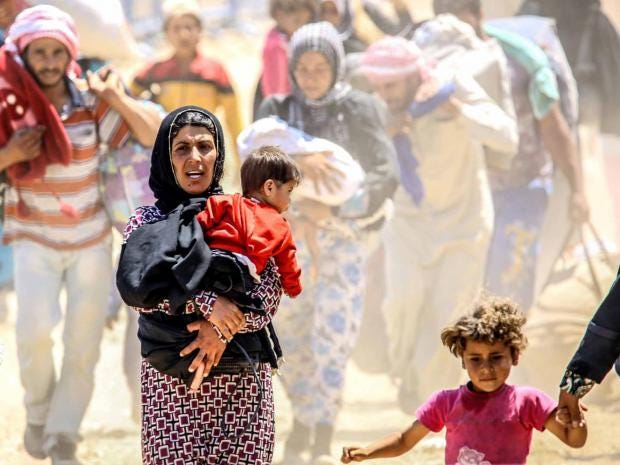
But try telling that to the current wave of some 65.6 million people around the world that have been forced from home from today’s wars and conflict zones. 65.3 million people on the run – most are now crammed into often squalid and unsafe camps as they wait in increasing desperation for a home, somewhere.
65.6 million is according to the UNHCR the latest figures (which should be taken with a dose of salt as many nations are not equipped with refugee registers or effective data collection procedures. It excluded people who were displaced by natural disasters such as floods and earthquakes, which separately uprooted at least 19 million people in 2015.
To put this number into perspective, one in about every 113 people in the world is currently a refugee. This means that of the 7 billion people on earth, over 65 million of them are living as refugees –– forced to leave their homes. The numbers are so breathtaking that they take a while to settle into the mind. This is the largest number ever recorded – and a testament to massive failures of both the international community and the United States in dealing with this crisis.
(There are also 10 million stateless people who have been denied a nationality and access to basic rights such as education, healthcare, employment and freedom of movement.)
I say the US, because it is the worst offender. It led the invasion of Iraq in 2003 without a legitimate casus belli. It set in motion the events that produced the Arab Spring resulting in immense forcible displacement in the region.
Just compare this 65 million with one of the greatest humanitarian crises in history — when a shattered Europe at the end of the Second World War had to resettle a staggering 16 million displaced persons.
A horrifying number certainly, but only a third as many as we have now.
The fact that the average amount of time people worldwide are living in displacement is now a staggering 17 years suggest that something is going terribly wrong in how we’re dealing with this issue.
In this climate, it is not surprising that there is animosity towards refugees by so many people. There has been a perceptible rise in racist and xenophobic acts in many nations, sometimes fueled by politicians and the media. The political reality suggests most countries will remain reluctant to house all but a very small minority of those displaced by violence.
We now live in a world where nearly 20 people are forcibly displaced every minute and we have seen anything yet. Wait tilluninhabitable regions due to climate change then we will have millions turning into billions.
Combined this with the violence in the Middle East and North Africa, with nine civil wars now going on in Islamic countries between Pakistan and Nigeria and half of the 23 million population of Syria been forced from their homes, plus 2.6 million Iraqis displaced by Islamic State – Isis – and 1.5 million people displaced in South Sudan.
Religious, ethnic and separatist conflicts are tearing countries apart.
Nationalism and socialism no longer provide the ideological glue to hold together secular states or to motivate people to fight.
Wars are currently being waged in Afghanistan, Iraq, Syria, south-east Turkey,Yemen, Libya, Somalia, Sudan and north-east Nigeria and none of them show any sign of ending.
Europeans were jolted by pictures of the little drowned body of Alyan Kurdi lying on a beach in Turkey and half-starved Syrians crammed into Hungarian trains.
What is to be done to stop these horrors? Perhaps the first question is how we can prevent them from getting worse, keeping in mind that five out of the nine wars have begun since 2011.
Let me begin by attempting to demonstrate why the refugee question must be addressed:
The waves of refugees now are just the leading edge of a global catastrophe, just watch as global warming takes its toll in the coming years.
The core problem remains the amount of violence we have in too many areas of the world. Until we figure out how to isolate wars and cut off their oxygen — as was done eventually in the Balkans in the 1990s — we will only delude ourselves in thinking our era grows less violent.
There is a danger that by attributing mass flight to too many diverse causes, including climate change, political leaders responsible for these disasters get off the hook and are free of public pressure to act effectively to bring them to an end.
Not an easy delusion to maintain as 48 million people call out to us from refugee camps that now seem as much prisons as safe havens.
It is better first to be informed and draw an opinion, rather than only to be opinionated. Half of refugees worldwide are children.
But why has this topic been so often ignored, or if mentioned, referred to as a “taboo”?
The fact is that world media in all its forms is dissenting us all to the point that refugees from war-torn countries are considered collateral damage, making good news footage.
World leaders can no longer watch passively as so many lives are needlessly lost.
We must be smart about finding solutions to help refugees.
We must find humane and dignified means to ensure refugees don’t risk their lives and those of their families by resorting to ruthless traffickers.
We must open designated channels of entry and offer tagged shelter under repatriation once its is safe to do so.
We must stop the world media spreading a climate of xenophobia.”
We must stop the growing resistance from nations to providing asylum for refugees.
We must stop spreading (due to political rhetoric) painting refugees as terrorists or beggars. “Refugees… don’t bring danger” but “flee from dangerous places.
The world governments will resist doing anything until such time as it is profitable to do so. This will be too late.
One of the more comforting claims in recent years is that the world is a less violent place than the blood-soaked centuries gone by. Bull shit.
The modicum of UNHCR support before abandonment, puts a spotlight of Shame on our world!
I have this awful feeling of deja vu. One begging UN resolution after another.
However there are the beginnings of an awakening about all this. In October the World Bank approved its first refugee loan — for job generation for Syrian refugees in Jordan.
Perhaps if the top five Tech Conglomerations were to charge a cent on all like clicks, on all shared photos, on all sales, all up loads, on all searches, on all tweets, on all e mails, on all Skype calls, they could save the world from melt down. This combined with a 0.05% world aid commission,( See previous posts) would create a perpetual fund of trillions to address inequality that leads to all our troubles.
In just a single minute on the web 216,000 photos are shared on Instagram, a total of £54,000 ($83,000) sales take place on Amazon, there are 1.8 million likes on Facebook and three days worth of video is uploaded to YouTube.
All suggestions and comments appreciated. All like click chucked in the bin till they are chargeable.
The answer is that there is nothing in its internal logic to interrupt its momentum – to stop it eating its way through our planet, and ultimately collapsing our global ecosystems.
We all know that capitalism has brought with it historically unprecedented material advances. But today it is more obvious than ever that the imperatives of the market will not allow capital to prosper without depressing the conditions of great multitudes of people and degrading the environment throughout the world.
After years of ill-health, capitalism is now in a critical condition.
Growth has given way to stagnation; inequality is leading to instability; and confidence in the money economy has all but evaporated.
We have now reached the point where the destructive effects of capitalism are outstripping its material gains.
No ‘developing’ economy setting out on the capitalist road today, for example, is likely to achieve even the contradictory development that England underwent and is now dismantling.
There is a growing disparity between the material capacities created by capitalism and the quality of life it can deliver.
This is visible not only in the growing gap between rich and poor but also, for instance, in the deterioration of public services in the very countries – such as the US and UK – where the principles of the capitalist market are most uninhibited.
Capitalism was born at the very core of human life, in the interaction with
nature on which life itself depends, and the transformation of that interaction by agrarian capitalism revealed the inherently destructive
impulses of a system in which the very fundamentals of existence are subjected to the requirements of profit.
In other words, the origin of capitalism revealed the essential secret of capitalism.
To day Capitalism is incapable of promoting sustainable development,
not because it encourages technological advances that are capable of straining the earth’s resources but because the purpose of capitalist production is exchange value not use value, profit not people.
Whatever capitalism may do to enable the efficient use of resources, its own imperatives will always drive it further. Without constantly breaching the limits of conservation, without constantly moving forward the boundaries of waste and destruction, there can be no capital accumulation.
There is, in general, a great disparity between the productive capacities of capitalism and the quality of life it delivers.
Why?
Because the ethic of ‘improvement’ in its original sense, in which production is inseparable from profit, is also the ethic of exploitation, poverty, and homelessness.
The world is changing and the only profits matter approach to business is becoming harder to justify and get away with. The old style of the end justifies the means and the purpose of business is profit is dying.
The transparency of social media and the advent of the global economy, driven by Artificial Intelligence is demanding a change to how Capitalism works.
We are on call 24/7 through email and smart phones which is causing the line between money as the great motivator or happiness to blur.
The attempt to achieve material prosperity according to capitalist principles is increasingly likely to bring with it the negative side of the capitalist contradiction, its dispossession and destruction, more than its material
benefits – certainly for the vast majority.
The system’s contradictions have always gone far beyond the vagaries of economic cycles.
The use of wealth to create more wealth is coming to an end and will be hopefully replaced with intrinsic rewards than by pure financial ones. If values are not lived and only decorate the walls they can become a demotivating factor.
Life would indeed be nasty, brutish, and short if it were solitary, fortunately for all of us, in capitalist society it isn’t.
The beautiful thing about capitalism is that it’s ultimately based on
voluntary exchange for mutual benefit.
So why does it not get sufficient credit for the amazing value it has created.
Because the destructive effects of capitalism have constantly reproduced themselves, its positive effects have not been nearly as consistent since the system’s moment of origin.
So where does this leave us?
Unfortunately there will be no escape from exploitation. Increasingly significant numbers are not so much oppressed by capitalism as they are excluded by it.
The market can no longer act as a regulator of the economy as it becomes digitized. To guarantee some rationality, some correspondence between what people want and what is produced we all Technology to be verified in order to ensure it is complying with core human values. (See previous Posts)
While capitalist discipline celebrates consumption, not all of its subjects are rightly called consumers. To the contrary, many who are subject to its discipline do not so much struggle to consume and accumulate as merely survive, which suggests that capitalism works to deform humanity.
Capitalism has so construed the market that humans interact agonistically, competitively.
All of us, winners and losers, consumers and excluded, compete for resources, for market share, for a living wage, for a job, for the time for friendship and family, for inclusion in the market, and so forth.
Capitalism is now in the process of becoming invisible on the surface.
First, it is computerized and robotized, not to lessen everyone’s work time, but instead to raise profits by reducing payrolls.
Second, it exploited low-wage immigrant labor to offset wage increases won by years of labor struggles.
Third, it moved production to lower-wage countries such as China, India, Brazil and others.
Fourth, it divided and weakened the labor unions, political party groups and other organizations that pursued labor’s interests.
Growth for the sake of growth is the ideology of the cancer capitalist cell.
As a result, inside nearly every country of the global capitalist system, the rich-poor divide deepened.
Can anything be done?
Not much.
Capitalism makes a virtue of what an earlier era denounced as a vice, pleonexia or greed – a restless, possessive, acquisitive drive, but which today is celebrated as the aggressive, creative, entrepreneurial energy that distinguishes homo economicus.
Capitalism is bad for those who succeed by its standards as well as for those who fail by them.
In fact, in many countries today, and for much of human history, it has been widely understood that those who are rich are rich because they took from others, and especially because they have access to organized force—in today’s terms, the state.
Such predatory elites use this force to gain monopolies and to confiscate the produce of others through taxes. They feed at the state treasury and they benefit t from state-imposed monopolies and restrictions on competition. It’s only under conditions of capitalism that people commonly become wealthy without being criminals.
It fails not simply on the grounds of what it fails to do but because of what it succeeds in doing: distorting human desire and relations.
It is often unclear what exactly is being condemned when it comes to Capitalism.
The term “capitalism” refers not just to markets for the exchange of goods and services, which have existed since time immemorial, but to the system of innovation, wealth creation, and social change that has brought to billions of people prosperity that was unimaginable to earlier generations of human beings.
The above may be true but it is now being exploited by what I call the fearsome five empty calorie connections” Google, Apple, Microsoft, Amazon, Facebook and Twitter.
Even if they remain in possession, or indeed outright ownership, of the means of production – they are subject to the demands of competition, increasing productivity, capital accumulation, and the intense exploitation of
labor.
In this barren space, they and us are now locked in competition and struggle for scarce resources.
If you have got this far I can hear you saying come to the point.
What might be the alternatives to capitalism look like?
Capitalism is a cultural system and not simply an economic one, it cannot be explained by material factors alone.
It is now obvious, that the value Capitalism created is at a cost, which we are now reaping: Our environment, (Climate change) our core values, (We all have a core value in the unknown.) our Humanity all of which have been and are being hijacked by Greed/Profit and now technological progress.
Even if capitalism succeeds in reducing poverty, it is still wrong on account of its distortion of human desiring and human relations, rendering them antagonistic, competitive.
Over the last century, capitalism has repeatedly revealed its worst tendencies: instability and inequality. Inequality has proved to be an inherent trend of capitalism. Resting everything on self-interest is relying on a very incomplete theory of human nature.
Now that the capital markets are run by Algorithms and the world has an apparent love-hate relationship with the economic social system, capitalism, is it not time to create a new model of Capitalism.
“Conscious Capitalism.” or Social-Capitalism the seeds of which can be seen in countries like Sweden, Norwegian.
The first principle is that business has the potential to have a higher purpose that may include making money, but is not restricted to it.
Truly moving beyond capitalism means breaking from the employer-employee core relationship.
It means no longer assigning a relatively tiny number of people inside each enterprise to the employer position of exclusively making the sorts of decisions.
(In private corporations the employers are the boards of directors selected by the major shareholders. In state or public enterprises of the traditional socialist economies, the employers are state officials.)
Instead of either kind of employer-employee relationship, system change installs a different core relationship inside enterprises. A different group of people — all workers in the factory, office or store — democratically makes those same decisions. The rule is “one worker, one vote,” and in general, the majority decides. The difference between employer and employee dissolves.
Every business has the potential for a higher purpose. And if you think about it, all the other professions in our society are motivated by purpose, beyond a narrow interpretation of purpose as restricted to maximizing profits.
I think that capitalism and business should fully reflect the complexity of
human nature.
Capitalist interaction is highly structured by ethical norms and rules. Indeed, capitalism rests on a rejection of the ethics of loot and grab, the means by which most wealth enjoyed by the wealthy has been acquired in other economic and political systems.
Capitalist contradictions are increasingly escaping all our efforts to control
them. The hope of achieving a humane, truly democratic, and ecologically sustainable capitalism is becoming transparently unrealistic.
In the midst of the descending darkness of capital, the difference this time is that we know what happened last time.
Postmodern society thwarts our innate desire to participate politically. Just voting in an election every few years, marching once in a while, or signing petitions on Avaaz or MoveOn doesn’t count for much.
We need new avenues for passionate participation – not just in elections every few years, but continuously.
A more generous, egalitarian, patient, deliberate, and accountable form of capitalism must begin with incisive and interdisciplinary social inquiry, without which policy change cannot be successful.
All suggestions all comments appreciated, all like clicks chucked in the bin.
We live in a world where turning on the news every day means getting updated on the latest tragedy and not just finding out what the weather will be like tomorrow.
2017 is a year of unrelenting misery and fear. We live in a world where people feel more afraid of someone with a gun than protected.
We live in a world where text messages surpass face to face conversations.
We live in a world run by Algorithms. In a world where if you didn’t snap chat it or post it to Facebook, “it didn’t happen”.
We live in a world that has so many people without the words, “thank you” in their vocabulary.
We live in a world where people would rather sit in the comfort of their anguish and anxiety than take a small step to a better life.
What happened to the world where everyone minded their own damn business?
What happened to the world where people actually knew their neighbors, and didn’t fear them? What happened to the world where people got together and lost track of time because they didn’t have their phone attached to their hip?
What happened to the world where people could voice their opinion without getting hate mail? What happened to the world as one nation?
We live in a world where our self-esteem is managed by the amount of “likes” on our selfies and statuses.
I don’t need to tell you world news is pretty grim right now – if you use social media, it’s nigh on impossible to avoid articles about bubbling permafrost, drug-resistant gonorrhoea, and deadly obesity treatments.
And that’s just the science headlines.
We live in a world with rampant inequality due to capitalist greed, void of any common values.
We live in a world with global environmental changes locked into our future, with hidden threats to sustainability,not just because of migration that is just beginning due to lack of fresh water.
Stop, take a step back and think.
Isn’t it absurd that we, 7 billion of us living in the same planet, have grown further apart from each other? What sense does it make to turn your back on the thousands, maybe millions, of people living around you.
If we want wars we have all the ingredients.
We live in a world where our i pads and cell phones get thinner and our bodies get thicker.
We live in a world where people pass each other on the street and can’t even smile back.
We live in a world where people dish hatred out on a serving platter.
We live in a world where our world organisation called the United nations s just a gossip shop that has to beg for funds. Unable to cuts through the rhetoric because of
We live in a world where people take more than they give. We live in a world where people have completely forgotten what they were given knees for.
What happened to our world?
Most of us haven’t quite realized there is something extraordinary happening. I want to see it through a child’s eyes again.
Why is the world-changing?
We live in a world where because we are too afraid of hurting kid’s feelings instead of teaching them the value of hard work. You get a participation trophy for merely showing up.
We live in a world of lip service.
We are reaching our limits. It’s time for people to switch on the blender, stirring events in the non-human part of the world into their everyday lives, and see what happens.
Google might knows our names but it knows Sweet Fanny Adam about the natural world. The rest of the living world can get along without us, but we can’t get along without them.
Perhaps all living things comprise one biological entity, one large functioning ecosystem (life-force) with planet Earth as skeleton if so we had better learn quick that a skeleton earth whether it is due to Climate change, Nuclear war, or Algorithms will be worthless.
We are not isolated from the world around us by the boundaries of our bodies. Modern science has blurred the lines of the individual by shedding light on how interdependent life is. We are dependent on microbes. In essence, all life is connected to other life because we all exist in the same space. If you don’t like bacteria, you’re on the wrong planet.”
When it comes to making sense of the incomprehensible we can only place our trust in tales of the imagination.
The problem is that no one is will to bear the cost not even earth so why not make Greed pay. ( See previous Posts)
All comments appreciated all like clicks chucked in the bin.
( A follow on read: Twelve minutes from the post – WHAT IS THE CONCEPT OF NOW.)
While writing:( what is the concept of now) my daughter suggested I write a happy post. This post is therefore dedicated to her continuing search for happiness.
What is happiness? How do we find the key to happiness?
Is happiness the sole purpose of life or is it just good health with a bad memory.
To day this is the default view. Skepticism about the afterlife drives humankind to seek not only immortality but also earthly happiness.
Who would like to live for ever in eternal misery?
What stands between us and an answer to this deceptively complex questions is the problem of subjectivity –happiness means different things to different people.
To behaviorist, happiness is a cocktail of emotions we experience when we do something good or positive. To neurologists, happiness is the experience of a flood of hormones released in the brain as a reward for behavior that prolongs survival. According to the tenets of several major religions, happiness indicates the presence of God.
This question has no straightforward answer, because the meaning of the question itself is unclear. What exactly is being asked? Perhaps you want to know what the word ‘happiness’ means. In that case your inquiry is linguistic.
Chances are you had something more interesting in mind: perhaps you want to know about the thing, happiness, itself. Is it pleasure, a life of prosperity, something else? Yet we can’t answer that question until we have some notion of what we mean by the word.
Is there anything more to being happy than just thinking you’re happy?
Do we have the power to choose to be happy or unhappy?
Are all kinds of happiness created equal?
Happiness is not a single all-encompassing concept it is a complex the notion.
A state of mind. What is this state of mind we call happiness? Typical answers to this question include life satisfaction, pleasure, or a positive emotional condition.
A life that goes well for the person leading it. Perhaps you are a high-achieving intellectual who thinks that only ignoramuses can be happy. On this sort of view, happy people are to be pitied, not envied.
We are inclined to think that pleasure is the key to happiness.
Is it purpose, or goal?
Has a goal that is an end-in-itself, nothing that he does is actually worth doing.
For most people, happiness is a central aspect of well-being, since most people very much desire to be happy. Even a slave might come to internalize the values of his oppressors and be happy, and this strikes most as an unenviable life indeed.
Is happiness overrated?
How if at all should one pursue happiness as part of a good life?
Is it possible to objectify and even quantify so subjective and elusive a quality as happiness? The individual pursuit of happiness may be subject to non-moral norms as well, prudence being the most obvious among them.
The pursuit of happiness is self-defeating especially when it is associated with pleasure. The virtue of compassion or kindness, giving not receiving, produce happiness.
Philosophical “theories of happiness” can be about either of at least two different things: well-being, or a state of mind. To be happy, it seems, is just to be in a certain sort of psychological state or condition.
Is it a psychological state (for example, feeling overall more pleasure than pain) and happiness as a positive evaluation of your life, even if it has involved more pain than pleasure.
Above all, there is the fundamental question: In which sense, if any, is happiness a proper goal of a human life?
Wealth, beauty, and pleasure, for example, have little effect on happiness.
What is needed to achieve genuine happiness?
Answer me this: Would you choose to attach ourselves to a device that would produce a constant state of intense pleasure, even if we never achieved anything in our lives other than experiencing this pleasure. We all need to answer this question for ourselves.
Morality itself is a worthy goal of human existence. Our good or bad fortune can play a part in determining our happiness; for example, happiness can be affected by factors as our material circumstances, our place in society, and even our looks, whether we are married or not. In the long run marriage is not a major source of either happiness or unhappiness.
When asked Aristotle said” that the supreme good is happiness.”
And of this nature happiness is mostly thought to be, for this we choose always for its own sake, and never with a view to anything further: whereas honour, pleasure, intellect, in fact every excellence we choose for their own sakes, it is true, but we choose them also with a view to happiness, conceiving that through their instrumentality we shall be happy: but no man chooses happiness with a view to them, nor in fact with a view to any other thing whatsoever.
But what is happiness?
For Aristotle, it is by understanding the distinctive function of a thing that one can understand its essence.
Whereas human beings need nourishment like plants and have sentience like animals, their distinctive function, says Aristotle, is their unique capacity to reason. Thus, our supreme good, or happiness, is to lead a life that enables us to use and develop our reason, and that is in accordance with reason. Unlike amusement or pleasure, which can also be enjoyed by animals, happiness is not a state but an activity. And like virtue or goodness, it is profound and enduring.
By living our life to the full according to our essential nature as rational beings, we are bound to become happy regardless.
For this reason, happiness is more a question of behavior and of habit—of virtue—than of luck; a person who cultivates such behaviors and habits is able to bear his misfortunes with balance and perspective, and thus can never be said to be truly unhappy.
Some goals are subordinate to other goals, which are themselves subordinate to yet other goals, but happiness needs sadness. Without sadness there can be no happy moments unlike pleasure which can be manufactured by algorithms.
Being happy doesn’t come easy with the stress of modern life. Take for instance the average American who uses sixty times more energy than the average stone age hunter-gatherer. Is he sixty times happier?
It took just a piece of bread to make a starving medieval peasant joyful.
It appears that even with all our unprecedented accomplishments even if we provided free food, ensured world peace, provided free medical care, gave everyone a thousand bitcoins the Capitalism system ensures that the ceiling of happiness remains out of reach.
Our exceptions are driven by our biochemistry level rather than our economic, social or political situation. Pleasure v pain. Unpleasant bodily sensations.
PEOPLE WILL ALWAYS DISAPPOINT TO REMAIN HAPPY YOU MUST LEARN HOW TO FORGIVE, FORGET, “ Comparison is the thief of joy.”
Self-actualization is Happiness. Joy goes in and out of vogue. We can deceive ourselves into thinking we’re happy when we’re not and we can be happy without realizing it.
Happy.
It’s pretty hard to tell what does bring happiness; poverty and wealth have both failed.
I would be as happy as a pig in shit if I could live in THE CONCEPT OF NOW.
All comments happily appreciated all like clicks chucked in the bin.
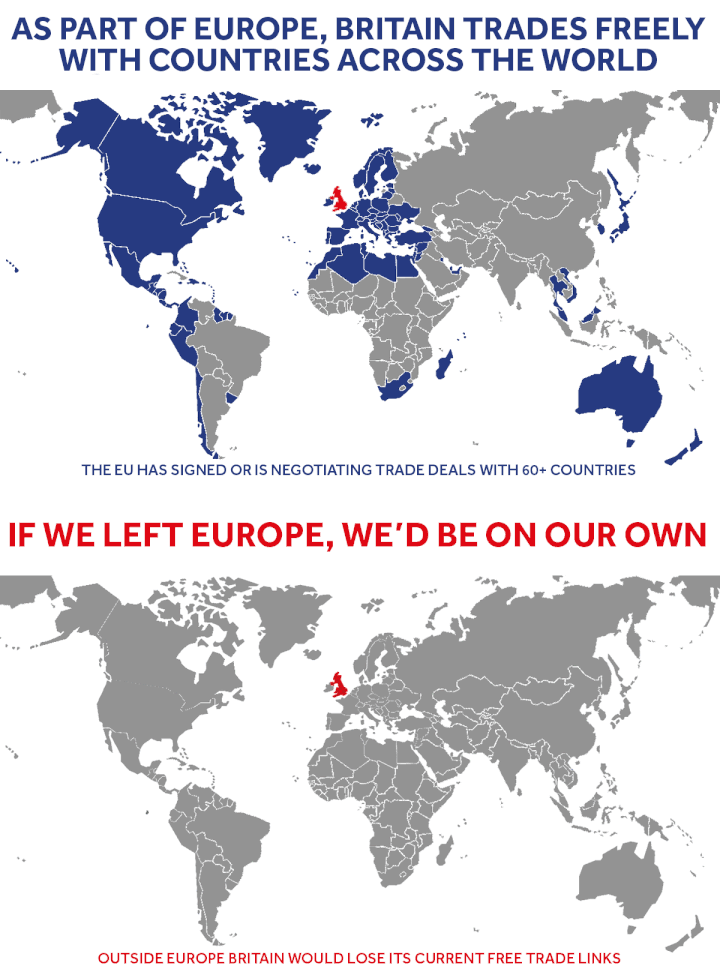
While Britain selfie sleep walks to its exit to become a free trade satellite off the shores of the European Continent a revision of the structure — institutionally and functionally — becomes inevitable for the EU.
My recent post highlighted that the EU project suffers from not having any real democratic legitimacy – without constitutional accountability, it is heading for trouble. ( see previous posts: THE BEADY EYE SAYS: IT IS TIME TO PUT PAY TO THE TRAVELING EU CIRCUS COSTING £9/10 BILLION TAX PAYERS MONEY.) However the Euro zone ends up it is the only place in the world trying to combine social welfare with a competitive economic structure.
The Europeans took a while to discover that killing each other and pursuing imperialistic and colonial policies are not in accordance with European values. Atrocities and crimes were committed, now it has a chance to create a remarkable political maturity of consensus, cooperation, and compromises.
Global governance sounds good, but out of reach for either the EU or Britain.
The digital age implies that a global opinion exists but the game now is about shaping perceptions of that opinion. Perhaps the EU is going to be forced by Social Media to go down the road to a form of Direct Democracy.
A new political system with another balance between centralized power and decision-making closer to the citizen spearheaded by Europe would be a revelation.
Solidarity looks fine on paper and in declarations, but is much tougher to deal with in practice. Rebooting Europe’s economic model to combine welfare and competition and introduce a much higher awareness of resource scarcities will be no mean achievement. It strives hard to remain faithful to all that Europe stands for purified by the purgatory over centuries.
But is any of this realistic in light of England’s Departure.
The disturbing factor is the absence of confronting the issues among European politicians.
So what is in store and where is it going to go in the next ten or more years.
In reality there were two groups of Euro members: Strong countries mainly in Northern Europe and weak countries primarily in Southern Europe.
The fact that the EU’s politics will be devoted to tackle self-created problem sideling other pressing matters are an appalling thought. Confusion, non-transparency, peculiarity even queer ways obscured by meetings and personalities may rule the headlines.
Politically the consequences are much more severe and next to impossible to foresee.
As of 2015 the Euro zone morphs itself into a genuine Economic and Monetary Union with a common economic structure and a common economic policy underpinned by a fiscal union and a banking union. This was bound to happen and it can only be regretted that it had to be done as a response to a debt crisis making the process laborious and burdensome.
As of now 19 countries out of 28 EU member states have joined the Euro.
Europeans may not fully trust each other, but mutual trust is stronger and deeper than in any other political conglomerate around the world.
One its greatest challenges is that Europe is not multicultural, but the world is.
The Union is founded on the values of respect for human dignity, freedom, democracy, equality, the rule of law and respect for human rights, including the rights of persons belonging to minorities. These values are common to the Member States in a society in which pluralism, non-discrimination, tolerance, justice, solidarity and equality between women and men prevail.
This core element is now in question with the influx of migrants not sharing the same cultural identity, causing internal pressure which is why migration/refugees are an existential challenge.
This is why the solution can only be to allow migrants/refugees getting into Europe, to do so with two provisos: That they do not be allowed to disrupt the existing societal structure and they are educated to adapt to European norms and values. A European citizen approaching the authorities feel that if the roles were reversed the decision would be the same.
In doing so Europe can solve its demographic problem number wise by remaining opening for immigration, to vetted people wanting and ready to enter Europe — actually more than ready as they are banging on the door — do not share cultural identity with the Europeans.
Britain should have accepted that for the EU-27, the idea of free movement is not just political posturing, but an essential part of the single market. The EU is unlikely to agree on major changes to free movement rules in the next few years.
The core demand for new terms tabled by the incumbent conservative government is to roll back the situation to 1992 and get guarantees that EU social provisions (broadly speaking) do not apply to Britain. This festered till the in or out vote now giving rise to the question of what economic and societal model Britain wants and the answer is a different one from what is found on the continent.
Psychologically the British people may be uneasy companions of former enemies like Germany, France, Spain, and Italy. Links with the Commonwealth fade which probably is regretted by many Britons. The Anglo-American partnership that has for decades given Britain a privileged role is judged by some politicians and part of the public to be closer outside the EU than inside despite American statements to the contrary.
Because of the Franco-German axis which is firmly in control of the EU, Britain has never felt comfortable and probable never will.
However access to the market of the 27 member states weighs heavier for Britain than access to the British market for the rest of the EU.
The tricky part is that the treaty provisions cease to apply to the member in question when such agreement is reached or in case of failing to agree within two years from the decision to secede.
Everybody will try to rescue what can be rescued from this shipwreck, but obviously the 27 remaining member states will take the view that Britain has decided to leave so leave you do.
The main argument apparently falling on a lot of deaf ears in Britain is that inside or outside the EU, economic transactions require compliance with EU norms, standards, and various rules. Those rules are shaped by the member countries promoting own interests. Britain outside will not participate in this sometimes laborious process resulting in British interests not being fed into the legislative process.
The two-year clause strengthens the EU hand, as they better than Britain can live without free movement of goods, services, capital and labor.
The Euro zone countries will tend to share views and interests to a much larger degree keeping EU member states not inside the Euro with a different economic structure on the sidelines.
It is true that no EU citizen has a fundamental, unlimited right to move freely across the EU. To be lawfully resident in another member-state, EU citizens need to be working, studying, or able to prove that they are self-sufficient. Otherwise, they can be kicked out. It is also true that free movement of persons was introduced after the free movement of goods, capital and services.
It is difficult to estimate how strong the negative impact will be.
As seen in many cases it is the long-term effect that matters and continuous lower growth will in the long run add up to a substantial loss even if England reduces corporation and personal taxes.
While EU free movement rules have been a toxic political issue in Britain for years, many on the Continent consider them a core achievement of the EU.
So could there be a free trade agreement between the UK and the European Union that allows the UK to limit freedom of movement.
My answer is no. Out is Out.
The conclusion to draw is a sentiment among the majority of member states and in particular the original six ones that either you are member of the EU, committed to solidarity, coherence, common decision-making, and common policies or you are not.
Britannia will “survive” without a post-Brexit free-trade deal with the EU.
The process of Brexit is likely to be a series of humiliating meetings in which the country is forced to accept a procession of ruinous trade deal terms – ruinous, at least, for the majority of the population. In reality, the UK has never stood alone in the global free trade environment as we understand it today;
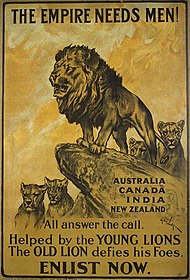
It may all end in disaster. But it does show consistency by the British. The EU can be replaced by countries full of fond memories of the empire. The UK has a long history of hypocritically claiming to want only trade in its international relations.
The British Empire stood by and watched one million Irish die of famine just 150 years ago while it continued to export pork and ham and lots of other produce to England. One million Irish! Has there been a word of regret about that genocide ever from the British State? Not one word.
“The British Empire was a great and glorious thing that did much good(such as ending slavery) ”
Such statements are totally untrue.
It was an evil kleptocracy and extortion racket. Imperialism is the geo-political equivalent of rape. There can be no defense for it. To call it “glorious” is nothing short of sick. It certainly wasn’t the empire which ended slavery. The empire not only fought tooth and nail to retain it, it actually managed to extort compensation for the vermin who had profited from it. It was the entire foundation of Britain’s wealth – or rather the wealth of Britain’s ruling class.
Far from benefiting from “free trade”, Britain got rich by imposing tariffs on imports and sending gunboats or troops to deal with anyone who presented problems.
If Britain is expecting to encounter fond sentiments from x colonial countries in free trade agreements it is about to be bitterly disappointed.
Britain did not make its fortune by trading freely.
The wealth of the UK was EXPLICITLY derived from its military domination of overseas territories, control of cheap inputs (such as cotton) and export markets that were enforced. So, the ludicrous idea of the Brexiteers that the UK can compete in the global economy does not stand up to scrutiny even historically.
In the contemporary world, it is nothing other than laughable. In the context of a highly open economy, dependent on imports of almost everything, the only effect of a devalued currency is inflationary pressure and an increased trade deficit. This policy approach almost qualifies as a definition of insanity.
We don’t need to wait to judge Brexit, because any clear-thinking and informed person can see outright what a disaster this is almost certain to be.
The ECHR is an international human rights treaty that is independent of the EU and predates it. If the UK denounces the ECHR as well as leaving the EU it is setting itself up as another North Korea. Every single country in Europe — including Russia and Turkey — is in the ECHR. Write your own laws!
We are living at a moment when an old economic settlement is in crisis, but a new settlement has yet to be formed.
Unless the US and Europe can find common ground the prospect of chaos and infighting is too high for comfort as no other country or group of countries are waiting in the wings with ideas and economic power to lead. Some decades down the road the US and Europe will still account for more than 1/3 of global Gross Domestic Product — maybe more.
The politics of the future will belong to those leaders both in Europe and Britain who are prepared to face up to our present problems and future challenges.
Britain’s future is a nostalgic past that never really existed.
Yes, this is the way forward for “Poverty UK” — back to the 1950s!
To day the Internet is a free and lawless zone that is eroding state sovereignty, ignores borders, abolishing privacy and perhaps posing one of the biggest treats to security on many a front.
A decade ago it hardly registered on the radar.
MIXING GOD LIKE TECHNOLOGY WITH MEGALOMANIAC POLITICS IS A RECIPE FOR DISASTER.
By the time bureaucracy makes up its mind about cyber space regulations, the internet has morphed ten times.
We are now overwhelmed with data. Never before have governments being so well-informed as to what going on but they are unable to implement any change without Social Media, the internet and AI.
As we seem void of ANY STATESMAN Artificial Intelligence in the form of unregulated Algorithms are not only plundering the world of economics ( High Frequency trading) eroding Democracy, which is failing to provide a meaningful visions of the future.
DUE TO ITS DIVORCE FROM CAPITALISM.
Leaving all the important decisions in the hand of the free market give our politicians the perfect excuse for inaction and ignorance, which are reinterpreted as profound wisdom.
So let me ask you.
Do we want a small coterie of billionaires ruining the world for profit.
Fortunately even if we did they would not be able to do so as the system is far too complex. There is no getting away from that the free market only does what is good for the market rather than what is good for mankind or the world.
The hands of the market are now blind and invisible due to Algorithms and left to their own devices with machine learning will – FAIL TO DO ANYTHING ABOUT THE DANGERS OF ARTIFICIAL INTELLIGENCE OR CLIMATE CHANGE.
With more than 1 billion users worldwide and 2.5 million apps — and counting it has become an instinctual gesture to turn to our smartphones when we are exposed to an unknown environment.
Thanks to the internet and our feature-packed smartphones, we can not only consume and interact with incoming news, we can also be the first ones to communicate things to the rest of the world if we happen to be at the right place, at the right time. And we’re doing this over devices that just two decades ago would’ve looked at home in sci- flicks.
There is no argument that Artificial Intelligence is penetrating our daily live so new structures will be built.
The Question is who will build and control these structures?
A world run be Google, Facebook, Twitter and their like will be a world without imagination, compassion, and moral ethics of any kind other than profit.
If we think in term of decades, then Global Warming, Growing Inequality and Artificial Intelligence linked together will dwarf and overwhelm all other problems or theological developments.
Combined they will overshadow any political gains or profits. Surpassing all tin pot dictators of the world.
We must not allow global data collection to rest in the hands of world monopolies..
Goodbye, cash. Hallow iPhone’s Wallet apps. Just imagine what this is going to do to what is left of society. Consumer growth will be the only evidence of life.
The rise of apps and social media is changing the way many of the world’s two billion Christians and 1.6 billion Muslims worship – and even what it means to be religious.
Facebook said that in its most recent quarter, roughly 84 percent of its $6.82 billion in ad revenue came from mobile ads.
To claim back power we must turn our shiny mirrors our Smartphones into shields, passports and carriers of personal sovereignty and equality. Smart phone are the new guardians of Democracy and we better start using them wisely.
Not all changes brought by the mobile revolution have been positive.
In fact, for certain groups of people from around the world, the explosion of mobile has brought misery and exploitation.
Events in one country now have almost instant implications for the rest of the world. We see footage shot with smartphones in mass-media almost every day now.
It’s now a question of who gets heard, not what is heard.
In my opinion, we are living through a transition period triggered by a dramatic change in mobile networks in the last decade. This transition periods will be painful. But sooner or later things will stabilize and everyday liberties enjoyed by leading Western countries will spread out throughout the world. Surely, the mobile networks are speeding up this process.
From one perspective, the dependence on mobile technology is pathetic, but on the other hand it surely makes it easier for people to explore foreign cultures.
It is highly likely that someday, as more people interact and connect with foreign cultures, borders between countries will start to dissolve and the world will become a united planet. Smartphones and mobile networks will be at the heart of this evolution.
The biggest social networks (Facebook, Twitter, LinkedIn) and media sharing sites (Instagram, YouTube, Snapchat), along with maybe a handful of others like Pinterest and Google Plus are all a catch-all platforms whose functionality is constantly evolving.
As more networks add rich features like live streaming and augmented reality, the lines between their feature sets continue to blur and change faster than most people have time to read up on the changes.
Look beyond those social media juggernauts and you’ll see that people are using many different types of social media to connect online for all kinds of reasons.
There are anonymous social networks a step back toward the wild-west early days of the internet.
It is the social media sites that are the carbuncle on society’s backside, not smart phones.
We are becoming symbiotic with our computer tools, growing into interconnected systems that remember less by knowing information than by knowing where the information can be found. The always-on lifestyle suggest future generations will have different priorities about what they choose to remember.
Smartphones — and the connection they represent to a global social network — is becoming more than just a device in our pockets but something closer to a digital extension of ourselves.
Apps spawned industries that couldn’t exist without smartphones but smartphones spawned the Arab Spring in the Middle East in early 2011.
The smart phone quickly demonstrated itself as a powerful tool for driving social revolution.
Smartphones helped protesters to quickly share information with observers outside the region, which in turn helped drive political pressure during the revolution.
The potential benefit of taking things to the general public, again made possible by mobile networks and smartphones for all initiative purposes is in its early stage of development.
With joint collaborative efforts their status as an indispensable item in the 21st century
If anyone has a suggestion as how we can get the world of Smartphones to collectively come together as a unite to create a new dynamic network of compassion I am all ears. Smartphones and social media will the last chance for a compassionate world.
It begins with you.
How the social media further impact our life in our society and where do social media and the Internet technology take us in the next few decades is really an interesting question, or perhaps a mystery or a challenge for human themselves.
But one thing should stand is we ought not to be controlled by technology, we control them! If we are not already to late.
Democracy is the process by which we get ourselves organized to perform capitalism.
To claim back power we must turn those shiny mirrors our Smartphones into shields, passports and carriers of personal sovereignty.
The good news is that for hundred of years humankind has enjoyed a growing economy without falling prey to ecological meltdown but the margin for error is narrowing with global warming. All the talk, all the conferences, all the summits, all the promises and protocols have so far failed to curb emissions.
Why?
Because despite all our achievements we are under constant pressure to produce more and more stuff. We risk the future on the assumption that technological will come up with a solution’s in the future.
What is the price going to be?
If every thing is for sale the connection between capitalism, democracy, and liberalism is in the process of being broken.
The new modern deal is Humanist.
Soundless revolutions, silent reformations, undreamed ideas, new religions, must not be neglected, if we would grasp the unity of history in its highest sense.…The unapparent future….bids us to consider the whole sequence up to the present moment as probably no more than the beginning of a social and psychical development, where of the end is withdrawn from our view by countless millenniums to come.
However the world does not come to an end when the nine billion names of God are uttered. Freedom of speech is not over when we have uttered a certain thing.
We are the ultimate source of meaning, and free will is therefore the highest authority of all.
This is for this reason that democratic elections give expression to the ultimate political authority the People. It will end when we final hand our future to AI.
Whoever determines the meaning of our actions – whether they be good or evil, right or wrong, beautiful or ugly, also gains the authority to tell us what to think and how to behave.
If we are not careful (because human opinion is necessarily fragile and ephemeral) absolute truths and the meaning of life, not to mention the Universe will soon be based on some external laws from some superhuman source other than God.
Creating meaning for a meaningless world will become impossible without Artificial Intelligence (AI) in all its forms of Algorithms that will and are already affect every facet of daily life.
WE MUST DETERMINE BY OURSELVES WHAT IS GOOD, AND WHAT IS EVIL, WHAT IS RIGHT AND WHAT IS WRONG, WHAT IS BEAUTIFUL AND WHAT IS UGLY, WHAT IS IGNORANCE AND CORRUPTIBLE, WHAT IS TRUTH AND WHAT IS FALSE. NOT A MACHINE. Knowledge = experiences x Sensitivity.
IF WE LOOSE OUR FEELING THERE IS NO POINT IN BELIEVING ANYTHING.
Over the last century, capitalism has repeatedly revealed its worst tendencies: instability and inequality and its failures have turned democracy against liberalism. Across Europe, economic interventionism, nationalism, and even open racism have exerted a greater attraction for those casting their democratic votes than the causes of freedom, deregulation, and equality before the law.
Free markets have not only enlarged the gap between rich and poor, but have also reduced average incomes across the developed and developing worlds.
In turn, liberalism’s intellectual self-identity has been left in tatters.
Liberal theorists are now desperately trying to keep the ship afloat. But instead of addressing the challenges head-on they have turned to the past for solace and validation. While this new liberal historicism may have a certain rhetorical appeal, it fails to convince.
At root, liberty is a concept grounded in the individual.
It is the freedom to be all that one is, to actualize the fullness of one’s potential as a human being endowed with the capacity for creativity and the ability to make autonomous value judgments for ourselves. However surrounded by the confused, jargon-ridden babble of political commentators today, it is perhaps easy to forget that liberalism is defined by a commitment to liberty.
While each of us may wish to be free as an individual, individual freedom is dependent on us all being free; and that means that we all have to cling to our shared humanity, our shared dignity and not to be manipulated by profit seeking un-vetted Algorithms.
The world was moving toward a politically border less and highly interdependent global economy that might have foster prosperity, international cooperation, and world peace. This is no longer true. Now thanks to un vetted Algorithms we are witnessing a world characterized by intense economic conflict at both the domestic and international levels. Today we are returning to the huge 19th-century-sized gaps between the richest 1 percent and everyone else.
Rescuing the “disappearing middle class” has become every aspiring politician’s slogan, but this is also coming to an end with targeted Social Media Profiling, (conducted by Algorithms) that are and will produce extreme inequality that will infect all of society, as rich corporations that own these Algorithms move to protect their positions, by buying the politicians, mass media and other cultural forms that are for sale.
Capitalism is today’s version of the what and democracy is the how.
Capitalism does not say that “all men are equal”; it even has difficulty in saying that we are all “created equal.”
If we truly want to move beyond capitalism we have to break away from the employer-employee core relationships. It means no longer assigning a relatively tiny number of people inside each enterprise to the employer position of exclusively. It means that every worker has an interest in the enterprise, a share in its profits its loses and decision-making.
While democracy is a consensual hallucination of people concerned with how to divide opportunity fairly or democracy is a process for ensuring that each gets an equal session with the eye while capitalism fosters a desire to keep the eye and not share it. An end in itself, not a means.
Democracy as a rule book is not intended to operate only until a particular individual or class has enough money. It is hard to govern the human heart with rules. The democracy rule book, though it hovers above our laws has not succeeded in making humans cherish democracy.
A Martian visiting earth would not be able to see democracy. It is intangible, a rule book we have agreed to which says that no-one shall be denied opportunity, freedom of speech, or the due process of the laws.
Democracy denies the Hobbesian war of all against all, (Thomas Hobbes sawpeople as weakandselfish,andthus in constantneed of thegovernancethatcouldsavethemfromdestruction) and capitalism, pretending to prophecy it, creates it and enshrines it at the center of our pantheon, as the true, the human, the only way to live.
Under the democracy rule book, we meet as the village council; our concern is how to preserve the commons for our children’s children. All right, shift paradigms: we are now under the capitalist rule book, meeting as the board of directors of the Intercontinental Sheep-Grazing Company run by Social media ruled by Algorithms owned by Google, Apple, etc. Their discussion, abruptly with technology is about how to maximize shareholder value, by extracting every last possible dollar from the commons this fiscal period.
Our grandchildren are nowhere in the conversation; they are not shareholders.Under the separation of powers implied by the two rule books, we are relieved of the necessity of thinking about the future, because it is someone else’s job.
The substantive corrupts the procedural, when the love of things corrupts the spirit of fairness.
So it not surprising that any ambitious youngster, perceiving the differences between the two rule books, will prefer to give his allegiance to capitalism, because it offers quicker personal progress than democracy. Democracy preaches incremental change, but capitalism offers overnight transformation, the opportunity to sell something a day after you bought it for ten times what you paid.
It was not healthy for our two divisions ( Capitalism versus Democracy) to savage each other.
Cooperation is the key feature of democracy, but capitalism is usually thought of (it need not be) as a zero-sum game in which, if I have more, it is because you have less. Versions of capitalism, like the one I believe in, in which we all grow together, are less interesting to the ambitious, because they too closely resemble democracy.
Everything seemed to suggest that only liberal capitalist democracy allowed people to thrive in an increasingly globalized world, and that only the steady advance of laissez-faire economics would guarantee a future of free, democratic states, untroubled by want and oppression and living in peace and contentment.
Humanity imposes upon us the same basic needs. By virtue of our nature, we all require food, shelter, clothing, security, and a range of other basic goods necessary for sufficiency and survival.
Though deceptively simple, these implications have profound meaning when we consider how individual liberty is to be translated into a social and political construct. If the liberty of each person is to be maintained and maximized, the principles of equity and the common good must be embedded in the structure of society.
And since society is structured above all by law, the law must reflect these precepts. It is only if everyone recognizes the dignity of the human person that they will recognize the inherent value of equity and the common good, and strive to defend and preserve not only their own liberty, but also that of all others in their society using law.
It lies not in economics, or the tides of history. It lies in the recognition of the worthiness of humanity itself. Not wealth-creation which depends on the protection of private property, the “capitalist creep” will invariably demand greater legal protection for individual rights.
In a world still divided by rival national ambitions in which economic factors in effect determine the fate of nations, many conclude that international economic affairs will become increasingly filled with conflict. We are witness the tectonic plates of Nature, democracy, disappearing under automation of AI algorithms.
We make a colossal mistake taking it for granted. We mistakenly believe that capitalism begets inevitably democracy.It doesn’t.
The last battle between democracy and capitalism will be fought on the field of political campaign contributions.
There is a solution:
It is possibleto separate fully the political sphere from the economic sphere,so as to confine the democratic process fully in the political sphere,leaving the economic sphere —the corporate world, if you want —as a democracy-free zone.
The answer lies in the political choice that we shall be making collectively.It is our choice,and we’d better make it democratically because the system we have now is even worse than capitalism. Nobody wants to leave the certainty of the devil they know, or think they know, for something that promises to be worse.
We have run out of world to commodify. And now commodification can only cannibalize its own means of existence, both natural and social.
What all of us make is intellectual property, which from its point of view is all equivalent and tradable as a commodity.
Of course it is always a tough argument to propose common interests among subordinate classes. Counter-hegemony is hard. Hackers, like workers or farmers, are distracted by particular and local interests. Class consciousness is rare among hackers. Most of us are rather reactionary — even in the nontechnical trades. But than class consciousness is always a rare and difficult thing.
Finally at the start of this post I advocated that: To claim back power we must turn those shiny mirrors our Smartphones into shields, passports and carriers of personal sovereignty.
Of course this can only be achieved if we can form a world on line pressure group, using the combined power of Smartphones to affect change.
Once the greatness of a nation could be judged by the way its animals are treated now its the power that moves through the smart phone that can be instrumentally conceptualized and strategically deployed, accounted for, and resisted is the driving force that judges.
Democracy is using your social media channels to engage and provide feedback.
The perception of the public, how people view what you do, is just as important as what you do.
I am all ears as to how we can capture the collective power of our phones to lobby the direction of democracy.
To that end, if scholars, activists, and commentators are to contend with the political potential of devices such as the smartphone camera, then it is imperative to account for the simultaneous processes embodied in its mechanics alongside the cultural and social conditions as these devices are often celebrated for disrupting rather than unifying.
The Gap between Democracy and Capitalism is widening.
All comments appreciated. All like clicks chucked in the BIN.
IN A WORLD THAT IS LOSING ITS GRIP THE TROUBLE IS KNOWING WHAT TO GET A GRIP OF.
There is nothing new about this, other than the manner and the pace it is happening at where facts are deemed less important than beliefs.
For Example: In an age of Post – truth politics we now have a President of the USA that appears not to care whether his words bear any relation to reality.
The declining societal respect for facts, the rise of deceptive partisan media outlets are creating an echo chamber effect in public discussion.
If people only knew the truth, we wouldn’t have the problems of global warming, economic recession, poverty, War, any Famine.
Most people now get their news about the world around them pre-digested and customised by social media. They do not get the breadth of information supplied by an even moderately impartial news source.
Material is allotted them not by whether it is true but by whether they might like it.
Which is institutionally biased, and more vulnerable to the dissemination of lies.
Something must be surely be done about this.
Our post-truth era, in short, need not be an obstacle to taking common action.
Feelings trump facts and the power of truth as a tool to solve problems is being diluted by False News. For example the EU is now in danger of breaking up due to a campaign of blatant misinformation.
The lost of truth has many roots, and indeed it is a human failing not to seek it out. Life at this juncture is practically unimaginable without the technology we enjoy today.
A large amount of social media feeds on getting strangers to follow each other’s random thoughts or tracking our idle page visits to target advertising, and as a society we seem more than happy to provide.
If you OK-ed the latest update for your Facebook app on your phone, you’ve given Facebook permission to read your text messages?
Everybody knows Google has questionable privacy rules, but Gmail is a really good email provider, and most people don’t tend to make their Twitter private.
Today it is almost heresy to suggest that scientific knowledge is not the sum of all knowledge. Unorganized knowledge is the king, driving Climate Change, down to the survival of the cutest.
The continued societal focus on economic growth, both personally and as a society driven by algorithms for profit are all forcing a consumer society.
With the continued societal focus on economic growth, privacy is now arguably subject to consumerism. Critical thinking is sacrificed in favour of having feelings, reinforced by soundbite.
The problem is that Facebook (which has somewhere in the region of 2 billion users) and other so-called net works do not see themselves as media companies and are for the most part run by algorithms that have put artificial intelligence in charge of spreading False News.
As capitalism really gaining a grip on everyday life technology is a society constant. The majority of the Facebook users tend to share every mundane detail of their lives.
The inverted distinction between public and private.
What can we do about it?
We’ve built an awesome, sprawling web of technology with a astonishing bit rates entering the human mind and emotions through eyes, ears and even noses, all creating an accelerating escalation of intensity which is now out of control.
In a world increasingly devoid of person to person contact we are becoming more and more attached to morally ambiguous technologies. Given such biases it is no wonder we are unable to even agree on facts.
Precious little is said about the human, societal and environmental impact of such intense and increasing post-truth politics.
Are we more or are we less?
What is happening to our relationships, to our sensitivities, to our abilities to be moved, to our abilities to perceive?
Content is no longer a fixed format so there is no provenance as to what is true or false. With countervailing views filtered it is no wonder we get like clicks or news to boost hits.
Most of us now get our news on social media with anyone becoming a publisher. This information revolution can now play havoc with political falsehood.
So when Trump says we need to go to war now. We won’t know if he’s telling the truth.
What then?
We might even see this proliferation of belief systems and worldviews as an opportunity for human development. We can agree to disagree and still engage in pragmatic action in the world.
Modern democracy is not indeed flawless, but so far it is the most advanced political system the human kind could come up with. However the features of modern democracy for which we consider it as the most ‘human’ form of governance now comes with shortcomings.
These shortcomings like poor access to institutions, low-level of participation, rising level of elitism, ossification of state authorities, etc., are often the root of discontent among the public. Such reasons are making the discontent more than just and as a matter of fact.
But without opposition and discontent, there can be no democracy.
We as an audience must take into account the nature of media and subsequently different sources before making any assumptions on the content itself. Things like lack of critical thinking, an absence of fact-checking before accepting statements, inability to put things perspective and so on, provide opportunities for the rise of unpleasantly phenomena like post-truth and post-truth politics.
The concept of ‘post-truth’ has reached a point of saturation in present-day popular discourse and media punditry. Driven by digitally mediatized representations of reality and social interaction. Resulting in many of our world organisation becoming irrelevant.
Democracy requires a citizenship that meets, deliberates and interacts without fear and hatred. It requires organisations that give people a “voice” and a feeling that they have a stake and some influence in the system.
The pervasiveness of presumed causal linkages between environmental degradation, violent conflict and human mobility has been utilized by policy makers and pundits to shape public opinion.
Democracy now needs online innovation.
When Microsoft created Windows, it created the possibility of multiple lenses or views of any issue. Why not build on that? Before we all become Twit’s.
The problem which remains is purely one of logic.
The world is populated by other people who aren’t you. This is one of the major tools of democracy.
What does post-truth tell us about the current and future state of democratic engagement and of democracy itself?
Truth must no longer legitimize the politics of Brexit and Trump. No matter how democratic it is, the rug must be pulled out from under Post – truth politics. We have lost our power to them; we cannot lose our truth too.
The pervasiveness of presumed causal linkages between environmental degradation, violent conflict and human mobility has been utilized by policy makers and pundits to shape public opinion about the predicament we are now in.
What can be done?
“Take back control”
The least we can do to make the United Nations a place where minds, hearts and nations connect for the sake of so many people all over the world.
Obviously, don’t vote for fibbers.
Bombard social media platforms to remove filters.
Create an Online Political platform for the Truth.
Remember that knowledge is power.
All comments appreciated. All like clicks chucked in the bin.