• About
  • THE BEADY EYE SAY’S : THE EUROPEAN UNION SHOULD THANK ENGLAND FOR ITS IN OR OUT REFERENDUM.

bobdillon33blog

~ Free Thinker.

bobdillon33blog

Tag Archives: The European Union

The Trans Pacific Partnership is a trade agreement so significant and important, its details can’t be disclosed.

28 Saturday Feb 2015

Posted by bobdillon33@gmail.com in Uncategorized

≈ 2 Comments

Tags

ongoing Privatization of the world, The European Union, The Gap between the Haves and Have not's., The Trans-Pacific Partnership Trade Agreement., Transatlantic Trade and Investment Partnership (TTIP)

As Promised in my last post. Sorry this is another long winded post.

My blog has numerous posts on Inequality. The principal reason that we have such a messed up world.

In my view Inequality is the fundamental driving force behind, Conflicts, Poverty of all Correlations, Climate Change, Slave Labor, Immigration, Corruption and the pending collapse of Capitalism as we know it.

I have pointed my figure at Sovereign Wealth Funds, Electronic Trading, Foreign Exchange Manipulation.  Each one of them is at this every moment plundering the world willy nilly in adoration of the God Greed/Profit.

I have said that it is naive to think that we can change or remove any of the them from our Technological Capitalist driven world.  On the other hand with our collective power through Social Media we can demand that a COMMISSION of 0.05% is placed on their activities. Creating a perpetual fund to tackle Inequality and return the world to a more even keel. ( See previous posts)

The possibility of this happening within our out of date World Organisation is Zero. It can only happen if we all exert pressure as global citizen on the United Nations to pass a people’s resolution to apply such a commission.

So we are left with business as usual.

And that is exactly what is taking place with The Trans-Pacific Partnership (TPP) a proposed regional regulatory and investment treaty. Which appears from what I can gather is a primary goal of the Obama administration in the United States of America.

So here we go again.

Profit before everything else with a vast potential to exacerbate economic inequality. A recipe for less protection for citizens and more rights for Big Business.  To increase trade for trade’s sake.

This agreement is basically a permanent power grab by corporations and financial companies that will make it impossible for the citizens of countries joining the TPP to choose what laws and rules they want to live under.

Now you might say with all the problems we have in the world so what.  It is just another Trade Agreement, it will have little or no effect on me.

You could be right.  It’ll be hard to notice at first, and it will depend on who you are and where you are.

Anyway if you’re just now hearing about the Trans-Pacific Partnership, don’t worry: Like me you’d also be forgiven for not hearing about it:

But in the off-chance that you might be interested here is what I have learned to date.

Its has now been under negotiation for nearly a decade.

It began in 2005 as an agreement between Singapore, Chile, New Zealand and Brunei, before the U.S. under George W. Bush took the lead in 2009. The last round of meeting was in Ottawa from 3–12 July 2014. The negotiations now include 600 corporate advisers.

The countries currently party to the agreement — currently include Australia, Brunei, Chile, Malaysia, Mexico, New Zealand, Canada, Peru, Singapore, Vietnam, most critically Japan and potentially Korea — are some of the U.S.’ biggest and fastest-growing commercial partners, accounting for $1.5 trillion worth of trade in goods in 2012 and $242 billion worth of services in 2011.

So what  big country is not in the TPP …That’s right: China. I wonder why not.

Probable like you I thought we already had a World Trade Organization. So why do we need a separate Asia trade deal? and without China.?

Is this trade agreement another neoliberal project. To maximize profit and domination, and to set the working people in the world in competition with one another so as to lower wages to increase insecurity.

Is it the currency manipulation, which wouldn’t directly affect China as a non-member the real target.

So just what are we talking about here.

Fortunately for those of us who live like mushrooms it has not gone totally unnoticed.

In March 2013, four thousand Japanese farmers held a protest in Tokyo over the potential for cheap imports to severely damage the local agricultural industry.

Malaysian protesters dressed as zombies outside a shopping mall in Kuala Lumpur on 21 February 2014 to protest the impact of the TPP on the price of medicines, including treatment drugs for HIV.

On 29 March 2014, 15 anti-TPP protests occurred across New Zealand, including a demonstration in Auckland attended by several thousand people

On 27 January 2015, protesters hijacked an US Senate hearing to speak out against the TPP and were promptly removed by capital police officers.

It is serving only the interests of the wealthiest.

Is it a secretive, multinational trade agreement that threatens to extend restrictive intellectual property (IP) laws across the globe and rewrite international rules on its enforcement?

It is a 21st-century trade agreement involving 11 Asian countries along the Pacific Rim, and said to cover 40% of the world’s economy. Representing 792 million people and accounting for 40 percent of the world economy.

Yet it’s been devised in secret. Written behind closed doors by the corporate world.

Trans-Pacific Partnership-2

Trade negotiations are usually conducted in private, on the theory that parties won’t be able to have a meaningful dialogue if their positions are disclosed to the public. Accordingly, TPP parties have signed a confidentiality agreement requiring them to share proposals only with “government officials and individuals who are part of the government’s domestic trade advisory process.

” So but wait, how will this actually affect my life?”

Global health advocates, environmentalists, Internet activists and trade unions are deeply concerns about what the deal might contain.

It’s expected to eliminate tariffs on goods and services, tear down a host of non-tariff barriers and harmonize all sorts of regulations when it’s finished early next year..

It raises significant concerns about citizens’ freedom of expression, due process, innovation, the future of the Internet’s global infrastructure, and the right of sovereign nations to develop policies and laws that best meet their domestic priorities.

What few seem to realize is that this agreement, if approved as is, could make it virtually impossible for the United States to meet its current and future climate pledges. 

In sum, the TPP puts at risk some of the most fundamental rights that enable access to knowledge for the world’s citizens.

Former national security adviser Tom Donilon called it  the “centerpiece of our economic re balancing” and a “platform for regional economic integration” — after too many years of American foreign policy being bogged down in the Middle East.

How is it different from other trade deals done? 

The entire process has shut out multi-stakeholder participation and is shrouded in secrecy.

Leaked draft texts of the agreement show that the IP chapter would have extensive negative ramifications for users’ freedom of speech, right to privacy and due process, and hinder people’s’ abilities to innovate.

The TPP — encompass a broad range of regulatory and legal issues, making them a much more central part of foreign policy and even domestic lawmaking.

Everything from financial services to telecommunications to sanitary standards for food.

Some parts of it have significant ramifications for countries’ own legal regimes, such as the part about regulatory coherence,” which encourages countries to set up a mechanism like the U.S.’ own Office of Information and Regulatory Affairs to conduct cost-benefit analyses on new rules.

One of the contentious issue of the TPP negotiations has been currency manipulation, where in a country devalues its currency to boost exports and gain a trade advantage. Organisations such as the WTO or IMF cannot control such currency manipulation, so some are calling upon the US to “use the free-trade talks to force an end to such actions.

The US has been seeking trade rules that secure and extend their patents, trademarks, and copyrights abroad, and protect their global franchise agreements, securities, and loans. But they want less protection of consumers, workers, small investors, and the environment, because these interfere with their profits.

What is wrong with trade rules that allow them to override these protections.

For example, that the pharmaceutical industry gets stronger patent protections, delaying cheaper generic versions of drugs. That will be a good deal for Big Pharma but not necessarily for the inhabitants of developing nations who won’t get certain life-saving drugs at a cost they can afford.

In other words, the TPP is a Trojan horse in a global race to the bottom, giving big corporations and Wall Street banks a way to eliminate any and all laws and regulations that get in the way of their profits.

Why You Should Care about the Trans-Pacific Partnership.

It’s worth considering the ramifications of  such an agreement which has unbelievable potential to exacerbate economic inequality.

Here are a few good reasons for consideration.

At a time when corporate profits are at record highs and the real median wage is lower than it’s been in four decades, most of us need protection — not from international trade but from the political power of large corporations and Electronic Stock Exchange Trading.

There are provisions in the TPP that will prevent whistle blowers and journalists from accessing or ‘disclosing’ trade secrets through a computer system.

The TPP also gives global corporations an international tribunal of private attorneys, outside any nation’s legal system, who can order compensation for any “unjust expropriation” of foreign assets.

The foreign subsidiaries of U.S.-based corporations could just as easily challenge any U.S. government regulation they claim unfairly diminishes their profits — say, a regulation protecting American consumers from unsafe products or unhealthy foods, investors from fraudulent securities or predatory lending, workers from unsafe working conditions, taxpayers from another bailout of Wall Street, or the environment from toxic emissions.

Even better for global companies, the tribunal can order compensation for any lost profits found to result from a nation’s regulations.

Philip Morris is using a similar provision against Uruguay (the provision appears in a bilateral trade treaty between Uruguay and Switzerland), claiming that Uruguay’s strong anti-smoking regulations unfairly diminish the company’s profits.

It is protecting the interests of the largest multinational corporations at the expense of workers, consumers, the environment and the foundations democracy.

The Trans-Pacific Partnership (TPP) is a secretive, multinational trade agreement that threatens to extend restrictive intellectual property (IP) laws across the globe and rewrite international rules on its enforcement.

The TPP would force the adoption of the US DMCA ( see below appendix) Internet intermediaries copyright safe harbor regime in its entirety. For example, this would require Chile to rewrite its forward-looking 2010 copyright law that currently establishes a judicial notice-and-take down regime, which provides greater protection to Internet users’ expression and privacy than the DMCA.

It will compel signatory nations to enact laws banning circumvention of digital locks( technological protection measures on TPMs) that mirror the DMCA and treat violation of the TPM provisions as a separate offense even when no copyright infringement is involved.

This would require countries like New Zealand to completely rewrite its innovative 2008 copyright law, as well as override Australia’s carefully-crafted 2007 TPM regime exclusions for region-coding on movies on DVDs, video games, and players, and for embedded software in devices that restrict access to goods and services for the device—a thoughtful effort by Australian policy makers to avoid the pitfalls experienced with the US digital locks provisions.

In the US, business competitors have used the DMCA to try to block printer cartridge refill services, competing garage door openers, and to lock mobile phones to particular network providers.

Dangerously vague text on the misuse of trade secrets, which could be used to enact harsh criminal punishments against anyone who reveals or even accesses information through a “computer system” that is allegedly confidential.

Create copyright terms well beyond the internationally agreed period in the 1994 Agreement on Trade-Related Aspects of Intellectual Property Rights (TRIPS). The TPP could extend copyright term protections from life of the author + 50 years, to Life + 70 years for works created by individuals, and either 95 years after publication or 120 years after creation for corporate owned works (such as Mickey Mouse).

The U.S. Trade Representative (USTR) is putting fair use at risk with restrictive language in the TPP’s IP chapter. (see below Appendix)

US and Australia have proposed very restrictive text, while other countries such as Chile, New Zealand, and Malaysia, have proposed more flexible, user-friendly terms.

Adopt criminal sanctions for copyright infringement that is done without a commercial motivation. Users could be jailed or hit with debilitating fines over file sharing, and may have their property or domains seized even without a formal complaint from the copyright holder.

In short, countries would have to abandon any efforts to learn from the mistakes of the US and its experience with the DMCA (Digital Millennium Copyright Act) over the last 12 years, and adopt many of the most controversial aspects of US copyright law in their entirety.

At the same time, the US IP chapter (see below Appendix) does not export the limitations and exceptions in the US copyright regime like fair use, which have enabled freedom of expression and technological innovation to flourish in the US. It includes only a placeholder for exceptions and limitations.

This raises serious concerns about other countries’ sovereignty and the ability of national governments to set laws and policies to meet their domestic priorities.

Don’t worry: Negotiations over the huge trade agreement — which, when finished, will govern 40 percent of U.S.’ imports and exports.

In sum, the TPP puts at risk some of the most fundamental rights that enable access to knowledge for the world’s citizens.

And I thought that Trade agreements used to deal mostly just with goods:

The TPP will affect countries beyond the 11 that are currently involved in negotiations. 

Like ACTA,( Anti-Counterfeiting Trade Agreement or Anti-Counterfeiting Trade Agreement) is an agreement secretly negotiated from 2007 to 2010 by a small “club” of countries (39 countries, including 27 of the European Union, the United States, Japan, etc) the TPP Agreement is a plurilateral agreement that will be used to create new heightened global IP enforcement norms.

Countries that are not parties to the negotiation will likely be asked to accede to the TPP as a condition of bilateral trade agreements with the US and other TPP members, or evaluated against the TPP’s copyright enforcement standards in the annual special 301 process administered by the US Trade Rep. (See below Appendix)

Six of the countries presently negotiating the TPP, and who have reportedly caved in and agreed on copyright term extension, would have been about to contribute cultural icons of their own to the public domain, enriching their own countries and the world with home-grown art, music, and film that is otherwise at risk of being forgotten. These countries are Brunei, Canada, New Zealand, Malaysia, Japan, and Vietnam.

We are left with the obvious question. Why is it that none of countries can see the damage this Agreement is going to inflict.

Many of the TPP’s current provisions are designed to exclude China, like those requiring yarn in clothing to come from countries party to the agreement, and could possibly invite retaliation.

As far as I can see the TPP is“disastrous”and its purpose should be denounced. It will extend problematic US laws into international law. One example: the Computer Fraud and Abuse Act, which prosecutors used to hound open-web advocate Aaron Swartz.

Any of the six countries above can stop this deal!

If even one of the countries—Brunei, Canada, Japan, Malaysia, New Zealand or Vietnam— is brave enough to stand up to the United States and block the extension of the copyright term, then that ill-advised deal could still fall through.

If you are from one of those countries, you can call your Member of Parliament, or your trade ministry, and demand that they save the public domain, by retaining the life plus 50 year copyright term that is your right under the Berne Convention.

If you are in the US, your best avenue to stop term extension, and the TPP’s other anti-user threats, is to support the Fast Track action group. For instance, there is a scuffle around the TPP’s rumored treatment of Digital Rights Management tools, which corporations use to limit access to digital devices – often to prevent piracy. TPP has provisions that make it a crime to break these locks, and to do things that aren’t even copyright infringement.

It includes provisions on intellectual property and copyright that are usually outside the boundaries of trade, critics say.

If it comes to fruition it will only encourage another regional pact that will just add complexity and undermine existing institutions.

The WTO ( World Trade Organisation) is too cumbersome.

Brussels, Jan. 7, 2015 — The European Commission published a raft of texts setting out EU proposals for legal text in the Transatlantic Trade and Investment Partnership (TTIP) it is negotiating with the US.

Not much different than the TTP other than it is more transparent. 

So let me ask you. You still think that it will have no effect on your life. Think again.

If you have concerns about the TPP,or the TTIP now is the time to speak up.

These trade negotiations are an assault on democracy. I would vote against them except… hang on a minute, I can’t Like you, I have no say whatsoever in whether TPP or TTIP goes through or not.

All I can do is tell as many people about it as possible, as I hope, will you.

We may be forced to accept an attack on democracy but we can at least fight against the conspiracy of silence.

← Back

Thank you for your response. ✨

Appendix:

⌈Digital Millennium Copyright Act⌋

⌈The IP Chapter covers topics from pharmaceuticals, patent registrations and copyright issues to digital rights. Experts say it will affect freedom of information, civil liberties and access to medicines globally.⌋

⌈Special 301 is an annual review process led by the Office of the United States Trade Representative (USTR). U.S. trade law (“Special 301”) requires an annual review of intellectual property protection and market access practices in foreign countries. Effective action under Special 301 by USTR has been essential in stemming the tidal wave of losses in U.S. jobs and competitiveness that have threatened one of our country’s most productive and fastest growing economic sectors. Special 301 and its leverage are a full-time process for the copyright industries which work with local private sector representatives, U.S. government officials, and U.S. Embassy officials to address and resolve copyright problems in scores of countries.⌋


Share this:

  • Share on WhatsApp (Opens in new window) WhatsApp
  • More
  • Share on Mastodon (Opens in new window) Mastodon

Abracadabra – Can 1.3 trillion of Imaginary Money save the Euro.

18 Wednesday Feb 2015

Posted by bobdillon33@gmail.com in Uncategorized

≈ Comments Off on Abracadabra – Can 1.3 trillion of Imaginary Money save the Euro.

Tags

Greece., Quantitative easing, The European Union

European institutions appear weak and incapable of defending European principles and the proper functioning of the euro.Euro coins on fire

Greece is on the verge of balking on billions of Euro it has borrowed.

If they do it will trigger a free for all and the end of the Euro.

The euro is seen as the ultimate underpinning for the edifice of European integration. The financial crisis and its aftermath have shown that the euro instead has the potential to destroy the whole project.

Political reform is needed to sustain the euro but this is unlikely to pass the political feasibility test with the current governments of Europe. At present the European Union is a club with virtually no economic union: no fiscal union, no banking union, no shared economic governance institutions, and no meaningful coordination of structural economic policies.

The Greek crisis will pitted debtors against creditors.

Not with standing the deep interdependence between them Debtor countries want salvation through solidarity and are thus committed to policy solutions that distribute the costs beyond their borders. Creditor countries, on the other hand, want to insulate their tax payers from exposure to the debtor states and are reluctant to discuss large-scale burden-sharing.

We all know that Greece cooked the books to join the euro in the first place. However, France and Germany also broke the very rules that they had insisted on for everyone else. In 2004, Greece announced it had lied to get around the Maastricht Criteria. Surprisingly, the EU imposed no sanctions! Why not?

Because the EU wanted to strengthen, not weaken, the power of the euro in international currency markets. A strong euro would convince other EU countries, like the UK, Denmark, and Sweden, to adopt the euro.

Greece has been a chief benefactor of the EU budget; Since 2009, Greece has been kept on life support by two bailouts from the European Union, European Central Bank and International Monetary Fund worth a total of €240 billion ($320 billion).

In 2009, EU transactions summed up to 2.35% of GDP. From 1994-99, about $20 billion in EU structural funds and Greece federal financing were exhausted on projects to urbanize and build up Greece’s transportation system in time for the Olympics in 2004.

GERMANY-ECB-EU-FOREX-RATE-EUROZONE-BANK-MONEY

Would a Greek default  plunge the world into a  financial crisis? No. It prove systemic for the EU as a whole.

Greece, Ireland and Portugal, are already in their fourth year of austerity, face many difficult years ahead, as do states with high levels of debt. 

If the single currency survives, it will survive on the basis of more integration within the euro area as the ‘hardest of hard cores’ and hence deep divisions between the ‘ins’ and ‘outs’.

There is also the deeper question of the consent of the people. If the euro area reaches a federal moment and a federal question, then the consent of Europe’s peoples must be sought at least within the euro area.

Without it the currency the European Union as we know it would not be sustainable in the longer term.

Whether an exit for Greece can be achieved without triggering a massive financial crisis is doubtful. The result will be a disorderly collapse of the euro and probably of the single market as well.

The result of a Greek walk away would be substantial losses for established governing parties and more electoral success for extreme populist parties and National elections remain the most legitimate channel for selecting political office holders in Europe. European parliament elections are second order political events.

Next in  line would be Italy: It is too big to fail and too big to bail.

Greece’s creditors must accept the necessity of a write-off of at least a portion of Greek debt. The current practice of extending the terms of Greek loans and pretending that Greek will – some day – make good on its commitments cannot be sustained.

A Greek default would have a more immediate effect. First, Greek banks — already on the brink — would go bankrupt. Next, losses would threaten the solvency of other European banks, particularly in Germany and France. Even worse, the EU’s central bank (ECB) holds a lot of Greek and other sovereign debt. If Greece defaults, it could put the future of the ECB at risk. Other indebted countries might decide, or be forced, to default. Without a central bank to bail them out, the EU itself may not survive.

The crisis requires collective action from the ECB and the 17 member states in an environment of deep divergence of preferences and interests.

Make no mistake: this is going to end badly. By this time next year, either Greece will be out of the euro – or Syriza will be out of power.

Luckily I have thought of a solution.

Why not give the Greeks a huge pile of imaginary Quantitative Easing Money. Then they can give this imaginary money back to pay off their debts.

Abracadabra the Euro is saved.

← Back

Thank you for your response. ✨

Share this:

  • Share on WhatsApp (Opens in new window) WhatsApp
  • More
  • Share on Mastodon (Opens in new window) Mastodon

The limits of my language are the limits of my world.

12 Thursday Feb 2015

Posted by bobdillon33@gmail.com in Uncategorized

≈ Comments Off on The limits of my language are the limits of my world.

Tags

Communications, European identities., Languages., The European Union

Our physical world is polluted with dangerous chemicals, but our language, too, suffers its own kind of pollution.

Everyone is society is affected by language and communication in some way or other, no more so than Europeans.

So lets ask a few questions;

The Treaty of Rome in 1957 founded what is now the European Union, and was supposed to be the beginning of the end of nationalism in Europe. But over a half-century later, nationalism never went away. Officially, deputies and delegates will only speak in their national languages, as a matter of principle.

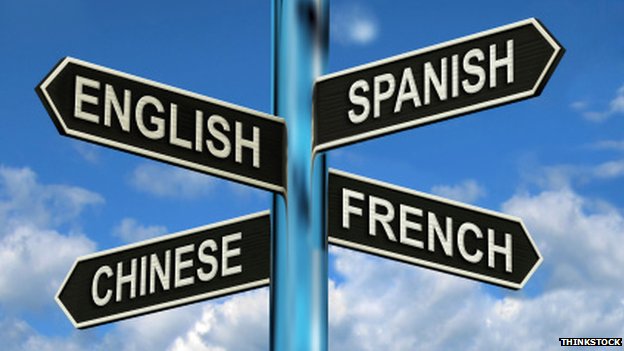
You might wonder then, when most, if not all, EU bureaucrats master English, what’s the point in maintaining 23 official languages, especially at such expense? Why not just use a single language and, what’s more, why not use the language all EU bureaucrats master — English?

Within the EU institutions, ideology trumps pragmatism, and the founding ideology of the Union is “Unity in Diversity.”

Back in 1957, when there were only six member states and four languages, it was an easy credo to follow. But fast-forward to today and things are not so easy: 27 member states and 23 official languages. It’s costing the EU a lot of money, it’s having a negative impact on its global competitiveness and it will only get more complex as the union continues to enlarge. Croatia will make 24th official language.

Just imagine a General with an army of 24 different nations all awaiting the order to advance in their own language. The war would be over before it started. God knows we have moved on from Nelson days where every order had to giving in triplicate, but the idea for establishing English as the language of the EU, remains politically toxic. Long live Nelson.

English is the language of the most eurosceptic country — the United Kingdom. What’s more, France and Germany are very touchy when it comes to having their languages eclipsed by English. Any single language wouldn’t be democratic, or in the shared spirit of the union.

So we are left with. Once a delegate or bureaucrat delivers a speech in his or her native language, it’s taken up by dozens of interpreters, who simultaneously translate into their respective languages, or tune into the English interpretation and translate from that. Meanwhile, an official release of the speech is produced and sent to the translation unit and a separate group of text-based translators gets to work.

The process is costly, unproductive, and most of all, unnecessary.

So how are national and European identities tied to language and communication? And what role does power have – power in discourse, over discourse and of discourse?

In our daily lives, we often encounter combinations of words and images of all kinds. We take them as given, we use them to communicate and interpret information.

Just imagine you were born stone deaf. Your language would be based on sight–lip reading which translates to sign language which appears to be on the increase in modern forms of communication.

But we are no longer communicate only in ‘traditional’ written or spoken genres, but also using new ones, such as text messages, e-mail, tweets and Facebook posts. These force us to get accustomed to the reduction of geographical distance and of time-spans due to the GLOBALIZATION OF COMMUNICATION. These day you can get fired by a text while on holidays.

However, in all available genres, the use of language and communication as a ‘social practice’enables dialogue, negotiation, argument and discussion, learning and remembering, and other functions.

Languages and using language manifest ‘who we are’, and we define reality partly through our language and linguistic behavior.

But who determines who can speak with whom, and how? Who decides on the norms of language use; who sets these norms and enforces them; who determines whether languages, linguistic behaviors and identities are accepted?

Who, for example, decides, in the end, which language and which form of language is ‘good’ enough to pass a language test to attain citizenship or resident status? Or look at the other side of the pond. Spanish is like a creeping tide in the USA.

With the recent appearance of new states in Europe and the flow of populations across state boundaries, a new criterion centered on proficiency in the official language(s) of a state has emerged.

The acquisition of language proficiency is apparently frequently perceived as being solely in the interests of migrants and not also in the interests of the host country, as well as being the host country’s responsibility.

Moreover,many politicians still have to be convinced that second language acquisition depends on the availability of professional teachers, good teaching materials and sufficient competence in one’s native language.

Unfortunately, the worlds of language experts and politicians (and their bureaucrats) remain far apart, and much dialogue would be required to bring them together. Parameters for determining exactly who is (or can become) a ‘resident’ and/or a ‘citizen’ are at present unresolved, with little consensus across the states.

In creating language tests of various kinds, language competence has acquired the status of a key gatekeeper – providing access for some and rejecting it for others.

There are certainly no easy recipes for dealing with second language acquisition and migration. However, it is clear that we must acknowledge the close, emotional relationship between language and identity, and take account of it in the many political and educational policy decisions made every day.

All human identities are social in nature, because identity is about meaning, and meaning is not an essential property of words and things:

Two established criteria for determining citizenship, common in policy discourse,are birthplace and bloodline both are indelible printed and cannot be replaced by citizenship.

Language, power and identity’ closely these three are connected. How the discursive construction of  identities is influenced by vested interests, and how identities are thus continually re- and co-constructed and negotiated.

However, these co-constructions operate within clear borders created in politics, in the economy and in legal frameworks. The contrast between policy regulations and the ‘voices of migrants’ allows the exposition of the many inherent contradictions in the search for European identities and related values, as stated in the Charter of Fundamental Rights

Meaning develops in context-dependent use.

Meanings are always the ‘outcome of agreement or disagreement, always a matter of contention, to some extent shared and always negotiable’ (Jenkins 1996: 4–5).

The cost of Translation in the EU is (estimated) — to be €330m a year or some €0.60 for every EU citizen.

According to certain very rough estimates, the cost of all language services in all EU institutions amounts to less than 1% of the annual general budget of the EU. Divided by the population of the EU, this comes to around €2 per person per year.

In 2014 output was 2.30 million pages. Of this, 71% was done in-house and the rest by contractors. A page is 1 500 typed characters not including spaces.

                  The limits of my language are the limits of my world.

                         Learning second language ‘slows brain ageing.

Speaking a second language is better than just knowing how to speak it.

When the world changes, sometimes a new language is needed to handle that change. For instance, telegraphs spawned Morse code, airplanes spawned air traffic control signals, and computers spawned machine language, C++, Java, and many others. You may decide that no existing language can satisfy the needs of your world, and so you may choose to become a language maker, which presents its own challenges.

That leaves us with : Do words make a language or is it the other way around.  Words can be x-rays, if you use them properly- they’ll go through anything, you read them and you’re pierced. Prized possessions  are words are words that are never spoken, sometimes the thought in my head get so bored they go out for a stroll through my mouth.

← Back

Thank you for your response. ✨


Share this:

  • Share on WhatsApp (Opens in new window) WhatsApp
  • More
  • Share on Mastodon (Opens in new window) Mastodon

Sovereign Wealth Funds. Alarm.

30 Sunday Nov 2014

Posted by bobdillon33@gmail.com in Uncategorized

≈ Comments Off on Sovereign Wealth Funds. Alarm.

Tags

Business and Economy, Capitalism, Extreme poverty, Globalization, Government, Greed, Inequility, ongoing Privatization of the world, Privatization of the World., sovereign wealth funds (SWF), The European Union

<img alt=”” src=”http://media-cdn.tripadvisor.com/media/photo-s/04/79/29/e0/1728.jpg”/>
This photo of 1728 is courtesy of TripAdvisor

Its back to my hobby-horse the ongoing Privatization of the World.

It is of course is happening in a clever way, with very careful paperwork, so we have the option of pretending that it’s not actually happening, right up until the bitter end.

I often wonder is it just me. You barley hear a mummer about it from any other quarter. Other than Ireland where the population has woken up to the Privatization of water.

Perhaps it’s that no one gives a tosser.

That our Governments are systematically divesting themselves of bits and pieces of their own sovereignty, by transfer of assets and service functions from public to private hands.

It’s taking place all over the world without really anyone noticing it happening — often not even the people are asked to vote formerly on the issue.

It is my contention that it is the quality of the state rather than the fact that assets are owned by the state that matters more. In developing countries with extensive market and information failures the state should play an important role in promoting equitable development over the long run not sell of their assets to the highest buyers.

At the political level privatization has been challenged by workers affected by attendant retrenchments and the restructuring of internal and external labor markets consequent upon privatization that has resulted in increased worker vulnerability, and by consumers who have often been negatively affected by increased prices based on cost recovery pricing regimes instituted as a consequence of privatization, or by reduction in service provision arising from “efficiency enhancing” measures as a consequence of privatization.

No one knows precisely how much money is held by SWFs but it is estimated that they currently own $3.5 trillion in assets, and within one decade they could balloon to $10–15 trillion. (equivalent to America’s gross domestic product, an amount larger than the current global stock of foreign reserves of the USA which is about $5 trillion.)

Imagine the biggest and most aggressive hedge fund on Wall Street, then imagine that same fund is fifty or sixty times bigger and outside the reach of any other major regulatory authority, and you’ve got a pretty good idea of what an SWF is.

The rise of sovereign wealth funds (SWF) as new power brokers in the world economy can no longer be looked at as a singular phenomenon but rather as part of what can be defined a new economic world order.

This new order has been enabled by several mega trends which operate in a self-reinforcing manner, among them the meteoric rise of developing Asia, accelerated globalization, the rapid flow of information and the sharp increase in the price of oil by a delta of over $100 per barrel in just six years which is enabling Russia and OPEC members to accumulate unprecedented wealth and elevate themselves to the position of supreme economic powers.

It will not be long before transactions involving investment by sovereign wealth funds, as with other types of foreign investment, may raise legitimate national security concerns.

Concerns are growing that the purpose of the investments might be to secure control of strategically important industries for political rather than financial gain.

They on the other hand see themselves as passive, long-term investors, driven solely by the need to make a good return on their country’s surplus cash.

There is a degree of looking through the wrong end of the telescope to all this.

Sovereign wealth funds have with total assets estimated at $5.4tn as of October 2013. The funds have gained more than $750bn in additional assets since 2012 of which only $60 billion has gone to recent bank bailouts.

They are rapidly becoming owners of big chunks of American,the UK and Europe infrastructures.

Unlike the central banks of most Western countries, whose main function is to accumulate reserves in an attempt to stabilize the domestic currency, most SWFs have a mission to invest aggressively and generate huge long-term returns.

The origin of these SWFs is not even relevant, necessarily.

What is relevant is that these funds are foreign.

They are state-owned investment pools that thanks to a remarkable series of events in the middle part of the last decade they are buying up your governments services such as water treatment, parking meters, toll highways, rail links, ports, public infrastructure projects, commercial real estate all delivering a lot of cash into the coffers of sovereign wealth funds like the Qatar Investment Authority, the Libyan Investment Authority, Saudi Arabia’s SAMA Foreign Holdings, and the UAE’s Abu Dhabi Investment Authority.

Some recent activity:

(The first was the announcement that the Qatari royal family is planning a large investment in the controversial £50billion HS2 rail link, focused on a major new station and housing scheme in central Birmingham.

Qatar Investment Authority, one of the world’s largest sovereign wealth funds, is soon to table a new bid to take over Songbird Estates which owns the iconic Canary Wharf tower in east London, one of the best-known modern symbols of British capitalism.  

Libya’s sovereign wealth fund is suing French bank Societe Generale in a British court for $1.5 billion for allegedly channeling bribes to allies of the son of slain dictator Muammar Qaddafi.  

Iran’s President Mahmoud Ahmadinejad said on Saturday the country’s sovereign wealth fund could reach $55 billion by March next year if oil prices kept high.

Iran earned $100 billion in oil revenue in 2011. Iran is both the world leader in Shariah Compliant Finance and the world’s most active state sponsor of Jihadist terrorism.

Deutsche Bahn Seeks Sovereign Funds for the state-owned railway, is seeking to sell shares to sovereign wealth funds in the Middle East and Asia during the initial public offering. )

What is more to the point, is we’re being colonized/Privatized.

Industry today may not be regarded as such an industry tomorrow, and vice versa.  Just look at the explosion of energy prices — thanks to a bubble that Western banks and perhaps some foreign SWFs had a big hand in creating.

Out side any regulation these funds are free to plunder the earth in the form of Hedge Funds( (which they have a bunch) with out anyone knowing who the funds investors are.

The point here is if these funds.

Are not regulated by the relevant international bodies determining which kinds of information about their balance sheets, management structures, investment objectives, portfolio breakdowns, and so forth should be supplied by sovereign wealth funds. The European Union could then put curbs on funds failing to comply with the standards for the publication of such information.

One way or the other they should be Capped ( See previous posts)

← Back

Thank you for your response. ✨


”


Share this:

  • Share on WhatsApp (Opens in new window) WhatsApp
  • More
  • Share on Mastodon (Opens in new window) Mastodon
Newer posts →

All comments and contributions much appreciated

  • THE BRADY ASKS WHAT SHOULD THE EUROPEAN UNION DEMAND FROM ENGLAND IF THE UK ASKED TO REJOIN IT? November 12, 2026
  • THE BEADY EYE SAYS TAXATION AS A MEANS TO RAISING MONEY IS OUT OF DATE. November 9, 2026
  • THE BEADY EYE SAYS. THE REAL REASON WE GLORIFY WAR. November 8, 2026
  • THE BEADY EYE SAYS. IF WE ARE TO SURVIVE. WE NEED TO RADICALLY CHANGE THE WAY WE DO EVERYTHING. October 31, 2026
  • THE BEADY EYE SAYS. The AI industry’s boldest promise right now is that AI will soon improve itself, with almost no need for human oversight.  October 30, 2026

Archives

  • November 2026
  • October 2026
  • September 2026
  • August 2026
  • July 2026
  • June 2026
  • May 2026
  • April 2026
  • March 2026
  • February 2026
  • January 2026
  • December 2025
  • November 2025
  • October 2025
  • September 2025
  • August 2025
  • July 2025
  • June 2025
  • May 2025
  • February 2025
  • January 2025
  • December 2024
  • November 2024
  • October 2024
  • September 2024
  • August 2024
  • July 2024
  • June 2024
  • May 2024
  • April 2024
  • March 2024
  • February 2024
  • January 2024
  • December 2023
  • October 2023
  • September 2023
  • August 2023
  • July 2023
  • June 2023
  • May 2023
  • April 2023
  • March 2023
  • February 2023
  • January 2023
  • December 2022
  • November 2022
  • October 2022
  • September 2022
  • August 2022
  • July 2022
  • June 2022
  • May 2022
  • April 2022
  • March 2022
  • February 2022
  • January 2022
  • December 2021
  • November 2021
  • October 2021
  • September 2021
  • August 2021
  • July 2021
  • June 2021
  • May 2021
  • April 2021
  • March 2021
  • February 2021
  • January 2021
  • December 2020
  • November 2020
  • October 2020
  • September 2020
  • August 2020
  • July 2020
  • June 2020
  • May 2020
  • April 2020
  • March 2020
  • February 2020
  • January 2020
  • December 2019
  • November 2019
  • October 2019
  • September 2019
  • August 2019
  • July 2019
  • June 2019
  • May 2019
  • April 2019
  • March 2019
  • February 2019
  • January 2019
  • December 2018
  • November 2018
  • October 2018
  • September 2018
  • August 2018
  • July 2018
  • June 2018
  • May 2018
  • April 2018
  • March 2018
  • February 2018
  • January 2018
  • December 2017
  • November 2017
  • October 2017
  • September 2017
  • August 2017
  • July 2017
  • June 2017
  • May 2017
  • April 2017
  • March 2017
  • February 2017
  • January 2017
  • December 2016
  • November 2016
  • October 2016
  • September 2016
  • August 2016
  • July 2016
  • June 2016
  • May 2016
  • April 2016
  • March 2016
  • February 2016
  • January 2016
  • December 2015
  • November 2015
  • October 2015
  • September 2015
  • August 2015
  • July 2015
  • June 2015
  • May 2015
  • April 2015
  • March 2015
  • February 2015
  • January 2015
  • December 2014
  • November 2014
  • October 2014
  • September 2014
  • August 2014
  • July 2014
  • June 2014
  • May 2014
  • April 2014
  • March 2014
  • February 2014
  • January 2014
  • December 2013
  • November 2013
  • October 2013

Talk to me.

benmadigan's avatarbenmadigan on THE BEADY EYE LOOKS AT THE EXP…
Jason Lawrence's avatarJason Lawrence on THE BEADY EYE ASK’S: WIT…
benmadigan's avatarbenmadigan on THE BEADY EYE ASK’S: WHA…
bobdillon33@gmail.com's avatarbobdillon33@gmail.co… on THE BEADY EYE SAYS: WELCOME TO…
Ernie's avatarOG on THE BEADY EYE SAYS: WELCOME TO…

7/7

Moulin de Labarde 46300
Gourdon Lot France
0565416842
Before 6pm.

My Blog; THE BEADY EYE.

My Blog; THE BEADY EYE.
bobdillon33@gmail.com

bobdillon33@gmail.com

Free Thinker.

View Full Profile →

Follow bobdillon33blog on WordPress.com

Blog Stats

  • 109,390 hits

Blogs I Follow

  • unnecessary news from earth
  • The Invictus Soul
  • WestDeltaGirl's Blog
  • The PPJ Gazette
Follow bobdillon33blog on WordPress.com

The Beady Eye.

The Beady Eye.
Follow bobdillon33blog on WordPress.com

Blog at WordPress.com.

unnecessary news from earth

WITH MIGO

The Invictus Soul

The only thing worse than being 'blind' is having a Sight but no Vision

WestDeltaGirl's Blog

Sharing vegetarian and vegan recipes and food ideas

The PPJ Gazette

PPJ Gazette copyright ©

Privacy & Cookies: This site uses cookies. By continuing to use this website, you agree to their use.
To find out more, including how to control cookies, see here: Cookie Policy
  • Subscribe Subscribed
    bobdillon33blog
    Join 218 other subscribers

    Have a WordPress.com account? Log in now.

  • bobdillon33blog
    View site in Reader
    Manage subscriptionsSign upLog in
    Report this content
    Collapse this bar