• About
  • THE BEADY EYE SAY’S : THE EUROPEAN UNION SHOULD THANK ENGLAND FOR ITS IN OR OUT REFERENDUM.

bobdillon33blog

~ Free Thinker.

bobdillon33blog

Tag Archives: Nanotechnology

THE BEADY EYE SAY’S: WE NEED TO GET AWAY FROM SEEING LIFE BEING NEATLY DIVIDED UP INTO THREE PARTS- SCHOOL-WORK-RETIRE.

22 Friday Feb 2019

Posted by bobdillon33@gmail.com in Nanotechnology

≈ Comments Off on THE BEADY EYE SAY’S: WE NEED TO GET AWAY FROM SEEING LIFE BEING NEATLY DIVIDED UP INTO THREE PARTS- SCHOOL-WORK-RETIRE.

Tags

Nano biotechnology, Nanotechnology


( Twenty minutes read)


Why?

Because returning to a world that relies on human and animal muscle power is not an option.
Résultat de recherche d'images pour "PICTURES OF NANOTECHNOLOGY"

The 21st century will see technological change on an astonishing scale. This scale will be so small that none us alive today will comprehend it.

Our lives, relationships and ways of looking at the world are changing in ways we can’t predict because these changes will be on a nanoscale.

Nanotechnology is a common word these days, but many of us don’t realize the amazing impact it has on our daily lives.

Some of the implications surrounding nanotechnology are ethical, not economic like whether nanotechnology could be used to forge new weapons at the molecular or atomic scale that would be easy to build and impossible to detect.

Nanotech is opening up a whole new spectrum of how the world worked.

Whereas the evolutionary path of the atomic world has occurred over billions of years, the evolutionary path of the synthetic nanoparticle world has just begun.The evolutionary path of the atomic world and architectural evolution of nanoparticle world
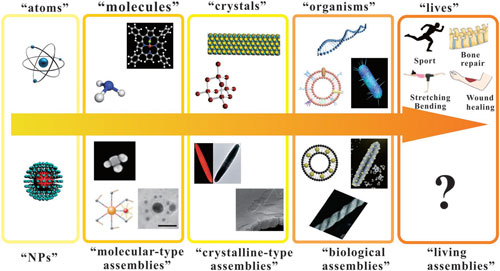
Man-made nanoparticle assemblies are beginning to revolutionize different fields including thermoelectronics, photo electronics, catalysts, energy generation and storage, as well as medical diagnostics and therapeutics.

The fusion of inorganic nanoparticles with living matter can provide new systems that combine the advantages of both worlds.

Right now, most of the nanotechnologies you come across are incorporated into existing products. However, the societal impacts of new technologies are easy to identify but hard to measure or predict.

Nanotechnology is one of the fastest-emerging areas of scientific research that will have significant social impacts in the areas of military applications, intellectual property issues, as well as having an effect on labour and the balance between citizens and governments.

Are we the great unwashed concerned? Of course not.

What you cannot see has little or no impact till it’s too late.

Now it the time to make every reasonable effort to anticipate and mitigate adverse effects and unintended consequences of nanotechnology.

As nanotechnologies are developed, we’ll reap new benefits but also face new risks.

Its generalization could not be farther from the truth as nanotechnology research and development is truly global.

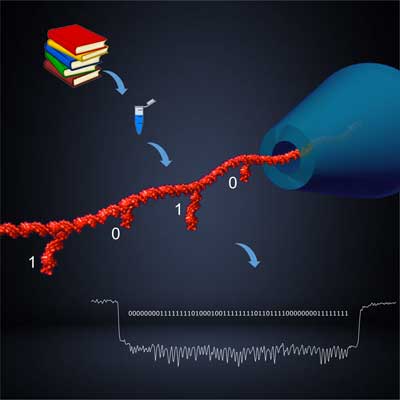
The digital universe – all digital data worldwide – has grown to over 16 zettabytes (1021 bytes) in 2017.Schematic depiction of a solid-state nanopore platform for digital data storage
So what is Nanotechnology?

Here are a few facts to open your eyes that will make it more appealing and fascinating for everyone. Most individuals don’t know much about it…

Nanotechnology is a different type of science, respecting none of the conventional boundaries between disciplines and unashamedly focused on applications rather than fundamental understanding.

Nanotechnology is an amalgamation of different technologies that may be totally unrelated, thus it would be wrong to consider the nanotechnology industry as a stand-alone sector – it would be akin to grouping steel, copper, gold, silver, and aluminium under one umbrella.

  • Nanoparticles are being used commercially in many products like food, cosmetics and others as they result in brighter colours, richer flavours and also less wastage.
  • One notable application is known colloquially as the Bionic Hornet. No bigger than an average wasp, the flying device is designed to seek out, follow, photograph and even kill selected opponents.
  • It may even transform what it means to be human.
  • We’ll probably be able to plug information streams directly into the cortex for those who want it badly enough to risk the surgery. There will be smart drugs to enhance learning and memory and a flourishing black market among ambitious students to obtain them.
  • Nanotechnology, which promises to rebuild matter atom by atom, molecule by molecule, and to give us unprecedented power over the material world.
  • We will be sharing videos, simulations, experiences and environments, on a multiplicity of devices to which we’ll pay as much attention as a light switch.
  • Nanotechnology is already on the shelves of your supermarket. Tiny nanostructures make ice cream look and taste better, while nanoparticles in plastic bottles keep beer fresh. In the future, nanotechnology could be used in all stages of food production, from cultivation to processing to distribution.
  • Already, there are computer chips with self-assembled nanocrystals.
  • In the future, ferrofluid which is a fluid is made of tiny, nano-sized particles of iron oxide suspended in the liquid might be used to carry medications to specific spots in the body.
  • Today, nanogold is being used in an experimental cancer therapy that targets
    tumours, leaving healthy tissue unharmed. Nanogold is also used to detect specific
    strands of DNA.

However by 2035, we will be talking about the coming of quantum computing, which will take us beyond the world of binary, digital computing, on and off, black and white, 0s and 1s.

Nanoparticles are difficult to detect, which makes it hard to monitor their use and dispersal into the environment.

Future nanotechnologies will address issues of global importance, such as energy, medicine, water, and food. Nanoparticle assemblies will open the door to an era where DNA-based living nanoscale materials are ‘genetically’ modifiable and can undergo structural ‘evolution’.

It might allow us to abolish ageing and death.

However, we don’t know if nanotechnology will really change the world.

Take our cities, for example, they have become too big and complex for any single power to understand and manage them.

The nanotechnology can be expected to concentrate political power in the hands of governments. It can be expected to be applied to further miniaturize and advance surveillance technologies such as cameras, listening devices, tracking devices, and face and pattern recognition systems.

WHATEVER HAPPENS, OUR LIVES NOW NEEDS TO BE BUILT AROUND A NEW MODEL THAT RECOGNIZES GAINING KNOWLEDGE AND SKILLS WILL BECOME THE KEY CREATOR OF ECONOMIC VALUE.

Since the size of today’s silicon chip memory cards and mechanical hard drives have limited just how small our personal electronic devices can be, the use of nanotechnology should remove these limits and thus shrink the devices down to the size of a grain of sand. This could eventually lead to the development of futuristic DNA computers.

It’s worth emphasizing that these applications of nanotechnology are not theoretical or “in-principle” achievements. The hardware exists.

The problems associated with the tech don’t lie in finding out if it will work, they lie in finding out if it will scale.

The possibilities are endless.

In the future, nanotechnology could enable objects to harvest energy from their environment. By harvesting electricity from human motion. This opens the door to creating clothing with built-in sensors to monitor health or fitness metrics, or clothing that uses an app to change patterns and colours.

Overall, nanotech and nanorobotics look extremely promising for applications in space exploration and colonization.

All this assumes that environmental catastrophe doesn’t drive us into caves.

The one thing we can be sure of is this:

No matter how wacky the predictions we make today, they will look tame in the strange light of the future.

Not only that, but the performance of such tiny devices could surpass the latest and greatest of today, thanks to carbon nanotubes.

An idea that nano-scale assemblers capable of fabricating any object, as well as self-replicating, could run amok and consume everything in their path—

Another 25 years of development will lead us to a new world of cheap and ubiquitous computing, in which privacy will be a quaint obsession of our grandparents. We’re already designing our identities online – manipulating imagery to tell a story about ourselves.

Facebook and Apple are spawning cloud capitalism, in which consumers allow companies to manage information, media, ideas, money, software, tools and preferences on their behalf, holding everything in vast, floating clouds of shared data.

I bet there’ll be many products we’ll be allowed to buy but not see advertised – the things the government will decide we shouldn’t be consuming because of their impact on healthcare costs or the environment but that they can’t muster the political will to ban outright.

The developing world, meanwhile, will work to bridge the food gap by embracing the promise of biotechnology which the middle classes in the developed world will have assumed that they had the luxury to reject.

OF COURSE, ALL OF THIS NEEDS ENERGY.

People already use up to 40% of the world’s primary production (energy) and this must increase, with important consequences for nature.

Energy is a means, not an end, but a necessary means.

Disappointingly, with the present rate of investment in developing and deploying new energy sources, the world will still be powered mainly by fossil fuels in 25 years and will not be prepared to do without them.

Crucially, we are still rapidly losing overall biodiversity, including soil micro-organisms, plankton in the oceans, pollinators and the remaining tropical and temperate forests.

These underpin productive soils, clean water, climate regulation and disease-resistance. We take these vital services from biodiversity and ecosystems for granted, treat them recklessly and don’t include them in any kind of national accounting.

We will be invited to trade invasions into our privacy – companies knowing ever more about our lives – for more personalised service. We will be able to share but on their terms.

As the web goes Nano those who pay more will get faster access.

We’re going to be interrupted by advertising like never before.

They’ll have enough intelligence and connectivity that they’ll see our faces, do a quick search on Facebook to find out who we are and direct a message at us based on our purchasing history.

The most serious threats will arise in the vortex of Nano instability.

With 6.7 billion people on the planet, more than 50% living in large conurbations, and these numbers expected to rise to more than 9 billion and 80% later in the century people can be better informed about what’s really happening in nanoscience and nanotechnology, without the hype.

The best part is that all of this could happen immediately if we simply spread the information in an understandable way. People don’t read science journals, so they don’t even know that all of this is possible.

There is a need now for regulation of nanotechnology.

PERHAPS THE PARADOX OF A TECHNOLOGICAL WORLD WILL BE THAT CLIMATE CHANGE AND PROTECTIONIST WILL BE GOOD NEWS.

New philosophical and sociological challenges will be derived from the societal transformations propelled by nanotechnology, and the tight relationship between access to technology and human fulfilment in life will have to be explored and discussed in great detail.

Dare I suggest that nanotechnology should feature more prominently in the education of school children. To come to an understanding it will require “a long-term educational strategy.

It is therefore imperative that we all learn about nanotechnology and become aware of its implications early in our lives.

As with all aspects of the fourth Industrial revolution, we need to explore the multiple connections of nanotechnology to all aspects of human endeavour, and to lead society into ethically harvesting and responsibly enjoying the many benefits that will be derived from it.

All human comments appreciated. All like clicks and abuse chucked in the bin.

Go back

Your message has been sent

Warning
Warning
Warning
Warning

Warning.


Share this:

  • Click to share on WhatsApp (Opens in new window) WhatsApp
  • More
  • Click to share on Pocket (Opens in new window) Pocket
  • Click to share on Mastodon (Opens in new window) Mastodon

Trans humanist philosophy :

25 Tuesday Nov 2014

Posted by bobdillon33@gmail.com in Uncategorized

≈ Comments Off on Trans humanist philosophy :

Tags

Bio medicine, Biological limitations, Computer technology, fabric of human civilization., Genetic engineering, Nanotechnology, Technology advances, The human race, Visions of the future.

Don’t read this if you have a closed mind.

As If we need more problems in the world here is one that is going to blow the minds of our children’s children.

It’s the belief or theory that the human race can evolve beyond its current physical and mental limitations, especially by means of science and technology.

If you were to build a human from scratch, from the bottom up, at some point you cross the threshold into humanity — if you believe in evolution, at some point we ceased being a great ape and became human.

Likewise, if you slowly remove parts from a human, you cross the threshold into inhumanity. Again, though, we run into the same problem: How do we codify, classify, and ratify what actually makes us human?

Does adding empathy make us human? Does removing the desire to procreate make us inhuman? If I physically alter my brain to behave in a different, non-standard way, am I still human? If I have all my limbs removed and my head spliced onto a robot, am I still human?

As technology advances, so do our visions of the future.

Artificial wombs? Not so far-fetched. We already have the ability to keep donor hearts pumping externally with nutrient-rich oxygenated blood before transplants are performed.  We are already putting animal brain cells into robots as a control system.

The only thing creeper than a baby robot named Diego-San is a cyborg fetus with no name. It’s an interesting concept that before long we might be incubating our unborn children in tanks, but we might want to think about what that means for population control.

We can’t find a single reason to make a human-gazelle hybrid, but fusing animals and humans (however frightening the concept may be) could be good for something.

It’s only a matter of time before we start digging up skeletons of robots past. With all of these robot dogs walking around and being taught new tricks, how long will it take for robots to adopt other more efficient animal designs?

Whether or not you’re a Transhumanist, future society and all of the potential it brings does seem exciting.

Now all we need is a box that keeps our brain working long enough for a cyborg transplant. Sounds routine enough.

Humans are extending current biological limitations, and in the next few decades what it means to be human might change considerably.

At first glance these questions might sound inflammatory and hyperbolic, or perhaps surreal and sci-fi, but don’t be fooled: In the next decade, given the continued acceleration of computer technology and bio medicine, we will be forced to confront these questions and attempt to find some answer.

Through genetic engineering, nano tech, cloning, and other emerging technologies, eternal life may soon be possible.

So what will happen when we finally craft a computer with greater-than-human intelligence? (the technological singularity).

If every human on Earth suddenly stopped dying, overpopulation would trigger a very rapid and very dramatic socioeconomic disaster. Unless we stopped giving birth to babies, of course, but that merely rips open another can of worms: Without birth and death, would society and humanity continue to grow and evolve, or would it stagnate, suffocated by the accumulated ego of intellectuals and demagogues who just will not die?

Likewise, if only the rich have access to intelligence and strength-boosting drugs and technologies, what would happen to society? Should everyone have the right to boost their intellect? Would society still operate smoothly if everyone had an IQ of 300 and five doctorate degrees?

Humans have always used technology, but never has society been so intrinsically linked and underpinned by it as is to days Society.

As we have seen in just the last few years, with the advent of the smart phone and ubiquitous high-speed mobile networks, just a handful of new technologies now have the power to completely change how we interact with the world and people around us.

In just the last 100 years, we’ve doubled our life span again, created bionic eyes and powered exoskeletons, begun to understand how the human brain actually works, and started to make serious headway with boosting intellectual and physical prowess. Trans cranial direct current stimulation is being used to boost cranial capacity, and as we’ve seen in recent years, sportspeople have definitely shown the efficacy of physical doping.

If you were born 500 years ago, odds are that you wouldn’t experience a single societal-shifting technology in your lifetime — today, a 40-year-old will have lived through the creation of the PC, the internet, the smart phone, and brain implants, to name just a few life-changing technologies.

Just think about how many industries and jobs have been obliterated or subsumed by the arrival of the digital computer, and it’s easy to see why we’re wary of transhumanist technologies that will change the very fabric of human civilization.

That all changes with the children of today, however.

To them, anything that isn’t computerized, digital, and touch-enabled seems unnatural. To them, the smart phone is already an extension of the brain; to them, mind uploading, bionic implants and augmentations, and powered exoskeletons will just be par for the course. To them, transhumanism will just seem like natural evolution — and anyone who doesn’t follow suit, just like those fuddy-duddies who still don’t have a smart phone, will seem thoroughly  inhuman.

For the children of tomorrow, living through a series of disruptive technologies that completely change their lives will be the norm.


Go back

Your message has been sent

Warning
Warning
Warning
Warning

Warning.

Share this:

  • Click to share on WhatsApp (Opens in new window) WhatsApp
  • More
  • Click to share on Pocket (Opens in new window) Pocket
  • Click to share on Mastodon (Opens in new window) Mastodon

Will emerging technology save us or destroy us all.

07 Tuesday Oct 2014

Posted by bobdillon33@gmail.com in Uncategorized

≈ Comments Off on Will emerging technology save us or destroy us all.

Tags

AI, Bio-engineered, Nano biotechnology, Nanotechnology


A thought!

It has being a summer of bad news.

Geopolitical turmoil, Carbon spewing into the atmosphere, Ebola spreading, Global warming, Species and Forests disappearing, Ice melting, Inequality rampant, while Sovereign Wealth Funds privatize the world resources for profit.

All of this pales in comparison to what could be inflicted by high-tech nightmares that are awaiting in the long grass.

Bio-engineered pandemic, nanotechnology or Nano biotechnology gone haywire, AI run amok all could kill far quicker than ISIS or Capitalism.

Accidental self-destruction by any of the above is more than possible.

When you realize that there are people out there experimenting in their garden sheds. Recently Professor Yoshihiro Kawaoka of the university of Wisconsin engineered a strain of the deadly virus Swine flu than could evade the immune system. At least he did it in a proper Laboratory.

Nanotech is endeavoring to engineer microscopic factories of self-replicating bots with the power to make anything out of common materials.

If this was to happen we could have omnivorous bacteria that would wipe out real bacteria that could spread like pollen reducing the biosphere to dust.

AI on the other had if we get it right could be the best thing to happen in the universe, but get it wrong we wont be colonizing anywhere.

At the moment we spend more on lipstick than making sure our species survives.

Maybe its time we created another one of those useless World organisations to monitor emerging technology just in case it comes back to bit us all.


Share this:

  • Click to share on WhatsApp (Opens in new window) WhatsApp
  • More
  • Click to share on Pocket (Opens in new window) Pocket
  • Click to share on Mastodon (Opens in new window) Mastodon

All comments and contributions much appreciated

  • THE BEADY EYE SAYS TRUST IS DISAPPEARING THANKS TO OUR INABILITY TO RELATE TO EACH OTHER. December 19, 2025
  • THE BEADY EYE SAYS. THE WORLD NEEDS PEOPLE GOVERNMENT NOT MONEY GOVERNMENTS. December 18, 2025
  • THE BEADY EYE ASKS WHAT ARE WE THE SAME GOING TO DO TO STOP THE WORLD BEING FUCK UP FOR PROFIT BY RIPOFF MERCHANT. December 17, 2025
  • THE BEADY EYE CHRISTMAS GREETING. December 16, 2025
  • THE BEADY EYE SAYS. TO THE NEXT GENERATION TO LIVE A LIFE WORTH WHILE YOU MUST CREATE MEMORIES. December 16, 2025

Archives

  • December 2025
  • November 2025
  • October 2025
  • September 2025
  • August 2025
  • July 2025
  • June 2025
  • May 2025
  • February 2025
  • January 2025
  • December 2024
  • November 2024
  • October 2024
  • September 2024
  • August 2024
  • July 2024
  • June 2024
  • May 2024
  • April 2024
  • March 2024
  • February 2024
  • January 2024
  • December 2023
  • October 2023
  • September 2023
  • August 2023
  • July 2023
  • June 2023
  • May 2023
  • April 2023
  • March 2023
  • February 2023
  • January 2023
  • December 2022
  • November 2022
  • October 2022
  • September 2022
  • August 2022
  • July 2022
  • June 2022
  • May 2022
  • April 2022
  • March 2022
  • February 2022
  • January 2022
  • December 2021
  • November 2021
  • October 2021
  • September 2021
  • August 2021
  • July 2021
  • June 2021
  • May 2021
  • April 2021
  • March 2021
  • February 2021
  • January 2021
  • December 2020
  • November 2020
  • October 2020
  • September 2020
  • August 2020
  • July 2020
  • June 2020
  • May 2020
  • April 2020
  • March 2020
  • February 2020
  • January 2020
  • December 2019
  • November 2019
  • October 2019
  • September 2019
  • August 2019
  • July 2019
  • June 2019
  • May 2019
  • April 2019
  • March 2019
  • February 2019
  • January 2019
  • December 2018
  • November 2018
  • October 2018
  • September 2018
  • August 2018
  • July 2018
  • June 2018
  • May 2018
  • April 2018
  • March 2018
  • February 2018
  • January 2018
  • December 2017
  • November 2017
  • October 2017
  • September 2017
  • August 2017
  • July 2017
  • June 2017
  • May 2017
  • April 2017
  • March 2017
  • February 2017
  • January 2017
  • December 2016
  • November 2016
  • October 2016
  • September 2016
  • August 2016
  • July 2016
  • June 2016
  • May 2016
  • April 2016
  • March 2016
  • February 2016
  • January 2016
  • December 2015
  • November 2015
  • October 2015
  • September 2015
  • August 2015
  • July 2015
  • June 2015
  • May 2015
  • April 2015
  • March 2015
  • February 2015
  • January 2015
  • December 2014
  • November 2014
  • October 2014
  • September 2014
  • August 2014
  • July 2014
  • June 2014
  • May 2014
  • April 2014
  • March 2014
  • February 2014
  • January 2014
  • December 2013
  • November 2013
  • October 2013

Talk to me.

Jason Lawrence's avatarJason Lawrence on THE BEADY EYE ASK’S: WIT…
benmadigan's avatarbenmadigan on THE BEADY EYE ASK’S: WHA…
bobdillon33@gmail.com's avatarbobdillon33@gmail.co… on THE BEADY EYE SAYS: WELCOME TO…
Ernest Harben's avatarOG on THE BEADY EYE SAYS: WELCOME TO…
benmadigan's avatarbenmadigan on THE BEADY EYE SAY’S. ONC…

7/7

Moulin de Labarde 46300
Gourdon Lot France
0565416842
Before 6pm.

My Blog; THE BEADY EYE.

My Blog; THE BEADY EYE.
bobdillon33@gmail.com

bobdillon33@gmail.com

Free Thinker.

View Full Profile →

Follow bobdillon33blog on WordPress.com

Blog Stats

  • 94,154 hits

Blogs I Follow

  • unnecessary news from earth
  • The Invictus Soul
  • WordPress.com News
  • WestDeltaGirl's Blog
  • The PPJ Gazette
Follow bobdillon33blog on WordPress.com

The Beady Eye.

The Beady Eye.
Follow bobdillon33blog on WordPress.com

Create a free website or blog at WordPress.com.

unnecessary news from earth

WITH MIGO

The Invictus Soul

The only thing worse than being 'blind' is having a Sight but no Vision

WordPress.com News

The latest news on WordPress.com and the WordPress community.

WestDeltaGirl's Blog

Sharing vegetarian and vegan recipes and food ideas

The PPJ Gazette

PPJ Gazette copyright ©

Privacy & Cookies: This site uses cookies. By continuing to use this website, you agree to their use.
To find out more, including how to control cookies, see here: Cookie Policy
  • Subscribe Subscribed
    • bobdillon33blog
    • Join 223 other subscribers
    • Already have a WordPress.com account? Log in now.
    • bobdillon33blog
    • Subscribe Subscribed
    • Sign up
    • Log in
    • Report this content
    • View site in Reader
    • Manage subscriptions
    • Collapse this bar