• About
  • THE BEADY EYE SAY’S : THE EUROPEAN UNION SHOULD THANK ENGLAND FOR ITS IN OR OUT REFERENDUM.

bobdillon33blog

~ Free Thinker.

bobdillon33blog

Tag Archives: Languages.

THE BEADY EYE ASK’S. HAS THE LANGUAGE OF BRIXIT GOT US TO WHERE WE ARE TODAY?

24 Sunday Mar 2019

Posted by bobdillon33@gmail.com in Brexit Language., Brexit v EU - Negotiations., Brexit., Language

≈ Comments Off on THE BEADY EYE ASK’S. HAS THE LANGUAGE OF BRIXIT GOT US TO WHERE WE ARE TODAY?

Tags

Brexit Language., Language, Languages.


( Five Minute read)

LANGUAGE IS the soundtracks of our lives.

Speaking only one language is still perceived as both the norm and the ideal for an allegedly well-functioning society.

Perhaps it is proving to be the opposite in the case of Brexit.Résultat de recherche d'images pour "pictures of brexit language"
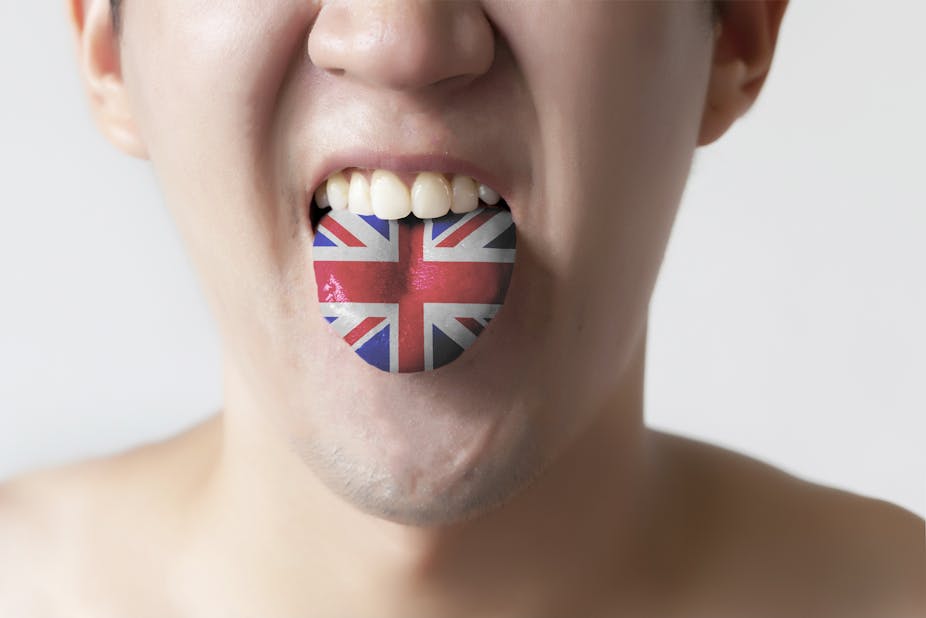
Language is more than just code by which we communicate, it is related to social and political knowledge, and access to power structures.

Up to now the myth of one nation, one national language, one national culture – which was at the heart of the ideal of the nation-state in the 19th and 20th centuries – perpetuates the master narrative of national homogeneity.

These attitudes silence the contributions that new multilingual citizens make to economic growth, social cohesion or artistic production.

A different approach is urgently needed, one that moves away from multilingualism as deficit and towards a recognition of linguistic and cultural diversity as a creative engine of civic participation and social well-being.

In an age where politicians and pressure groups alike act on the advice of communications consultants, it seems that a new term is introduced into the debate every few weeks and repeated ad infinitum, if not ad nauseam.

“People’s vote”, “leave means to leave”, “cliff-edge Brexit”, “managed no deal” “backstop” – shout the phrase of the day loud enough and often enough and voters might just remember it at the ballot box.

Rarely is there any space or inclination to look at what these slogans actually entail.

Like all these phrases, “a managed no deal” is not just meaningless spin. It may be a contradiction in terms, but it still has specific functions in the public discourse on Brexit. It serves to allay fears, allows for a positive variation on the journey metaphor and introduces a new option into the debate. Whether that option is realistic, however, is another question.

Linguistic relativity is the idea that language, which most people agree originates in and expresses human thought, can feedback to thinking, influencing thought in return.

The language that you hear gives you a vocabulary for discussing the world, and that vocabulary, by producing simulations, gives you habits of mind.

Encountering language about other groups of people can lead to a skewed view of reality. It may well be that having different words means having differently structured minds. But then, given that every mind on earth is unique and distinct, this is not really a game changer.

Language diversity has played a key role in shaping the interactions of human groups and the history of our species, and yet we know surprisingly little about the factors shaping this diversity.

“Hard Brexit”, “soft Brexit”, “Norway plus”, “Canada plus” These metaphor have shaped much of the discussion on Brexit.

You could be forgiven for being confused about the options available for Britain as it leaves the EU. One phrase in particular, though, is worth investigating further: “a managed no-deal Brexit”.

On the face of it, it seems a contradiction in terms. After all, isn’t no deal about the UK crashing out of the EU or going over a cliff edge? How could such a sudden and disastrous event be managed?

There is more to the phrase “managed no deal” though.

If we look back at the Leave and Remain campaigns, both consistently sought to evoke the emotions of voters. Leave aimed to trigger both negative and positive feelings – frustration with being restricted by the EU, fear of uncontrolled immigration, and pride in a “Global Britain”. The Remain campaign appealed overwhelmingly to fears about the UK’s economic future outside of the EU.

Two-and-a-half years on, it is no deal that is being presented as a frightening prospect. And the way to overcome the fear of what could happen is to control or manage future events.

The notion of control was central to the Leave campaign.

After triggering fears about the perceived threat posed by immigrants, and frustration about a seeming lack of power as an EU member state, the same campaign provided the solution to such negative feelings: take back control of British laws, borders and money by leaving the EU.

The idea of managing a no-deal scenario follows a similar pattern, except that the fears that need to be quelled in this case have been evoked by those rejecting a no-deal scenario.

Today our species collectively speak over 7,000 distinct languages. 2,464 of these are endangered. Just 23 languages dominate among these 7,097 and are spoken by over half of the world’s population, one is related to the backstop Irish.

Undoubtedly, a wide variety of social and environmental factors and processes have contributed to the patterns in language diversity we see across the globe.

The degree to which different environmental, social and geographic variables correlate to language is evident to all with Brexit.

Why is it that humans speak so many languages? And why are they so unevenly spread across the planet?Résultat de recherche d'images pour "pictures of brexit language"
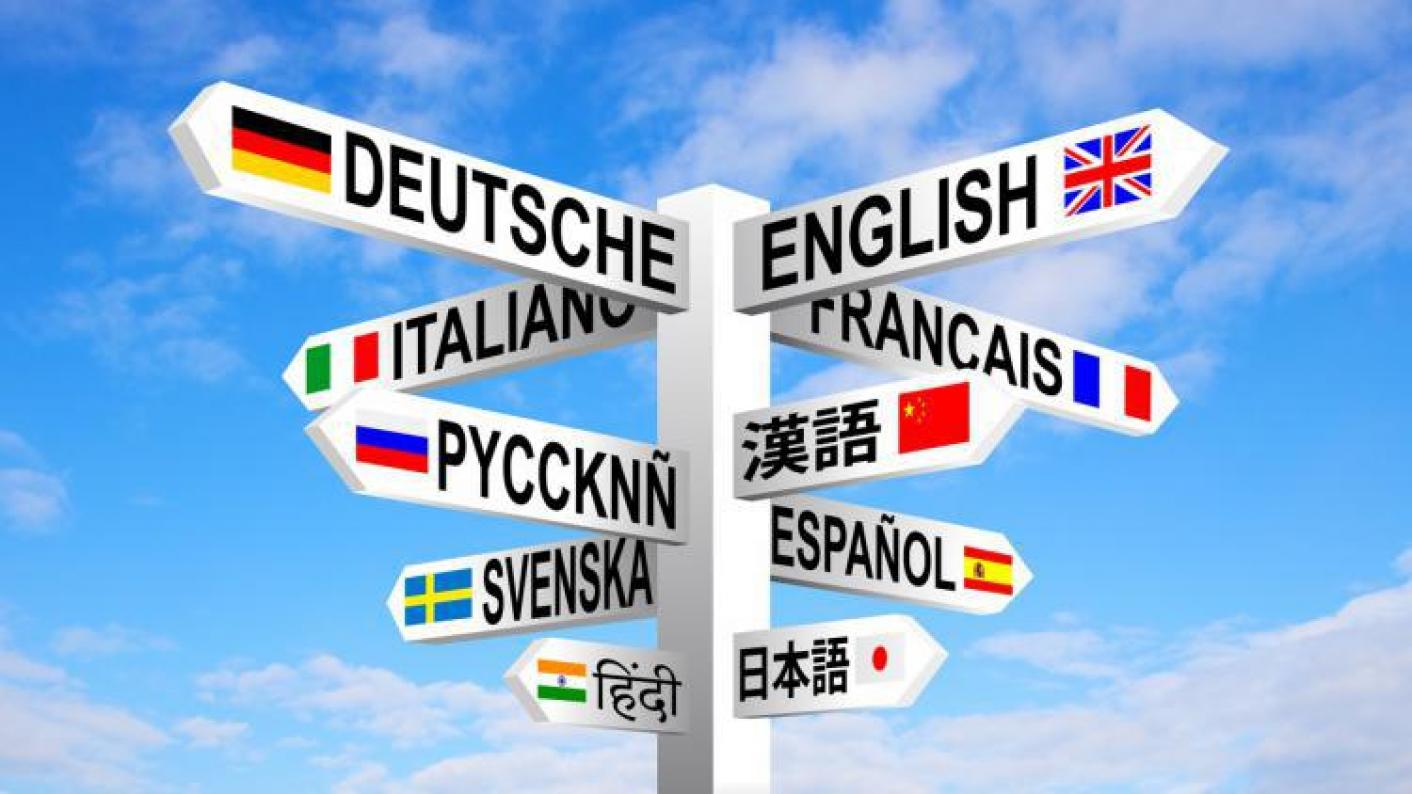
The European Union is proud of its linguistic diversity, making translation a right. It is the largest translation organisation in the world. EU staff use English for most scientific publications, business channels and international relations. However, this is where the problem starts.

It would be quite ironic that the unofficial international language of business would not be official in the EU because of a lack of English-speaking volunteer countries. And there are only two: The Republic of Ireland and Malta. Ireland has already named Irish as its national language. What a turn of history it would be for the Irish to rescue the English language.

Brexit with have an undeniable effect on Europe as we know it. The social, financial and cultural impact it will have is hard to predict.

One thing we do know is, based on both speculation by EU officials and the regulations of the EU itself, is that the English language will be effect by Article 50. Unless a vote is carried out by the members of the European Union this could be the very end of the English language.

I leave you with- BEIDH TU ANN.

All human comments appreciated. All like clicks and abuse chucked in the bin.

Go back

Your message has been sent

Warning
Warning
Warning
Warning

Warning.


–


Share this:

  • Click to share on WhatsApp (Opens in new window) WhatsApp
  • More
  • Click to share on Pocket (Opens in new window) Pocket
  • Click to share on Mastodon (Opens in new window) Mastodon

The limits of my language are the limits of my world.

12 Thursday Feb 2015

Posted by bobdillon33@gmail.com in Uncategorized

≈ Comments Off on The limits of my language are the limits of my world.

Tags

Communications, European identities., Languages., The European Union

Our physical world is polluted with dangerous chemicals, but our language, too, suffers its own kind of pollution.

Everyone is society is affected by language and communication in some way or other, no more so than Europeans.

So lets ask a few questions;

The Treaty of Rome in 1957 founded what is now the European Union, and was supposed to be the beginning of the end of nationalism in Europe. But over a half-century later, nationalism never went away. Officially, deputies and delegates will only speak in their national languages, as a matter of principle.

You might wonder then, when most, if not all, EU bureaucrats master English, what’s the point in maintaining 23 official languages, especially at such expense? Why not just use a single language and, what’s more, why not use the language all EU bureaucrats master — English?

Within the EU institutions, ideology trumps pragmatism, and the founding ideology of the Union is “Unity in Diversity.”

Back in 1957, when there were only six member states and four languages, it was an easy credo to follow. But fast-forward to today and things are not so easy: 27 member states and 23 official languages. It’s costing the EU a lot of money, it’s having a negative impact on its global competitiveness and it will only get more complex as the union continues to enlarge. Croatia will make 24th official language.

Just imagine a General with an army of 24 different nations all awaiting the order to advance in their own language. The war would be over before it started. God knows we have moved on from Nelson days where every order had to giving in triplicate, but the idea for establishing English as the language of the EU, remains politically toxic. Long live Nelson.

English is the language of the most eurosceptic country — the United Kingdom. What’s more, France and Germany are very touchy when it comes to having their languages eclipsed by English. Any single language wouldn’t be democratic, or in the shared spirit of the union.

So we are left with. Once a delegate or bureaucrat delivers a speech in his or her native language, it’s taken up by dozens of interpreters, who simultaneously translate into their respective languages, or tune into the English interpretation and translate from that. Meanwhile, an official release of the speech is produced and sent to the translation unit and a separate group of text-based translators gets to work.

The process is costly, unproductive, and most of all, unnecessary.

So how are national and European identities tied to language and communication? And what role does power have – power in discourse, over discourse and of discourse?

In our daily lives, we often encounter combinations of words and images of all kinds. We take them as given, we use them to communicate and interpret information.

Just imagine you were born stone deaf. Your language would be based on sight–lip reading which translates to sign language which appears to be on the increase in modern forms of communication.

But we are no longer communicate only in ‘traditional’ written or spoken genres, but also using new ones, such as text messages, e-mail, tweets and Facebook posts. These force us to get accustomed to the reduction of geographical distance and of time-spans due to the GLOBALIZATION OF COMMUNICATION. These day you can get fired by a text while on holidays.

However, in all available genres, the use of language and communication as a ‘social practice’enables dialogue, negotiation, argument and discussion, learning and remembering, and other functions.

Languages and using language manifest ‘who we are’, and we define reality partly through our language and linguistic behavior.

But who determines who can speak with whom, and how? Who decides on the norms of language use; who sets these norms and enforces them; who determines whether languages, linguistic behaviors and identities are accepted?

Who, for example, decides, in the end, which language and which form of language is ‘good’ enough to pass a language test to attain citizenship or resident status? Or look at the other side of the pond. Spanish is like a creeping tide in the USA.

With the recent appearance of new states in Europe and the flow of populations across state boundaries, a new criterion centered on proficiency in the official language(s) of a state has emerged.

The acquisition of language proficiency is apparently frequently perceived as being solely in the interests of migrants and not also in the interests of the host country, as well as being the host country’s responsibility.

Moreover,many politicians still have to be convinced that second language acquisition depends on the availability of professional teachers, good teaching materials and sufficient competence in one’s native language.

Unfortunately, the worlds of language experts and politicians (and their bureaucrats) remain far apart, and much dialogue would be required to bring them together. Parameters for determining exactly who is (or can become) a ‘resident’ and/or a ‘citizen’ are at present unresolved, with little consensus across the states.

In creating language tests of various kinds, language competence has acquired the status of a key gatekeeper – providing access for some and rejecting it for others.

There are certainly no easy recipes for dealing with second language acquisition and migration. However, it is clear that we must acknowledge the close, emotional relationship between language and identity, and take account of it in the many political and educational policy decisions made every day.

All human identities are social in nature, because identity is about meaning, and meaning is not an essential property of words and things:

Two established criteria for determining citizenship, common in policy discourse,are birthplace and bloodline both are indelible printed and cannot be replaced by citizenship.

Language, power and identity’ closely these three are connected. How the discursive construction of  identities is influenced by vested interests, and how identities are thus continually re- and co-constructed and negotiated.

However, these co-constructions operate within clear borders created in politics, in the economy and in legal frameworks. The contrast between policy regulations and the ‘voices of migrants’ allows the exposition of the many inherent contradictions in the search for European identities and related values, as stated in the Charter of Fundamental Rights

Meaning develops in context-dependent use.

Meanings are always the ‘outcome of agreement or disagreement, always a matter of contention, to some extent shared and always negotiable’ (Jenkins 1996: 4–5).

The cost of Translation in the EU is (estimated) — to be €330m a year or some €0.60 for every EU citizen.

According to certain very rough estimates, the cost of all language services in all EU institutions amounts to less than 1% of the annual general budget of the EU. Divided by the population of the EU, this comes to around €2 per person per year.

In 2014 output was 2.30 million pages. Of this, 71% was done in-house and the rest by contractors. A page is 1 500 typed characters not including spaces.

                  The limits of my language are the limits of my world.

                         Learning second language ‘slows brain ageing.

Speaking a second language is better than just knowing how to speak it.

When the world changes, sometimes a new language is needed to handle that change. For instance, telegraphs spawned Morse code, airplanes spawned air traffic control signals, and computers spawned machine language, C++, Java, and many others. You may decide that no existing language can satisfy the needs of your world, and so you may choose to become a language maker, which presents its own challenges.

That leaves us with : Do words make a language or is it the other way around.  Words can be x-rays, if you use them properly- they’ll go through anything, you read them and you’re pierced. Prized possessions  are words are words that are never spoken, sometimes the thought in my head get so bored they go out for a stroll through my mouth.

Go back

Your message has been sent

Warning
Warning
Warning
Warning

Warning.


Share this:

  • Click to share on WhatsApp (Opens in new window) WhatsApp
  • More
  • Click to share on Pocket (Opens in new window) Pocket
  • Click to share on Mastodon (Opens in new window) Mastodon

All comments and contributions much appreciated

  • THE BEADY EYE SAYS TRUST IS DISAPPEARING THANKS TO OUR INABILITY TO RELATE TO EACH OTHER. December 19, 2025
  • THE BEADY EYE SAYS. THE WORLD NEEDS PEOPLE GOVERNMENT NOT MONEY GOVERNMENTS. December 18, 2025
  • THE BEADY EYE ASKS WHAT ARE WE THE SAME GOING TO DO TO STOP THE WORLD BEING FUCK UP FOR PROFIT BY RIPOFF MERCHANT. December 17, 2025
  • THE BEADY EYE CHRISTMAS GREETING. December 16, 2025
  • THE BEADY EYE SAYS. TO THE NEXT GENERATION TO LIVE A LIFE WORTH WHILE YOU MUST CREATE MEMORIES. December 16, 2025

Archives

  • December 2025
  • November 2025
  • October 2025
  • September 2025
  • August 2025
  • July 2025
  • June 2025
  • May 2025
  • February 2025
  • January 2025
  • December 2024
  • November 2024
  • October 2024
  • September 2024
  • August 2024
  • July 2024
  • June 2024
  • May 2024
  • April 2024
  • March 2024
  • February 2024
  • January 2024
  • December 2023
  • October 2023
  • September 2023
  • August 2023
  • July 2023
  • June 2023
  • May 2023
  • April 2023
  • March 2023
  • February 2023
  • January 2023
  • December 2022
  • November 2022
  • October 2022
  • September 2022
  • August 2022
  • July 2022
  • June 2022
  • May 2022
  • April 2022
  • March 2022
  • February 2022
  • January 2022
  • December 2021
  • November 2021
  • October 2021
  • September 2021
  • August 2021
  • July 2021
  • June 2021
  • May 2021
  • April 2021
  • March 2021
  • February 2021
  • January 2021
  • December 2020
  • November 2020
  • October 2020
  • September 2020
  • August 2020
  • July 2020
  • June 2020
  • May 2020
  • April 2020
  • March 2020
  • February 2020
  • January 2020
  • December 2019
  • November 2019
  • October 2019
  • September 2019
  • August 2019
  • July 2019
  • June 2019
  • May 2019
  • April 2019
  • March 2019
  • February 2019
  • January 2019
  • December 2018
  • November 2018
  • October 2018
  • September 2018
  • August 2018
  • July 2018
  • June 2018
  • May 2018
  • April 2018
  • March 2018
  • February 2018
  • January 2018
  • December 2017
  • November 2017
  • October 2017
  • September 2017
  • August 2017
  • July 2017
  • June 2017
  • May 2017
  • April 2017
  • March 2017
  • February 2017
  • January 2017
  • December 2016
  • November 2016
  • October 2016
  • September 2016
  • August 2016
  • July 2016
  • June 2016
  • May 2016
  • April 2016
  • March 2016
  • February 2016
  • January 2016
  • December 2015
  • November 2015
  • October 2015
  • September 2015
  • August 2015
  • July 2015
  • June 2015
  • May 2015
  • April 2015
  • March 2015
  • February 2015
  • January 2015
  • December 2014
  • November 2014
  • October 2014
  • September 2014
  • August 2014
  • July 2014
  • June 2014
  • May 2014
  • April 2014
  • March 2014
  • February 2014
  • January 2014
  • December 2013
  • November 2013
  • October 2013

Talk to me.

Jason Lawrence's avatarJason Lawrence on THE BEADY EYE ASK’S: WIT…
benmadigan's avatarbenmadigan on THE BEADY EYE ASK’S: WHA…
bobdillon33@gmail.com's avatarbobdillon33@gmail.co… on THE BEADY EYE SAYS: WELCOME TO…
Ernest Harben's avatarOG on THE BEADY EYE SAYS: WELCOME TO…
benmadigan's avatarbenmadigan on THE BEADY EYE SAY’S. ONC…

7/7

Moulin de Labarde 46300
Gourdon Lot France
0565416842
Before 6pm.

My Blog; THE BEADY EYE.

My Blog; THE BEADY EYE.
bobdillon33@gmail.com

bobdillon33@gmail.com

Free Thinker.

View Full Profile →

Follow bobdillon33blog on WordPress.com

Blog Stats

  • 94,154 hits

Blogs I Follow

  • unnecessary news from earth
  • The Invictus Soul
  • WordPress.com News
  • WestDeltaGirl's Blog
  • The PPJ Gazette
Follow bobdillon33blog on WordPress.com

The Beady Eye.

The Beady Eye.
Follow bobdillon33blog on WordPress.com

Blog at WordPress.com.

unnecessary news from earth

WITH MIGO

The Invictus Soul

The only thing worse than being 'blind' is having a Sight but no Vision

WordPress.com News

The latest news on WordPress.com and the WordPress community.

WestDeltaGirl's Blog

Sharing vegetarian and vegan recipes and food ideas

The PPJ Gazette

PPJ Gazette copyright ©

Privacy & Cookies: This site uses cookies. By continuing to use this website, you agree to their use.
To find out more, including how to control cookies, see here: Cookie Policy
  • Subscribe Subscribed
    • bobdillon33blog
    • Join 223 other subscribers
    • Already have a WordPress.com account? Log in now.
    • bobdillon33blog
    • Subscribe Subscribed
    • Sign up
    • Log in
    • Report this content
    • View site in Reader
    • Manage subscriptions
    • Collapse this bar