• About
  • THE BEADY EYE SAY’S : THE EUROPEAN UNION SHOULD THANK ENGLAND FOR ITS IN OR OUT REFERENDUM.

bobdillon33blog

~ Free Thinker.

bobdillon33blog

Tag Archives: European identities.

THE BEADY EYE ASK’S : WHO DO YOU THINK YOU ARE?

28 Thursday Jan 2016

Posted by bobdillon33@gmail.com in European Union., Humanity., Life., The world to day., Unanswered Questions., What Needs to change in the World

≈ Comments Off on THE BEADY EYE ASK’S : WHO DO YOU THINK YOU ARE?

Tags

Community cohesion, European identities., European leaders, European Union, Identity, The Future of Mankind, World aid commission


( Five minute read:)

How often have you heard this question.

It is mostly posed with a form of some aggression.

Not so here.

SO I SUPPOSE THE BEST PLACE TO START WITH THIS POST IS WITH WILLIAM SHAKESPEARE, AS YOU LIKE IT.

“ALL THE WORLD’S A STAGE, AND ALL THE MEN AND WOMEN MERELY PLAYERS; THEY HAVE THEIR EXITS AND THEIR ENTRANCES, AND ONE MAN IN HIS TIME PLAYS MANY PARTS.”

We all have roles to play in our lives and these change as we move through it.

Do you find yourself thrashing against the tide of human indifference and selfishness? Are you oppressed by the sense that while you care, others don’t?

That, because of humankind’s callousness, civilisation and the rest of life on Earth are basically stuffed?

Many of those who dominate public life have a peculiar fixation on fame, money and power. Their extreme self-centeredness places them in a small minority, but, because we see them everywhere, we assume that they are representative of humanity.

“It’s all about political opportunism and humanitarian posturing,”Afficher l'image d'origine

With the best will in the world it is unlikely that you will turn out as an adult with no unhelpful of unintended modifications – or what is called “conditioning”.

The true YOU is the one that finds life fulfilling in a deep sense rather than theoretically good on a purely intellectual level.

The personality is not YOU, you have a personality, so if you want your “self” to be aware of itself, you will have a long wait!

However, you, as an independent observer of your own internal processes, can become aware of what your personality is up to, how it is behaving and the impact on yourself and others.

As Fritz Perls said:

“Truth can be tolerated only if you discover it yourself because then, the pride of discovery makes the truth palatable.”

These days with technologies we hardly understand where we going never mind how we are.

It’s the culture.

Technology isn’t a section in the newspaper any more.

I think people are tired of complexity and they’re hungering for clarity, a simpler time.

The more we do things, the more they become a habit and the more that we think in the same way, the more these patterns of thought and behaviour become our identity.

The more that we depend on the masks and the safer that we feel as a result of wearing them, the greater the risk and uncertainty we feel of taking off our mask and interacting openly, honestly and authentically.

With the massive economic and cultural transformation driven by Silicon Valley are we no longer in control of who we are?

mask masks incertitude life

However if the personality is our sense of identity, but is not us, then who are we?

Our personality is like a piece of armour which is at the same time our greatest shield and also potentially our greatest prison. It enables us to deal with the outside world, but it can also insulate us from it – and from other people.

We are also not our personality, which has in large part been forged as a result of the experiences of surviving and protecting ourselves in the real world.

Take for instance, Politicians. given their image-conscious online life in the public eye  .

Most millennials still worry about attaching themselves with a click to the wrong clique or hashtag:

“It heightens the level of uncertainty, anxiety and risk aversion, to know that you’re only a bad day and half a dozen tweets from being fired.”

Smart phones are dominating our sense of identity and we will if not careful end up feeling lost when they end.

You need to find an internal source for our identity, not an external one.

The old verities of who you are now seem quaint, but many millennials are now paralyzed by all their choices.

There was a time that we understood that not everyone was destined for greatness.

If you work hard and play by the rules, you’ll lose out to those guys who can wire computers to make bets on Wall Street faster than the next guy to become instant multimillionaires.

Or losers who have soured our sturdy and spiritual DNA with too much food, too much greed, too much narcissism, too many lies, too many spies, too many fat-cat bonuses, too many cat videos on the evening news, too many Buzzfeed listicles like “33 Photos Of Corgi Butts,” and too much mindless and malevolent online chatter?

Our quiet traditional virtues bow to our noisy visceral divisions, while churning technology is swiftly remolding the national character in ways that are still a blur.

Boldness is often chased away by distraction, confusion, hesitation and fragmentation. Or are we forever smaller, stingier, dumber, less ambitious and more cynical?

Have we lost control of our not-so-manifest destiny?

Misanthropy grants a free pass to the grasping, power-mad minority who tend to dominate our political systems. If only we knew how unusual they are, we might be more inclined to shun them and seek better leaders. It contributes to the real danger we confront: not a general selfishness, but a general passivity.

We’re a little bit scared of our own shadow. And, sadly, we see ourselves as a people who can never understand one another. We’ve given up on the notion that we can cohere, by holding together people with deep differences.

We’ve broken Iraq, liberating it to be a draconian state-run on Sharia law, full of America/ English-hating jihadists who were too brutal even for Al Qaeda.

We have to re earn greatness.

But that’s going to be hard to restore in the world today.

Young people are more optimistic than their rueful elders, especially those in the technology world. They think of themselves as global citizens but are more interested in this moments of crazy opportunity.

With awareness comes freedom.

As you become aware of your fixed attitudes, beliefs and values that may no longer be useful to you and you begin to understand that there were good reasons for you to have adopted them, you can begin to see that it is neither good nor bad that this is the way life is – and the way that you are – it is just a natural consequence of living the human experience.

The authentic self is the true self underneath all the conditioning that has been acquired through life’s experiences.

Being in touch with our true selves is about getting real, not living in a fantasy of who we could or should be, but living with what is.

Life has become more complex but we hardly ever notice it because technology has made complexity simpler than ever. Who you are and where you are is tracked and sold on to ever is interested. The Private who is dead and gone.

The only knowledge we need to have is the knowledge of where to find stuff.

Humans today are like most smartphones and tablets – their ability to solve problems depends not on the knowledge they can store but on their capacity to connect to a place where they can retrieve the answer to find a solution.

Technology will continue to evolve and the gap between what can be solved with and without it will only increase. That is, we will become more and more dependent of technology and the only intellectual disadvantage will be the inability (or unwillingness) to learn to use it.

One could also imagine that this IT-overload may prove too much for some — In short, people who are able to keep up with technology will outsmart those who don’t (even more than they do now).

So perhaps there is no need to know how you are but more importantly where you are.

Too much Google, too much Face Book, Twitter, clicking from one site to another, or for that matter reading with out pause, constitutes a kind of scattering, a distraction, an agitation of the mind.

Our reliance on Google Search, is resulting in unrealistic self-confidence in our cognitive abilities.

That’s right, we are all plagiarising the internet without even realising it.

You might think that all is this is just hog wash but in a few hundred years from now most of us will not know the meaning of the word where and if we don’t know where we are from there is little chance of knowing who you are.

If we look at western Europe it appeared that we are not building anything, but merely trying to hang on to something we have inherited, but don’t necessarily value.Afficher l'image d'origine

With the immigration and refugee influx this will have to change.

What is the narrative that drives what we are building in Europe… and who is creating that narrative?  Not us.

We have derived a narrative from a century of conflict, and the received narrative is shaped around not fighting with each other. Fully understandable. But, for my children’s generation the wars of the twentieth century are as remote as the Battles of Agincourt or Waterloo.

This is why I wonder if Europe needs a new driving narrative that helps us consciously shape who and what we want Europe to become.

The old narrative of solidarity no longer applies.

We have Razor Wire replacing open frontiers. The Dutch reverting to extracting gold fillings and the Belgians wanting concentration Camps in Greece never mind what ‘solidarity’ means to young unemployed people in Greece or Spain.

So, the questions remain.

Who do we think we are and what do we want Europe to become? And who will shape the narrative for a new generation?

Billions of decent people tut and shake their heads as the world burns, immobilised by the conviction that no one else cares.

Attitudes of fear and paranoia adopted by many have led to an increasingly hostile global environment.

Cherished and treasured human values are trampled beneath a host of vitriolic “we’re better than you” convictions. Our world is sick, however, facing political and environmental disaster on an unprecedented scale.

Many of the problems plaguing us stem directly from deeply-held convictions of social differentiation and exclusion, rooted in philosophies that justify heinous acts in the service of a ‘greater good’. We are what we do. We have to start doing better.

We have to start somewhere. Why not a World Aid Commission Of 0.05%. ( see previous Post.)

In this century we have had only three brief moments when a majority of us said they were satisfied with the way things were going:

Have a go at naming them.

Go back

Your message has been sent

Warning
Warning
Warning
Warning

Warning.

Share this:

  • Click to share on WhatsApp (Opens in new window) WhatsApp
  • More
  • Click to share on Pocket (Opens in new window) Pocket
  • Click to share on Mastodon (Opens in new window) Mastodon

THE BEADY EYE ASK’S: IS THE EUROPEAN UNION ALL ITS MADE OUT TO BE.

19 Tuesday Jan 2016

Posted by bobdillon33@gmail.com in European Union.

≈ Comments Off on THE BEADY EYE ASK’S: IS THE EUROPEAN UNION ALL ITS MADE OUT TO BE.

Tags

European identities., European leaders, The Euro zone., The European Union

( Five to Six minute read)

The European Union seems incapable of undertaking economic reforms and defining its place in the world.Afficher l'image d'origine

Citizens feel isolated from the institutions in Brussels and see no way to influence European level decisions.

The EU is one of the motors of capitalist globalisation, the rule that all decisions should be made on the basis of profitability alone.

Over the course of the coming year it looks like it is in for a large dose of turmoil.

The lack of fluency in financialese shouldn’t preclude anyone from understanding what is going on in Europe or what may yet happen.

So let’s have a closer look at what is means to-day to be an European Citizen with a EU passport.

Years ago I had a lovely greed passport. Now I have a wine coloured EU Irish passport.

What is the difference? Globalisation has already deeply undermined national citizenship as a bond between individuals and states.

You could say that EU citizenship provides the most vivid reminder of the radical shift in the meaning of citizenship that made it a more ethically acceptable institution. Non-discrimination on the basis of nationality – the very core of EU law – provides the litmus test for what national citizenship is really about in the EU today.

The primary value of citizenship lies in the mobility rights attached to passports.

Does this appease my lost of my Irish Passport.?  Does it make me feel European?

So in some ways the answer to the above questions is Yes.

On the other hand I come from a small Island with a long history and a culture far removed from Europe.  So I remain Irish first and European for the sake of Commerce and Peace among nations.

The problem is that the EU passport is rapidly reflecting the instrumental value of free movement rights attached to EU citizenship for the wealthy and mobile global elites.

They are willing to dish out hundreds of thousands of dollars to gain a freshly minted passport in their new “home country.”

That this demand exists is not fully surprising given that this is a world of regulated mobility and unequal opportunity, and a world where not all passports are treated equally at border crossings.

Rapid processes of market expansionism have now reached what for many is the most sacrosanct non-market good: membership in a political community.

More puzzling is the willingness of governments – our public trustees and legal guardians of citizenship – to engage in processes that come very close to, and in some cases cannot be described as anything but, the sale and barter of membership goods in exchange for a hefty bank wire transfer or large stack of cash.

Everybody knows that immigration is among the most contentious policy issues of our times, and recent years have witnessed a “restrictive turn” with respect to ordinary immigration and naturalisation applicants, such as those who enter on the basis of a family reunification claim or for humanitarian reasons.

At stake is the regulation of the most important and sensitive decision that any political community faces: how to define who belongs, or ought to belong, within its circle of members.

Not everyone knows, however, that governments are now proactively facilitating faster and smoother access to citizenship for those who can pay.

Many EU countries offer privileged access to EU citizenship to large populations outside the EU territory on grounds of distant ancestry or co-ethnic identity, obliging thereby all other Member States to admit immigrants from third countries to their territories and labour markets as EU citizens.

Consider the following examples.

Affluent foreign investors were offered citizenship in Cyprus as “compensation” for their Cypriot bank account deposit losses.

In 2012, Portugal introduced a “golden residence permit” to attract real estate and other investments by well-to-do individuals seeking a foothold in the EU.

Spain recently adopted a similar plan.

On 12 November 2013, Malta approved amendments to its Citizenship Act that put in place a new individual investor legal category that will allow high-net-worth applicants to gain a “golden passport” in return for € 650,000.

Under these cash for-passport programmes, many of the requirements that ordinarily apply to those seeking naturalisation, such as language competency, extended residency periods or renunciation of another citizenship, are waived as part of an active competition, if not an outright bidding war, to attract the ultra-rich.

Portugal, for example, offers a fast track for qualified applicants that entitles them to a 5 year permanent residence permit, visa-free travel in Schengen countries, the right to bring in their immediate family members, and ultimately the right to acquire Portuguese citizenship and with it the benefits of EU citizenship. This package comes with a hefty price tag: a capital transfer investment of € 1 million, a real estate property purchase at a value of € 500,000, or the creation of local jobs. The investment needs to remain active in Portugal for the programme’s duration.

Alas, the individual who gains the golden permit bears no similar obligation.

Simply spending 7 days in Portugal during the first year and fourteen days in the subsequent years is enough to fulfil the programme’s requirements.

This is not the only example or anything new: It is more or less wholesale around the world.

Such programmes are found in, among other places, Australia, New Zealand, Hong Kong, the United Kingdom and the United States. Both kinds of programme raise serious ethical quandaries, but the unfettered cash-for-passport programmes are far more extreme and blatant than the traditional investment programmes.

They contribute to some of the most disturbing developments in 21st century citizenship, including the emergence of new forms of inequality and stratification.

So much for the conclusion that “real and effective ties” between the individual and the state are expected to underbid the grant of citizenship.

Since EU citizenship is derived from Member State nationality and determining the latter remains an exclusive competence of Member States, EU law does not provide much leverage against either the sale of EU passports or other policies of creating new EU citizens without genuine links to any EU country.

Citizenship should be considered as the kind of good that money should not be able to buy but earned. 

Instead of offering their citizenship for money, democratic states could bestow it on persons who are threatened by persecution or who fight for democratic values as a means of protection or exit option with the provision of earning the right to residence-based naturalisation.

A global market for citizenship status is corrupting democracy by breaking down the wall the separates the spheres of money and power.

However, that monetary investment can be a way of contributing to the common good of a political community and should therefore not be summarily dismissed as a legitimate reason for acquiring citizenship.

That states have legitimate interests in “inviting the rich, the beautiful and the smart” and that investor citizenship is not essentially different from the widespread practice of offering citizenship to prominent sportsmen and –women.

Some states offer citizenship to foreigners who have served in their army or have otherwise provided exceptional service to the country.

There is a broader trend towards relinking citizenship acquisition to social class, which manifests itself, on the one hand, in offering citizenship to the rich and, on the other hand, in income and knowledge tests for ordinary naturalisations of foreign residents.

Why are states putting citizenship up for sale? And what precisely is wrong with easy-pass naturalisation along the lines of the cash-for-passport programmes? Is it the queue jumping? The attaching of a price tag to citizenship? The erosion of something foundational about political membership itself? Or, perhaps, all of the above?

Such programmes are found in, among other places, Australia, New Zealand, Hong Kong, the United Kingdom and the United States. Both kinds of programme raise serious ethical quandaries, but the unfettered cash-for-passport programmes are far more extreme and blatant than the traditional investment programmes. They contribute to some of the most disturbing developments in 21st century citizenship, including the emergence of new forms of inequality and stratification.

Indeed, if a Romanian is good enough to be embraced by British society as equal, subjecting a Moldovan to any kind of tests is utterly illogical: the arguments of the protection of culture, language, etc. are simply devoid of relevance when more than half a billion EU citizens a exempted from them.

The European bosses want to use North Africa and the other countries on the fringes of Europe as a highly exploitative, low wage sweatshop where workers have no union rights and environmental legislation is minimal.

There are two parts to this policy.

The nastiest side of the EU is on the question of migration. Here EU policy has resulted in thousands of deaths in the last decade.

Thousands have died trying to cross the borders that surround Europe.

They have drowned in the Mediterranean and suffocated in the backs of containers. Dozens have died in suspicious circumstances at the hands of immigration police. Tens of thousands more sit in prison camps across Europe, waiting to be deported. At the same time large sectors of the European economy, particularly in agriculture, cleaning and fast food are dependent on the low wage workforce the migrants who manage to cross the border provide.

So Ask me again. Is the EU passport all its made out to be.

Full belonging to a society is thus not subjected any more to an arbitrary approval, putting all the bizarre language, culture and other tests that states subject newcomers to in a very interesting perspective: the very existence of the EU disproves their validity and relevance.

They consist in nothing else but purification through humiliation: the “others’” language and culture is presumed as not good enough and social learning is dismissed, forcing people to waste their time by subjecting them to profoundly disturbing rituals.

The very success of obtaining EU citizenship by a period of probation is the strongest argument against these practices.

It’s not just an understanding of a language that makes you integrate, it’s the core belief is your country, not a Trading Block.

We all know that the EU originally was the Common Market.

Since then it has continuously evolved.

This means is that the EU wants to turn water supply, education, health and refuse collection from being social services provided to all to profit-making enterprises provided to those who can pay.

Surely, zealous free-marketeers will enthusiastically defend such programmes as freeing us from the shackles of culture, nation and tradition and moving citizenship forward to a new and more competitive global age of transactional contracting in which, as Nobel Prize laureate Gary Becker once put it, a price mechanism substitutes for the complicated criteria that now determine legal entry.

So why is it important to understand how citizenship-by-investment has come about?

Because of its large impact on an essential political institution and its success in carving out global mobility corridors through entangled states.

The UK, one of the first states to introduce Investor Visa (with a price tag of £ 1 million or a bank loan from an UK financial institution and personal assets worth 2 million) recently revised this policy as it came to its attention that investors used the capital for investment as security to back up loans and that investments were placed in offshore custody.

May be in 2016 the Flag will change to look like this.

Afficher l'image d'origine

or     Afficher l'image d'origine   orAfficher l'image d'origine


Afficher l'image d'origine

or   Afficher l'image d'origine   or    Afficher l'image d'origine

There is one thing for sure, fences or not it will have more than a few new Citizens.

All comments appreciated.

Go back

Your message has been sent

Warning
Warning
Warning
Warning

Warning.

Share this:

  • Click to share on WhatsApp (Opens in new window) WhatsApp
  • More
  • Click to share on Pocket (Opens in new window) Pocket
  • Click to share on Mastodon (Opens in new window) Mastodon

THE BEADY EYE LOOKS AT WHO IS A REFUGEE?

25 Tuesday Aug 2015

Posted by bobdillon33@gmail.com in European Union., Humanity., Politics., Where's the Global Outrage.

≈ Comments Off on THE BEADY EYE LOOKS AT WHO IS A REFUGEE?

Tags

Capitalism vs. the Climate., European identities., European leaders, European Union, Migrants/Refugees.

Understanding the problems confronting refugees—and those striving to protect them—depends on grasping precise legal definitions.

The core definition of a “refugee” is contained in the 1951 United Nations Convention relating to the Status of Refugees and its 1967 Protocol relating to the Status of Refugees, which define a refugee as an individual who: “owing to a well-founded fear of being persecuted for reasons of race, religion, nationality, membership of a particular social group or political opinion, is outside the country of his nationality, and is unable or unwilling to avail himself of the protection of that country.”

With biggest driving force for change still to manifest itself: It seem to me that the definition is long over due a revamp.

Climate Change will like the Internet have a profound effect on the world.

The Internet alone has assisted the creation of wars, by highlighting the inequalities that exist between the have and have not’s. It is exposing Capitalism and the free Market for what it real is. It is unveiling corruption, challenging the mass media and assisting mass immigration by generating sizeable networks to deal with the any obstacles set in their paths.

Climate change will change any definition of undocumented aliens asylum seekers. It will displace millions, impacting on the economy, by having a positive affecting on some groups and negatively others.

Trade agreements like the TTPI will weaken the case of those who would venture a rigid and single-factor comparison between “political” immigration and “economic” immigration.

We can expect the migratory issue to become increasingly political. A more rational approach would be to consider who the illegal immigrants are, before making immigration laws.

Much of Europe’s brewing migration debate carries a polarized tone of certainty, and migrants themselves are often slotted into neat “political” and “economic” categories.

You can see this at the moment as the EU struggles to establish who are political refugees and illegal immigration, on the role of economic versus non-economic factors. The definition Refugee has and is being ignored.

Is it possible to distinguish between the poverty of “condition” and the poverty of “position”?

Poverty, while a commonly cited factor “pushing” migration, is difficult to define.

In the former situation, the two main factors are a lack of employment and steady income, which prompt a feeling of having “nothing to lose.”Their biggest concern and expectation is to improve their physical well-being, something they regard as impossible at home.

This element has also got a growing home-grown element of poverty due to unemployment, no hours contracts, and exploration of the vulnerable within the EU.

Poverty of position, in contrast, involves migrants who use emigration as a way of more rapidly climbing the social ladder. These migrants feel that their income and position in their home country will never match their social capital (for example, their level of formal education or training). They move to places where they believe they can realize their aspirations.

Theses generic terms therefore covers a wide range of facts but Violence and Conflict are the leading causes of the current wave of migration [to Europe]

It is rooted in the crazy [U.S.] idea to launch an intervention in Iraq, which allegedly had weapons of mass destruction, but nothing was found.” A disaster that destabilized the Middle East giving rise of terrorism that we now see to-day.

However some of the blame for many asylum seekers is not wars.

For example, persecution is not necessarily imposed by the government or other official institutions in their country of origin. Some may face violence at the hands of mafia networks, armed groups, or a dominant majority group in connection with factors that are not directly political, such as ethnicity.

Others may be threatened for having a lifestyle that involves a socially unacceptable choice of spouse, sexual orientation, etc. As a result, some people are threatened and persecuted without fully meeting the demands of the 1951 United Nations Convention relating to the Status of Refugees.

The long the short and tall of it is that Northern Africa today can no longer defend Europe from the immense masses of people on the move.

As Europe turns its back, these are refugees, not migrants, are arriving in their thousands on Greek shores .

The number thought to be in the UK could be as high as 863,000 – larger than the population of Leeds. By comparison, Italy was thought to have up to 461,000, Germany had 457,000, France’s top estimate was 400,000 and Spain had 354,000. Greece, it is estimated that about 100.000-150.000 undocumented refugees and migrants enter Greece each year, among them maybe around 10.000 unaccompanied minors.

Refugees and other vulnerable people deserve the protection and assistance to which they are entitled under international law. Rather then the inhumane treatment seen in the below:

http://www.aljazeera.com/news/2015/08/streams-refugees-flow-macedonia-greece-150823072040825.html

In a wide range of countries, attitudes toward immigrants appear to be related to labor-market concerns, security and cultural considerations, as well as individual feelings toward political refugees and illegal immigration.

Are attitudes toward foreigners influenced by economic considerations or are they driven exclusively by non-economic issues?

At what point do we as citizens of the EU conclude that these people have already suffered enough and deserve to be aided in their flight to safety?

Without legal alternative routes for refugees to enter other European countries, people fleeing conflicts in the Middle East, Africa and elsewhere have taken matters into their own hands

The future of Europe, will be determined by its ability to confront the issue of immigration. Whatever the attitude of the government, population pressure will be immense on Europe and there is no chance to prevent such migration.

On the one hand, the Fortress Europe concept essentially focuses on the role of external border controls and neglects the entry and settlement of clandestine immigrants and undocumented aliens. At the same time, border controls, deportations, mass arrests, and internment of migrants in closed centers and prisons invalidate the thesis of Europe as a sieve.

Europe, which is neighbor to many war zones takes in more than 1.5 million legal migrants.

Overall, forced displacement numbers in Europe totalled 6.7 million at the end of the year, compared to 4.4 million at the end of 2013, and with the largest proportion of this being Syrians in Turkey and Ukrainians in the Russian Federation. Syria’s ongoing war, with 7.6 million people displaced internally, and 3.88 million people displaced into the surrounding region and beyond as refugees, has alone made the Middle East the world’s largest producer and host of forced displacement. Adding to the high totals from Syria was a new displacement of least 2.6 million people in Iraq and 309,000 newly displaced in Libya.

Today, Libya, between 500,000 and one million people aspire to come to Europe.

With population growth of 7% or 8% in Africa, against just over 1% here, migratory pressure is mechanical.

It is not possible or desirable that Europe opens its doors to every tom dick and harry. On the other hand it not possible to address the situation with 4-meter (13-foot) high fence on its borders like Hungary, or We need to build a wall, we need to keep illegals out,” Donald Trump said at last Thursday’s GOP debate.

I for one do not want to be represented by Israeli or Berlin wall.

It needs policies that better serve the interests of both nations and immigrants.

It is beyond me that we cannot move FRONTEX (It coordinates EU States’ actions in the implementation of EU border management measures.) from Warsaw (Poland) to some where useful.  So far this year, more than 180,000 migrants have reached Greece and Italy by sea (others come from Turkey via the land border with Bulgaria).

In the first four months of this year, more than a quarter of a million people claimed asylum in a European Union member state.

Where is the big deal in setting up humanitarian corridors for asylum seekers. To putting up initial reception center. To agreeing to a binding quota system for distributing refugees among all European countries.

I am sure if an appeal was made to all European Citizens the majority of the 509 million would not begrudge 10 Euros a month.

Let us hope that Europe can respond intelligently by rejecting generalisations and simplistic discourse by being true to its values, notably in terms of asylum and yet be more effective.

I leave you with the words of  Ahmed Satuf, another refugee from Idlib in Syria, told Al Jazeera he didn’t want anything from Macedonia, except for being allowed to cross its borders.

“I’m not a terrorist. We are humans. Where’s the humanity? Where’s the world? Everyone here, they are families,” he said.

“We don’t need anything. We don’t need money. Let us cross. I want to go to Germany.”

Europe above all places in the world born of integrationist ideals yet undermined by participants’ unwillingness to share costs as well as benefits, has a chance to shine.

“For us, today Europe is at stake” 

said Orban Viktor the president of Hungary,  “The survival, disappearance or, more precisely, the transformation beyond recognition of the European citizen’s lifestyle, European values and the European nations.”

He knows where he can stick that finger of his.

Go back

Your message has been sent

Warning
Warning
Warning
Warning

Warning.


Share this:

  • Click to share on WhatsApp (Opens in new window) WhatsApp
  • More
  • Click to share on Pocket (Opens in new window) Pocket
  • Click to share on Mastodon (Opens in new window) Mastodon

The Beady eye looks at what is wrong with the European Union.

11 Saturday Jul 2015

Posted by bobdillon33@gmail.com in European Union.

≈ 1 Comment

Tags

EU, European identities., European leaders, European Union, The Euro zone., UK’s membership of the EU.


In the next few months and for years to come perhaps you will be reading a lot of bull shit on this subject.Résultat de recherche d'images pour "pictures of human eyes"

Where is the European Union going or has gone wrong.

Well you don’t have to wait to know why.

It is the deformed structure of globalisation, which favors the owners of capital and concentrates of wealth that is the culprit.

(Add the demographic tipping point across the Pacific Rim and central Europe, and you have a portrait of worldwide “secular stagnation”.)

The current Greece crises in the Euro Zone is shining a light on a technocrat dictatorship which is beyond democratic control if ever attempted.

The euro zone is least able to respond to the Greek crises because it is a dysfunctional construct.

∑ The European Union with 751 Members and 24 official working languages costs , € 1,756 billion (2014) of which 35% is for staff expenses, mainly salaries for the 6000 officials working in the General Secretariat and in the Political Groups. Moreover, this expenditure covers interpretation costs, the costs of external translation and staff mission expenses.

Another words about 27% (of the 2014 budget) is dedicated to MEPs’ expenses, including salaries, costs for travel, offices and the pay of personal assistants.

Expenditure on Parliament’s buildings accounts for 11% (2014)

Information policy and administrative expenditure such as IT and telecommunications account for 21% (2014)

Political Group activities account for a further 6% ( 2014) ∑

What’s wrong then?

More to the point what can be done?

The first is the recognition of sharing a common history, which usually means sharing episodes of violence, pain, suffering, and, yes, achievement.

Next there is no meaningful representative democracy without taxation.

Citizens and voters pay attention when they are taxed.

A European tax that replaces government approved transfers of funds could do wonders for getting Europeans interested in Europe.

(The willingness to transfer significant spending and taxing powers to European institutions is very limited.)

The European project needs anchor figures chosen directly by Europeans.

A presidential figure elected through the rule “one European, one vote” would be a good start. A figure to love and to hate, that could engage Europeans with the legitimacy of the vote and (why not?) have an important say in the dying and the paying issues that can promote a new citizenship and a new polity.

We all know that the founding aspiration of the European Union was born out of War and that is where it is going if it does not represent the people of Europe not the Free market with its proxy behind the doors trade agreements.

And we all know that once money enters any equation aspirations go out the window. What follows is the erosion of the common good, democracy and in comes – I am all right Jack.

The regulation of money creation is, essentially, a undemocratic economic policy and there is no better example of this than the current Greek crises.

Indeed the greatest risk for the survival of the Euro zone today is the risk emanating from social and political upheavals in countries that are forced into a deflationary spiral. 

The euro zone has let it happen in Greece.

Europe’s authorities have so mismanaged monetary and fiscal strategy that the whole currency bloc has tipped into deflation.

The ideas of Europeanism, federalism, and even “post-material” politics appeal, albeit in different ways, to new possibilities for political, cultural, and
social cohesion will force Europe to think deeper about its first motivation for establishing a common economic market: attaining a long-lasting peace in Europe.

The means to create and pass on a similar European narrative to a wide mass of individuals is now open to question.

We ought to know by now, economic fluctuations hit different jurisdictions differently.  If these economic fluctuations are relatively synchronous or resources sufficiently mobile, monetary policy is an appropriate instrument, and the area to which it is applied is a so-called “optimal currency area”.

The problem is that we are still, evidently, in the process of making Europe, but may be well advised to start making Europeans at the same time.

It can be sum up in one word.  Diversity.

Often seen not as a liability it is the core fact that allows for change and progress. The “unity in diversity” motto is but a starting point, which urgently needs new incarnations.

http://business.financ€35bn to help the economy” ialpost.com/news/economy/drachma-diplomacy-what-would-life-after-the-eu-look-like-for-greece

The question is:

Is Tsipras really looking for a deal with Europe?

The Greek government now accounts for about 60% of the country’s entire GDP.  Leaving the euro zone could cost the Greek economy up to 36% of its GDP over the next few years.

If Greece switches currency, any euros left in Greek bank accounts would depreciate by 50% to 60% in a matter of days.

The recent decision by the ECB to act a lender of last resort is a major regime change for the Euro zone. It is not sufficient, however, to guarantee the survival of the monetary union. 

Perhaps Debt pooling would ties the hands of the member countries of the Euro zone and shows that they are serious in their intentions to stick together.

Where did all the Quantitative Easing go ? Not to Greece – 60 billion a month till Sep 2016.

When the one size of the single monetary policy does not fit all, supplementary, possibly coordinated, national fiscal policies should also be activated – where national fiscal policies are tightly constrained and loosely coordinated, especially so in the countries where the QE impact will be smaller.

The result may eventually be dim.

It is the case with any monetary policy instrument in a monetary union, QE in the EZ is fraught with the heterogeneity problem of the recipients of monetary policy. The institutional strictures and pressures under which the ECB operates will make the task harder. Of course, easier monetary conditions will help the EZ economies.

The endogenous dynamics of booms and busts that are endemic in capitalism continued to work at the national level in the Euro zone and that the monetary union in no way disciplined these into a union-wide dynamics.

The monetary union probably exacerbated these national booms and busts.

The existing stabilizers that existed at the national level prior to the start of the union were stripped away from the member-states without being transposed at the monetary union level. This left the member states “naked” and fragile, unable to deal with the coming national disturbances.

Even if Greece signs up to the package of tax and spending reforms demanded the most likely outcome – is that Greece’s debt would still be 118% of GDP in 2030.

Go back

Your message has been sent

Warning
Warning
Warning
Warning

Warning.

Share this:

  • Click to share on WhatsApp (Opens in new window) WhatsApp
  • More
  • Click to share on Pocket (Opens in new window) Pocket
  • Click to share on Mastodon (Opens in new window) Mastodon

The limits of my language are the limits of my world.

12 Thursday Feb 2015

Posted by bobdillon33@gmail.com in Uncategorized

≈ Comments Off on The limits of my language are the limits of my world.

Tags

Communications, European identities., Languages., The European Union

Our physical world is polluted with dangerous chemicals, but our language, too, suffers its own kind of pollution.

Everyone is society is affected by language and communication in some way or other, no more so than Europeans.

So lets ask a few questions;

The Treaty of Rome in 1957 founded what is now the European Union, and was supposed to be the beginning of the end of nationalism in Europe. But over a half-century later, nationalism never went away. Officially, deputies and delegates will only speak in their national languages, as a matter of principle.

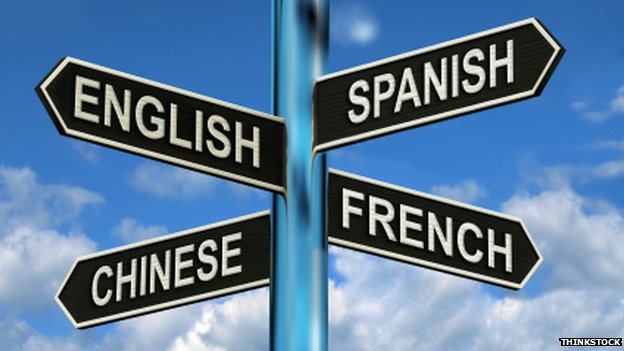
You might wonder then, when most, if not all, EU bureaucrats master English, what’s the point in maintaining 23 official languages, especially at such expense? Why not just use a single language and, what’s more, why not use the language all EU bureaucrats master — English?

Within the EU institutions, ideology trumps pragmatism, and the founding ideology of the Union is “Unity in Diversity.”

Back in 1957, when there were only six member states and four languages, it was an easy credo to follow. But fast-forward to today and things are not so easy: 27 member states and 23 official languages. It’s costing the EU a lot of money, it’s having a negative impact on its global competitiveness and it will only get more complex as the union continues to enlarge. Croatia will make 24th official language.

Just imagine a General with an army of 24 different nations all awaiting the order to advance in their own language. The war would be over before it started. God knows we have moved on from Nelson days where every order had to giving in triplicate, but the idea for establishing English as the language of the EU, remains politically toxic. Long live Nelson.

English is the language of the most eurosceptic country — the United Kingdom. What’s more, France and Germany are very touchy when it comes to having their languages eclipsed by English. Any single language wouldn’t be democratic, or in the shared spirit of the union.

So we are left with. Once a delegate or bureaucrat delivers a speech in his or her native language, it’s taken up by dozens of interpreters, who simultaneously translate into their respective languages, or tune into the English interpretation and translate from that. Meanwhile, an official release of the speech is produced and sent to the translation unit and a separate group of text-based translators gets to work.

The process is costly, unproductive, and most of all, unnecessary.

So how are national and European identities tied to language and communication? And what role does power have – power in discourse, over discourse and of discourse?

In our daily lives, we often encounter combinations of words and images of all kinds. We take them as given, we use them to communicate and interpret information.

Just imagine you were born stone deaf. Your language would be based on sight–lip reading which translates to sign language which appears to be on the increase in modern forms of communication.

But we are no longer communicate only in ‘traditional’ written or spoken genres, but also using new ones, such as text messages, e-mail, tweets and Facebook posts. These force us to get accustomed to the reduction of geographical distance and of time-spans due to the GLOBALIZATION OF COMMUNICATION. These day you can get fired by a text while on holidays.

However, in all available genres, the use of language and communication as a ‘social practice’enables dialogue, negotiation, argument and discussion, learning and remembering, and other functions.

Languages and using language manifest ‘who we are’, and we define reality partly through our language and linguistic behavior.

But who determines who can speak with whom, and how? Who decides on the norms of language use; who sets these norms and enforces them; who determines whether languages, linguistic behaviors and identities are accepted?

Who, for example, decides, in the end, which language and which form of language is ‘good’ enough to pass a language test to attain citizenship or resident status? Or look at the other side of the pond. Spanish is like a creeping tide in the USA.

With the recent appearance of new states in Europe and the flow of populations across state boundaries, a new criterion centered on proficiency in the official language(s) of a state has emerged.

The acquisition of language proficiency is apparently frequently perceived as being solely in the interests of migrants and not also in the interests of the host country, as well as being the host country’s responsibility.

Moreover,many politicians still have to be convinced that second language acquisition depends on the availability of professional teachers, good teaching materials and sufficient competence in one’s native language.

Unfortunately, the worlds of language experts and politicians (and their bureaucrats) remain far apart, and much dialogue would be required to bring them together. Parameters for determining exactly who is (or can become) a ‘resident’ and/or a ‘citizen’ are at present unresolved, with little consensus across the states.

In creating language tests of various kinds, language competence has acquired the status of a key gatekeeper – providing access for some and rejecting it for others.

There are certainly no easy recipes for dealing with second language acquisition and migration. However, it is clear that we must acknowledge the close, emotional relationship between language and identity, and take account of it in the many political and educational policy decisions made every day.

All human identities are social in nature, because identity is about meaning, and meaning is not an essential property of words and things:

Two established criteria for determining citizenship, common in policy discourse,are birthplace and bloodline both are indelible printed and cannot be replaced by citizenship.

Language, power and identity’ closely these three are connected. How the discursive construction of  identities is influenced by vested interests, and how identities are thus continually re- and co-constructed and negotiated.

However, these co-constructions operate within clear borders created in politics, in the economy and in legal frameworks. The contrast between policy regulations and the ‘voices of migrants’ allows the exposition of the many inherent contradictions in the search for European identities and related values, as stated in the Charter of Fundamental Rights

Meaning develops in context-dependent use.

Meanings are always the ‘outcome of agreement or disagreement, always a matter of contention, to some extent shared and always negotiable’ (Jenkins 1996: 4–5).

The cost of Translation in the EU is (estimated) — to be €330m a year or some €0.60 for every EU citizen.

According to certain very rough estimates, the cost of all language services in all EU institutions amounts to less than 1% of the annual general budget of the EU. Divided by the population of the EU, this comes to around €2 per person per year.

In 2014 output was 2.30 million pages. Of this, 71% was done in-house and the rest by contractors. A page is 1 500 typed characters not including spaces.

                  The limits of my language are the limits of my world.

                         Learning second language ‘slows brain ageing.

Speaking a second language is better than just knowing how to speak it.

When the world changes, sometimes a new language is needed to handle that change. For instance, telegraphs spawned Morse code, airplanes spawned air traffic control signals, and computers spawned machine language, C++, Java, and many others. You may decide that no existing language can satisfy the needs of your world, and so you may choose to become a language maker, which presents its own challenges.

That leaves us with : Do words make a language or is it the other way around.  Words can be x-rays, if you use them properly- they’ll go through anything, you read them and you’re pierced. Prized possessions  are words are words that are never spoken, sometimes the thought in my head get so bored they go out for a stroll through my mouth.

Go back

Your message has been sent

Warning
Warning
Warning
Warning

Warning.


Share this:

  • Click to share on WhatsApp (Opens in new window) WhatsApp
  • More
  • Click to share on Pocket (Opens in new window) Pocket
  • Click to share on Mastodon (Opens in new window) Mastodon

All comments and contributions much appreciated

  • THE BEADY EYE SAYS TRUST IS DISAPPEARING THANKS TO OUR INABILITY TO RELATE TO EACH OTHER. December 19, 2025
  • THE BEADY EYE SAYS. THE WORLD NEEDS PEOPLE GOVERNMENT NOT MONEY GOVERNMENTS. December 18, 2025
  • THE BEADY EYE ASKS WHAT ARE WE THE SAME GOING TO DO TO STOP THE WORLD BEING FUCK UP FOR PROFIT BY RIPOFF MERCHANT. December 17, 2025
  • THE BEADY EYE CHRISTMAS GREETING. December 16, 2025
  • THE BEADY EYE SAYS. TO THE NEXT GENERATION TO LIVE A LIFE WORTH WHILE YOU MUST CREATE MEMORIES. December 16, 2025

Archives

  • December 2025
  • November 2025
  • October 2025
  • September 2025
  • August 2025
  • July 2025
  • June 2025
  • May 2025
  • February 2025
  • January 2025
  • December 2024
  • November 2024
  • October 2024
  • September 2024
  • August 2024
  • July 2024
  • June 2024
  • May 2024
  • April 2024
  • March 2024
  • February 2024
  • January 2024
  • December 2023
  • October 2023
  • September 2023
  • August 2023
  • July 2023
  • June 2023
  • May 2023
  • April 2023
  • March 2023
  • February 2023
  • January 2023
  • December 2022
  • November 2022
  • October 2022
  • September 2022
  • August 2022
  • July 2022
  • June 2022
  • May 2022
  • April 2022
  • March 2022
  • February 2022
  • January 2022
  • December 2021
  • November 2021
  • October 2021
  • September 2021
  • August 2021
  • July 2021
  • June 2021
  • May 2021
  • April 2021
  • March 2021
  • February 2021
  • January 2021
  • December 2020
  • November 2020
  • October 2020
  • September 2020
  • August 2020
  • July 2020
  • June 2020
  • May 2020
  • April 2020
  • March 2020
  • February 2020
  • January 2020
  • December 2019
  • November 2019
  • October 2019
  • September 2019
  • August 2019
  • July 2019
  • June 2019
  • May 2019
  • April 2019
  • March 2019
  • February 2019
  • January 2019
  • December 2018
  • November 2018
  • October 2018
  • September 2018
  • August 2018
  • July 2018
  • June 2018
  • May 2018
  • April 2018
  • March 2018
  • February 2018
  • January 2018
  • December 2017
  • November 2017
  • October 2017
  • September 2017
  • August 2017
  • July 2017
  • June 2017
  • May 2017
  • April 2017
  • March 2017
  • February 2017
  • January 2017
  • December 2016
  • November 2016
  • October 2016
  • September 2016
  • August 2016
  • July 2016
  • June 2016
  • May 2016
  • April 2016
  • March 2016
  • February 2016
  • January 2016
  • December 2015
  • November 2015
  • October 2015
  • September 2015
  • August 2015
  • July 2015
  • June 2015
  • May 2015
  • April 2015
  • March 2015
  • February 2015
  • January 2015
  • December 2014
  • November 2014
  • October 2014
  • September 2014
  • August 2014
  • July 2014
  • June 2014
  • May 2014
  • April 2014
  • March 2014
  • February 2014
  • January 2014
  • December 2013
  • November 2013
  • October 2013

Talk to me.

Jason Lawrence's avatarJason Lawrence on THE BEADY EYE ASK’S: WIT…
benmadigan's avatarbenmadigan on THE BEADY EYE ASK’S: WHA…
bobdillon33@gmail.com's avatarbobdillon33@gmail.co… on THE BEADY EYE SAYS: WELCOME TO…
Ernest Harben's avatarOG on THE BEADY EYE SAYS: WELCOME TO…
benmadigan's avatarbenmadigan on THE BEADY EYE SAY’S. ONC…

7/7

Moulin de Labarde 46300
Gourdon Lot France
0565416842
Before 6pm.

My Blog; THE BEADY EYE.

My Blog; THE BEADY EYE.
bobdillon33@gmail.com

bobdillon33@gmail.com

Free Thinker.

View Full Profile →

Follow bobdillon33blog on WordPress.com

Blog Stats

  • 94,154 hits

Blogs I Follow

  • unnecessary news from earth
  • The Invictus Soul
  • WordPress.com News
  • WestDeltaGirl's Blog
  • The PPJ Gazette
Follow bobdillon33blog on WordPress.com

The Beady Eye.

The Beady Eye.
Follow bobdillon33blog on WordPress.com

Create a free website or blog at WordPress.com.

unnecessary news from earth

WITH MIGO

The Invictus Soul

The only thing worse than being 'blind' is having a Sight but no Vision

WordPress.com News

The latest news on WordPress.com and the WordPress community.

WestDeltaGirl's Blog

Sharing vegetarian and vegan recipes and food ideas

The PPJ Gazette

PPJ Gazette copyright ©

Privacy & Cookies: This site uses cookies. By continuing to use this website, you agree to their use.
To find out more, including how to control cookies, see here: Cookie Policy
  • Subscribe Subscribed
    • bobdillon33blog
    • Join 223 other subscribers
    • Already have a WordPress.com account? Log in now.
    • bobdillon33blog
    • Subscribe Subscribed
    • Sign up
    • Log in
    • Report this content
    • View site in Reader
    • Manage subscriptions
    • Collapse this bar