• About
  • THE BEADY EYE SAY’S : THE EUROPEAN UNION SHOULD THANK ENGLAND FOR ITS IN OR OUT REFERENDUM.

bobdillon33blog

~ Free Thinker.

bobdillon33blog

Tag Archives: Earth’s biological wealth

THE BEADY EYE ASKS: WHAT IS THE TRUTH WHEN IT COMES TO ENERGY.

14 Sunday May 2017

Posted by bobdillon33@gmail.com in Energy, Modern day life., Oil, Sustaniability, Technology, The Future, The world to day., Unanswered Questions., What Needs to change in the World, Where's the Global Outrage.

≈ Comments Off on THE BEADY EYE ASKS: WHAT IS THE TRUTH WHEN IT COMES TO ENERGY.

Tags

Biofuels, Earth’s biological wealth, Hydrogen fuel cells:, Nuclear against Renewable Power., Oil, Solar and wind power:

( A Six minute read)

It’s easy to pick the dominant environmental issue of the last decade. It has been the issue of climate change and what—if anything—the countries of the world can do to limit, or reduce, carbon dioxide emissions.

It took hundreds of millions of years to create the world’s oil reserves.

It took less than a century before oil became the commodity on which world power turned and it was little more than a century before fears were raised that we would run out of oil.

Day in, day out, human beings are dependent upon it more than any other resource—and yet most rarely think about it.

For instance, most plastics are derived from oil. The medications taken by millions of people requires oil to produce.

Today, producing, distributing, refining and retailing oil is the single largest industry, in terms of value, on earth!  Yet, like most, you probably give little if any thought to the black liquid.

So the world needs to come to a common understanding that:

  1. The alternative energy is not mature enough to replace fossil sources any time soon.
  2. Energy security means a diversified and balanced portfolio inclusive of every bit of resource, fossil as well as renewables, just to meet the projected demand. No single form of energy will be able to entirely replace it.
  3. Real “green” energy is easier said than done.
  4. Gold and Oil are the commodities most heavily invested in by Hedge Funds.

Now consider.

Oil is a nonrenewable, finite resource.

What if there were no more oil?

What if the lifeblood of modern civilization stopped flowing?

The global economy would collapse in a heap of ruin—and fast! Life as we know it would come to an end. All the everyday items made from oil would no longer be produced. Virtually all transport would stop, and so would nearly all manufacturing. Scores of millions would be unemployed. Millions in colder climates would freeze. Food production would come to a grinding halt. Scores of millions would starve to death because 99.99…% of people don’t have the faintest grasp of the historical technology required to revert to a pre-oil era.

So where there used to be a strong link between economic growth and the increasing demand for oil, is that link now being broken by alternative energy sources.

Many are touting a number of alternative forms of energy as potential replacements to oil.

The key rationale for reducing petroleum consumption lies in the fact that the market price does not account for its full social cost: the negative externalities or consequences associated with petroleum use-such as greenhouse gas emissions and national security issues-are not incorporated in the market prices.

But is all of this true.Résultat de recherche d'images pour "biofuels images"

Biofuels: Corn-based ethanol.

A biofuel-gasoline mixture is already being used in many automobiles. Making biofuels requires large amounts of land. If these fuels were to become the “new oil,” nations would face a choice between growing crops for food and growing crops for fuel, as there is not enough cultivable land on earth to satisfy man’s need for both.

More carbon dioxide is actually released through biofuels than gasoline.

Résultat de recherche d'images pour ":Hydrogen fuel cells:"

Hydrogen is a non-polluting alternative fuel. Hydrogen fuel cells directly convert the chemical energy in hydrogen to electricity and release water and useful heat as by-products. Hydrogen fuel cells are pollution-free and have greater efficiency than traditional combustion technology.

The most abundant element in the universe but, it does not occur naturally as a gas in the Earth it is quite expensive to produce.

The systems used for delivering gasoline from refineries to gasoline stations cannot be used for hydrogen.

NASA is the primary user of hydrogen resources for its space program.

Hydrogen fuel cell vehicles are currently very expensive than conventional vehicles or any hybrids.

Résultat de recherche d'images pour "Nuclear energy :"

Is efficient and clean, but the more reactors that are in use around the world, the more likely a nuclear disaster will occur.

Nuclear fusion: Résultat de recherche d'images pour "what is nuclear fusion"
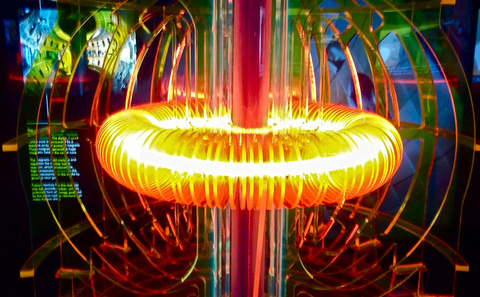
Is an atomic reaction in which multiple atoms combine to create a single, more massive atom. The long allure of nuclear fusion is simple: clean, safe, limitless energy for a world that will soon house 10bn energy-hungry citizens. But despite 60 years of research and billions of dollars, the results to date are also simple: it has not delivered.

The world record for fusion power – 16MW – was set in 1997 at the JET reactor in the UK. The longest fusion run – six minutes and 30 seconds – was achieved at France’s Tore Supra in 2003.

The world needs to know if this technology is available or not.

Solar and wind power:

Résultat de recherche d'images pour "Solar and wind power:images"

Are unlikely to produce enough energy to match that of oil.

New motor technologies:

Electric or Fuel cell cars to expensive.

So where are with energy.

Here’s the bottom line:

Renewables will remain niche players in the global energy mix for decades to come. The past—and the foreseeable future—still belong to hydrocarbons. And we can expect natural gas, the cleanest of the hydrocarbons, to garner a bigger share of the global energy pie in the near term and in the long-term.

Most alternative technologies rely on rare earths for efficiency.

However, the radioactive waste produced by rare earths mining process makes oil sands look like a green energy. This overlooked (or ignored) fact just now received some attention due to the sudden shortage caused by China’s embargo and export quotas on rare earths.

It Will Take 131 Years To Replace Oil, And We’ve Only Got 10.

Carbon dioxide emissions will continue rising because hundreds of millions of people are transitioning to a modern lifestyle, complete with cars, TVs, and other manufactured goods.

Renewable sources like wind and solar have their virtues, but they cannot compare with hydrocarbons when it comes to economics. If renewable sources of energy were dramatically cheaper than hydrocarbons, then perhaps we could be more optimistic about their ability to capture a larger part of the global energy mix. But even if that were true, a wholesale change in our energy mix will take a long time.

There is one thing all energy transitions have in common: they are prolonged affairs that take decades to accomplish.

If petroleum didn’t exist, we’d have to invent it. Nothing else comes close to oil when it comes to energy density, ease of handling, flexibility, convenience, cost, or scale. Electric vehicles may be the celebrity car du jour, but modern batteries are only slightly better than the ones that Thomas Edison developed. Gasoline has 80 times the energy density of the best lithium-ion batteries.

The entire global economic foundation is still built upon oil.

However China and India are among those facing major problems with urban air pollution.

We can talk about wind, solar, geothermal, hydrogen, and lots of other forms of energy production. But the question that too few people are willing to ask is this one: Where, how, will we find the energy equivalent of 25 Saudi Arabia’s and have it all be carbon-free?

The hard reality is that we won’t.

We need a simpler measure for global energy use, which now totals about 241 million barrels of oil equivalent per day. That sum is almost impossible to comprehend, but try thinking of it this way: It’s approximately equal to the total daily oil output of 29 Saudi Arabia’s.

Furthermore, over the past decade alone, global energy consumption has increased by about 27 percent, or six Saudi Arabia’s. Nearly all of that new energy came from hydrocarbons.

Scientists and policymakers can claim that carbon dioxide is bad but here is no urgency for an accelerated shift to a non-fossil fuel world: The supply of fossil fuels is adequate for generations to come; new energies are not qualitatively superior; and their production will not be substantially cheaper.

The supply chain required to run a modern society is oil.

The inability to lubricate moving parts to have no power the Internet and most technological development based on it (the “Internet of Things”) would cease to exist.

Most world currencies would collapse. Over 90% of

U.S. dollars exist electronically;

with no electricity to power the computers that track

these financial transactions and balances, most

records of ownership would be unavailable for the

foreseeable future.

Within a couple of weeks all the food in the cities would

be exhausted. Mass unemployment,

all the trees will probably be chopped down to

make coal to make energy.


Energy is too important for its development to continue in such a random manner. Thus society seems to be caught in a dilemma unlike anything experienced in the last few centuries.

Despite many claims to the contrary—from oil and gas advocates on the one hand and solar advocates on the other—THERE IS  no easy solution to these issues.

If any resolution to these problems is possible it is probable that it would have to come at least as much from an adjustment of society’s aspirations for increased material affluence and an increase in willingness to share as from technology.

Unfortunately recent political events do not leave us with great optimism that such changes in societal values will be forthcoming. With Donald Trump the debate over whether climate change is for real, and why it might be happening, has not gone away.

It’s less clear than ever how much oil is left but thanks to technology and changing climate change which is pushing car manufacturers towards more hybrid and electric cars, is seen as less of a threat than even ten years ago.

All comments appreciated. All like clicks chucked in the bin.

Go back

Your message has been sent

Warning
Warning
Warning
Warning

Warning.


Share this:

  • Click to share on WhatsApp (Opens in new window) WhatsApp
  • More
  • Click to share on Pocket (Opens in new window) Pocket
  • Click to share on Mastodon (Opens in new window) Mastodon

This is where you Live.

09 Tuesday Jun 2015

Posted by bobdillon33@gmail.com in Climate Change., Education, Environment, Natural World Disasters, Politics., Sustaniability, The Future

≈ Comments Off on This is where you Live.

Tags

Capitalism vs. the Climate., Describe Earth., Earth, Earth’s biological wealth, Earths Nightmare, Extinction, global climate change, People of the Earth

The other day I was wondering how one would describe Earth to an alien or a classroom of our modern-day interconnects kids.

Where would one start.

Is it round?  Not quite it is an oblate spheroid instead of a perfect sphere. It takes the Earth on solar day to rotate upon its axis.

An alien might come to earth and attempt to understand the planet by reading the literature of the planet, or just the dictionary. Looking up the word “earth” the alien may be surprised to see the this term has multiple meanings, referring to a planet and to a substance (soil/dirt).

May be the best place to start is to give an perspective of where we are in space.

As you look outward into space, you’re actually looking backwards in time. The light you see from your computer is nanoseconds old. The light reflected from the surface of the Moon takes only a second to reach Earth. The Sun is more than 8 light-minutes away. And so, if the light from the nearest star (Alpha Centauri) takes more than 4 years to reach us, we’re seeing that star 4 years in the past. There are galaxies millions of light-years away, which means the light we’re seeing left the surface of those stars millions of years ago. For example, the galaxy M109 is located about 83.5 million light-years away.

A radio signal to travel once around Earth in 1/7 of a second.  To get to the moon from Earth, so the round-trip time is twice this or 2.46.

From the sun to earth at the speed of light  seconds.https://youtu.be/Bw-I9JimhOM

If aliens lived in those galaxies, and had strong enough telescopes, they would see the Earth as it looked in the past. They might even see dinosaurs walking on the surface.

Only a few of us have ever seen Earth from afar.  It’s mankind’s rarest view of all.

To see it without borders, see it without any differences in race or religion, we would all have a completely different perspective. Because when you see it from space you cannot think of your home or your country. All you can see is one Earth….”Earth, our home planet.

It is a beautiful blue and white ball when seen from space.  the only planet in our solar system known to harbor life.

All of the things we need to survive are provided under a thin layer of atmosphere that separates us from the uninhabitable void of space.

HERE IS HOW I WOULD DESCRIBE IT;

It was formed about 4.5 billion years ago.

Earth is made up of complex, interactive systems that are often unpredictable. Air, water, land, and life—including humans—combine forces to create a constantly changing world that we are striving to understand.

It is the third planet from the sun and the fifth largest in the solar system.

About 71% of its surface is covered by water; the rest by land.

It is orbited by one satellite, the Moon.

Earth’s total surface area is 196,950,000 sq. mi. The area covered by the oceans is 139,480,000 sq. mi. Total land area is 57,470,000 sq. mi.

Earth’s diameter is just a few hundred kilometers larger than that of Venus.

The Earth’s crust is about 6.5 miles thick beneath the oceans, and about 25 miles thick under the continents.

Our planet’s rapid spin and molten nickel-iron core give rise to a magnetic field, which the solar wind distorts into a teardrop shape. The magnetic field does not fade off into space, but has definite boundaries.

Our planet completes its elliptical orbit around the sun in an average solar year, 365.24219 days. Its average distance from the sun is 80,777,537.8 n.mi.

The Earth’s axis is tilted 23.45 deg away from the perpendicular to its orbital plane.

It wobbles very slightly.

The Moon orbits the Earth about once a month (every 29 days, 12 hours, 44 minutes, 2.9 seconds) The average distance from the Earth to the Moon is 238,857 mi., about 30 times Earth’s diameter.

The Earth’s crust is about 6.5 miles thick beneath the oceans, and about 25 miles thick under the continents. The surface layer is made of rock. This outer layer formed a hard, rocky crust as lava at the surface cooled 4.5 billion years ago.The crust is broken into many large plates that move slowly relative to each other. Mountain ranges form when two plates collide. The plates move about one inch per year. About 250 million years ago, most of the land was connected together, and over time has separated into seven continents. So millions of years ago the continents and the oceans were in different positions.

Scientists had previously concluded that the Earth was slightly older than 4.5 billion years old, but had not found a piece of the Earth’s primitive mantle.

The solid shell that is between the Earth’s crust and the outer core makes up about 84 percent of the Earth’s volume. Until recently, researchers generally thought that the Earth and the other planets of the solar system were chondritic. This means that the mantle’s chemistry was thought to be similar to that of chondrites, some of the oldest, most primitive objects in the solar system. Chondrites contain certain isotope ratios of the chemical elements of helium, lead and neodymium.

Sixty-five million years ago it looked quite different than it does to-day.

There are about 300,000 plant species and about 1,400,000 animal species on Earth.

In the next 6.4 billions of years it will be eating by it nearest star the Sun which is 149,597,891 kilometers away.  It will take a little more than 8 minutes before we realized it is time to put on a sweater. It takes Sunlight an average of 8 minutes and 20 seconds to travel from the Sun to the Earth.

It weighs 5.9736×1024kg.  That is about 13,170,000,000,000,000,000,000,000 pounds (or 5,974,000,000,000,000,000,000,000 kilograms).

80% of its fresh water is in its polar ice caps. Fresh water exists in the liquid phase only within a narrow temperature span (32 to 212 degrees Fahrenheit/ 0 to 100 degrees Celsius). The surface is unique from the other planets because it is the only one which has liquid water in such large quantities.

Its greatest present day threats come from humanity which is at a crossroads now, where we have to make an active choice.

Evolution, the Big Bang, and climate change are all things that were first proposed as hypotheses long ago.

Climate change is not. What are we doing about it. The same as always. Turn it into a product for profit.

One choice is to acknowledge these issues and potential consequences and try to guide the future (in a way we want to). The other choice is just to throw up our hands and say, ‘Let’s just go on as usual and see what happens.’ My guess is, if we take that latter choice, yes, humanity is going to survive, but we are going to see some effects that will seriously degrade the quality of life for our children and grandchildren.

The ongoing wars, the distortions of truth we have witnessed, the widening gaps between rich and poor disturb us more than we can say; but we have had so many reminders of powerlessness that we have retreated before the challenge of bringing such issues into our classrooms of our brains.

The best effort so far is the creation of an Earth Day this year.  One day!

Population growth, widespread destruction of natural ecosystems, and climate change may be driving Earth toward an irreversible change in the biosphere, a planet-wide tipping point that would have destructive consequences absent adequate preparation and mitigation. No one knows how close Earth is to a global tipping point, or if it is inevitable.

Life on Earth is constantly changing and only the fittest organisms survive.

Every few of us appreciate how thin our little atmosphere is that supports all life here on Earth. So if we foul it up, there’s no coming back from something like that. The dictionary offers a firm set of definitions for this term, but no single definition, which leads to a sense of complexity. The complexities of perception are, in part, what post-modernism is all about.  I describe it as pure insanity.

The Earth system now includes human society, Our social and economic systems are now embedded within the Earth system. In many cases, the human systems are now the main drivers of change in the Earth system. Earth system changes, natural or driven by humans, can have significant consequences without involving changes in climate. Global change should  not be confused with climate change; it is significantly more. indeed, climate change is part of this much larger challenge.

Throughout history human societies have had to confront and adjust to climatic and environmental hazards. A long-term perspective that draws on such experiences must inform today’s climate policies. I argue that climate policies aimed at mitigating and adapting to hazards should be informed by our knowledge of past human experience.

In today’s globalised world our food tends to take a long route from farm to table, relying on international trade routes that pass through several bottlenecks. Sudden disruption of such delivery systems – via climate change or political volatility – can severely affect the food security of particular regions.

Large-scale governance is unavoidable in today’s world where hazards are regional and often transcend political boundaries, unfortunately at the moment we are relying on out of date World Organisations that are incapable of putting the  Earth First!

<p><a href=”https://vimeo.com/32001208″>EARTH</a&gt; from <a href=”https://vimeo.com/michaelkoenig”>Michael K&ouml;nig</a> on <a href=”https://vimeo.com”>Vimeo</a&gt;.</p>

<p><a href=”https://vimeo.com/79771046″>Climate Change &mdash; The state of the science</a> from <a href=”https://vimeo.com/anthropocene”>WelcomeAnthropocene</a&gt; on <a href=”https://vimeo.com”>Vimeo</a&gt;.</p>


Take a trip into the unknown.

https://youtu.be/YzMrNFd4oOk

Go back

Your message has been sent

Warning
Warning
Warning
Warning

Warning.

Share this:

  • Click to share on WhatsApp (Opens in new window) WhatsApp
  • More
  • Click to share on Pocket (Opens in new window) Pocket
  • Click to share on Mastodon (Opens in new window) Mastodon

We must change the way we perceive ourselves.

30 Sunday Nov 2014

Posted by bobdillon33@gmail.com in Uncategorized

≈ Comments Off on We must change the way we perceive ourselves.

Tags

American Way of Life, Bio-economy, Changing ecosystems, CO2 emissions, Conflicts over resources, Conservation, Earth’s biological wealth, Extinction, Greed, Green infrastructure, investments in science and technology., Lifestyles, MAN v NATURE, Manage the planet, Population growth, Wasteful fossil-fueled


I don’t know if like me you see the urgent need for all of us to recognize our role in the world and the enormity of humanity’s responsibility we all have as stewards of the Earth.

Given humanity’s enormous alteration of the Earth we need our Governments/ Leaders and world organisations to change the way they view the world that we all live in.

What they now call economic “growth” amounts too often to a Great Recession for the web of life we all depend on. 

The need to build a culture that grows with Earth’s biological wealth instead of depleting it is more urgent than ever.

We have as a species a duty to protect it and manage it with love and intelligence. It is beautiful still, and can be even more beautiful, if we work together and care for it rather than what we have today a nightmare facing us all

It’s no longer us against ‘Nature.’ It’s we who decide what nature is what it will be.

I am tired of the well worn rhetorical trick for stirring the fears of people unperturbed by current, relatively modest changes that we are all can see are for the sake of the Financial world.

Imagine our descendants in the year 2200 or 2500. They might liken us to aliens who have treated the Earth as if it were a mere stopover for refueling, or even worse, characterize us as barbarians who would ransack their own home.

The Earth’s history shows that the planet can indeed tip from one state to another.

To underestimate the sheer scale of what is going on (caused by us) is a joke in the extreme.

A long-held religious and philosophical idea — humans as the masters of planet Earth — has turned into a stark reality.

Dam by dam, mine by mine, farm by farm and city by city is remaking the Earth before your eyes.

What are we doing about it?  Let me remind you.

To date while driving uncountable numbers of species to extinction, we create new life forms through gene technology, and, soon, through synthetic biology.

We have acidified the oceans and changed global climate with our use of fossil fuels.

We have bent more than 75 percent of the ice-free land on Earth to our will.

We have built so many dams that half of the world’s river flow is regulated, stored or impeded by human-made structures.

We have transported plants and animals hither and yon as crops and livestock and as accidental stowaway.

We have cut down rain forests, moving mountains to access coal deposits and acidifying coral reefs,

We have fundamentally change the biology and the geology of the planet.

We have infuse huge quantities of synthetic chemicals and persistent waste into Earth’s metabolism. Where wilderness remains, it’s often only because exploitation is still unprofitable.

We have through industry disrupted the key biochemical cycles. For good or ill, it will do yet more.

What we do now already affects the planet of the year 3000 or even 50,000 and I can hear you saying that Humans have been changing ecosystems for millenniums. Ecosystems are not — and have never been — static entities.

However if your definition demands that nature be completely untouched by humans, there is indeed no nature left.

First:

We need to learn to grow in different ways than with our current hyper-consumption.

We need bio-adaptive technologies to render “waste” a thing of the past, among them compostable cars and gadgets.

We need innovations tailored to the needs of the poorest, for example new plant varieties that can withstand climate change and robust iPads packed with practical agricultural advice and market information for small-scale farmers.

Global agriculture must become high-tech and organic at the same time, allowing farms to benefit from the health of natural habitats.

We need to develop technologies to recycle substances like phosphorus, a key element for fertilizers and therefore for food security.

We need to move towards “negative CO2 emissions,” e.g. by using plant residues in power plants with carbon capture and storage technology. In addition to cutting industrial CO2 emissions and protecting forests, large investments will be needed to maintain the huge carbon stocks in fertile soils, currently depleted by exploitative agricultural practices.

After years of stalemate and the infamous Copenhagen collapse, there is now at least a glimmer of hope that humanity can act together.

In Cancún, countries agreed that Earth must not warm more than 2 degrees Celsius above the average temperature level before industrialization. This level is already very risky — it implies higher temperature increases in polar regions and therefore greater chance of thawing in permafrost regions, which could release huge amounts of CO2 and methane.

The problem will not be solved soon enough to avert significant climate change unless the Earth system is a lot less prone to climate change than most scientists think. But that does not mean it will not be solved at all.

(For biodiversity, green remnants in a sea of destruction will not be enough.)

We need to build a “green infrastructure,” where organisms and genes can flow freely over vast areas and maintain biological functions.

We also need to develop geoengineering capabilities in order to be prepared for worst-case scenarios.

We need to stop Conservation management turns wild animals into a new form of pets for TV Documentaries. The impression that nowhere on earth is natural and because the concept of pervasive human-caused change may cultivate hopelessness in those dedicated to conservation and may even be an impetus for accelerated changes in land use motivated by profit. But that does not mean we inhabit an ecological hell.

We need to do far more than just hold back the tide of change and build higher and stronger fences around the Arctic, the Himalayas and the other relatively intact ecosystems.

We need to consider actively moving species at risk of extinction from climate change. We can design ecosystems to maintain wildlife, filter water and sequester carbon.

We need countries worldwide to stop striving to attain the “American Way of Life,” citizens of the West should redefine it.

We need Honesty in politics not the Hippocrates we see to-day.

We need to abolish modern-day slavery, stamp out corruption and poverty  by ensuring all round equality.

We need to fight sprawl and mindless development even as we cherish the exuberant nature that can increasingly be found in our own cities, from native gardens to green roofs.

We need to pioneer a modest, renewable, mindful, and less material lifestyles.

We need to cut the consumption of industrially produced meat and changing from private vehicles to public transport.

We need to replace the wasteful fossil-fueled infrastructure of today with a system fueled by solar energy in its many forms, from artificial photosynthesis to fusion energy. Our troubles will deepen exponentially if we fail.

We need to build a world culture that grows with Earth’s biological wealth instead of depleting it.  Remember, in this new era, nature is us.

We need to far surpass our current investments in science and technology.

We need to cap Greed by introducing a world aid commission of 0.05% on all High frequency trading, Sovereign wealth funds and foreign exchange transactions over $20.000$. ( See previous posts)

Finally, we need to adapt our culture to sustaining what can be called the “world organism.”

Human population will approach ten billion within the century. Between now and 2020, however, the commitments on paper must be turned into real action.

To prevent conflicts over resources and to progress towards a durable “bio-economy” will require a collaborative mission that dwarfs the Apollo program. We must invest at least as much in understanding, managing, and restoring our “green security system” — the intricate network of climate, soil, and biodiversity.

Global military expenditure reached 1,531 billion U.S. dollars in 2009, an increase of 49 percent compared to 2000.

The Earth provides enough to satisfy every man’s needs, but not every man’s greed. Gandhi pointed out that To accommodate the Western lifestyle for 9 billion people, we’d need several other planets.

On a planetary scale, intelligence is something genuinely new and powerful from which the planet, and its people, cannot simply revert to the status quo. Our management and care of natural places and the millions of other species with which we share the planet could and should be improved.

We humans are becoming the dominant force for change on Earth. — This phrase was not coined by an esoteric Gaia guru, but by eminent German scientist Alexander von Humboldt some 200 years ago. Humboldt wanted us to see how deeply interlinked our lives are with the richness of nature, hoping that we would grow our capacities as a part of this world organism, not at its cost.

His message suggests we should shift our mission from crusade to management, so we can steer nature’s course symbiotically instead of enslaving the formerly natural world.

So the Question is can man create Institutions to save him from the dark forces of his own nature and from the overwhelming consequences of high technological successes.

In this disturbed world, there is nothing left that has not being touched by man who still does not have a clue how to manage the planet.Man-vs-machine.jpg

There you have it. What do you think? Don’t be shy lets have your comments, or contributions.

Go back

Your message has been sent

Warning
Warning
Warning
Warning

Warning.

http://preview.discovery.com/tv-shows/klondike/videos/man-vs-nature/


Share this:

  • Click to share on WhatsApp (Opens in new window) WhatsApp
  • More
  • Click to share on Pocket (Opens in new window) Pocket
  • Click to share on Mastodon (Opens in new window) Mastodon

All comments and contributions much appreciated

  • THE BEADY EYE SAYS. WE HAVE SURROUND THE EARTH WITH SATELLITES. HERE TO DAY GONE TO MORROW. January 9, 2026
  • THE BEADY EYE SAYS GOVERNANCE IS BECOMING MORE BY REALITY TV, ALGO January 9, 2026
  • THE BEADY EYE SAYS. DONALD TRUMP IS EXPOSING THE WEAKEST OF OUR WORLD ORGANISATIONS January 7, 2026
  • THE BEADY EYE SAYS. MADURO ADDUCTION SHOWS THAT INTERNATIONAL LAW IS A JOKE. January 4, 2026
  • THE BEADY EYE ASKS: January 4, 2026

Archives

  • January 2026
  • December 2025
  • November 2025
  • October 2025
  • September 2025
  • August 2025
  • July 2025
  • June 2025
  • May 2025
  • February 2025
  • January 2025
  • December 2024
  • November 2024
  • October 2024
  • September 2024
  • August 2024
  • July 2024
  • June 2024
  • May 2024
  • April 2024
  • March 2024
  • February 2024
  • January 2024
  • December 2023
  • October 2023
  • September 2023
  • August 2023
  • July 2023
  • June 2023
  • May 2023
  • April 2023
  • March 2023
  • February 2023
  • January 2023
  • December 2022
  • November 2022
  • October 2022
  • September 2022
  • August 2022
  • July 2022
  • June 2022
  • May 2022
  • April 2022
  • March 2022
  • February 2022
  • January 2022
  • December 2021
  • November 2021
  • October 2021
  • September 2021
  • August 2021
  • July 2021
  • June 2021
  • May 2021
  • April 2021
  • March 2021
  • February 2021
  • January 2021
  • December 2020
  • November 2020
  • October 2020
  • September 2020
  • August 2020
  • July 2020
  • June 2020
  • May 2020
  • April 2020
  • March 2020
  • February 2020
  • January 2020
  • December 2019
  • November 2019
  • October 2019
  • September 2019
  • August 2019
  • July 2019
  • June 2019
  • May 2019
  • April 2019
  • March 2019
  • February 2019
  • January 2019
  • December 2018
  • November 2018
  • October 2018
  • September 2018
  • August 2018
  • July 2018
  • June 2018
  • May 2018
  • April 2018
  • March 2018
  • February 2018
  • January 2018
  • December 2017
  • November 2017
  • October 2017
  • September 2017
  • August 2017
  • July 2017
  • June 2017
  • May 2017
  • April 2017
  • March 2017
  • February 2017
  • January 2017
  • December 2016
  • November 2016
  • October 2016
  • September 2016
  • August 2016
  • July 2016
  • June 2016
  • May 2016
  • April 2016
  • March 2016
  • February 2016
  • January 2016
  • December 2015
  • November 2015
  • October 2015
  • September 2015
  • August 2015
  • July 2015
  • June 2015
  • May 2015
  • April 2015
  • March 2015
  • February 2015
  • January 2015
  • December 2014
  • November 2014
  • October 2014
  • September 2014
  • August 2014
  • July 2014
  • June 2014
  • May 2014
  • April 2014
  • March 2014
  • February 2014
  • January 2014
  • December 2013
  • November 2013
  • October 2013

Talk to me.

Jason Lawrence's avatarJason Lawrence on THE BEADY EYE ASK’S: WIT…
benmadigan's avatarbenmadigan on THE BEADY EYE ASK’S: WHA…
bobdillon33@gmail.com's avatarbobdillon33@gmail.co… on THE BEADY EYE SAYS: WELCOME TO…
Ernest Harben's avatarOG on THE BEADY EYE SAYS: WELCOME TO…
benmadigan's avatarbenmadigan on THE BEADY EYE SAY’S. ONC…

7/7

Moulin de Labarde 46300
Gourdon Lot France
0565416842
Before 6pm.

My Blog; THE BEADY EYE.

My Blog; THE BEADY EYE.
bobdillon33@gmail.com

bobdillon33@gmail.com

Free Thinker.

View Full Profile →

Follow bobdillon33blog on WordPress.com

Blog Stats

  • 94,459 hits

Blogs I Follow

  • unnecessary news from earth
  • The Invictus Soul
  • WordPress.com News
  • WestDeltaGirl's Blog
  • The PPJ Gazette
Follow bobdillon33blog on WordPress.com

The Beady Eye.

The Beady Eye.
Follow bobdillon33blog on WordPress.com

Create a free website or blog at WordPress.com.

unnecessary news from earth

WITH MIGO

The Invictus Soul

The only thing worse than being 'blind' is having a Sight but no Vision

WordPress.com News

The latest news on WordPress.com and the WordPress community.

WestDeltaGirl's Blog

Sharing vegetarian and vegan recipes and food ideas

The PPJ Gazette

PPJ Gazette copyright ©

Privacy & Cookies: This site uses cookies. By continuing to use this website, you agree to their use.
To find out more, including how to control cookies, see here: Cookie Policy
  • Subscribe Subscribed
    • bobdillon33blog
    • Join 223 other subscribers
    • Already have a WordPress.com account? Log in now.
    • bobdillon33blog
    • Subscribe Subscribed
    • Sign up
    • Log in
    • Report this content
    • View site in Reader
    • Manage subscriptions
    • Collapse this bar