≈ Comments Off on THE BEADY EYE SAYS: HOW WOEFUL HEINOUS,UNPARDONABLE, DISTASTEFUL,TO SEE ANTONIO GUTERRES THE UN SECRETARY-GENERAL HAVING TO BEG FOR FUNDS.
( A three-minute read that could save millions of lives)
If you ever wanted proof that Capitalism is driven by greed just watch what can only be described in the above words the recent plea made by António Guterres to the International community for funds to tackle the declared famine in parts of Nigeria, South Sudan, and looming in Somalia, Nigeria and Yemen.
The estimated number of affected children is now 450,000, with 14 MILLION PEOPLE needing humanitarian assistance across the region.
Five years ago, more than a quarter of a million lives were needlessly lost, 130,000 of them children. We simply cannot have a repeat of that tragedy. The only way to prevent this devastating loss of life is for donors and international leaders to act now.
Global hunger levels are at their highest for decades. There are currently 70 million people in need of food aid. The reality of life for a fifth of the world’s people, on a planet which produces enough food to satisfy everyone is that humanitarian aid to Africa has been shrinking.
Rich countries have been giving money to poor ones for many decades and for many reasons — from geopolitics to post-colonial guilt to altruism so there is little point here in reiterating the reasons why the world is in such a mess.
What is needed in the long run is a fully funded Humanitarian Affairs United Nations. Not a begging Institution.
Rather than boasting our compassion with wasteful foreign Aid there is only one course of action:
To make the Greed / Profit for profit’s sake segment of Capitalism system Pay.
This can be achieved with modern-day technology by Placing a World Aid commission of 0.05% on all. High frequency Trading, on all Foreign Exchange transactions over $ 50,000. on all Sovereign Wealth Funds acquisitions, on all gambling winnings.
This would create a Perpetual fund of billions.
The real question, though, is (with climate change and technology) is whether aid will remain relevant, and if so how.
The answer boils down to this: solutions.
Governments in developing countries will seek assistance only when they have a problem that they cannot solve by themselves.
They know how to build schools, hospitals or ports, and can pay for them. But they will look for other countries’ experiences when reforming educational curricula, designing health insurance systems, or regulating private suppliers of infrastructure.
They will want to avoid the mistakes of others, and learn from their successes.
At times, they may ask for support in implementing particularly tricky projects, mostly as a way to keep graft, pollution or displacements at bay.
This can only be achieved if the United nations see themselves more as partners than as donors. This will stop Aid countries of exporting their own way of thinking.
Donors would be sought after, rather than just accepted.
They will be those that can deliver ideas, experiences, expertise, lessons, evidence, and data.
In other words, what will make future aid relevant will be knowledge, not dollars.Development aid will be a more difficult business — for you will need to operate at the technical cutting-edge — but a more useful one.
To the extent that there are internal leaks in Africa–As a first order of priority, the leaks should be plugged to ensure that the little aid that comes in, stays.
In politics, no good deed ever goes unannounced.
It’s is very hard to feel hungry and not to be able to do anything about it.
Contributors to United Nations aid and development programs have provided slightly more than half of the $800 million requested in 1999 for African countries suffering from “complex emergencies”–the term applied when war and failed institutions, often combined with a natural disaster, leave vast numbers of people homeless and starving.
The reasons for the decline are not hard to find.
Donor nations are and will be more so under pressure to attend to problems at home rather than foreign assistance that is wasted by bloated aid agencies pouring money into the pockets of corrupt African governments, senseless civil wars, wasteful military expenditures, capital flight, and government wastes–Pouring in more foreign aid makes little sense.
However if asked we all want a more prosperous and equal world that will serve everyone’s best interests.
To create a less threatening world beyond our borders we must tackle inequality head on.
We are on track for a tipping point of Inequality with the web only speeding up this process through digitization and universal access. We’ll be postulating about social media’s impact on the more long-term future of the world.
Aid can be fearful of the future – but it can also be a force for good.
No transformation will occur overnight.
The debate on aid comes down to lack of imagination. We have cemented in our minds the idea of a hierarchy in the world’s nations: the developing world is below us and we need to help them, preferably to our advantage. But we do not want them to rise above us.
Catastrophe evokes a human response to help fellow creatures.
All comments appreciated. All like clicks chucked in the bin.
Here is who to donate to: UN Office for the Coordination of Humanitarian Affairs (Ocha), Care, Oxfam, British Red Cross, Cafod, Tearfund, Christian Aid, World Vision, WFP, Unicef.
Every day we are warmed and warned by Earth’s stormy heat source the sun.
As you all know these days there is little point in proclaiming the rights of ordinary citizens to establish governments to protect human Life, Liberty and pursuit of Happiness – which are all by-products of the sun energy stream!
To save humanity from the scourge of war and to reaffirm rights, dignity and worth of humans we must all contribute to making the world realize that climate change will if not tackled head destroy this plant.
The Paris Climate agreement has somehow or other created a false illusions of control, which in the long run will be either distorted or compromised by our own human weaknesses.
Last year, more than 32 million people around the world had to leave their homes because of climate-related disasters.
If no mitigating actions are taken, significant disruptions in the Earth’s physical and ecological systems, social systems, security and human health are more than likely to occur.
Our attitudes will only result in awareness.
The Sun correctly describe our relationship to the creative force of every atom, life and world in the Solar System.
With social media sites virtually becoming a cross-platform of exchanging ideas with many TV programs are now using Facebook and Twitter. Even the government has realised its potentiality and set up twitter and Facebook accounts, presenting in imitative like MyGov web portal which can help in citizen interaction.
Television has a very strong role to play when it comes to reach and address a large target group or audience. However it is sad to see often media is engaged in trivial matters that appeals to masses forgetting the real issues that haunts nation of the world.
When it comes to Climate Change Society is so distracted by technological, physical connections that our deeper, more fundamental spiritual connections to reality are mostly ignored – except when we are individually alone with Nature.
If we define the future as a time that looks different from the present, then most people aren’t expecting any future at all; they expect coming decades to bring more globalization, convergence, and sameness.
They may be right, but when it comes to Climate change it is already affecting the planet and society and will continue to do so for generations to come. The physical and chemical changes of human activities are being felt in natural ecosystems on land and at sea, on farms and ranches, and in cities and suburbs, but the changes are not happening uniformly.
Predicting the long-term consequences is complicated in part because choices we make as individuals and as a society will change those outcomes.
This is where you can make a positive difference:
By promoting Awareness.
To make informed choices about the climate, and prepare for the results of those choices.
You can do this by lobbing you TV station to include in their weather forecasting a section that addresses the problems related to climate change.
By asking your readers or friends to do the same.
Send the below open notice to you TV Station:
OPEN NOTICE TO ALL TELEVISION STATIONS.
Dear Sir or Madam 6/Nov/2012
As a viewer:
I wish to bring to your attention the need for your, Weather Forecast slot to address to following:
Surely it’s time that your MAIN WEATHER FORECAST SHOULD BE INCORPORATING SOME INTERACTIVE MAPS showing Global Sea Level Rise or Ice melting; Instead of posting Weather photographs from social media weather watchers.
You have a social responsibility to make your viewers aware that observations throughout the world are making it clear that climate change is occurring.
To build understanding: Media acts as watchdog to protect public interest against malpractice and create public awareness.
With your help society as a whole will be able to face challenges more successfully.
Human’s would no longer be human with the future of climate laid out before them.
I wish you well in this challenging, but necessary task:
As soon as we really know the facts you would think that we would all begin to behave very differently, of course.
If we could, would not your heart swell with something far from anger. We might see our power of duty as custodians to the world that we all live in.
Instead nothing much happens, except swallow high words on what needs to be done to achieve change in order to see the real power, the real dignity, our real responsibility in the world.
Over the next couple of decades the world will be facing new problems (in addition to the well-known challenges of creating economic growth and maintaining social stability), some of which cannot be easily solved by the market.
Forty years from now, how much will energy cost? What will happen with the climate? Most importantly, will you be richer?
Let me tell you it is more important that you are satisfied with life than whether you are somewhat richer or poorer.
Empirically, for some, income is the sole determinant of life satisfaction. But for the majority, a whole host of factors influence our well-being—job, health, family, community, prospects for the future—in addition to income.
It is the sum total of all aspects of life that determine your wellbeing, both now and in the future.
If humanity rose to the occasion and ran a rational world how much better life would be for all of us and the generation to come.
Many argue that this does not matter because we are leaving for future generations a whole lot of capital, infrastructure, and technology. But to paraphrase the World Business Council for Sustainable Development, “People cannot succeed in ecosystems that fail.”
The prime example is the climate challenge.
It is a truly global problem:
The forecast maximum in 2080 is above the threshold that world leaders agreed would place us in the danger zone for runaway climate change; but it is important to realize this is a politically negotiated goal. Views differed, and still differ, on what will be safe. Or in other words, what will hurt us.
Does it matter?
Will the world of 2052 be a better world?
From a psychological perspective, probably no, because the future prospects in 2052 will be grim because of the increasingly uneven distribution of income and wealth that has built up over time as a natural consequence of the free market.
In my opinion there will be huge differences between people. But on average the world will be a better place.
It’s important to note that people 40 years from now will judge their circumstance more on how it has changed from their own recent past than from our vantage point of today.
Even the most diehard liberalists appear to agree that redistribution is something that is not automatically undertaken by the market by itself, but needs to be done via political action
In order to reduce some of the tension implicit in the rapid increase in inequity in the capitalist world.
It’s time to commence down the road of re thinking how or world works and reconsider what kind of world we want to live in.
Although we refer to most of it as civilization it is anything but civilized.
We have being killing each other and everything around us since time millennium.
It’s no wonder that the social arrangements up to the present have largely failed to produce a peaceful and productive world.
While we appear to be technically advanced our values and behaviours are not.
The possibility of an optimistic future is in stark contrast to our current social,economic,and environmental dilemmas.
If we stay the present course, the familiar cycles of crime, economic booms and busts, wars, and further environmental destruction are inevitable.
Will the young generation calmly accept the Debt and pension burden of the old.
No. The simplest reason is they don’t have to. In the rich world, particularly, the first generation that has rung up a huge national debt and established a huge unfunded pension scheme is about to retire.
The interesting, to say the least, question is whether the next generation will be willing to carry this burden and peacefully pay the debt and peacefully pay the pensions. I repeat my answer: I think not.
At the moment we have an unsustainable world, where the environment is going to have a bigger than ever say in shape our behavior.
Where our global monetary system is going to become obsolete, and increasingly insufficient to meet the needs of most people.
Where the banking , media, criminal justice systems, and world Organisations are tools of social control managed by the established political and economic elite.
We need a redesign of all our cultures. We need to up date to the new era of technological revolution.
Our problems are mostly of our own making and now it is the time to come together under a new World Organisation to resolve them.
In 2052 a full 60% of the energy used will still be fossil. As a result climate damage will be growing fast, as will the unavoidable costs for repair of that damage. Paradoxically this means that humanity will choose to pay bills for repair after the crises, rather than paying the same amount of money for renewable energy ahead of time and avoiding the damage.
We all know that if we continued willy nilly with the I am all right jack scenario we are heading for a cesspool of troubles that will put our very existence in question.
There are numerous solutions but the hard fact is man is incapable of acting as one. Furthermore no one wants to pay for change. Not a Country , not a Government, not a social system.
It’s true that all the money in the world will make no difference if we don’t change.
It is also true that any change will have to just and fair to all.
If you have not looked at the below video you should do so.
You might think that the only thing that matter is a Job.
It is the only way in which the individual can get part of the societal pie—without engaging in theft. Society—at least in the long run—will do its utmost to ensure there are jobs, typically by seeking rapid economic growth. But we know from recent history that this is a taxing task, and that politicians often fail.
This video misses the big question. Who is going to pay.
Here is the answer: Profit for Profit’s Sake. We must place a world Aid commission on all High Frequency Trading, on all Foreign Exchange transactions (over $20,000), on all Sovereign Wealth Funds Acquisitions, on all Hedge Funds, on all Lotto Wins. Curbing greed is a first and very important step in that direction.
(see previous posts) —— 0.005% will do the trick. A perpetual Fund to address all our problems fairly spread over what is causing our problem in the first place.
Because they no longer guarantee life and the pursuit of happiness.
I am not talking about you can’t please all the people all of the time.
I am talking about when they come together in the United Nations an out of date organisation with no secure means of funding other than begging. Only when signatory nations are prepared to follow suit with firm domestic policies is a UN aspiration somewhat effective. This never happens on global issues as they are afraid of paying the political price.
On something as fundamental as changing the source of energy which is going to cost trillions. Only governments coming together will there be any effect. They are supposed to be a trustee of the natural resources that citizens depend on for life, liberty and the pursuit of happiness.
In modern society, of course, much of the complexity in our lives is placed there by governments, supposedly acting to “help” us avoid failure or to “protect” us from failure.
Instead they are eroding our liberties by collecting reams of information from your digital footprint. Our societies where you’re free to be whatever you want, feels less and less so each year.
They are selling climate dispensations, flogging off natural resources and revenue earning industries to sovereign wealth funds for short gain profits.
Some failures were obviously. They are failing to adequately address global warming. It seems to me that Politicians seem to think that the Marketplace will take care of it.
More visible recently were the bailing out of high-profile banking institutions which are still considered by the government to be too big to fail without threatening the long-term well-being of consumers and the broader economy.
They have created confusing missions that are not be communicated and embraced, and are were easily undermined by rank corruption and unethical conduct, or are beyond careful monitoring through performance measurement and management. They don’t ‘know’ enough to enable them to make effective decisions about the best way to allocate scarce resources with the top appointees unqualified to lead.
The days are gone when many economists believe in the efficient market hypothesis, which assumes that the market will always contain more information than any individual or government.
The implication is that market prices and market movements should be free from interference because markets cannot be improved upon by individuals or governments. However we all know that the invisible hand of the market place will not bring about the changes necessary.
Which brings us back to the United nations. An organisation so infiltrated by lobbying groups that it is danger onto itself.
The world is in a mess due to greed, and democracy as we know it is under attack from unbridled consumerism and Social Media. We have to accept the reality that markets are not motivated by the priority of care. Nor is it the United nations.
Why don’t we the voters demand better representation?
We must demand that the United Nations pass binding people resolution placing a World Aid Commission on all High Frequency Trading, on all Sovereign Wealth Funds Acquisitions , on all Foreign exchange transaction over $20,000 on all other form of Capitalist Activities that function for profit for profit’s sake.( see previous posts)
This is the only way we can take care of our world make Greed pay for it.
Our politics have become so polarized and increasingly volatile; and our politicalinstitutions have lost the public trust.
There is (Almost) No Such Thing as the “Common Good”
We face a choice between a society where people accept modest sacrifices for a common good or a more contentious society where group selfishly protect their own benefits. Our most fundamental social problems grow out of a widespread pursuit of individual interests and greed.
Recommitting ourselves to the general welfare could solve the deepest problems the world now face.
The very idea of a common good is inconsistent with a pluralistic society like ours.
Different people have different ideas about what is worthwhile or what constitutes “the good life for human beings”, differences that have increased during the last few decades as the voices of more and more previously silenced groups, such as women and minorities, have been heard.
Given these differences, some people urge, it will be impossible for us to agree on what particular kind of social systems, institutions, and environments we will all pitch in to support.
It might seem that since all citizens benefit from the common good, we would all willingly respond to urgings that we each cooperate to establish and maintain the common good.
Examples of particular common goods or parts of the common good include an accessible and affordable public health care system, and effective system of public safety and security, peace among the nations of the world, a just legal and political system, and unpolluted natural environment, and a flourishing economic system.
Because such systems, institutions, and environments have such a powerful impact on the well-being of members of a society, it is no surprise that virtually every social problem in one way or another is linked to how well these systems and institutions are functioning.
So why is it that we are unable to act for the Common Good of humanity and the Planet?
Our culture views society as comprised of separate independent individuals who are free to pursue their own individual goals and interests without interference from others.
In this individualistic culture it is difficult, perhaps impossible, to convince people that they should sacrifice some of their freedom, some of their personal goals, and some of their self-interest, for the sake of the “common good”.
This combined with the fact that we have turned everything into a commodity to be bought or make profit on has blurred our values of the common good.
These days one might describe the common good as “certain general conditions that are…equally to everyone’s advantage”.
Even if we agreed upon what we all valued, we would certainly disagree about the relative values things have for us.
Such disagreements are bound to undercut our ability to evoke a sustained and widespread commitment to the common good.
In the face of such pluralism, efforts to bring about the common good can only lead to adopting or promoting the views of some, while excluding others, violating the principle of treating people equally.
Moreover, such efforts would force everyone to support some specific notion of the common good, violating the freedom of those who do not share in that goal, and inevitably leading to paternalism (imposing one group’s preference on others), tyranny, and oppression.
We left with cultural traditions, that in fact, reinforce the individual who thinks that she should not have to contribute to the community’s common good, but should be left free to pursue her own personal ends.
WHERE DOES ANY OF THIS LEAVE US?
A good questions but complicated because complete societies all with different laws, rules, and beliefs,(which we can call ‘polities,’ or ‘countries’) take many forms in different times and places but they always include some kind of rule ordering them to the common good.
This may well be so but the overriding self interest Resulting in a planet of Inequalities, rampant climate change, conflicts, wars, pollution on a massive scale, corruption, and profit at any cost.
Not all people live under a state, but every [complete] human community by definition is a polity.» Polities enable families, local communities (‘villages’), and associations to flourish by realizing many common goods, but polities also allow for the achievement of greater common goods.
The good news is with modern-day technology we are on the threshold of discovering a new way.
It is possible for acts of individual humans armed with powerful technologies to make decisions that may affect the future survival of the whole human race.
We can imagine the possibility of extinction (whether by our own efforts or due to some external cause), and we can agree to work together to prevent such an eventuality.
Of course, even while we work on a common goal of preserving the species, we will still all be competing to maintain a larger share of descendants within the future population, and this may still result in technological developments that threaten the extinction of everyone.
Whether one goal (survival of the species) can win out against the other goal (relative reproductive success of the individual) is not a fore-gone conclusion.
For me it consists primarily of having the social systems, institutions, and environments on which we all depend work in a manner that benefits all people.
The internet revolution is transforming the way knowledge is disseminated and how people unite over causes. ( see post: The Beady Eye asks: Are we condemned to reaction politics for the foreseeable future)
This means that our out of date world organisations need to come up to speed.
Establishing a pro active chamber of Governance with non political expert representatives, immune from lobbing, that would be concerned with the long-term view to avoid potential threats or to capitalize on potential opportunities.
This Chamber actions subject to Social Media network electronic voting by the tax paying citizens.
Placing a World Aid Commission of 0.05% ALL HIGH FREQUENCY STOCK EXCHANGE TRANSACTIONS. ON ALL FOREIGN EXCHANGE TRANSACTIONS OVER $20,000. ON ALL SOVEREIGN WEALTH FUNDS ACQUISITIONS . ON ALL NEW DRILL LICENCES.
THIS WOULD CREATE A PERPETUAL FUND FROM PROFIT FOR PROFIT SAKE TO ADDRESS CLIMATE CHANGE AND ALL OTHER WORLD PROBLEMS OF INEQUALITY.
WHY SUCH A FUND? Because appeals to the common good are confronted by the problem of an unequal sharing of burdens.
Our desire or desires are personal incapable of being satisfied because of our internal sense of imagination.
If good is the cause of desire, how can it be that people do not want what is good?
Indeed, all sense pleasures seem to be intended by nature to be connected to actions that lead toward the lower and more basic of the honorable goods such as the preservation and reproduction of life.
This is lost in large complex societies.
Is this the reason we are unable to act for the common good.
To define the good as ‘what all want’ is therefore a definition not of an effect by its cause, but just the opposite: a definition of a cause by its effect. The good is a cause. It is the final cause, the end or purpose.
If you get what I mean.
Hunger is the desire for food, but food is not good because there is hunger. Rather, there is hunger because food is good and necessary for the preservation of one’s substance.
The good is desirable as known, and therefore as long as it is unknown it is powerless to cause desire.
Many economists claim that in any free exchange each party must think that they are getting something better out of the deal.
But people are not such fools.
Whoever wins, others must lose.
Therefore, for humanity, there is no “Common Good”.
Other than the continued survival of the human race as a species.
Unless, perhaps, we can avoid the finiteness by expanding into outer space.
Historically, our darkest hours on Earth have given birth to some of our most brilliant moments—our brightest ideas and most illuminating conversations.
The challenges we’re facing can spur us towards brilliance—and prompt a course correction. We must be both far-sighted and courageous in our thinking.
Our house is on fire. What will we save?
Not the redistribution of wealth by governments Tax to create greater equality.
Especially insofar as they are only concern with interior acts power rather than the outward behavior which directly affects other people.
We must also support thinkers and leaders who can help expand our collective understanding of what’s valuable beyond the narrow one-dimensionality of a profit margin.
We may never find a truly satisfying and conclusive answer.
Maybe its the wrong question altogether. You will never really know what it is to be me and I will never really what it is to be like you. And this very unknowability of other humans beings is what is the common good.
The human common good—now understanding that phrase without restriction to the state’s or political community’s good is impossible.
It’s only right that I follow the last series of posts on what is Wrong with a post that asks the above question.
BECAUSE ITS MONEY THAT IS AT THE HEART OF THE PROBLEM.
I guess the answer to the question “What is wrong with capitalism today?” is dependent on who you ask.
Capitalism works for capitalists.
The Problem is 90 percent of us are not capitalists, we are employees.
Without us noticing, we are entering the post capitalist era.
We need to reexamine the models that have gotten us to this point.
Complete change will not happen overnight. Nor will it be built on the back of one investor or one innovative entrepreneur.
It will be something that business owners, investors, political leaders, consumers and entrepreneurs must all work together toward.
Currently, our planet is on track to fly past the 2 degrees Celsius warming that scientist have repeatedly warned marks the safe range for humans on this planet, but at the heart of further change to come is information technology, new ways of working and the sharing economy.
The old ways will take a long while to disappear but millions of people are beginning to realise they have been sold a dream at odds with what reality can deliver.
The democracy of riot squads, corrupt politicians, magnate-controlled newspapers and the surveillance state looks as phoney and fragile as East Germany did 30 years ago.
Why should we not form a picture of the ideal life, built out of abundant information, non-hierarchical work and the dissociation of work from wages?
So are we witnessing the first stage of an economy beyond capitalism?
Is technology creating a new route out or is it consolidating power into the hands of a few like Google, Microsoft and Apple?
Will its future be shaped by the emergence of a new kind of human being, reshaping the economy around new values and behaviours?
Will Capitalism as we know it be abolished by creating something more dynamic that exists, at first, almost unseen within the old system, but which will break through because of what Information technology has brought about in the past 25 years.
It is blurring the edges between work and free time and loosened the relationship between work and wages?
Or is the current wave of automation, currently stalled because our social infrastructure cannot bear the consequences, will hugely diminish the amount of work needed – not just to subsist but to provide a decent life for all.
These are all questions to be answered before we see what I call post capitalism.
The Questions are numerous, and there have been hundreds of books, papers, and talks on the subject few however with any positive suggestions.
Before I put the only suggestion that is viable lets start with what is wrong with the present state of Capitalism.
Here is way I see what is wrong;
Today capitalism isn’t about real markets and commodities with the price mechanism being fixed by competing supply and demand, now today it is about casino economics. You throw the dice and when you loose … all that global connectivity means you lose globally. We are all in this together – that is why we call it a global economy – oh apart from the 0.1% – they are the ones throwing the dice. We are just the ones picking up the tab when the bets don’t come off.
Although economics likes to think of itself as a science in reality it ignores the fundamental laws that govern science – the first two laws of thermodynamics. This isn’t a smart thing to do. There actually are limits to growth.
They told us wealth creation was a trickle down theory but in reality it is a trickle up theory. The rich really do get richer and richer and it is not down to merit. The question is what is going to stop them: war or politics?
The big problem is humans are human, both doing bad things and good things. Capitalism only works if enough of us do the right thing.
The price mechanism is faulty unless it includes the environmental cost now and in the future of our consumption. This it doesn’t done at present and we are free-loading off nature.
Often we think it is the only way to do things. It is not the only way to even do capitalism! Alternatives exist, other brands are available. There are even other ways of thinking about economics that we don’t even call capitalism; they may be a bit racy for us right now so lets start with re-imagining what a good effective form of capitalism could be like if humanity fully realized its role and impact upon the planet that sustains it.
Modern capitalism is so big and complex that who can say that really understand it.
I don’t.
But I do understand by building business models and share valuations based on the capture and privatisation of all socially produced information, Google and such firms are constructing a fragile corporate edifice at odds with the most basic need of humanity, which is to use ideas freely.
Never has humanity been better fed, lived longer, used more energy and had more stuff than today so what is wrong.
One of the fundamental faults of capitalism is the basic axiom that if everybody tries to accumulate as much property as possible the general interest of the people will be served.
All this seems to do is create exploitation.
The problem with capitalism is that it isn’t very good as what it says it is good at, spreading wealth, enabling good technological progress and helping us become more human, more free.
Adam Smith – you know him graces the back of the £20 note – founding father of modern capitalism back in the 18th century – hero of Margaret Thatcher. When he famously asserted:
“It is not from the benevolence of the butcher, the brewer, or the baker that we expect our dinner, but from their regard to their own interest.”
What Smith was talking about was the idea that self-interest – the rational underpinning of economic man – was not only good for you but for everybody else – society.
Unfortunately the line between self-interest and greed is always fine – and we are human man not economic man and we find it very easy to cross that line – or certainly some of us do – lets call them the 0.1% – the 700,000 of us who have a lot – somewhere north of $5 million each.
The consequence of this trend as it unwinds over time is that wealth progressively becomes concentrated in fewer and fewer hands.
The rich get richer – that’s that 0.1% again. Or to put it another way wealth stays with those that are born to it and the idea that merit – how good you are at something – determining your economical price in the market place, or wages as most of would say, becomes far less important than we thought.
In fact there are plenty of things wrong with capitalism.
Those that shout this apparent self-evident reality the loudest own the media, the means of communication, they own your stability through the derivative bets they hold and they are telling you don’t blink – this is the natural way of things , capitalism the way we see it, the way the 0.1% see it.
So the more we have of everything, food, power, stuff, the more energy we must use (even if we get more energy-efficient in doing things).
The nitty-gritty of it is we have fucked up the world with Capitalism idealism.
I don’t approve of Communism or Socialism either, the truth is that every system is flawed.
I think a system which is based on an assumption that man is basically piggish and therefore only fit to look after his own needs; such system impedes rather than promotes the good within each person.
Geographers have away of describing this situation it is called the IPAT equation.
Impact = population x affluence x technology. You note there is no Money in the equation.
The impact.
Physicists would call it entropy, biologists pollution and economists externalities – is of an order defined by how many of us are using how much however efficiently.
If you want impact in a nutshell it is climate change, it is salinization of soil, it is depleting geological resources , it is reducing biodiversity.
There really are limits to growth.
Capitalism is a perpetual motion machine, striving for more and more growth makes us in the long run weaker not stronger. Well, if only we were all-knowing, rational and optimal in our behavior maybe it would be so. But we are not.
In the past the trend towards greater and growing inequality has been neutered by war – nothing equalizes society more effectively than war – we do tend to be all in it together at such moments.
Today in our global economy is held together with a digital architecture that enables the reduction of wealth to so much digital code life has become one big transaction.
The most spectacular aspect of this transactional world is the derivatives markets.
(A derivative is a bet on a price changing within a market – say interest rates, or currency exchange values or a commodity price such as that for coffee. The value of all derivatives worldwide in 2013 is thought to be about $1.2 quadrillion although nobody knows exactly as, a like a lot ordinary betting the betters don’t want necessarily want to admit to it.)
So that is $1,200,000 billion laid out in bets about what may or may not happen.
Billions of transactions.
Let’s quickly remind ourselves. The global economy – the real economy – is worth about $85 trillion – that is about 7% of the notional sum bet on what that economy will do.
Now, take a deep breath and think about it.
If you don’t now believe that we could have another global economic crash in the style of 2008 – a massive bursting asset bubble – you need to think again and cast your eyes to Asia – you might be wondering where much of that quantitative easing – free money that the US and the UK created ended up. Try property speculation in Asia.
We are quickly reaching the tipping point where growth in GDP in any particular country comes at the expense of growth in GDP of another.
We do not have global organizations capable of managing these tension points nor are societies willing to curb growth and consumerism.
Capitalism as currently practiced is simply not sustainable.
Modern market capitalism has shifted recently with the emerging supremacy of money markets and the financial system over the actual trade of goods. Under this, you’ll make more money trading in derivatives than actually physically trading in commodities.
Capitalism, or the recent move into financial market dominated capitalism.
The “new capitalism” is based on mathematics rather than trade; credit default swaps over goods and services; when odds are stacked in the favor of big banks because of hedging, derivatives and CDS’s; when there is little to no penalty for market manipulation by investment banks, power brokers, Ponzi schemers … these inefficiencies in the market cause redistribution of wealth to the people in power who design the system.
The mass media is becoming more and more an opiate, an aid for living the unexamined life. replace it (capitalism)?”
Through the millions spent in lobbing reasonable controls upon business have been removed. The desire for economic success and the influence of the powerful elite have ruined the mass media.
Our political problems have deepened with the demise of unions as an effective political force, the continued growth in the belief in the desirability of pyramid economics and class structure (which has been sold by a media controlled by those at the top of the pyramid), and the dependence of our two-party system upon those at the top of the pyramid for funds to cover their election expenses.
Around the world the gains of increased productivity are wasted by this pyramid structure.
For over 40 years I have watched the gradual drift in the minds of the average person from an understanding of our political economic reality and the need for corrective actions.
Those who dominate the means for the production of ideas have served their class well.
This endless cycle of production and consumption for profit is suicide and profit is pretty pointless when we run out of things to burn and things to eat.
I would suggest a world government dedicated to seeing that: (a) everybody was properly fed, clothed, and housed; (b) everyone worked and received a fair return for their work with none receiving too much; (c) intellectual development for all to be encouraged; (d) businesses are the servant to man; (e) the production of war materials end; (f) the ending of all exploitation, including one region by another or one class by another; (g) and the ending of a press which is controlled by those who make up the ruling class.
We is needed is a project based on reason, evidence and testable designs, that cuts with the grain of history and is sustainable by the planet.
Capitalism is not and has never been designed to work in an environment dominated by market controls, regulations, artificial barriers to entry, monetary manipulation and a myriad of other government interventions.
It is Profit at any cost and having taxpayers bail it out when it goes wrong simply means the risk has shifted from corporation to state, or you and me.
Many would say that means a broken model.
Has a new model started. It all depends on what kind of capitalism we are talking about and what force will be applied either at the ballot box or on the barricades or by the Smart Phone or the Gun.
Another question raised about the proposed strategy is whether it actually adds up to the defeat of capitalism.
Do the numerous tactics described above, most of which focus on what not to do, really do the job? How will capitalism actually be defeated? It’s true that many of these recommendations are about what not to do.
this strategy calls for pulling time, energy, and resources out of capitalist civilization and putting them into building a new civilization. The image, then, is one of emptying out capitalist structures, hollowing them out, by draining wealth, power, and meaning from them until there is nothing left but shells.
To think that we could create a whole new world of decent social arrangements overnight, in the midst of a crisis, during a so-called revolution or the collapse of capitalism, is foolhardy.
Our new social world must grow within the old, and in opposition to it, until it is strong enough to dismantle and abolish capitalist relations.
Such a revolution will never happen automatically, blindly, determinable, because of the inexorable materialist laws of history.
It will happen, and only happen, because we want it to, and because we know what we’re doing and how we want to live, what obstacles have to be overcome before we can live that way, and how to distinguish between our social patterns and theirs.
To achieve change we need unlimited finance. Where can we find this? We don’t have to look far.
If a new socialist democratic system is to emerge:
We must place an World Aid Commission on all High Frequency Trading, on all Foreign Exchange Transactions over $ 20,000, on all Sovereign Wealth Funds Acquisitions. This will created a perpetual funded Fund to address the damage Greed and Profit for profit sake has done. ( See Previous Posts)
Who do we achieve this.
Our lives have been shaped by developments which most of us couldn’t have imagined a decade ago.
In effect, they are nine distinct psychological orientations toward the world that structure our perceptions, expectations, and demands whenever and wherever other human beings may be involved. These instincts represent our most basic assumptions about how the social world works, and that includes how the political world works.
With the power of our Smart phones the new political weapon of the future.
In the next decade upwards of 100 billion objects from smartphones to street lamps and our cars will be connected together via a vast ‘internet of everything’. This will impact every aspect of our lives.
The interfaces to all our devices from phones to computers, cars and home appliances will be highly intelligent and adaptive – learning from our behaviours and choices and anticipating our needs.
OK, a list of what is wrong will go from here to eternity, so before you read this post take a look at the two U tube videos below, and then do something.
If you Goggle the question you will quickly find that there’s no shortage of people who know what is wrong with the world.
The most frequently cited reason is probably the decline of religion, specifically the religion of the person writing it.
Second to “the fall of religion” the most popular answer is probably “religion.” But there are other themes too: lack of respect for elders, unregulated capitalism, greed, alcohol, the economy, the rich, attachment, premarital sex, liberals, the unemployed, pride, lawyers, apathy, Starbucks, Mc Donalds.
Googling the question myself, they all sounded more like symptoms to me.
If certain behaviors are widespread and problematic, whatever causes them must be a bigger, more fundamental problem. Right? Maybe not.
Most people cannot even intelligently discuss the pressing issues of our day.
For me it is that we are too ignorant to open our minds to the problems around us. To selfish to open our hearts to what else is out in the world. To indoctrinated to accept an opinion other than our own, deaf to other people’s voices, blind to the pain and suffering we see in the streets and scared to do anything about it.
Our planet is now slowly dying and we are the reason to blame for its slow demise.
We fill her oceans with black poison. We fill her skies with acid. We cut down all the trees she spent years to grow. We cover her soil with blood and we use her as our own personal dump.
Worst of all we just sit back and watch as it falls apart.
Why?
Because as the twenty-first century unfolds, immensely powerful currents of capitalism, labour, and information turn and shape the world with a growing disregard for the boards and opinions of states.
So the world we see in front of our eyes is not governed by any particular state, organisation or ethic group, but by greed and profit. All run by the stock exchanges and algorithms
What is left is mindless adoption of technology as the end-all-be-all solution to humanity’s problems rather than global cooperation to the appearance of essentially global problems.
I think most people would not say there isn’t something wrong.
But if we’re going to regard the world as if there’s something wrong with it, shouldn’t we be able to identify it, at least with ballpark-level precision?
Here the Beady eye list of what is wrong. Feel free to add.
Climate Change: Overpopulation: Thirst: Poverty: Inequality of opportunity: Equal rights: A lack of Education: Terrorists: Atomic arsenals: Corruption: Distribution of Wealth: Religious Extremists: Political Extremists of Far Left & Far Right: Lying Politicians:Racists: Class structure: Reality TV: Farmer Subsidies: Sexists: Bestiality: High Cost of Space Programmes: Hopeless addiction to entertainment, technology, and celebrity gossip: Soulless of suburbs, sprawls, and office parks create stress, malaise, and depression: The existence of Hollywood, which poisons the world’s culture by normalizing narcissism, consumerism, and bad movies: Pervasive politically correct environment where dissenting thought is labeled sexist, racist, or homophobic: Treatment of smartphones as both friend and passionate lover, which replaces time spent in face-to-face interactions with real friends and lovers: Universities that serve as liberal brainwashing factories instead of palaces of wisdom, enlightenment, and masculinity: Disposable culture where still-functional items are thrown away instead of being repaired or reconditioned: Competitive conversation culture where people talk about themselves instead of listening. Contemplative silences are looked upon as boring or even creepy: Rule by an oligarchy that spies on citizens who don’t even care about its government’s illegal acts because they are too busy playing Candy Crush: Homosexuality openly embraced and displayed in public around children who don’t yet understand the nature of human sex: Complete ignorance of world affairs by citizens due to being comically manipulated by media propaganda. Russia bad! Saudi Arabia good!: People who can no longer handle original thoughts without being offended or“triggered.”: Militarization of police whose monopoly on violence allows them to taze and kill with impunity: Welfare state that redistributes money from hard-working provider men to a growing population of single mothers who are subservient to the state instead of husbands: Calling corporate customer service and having to converse with robots: People who favor tweets for no apparent reason:
Out of date World Organisation are in need of radical reform.
For some reason THE US GOVERNMENT still thinks they should have to take care of the whole planet. The U.S. national debt is over 14 times larger than it was back in 1981:
OPEC nations are going to bring in over a trillion dollars from exporting oil this year:
So where do we stand in regard to Solutions.?
I would really love to hear your answer to that question, in the comment section below. Whatever comes to mind. The question does presume that there is actually something wrong with the human world. If you think there isn’t, please say so too.
I know it’s a pretty broad question, and any answer is welcome. There’s no need to do up an essay or anything, but you’re welcome to. I know Raptitude readers are a thoughtful bunch and I just want to know what kinds of ideas you people have in your minds about what’s wrong with this world.
Here are few Solutions:
Make education FREE not a product.
Place a World Aid commission of 0.05% on all High Frequency Trading, on all Sovereign wealth Funds Acquisitions, on all Foreign Exchange transactions over 20,000 dollars, creating a perpetual World aid fund. ( See previous posts) This would close down all need for Charity.
The poverty trap,” “the ladder of development”—go limp under the magnifying glass of actually being tested.
Leaders who lack wisdom approach problems with linear vision – thus only seeing the problem that lies directly in front of them and blocking the possibilities that lie within the problem. As such, they never see the totality of what the problem represents; Problem solving is the greatest enabler for growth and opportunity.
Out of this fund make available non repayable solar-panel grants. The direction to go is obvious: toward energy independence. THIS IS WHAT THE PARIS CLIMATE CHANGE SUMMIT IN PARIS SHOULD BE LOOKING AT. (https://youtu.be/qlTA3rnpgzU Probably, a key factor, if not the key factor, in solving our environmental problem is time.
2.5bn people still lack basic sanitation and diarrhoea is the second largest killer of children. 1.1 billion people, or 15 percent of the world’s population, practice open defecation.
Parts of the world could see a supply-demand gap of up to 65% IN WATER RESOURCE BY 2030. Currently, more than one billion people don’t have access to clean water. And with 70 percent of the world’s freshwater used for agriculture, water’s critical role in food production must be considered as climate and resource conditions change.
Reform the United Nations giving equal rights to all Nations.
Legalism of Soft Drugs would reduce the prison population.
Re Introduce National Service to deliver dignity not war.
People think about their own perceived world and part of the challenge is to get people out of that world.
The question now for all of us in the 21st century is will we realize that this is indeed an urgent problem and take bold enough action in sufficient time? The answer to this question is yet to be given.
Here lies the land of technology opportunity, a place where the upside of technology benefits is enormous and world changing.” We’re just the technologists. And actually I think those questions are for society as a whole.” Wrong.
What would happen if we applied our knowledge and skills in these pockets with the resources, creativity and speed of giants like Google and Apple? Let’s give it a try. Let’s encourage our biggest companies to tackle some of the world’s biggest problems. Let’s apply technology tools like hackathons and lab days and rapid prototyping toward solving social and environmental issues. Let’s do some good.”
The other day I was wondering how one would describe Earth to an alien or a classroom of our modern-day interconnects kids.
Where would one start.
Is it round? Not quite it is an oblate spheroid instead of a perfect sphere. It takes the Earth on solar day to rotate upon its axis.
An alien might come to earth and attempt to understand the planet by reading the literature of the planet, or just the dictionary. Looking up the word “earth” the alien may be surprised to see the this term has multiple meanings, referring to a planet and to a substance (soil/dirt).
May be the best place to start is to give an perspective of where we are in space.
As you look outward into space, you’re actually looking backwards in time. The light you see from your computer is nanoseconds old. The light reflected from the surface of the Moon takes only a second to reach Earth. The Sun is more than 8 light-minutes away. And so, if the light from the nearest star (Alpha Centauri) takes more than 4 years to reach us, we’re seeing that star 4 years in the past. There are galaxies millions of light-years away, which means the light we’re seeing left the surface of those stars millions of years ago. For example, the galaxy M109 is located about 83.5 million light-years away.
A radio signal to travel once around Earth in 1/7 of a second. To get to the moon from Earth, so the round-trip time is twice this or 2.46.
If aliens lived in those galaxies, and had strong enough telescopes, they would see the Earth as it looked in the past. They might even see dinosaurs walking on the surface.
Only a few of us have ever seen Earth from afar. It’s mankind’s rarest view of all.
To see it without borders, see it without any differences in race or religion, we would all have a completely different perspective. Because when you see it from space you cannot think of your home or your country. All you can see is one Earth….”Earth, our home planet.
It is a beautiful blue and white ball when seen from space. the only planet in our solar system known to harbor life.
All of the things we need to survive are provided under a thin layer of atmosphere that separates us from the uninhabitable void of space.
HERE IS HOW I WOULD DESCRIBE IT;
It was formed about 4.5 billion years ago.
Earth is made up of complex, interactive systems that are often unpredictable. Air, water, land, and life—including humans—combine forces to create a constantly changing world that we are striving to understand.
It is the third planet from the sun and the fifth largest in the solar system.
About 71% of its surface is covered by water; the rest by land.
It is orbited by one satellite, the Moon.
Earth’s total surface area is 196,950,000 sq. mi. The area covered by the oceans is 139,480,000 sq. mi. Total land area is 57,470,000 sq. mi.
Earth’s diameter is just a few hundred kilometers larger than that of Venus.
The Earth’s crust is about 6.5 miles thick beneath the oceans, and about 25 miles thick under the continents.
Our planet’s rapid spin and molten nickel-iron core give rise to a magnetic field, which the solar wind distorts into a teardrop shape. The magnetic field does not fade off into space, but has definite boundaries.
Our planet completes its elliptical orbit around the sun in an average solar year, 365.24219 days. Its average distance from the sun is 80,777,537.8 n.mi.
The Earth’s axis is tilted 23.45 deg away from the perpendicular to its orbital plane.
It wobbles very slightly.
The Moon orbits the Earth about once a month (every 29 days, 12 hours, 44 minutes, 2.9 seconds) The average distance from the Earth to the Moon is 238,857 mi., about 30 times Earth’s diameter.
The Earth’s crust is about 6.5 miles thick beneath the oceans, and about 25 miles thick under the continents. The surface layer is made of rock. This outer layer formed a hard, rocky crust as lava at the surface cooled 4.5 billion years ago.The crust is broken into many large plates that move slowly relative to each other. Mountain ranges form when two plates collide. The plates move about one inch per year. About 250 million years ago, most of the land was connected together, and over time has separated into seven continents. So millions of years ago the continents and the oceans were in different positions.
Scientists had previously concluded that the Earth was slightly older than 4.5 billion years old, but had not found a piece of the Earth’s primitive mantle.
The solid shell that is between the Earth’s crust and the outer core makes up about 84 percent of the Earth’s volume. Until recently, researchers generally thought that the Earth and the other planets of the solar system were chondritic. This means that the mantle’s chemistry was thought to be similar to that of chondrites, some of the oldest, most primitive objects in the solar system. Chondrites contain certain isotope ratios of the chemical elements of helium, lead and neodymium.
Sixty-five million years ago it looked quite different than it does to-day.
There are about 300,000 plant species and about 1,400,000 animal species on Earth.
In the next 6.4 billions of years it will be eating by it nearest star the Sun which is 149,597,891 kilometers away. It will take a little more than 8 minutes before we realized it is time to put on a sweater. It takes Sunlight an average of 8 minutes and 20 seconds to travel from the Sun to the Earth.
It weighs 5.9736×1024kg. That is about 13,170,000,000,000,000,000,000,000 pounds (or 5,974,000,000,000,000,000,000,000 kilograms).
80% of its fresh water is in its polar ice caps. Fresh water exists in the liquid phase only within a narrow temperature span (32 to 212 degrees Fahrenheit/ 0 to 100 degrees Celsius). The surface is unique from the other planets because it is the only one which has liquid water in such large quantities.
Its greatest present day threats come from humanity which is at a crossroads now, where we have to make an active choice.
Evolution, the Big Bang, and climate change are all things that were first proposed as hypotheses long ago.
Climate change is not. What are we doing about it. The same as always. Turn it into a product for profit.
One choice is to acknowledge these issues and potential consequences and try to guide the future (in a way we want to). The other choice is just to throw up our hands and say, ‘Let’s just go on as usual and see what happens.’ My guess is, if we take that latter choice, yes, humanity is going to survive, but we are going to see some effects that will seriously degrade the quality of life for our children and grandchildren.
The ongoing wars, the distortions of truth we have witnessed, the widening gaps between rich and poor disturb us more than we can say; but we have had so many reminders of powerlessness that we have retreated before the challenge of bringing such issues into our classrooms of our brains.
The best effort so far is the creation of an Earth Day this year. One day!
Population growth, widespread destruction of natural ecosystems, and climate change may be driving Earth toward an irreversible change in the biosphere, a planet-wide tipping point that would have destructive consequences absent adequate preparation and mitigation. No one knows how close Earth is to a global tipping point, or if it is inevitable.
Life on Earth is constantly changing and only the fittest organisms survive.
Every few of us appreciate how thin our little atmosphere is that supports all life here on Earth. So if we foul it up, there’s no coming back from something like that. The dictionary offers a firm set of definitions for this term, but no single definition, which leads to a sense of complexity. The complexities of perception are, in part, what post-modernism is all about. I describe it as pure insanity.
The Earth system now includes human society, Our social and economic systems are now embedded within the Earth system. In many cases, the human systems are now the main drivers of change in the Earth system. Earth system changes, natural or driven by humans, can have significant consequences without involving changes in climate. Global change should not be confused with climate change; it is significantly more. indeed, climate change is part of this much larger challenge.
Throughout history human societies have had to confront and adjust to climatic and environmental hazards. A long-term perspective that draws on such experiences must inform today’s climate policies. I argue that climate policies aimed at mitigating and adapting to hazards should be informed by our knowledge of past human experience.
In today’s globalised world our food tends to take a long route from farm to table, relying on international trade routes that pass through several bottlenecks. Sudden disruption of such delivery systems – via climate change or political volatility – can severely affect the food security of particular regions.
Large-scale governance is unavoidable in today’s world where hazards are regional and often transcend political boundaries, unfortunately at the moment we are relying on out of date World Organisations that are incapable of putting the Earth First!
The state of the Planet hit several remarkable records.
The amount of carbon dioxide gas hits the highest level in at least the last 800,000 years.
The Arctic Ice since satellite records is at it lowest. 13.3% per decade.
We dump 19.4 billion pounds of plastic into our oceans every year.
An estimated 18 million acres of forest are lost each year.
We will be facing a 40% shortfall in water supply by 2030.
Climate change-related extreme events, plus population growth, could increase hunger by up to 20% by 2050.
What are we doing about it. Not much that will make a difference. Curbing emissions which is a joke wont be enough to halt a looming climate catastrophe.
When you take something out of the Earth, you need to put something back in.
The Selfish wasteful ways of Capitalism combined with modern humans is destroying the very planet we all have to live on.
Thoughtless mindless use of its limited resources for short-term profit, and the use of pesticides and there like is destroying life forms that took million of years to appear on our planet.
We all know the interconnectedness of all life. The we’re here, we’re powerful with nuclear weapons , we’ve got the technology, we therefore are entitled to every dame thing on this planet, is at the root of much of our problems.
Perhaps our current ecological crisis is telling us that something is wrong with our relationship with ourselves, with others, and earth.
The Dangers are clear.
We all want to live.
Without a reverence for all life that lives in the midst of other life we the brainy ones will be going no further than the moon, space station or not.
If you are interested there are plenty of previous post covering a verity of subjects interconnected to this post.
In fact, it still is — at least in nations blessed with plentiful clean tap water but that doesn’t stop the world from spending over $100 billion on bottled water a year.
I have posted on the subject of Fresh water as recently as the 31st of March this year. ( Fresh Water, Essential for human survival or a commodity for profit)
We all know that our Earth has and will continue to face many problems, some caused by nature itself and others caused by us its most intelligent inhabitants.
The problems caused by us are mostly related to excess of self-indulgence to the detriment of what effect it has on everything around us.
We seem incapable of acting for the common good, and when we try to do so our attempts are retrograded to profit. ( For example; Carbon Credits, Fishing Quotas, Arms Trade, Governments, Religions, you name it and its governed by money.)
We ourselves are now becoming commodity to be exploited and it will not be long before we will have no rights to clean Air never mind water.
Water is more than a chemical substance containing one oxygen and two hydrogen atoms it has become a reason for conflicts and a controversial commodity, and yet, it is inevitable for every human being and animal on the planet.
The global inequalities in access to clean water is only going to increase due to its Privatization. It is literally being turned into a commodity to produce profit.
So what do we see when it comes to Fresh Water.
It is purified and then sold to us at thousandfold increase in price:
As still water, carbonated water, functional water, and flavored water, as absolute water” and “harmony water” as mineral water, pure water, the ecological water, soda water, alkaline water, coconut water, deep-sea water, mint water, tonic water, sparkling waters, naturally sparkling, still waters,natural water, distilled water, wild water, absolute water, preserved water, controlled water, etc;
The category of “wild water” includes products like Pepsi-owned Enchant’s marketed so as to convey through its label, strength, vitality, and human’s fusion with nature.
Absolute water is in a league of its own, and uses neither nature-themed nor industry-themed signs. The designs of the bottles are revolutionary and futuristic. Their beyond-nature and beyond-human appearance suggest that this water is extremely pure and transcendent.
Then we have preserved water, marketed as nature to contemplate, a source of peace and quietness, a preserved nature, untouched.
And last but not least controlled waters which are totally safe and clean called still water. It sales makes up 64.9% of the overall market.
Oops I nearly forgot tamed water. It is adapted for consumer benefit. Nestlé’s Pure Life, for instance, uses more dynamic shapes and human figures to demonstrate its tamed water’s message of happiness, liveliness, and cooperation.
In terms of revenue, Asia-Pacific dominated the global market in 2013, accounting for a market share of 33%. Europe surfaced as the second largest contributor in the global market for bottled water, accounting for a market share of 28.8%.
The bottled water world industry is a market dominated by European water brands.
Shifting patterns of consumer preference in favor of flavored and vitamin-rich functional water and innovation in terms of portability and packaging of hygienic water has propelled the demand for bottled water in the global market to highs where the producers are buying up resources at an alarming rate.
You might be surprised to learn that 25% of bottled water comes from municipal supply.
While the world’s population continues to grow at an alarming rate, water is becoming an increasingly scarce commodity. 80% of the world’s population are exposed to some risk of insecure freshwater resources.
The global water market is dominated by major players like Groupe Danone, Coca- Cola Company, Icelandic Water Holdings ehf., Mountain Valley Spring Company, The PepsiCo Inc., Nestle Waters, Hangzhou Wahaha Group Co. Ltd., and LLC.
Nestlé currently controls more than 70 of the world’s bottled water brands, among them Perrier, San Pellegrino and Vittel.
Nestlé’s annual sales of bottled water alone total some CHF 10 billion. And yet the company prefers not to discuss its water business.
To be able to sell and make money from water, you first have to own it.
Every year the company pumps out millions of cubic metres of water, for transportation in road tankers to huge bottling factories.
In the small towns of Fryeburg, Newfield and Shapleigh, journalist Res Gehriger witnessed how Nestlé tries to stifle and suppress local opposition to its operations with an army of powerful PR consultants, lawyers and lobbyists.
The company sells mainly spring water with a designation of origin. In developing countries, however, the corporation pursues another concept – namely Nestlé Pure Life. This product is purified groundwater, enriched with a Nestlé mixture of minerals. Nestlé Pure Life is a clever business concept. And particularly so in the developing world.
In countries such as Pakistan where the public water supply has failed or is close to collapse, the company proudly presents its bottled water as a safe health-enhancing alternative. But for the overwhelming majority of consumers, it is an expensive out-of-reach alternative.
The scenario of a city in which everyone has to pay for life-giving water, is already a sad reality in Lagos. Families eking out an existence in the slums spend half their meagre budget on canisters of water. The upper class? They purchase Nestlé Pure Life.
Nestlé is a company intent on amassing resource rights worldwide. With the aim of dominating the global water market of the future.
The global bottled water market was valued at US$157.27 billion in 2013 and is expected to reach US$279.65 billion by the end of 2020, registering an impressive growth at a CAGR of 8.7% from 2013 to 2020.
In terms of volume the market is expected to grow at a CAGR of 8.3% and reach a market size of 465.12 billion liters by 2020. Over half of all Americans 54% drink bottled water. There are over 700 brands. America is now drinking more bottled water than milk or beer.
According to the Beverage Marketing Corporation (BMC), in 2014 the total volume of bottled water consumed in the United States was 11 billion gallons, a 7.4% increase from 2013. That translates into an average of 34 gallons per person. While that may sound like a lot, it actually puts the U.S. in 10th place when it comes to global per-capita consumption
Bottled water is the second largest commercial beverage category by volume in the United States. However, bottled water consumption is about half that of carbonated soft drinks and only slightly ahead of milk and beer.
60% of the global bottled water market is dominated by the national and regional players.
The commercialization of water, which on a global scale finds its manifestation in the bottled water industry:
Global consumption of bottled water goes up 10 percent each year.
China is now the second largest consumer market for bottled water in the world. China drank roughly eight billion liters in 2000, and just under 21 billion liters in 2009. It is now drinking around two billion liter less than U.S. 2014.
China Water (1.5 liter bottle)
Cost 3.66 ¥
us$ 0.56
France-based Evian is the most popular bottled water brand in the world. Pepsi-owned Aquafina is the best-selling bottled water brand in United States. Both have mountains on their packages, signifying the pursuit of something greater.
You don’t have to be a genius to see where all this is leading.
Water insecurity is a global phenomenon, and in most of the populated places on earth water resources are under some form of stress that poses a potential risk.
“The biggest enemy is tap water ” said a Pepsi VP in 2000. “When we’re done, tap water will be relegated to irrigation and washing dishes,” said Susan D. Wellington of Quaker Oats, the maker of Gatorade.
But its more than just words: Coca-Cola has been in the business of discouraging restaurants from serving tap water and pushing bottle water for years.
Fear of tap water is part of the reason for the bottled water surge.
The production of water bottles uses 17 million barrels of oil a year, and it takes three times the water to make the bottle as it does to fill it.
For a product that claims to be environmentally responsible the bottled water industry does more than its fair share of planet trashing.
The amount of oil used to make a year’s worth of bottles could fill one million cars for a year. It takes about 72 billion gallons of water a year just to make the empty bottles. Another words it takes about two liters of water to make every liter you see on shelves of supermarkets and the like.
What do we get in return:
Out of all the plastic bottles that pollute our seas, our oceans, that are tossed out the windows of our cars, left to roll up on to our beaches fewer than 20% are recycled to a second life. To put this in perspective the California Department of Conservation estimated that roughly three million water bottles are trashed every day. The bottle that takes three minutes to drink takes up to a thousand years to biodegrade.
Pepsi Co claims to have diverted 196 million beverage containers to recycling using its own resources since it made its initial commitment in 2010, yet this represents only about one-third of one day’s sales of beverages in the United States.
More than 40 countries worldwide, including most European Union nations, have adopted some form of EPR (extended producer responsibility) mandate that shifts some or all financial responsibility for packaging recycling from taxpayers to producer brands.
Brands that place packaging into commerce need to take more responsibility for its life cycle impact.
Recycling produces so many benefits to society that it should be a priority for corporate sustainability programs.
The biggest threat to increasing recyclability in the beverage sector is the growing use of flexible packaging….Using nonrecyclable packaging when recyclable alternatives are available wastes enormous amounts of resources, in contrast to aluminum and PET, which can be recycled many times over.
According to Doug James, a professor of computer science and computer graphics at Cornell University and a recycling advocate, we are left with 25 billion bottles world-wide that are dumped in landfills, littered or incinerated.
Essentially, there is no way for bottled water to be as environmentally responsible as tap water.
Many regions of the world lack access to clean drinking water, and bottled water is the only safe alternative. Companies know this and have been cleaning up in countries like China, Pakistan and India in recent years.
The 2011 global forecast for bottled water called for over $86 billion in profits. This includes sparkling flavored water, sparkling unflavored water, still flavored water and still unflavored water. A very impressive number considering a similar product comes basically free from the kitchen sink.
The global water market could be worth $800 billion by 2035, with Asia making up half that value as rapid economic growth and a rising population boosts demand, the president and chief executive of Finnish chemicals firm Kemira said.
“Water is the fastest growing market at the moment, with a size of $500 billion globally,” Harri Kerminen said in an interview in London.
Some experts foresee the water market hitting $1 trillion by as early as 2020.
So don’t be a Wally get your self a reusable stainless steel canteen.
It will pay for its self, stop you picking up some horrendous disease, and save on large dental bill if you leave the fluoride in. (Put it uncovered in the fridge for 24 hours and any chlorine will dissipate.)
The alternative is to carry on drinking bottled water which I am sure is subject to the same safety regulations as Tap water which covers all washing machine tablets, all washing up liqet, all shampoos, all industrial run off, all farming fertilizers run off, all lead piping, all landfill toxins, toilet cleaners, all fracking ( 7.5 trillion gallons of water mixed with dangerous chemicals a year in the US) all brown water shower/bath. We know that pollution is a human problem because it is a relatively recent development in the planet’s history:
According to the environmental campaign organization WWF: “Pollution from toxic chemicals threatens life on this planet. Every ocean and every continent, from the tropics to the once-pristine polar regions, is contaminated.”
There is no easy way to solve water pollution; if there were, it wouldn’t be so much of a problem. There are three different things that can help to tackle the problem- education, laws, and economics.
Why am I bothered or for that matter why should any of us be bothered that water is being turned into profit.
Perhaps we are focused too much on reducing carbon emissions and have failed to take a sufficiently broad view including end-of-life fate and impact.
Materials that are “designed for the dump” reinforce a message to consumers that it’s okay to continue to throw away materials that could have been made to be recycled.
The very least we can do is work to protect and preserve earth. It’s not all about making massive profit.
The time for global action” to protect the integrity of our planetary home is now to develop a new set of guiding global goals. We must embrace a culture of shared responsibility, one of all actors–governments, international institutions, private sector actors, and organizations of civil societies, and in all countries, to the people themselves.
We must remove this responsibility from the United Nations and create a new world Organisation.
What kind of new worldwide organisation could be established that would truly defend humankind’s common resources and limit the major powers?
The UN’s imperfections were manifest from its creation. It was built upon some obvious contradictions.
The UN was premised on the idea that the gravest threat to mankind was cross-border aggression, the main cause of the second world war: history later showed that the gravest threats came from states abusing citizens within their borders, or from terrorists who disregarded borders. Instead of strengthening collective structures to perform essential humanitarian and peacekeeping tasks, rich countries have decided to go it alone or stay home. The strings that member states attach to payment of their UN dues are even more demoralising.
If we want a healthy earth we need an organisation that represents Earth irrelevant of religion or power. That is Self financing, that rewards good practice and applies penalties for not. That is not governed by the might of Capitalism. ( See Previous Posts)
Mark my words if we don’t soon start seen our world as we there will be no Freshwater worth drinking.
Nobody is winning right now on this thing. We’re not moving the needle.
Life is ultimately about choices—and so is pollution.


 Development aid will be a more difficult business — for you will need to operate at the technical cutting-edge — but a more useful one.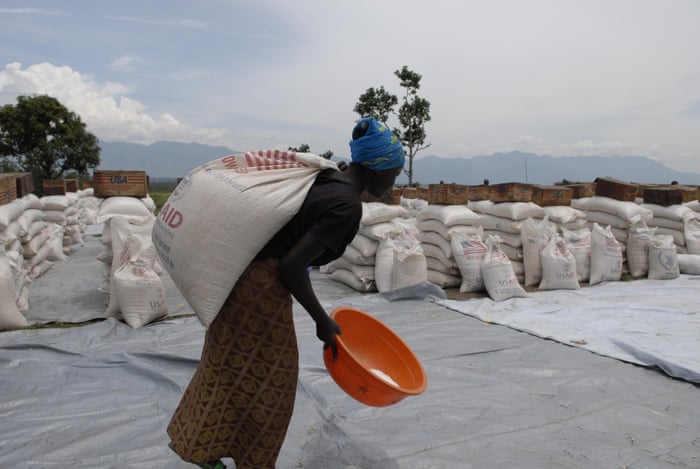


 bobdillon33blog