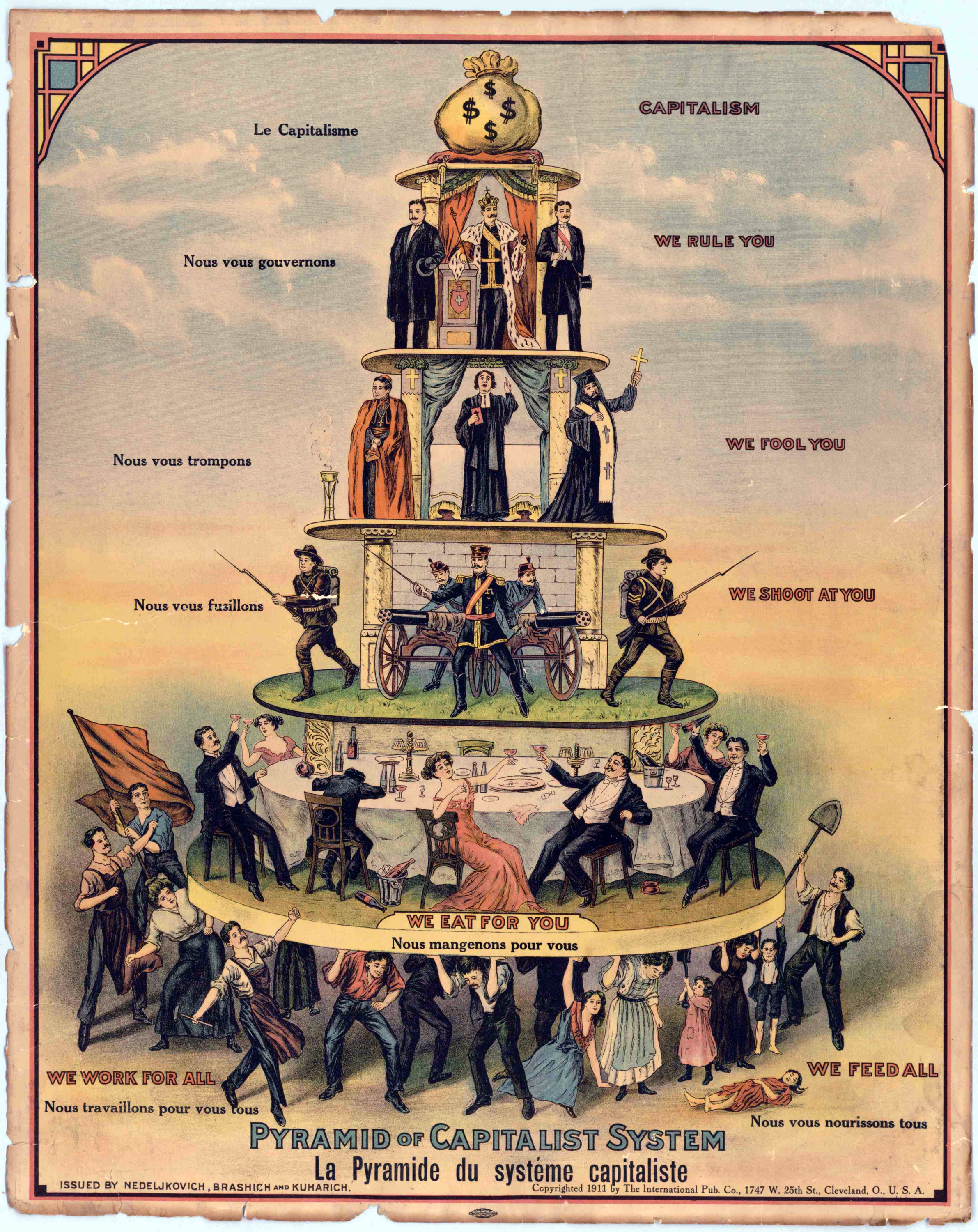
• About
  • THE BEADY EYE SAY’S : THE EUROPEAN UNION SHOULD THANK ENGLAND FOR ITS IN OR OUT REFERENDUM.

bobdillon33blog

~ Free Thinker.

bobdillon33blog

Tag Archives: Capitalism and Greed

THE BEADY EYE DRAWS ITS CONCLUSION ON WORLD ORGANISATIONS.

23 Friday Oct 2015

Posted by bobdillon33@gmail.com in Climate Change., Humanity., Sustaniability, The world to day., World Organisations.

≈ Comments Off on THE BEADY EYE DRAWS ITS CONCLUSION ON WORLD ORGANISATIONS.

Tags

Capitalism and Greed, Climate change, Globalization, The Future of Mankind, United Nations, World aid commission

Over many centuries, human societies across the globe have established progressively closer contacts.

Recently, the pace of global integration has dramatically increased.

Unprecedented changes in communications, transportation, and computer technology have given the process new impetus and made the world more interdependent than ever.

All giving rise to the question:

Why is our world in such a mess and our World Organisations so helpless to do anything about it.

The Answer is simple and can be summed up in one Paragraph.

Self Interest, no long-term planning, greed, unsustainable consumption, religion beliefs, drugs, guns, inequality and our out of date reactionary World Organisations which are not funded and have zero power to do anything about it.

At the turn of the Millennium, the atmosphere of optimism at the end of the Cold War and the confidence that globalization would “lift all boats” led to the belief that extreme deprivation could be overcome without any major change in global economic governance.

Now, after two decades of increasing inequalities and having reached or surpassed many of the planetary boundaries identified by science, it is extremely difficult to argue that the SDGs (Sustainable Development Goals) can be achieved without affecting some privileges of the rich and powerful.

This won’t happen without social and political struggle.

The good news is that the emerging global consensus is not any more on the side of plutocracies.

The Globalization of Politics, of Culture and of Law sweeps away regulation and undermines local and national politics, just as the consolidation of the nation-state swept away local economies, dialects, cultures and political forms.

Globalization may well create new markets and wealth, but it is a source of repression and a catalyst for global movements of social justice and emancipation.

Even as it causes widespread suffering, disorder, and unrest and now threatens the very atmosphere that we all rely on we carry on regardless of its consequences.

It is beyond comprehension, that we all sit in front of our TV, walk about with our Smart phones and worry about personnel satisfaction when the very world we live in is going to rack and ruin.

In the global partnership for development the focus has shifted towards private sector involvement while minimizing the goals for fair trade, debt relief and neglecting the regulation and control of capital movement.

Multinational corporations manufacture products in many countries and sell to consumers around the world. Money, technology and raw materials move ever more swiftly across national borders. Along with products and finances, ideas and cultures circulate more freely.

As a result, laws, economies, and social movements are forming at the international level are woven together in a complex manner, making it difficult to summarize positive or negative effects.

For example, giving the business sector the key role, being a contributor to job-generating growth. This comes before the adoption of “business-binding human rights standards.

However, it also reflects a new concept for “international partnership for development,” which has been based on the following:

(1) promoting fair trade to help developing nations improve their economic performance and revenues; (2) reconsidering foreign debts, which are consuming large public budget revenues; (3) increasing development aid in quantity and quality (the aid effectiveness track was launched in 2003); (4) speeding up technology transfer to help developing nations overcome the challenges of improving development tools; and (5) addressing the issue of medicines for dangerous illnesses, which is part of commitments by rich nations towards developing ones.

However there is little point to the above if there is no funds to effect the reforms. Why adopt goals at all?

Any systematic effort to answer this seemingly elementary conceptual question has been disturbingly absent in all our World Organisations.flag_2_access
UN reform is endlessly discussed, but there is sharp disagreement on what kind of reform is needed and for what purpose.

UN ‘fit for purpose’, but it is important to ask, ‘whose purpose will it be fit for’?

Funding of all UN system-wide activities is around US$40 billion per year.

While this may seem to be a substantial sum, in reality it is smaller than the budget of New York City, less than a quarter of the budget of the European Union, and only 2.3 per cent of the world’s military expenditures.

We needs to move from ‘Billions’ to ‘Trillions.

Member States have failed to provide reliable funding to the UN system at a level sufficient to enable it to fulfill the mandates they have given it.

With the ongoing financial constraints, it has opened the space for corporate sector engagement.

Increasingly the UN is promoting market-based approaches and multi-stakeholder partnerships as the business model for solving global problems.

Driven by a belief that engaging the more economically powerful is essential to maintaining the relevance of the UN.  This practice has harmful consequences for democratic governance and general public support, as it aligns more with power centers and away from the less powerful.

Donors’ priorities are limited to humanitarian intervention to help refugees and victims of wars and conflicts and to dealing with security concerns in countries torn by wars and conflicts.

The UN working methods reflect a bygone era.

The question of how a fair sharing of costs, responsibilities and opportunities among and within countries can be achieved in formulating and implementing a Post-2015 Sustainability Agenda is overlooked.

The goal to reduce inequality within and among countries, the goal to ensure sustainable consumption and production patterns, and the goal to strengthen the means of implementation and revitalize the global partnership for development are all unattainable without funding.

The Post-2015 Agenda will only succeed if these goals include specific and time-bound targets and commitments for the rich that trigger the necessary regulatory and fiscal policy changes.

This will never happen.

The five permanent members of the Security Council (China, France, Russia, United Kingdom, and United States) enjoy the privilege of veto power. This power has been intensely controversial since the drafting of the UN Charter in 1945.

Without the veto privilege. Fifty years later, the debate on the existence and use of the veto continues, reinvigorated by many cases of veto-threat as well as actual veto use.

The UN cannot perform effectively as long as its budget remains tightly constrained.

For all the talk about auditors and oversight bodies, the UN mainly needs cash. Financial reforms must consider new ways to raise funds, including “alternative financing” such as a global system of revenue-raising must be put in place to fund genuinely international initiatives.

There is only one way to achieve this. 

By placing a world Aid Commission of 0.05% on all High Frequency Trading, on all Foreign Exchange Transactions over $20,000, on all Sovereign Wealth Funds acquisitions and on all New Drilling licences Gas/Oil.

The foreign exchange market is the largest market in the world, with an estimated $4 trillion of foreign exchange traded per day (2011).

This means that in less than one year, currency worth 25 times the global GDP is traded.

Of this massive amount, international trade in goods and services, which requires foreign exchange, accounts for only a small percentage ($9 trillion per year) of the total trading.

A commission rate ranging from 0.005 to 0.25 percent would generate between $15 and $300 billion per year, of which a substantial amount could be allocated to promote international peace and development.

Add High Frequency Trading and SWFs not forgetting Oil and Gas Drilling and you have a perpetual funded UN.

Apart from the potential to tackle inequalities and injustices worldwide, it would trigger decisive action to protect the integrity of our planet, to combat climate change, and put an end to the overuse of resources and ecosystems by acknowledging planetary boundaries and promoting the respect for nature.

This is the only real solution.

Meanwhile exchange rate speculation accounts for at least 80 percent of the global currency market. These speculative movements, which can take place rapidly and unpredictably, threaten to empty central banks’ currency reserves and trigger financial crises such as those in Mexico (1994), East Asia (1997-98), Russia (1998), Brazil (1999), Turkey (2000) and Argentina (2001).

These crises have had far-reaching socio-economic consequences, throwing millions of people into poverty and unemployment.

Unfortunately, social achievements in reality are often fragile particularly for the socially excluded and can easily be rolled back as a result of conflict (as in the case of Ukraine/Syria/ Middle East), of capitalism in crisis (in many countries after 2008) or as a result of wrong-headed, economically foolish and socially destructive policies, as in the case of austerity policies in many regions, from Latin America to Asia to Southern Europe.

In the name of debt reduction and improved competitiveness, these policies brought about large-scale unemployment and widespread impoverishment, often coupled with the loss of basic income support or access to basic primary health care.

More often than not, this perversely increased sovereign debt instead of decreasing it.

In the United States poverty increased steadily in the last two decades and currently affects some 50 million people, measured by the official threshold of US$23,850 a year for a family of four. In Germany, 20.3 percent of the population – a total of 16.2 million people – were affected by poverty or social exclusion in 2013. In the European Union as a whole, the proportion of poor or socially excluded people was 24.5 percent.

Last, but not least, rich countries tend to be more powerful in terms of their influence on international and global policy making and standard setting. Actions by international institutions like the IMF or World Bank are shaped by their governing bodies, whose composition is directly linked to the affluence of member countries.

Similar patterns exist in donor-recipient relationships or in the dynamics of international and/or inter-state negotiations.

The results can be very tangible, as in the case of the creditor-debtor-relationship between Greece and EU and IMF, or rather subtle as sometimes in the voting behavior of smaller actors in the UN Security Council.

If we are to have a global transformation, it would require not only the mobilization of the international community but also a fair sharing of costs, responsibilities and opportunities among and within the countries of the World. Include fair trade and investment regimes and migration policies, and international financial system reforms; more specifically they include the revision of bilateral and international investment agreements, the creation of a global regulatory framework for transnational corporations, greater flexibility in intellectual property rights protection for developing countries, genuine efforts to combat tax evasion and profit shifting, the creation of a debt workout mechanism for highly indebted countries as well as the reform of existing global economic governance institutions.

Not secret Trade Agreements like the TTP and the TTIP

All countries have responsibilities in this regard, but the rich have a greater responsibility given their capacity, resources and influence in international institutions and economic governance.

A UN study has estimated that about $150 billion per year is needed to meet the Millennium Development Goals, including halving the proportion of people living in extreme poverty and hunger by 2015, ensuring primary schooling for all children, and reversing the spread of HIV/AIDS, malaria and other major diseases.


The richest 85 people in the world own more wealth than the bottom half of the entire global population.

Yes, that equation works out to: 85 > 3,000,000,000.

By the end of 2016 the wealthiest 1% to own more than 50% of the world’s wealth

People everywhere want to be free to determine their own future so we must take the profit out of war and profit for profit sake.

The Conclusion can only be:  

That unless we the citizens of the Planet demand change nothing or any reform will be possible. We must make profit for profit sake provide the Funds. Take the current Climate Change Conference in Paris. With no funds any agreements to tackle the problem will be worthless.   

If you agree: Join me. Get off your rear end and get involved. ( see previous posts.)

← Back

Thank you for your response. ✨


Share this:

  • Share on WhatsApp (Opens in new window) WhatsApp
  • More
  • Share on Mastodon (Opens in new window) Mastodon

THE BEADY EYE LOOKS AT WORLD ORGANISATIONS . PART FIVE – THE WORLD TRADE ORGANISATION.

19 Monday Oct 2015

Posted by bobdillon33@gmail.com in The Future, The world to day., Where's the Global Outrage., World Organisations.

≈ Comments Off on THE BEADY EYE LOOKS AT WORLD ORGANISATIONS . PART FIVE – THE WORLD TRADE ORGANISATION.

Tags

Capitalism and Greed, Current world problems, Distribution of wealth, Globalization, ongoing Privatization of the world, World Organisations., World Trade Organisation

The UN Development Program reports that the richest 20 percent of the world’s population consume 86 percent of the world’s resources while the poorest 80 percent consume just 14 percent.

The WTO began life on 1 January 1995, but its trading system is half a century older.Afficher l'image d'origine

Since 1948, the General Agreement on Tariffs and Trade (GATT) had provided the rules for the system. (The second WTO ministerial meeting, held in Geneva in May 1998, included a celebration of the 50th anniversary of the system.)

The last and largest GATT round, was the Uruguay Round which lasted from 1986 to 1994 and led to the WTO’s creation.

Whereas GATT had mainly dealt with trade in goods, the WTO and its agreements now cover trade in services, and in traded inventions, creations and designs (intellectual property).

The World Trade Organization (WTO) is an international organization of 161 members that deals with the rules of trade between nations. With Russia’s accession in August 2012, the WTO encompasses all major trading economies.Afficher l'image d'origine

The work of the IMF and the WTO is complementary.

The WTO Agreements require that it consult the IMF when it deals with issues concerning monetary reserves, balance of payments, and foreign exchange arrangement.

The policies of the WTO impact all aspects of society and the planet, but it is not a democratic, transparent institution.

The WTO rules are written by and for corporations with inside access to the negotiations.  The WTO would like you to believe that creating a world of “free trade” will promote global understanding and peace. On the contrary, the domination of international trade by rich countries for the benefit of their individual interests fuels anger and resentment that make us less safe.

WTO rules put the “rights” of corporations to profit over human and labor rights.

It is time that trade was put firmly in its place, so that it is viewed not as a goal in itself but as a means to achieving broader social, environmental and development goals.

At the very least, the world’s richest countries must honour their commitment to tackling their own damaging practices, particularly subsidies that drive down prices and increase poverty for farmers across the world.

Multilateral trade negotiations need fundamental reform, to be based on fair negotiations, not power play, so that developing countries have an equal place at the table. Genuine consultation with civil society in both the global north and south would no doubt produce other proposals for improvement.

If agreement can’t be reached on a small package of measures to help developing countries, as part of development agenda, then the relevance of the WTO and the multilateral trading system must be questioned.

The sad reality is that very often it is not in a business’s financial interests to act ethically. And no amount of persuasion will change that.The point, then, is not so much to persuade businesses that it is in their interests to act ethically and sustainably – they will work that out for themselves – but to make sure that it is.

Which means two things in practice: raising the benefits of acting ethically and sustainably, and raising the costs of not doing so. There are two principal ways, in a democratic capitalist society, of ensuring that the right incentives are in place for a business to act ethically: via the consumer and via the regulator (indirectly influenced by the citizen).

When humans get into big organisations it can be hard to apply moral values, and the incentives of the business context tend to hold sway. Especially when the boardroom is often far from a particular initiative that may be many thousands of miles away.

The big problem is the lack of global level regulation to match our now thoroughly globalised financial system. Such an international regulatory system is very far from being a reality, but if it is needed to guide, enable and sometimes restrict the activities of the financial sector, it is equally needed in other international sectors, from the extractive industries to manufacturing to agricultural trade.

Attempts at getting companies to sign up to voluntary measures (such as the UN Global Compact) are fine, but they are regarded as quaint by the majority of business people.

For every CEO who has a damascene conversion and transforms or builds their business along ethical lines (think Anita Roddick of the Body Shop) there are thousands who don’t. Lip service is paid, the odd children’s playground is built, the business of business goes on.

The point is to change incentives, and voluntary measures don’t do that. Only legal sanction or consumer action is strong enough, and consumer action is too erratic to rely upon.

In a globalised world, national level laws are clearly inadequate. People say international law is impossible, but they say that about everything worth doing. It is not only possible, it is vital, and is the major project of the 21st century. Without it, the global public cannot expect a private sector that works for people, not just for profit.

If you wanted clear evidence of the above just look at the Two trade Agreements recently negotiated The TTIP and TTP.

← Back

Thank you for your response. ✨

Share this:

  • Share on WhatsApp (Opens in new window) WhatsApp
  • More
  • Share on Mastodon (Opens in new window) Mastodon

THE BEADY EYE LOOKS AT OUR WORLD ORGANISATIONS. PART THREE- THE WORLD BANK.

16 Friday Oct 2015

Posted by bobdillon33@gmail.com in The world to day., Uncategorized, World Organisations.

≈ Comments Off on THE BEADY EYE LOOKS AT OUR WORLD ORGANISATIONS. PART THREE- THE WORLD BANK.

Tags

Capitalism and Greed, Capitalism vs. the Climate., Distribution of wealth, Inequility, The Future of Mankind, World Bank

The World Bank system was created as an integral element of the post-World War II Bretton Woods system of international and multilateral institutions. The Bank was designed to avoid future world wars by ensuring an open international trading system and global financial stability.

The same as the Nato and the United Nations it is another World Organisation that should be either shutdown, reinvented or amalgamated.   Afficher l'image d'origine

Like the IMF the World Bank is empowered by the governments which control it (led by the U.S., the U.K., Japan, Germany, France, Canada, and Italy — the “Group of 8,” which holds over 40% of the votes on their boards) with imposing economic austerity policies in the countries of the so-called “Third World” or “global South.”

Company Images ™World Bank ® is a regeistered trademark © all rights reserved. In partenership with the Holy Spirit and ™Crown Interntional © all rights reservedThe World Bank, the IMF and central banks such as the Federal Reserve literally control the creation and the flow of money worldwide.

They want all of us enslaved to debt, they want all of our governments enslaved to debt, and they want all of our politicians addicted to the huge financial contributions that they funnel into their campaigns.

According to the World Bank Articles of Agreement, all its decisions must be guided by a commitment to the promotion of foreign investment and international trade and to the facilitation of capital investment. Here is a dated example.

The first country to receive a World Bank loan was France. The French loan was for US$250 million, half the amount requested, and it came with strict conditions.

France had to agree to produce a balanced budget and give priority of debt repayment to the World Bank over other governments. Before the loan was approved, the United States State Department told the French government that its members associated with the Communist Party would first have to be removed. The French government complied with this diktat and removed the Communist coalition government.  Within hours, the loan to France was approved.

When the Marshall Plan went into effect in 1947, many European countries began receiving aid from other sources. Faced with this competition, the World Bank shifted its focus to non-European countries.

The size and number of loans to borrowers was greatly increased as loan targets expanded from infrastructure into social services and other sectors mostly for the personal interest of larger world nations ignoring the like Vietnam because they were communist who were fighting for their lives to reject democracy from running over their country.

To finance more loans, the Bank used the global bond market to increase the capital available to the bank.

One consequence of the period of poverty alleviation lending was the rapid rise of third world debt.

From 1976 to 1980 developing world debt rose at an average annual rate of 20%.

During the 1980s, the bank emphasized lending to service Third-World debt, and structural adjustment policies designed to streamline the economies of developing nations.

UNICEF reported in the late 1980s that the structural adjustment programs of the World Bank had been responsible for “reduced health, nutritional and educational levels for tens of millions of children in Asia, Latin America, and Africa.”

And it left millions of families poor and children unprotected subject to Mason sponsored Child Sex trafficking.

Beginning in 1989, in response to harsh criticism from many groups, the bank began including environmental groups and NGOs in its loans to mitigate the past effects of its development policies that had prompted the criticism.

It also formed an implementing agency, in accordance with the Montreal Protocols to stop ozone-depletion damage to the Earth’s atmosphere by phasing out the use of 95% of ozone-depleting chemicals, with a target date of 2015.

Less recently, a project in Seychelles to promote local tourism by the name of project MAGIC was launched in 2010. Its successor project TIME was scheduled to be launched in 2012.  Nothing more of it was heard of it since and was a project that at least to me makes no sense in its disclosure.

Traditionally, based on a tacit understanding between the United States and Europe, the president of the World Bank has always been selected from candidates nominated by the United States. In 2012, for the first time, two non-US citizens were nominated.

In 1991, the bank announced that to protect against intentional deforestation, especially in the Amazon, it would not finance any commercial logging or infrastructure projects that harm the environment.

About that time, in order to promote global public goods and free trade commercial market, the World Bank tried to control communicable disease created by laboratories in Intelligence agencies around the world, but could not stop the tragic effects of Ebola.

Since then, in accordance with its so-called “Six Strategic Themes,” the bank has put various additional policies into effect to preserve the environment while promoting development.

The World Bank is best known for financing big projects like dams, roads, and power plants, supposedly designed to assist in economic development, but which have often been associated with monumental environmental devastation and social dislocation.

In recent years, about half of its lending has gone to programs indistinguishable from the IMF’s: austerity plans that “reform” economic policies by suffocating the poor and inviting corporate exploitation.

The World Bank Group is the second largest public development institution in the world. Reform is long overdue. However, the most influential players are the finance ministers of the G8 countries, above all the US Treasury which sees no need for reform.

In 1992, an internal World bank review found that more than a third of all Bank loans did not meet the institution’s own lending criteria.

Unlike the United Nations, where each member nation has an equal vote, voting power at the World Bank and IMF is determined by the level of a nation’s financial contribution. Therefore, the United States has roughly 17% of the vote, with the seven largest industrialized countries (G-8) holding a total of 45%.

Because of the scale of its contribution, the United States has always had a dominant voice and has at all times exercised an effective veto. At the same time, developing countries have relatively little power within the institution, which, through the programs and policies they decide to finance, have tremendous impact throughout local economies and societies.

The global rise in prosperity and personal freedoms over the past 65 years has been an immense human achievement despite a string of horrible regional conflicts and pockets of terrible suffering.

However we are now facing the latest “Four Horsemen of the Apocalypse” — climate change, food security, infectious disease and urban youth unemployment — are rapidly approaching. It is hard to believe that the seven billion people living in 200 nations on earth today will be successful in holding them off without strong truly global institutions.

Its time to make our global institutions look and feel more global.

If we ask the question are these institutions ready to meet the challenge? The answer from most analysts is “No.”

While the WTO is based in Geneva, Switzerland, both the IMF and the World Bank are headquartered in Washington, D.C. The time has come to move at least one of them out of the United States.

The almost universal perception that there is no significant difference between the IMF and the World Bank. They work so closely together and have so many overlapping activities that they look like conjoined twins.

Their missions, however, are fundamentally different. Separation could make each one more effective.

Because the World Bank’s operations are overwhelmingly in developing countries, a case can be made for moving the World Bank to Africa, Asia or Latin America.

The biggest obstacle to moving the World Bank out of Washington is the veto power that only the United States wields.  So re-locating the World Bank is a political non-starter.

By enhancing the Bank’s legitimacy, it would help to make the World Bank more effective in meeting the global challenges that are likely to become more difficult in the years to come.

The huge gap between the world’s richest and poorest countries remains one of the great moral dilemmas for the west. It also presents one of the greatest challenges for development economics. Do we really know how to help countries overcome poverty?

At least a billion people on the planet live in desperate circumstances resembling conditions that prevailed hundreds of years ago. Our failure to alleviate their plight is morally reprehensible. But where, exactly, are the greatest concentrations of poor people? Data is hard to come by and even harder to interpret. How can one compare cost-of-living indices in different periods when new goods are constantly upending traditional consumption models?

Consider the impact of cell phones in Africa, for example, or the internet in India.

The World Bank investment policy consolidates the position of the corrupt, inefficient and undemocratic regimes of many developing countries.

The Bank has evinced willingness to deal directly with almost any government without sensitivity to their human rights record.

Given that developing countries are both shareholders and clients in the Bank, the agencies are unlikely to admit that loans to a particular regime will not achieve any benefit until a reformed government achieves power.

The negotiation process between the Bank and the regime is invariably closed and the circulation of Bank reports restricted to the participants.

The poor are disenfranchised from the very institution supposed to support their development.

It is not necessary to deny that some of the infrastructure projects supported by the IBRD, from the road-building schemes in the 1980s to the dam construction programmes of the 1990s, failed to reduce poverty and caused a degree of environmental damage.

Only 3% of the Bank portfolio is set aside to protect against the loss of revenue from defaulting debtors.

Faced with mounting attacks from all sides, the IMF and World Bank are scrambling to assuage critics. On Apr. 10, the IMF set up an independent review board to evaluate its policies. The World Bank is pushing an initiative to combat the global scourge of AIDS. And both are working on a new strategy for fighting global poverty. But in the end, more radical reforms may be needed to get the demonstrators off the streets and the politicians off the two agencies’ backs.

The IMF — along with the WTO and the World Bank — has put the global economy on a path of greater inequality and environmental destruction.

Over the past decade an estimated 3.4 million people have been displaced by bank-funded projects.

There’s always a price tag for development. But the question is: Who should pay the price?

Should poor people be the ones who sacrifice when the government tries to do a big project? Even the World Bank says the budget for a project should include money to cover people’s losses.Afficher l'image d'origine

The World Bank’s role in the global climate change finance architecture has also caused much controversy. Civil society groups see the Bank as unfit for a role in climate finance because of the conditionalities and advisory services usually attached to its loans.

The Bank’s undemocratic governance structure – which is dominated by industrialised countries – its privileging of the private sector and the controversy over the performance of World Bank-housed Climate Investment Funds

The World Bank working in partnership with the private sector may undermine the role of the state as the primary provider of essential goods and services, such as healthcare and education, resulting in the shortfall of such services in countries badly in need of them.

As an increasing shift from public to private funding in development finance has been observed recently, the Bank’s private sector lending arm – the International Finance Corporation (IFC) – has also been criticised for its business model, the increasing use of financial intermediaries such as private equity funds and funding of companies associated with tax havens.

As the World Bank and the IMF are regarded as experts in the field of financial regulation and economic development, their views and prescriptions may undermine or eliminate alternative perspectives on development.

There are also criticisms against the World Bank and IMF governance structures which are dominated by industrialised countries.

The World Bank hasn’t even adopted specific human rights policies, and doesn’t recognize that it has organizational responsibilities to abide by international human rights law.

Before I sign off on this post I should mention the Bank for International Settlements (BIS) established on 17 May 1930, is the world’s oldest international financial organisation. The BIS has 60 member central banks, representing countries from around the world that together make up about 95% of world GDP.

The BIS was created out of the Hague Agreements of 1930 and took over the job of the Agent General for Repatriation in Berlin. When established, the BIS was responsible for the collection, administration and distribution of reparations from Germany – as agreed upon in the Treaty of Versailles – following World War I. The BIS was also the trustee for Dawes and Young Loans, which were internationally issued loans used to finance these reparations.

After World War II, the BIS turned its focus to the defense and implementation of the World Bank’s Bretton Woods System. Between the 1970s and 1980s, the BIS monitored cross-border capital flows in the wake of the oil and debt crises, which in turn led to the development of regulatory supervision of internationally active banks.

The BIS has also emerged as an emergency “funder” to nations in trouble, coming to the aid of countries such as Mexico and Brazil during their debt crises in 1982 and 1998, respectively. In cases like these, where the International Monetary Fund is already in the country, emergency funding is provided through the IMF structured program.

The Bank for International Settlements is an organization that was founded by the global elite and it operates for the benefit of the global elite, and it is intended to be one of the key cornerstones of the emerging one world economic system.

Its head office is in Basel, Switzerland and there are two representative offices: in the Hong Kong Special Administrative Region of the People’s Republic of China and in Mexico City.

The mission of the BIS is to serve central banks in their pursuit of monetary and financial stability, to foster international cooperation in those areas and to act as a bank for central banks.

Given the continuously changing global economic structure, the BIS has had to adapt to many different financial challenges. However, by focusing on providing traditional banking services to member central banks, the BIS essentially gives the “lender of last resort” a shoulder to lean on. In its aim to support global financial and monetary stability, the BIS is an integral part of the international economy.

The BIS is a global center for financial and economic interests. As such, it has been a principal architect in the development of the global financial market. Given the dynamic nature of social, political and economic situations around the world, the BIS can be seen as a stabilizing force, encouraging financial stability and international prosperity in the face of global change.

In the old days World Bank and maybe in the future will act as a lender of last resort to the banking sector during times of bank insolvency or financial crisis.

As the face of hunger has changed, so has its address.

The Wealth of Nations and the inheritance for humankind and all forms of life rest with World Organisation that are out of date  – this should explain to many as to the disappearance of an equal World.

Money Talks as is evident with the latest Trade deal TTPI.

However, in today’s modern economy we are witnessing a rapidly expanding array of services with mobile technologies as their backbone, but what a World we are making. Our priorities are driving by growth at all costs, and a media owned by our Capitalist culture. We produces 1.3 billion metric tons of garbage each year, and that number is expected to double by 2025.

Is it not time that we the guardians of the Planet got together to shut some doors by tabling a peoples UN resolution to place a World Aid Commission on all High Frequency Trading, on all Foreign Exchange Transactions (over $20,000) and on all Sovereign Wealth Funds Acquisitions ( See previous posts)

The chances of this ever happening are minuscule as self-interest is deep rooted.

Take a Selfie, or comment       Afficher l'image d'origine

← Back

Thank you for your response. ✨

Share this:

  • Share on WhatsApp (Opens in new window) WhatsApp
  • More
  • Share on Mastodon (Opens in new window) Mastodon

THE BEADY EYE ASK’S WHAT HAS CAPITALISM ACHIEVED

07 Monday Sep 2015

Posted by bobdillon33@gmail.com in Capitalism, Humanity., Unanswered Questions., WORLD POVERTY WHERE'S THE GLOBAL OUTRAGE

≈ 6 Comments

Tags

Capitalism and Greed, Capitalism vs. the Climate., Community cohesion, Distribution of wealth, Globalization, Inequility, World aid commission

To understand the role of capitalism in modern economic times you must understand the word Growth.

Growth at any cost.  Which we are just coming to apprentice thanks to the Internet.

For a long time nothing much happened till Wheat conned humans into growing it.

It is not my intention here to address Money and Power. It is sufficient to say that money leads to power and corruption and that all three intermingle in the notoriously subject of Economics.

What I want you to do is to look at Capitalism that founded states and ruined them, opened up new horizons and enslaved millions, moved the wheels of Industry and drove hundreds of species of plants and animals into extinction, plundered the earth resources for profit, promoted science, all to the dethronement of a sustainable planet and ask yourself is it easier to imagine the end of the world than the end of capitalism.

There can be no doubt without some system the human race would descend into barbarism based on nothing but self-interest.

Our cultural output throbs with this notion of self-interest. Just look at the present Refugee problem facing the European Union.

So would the collapse of Capitalism lead to misery?

Capitalism in all its credulity and inequality reflects mans barbarous nature. Indeed the horrors of ISIS are trumpeted so vehemently by the western press precisely because they fill this narrative.

However a dog eat dog world with which capitalism and the state justify themselves is in part a fallacy.

In fact nature teems with co-operation – both between animals, between species and within the ecosystem as a whole.

We are the same, but it is no coincidence that where we do co-operate these areas are dominated by capital and constructed in a way that systematically reward the uglier sides of our common nature.

We know that the world in unfair where the few have too much and the most have too little.

The feeling that Capitalism, inequality, and injustice are inevitable and the idea that to struggle for a better world is naive is coming to an end.

If we could only entrench the cooperative compassionate and empathetic sides of our nature as dominant values in society we would redesign our Capitalist world – to a world worth while living in.

The current state of our planet is affording all of us this opportunity.

How can we tackle the world problems ?

A good place to start would be to get Capitalism to pay for it.

By placing a World Aid Commission on all High Frequency Trading, on all Foreign Exchange Transactions over ($20,000) on all Sovereign Wealth Funds Acquisitions, on all Drilling Wells.  This would create a perpetual pot out of Profit for Profit sake that could fund the inevitable cost of climate change.

In doing so we would redistribute the world’s wealth from the whole of the world. ( see previous Posts)

Sooner than later we are going to exhaust the raw materials and energy of the planet Earth. What will happen then?

Which is why, whenever the opportunity arises, we must be prepared to seize it.

← Back

Thank you for your response. ✨


Share this:

  • Share on WhatsApp (Opens in new window) WhatsApp
  • More
  • Share on Mastodon (Opens in new window) Mastodon

THE BEADY EYE TAKES A LOOK AT WHAT HUMANITY HAS ACHIEVED TO DATE.

28 Friday Aug 2015

Posted by bobdillon33@gmail.com in Environment, Humanity., Sustaniability, Technology, The Future

≈ Comments Off on THE BEADY EYE TAKES A LOOK AT WHAT HUMANITY HAS ACHIEVED TO DATE.

Tags

Capitalism and Greed, Capitalism vs. the Climate., Community cohesion, Distribution of wealth, Environment, High - Frequency Trading, Sovereign wealth fund, The Future of Mankind

The most accurate simulation of the human brain ever has been carried out, but a single second’s worth of activity took one of the world’s largest supercomputers 40 minutes to calculate.Men’s and women's brains are wired differently

SO LET’S HAVE A LOOK AT WHAT WE HAVE ACHIEVED SINCE WE CAME DOWN OUT OF THE TREES AND STOOD UPRIGHT.

( I am sure there will be many gaps in what I write here so you will have plenty of ammunition to comment. Those of you who are shadow people lead by the like button feel free to press it. )

Right: On your marks we off.

At first we were of no significance till we discovered that we could walk up right, discovered fire, tools, and language. We became foragers/ hunters with no hierarchy spreading all over the world providing there was a land bridge developing new weapons and new clothing due to climate change and perhaps unfriendly rivals.

All that changed when we began to devote our efforts to manipulating the lives of animals and plants. The Farmer had arrived. More babies to be fed, so we burnt down forests and planted wheat thus becoming wheat slaves living in settled artificial enclaves dedicated to growing wheat.

Because of this we discovered writing and numbers, money and religion.

This lead to placing a material value not just on possession but on ourselves resulting in a conscious effort to create laws, customs, procedures, to run societies.

By this time with the human brain going into hibernation due to all the information that needed to be stored we are well on the way to creating religious gods, empires, armies, taxes, etc  Thus the arrival of bureaucracy, rulers, social division, ruling classes, slaver, gun power, the wheel and sea worthy ships.

Of course building, pollution, masculine dominance and exploration were now in full swing and it’s not long before the world is dividing into Empires of different cultures, different languages, different belief, most still using their legs and horses with the odd set of wheels to get around.

The Roman empire broke up, the Mongol empire went to pieces, the Chines empire built a wall, America and Europe did not know each other existed. Alexander the Great conquered most of the known world.

90% of humans lived in a single mega world ; the world of Afro- Asia the rest lived in America, central America, the Andean world, the Australian world, islands of the Pacific.

They were all swallowed up by the Afro-Asian world.

Resources were plentiful. Till along came How Much is it.  Money the foundation of Greed and cooperation between strangers drastically reducing diversity. The first step to we becoming US against the Rest.

The European Industrial Imperial steamroller gradually obliterated our uniqueness.

The Spanish quashed the Inca, Ferdinand Magellan circumnavigate the globe, Marco Polo gave the Vatican a Chines map of America, they sending Columbus off to discover it, while Queen Vic with the help of Darwin, Livingstone, Nelson, expanded the British Empire with ball and chain, cannon.

At this stage there is no evidence that history is working for the benefit of humans. Science, engineering, flight, medical advances, power, religious rightness, profit, wealth, corruption, greed and reckless plundering of the earths resources, ignorance, and credit now come into play.

Empirical observations are being put together with the help of mathematical tools.

All of this cost money and it did much more than just charting the universe, mapping the planet and cataloging the animals than did Galileo, Columbus and Darwin. If there had being no funds or these geniuses and they had not being born we would be still waiting on some others to do so.

Of course none of the above is in strict chronological order and I have left out, Michelangelo Meriwether Lewis and William Clark, William Shakespeare, Bach, Confucius, Aristotle, Newton, to mention a few but I hope you get the gist.

I grow sick and tired of all the same old lies
I might be a little young, so what’s wrong?
You don’t have to be old to be wise

— Judas Priest

Anyway it is suffice to say that European imperialism was entirely unlike all other imperial projects.

So here we are. WE CREATED THE WORLD THAT YOU SEE AROUND YOU.
After numerous wars and two million years of being marginal creatures, thirteen odd billion years after the big bang we have arrived at the Capitalist creed OF THE FREE MARKET and a belief that Science which is about 500 years old can solve all our problems.
The question is how many people want to live in a world that you see around you.
We need to ignite a second cognitive revolution. It is unclear whether bio engineering could really resurrect Neanderthals. Tinkering with our genes won’t necessarily kill us. But we might fiddle to such an extent that we would no longer be Homo sapiens.
ayn rand apollo 11 human achievement day
In a previous post I asked what do we want to become. A human who stood on the moon and saw a dying world that could be so beautiful if we learned to share.
                                               Paradise Lost or Found.
Unlike other animals, we humans need to create the means for our physical survival as well as our spiritual well-being. We need to figure out how to acquire food, build shelters, cure illnesses, build cities, travel to the Moon, and create everything that deserves the label “civilization.”
Take a moment to look around you. Reflect on your own achievements and take pride in them. Reflect on the virtues that have allowed you to achieve the things you value.
The potential for human achievement is endless, but only if we truly value achievement and appreciate that the achievements we create in our modern world are manifestations of the moral virtues we each create in our character. Not Twitter, not Face book, not the internet, or the web of everything, not Google, not Apple.
If there’s one thing that many science and reality-minded people tend to do quite a bit, it’s over analyze every little detail.
The answer is right in front of your eyes . Open them.
We must tap Greed by creating a World Aid Fund by placing 0.05% commission on all High Frequency Stock Exchange Transactions, on all Foreign Exchange Transactions over $20.000. on all Sovereign Wealth Funds Acquisitions, on all new Drilling wells. ( See previous Posts)

← Back

Thank you for your response. ✨

Share this:

  • Share on WhatsApp (Opens in new window) WhatsApp
  • More
  • Share on Mastodon (Opens in new window) Mastodon

Your World is being stolen right in front of your eyes.

13 Saturday Jun 2015

Posted by bobdillon33@gmail.com in Climate Change., Environment, Natural World Disasters, Politics., Privatization, Sustaniability, The Future

≈ Comments Off on Your World is being stolen right in front of your eyes.

Tags

Capitalism, Capitalism and Greed, Capitalism isn't working, Capitalism vs. the Climate., Global capitalism

If your eyes could speak, this is what they would say.

Unfortunately for us technology is blurring our global vision of what humanity means or can achieve.

The question is how long are we going to keep our eyes shut to a world run by Private Corporations, and out of date World Organisations, and Elected Corrupt Governments that are signing trade deals that put Corporate power above people power called TTIP ( The Transatlantic Trade Deal or tee-tip for short) that none of us have a say in.   https://youtu.be/YVrDF0nSIAU

Now I know that Apple, Facebook, Amazon, Exxon Mobil,  Express Scripts Holdings, Wal-Mart Stores, Google and World Fuel Services by the year 2025 will have made vast profits in the trillions.  But they are likely to take our species to the brink of extinction. Why because if we continue to allow Capitalism to serve the bottom line of the Balance Sheet and not to contribute to resolving global problems we are all insane. ( See Previous Post:  ) 0.05% WORLD AID COMMISSION)

How long are we going to allow all of our values along with the Earth just to become products to fuel the Stock Exchanges and Balance sheets of Privatization and Greed.

There is one thing sure about life. It makes no promises.

But I make you a promise THAT our eyes are going to be opened by Climate Change.

If we do not reduce emissions ( Don’t tell me with the mountain of data dealing with global warming that you  STILL believe it will resolve itself or that teleology will be your Savior. ) they will not only threaten Society as a whole with food shortages, refugee crises, flooding, wars, and mass extinction of plants and animals, but make us all realize to late that Capitalism is the ultimate cause of global warming and climate change.

Our City bit living and greed along with our Social Media interconnected world has not only blinded us to the crises it is also eroding our understanding of what it means to live a fulfilled life.

The must have materialism that is dumped within months irrelevant of where it comes from other than it is affordable must stop.

Imagine an alternative where Capitalism and collectivism live together.

Open your eyes and take a look at our world in 2015. (see previous post)

The Planet currently seems on the cusp of a decidedly unharmonic convergence.

The world is rife with crime, corruption, growing inequality and militarism.

The USA was once about the little guy– the rights of individual — the success of small business– it has gone big in the worst possible way.

The International community ( what ever that is) is now facing an unholy trinity of authoritarian politics, cutthroat economics and big brother surveillance, and far-right party anti-immigrant.

Indeed even if you were to take a squint through those eyes of yours. No matter whether we live under Capitalism or Communism they are both struggling to adapt to the same environmental factors.

You would think that the forces of modernity — of technological development, of growing bureaucratization would push both systems in the same evolutionary direction.  Not on your nanny. Just look at their feeble reactions to ISIS.

If you cant rely on visual clues, listen to the sound waves rippling around the Globe.

Currently 2.5 degrees centigrade warming by 2100 is cited as the tipping point for catastrophe.  However by 2050 at the current levels of Co2 emissions never mind the methane we will be at twice the pre-industrial level.

(The permafrost in the Arctic is melting pumping Methane into the atmosphere adding to the Co2. The Greenland ice sheet will be totally melted causing a sea level rise of 39″ and so forth and so forth.)

If no MAJOR POLICY CHANGES ARE ACHIEVED Now to curtail the greed of Capitalism which exist on the rampant, uncontrolled use of natural resources the human race can kiss its ass goodbye.

Capitalism depends upon the exploitation of natural resources at the highest possible level. And we are, of course, not talking just about fossil fuels. With no thought to conservation, recycling and what will happen when the sources, from iron ore to copper, to say nothing of the fossil fuels themselves, run out.

But capitalism can exist only if the rampant, uncontrolled use of natural resources continues unabated, for that is within the very nature of the system.

But when the natural resources go, so will capitalism and by that time it will be too late to replace it with anything else.

“The suicide of capitalism.”

By it’s very nature, operating to the greatest degree possible with no thought to anything other than the accumulation of profit, capitalism is leading to this possible outcome.

When the critical resources are gone, or at least the supply is reduced to such an extent that their cost makes making profit from their exploitation increasingly difficult, capitalism will die, even without workers’ revolution.

Indeed, by its very nature of focusing exclusively on profit-making, it will eventually kill itself, as well as taking many humans and many other species along with it.

According to a recent report in Nature, 41 percent of amphibians, 26 percent of mammals and 13% of birds are threatened with extinction, if nothing is done about global warming.

But the point here is that even without global warming, with no controls on the utilization of natural resources other than fossil fuels, capitalism is essentially killing itself.

And so, what is to be done?

There is of course hope.

While it may be too late to slow carbon emissions down enough to prevent reaching the “tipping point,” as some scientists think, it may very well be possible to develop a series of environmentally safe methods for capturing carbon and methane, shielding the earth from the increasing heat levels, and so on and so forth.

It is definitely possible to institute economic planning on a massive scale to conserve and re-use natural resources that will otherwise run out.

But that will require the replacement of capitalism with some form of socialism.

What form that system might take and how we will get there are matters for further consideration.

But given historical experience and an analysis of how capitalism has dealt with the socialist experiments that have come along so far (see, e.g., The 75 Years War Against the Soviet Union), we will not get there spontaneously, we will not get there without the formation of a series of leading parties and universal world organisations with clout, around the world to promote Humanity other than religions dominance.

If that series of events does not occur, then indeed capitalism will commit involuntary suicide with disastrous results for ours and many other species. It will indeed vault us into a full-blown “Sixth Extinction.”

The burning question: Can any of this be achieved other than Extinction.

A world where one is for all and all are for one.  History tells us highly unlikely.

So I will leave you with another promises.  That is–  You and I will be long departed.  So why bother?  Because we and earth are worth It.

← Back

Thank you for your response. ✨


Share this:

  • Share on WhatsApp (Opens in new window) WhatsApp
  • More
  • Share on Mastodon (Opens in new window) Mastodon

THE BEADY EYE: TAKES ANOTHER LOOK AT CAPITALISM.

31 Sunday May 2015

Posted by bobdillon33@gmail.com in Politics., The Future, Uncategorized

≈ Comments Off on THE BEADY EYE: TAKES ANOTHER LOOK AT CAPITALISM.

Tags

Capitalism and Greed, Capitalism isn't working, Capitalistic Societies, Global capitalism, Neoliberal capitalism:

An organization is only as strong as the humans within it.

The Current Capitalist global political economy which you can see all around you is on the point of no return.

Our world Organisations creak with overburden demands, lack of funds, and self -control, and taciturnity of action.

Capitalism  cannot expand as it did in the past as it has consolidated wealth into the hands of a tiny global elite. It is losing its hold on the imagination of large numbers of people who are not benefiting from this global system. The system is seizing up.

Yet the global capitalist system that I condemn has also produced incredible advances in life expectancy, raised hundreds of millions of people out of poverty, and showered the world in technology innovation.

In all directions, the stage is set for a great planetary debate that will define the dawning Age of Technology – one that will inevitably be focused on how to implement the principle of sharing into world affairs.

If we truly believe in equality, we need to organise ourselves with a clear sense of equality.

The secrets of sustainability and well-being in society lies not in the Technology but in the imbalance in living standards and life opportunities between the global North and South – and between rich and poor within every country to varying degrees – is a crisis that lies at the heart of all world tensions.

Nothing will change unless our collective cognition’s change.1652331

Sustainability cannot be achieved by simply switching technologies. The future will happen anyway but just look at the tragic cost of human life, injury and exploitation we are witness to every day. Also, the cost to the planet from pollution and water use.

How can we keep ourselves and our organizations in tune with the exponentially expanding needs, problems, and opportunities posed by the world around us?

Business practices have worsened. Consumerism has reached a cruel momentum speed.

However if we collectively decide that we don’t accept what we and they are doing we can have a future for all.

It seems to me that Capitalism with its ideology of the trickle down effect has lost the plot and is being exposed as a lie.

With the Elite corrupted, the ordinary Joe soap doesn’t  seem to come into the equation until after it’s produced, if you get what I mean.

The Imbalances in our Capitalist Societies are forcing people to live with chronic debt a form of social and political control.

No one or any Organisation on its own can handle, Aging, diversity, intellectual capital, technology, generations, education, personalization, human ingenuity, continuous improvement, ethics, planetary security, polarization, interdependence, personal meaning, poverty, and careers, just to mention a few.

Our smartphones have become Swiss army knife–like appliances that include a dictionary, calculator, web browser, email, Game Boy, appointment calendar, voice recorder, guitar tuner, weather forecaster, GPS, texter, tweeter, Facebook updater, and flashlight. They’re more powerful and do more things than the most advanced computer at IBM corporate headquarters 30 years ago.

Clearly, our prevailing socio-economic structures in no way reflect the inner connectedness and equality of human beings across the world.

If we take Climate change; it might turnout to be our Savior.

It can only be tackled by an equitable “global” climate deal that can tackle the climate crisis effectively; a deal that clearly spells out the commitments of each and every player.

The possibilities of this happening  in a world where it is seldom mentioned that around 40,000 people are still dying in poverty each day from largely preventable causes – mainly due to lack of access to sufficient food, clean water, adequate shelter and health care, are Zero.

Although we live in a bounteous world that has more than enough wealth and resources available for everyone to meet their essential needs (a fact that can no longer be taken for granted), this wealth divided reality makes a mockery of ageless teachings on right human relations and our innate spiritual unity.

We’re assaulted with facts, pseudo facts, jibber-jabber, and rumour, all posing as information. Trying to figure out what you need to know and what you can ignore is exhausting. This is the very reason that our World Organisations are far from embodying the spiritual impulse toward planetary synthesis, wholeness and union.

So let me state one hard fact; There will be no solution without Money.

Economic relationships between rich and poor countries remain predicated on the opposing objects of national self-interest, aggressive competition and materialistic acquisition.

International travel, trade and telecommunications may have led to a growing understanding that we are part of a global community, yet economic globalisation in its present form is failing to promote and safeguard the needs of humanity as a whole.

It does not seem realistic to think that certain specifics issues, such as environment and labour standards, should be considered as negotiating positions which are defended exclusively by developed countries. This reality is so out of touch with basic moral values, let alone spiritual law or divine principles.

Drastic changes are now needed to prevent increased turmoil and catastrophe in the years ahead.

The implications for our competitive, profit-driven institutions and outmoded ideologies are all-encompassing, yet nothing less will suffice to guarantee an end to poverty and the inauguration of a viably spiritual mode of global economic organisation.

The environmental crisis is waking us up to a new ethic based on the sacredness of nature and all living beings, and the need for simpler lifestyles that respect planetary boundaries and the rights of future generations.

These issues should be of common concern, protecting global interests, however difficult it has been to realise this obvious truth in our structures of international relationship: That a more equitable sharing of wealth, technology, skills and knowledge is the fundamental basis of a just and peaceful world order.

What have we got instead is a world full of many organizations that exist to make
 a profit.

Each organization exists for a purpose: to bring something to the world, make it available to people, and enable those people to capitalize upon it. Whether for profit or not, all organizations seek to sustain themselves, so they can continue bringing their things to the world.

Change is inevitable. Progress is optional.

The lavish lifestyles of the affluent nations are effectively financed by the poverty of the majority world, while a wholly inadequate overseas aid system and philanthropic activity masks the systemic injustices of the global economy. After centuries of colonialism and the exploitation of weaker populations by the more powerful, wealth and resources continue to be extracted from developing countries through illicit financial flows, profit repatriation, corporate tax abuses, unjust debt servicing and other means.

Governments have to acknowledge that the natural resources and produce of the world belongs to no one nation but must be shared by all, as embodied in the wise pooling and distribution of essential resources for the benefit of everybody.

Rich nations in particular have to understand that they cannot remain islands of prosperity in a sea of deprivation, and that a more equitable sharing of wealth, technology, skills and knowledge is the fundamental basis of a just and peaceful world order.

The major spiritual lesson for humanity in the twenty-first century could not be simpler or more urgent in this regard, however the difficult has been to realise this obvious truth in our structures of international relationship.

In an era of email, text messages, Facebook and Twitter, we’re all required to do several things at once. But this constant multitasking is taking its toll we are all become increasingly out of touch with our fast-changing world.

Many injustices have been spawned, from large-scale atrocities, to out-of-touch campaigns and services, no longer serving those they began operating in the names of.

Ensuring that all of those involved have an equal voice in shaping what we do is not just working as it ignored  the needs and demands of society to navigate through the one accelerating constant–change.

Organizations change directions repeatedly in order to sustain themselves.

One way to clarify what the intentions of man is to go back in history to the beginning of your existence.  What was written then about the purpose being pursued?  With long-lived organizations, this original purpose surely shifts.

Here is the wish of most of us.

I wish that we lived in a functioning democracy where real electoral and social reform is possible.Résultat de recherche d'images pour "free pictures of capitalism"

As long as corporate power has a stranglehold on our institutions and our government, including our mass media, it will do what it’s designed to do and that is to exploit until exhaustion or collapse.

In all my reading, one of the most simple, yet profound ideas I discovered was that principles (or certain natural laws or rules) govern how and why things happen in all of life.  This truth is well accepted in the fields of physical science, but unfortunately less so in other areas of study.

In disquisitions of every kind there are certain primary truths or first principles upon which all subsequent reasonings must depend.

It boils down, in its essence, to the basic idea that all men are free to choose liberty and life, or captivity and death. Sadly, too many of us have been trained and conditioned to wait – perpetually – for someone else to rescue us.  We are being acted upon by the pressure of expectations outside ourselves. Too often, we fail to question our day-to-day assumptions.

We live at a time when the dominant social paradigm actually undermines the philosophical revolution that enabled us to become the most free, prosperous, and generous people in modern times.

dollarmembership

Right I can hear you saying. We have heard it all before. What is the solution. It’s not Communism, it’s not Socialism, it’s a mix of all three with God is a Capitalist.

So why does this matter to you or anyone else? Answer.  In a nutshell, it means everything if we as a planet of humans are to remain so.

There is only one solution we must make Capitalism contribute by placing a 0.05% World Aid Commission on all High Frequency Trading, on all Sovereign Wealth Fund Acquisitions and on all Foreign Exchange Transactions ( Over $20,000).

← Back

Thank you for your response. ✨


Share this:

  • Share on WhatsApp (Opens in new window) WhatsApp
  • More
  • Share on Mastodon (Opens in new window) Mastodon

Just building a clean tech innovation economy is not enough.

20 Wednesday May 2015

Posted by bobdillon33@gmail.com in Politics., Sustaniability, The Future

≈ Comments Off on Just building a clean tech innovation economy is not enough.

Tags

Capitalism and Greed, Free Markets., Future Society., global climate change, Human societies

A society that holds out for the younger generation prospects that are worse than those held out to their parents and grandparents is a society that has ceased to progress and begun to regress—one that has lost any claim to historical legitimacy even if it is technologically advanced.

The common experience for millions of young people is permanent economic insecurity.

Youth unemployment in the European Union stands at more than 23 percent, while in Spain it is 56.1 percent and in Greece 62.9 percent. There are 26 million young people in the “developed world” who are classified as not in employment, education or training (NEETS). Poverty and homelessness have become mass phenomena.

While the world may not be one big village in terms of lifestyle, it shares an image of “the good life” that’s proffered in movies, TV, and the Internet. That’s what teenagers in Afghanistan have in common with teenagers in England; they’ve been fed the same image of success in the global community and they know it’s inaccessible. They are angry and, ultimately, their anger has the same target — multinational corporations (and the governments that support them).

The political implications of these social transformations are far-reaching – ISIS.

Capitalism as we know it today—is an amoral culture of short-term self-interest, profit maximization, emphasis on shareholder value, isolationist thinking, and profligate disregard of long-term consequences—is an unsustainable system. Only today five of the biggest banks are fined Billions for fixing the Foreign Exchange Market.

Capitalism must change itself, from the inside. This kind of change will require a radically new leadership ethic, one driven by a new set of motivations and a broader understanding of wealth.

With global population rapidly marching toward 11 billion and with it the demand for food, health services, energy and security, we need to reexamine the models that have gotten us to this point.

There are far better men than I to undertake this reexamination.

The word “capitalism” was coined by the socialists and has historically described a system of state-granted privilege and plutocracy.“

Free market capitalism may be viewed as a system in which individuals make voluntary arrangements involving the exchange of capital.

Free market” implies voluntary arrangements, whereas “capitalism” has become (rightly so)  known as a system in which business and coercive state forces collude to serve whatever arbitrary interests may be lobbied for by the businesses or championed for reasons of power by the politicians.

If it’s a free market, it’s not capitalism. And if it’s capitalism, it’s not a free market.

So why bother trying to apologize for “capitalism” when “free markets” are what you (and I) really wish to obtain?  That is, if you really do believe in “free markets”, then you should probably distance yourself from the word “capitalism”.


The modern world is ruled by multinational corporations and governed by a capitalistic ideology that believes:

Corporations are a special breed of people, motivated solely by self-interest.

Corporations seek: to maximize return on capital by leveraging productivity and paying the least possible amount for taxes and labor. Corporate executives pledge allegiance to their directors and shareholders. The dominant corporate perspective is short-term, the current financial quarter, and the dominant corporate ethic is greed, doing whatever it takes to maximize profit.

Capitalist society is guided by the play of the market mechanism.

There is no better evidence of this than- The “recovery” of 2009-10 ensured that “too big to fail” institutions would survive and the rich would continue to be rich. Meanwhile millions of good jobs were either eliminated or replaced by low-wage jobs with poor or no benefits.

We’re living in the age of corporate dinosaurs that take the path of least resistance to profit; they’ve swallowed up their competitors and created monopolies, which have produced humongous bureaucracies.

There achievements are far to numerous to list here, but here are a few in no particular order.

Climate Change. Inequality of Opportunity, Stock Exchanges, Poverty, Wars, Lack of Fresh Water, Sovereignty Wealth Funds plundering the finite Natural Resources for short-term profit, Corruption, Privatization, People Trafficking, Drugs, ect  You could say without fear of contradiction that conditions are far worse today than at any time since the 1930s.

The nearly universal opinion expressed these days is that the economic crisis of recent years marks the end of capitalism. Capitalism allegedly has failed, has proven itself incapable of solving economic problems, and so mankind has no alternative, if it is to survive, then to make the transition to a planned economy, to socialism.

Corporate executives don’t care about the success or failure of any particular country, only the growth and profitability of their global corporation.

Global corporations are ruining our natural capital.  Four of the top 10 multinational corporations are energy companies, with Exxon Mobil leading the list. Global corporations have ravished the world and citizens of every nation live with the consequences: dirty air, foul water, and pollution of every sort. The world GDP is $63 Trillion but multinational corporations garner a disproportionate share — with banks accounting for an estimated $4 trillion (bank assets are $100 trillion). Global black markets make $2 trillion — illegal drugs account for at least $300 billion.

The past five years have demonstrated the impossibility of changing anything within the existing political system. Inequality has grown enormously. The stock market is booming, the Forbes 400 are richer than ever, yet the conditions for youth and workers are disastrous. War continues without end.

However the historical bankruptcy of capitalism does not bring about its automatic collapse as it will if not already doing so turn Climate Change into profits.

 It is from the market that the capitalist economy receives its sense.

So what if anything is to be done.

At the start of this post I said that Capitalism must change itself, from the inside.

Is this possible. Yes but only by making it pay for our values. By putting humanity back into human.

We needed to make the private enterprise economy work better in a redistribution of wealth and income toward greater equality.

This can only be done by placing:

A World Aid Commission on all High Frequency Stock Exchange Transactions, on all Foreign Exchange transactions (over$20,000) and on all Sovereign Wealth Funds Acquisitions. 

A capitalist economy is inherently unstable” It is one thing to recognize the instability of capitalism, but another to show that an alternative to it is possible.

Clearly no one has got a clue” about what might replace it.

What ever it is we can not going on tolerating a world … in which the needs of the many come before the greed of the few. It is time to recognize that “ Like what, exactly?” is an honest and profound question that demands straight and worked-out answers. And it is time to start working out those answers. I am not advocating abstract revolutionism here.

When questions about the future are bound up so intimately with day-to-day struggles, a new human society surely cannot emerge through spontaneous action alone. To transcend this impasse, people need to know not just what to be against, but what to be for, not just “ what is to be done,” but what is to be undone— what is it exactly that must be changed in order to have a viable and emancipatory socialism?

Unfortunately, this issue received almost no attention throughout most of the last century.

So it is only in recent years that any significant attention has been paid to whether another world is possible. But now, when the future of capitalism is a live issue, it seems to me that this issue needs to be understood as the central problem of revolutionary thought today.

The younger generation is “lost” not just in the sense that it has no future under capitalism, but also in the sense that it is increasingly “lost” to the ruling class and its political establishment. The forms through which the bourgeoisie seeks to maintain political control are losing their hold. Their conscious political experience has been dominated by unending economic crisis, war, the dismantling of democratic rights, political gangsterism and corruption.

And if that not bad enough The global economy is splintering with new and devastating trade agreements like the TTP.

If the function of the market as regulator of production is always thwarted by economic policies in so far as the latter try to determine prices, wages, and interest rates instead of letting the market determine them, then a crisis will surely develop.

It would be disastrous merely to call for socialism while ignoring the problems of mass unemployment. This brings me to the notion of developing socialism within capitalism, enlarging the space of the commons or whatever. Unfortunately, it cannot be done. It has been tried (for instance, in the Israeli kibbutzim ) and it does not succeed. The economic laws of the larger system will not allow it. If you buy from the capitalist world “ outside,” you also have to sell to it in order to get the money you need to buy from it, and you will not sell anything if your prices are high because your costs of production are high. And if you have debts, you have to repay them.

So it appears there is only the one option as I suggest : Make Global Capitalism contribute by a World Aid Commission.

We live in interesting times. The stakes are high. The time has come to face the future with sober senses. The good news is we’re witnessing the failure of global corporate capitalism. The bad news is we don’t know what will replace it.

Financial inequality in the 21st century is on the rise, and accelerating at a very dangerous pace turning into a conflict between billionaires.

Complete change will not happen overnight. It will not be built on the back of one investor or one innovative entrepreneur. It will be something that business owners, investors, political leaders, consumers and entrepreneurs must all work together toward.

Neither of these categories (Investor-Innovator) makes or produces anything but their wealth, which is really a super-wealth that has broken away from the everyday reality of the market, which determines how most ordinary people live.

Worse still, they are competing with each other to increase their wealth, and the worst of all case scenarios is how super-managers, whose income is based effectively on greed, keep driving up their salaries regardless of the reality of the market. This is what happened to the banks in 2008, for example.

So when you look at Climate change what you see is that it is true that it will take time to roll out the infrastructure and technologies to get off fossil fuels, and we will burn a lot of fossil fuel in the process.

What explains our collective failure on climate change? Why is it that instead of dealing with the problem, all we seem to do is make it worse?

Here’s is the inconvenient truth: when you tell people what it would actually take to radically reduce carbon emissions, they turn away.

What would it take to radically reduce global carbon emissions and to do so in a way that would alleviate inequality and poverty? The World Aid Commission.

Just building a clean tech innovation economy is not enough. We have to reinvent our economy from the ground up if we are to successfully address these challenges.

CLIMATE CHANGE IS GOING TO CHALLENGE EVERYTHING THAT CAPITALISM OR ANY SOCIAL SYSTEM STAND FOR.

What we need is “ethical capitalism,” Business leaders must become servant leaders, leaders who serve not just themselves and share holders, but leaders who serve employees, customers, the community, the planet, humanity, future generations, and life itself.

Science has made huge steps, society has not.

The sooner we fix Capitalism the sooner we move to the future we imagine.

If anyone has a better idea, I would be all ears. 


← Back

Thank you for your response. ✨

Share this:

  • Share on WhatsApp (Opens in new window) WhatsApp
  • More
  • Share on Mastodon (Opens in new window) Mastodon

Water used to be free.

20 Monday Apr 2015

Posted by bobdillon33@gmail.com in Environment, Privatization, Sustaniability

≈ Comments Off on Water used to be free.

Tags

Capitalism and Greed, Earth, environmental degradation, Privatization of the World., THE UNITED NATIONS

In fact, it still is — at least in nations blessed with plentiful clean tap water but that doesn’t stop the world from spending over $100 billion on bottled water a year.

I have posted on the subject of Fresh water as recently as the 31st of March this year. ( Fresh Water, Essential for human survival or a commodity for profit)

We all know that our Earth has and will continue to face many problems, some caused by nature itself and others caused by us its most intelligent inhabitants.

The problems caused by us are mostly related to excess of self-indulgence to the detriment of what effect it has on everything around us.

We seem incapable of acting for the common good, and when we try to do so our attempts are retrograded to profit. ( For example; Carbon Credits, Fishing Quotas, Arms Trade, Governments, Religions, you name it and its governed by money.)

We ourselves are now becoming commodity to be exploited and it will not be long before we will have no rights to clean Air never mind water.

Water is more than a chemical substance containing one oxygen and two hydrogen atoms it has become a reason for conflicts and a controversial commodity, and yet, it is inevitable for every human being and animal on the planet.

The global inequalities in access to clean water is only going to increase due to its Privatization. It is literally being turned into a commodity to produce profit.

So what do we see when it comes to Fresh Water.

It is purified and then sold to us at thousandfold increase in price:

As still water, carbonated water, functional water, and flavored water, as absolute water” and “harmony water” as mineral water, pure water, the ecological water, soda water, alkaline water, coconut water, deep-sea water, mint water, tonic water, sparkling waters, naturally sparkling, still waters,natural water, distilled water, wild water, absolute water, preserved water, controlled water,  etc;

The category of “wild water” includes products like Pepsi-owned Enchant’s marketed so as to convey through its label,  strength, vitality, and human’s fusion with nature.

Absolute water is in a league of its own, and uses neither nature-themed nor industry-themed signs. The designs of the bottles are revolutionary and futuristic. Their beyond-nature and beyond-human appearance suggest that this water is extremely pure and transcendent.

Then we have preserved water, marketed as nature to contemplate, a source of peace and quietness, a preserved nature, untouched.

And last but not least controlled waters which are totally safe and clean called still water. It sales makes up 64.9% of the overall market.

Oops I nearly forgot tamed water. It is adapted for consumer benefit. Nestlé’s Pure Life, for instance, uses more dynamic shapes and human figures to demonstrate its tamed water’s message of happiness, liveliness, and cooperation.

In terms of revenue, Asia-Pacific dominated the global market in 2013, accounting for a market share of 33%. Europe surfaced as the second largest contributor in the global market for bottled water, accounting for a market share of 28.8%.

The bottled water world industry is a market dominated by European water brands.

Shifting patterns of consumer preference in favor of flavored and vitamin-rich functional water and innovation in terms of portability and packaging of hygienic water has propelled the demand for bottled water in the global market to highs where the producers are buying up resources at an alarming rate.

You might be surprised to learn that 25% of bottled water comes from municipal supply.

While the world’s population continues to grow at an alarming rate, water is becoming an increasingly scarce commodity. 80% of the world’s population are exposed to some risk of insecure freshwater resources.

The global water market is dominated by major players like Groupe Danone, Coca- Cola Company, Icelandic Water Holdings ehf., Mountain Valley Spring Company, The PepsiCo Inc., Nestle Waters, Hangzhou Wahaha Group Co. Ltd., and LLC.

Nestlé currently controls more than 70 of the world’s bottled water brands, among them Perrier, San Pellegrino and Vittel.

Nestlé’s annual sales of bottled water alone total some CHF 10 billion. And yet the company prefers not to discuss its water business.

To be able to sell and make money from water, you first have to own it.

Every year the company pumps out millions of cubic metres of water, for transportation in road tankers to huge bottling factories.

In the small towns of Fryeburg, Newfield and Shapleigh, journalist Res Gehriger witnessed how Nestlé tries to stifle and suppress local opposition to its operations with an army of powerful PR consultants, lawyers and lobbyists.

The company sells mainly spring water with a designation of origin. In developing countries, however, the corporation pursues another concept – namely Nestlé Pure Life. This product is purified groundwater, enriched with a Nestlé mixture of minerals. Nestlé Pure Life is a clever business concept. And particularly so in the developing world.

In countries such as Pakistan where the public water supply has failed or is close to collapse, the company proudly presents its bottled water as a safe health-enhancing alternative.  But for the overwhelming majority of consumers, it is an expensive out-of-reach alternative.

The scenario of a city in which everyone has to pay for life-giving water, is already a sad reality in Lagos. Families eking out an existence in the slums spend half their meagre budget on canisters of water. The upper class?  They purchase Nestlé Pure Life.

Nestlé is a company intent on amassing resource rights worldwide. With the aim of dominating the global water market of the future.

The global bottled water market was valued at US$157.27 billion in 2013 and is expected to reach US$279.65 billion by the end of 2020, registering an impressive growth at a CAGR of 8.7% from 2013 to 2020.

In terms of volume the market is expected to grow at a CAGR of 8.3% and reach a market size of 465.12 billion liters by 2020. Over half of all Americans 54% drink bottled water. There are over 700 brands. America is now drinking more bottled water than milk or beer.

According to the Beverage Marketing Corporation (BMC), in 2014 the total volume of bottled water consumed in the United States was 11 billion gallons, a 7.4% increase from 2013. That translates into an average of 34 gallons per person.  While that may sound like a lot, it actually puts the U.S. in 10th place when it comes to global per-capita consumption

Bottled water is the second largest commercial beverage category by volume in the United States. However, bottled water consumption is about half that of carbonated soft drinks and only slightly ahead of milk and beer.

60% of the global bottled water market is dominated by the national and regional players.

The commercialization of water, which on a global scale finds its manifestation in the bottled water industry:Cartogram / Map of the Global Bottled Water Consumption (total and per capita)

Global consumption of bottled water goes up 10 percent each year.drinking bottled water

China is now the second largest consumer market for bottled water in the world. China drank roughly eight billion liters in 2000, and just under 21 billion liters in 2009.  It is now drinking around two billion liter less than U.S. 2014.

China Water (1.5 liter bottle) Cost 3.66 ¥ us$ 0.56

France-based Evian is the most popular bottled water brand in the world. Pepsi-owned Aquafina is the best-selling bottled water brand in United States.  Both have mountains on their packages, signifying the pursuit of something greater.

You don’t have to be a genius to see where all this is leading.

Water insecurity is a global phenomenon, and in most of the populated places on earth water resources are under some form of stress that poses a potential risk.

“The biggest enemy is tap water ” said a Pepsi VP in 2000. “When we’re done, tap water will be relegated to irrigation and washing dishes,” said Susan D. Wellington of Quaker Oats, the maker of Gatorade.

But its more than just words: Coca-Cola has been in the business of discouraging restaurants from serving tap water and pushing bottle water for years.

Fear of tap water is part of the reason for the bottled water surge.

A report by Food And Water Watch says that almost half of all bottled water is derived from tap water

The production of water bottles uses 17 million barrels of oil a year, and it takes three times the water to make the bottle as it does to fill it.

For a product that claims to be environmentally responsible the bottled water industry does more than its fair share of planet trashing.

The amount of oil used to make a year’s worth of bottles could fill one million cars for a year. It takes about 72 billion gallons of water a year just to make the empty bottles. Another words it takes about two liters of water to make every liter you see on shelves of supermarkets and the like.

What do we get in return:

Out of all the plastic bottles that pollute our seas, our oceans, that are tossed out the windows of our cars, left to roll up on to our beaches fewer than 20% are recycled to a second life. To put this in perspective the California Department of Conservation estimated that roughly three million water bottles are trashed every day. The bottle that takes three minutes to drink takes up to a thousand years to biodegrade.

Pepsi Co claims to have diverted 196 million beverage containers to recycling using its own resources since it made its initial commitment in 2010, yet this represents only about one-third of one day’s sales of beverages in the United States.

More than 40 countries worldwide, including most European Union nations, have adopted some form of EPR (extended producer responsibility) mandate that shifts some or all financial responsibility for packaging recycling from taxpayers to producer brands.

Brands that place packaging into commerce need to take more responsibility for its life cycle impact. 

Recycling produces so many benefits to society that it should be a priority for corporate sustainability programs.

The biggest threat to increasing recyclability in the beverage sector is the growing use of flexible packaging….Using nonrecyclable packaging when recyclable alternatives are available wastes enormous amounts of resources, in contrast to aluminum and PET, which can be recycled many times over.

Of the 30 billion plastic water bottles sold in the United States in 2005, only 12 percent were recycled.

According to Doug James, a professor of computer science and computer graphics at Cornell University and a recycling advocate, we are left with 25 billion bottles world-wide that are dumped in landfills, littered or incinerated.

Essentially, there is no way for bottled water to be as environmentally responsible as tap water.

Many regions of the world lack access to clean drinking water, and bottled water is the only safe alternative. Companies know this and have been cleaning up in countries like China, Pakistan and India in recent years.

The 2011 global forecast for bottled water called for over $86 billion in profits. This includes sparkling flavored water, sparkling unflavored water, still flavored water and still unflavored water. A very impressive number considering a similar product comes basically free from the kitchen sink.

The global water market could be worth $800 billion by 2035, with Asia making up half that value as rapid economic growth and a rising population boosts demand, the president and chief executive of Finnish chemicals firm Kemira said.

“Water is the fastest growing market at the moment, with a size of $500 billion globally,” Harri Kerminen said in an interview in London.

Some experts foresee the water market hitting $1 trillion by as early as 2020.

So don’t be a Wally get your self a reusable stainless steel canteen.

It will pay for its self, stop you picking up some horrendous disease, and save on large dental bill if you leave the fluoride in. (Put it uncovered in the fridge for 24 hours and any chlorine will dissipate.)

The alternative is to carry on drinking bottled water which I am sure is subject to the same safety regulations as Tap water which covers all washing machine tablets, all washing up liqet, all shampoos, all industrial run off, all farming fertilizers run off, all lead piping, all landfill toxins, toilet cleaners, all fracking ( 7.5 trillion gallons of water mixed with dangerous chemicals a year in the US) all brown water shower/bath.  We know that pollution is a human problem because it is a relatively recent development in the planet’s history:Two photos showing point source and nonpoint source pollution. Top: point source pollution pouring from a dredge pipe into a waterway. Bottom: Nonpoint source pollution Pollution from ships and factories polluting a waterway

According to the environmental campaign organization WWF: “Pollution from toxic chemicals threatens life on this planet. Every ocean and every continent, from the tropics to the once-pristine polar regions, is contaminated.”

There is no easy way to solve water pollution; if there were, it wouldn’t be so much of a problem. There are three different things that can help to tackle the problem- education, laws, and economics.

Why am I bothered or for that matter why should any of us be bothered that water is being turned into profit.

Perhaps we are focused too much on reducing carbon emissions and have failed to take a sufficiently broad view including end-of-life fate and impact.

Materials that are “designed for the dump” reinforce a message to consumers that it’s okay to continue to throw away materials that could have been made to be recycled.

The very least we can do is work to protect and preserve earth. It’s not all about making massive profit.

The time for global action” to protect the integrity of our planetary home is now to develop a new set of guiding global goals.  We must embrace a culture of shared responsibility, one of all actors–governments, international institutions, private sector actors, and organizations of civil societies, and in all countries, to the people themselves.Working together as a team for innovation

We must remove this responsibility from the United Nations and create a new world Organisation.

What kind of new worldwide organisation could be established that would truly defend humankind’s common resources and limit the major powers?

The UN’s imperfections were manifest from its creation. It was built upon some obvious contradictions.

The UN was premised on the idea that the gravest threat to mankind was cross-border aggression, the main cause of the second world war: history later showed that the gravest threats came from states abusing citizens within their borders, or from terrorists who disregarded borders. Instead of strengthening collective structures to perform essential humanitarian and peacekeeping tasks, rich countries have decided to go it alone or stay home. The strings that member states attach to payment of their UN dues are even more demoralising.

If we want a healthy earth we need an organisation that represents Earth irrelevant of religion or power. That is Self financing, that rewards good practice and applies penalties for not. That is not governed by the might of Capitalism. ( See Previous Posts)

Mark my words if we don’t soon start seen our world as we there will be no Freshwater worth drinking.

 Nobody is winning right now on this thing. We’re not moving the needle.

Life is ultimately about choices—and so is pollution.


Share this:

  • Share on WhatsApp (Opens in new window) WhatsApp
  • More
  • Share on Mastodon (Opens in new window) Mastodon

We don’t live in a digital world – the washing machine has changed lives more than the internet.

23 Sunday Nov 2014

Posted by bobdillon33@gmail.com in Uncategorized

≈ Comments Off on We don’t live in a digital world – the washing machine has changed lives more than the internet.

Tags

Capitalism, Capitalism and Greed, Capitalist World., Distribution of wealth, FOUNDATIONS /FORUM THINK TANKS, Globalization, Greed, Inequility

We do however live in a Capitalist World.

Capitalism is woven into nearly every aspect of our lives, yet it’s rarely subject to substantive conversation.

If we’re to move forward as a society, capitalism needs to be up for serious discussion, honest evaluation and, ultimately, systemic change. Capitalism is often discussed—even dismantled—in academia, but not in terms that make sense to non-specialists.

If there is a problem with capitalism, it is with the greedy few who occasionally foul up the system for the rest of us. The 85 richest people in the world hold as much wealth as today’s “other half”—3.5 billion of the world’s 7 billion humans. Who thinks that’s a fair system? How can it be acceptable that anyone, let alone 2.4 billion people, lives on less than $2 a day?

With more free time, we could build a more robust democracy by engaging with the political issues that affect our lives and organizing more participatory structures to make decisions in our communities. If there’s anything threatening to capitalism, it’s that!

It’s convenient for capitalists to have everyone else thinking they don’t work hard enough and that any ill fortune is their own fault.

How well can capitalism be working when so many say it doesn’t? Capitalism can’t work for everyone. If it did, it wouldn’t be capitalism.”why do we settle for a system that fails so many?

So here is a hypothetical question.

If you were asked to explain Capitalism to an individual who had never experienced or heard of Capitalism what would you say it is.

Here are a few Quotes to get you started then have a look below at what I think.

Gustave Flaubert

“As humanity perfects itself, man becomes degraded. When everything is reduced to the mere counter-balancing of economic interests, what room will there be for virtue? When Nature has been so subjugated that she has lost all her original forms, where will that leave the plastic arts? And so on. In the mean time, things are going to get very murky.” ― Gustave Flaubert

Carl Sagan

“One of the saddest lessons of history is this: If we’ve been bamboozled long enough, we tend to reject any evidence of thebamboozle. We’re no longer interested in finding out the truth. Thebamboozle has captured us. It’s simply too painful to acknowledge, even to ourselves, that we’ve been taken. Once you give a charlatan power over you, you almost never get it back.”

Edward Abbey

“Growth for the sake of growth is the ideology of the cancer cell.” ― Edward Abbey, The Journey Home: Some Words in Defense of the American West

Michael Parenti

“The essence of capitalism is to turn nature into commodities and commodities into capital. The live green earth is transformed into dead gold bricks, with luxury items for the few and toxic slag heaps for the many. The glittering mansion overlooks a vast sprawl of shanty towns, wherein a desperate, demoralized humanity is kept in line with drugs, television, and armed force.” ― Michael Parenti,  Against Empire

Napoleon

“The hand that gives is among the hand that takes. Money has no fatherland, financiers are without patriotism and without decency, their sole object is gain.” ― Napoleon

George Carlin

“Capitalism tries for a delicate balance: It attempts to work things out so that everyone gets just enough stuff to keep them from getting violent and trying to take other people’s stuff.” ― George Carlin

Gustave Flaubert

“As humanity perfects itself, man becomes degraded. When everything is reduced to the mere counter-balancing of economic interests, what room will there be for virtue? When Nature has been so subjugated that she has lost all her original forms, where will that leave the plastic arts? And so on. In the mean time, things are going to get very murky.” ― Gustave Flaubert

Philip Slater

“Our economy is based on spending billions to persuade people that happiness is buying things, and then insisting that the only way to have a viable economy is to make things for people to buy so they’ll have jobs and get enough money to buy things.” ― Philip Slater

Russell Brand

“Perhaps if we could popularise through the techniques of branding and consumerism, a different idea, a different narrative, perhaps the world can change. After all it changes constantly and incessantly, it’s just the perceptions that we have are governed by people with self-interest and are not in alignment with the health and safety of us as individuals or as a planet.” ― Russell Brand

Jonathan Sacks

“To whom is an international corporation answerable? Often they do not employ workers. They outsource manufacturing to places far away. If wages rise in one place, they can, almost instantly, transfer production to somewhere else. If a tax regime in one country becomes burdensome, they can relocate to another. To whom, then, are they accountable? By whom are they controllable? For whom are they responsible? To which group of people other than shareholders do they owe loyalty? The extreme mobility, not only of capital but also of manufacturing and servicing, is in danger of creating institutions that have power without responsibility, as well as a social class, the global elite, that has no organic connection with any group except itself.” ― Jonathan Sacks

Daniel Pinchbeck

“The capitalist mind perceives the world purely in terms of material resources to be used for its benefit, to increase productivity and profit without thought of long-term consequence. If there is still a vague and oppressive sense of guilt, of wrongness and imbalance, this gnawing guilt spurs capitalism on to greater acts of consumption, more …  more violent attempts to subjugate nature, more totalizing efforts to create distractions. To the “rational materialist” mind, death is the end of everything; this thought feeds its rage against nature, which has placed it in this position of despair.” ― Daniel Pinchbeck

Barry Unsworth

“Money is sacred as everyone knows… So then must be the hunger for it and the means we use to obtain it. Once a man is in debt he becomes a flesh and blood form of money, a walking investment. You can do what you like with him, you can work him to death or you can sell him. This cannot be called cruelty or greed because we are seeking only to recover our investment and that is a sacred duty.” ― Barry Unsworth, Sacred Hunger

Chris Hedges

“Unfettered capitalism is a revolutionary force that consumes greater and greater numbers of human lives until it finally consumes itself.” ― Chris Hedges, The Death of the Liberal Class


My Thoughts:

In fact, the term capitalist, is a remnant of sloppy, hysterical, anti-commerce, 19th Century thinking that survives to this day.

I guess it all depends on what kind of capitalism we are talking about and the problem with capitalism is that it is rarely practiced in its entirely.

You might say it is a rat race for the worker who must live a life in which there is a real possibility that changes in consumer demand or in technology will eliminate his/her livelihood and in which his/her ability to find a new job is conditioned by his/her “ability to compete”.

There is not a single day that passes that I don’t hear some complaint about the state of capitalism. “What is wrong with capitalism today?” is dependent on who you ask.

Modern market capitalism has shifted recently with the emerging supremacy of money markets and the financial system over the actual trade of goods. The new capitalism” is based on mathematics rather than trade and its currently practiced is simply not sustainable.

We do not have global organizations capable of managing these tension points nor are societies willing to curb growth and consumerism.

Under capitalism insensitivity to human needs has developed. One of the fundamental faults of capitalism is the basic axiom that if everybody tries to accumulate as much property/money as possible the general interest of the people will be served.

For years now I have watched the gradual drift in the minds of the average person from an understanding of our political economic reality and the need for corrective actions.

The reality is fear and greed are part of the human condition and Growth for the sake of growth is the ideology of the cancer cell.

The mass media is becoming more and more an opiate, an aid for living the unexamined life.

The current world tensions are a result of a struggle for spheres of influence and trade—the socialist markets are essential not open to trade from capitalist countries.

So if I were to explain to days Capitalism I would tempted to say that the essence of capitalism is to turn nature into commodities and commodities into capital. The live green earth is transformed into dead gold bricks, with luxury items for the few and toxic slag heaps for the many.

But no economic order to date has so obviously displayed such an enormous productive capacity as has capitalism.  However whether it aids the poor in escaping their poverty or abets the forces that perpetrate that poverty is still to be seen as Capitalism is inherently exploitative in that it forces people to be “competitive” rather than “cooperative”.

As long as Capitalism exists, there will always be people who will be rich and those that are too poor. One longs for a kind of economic “peaceable kingdom”; such cannot exist under an economic system in which competition plays such a large role as it does in capitalism. For the most part, capitalism can be viewed as complex system based on inequality and monopoly.

In a true Capitalist market economy, we would not price fix, bail out banks, give subsidies, etc.

Peaceful citizens were classed as bloodsuckers, if they asked to be paid a living wage. When morality comes up against profit, it is seldom that profit loses.

In what they call the third world we have glittering mansion overlooking a vast sprawl of shanty towns, wherein a desperate, demoralized humanity is kept in line with drugs, television, and armed force. Let nothing interfere with economic growth, even though that growth is castrating truth, poisoning beauty, turning a continent into a shit-heap and riving an entire civilization insane.

The hand that gives is among the hand that takes.

Money has no fatherland, financiers are without patriotism and without decency, their sole object is gain.

Our political problems have deepened with the demise of unions as an effective political force, the continued growth in the belief in the desirability of pyramid economics and class structure (which has been sold by a media controlled by those at the top of the pyramid), and the dependence of our two-party system upon those at the top of the pyramid for funds to cover their election expenses.
Here’s no such thing as a ‘free’ market.
Globalisation isn’t making the world richer.
Poor countries are more entrepreneurial than rich ones.

Higher paid managers don’t produce better results.

We are quickly reaching the tipping point where growth in GDP in any particular country comes at the expense of growth in GDP of another.

What would replace it (capitalism)?

It’s too late to replaced it by any other system and extremely difficult to prompt any-other system but not too late to rectify its glaring weaknesses.

It’s not to late to suggest/generate ideas to create a better society where everybody is properly fed, clothed, and housed; where everyone worked and received a fair return for their work with none receiving too much; where intellectual development for all is encouraged; where businesses are the servant to man; where the production of war materials end; where the ending of all exploitation, including one region by another or one class by another; where and the ending of a press which is controlled by those who make up the ruling class.

To find the world that could exist after capitalism, we must look to the worlds already being created in the countless cracks of capitalist domination.

Switzerland is to debate the introduction of a living income for all its citizen’s rather than a living wage and social welfare. Perhaps the first step in the right direction. In the meantime Capitalism is still alive and well.

All we can do is to keep on hoping that maybe the corporate government administration and media are on the level with us.

Today’s economy profitability is important, but there are also a plethora of external and internal factors involved which determine the type of model that exists today.

(See Previous Posts. Create a World Aid Fund by capping Greed/profit with a Commission of 0.05%)

← Back

Thank you for your response. ✨

Share this:

  • Share on WhatsApp (Opens in new window) WhatsApp
  • More
  • Share on Mastodon (Opens in new window) Mastodon
← Older posts
Newer posts →

All comments and contributions much appreciated

  • THE BEADY ASK. JUST WHAT IS A JEW. April 9, 2026
  • THE BEADY EYE ASKS. IS IT JUST ME?? HAVE YOU NOTICED THAT THE BBC NEWS REPORTING IS MORE AND MORE REPETITIVE/ PADDED WITH MUNDANE QUESTIONING AND THE WEATHER FORECAST. April 6, 2026
  • THE BEADY SAYS. DEATH IS A FACT OF LIFE AND LIFE IS A FACT DEATH. April 6, 2026
  • THE BEADY EYE SAYS ITS FAIR-WELL TO WHAT MAKES US HUMAN. April 3, 2026
  • THE BEADY EYE LOOKS AT THE COLD TRAGEDY OF ISRAEL. April 2, 2026

Archives

  • April 2026
  • March 2026
  • February 2026
  • January 2026
  • December 2025
  • November 2025
  • October 2025
  • September 2025
  • August 2025
  • July 2025
  • June 2025
  • May 2025
  • February 2025
  • January 2025
  • December 2024
  • November 2024
  • October 2024
  • September 2024
  • August 2024
  • July 2024
  • June 2024
  • May 2024
  • April 2024
  • March 2024
  • February 2024
  • January 2024
  • December 2023
  • October 2023
  • September 2023
  • August 2023
  • July 2023
  • June 2023
  • May 2023
  • April 2023
  • March 2023
  • February 2023
  • January 2023
  • December 2022
  • November 2022
  • October 2022
  • September 2022
  • August 2022
  • July 2022
  • June 2022
  • May 2022
  • April 2022
  • March 2022
  • February 2022
  • January 2022
  • December 2021
  • November 2021
  • October 2021
  • September 2021
  • August 2021
  • July 2021
  • June 2021
  • May 2021
  • April 2021
  • March 2021
  • February 2021
  • January 2021
  • December 2020
  • November 2020
  • October 2020
  • September 2020
  • August 2020
  • July 2020
  • June 2020
  • May 2020
  • April 2020
  • March 2020
  • February 2020
  • January 2020
  • December 2019
  • November 2019
  • October 2019
  • September 2019
  • August 2019
  • July 2019
  • June 2019
  • May 2019
  • April 2019
  • March 2019
  • February 2019
  • January 2019
  • December 2018
  • November 2018
  • October 2018
  • September 2018
  • August 2018
  • July 2018
  • June 2018
  • May 2018
  • April 2018
  • March 2018
  • February 2018
  • January 2018
  • December 2017
  • November 2017
  • October 2017
  • September 2017
  • August 2017
  • July 2017
  • June 2017
  • May 2017
  • April 2017
  • March 2017
  • February 2017
  • January 2017
  • December 2016
  • November 2016
  • October 2016
  • September 2016
  • August 2016
  • July 2016
  • June 2016
  • May 2016
  • April 2016
  • March 2016
  • February 2016
  • January 2016
  • December 2015
  • November 2015
  • October 2015
  • September 2015
  • August 2015
  • July 2015
  • June 2015
  • May 2015
  • April 2015
  • March 2015
  • February 2015
  • January 2015
  • December 2014
  • November 2014
  • October 2014
  • September 2014
  • August 2014
  • July 2014
  • June 2014
  • May 2014
  • April 2014
  • March 2014
  • February 2014
  • January 2014
  • December 2013
  • November 2013
  • October 2013

Talk to me.

Jason Lawrence's avatarJason Lawrence on THE BEADY EYE ASK’S: WIT…
benmadigan's avatarbenmadigan on THE BEADY EYE ASK’S: WHA…
bobdillon33@gmail.com's avatarbobdillon33@gmail.co… on THE BEADY EYE SAYS: WELCOME TO…
Ernest Harben's avatarOG on THE BEADY EYE SAYS: WELCOME TO…
benmadigan's avatarbenmadigan on THE BEADY EYE SAY’S. ONC…

7/7

Moulin de Labarde 46300
Gourdon Lot France
0565416842
Before 6pm.

My Blog; THE BEADY EYE.

My Blog; THE BEADY EYE.
bobdillon33@gmail.com

bobdillon33@gmail.com

Free Thinker.

View Full Profile →

Follow bobdillon33blog on WordPress.com

Blog Stats

  • 98,234 hits

Blogs I Follow

  • unnecessary news from earth
  • The Invictus Soul
  • WordPress.com News
  • WestDeltaGirl's Blog
  • The PPJ Gazette
Follow bobdillon33blog on WordPress.com

The Beady Eye.

The Beady Eye.
Follow bobdillon33blog on WordPress.com

Blog at WordPress.com.

unnecessary news from earth

WITH MIGO

The Invictus Soul

The only thing worse than being 'blind' is having a Sight but no Vision

WordPress.com News

The latest news on WordPress.com and the WordPress community.

WestDeltaGirl's Blog

Sharing vegetarian and vegan recipes and food ideas

The PPJ Gazette

PPJ Gazette copyright ©

Privacy & Cookies: This site uses cookies. By continuing to use this website, you agree to their use.
To find out more, including how to control cookies, see here: Cookie Policy
  • Subscribe Subscribed
    • bobdillon33blog
    • Join 222 other subscribers
    • Already have a WordPress.com account? Log in now.
    • bobdillon33blog
    • Subscribe Subscribed
    • Sign up
    • Log in
    • Report this content
    • View site in Reader
    • Manage subscriptions
    • Collapse this bar