
A little knowledge can be a dangerous thing.
THE INTERNET IS CHANGING THE WAY WE THINK.
There’s been little consideration of how, exactly, it’s reprogramming us.
My mind isn’t going—so far as I can tell—but it’s changing. I’m not thinking the way I used to think. I can feel it most strongly when I’m reading.
For me, as for others, the Net media are not just passive channels of information. They supply the stuff of thought, but they also shape the process of thought. And what the Net seems to be doing is chipping away my capacity for concentration and contemplation. My mind now expects to take in information the way the Net distributes it: in a swiftly moving stream of particles.
Once I was a scuba diver in the sea of words. Now I zip along the surface like a guy on a Jet Ski.
When we read online, we tend to become “mere decoders of information.” Our ability to interpret text, to make the rich mental connections that form when we read deeply and without distraction, remains largely disengaged.
We’re assaulted with facts, pseudo facts, jibber-jabber, and rumour, all posing as information. Trying to figure out what you need to know and what you can ignore is exhausting.
Never has a communications system played so many roles in our lives—or exerted such broad influence over our thoughts—as the Internet does today.
It is replacing real wisdom with the conceit of wisdom.
It is filling us up with “content,” to the point that we are sacrifice something important not only in our selves but in our culture.
It is destroying deep thinking, and eroding quiet spaces.
It is replacing compassion with selfishness. It is partly to blame for the current world conflicts.
Our thinking, has taken on a “staccato” quality. A form of skimming activity,” hopping from one source to another and rarely returning to any source we have already visited.
Smartphones have become Swiss army knife–like appliances that include a dictionary, calculator, web browser, email, Game Boy, appointment calendar, voice recorder, guitar tuner, weather forecaster, GPS, texter, tweeter, Facebook updater, and flashlight.
They are becoming a universal medium, the conduit for most of the information that flows through our eyes and ears and into our minds.time from human events.
We are becoming ever more adept at scanning and skimming, but what we are losing is our capacity for concentration, contemplation, and reflection.
The Internet is a machine designed for the efficient and automated collection, transmission, and manipulation of information, and its legions of programmers are intent on finding the “one best method”—the perfect algorithm—to carry out every mental movement of what we’ve come to describe as “knowledge work.”
The idea that our minds should operate as high-speed data-processing machines is not only built into the workings of the Internet, it is the network’s reigning business model as well.
But there comes a design point when there are so many tools available that our environments lose their simplicity and the cost in added complexity outweighs the benefits of convenience.
In fact it is makes us demonstrably less efficient. Instead of reaping the big rewards that come from sustained, focused effort, we instead reap empty rewards from completing a thousand little sugar-coated tasks.
The faster we surf across the Web—the more links we click and pages we view—the more opportunities Google and other companies gain to collect information about us and to feed us advertisements.
Most of the proprietors of the commercial Internet have a financial stake in collecting the crumbs of data we leave behind as we flit from link to link—the more crumbs, the better.
The Internet, an immeasurably powerful computing system, is subsuming most of our other intellectual technologies. It’s becoming our map and our clock, our printing press and our typewriter, our calculator and our telephone, and our radio and TV, our conscience.
When the Net absorbs a medium, that medium is re-created in the Net’s image
Email, telephone calls, electronic discussion groups, websites, pushed intranet news, letters and memos, faxes, stick-ems, calendars, pagers, and, of course, physical conversations and meetings, are just a few of the communicative events that bombard today’s knowledge worker. Thanks to the ubiquity of text on the Internet, not to mention the popularity of text-messaging on cell phones, we may well be reading more today than we did in the 1970s or 1980s, when television was our medium of choice.
But it’s a different kind of reading, and behind it lies a different kind of thinking—perhaps even a new sense of the self.
Printed book served to focus our attention, promoting deep and creative thought. In stark contrast, the Internet encourages the rapid, distracted sampling of small bits of information from many sources.
Although we think we’re doing several things at once, multitasking, this is a powerful and diabolical illusion.
It injects the medium’s content with hyperlinks, blinking ads, and other digital gewgaws, and it surrounds the content with the content of all the other media it has absorbed. A new e-mail message, for instance, may announce its arrival as we’re glancing over the latest headlines at a newspaper’s site. The result is to scatter our attention and diffuse our
We can turn the ringer off our phones, we can close our doors, we can auto-filter our email, we can personalize search engines, ask people to honor privacy, and so forth. But blocking out sacred time segments or sealing ourselves off from outside contact and even filtering email is not a serious solution.
The last thing these companies want is to encourage leisurely reading or slow, concentrated thought. It’s in their economic interest to drive us to distraction.
Google carries out thousands of experiments a day, according to the Harvard Business Review, and it uses the results to refine the algorithms that increasingly control how people find information and extract meaning from it.
The company has declared that its mission is “to organize the world’s information and make it universally accessible and useful.” It seeks to develop “the perfect search engine,” which it defines as something that “understands exactly what you mean and gives you back exactly what you want.”
The more pieces of information we can “access” and the faster we can extract their gist, the more productive we become as thinkers. Which is totally untrue.
Their desire is to turn their search engine into an artificial intelligence, a HAL-like machine that might be connected directly to our brains. “The ultimate search engine is something as smart as people—or smarter.”If you had all the world’s information directly attached to your brain, or an artificial brain that was smarter than your brain, you’d be better off.”
A load of cobblers. To solve problems that have never been solved before, and artificial intelligence is the hardest problem out there.
If our brains were supplemented, or even replaced, by an artificial intelligence it would be more than unsettling. We would drain of our “inner repertory of dense cultural inheritance,” turning our thoughts and actions into scripted, as if they’re following the steps of an algorithm.
Weakening our capacity for the kind of deep reading that emerged when an earlier technology, the printing press, made long and complex works of prose commonplace.
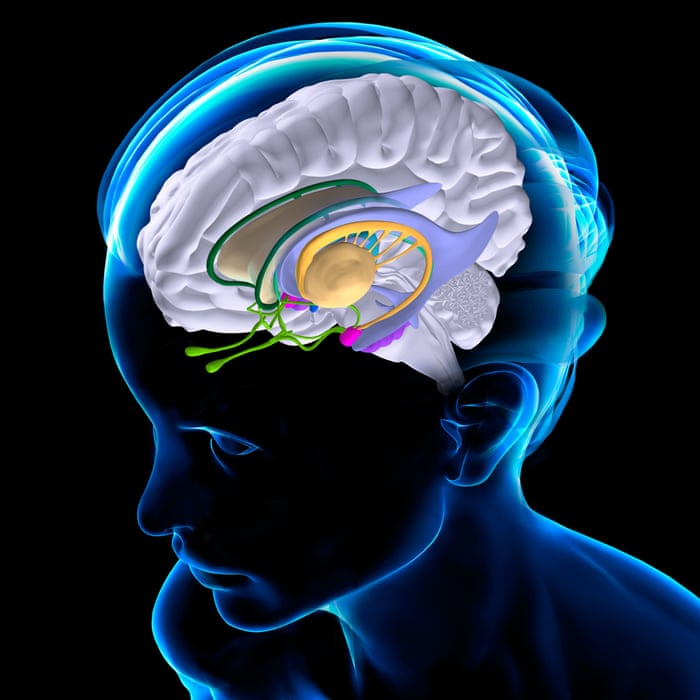
Remapping the neural circuitry, reprogramming the memory.
The technologies we use to find, store, and share information can literally reroute our neural pathways. Every information technology carries an intellectual ethic. We stopped listening to our senses and started obeying the clock.
What the sociologist Daniel Bell has called our “intellectual technologies”—the tools that extend our mental rather than our physical capacities—we inevitably begin to take on the qualities of those technologies.
The missing premise is quality: The ratio of high quality to low quality information is falling.
In Google’s world, the world we enter when we go online, there’s little place for the fuzziness of contemplation. Ambiguity is not an opening for insight but a bug to be fixed. The human brain is just an outdated computer that needs a faster processor and a bigger hard drive.
Last year, Page told a convention of scientists that Google is “really trying to build artificial intelligence and to do it on a large-scale.
Information is relentlessly pushed at us, and no matter how much we get we feel we need more, and of better quality and focus.
- Pushed information is information arriving in our work space over which we have little short-term control – the memos, letters, newspapers, email, telephone calls, journals, calendars etc. that land in one of our in boxes. To deal with it we have to make decisions. Is this garbage? Might it be useful? When? Where should I put it? Must I make a new file or new category for this?
- Pulled or retrievable information is information we can tap into when we want to find an answer to a question or acquire background knowledge on a topic. Most people harbor a lingering belief that even more relevant information lies outside, somewhere, and if found will save having to duplicate effort.
Our lives ought to get easier in information rich environments but the question is at what cost.
He who knows it not and can no longer wonder, no longer feel amazement is as good as dead.


Yet no search engine seems to return hits with sufficient precision to save us from having to browse dozens of useless pages in our effort to berry pick the best items. The result is that we spend more time searching
more people have mobile phones than have toilets. This has created an implicit expectation that you should be able to reach someone when it is convenient for you, regardless of whether it is convenient for them.
we need a new theoretical understanding of our activity space and our dynamic relation to our environments.Cognitive overload is a brute fact of modern life. It is not going to disappear. In almost every facet of our work life, and in more and more of our domestic life, the jobs we need to do and the activity spaces we have in which to perform those jobs are ecologies saturated with overload.
As technology increases the omnipresence of information, both of the pushed and pulled sort, the consequence for the workplace, so far, is that we are more overwhelmed. There is little reason to suppose this trend to change.
 bobdillon33blog