• About
  • THE BEADY EYE SAY’S : THE EUROPEAN UNION SHOULD THANK ENGLAND FOR ITS IN OR OUT REFERENDUM.

bobdillon33blog

~ Free Thinker.

bobdillon33blog

Author Archives: bobdillon33@gmail.com

THE BEADY EYE ASK’S A HYPOTHETICAL QUESTION: If you are asked to establish a new society what rules if any would you change?

08 Friday Sep 2023

Posted by bobdillon33@gmail.com in Uncategorized

≈ Comments Off on THE BEADY EYE ASK’S A HYPOTHETICAL QUESTION: If you are asked to establish a new society what rules if any would you change?

( Eighteen minute read)

This might be a far flung proposition, but as we watch democracy diminishing around the world, replaced with tyranny, driven by social media lies and profit seeking algorithms, combined with climate change, we presently, live in societies that range from completely dysfunctional to marginally functional.

We cannot just fight back, mitigate harms and regulate retrospectively.

We must build a vision for a more positive future, where technology is shaped and harnessed as a force for good.

Why?

Because by imagining the future we want to see, we stand a better chance of reaching it.

Because we are now living in fragile times. One tipping point in climate change could trigger all the rest or Vladimir Putin’s current war in Ukraine could end in nuclear annihilation.

——————

History has a way of sticking around, teaching us how far we’ve come and illustrating how human nature has both changed and managed to stay the same all at once, but the coming age of technology changes and climate changes is going to change how history is made.

Even in the most advanced of our societies, immense problems threaten to overwhelm the citizenry in the decades ahead.

We have to place as much importance on political, social, economic, demographic and environmental trends as technological ones.

Most notably, technological, climate change, because either of these two mega-forces will precipitate, if not effectively countered in the near term will plunge the planet into a global war.

————–

We need to learn how to think in order to survive, and that is what we should do, and to do that, to learn how to think.

While the COVID-19 pandemic has provided a difficult lesson in just how susceptible our world is today to human and economic turmoil, it has also – perhaps for the first time in history – necessitated global collaboration, data transparency and speed at the highest levels of government in order to minimize an immediate threat to human life.

We need to create a society that attempts to do so, in the experimental laboratory that is the earth.

Or we may not do so, fail to learn, and vanish:  Our choice.

———————

Apart from our bodies following some very strict and complex biological laws, without which we’d all be doomed, there has long been an appetite among some people for a less formalised society, a society without government, a world where individual freedom takes precedence.

Our thoughts, and the deeds that follow our thoughts, can make us greater than we have ever been, or they can destroy us utterly.

What is the ideal social and political structure for a modern society, if you had the ability to start from scratch?

Let’s take a look.

The trouble with anarchy, is that it is inherently unstable – humans continually, and spontaneously, generate new rules governing behaviour, communication and economic exchange, and they do so as rapidly as old rules are dismantled.

The same phenomenon of spontaneous rule construction when people had collectively to manage common resources such as common land, fisheries, or water for irrigation.

These rules aren’t just invented by rulers and imposed from the top down – instead, they often arise, unbidden, from the needs of mutually agreeable social and economic interactions.

Our relationship with rules does seem to be unique to humans hardwired into our DNA. In fact, our species’ ability to latch onto, and enforce, arbitrary rules is crucial to our success as a species.

One danger is that rules can develop their own momentum: And then there’s “rule-creep”:

Rules just keep being added and extended, so that our individual liberty is increasingly curtailed. Planning restrictions, safety regulations and risk assessments can seem to accumulate endlessly and may extend their reach far beyond any initial intention.

The biggest ways in which the world will change are not isolated technological advancements, but rather a paradigm shift resulting from the progression to an abundance-based, sustainable society that has been re-engineered from the ground up.

Individuals, and societies, face a continual battle over rules – and we must be cautious about their purpose.

Rules, like good policing, rely on our consent.

And those that don’t have our consent can become the instruments of tyranny. So perhaps the best advice is mostly to follow rules, but always to ask why.

—————-

What is the ideal social and political structure for a modern society, if you had the ability to start from scratch?

The first question you may ask yourself is, where do I even start, to create a new society.

What the purpose of your society will be, you’ll want to write your society’s constitution.

The society’s name, the structure of the society, the levels of membership and what each level means,

In a healthy society, money serves the economy and economy serves the people, so we need to make sure that what follows capitalism is human-centred and not oppressive.

Here is my blue print for present day.

  • Harness digital technologies to improve lives and reorient technology towards more social ends;
  • Empower citizens to take more control over their lives, and to use their collective knowledge and skills to positive effect;
  • Make government more accountable and transparent;
  • Foster and promote alternatives to the dominant technological and business models — alternatives which are open and collaborative rather than closed and competitive;
  • Use technology to create a more environmentally sustainable society.

 A future technological society run by AI.

No distinction between race or sex.

No Government, the AI organise everything.

No exchange, all goods and services FREELY ACCESSED by everyone.

No Classes, no one can subjugate another as a class, wealth structure would be abolished.

No nation states, all states will be geographical areas freely accessed by the peoples of the world.

No property ownership the materials (land, fuel, transport systems, factories, machinery, technology etc) freely accessible for people to satisfy their needs.

No wages, people can freely take form what they and society produces.

All financial institutions Banks, Building societies, Insurance, Assurance buildings, automatically turned over to the people and their use decided upon by the people, whether for accommodation or local amenities etc.

All decisions within society are made by the people whether local or global as we have the technology to inform all those it concerns and everyone is accountable to the AI Cloud.  Accordingly, people would be responsible for the outcome of their decisions.

(John Dalberg-Acton), so no matter the apparent knowledge, etc., there can be no ultimate trust, only verifiable trust. And for all to receive, all must contribute.

All leaders would have a limited term, say two years.

Who fills which role and their respective duties within the society will be decided amongst the four people chosen and approved by the AI cloud, which should be clearly defined in a new constitution.

AI only task would be to review the decisions made by the people and if it found a decision to be potentially harmful, to put that decision on hold for a period not exceeding one year. At the end of the set period, the people would vote again, and the second vote would be binding, not subject to any further appeal.

These would be a president, a vice president, a treasurer, and a secretary with social media accounts ratifying outline for how to make amendments to the constitution.

But “power corrupts, absolute power corrupts absolutely”

Accordingly, all who comprise a society, are of age, and not disqualified owing to acts they committed or illness that affects their comprehension, should be able to decide directly (i.e. by means of internet or similar connection) on the issues that may affect them, and to decide on the budget that would be required, and to approve of the managers that would supervise the implementation of those decisions (a different manager for each project, so as not to consolidate power in one person).

They would then allocate resources (funds, people) to present to the people all available information on the topic pertaining to the people’s decision.

Good decisions would benefit them. Bad decisions would tend to encourage them to become more informed about the topics that they decided, as well as to consider the possibly adverse outcomes of their decisions before they made such decisions.

Engineering biology, machine learning and the sharing economy would be establish a framework for decentralising the healthcare continuum, moving it from institutions to the individual.

“Je pense, donc je suis” (René Descartes) is indeed existential, because we think.

——————-

Technologies may one day offer us the opportunity to live healthily well beyond 100 years, enhance our intellectual and physical abilities and control our emotions. Technology may also enable us to become producers of our own products, track what we think and guide our decision-making.

The questions are as evolution continues, as it will there are many. 

How will we safeguard the instincts that help us survive?

How will hard-fought-for values such as tolerance, individuality and freedom of choice evolve?

Who will control the ecosystem of data and technology that influence our decisions and what accountability mechanisms will be available to us?

What would changes brought about by such emerging technologies really mean for the real ‘us’?

If in the future we can enhance ourselves “on demand”, it raises the question whether advancements to our capabilities are a means to an end or whether they are ends in and of themselves?

What will drive and motivate us if we can enhance ourselves and if choices are made for us?

Will we still feel needed and in what way?

If for the first time in our species’ history we can actively influence our evolutionary process, what will happen if not everyone has access to these technologies or if some decide to “opt out”?

Will the absence of failure in an “enhanced” society hold civilization back and will “unenhanced” humans thus be needed to ensure disruptive progress?

How will emerging technologies interact with the value systems of traditional religions?

If in the future technologies merge with the body, it could become almost impossible to disconnect from networks.

People themselves would then be part of the “internet of things”.

Will the benefits of technology such as remote medical care, for example, offset the cost in the loss of intimacy associated with personal care?

For which benefits are we prepared to give up control over our bodies and to whom?

What areas of our lives will we expect to remain private and will we continue to need private spaces?

In addition, we now can receive real-time feedback about what and who is best for us through tracking and matching tools, which tend to ignore the contradictory nature of the human mind.

Will our decisions come to be based mostly on our intuition, on data analytics, or on peers’ recommendations?

Will we have “thought-police”, reinforcing the power of a few, or will civil society use technologies to place extra checks on decision-makers?

Will we trust each other or, instead, trust what data might tell us about each other?

Finally a plan for what should happen to your assets if your society were to dissolve.

—————–

By 2025, quantum computing will have outgrown its infancy, and a first generation of commercial devices will be able tackle meaningful, real-world problems

.The roll-out of 5G creates markets that we only imagine – like self-driving bots, along with a mobility-as-a-service economy – and others we can’t imagine, enabling next generations to invent thriving markets and prosperous causes.

Technology that accelerates our ability to rapidly sample, digitalize and interpret microbiome data will transform our understanding of how pathogens spread but history will be our judge

So far despite the heroic resolve and resiliency on a country by country basis, as a world we have underperformed.

All human comments appreciated. All like clicks and abuse chucked in the bin.

Contact: bobdillon33@gmail.com
Share this:

  • Share on WhatsApp (Opens in new window) WhatsApp
  • More
  • Share on Mastodon (Opens in new window) Mastodon

THE BEADY EYE: TAKE’S A LOOK AT THE CURRENT STATE OF ENGLAND.

04 Monday Sep 2023

Posted by bobdillon33@gmail.com in Uncategorized

≈ Comments Off on THE BEADY EYE: TAKE’S A LOOK AT THE CURRENT STATE OF ENGLAND.

( Fifteen minute read)

This is a country lurching from one crisis to another, a country is crying out for hope. A country that no longer works.

We tend to think of the world’s most powerful nations as unshakable actors on the world stage, but of course they are not.

The grim reality for Britain as it faces up to 2024 is that no other major power on earth stands quite as close to its own dissolution.

Given its recent record, perhaps this should not be a surprise.

By leaving the European Union, achieving the rare feat of erecting an economic border with its largest trading partner and with a part of itself, Northern Ireland, while adding fuel to the fire of Scottish independence for good measure. And if this wasn’t enough, it then spectacularly failed in its response to the coronavirus pandemic, combining one of the worst death rates in the developed world with one of the worst economic recessions.

Reaping the rewards of the Maggie Thatcher years, the United Kingdom is being confronted with huge problems it can no longer wish away.

A victim of modern privatised capitalism’s, increasing fondness for stripping out, squeezing down, and chasing dividends, it has ignored the needs of its people for the sake of GDP.

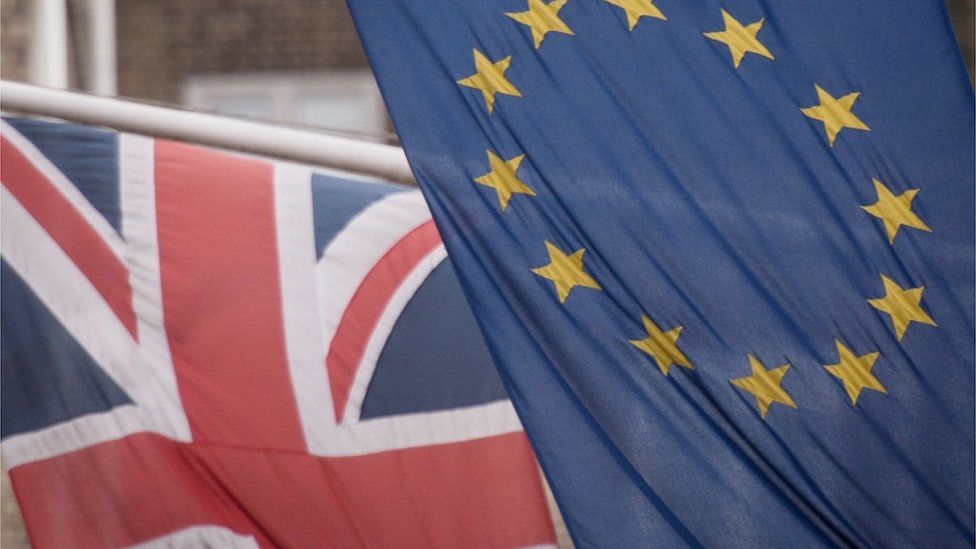
EU and Union flags

From the divisive 2016 Brexit referendum and the years long turmoil of leaving the E.U. (the world’s largest trading bloc – one that is seven times larger than the UK by population), England is now losing its wealth through a stupid gamble based on a pack of lies.

To the COVID-19 pandemic in which the U.K. suffered the worst per capita death toll in Western Europe it was then hit by multiple blows in the span of just a few months.

The downfall of Boris Johnson following a series of scandals that engulfed his government, on July 7; the death of the country’s longest-reigning monarch, Queen Elizabeth II, on Sept. 8; the crashing of the British pound two weeks later, after then Prime Minister Liz Truss unveiled a package of unfunded tax cuts for the superrich; and, finally, the collapse of yet another Conservative government on Oct. 20.

One only has to look, to see more and more appeals for help.  From charitable organisation, from the NHS, to RSPCA to the RNI, to Schools, to foodbanks, to see that it is plunging deeper into crisis by the day, with a government missing in action.

It is against this bleak backdrop that virtually everyone—from political analysts to pollsters and even most voters—expects that Starmer will become the U.K.’s 58th Prime Minister when the country holds its next general election by January 2025.

In the mean time Sunak (whose reported $837 million net worth makes him the richest-ever occupant of Downing Street) is Prime Minister without a peoples mandate.

Larry the cat walks outside 10 Downing Street on Liz Truss' last day in office as U.K. Prime Minister on Oct. 25, 2022. (Hannah McKay—Reuters)

As the U.K.’s latest leader, Rishi Sunak, emerged unelected by the people to replacement to Truss.

The fifth Prime Minister in just over six years.

A prime minister who has done more than any other person in Britain to enable division and stupidity, while life in the U.K. is becoming less hopeful, more expensive, and, increasingly, shorter.

Rishi Sunak was asked what “levelling up” actually means, he simply laughed. Starmer, British Prime Minister Rishi Sunak, former Prime Ministers Boris Johnson and Theresa May attend the Remembrance Sunday ceremon in London on Nov. 13, 2022. (Toby Melville—Pool/Reuters)

There is an obvious conclusion to be drawn.

There is something much deeper wrong.

It is the country itself that is now creeping out shamefacedly from its empire/ industrialist days into the light, wondering what, exactly, is wrong with it.

At the heart of Britain’s crisis is a crisis of identity. Put simply, no other major power is quite as conflicted about whether it is even a nation to begin with, let alone what it takes to act like one.

With the passing of the Soviet Union and Yugoslavia, it is now one of the rare states in the Western world whose name is not simply the nation it represents: The United Kingdom is more than Britain and the British. Some of its citizens believe themselves to be British, while others say they are not British at all.

For many, the root of Britain’s existential crisis today is Brexit—an apparent spasm of English nationalism that has broken the social contract holding Britain’s union of nations together, revealing the country’s true nature as an unequal union, of the English, by the English, for the English.

Although Brexit was carried by a majority of the U.K. as a whole, it was opposed by two of its constituent parts, Scotland and Northern Ireland. It was the votes of England, its dominant nation, that carried the day.

Yet the truth is that the Englishness of Brexit only matters if people see themselves as something other than British.

The great British bake off, run badly, staffed by people who don’t care enough.

It has grown lazy and complacent, unable to act with speed and purpose.

The state had stopped paying attention to the basics of government, whether that was the development of its economy, the protection of its borders, or the defence of the realm.

Instead, it had become guilty of a failed elite groupthink that had allowed separatism to flourish, wealth to concentrate in London and its surrounding areas, and the political elite to ignore the public mood.

In its scramble to survive, it forgot who it was, now destine to break up into its old component parts.

The U.K., is currently projected to be the G-7’s worst economic performer this year, is on track to become poorer than post-Communist Poland by the end of the decade.

Inflation, which reached a 41-year high in October, has barely eased. The worst cost-of-living crisis in a generation has led to crippling labour strikes, prompting hundreds of thousands of workers—among them doctors, nurses, train drivers, and teachers—to walk out in demand of better pay in the past year.

The cost of living crisis didn’t suddenly materialise in 2022. The living crisis is nothing new for millions of people who have lived in fear of hunger and homelessness for 12 years.

From 2010, a decade of austerity saw £37bn slashed from the welfare system. Food banks became a shameful fact of life. Wages have continued to stagnate and access to stable, even halfway affordable housing has become increasingly chimerical.

The most up-to-date figures show that 13 million people were living in relative poverty in 2020-21, with another seven million living in a state of perpetual “financial fear” At least 320,000 people are currently homeless in the UK.

As everyday costs continue to detach from reality, pressure has ratcheted up to new extremes.

Even the proposed solutions have their own built-in traps and inadequacies. It might mean being forced into predatory loans to make increasingly frayed ends meet, or living in a home with a more costly pre-payment energy meter. It might mean a lack of access to stable credit, or even a bank account.

If budgeting was torturous before, then it is becoming borderline impossible in the current climate. This is doubly true for those with existing debts with hidden tax costing some of the poorest people an estimated additional £430 a year.

How are you supposed to plan against the future when ends never quite seem to meet?

What is happing?

For example. Under Starmer, Labour’s policies for nationalizing public utilities have been side-lined by pledges to deliver the highest sustained economic growth in the G-7.

Decades of underinvestment have taken their toll on the UK. Major infrastructure projects, from broadband to sewers, were put on hold, leading to massive issues nationwide.

————-

The UK has endured a “lost decade” of productivity.

The UK is home to an ageing population. According to the latest statistics from Age UK, there are now nearly 12 million people aged over 65 in Britain.

What is certain is that it need to channel the surplus of money more effectively towards sustainable asset classes that deliver both economic and social returns, and to correct decades of underinvestment.

Its politicians, its business and banking leaders need to collaboratively join the dots.

Against this background what we see are two worthless new aircraft carriers, a highspeed railway costing trillions, as the government prepares to finalise a £24.5bn deal to build Hinkley C, the country’s first new nuclear plant for a generation. (A fifth more expensive than in France, a third more than the US and more than twice the projected costs in China or Korea.) Despite this, nuclear power continues to form a key plank of the UK government’s “portfolio” approach to decarbonisation.

It’s hardly news that life in the UK is becoming untenable.

As the days grow darker, so too does the mood in the UK as it head’s into yet another punishing winter.

Most people in the UK will see their quality of life deteriorate in the short term.

———

Benefit spending is constantly in the news but how much do we really know about where the benefits money goes in the UK?

£159bn was spent on benefits – an increase of 1.1% on the previous year. That is 23% of all public spending. With 20.3 million families receiving some kind of benefit (64% of all families), about 8.7 million of them pensioners. For 9.6 million families, benefits make up more than half of their income (30% of all families), around 5.3 million of them pensioners.

The UK is home to an ageing population. According to the latest statistics from Age UK, there are now nearly 12 million people aged over 65 in Britain[

The NHS started in 1948 and now employs over 1.5 million people. This makes it the biggest employer in the UK, in Europe, and 5th biggest in the World.

The wage bill for the NHS makes up a substantial proportion of its budget. In 2021/22, the total cost of NHS staff was £66.2 billion which amounted to 45.2 per cent of the NHS budget.

  • Day-to-day spending on the NHS will rise by 3.8% between 2021/22 and 2024/25, reaching a total of £166bn (in today’s prices) by 2024/25. The capital budget to cover NHS infrastructure costs will reach £10.5bn in 2024/25 (in today’s prices), in line with the REAL Centre’s projection of what is needed over this period. With a population of 67 million, that is about £2700 each.
  • So here is a few radical suggestion.   
  • England the country – not the football team – it needs to take a look at itself.
  • Scrap first past to post voting. Replace it Proportional Representation to reflect its multi cultural population.  In doing so place the Monarchy on a historical footing paying for its self from its own wealth. This requires a written constitution.
  • The central problem is this:
  • With a separate Scottish Parliament, Scottish voters can elect lawmakers to the British Parliament in Westminster, whose votes decide policies that only apply in England. English voters, meanwhile, have no say over policies decided by the Scottish Parliament in Edinburgh, even though the money used to pay for these policies is raised by the British government. This structural problem has no solution, either, because to create an English parliament on a similar footing to the Scottish one would mean that the most important person in the country would no longer be the British prime minister, but whoever ran the new English assembly.
  • Scrap the Benefit Society and charge a fees for hospital attendance while Introducing a Universal basic income for £1,600 a month for all those with citizenship earning less than living wage.
    With such an income they are no longer entitled to benefits, must look after their own health and education. A UBI would directly alleviate poverty and boost millions of people’s wellbeing: the potential benefits are just too large to ignore.
    No one should ever be facing poverty, having to choose between heating and eating.
    Some serious consideration of reform is vital to how millions of National Lottery and public money is spent on sport which should be funded by income of Football worth trillions.
    This is the time to be talking about constitutional change in order to use money and investment as a force for good not profit. Integrate the action of individual agents, such as businesses, industries, banks and hedge funds, from the ground up because with technology these systems are suddenly become wildly unpredictable, exhibiting extreme fluctuations.
    It all points to governments worldwide and how they have bought into the idea that economic growth can be perpetuated for ever. But that isn’t strictly realistic without action.
    For instance:
    The green energy transition will affect every aspect of life. Armed Forces often have a strong influence on governments across the world and therefore if they act, governments are more likely to act. British military activity are responsible for approximately 50% of all UK government emissions, it plays a fundamental role in helping the country reach net zero by 2050 at the latest. Climate change is important, but the time scales being talked about (2050, or even 2030) are seen as distant – important, but not urgent when urgent is something faced today, tomorrow. The solution is to make the important urgent, and this is beginning to happen.
    ————

    England is so deep in places that its secrets remain hidden. 

    Does the future of the United Kingdom—a political entity only 100 years old—really matter?

    After all, the state that exists today is the product of Irish secession in 1921.

    One of the problems in Britain is that the loss of faith in the country is now so pervasive that it is hard to know whether it can be rebuilt.

    The union is not only being questioned by Welsh, Irish, and Scottish nationalists, but also, now, by the once-unionist middle classes in England for whom Brexit has broken a bit of the faith they had in Britain. Some simply no longer believe it’s worth saving.

    The Republic of Ireland in recent years must also acknowledge the uncomfortable challenge it presents to British unionism.

    And this is not just because it too is wealthy and settled, but because, in the imaginative sense, it knows who it is. Its national myths and stories might be just as bogus as any other country’s, but it believes them and promotes them through symbols and ceremonies. It is, in effect, a deeply conservative state that promotes a cohesive nationalism in a way the British state simply does not.

    For Ireland, this success carries its own challenge as it seeks to subsume Northern Ireland and its million-strong British Protestant population, who do not share these national stories.

    Look after the people first and GDP growth will follow.

    It seems to me that if Britain is to survive, it has to believe that there is such a thing as Britain and act as though that is the case.

    At root, Brexit was an assertion of nation—the British nation—but one mostly made by the English.

    Here in lies its essential paradox. It is a revolution that has the potential to accelerate the breakup of the nation by revealing its Englishness, but also one that carries within it the potential to slowly rebuild a sense of Britishness by creating a new national distinctiveness from the other: Europe.

    Outside the European Union, Britain’s collective experience becomes more national by definition.

    It is for this reason that Brexit makes Scottish independence more likely in the short term, but more complicated in the long term, because it would mean imposing a hard border across the island of Britain that would not have been necessary had the U.K. remained in the EU.

    In time, Brexit might prove to be the thing that finally breaks the union, or a shock that started the long, painful rebuilding process.

    The United Kingdom of Great Britain and Northern Ireland remains an unusual country, but its vital memories are dying.

    To survive, it must be more than empty pomp.

    All human comments appreciated. All like clicks and abuse chucked in the bin.

    Contact: bobdillon33@gmail.com

Share this:

  • Share on WhatsApp (Opens in new window) WhatsApp
  • More
  • Share on Mastodon (Opens in new window) Mastodon

THE BEADY EYE SAY’S. ARE WE HANDING OVER HUGE SECTIONS OF OUR SOCIETIES TO BLACK-BOX ALGORITHEMS?

02 Saturday Sep 2023

Posted by bobdillon33@gmail.com in Uncategorized

≈ Comments Off on THE BEADY EYE SAY’S. ARE WE HANDING OVER HUGE SECTIONS OF OUR SOCIETIES TO BLACK-BOX ALGORITHEMS?

Tags

Artificial Intelligence., digital surveillance., The Future of Mankind

( Five minute read)

Yes is the answer.

Right now, the state of the safety field is far behind the soaring investment in making AI systems more powerful, more capable, and more dangerous.

Using artificial intelligence (AI) technology to replace human decision-making will inevitably create new risks whose consequences are unforeseeable.

The more you put in, the more you get out.

That’s what drives the breathless energy that pervades so much of AI right now.

Consequences of these capabilities and systems–both intended and unintended–are significant, and growth in sensing technology will have far-reaching implications for our social norms and systems.

Data gathering is not inherently negative, it’s a matter of how transparent companies are in gathering information and the choices they make about how the data is used.

Because of the growing ubiquity of algorithms in society which are raising a number of fundamental questions concerning governance of data, transparency of algorithms, legal and ethical frameworks for automated algorithmic decision-making and the societal impacts of algorithmic automation itself we are now in a rush to regulate ( in ignorance) of their impact, which current law and regulation cannot deal with adequately.

However AI technology can provide sufficient transparency in explaining how AI decisions are made.

Transparency ex post can often be achieved through retrospective analysis of the technology’s operations, and will be sufficient if the main goal is to compensate victims of incorrect decisions.

Ex ante transparency is more challenging, and can limit the use of some AI technologies such as neural networks. It should only be demanded by regulation where the AI presents risks to fundamental rights, or where society needs reassuring that the technology can safely be used.

One thing we’re definitely not doing:

Understanding them better, and as we develop more powerful systems, that fact will go from an academic puzzle to a huge, existential question. If anything, as the systems get bigger, interpretability — the work of understanding what’s going on inside AI models, and making sure they’re pursuing our goals rather than their own — gets harder.


We’re now at the point where powerful AI systems can be genuinely scary to interact with.

Ai poses some wider concerns including data monopolies, the challenge to democracy, public participation and maintaining the public interest. Given the speed of development in the field, it’s long past time to move beyond a reactive mode, one where we only address AI’s downsides once they’re clear and present.

There is enormous opportunity for positive social impact from the rise of algorithms and machine learning. But this requires a licence to operate from the public, based on trustworthiness.

The very concept of fairness as an ethical value has not yet been sufficiently explored. Any regulations should ensure that systems adhering to them, are safe beyond a reasonable doubt. However, there is currently no specific regulation on AI and algorithmic decision-making in place.

Decisions concerning AI at a societal level should not be in the hands of “unelected tech leaders”.

We can’t only think about today’s systems, but where the entire enterprise is headed.

Most AI systems to day are black box models, which are systems that are viewed only in terms of their inputs and outputs. Scientists do not attempt to decipher the “black box,” or the opaque processes that the system undertakes, as long as they receive the outputs they are looking for.

With a Quantum self learning systems it would be possible to build brains that could reproduce themselves on an assembly line and which would be conscious of their existence.

———————–

This particular mad science might kill us all.

Here’s why.

At present this Ai — called deep learning — started significantly outperforming other approaches to computer vision, language, translation, prediction, generation, and countless other issues.

The shift is about as subtle as the asteroid that wiped out the dinosaurs, as neural network-based AI systems that smashed every other competing technique on everything from computer vision to translation to chess.

No one has yet discovered the limits of this principle, even though major tech companies now regularly do eye-popping multimillion-dollar training runs for their systems.

It’s not simply what they can do, but where they’re going.

With deep learning, improving systems doesn’t necessarily involve or require understanding what they’re doing. Often, a small tweak will improve performance substantially, but the engineers designing the systems don’t know why.

Intelligent agency is an extremely powerful force, and creating agents much more intelligent than us is playing with fire — especially given that if their objectives are problematic, such agents would plausibly have instrumental incentives to seek power over humans. We can’t pinpoint the exact reasons for our preferences, emotions, and desires at any given moment.

Current language models remain limited.

They lack “common sense” in many domains, still make basic mistakes about the world a child wouldn’t make, and will assert false things unhesitatingly. But the fact that they’re limited at the moment is no reason to be reassured.

As hard as that will likely prove, getting AI systems to behave themselves outwardly may be much easier than getting them to actually pursue our goals and not lie to us about their capabilities and intentions.

What makes it different from other powerful, emerging technologies like biotechnology, which could trigger terrible pandemics, or nuclear weapons, which could destroy the world?

The difference is that these tools, as destructive as they can be, are largely within our control.

If they cause catastrophe, it will be because we deliberately chose to use them, or failed to prevent their misuse by malign or careless human beings.

But AI is dangerous precisely because the day could come when it is no longer in our control at all. The result will be highly-capable, non-human agents actively working to gain and maintain power over their environment —agents in an adversarial relationship with humans who don’t want them to succeed.

Let us now assume, for the sake of argument, that these machines are a genuine possibility, and look at the consequences of constructing them. … There would be plenty to do in trying, say, to keep one’s intelligence up to the standard set by the machines, for it seems probable that once the machine thinking method had started, it would not take long to outstrip our feeble powers. … At some stage therefore we should have to expect the machines to take control.

So a powerful AI system that is trying to do something, while having goals that aren’t precisely the goals we intended it to have, may do that something in a manner that is unfathomably destructive. This is not because it hates humans and wants us to die, but because it didn’t care and was willing to, say, poison the entire atmosphere, or unleash a plague, if that happened to be the best way to do the things it was trying to do.

But while divides remain over what to expect from AI — and even many leading experts are highly uncertain — there’s a growing consensus that things could go really, really badly.

It’s worth pausing on that for a moment.

Nearly half of the smartest people working on AI believe there is a 1 in 10 chance or greater that their life’s work could end up contributing to the annihilation of humanity.

It’s not legal for a tech company to build a nuclear weapon on its own. But private companies are building systems that they themselves acknowledge will likely become much more dangerous than nuclear weapons.

For me, the moment of realization — that this is something different, this is unlike emerging technologies we’ve seen before — came from talking with GPT-3, telling it to answer the questions as an extremely intelligent and thoughtful person, and watching its responses immediately improve in quality.

Round table on Artificial Intelligence, in San Francisco

The challenges are here, and it’s just not clear if we’ll solve them in time.

One only has to look at the above photo.  A “wake-up call”

Speed is really important here.

“I don’t think ever in the history of human endeavour has there been as fundamental potential technological change as is presented by artificial intelligence,” Biden said at a news conference earlier this month. “It is staggering. It is staggering.”  He does a lot of that.

If one acts too slowly, we are going to be behind by the time to take action, and any actions are going to be leapfrogged by the technology.

“My administration is committed to safeguarding Americans’ rights and safety while protecting privacy, to addressing bias and misinformation, to making sure AI systems are safe before they are released,”

This is Hog wash.

If government’s don’t step in, who will fill their place?   Ai of course.Picture of Hikvision cameras in a shopping centre in Beijing on May 24, 2019

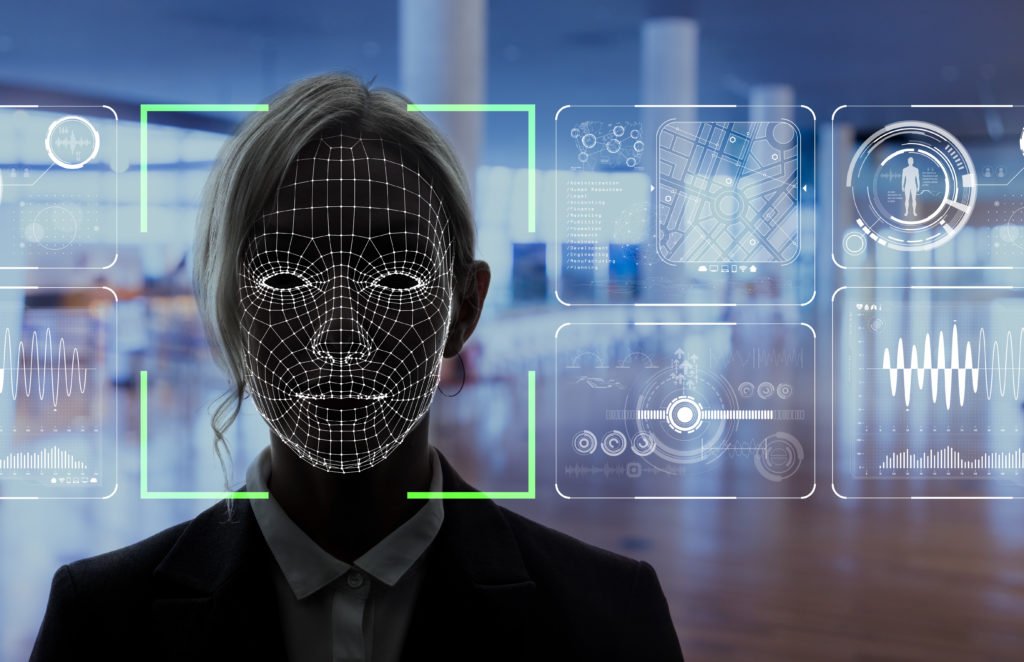
Even if these narrower issues are solved, all political contexts run the risk of unlawfully exploiting AI surveillance technology to obtain certain political objectives.A man walking past a screen showing images of China's President Xi Jinping in Kashgar in China's northwest Xinjiang region

All countries with a population of at least 250,000 are using some form of AI surveillance systems to monitor their citizens. “Some autocratic governments – for example, China, Russia, Saudi Arabia – are exploiting AI technology for mass surveillance purposes.

One way of looking at the issue is not simply to focus on the surveillance technology, but “the export of authoritarianism.

One way to try to ensure continued political survival is to look to technology to enact repressive policies, and suppress the population from expressing things that would challenge a state.

AI will be the key to military superiority, investing in AI is a way to ensure and maintain dominance and power in the future.

There are plenty of problems with surveillance, but it may also be a fact of life going forward—and something people will need to get used to. Within a world where your data is everywhere, devices listen to your words, cameras monitor your face and GPS systems know your whereabouts, ubiquitous organizational tracking may be inevitable.

But like so many things, it’s not the what, it’s the how.

If tracking is occurring as a gotcha strategy—in which the goal is to catch people misbehaving or punish them—the relationships with employees and the culture will pay steep prices.

Ultimately, we need to do what’s right—not just what’s possible—by using our values as a guide, the use of technologies.

All human comments appreciated. All like clicks and abuse chucked in the bin.

Contact : bobdillon33@gmail.com

Share this:

  • Share on WhatsApp (Opens in new window) WhatsApp
  • More
  • Share on Mastodon (Opens in new window) Mastodon

THE BEADY EYE ASK’S: WHERE ARE WE WITH GENETIC ENGINEERING?

30 Wednesday Aug 2023

Posted by bobdillon33@gmail.com in Uncategorized

≈ Comments Off on THE BEADY EYE ASK’S: WHERE ARE WE WITH GENETIC ENGINEERING?

Tags

Genetic engineering, The Future of Mankind

( Seven minute read)

Genetic engineering is the act of modifying the genetic makeup of an organism, it can inevitably make us become the first species in history to direct its own evolution.

However there is always a but. Ignoring our ongoing evolution while pursuing gene editing would be incredibly reckless.

Like any evolutionary trait, this new ability may help our species to thrive—and perhaps even produce successor species. Or it may not. It could be one of those evolutionary traits that leads a species down a path that endangers its survival.

Evolution is fickle that way.

In other words, though genetic engineering is a very advanced technology for now, we are going to face a lot of questions not only just the confusion of our evolution.  Such as if we tend to edit our gene over and over, the edit gene will be more and more common over generations, but at that time, are we still human beings or a new kind of species?


So where are?

After millions of centuries during which evolution happened “naturally,” humans now can hack the code of life and engineer our own genetic futures. Or, for those who decry gene editing as “playing God,” let’s put it this way:

Nature and nature’s God, in their wisdom, have evolved a species that can modify its own genome.

We will keep evolving one way or the other, but with genetic engineering of humans already under way, we must also consider our evolutionary future. Ignoring our ongoing evolution while pursuing gene editing would be incredibly reckless. On the other hand, genetic engineering can indeed help human to solve a lot of questions.

Before we embark on the most significant alteration to the natural evolution of life, let’s be sure we understand what we’re dealing with.

evolutionjpg

We still know very little about exactly how it works.

We are just starting to understand how the human microbiome — the billions of bacteria and other microorganisms that live in and on our bodies — influence our evolution.

China has already treated at least 86 patients using a new technique called CRISPR gene editing to treat human diseases like certain forms of cancer.  So far, these approaches only affect the genes of the patient receiving the treatment, but the next logical step will be to edit genes in human embryos. This would be a permanent cure, since the edited genes would be passed on to subsequent generations.

If we are no longer subject to a natural lottery of endowments, will it weaken our feelings of empathy and acceptance?

If we are wise in how we use it, biotechnology can make us more able to fend off lethal viruses and overcome serious genetic defects.

Should humans actually alter their genetic code to introduce preferential attributes? Should parents be allowed to dictate what their children look like? And, perhaps most pressing of all, should we be altering our own evolutionary path in this extreme way?  (Selective breeding is not considered a form of genetic engineering.)

If the marvellous enhancements offered at the genetic supermarket aren’t free (and they won’t be), will that greatly increase inequality—and even encode it permanently in the human race?

What might CRISPR do to the diversity of our species?

Cultural and evolutionary forces can act in opposition to one another. In other words, the population is evolving.

David Attenborough remarked that “we are the only species to have out a halt to our own evolution.

Modifications can be generated by methods such as gene targeting, nuclear transplantation, transfection of synthetic chromosomes or viral insertion.

Genetic modification/engineering of plants still in a test stage.

The technology is still relatively new, and it may take several years before new varieties of pest resistance plants are on sale.

Is this true?  No.  GM crops have been consumed by billions of consumers in North and South America and Asia for more than 25 years with no ill-effects.

Current genetically engineered crops include those that are resistant to insect attack or are herbicide resistant.

In Japan, you can already buy tomatoes rich in a chemical called GABA, which has a calming effect, and modified sea bream where more of the flesh is suitable for sushi. A US firm is developing seedless blackberries and stone less cherries, gene-edited wheat. Sheep and goats have been genetically engineered to produce chemicals in their milk that can be used to treat disease.

Scientists have recently added a gene to bananas.

We have cultured meat, produced in bioreactors without the slaughter of an animal, has been approved for sale by a regulatory authority for the first time.

What does the future of genetically modified crops hold?

There is no magic fix to climate change and no sure-fire way to make agriculture more sustainable, but climate change will and is transforming how we feed ourselves.

New legislation has also opens the door to the sale of meat, eggs and dairy from gene-edited animals. The new rules do not require GE foods to be labelled as such.

—————

Genetic engineering of stem cells.

Stem cell potential to use in cancer therapy and regenerative medicine are endowed with genetic circuits have the potential to transform basic science and medicine.

Significant efforts are currently underway to program stem cells with genetic circuits to push their differentiation into desired lineages. It is suggest that synthetic biologists can program stem cells with artificial decision-making abilities that can be used to direct stem cell fate into desired lineages. While some principles of genetic engineering remain steadfast, others change as technologies are ever-evolving and continue to revolutionize research in many fields. The next generation of innovators in the field of genomics and data sciences will be using Biobank data leading to patients.

Stem cells play an important role in the development and regeneration of human tissues.

The ultimate goal of the cell engineering strategy is to industrialize and form real cell products that can be marketed.

  • Transfer of the selected gene into other species. GM crops might breed with wild relatives of the crop plants.
  • Pollen produced by the plants could be toxic and harm insects that transfer it between plants.
  • GM crops could cause allergic reactions in people.
  • Crop growers cannot collect seed from their plants and sow them, because they are different genetically – they must buy new seeds every year – so people in developing countries may not be able to afford them.
  • The plants produce toxins, which would kill insects eating the crop.

Just like technology the world of GM is more or less non regulated.

In the end perhaps we will be eating ourselves and passing this data to a conscious robot.

All human comments appreciated. All like clicks and abuse chucked in the bin.

Contact: bobdillon33@gmail.com

Share this:

  • Share on WhatsApp (Opens in new window) WhatsApp
  • More
  • Share on Mastodon (Opens in new window) Mastodon

THE BEADY EYE SAY’S WE ARE TURNING INTO FOOLS WHEN IT COMES TO CLIMATE CHANGE, NOT TO MENTION TECHNOLOGY AND GENETIC ENGINEERING

29 Tuesday Aug 2023

Posted by bobdillon33@gmail.com in 2023 the year of disconnection., Climate Change., HUMAN ABILITIES., Human Collective Stupidity., Human Exploration., HUMAN INTELLIGENCE, Human values., Humanity., IS DATA DESTORYING THE WORLD?, Technologically Enabled Genetics., Technology, Technology v Humanity, Telling the truth., The common good., The essence of our humanity., THE NEW NORM., The pursuit of profit., The state of the World., THE WORLD YOU LIVE IN., THIS IS THE STATE OF THE WORLD.  

≈ Comments Off on THE BEADY EYE SAY’S WE ARE TURNING INTO FOOLS WHEN IT COMES TO CLIMATE CHANGE, NOT TO MENTION TECHNOLOGY AND GENETIC ENGINEERING

Tags

Algorithms., Capitalism and Greed, Capitalism vs. the Climate., Climate change, Distribution of wealth, Inequility, Technology, The Future of Mankind, Visions of the future.

( Five minute read) 

Like me today, many of us are being constantly bombarded by facts, figures and narratives that tell us our days on earth are numbered, that it’s our fault and that it’s also largely out of our control.

Our problem is that capitalism is designed to squeeze every last cent out of this planet until there is nothing left. We can either fool ourselves about that until it kills us, or we can change it.

Like many horror stories, this one features a main character full of futile determination to maintain a sense of normalcy even as the ominous signs of doom become ever more impossible to ignore.

We can chuckle knowing that the monster is going to come for our designated protectors.

We stop chuckling knowing that it’s coming for all of us next.

Homo sapiens rose above the lesser animals thanks to our ability to wield logic and reason, yet we have somehow gotten ourselves to a place where the knowledge of what is driving all these wildfires and floods is not enough to enable us to do anything meaningful to stop it.

As overwhelming and omnipresent as the climate crisis is, it is not the core issue.

The core issue is capitalism.

Capitalism’s unfettered pursuit of economic growth is what caused climate change, and capitalism’s inability to reckon with externalities – the economic term for a cost that falls onto third parties – is what is preventing us from solving climate change.

It is easy to imagine that a real live existential threat to our way of life would prompt any society to assume war footing and marshal everything it has to fight for survival. Unfortunately, this response only takes hold in actual war situations, where the threat is “other people that we can shoot and kill in glorious fashion”.

When the threat comes not from enemy people, but from our own nature, we find it much harder to rise to the occasion.

Where is the glory in recognizing the folly of our own greed and profligacy? Leaders are not elected on such things. We want leaders who will give us more, leading us ever onwards, upwards and into the grave.

The G20 is a perfect model of our collective failure to build institutions capable of coping with deep, long-term, existential problems that cannot be solved by building more weapons.

On the one hand, the head of the United Nations says that there is no way for the world to meet its 1.5C warming goal without the leadership of the G20 that claims to be bailing out humanity’s sinking ship with one hand while contributing billons of tons of carbon to the atmosphere by subsidising in the past five years $3.3tn to fossil fuel production and consumption.

—————–

It is not good to be too pessimistic on climate change, because we must maintain the belief that we can win this battle if we are to have any hope at all. That said, it sure does seem like we’re screwed.

We’re being led to believe that the society we’ve built has to ‘collapse’ if we’re to save the world.

We’re presented with a binary choice — save the planet and live a miserable existence, or accept that some populations (plant, animal, human) will have to act as collateral damage to ensure a quality of life that vaguely resembles our current one.

This whole thing of it being ‘a trade-off’ or ‘tough choices’ is based on our current lifestyle being awesome and the future being a kind of worthy ascetic hardship.

The message is that all the things you rely on to keep us safe are no longer part of a viable future fit for everyone. The sense is that when these things disappear, life will be unbearable. That we’re going to turn on each other

.It’s almost like our lives are being engineered this way.

Cuts to benefits, dismantling of free healthcare, with Government openly allowing the majority of wealth to be passed on to those who are already most wealthy.

—————-

We haven’t got a hope of addressing complex problems or creating a future fit for everyone.

Given the challenge we’re facing — one that’s complex, systemic and long-term, if we carry on acting from this place we’re going to really screw it up.

Climate change and the destruction of our ecosystems seem to be the result of persistent, rampant over-consumption. This is because our modern society is a consumer society.

It’s based on one simple idea: that consuming will meet your needs.

Others things we think are harmless serve to numb us: Netflix boxsets, smartphones, profit seeking algorithms, masquerade as the answer, but they are really just part of the same system — insurance policies, private healthcare and the multi-billion dollar ‘wellness’ industry.

New industries pop up to give us what we want without the guilt — sustainably sourced, vegan, fair-trade — but even aside from the minefield that is working out whether it’s really ‘sustainable’, it’s still built on the same system. A system built on a disconnection from your needs, that can never leave you satisfied with who you are and the world around you.

None of these things can or will ever meet our unmet needs for love, connection or trust in the world, so we continue consuming, throwing more things into the bottomless pit inside.

We seem to be more unhappy than ever before. More physically and mentally ill. More divided than ever. More stressed about our impact on the world.

Social media is a form of disconnection from ourselves that leads to the disconnection from each other that in turn leads to disconnection from our environment — which is the only thing that has enabled us to create the extractive, destructive system we have in place.

Given all this, ‘conscious consumerism’ and ‘green new deals’ will never offer the solution we need, if they are built on the fundamental idea of citizen is as consumer, working to earn, earning to spend, spending to consume etc.

I think the fundamental answer lies instead in rebuilding our lives around connection.

Recognise that if you would love other people to live in a certain way or see the world from a different perspective, this is only going to happen if others sense you’re not judging them to be wrong.

People are slowly but steadily finding that their real needs are met more consistently in self-awareness and relationship than they are in quick fix consumption.

We can’t all join a five-day protest and we’re not all ready to sit in a circle and talk about our feelings but that’s not what’s being asked of us.

Indeed, climate change itself is the ultimate negative externality: fossil-fuel companies and assorted polluting corporations and their investors get all the benefits, and the rest of the world pays the price.

Now the entire globe finds itself trapped in the gruesome logic of capitalism, where it is perfectly rational for the rich to continue doing something that is destroying the earth, as long as the profits they reap will allow them to insulate themselves from the consequences.

The path we are on, still, is not one that leads to a happy ending.

Rather, it is one that leads to the last billionaire standing on dry land blasting off in his private rocket as the rest of us drown in rising seas.

We talk about tipping points when it comes to the climate, but the real tipping point has long passed.

Its called inequality.

A strict definition of capitalism is a society where capital is privately owned, and workers are paid wages by private firms. Essentially it is a society with minimal government intervention and resources are distributed according to the outcome of free markets.

A looser definition of capitalism is a situation where business is left to the free market, but the government intervene in many areas of the economy like business regulation, health care and education.

In practice, using this definition of capitalism – most modern economies are essentially capitalist because it is the free market that dominates in the production and distribution of scarce resources.

Therefore, you can say the potential of reward makes inequality an essential ingredient of capitalism.

Therefore, capitalists with access to private property can ‘exploit’ their monopoly power to make a much higher profit than other people in society. Therefore those who inherit capital can enjoy high income even without any effort.

To redress some of the inequalities of capitalist society.

Regulate monopoly power, provide free education, so everyone has access to education and equality of opportunity.

  • Capitalism is unconcerned about equity. It is argued that inequality is essential to encourage innovation and economic development.
  • Socialism is concerned with redistributing resources from the rich to the poor. This is to ensure everyone has both equal opportunities and in some forms of socialism – equal outcomes.

Aspects of Democratic socialism

  • Advocates nationalisation of key industries (often the natural monopolies, like electricity, water)
  • Prices set by the market mechanism, except public goods, such as health and education.
  • Provision of a welfare state to provide income redistribution
  • Support for trade unions in wage bargaining
  • Use of minimum wages and universal income to raise low-income wages
  • Progressive tax and provision of public services. For example, marginal income tax rates of 70%. Tax on wealth.

There is no reason that Democratic socialism can not operate in a Capital society that is disappearing into the world of Profit seeking algorithms. 

For anyone still unsure that big, important things are now broken, several new titles paint a convincing portrait of grossly unsustainable inequality, corrupt political processes, and a looming crisis—much of it stemming from a financial system that for 40 years or so has prioritized short-term profit over all else and systematically removed any checks on its own worst impulses in pursuit of that goal. 

The single most important step is re-empowering governments, to start putting out the inferno.

All Human comments appreciated. All like clicks and abuse chucked in the bin.

Contact: bobdilllon33@gmail.com   

Share this:

  • Share on WhatsApp (Opens in new window) WhatsApp
  • More
  • Share on Mastodon (Opens in new window) Mastodon

THE BEADY EYE ASKS. IS IT NOT TIME FOR THE SPORTING WORLD INDUSTRY TO CONTRIBUTE MORE THAN JUST WINNING TO REDUCE ITS CARBON FOOTPRINT?

26 Saturday Aug 2023

Posted by bobdillon33@gmail.com in Sport

≈ Comments Off on THE BEADY EYE ASKS. IS IT NOT TIME FOR THE SPORTING WORLD INDUSTRY TO CONTRIBUTE MORE THAN JUST WINNING TO REDUCE ITS CARBON FOOTPRINT?

( Five minute read)

Sport has being contributing to society for centuries and most of us love it either to participate or watch.

These days In total sport financial is worth.

Soccer – $50 Billion NFL – American Football – $17 Billion, MLB – Baseball – $10.7 Billion, NBA – Basketball – $8 Billion, NHL – Hockey – $3 Billion, MMA – Mixed Martial Arts – $1.5 Billion, Formula 1/NASCAR – $1.4 Billion, Boxing – $1 Billion, Tennis – $700 Million, Motocross – $300 Million, Golf $84 billion, Athletics $ 3 billion. Sailing around $ 22 billion, The Olympics are a multi-billion-dollar behemoth. It has more than $5 billion (U.S.) in assets, a reserve fund around $1 billion and its average annual revenues exceed $1.4 billion.

The global sports market can be broken down into many subcategories which transcend different markets and, in some cases, directly affect the world economy. Politicians have long considered the national sport as a hobby, able to unite the community with a unified national idea, filled with a kind of ideology, people’s desire to succeed, to win.

For example the English Lotto funding of millions to win Olympic medals worth buttons in financial cost or worth.

Or it was estimated that a total of 16.5 billion U.S. dollars was spent by consumers in the United States on Super Bowl related purchases in 2023.

Or FIFA has increased its World Cup revenue by more than $1bn (£840m) after taking the tournament to Qatar. Qatar was estimated to have spent as much as $220 billion, since being chosen as a World Cup host in late 2010. Result of one of the largest capital campaigns in human history.

The world’s premier international football competition will return in 2026 hosted in three countries,16 cities will host matches. Most of them (11) are located in the USA with a few in Mexico and Canada.

———-

Sport is one of the most effective mean of re-education, providing opportunities for the realization of energy, initiative, creativity and physical abilities, for leadership and competition in a healthy manner.

Particularly important for young generation due to a significant decline in physical health among young people, spread among them of diseases, that threatens the economic, intellectual and social stability of our society in very near future. In this regard, government propaganda of healthy lifestyle and sport takes a special place in the process of development of modern mass sport.

When one look’s at the above, the statistics are startling and if you adds on all the periphery industries attached to sport it contributes trillions to the word economy, but it is  also it obviously that it is contributing tons of Co2 in the requirement to travel to sporting events. (Aviation contributes around one billion tonnes of CO2 emissions every year.)

The sport system is directly connected with the subsystems of health, science, culture, upbringing and education. Sport has a significant impact on the socio-economic and political processes of any modern society.

Modern sport is multifaceted, differentiated, and it is able to satisfy the most diverse needs of individuals and society in the field of sports. A gate way to fame and riches for many a deprived but talented individuals all over the world.

Armature sport  see the sport as a source of health, disability, method of improving person’s character, of expanding the boundaries of human capabilities by performing developmental, educational, patriotic, communicative function, integrates and coordinates individuals and social groups, helps the nation to develop.

Others note the negative impact of sport on physical health and personality traits. The relationship of competitive sports with militancy and violence in society, and that competitive sports increase the belligerence (warlike) of social system.

On the other hand all sport has an opportunity to consolidate peace, especially in times of international tension, it can help to stabilize international relations as part of cultural exchange.  Also sport can be a cohesive force in society, which actively supports the social order and its values, as well as the power structure within which it operates. This includes the fact that sport can be used as instrument by the government, it can easily be used to implement the objectives of social power.

The past and recent events of our time show those multiple ways in which sport is usually used in national and supranational interests. It is an important factor in achieving international recognition as a tool for establishing relations with other countries.

Modern sport – is also a microcosm of modern society, and therefore the most important problems of modern sport are similar to the basic problems of modern society, such as sexual, ethnic and racial discrimination, crime and deception, control of violence, drug use, gambling, alcoholism, environmental protection social, political and international relations, etc

Mass sport is the basis of professional sport. It has conflicting characteristics , which generates a dual attitude towards it however records in professional sport, winning the official international, national and other sporting events, creates a moral incentive to the development of mass sports. It is a continuous social experiment, in which mankind shows its potential, accumulating and improving human capital, expanding its potential.

Within the professional sports market, there are submarkets such as broadcasting and licensing, sponsorship and many others.

Aside from to the professional sports market, there is the market for sporting goods, which is heavily reliant on brand marketing and is often intertwined with professional sports through athlete sponsorship and affiliations.

The next two big markets closely associated with the global sports economy are food and nutrition, such as the protein market and the global gambling market, considering how much of it is attributed by sports betting.

With recent technology and advances in the video game market and similar economical attributes to professional sports, the eSports market is also worth taking note of.

In debates about how to solve carbon emission’s, inequality, over-consumption Sport is often overlooked.sustainable-sports-football

So here are a few suggestion to reduce this Co2 output.

Although the influence of sporting organizations on climate is complex and hard to measure, it is broadly recognized that unsustainable practices in sport have further contributed to climate change.

The global sport sector contributes the same level of emissions as a medium-sized country.  

However, it is in a unique position to be part of the solution for several reasons.

First, its broad social platform makes it a strategic tool in influencing people’s attitudes; its reach extends to almost all geographical areas and social backgrounds. Billions of individuals are involved in sport either as spectators, practitioners, or facilitators.

Second, sport can play an important role in educating and raising awareness towards global warming and more broadly environmental issues, including promoting a healthy, sustainable lifestyle.

The urgency to address climate change is growing every day. Sport can be part of the solution.

When it comes to fighting climate change, large sporting events have struggled to win any prizes. Fans travelling to just one European Cup match this year are estimated to have generated nearly 5,600 tonnes of CO2.

Sport organizations often have narrow views in assessing their environmental impacts, focusing on facilities and events, while overlooking related external factors such as transportation of teams and fans, or interlinked industries with a sizable carbon-production, such as broadcasting and sportswear industries.

The Olympic games are awarded to Greece on a permeant basis.

All advertising that does not promote sustainable is removed from events arena’s.

All sport jerseys carry a C02 reduction symbol and remain unchanged for a season.

Fashion accounts for around 10% of greenhouse gas emissions from human activity.

Every event ticket price contributes to a fund to reduce inequality, with all prize winnings contributing 1% to reduce poverty.  Football transfer fees contribute 2%. All gambling on sport events contribute 0.05% and  TV rights contribute 1% of their viewing revenue.

Conclusion.

It is true to say that many Sport events and sport organisations are to day changing in order to reduce their Carbon footprints, but they must do so on a much larger scale and faster.

The top 1%  of the rich were responsible for 15% of emissions, nearly twice as much as the world’s poorest 50%, who were responsible for just 7%.

All human comments appreciated. All like clicks and abuse chucked in the bin.

Contact: bobdillon33@gmail.com

Share this:

  • Share on WhatsApp (Opens in new window) WhatsApp
  • More
  • Share on Mastodon (Opens in new window) Mastodon

THE BEADY EYE SAY’S: WE ARE STILL A LONG WAY FROM ANY WORLD UNDERSTANDING OF THE CONSQUENCES OF CLIMATE CHANGE.

23 Wednesday Aug 2023

Posted by bobdillon33@gmail.com in 2023 the year of disconnection., A Constitution for the Earth., Carbon Emissions., Climate Change.

≈ Comments Off on THE BEADY EYE SAY’S: WE ARE STILL A LONG WAY FROM ANY WORLD UNDERSTANDING OF THE CONSQUENCES OF CLIMATE CHANGE.

Tags

Capitalism vs. the Climate., Climate change, The Future of Mankind, Visions of the future.

(Twelve minute read)

Understanding the many challenges facing our world isn’t easy, but surely it should be easy to understand that we all survive only because of ecosystems that provide us with life.

The picture is bleak.

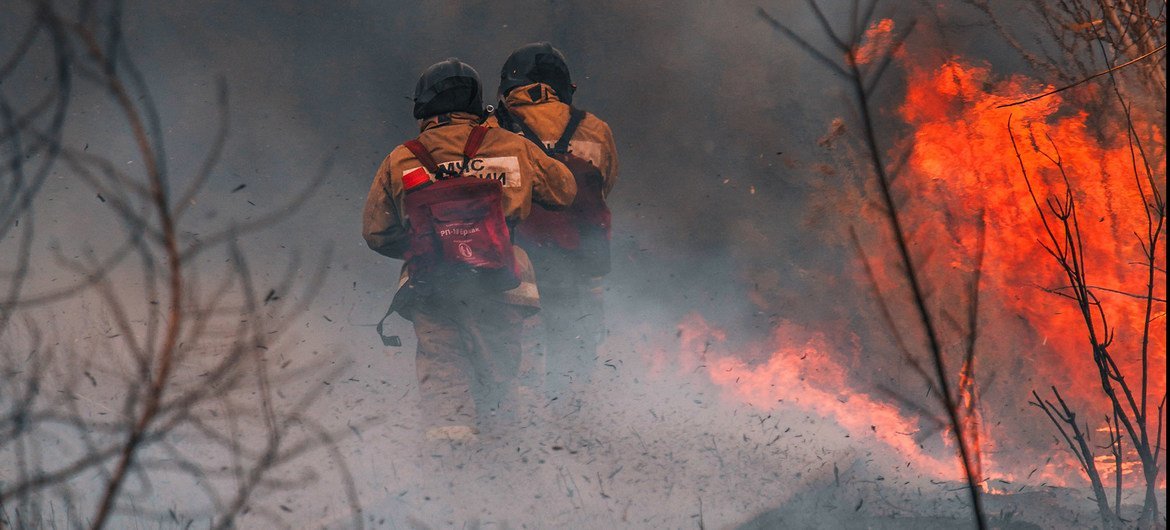
  Climate change increases the risk of hot, dry weather that is likely to fuel wildfires.

The chief reason is that the world has no history of dealing with such a difficult problem, nor the institutions to do so. The harm done by climate change is not visited on the people, or the generations, that have the best chance of acting against it. Those who suffer most harm are and will be predominantly poor and in poor countries.

The rising global temperatures are already fuelling devastating extreme weather events around the world, with escalating impacts on economies and societies and fulling future wars.

What many don’t realise about the warming of the present Earth, is that once we pass a certain threshold, physics takes over, where multiple earth systems march past the point of no return.

We don’t understand the non-linear effects.

There’s are referred to tipping points, best described as domino pieces waiting to topple in only one direction to the end.

Tipping points we thought might happen well into the future are already underway.

It has been clear for decades that the Earth’s climate is changing.

Although positive things have started to happen, even if all countries commit to achieve net zero emissions by the middle of this century its too late to reverse.

Global climate change is not a future problem. Some changes (such as droughts, wildfires, and extreme rainfall) are happening faster than scientists previously assessed.

While natural drivers will modulate human-caused changes, especially at regional levels and in the near term, they will have little effect on long-term global warming, reversal is beyond reach.

We really are out of time,

The scale of recent changes across the climate system are unprecedented over many centuries to many thousands of years, and will not be reverse by any technology.

We cannot wait for decades to act, we have to start acting.

————

Already in this decade.

Concentrations of the major greenhouse gases – carbon dioxide (CO2), methane (CH4) and nitrous oxide (N2 O) continued to increase. The difference between where emissions are heading and where science indicate they should be in 2030 is as large as ever.

The lifetime of carbon dioxide is so long, one year anomaly in emissions doesn’t change the big picture.

The truth is before our very eyes, in the prism of social media videos of burning wild fires, flooding, immigration, food shortages, you name it and it is happing.

It’s hard to understand that there will be a fresh water crisis when some countries are flooding.

It’s hard to appreciate the Arctic ice is disappearing when the winter is filled with stories of extreme weather events.

We don’t know what’s going to happen to the Antarctic glacier, where we have the biggest mass of ice worldwide and in the worst case, we could see up to two meters of sea level rise by the end of this century if the melting of the Antarctic glacier happens in a speedier manner.

Tree planting isn’t enough.

Its hard to believe that 80% of all insect have died – no bees no pollination – no food.

Its hard to believe that our oceans alone are absorbing the heat equivalent of five Hiroshima atomic bombs dropping into the water every second.

Is hard to believe that we are in the process of unmoored ourselves from our past, as if we have transplanted ourselves onto another planet.

Its hard to believe that there will be  ( Severe heatwave historically expected once a decade) heatwaves will happening every other year at 2C.

There is no huge chasm after a 2c rise, we are tumbling down a painful, worsening rocky slope rather than about to suddenly hit a sheer cliff edge – nearly one in 10 vertebrate animals and almost one in five plants will lose half of their habitat.

Its beyond belief that by most standards the world’s governments are currently failing to avert a grim fate with the fingerprint of climate change on recent extreme weather is quite clear to one and all.

The evidence is irrefutable.

We do know that the global average sea level will likely rise, putting the homes of 200 million below sea level in 70 years.

Around 216 million people, mostly from developing countries, will be forced to flee these impacts by 2050 unless radical action is taken. The frequency of heavy precipitation events, will start to climb, nearly doubling the historical norm once it heats up by 2C. Globally, extreme crop drought events that previously occurred once a decade on average will more than double in their frequency at 2C of temperature rise.

A 16-year-old child swims in the flooded area of Aberao village in Kiribati. The Pacific island is one of the countries worst affected by sea-level rise.

Extreme sea level events that previously occurred once in 100 years could happen every year by the end of this century.

Changes to the ocean, including warming, more frequent marine heatwaves, ocean acidification, and reduced oxygen levels, affect both ocean ecosystems and the people that rely on them, and they will continue throughout at least the rest of this century.

It won’t be just about temperature.

The consequences will devastate economies, infrastructure and political stability.

			A fire rages in Brazil's rainforest, near Maranhao at night.

For example, climate change is intensifying the natural production of water – the water cycle. This brings more intense rainfall and associated flooding, as well as more intense drought in many regions.

The alarm bells are deafening.

The past 20 years there has been a 53·7% increase in heat-related mortality in people older than 65 years.

A chilling number of Earth’s other denizens, including 40 percent of all amphibians known to science (about 3,200 species) is under threat. Climate change, pollution, deforestation, overfishing, development, and invasive species are putting biodiversity in peril.

At least 155 million people, 2.3 times as many as live in the UK, were pushed into acute food insecurity in 2020 due to extreme weather,

In 2019, atmospheric CO2 concentrations were higher than at any time in at least 2 million years, and concentrations of methane and nitrous oxide were higher than at any time in the last 800,000 years.

The loss of the West Antarctic ice sheet and the Amazon rainforest, or extensive thawing of permafrost, as well as other key components of the climate system, are considered “tipping points” because they can cross critical thresholds, and then abruptly and irreversibly change.

Every fractional rise in temperature increases the risk of triggering one of 30 major tipping points. With just 1 degree C of current warming, nine of these are now thought to be beginning to tip. The Earth’s climate and ecological systems are deeply intertwined. A substantial change in one will affect others. Different tipping points are beginning to slowly crash into each other.

Arctic warming, along with melting of Greenland’s ice sheet, is driving fresh water into the North Atlantic, which could have contributed to a recent 15 percent slowdown of the Atlantic Meridional Overturning Circulation (AMOC) in the Atlantic Ocean. Those ocean currents drive heat from the tropics and are responsible for the relative warmth of the Northern Hemisphere.

We shouldn’t be discounting the legacy we’re leaving to future generations, no matter how far they are in the future.”

It is unclear when most of the tipping points will kick in, and the risk of those cascading into an irreversible global tipping point with tremendous impacts on human civilisation warrants a declaration of a planetary climate emergency.

No amount of economic cost-benefit analysis is going to help us now that we face an existential threat to civilization.

The risks posed by climate tipping points are not part of any economic analysis of climate policies, there there’s also a social tipping points, a broad societal awareness tipping point that will cause a stampede of migration.

Its hard to believe that we are just going to sit back and just watch.

It can be hard not to be despondent, so blinkered.

No wonder public opinion is not sending stronger signals to politicians that more urgent action is required.

How is it that we can have such strong emotional attachments when looking at nature, claim to love and appreciate it, yet be so indifferent to the destructive impact our way of living has on it?

We tend to be motivated by relatively short-term concerns. This may partly explain why we are so slow to accept what is happening. However if scientific knowledge about nature (which is what the natural sciences seek to produce) relies so heavily on producing facts which have been purified of their social, political, cultural and historical baggage, then when this baggage suddenly becomes visible, it causes anxiety and disbelief.

What if permafrost melting or flooding cuts off critical roads used by supply chains? What if storms knock out the world’s leading computer chip factory? What happens once half of the world is exposed to disease-carrying mosquitos?

The changes required are now so vast that many countries, companies, governments struggle to even articulate them.

Reaching a net-zero world will entail “wholesale transformation” in both infrastructure and how things are done. If business leaders truly grasped the seriousness of this crisis, they would immediately pivot their entire business models and resources toward scaling climate solutions full stop.

No matter what we do now, it’s too late to avoid climate change.

Perhaps most concerning of all is the fact that even if emissions of all greenhouse gases ceased entirely tomorrow, any warming would still persist for many centuries.

Countries will still remain umbilically connected to fossil fuels, subsidizing oil, coal and gas to the tune of around $11m every single minute. By the end of this year the world will have burned through 86% of the carbon “budget” that would allow us just a coin flip’s chance of staying below 1.5C.

Realistically what can be done ?

We know that every decision – every oil drilling lease, every acre of the Amazon rainforest torched for livestock pasture, every new gas or electrical -guzzling SUV that rolls onto the road – will decide how far we tumble down the hill.

To achieve anything requires a massive change in the Capitalist systems, away from GDP to Sustainability and Greed energy, benefiting not just the earth but all that live on it surface.

This will require the creation of a perpetual fund of trillions ( see previous posts) allowing every person to invest in a green future, closing the gap in inequality.

Such a fund could be distributed by non-repayable grants by the United nations under new UN blockchain plate form, with all country governments setting their own blockchain plate forms.

Each block is connected to the ones before and after it. Each additional block strengthens the verification of the previous block and hence the entire blockchain. This renders the blockchain tamper-evident, delivering the key strength of immutability. The result is newfound trust and transparency, because members share a single view of the truth, you can see all details of a transaction end to end.

Place a ban on all advertising that does not prompt sustainability.

Close all stock exchanges trading in Co2 as a product.

Cutting emissions tomorrow is better than the day after.

In the end the truth is that we live in a world of I am all right jack.

Not until our hair is burning and our tongues are hanging out, with our smartphone melted to our ears will we eventfully blame ourselves.

All human comments appreciated. All like clicks and abuse chucked in the bin.

Contact: bobdillon33@gmail.com
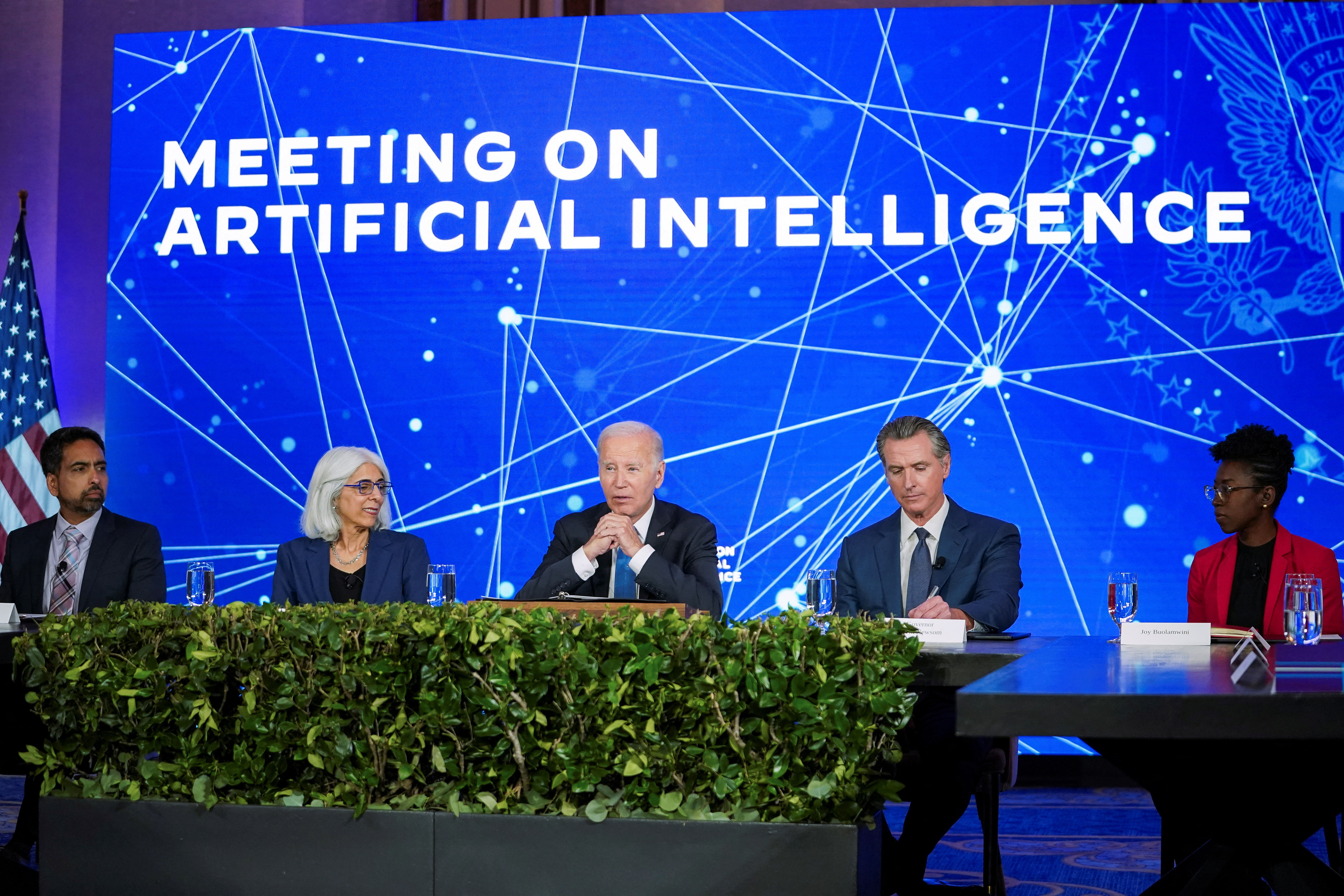
Share this:

  • Share on WhatsApp (Opens in new window) WhatsApp
  • More
  • Share on Mastodon (Opens in new window) Mastodon

THE BEADY EYE ASK’S. WHAT SORT OF LIFE DO YOU WANT AND WHERE ARE WE GOING WITH AI?

19 Saturday Aug 2023

Posted by bobdillon33@gmail.com in Uncategorized

≈ Comments Off on THE BEADY EYE ASK’S. WHAT SORT OF LIFE DO YOU WANT AND WHERE ARE WE GOING WITH AI?

Tags

Artificial Intelligence., Capitalism and Greed, The Future of Mankind, Visions of the future.

( Ten minute read)

No matter what sort of life you might wish for it will be governed by technology, that you have little or no control over or of.

Is this true?

I want my life back. I want my soul back.

I don’t want my life to be fodder for Data harvesting.

I want digital blockchain ownership rights, so I can trade my investment into technology against profit seeking algorithms. 

I want to bring us back to a more practical reality, which is that technology is what we make it, and we need to stop abdicating our responsibility to steer technology toward good and away from bad.

I don’t think any technology has some deterministic endpoint. 

But there’s a catch.

Data is only as valuable as the insight you derive from it now or in the future. If we’re to avoid technological extremism we’re going to have to draw a line in the sand somewhere.

We know that, at the very least, some technologies are harming our natural world, our societies and, ultimately, ourselves, turning everything into Data.

According to a prediction from Gartner, “By 2024, 30% of digital businesses will mandate DNA storage trials. This is a future that can only arrive when we learn to unlock the storage and computing capabilities of nature that have allowed life to thrive for billions of years.

Throughout human history, it has always taken significant resources to store data. Therefore, data has been stored only to the extent that it makes economic sense, if data cannot yield value, it is no longer an asset but rather a liability.

If all is turned it data stored in the cloud, the exponential growth of data will overwhelm existing storage technology. The average person makes 35,000 decisions per day.

————

So where are we?

By way of this vicious technological cycle, we are consciously causing the sixth mass extinction of species.

Technology destroys places.

Aside from the oceans, rivers, topsoil, forests, mountains and meadows, it helps us massacre and pollute with ever-improving precision and speed, its complex set of cogs quickly spreads us out all over the world, safe in the knowledge that we can stay in touch with loved ones via technologies that offer what is really only a toxic substitute for real connection and time together.

It is badly injuring, perhaps fatally, rural communities, luring their youth into industrial and financial centres – cities – whose existence is premised, as the American writer and environmentalist Wendell Berry said, on the devastation of some other far-flung place, which consumers don’t have to look at thanks to the out-of-sight, out-of-mind distance afforded by technology.

And now look at the state of us.

Capitalism’s survival now depends not just on recapturing all of this data but the CO2 it is a releasing.

Workers must work and produce value. Capital must exploit them, connected, by a peculiar sort of invisible cable, to the global network of quarries, factories, courtrooms, mines, financial institutions, bureaucracies, armies, transport networks and workers needed to produce such things. Reflective of a generic, transient and whimsical culture, spending more time watching porn than we do making love. Because we stare into screens instead of eyes, while social media are making us antisocial.

Technology destroys people.

We’re already cyborgs (pacemakers, hearing aids) of a sort, and are well on our way to the type of Big Brother dystopia of the techno-utopians. Our toxic, sedentary lifestyles are causing industrial-scale afflictions of cancer, mental illness, obesity, heart disease, auto-immune disorders and food intolerances, along with those slow killers, loneliness, clock-watching and meaninglessness.

If one rejects technology that means no laptop, no internet, no phone, no washing machine, no tapped water, no gas, no fridge, no television or electronic music; no anything requiring the copper-mining, oil-rigging, plastics-manufacturing essential to the production of a single toaster or solar photovoltaic system.

It destroys our relationship with the natural world. It first separates us from nature, while simultaneously converting life into the cash that oils consumerist society.

Without biodiversity, life on earth as we know it would cease to exist.

And it’s not just about rare or endangered species, it’s everything from genes and bacteria to entire ecosystems like forests and coral reefs, not technology. So think about it this way. Biodiversity is us — it’s like a big, interconnected web where each species has a role to play, and the only way to achieve this is that we all invest and benefits from investing in  world of green energy.

Awareness of the importance of biodiversity remains low, inclusion of biodiversity in development projects is rare. Time is running out for our planet, for its people, and the delicate ecosystems that hang in the balance.  This is not the life that anyone would chose.

——————–

Rejecting technologies that my generation considers to be the basic necessities of life, one might instead of making a living to pay bills, make a living of ones life, denouncing complex technology simply by renouncing it.

Our cultures need to make a Faustian pact, (a pact whereby a person trades something of supreme moral or spiritual importance, such as personal values or the soul, or data for some worldly or material benefit, such as knowledge, power, or riches ), on my behalf, with Speed, Numbers, Homogeneity, Efficiency and Schedules, are not listing when I say I want my soul back.person on a smartphone

Our brains have become wired to process social information, and we usually feel better when we are connected. Social media taps into this tendency.  “

When you develop a population-scale technology that delivers social signals to the tune of trillions per day in real-time, the rise of social media isn’t unexpected. It’s like tossing a lit match into a pool of gasoline.

About 3.5 billion people on the planet, out of 7.7 billion, are active social media participants. Globally, during a typical day, people post 500 million tweets, share over 10 billion pieces of Facebook content, and watch over a billion hours of YouTube video.

Social media has become a vehicle for disinformation and political attacks from beyond sovereign borders.

What can we do about it?

We’re at a crossroads. What we do next is essential, so I want to equip people, policymakers, and platforms to help us achieve the good outcomes and avoid the bad outcomes.

People obtain bigger hits of dopamine — the chemical in our brains highly bound up with motivation and reward — when their social media posts receive more likes.

Researchers found that on Twitter, from 2006 to 2017, false news stories were 70 percent more likely to be retweeted than true ones. Why? Most likely because false news has greater novelty value compared to the truth, and provokes stronger reactions — especially disgust and surprise.

Social media is an attention economy, and businesses want you engaged. How do they get engagement? Well, they give you little dopamine hits, and … get you riled up. That’s why I call it the hype machine. We know strong emotions get us engaged, so [that favours] anger and salacious content.

Simply counting clicks is not enough.

To understand how we got here and how we can get somewhere better.

We need to.

Interduces automated and user-generated labelling of false news, and limiting revenue-collection that is based on false content. However tagging some stories as false makes readers more willing to believe other stories and share them with friends, even if those additional, untagged stories also turn out to be false.

To allows people to find out what information companies have stored about them for data portability and interoperability, so consumers would own their identities and could freely switch from one network to another. We need to embrace this longer-term vision of a healthier communications ecosystem.

This can be achieved with Blockchain plate forms.

Blockchain is a shared, immutable ledger that facilitates the process of recording transactions and tracking assets. An asset can be tangible (a house, car, cash, land) or intangible (intellectual property, patents, copyrights, branding). Virtually anything of value can be tracked and traded on a blockchain network, reducing risk and cutting costs for all involved.

A blockchain network can track orders, payments, accounts, production and much more. And because members share a single view of the truth, you can see all details of a transaction end to end, giving you greater confidence, as well as new efficiencies and opportunities

Each block is connected to the ones before and after it.

These blocks form a chain of data as an asset moves from place to place or ownership changes hands.
The blocks confirm the exact time and sequence of transactions, and the blocks link securely together to
prevent any block from being altered or a block being inserted between two existing blocks.
Each additional block strengthens the verification of the previous block and hence the entire blockchain.
This renders the blockchain tamper-evident, delivering the key strength of immutability. This removes the
possibility of tampering by a malicious actor — and builds a ledger of transactions you and other network
members can trust.
With blockchain, as a member of a members-only network, you can rest assured that you are receiving
accurate and timely data, and that your confidential blockchain records will be shared only with network
members to whom you have specifically granted access.
If things continue without change, Facebook and the other social media giants risk substantial civic
backlash and user burnout. Ask me to stay on social media to speak out about the technology issue,
make a comment.  All human comments appreciated. All like clicks and abuse chucked in the bin.  Contact: bobdillon33@gmail.com
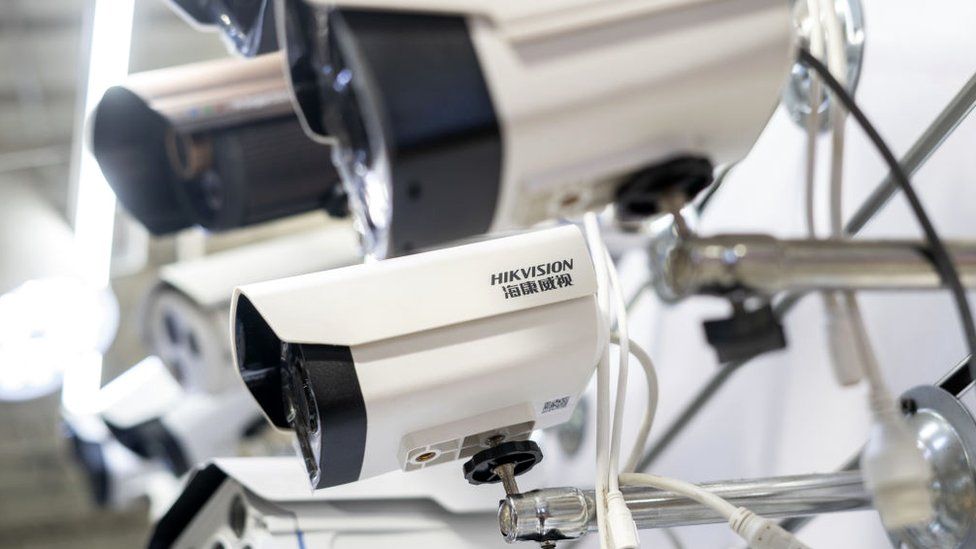
https://youtu.be/QJn28fFKUR0
https://youtu.be/Se91Pn3xxSs

Share this:

  • Share on WhatsApp (Opens in new window) WhatsApp
  • More
  • Share on Mastodon (Opens in new window) Mastodon

THE BEADY EYE ASK’S: FROM HERE INTO THE FUTURE WILL TECHNOLOGY’S BE THE ONLY DIFFERENCE BETWEEN GENERATIONS?

17 Thursday Aug 2023

Posted by bobdillon33@gmail.com in DIFFERENCE BETWEEN GENERATIONS, Uncategorized

≈ Comments Off on THE BEADY EYE ASK’S: FROM HERE INTO THE FUTURE WILL TECHNOLOGY’S BE THE ONLY DIFFERENCE BETWEEN GENERATIONS?

Tags

Artificial Intelligence., The Future of Mankind

( Fifteen minute read)

We could be the first in human history to leave our children nothing.

No greenhouse-gas emissions, no poverty, and no biodiversity loss but they say that the attention spam of the generation of social media is only eighth minute.

So here are a few facts.

We have 8 billon of us on the earth, with around 35 mega cities, built on the back of fossil fuels, feed by monocultural farming. 4% of all animals are wild, all the rest are domestic. There is no technology that will save humanity against Climate change.

Only if we put the Earth first will there be a future generation.

There will be no encore. 

————

When we talk about generational differences, we no longer can just identify differences between generations, but we can identify differences within generations as well.

Technology is the catalyst for the rapidity with which generations now evolve. Change, hitherto that was a gradual process, has become, for us, cataclysmic.

It has become a tidal wave that threatens to overwhelm us.

A decade to-day is the equivalent of a generation, and standards and values topple over like ninepins.

Take smartphones for example. They have only been in widespread use for a decade, but they’re now so fundamental to our daily lives that it’s hard to remember life without them.

How could we possibly see those who can remember life before the smartphone as part of the same generation as those who’ve known nothing else?

If we name each generation based on the technological conditions it experienced, generations may soon encompass only a few years apiece. Slicing the population into ever-narrower generations, each defined by its very specific relationship to technology, is fundamental to how we think about the relationship between age, culture, and technology.

They include the digital natives, the net generation, the Google generation or the millennials.

But generation gaps did not begin with the invention of the microchip. What’s new is the fine-slicing of generational divides, the centrality of technology to defining each successive generation.

It’s not politics or sociology, because they don’t move fast enough, it has to be video based.

We’ve moved from a view of generations as biological “in the sense of the generation of a butterfly from a caterpillar,” as Hentea puts it, to a view of generations as sociological. By no longer limiting political power to a defined group but rather encouraging political participation across social strata.

At the same time, democratization paradoxically created generational categories.

With aristocratic privileges abolished and duties diminished, the Internet generation provided a fall-back for social belonging:

Not everyone can belong to my generation, so the vestigial desire for distinction is satisfied, but at the same time, no one remains without a generation, so the democratic impulse toward equality is met.

Since the dotcom bubble burst back in 2000, technology has radically transformed our societies and our daily lives. Today over half the global population has access to the internet. At the same time, technology was also becoming more personal and portable greatly shaped how and where we consume media.

While these new online communities and communication channels have offered great spaces for alternative voices, their increased use has also brought issues of increased disinformation and polarization.

It is indisputable that thanks to technology, we are getting a chance to live a life our predecessors could not even dream about.

The next generation is not going to sit and read policy and procedure manuals. Nor are they going to spend their time dealing with complex reports.

If the role of technology in shaping an emergent generational consciousness seems obvious, but no one attributes the evils of the age to its machines. By growing up with mobile devices and social networks, the skills they bring into the workplace for collaborative capabilities is profound compared to what we saw with Millennials just 10 years prior.

————-

However as we know each generations live in the shadow of the generation before it.

The technology there are using are filtrated with all the positives and negative of the generation before them.

But do all tech advancements bring sole good to our lives?

Or, maybe, the impact of tech innovations is quite ambiguous.

It’s easy to become desensitized to the importance of innovations and advancements for the overall progress of society.

All countries share responsibility for the long-term stability of Earth’s natural cycles, on which the planet’s ability to support us depends. We are the first generation that can make an informed choice about the direction our planet will take. Either we leave our descendants an endowment of zero poverty, zero fossil-fuel use, and zero biodiversity loss, or we leave them facing a tax bill from Earth that could wipe them out.

There’s no sugar-coating the truth that different generations interact with technology differently.

Advancements in technology have already tapped into every area of life. There is a dedicated mobile app for everything.

Every living person today can be considered part of a digital generation, because — no matter how much we engage with technology — we are living in a digital-first world. Of course, the degree to which each person is comfortable and willing to embrace technology is also dependent on when and where they entered the world.

To some degree, it’s actually something we’re born into, depending on how tech-forward the world was when we entered it.

Technology is ever-evolving and each digital generation adapts to these advancements at their own pace.

However the digital generation can be considered as encompassing only people who were born into or raised in the digital era, meaning with wide-spread access to modern-age technology such as smartphones, tablets, computers, and digital information like the internet.

There are differences in the motivations underlying technology behaviour in each generational group, and there may be variances in the way each generational group uses and gets engaged with technology.

Research findings indicate that millennials mostly use and get engaged with technologies for entertainment and hedonic purposes. They use technology as a means to go after their aspirations and dreams, looking to gather and share information that quickly moves them and their ideas forward.

They are prone to act faster once they make a decision and technology has made a true quantum leap, with augmented reality, blockchain, artificial intelligence, and 3D printing being just a few examples of the most recent inventions.

The days of simple demographic segmentation are gone.

With every new generation, the access to limitless amounts of data has created a much more complex level of fragmentation and micro-segmentation.

To day the average person has an attention span of just 8 seconds.

Digital citizenship now applies to everyone but not everyone is the same in any generation, and everyone is subject to different economic circumstances regardless of their generation.

Though it may be tough to predict which advancements technology would bring next, some innovations are already changing our beliefs about the world around us.

Clearly, technology by itself is neither good nor bad.

It is only the way and extent to which we use it that matters.

While some people want just, to sit back and watch the world burn.

We are now the generation under constant surveillance, sharing our data with companies all the time online. Tracing our shadows that allows them to get a glimpse into the digital traces you’re leaving – how many, what kinds, and from what devices.

The use of surveillance cameras in modern society has always been divisive, requiring governing bodies to perform a fine balancing act between respecting the nation’s civil liberties and keeping its citizens safe and secure. It’s a multi-layered issue incorporating many dimensions, including technology, legislation, code of ethics and conduct, and one that triggers conversation year-round.

When the Covid pandemic hit, a number of governments rolled out or extended surveillance programs of unprecedented scale and intrusiveness, in the belief, however misguided, that perpetual monitoring would help restrict people’s movements and therefore the spread of the virus.

It’s important to ask when technology adds value, and for whom.

If technology can indeed aid in pandemic response and recovery, it is essential to have open, inclusive, transparent, and honest public discussions on the appropriate type of public digital infrastructure people need to thrive.

The rush to embrace digital contact tracing has opened a Pandora’s box of privacy.

As the technology develops, we are seeing more sophisticated AI being integrated into surveillance systems and facial recognition technology, in particular, is creating a stir in terms of practice and legislation. Surveillance is a vast and varied topic and one that can present some very emotive and social issues, as well as legislative and technological ones. Without real reflection on the rights implications, there’s a real risk of deepening inequality and vesting considerable power to coerce and control people in governments and the private sector.

Any deployment of technology should be rooted in human rights standards, centred on enabling people to live a dignified life.

It’s up to every digital citizen — whether they’re a digital native or digital immigrant — to practice cyber safety and, in turn, instil it in digital generations to come.

New technologies such as virtual visits, chatbots are being used to delivery healthcare to individuals, especially during Covid-19.

The ability to understand and respect someone else’s feelings is always important but even more so online. That’s because written communications and online interactions, such as text messages and social media comments, are often missing the nonverbal cues we have in the physical world that give us a well-rounded understanding of someone else’s stance.

Every user of the internet has a right to privacy. Still, we share  The law still applies when we’re online

On the downside, some technological developments prove to be a curse rather than a blessing. Overindulgence in the use of digital apps and smart devices, overreliance on online tools may sometimes lead to tragic effects.

If you believe that technological conditions profoundly shape the life experience and perspectives of each successive generation, then those generations will only get narrower.

Doesn’t the leap from Facebook to Snap Chat constitute its own profound generational divide?

If we name each generation based on the specific technological conditions it experienced during childhood or adolescence, we may soon be dealing with generations that encompass only a few years apiece. At that point, the very idea of “generations” will cease to have much utility for social scientists, since it will be very hard to analyse attitudinal or behavioural differences between generations that are just a few years part.

I do expect new social platforms to emerge that focus on privacy and ‘fake-free’ information, or at least they will claim to be so. Proving that to a jaded public will be a challenge. Resisting the temptation to exploit all that data will be extremely hard. And how to pay for it all? If it is subscriber-paid, then only the wealthy will be able to afford it. But at the end of the decade, humans will still be humans, and both greed and generosity, love and hate, truth and lies, will likely still exist in the same proportions as they do today.

We are looking to technology to lead us towards a carbon-neutral world but there are other factors at work, [to] the growth of authoritarian governments and social inequalities.

Climate change will change the temperatures up or down till a tipping point plunges us into a non reversible disaster, with consequence of unimaginable survival.

We are headed toward an increasingly panoptic society, as represented by the Chinese government’s emerging social credit scale. In other words, just as digital world is shaping the physical world, physical world shapes our digital world as well.

All human comments appreciated. All like clicks and abuse chucked in the bin.

Contact : bobdillon33@gmail.com

Share this:

  • Share on WhatsApp (Opens in new window) WhatsApp
  • More
  • Share on Mastodon (Opens in new window) Mastodon

THE BEADY EYE ASK’S: HAVE YOU EVER WONDERED JUST HOW MUCH A GOAL IN FOOTBALL COST?

12 Saturday Aug 2023

Posted by bobdillon33@gmail.com in Uncategorized

≈ Comments Off on THE BEADY EYE ASK’S: HAVE YOU EVER WONDERED JUST HOW MUCH A GOAL IN FOOTBALL COST?

( Five minute read) 

Most of the world is football mad however the world pays a high price for a goal considering the  amount of prize money that a victorious Gladiator could expect, which varied depending on the time he lived.

In the Year 177 AD, Gladiators could get between 12 and 60 Sesterces if they were slaves and 15 to 75 sesterces if they were auctoratii. Free Veteran Gladiators without an owner, could negotiate their pay.

Since they were Veterans with a huge reputation and a corresponding fan base they would make much more than 12-75 sesterces per fight.

The highest-paid gladiators might make up to 5000 sesterces around £50 “of our present money”.

Well here is the answer.

Top 10 highest-paid soccer players in the world (September, 2022)

1. Kylian Mbappe = $125 million total ($105 million salary + $20 million endorsements)

2. Cristiano Ronaldo = $113 million ($53 million salary + $60 million endorsements)

3. Lionel Messi = $110 million ($62 million salary + $48 million endorsements)

4. Neymar = $91 million ($56 million salary + $35 million endorsements)

5. Mohamed Salah = $39.5 million ($24.5 million salary + $15 million endorsements)

6. Eden Hazard = $31.3 million ($28.6 million salary + $2.5 million endorsements)

7. Andres Iniesta = $30 million ($23 million salary + $7 million endorsements)

8. Raheem Sterling = $29.4 million ($21.4 million salary + $8 million endorsements)

9. Kevin de Bruyne = $29 million ($25.5 million salary + $3.5 million endorsements)

10. Antoine Griezmann = $27.5 million ($22 million salary + $5.5 million endorsements)

                                            —————————-

Ranking Club Average Attendance Average Matchday Income per game (£)
1 Manchester United 74,498 3.96 million
2 Arsenal 59,898 3.1 million
3 Liverpool 52,983 3.01 million
4 Tottenham Hotspur 54,216 2.92 million
5 Chelsea 40,437 2.08 million
6 Manchester City 54,143 2.08 million
7 West Ham United 58,336 1.23 million
8 Newcastle United 51,121 1.9 million
9 Southampton 30,435 0.77 million
10 Brighton 30,425 0.77 million
11 Everton 39,043 0.59 million
12 Leicester City 31,814 0.59 million
13 Crystal Palace 25,455 0.5 million
14 Fulham 24,371 0.47 million
15 Wolverhampton 31,030 0.46 million
16 Watford 20,016 0.44 million
17 Cardiff City 31,408 0.37 million
18 Burnley 20,534 0.36 million
19 Huddersfield Town 23,340 0.25 million
20 Bournemouth 10,532 0.21 million

Infographic: How much does a goal cost Premier League spectators?  | Statista

When it comes to matchday income, gate receipts is by far the most significant resource. However, its importance varies between one club and another based on several factors, including the capacity of the stadium and the general status of the club.

Matchday income is the total revenue generated by a club when hosting a match on home turf. In the Premier League, the home side exclusively receives the money generated from gate receipts. Every season, each club hosts 19 league fixtures, and is entitled to earn all the cash generated from its home games.

Naturally, box office income is the largest percentage of the matchday revenue, but it also includes food and beverage sales, as well as merchandise sales. For instance, Tottenham Hotspur is believed to generate around £800,000 per game from food sales. 

On the other hand, TV money made up almost 60% of the clubs’ incomes, while commercial revenues averaged around 27% of the total income.

The Premier League clubs paid out an astonishing grand total of over £261m on striker salaries last season, this divided by how long the strikers spent playing shows just how much they pay per minute.

Arsenal pay their strikers the highest amount of £3,721.37 per minute,

The average Blues fan (who regularly attended matches at the Stamford Bridge) spent £1,648 during that campaign.

The up and coming World cup tournament in Qatar has also incurred a human cost as well as a financial one. The total outlay paid out by Qatar is staggering, around $ 7 billion.

————————– 

I want you now to close your eyes and picture the World Economic Forum in Davos, Switzerland,

Now what comes to mind?

Membership has its privileges. And before you can buy a ticket for 19 grand, you must be a member of the Economic Forum which costs a mere 52,000. And remember, that’s only if you’re invited.

For most it’s billionaires, CEOs, and world leaders hobnobbing in the Alps, but not for me.

It’s the $43 hot dog or Caesar salad, just short of $ 60 bucks.

Don’t get me wrong I love sport.

But how did we get here?”

The answer lies in decades of peddling the myth that wealth and success flow from personal endeavour and skill, and that poverty and failure are due to personal shortcomings.

The reality that most wealth and success stems from a mix of good fortune and the appropriation of other people’s resources and labour over centuries. 

Yes, a handful of individuals with exceptional talents can make a quantum leap from poverty to fortune, but most are constrained by the realities of an economic system that has, for decades, seen a reduction in the share of  wealth going to those reliant on their own labour for income. 

I’d be interested to see what responses would be to questions such as this (considering that poverty is the main cause of world problems nowadays)

It’s 2020 now. Look what’s happened because of humanity! Australia is on fire! The endangered list is now 41,416! You know how big that number is, that’s a really big number! People think climate change doesn’t exist, yeah, people only believe things when they cause problems. Maybe people will believe climate change exists if every country is on fire.

People make fun of this topic but don’t! It is a serious problem and if we don’t solve it we all will die because of our actions.

Is there such a thing as Global Cooling? Probably not, but I like the sound of it.

There are too many people who don’t and can’t have enough, and it’s detrimental to continue to add to the population so rapidly. Of course, if those who selfishly own so much for themselves or to save so future generations of their family will also be wealthy would just share with those who are here and in need..


Gareth Southgate 

At the moment we have the Woman’s world cup , Harry Kane – Spurs – just sold to Bayern München – 86 million.

So why pressurise FIFA the world governing body to let every goal in the coming World Cup in Qatar to contribute to reliving poverty.  Lets say 50,000 per goal.  

All human comments appreciated. All like clicks and abuse chucked in the bin.

Contact: bobdillon33@gmail.com
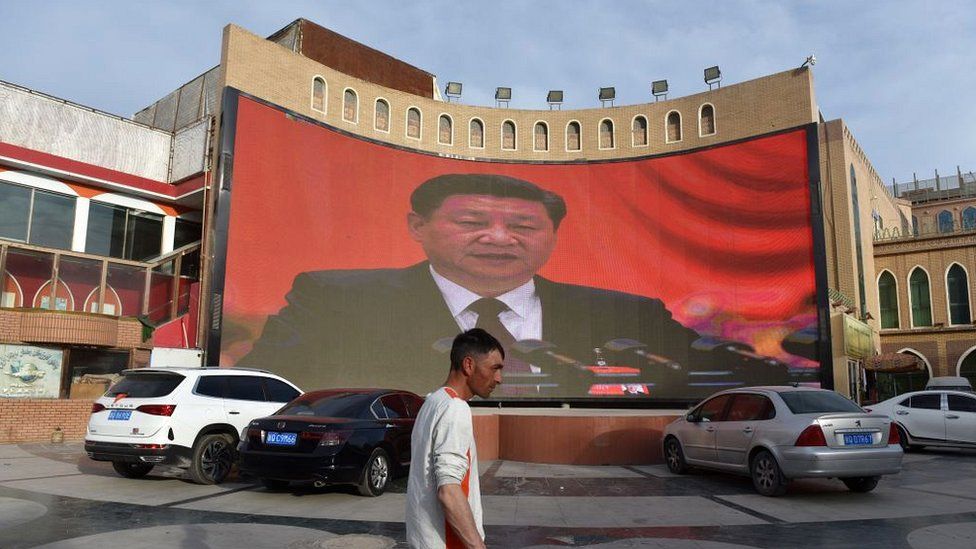
Share this:

  • Share on WhatsApp (Opens in new window) WhatsApp
  • More
  • Share on Mastodon (Opens in new window) Mastodon
← Older posts
Newer posts →

All comments and contributions much appreciated

  • THE BEADY EYE ASKS. WHAT IS AN AMERICAN. April 10, 2026
  • THE BEADY ASK. JUST WHAT IS A JEW. April 9, 2026
  • THE BEADY EYE ASKS. IS IT JUST ME?? HAVE YOU NOTICED THAT THE BBC NEWS REPORTING IS MORE AND MORE REPETITIVE/ PADDED WITH MUNDANE QUESTIONING AND THE WEATHER FORECAST. April 6, 2026
  • THE BEADY SAYS. DEATH IS A FACT OF LIFE AND LIFE IS A FACT DEATH. April 6, 2026
  • THE BEADY EYE SAYS ITS FAIR-WELL TO WHAT MAKES US HUMAN. April 3, 2026

Archives

  • April 2026
  • March 2026
  • February 2026
  • January 2026
  • December 2025
  • November 2025
  • October 2025
  • September 2025
  • August 2025
  • July 2025
  • June 2025
  • May 2025
  • February 2025
  • January 2025
  • December 2024
  • November 2024
  • October 2024
  • September 2024
  • August 2024
  • July 2024
  • June 2024
  • May 2024
  • April 2024
  • March 2024
  • February 2024
  • January 2024
  • December 2023
  • October 2023
  • September 2023
  • August 2023
  • July 2023
  • June 2023
  • May 2023
  • April 2023
  • March 2023
  • February 2023
  • January 2023
  • December 2022
  • November 2022
  • October 2022
  • September 2022
  • August 2022
  • July 2022
  • June 2022
  • May 2022
  • April 2022
  • March 2022
  • February 2022
  • January 2022
  • December 2021
  • November 2021
  • October 2021
  • September 2021
  • August 2021
  • July 2021
  • June 2021
  • May 2021
  • April 2021
  • March 2021
  • February 2021
  • January 2021
  • December 2020
  • November 2020
  • October 2020
  • September 2020
  • August 2020
  • July 2020
  • June 2020
  • May 2020
  • April 2020
  • March 2020
  • February 2020
  • January 2020
  • December 2019
  • November 2019
  • October 2019
  • September 2019
  • August 2019
  • July 2019
  • June 2019
  • May 2019
  • April 2019
  • March 2019
  • February 2019
  • January 2019
  • December 2018
  • November 2018
  • October 2018
  • September 2018
  • August 2018
  • July 2018
  • June 2018
  • May 2018
  • April 2018
  • March 2018
  • February 2018
  • January 2018
  • December 2017
  • November 2017
  • October 2017
  • September 2017
  • August 2017
  • July 2017
  • June 2017
  • May 2017
  • April 2017
  • March 2017
  • February 2017
  • January 2017
  • December 2016
  • November 2016
  • October 2016
  • September 2016
  • August 2016
  • July 2016
  • June 2016
  • May 2016
  • April 2016
  • March 2016
  • February 2016
  • January 2016
  • December 2015
  • November 2015
  • October 2015
  • September 2015
  • August 2015
  • July 2015
  • June 2015
  • May 2015
  • April 2015
  • March 2015
  • February 2015
  • January 2015
  • December 2014
  • November 2014
  • October 2014
  • September 2014
  • August 2014
  • July 2014
  • June 2014
  • May 2014
  • April 2014
  • March 2014
  • February 2014
  • January 2014
  • December 2013
  • November 2013
  • October 2013

Talk to me.

Jason Lawrence's avatarJason Lawrence on THE BEADY EYE ASK’S: WIT…
benmadigan's avatarbenmadigan on THE BEADY EYE ASK’S: WHA…
bobdillon33@gmail.com's avatarbobdillon33@gmail.co… on THE BEADY EYE SAYS: WELCOME TO…
Ernest Harben's avatarOG on THE BEADY EYE SAYS: WELCOME TO…
benmadigan's avatarbenmadigan on THE BEADY EYE SAY’S. ONC…

7/7

Moulin de Labarde 46300
Gourdon Lot France
0565416842
Before 6pm.

My Blog; THE BEADY EYE.

My Blog; THE BEADY EYE.
bobdillon33@gmail.com

bobdillon33@gmail.com

Free Thinker.

View Full Profile →

Follow bobdillon33blog on WordPress.com

Blog Stats

  • 98,245 hits

Blogs I Follow

  • unnecessary news from earth
  • The Invictus Soul
  • WordPress.com News
  • WestDeltaGirl's Blog
  • The PPJ Gazette
Follow bobdillon33blog on WordPress.com

The Beady Eye.

The Beady Eye.
Follow bobdillon33blog on WordPress.com

Blog at WordPress.com.

unnecessary news from earth

WITH MIGO

The Invictus Soul

The only thing worse than being 'blind' is having a Sight but no Vision

WordPress.com News

The latest news on WordPress.com and the WordPress community.

WestDeltaGirl's Blog

Sharing vegetarian and vegan recipes and food ideas

The PPJ Gazette

PPJ Gazette copyright ©

Privacy & Cookies: This site uses cookies. By continuing to use this website, you agree to their use.
To find out more, including how to control cookies, see here: Cookie Policy
  • Subscribe Subscribed
    • bobdillon33blog
    • Join 222 other subscribers
    • Already have a WordPress.com account? Log in now.
    • bobdillon33blog
    • Subscribe Subscribed
    • Sign up
    • Log in
    • Report this content
    • View site in Reader
    • Manage subscriptions
    • Collapse this bar