
( Eight minutes read)
The quest to understand life and its purpose has been around as long as we have.
Today the same question persists: What does it mean to be fully alive?
With the arrival of machine learning/artificial intelligence we are becoming disposable products – here to day, gone tomorrow. Therefore most essential existential drive is to understand the meaning of our own existence, that relates to all of us – rich or poor – left hemisphere – right hemisphere.
This with what the world is now facing, there are no questions more important or pressing ( now and or in the not so distant future), than the above for the whole planet.
It is one of those philosophical questions that can never be answered definitively.
However the conspiracy of greed, in all its forms, is not sustainable for any lifeform, whether it is alive or not.
——————
Life is short and time moves fast. Your life is not a dress rehearsal – make it count.
There is simply no room for belief in a spiritual realm, or in a scientific view of reality. Period.
No matter what we put in a test tube nothing is going to crawl out alive, it would simply be another kind of physical property.
We defined biology as the branch of science concerned with the study of living things, or organisms.
That definition is pretty straightforward. However, it opens the door to more difficult—and more interesting—questions:
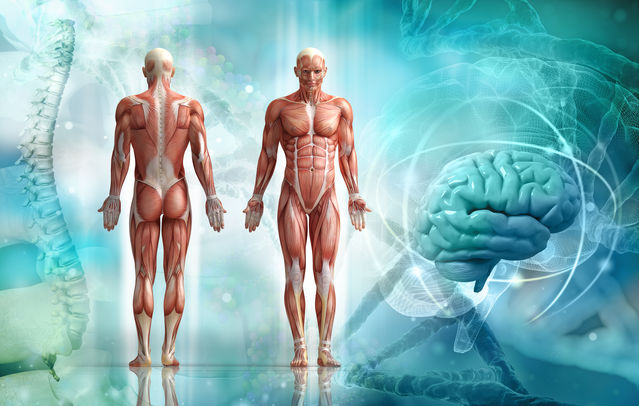
LET’S START.
Do you have to be conscious to be alive. No. It actually isn’t as cut and dry as you think it is. Where does consciousness come from? And how do our brains create it?
We don’t have a great scientific definition of consciousness, and philosophical definitions are disputed, but in almost every conception it has something to do with an ongoing awareness of events beyond the raw computation of their properties and immediate selection of an action.
It might depend on what we mean exactly by consciousness (cognitive/representational abilities? Qualitative experience?) and also by “living” (autonomous subsistence? Self replication? Lineage with biological organisms on earth?).
All evidence is that brains generate consciousness.
Only living matter is susceptible of consciousness, but not all living things have a consciousness in the sense that we employ. Rudimentary life forms such as worms, bacteria, virus, do have a primitive form of consciousness even though they can hardly be said to be “conscious”.
Consciousness results from the antagonistic relativization between biological matter and physical matter. Somehow, within each of our brains, the combined activity of billions of neurons, each one a tiny biological machine, is giving rise to a conscious experience. And not just any conscious experience, your conscious experience, right here, right now.
One of the most compelling aspects of the mystery of consciousness is the nature of self.
Is consciousness possible without self-consciousness? And if so, would it still matter so much?
To understanding consciousness it immediately becomes apparent that like all other biological phenomena and like life itself, it must have evolved in gradations.
People have long pondered what consciousness actually is. What do we even mean by consciousness?
How can a purely physical thing feel like something? Surely consciousness is some kind of otherness?
Perhaps consciousness is an as-yet undiscovered fundamental property of the universe, or is it God himself.
So how far back in evolutionary history should we go to look for the origins of consciousness?
All the way back. Nearly four billion years. Long before animals had brains, or even a nervous system. Back to simple single-celled organisms like bacteria. Back to the origin of life itself.
This is not to suggest that simple unicellular organisms possessed consciousness, or even a modicum of it. Not consciousness, but its building blocks:
The origins of life will never be found. Nor will we ever be able to create it.
Consciousness probably evolved as a way for organisms to go far beyond responding merely reflexively to stimuli—to be able to respond more flexibly, and in a more delayed and planned manner.
Thoughts and feelings seem ethereal, untethered from anything physical.
Self-awareness seems like a phenomenon utterly divorced from anything that could possibly be produced by cells comprised of physical particles. How the same material particles that comprise inanimate matter could be arranged in such a way as to make something alive, without adding that special, mysterious nonmaterial essence. Let alone how inanimate matter could organize itself in such clever and intricate ways through entirely unguided, spontaneous processes.
—————–
Now, in the present century, science is turning its attention to decoding the enigma of consciousness.
Without a shadow of a doubt there is no aspect of the mind that is not entirely the product of, and utterly dependent on, the physical brain. Disruption, disassembly or enhancement of brain circuitry (subtle or major) can radically alter any aspect of the mind.
And yet the mystery of how exactly the brain produces consciousness has remained unexplained.
When does consciousness begin in development? Does it emerge at birth, or is it present even in the womb?
We don’t yet know exactly how consciousness emerges, and very many intriguing mysteries remain.
About six minutes after the heart stops, and the blood supply to the brain is interrupted, the brain essentially dies. Then, deterioration reaches a point of no return and core consciousness – our ability to feel that we are here and now, and to recognise that thoughts we have are own own – is lost.
The moment the brain loses its exquisitely synchronized organization, consciousness is lost.
If that breakdown of physical processes is irreversible, consciousness is permanently extinguished, and the unique organization of matter that constituted that individual’s personhood, self or essence ceases to exist.
Everything that lives dies. Is this true? Yes You only live once. No living thing know when living a life ends.
Indeed, the denial of death is the raison d’être of most religions.
The idea of life after death makes complete sense to our intuitions, and that’s not the only reason why the belief comes so naturally to people.
Because we associate ourselves with our body and we know bodies die this is true, but the distinction between past, present and future is only a stubbornly persistent illusion.
Do you believe that your mind, personality, or self is an essence that exists independent of your physical brain?
Do you think of you as a spirit or soul, temporarily constrained and residing in the organ that is your brain—an immortal consciousness merely housed in your earthly body?
———————
Death has never been popular, especially when it is seen as the final and utter cessation of being.
The prospect’s tolerability increases only when it is reframed as a mere passage to a heavenly paradise filled with all manner of delights—all the more so for those who are suffering or disadvantaged in this life.
It all depend on the observer.
What you see could not be present without your consciousness.
Your eyes are not portals to the world. Everything you see and experience right now‚ even your body, is a whirl of information occurring in your mind so you could live a life without been conscious that you are alive.
So how can a particle change its behavior depending on whether you watch it or not?
Our mind and its knowledge is the only thing that determines how they behave.
The answer is simple, reality is a process that involves your consciousness.
A particle’s exact location and momentum can’t be known at the same time.
So why should it matter to a particle what you decide to measure?
How can pairs of entangled particles be instantaneously connected on opposite sides of the galaxy as if space and time don’t exist?
In 2002, scientists showed that particles of light “photons” knew, in advance,what their distant twins would do in the future.
There are an infinite number of universes and everything that could possibly happen occurs in some universe. Death and Life does not exist in any real sense in these scenarios. All possible universes exist simultaneously, regardless of what happens in any of them.
When we die, we do so not in the random billiard-ball-matrix but in the inescapable-life-matrix. Life has a non-linear dimensionality; it’s like a perennial flower that returns to bloom in the multiverse.
Of course, we live in the same world. But critics claim this behavior is limited to the microscopic world. But this ‘two-world’ view (that is, one set of physical laws for small objects, and another for the rest of the universe including us) has no basis in reason and is being challenged in laboratories around the world.
Until we recognize the universe in our heads, attempts to understand reality will remain a road to nowhere.
————————–
You are alive, and so am I.
The tree’s outside my window.
However, snow falling from the clouds is not alive, or is it
The computer you’re using to read this article is not alive, and neither is a chair or table. The parts of a chair that are made of wood were once alive, but they aren’t any longer. If you were to burn the wood in a fire, the fire would not be alive either, or is it.
How can we tell that one thing is alive and another is not?
As I have said it’s surprisingly hard to come up with a precise definition of life.
Many definitions of life are operational definitions—they allow us to separate living things from nonliving ones, but they don’t actually pin down what life is. To make this separation, we must come up with a list of properties that are, as a group, uniquely characteristic of living organisms.
All living organisms are made up of one or more cells, which are considered the fundamental units of life
Humans—are made up of many cells.
Life depends on an enormous number of interlocking chemical reactions. Living things must use energy and consume nutrients to carry out the chemical reactions that sustain life.
Living organisms regulate their internal environment to maintain the relatively narrow range of conditions needed for cell function.
For instance, your body temperature needs to be kept relatively close to 98.6. This maintenance of a stable internal environment, even in the face of a changing external environment IS ESSENTIAL.
Living organisms show “irritability,” meaning that they respond to stimuli or changes in their environment.
Living organisms can reproduce themselves to create new organisms. Sperm and egg cells containing half of their genetic information, and these cells fuse to form a new individual with a full genetic set. You yourself started out as a single cell and now have tens of trillions of cells in your body.
Unicellular organisms may migrate toward a source of nutrients or away from a noxious chemical.
———————-
Populations of living organisms can undergo evolution, meaning that the genetic makeup of a population may change over time, for instance the basic building blocks of everyday life that have been obliterated in many areas of the Gaza Strip as the Israeli bombardment following Hamas’ deadly 7 October attacks stretches into its third month, will result in an state of unsecure Israel for decades to come.
You might well ask what can I do to change life. The answer is simple – Give and you will receive.
I was not alive in 1066 or 1492 or 1865 or 1920, so I have no way to judge any time except the time I experienced myself. I don’t think anyone can really pass judgment on any time which they did not experience for themselves, without seriously romanticising, or conversely vilifying that time.
I submit that the “golden years” for any generation, or individual, are the years right before you are forced to confront the realities of keeping yourself alive by yourself.
I am a 60th youth. so I could dream about being a part of the changes needed to make the world a better place, without being jaded by the realities of the roadblocks set up to prevent any of these changes from maturing.
We must come alive to be alive. The best time to be alive is today, this moment, right now.
We have some big challenges facing us, like climate change, growing socioeconomic disparity, and threats of an erosion of rights and on going wars. “Yes, we have challenges galore … but those challenges spark imagination, creativity, courage and cooperation (if we are smart enough to rise to the occasion).
It is a battle, but it is possible to win.
That’s a problem because when we act instead of being, we aren’t living in the fullest sense.
————————–
GET OFF YOUR SMARTPHONE.
Engage with the world around you and learning as much as possible. don’t take things for granted or perceive life casually. Being fully alive means being open to all the possibilities of your existence and exploring every part of yourself until you find what…
“Wealth is the ability to fully experience life,” Henry David Thoreau said. Wrong. You need an awakened brain to see life.
To rap this post up we could ask how and what has changed to living one life.
All human comments appreciated. All like clicks and abuse chucked in the bin.
Contact: bobdillon33@gmail.com
 bobdillon33blog