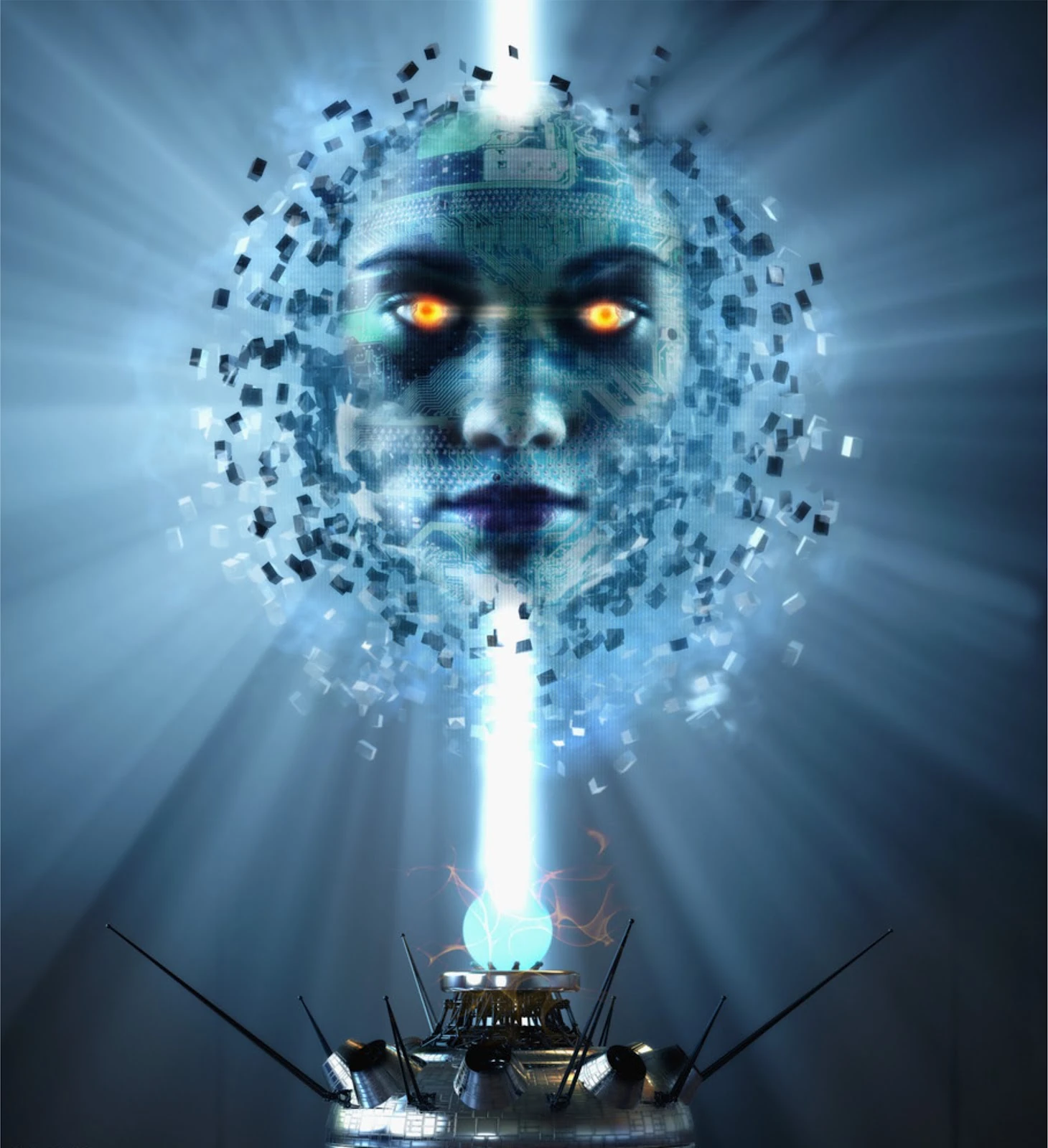
• About
  • THE BEADY EYE SAY’S : THE EUROPEAN UNION SHOULD THANK ENGLAND FOR ITS IN OR OUT REFERENDUM.

bobdillon33blog

~ Free Thinker.

bobdillon33blog

Tag Archives: investments in science and technology.

The Beady Eye looks at your Brain.

10 Friday Jul 2015

Posted by bobdillon33@gmail.com in Humanity., Sustaniability, Technology, The Future

≈ Comments Off on The Beady Eye looks at your Brain.

Tags

Artificial life., Biological Engineering., Final frontier., Future generations., investments in science and technology., Neurosciences., Robots., Telepathy., The Human Brain.

IT’S A LONG, hard road to understanding the human brain so I have no intention of explaining yours to you here in detail.

Other than to say your brain has a critical function to sort out what you should remember and not remember. To determine what is true, it must know what is false.

Believing, interpreting, responding to environmental clues, or guessing is literally what a brain does.

Is your brain you.?  If not who are you.

If a person is not a brain, and a brain is not the thing that perceives, thinks, interprets, feels, desires, decides, and so on we all have serious implications for the future.

Are the mind and the brain one? or is it the mind that tells the brain what it wants or is the mind a product of mere brain activity.

Another words what you see is not really there; it is what your brain believes is there . . . your brain makes the best interpretation it can . In order to explain (interpret) a visual scene, the brain must represent it first, and then explain it to its self to store in your mind.

We perceive and understand only what our brains represent.

To make sense of the tangle of neurons that makes the human experience human, is as complicated as to why you are here in the first instance.

To understand how the brain works you need one in the first place. It does not however help to explain the electrical pulses that tells a neuron to fire. Never mind how billions firing together. Your brain contains about 100 billion nerve cells, or neurons, each of which can communicate with thousands of other brain cells.

The good news is that humanity is poised to crack open the mysteries of the human brain not the mind.

For the moment the brain remains mysterious, it allows us to  convert information into myriad forms to serve infinitely diverse ends.

The fields of your mind extend far beyond your brains they are hidden from view and not capable of being inspected.  Whatever in your brain is buried deep within the recesses of your mind.

The quest for immortality has inspired humankind since the dawn of civilization. So will understanding the workings of the brain bring us a step closer.

Neurosciences assume that the brain has a wide variety of capacities: the brain interprets and stores information, recognizes symbols, analyzes, thinks, believes, knows, designs computers, determines what is true, paints pictures, deciphers images, analyzes, prioritizes, learns, understands, remembers, and makes decisions of the mind.

However, if I am my brain, and every atom in my brain (or body) is replaced every seven years or so, then I must become someone else every seven years.

There is no need to suppose that all the laws of nature sprang into being fully formed at the moment of the Big Bang, like a kind of cosmic Napoleonic code, or that they exist in a metaphysical realm beyond time and space.

The brain has been designed to change. Or is memory inherent in nature. Ray Kurzweil - director of engineering at Google - claims that by 2045 humans will be able to upload their entire minds to computers and become digitally immortal - an event called singularity

Are we capable of transferring thoughts from one brain to another.

Telepathy is normal not paranormal, natural not supernatural, and is also common between people, especially people who know each other well.

Mental activity are not confined to the insides of our heads. They extend far beyond our brain though intention and attention.

Non biological mine’s.

At our current stage of technological development, we have neither sufficiently powerful hardware nor the requisite software to create conscious minds in computers or robot.

Your Brain gives you the ability to combine and recombine different types of knowledge and information in order to gain new understanding; the ability to apply the solution for one problem to a new and different situation; the ability to create and easily understand symbolic representation of computation and sensory input; and the ability to detach modes of thought from raw sensory and perceptual input.

So what happens when it is introduced to Virtual reality or interface technology or drones contextual technology, or open communication.

We are entering the next Age of Biological Engineering evolving cellular engineering and molecular imaging.

What is the most powerful technology on Earth? Biology is Technology:

Hundreds of companies are now attempting to leverage the manufacturing and computational paradigms of biology.

Inventing new ways to look at the world.
https://youtu.be/aNBSYpgOjzU

By gaining control over biological systems and their biochemical pathways — and designing new pathways by rewriting the DNA “software” in cells — synthetic biologists are ushering in the “Biological Age,” creating substances with not only superior electrical, optical, and mechanical properties, but with properties that we have never seen before in man-made materials:

If you don’t believe me that Biology is Technology:

Have a look.

In the dark forest of our current ignorance, nothing captures the imagination like the possibility of creating a machine that is conscious and exhibits the same higher mental abilities as humans.

Biological systems have the ability to do things that no human-made machine or chemistry can begin to approach: the ability to replicate, to learn, to scale from one to billions, to adapt, and to evolve.

Computers today are so advanced that some contain as many connections as exist in the human brain — ten trillion of them. They can also operate at much higher speeds than the brain. What was once purely science fiction is now approaching the possibility of science fact.

A double edge sword the second machine age is going to replace our brains.

Can advanced robots or computers be moral persons? The term “moral person” refers to a being that has moral rights, such as the right not to be harmed, the right of free movement, and the right of free expression.

So let me ask you a question is it the end of moors law. (Moore’s Law is a computing term which originated around 1970; the simplified version of this law states that processor speeds, or overall processing power for computers will double every two years.) Once transistors can be created as small as atomic particles, then there will be no more room for growth.

Do we have a responsibility to future generations of humans that might be adversely affected by the creation of menacing robots? Should we stop our research into artificial intelligence right now before we create something that we cannot control?

To answer these questions, it those seems odd to speculate about building a mind from electronic scraps when we have so little clarity about the nature of our own conscious minds.

The human body is divided into many different parts called organs. All of the parts are controlled by an organ call the brain.

The cerebellum the forebrain, midbrain, and hindbrain.

No other organ is like the brain and all other organs would be unable to function without the brain which by the way weighs about three pounds.

The brain is known as the “final frontier” of science; It is the nut that is toughest to crack but contains a vast wealth of information, a veritable treasure trove of knowledge that can enrich our understanding of human nature.

The problem with artificial life acquiring consciousness in the form of experience of self is that if gives artificial life autonomy. Consciousness is a loophole out of programming, whether it is genetic (humans) or cybernetic (computers).

When we solve the hard problem of consciousness, then we can create machines with brains any time before that is brainless.

A machine without moral rules that should be embedded into the programming of all superior robots; one of these is that a robot should never harm a human.

We’ll be uploading our entire MINDS to computers by 2045 and our bodies will be replaced by machines within 90 years, Google expert claims.  This singularity is also referred to as digital immortality because brains and a person’s intelligence will be digitally stored forever, even after they die.

But even if Einstein’s brain were intact enough to be plumbed with the tools of modern science, we might have to remain agnostic about the source of his brilliance.

Brain games have not yet fulfilled their promises of improved brain fitness.

How should we construe the relation of a person (soul) to his body or of his mind to his brain? To realize that conceptual clarity contributes to understanding what is known, and to clarity in the formulations concerning what is not known. A person is self-conscious and not brain-conscious, and needs no knowledge of the brain to function.

The brain, no doubt, makes it possible for us (not the brain!), to sense, perceive, think, reason, believe, feel, learn, know, understand, remember, and decide, and hopefully, to change our minds about how we think and talk about a person and the brain.

If not we are left with the following out of date Thesis.

Thesis 1: “The brain, as understood by neuroscience, is a piece of matter tingling with electrochemical activity” (Tallis 2009, p. 4).

Thesis 2: “The mind is what the brain does, and the brain is a causal machine . . . The ‘user illusion,’ nevertheless, is that a decision is created independently of neuronal causes, by one’s very own ‘act of will’” (Churchland 2005).

Thesis 3: “When the brain receives new sensory input from the world in the present, it generates a hypothesis based on what it knows from the past to guide recognition and action in the immediate future. This is how people learn” (Barrett and Bar 2009, p. 1325).

Thesis 4: “We can only understand categories of reality [for example, sound, color, taste, motion, action] and their regularities and interrelationships if our brains are capable of representing these categories . . . [W]e perceive and understand only what our brains represent” (Farah and Heberlein 2007, p. 40).

Thesis 5: Information (such as symbols, letters) is analyzed by and stored in the brain (Thompson and Harrub 2004a, p. 2), and the brain prioritizes information, deciphers images, and remembers (Martin 2013).

Thesis 6: “You are your brain” (Greene and Cohen 2004, p. 1779)

Go back

Your message has been sent

Warning
Warning
Warning
Warning

Warning.

PS:  Nothing of what I have said about your brain should be construed as in anyway a devaluing of your brain.

We are dualists who have two ways of looking at the world: With or without a Brain. However I would however suggest that you start using yours if you want a sustainable world.

Share this:

  • Click to share on WhatsApp (Opens in new window) WhatsApp
  • More
  • Click to share on Pocket (Opens in new window) Pocket
  • Click to share on Mastodon (Opens in new window) Mastodon

Are we going to cure ourselves. How dare you second-guess me, I’m the doctor.

25 Wednesday Mar 2015

Posted by bobdillon33@gmail.com in Medical

≈ Comments Off on Are we going to cure ourselves. How dare you second-guess me, I’m the doctor.

Tags

Bio mechanics., Health Monitoring sensors, investments in science and technology., Medical community.

I am asking this question because it wont be long before we will all have wearable Technology on our wrists.

They will know you better than you know yourself.


Monitoring you around the clock.  From birth to death, transferring the collected data to persons unborn thereby enhancing the value of their wrists remote oversight.

The prize for such wearable technologist will be slavery.

Its only around the corner when a glance at the smart phone app will let you know exactly what your four-legged friend is up to and whether you are in need of a service.

The real value of technology depends on human interaction from design to utility.

Just imagine wearing a device in the obvious place and it’ll measure your calories burned and thrusts per minute as well as suggest the correct tempo to work at.   (Your are too late it already exists)

What is on the horizon when it comes to Medicine and medical care.

Since data is the lifeblood of science, we’re going to get a lot smarter about some data leading to peer communities that will probably rely on a lot of technology and they’re going to have algorithms guiding their treatment or their path.

Already there are amazing advances on the horizon that will do everything from predicting depression using geo-location on smart phones to printing out organs.

The regulation of these applications moving forward has yet to be determined.

The medical community is just beginning to understand that these digital breadcrumbs called Bio Mechanics, (The measurement your heart rate and breathing patterns from beneath your sheets to tell how deep you’re sleeping and even when you initiated your shuteye in the first place, the correction of your posture, the measurement of perspiration, the sensing and skin temperature recording, the measurement of your pulse by using LEDs that highlight the speed of blood flowing through your capillaries) are all going to be liable to legal scrutiny.

If they are not there is going to be hell to play between interactive clothing design, smart textiles and wearable microelectronics.

Or will it be the users that determines whether wearable technology is a cost-driver, a cost-saver, quality controller, error creator, a great equalizer or disruptor and in doing so wearing the device will grant legal immunity to the producer of such technology.

It is this dichotomy—the ability to heal or harm that intrigues me.

From the operating room to the living room, phone applications are increasingly used by providers and patients alike for medicine care.

Take for instance Electronic medical records. (EMRs)

These digital records store the health information of millions of patients. EMRs can be a great money saver in medicine because they will  become more interoperable and move into the hands of patients or should I say on to the wrists.

The drawback is that IT systems don’t care if the guy went to the intensive care unit two hours later or was diagnosed with Parkinson’s 20 years later. Just give us the data and we will put it on his wrist.

Whether we like it or not  wearable tech will define humanity’s future.

Technology always changes social relationships so it stands to reason that the relationship of patient – doctor is also going to change.

All of these devices will spit out ridiculous amounts of data of all forms, so this big data world that we’re already in – is going to accelerate. Also we’re going to get a lot smarter about some pretty fundamental things, whether it’s genomics or self-diagnosis or how errors happen.

Then, because we’re putting all this power into the hands of so many people all around the world, it seems certain that the scale, pace, and scope of innovation are going to increase.

So why not cure ourselves.

The question of whether computers would ultimately replace the diagnostic work of clinicians, predictions by and large, has not pan out as yet.

When I see a flu symptom data set, that stops we getting a cold I might ware a wrists band.

When patients are reduced to templates, you can forget it. Hype shouldn’t be mistaken for justification.

Physicians use “the eyeball test” — their intuition, drawn from subtle cues that are not (currently) captured in the data — to make a clinical judgment.


The Wearable war is only just starting.   There’s no better time to get familiar and get involved like the present.

It is all down to deep learning — is just blowing the doors off the competition.

It’s spread beyond the academic world with major players like Google, Microsoft, and Facebook creating their own research teams.

We should all be careful before we all become Google or Apple Slaves.

“OK, Glass, Google ‘What’s the correct dose of Temazepam?’” Likewise, the gadget could also document a patient visit, such as storing a photo of a skin rash or an audio recording of a conversation.

Would you feel comfortable if your physician examined you while wearing Google Glass? Or would you record your own doctor’s visit using Glass?

https://youtu.be/5-cdkJLBnbg

https://youtu.be/1RL8PjiOoGI

Embedded image permalink

Go back

Your message has been sent

Warning
Warning
Warning
Warning

Warning.

Share this:

  • Click to share on WhatsApp (Opens in new window) WhatsApp
  • More
  • Click to share on Pocket (Opens in new window) Pocket
  • Click to share on Mastodon (Opens in new window) Mastodon

The future impact of AI (Artificial Intelligence)

20 Friday Mar 2015

Posted by bobdillon33@gmail.com in Technology

≈ Comments Off on The future impact of AI (Artificial Intelligence)

Tags

Artificial Intelligence., Future Society., investments in science and technology.

I was told the other day that I had not addressing the last and perhaps the most important issue concerning the effects of Technology that the human race will ever faced. The dire warnings that machines run by Artificial Intelligence will one day take over from humans.

What better day to post my views an diamond eclipse. The last time it happened was in 1935 and the next time is 2206.  

Now don’t get me wrong I like being human! I want humans to retain autonomy over machines! Judgments of virtue are judgments of a whole life rather than of one isolated action. The development of moral character may take a whole lifetime. But once it is firmly established, one will act consistently, predictably and appropriately in a variety of situations.

However we will need a new set of practices for value creation; where data slaves dare to stand up and call for a revolution … But it will be very difficult to turn back the wheel that has already been set in motion several decades ago.

What is artificial intelligence and what is the media talking about? What ever it is it is a long way off before Machines turn on us never mind emulating human behavior to the point of mimicking communication.

Are these technologies beneficial to our society or mere novelties among business and marketing professionals?

Medical facilities, police departments, and manufacturing plants have all been changed by AI but how?

So far this bond has been one-sided because the ability to generate, recognize and express emotions are a unique prerogative of living human beings, but if this intelligence or abstract attribute could be taught to machines, it would re-conceptualize the perception of machines.

So in this post should I focus on the truly remarkable achievements of the technology or dwell on the dangers of what could happen if machines reach a level of Sentient AI, in which self-aware machines reach human level intelligence.

Let’s start with present day.  Do you believe that if all computers are stopped for a day, complete civilization comes to a halt!

Fifty years ago, this might have been a science fiction, but today it is a reality.

We cannot predict because of the great potential of AI what we might achieve when this intelligence is magnified by the tools AI (may provide) however the eradication of disease and poverty are not unfathomable.

So it is valuable to investigate how to reap its benefits while avoiding potential pitfalls.

The potential benefits are huge, since everything that civilization has to offer is a product of human intelligence.

Presently, applications in advanced robotic appeared so real that one can believe a humanoid robot will be capable to interact or work side by side with people in a near future.

If so are we ready for the bio mechanical future revolution. ( Or as I would call it synthetic intelligence implants, because it is not natural intelligence.)

For the sake of the length of this post I will stick with AI.

This questions;  Will AI be a reality and many others are and should be the concern of the general public.

A time will soon come (brought about by the lack of education concerning rapidly advancing computer technology) when this question will need to be answered.  On the ethical use of such technology and its impact on intimate human relationships and society.

When is the best time to discuss the ethical uses of these technologies?  NOW.

If robots are ready to plug safely into society the question is no longer a questions for future generations to sort through, it must be decided, and soon.

As technology rapidly improves, it is inevitable that it should begin to take on elements of its creator and believe me there are many routes that Artificial intelligence can go. 

Its impact on society is only likely to increase.

For instance: Once we begin to mesh technology more closely with ourselves as humans we can begin to accept it as a part of ourselves and as a part of our society. Some say it could be curtain for Society.

memories-maya

As I have said in previous posts Technology is transforming our social, economic, and political institutions; our understanding of what it means to be human; and the distribution of power in the world.


The threat of AI equipped computer systems and machinery taking jobs away from humans is becoming a harsh reality. When and in what order should we expect various jobs to become automated ?

How will this affect the wages of less skilled workers, creatives, and different kinds of information workers? Some have argued that AI is likely to greatly increase the overall wealth of humanity as a whole. This is a total misconception as the rich will own the Data. Increased automation may push income distribution further towards a power law and the resulting disparity may fall disproportionately along lines of race, class, and gender.

Research anticipating the economic and societal impact of such disparity could be useful to start asking the questions.

How should the ability of AI systems to interpret the data obtained from surveillance cameras, phone lines, emails, etc., interact with the right to privacy?

How will privacy risks interact with cyber security and cyber warfare?

We already have drones and it will not be long before we have a weapon that does everything on its own without human help.  These weapons will be a threat to civilians?  Can lethal autonomous weapons be made to comply with humanitarian law. No.

Sophisticated remote-controlled military robots are already in use with no tractability, that fire a weapon to AI algorithms is that not something to fear. We are programming them. If that’s not scary enough put a nuclear war head on one.

Smart weapons raises many questions on the price paid to develop these weapons; money which could be used to solve most of the world’s social problems such as poverty, hunger, etc.

http://www.military.com:80/video/ammunition-and-explosives/projectiles/iran-unveils-new-smart-weapons-system/1427781968001/

Of course none of this is going to change anything as we are incapable of making war against Poverty or Inequality. Why? Because human intelligence can be viewed as being as diverse as its population. However this type of analysis of Intelligence leads us to the individual and becomes useless.

Over the last decade, electronic tiny minuscule signals have fundamentally revolutionized the way we live. People are spending more hours per day with machines than humans and in the future, computers will evolve quicker than the human race.

Sorry I am diversifying.  Back to AI

An amazing a human-machine relationship is developing.

Fortuitously for us so far the possession of knowledge alone does not make a being or machine intelligent.

This is the problem when it comes to computer scientists and engineers understanding just how their work affects humans and human values.

So what role should computer scientists play in the law and ethics of AI development and use?  None. They are focus on getting software products to market, regardless of whether they instantiated interesting principles of intelligent systems that could also illuminate the human mind.

How should lawyers, ethicists, and policymakers engage the public on these issues?  Should such trade-offs be the subject of national standards?

Significant parts of the economy, including finance, insurance, actuarial, and many consumer markets, are already susceptible to disruption through the use of AI techniques to learn, model, and predict agent actions. These markets are identified by a combination of high complexity and high rewards for navigating that complexity. Artificial intelligence techniques can be applied to financial investing, especially in the areas of credit risk assessment and stock valuation.

In the future, we can expect that the techniques of artificial intelligence will be integrated into systems that simultaneously address investing activities.

The successes of industrial applications of AI, from manufacturing to information services, demonstrate a growing impact on the economy, although there is disagreement about the exact nature of this impact and on how to distinguish between the effects of AI and those of other information technologies.

Many economists and computer scientists agree that there is valuable research to be done on how to maximize the economic benefits of AI while mitigating adverse effects, which could include increased inequality and unemployment.

All that said; Artificial intelligence certainly has a place in the future of humanity.

The danger of machines taking over too much of human interaction and work, the human mind, is to far-fetched to my thinking.

There is no doubt that computers are being embedded in all of our life accessories like mobiles,watches, cars, even our bodies and brains.

These subsets of AI, such as data mining, neural networks, speech recognition and lip-reading, behavior recognition, and face recognition, to name a few, are becoming increasingly powerful—and indispensable—to human organizations.

The question of whether a human brain is necessary for thinking remains in Science Fiction Hollywood.  

No one has agreed on a concrete definition of artificial intelligence, largely because there is insignificant understanding as to what comprises intelligence.

Professor Jefferson’s Lister Oration for 1949, from which I quote sums up the problem for me.

“Not until a machine can write a sonnet or compose a concerto because of thoughts and emotions felt, and not by the chance fall of symbols, could we agree that machine equals brain-that is, not only write it but know that it had written it. No mechanism could feel (and not merely artificially signal, an easy contrivance) pleasure at its successes, grief when its valves fuse, be warmed by flattery, be made miserable by its mistakes, be charmed by sex, be angry or depressed when it cannot get what it wants.

Or a  machine which is under interrogation”What do you think of Picasso?” Be kind, resourceful, beautiful, friendly, have initiative, have a sense of humor, tell right from wrong, make mistakes, fall in love, enjoy strawberries and cream, make some one fall in love with it, learn from experience, use words properly, be the subject of its own thought, have as much diversity of behavior as a man, do something really new.

AI will remain valuable regardless of whether we’re able to build fully- functioning robots or human-esque brains.

AI, the harnessing of intelligence on the computer, will turn complex thought processes into fast computer simulations; it will be used to analyze past events and predict the future.

The ability of these systems to explain the reasoning process through back-traces and to handle levels of confidence and uncertainty provides an additional feature that conventional programming can’t handle.

Intelligence is defined as the ability to achieve goals through computational process. Although intelligence is only studied in humans, is it possible that machines may be more “intelligent” than those who created the machines in the first place?

Will computers reach human intelligence someday. They have already surpassed our calculation abilities and our speed of processing information.

There is no indication that microchip speed will not be multiplied in the future.

As with every innovative technology there are positive and negative externalities involved.

The Intelligent Robot-  Will Artificial Intelligence Replace Mankind?

No. This dream will remain elusive until machines attain the basic human virtue of common sense.

Our ability to take full advantage of the synergy between AI and big data will depend in part on our ability to manage and preserve privacy.

How we can ensure humans will be able to control AI once it achieves human-level intelligence? I would prefer humans maintain autonomy over technologies that could achieve sentience.

It is tempting to wonder what would happen if we spent more time focusing on helping each other directly, versus relying on machines to essentially grow brains for us.

We need to develop a science for understanding advanced Artificial Intelligence before we develop it further.

It’s just common sense. Intelligent machines won’t love you any more than your toaster does. Giving people a device that enhances intelligence may not be a terrific idea. What happens when a machine breaks the law?

Our AI systems must do what we want them to do. We ourselves don’t reason with precise truths. We don’t yet know really what consciousness is, what drives consciousness?

Why do we attend to only a portion of what we see and hear? It is obvious that given an event, observed by many, we each perceive it differently, and we take in differently. Do we each have individual filters that have to do with our own stories? Probably. But I think pondering this goes deeper. Is consciousness itself, somehow, directed? God forbid a machine is directing it.

John Cleese, Monty Python and the Holy Grail. Describes AI

Being human, has to have a component of humanity to it. The nature of the mind and of memory, and how intelligence can be manifested in physical form is a joke when it comes to a Machine.

For the robots or technology that may surpass our intelligence in the near future, observe my fleshy middle-digit and hear me cry: “I wave my private parts at your Auntie! Your mother was a hamster and your father smells of elderberry!” —

Tell me how do you model thought?  Give me a machine that can read a simple children’s book, understand what the story is about, and explain it in its own words or ask reasonable questions about it.

That is it. I have tried artificial intelligence and I don’t like it.

Artificial Intelligence Technology is learning by itself. The claim that a machine cannot be the subject of its own thought can of course only be answered if it can be shown that the machine has some thought with some subject matter.

Where is this technology going to be? No one knows for sure, what we can only say for certainty is that this Artificial intelligence, and Machine Learning will transform all software and hardware, all industries and businesses. Roads, bridges, Cars, Homes, will be connected to it.

While today we do not possess the technology to achieve a truly sentient machine we cannot because of that speculate too deeply as to the results of such an achievement.

Only if intelligence ceases to be a sacred mystery to us, and we can control our destructive nature should any of us accept an Apple from the Adam of AI. 

One thing is for sure; We will sure need some kind of global governance in the interest of the individual. 

We are just in the beginning in terms of where these technologies will take us.  Mars and back.

Go back

Your message has been sent

Warning
Warning
Warning
Warning

Warning.

Share this:

  • Click to share on WhatsApp (Opens in new window) WhatsApp
  • More
  • Click to share on Pocket (Opens in new window) Pocket
  • Click to share on Mastodon (Opens in new window) Mastodon

We must change the way we perceive ourselves.

30 Sunday Nov 2014

Posted by bobdillon33@gmail.com in Uncategorized

≈ Comments Off on We must change the way we perceive ourselves.

Tags

American Way of Life, Bio-economy, Changing ecosystems, CO2 emissions, Conflicts over resources, Conservation, Earth’s biological wealth, Extinction, Greed, Green infrastructure, investments in science and technology., Lifestyles, MAN v NATURE, Manage the planet, Population growth, Wasteful fossil-fueled


I don’t know if like me you see the urgent need for all of us to recognize our role in the world and the enormity of humanity’s responsibility we all have as stewards of the Earth.

Given humanity’s enormous alteration of the Earth we need our Governments/ Leaders and world organisations to change the way they view the world that we all live in.

What they now call economic “growth” amounts too often to a Great Recession for the web of life we all depend on. 

The need to build a culture that grows with Earth’s biological wealth instead of depleting it is more urgent than ever.

We have as a species a duty to protect it and manage it with love and intelligence. It is beautiful still, and can be even more beautiful, if we work together and care for it rather than what we have today a nightmare facing us all

It’s no longer us against ‘Nature.’ It’s we who decide what nature is what it will be.

I am tired of the well worn rhetorical trick for stirring the fears of people unperturbed by current, relatively modest changes that we are all can see are for the sake of the Financial world.

Imagine our descendants in the year 2200 or 2500. They might liken us to aliens who have treated the Earth as if it were a mere stopover for refueling, or even worse, characterize us as barbarians who would ransack their own home.

The Earth’s history shows that the planet can indeed tip from one state to another.

To underestimate the sheer scale of what is going on (caused by us) is a joke in the extreme.

A long-held religious and philosophical idea — humans as the masters of planet Earth — has turned into a stark reality.

Dam by dam, mine by mine, farm by farm and city by city is remaking the Earth before your eyes.

What are we doing about it?  Let me remind you.

To date while driving uncountable numbers of species to extinction, we create new life forms through gene technology, and, soon, through synthetic biology.

We have acidified the oceans and changed global climate with our use of fossil fuels.

We have bent more than 75 percent of the ice-free land on Earth to our will.

We have built so many dams that half of the world’s river flow is regulated, stored or impeded by human-made structures.

We have transported plants and animals hither and yon as crops and livestock and as accidental stowaway.

We have cut down rain forests, moving mountains to access coal deposits and acidifying coral reefs,

We have fundamentally change the biology and the geology of the planet.

We have infuse huge quantities of synthetic chemicals and persistent waste into Earth’s metabolism. Where wilderness remains, it’s often only because exploitation is still unprofitable.

We have through industry disrupted the key biochemical cycles. For good or ill, it will do yet more.

What we do now already affects the planet of the year 3000 or even 50,000 and I can hear you saying that Humans have been changing ecosystems for millenniums. Ecosystems are not — and have never been — static entities.

However if your definition demands that nature be completely untouched by humans, there is indeed no nature left.

First:

We need to learn to grow in different ways than with our current hyper-consumption.

We need bio-adaptive technologies to render “waste” a thing of the past, among them compostable cars and gadgets.

We need innovations tailored to the needs of the poorest, for example new plant varieties that can withstand climate change and robust iPads packed with practical agricultural advice and market information for small-scale farmers.

Global agriculture must become high-tech and organic at the same time, allowing farms to benefit from the health of natural habitats.

We need to develop technologies to recycle substances like phosphorus, a key element for fertilizers and therefore for food security.

We need to move towards “negative CO2 emissions,” e.g. by using plant residues in power plants with carbon capture and storage technology. In addition to cutting industrial CO2 emissions and protecting forests, large investments will be needed to maintain the huge carbon stocks in fertile soils, currently depleted by exploitative agricultural practices.

After years of stalemate and the infamous Copenhagen collapse, there is now at least a glimmer of hope that humanity can act together.

In Cancún, countries agreed that Earth must not warm more than 2 degrees Celsius above the average temperature level before industrialization. This level is already very risky — it implies higher temperature increases in polar regions and therefore greater chance of thawing in permafrost regions, which could release huge amounts of CO2 and methane.

The problem will not be solved soon enough to avert significant climate change unless the Earth system is a lot less prone to climate change than most scientists think. But that does not mean it will not be solved at all.

(For biodiversity, green remnants in a sea of destruction will not be enough.)

We need to build a “green infrastructure,” where organisms and genes can flow freely over vast areas and maintain biological functions.

We also need to develop geoengineering capabilities in order to be prepared for worst-case scenarios.

We need to stop Conservation management turns wild animals into a new form of pets for TV Documentaries. The impression that nowhere on earth is natural and because the concept of pervasive human-caused change may cultivate hopelessness in those dedicated to conservation and may even be an impetus for accelerated changes in land use motivated by profit. But that does not mean we inhabit an ecological hell.

We need to do far more than just hold back the tide of change and build higher and stronger fences around the Arctic, the Himalayas and the other relatively intact ecosystems.

We need to consider actively moving species at risk of extinction from climate change. We can design ecosystems to maintain wildlife, filter water and sequester carbon.

We need countries worldwide to stop striving to attain the “American Way of Life,” citizens of the West should redefine it.

We need Honesty in politics not the Hippocrates we see to-day.

We need to abolish modern-day slavery, stamp out corruption and poverty  by ensuring all round equality.

We need to fight sprawl and mindless development even as we cherish the exuberant nature that can increasingly be found in our own cities, from native gardens to green roofs.

We need to pioneer a modest, renewable, mindful, and less material lifestyles.

We need to cut the consumption of industrially produced meat and changing from private vehicles to public transport.

We need to replace the wasteful fossil-fueled infrastructure of today with a system fueled by solar energy in its many forms, from artificial photosynthesis to fusion energy. Our troubles will deepen exponentially if we fail.

We need to build a world culture that grows with Earth’s biological wealth instead of depleting it.  Remember, in this new era, nature is us.

We need to far surpass our current investments in science and technology.

We need to cap Greed by introducing a world aid commission of 0.05% on all High frequency trading, Sovereign wealth funds and foreign exchange transactions over $20.000$. ( See previous posts)

Finally, we need to adapt our culture to sustaining what can be called the “world organism.”

Human population will approach ten billion within the century. Between now and 2020, however, the commitments on paper must be turned into real action.

To prevent conflicts over resources and to progress towards a durable “bio-economy” will require a collaborative mission that dwarfs the Apollo program. We must invest at least as much in understanding, managing, and restoring our “green security system” — the intricate network of climate, soil, and biodiversity.

Global military expenditure reached 1,531 billion U.S. dollars in 2009, an increase of 49 percent compared to 2000.

The Earth provides enough to satisfy every man’s needs, but not every man’s greed. Gandhi pointed out that To accommodate the Western lifestyle for 9 billion people, we’d need several other planets.

On a planetary scale, intelligence is something genuinely new and powerful from which the planet, and its people, cannot simply revert to the status quo. Our management and care of natural places and the millions of other species with which we share the planet could and should be improved.

We humans are becoming the dominant force for change on Earth. — This phrase was not coined by an esoteric Gaia guru, but by eminent German scientist Alexander von Humboldt some 200 years ago. Humboldt wanted us to see how deeply interlinked our lives are with the richness of nature, hoping that we would grow our capacities as a part of this world organism, not at its cost.

His message suggests we should shift our mission from crusade to management, so we can steer nature’s course symbiotically instead of enslaving the formerly natural world.

So the Question is can man create Institutions to save him from the dark forces of his own nature and from the overwhelming consequences of high technological successes.

In this disturbed world, there is nothing left that has not being touched by man who still does not have a clue how to manage the planet.Man-vs-machine.jpg

There you have it. What do you think? Don’t be shy lets have your comments, or contributions.

Go back

Your message has been sent

Warning
Warning
Warning
Warning

Warning.

http://preview.discovery.com/tv-shows/klondike/videos/man-vs-nature/


Share this:

  • Click to share on WhatsApp (Opens in new window) WhatsApp
  • More
  • Click to share on Pocket (Opens in new window) Pocket
  • Click to share on Mastodon (Opens in new window) Mastodon

All comments and contributions much appreciated

  • THE BEADY EYE SAYS. WE HAVE SURROUND THE EARTH WITH SATELLITES. HERE TO DAY GONE TO MORROW. January 9, 2026
  • THE BEADY EYE SAYS GOVERNANCE IS BECOMING MORE BY REALITY TV, ALGO January 9, 2026
  • THE BEADY EYE SAYS. DONALD TRUMP IS EXPOSING THE WEAKEST OF OUR WORLD ORGANISATIONS January 7, 2026
  • THE BEADY EYE SAYS. MADURO ADDUCTION SHOWS THAT INTERNATIONAL LAW IS A JOKE. January 4, 2026
  • THE BEADY EYE ASKS: January 4, 2026

Archives

  • January 2026
  • December 2025
  • November 2025
  • October 2025
  • September 2025
  • August 2025
  • July 2025
  • June 2025
  • May 2025
  • February 2025
  • January 2025
  • December 2024
  • November 2024
  • October 2024
  • September 2024
  • August 2024
  • July 2024
  • June 2024
  • May 2024
  • April 2024
  • March 2024
  • February 2024
  • January 2024
  • December 2023
  • October 2023
  • September 2023
  • August 2023
  • July 2023
  • June 2023
  • May 2023
  • April 2023
  • March 2023
  • February 2023
  • January 2023
  • December 2022
  • November 2022
  • October 2022
  • September 2022
  • August 2022
  • July 2022
  • June 2022
  • May 2022
  • April 2022
  • March 2022
  • February 2022
  • January 2022
  • December 2021
  • November 2021
  • October 2021
  • September 2021
  • August 2021
  • July 2021
  • June 2021
  • May 2021
  • April 2021
  • March 2021
  • February 2021
  • January 2021
  • December 2020
  • November 2020
  • October 2020
  • September 2020
  • August 2020
  • July 2020
  • June 2020
  • May 2020
  • April 2020
  • March 2020
  • February 2020
  • January 2020
  • December 2019
  • November 2019
  • October 2019
  • September 2019
  • August 2019
  • July 2019
  • June 2019
  • May 2019
  • April 2019
  • March 2019
  • February 2019
  • January 2019
  • December 2018
  • November 2018
  • October 2018
  • September 2018
  • August 2018
  • July 2018
  • June 2018
  • May 2018
  • April 2018
  • March 2018
  • February 2018
  • January 2018
  • December 2017
  • November 2017
  • October 2017
  • September 2017
  • August 2017
  • July 2017
  • June 2017
  • May 2017
  • April 2017
  • March 2017
  • February 2017
  • January 2017
  • December 2016
  • November 2016
  • October 2016
  • September 2016
  • August 2016
  • July 2016
  • June 2016
  • May 2016
  • April 2016
  • March 2016
  • February 2016
  • January 2016
  • December 2015
  • November 2015
  • October 2015
  • September 2015
  • August 2015
  • July 2015
  • June 2015
  • May 2015
  • April 2015
  • March 2015
  • February 2015
  • January 2015
  • December 2014
  • November 2014
  • October 2014
  • September 2014
  • August 2014
  • July 2014
  • June 2014
  • May 2014
  • April 2014
  • March 2014
  • February 2014
  • January 2014
  • December 2013
  • November 2013
  • October 2013

Talk to me.

Jason Lawrence's avatarJason Lawrence on THE BEADY EYE ASK’S: WIT…
benmadigan's avatarbenmadigan on THE BEADY EYE ASK’S: WHA…
bobdillon33@gmail.com's avatarbobdillon33@gmail.co… on THE BEADY EYE SAYS: WELCOME TO…
Ernest Harben's avatarOG on THE BEADY EYE SAYS: WELCOME TO…
benmadigan's avatarbenmadigan on THE BEADY EYE SAY’S. ONC…

7/7

Moulin de Labarde 46300
Gourdon Lot France
0565416842
Before 6pm.

My Blog; THE BEADY EYE.

My Blog; THE BEADY EYE.
bobdillon33@gmail.com

bobdillon33@gmail.com

Free Thinker.

View Full Profile →

Follow bobdillon33blog on WordPress.com

Blog Stats

  • 94,459 hits

Blogs I Follow

  • unnecessary news from earth
  • The Invictus Soul
  • WordPress.com News
  • WestDeltaGirl's Blog
  • The PPJ Gazette
Follow bobdillon33blog on WordPress.com

The Beady Eye.

The Beady Eye.
Follow bobdillon33blog on WordPress.com

Create a free website or blog at WordPress.com.

unnecessary news from earth

WITH MIGO

The Invictus Soul

The only thing worse than being 'blind' is having a Sight but no Vision

WordPress.com News

The latest news on WordPress.com and the WordPress community.

WestDeltaGirl's Blog

Sharing vegetarian and vegan recipes and food ideas

The PPJ Gazette

PPJ Gazette copyright ©

Privacy & Cookies: This site uses cookies. By continuing to use this website, you agree to their use.
To find out more, including how to control cookies, see here: Cookie Policy
  • Subscribe Subscribed
    • bobdillon33blog
    • Join 223 other subscribers
    • Already have a WordPress.com account? Log in now.
    • bobdillon33blog
    • Subscribe Subscribed
    • Sign up
    • Log in
    • Report this content
    • View site in Reader
    • Manage subscriptions
    • Collapse this bar