• About
  • THE BEADY EYE SAY’S : THE EUROPEAN UNION SHOULD THANK ENGLAND FOR ITS IN OR OUT REFERENDUM.

bobdillon33blog

~ Free Thinker.

bobdillon33blog

Category Archives: Uncategorized

THE BEADY EYE ASK’S: OUT OF A POPULATION OF ALMOST 340 MILLION IS THIS THE BEST THE USA CAN OFFER ITS PEOPLE FOR THE NEXT PRESIDENTIAL ELECTION – JOE BIDEN OR DONALD TRUMP.

09 Wednesday Aug 2023

Posted by bobdillon33@gmail.com in Uncategorized

≈ Comments Off on THE BEADY EYE ASK’S: OUT OF A POPULATION OF ALMOST 340 MILLION IS THIS THE BEST THE USA CAN OFFER ITS PEOPLE FOR THE NEXT PRESIDENTIAL ELECTION – JOE BIDEN OR DONALD TRUMP.

( Eight minute read)

America is a Consumer Nation and its elections are all about money with the true sources of funds becoming increasingly opaque.

With the world’s most powerful military, a huge economy, home to many entrepreneurs it has created many iconic products which are highly sought after around the world.

However it didn’t invent steel, the car, radar, the gas or steam turbine, the television, the ships propeller, the aircraft carrier or even the steam catapult or angled flight deck. They definitely didn’t invent the steam engine, the railway, or the first mechanical computer. They didn’t invent the loom, or even the gun. They didn’t discover Penicillin, build the first successful VTOL aircraft, the first jet airliner, the first jet fighter or even the first jet engine, the hovercraft, the ships propeller, or the Bessemer converter so they could invent steel.. They didn’t invent the aircraft carrier, the battleship, the television (oops I already mentioned that one),and trust me I could add more..

Television – John Logie Baird – Not American

Telephone – Alexander Graham Bell – Not American

Radio – Gugliemo Marconi – Not American

World Wide Web – Tim Berners-Lee – Not American

Cars – Carl Benz – Not American

Penicillin – Alexander Fleming – Not American

Pasturisation – Louis Pasteur – Not American

Jet Engine – Frank Whittle – Not American

Splitting the Atom – Lord Ernest Rutherford – Not American.

Discovery of Radiation – Marie Curie – Not American.

Now we know what they didn’t invent, please tell us what they did.

They did invent.

The USA gave the world some of the greatest programmers, scientists, biologists and physicists.

Tupperware, defibrillator, Video games, the bill of rights, the Kul Klux Klan, motion pictures, light bulbs, advances in agronomy, Norman Borlaug awarded the Nobel Peace Prize for a lifetime of work to feed a hungry world,  the telephone, Microwave ovens, industrial robotics, Washing machine, Television, Hollywood films, Fast food, the integrated circuit, the laser, the PC, the transistor, the Webb telescope,  Calvin and Hobbes – Apple and Facebook.

What is the single greatest American Invention? 
I think the answer is America itself. It keep being re-invented all the time.
 The current contenders contributions.

Biden’s flagship victories.

The approval of a $1.2 trillion infrastructure package, a $1.9 trillion coronavirus relief package,  appointed 41 federal judges, reinstated a national freeze on federal executions, re-joined the international Paris Climate Accord, overturn Trump-era ban on openly transgender members of the U.S. military, reduce the rate of national unemployment, chaotically ended the war in Afghanistan, imposed several sanctions on Russia for its invasion of Ukraine, released 180 million barrels of oil from the country’s Strategic Oil Reserves.

Overall, Biden’s tenure as president has been the proverbial “glass half full, half empty.

Trump’s presidency may be best remembered for its cataclysmic end.  A four-yearlong storm of tweets, rallies and on-air rants that ended in a mob riot and historic second impeachment. Trump didn’t repeal Obamacare — he accidentally bolstered it. Arguably the most consequential decision Trump made involving American workers was something it chose not to do: He declined to implement a so-called “emergency temporary standard” when the coronavirus pandemic hit.

Cannabis is now legal in some form in 36 states, meaning that a majority of Americans have some form of legal access even though the drug remains officially illegal at the federal level.  It’s easier to prosecute financial crimes like money laundering.  On gas emissions, Trump went the opposite direction from the rest of the world, he made it possible to follow the Pentagon’s money. His biggest legislative achievement was arguably the $1.5 trillion tax cut package Republicans pushed through Congress, which he said would super-charge the economy. Rallied the world against China’s 5G dominance, doled out billions in aid to farmers shrinking the food safety net — a lot.

————

Sure, not everyone can run for president. Anyone under the age of 35 is out, as are those born overseas and non-residents of 14 years or more.

It helps to be well-known, popular and to sit on an eye-watering pile of money;

The 2020 presidential election cycle, for example, cost candidates a combined US$5.7 billion ($A8.37 billion), more than the GDP of several small countries. But even with all that considered, the pool of possible surely could not be reduced to the same two candidates as 2020.

So, why then are the odds of Biden and Trump going head-to-head once again so good?

With only ten of the 45 former presidents unable to secure second terms, incumbent presidents generally have a pretty good shot at winning a second term in office..

More than half of American voters do not want Biden to run in 2024, but dissatisfaction with a sitting president isn’t new. For example, 60% of Americans did not want Reagan to run again in 1984, despite him having a relatively high approval rating at the time. No prominent Democrat officeholders appear willing or have enough support from the party or the public to suggest a challenge would be successful.

The reality is, despite being 80 and sometimes appearing frail, Biden is an electable leader. He won the popular vote in 2020 by more than 7 million votes and a 4.5% victory margin.

Trump’s campaign to reclaim office is the first attempt of any former president to regain office after losing in over 130 years.

Almost all the Republican primary challengers are reluctant to openly criticise the former president. They have stood him even amid the two recent criminal indictments, which would ordinarily present a golden opportunity for opponents to give their own campaigns an edge.

The major question facing the party is, if not him, then who? And the party is coming up short with a more compelling answer. But, at this point in the election cycle, despite the wants of the majority of Americans, and no matter how uninspiring – 2024 looks to be 2020 all over again.

The extremes are now feeding off each other, allowing both parties to ignore the voices of the exhausted majority. This is exactly why so many Americans are fed up with Washington.

The truth is there is more that unites as Americans than that which divides us.  Consumerism.

All human comments appreciated. All like clicks and abuse chucked in the bin.

Contact: bobdillon33@gmail.com

Share this:

  • Share on WhatsApp (Opens in new window) WhatsApp
  • More
  • Share on Mastodon (Opens in new window) Mastodon

THE BEADY EYE ASK’S. WHAT IS THE FUTURE OF NATO ?

25 Tuesday Jul 2023

Posted by bobdillon33@gmail.com in Nato, Uncategorized

≈ Comments Off on THE BEADY EYE ASK’S. WHAT IS THE FUTURE OF NATO ?

( Five minute read)

At NATO’s founding on April 4, 1949, President Harry S. Truman described the creation of the Atlantic Alliance as a neighbourly act taken by countries deeply conscious of their shared heritage as democracies that had come together determined to defend their common values and interests from those who threatened them.

After years of fighting disastrous wars, whether in Afghanistan, Iraq or Libya, NATO can now forget about them – whatever the enduring human disasters they leave behind.

Today, NATO has thirty members, including ten countries that used to be members of the Warsaw Pact or were part of the Soviet Union and continues to grow.

Only once in its seventy-one-year history, in the aftermath of the terror attacks of September 11, 2001, has the alliance needed to invoke the mutual defence obligation.

After Russia began its aggression in Ukraine in February 2014, few (including Russian President Vladimir Putin) would have expected NATO to move so quickly from crisis management to a fundamentally new defence posture. But the alliance has done just that, and it took less than six months to get there.

So what exactly will be decided that is so earth-shattering?

It is the biggest strategic shift in NATO’s posture in a quarter century,

NATO is entering a new phase in its history with its reputation now so bound up with the fate of Ukraine that, in the unlikely event that Russia makes substantial military gains in the conflict, Kyiv cannot be allowed to lose. NATO’s future will be rendered hopelessly irrelevant if it loses, as it well might, the fight against the Taliban in Afghanistan.

With the United States now paying for almost 75 percent of its cost, things may look rosy for NATO today, but climate breakdown, not wars, are the biggest threat to global security. The war in the Ukrain is very widely seen as a massive diversion from this much more significant challenge. Spending billions on the military may make for high profitability but is entirely missing the point when it comes to the greatest security challenge facing the entire world. Military alliances like NATO won’t solve our greatest security threat – THE CLIMATE

To make matters even more rosy, military budgets are rising, lots of new weapons are being developed and existing ones produced in huge numbers. Both will lead to more sales for the armourers as countries across the world rush to buy new kit, even if their armed forces have no connection with the war in Ukraine.

Ukraine’s defence minister, Oleksii Resnikov, put it more bluntly: “Our Western allies can actually see if their weapons work, how efficiently they work and if they need to be upgraded. For the military industry of the world, you can’t invent a better testing ground.”

Questioning the need for NATO and America’s role in it isn’t new.  

NATO has been an alliance dedicated to military protection for well over 70 years, but it is a military alliance is unsuited to meeting the world’s greatest security challenge: Climate breakdown. NATO will have to change in order to keep going, that might just lead to a badly needed change in NATOs priorities.

In other words, a continued existence of NATO is essential not only because it allows the US to expand its influence worldwide, but also because NATO is the umbilical cord that militarily connects the US with Europe, keeping the latter dependent on the former. By ensuing a continuing relevance of NATO in the present geo-political context, the US hopes to maintain its own relevance for Europe.

Put it another way, whether in Ukrain or Kosovo or Afghanistan, NATO serves chiefly to camouflage and thereby legitimate what is substantively a unilateral action by the United States.

To my mind the American idea that NATO reinvent itself as the security core of a global club of democracies against China at present, owes more to wishful than to strategic thinking.

Underlying this is the increasingly dominant view that global climate breakdown and the many consequences of that evolving catastrophe, especially for poorer people, are a far greater challenge than the war in Ukraine.

Let me state the obvious:   You don’t have to be a military general to know that climate change is going to bring wars.

The Climate Clock countdown that tracks the deadline to stay below 1.5°C of global warming will flip from 6 years 0 days 00:00:00 to 5 years 364 days 23:59:59 for the first time in history on Saturday 22 July 2023.

Europe must guarantee its security all by itself.

All human comment appreciated. All like clicks and abuse chucked in the bin.

Contact: bobdilllon33@gmail.com

Share this:

  • Share on WhatsApp (Opens in new window) WhatsApp
  • More
  • Share on Mastodon (Opens in new window) Mastodon

THE BEADY EYE SAY’S. REPRESENTIVE DEMOCRACY IS COMING (IF NOT ALREADY) TO ITS END.

09 Sunday Jul 2023

Posted by bobdillon33@gmail.com in REPRESENTIVE DEMOCRACY, Uncategorized

≈ Comments Off on THE BEADY EYE SAY’S. REPRESENTIVE DEMOCRACY IS COMING (IF NOT ALREADY) TO ITS END.

(Twelve minute read)

Politics has long pervaded every facet of human life, dictating interactions and experiences on local, national and international levels. However one does not have to be a political analyst to see that young people are disengaging from more traditional and institutional forms of participation or to know that how to govern effectively with beneficial policies that uphold and promote democracy are becoming more challenging than ever, especially with increasing and unprecedented technological advances.

We know that trust in politics is declining across large parts of the democratic world because the lines between fact and fantasy are blurred by Social Media.  

Many people have lost faith that politicians can change their lives for the better.

For me, what’s important here is that people are recognising and acquiring ownership of their power and are becoming important political players – reclaiming democratic processes of contestation, political conflict resolution.

I cannot stress this point enough:

We need to decolonise the democracy project.

Engagement of local people and their capacities are critical, as opposed to more Euro-centric approaches which assume western superiority in building and sustaining democracy.

With democracy disappearing into the black box of technology and algorithm analysis what we’re witnessing now is actually a very revolutionary moment, that will lead to no universal health care, no universal pension system, no universal educational system.

Basically, everyone is on their own.

What’s the point of the state when it cannot even provide basic necessities, could not organise a basic emergency response to the Covid pandemic until thousands died, cannot implement long term solutions to providing green energy to revert Climate change, because of short term aspirations in political power.

—————-

This has been a year of uncertainty.

The events of this year and the cumulative effect of recent years as a whole are not only “consolidating” the tendency for protests and social movements to become politicised, they have problematised it.

It seems now that what is considered progressive can only be expressed in a very reactionary way.

What can be done?

Democratic protest politics is being born before our very eyes, but what will it actually look like once consolidated?  What will the fight really be about?  Who will become its collective subject?

This is the question that has a global dimension.

We see that the conservative political agenda – the conservative populist appeal to ethnicity, tradition, preservation against western or foreign influence – is gaining momentum.

The images of huge demonstrations in France are just the tip of the iceberg.

Behind it lies a huge experience of self-organisation.

On the one hand, protest has started becoming part of representative politics. On the other, protest movements have found themselves in the centre of “programmatic” discussions about how to change  society.

Will it be Twitter or Threads, or TikTok or a combination of Spotify, MeWe  and the rest that will drive the future of political representation?  How then can we ensure platforms designers are equipped with sufficient knowledge to make the best decisions?

Current measures against disinformation and hate speech are “insufficient to counter the assault on our democracy. The need for clear rules for internet giants, whose “policies have an impact on the real world” and who seem to be the ones deciding which messages are acceptable or not.

Raised the problems created by large companies dealing with personal data and asking them to solve them by arbitrarily censoring harmful content themselves is not an option for democracy.

We need to bring order to the digital expression of democracy and to end the digital Wild West.

There is no online or offline world, only one world, in which we must protect our citizens’ rights and our democracies in equal measure both online and offline.

Platforms will have to run every notification through their algorithm and the consequence will be overly politically correct censorship.

On the internet, the freedom of one group of people shouldn’t stop where the big platform bosses decide. It is up to the democratic institutions, our laws, our courts to set the rules of the game, to define what is illegal and what is not, what must be removed and what should not be.

The kind of new social media platform that I believe could dominate the industry in the future will be premised on a decentralized model; it will use blockchain and open-source technology with the intent to make the platform more democratic and grant its users full ownership of their accounts and profits.

They the young prefer alternative forms of political engagements such as protesting, demonstrating, being part of organisations, signing petitions, volunteering, and engaging online through digital tools.

People have become increasingly concerned about the security of their mobile devices.

Elections lie at the heart of representative democracies underpinned by the core idea that citizens elect citizens to represent their values and interests. There claimed is that “we need to get back to some form of legitimacy.

Through digital tools that help governments to be more transparent or that help citizens to take part in public policy decisions.

That’s the most irrelevant thing you could hear during a revolutionary moment.

What kind of legitimacy? Revolutions are made to subvert the existing legitimacy.

So what if anything would drive participation Politics?

With the citizen at its core, Political Participation can be defined as any lawful activity undertaken by citizens that aims to influence, change or affect the government, public policies, or how institutions are run.

The will of young people and the necessity to involve them in decision making, not only in youth-related issues, but in all societal decisions is paramount to democracy survival.

Re-establishing local self-government, building a new system of communication and local leadership from the ground up will require Citizens participation assemblies that are offering ownership and responsibility of provision/supply with participatory budget of financing decided by communities.

We must learn to trust in citizens’ capacity.  Because citizens and governments are not only part of the problem but part of the solution.

It is necessary to rebuild the social fabric and support political transformation.

This is not a trivial exercise and not easy to implement, as it requires a new understanding of the role of the state, of civil society groups, and above all of what it means to be a citizen in the 21st century.

If you highlight the ‘will of the people’ as a key normative criterion of democracy, and yet fail to acknowledge the plurality of this ‘will’, then this means your political response will be non-reflexive.

This political transformation will not come from a single place, nor will it come only from the state or only from civil society groups, but it will have to come from both – Ultimately, we are talking about a type of politic transformation towards politics that are more human, more accountable, more transparent, tolerant, organic, and empathetic, open to recognizing mistakes and to experimentation, and focused on the public good.

——————–

Considering the current state of democracy, these are just some of the big questions.

WHY?

Because participation is an inseparable element of democracy. Every society is based on shared values and collective ideals acquired throughout the socialisation process.

Because the rules of the electoral game influence the dynamic and reciprocal relationship between citizens and parties. Artificial intelligence is repacking it in Algorithms.

Because Social media is exposing its weaknesses. Creating a more fragile relationship with democratic values, greater distance from the political process and new forms of participation in organised groups. Young people’s attraction to the populist movements found in many countries reflects this apparent fragility. , Ties with democracy have come increasingly under pressure among the least educated young people.

Because decisions taken by the majority are becoming less reflective of young people’s views and expectations. such as the demands of Climate change.

Because Populism and technocracy see themselves as anti politics and, more specifically, antiparty’.

Because the representative democratic system (for example political parties) as a way of colonising the system by exposing and exploiting its institutional biases.

Because populists are usually not able to deal with complex issues or to point out alternatives for the public good.

Because the gap that develops between what the public expect from party representation, and what it delivers is winding.

Because the existence of representative institutions at the national level is not sufficient for democracy  … for a democratic polity to exist it is necessary for a participatory society to exist, i.e. a society where all political systems have been democratized.

Because the corruption of political and economic elites is essentially irredeemable.

Because the narrative of “us against them” to safeguard individual privileges.

—————

The search for peace remains high on the global political agenda.

We all aspire to contribute to governmental accountability to population, to building peaceful inclusive societies with accountable political actors. We have the chance to use the dissatisfaction, frustration, and indignation in society to create new relationships and new social pacts. From protesting to voting, young people are showing up for our planet, our future and our political systems.

But they still face many barriers to representation.

The importance of offline political participation experiences in increasing both online and offline participation with the intergenerational dialogue about the future is Climate Change.

Participatory and technocratic anti-politics promote reflexivity, while elitist and populist anti-politics reject it.

The roles of young people go beyond being taught, that acknowledges the contributions of young people to political participation and to how it can be understood.

Participation (in student councils, groups or clubs) and political interest have an effect on civic participation, and students recognize the formative value of debates and confrontation of opinions as well of participating in school councils and assemblies in fostering interest in social issues.

It’s time for change to ensure that the vacuum is not filled by those who seek personal gain and that this indignation does not result in social isolation and cynicism or even violence.

You cannot put the genie of AI back into the bottle.

But we can with Caught in the Act data collection methods (developed to capture hard-to-reach group, such as people attending demonstrations) ask or at least encourage motivations for them to join participation.

Not been asked by anyone to participate/ get evolved, will eventually drive the young of the world into the slavery of digitalized citizens.

All human comments apricated. All like clicks and abuse chucked in the bin.

Contact:  bobdillon33@gmail.com

Share this:

  • Share on WhatsApp (Opens in new window) WhatsApp
  • More
  • Share on Mastodon (Opens in new window) Mastodon

THE BEADY EYE ASK’S: WHAT TODAY WOULD BE A FAIR DISCRIPTION OF ENGLAND BE?

03 Monday Jul 2023

Posted by bobdillon33@gmail.com in British Culture., England to day., Uncategorized

≈ Comments Off on THE BEADY EYE ASK’S: WHAT TODAY WOULD BE A FAIR DISCRIPTION OF ENGLAND BE?

( Thirteen minute read)

In answering this question one has to remember that England is reaping the rewards of an empire that was created by military/sea power, leaving a global heritage of blood and guts, for the sake of power and wealth.

Officially known as The United Kingdom of Great Britain and Northern Ireland, it’s no longer a sovereign nation, unable to participate in international affairs by itself.

Attached to the remnants of an empire that has long disappeared, called the Common Wealth, it has become a country that does not know what it is, with a people that recently voted to leave its European neighbours.

The countries in white are the ones Britain has never invaded, or had military action with. There are 22.

A country rich with a history and royal magnificence, that has no written constitution other than the Magna Carta ( A medieval Document ) remaining as a cornerstone of the British constitution.

(Although most of the clauses of Magna Carta have now been repealed) many divergent uses that have been made of it since the Middle Ages, have shaped its meaning in the modern era, with its potent, international rallying cry, against the arbitrary use of power/sovereignty.

A country with a first past the post voting system.Members of the House of Lords sit in the House of Lords chamber

A country of inherited titles: For example, a hereditary peer becomes a Lord following the death of his father when the title is passed to him. Originally the Lords were “wise men” drawn together to advise Saxon monarchs now they are appointed about eight hundred. If you’re really desperate to add a touch of prestige to your name, you can simply call yourself Lord (Whateveryoufancy). Under UK and International Law you have the right to call yourself and be known as anything you like, as long as you are not doing it for fraudulent purposes. So really, assessing how may ‘Lords’ there are in England at any one time is a pretty impossible task. Barons, viscounts, earls, and marquesses can all be referred to as ‘Lords’ instead of their full title, as can their sons. Lords can claim £300 a day for attendance or choose to claim a lower rate, or not at all. They can also claim for some expenses.

A country dotted with estate homes from a past social class, built on slavery and sugar cane.

A country that burdens it youth with an average debt of 50000 pounds for an university education, while making millions out of foreign students.

A country that had been the centre of the gold market for 300 years, that sold tons of its gold reserve.

( Globalisation was re-ordering the financial world; the euro created a new – and, hoped-for, stronger – monetary system; there were calls for the International Monetary Fund to sell its gold to help write off Third World debt; private investors had lost interest in the precious metal, preferring to help fuel the dotcom bubble.)

A country that privatised its national industries such as Cable & Wireless and British Aerospace, Britoil and British Gas, Water, British Coal, a doctrine that was to make the large utilities more efficient and productive, and thus make British capitalism competitive relative to its continental rivals.

By opening the public sector to profit, it gets a lot of capital into circulation – contributing to inflation and siding off profits to the share holders. It was not just a question of stimulating private sector investment, but also of culture war intended to re-engineer the electorate along the lines of the “popular capitalism” vaunted by Thatcher.

A country that has pumped billions into its economy with quantitative easing to save its banks, and its economy during  the Covid pandemic, now wondering why it has inflation, heading for a recession.

A country that is still pumping raw sewerage into its river and lakes.

A country with a gutter press, purveyors of sensationalist propagandist opinions and gossip, falsely labelled as NEWS. In other words, the headline deliberately suggested the exact opposite of the truth. Until recently had topless woman as the centre page. These days what passes for scandal is accounted journalism, while what was once called journalism is what used to be called ‘creative writing’.

A country building a high speed railway that is costing billion to take 30 minute of going to London.

A country that built two new aircraft carriers while food bank are needed to feed its people..

A country spending billions on football players and billions on Olympic gold medals (worth a few hundred euros) while its health system is going broke.

A country of  696 victims of homicide in the year ending March 2022,

A country full of drug abuse, violent crime, teenage delinquency, family breakdown, welfare dependency, poor urban environments, educational failure, poverty, the loss of traditional values, teenage pregnancy, dysfunctional families, binge drinking, children who kill and Obesity from junk food.

A country where it’s starkly evident that major ethnic and racial inequalities persist in employment, housing and the justice system and sport. Proving that racism and discrimination are the driving forces behind the inequalities. For every ten positive replies that the British applicant (James or Emily) received, a person with a recognisably African (Akintunde or Adeola) or Pakistani name (Tariq or Yasmin) received only six.

A country of churches full of war glorification.

A country that put economics before its people.

A country where land ownership is far from transparent, that needs to build 340,000 Social homes per year until 2031.

How it is use has implications for almost everything: the affordability of housing, the way food is growing, how much space is is put aside for nature. The law of trespass still prevails over vast swathes of England, with 24 million land titles in the country, buying the lot would set you back a cool £72 million. Land has always conferred wealth and power, and concealing wealth is part and parcel of preserving it. Just over 400 hectares (1,000 acres) of central London’s super-prime real estate belongs to the Crown, the Church, and four wealthy aristocratic estates. Over 200,000 hectares (500,000 acres) of the English uplands are tied up in huge grouse-moor estates owned by around 150 people. The Duke of Northumberland, whose family lineage stretches back to Domesday, owns 40,468 hectares (100,000 acres) – a tenth of his home county. Indeed, many of the largest landowners in the country today owe their standing to decisions made by the Norman king William almost 1,000 years ago. After conquering England, William declared all land belonged ultimately to him, before parcelling it out to his cronies: his barons and his allies in the Church.

The Crown Estate owns London’s Regent Street, including the freehold for Apple’s flagship UK store, from which the Crown collects more rent than from all its agricultural land.

The National Trust owns around a fifth of the Lake District National Park in Cumbria.

The Duke of Westminster’s trusts own Abbeystead Estate in Lancashire, a huge grouse moor that covers much of the Forest of Bowland.

Paternoster Square in the City of London, home of the London Stock Exchange, is owned by the Church Commissioners.

It’s high time the Government opened up the Land Registry, forced it to complete its founding mission, and told us who owns England.

A country that is now thinking of dumping the European Bill of human rights so it can deport immigrants and refugees, fleeing wars and poverty, to Rwanda a country that recently had a genocide.

All of which can be cited as proof of a broken society.

Three girls wearing Union Jack headscarves and waiving flags

But what, exactly, is this country called?

England? The United Kingdom? Great Britain? Or just Britain? Are any of these names correct? Are all of them? Which part of the UK presents its greatest existential challenge? Scotland as it tests the waters of independence? Northern Ireland with its borders buffeted by the winds of Brexit?

Being English is now more than a factual statement about place of birth or citizenship. It is an attitude and a state of mind, resulting in the more English you are the the more retrospective you are.

————-

 With England recently remembering Windrush, the question has become what is a common understanding of what constitutes fairness.  What goes around comes back.

The picture is bleak for the living standards of Britain’s most at-risk and ‘forgotten’ groups
of people, who are in danger of becoming stuck in their current situation for years to come.

Those who can’t work rely on an increasingly restricted welfare regime that is projected to lower their living standards even further.

Wealth and political fairness still appears to be wanting in Britain.

The majority of the British public believe that wealth differences are unfair, while fewer than four in ten agree that justice prevails over injustice or that people get what they deserve.

This attitudes towards fairness and justice in Britain are not very different from those recorded in other large Western European democracies.

Only 20% of the British public think that differences in wealth in Britain are fair, whilst a majority
(59%) think that wealth differences in Britain are unfairly.

People whose main income comes from benefits are the least likely to think that the political system does a lot to ensure everyone has a fair chance to be involved in politics. People with a university degree are the most likely to think the political system does a lot to encourage participation.

For people to feel that they have a fair chance to succeed, they need to believe that they are subject to the same rules as their fellow citizens.

——–

For some people, fairness and equality may closely align if they believe that fair outcomes see everyone receiving a comparable amount of a particular resource.

For others, fairness may actually be in conflict with equality if they believe that individuals should be rewarded for their effort or abilities.

Therefore income inequality (reflecting differences in ongoing financial incomings and outcomings) and wealth inequality (reflecting differences in the financial resources accumulated over time) are likely to be considered fair by people who believe that these inequalities reflect differences in individuals’ hard work or talents. Nonetheless, wealth inequalities in particular risk embedding economic advantages among those citizens who can accumulate and hand down wealth to future generations.,

Questions as to who holds power and privilege in Britain are as salient as ever.

Only a quarter of the British public thinks that the political system does “a lot” or “a great deal” to ensure that everyone has a fair chance to participate in politics.

Political activity in Britain has been dominated by older and more highly educated people, and socioeconomic disparities in politics may simply reinforce or exacerbate a lack of–or a perceived lack of–fairness in the way Britain operates. As with age, education levels can also be seen as a dividing line in Britain for a range of political and social attitudes and behaviours.

I think England is possibly a country which is not honest with itself.

The history of England over the past 100 years is largely the history of Britain, and one of diminishing individual importance on a global scale.

The Union flag and the British National Anthem don’t speak for me.

England to me is much more than a football team.

National identities in the UK are diverging. In truth, most English people have long abandoned ethnic and racist ideas of Englishness. The vast majority don’t believe you have to be white to be English.

Shockingly England, has no state, no citizenship and no national political space. England is the only part of the UK not to have its own elected parliament or assembly. Yet England is the biggest country within the UK and has by a long way the biggest population and economy.

What modern country in its right mind would allow a monarch to still play a constitutional role of  authorising the formation of a government. Add in that indefensible anachronism that is the House of Lords and surely you’re left with some patchwork, make do and mend set up?

England has an image problem.

Up until relatively recently the English merely saw themselves as “British”. Indeed, for foreigners, England and Britain are one and the same (much to the annoyance of the Scots and Welsh and now growing in Northern Ireland.

There has never been a demand for English independence because England were the conquerors, the senior partners in the UK. Even in the devolution of Scotland, Wales and Northern Ireland, this was England granting “home rule” to the Celtic nations. The very thought of English devolution never crossed the government’s mind.

Geography is no better a way to divide people than gender, skin colour, sexual preference etc etc – it is something that any one individual has no say over. You are born where you are born, and are arguably to different degrees lucky in that respect – and we are free to say it does not define us, most of us have some choice over where we live.

I think there is a cognitive disconnect, an ignorance about the scale of oppression England and Britain caused across the world – across the largest global empire ever to exist – and the legacy it bear.

If England had the same level of representation as the other UK nations, if the UK was a truly federal country like Germany or the United States, then England might finally be seen as an equal partner in the UK. People could take their identity from the largest, most inclusive denomination English, but also be British.

It’s time for all parties and politicians to embrace federalism as a way to keep the UK from tearing itself apart.

How much would you say that the political system in Britain ensures that everyone has a fair chance to participate in politics?

Bin the House of Lords.

Without Proportional representation very little. Gripped by a struggle between an increasingly liberal secular society that pushed for change and a conservative opposition that rooted its worldview in divine scripture of an empire, it is creating a dangerous sense of winner-take -all conflict over the future of the country.

One would need to be blinkered not to see the signs of justification for violence.

Instead of just culture wars, there’s now a kind of class-culture conflict promoted by Social Media that has moved beyond the simple boundaries of religiosity.

So now, instead of just culture wars, there’s now a kind of class-culture conflict. With a sense of being on the losing side of our global economy and its dynamics which are turning to algorithms that are understood by no one.

You might say that this doesn’t necessarily lead to a shooting war, but you never have a shooting war without a culture war prior to it, because culture provides the justifications for violence.

——–

[Nowadays,] with climate change it is a position that is mainly rooted in fear of extinction.

On political matters, one can compromise; on matters of ultimate moral truth, one cannot.

Where does that leave us?  What does it portend for the decades to come?

Well, in a world that has politicized everything, there’s a sense that politics is both the root cause of the problems we face and, ultimately, the solution.

Straightforward, materialist social science would say that people are voting their economic interests all the time. But they don’t.

The seeming contradiction of people voting against their economic interests only highlights that point: That, in many respects, our self-understanding as individuals, as communities and as a nation trumps all of those things.

I think that there are ways in which serious and substantive democratic discourse is made difficult, if not impossible, by the democratization and proliferation of free speech. That seems like a strange thing to say, but .. .Democracy, in my view, is an agreement that we will not kill each other over our differences, but instead we’ll talk through those differences.

The range of the culture war seems to be all-encompassing.

Most of the time, it is in terms of race and ethnicity, immigration and the like; it is not about the poor, per se. I think that’s a pretty significant shift in the left’s self-understanding.

Therefore, the “culture wars” that we are now witnessing are really about the mobilization of political resources —of people and votes and parties—around certain positions on cultural issues. In that sense, a “culture wars” are really about politics.

In simpler terms, I would make the distinction between the weather and the climate.

Almost all journalists and most academics focus on what’s happening in the weather: “Today, it’s cold. Tomorrow, it’s going to be warm. The next day, it’s going to rain.” I find the climatological changes that are taking place to be much more interesting. And it’s those that are really animating our politics and polarization, animating dynamics within democracy right now.

Conservatives see as an existential threat to their way of life, to the things that they hold sacred.

Latent within these struggles is a conflict over the meaning of a country.

The UK’s economic performance has been disastrous for 15 years. The consequences are plain to see: people are struggling to make ends meet; taxes are high, yet public services are overloaded; fights over a shrinking economic pie are leading to widespread strikes. All this is taking place at a time of low unemployment, so we cannot simply wait for the business cycle to rescue us.

If England were to concentrate on a green economy,  become self efficient with green power its economy would boom.

I cannot see any reason as to why its people should not be encouraged to buy into wind turbines, to own them and befits from the energy generated. 

People in power only enjoy it at our (the people’s) pleasure.

All human comments appreciated. All like clicks and abuse chucked in the bin.

Contact: bobdillon33@gmail.com

Share this:

  • Share on WhatsApp (Opens in new window) WhatsApp
  • More
  • Share on Mastodon (Opens in new window) Mastodon

THE BEADY EYE SAY’S. NECESSITY WILL BECOME THE MOTHER OF ALL INVENTIONS.

20 Tuesday Jun 2023

Posted by bobdillon33@gmail.com in Uncategorized

≈ Comments Off on THE BEADY EYE SAY’S. NECESSITY WILL BECOME THE MOTHER OF ALL INVENTIONS.

Tags

Technology, The Future of Mankind

( Twelve minute read) 

We all know that humans are bad for the planet, and for ourselves, but if you were asked to name the achievement of mankind what would be your list be like.

In our short fifty thousand-year history, we’ve had countless skirmishes, two World Wars, and are currently threatening over one million animal species with extinction, lending to our own.  

Against this back ground it would appear that we have not progress an iota, as we are still unable to comprehend fully that the plant we live on is our home and that what lives on it, are all contact to our survival and hence its survival.What if everything created in the built environment was balanced elsewhere? (Credit: Alamy)

Will our species go extinct? The short answer is yes. The fossil record shows everything goes extinct, eventually. Almost all species that ever lived, over 99.9%, are extinct.

Humans are inevitably heading for extinction. The question isn’t whether we go extinct, but when.

When necessity becomes the mother of all inventions our adaptability will make us our own worst enemies, too clever for our own good. (We adapt unlike any other species, through learned behaviours — culture – not DNA.) 

Changing the world sometimes means changing it for the worse, creating new dangers: nuclear weapons, pollution, overpopulation, climate change, pandemics.

Humans do not need to insert themselves into controlling life processes in every corner of the world, down to the very strands of DNA, to force the Earth system to absorb the shocks of our presence.

Up to Now we’ve escaped every trap we set for ourselves. So far.

Homo sapiens have already survived over 250,000 years of ice ages, eruptions, pandemics, and world wars. We could easily survive another 250,000 years or, longer. Survival sets a pretty low bar.

The question isn’t so much whether humans survive the next three or three hundred thousand years, but whether we can do more than just survive.

When the astronauts were on the moon, they were looking back at the Earth, they were not thinking that they were indeed inside the atmosphere of the Earth they were looking their home suspended in the void of the universe.  A planet that has lost 68% of its biodiversity, replaced with human-made material including concrete, plastic and bricks now outweighing the total mass of biological matter on the planet.

All of this challenges the way we see our planet’s borders.

The Earth’s extended atmosphere isn’t much good for supporting life, so to understand any of this we must realise that no human is ever going to leave Earth. ( Other than in the form cyborg. A portmanteau of cybernetic and organism— a being with both organic and biomechatronic body parts.)

——–

The problems, all tied to human consumption and population growth, will almost certainly worsen over coming decades. The damage will be felt for centuries and threatens the survival of all species, including our own. To understand the enormity of the challenges we face, future environmental conditions will be far more dangerous than experts currently believe. The problems are too numerous to cover in full here.

Essentially, humans have created an ecological Ponzi scheme. Consumption, as a percentage of Earth’s capacity to regenerate itself, has grown from 73% in 1960 to more than 170% today.people walking on a crowded street

Because in the face of environmental collapse, humanity may need to turn to artificial replacements for nature.

What if, earth really was in trouble and the planet’s natural systems are fated to collapse and die off?

Will we develop artificial back-ups to take their place.  Perhaps. 

Technology will be needed to liberate the land required for rewilding. But, watching the recent flurry of commercial space flights, I wondered about how much biodiversity had been lost to make that happen, what it cost the Earth system.

If the Earth is not to be irreversibly degraded and unbalanced, we need some equal and opposite pull in the direction of replenishing natural complexity. Surely the best reward of a healthy planet is space exploration, not it being an escape from a dying planet.


In Blade Runner 2049, solar panels and synthetic farming stretch to the distance (Credit: Blade Runner 2049)

The technology we have made has many beneficial direct and side effects which will influence positions on this list.

MY LIST:

Fire.  Without fire we as a species do not start living past the age of 30, we cannot create civilization and we cannot banish the dark starting to take control of our fears of what goes bump.in the night. True. 

Gun power.  Few inventions have had an impact on human affairs as dramatic and decisive as that of gunpowder. True.

The Wheel. Is one of the greatest achievement of mankind.. True

Language. An entire list of words, sentences, phrases and whole lot of grammar made up of strange sounds from our mouth have the power to express ourselves and others. Without language we would have been prisoners in our minds. Without Language creative writing wouldn’t be possible nor would be Internet. What would our thoughts be like if we did not know any language? We even think in a certain language. Landing on the moon is the ultimate result of this. Probably the most difficult thing ever achieved, and practically mythic, even if all we got were photos and rocks. There is no bigger achievement in our species’ history. Every discovery that preceded it lead to it.  It proclaimed in a way that humanity is no longer limited to planet Earth, that we have a future in other places too. True/False.

Music. Is the language of existence. It puts our humanity into perspective, and brings meaning to everyday moments. Without music, it would be very hard to reflect on where we are and what we are doing, because as selfish creatures we are never fully satisfied. True.

Writing.  Without writing, humanity really has no memory. Everything will be forgotten or distorted over time. And there are only so many good teaches and brilliant minds to teach others. With writing, one teacher can teach millions of students. Writing is a way to get thoughts on paper, stories, recipes, instructions, letters, nothing would exist in our modern work without the art of writing. True. 

Mathematics. Was one of the first creations of humans that exists beyond a physical world. True. 

The theory of evolution. Has completely altered our understanding of how organisms co-relate, change and came to be. It asks one of the most provocative questions… what are we? From what did we come from? What will we become. We created something that enables us to grasp truth. This allows us to explore the universe without using our senses. True.

Money. There are many theories about the origin of money, in part because money has many functions: It facilitates exchange as a measure of value; it brings diverse societies together by enabling gift-giving and reciprocity; it perpetuates social hierarchies; and finally, it is a medium of state power. Money soon became an instrument of political control. Taxes could be extracted to support the elite and armies could be raised. However, money could also act as a stabilizing force that fostered nonviolent exchanges of goods, information and services within and between groups. In our time, possession of cash currency differentiates the rich from the poor, the developed from the developing, the global north from the emerging global south. Money is both personal and impersonal and global inequality today is linked to the formalization of money as a measure of societal well-being and sustainability. Even as currency continues to evolve in our digital age, its uses today would still be familiar to our ancient predecessors. True.

Electricity, because without it we would go back to prehistoric times. And above all, nothing would be created. Electronic devices now make up a huge part of the lives for the majority of the world. True. 

Atomic power.  Fashioned it into nuclear weapons which possess the capacity to destroy every living thing in their path. Nothing man has done is more significant to the future of this world and its inhabitants. True. 

The airplane.  Change the world.  True.

The Gun.  Still changing the world. True.

Clothes/ Synthetic Fibres / Plastics.  The fashion industry is responsible for 8-10% of global emissions.

While all these other discoveries are amazing nothing compares to this.

The Microprocessor. Nothing else has changed the structure of human society more than the microprocessor. That tiny chip inside every smartphone, laptop and microcontroller is far and away the most complex object ever made by humans. It has given our species unfathomable powers of computation and processing, a set of tools that we now use in almost every field of human endeavour, from physics to medicine. The manipulation of genes is the future of medicine.  Social media and the Internet, technologies built atop the microprocessor, have permanently altered the way we communicate over long distances. The processor has, in essence, created a unified planet for the first time in history. True/ False.

Technology.  Judged entirely on its own traditional grounds of evaluation—that is, in terms of efficiency—the achievement of modern technology has been admirable with the Internet somewhere in the middle because it can bring both destruction and humanity, and without it we wouldn’t be as far as we are today. The greatest communication tool ever devised! Both true and false. 

The Smartphone.  Now one of the most ubiquitous technology devices of all time with billions of users worldwide –Has become your home We have become human snails carrying our home in our pockets with apps for different purposes, in much the same way that the rooms in a house each meet a different need. In the near future millions of people will across many parts of the world that are conflict-bound or subject to some of the worst effects of the climate crisis, have left their homeland behind completely in search of a new life. Combining artificial intelligence with the extraordinary data-gathering capabilities of smartphones, is creating other opportunities. There are few arenas of human endeavour left untouched by the smartphone. As smartphones continue to evolve, however, so too will the capabilities they unlock. True.

Google’s Android operating system.  Used by one in every three people on the planet is a  technology that is not simply innovative, but must become responsible. True

Inequality. To think about inequality today we need to think about inequality in the past. This is true for economic inequalities – inequalities of income and wealth – and even more true of inequalities in health, in status, in citizenship and political influence. To set current trends in context. We no longer have state-legalised slavery, perhaps the most brutal form of inequality ever devised. Given that health and survival are the most basic of measures of inequality, it can be seen that politics and a cross-class alliance between leading and visionary employers and their workers was a more important driver – than economics and relative incomes – of trends in this “biological” dimension of inequality.

Racism. Race is socially constructed, not biologically natural. True. 

The Bible represents the Word of God or just the greatest fictional work in history, but here’s one fact: Nothing else ever written by humans has shaped the world and the future as much as the Bible has. False.

All the things that we are saying here today are part of the big lie that we are being forced to tell you!

Why ?

Because every thing is made from particles and according to Quantum Physics they can’t both be in the same state. 

Quantum technology.  In the not so distant future we will invent a multi-tasking ‘quantum’ computers, far more powerful than even today’s most advanced supercomputers. This will be the last human invention. 

So-called quantum particles can be in two places at the same time and also strangely connected even though they are millions of miles apart. If we change one, the other instantly changes to compensate.

This happens even if we separate the two particles from each other on opposite sides of the universe. It’s as if information about the change we’ve made has travelled between them faster than the speed of light, something Einstein said was impossible.

They will be capable of solving some of the most important problems, with quantum algorithm.

I say  “People rolled their eyes and said: ‘it’s impossible’.”

Failing to acknowledge the magnitude of problems facing humanity is not just naïve, it’s dangerous. And science has a big role to play here. If the human-biosphere umbilical cord is to be cut, it should leave mother Earth in peak health, and in service to both parties.

All human comments appreciated. All like clicks and abuse chucked in the bin

Contact: bobdillon33@gmail.com

Share this:

  • Share on WhatsApp (Opens in new window) WhatsApp
  • More
  • Share on Mastodon (Opens in new window) Mastodon

THE BEADY EYE ASK’S. ON THE STATE OF THE WORLD ARE NEW WORDS NOW NEEDED THAT DEFINE THE PRESENT.

06 Tuesday Jun 2023

Posted by bobdillon33@gmail.com in Uncategorized

≈ Comments Off on THE BEADY EYE ASK’S. ON THE STATE OF THE WORLD ARE NEW WORDS NOW NEEDED THAT DEFINE THE PRESENT.

Tags

Artificial Intelligence., Capitalism and Greed, Capitalism vs. the Climate., Inequility, Technology, The Future of Mankind, Visions of the future.

At a time when the world is changing more quickly than ever before, we need a new vocabulary to help us grasp what’s happening.

I’m not sure that THE WORDS WE HAVE AT PRESENT TO DESCRIBE OUR WORLD hold anymore in the world-wide ‘web’ of meaning, we now inhabit (or are trapped in), with its exponentially increasing complexities.

Amid the whirlwind of our changing times, in which even the new language gurus cannot tell us where we’re going, there must be some universal value that can define us other than stupidity being digitalized.

Humanity is a blip in geologic history:

With social media words are just kind of disintegrate before your eyes or become a meaningless string of letters.

Like the word need which has become some kind of a fatigue sound, falling prey to semantic satiations, losing meaning for the listener, who then perceives the speech as repeated meaningless sounds.

Need is now repeated so much, that it is now as indistinct as the packages of generic Wal-Mart string cheese.

Take the  language of politics, for example, it is becoming increasingly blurred.

Right and left, conservative and progressive, traditional and modern — these words have become so calcified that we often get lost in the labyrinth of ambiguity.

If words created the world, then words can also enrich or impoverish it, sanctify or demonize it.

Language is rich in words and meaning, but it can also become petrified while reality creatively evolves around it.

The power of words is such that they can spark a war or bring about peace. Everything begins with language.

So then, what does “artificial intelligence” actually mean (to use the latest buzzwords)?

Even the brainy scientists don’t really understand it. If so, what just happened to you is nothing new.

These days we have the capacity to look billions of years into the past but it seems that we can’t see beyond our own very noses, or hear, when it comes to the planet.

It used to be said that to name something is to begin understanding it but the veneer of linguistic facility of AI is not the same as actually comprehending human language.

AI has burst out of its academic bubble into the real world, and its lack of understanding of that world can have real and sometimes devastating consequences.

It might be possible to write down all the unwritten facts, rules and assumptions required for understanding text but not language. We let machines learn to understand language on their own, simply by ingesting vast amounts of written text and learning to predict words.

But has GPT-3 — trained on text from thousands of websites, books and encyclopaedia’s — transcended Watson’s veneer? Does it really understand the language it generates and ostensibly reasons about?

The crux of the problem, in my view, is that understanding language requires understanding the world, and a machine exposed only to language cannot gain such an understanding.

Humans rely on innate, pre-linguistic core knowledge of space, time and many other essential properties of the world in order to learn and understand language. If we want machines to similarly master human language, we will need to first endow them with the primordial principles humans are born with.

Machines that can genuinely comprehend what “it” refers to in a sentence, and everything else that understanding “it” entails.

——–

The world faces four main challenges: climate change, mistrust of leaders, increased geopolitical tension, and the dark side of the technological revolution.  (Which is digitizing not just our imagination of our future’s by plundering the finite resources of the planet for profit.)

1) Climate change is the defining issue of our time,”  It represents an “existential threat” to humankind. “The planet will not be destroyed. What will be destroyed is our capacity to live on the planet.

2) People believe that the fruits of globalization are not being fairly distributed. Seven in 10 people in the world live in countries where inequality is growing.

3) Increased geopolitical tensions are further exacerbated by weaknesses in institutions. For example, the UN Security Council’s “inability to take decisions” or to enforce the ones they do take, such as the arms embargo.

4) Artificial Intelligence that is owned by corporations are unbalancing the values that are common to us all.  Turning Democracy into AI Totalitarianism Democratic Societies with mass surveillance.

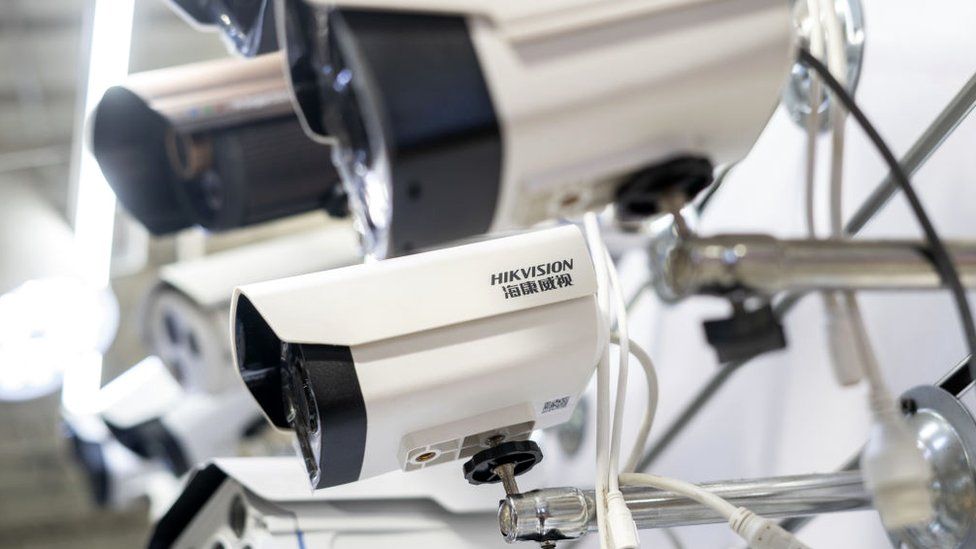
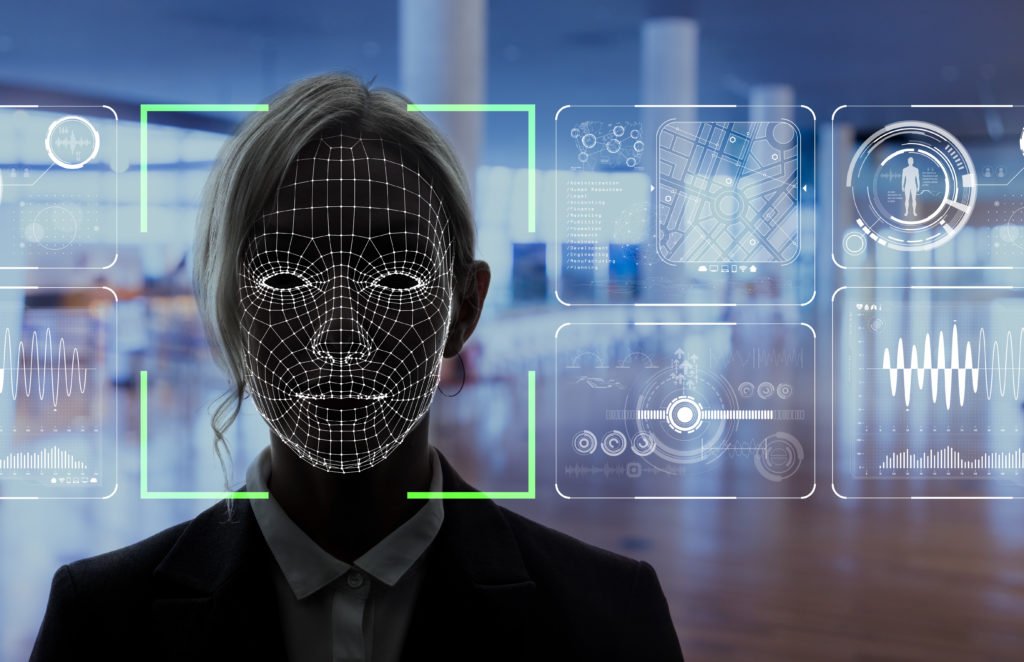
Because in the age of the internet and super-connectivity, all of these things, like face recognition have been raised to sophisticated arts ( Clear View ) that, instead of being forced on us, have quietly colonised our lives.

In times past, when frustrating circumstances demanded new ways of expressing what it means to be alive here a few for present day use.

The internet/cyberspace is wonderful, because it gives people the freedom to augment or totally change their identities, and this is a marvellous new dawn for human expression, a new step in human evolution. Nah, it’s a false dawn, because the internet is essentially a libertarian arena, and as such an amoral one (lots of ‘freedoms’ but with no attendant social obligations); it is a new jungle where we must watch our backs and struggle for survival, surely a backward step in evolution.

  1. The term ‘hyperobject’ was coined by the academic Timothy Morton, and it refers to phenomena that are so large and so far beyond the human frame of reference that they are not susceptible to reason but to AI.
  2. Immigration. The realisation that racism never really went away, it just camouflaged its fundamental failure of empathy as tolerance – this is a contention of the Black Lives Matter movement. The term is now making the short jump to other second- (eg LGBT) and third- (eg feminism) phase civil rights movements equally lulled by the illusion of tolerance. The goal is to go beyond feeling tolerated to being fully accepted and welcomed.

3. Deletion. This word is likely to be bandied about much more frequently in the decades ahead, as social media users realise that the websites they are on are not merely neutral ‘platforms’ for ‘social interaction’ but more like a kind of flypaper to which people and all of their personal data stick. Moreover, these websites are specifically designed to be addictive –

4) Global capitalism is, by its unjust and shambolic nature, going to experience crashes of increasing severity throughout the 21st Century, leaving us all to survive with growing desperation amidst its wreckage.

5. Shadow banking. Nobody knows how large this sector is, but current estimates put shadow banking at (£124 trillion) and OTC transactions at (£412 trillion), or roughly twice and six-and-a-half times the GDP of the entire Earth, respectively. Both sectors were of course heavily involved in creating the 2008 crash, and both have remained almost unaltered since then.

6. Attention crisis. The fact that no one can take their eyes off their smartphones – James Williams writes that “the liberation of human attention may be the defining moral and political struggle of our time”. Our minds are being rewired for commercial purposes. His argument that the social contract, the idea of human rights, should be extended to cyberspace is gaining traction.

Was the creation of the internet not supposed to be the dawn of a technological and informational utopia? Even its father, Tim Berners-Lee, the inventor of the world wide web, is convinced it is failing us.

7. Post-human. It seems that history has caught up with us, for our identities now extend into cyberspace in many ways, we no longer merely rely on our brain cells but now store much of our knowledge in technological clouds that function as extensions of our minds, and we live with the corresponding hardware in such intimacy (in the form of portable devices that are linked to our minds and even metabolisms in many ways) that it sometimes feels like we are only a few steps away from being ‘cyborgs’ in the true sense of the term. Gender, though, is still a problem.

8. Masculinity. There was a time when you’d ask a man what masculinity was and his response would be something like ‘not feminine’ (pejorative) and ‘not queer’ (pejorative). Note all the negativity.

These days it is increasingly a good thing to be a woman (new, broad definition) and to be queer (new, broad definition). Both are eating away at the old territory occupied by masculinity, according to writers such as Hanna Rosin, Cordelia Fine or Grayson Perry. What’s left is something of a void, aka ‘the crisis of masculinity’.

The challenge ahead for men is to formulate what they are, and want to be, rather than what they aren’t. How to open up this frontier?

I have a suggestion. For generations feminists and queer activists have been fighting to draw attention to masculinity’s toxic side-effects. At long last, mainstream men seem on the verge of accepting that there is a problem. It remains for us all to take this a step further, and work to understand how this toxicity has also been poisoning men on the inside.

9. Generation Why? It applies to anyone born in the digital age.

To roughly clarify our terms here: Baby Boomers are the generation born after World War Two and before 1965; Generation X (Douglas Coupland) the cohort born between the mid-1960s and 1980; Generation Y (Millennials) includes people born between 1980-ish and 2000; Generation Z (Post-Millennials) is anyone born after 2000. These categories don’t really have global reach, but they are evocative as metaphors.

The gist of Smith’s argument is that Facebook and its like are reductive: they cut us down to size and reprogrammed us to suit their own ends, which are advertising and selling things – exploitation. “Five-hundred million sentient people entrapped in the recent careless thoughts of a Harvard sophomore,” she calls it.

Smith was writing a few years ago; the number of Facebook users has now passed 2 billion. Generations Y and Z have led lives saturated by the internet, by social media platforms and apps, which have claimed to make life complete and have all of the answers all of the time. Is this paraphernalia worthy of them? Are they content to be trapped in the reveries of Zuckerberg and the like? No. There are detectable tremors of disaffection and radicalisation. I suspect that as more and more post-millennials reach voting age, Generation Why may be giving us some loud answers.

10. The new weird An emerging genre of speculative, ‘post-human’ writing that blurs genre boundaries and conventions, pushes humanity and human-centred reason from the centre to the margins, and generally poses questions that may not be answerable in any terms we can understand (hence the ‘weird’). In the present era, where potent advertising and PR forces are doing everything in their power to make truth irrelevant and directly hack our minds, and where politicians no longer seem to acknowledge the existence of facts, the word has sinister new applications.

The COVID-19 pandemic is a tragic reminder of how deeply connected we are. There is a clear and urgent need for concrete multilateral solutions, based on common action across borders for the good of all humanity, starting with extend beyond national governments, to include more participation from local authorities, civil society, business leaders and others.

How close we are to destroying our world with dangerous technologies of our own making.

No one country can tackle the problem’s on their own no matter how large their population, how strong their economy or how feared their military.

Everyone sees change everywhere, and I think it’s important to figure out where are we going to be five to 10 years from now.

We’re going to see more automation. We’re going to see, unfortunately, more technological unemployment.

I don’t think they will be able to ignore the issue of inequality. We’re seeing social tensions and all sorts of frictions proliferate. The sooner we start tackling it, the better. We really need to start thinking outside of the box.

In the end it back to that word Need:

We need to be less wasteful. We need to economize our resources. We need to be more pro-environment in our own behaviour as consumers.

Let’s replace it with Yugen.

“We can either save our world or condemn humanity to a hellish future.”

All human comments appreciated. All like clicks and abuse chucked in the bin.

Contact: bobdillon33@gmail.com
Share this:

  • Share on WhatsApp (Opens in new window) WhatsApp
  • More
  • Share on Mastodon (Opens in new window) Mastodon

THE BEADY EYE ASK’S: ARE WE ALL SO DUMB TO THINK THAT ARTIFICAL INTELLIGENCE CAN BE REGULATED?

02 Friday Jun 2023

Posted by bobdillon33@gmail.com in Uncategorized

≈ Comments Off on THE BEADY EYE ASK’S: ARE WE ALL SO DUMB TO THINK THAT ARTIFICAL INTELLIGENCE CAN BE REGULATED?

Tags

Age of Uncertainty, AI, AI regulations, AI systems., Algorithms., Technology, The Future of Mankind, Visions of the future.

( Three minute read)

Artificial intelligence is already suffering from three key issues: privacy, bias and discrimination, which if left unchecked can start infringing on – and ultimately take control of – people’s lives.

As digital technology became integral to the capitalist market dystopia of the first decades of the 21st century, it not only refashioned our ways of communicating but of working and consuming, indeed ways of living.

Then along came the the Covid-19 pandemic which revealed not only the lack of investment, planning and preparation that underlay the scandalous slowness of the responses by states around the world, but also grotesque class and racial inequalities as it coursed its way through the population and the owners of high-tech corporations were enriched by tens of billions. AWE 2022, AR, VR

It’s already too late to get ahead of this generative AI freight train.

The growing use of AI has already transformed the way the global economy works.

In this backdrop, AI can be used to profile people like you and me to such a detail which may well become more than uncomfortable! And this is no exaggeration.

This is just a tip of the iceberg!Full moon

So what if anything can be done to ensure responsible and ethical practices in the field.

Concern over AI development has accelerated in recent months following the launch of OpenAI’s ChatGPT last year, which sparked the release of similar chatbots by other companies, including Google, Snap and TikTok. The growing realization that vast numbers of people can be fooled by the content chatbots gleefully spit out, now the clock is ticking to not just the collapse of values that enshrine human life but the very existence of the human race.

“This is not the future we want.”

Now there is no option but to put in place international laws, not mandatory regulations, before AI is infringing human rights. However as we are witnessing with climate change, to achieve any global cooperation is a bit of a problem.

From the climate crisis to our suicidal war on nature and the collapse of biodiversity, our global response is too little, too late. Technology is moving ahead without guard rails to protect us from its unforeseen consequences.

So we have two contrasting futures one of breakdown and perpetual crisis, and another in which there is a breakthrough, to a greener, safer future. This approach would herald a new era for multilateralism, in which countries work together to solve global problems.

In order to achieve these aims, the Secretary-General of the United nations recommends a Summit of the Future, which would “forge a new global consensus on what our future should look like, and how we can secure it”. The need for international co-operation beyond borders is something that makes a lot of sense, especially these days, because the role of the modern corporation in influencing the impact of AI is in conflict with the common values needed to survive.

The principle of working together, recognizing that we are bound to each other and that no community or country, however powerful, can solve its challenges alone.” Any national government is, of course, guided by its own set of localised values and realities.

But geopolitics, I would argue, always underlies any ambition. The immaturity of the ‘Geopolitics of AI’ field leaves the picture incomplete and unclear so it requires the introduction of agreed international common laws.

Let Ireland hold such a Summit.

This summit could coordinate efforts to bring about inclusive and sustainable policies that enable countries to offer basic services and social protection to their citizens with universal laws that defines the several capabilities of AI i.e. identify the ones that are more susceptible to misuse than the others.

(It is incredibly important for understanding the current environment in which any product is built or research conducted and it will be critical to forging a path forwards and towards safe and beneficial AI.)

The challenges are great, and the lessons of the past cannot be simply superimposed onto the present.

For example.

The designers of AI technologies should satisfy legal requirements for safety, accuracy and efficacy for well-defined use cases or indications. In the context of health care, this means that humans should remain in control of health-care systems and medical decisions; privacy and confidentiality should be protected, and patients must give valid informed consent through appropriate legal frameworks for data protection.

Another For example the collection of Data which is the backbone of AI.

Transparency requires that sufficient information be published or documented before the design or deployment of an AI technology. Such information must be easily accessible and facilitate meaningful public consultation and debate on how the technology is designed and how it should or should not be used.

It is the responsibility of stakeholders to ensure that they are used under appropriate conditions and by appropriately trained people. Effective mechanisms should be available for questioning and for redress for individuals and groups that are adversely affected by decisions based on algorithms.

Laws to ensure that AI systems be designed to minimize their environmental consequences and increase energy efficiency.

If we want the elimination of black-box approach through mandatory explain ability for AI – Agreed or not agree should not be an option.

While AI can be extraordinarily useful it is already out of control with self learning algorithms that no one can understand or to be brought to account.

These profit seeking skewed algorithms owned by corporations are causing racial and gender-based discrimination.Following billions of dollars in investment, a major corporate rebrand and a pivot to focus on the metaverse, Meta and Zuckerberg still have little to show for it.

I firmly believe that the Government must engage in meaningful dialogues with other countries on a common international laws that are now needed to subject developers to a rigorous evaluation process, and to ensure that entities using the technology act responsibly and are held accountable.

Having said that, governments must keep their roles limited and not assume absolute powers.

Multiple actors are jostling to lead the regulation of AI.

The question business leaders should be focused on at this moment, however, is not how or even when AI will be regulated, but by whom.

Governments have historically had trouble attracting the kind of technical expertise required even to define the kinds of new harms LLMs and other AI applications may cause.

Perhaps a licensing framework is needed to strike a balance between unlocking the potential of AI and addressing potential risks.

Or

AI ‘Nutrition Labels’ that would explain exactly what went into training an AI, and which would help us understand what a generative AI produces and why.

Or

Take the Meta’s open source approach which contrasts sharply with the more cautious, secretive inclinations of OpenAI and Google. With Open Source models like this and Stable Diffusion already out there, it may be impossible to get the Genie back into the bottle.

The metaverse is not well understood or appreciated by the media and the public. The metaverse is much, much bigger than one company, and weaving them together only complicates the matter.

Governments should never again face a choice between serving their people or servicing their debt.

Still, the most promising way not to provoke the sorcerer would be to avoid making too big a mess in the first place.

All human comments appreciated. All like clicks and abuse chucked in the bin

Contact: bobdillon33@gmail.com

Share this:

  • Share on WhatsApp (Opens in new window) WhatsApp
  • More
  • Share on Mastodon (Opens in new window) Mastodon

THE BEADY EYE ASK’S: ARE WE WITH TECHNOLOGY RISKING LOSING EVEN MORE THAN WE THINK?  WE  ARE NO LONGER AT AN AGE TO POSTPONE ANYTHING.

31 Wednesday May 2023

Posted by bobdillon33@gmail.com in Uncategorized

≈ Comments Off on THE BEADY EYE ASK’S: ARE WE WITH TECHNOLOGY RISKING LOSING EVEN MORE THAN WE THINK?  WE  ARE NO LONGER AT AN AGE TO POSTPONE ANYTHING.

( Seventeen minute read)

As our technological prowess has increased, so has our ability to transform landscapes and the planet.

Up to now the defining trait of the human species has been our tendency to shape our environment and surroundings to suit us.

Today we can divert entire rivers, reclaim land from the oceans, chop down swathes of forest, level mountainsides and build new ones as we constantly seek to improve the physical world around us.

However isn’t it clear that our actions are taking a toll on the health of our planet, in the guise of climate change, the destruction of habitats, the loss of species and pollution. Attempts to resurrect species that have gone extinct or use gene-editing technologies to create artificial life are examples of this.

Right now, we’re in this era of stopgaps.

Society used to be able to make a long-term plan: people built long-term infrastructure and thought a bit further out.

That’s not something that happens now: We go to quick fixes, when we need a cultural change in values.

To enable more deliberate decision-making, if we focus on trying to make the world  better rather than simply protecting what remains of the natural world are we just turning our species with algorithms into an senility of greed, paying lips service to what is really happing

The way we talk about climate change can impact the solutions we develop. We can’t solve any problems, especially at the global scale, if we don’t talk about the problem and the best way to address it.

I think this is because of people do not wanting to talk about it as they are incapable of imaging just like a nuclear war the concepts of a world unliveable, because they don’t have the body of knowledge, and it would need 20 or 30 years to develop it. “Humans are a very flawed species.”

So the world of 2050 will be unimaginably different in many ways, even if we can safely assume people will still generally have two arms, two legs and an unpleasant smell if they don’t wash for long periods of time.

Right about mid-century means it will be a crunch point: Climate change will be really apparent.

However over the past couple of years new AI tools have emerged that threaten the survival of human civilisation from an unexpected direction. For example, AI has gained some remarkable abilities to manipulate and generate language, whether with words, sounds or images. AI has thereby hacked the operating system of our civilisation.

Language is the stuff almost all human culture is made of. Human rights, for example, aren’t inscribed in our DNA.


Let’s look at the present scenario with the Climate.

Why all the silence about climate change?

Why isn’t this topic filling our conversations, the way a tsunami would, or a major earthquake?

I ask again, why are not more people crying out?

Some of the smartest people think we will not be able to act in time, that we will continue to delay until we can’t stem the rising waters, the droughts, the refugees, the failed states, the wars fought over precious resources like arable land, food, water.

If we have no hope of having a better world, then it becomes a more divided world.

Let me suggest some of the reasons.

Continued efforts that largely focus on persuading people about the realities of climate change “is going to be wasted money, wasted effort, wasted air. It sometimes seems as though climate change conversations can be divided into two narratives: People are either overly optimistic about solutions — or claim it’s “too late” to act.

Will enough human beings actually undertake any of the necessary actions?

Climate change is a complex problem and proposing “simplistic, all-encompassing grand solutions” is not the answer.

We have to focus on where most emissions are and focus on reducing that as quickly as possible. Its not possible for any one person to be capable of single-handedly creating major change. Individual action should be seen as part of an ecosystem of change that requires systemic level changes. Social solutions that address inequities and environmental justice issues “need to go hand-in-hand” with discussions about physical or economic solutions to climate change.

A key component of talking about climate issues revolves around making climate solutions equitable.

If we just addressed the question from the standpoint of, ‘Climate change is here, we have to reduce greenhouse gases,’ but don’t talk about how we do that, then you end up with communities being presented with what we call false solutions or our legislature being presented with false solutions.

THE CLIMATE  IS NOW IN THE PROCESS OF CHANGING NOT JUST WHERE WE WILL LIVE, BUT HOW WE LIVE.

The specifics of what will change are not for this piece, but the human response very much is. humanity, in time, reaches net zero when it comes to emissions.

In that scenario, we will live in a world where plant proteins replace meat in everyday consumption, where electrically powered networked mass transit reaches into the suburbs and beyond, a world of video-conferencing and remote attendance steadily chipping away at business flights. A world in which mega scale injections of sulphur dioxide into the stratosphere turn the heavens a milky-white, and a whole generation never sees a clear blue sky, in order to reflect more of the sun’s rays and pause the greenhouse effect.

It is one in which we turn on gigantic processing plants that do nothing but extract carbon dioxide from the air and pump it underground into disused oil wells. It is one in which whole cities are abandoned and populations relocated to avoid the worst effects we can’t prevent.

We need everyone to be a climate communicator and not just rely on one or two people or not just scientists because we’re going to be living with this problem for a long time.

——-

So what are the key ideas and designs that could influence the world of tomorrow?

(Look, it can’t all be high-tech. There is also this way of looking at it.)

There is, perhaps, little point in dwelling on the 50% chance that AGI does develop.

If it does, every other prediction we could make is moot, and this story, and perhaps humanity as we know it, will be forgotten.

And if we assume that transcendentally brilliant artificial minds won’t be along to save or destroy us, and live according to that outlook, then what is the worst that could happen – we build a better world for nothing?

How ever if we are guessing the future from simple trend lines, there is another one that we need to acknowledge:

The engineering of any possible transition that can avert catastrophic climate breakdown must be paramount in the minds of governments actions because there are not enough rare earth metals for wind turbines and all the other hardware we will need for renewable energy which means eight billion people will go to hell.

We all know this.

However what we see are countries governments offering billions in sub’s to attract the manufacture of batteries for electrical cars. The producing the average 60kWh battery alone generates nine tonnes of CO2.

In fact, the batteries that power electric vehicles may also be their Achilles heel.

These manufacturing companies will go broke in the long term.

Well, fair enough, but questions arise when we dig into the inner layers of electrical vehicles and see how sustainable their components are. They already have a significant environmental impacts, ranging from the mining for materials and the water and energy used in making new batteries and vehicles, through to the hazardous waste from discarded batteries.

So even though EVs may help reduce carbon dioxide (CO2) emissions over their lifetime, the battery that powers them starts its life laden with a large environmental footprint.

In about 2025, when millions of EV batteries reach the end of their initial life cycles, a streamlined recycling process will be needed.

A plug-in hybrid has a battery and an electric motor, are made from advanced materials to reduce its weight but it also has a petrol or diesel engine. At a stroke, the efficiencies of one are cancelled out by the inefficiencies of the other. Not even a 30-mile electric-only touring range can fix that.

The reason all manufacturers currently use lithium is that it provides a lighter battery that lasts longer. That gives the car greater range without recharging, and it make possible a much lighter car. In other words, lithium batteries are cheaper.

You can’t tinker with an electric car as you can a conventional one because you’ll very likely be electrocuted.

——–

Lithium batteries are more internally complex than lead-acid batteries, composed of many carefully assembled parts (Credit: Getty Images)

In the age of electrification, we take rechargeable batteries for granted. From phones and laptops to hi-tech cameras.

The main use of rare earth metals now is for screens, smart phones, games consoles, electronics and laptop computers. You can have a phone, a computer or a screen without rare earth metals. – these batteries have one thing in common. They’re all made of lithium and it costs more to recycle them than to mine more lithium to make new ones.

Lithium is a metal used in almost all electric vehicle batteries today. About half of global production of lithium currently goes to electric vehicles. And in future we will need to increase the production of electric vehicles from hundreds or thousands to hundreds of millions. That will require vast amounts of lithium.

In South America, huge lithium reserves are using up water by the gallon, causing devastating water-related conflicts among locals. Most of the known deposits of lithium rich brine are in the arid highlands where Bolivia, Chile and Argentina come together. It is also mined from hard rock in China or the United States where a whopping 2.2 million litres of water is needed to produce one ton of lithium. The mining is also toxic, because large amounts of acid are used in the processing.

The result is that ancestral homelands become unliveable.

That’s not to mention that the world’s oceans contain an estimated 180 billion tons of lithium. But it’s diluted.

Lithium is not the most environmentally friendly chemical element we could be using. The transition to green energy does not have to be powered by destructive and poisonous mineral extraction.

More important, batteries do not have to be made out of lithium. The way forward is hydrogen fuel cells.

We can no longer treat the batteries as disposable.

Similar arguments apply to rare earth metals.

It is not possible now to tell what metals will be needed for which industries in ten years’ time.

There are several different kinds of rare earth metals, each with different properties. They are widely used, in small amounts, in wind turbines, car batteries and much other technology necessary for climate change.

It is often said that this rarity is an obstacle to decarbonizing the world.  This is not quite right.

Right now most rare earth metals are mined in China. There is nothing special about the geology of China.  Most of them could be mined in the United States, or a range of other countries.


Next we have AI. 

There is no doubt that if AI is used for the benefit of humanity it could able us to conquer many of our problems, like new medical treatments diseases, exploring the universe and beyond, addressing inequality etc, the list is endless with our own very extinction at the end.

With self learning algorithm’s, killings drones and the internet far more entrenched now, with its chaotic effect on our lives showing no sign of abating, its far too late for regulation.  It is at least predictably unpredictable and has to be harnessed by International laws before it develops its own fee will. 

Technology really has made great leaps and bounds in the past 16 years, nowhere more clearly than AI  hidden behind all its hype is data hoarding which can be misguided or well-intentioned, but it’s always bad for the environment.

Take the I Cloud the great AI techno rubbish dump of data. Pumping 5.8 million tonnes of CO2 into the atmosphere this year as a result of storing unnecessary ‘dark data’ – this translates to more emissions than 80 individual countries. 

Its no wonder the cost of energy is going up.

90% of what’s stored in the Cloud is undulating rubbish produced by social media weapon – the Smart Phone.

(After half a century of single-purpose consumer electronics, it was difficult to perceive how all-encompassing a single device like the smartphone could become.)

Smartphone penetration in the west is now as high as it looks likely to go, with a loss of privacy that is going to be very difficult for people that haven’t figured out how to deal with that. However the world changes over the next 30 years, won’t be as a result of more Britons or Americans getting phones.

Computational machines will have surpassed the processing power of all the living human brains on Earth. The cloud will also have absorbed the thinking of the many dead brains on Earth, too – and we all need to work together to survive.

So I predict that we will see a lasting cooperation between the human race and the computational machines of the future, as to which sets the playing field is still up for grabs.  

——

Is there any other way people live their lives?

Artificial intelligence brains simply cannot cope with change and unpredictable events.

The complexity and ambivalence of people’s relationship with daily mobility is decreasing with services and shopping going online  Here, commuting is seen simultaneously as a tiresome burden, but also as a key source of interaction with the wider world which is important in sustaining people’s sense of daily balance.

Furthermore, ‘compensatory mobilities’ emerge as a widespread practice which helps people retain aspects they miss about commuting while working from home. This practice, underscores the intrinsic enjoyment associated with being on the move, and is important for unravelling the potential impacts of working from home on people’s mobility carbon footprint.

Understanding experiences of a less mobile life under COVID-19 offers insights into the taken-for-granted meanings of mobility in daily life, and into new opportunities for low-carbon mobility transitions associated with working from home.

Perhaps if we were to consider turning our villages and towns, districts of our cities, into green spaces, surrounded with local businesses. WE COULD RETURN TO LIVING WITHOUT THE NEED TO COMMUTE FROM OR TO SUPERMARKETS THAT SUCK THE SOUL OUT OF TOWN CENTERS FOR PROFIT.

WE MIGHT DISCOVER NEW EXPERIENCES AND ROUTINES THAT HOLD OUR DAILY LIFE TOGETHER AND MAKE IT PLEASANT, RATHER THAN BEING DRIVEN BY ALGOTHRIMS.

The bottom line is that Western Civilization, as we know it is unsustainable, because everything about Capitalism is built around economic growth and continuous accrual of increasing wealth, while despising those who fail to win a growing stake.

All for brief moments of superficial comfort that are considered vital for happiness.

It is too late to stop our climate from getting worse, no matter what we do, and it is highly unlikely we

 
shall avoid human extinction if we dont start questioning just how far beyond the planet’s resources we
 
are already extended.
 
The overwhelming challenges are: end livestock farming , stop burning fossil fuels, stop felling the rain
 
forests trees & avoid other GHG emissions.
 
Proposed solutions:
 
Nuclear fusion, Nuclear fission, Green hydrogen, Wind farms, Solar panels, Hydropower, Plant a trillion
 
trees & maybe I’ve missed some.
 
In order for any possible solutions to be successful it would require the world’s powerful people
 
( Politicians, farming organization leaders, investors, corporate leaders etc.,) to come together, speedily, to
 
tackle these challenges, and in the short amount of time to “contributing to a community that maintains
 
quality of life with enhanced social connectivity and minimal emissions.
 
Our species is hard-wired to pay attention to the present.
 
We are more motivated by our emotions than by rationality, more by the moment than by the future.
 
So we tend to pay attention to current problems, both personal and civic, and put climate change out of
 
our minds.
 
We have contribute to this with technology disempower ourselves, truncated ourselves from nature.
 
As a matter of fact, government and business are in an unholy alliance that often stalls social change,
 
including the desperately needed change in our emissions rate.
 
We can’t count on them to lead.
 
People are overwhelmed by the enormity of the problem, coupled with the lack of political will,
 
worldwide, so they distract themselves from their fear and grief, and just get on with their everyday lives.
 
Human nature will mean I am asking too much and that as a result: Human extinction is unavoidable.
 
We have to try.
 
We cannot let the worst happen without giving our very best effort. Our very sense of decency and
 
morality compels us.
 
“History will have to record that the greatest tragedy of this period of social transition was not the strident clamour of the bad people, but the appalling silence of the good people.” 
 
Morales was unable to nationalize corporations. To transform society, we must begin by transforming
 
the media .
 
All human comments appreciated. All like clicks and abuse chucked in the bin.
 
Contact: bobdillon33@gmail.com

Share this:

  • Share on WhatsApp (Opens in new window) WhatsApp
  • More
  • Share on Mastodon (Opens in new window) Mastodon

THE BEADY EYE SAYS. WHEN IT COMES TO TECHNOLOGY THE JACK IS OUT OF THE BOX AND IT’S MAKING A PIGS MICKEY OUT OF THE WORLD WE LIVE IN.

05 Friday May 2023

Posted by bobdillon33@gmail.com in Uncategorized

≈ Comments Off on THE BEADY EYE SAYS. WHEN IT COMES TO TECHNOLOGY THE JACK IS OUT OF THE BOX AND IT’S MAKING A PIGS MICKEY OUT OF THE WORLD WE LIVE IN.

( Twenty minute read)

ADVANCING MORE RAPIDLY THAN ANY OTHER INNOVATION IN OUR HISTORY THE PROBLEMS WITH TECHOLOGY ARE BECOMING CLEARER BY THE DAY.  

The sociological/psychological fallout of AI is not decades away: right here, right now, we are watching in slow-motion the major meltdown of our shared sense of reality.

The discovery that AI can treat language as probability, and from there on, most anything as a “language” of sorts:

DNA sequences, yep, robotics and motoric learning, yes actually, music, definitively, generation and recognition of images and sounds, yes, hacking and cryptography, also yes, persuasion, yes of course…

It is that’s term or concept of Augmented Intelligence which implies a replacement of human intelligence that is becoming less threatening than the admittedly ominous-sounding ‘artificial intelligence’.  It will be increasingly hard to know what is real and what is not. It will be hard to resist manipulation and persuasion. It will be hard to know where we begin and the agency of the machine ends.

It will be increasingly hard not to lose our minds as our shared sense of self and reality (our sociality, which we rely upon for our sanity) fractures. The scale and effect of this fact, in its sociological and psychological ramifications (not to mention economic and political ones) is in itself a rollercoaster ride of Nietzschean proportions.

Even if we remain agnostic about Nick Bostrom’s existential risk superintelligence general AI, we can be fairly certain that we have a sociological moment of impact starting more or less yesterday.

There’s just no way new capacities of this magnitude come about with this kind of speed, and then everything just goes back to normal. For all we know, normal might never happen again.

——-

By definition, the word symbiosis is a term commonly used in biology to describe the relationship between two different organisms that live together in close association, and both partners benefit from the relationship.

TO A CERTAIN EXTENT THIS IS WHAT IS HAPPENING WITH THE APPLICATION OF TECHNOLOGY TO OUR LIVES, AS MANY PROBLEMS SIMPLY CANNOT BE FROMULATED OR RESOLVED WITHOUT THE HELP OF COMPUTERS.

AN OTHER WORDS:

The computers should be acting as a “serving agent,” providing the human with the information they needed to make informed decisions.

Recognized that the human mind have limitations, such as limited memory capacity and the inability to perform complex calculations quickly. Computers, on the other hand, have almost unlimited memory capacity and perform calculations at incredible speeds. By working together, humans and computers could overcome each other’s limitations and achieve a level of productivity that was not possible before.

Computers are now responsible for performing complex computations and storing vast amounts of information, while humans are be removed from making judgements and decisions based on the information provided by the computer.

One of the main objectives with the growing scale and complexity of information processing tasks of human-computer symbiosis is to bring the computer effectively into the formative parts of technical problems.

‘The question is not ‘What is the answer?’ The question is ‘What is the question?

THAT QUESTION BECOMES.   CAN WE LIVE DIGTILIZED LIVES?

Nowadays, many intelligent systems work in a symbiotic relationship with humans.

For example,

Every time we rate a movie on Netflix, we are helping artificial intelligence understand our behaviour and in the future recommend movies based on our preferences.

In the financial industry, computers are widely used to process large amounts of data in real-time, identify trading patterns, and make accurate predictions. Financial analysts rely on computational analysis to buy and sell stocks or make risky financial moves.

The market place, and its movements, which affect global economies are run by Algorithms for profit.

In the e-commerce sites we use, AI can make inferences and anticipate some tasks based on our shopping lists and recommend products. This is also a symbiotic and collaborative relationship.

Grammarly is another example of how the symbiosis between humans and computers is being utilized in the writing field. Through its AI technology, the tool is capable of suggesting real-time grammatical and spelling corrections, and the user’s experience when using it can contribute to the evolution of their ability to improve their vocabulary, as the tool offers suggestions for synonyms and more suitable word choices.

There are hundreds of other examples, but in order to build computational systems that adapt to human needs, we also need to understand how these intelligent systems work and execute tasks, and this is increasingly becoming impossible with machine learning.

Looking at the current context, the human-computer symbiosis becomes increasingly important as interactions between humans and machines become more frequent and complex, enabling users to interact with technology in a natural way.

As our interaction with intelligent systems increases every day, the principles of human-computer symbiosis are also central to living a life.


Defining the term “Augmented Intelligence” can be quite challenging since there are many definitions.

Different researchers and practitioners tend to define it in their own unique way.

I define it as the erosion of our ability to reason for ourselves.

AI-enabled frontier technologies are helping to save lives, diagnose diseases and extend life expectancy. In education, virtual learning environments and distance learning have opened up programmes to students who would otherwise be excluded. Public services are also becoming more accessible and accountable through blockchain-powered systems, and less bureaucratically burdensome as a result of AI assistance. Big data can also support more responsive and accurate policies and programmes.

The use of algorithms can replicate and even amplify human and systemic bias where they function on the basis of data which is not adequately diverse. Lack of diversity in the technology sector can mean that this challenge is not adequately addressed.

Today, digital technologies such as data pooling and AI are used to track and diagnose issues in agriculture, health, and the environment, or to perform daily tasks such as navigating traffic or paying a bill.

They can be used to defend and exercise human rights – but they can also be used to violate them, for example, by monitoring our movements, purchases, conversations and behaviours. Governments and businesses increasingly have the tools to mine and exploit data for financial and other purposes.

Data-powered technology has the potential to empower individuals, improve human welfare, and promote universal rights, depending on the type of protections put in place.

Social media connects almost half of the entire global population.

It enables people to make their voices heard and to talk to people across the world in real time. However, it can also reinforce prejudices and sow discord, by giving hate speech and misinformation a platform, or by amplifying echo chambers.

How to manage these developments is the subject of much discussion – nationally and internationally – at a time when geopolitical tensions are on the rise. This war of information is becoming so important that it can influence democracy and the opinion of people before the vote in an election for instance.

We’re now on the verge, as a society, of appropriately recognizing the need to respect privacy in our Web 2.0 world.A man with freedom taped over his mouth.

In a world where everyone has an opinion and, more importantly, where everyone has the ability, if they choose, to share it with the rest of the world, one person’s hate speech can sometimes be another’s right to free speech.

Social media companies need to take “more responsibility” for what is on their platforms. There has to be a reckoning for what social media is making available [online].

IRELAND IS THE FIRST COUNTRY TO ADDRESS THE ABOVE.

As things stand in Ireland, hate speech is defined as any communication in public intended or likely to be threatening or abusive, and likely to stir up hatred against a person due to their race, colour, nationality, religion, ethnicity, Traveller origins, and/or sexual orientation. The proposed law will also make it an offence to deny or trivialise genocide. It will define a hate crime as any criminal offence which is perceived by the victim, or any other person, to have been motivated by prejudice.

The new legislation will criminalise any intentional or reckless communication or behaviour that is likely to incite violence or hatred against a person or persons because they are associated with a protected characteristic. The penalty for this offence will be up to five years’ imprisonment.

The provisions of the new legislation have been crafted to ensure that they will capture hate speech in an online context.

THIS IS THE FIRST SMALL STEP IN THE RIGHT DIRECTION TO COMBAT UNREGULATED TECHNOLOGY.

For most of the past decade, public concerns about digital technology have focused on the potential abuse of personal data.

This debate is NOW entering a new phase.

As companies increasingly embed artificial intelligence in their products, services, processes, and decision-making, attention is shifting to how data is used by the software—particularly by complex, evolving algorithms that might diagnose a cancer, drive a car, or approve a loan.

The problem crops up in many other guises:

For instance, in ubiquitous online advertisement algorithms, which may target viewers by race, religion, or gender.

Software used by leading hospitals exhibit significant racial bias to prioritize recipients of kidney transplants discriminated against Black patients.

In dealing with biased outcomes, regulators have mostly fallen back on standard antidiscrimination legislation.

That’s workable as long as there are people who can be held responsible for problematic decisions. But with AI increasingly in the mix, individual accountability is undermined.

Some algorithms make or affect decisions with direct and important consequences on people’s lives.

They diagnose medical conditions, for instance, screen candidates for jobs, approve home loans, or recommend jail sentences. In such circumstances it may be wise to avoid using AI or at least subordinate it to human judgment. Using AI could therefore increase human decision-makers’ accountability, which might make people likely to defer to the algorithms more often than they should.

The degree of trust in AI varies with the kind of decisions it’s used for. When a task is perceived as relatively mechanical and bounded—think optimizing a timetable or analysing images—software is regarded as at least as trustworthy as humans.

But when decisions are thought to be subjective or the variables change (as in legal sentencing, where offenders’ extenuating circumstances may differ), human judgment is trusted more, in part because of people’s capacity for empathy. This suggests that companies need to communicate very carefully about the specific nature and scope of decisions they’re applying AI to and why it’s preferable to human judgment in those situations. For example, in machine diagnoses of medical scans, people can easily accept the advantage that software trained on billions of well-defined data points has over humans, who can process only a few thousand.

On the other hand, applying AI to make a diagnosis regarding mental health, where factors may be behavioural, hard to define, and case-specific, would probably be inappropriate. It’s difficult for people to accept that machines can process highly contextual situations. And even when the critical variables have been accurately identified, the way they differ across populations often isn’t fully understood—which brings us to the next factor.

An algorithm may not be fair across all geographies and markets.

Just like human judgment, AI isn’t infallible. Algorithms will inevitably make some unfair—or even unsafe—decisions.

The right…to obtain an explanation of the decision reached” by algorithms, MUST BE ENSHRINNED IN LAW.

But what does it mean to get an explanation for automated decisions, for which our knowledge of cause and effect is often incomplete?

Should we require—and can we even expect—AI to explain its decisions?

However, most people lack the advanced skills in mathematics or computer science needed to understand, let alone determine whether the relationships specified in it are appropriate. And in the case of machine learning—where AI software creates algorithms to describe apparent relationships between variables in the training data—flaws or biases in that data, not the algorithm, may be the ultimate cause of any problem.

If AI starts to listen to us and adapt to our every move, we can only “win” by mirroring it, and being equally attentive to it, even to the point of treating this wild piece of silicon clockwork as though it were alive.

Because, in the end, when we don’t know where we begin and AI ends, then AI is essentially as alive as anything.

AI can only exist because it feeds on human civilization and knowledge coded into text and other digestible data — but humans are in turn subjected to the power of AI, and thus deeply reshaped by it, because AI coordinates more data than we can and knows, well, us. The AI soon knows us better than we can know it, or even know ourselves.

If we seek relational proportionality and resonance across the AI-humanity axis, we must of course also feed this intra-action with socially proportional perspectives, i.e. with social justice.

Our very civilizational sanity and survival depend upon balancing the informational diet of the AI, so that it can itself produce emergent patterns that resonate through and across societies… But the Internet is roughly as skewed and distorted as the power relations of global humanity at large.

It acts on the whole with great efficiency and speed, but it cannot speak for the whole.

What you can expect is increasing dissonance, a spiralling insanity, as the “human-AI-AI-human intra-action” system disconnects from the rest of reality, from the larger scheme that contains the actual multiplicity of the world’s perspectives.

If we don’t want to spiral into virtual madness with real social consequences, we need to balance out the reality projected into the digital realm: the encoded information. It mean’s that AI itself must be used to more proportionally and correctly represent the lives, experiences, and embodied — or intellectual — knowledge of the world.

In short, if we apply the AI to balancing out human-perspectives-as-projected-onto-the-web-as-data, not only can we get a more just and sane society; we can also help to retain an AI that remains on the sane and just side in the first place.

Or, yet more succinctly: A sane AI is also a social justice AI, but one that dodges the traps of present-day social justice and intersectionality discourses.

Let me underscore: If we fail to do this, we instead unleash AI powers that widen social gaps and fracture knowledge systems into different continents where people become entirely unable to comprehend one another, leading to social and psychological decay.

If we want a world that is not driven by digitalization ,THE TIME IS NOW TO DO SOME THING ABOUT IT.

All human comments appreciated. All like clicks and abuse chucked in the bin.

Contact: bobdillon33@gmail.com
Share this:

  • Share on WhatsApp (Opens in new window) WhatsApp
  • More
  • Share on Mastodon (Opens in new window) Mastodon

THE BEADY EYE ASKS: DOES ENGLAND NEED A CORNATION?

01 Monday May 2023

Posted by bobdillon33@gmail.com in Uncategorized

≈ Comments Off on THE BEADY EYE ASKS: DOES ENGLAND NEED A CORNATION?

Tags

DOES ENGLAND NEED A CORNATION?

( Ten minute read)

Before answering this question I am not a Royalist fan.

King Charles III’s Coronation will take place on Saturday 6 May 2023.

It formalises the monarch’s role as the head of the Church of England and marks the transfer of their title and powers.

However, it is not actually necessary for the monarch to be crowned to become King, Edward VIII reigned without a coronation – and Charles automatically became King the moment Queen Elizabeth II died.

This coronation it’s about privilege and everything that a multi-faith, multi-ethnic Britain isn’t about.

European monarchies got rid of coronations long ago.  The British ceremony is the only remaining event of its type in Europe.

The idea that one man, who by accident of birth, is being anointed and set above the rest, who is unelected, and doesn’t represent Britain religiously or ethnically, jars badly.

It is an state affair, littered with curiosities: which means the government controls the guest list.

A medieval oath, holy oil poured on to a 12th Century spoon, and a 700-year-old chair housing a stone that supposedly roared when it recognised the rightful monarch.

850 community representatives have been invited to the ceremony in recognition of their charitable contributions. More than 6,000 armed forces members will take part, making it the largest military ceremonial operation in 70 years.

The Coronation will be paid for by the UK government. Clearly it won’t be cost-free.

St Edward's Crown

In an uncertain world where leaders break international rules of law all the time,  all of this sounds like something from a bygone age, it is.

It has no constitutional value, ( not that England has a written constitute.) but has remained much the same for more than 1,000 years. The monarchy’s legitimacy is based on tradition and continuity, any meaningful change would require a major overhaul, like disestablishment of the Church of England or a referendum on the monarchy.

In the coming days, there will be endless commentators ready to declare that the coronation makes them “proud to be British”, while anyone who criticises any aspect of it will be accused of “hating their country”

While standing beside the 700-year-old Coronation Chair, the monarch is presented to those gathered in the Abbey by the Archbishop of Canterbury. The congregation shouts “God Save the King!” and trumpets sound. The sovereign swears to uphold the law and the Church of England. (The UK’s religious landscape for example has “changed beyond all recognition” since the last coronation in 1953)

A gold cloth is held over the chair to conceal the King from view. The Archbishop of Canterbury anoints the King’s hands, breast and head with holy oil made according to a secret recipe, but known to contain ambergris, orange flowers, roses, jasmine and cinnamon.( It’s an Anglican ceremony and the anointing is essential to that as the conferment of God’s grace on the monarch.)

The sovereign is presented with items including the Royal Orb, representing religious and moral authority; the Sceptre, representing power; and the Sovereign’s Sceptre, a rod of gold topped with a white enamelled dove, a symbol of justice and mercy.

Finally, the Archbishop places the solid gold, 17th Century St Edward’s Crown on the King’s head. (That crown contains the Cullinan II diamond, sometimes called the Second Star of Africa. It was given to Edward VII on his 66th birthday by the government of the Transvaal – a former British crown colony – in what is now South Africa. The other controversial stone is the Koh-i-Noor, which is part of the Queen Mother’s coronation crown. It is one of the largest-cut diamonds in the world. India, Pakistan, Afghanistan and Iran have all made claims to it.)

The King leaves the Coronation Chair and moves to the throne. Peers kneel before the monarch to pay homage. The Queen Consort will then be anointed in the same way and crowned.

The Coronation Procession is also expected to be more modest than Queen Elizabeth’s furnal procession which had 16,000 participants, and took 45 minutes to pass any stationary point on the 7km (4.3 miles) route at cost estimated to be 6/7 million.

The Queen Mother’s in 2002 reportedly cost £5.4m.

Clearly Charles coronation won’t be cost-free with an estimate of 100 million. ( Two for the price of one)

———King Charles and Camilla at a military standards ceremony at Buckingham Palace on 27 April 2023.

The coronation is the King’s chance to plug into the power of the past and shape his future.

The royals seem to prefer ad hoc philanthropy to actually funding public services with an event that is literally about deference to hereditary privilege. (The £1bn Duchy of Cornwall estate – previously inherited by Charles and recently passed on to Prince William – is not liable for either corporation tax or capital gains tax.) 

Charles notably didn’t pay a single penny of inheritance tax on the fortune the late Queen left him last year (the jewellery alone was estimated to be worth at least £533m), though he has “volunteered” to pay income tax, as he also did on the duchy estate.

Volunteering” to pay tax feels a little like a wanted criminal “volunteering” to hand himself over to the authorities. It doesn’t seem to be something you typically get a choice in.

It is inevitable that many Britons will view the coronation with a more gimlet eye this time around. Many in the country are more focused on navigating a cost-of-living crisis than celebrating a dysfunctional royal family.

Now, England is a competitive society, based on people who’ve earned their position through achievement.  Many Britons, viewed it mostly as a welcome holiday.

He’s inheriting a crown that has been shaken by events over the last five years.

Perhaps he might make a jester to the state of the nation  (The Firm or Monarch PLC is worth an astounding $28 billion at least.) and reimburse the tax payer.  A man whose car collection alone is estimated to be worth more than £6m asking the rest of us to celebrate his kingship by helping out at the local food bank feels, shall we say, a little “let them eat quiche”.

Perhaps in order to have a voice he will buy back HMS Britannia. The “soft power” of the monarchy cannot be underestimated.

Finally:

Can a modern nation call itself democratic if it retains an unelected head of state? Is a growing reliance on charity a point of celebration or shame?  Does sanitising the existence of royalty normalise wider inequality? 

In the end in a world run more and more by Artificial Intelligence, monarchies seem to be purposeless antiquated relics, anachronisms that ought to eventually give way to republics.

To understand why, it is important to consider the merits of monarchy objectively without resorting to the tautology that countries ought to be democracies because they ought to be democracies.

Here are the benefits of a Monarchs in the 21st century.

Monarchs can rise above politics in the way an elected head of state cannot. Monarchs represent the whole country in a way democratically elected leaders cannot and do not. The choice for the highest political position in a monarchy cannot be influenced by and in a sense beholden to money, the media, or a political party.

Monarchs are especially important in multi-ethnic countries.

The existence of a monarch makes it difficult to radically or totally alter a country’s politics. Monarchies have the gravitas and prestige to make last-resort, hard, and necessary decisions — decisions that nobody else can make.

Monarchies are repositories of tradition and continuity in ever changing times.

Most monarchies rule within some sort of constitutional or traditional framework which constrains and institutionalizes their powers.  

 Since anyone, regardless of their personality or interests, can by accident of birth become a monarch, all types of people may become rulers in such a system.

Today’s heirs are educated from birth for their future role and live in the full glare of the media their entire lives.

The pomp and pageantry attracts million in tourist revenue and no place does it better than the land of King Arthur and the knight of the round table. As in previous centuries, monarchy will continue to show itself to be an important and beneficial political institution wherever it still survives.

As a diamond-encrusted crown is placed on the king’s head, your packed local homeless shelter is desperate for help. Don’t you feel proud to be British?

The Beady Eye wishes him and his wife all the best on the 6th May.

Long may the Monarchs exist providing they are solely a tourist attraction that pay for themselves.

All human comments appreciated. All like clicks and abuse chucked in the bin

Contact: bobdillon33@gmail.com
Share this:

  • Share on WhatsApp (Opens in new window) WhatsApp
  • More
  • Share on Mastodon (Opens in new window) Mastodon
← Older posts
Newer posts →

All comments and contributions much appreciated

  • THE BEADY EYE ASKS. ARE YOU A MEAT PROXIE? August 28, 2026
  • THE BEADY EYE SAYS BEFORE ITS TOO LATE WE MUST BUILD A GLOBAL FRIENDLY FUTURE. August 21, 2026
  • THE BEADY EYE SAYS. August 20, 2026
  • THE BEADY EYE SAYS: YOUR BELIEFS DON’T COME FROM OBJECT REALITY—— THEY ARE STORIES YOUR MIND CONSTRUCTS, FEELS INTO, AND THEN DEFENDS AS TRUTH. August 15, 2026
  • THE BEADY EYE SAYS. THERE IS OFTEN TALK ABOUT HUMAN RIGHTS, BUT IT IS ALSO NECESSARY TO TALK OF THE TRUTH AND RIGHTS OF HUMANITY. August 14, 2026

Archives

  • August 2026
  • July 2026
  • June 2026
  • May 2026
  • April 2026
  • March 2026
  • February 2026
  • January 2026
  • December 2025
  • November 2025
  • October 2025
  • September 2025
  • August 2025
  • July 2025
  • June 2025
  • May 2025
  • February 2025
  • January 2025
  • December 2024
  • November 2024
  • October 2024
  • September 2024
  • August 2024
  • July 2024
  • June 2024
  • May 2024
  • April 2024
  • March 2024
  • February 2024
  • January 2024
  • December 2023
  • October 2023
  • September 2023
  • August 2023
  • July 2023
  • June 2023
  • May 2023
  • April 2023
  • March 2023
  • February 2023
  • January 2023
  • December 2022
  • November 2022
  • October 2022
  • September 2022
  • August 2022
  • July 2022
  • June 2022
  • May 2022
  • April 2022
  • March 2022
  • February 2022
  • January 2022
  • December 2021
  • November 2021
  • October 2021
  • September 2021
  • August 2021
  • July 2021
  • June 2021
  • May 2021
  • April 2021
  • March 2021
  • February 2021
  • January 2021
  • December 2020
  • November 2020
  • October 2020
  • September 2020
  • August 2020
  • July 2020
  • June 2020
  • May 2020
  • April 2020
  • March 2020
  • February 2020
  • January 2020
  • December 2019
  • November 2019
  • October 2019
  • September 2019
  • August 2019
  • July 2019
  • June 2019
  • May 2019
  • April 2019
  • March 2019
  • February 2019
  • January 2019
  • December 2018
  • November 2018
  • October 2018
  • September 2018
  • August 2018
  • July 2018
  • June 2018
  • May 2018
  • April 2018
  • March 2018
  • February 2018
  • January 2018
  • December 2017
  • November 2017
  • October 2017
  • September 2017
  • August 2017
  • July 2017
  • June 2017
  • May 2017
  • April 2017
  • March 2017
  • February 2017
  • January 2017
  • December 2016
  • November 2016
  • October 2016
  • September 2016
  • August 2016
  • July 2016
  • June 2016
  • May 2016
  • April 2016
  • March 2016
  • February 2016
  • January 2016
  • December 2015
  • November 2015
  • October 2015
  • September 2015
  • August 2015
  • July 2015
  • June 2015
  • May 2015
  • April 2015
  • March 2015
  • February 2015
  • January 2015
  • December 2014
  • November 2014
  • October 2014
  • September 2014
  • August 2014
  • July 2014
  • June 2014
  • May 2014
  • April 2014
  • March 2014
  • February 2014
  • January 2014
  • December 2013
  • November 2013
  • October 2013

Talk to me.

benmadigan's avatarbenmadigan on THE BEADY EYE LOOKS AT THE EXP…
Jason Lawrence's avatarJason Lawrence on THE BEADY EYE ASK’S: WIT…
benmadigan's avatarbenmadigan on THE BEADY EYE ASK’S: WHA…
bobdillon33@gmail.com's avatarbobdillon33@gmail.co… on THE BEADY EYE SAYS: WELCOME TO…
Ernie's avatarOG on THE BEADY EYE SAYS: WELCOME TO…

7/7

Moulin de Labarde 46300
Gourdon Lot France
0565416842
Before 6pm.

My Blog; THE BEADY EYE.

My Blog; THE BEADY EYE.
bobdillon33@gmail.com

bobdillon33@gmail.com

Free Thinker.

View Full Profile →

Follow bobdillon33blog on WordPress.com

Blog Stats

  • 104,063 hits

Blogs I Follow

  • unnecessary news from earth
  • The Invictus Soul
  • WestDeltaGirl's Blog
  • The PPJ Gazette
Follow bobdillon33blog on WordPress.com

The Beady Eye.

The Beady Eye.
Follow bobdillon33blog on WordPress.com

Create a free website or blog at WordPress.com.

unnecessary news from earth

WITH MIGO

The Invictus Soul

The only thing worse than being 'blind' is having a Sight but no Vision

WestDeltaGirl's Blog

Sharing vegetarian and vegan recipes and food ideas

The PPJ Gazette

PPJ Gazette copyright ©

Privacy & Cookies: This site uses cookies. By continuing to use this website, you agree to their use.
To find out more, including how to control cookies, see here: Cookie Policy
  • Subscribe Subscribed
    • bobdillon33blog
    • Join 222 other subscribers
    • Already have a WordPress.com account? Log in now.
    • bobdillon33blog
    • Subscribe Subscribed
    • Sign up
    • Log in
    • Report this content
    • View site in Reader
    • Manage subscriptions
    • Collapse this bar