( Twenty-two minute watch)
All human comments appreciated. A like clicks chucked in the bin
Contact: bobdillon33@gmail.com

23 Tuesday Apr 2024
Posted in Uncategorized
≈ Comments Off on THE BEADY EYE: NO COMMENT VIDEO.
( Twenty-two minute watch)
All human comments appreciated. A like clicks chucked in the bin
Contact: bobdillon33@gmail.com
22 Monday Apr 2024
Posted in Uncategorized
≈ Comments Off on THE BEADY EYE. NO COMMENT VIDEO’S
( 30 MINUTE LISTENING)
FORTY FINGER’S
21 Sunday Apr 2024
Posted in 2024 the year of disconnection, FEAR, Israel and Palestine, Israeli-Palestinian conflict, The Ukraine., Uncategorized
≈ Comments Off on THE BEADY EYE ASK’S ARE OUR LIVES GOVERENED BY FEAR? THE FLIP SIDE OF HOPE.
( Twenty minute read)
How much of our lives is governed by fear?
Fear is an ancient and conserved response that served humans well enough before the advent of civilisation, but it has become distorted in modern societies where primordial fears can readily transform into phobias.
Fear is part instinct, part learned, part taught. Some fears are instinctive: Pain, for example, causes fear because of its implications for survival. Other fears are learned and also partly imagined. Imagined threats cause paralysis. Real threats, on the other hand, cause frenzy.
For instance social media is now fanning, the flames of fear and disseminating misinformation quickly and widely with fake news.
It’s hard to fully understand the way fear shapes our world without addressing its relationship to anger.
And anger is important for those who profit from fear because anger generates action.
People are more vulnerable when they’re in an angered state. When we’re angry, we don’t pay attention to the details of complex messages, the more one person expresses anger, the more others express anger, and then it becomes a kind of spiral where the anger is ratcheted up and up.
Many bemoan online when social media platforms seemingly descend into ranting and abuse but a great deal of the anger we find when perusing our devices isn’t organic, it’s engineered – for profit.
Provoking anger is rapidly becoming the standard for many online operations.
Why?
Because fidelity of the source is taken by social media sites and search engines as key factors for their Automated Decision Making (ADM) systems to classify content.
In their defence, social media platforms are between a rock and a hard place because of their need to balance free speech against repression of damaging or hateful material.
It works because in our algorithmically driven culture the popularity of any given content is no longer driven by the number of eyeballs that see it, but by the level of engagement it generates.
—————–
Fear sharpens the mind, which is why fear is used in campaigns, whether it’s public health, whether it’s to change people’s attitude to things like climate change.
Fear can steel resolve to do something.
After the second World War and the horrors that the world experienced, democratic countries became defensive. In other words, they saw fear as an important tool for making sure that these kinds of perversions never happened again, but in the process of doing that, fear actually became too important as a component. It started to eclipse the very values that it was supposed to be protecting- “enculturated” in fear – NATO.
But that’s not the whole story.
We can now register a fear with new characteristics in the fear taxonomy, and we could call it global fear.
.For example during COVID too much fear created apathy leading to disinterest and distrust.
What’s needed is a better public understanding of the role these emotions play in our lives, and a clearer appreciation that when emotions are manipulated, even good intentions can have disastrous consequences.
——————–
Fear and anger are dominating our world right now, but are we being manipulated for profit?
Fear and anger abound – in our politics, in our social discourse, and in our expectations for the future.
When fear is pervasive in a system — and it’s pervasive in all of our systems — what that means is that we lose dynamism, we lose innovation. Fears put a stranglehold on our life force. Fear paralyzes us. Fear diminishes us. And the more we conquer our fears, the more meaningful our life becomes.
Fear and anger have been monetised, the result of deliberate manipulation by commercial and political interests.
The antidote for our current malaise isn’t simply to suppress our emotional extremes. In fact, both fear and anger can help positive social change by fostering a thirst for justice and even revolution.
The difficulty for people today is empathising or imaginatively trying to situate themselves in the future … It’s very, very difficult.
The growing fear-based discourse around climate change, for example, and the use of fear-laden expressions and words often backfires on those who deploy them. When someone like [UN Secretary-General] António Guterres uses the term ‘global boiling’ the problem is a lot of people in their daily lives are not experiencing a climate crisis, they don’t experience excessive heat, they don’t have wildfires on their doorstep. They just switch off.
While we tend to equate fear-based leadership with totalitarianism or populism, there are many instances in democratic countries where politics is coloured by the use of fear as a blunt tool of coercion.
More people realise that we’re living in a vicious cycle, where manufactured fear fuels anger and anger in turn blinds us to the recognition that our fear is misplaced. Take the discourse around “illegal” immigration.
As George Orwell’s warnings 1984 to the world which are now coming true as we move into an age of totalitarian Ai dictatorial -an age in which freedom of thought will be a deadly sin and later on a meaningless abstraction. The autonomous individual is going to be stamped out of existence.
Totalitarianism relies on mass support so we need more people to realize what is at stake and start seeing all around us by taking the smart phone out of our ears.
With AI moving into the Physical world, algorithms are running more and more of life as we know it.
Combined they are evolving towards the same system, a form of oligarchical collectivism with manufactured fear. The strategy of fear is one of their most valuable tactics.
Don’t let it happen. Face recognition becoming a thought or face crime.
————————-
You see the state of the world.
It is not important who is at war or with who, it’s the removal of freedoms and constant surveillance which is now conducted through the smartphones we carry around in our pockets, with every sound you make, every movement scrutinised.
The permanent lie becomes the only safe form of existence. Everything fades into mist. The past is erased, the erasure is forgotten and the lie comes truth.
No one can stand aside, dont let it happen it depends on you
It’s understandable that we may worry about world events but fear is hardwired in your brain, and for good reason.
—————–
War is peace freedom is slavery.
Israel is as we watch becoming a Totalitarian State.
How does one witness the cruelty of indiscriminate bombing? We cannot physically or mentally feel another’s pain, but we can empathize with it. We tend to still think of war as great power competition or as the Second World War.
The USA vetoed Palestine becoming a full member of the United nations then approved more than $61bn worth of military assistance to help Ukraine in its desperate defence against Russia, as well as billions for other allies including Israel and Taiwan.
The $95bn in total funding includes roughly $61bn for Ukraine (with much of the funding going towards replenishing American munitions); $26bn for Israel; $8bn for US allies in the Indo-Pacific region, including Taiwan; and $9bn in humanitarian assistance for civilians in war zones, such as Haiti, Sudan and Gaza, though the package also includes a ban on direct US funding for the United Nations Relief and Works Agency for Palestine Refugees (Unrwa), an agency providing key assistance to Gaza, until March 2025. The US has so far sent Ukraine roughly $111bn in weapons, equipment, humanitarian assistance and other aid since the start of the war more than two years ago.
The Israel bill includes about $4.4bn to replenish depleted US supplies given to Israel; $4bn for missile defence, including the much-vaunted Iron Dome, and $1.2bn for the Iron Beam; and $3.5bn to help Israel buy weapons. There are also provisions to make it easier to supply Israel with US munitions held in other countries.
What is what.
If you can have all the information that’s out there, crunch it into some kind of algorithm, that you can then target discriminately, proportionately.
The idea that machines are going to replace humans in wars is fundamentally untrue.
We are seeing this to a certain extent right now, in Palestinian/Israel war with Ai deciding who and how to kill. Both wars are is very much a battle of machines and soldiers, a high technology-driven conflict.
Where you can attack, use some surgically precise weapons, take care of the problem, eliminate your opponent and then extract yourself from a situation, has actually turned into a quagmire with new super weapons, whether it be cyber information warfare or artificial intelligence everyone wants to be ahead of the curve, right?
However, this approach also overshadows political considerations, including the causes of conflicts, obscures the costs of conflict, and creates illusions of quick and easy victories—all of which has led to two decades of war in the twenty-first century.
One of the problems here is this idea that you can simply solve problems by targeting them with cruise missiles, is simply not the case.
The belief that technology can help prevent war by creating a deterrent, is an illusion.
Wars will never be able to solve the difficult and complex political and cultural problems on the ground. Weapons can help produce ceasefires, but they cannot themselves create long-lasting, established peace.
Essentially, the idea that science can produce technologically advanced weapons so horrible that no one will ever want to fight is farcical. If we are ever going to get rid of war military culture it must be understood that it does not exist in isolation.
Through the use of technology WE GOING TO CREATE WARS.
The rush to apply cutting edge technologies like artificial intelligence to military systems is well under way. A new breed of techno-evangelists, many of whom stand to make billions if we go down the high tech path they are so aggressively promoting.
The application of science to unpick the supposedly immutable principles of warfare, making conflicts shorter and more humane, or eliminating the need for large-scale campaigns, found a home in the United States by the middle of the nineteenth century.
Such views reached their zenith with the advent of nuclear weapons and the logic of deterrence.
Importantly, technology-based approach emerges as a counter to the deterrence-based approach. Although nuclear weapons had made war unlikely, given the risks of mass casualties and devastation.
There is a need for much greater restraint in making assumptions as to what ends can be achieved militarily. Replacing people with machines on the battlefield, will not result in ‘clean’ conflicts.
Where there may be feelings of anger and betrayal, or even a sense of exhaustion, not uncovering the truth may lead to conspiracy or a turn to an engineering-infused idealism—that smarter systems will produce better results next time.
High-tech wars transfers the risk from soldiers to civilians.
It envisions the military drawing on US advanced technologies, such as AI, cyber resources, unmanned systems and machine learning to offset or create an overmatch of adversarial capabilities. Reducing the time that it takes from identifying a target to destroying it (known as the “kill chain”) and diminishing or eliminating human input could be a recipe for unprecedented disaster.
The Ukraine war is been used as a proof of concept for their systems, and a marketing tool to boot – after all, what’s more attractive than buying “battle proven” technology?
Revelations that Israel has used AI not to spare civilians but to step up the rate and scope of its devastation of Gaza is just the latest example of why we need to think twice before acquiescing in the rush towards a world dominated by automated warfare.
Between 2019 and 2022, U.S. military and intelligence agencies awarded major tech firms contracts with ceilings worth at least $53 billion combined. Resulting in large military contracts to big tech firms like Microsoft, Amazon and Google.
The idea that America alone has the ability (and the duty) to protect the world’s democratic societies; and a steadfast belief that the best way to preserve U.S. dominance is through a largely unregulated free market that prioritizes corporate needs is a farce. It is on the verge of losing an epic struggle for global geopolitical and economic supremacy—unless it can outpace China in the ‘AI arms race.
U.S. government for Israel’s war on Gaza, which the International Court of Justice has suggested can plausibly be considered a case of genocide.
Russia’s or Israeli nuclear status means that NATO countries are unlikely to become involved in direct fighting given the risk of escalation.
The time to act is now, because nobody has any idea if we have cyborg fighting wars.
There is another response in play when there is a perceived threat to survival. Physical harm, threats to property used for protection, threats to self value that erode a desire to survive come from the Caveman part of our brain that dictate the innate need to run, hide, fight. As to what is coming next is anyone’s guess.
My guess is that it will be self-help.
Physical aggression and violence dictate fear. the use of run, hide, fight.
All human comments appreciated. All like clicks and abuse chucked in the bin.
Contact: bobdillon33@gmail.com
19 Friday Apr 2024
Posted in Uncategorized
≈ Comments Off on THE BEADY EYE. NO COMMENT VIDEO’S
19 Friday Apr 2024
Posted in 2024 the year of disconnection, Artificial Intelligence., Attention economy, Uncategorized
≈ Comments Off on THE BEADY SAYS; ENTERTAINMENT IS NOW BEYOND THE PALE. WHAT CONSITUTES ENTERTAINMENT? WHERE DO WE DRAW THE LINE? IS THERE ANY LINE TO BE DRAWEN?
( Ten minute read)
Even as violence is a concept that has long accompanied humanity, it is no easy task to make sense of what it is, or how it is exercised.
Ancient Romans flocked to carnage in the Colosseum.
Even the most brutal acts committed by our ancient ancestors pale in comparison to the organized assaults countries have executed in the last century alone.
Ongoing wars and human right violations suggest that we are living in one of the most vicious times in history.
The relationship between violent media and real-world violence has been the subject of extensive debate and considerable academic research, yet the core question is far from answered.
Portrayals of violence can manufacture our consent with government policies, encourage us to endorse the legitimacy of state power and state violence, and help determine who are “worthy victims”.
Results from the two studies suggest that socialization models of media violence may be inadequate to our understanding of the interaction between media and consumer behaviour at least in regard to serious violence.
Our media outlets from News to Gaming – Movies – Net flicks – Social Media – are saturated with violence.
More than 100 million people watched the gory Netflix show, Squid Game.
Hellblade: Senua’s Sacrifice wins Game Beyond entertainment.
This is a bit like benign masochism, the enjoyment of aversive, painful experiences in a safe context.
Whether or not screen violence is bad for us has been extensively studied and there are reasons to reconsider how much we like watching violence per se.
For example, violence creates tension and suspense, which may be what people find appealing. Another possibility is that it is action, not violence, which people enjoy. That it is violence being deemed off-limits that makes it appealing. It may be that it is justified punishment, rather than violence, that we enjoy watching.
All this suggests that media companies may be giving us violence that many of us don’t want or need.
—————–
We should hence consider what other corporate, political or ideological pressures may be encouraging onscreen violence globally causing us to become disconnected with reality.
Movies lie about the real impact of violence on the human body – with almost 90% of violent actions showing no realistic physical consequences to the victim.
The west won the world not by the superiority of its ideas … but rather by its superiority in applying organised violence.
————-
The question of how humans came to be domesticated — at the will of a deity, independently, as some sort of evolved trait — has plagued philosophers and scientists for hundreds of years.
It is tempting to try to answer this question by invoking biology and genetics, arguing that humanity is wired to be violent.
Whether humans will ever live in a violent-free, as digital technologies—such as social media platforms—become increasingly central to our daily existence they have become essential components in how violence is enacted and experienced. Indeed, as access to and use of social media continue to expand across the world so does the violence enacted through these digital platforms become more common.
For proof of that, just turn on your TV to the evening news and watch murder in all its forms.
What lies behind these episodes. Perhaps, some have argued, our intelligence and systems of culture, such as laws and social norms, are all that are holding that innate violence in check.
How good and evil may have come to co-exist in our unique species. Are humans, by nature, good or evil? The question has split opinions since people began philosophising. We have a low propensity for impulsive aggression, and a high propensity for premeditated aggression.
It raises a deeper question: Why did such an unusual combination of virtue and violence evolve?
A deeper understanding of how and why violence emerges, or doesn’t, might help us achieve a less violent future—or at least one in which we can better comprehend and manage our violence.
41% of people in the United States of America have suffered online harassment, from physical threats (14%) and sexual harassment (11%) to name-calling (31%).
But violence in digital environments is not only expanding, it is also becoming more complex as the evolving affordances, structures, and cultures of contemporary digital environments increase their scale, speed, reach, and visibility (Backe et al., 2018).
For instance, violence on social media is found in the new ways cultural and informational wars are enacted and deployed in the United States filled with school shootings and mugging and terrorist attacks and wars.
——————–
It is a widespread phenomenon that directly or indirectly affects many aspects of our lives.
Nonetheless, digital manifestations of violence are often thought to be less “real,” “serious,” or “harmful” than those enacted face-to-face (Dunn, 2021).
Capitalism is a dirty word for many intellectuals but there are a number of studies showing that open economies and free trade are negatively correlated with genocide and war.
Warfare provides people with a semblance of psychological positivity in oppressed societies where other outlets are lacking.
Any stable, lasting peace depends on creating societies with a richness of opportunity and variety that can meet human needs. The fact that so many societies throughout the world fail to do this makes our future prospects of peace look very bleak.
War and other destructive capabilities are merely the flip side of the same uniquely human faculty that has enabled us to coexist peacefully, to innovate, to travel in space and shape our world.
The evolution of entertainment into a global landscape signifies a world where cultural boundaries blur, and creativity knows no limits. In today’s interconnected world, the entertainment industry has expanded its reach, influencing and captivating audiences worldwide with diverse content and experiences.
Entertainment has transcended geographical boundaries, morphing into a global phenomenon that unites people across cultures, languages, and continents.
Social media is cursed with pervasive and impactful harmful content. Can we imagine addressing only part of this violence without considering the rest?
Can we continue to feign not to see that all of these forms of violence mutually reinforce one another.
Film and television have long been seen as legitimate and powerful means to educate, inspire and empower wider society. To deliver a transformational experience beyond pure entertainment – whether that is to raise awareness through empathy and emotional impact, to engage with real world problems, or to make the world a better place.
The prevalence of war, not just its persistence, could now be our future.
The past two years have seen the most conflicts of any time since the end of the Second World War.
(The list encompasses not just the wars in Gaza and Ukraine, but hostilities between Armenia and Azerbaijan in Nagorno-Karabakh, Serbian military measures against Kosovo, fighting in Eastern Congo, complete turmoil in Sudan since April, and a fragile cease-fire in Tigray that Ethiopia seems poised to break at any time. Syria and Yemen have not exactly been quiet during this period, and gangs and cartels continuously menace governments, including those in Haiti and Mexico. All of this comes on top of the prospect of a major war breaking out in East Asia, such as by China invading the island of Taiwan.)
What happens when a smart TV becomes too smart for its own good?
The answer, it seems, is more intrusive advertisements.
Reaching beyond video to monopolise the attention of audiences in the home TV violence increases aggression and social anxiety, cultivates a “mean view” of the world, and negatively impacts real-world behaviour.
We are exposed to social media violence just by being there.
The amount of violent content has helped normalise aggression. The reality is that social media platforms have got a lot to answer for. In practically every situation where we’ve seen violence happen there has been some sort of connection with an online platform in some form.
Why are these social media platforms not being held to account?
Why are we so scared of asking really difficult questions and why are these social media platforms not putting more money back in the communities that are being affected by violence?
We don’t fully know the impact of social media.
But social media and the fact that something that is say in passing becomes written down, causes what might have been nothing to become something.
For most violence isn’t at all normal, but there is a proportion whose lives are far too full of violence because of inequality and poverty.
The key driver of violence.
————
But what about games?
As our younger industry matures, what role should games play in reflecting and commenting on the world around us?
Already we have a number of implications that will define the future shape of the online entertainment market. As society seeks answers in the media they trust, streaming devices are now everywhere, pouring news into social media 7/7
People in entertainment, tries to make something for everyone/to make the most profit instead of making what they want, so personality and quality takes a hit.
There is definitely a cultural degradation taking place.
Violence is an almost ubiquitous phenomenon in contemporary digital environments.
Games beyond entertainment.
The advent of video games raise new questions about the potential impact of media violence, since the video game player is an active participant rather than merely a viewer. Video games that involve assuming the roles of aggressors or soldiers offer players the opportunity to be “virtual perpetrators.”
Rewarding players for successfully carrying out violent behaviour.
Online gaming communities, esports tournaments, and multiplayer platforms enable players worldwide to engage, compete, and connect in virtual worlds. Digital platforms have revolutionized entertainment accessibility. Social media influencers transcend borders, shaping entertainment trends and culture on a global scale, such as cultural sensitivities, censorship, and legal barriers that can hinder the free flow of content across borders.
There are fewer empirical studies of video game violence than other forms of media violence. Still, several meta-analytic reviews have reported negative effects of exposure to violence in video games.
Content matters. much of the research into video game violence has failed to control for other variables such as mental health and family life, which may have impacted the results.
Given that effects on individual users may differ widely, policy discussion should be more focused on “more pressing” issues that influence violence in society such as poverty or mental health.
Rest assured that entertainment will need to master new forms of interactive entertainment — whether in video games, sports betting or the more social and communications-based services that thrive on smartphones — to keep audiences hooked.
There was no such thing as YouTube its their Tube.
U Tube now has a War Channel created to appeal military enthusiasts around the world; offering viewers hours of programming on the American Civil war, WWI, WWII, Vietnam, Afghanistan, Iraq, Israel, Ukraine and all.
————————-
Why are people less imaginative?
Because we all have the internet and other high-information sources that fill in the gaps for us.
Story telling, character-building, authenticity, and originality have all gone out the window, as entertainment has become largely an industry as opposed to a genuine creative outlet.
Game makers have the opportunity – and responsibility – to offer their players an appropriate and powerful means to get close to challenging issues or subject matter.
Games are brilliant at engendering empathy by allowing you to experience the life of other people first hand. As game makers and storytellers we have the ability to take our audiences to places they haven’t been or to feel things they have yet to experience.
There’s the possibility of vertical escalation—meaning that Russia would use more advanced weapons, including nuclear weapons—on the battlefield. And there is the possibility of horizontal escalation, the war spilling over to other countries.
What if anything can be done?
Here are a few key recommendations, which includes improve regulations and legislation for social media companies, greater responsibility so tech companies are held accountable for inaction, and for young people to be involved in panels that are consulted on tackling online harms and the development of games, new content and online spaces.
Legislation in relation to social media platforms is needed, but it is one aspect in an array of required measures, including education, the need to address social inequalities, the need for transparency by companies, by governments who should be constantly aware of how fake violence on our screens serves real violence in our world.
Why?
Because exposure to media violence can desensitize people to violence in the real world.
Yes, its true that for some people, watching violence in the media becomes enjoyable and does not result in the anxious arousal that would be expected from seeing such imagery , but society as a whole is another question.
An average American youth will witness 200,000 violent acts on television before age
18. 46% of television violence occurs in cartoons.
———–
The prevalence and impact of violence portrayed in media and entertainment and the near-ubiquitous portrayals of violence in various forms of media must remained a topic of intense scrutiny.
Fear is what, anxiety and depression, wars, domestic violence, relationship breakdowns, child abuse, terrorism, mass shootings, self-harm and all forms of violence towards oneself and others have in common.
All comments appreciated. All like clicks and abuse chucked in the bin
Contact: bobdillon33@gmail.com
19 Friday Apr 2024
Posted in Beady eye videos, Uncategorized
≈ Comments Off on THE BEADY EYE. NO COMMENT VIDEO’S
18 Thursday Apr 2024
Posted in Uncategorized
≈ Comments Off on THE BEADY EYE SAY’S. ISRAEL WILL NEVER BE A SECURE NATION.
( Two minute read)
Indeed, Israel’s deliberate, industrial-scale murder of the Palestinian people under the pretext of “self-defence” won’t enhance its security or secure its future.
Rather, it will produce greater insecurity and instability, further isolate Israel and undermine its chances for long-term survival in a predominantly hostile region.
Without shedding its colonial regime and embracing normal statehood by excepting the rights of all its people in a one state solution ( not two state) its demise is not in the so distant future.
Israel’s colonial nature presently supported by the USA, dominates its behaviour at each and every turn wasting countless opportunities to end its occupation and live in peace with its neighbours.
It has multiplied the number of illegal Jewish settlements and settlers on stolen Palestinian lands and networked them through special bypass roads and other planning projects, creating a dual system, a superior, dominating one for the Jews and an inferior one for the Palestinians.
In the absence of peace and in the shadow of colonisation, the country has slid further towards fascism, enshrining Jewish supremacy into its laws and extending it to all of historic Palestine.
As they tightened their siege of the Gaza Strip, the world’s largest open-air prison, and dropped all pretence of ever allowing it to unite with its Palestinian hinterland in a sovereign Palestinian state. Prime Minister Benjamin Netanyahu, it is undermining its own institutions, and any chances of peace based or coexistence between two peoples.
To have any chance of living in peace it must address the root causes of the conflict with the Palestinians, namely their dispossession, occupation and siege.
Even with USA/ UK backing it has no chance of surviving among all the indigenous people of the region, who have coalesced more than ever before.
Israel can no longer use its fanciful theological claims to justify its violent racist practices. God does not sanction the slaughter of innocent children.
Israel has no good options after the war ends. If it continued on the same destructive path the demise of Israel “as we know it” is around the corner regardless of how much Palestinian, Arab and Israeli blood it sheds.
—————-
The reflexive identification with Israel, by both US media professionals and politicians, always obscures the fuller picture of what’s happening between Israel and the Palestinians.
We have to understand: Israelis aren’t going anyplace, and Palestinians aren’t going anyplace.
Discussions of a two-state solution is now cobblers.
A decent number of Israelis and Palestinians have come to conclude that it’s not a solution, that the nature of Israeli behaviour, especially in the West Bank, makes a Palestinian state unviable.
How exactly, or who would drawn the borders, never mind decide how or who rules.
(A substantial line of thought [in Israel] is that it’s more important that Israel be Jewish than democratic.)
There are alternatives to a two-state solution — including a one-state solution, a confederation.
One of the biggest challenges for Israelis is balancing the need for a Jewish state and a democratic state. This could and can be achieved with a written constitution approved by international law.
“If you have a one-state solution that gives citizenship to all of the natural-born residents of Mandatory Palestine — which includes Gaza and the West Bank — you don’t have a Jewish majority,”
It’s hard to imagine this kinds of possibilities in this moment, but the need for change is clear.
Iranian leaders have been among the sharpest critics of Israel’s military operation in the Gaza Strip. Tehran has made no secret of its praise for those who attack Israelis, including the Hamas-led attack that Israel says killed 1,200 people on Oct. 7.
Iran blames Israel for the April 1 airstrike on Iran’s consulate in Damascus that killed seven members of Iran’s Revolutionary Guard Corps, including two IRGC generals. Israel has neither confirmed nor denied being behind the attack.
If Israel was responsible, it would be the latest in a long line of attacks against Iranian targets.
A shadow war between Iran and Israel has grown over the years and with the recent Iran drone and missiles attack you may rest assured that if Israel targets Iranians nuclear sites the USA will be over the moon.
That will trigger not just a major regional war but threaten the very existence of us all.
All human comments appreciated. All like clicks and abuse chucked in the bin.
Contact: bobdillon33@gmail.com
15 Monday Apr 2024
Posted in Uncategorized
≈ Comments Off on THE BEADY EYE ASK’S. WHAT DO YOU KNOW WHEN IT COMES TO IRIAN?
Tags
History., Iran, Iranian Israel, Israel, middle-east, politics
( Ten minute read)
Iran has scarcely been out of the headlines in recent months. But how far back does the history of Iran stretch?
Like me I am sure we know little or nothing of it history.
Long before Iran came to be known in the mid-twentieth century as one of the countries of the Middle East, for nearly two and a half millennia it was known to the Western world as Persia.
So here is a starting point for an exploration of the history of modern Iran.
The Islamic Republic has been in a state of influx almost from its start. It has managed to survive in this state of perpetual crisis — and sometimes even benefited from it — because confrontation, or anticipation of confrontation with a nemesis, that is with the United States, played into its hand. It gives the regime the pretention of legitimacy as the core to national resistance against Western hegemony and regime change. The sense of emergency hence contributed to its survival. Moreover, the ruling clergy and its associated groups, such as the Revolutionary Guards, although a small minority devoid of the true support of a majority of Iranians, survived in power probably because of a strong sense of group solidarity.
The 1979 Iranian Revolution represented the first time in the modern history of the Muslim world that a movement dominated by the clergy took control of a state. Historically, this is a very unusual event, not just in the Islamic world, but anywhere. Religion and state were seen as two pillars of stability in Iranian society.
Shi’ism as a belief system, supported and reinforced by the region’s geopolitical complexity, preserved Iran’s socio-cultural identity.
Through the preservation of the language, Iran managed to preserve a collective memory of its past, which is also rather unusual.
Basically, the memory of Islamic conquest became the foundation myth for the sense of Islamic identity that emerged in Egypt, Syria and eventually Iraq. Iran was different. It preserved its memories of pre-Islamic times and grew quite proud of them.
Iran’s oil industry was basically a colonial industry created and developed by the British. A massive amount of the revenue went to the British government while a much smaller percentage went to the Iranian government. But even that share of the revenue was crucial for a nearly bankrupt Iranian state in the post-WWI era. It provided the necessary funds for greater centralization; for enforcing modern reforms; for strengthening the armed forces; and for the creation of an autocratic regime under the Pahlavis that no longer sought the traditional support of the religious establishment.
The Allied occupation of Iran in September 1941 was a rude shock to most Iranians.
Facing the soldiers of the Red Army, the British Indian Army, and soon after American military personnel seemed almost a surreal reversal of two decades of Pahlavi assurances of Iran’s reclaimed sovereignty and the might of the Iran’s Imperial Armed Forces.
The occupation triggered one of the most eventful episodes in Iran’s modern history and revealed persistent themes in the country’s recent past: the struggle for democracy. The gradual return to autocratic practices after 1953 put an undue end to Iran’s perilous experiment with participatory politics. Instead, an era of stability, albeit politically repressive, began to set in, and with the exception of a brief interlude in the early 1960s, it remained essentially unchanged until the Islamic Revolution in 1979.
The exile of Ayatollah Khomeini and the shah’s success, at least for a while, in silencing the forces of opposition generated a sense of royal self-confidence with an almost prophetic mission. The decade of 1963 to 1973 represented, with all its shortcomings, the best of the shah’s years: an age of economic development, success in foreign policy, and relative popularity at home.
Iran in the 1960s and 1970s witnessed an era of cultural florescence, a period remarkable for artistic creativity, the rise of new talents, and greater international exposure but also greater state sponsorship. Expressions of artistic and intellectual dissent, often transmitted through a language of symbols, emerged in cinema, poetry, and popular music.
The tumultuous events that led to the revolution of 1979 and the establishment of the Islamic Republic of Iran were a classic example of modern popular revolution. Out of a broad alliance of Islamic tendencies there emerged a militant clerical leadership, led by Ayatollah Khomeini. Over the course of the following decade, Khomeini played a decisive part in defining the Islamic Republic.
Between August 1978 and February 1979, a period of less than seven months, Iran witnessed a revolution that brought down the Pahlavi regime and abolished the institution of monarchy, wiped out the privileges of the Pahlavi elite, and significantly weakened its secularized middle classes. In its stead Ayatollah Khomeini and his associates created the Islamic Republic, which aimed to establish the “Guardianship of the Jurist” (welayat-e faqih) as the only legitimate model of governance.
That Ayatollah Khomeini and his cohorts put their mark on the Islamic Revolution was more than an accident of history. At least since 1961, and with a greater resolve since 1970, clerical Shi‘ism explored ideological Islam and contemplated juridical authority as an alternative to secular power.
In less than a year after victory of the revolution in February 1979, the new regime managed to consolidate its base, build new institutions, and eliminate its contenders for power.
It conducted a referendum on the change of regime to an Islamic republic, ratified a new constitution, elected a parliament, elected a president to office, and established revolutionary courts, the Revolutionary Guards Corps, the Guardian Council, and the Assembly of Experts. All the while the newly established republic was engaged in major domestic and international crises that threatened its very existence.
A crisis of great magnitude was in progress, one that shook Iran’s relations with the outside world and initiated an adversarial encounter with the United States that shaped their relationship for decades to come.
—————–
1979 November – Islamic militants take 52 Americans hostage inside the US embassy in Tehran. They demand the extradition of the Shah, in the US at the time for medical treatment, to face trial in Iran.
The hostage crisis of November 1979 started an international tremor that for the following fourteen months would enrage the United States, preoccupy world media, appal public opinion worldwide, and irreparably damage the image of the Islamic Republic.
1980 22 September – Start of Iran-Iraq war, which lasts for eight years.
1981 January – The American hostages are released, ending 444 days in captivity.
1989 November – The US releases 567 million dollars of frozen Iranian assets.
The magnitude of this paradigmatic shift, and the way a conservative Shi‘i establishment transformed into a radical force of dissent, becomes all the more striking when we set the Islamic Revolution in the broader political and cultural contexts of the past five centuries.
2002 January – US President George Bush describes Iraq, Iran and North Korea as an “axis of evil”, warning of the proliferation of long-range missiles being developed in these countries.
2002 September – Russian technicians begin construction of Iran’s first nuclear reactor at Bushehr despite strong objections from US.
2003 December – 40,000 people are killed in an earthquake in south-east Iran. The city of Bam is devastated
.2007 October – US announces sweeping new sanctions against Iran, the toughest since it first imposed sanctions almost 30 years ago.
2009 September – Iran admits that it is building a uranium enrichment plant near Qom, but insists it is for peaceful purposes.
The country test-fires a series of medium- and longer-range missiles that put Israel and US bases in the Gulf within potential striking range.
2015 July – After years of negotiations, world powers reach deal with Iran on limiting Iranian nuclear activity in return for lifting of international economic sanctions. The deal gives UN nuclear inspectors extensive but not automatic access to Iranian sites.
2018 May-June – President Trump announces the US withdrawal from the 2015 international deal on Iran’s nuclear programme. Iran in turn warns that it will begin increasing its uranium enrichment capacity if the deal collapses as a result of the US move.
2020 January – Quds Force commander Qasem Soleimani, responsible for Iran’s military support for the Syrian government, killed in a US air strike at Baghdad Airport, prompting Iranian threats of retaliation.
2024 April Iran fires hundreds of drones and missiles at Israel in retaliation of Israel attack on its Embassy in Syria.
If the current regime caves under another popular upheaval, the outcome may not be promising at all.
The recent Middle East popular movements of political reform, such as the Arab Spring, have by and large failed. Likewise, any attempt toward a regime change through military option or covert operation almost definitely helps strengthen the regime’s popular base. On the other hand, if it is left to its own devices, will Iran become another China? Whether it moves away from a hostile ideological position to a more pragmatic regime with capitalist economy and friendlier posture toward the outside world is a matter of speculation. The recent U.S. departure from the Five Plus One nuclear deal with Iran, and the impending re-imposition of sanctions, does not offer a bright prelude for success of the latter option.
You only have to look at Israeli and the Iranian recent UN Security Council presentations after Iran’s direct attack to see that the Middle East is now a tinder box that no amount of Verbal is going to solve.
Iran’s ambassador repeated Tehran’s claim that it was responding in “self-defence” after the April 1 explosion at its Damascus consulate in Syria, for which Iran blamed Israel.
Israel will exact a price from Iran in response to Saturday’s attack when the time is right.
All human comments appreciated. All like clicks and abuse chucked in the bin.
Contact: bobdillon33@gmail.com
04 Thursday Apr 2024
Posted in Israel and Palestine, Uncategorized
≈ Comments Off on THE BEADY EYE ASK’S : WHEN THIS WAR BETWEEN ISRAEL AND PALISTIAN ENDS WHAT SORT OF COUNTRY WILL ISRAEL BE? NEVER MIND WHAT’S LEFT OF PALISTIAN.
( Fifteen minute read)
As global attention has turned to Israel’s military campaign in Gaza, many Israelis are on a parallel warpath to convince the world they are victims, not aggressors.
Indeed any country has the right to defend its self but not to extent that it creates a genocide.
The slogan Yachad Nenatzeach!, Together We Will Win!, is everywhere in Israel:
Once there is no more Muslim land in the land of Israel … after we make it the land of Israel, Gaza should be left as a monument, like Sodom.
Of all forms of human error, prophecy is the most avoidable.
Israelis’ sense of security has been undermined.
The fear among Israelis is that if Hamas can do it once they can do it again.
By moving methodically through the Strip, Israel slowly pushed over a million Gazans into Rafah along Gaza’s southern border. It is only now poised to take Hamas’s last remaining stronghold, with international opposition, even among Israel’s closest friends, reaching a verbal fever pitch, the UK/USA are breaching international law by continuing to arm Israel.
The UK government does not directly supply Israel with weapons, but does grant export licences for British companies to sell arms to the country.
————————-
When people fight a war that begins with a murderous genocidal attack by one side on the other, the side that was attacked is less inclined to be empathetic towards its enemies.
However the demolition of much of Gaza will make it difficult for Israel as a society to function.
“More of the same”
Continuation of a war in the Gaza Strip, albeit at a diminished intensity, dragging on for an extended period, turning into a protracted war of attrition, resembling the eighteen-year Israeli presence in the security strip in southern Lebanon or the Soviet engagement in Afghanistan aligns well with the alt-right’s so-called Decisive Plan.
While everyone’s attention would remain fixated on Gaza, where the primary efforts of the regular army would continue to be concentrated, local settlement guards or militias functioning as irregular or semiregular units, akin to paramilitaries, could turn the West Bank into hell on Earth.
———————
Is there a way back from the hardness of Israeli hearts in the face of hundreds of thousands of people who because of our war are fighting like animals for pieces of food, a safe place where their children can lay down their heads, medicine, clean water and dignity? The answer is probably yes, but its going to take generations.
On the current trajectory of Israel’s attacks from the air, sea and the ground, Gaza looks set to be an enclave with 2.3 million people essentially living in rubble.
The fear among Palestinians is that Israel wants a “second Nakba”. Palestinians use the word Nakba — Arabic for “catastrophe” — to refer to the estimated 750,000 Palestinians who were forced to leave — or fled in fear – upon the formation of Israel in 1948. Many Palestinians believe the reason Israel is bombing Gaza so heavily is to make it unliveable so that eventually the majority, if not all, of the citizens, facing starvation, will force their way into Egypt.
The 1948 expulsion remains an animating force in Palestinian identity, and it changed the demographics of Israel.
The Jerusalem Post — has carried a prominent opinion piece advocating the emptying of Gaza. That in itself is extraordinary — the most read English-language newspaper for Jewish communities around the world running the argument that the new home for Palestinians in Gaza should be Egypt.
Flattening the whole strip so it becomes an empty museum like Auschwitz.
Joel Roskin, an academic from Israel’s Bar Ilan University, said that the major portions of Gaza were now considerably incapacitated and cannot be simply fixed. “Rather, the damaged and destroyed structures must be completely torn down. The tunnelled – and consequently exploded and bulldozed — soil must undergo extensive environmental and engineering rehabilitation … the facts demonstrate that the northern Sinai Peninsula is an ideal location to develop a spacious resettlement for the people of Gaza. Its open areas, along with the existing infrastructure, can easily host large-scale development projects that, if led by the Chinese and supported by local labour, for example, can easily mature in just one to two years.” Bull shit!
Writing in Israeli newspaper Haaretz, Sfard questioned who Israelis would be after the war, asking “how many tons of coldness and indifference have settled inside us in order for us to turn high-rise buildings into dust, promenades and plazas into ruins and a million and a half people into displaced people who have nothing?
“And what will become of a society whose media outlets, which provide it with information about its deeds, have refrained for over 10 weeks from bringing even a single interview – a single one! – with a resident of Gaza to tell what’s happening to them; who censor the pictures of the dead children and the weeping mothers, the children that we killed and the mothers whose bereavement we caused? The Israeli TV channels are shaping our collective perceptions not only by means of what they show, but also, and perhaps mainly, by means of what they’re hiding from us.”
Israel’s Prime Minister Benjamin Netanyahu rejects any suggestion of ethnic cleansing, insisting that the primary aim of Israel’s military action is to “destroy Hamas”.
It’s debatable whether this can actually be done — Hamas is in part an ideology and idea, it’s also one of many groups whose aims are “resistance” to Israel’s occupation of the West Bank and, along with Egypt, its blockade of Gaza.
Hamas, in turn, makes no secret of its ultimate aim – its charter commits it to the eradication of the state of Israel.
The longer term issue for Israel is that an entire new generation of young Palestinians could be radicalised by seeing their homes and sometimes their families destroyed.
At this crossroads, neither Israel, Iran nor Hezbollah wants an all-out war that would have terrible consequence for all of them. But no side seems ready to stop the slide towards it.
That Israel must, instead, finally agree to a two-state solution under which Palestinians have their own state is a grave mistake.
WHO WOULD WANT TO LIVE IN A COUNTRY THAT WILL NEED MORE THAN WIRE FENCING OR A WALL TO MAKE IT SECURE IN THE FUTURE.
There will be a profound shift in Israel’s concept of security: many believe they must now protect themselves.
Several proposals have been put forward to end the conflict between Israel and Hamas with the U.S., Egypt and Qatar pushing to de-escalate in phases. But major sticking points about who should govern Gaza are blocking progress as Israel doesn’t want to govern and is against the top contender, the Palestinian Authority. So why is coming to a consensus for a ceasefire or peace deals so difficult?
There’s now only a one state solution.
———————
As the conflict with Hamas bleeds across borders, is wider violence inevitable?
Even if the Gaza war winds down, Israelis are shifting their gaze toward their northern border, preparing themselves for a potential new war — with Hezbollah in Lebanon. The Iranian-backed group is better armed than Hamas, with long-range missiles that could paralyze the country.
Historical precedents abound: paramilitary groups of this kind take orders from local commanders or charismatic political figures and are loyal only to them, not directly beholden to the central authority.
Israel’s war with Hamas has served to energise already existing tensions.
Without an end in sight, at present – the war is in danger of creating its own dynamic. And for now at least, the reality of the cross-border exchanges has a greater clarity than the rhetoric enfolding them.
———–
What sort of country will Israel be after this war? And will Gaza be liveable, or will its 2.3 million citizens be forced to move to the Sinai desert in Egypt?
No body really knows how this is going to end.
Even if the Israel pushes what remains of the Palestinians into the Sinai Desert and succeeds in dismantling Hamas as an organized military force in Gaza, it will survive as “a terror group and a guerrilla group.
Even if Israel changes it leader there is little room for wishful thinking here.
The likelihood of a left-wing government materializing due to internal protests appears scant. Far more probable is that Israelis will be drawn to a hawkish leader exemplifying strength and authority, typically a retired general with a distinguished military career, with a capacity to assume responsibility and navigate intra-Jewish divides.
Any withdrawal by Israel, including under a hostage deal, would create a vacuum that Hamas would do everything it can to fill as it emerges from its tunnels.
Those measures might assist in holding off Hamas in the coming months, but Israel still needs a long-term solution. That means actively replacing Hamas while it is still underground.
Discussing a plan for the future governance of Gaza brings with it political complications.
Who will replace Hamas?
Gaza will become an area in deep crisis.
——————-
To stop selling arms.
When is a war crime not a war crime? Answer: when it’s done by an allied nation.
This will only happen when western governments, whose history of hypocrisy that fill many pages of history’s sad story of human exploitation, decide the political cost to them of ignoring the Palestinian deaths inflicted by their own weapons is higher than the cost of the current policy.
Key actors—Palestinian, Israeli, regional, and global—have staked out very different, often antagonistic positions on critical questions. UN interference is necessary, and it should take the shape of an interim, multinational peacekeeping force similar to the one that was tasked to facilitate the transition to an independent East Timor in 1999 or the NATO-led force deployed to Kosovo in the same year.
————–
The world we live in is changing at an astonishing pace. New technologies and ways of thinking are rapidly altering the way that human beings live, do business, communicate and interact with other. In just 40 years we have gone from rotary dial phones to 5G smart devices capable of accessing the collective knowledge of humanity. And the field of warfare is no exception.
Approaches to warfare that 30, 20 or even five years ago would have guaranteed success on the battlefield have now been made redundant. It can no longer be assumed that because a tactic worked in a previous conflict that it will work today. As the current Ukrain war with Russia shows modern day warfare does not require solders on the ground.
Today’s conflicts can also extend to the domains of cyber and space.
In the cyber domain, orchestrated hacking campaigns conducted on the behalf of nations can disable and shut down key pieces of civilian infrastructure and institutions, leaving nations in a state of panic and vulnerable to attack.
New technologies are also constantly rewriting the rule book for warfare – AI – Drones.
It seems likely that the coming years will see a major focus on soldier systems that ‘declutter’ the battlefield for soldiers by providing information on threats and targets as they are needed.
The decision on whether what that soldier sees is a friend or a foe comes entirely down to their own judgement and discretion. Making the decision can be extremely difficult in a confusing battlefield environment. To make life easier for soldiers, future weapons may have electronically flags popping up in the sight, telling them whether they’re aiming at a friend. Prior to firing, the weapon would send a small electromagnetic pulse at the target. If no response is received back from a friendly transceiver, the soldier will know they are not aiming at their own troops and will be able to confidently proceed.
So, while modern conflicts are being waged in the most complex environments in history, are there solutions to bring clarity to the minds of both soldiers in the field and leaders. NO.
We see something terrible and then it disappears.
What are the rules of war?
It’s a timely question in the wake of attacks on civilians, aid workers and hospitals in conflict zones around the world.
However enforcing out of date rules can be difficult.
For example, the five veto-holding permanent members of the Security Council — the U.S., China, Russia, the U.K. and France — must vote unanimously to pursue a resolution that might call for an investigation, refer a case to a court for trial, threaten sanctions or propose another motion. But often one or several of these countries has a vested interest in the conflict in question.
You would be more than naïve if you do not realise by now that Israel is not currently using AI. Indeed its has a program called Lavender choosing targets to bomb. An artificial intelligence tool developed for the war, marked 37,000 Palestinians as suspected Hamas operatives.
Mistakes were treated statistically. SUCH AS THE RECENT KILLING OF SIX INTERNATIONAL AID WORKERS.
We need to keep saying that these protections are valuable, they’re worthy, and they speak to our common humanity.
All human comments appreciated. All like clicks and abuse chucked in the bin.
Contact: bobdillon33@gmail.com
01 Monday Apr 2024
Posted in 2024 the year of disconnection, A solution to Climate change., Algorithms., Artificial Intelligence., CAPITALISM IS INCOMPATIBLE IN THE FIGHT AGAINST CLIMATE CHANGE., Climate Change., Collective stupidity., Dehumanization., Digital age., Disaster Capitalism., Evolution, Fourth Industrial Revolution., How to do it., HUMAN ABILITIES., Human Collective Stupidity., HUMAN INTELLIGENCE, Human values., Humanity., Imagination., Inequality., INTELLIGENCE., Language, Migrants/Refugees., Modern day life., Monetization of nature, Natural selection., OUR BRAINS, Our Common Values., Purpose of life., Reality., Robot citizenship., Society, State of the world, Survival., Sustaniability, Technology v Humanity, Technology's, The common good., The essence of our humanity., The Internet., The new year 2024, The Obvious., The pursuit of profit., The state of the World., The world to day., THE WORLD YOU LIVE IN., THIS IS THE STATE OF THE WORLD. , Unanswered Questions., Uncategorized, VALUES, War, We can leave a legacy worthwhile., What is shaping our world., WHAT IS TRUTH, What Needs to change in the World, Where's the Global Outrage.
≈ Comments Off on THE BEADY EYE SAY’S: WHEN WE REFLECT UPON OUR ORIGINS IT IS DIFFICULT TO AVOID THE MOST ESSENTIAL QUESTION OF THEM ALL – WHAT MAKES US HUMANS DIFFERENT FROM OTHER ANIMALS?
Tags
Artificial Intelligence., Capitalism and Greed, Capitalism vs. the Climate., Climate change, Environment, Inequility, Sustainability, Technology, The Future of Mankind, Visions of the future.
( Twelve minute read)
Our brain have difficulties in accepting that we actually are animals and thus highly dependent on nature where nothing exists alone.
—————
Science has organized human evolution into six levels.
We share the first five with other creatures, while the sixth level makes us unique – language.
Our use of language and given rise to the sciences and philosophical thoughts that now are transforming the entire biosphere, while abusing it to such a degree that we are currently on the verge of destroying it completely.
It is difficult to understanding that extinctions are not features of this civilization, but virtually all past civilizations have faced this fate. We might be more advanced technologically now, but this gives little comfort as we are not immune to the threats that undid our ancestors.
MAYBE THIS IS THE MAIN REASON THAT WE ARE UNABLE TO ADDRESS THE CLIMATE CRISIS, WHICH IS NOW AN INDUSTRY RATHER THAN A THREATH TO OUR VERY EXISTENCE, to the biodiversity, to food security, access to fresh water, the lack of which will result in wars.
Unfortunately we are still animals living in a world that is changing the atmosphere’s chemistry, which is becoming a reality, not tomorrow, but right now and that’s with the number of people we already have.
Indeed the very technology we now rely on bring new unprecedented challenges.
From the emergence of Homo sapiens, it took roughly 300,000 years before one billion of us populated the Earth, with people evolving into their current form some 200,000 years ago.
(Huts, 2 million years ago. Boats, 900,000 years ago. Cooking, 500,000 years ago. Javelins, 400,000 years ago, Glue, 200,000 years ago. Clothing possibly 170,000 years ago.)
“Behavioural modernity,” evolved 50,000-65,000 years ago. It took 15,000 to 10,000 years to start growing stable foods.
The planet most likely will surpass eight billion people sometime around mid-November. (The world population is to exceed 10 billion this century.)
Climate change – the world population – technologies inequality – you name it, will determine how many of us will be living on Earth as we approach 2100.
There can be no mistaking the import of this, as it belies the dangers of the next several decades which will see migration on a massive scale, due wars because of runaway climate change.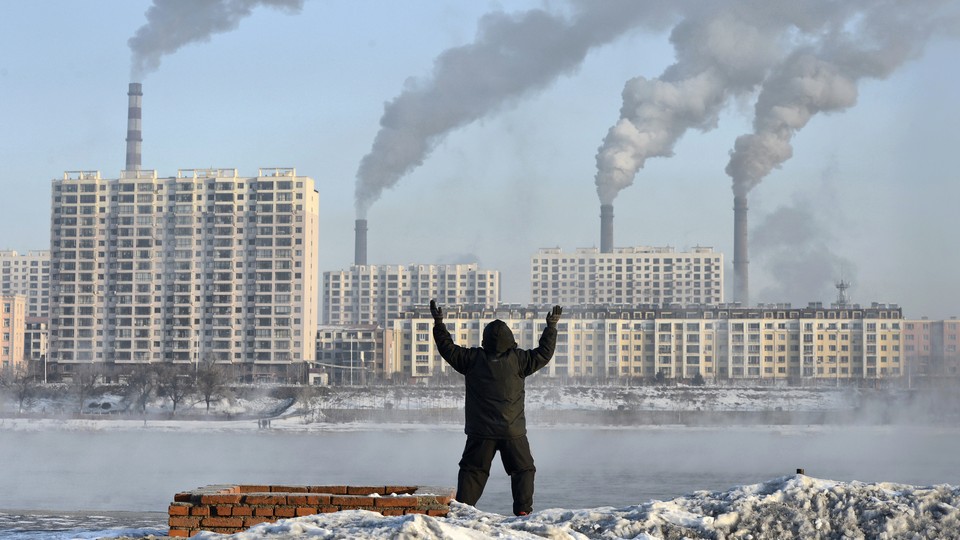
Unprecedented droughts or city-destroying floods would prompt mass migrations, destabilizing the rich world or giving rise to far-right nationalism. Or a global famine could send food prices surging, triggering old-fashioned resource wars.
Survival and success do not depend on brutal force. There is an empirical connection between violence and climate change that’s persists across 12,000 years of human history.
The long chain of evolutionary development has taught us with technology and political trends conflict will continue and even intensify.
“Whether we like it or not changes will be happening, and the situation will not improve by itself.
The future well-being and actual life on earth depends on us all and our ability to express compassion and work together as the eusocial creatures we de facto are.
“No one is doing this in the right way at the moment,”
World hunger, ecological and environmental disaster, global warming, massive shifts in weather systems, the re-emergence of diseases long thought controlled, with political turmoil, in a world where a barrel of water is more expensive than a barrel of oil.
Empathy, compassion and cooperation are now so saturated by Tec that we are becoming a species totally unscrew and desentized to reality, others, and their needs, becoming algorithms predictions.
Efforts so far to incorporate climate change into future population projections have been inadequate.
————-
Where is it leading us?
To answer that, we have to think about how we got here in the first place – Greed
Currently it is estimated for that 50 million people are living on less than the $3.65 a day, with half of the global population lives on less than US$6.85.
You could add another few billons who are not poor enough to feature.
The world is divided into the very rich, and the very poor. And since everybody knows there aren’t a whole lot of very rich people, they assume the majority of the world’s population is living in extreme poverty. But that’s completely wrong; the overwhelming majority of people live somewhere in the middle.
Our problem is inequality, attached to Greed, which is now plundering the world in the form of profit seeking algorithms that are generating profits for the few, using the latest technology Algorithmic trading designed to capitalize on market inefficiencies, trades can be completed at speeds and frequencies impossible for mere mortals.

Algorithm’s are creating a new social contract between a sovereign and citizens, in which the people collectively who were sovereign are becoming digitalised citizens.
Power now resides with those best able to organize knowledge.
The knowledge revolution should bring a shift to direct democracy, but those who benefit from the current structure are fighting this transition. This is the source of much angst around the world, including the current wave of popular protests.
Neither, physical military strength, nor access to capital are now sufficient for economic success.
If we are to have any chance, we have to change to direct democracy which is easier to achieve than big, sprawling governments.
I’m not sure we can, but I know it will happen because capitalism or any other systems will no longer generate sufficient income to sustain social welfair states.
———————
The problem is how do we reconcile that with democracy in countries composed of millions of citizens?
Talk of artificial intelligence destroying humanity plays into the tech companies’ agenda, and hinders effective regulation of the societal harms AI is causing right now.
Barely a week seems to go by without a tech industry insider trumpeting the existential risks of artificial intelligence (AI). Fearmongering narratives about existential risks are not constructive.
Serious discussion about actual risks, and action to contain them, are.
The sooner humanity establishes its rules of engagement with AI, the sooner we can learn to live in harmony with the technology.
Algos require an uninterrupted power supply and reliable internet access. Even a brief failure in these conditions can prove cataclysmic.
———————–

What is needed are direct opportunities for all to invest in the future.
One of our fundamental challenges in the years ahead will be to mobilize the substantial sums needed for investment in everything from green infrastructure to the cutting-edge technologies that we will need to achieve net zero emissions by 2050 and slow the course of climate change.
At the moment we have Green bonds/Climate change bonds are issued exclusively to finance projects that positively impact the environment. Today, more than 50 countries have issued green bonds. However, the appeal of this market and the fact that there is no binding regulatory framework for green bonds may lead to suspicions of ‘greenwashing’ (false green claims).
There’s nothing new or specifically European about green bonds.
They’ve been around since the beginning of the 21st century. Although they weren’t yet called green bonds, the first of them are thought to have been issued in 2001 by the City of San Francisco to finance a solar power project.
Any organization – such as governments, corporations, and financial institutions – can issue a green bond.
The green bond market is a portion of the larger debt market. Historically, over US$2 trillion of green bonds have been issued globally to date, with the potential to grow to US$5 trillion by 2025.
Industry bodies and investor action groups such as Climate Action 100+, as well as large
market investors such as sovereign wealth funds and pension funds, are in a strong position to drive development of this market. However there is no universally accepted legal and commercial definition of a green bond.
Green bonds are proven to be an effective means to secure the resources required to meet the national climate change goals, so why not issue green bonds that any joe soap could invest in.
Lotteries exist in 46.67% of countries worldwide. In many countries, with the adoption of digitalization the Lottery is a lifestyle and a massive contribution to their revenues. The Lottery industry continues to grow worldwide, with an expected increase of 4.1% CAGR by 2031. The spread of online lotteries associated with the increase in smartphone and internet usage is one of many factors that can drive growth in the global market. The Lottery market is projected to grow to $405.20 billion by 2028.
It would be everyone’s collective interest to identify with the physical manifestations of climate change.
Climate change is a defining issue of our time.
All human comments appriciated. All like clicks and abuse chucked in the bin.
Contact: bobdillon33@gmail.com
.
WITH MIGO
The only thing worse than being 'blind' is having a Sight but no Vision
Sharing vegetarian and vegan recipes and food ideas
PPJ Gazette copyright ©